Словари

Словарь английского языка | Значения слов, определения и примеры

noun
/ˈkæs.ər.oʊl bɑːks/
кассрола (kassrola)

a covered dish used for cooking and serving food, especially baked dishes

"The casserole box kept the food warm during the dinner party."
"Кассрола сохранила еду горячей во время ужина." (Kassrola sokhranila yedu goryachey vo vremya uzhina.)
cast definition card — visual illustration of the meaning
verb/noun
/kæst/
бросать, состав актеров (brosat, sostav akterov)

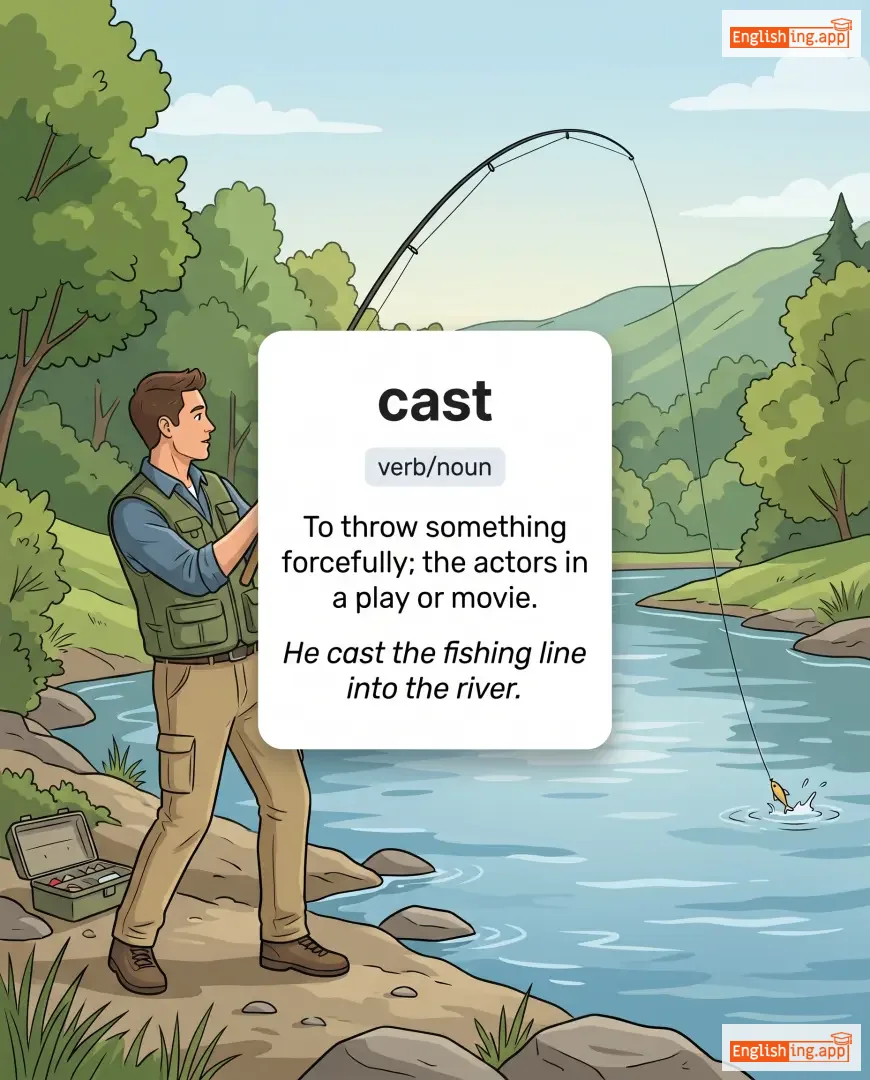
To throw something forcefully; the actors in a play or movie.

"He cast the fishing line into the river."
"Он бросил рыболовную леску в реку." (On brosil rybolovnuju lesku v reku.)
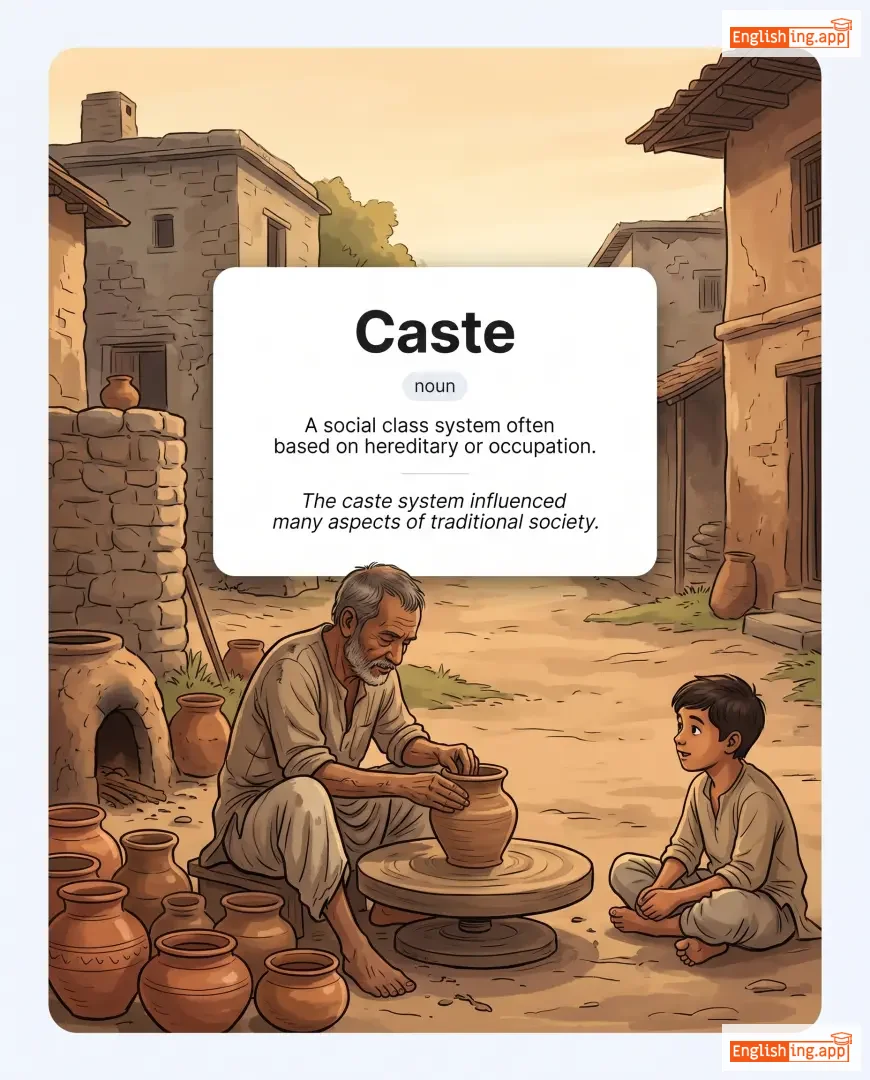
Caste definition card — visual illustration of the meaning
🧑‍🤝‍🧑

Caste (кэст)

noun
/kæst/
каста (kasta)

A social class system often based on hereditary or occupation.

"The caste system influenced many aspects of traditional society."

"Кастовая система оказала влияние на многие аспекты традиционного общества." (Kastovaya sistema okazala vliyanie na mnogie aspekty traditsionnogo obshchestva.)
verb
/ˈkæstɪˌɡeɪt/
кастрировать (kastrirovat)

To criticize someone severely or to punish harshly.

"The teacher castigated the students for their poor behavior."

"Учитель наказал студентов за их плохое поведение." (Uchitel' nakazal studentov za ikh plokhoe povedenie.)
castigation definition card — visual illustration of the meaning
noun
/ˌkæstɪˈɡeɪʃən/
жестокая критика или наказание (zhestokaya kritika ili nakazanie)

Severe criticism or punishment for wrongdoing.

"The manager’s harsh castigation shocked the entire team."

"Жестокая критика менеджера потрясла всю команду." (ZHESTOKAYA kritika menedzhera potryasla vsyu komandu.)
noun
/ˈkæsəl/
замок (zamok)

a large fortified building or complex of buildings, typically of the medieval period, used as a residence for nobility

"The king lived in a grand castle on the hilltop."

"Король жил в большом замке на вершине холма." (Korol' zhil v bol'shom zamke na vershine kholma.)
verb
/ˈkæstreɪt/
кастрировать (kastrirovat)

To remove the testicles of a male animal or human.

"The farmer castrated the young bulls to make them easier to manage."

"Фермер кастрировал молодых быков, чтобы их было легче управлять." (Fermyer kastriroval molodykh bykov, chtoby ikh bylo legche upravlyat.)
adjective
/ˈkæʒuəl/
повседневный (povsednevny)

Relaxed and informal in style, manner, or appearance.

"He wore casual clothes to the informal gathering."

"Он надел повседневную одежду на неформальную встречу." (On nadel povsednevnuju odezhdu na neformal'nuyu vstrechu.)
adverb
/ˈkæʒ.u.ə.li/
случайно; расслабленно и неформально (sluchayno; rasslablennо i neformalno)

in a relaxed and informal way; without much thought or preparation

"He casually mentioned that he was leaving."

"Он упомянул это как бы случайно." (On upomyanul eto kak by sluchayno.)
noun
/ˈkæʒuəlti/
человек, раненый или убитый в аварии или войне (chelovek, ranyonnyy ili ubityy v avarii ili voyne)

A person injured or killed in an accident or war.

"The accident resulted in several casualties."

"Авария привела к нескольким жертвам." (Avariya privela k neskol'kim zhertvam.)
noun
/ˈkæʒuɪstri/
казуистика (kazuistika)

The use of clever but false reasoning, especially in relation to moral questions.

"The lawyer’s argument was dismissed as mere casuistry."

"Аргумент адвоката был отклонен как простая казуистика." (Argument advokata byl otklonen kak prostaya kazuistika.)
noun
/kæt/
кот (kot)

a small domesticated carnivorous mammal often kept as a pet

"The cat is sleeping on the sofa."

"Кот спит на диване." (Kot spit na divane.)
noun
/ˈkæt fɪʃ/
сом (som)

a freshwater fish with whisker-like barbels around the mouth, commonly found in ponds and rivers

"Catfish is often fried and served with rice in Bengali cuisine."

"Сом часто жарится и подается с рисом в бенгальской кухне." (Som chasto zharitsya i podayetsya s risom v bengalskoy kukhne.)
noun
/ˌkæt ə ˈnaɪn ˌteɪlz/
кнут с девятью хвостами (knut s devyatyu khvostami)

A whip with nine knotted cords, historically used for punishment.

"The sailor feared the cat-o-nine-tails more than the storm at sea."
"Моряк боялся кнута с девятью хвостами больше, чем шторма на море." (Moryak boyalsya knuta s devyatyu khvostami bol'she, chem shtorma na more.)
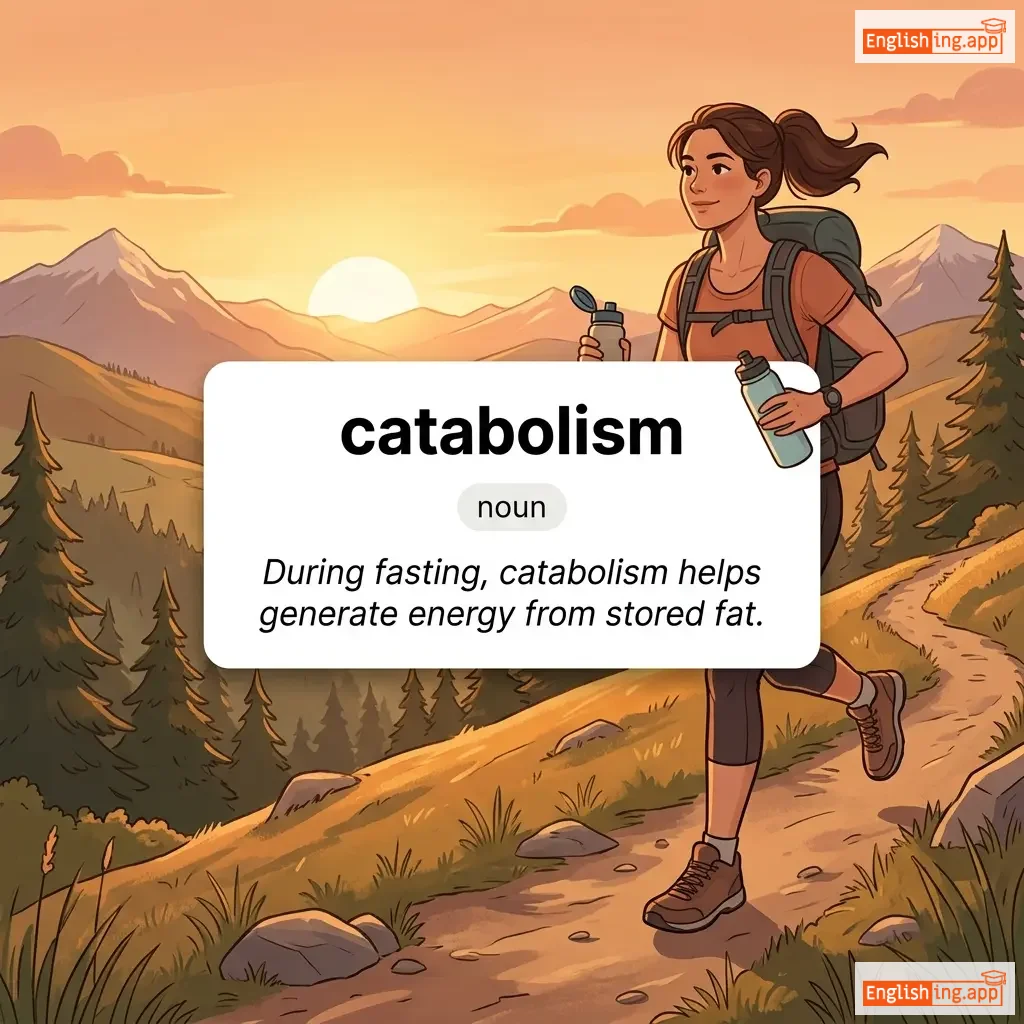
catabolism definition card — visual illustration of the meaning
noun
/kəˈtæb.ə.lɪ.zəm/
катаболизм (katabolizm)

The breakdown of complex molecules in living organisms to form simpler ones together with the release of energy.

"During fasting, catabolism helps generate energy from stored fat."
"Во время голодания катаболизм помогает генерировать энергию из накопленного жира." (Vo vremya golodaniya katabolizm pomogaet generirovat' energiyu iz nakoplennogo zira.)
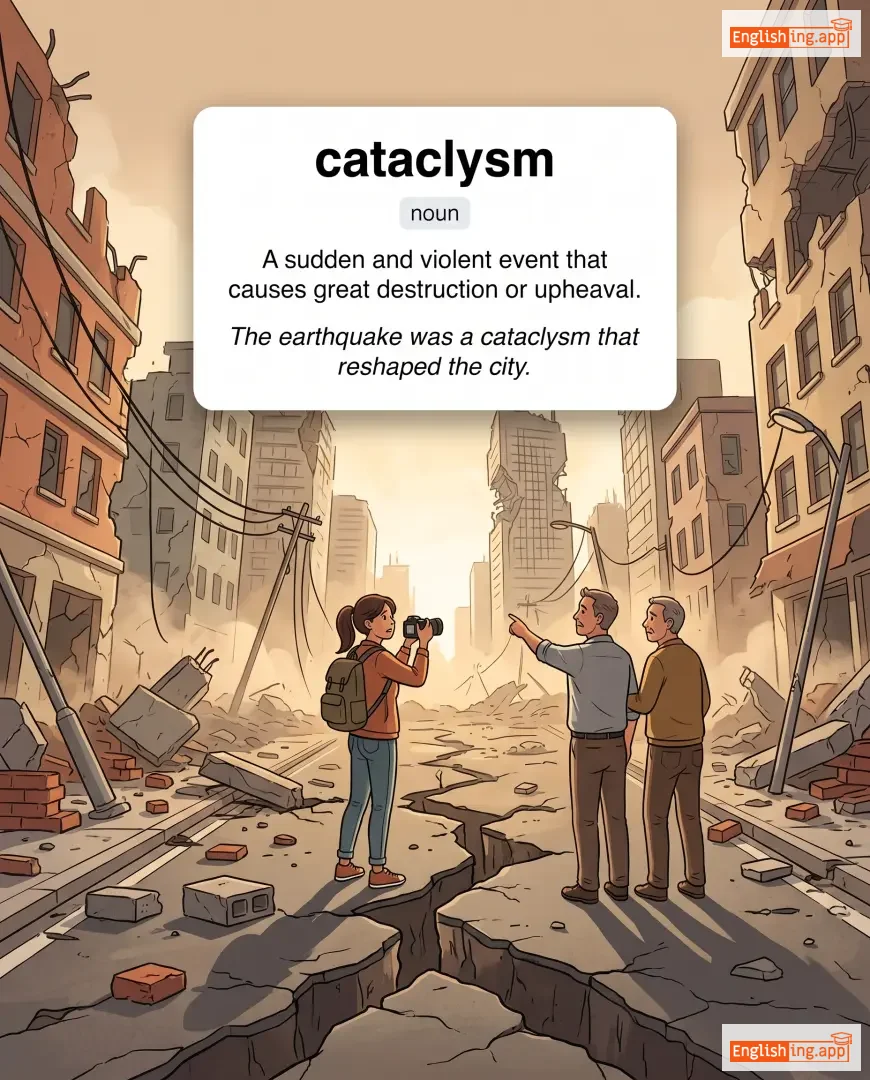
cataclysm definition card — visual illustration of the meaning
noun
/ˈkætəˌklɪzəm/
катаклизм (kataklizm)

A sudden and violent event that causes great destruction or upheaval.

"The earthquake was a cataclysm that reshaped the city."

"Землетрясение было катаклизмом, который изменил город." (Zemletryasenie bylo kataklizmom, kotoryj izmenil gorod.)
adjective
/ˌkætəˈklɪzmɪk/
катастрофический (katastroficheskiy)

Relating to or denoting a violent natural event or upheaval.

"The war had cataclysmic effects on the nation's economy."

"Война оказала катастрофическое влияние на экономику страны." (Voyna okazala katastroficheskoe vliyanie na ekonomiku strany.)
noun
/ˈkætəlɔːɡ/
каталог (katalog)

a complete list of items, typically arranged systematically

"The library provides an online catalog of all available books."

"Библиотека предоставляет онлайн-каталог всех доступных книг." (Biblioteka predostavlyayet onlayn-katalog vsekh dostupnykh knig.)
noun; verb
/ˈkætəlɒɡ/
каталог (katalog)

a complete list of items, typically one in alphabetical or systematic order; to make a systematic list of items

"The library decided to catalogue all new books digitally."
"Библиотека решила каталогизировать все новые книги в цифровом виде." (biblioteka reshila katalogizirovat vse novye knigi v tsifrovom vide)
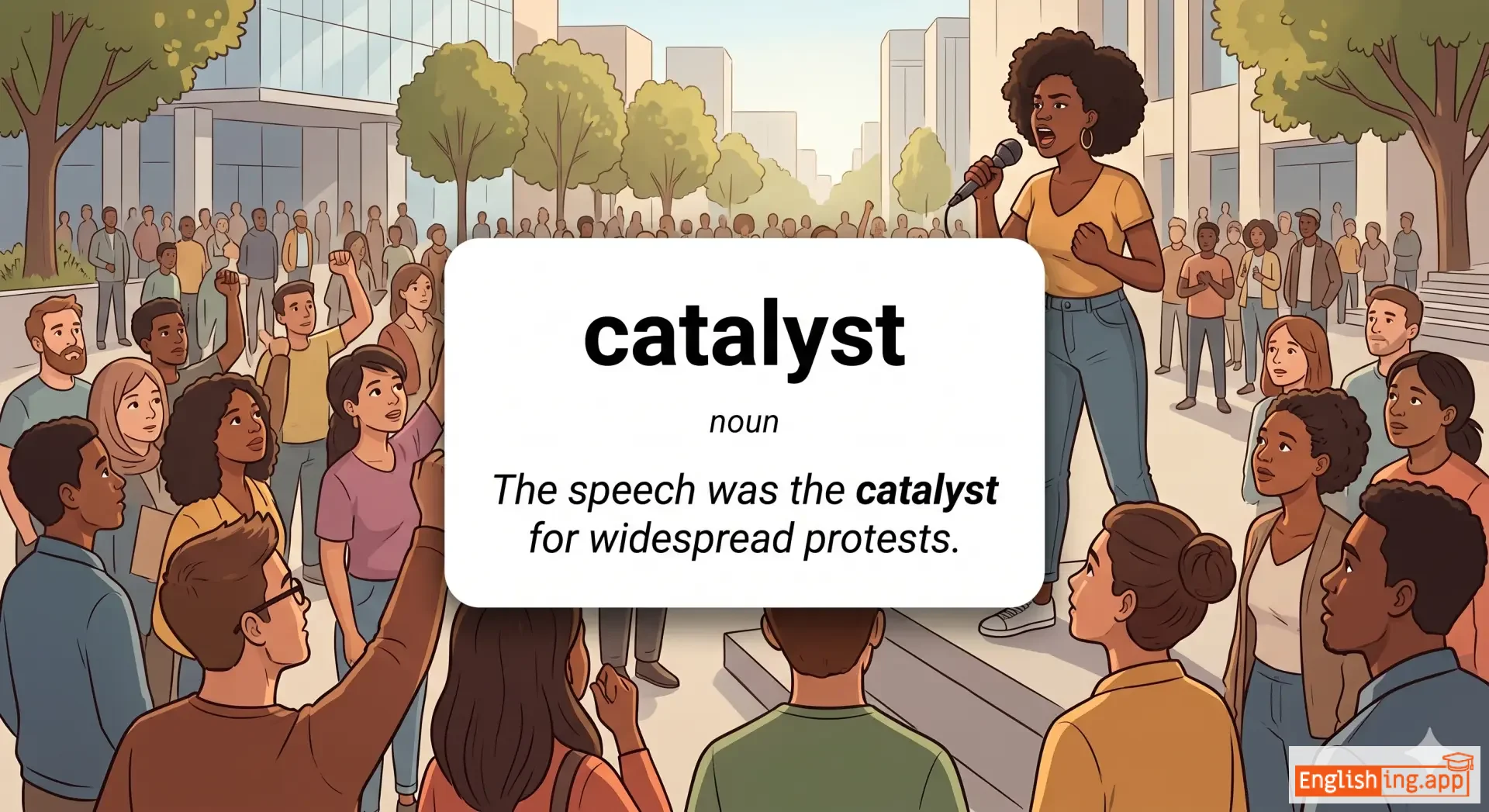
catalyst definition card — visual illustration of the meaning
noun
/ˈkætəlɪst/
катализатор (katalizator)

Something that speeds up or causes an event or change without being changed itself.

"The speech was the catalyst for widespread protests."

"Речь стала катализатором для широко распространённых протестов." (Rech' stala katalizatorom dlya shiroko rasprostranyonnykh protestov.)
verb
/ˈkætəˌlaɪz/
катализировать (katalizirovat)

To cause or accelerate a reaction or change.

"The new law catalyzed reforms across the sector."

"Новый закон ускорил реформы в секторе." (Novyy zakon uskoril reformy v sektore.)
noun/verb
/ˈkætəpʌlt/
катапульта (katapulta)

A device for launching objects at high speed; to hurl or launch something suddenly.

"The invention catapulted him to international fame."

"Изобретение катапультировало его к международной славе." (Izobretenie katapultirovalo ego k mezhdunarodnoy slave.)
noun
/ˈkætərækt/
катаракта / водопад (katarakta / vodopad)

A medical condition causing clouding of the eye's lens; also a large waterfall.

"The old man suffered from cataracts in both eyes."

"Пожилой человек страдал от катаракты в обоих глазах." (Pozhilyy chelovek stradal ot katarakty v oboikh glazakh.)
noun
/kəˈtæstrəfi/
катастрофа (katastrofa)

A sudden and widespread disaster or misfortune.

"The earthquake was a catastrophe for the entire region."
"Землетрясение стало катастрофой для всего региона." (Zemletryaseniye stalo katastrofoy dlya vsego regiona.)
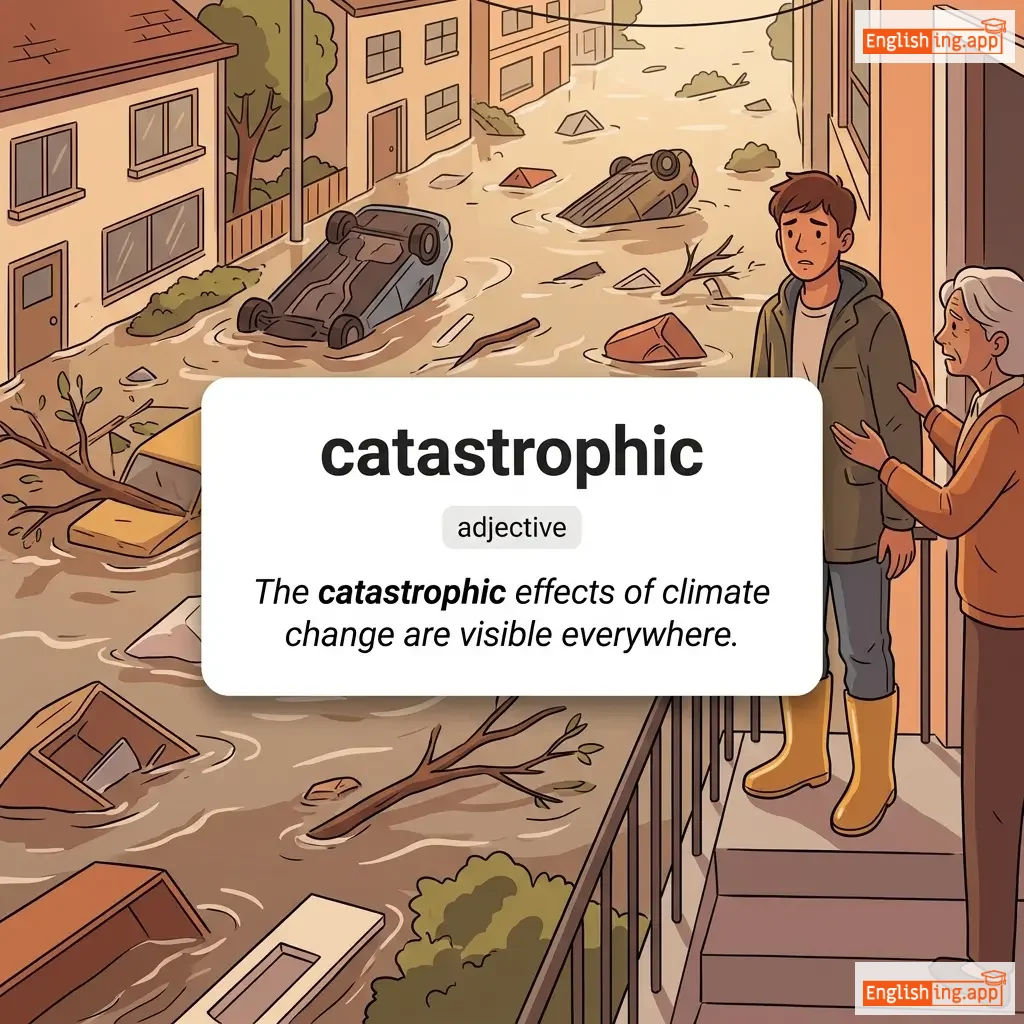
catastrophic definition card — visual illustration of the meaning
adjective
ˌkæt.əˈstrɒf.ɪk
катастрофический (katastroficheskiy)

Involving or causing sudden great damage or suffering; extremely unfortunate or unsuccessful.

"The catastrophic effects of climate change are visible everywhere."
"Катастрофические последствия изменения климата видны повсюду." (Katastroficheskiye posledstviya izmeneniya klimata vidny povsyudu.)
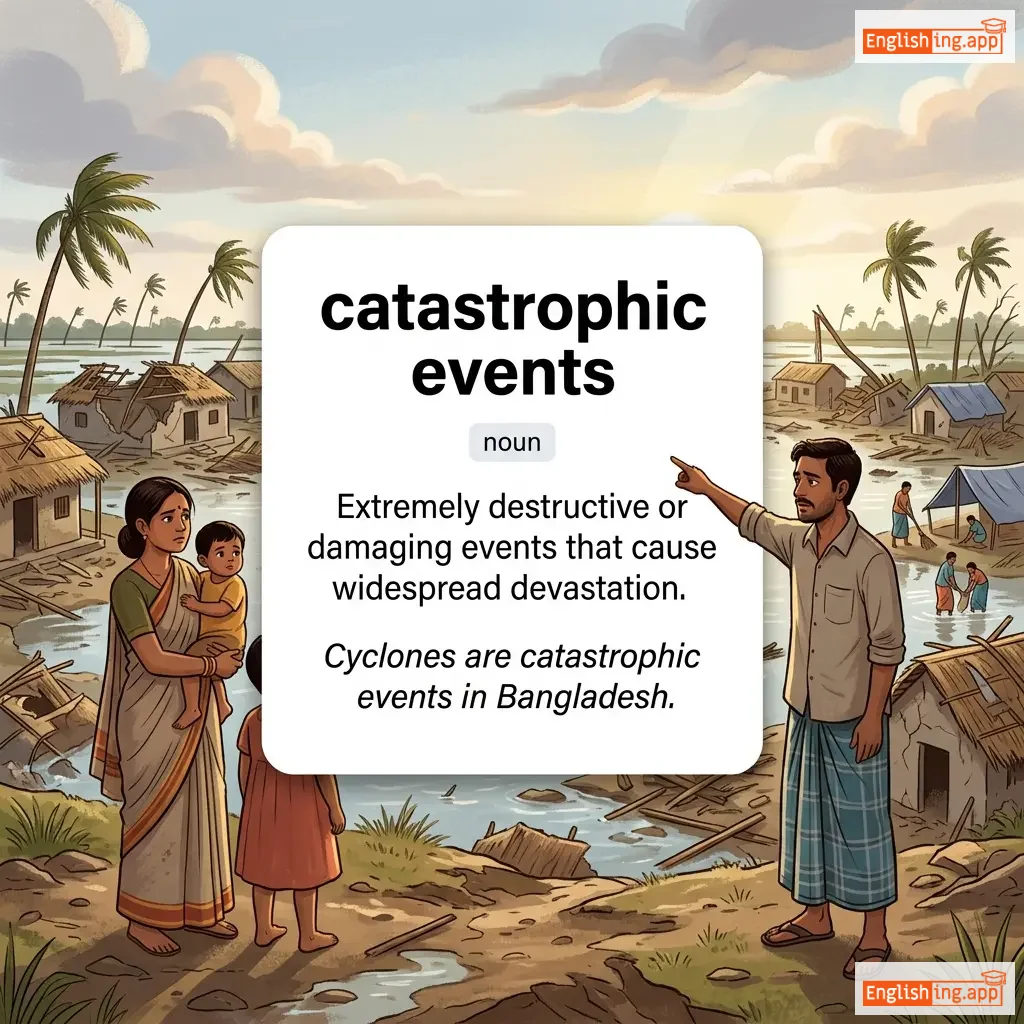
catastrophic events definition card — visual illustration of the meaning
noun
ˌkætəˈstrɒfɪk ɪˈvents
катастрофические события (katastroficheskie sobytiya)

Extremely destructive or damaging events that cause widespread devastation.

"Cyclones are catastrophic events in Bangladesh."

"Циклоны — это катастрофические события в Бангладеш." (Tsiklonu — eto katastroficheskie sobytiya v Bangladezh.)
noun/verb
/ˈkætˌkɔːl/
крик или свист неодобрения или сексуального домогательства (krik ili svist neodobriniya ili seksual'nogo domogatel'stva)

A loud whistle or shout of disapproval or sexual harassment directed at someone.

"The actress ignored the catcalls from the crowd."
"Актриса проигнорировала катколы из толпы." (Aktrisa proigonorirovala katkoly iz tolpy.)
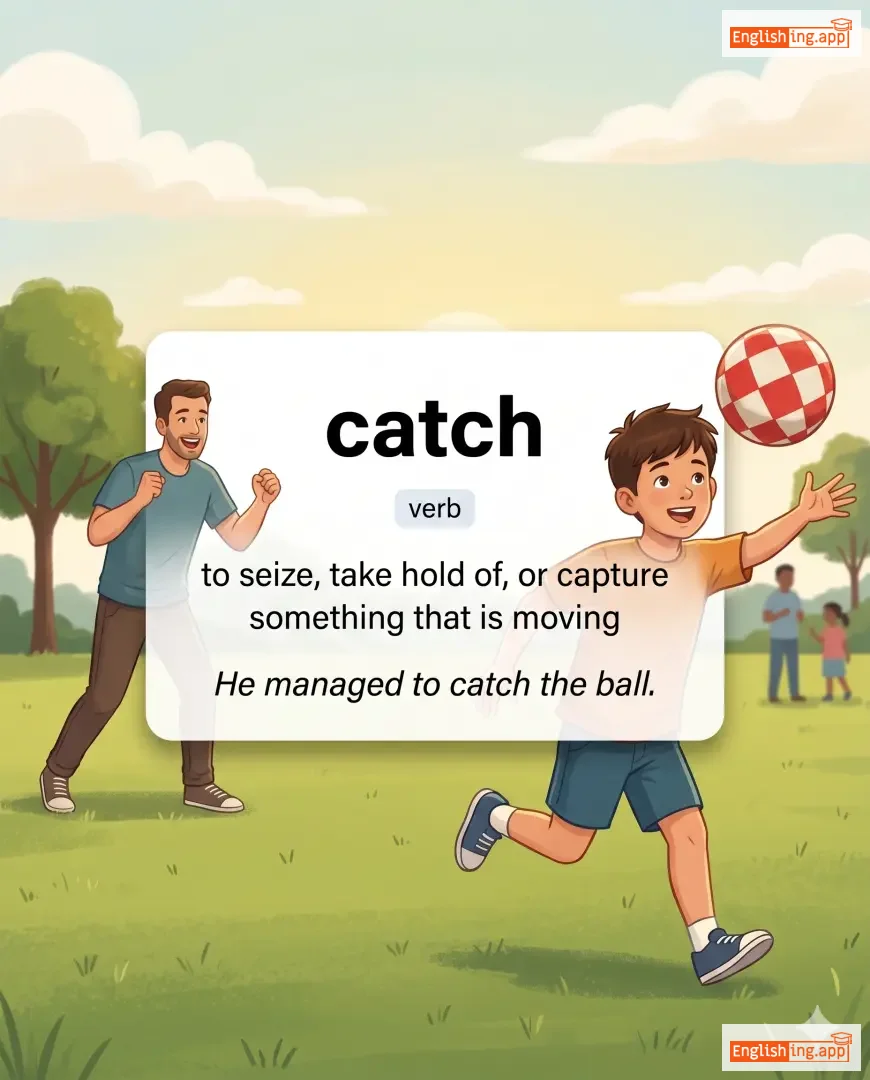
catch definition card — visual illustration of the meaning
verb
/kætʃ/
поймать (poymat')

to seize, take hold of, or capture something that is moving

"He managed to catch the ball."

"Он смог поймать мяч." (On smog poymat' myach.)
noun
/ˈkætɪˌkɪzəm/
катехизм (katekhizm)

A summary of religious principles often in the form of questions and answers; also a set of fixed questions or beliefs.

"The priest taught the children the catechism every Sunday."

"Священник учил детей катехизму каждое воскресенье." (Svyashchennik uchil detey katekhizmu kazhdoe voskresenye.)
noun
/ˈkætɪtʃuː/
катечу (katechu)

an extract from a tropical Asian plant, used in tanning and dyeing

"Catechu extract is commonly used in traditional medicine."

"Экстракт катечу часто используется в традиционной медицине." (Ekstrakt katechu chasto ispol'zuyetsya v traditsionnoj meditsine.)
categorical definition card — visual illustration of the meaning
adjective
/ˌkætəˈɡɒrɪkəl/
категорический (kategoricheskiy)

Absolute and without exception; expressed clearly and directly.

"She gave a categorical denial of the allegations."
"Она дала категорическое отрицание обвинений." (Ona dala kategoricheskoe otritsanie obvineniy.)
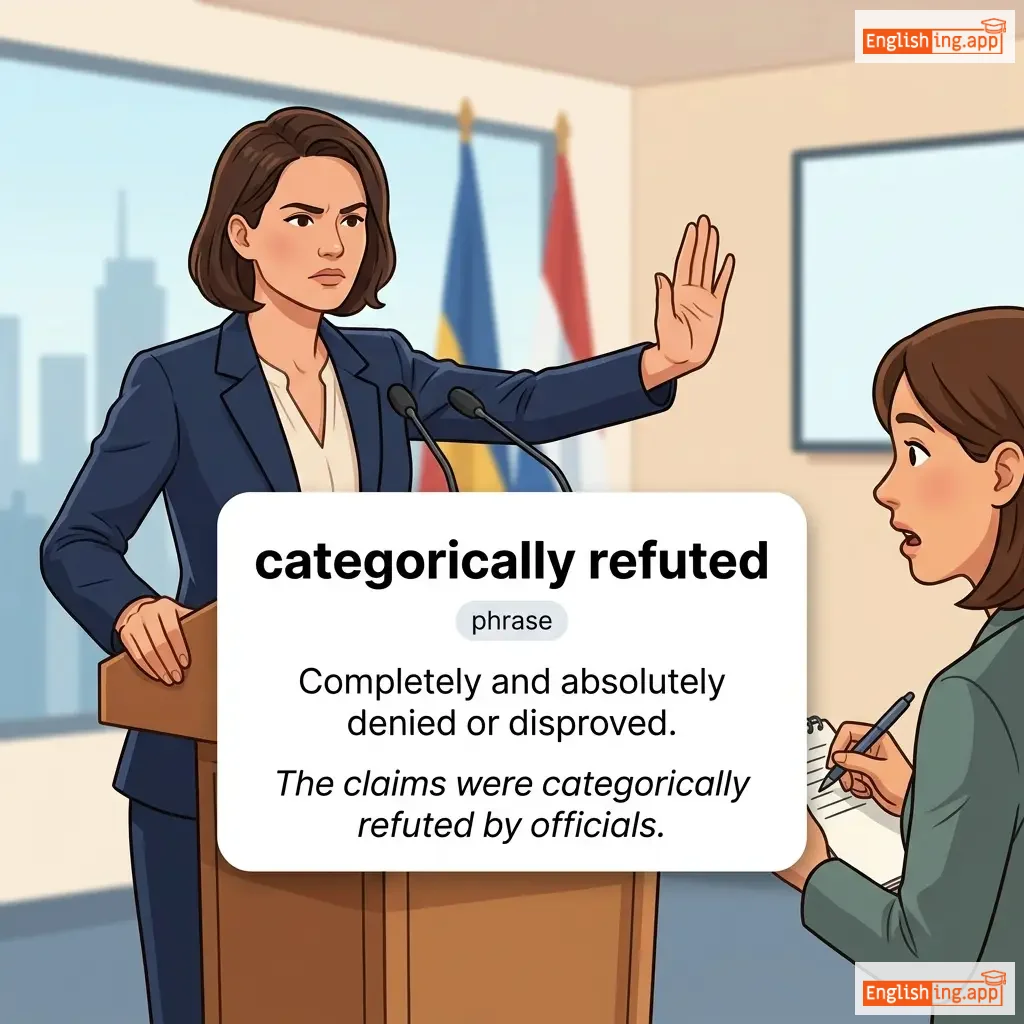
categorically refuted definition card — visual illustration of the meaning
phrase
ˌkæt.əˈɡɒr.ɪ.kəl.i rɪˈfjuː.tɪd
категорически опровергнуто (kategoricheski oprovergnuto)

Completely and absolutely denied or disproved.

"The claims were categorically refuted by officials."
"Заявления были категорически опровергнуты официальными лицами." (Zayavleniya byli kategoricheski oprovergnuty ofitsialami.)
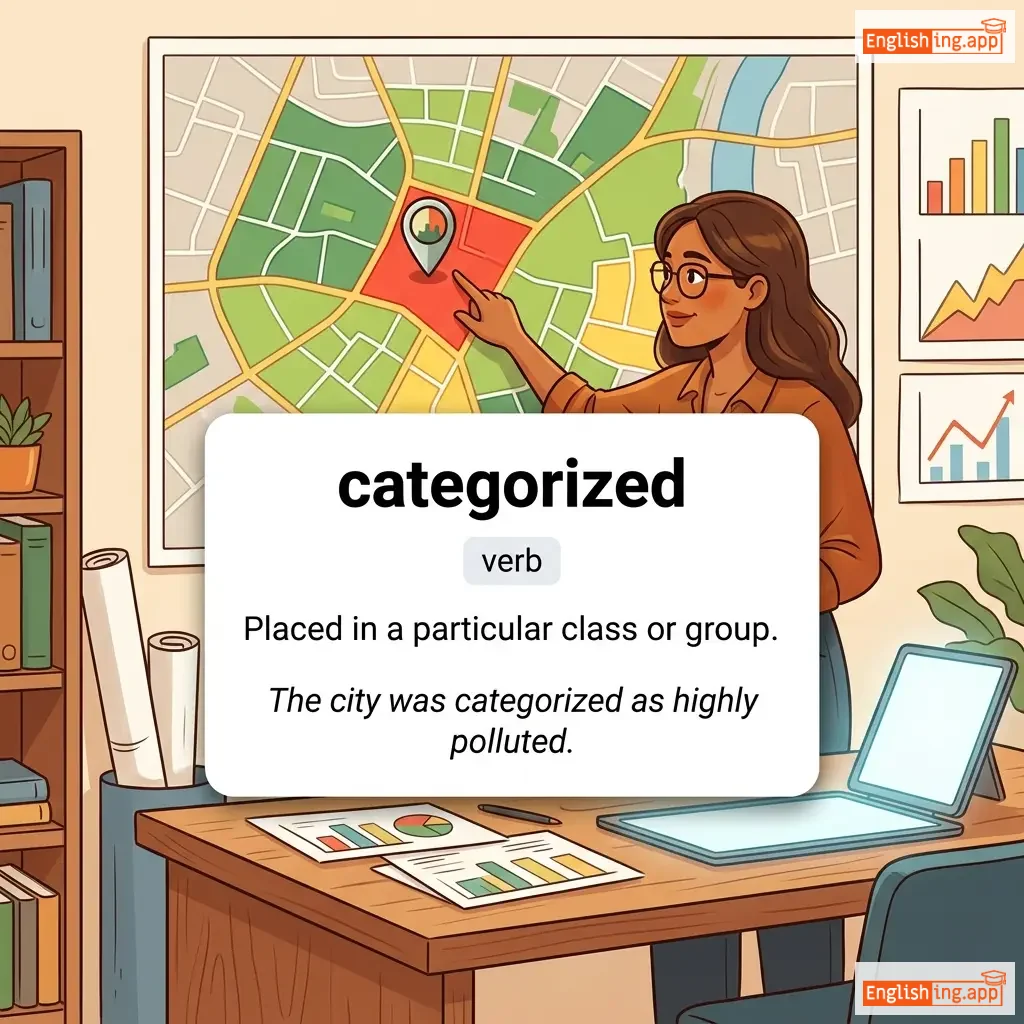
categorized definition card — visual illustration of the meaning
verb
/ˈkæt.ɪ.ɡə.raɪzd/
категоризированный (kategorizirovannyy)

Placed in a particular class or group.

"The city was categorized as highly polluted."

"Город был классифицирован как сильно загрязнённый." (Gorod byl klassifitsirovannyy kak sil'no zagrjaznennyy.)
noun
/ˈkætəɡɔːri/
категория (kategorija)

a class or division of things regarded as having particular shared characteristics

"Books are arranged by category in the library."

"Книги организованы по категориям в библиотеке." (Knigi organizovany po kategoriyam v biblioteke.)
verb
/ˈkeɪtər/
обслуживать (obsluzhivat)

To provide food, drinks, or services, usually for an event or group.

"The company catered the wedding reception."

"Компания организовала ужин на свадебном приеме." (Kompaniya organizovala uzhin na svadebnom prieme.)
noun
/ˈkæt.ər.pɪl.ər/
гусеница (gusyenitsa)

the larva of a butterfly or moth that feeds on plants

"The caterpillar ate all the leaves on the plant."

"Гусеница съела все листья растения." (Gusenitsa s'yela vse list'ya rasteniya.)
noun
/kəˈθɑːrsɪs/
катарсис (katarsis)

The process of releasing strong emotions, providing relief.

"Writing in her diary was a form of catharsis for her."

"Запись в её дневнике была формой катарсиса для неё." (Zapic' v yejo dnevnike byla formoy katarsisa dlya neyo.)
cathartic definition card — visual illustration of the meaning
adjective
/kəˈθɑːrtɪk/
катарсический (katarsicheskiy)

Providing psychological relief through open expression of emotions; also refers to a medicine that causes cleansing of the bowels.

"Crying can be a cathartic experience."

"Плач может быть катарсическим опытом." (Plach mozhet byt' katarsicheskim opytom.)
noun
/ˈkæθoʊd/
отрицательный электрод (otritsatel'nyy elektrod)

The negative electrode in a device such as a battery or tube, where electrons enter.

"The cathode emits electrons in the tube."

"Катод излучает электроны в трубке." (Katod izluchayet elektrony v trubke.)
adjective
/ˈkæθəlɪk/
католический (katolicheskiy)

Including a wide variety; all-embracing; relating to the Roman Catholic Church.

"She has catholic tastes in music, enjoying everything from jazz to opera."

"У нее католические вкусы в музыке, она наслаждается всем, от джаза до оперы." (U nee katolicheskie vkusi v muzyke, ona naslazhdayetsya vsem, ot dzhaza do opery.)
noun
/kəˈθɒlɪsɪzəm/
католицизм (katolitsizm)

The faith, practice, and church order of the Roman Catholic Church.

"Catholicism has a long history and rich traditions."

"Католицизм имеет долгую историю и богатые традиции." (Katolitsizm imeyet dolguyu istoriyu i bogatiye traditsii.)
noun
/ˌkæθəˈlɪsɪti/
универсальность, широкость взглядов (universal'nost', shirokost' vzglyadov)

Universality; broad-mindedness; acceptance of a wide variety of things.

"Her catholicity of interests makes her a fascinating person."
"Ее католичность интересов делает ее увлекательным человеком." (Yeyo katolichnost' interesov delayet yeye uvelikatelnym chelovekom.)
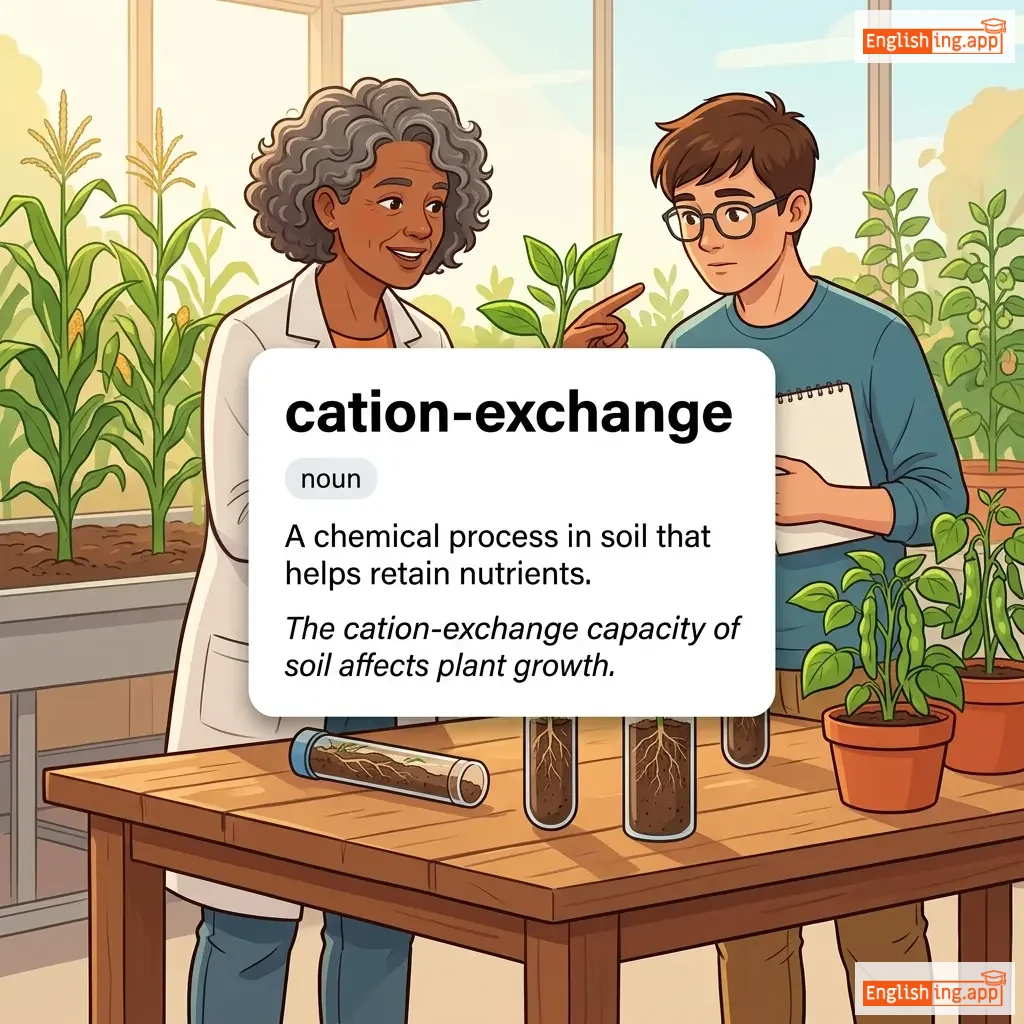
cation-exchange definition card — visual illustration of the meaning
noun
/ˈkæt.aɪ.ɒn ɪksˌtʃeɪndʒ/
катионный обмен (kationekscheyndzh)

A chemical process in soil that helps retain nutrients.

"The cation-exchange capacity of soil affects plant growth."

"Емкость обмена катионами почвы влияет на рост растений." (Yemkost obmena kationami pochvy vliayet na rost rasteniy)
noun
/ˈkæt.kɪn/
Серёжка (seryozhka)

a drooping, often tasseled cluster of small flowers found on willow and birch trees

"The willow tree's catkins swayed gently in the spring breeze."

"Ивы с серёжками покачивались на весеннем ветру." (Ivy s seryozhkami pokachivayushchiesya na vesennem vetru.)
noun
/ˈkætl/
счастье (schast'ye)

large domesticated animals such as cows and bulls that are kept on a farm for their milk, meat, or hides

"The farmer owns a herd of cattle that graze near the river."

"Она не смогла скрыть своего счастья, когда получила награду." (Ona ne smogla skryt' svoego schast'ya, kogda poluchila nagradu.)
caucus definition card — visual illustration of the meaning
noun
/ˈkɔːkəs/
политическое собрание (politicheskoe sobranie)

A meeting of members of a political party to select candidates or decide policy.

"The party held a caucus to nominate their candidate for president."

"Партия провела собрание для выдвижения кандидата в президенты." (Partiya provela sobranie dlya vydvizheniya kandidata v prezidenty.)
noun
/ˈkɔːldrən/
котел (kotel)

A large metal pot used for cooking over an open fire; also a situation of intense activity or strong emotions.

"The witch stirred the cauldron filled with strange ingredients."

"Ведьма помешивала котел, полный странных ингредиентов." (Ved'ma pomeshivala kotel, polnyy strannykh ingredientov.)
noun
/ˈkɔːlɪˌflaʊər/
цветная капуста (tsvetnaya kapusta)

white vegetable with a compact head of undeveloped flower buds

"Roasted cauliflower makes a delicious and healthy side dish."

"Запечённая цветная капуста - это вкусное и полезное гарнирное блюдо." (Zapechennaya tsvetnaya kapusta - eto vkusnoe i poleznoe garnirnoe blyudo.)
verb
/kɔːk/
замазывать (zamazyvat)

to seal a crack or gap with a waterproof filler

"He caulked the window frames to stop the draft."
"Он замазал оконные рамы, чтобы остановить сквозняк." (On zamazal okonnyye ramy, chtoby ostanovit' skvoznyak.)
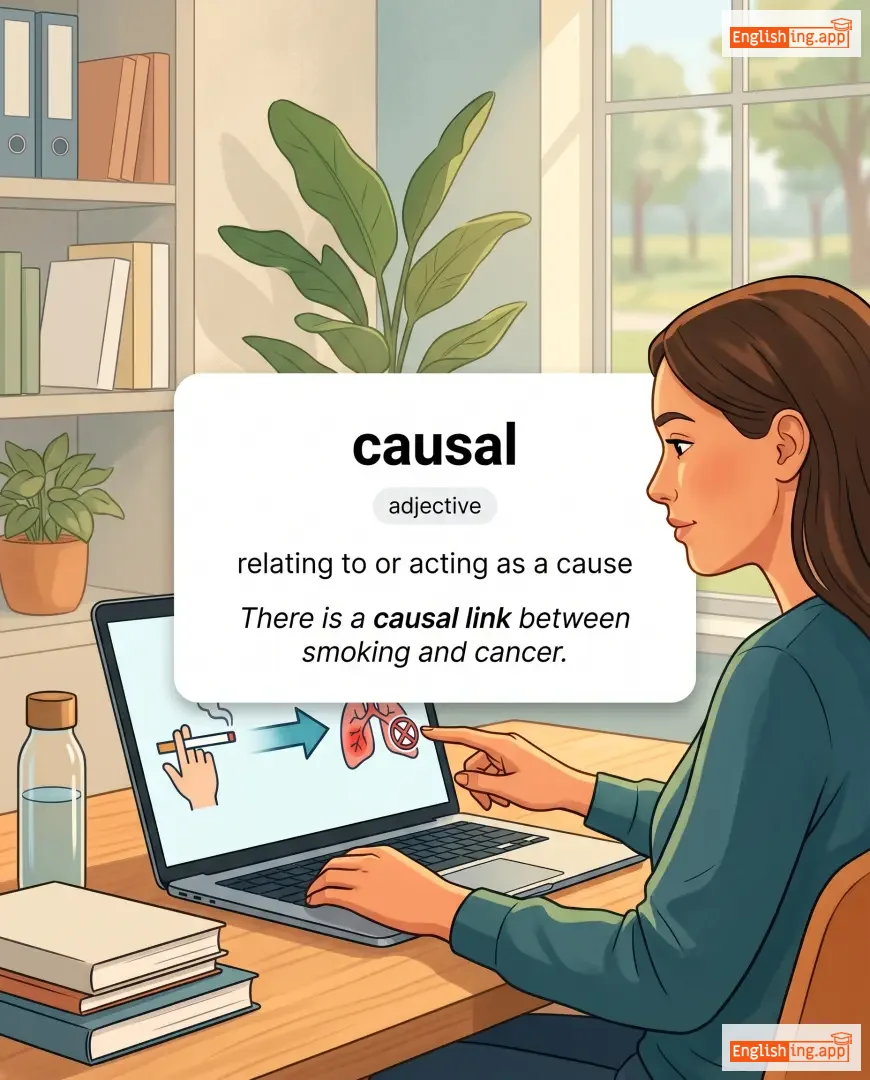
causal definition card — visual illustration of the meaning
adjective
/ˈkɔː.zəl/
каузальный (kauzal'nyi)

relating to or acting as a cause

"There is a causal link between smoking and cancer."

"Существует причинно-следственная связь между курением и раком." (Sushchestvuet prichinno-sledstvennaya svyaz' mezhdu kurem i rakom.)