Словари

Словарь английского языка | Значения слов, определения и примеры

noun
/kəmˈpænjən/
спутник (sputnik)

a person or animal you spend time with or travel with

"He was my companion during the long journey."

"Он был моим спутником во время долгого путешествия." (On byl moim sputnikom vo vremya dolgogo puteshestviya.)
noun
/ˈkʌm.pə.ni/
компания (kompaniya)

a business organization; the presence of other people

"She started her own company to sell handmade products."

"Она начала свою собственную компанию, чтобы продавать изделия ручной работы." (Ona nachala svoyu sobstvennuyu kompaniyu, chtoby prodavat' izdeliya ruchnoy raboty.)
adjective
/ˈkɒmp(ə)rəbl/
сопоставимый (sopostavimy)

Able to be likened to something else in size, amount, or quality.

"The two products are comparable in quality but differ in price."

"Два продукта сопоставимы по качеству, но различаются по цене." (dva produkta sopostavimy po kachestvu no razlichayutsya po tsene)
adjective
/kəmˈpærətɪv/
сравнительный (sravnitelnij)

Measured or considered by comparison; relative.

"She lives in comparative comfort after moving to the city."
"После переезда в город она живет в сравнительном комфорте." (posle pereyezda v gorod ona zhivet v sravnitelnom komforte)
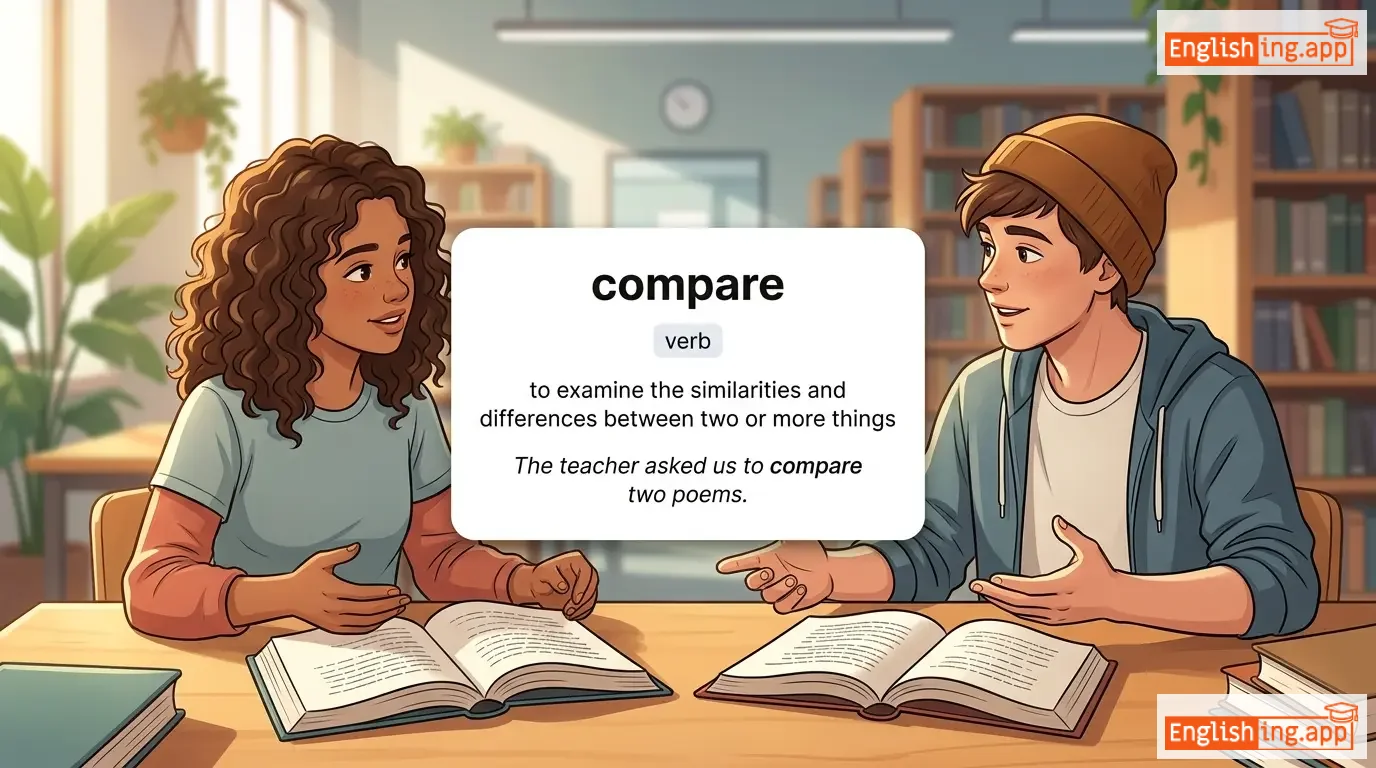
compare definition card — visual illustration of the meaning
verb
/kəmˈpeər/
сравнивать (sravnivat')

to examine the similarities and differences between two or more things

"The teacher asked us to compare two poems."

"Учитель попросил нас сравнить два стихотворения." (Uchitel' poprosil nas sravnity dva stikhotvoreniya.)
noun
/kəmˈpærɪsən/
сравнение (sravnenie)

The act or process of examining the similarities and differences between things.

"A comparison of the two reports shows several inconsistencies."

"Сравнение двух отчётов показывает несколько несоответствий." (Sravnenie dvukh otchyotov pokazyvaet neskolko nesootvetstvii)
noun
/kəmˈpɑːtmənt/
отсек (otsek)

A separate section or space within a larger structure, such as a train or a container.

"He kept his passport in a small compartment of his bag."
"Он положил свой паспорт в маленький отсек своей сумки." (On polozhil svoi pasport v malen'kiy otsek svoey sumki.)
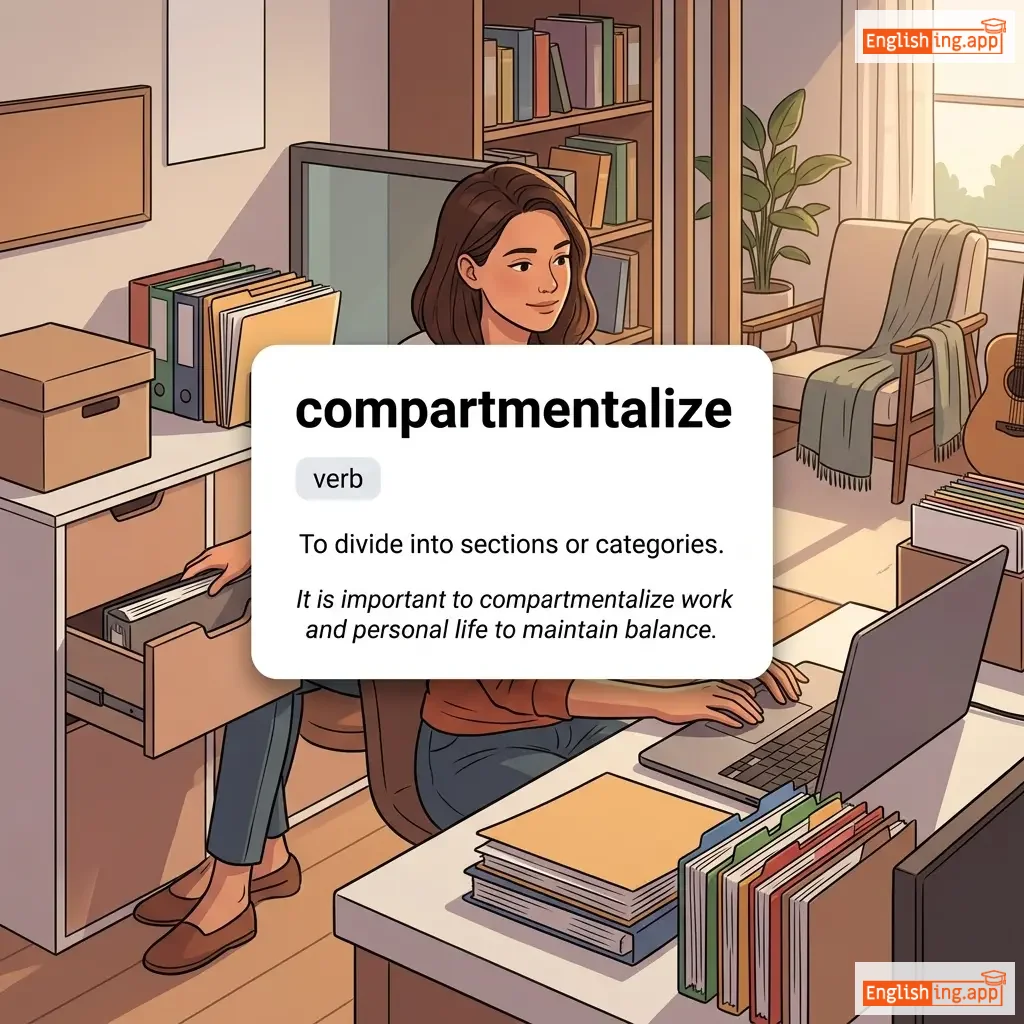
compartmentalize definition card — visual illustration of the meaning
verb
/kəmˈpɑːtməntəˌlaɪz/
разделять (razdelyat')

To divide into sections or categories.

"It is important to compartmentalize work and personal life to maintain balance."

"Важно разделить работу и личную жизнь, чтобы поддерживать баланс." (Vazhno razdelyat' rabotu i lichnuyu zhizn', chtoby podderzhivat' balans.)
noun
/ˈkʌm.pəs/
компас (kompas)

an instrument for finding direction with a magnetic needle pointing to magnetic north

"The hiker used a compass to find the right direction."

"Путешественник использовал компас, чтобы найти правильное направление." (Puteshestvennik ispol'zoval kompas, chtoby nayti pravil'noye napravleniye)
noun
/kəmˈpæʃən/
сострадание (sostradanie)

Sympathetic concern for the sufferings or misfortunes of others.

"The nurse treated the patients with great compassion."

"Медсестра лечила пациентов с большим состраданием." (Medsestra lechila patsientov s bol'shim sostradaniem.)
adjective
/kəmˈpæʃənət/
сочувствующий; сострадательный (sochuvstvuyushchiy; sostradatel'nyy)

feeling or showing sympathy and concern for others who are suffering

"The compassionate nurse took extra time to comfort the worried patients."

"Сострадательная медсестра выделила дополнительное время, чтобы утешить обеспокоенных пациентов." (Sostradatel'naya medsestra vydelila dopolnitel'noe vremya, chtoby uteshit' obespokoyennykh patsiyentov.)
adjective
/kəmˈpætəbl/
совместимый (sovmestimy)

Able to exist or work together without conflict; harmonious.

"This software is compatible with both Windows and Mac systems."

"Это программное обеспечение совместимо с обоими системами: Windows и Mac." (Eto programmnoye obespecheniye sovmestimoye s oboyimi sistemami: Windows i Mac.)
verb
/kəmˈpɛl/
заставлять (zastavlyat)

To force or drive someone to do something.

"The law compels citizens to pay taxes."

"Закон заставляет граждан платить налоги." (Zakon zastavlyayet grazhdan platit' nalogi.)
adjective
/kəmˈpɛlɪŋ/
захватывающий (zakhvatyvayushchiy)

Evoking interest, attention, or admiration in a powerful way.

"She gave a compelling speech about climate change."

"Она произнесла захватывающую речь о климатических изменениях." (Ona proiznesla zakhvatyvayushchuyu rech' o klimatycheskikh izmeneniyakh.)
compendium definition card — visual illustration of the meaning
noun
/kəmˈpɛndiəm/
компендий (kompendiy)

A collection of concise but detailed information about a subject.

"The book is a compendium of ancient myths and legends."

"Книга является компендий древних мифов и легенд." (Kniga yavyayetsya kompendiy drevnikh mifov i legend.)
verb
/ˈkɒmpənseɪt/
компенсировать (kompensirovat)

To give something, typically money, in recognition of loss, suffering, or work done.

"The company compensated the worker for his injury."

"Компания компенсировала работника за его травму." (Kompaniya kompensirovala rabotnika za ego travmu.)
verb
/ˈkɒmpənseɪtɪd/
компенсировано (kompensirovano)

to have been given something, typically money, as a recompense for loss, suffering, or work done

"The workers were compensated for their overtime hours."

"Работники были компенсированы за свои сверхурочные часы." (Rabotniki byli kompensirovany za svoi sverkhurochnye chasy.)
noun
/ˌkɒmpənˈseɪʃən/
компенсация (kompensatsiya)

something, typically money, given to make up for loss, injury, or work done

"She received financial compensation for the accident."

"Она получила финансовую компенсацию за несчастный случай." (Ona poluchila finansovuyu kompensatsiyu za neschastnyy sluchay.)
adjective
/kəmˈpensətɔːri/
компенсационный (kompensatsionny)

serving to make up for a loss, damage, or injury

"The court awarded him compensatory damages."

"Суд присудил ему компенсацию за ущерб." (Sud prisudil emu kompenatsiyu za uscherb.)
verb
/kəmˈpiːt/
соревноваться (sorevnovatsya)

to try to win or be more successful than others in a contest or activity

"Several companies compete for dominance in the market."

"Несколько компаний конкурируют за доминирование на рынке." (Neskol'ko kompaniy konkuriruyut za dominiruyushchuyu pozitsiyu na rynke.)
noun
/ˈkɒmpɪtəns/
компетенция (kompetentsiya)

the ability to do something successfully or efficiently

"Her competence as a manager impressed the board."

"Ее компетенция как менеджера впечатлила совет." (Eyo kompetentsiya kak menedzhera vpechatlila sovet.)
adjective
/ˈkɒmpɪtənt/
компетентный (kompetentny)

having the necessary ability, knowledge, or skill to do something successfully

"He is a competent driver who rarely makes mistakes."

"Он компетентный водитель, который редко совершает ошибки." (On kompetentny vodiitel', kotoryi redko sovershaet oshibki.)
competition definition card — visual illustration of the meaning
noun
/ˌkɒmpəˈtɪʃən/
конкуренция (konkurentsiya)

a situation in which people or organizations try to be more successful than others

"The competition in the tech industry is very intense."

"Конкуренция в технологической отрасли очень жесткая." (Konkurentsiya v tekhnologicheskoy otrasli ochen' zhestkaya.)
adjective
/kəmˈpetətɪv/
конкурентоспособный (konkurentosposobnyj)

relating to or characterized by competition; having a strong desire to win or be more successful

"She has a competitive spirit that drives her to excel."

"У нее конкурентоспособный дух, который заставляет ее стремиться к совершенству." (U nee konkurentosposobnyj dukh, kotoryj zastavlyaet yejo stremit'sya k sovershenstvu.)
competitiveness definition card — visual illustration of the meaning
noun
kəmˈpet.ɪ.tɪv.nəs
конкурентоспособность (konkurentosposobnost)

The quality of being as good as or better than others of a comparable nature; the ability to compete successfully.

"Competitiveness is vital for economic sustainability."

"Конкурентоспособность важна для экономической устойчивости." (Konkurentosposobnost' vazhna dlya ekonomicheskoy ustoychivosti.)
noun
/kəmˈpɛtɪtər/
конкурент (konkurent)

a person, team, or company that competes with others

"The company lowered its prices to beat its main competitor."

"Компания снизила цены, чтобы обыграть своего главного конкурента." (Kompaniya snizila tseny, chtoby obygrat' svoego glavnogo konkurenta.)
noun
/ˌkɒmpɪˈleɪʃən/
сборник (sbornik)

a collection of things, especially pieces of writing or music, gathered together

"The book is a compilation of his best essays."

"Книга является сборником его лучших эссе." (Kniga yavlyaetsya sbornikom yego luchshikh esse.)
verb
/kəmˈpaɪl/
собирать (sobirat)

to collect information or material and put it together in a list, report, or book

"She compiled the research data into a detailed report."

"Она собрала исследовательские данные в подробный отчет." (Ona sobrala issledovatelskiye dannye v podrobnoy otchet.)
noun
/kəmˈpleɪsəns/
самодовольство (kompleisens)

a feeling of quiet pleasure or self-satisfaction, often without awareness of potential danger

"His complacence prevented him from noticing the risks."
"Его самодовольство помешало ему заметить риски." (Ego samodovolstvo pomeshalo emu zametit riski)
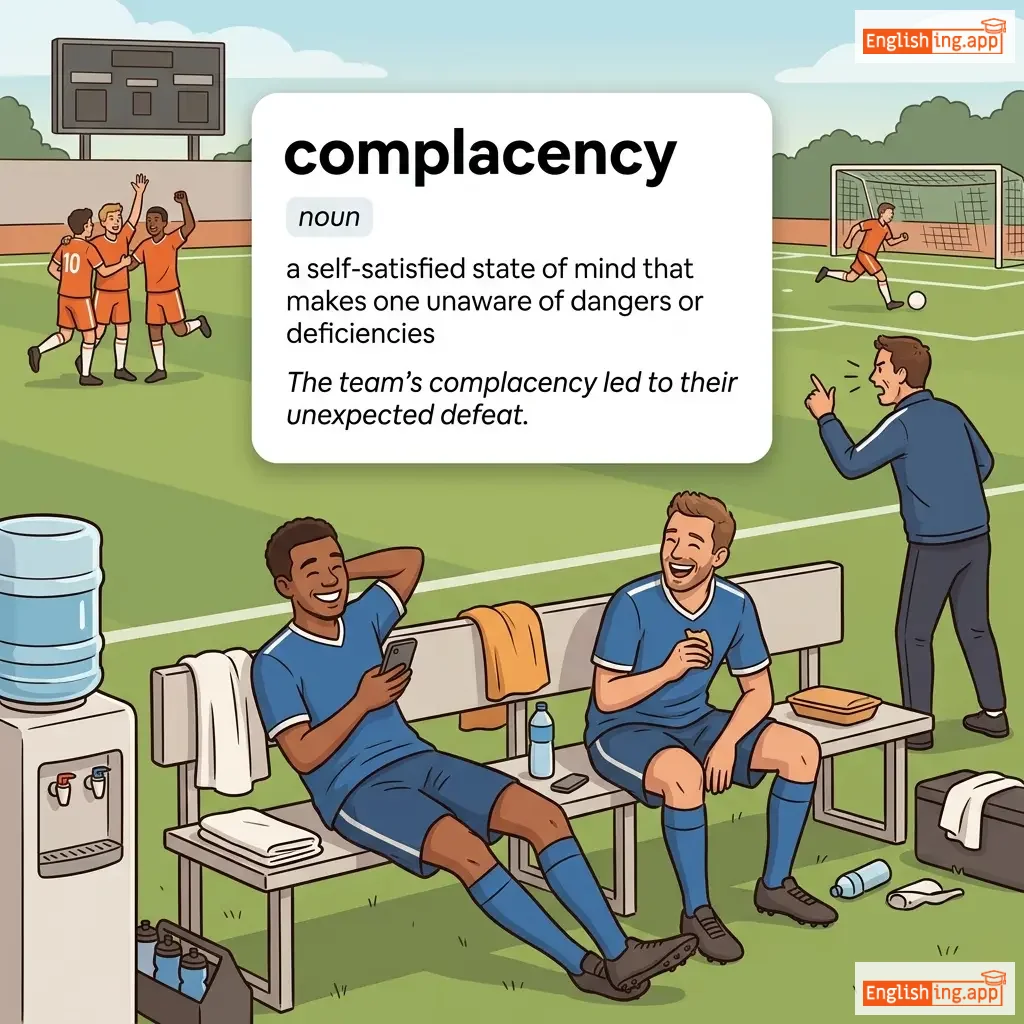
complacency definition card — visual illustration of the meaning
noun
/kəmˈpleɪsənsi/
самодовольство (samodovol'stvo)

a self-satisfied state of mind that makes one unaware of dangers or deficiencies

"The team's complacency led to their unexpected defeat."
"Самодовольство команды привело к их неожиданному поражению." (Samodovol'stvo komandy privelo k ikh neozhidannomu porazheniyu.)
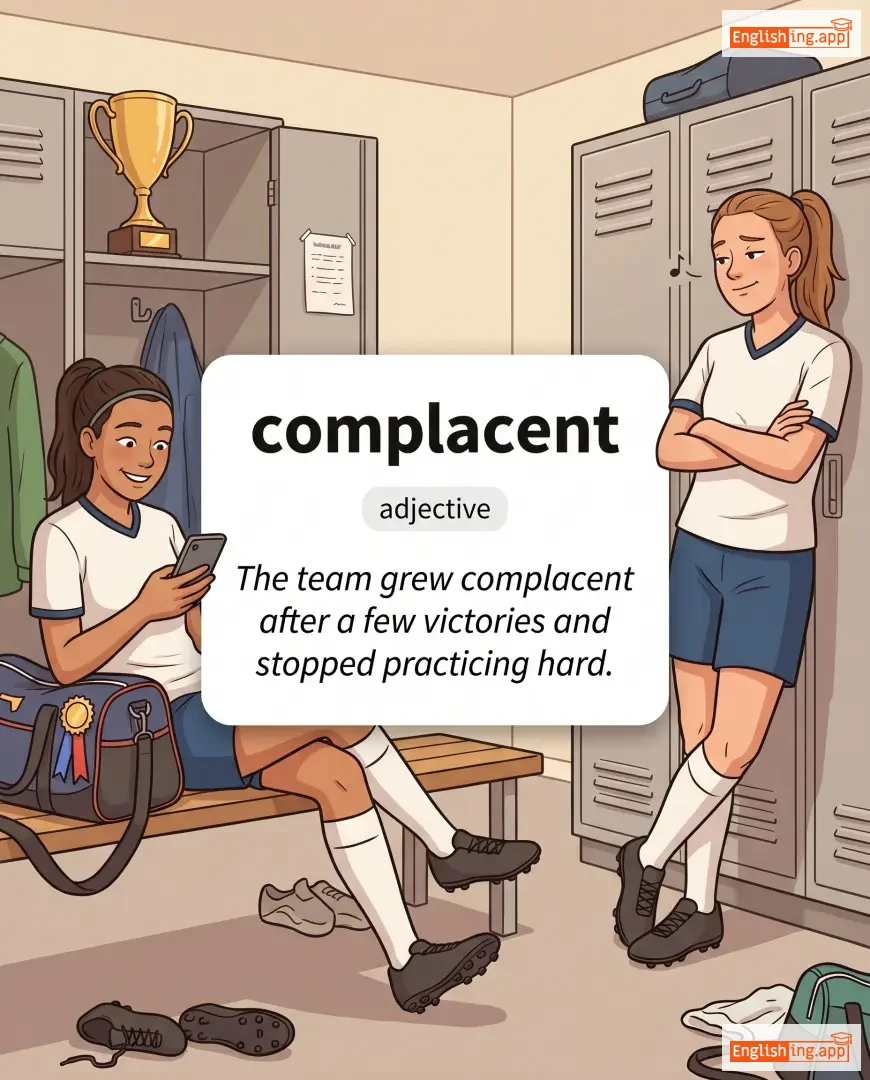
complacent definition card — visual illustration of the meaning
adjective
/kəmˈpleɪsənt/
самодовольный (samodovolnyy)

showing self-satisfaction and a lack of concern about potential dangers or problems

"The team grew complacent after a few victories and stopped practicing hard."

"Команда стала самодовольной после нескольких побед и перестала усердно тренироваться." (Komanda stala samodovol'noy posle neskol'kikh pobed i perestala userdno trenirovat'sya.)
verb
/kəmˈpleɪn/
жаловаться (zhalovatsya)

to express dissatisfaction or annoyance about something

"He often complains about the noise in the neighborhood."

"Он часто жалуется на шум в соседстве." (On chasto zhaluetsya na shum v sosedstve.)
noun
/kəmˈpleɪnt/
жалоба (zhaloba)

a statement that something is wrong or not satisfactory

"The manager received a complaint from a customer about poor service."

"Менеджер получил жалобу от клиента по поводу плохого обслуживания." (Menedzher poluchil zhalobu ot klienta po povodu plokhogo obsluzhivaniya.)
noun
/kəmˈpleɪsəns/
комплейсанс (kompleysans)

willingness to please others; courteous compliance

"Her complaisance made her popular among her colleagues."

"Её комплейсанс сделала её популярной среди коллег." (Eyo kompleysans sdelala yeye populyarnoy sredi kolleg.)
complaisant definition card — visual illustration of the meaning
adjective
/kəmˈpleɪzənt/
слишком угодливый (slishkom ugodlivyy)

willing to please others or to accept what they do or say without protest

"He was too complaisant to refuse their demands."

"Он был слишком угодлив, чтобы отказать в их требованиях." (On byl slishkom ugodliv, chtoby otkazat' v ikh trebovaniyakh.)
complement definition card — visual illustration of the meaning
noun/verb
/ˈkɒmplɪmənt/
комплимент (kompliment)

something that completes or goes well with something; to add something that enhances or improves

"The scarf complements her outfit perfectly."

"шарф идеально дополняет ее наряд." (sharf ideal'no dopolnyaet yeye naryad.)
adjective
/ˌkɒmplɪˈmɛntəri/
дополнительный (dopolnitelnyy)

combining in such a way as to enhance or emphasize the qualities of each other

"The two partners have complementary skills."

"У двух партнеров есть дополнительные навыки." (U dvukh partnerov yest' dopolnitel'nye navyki.)
verb
/kəmˈpliːt/
завершить (zavershit)

to finish making or doing something; to bring something to an end

"She managed to complete the project on time."

"Она успела завершить проект вовремя." (Ona uspela zavershit proyekt vovremya.)
adverb
/kəmˈpliːtli/
полностью (polnost'yu)

totally; in every way possible

"The room was completely silent."

"Комната была полностью тихой." (Komnata byla polnost'yu tikhoi.)
noun
/kəmˈpliːʃən/
завершение (zavershenie)

the action or process of finishing something

"The completion of the project will take another few weeks."
"Завершение проекта займет еще несколько недель." (Zavershenie proyekta zaymet eshche neskol'ko nedel'.)
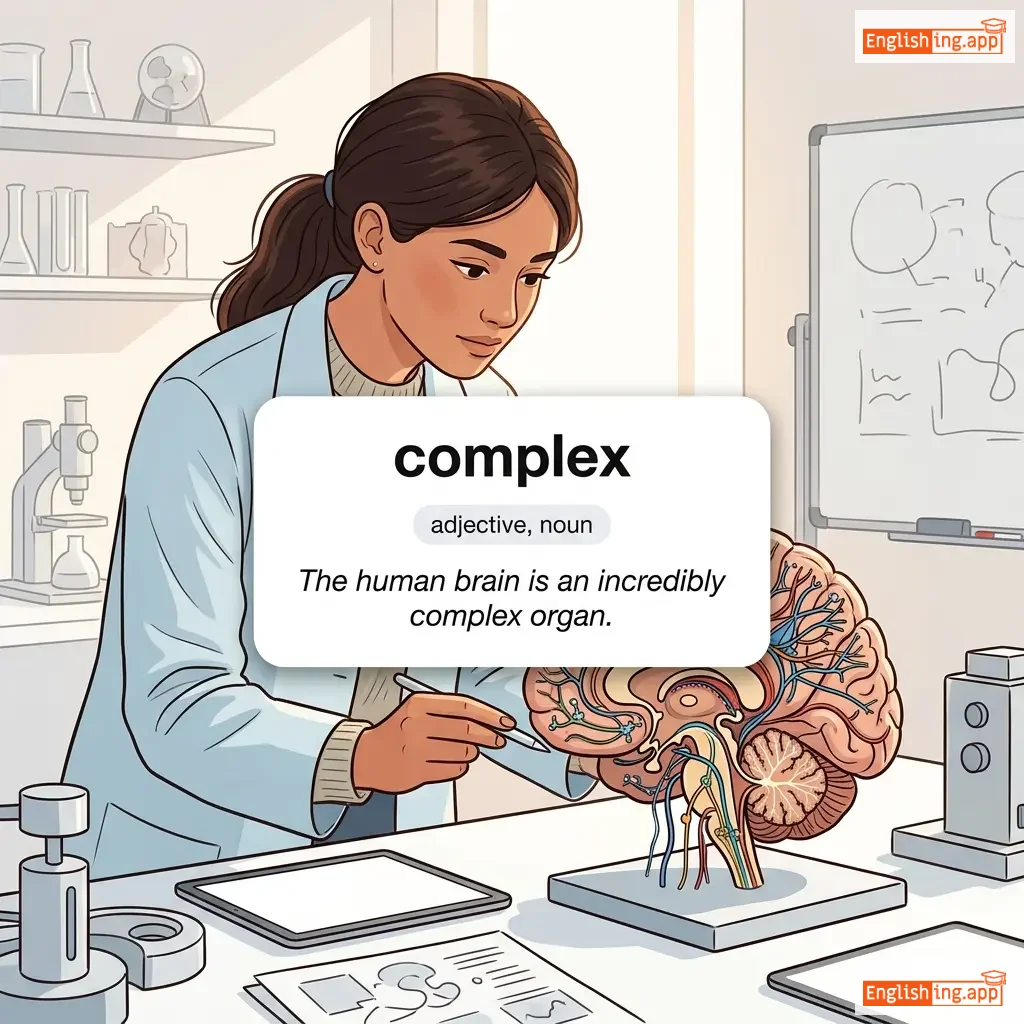
complex definition card — visual illustration of the meaning
adjective, noun
/ˈkɒm.pleks/
сложный (slozhnyy)

Consisting of many different and connected parts; not easy to understand or analyze.

"The human brain is an incredibly complex organ."

"Человеческий мозг — невероятно сложный орган." (Chelovecheskiy mozg — neveroyatno slozhnyy organ.)
noun
/kəmˈplek.ʃən/
цвет лица (tsvet litsa)

the natural color, texture, and appearance of a person's skin, especially on the face

"Her fair complexion glowed beautifully in the morning sunlight."

"Её светлая кожа сияла красиво на утреннем солнце." (Yeyo svetlaya kozha siyala krasivo na utrevnem solntse.)
complexity definition card — visual illustration of the meaning
noun
/kəmˈplɛksɪti/
сложность (slozhnost)

the state or quality of being intricate or complicated

"The complexity of the problem surprised the engineers."
"Сложность проблемы удивила инженеров." (Slozhnost' problemy udivila inzhenerov.)
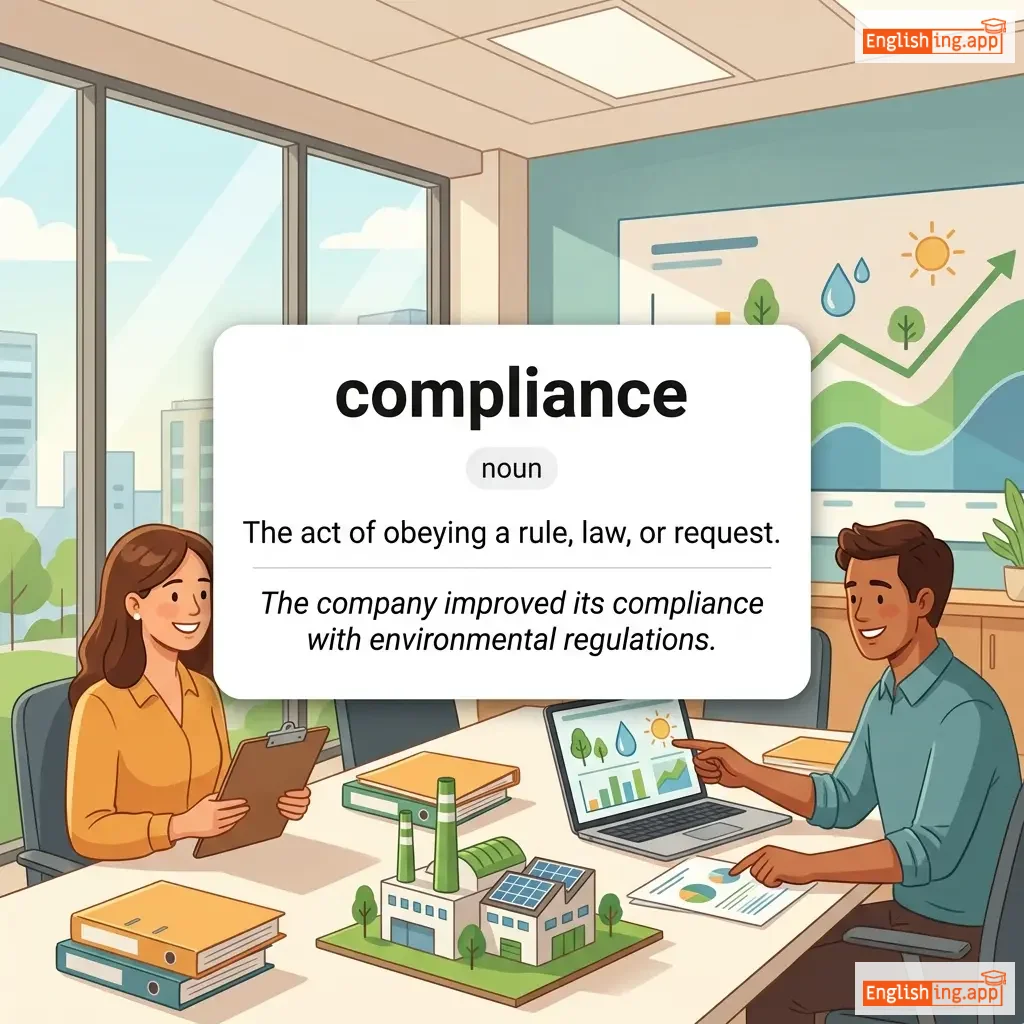
compliance definition card — visual illustration of the meaning
noun
/kəmˈplaɪəns/
соблюдение (soblyudeniye)

The act of obeying a rule, law, or request.

"The company improved its compliance with environmental regulations."
"Компания улучшила соблюдение экологических нормативов." (Kompaniya uluchshila soblyudeniye ekologicheskikh normativov.)
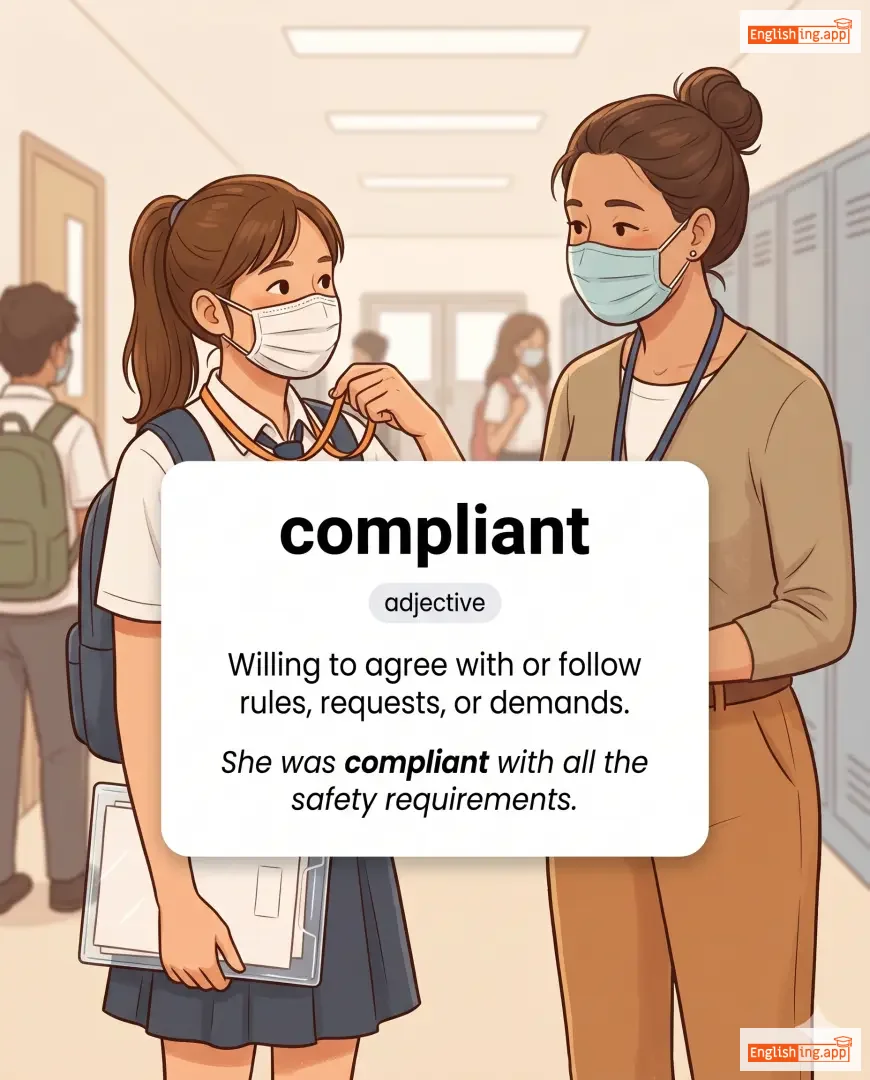
compliant definition card — visual illustration of the meaning
adjective
/kəmˈplaɪənt/
послушный (poslushny)

Willing to agree with or follow rules, requests, or demands.

"She was compliant with all the safety requirements."

"Она была согласна со всеми требованиями безопасности." (Ona byla soglasna so vsemi trebovaniyami bezopasnosti.)
verb
/ˈkɒm.plɪ.keɪt/
усложнять (uslozhnyat)

To make something more difficult or confusing.

"The new rules will only complicate the process."

"Новые правила только усложнят процесс." (Novye pravila tol'ko uslozhnyat protsess.)
adjective
/ˈkɒmplɪˌkeɪtɪd/
сложный (slozhnyy)

consisting of many interconnected parts; difficult to understand

"The instructions for the machine are too complicated to follow."

"Инструкции к машине слишком сложные, чтобы их выполнить." (Instruktsii k mashine slishkom slozhnye, chtoby ikh vypolnit'.)
noun
/ˌkɒmplɪˈkeɪʃən/
осложнение (oslozhnenie)

A problem or difficulty that makes a situation harder to deal with.

"His illness led to serious complications after surgery."

"Его болезнь привела к серьезным осложнениям после операции." (Yego bolezn' privela k seryoznym oslozhneniyam posle operatsii.)
adjective
/kəmˈplɪsɪt/
соучастник (в преступлении) (sochastnik (v prestuplenii))

involved with others in an illegal activity or wrongdoing

"He was found complicit in the crime."

"Он был найден соучастником в преступлении." (On byl nayden sochastnikom v prestuplenii.)
noun
/kəmˈplɪsəti/
соучастие (souchastie)

the state of being involved with others in an illegal activity or wrongdoing

"The court revealed his complicity in the fraud scheme."

"Суд раскрыл его соучастие в мошеннической схеме." (Sud raskryl ego souchastie v moshennicheskoy skheme.)