Словари

Словарь английского языка | Значения слов, определения и примеры

coerce definition card — visual illustration of the meaning
verb
/kəʊˈɜːs/
заставлять (zastavlyat)

to persuade or force someone to do something by using threats or pressure

"They tried to coerce him into signing the contract."
"Они пытались заставить его подписать контракт." (Oni pytalis' zastavit' ego podpisat' kontrakt.)
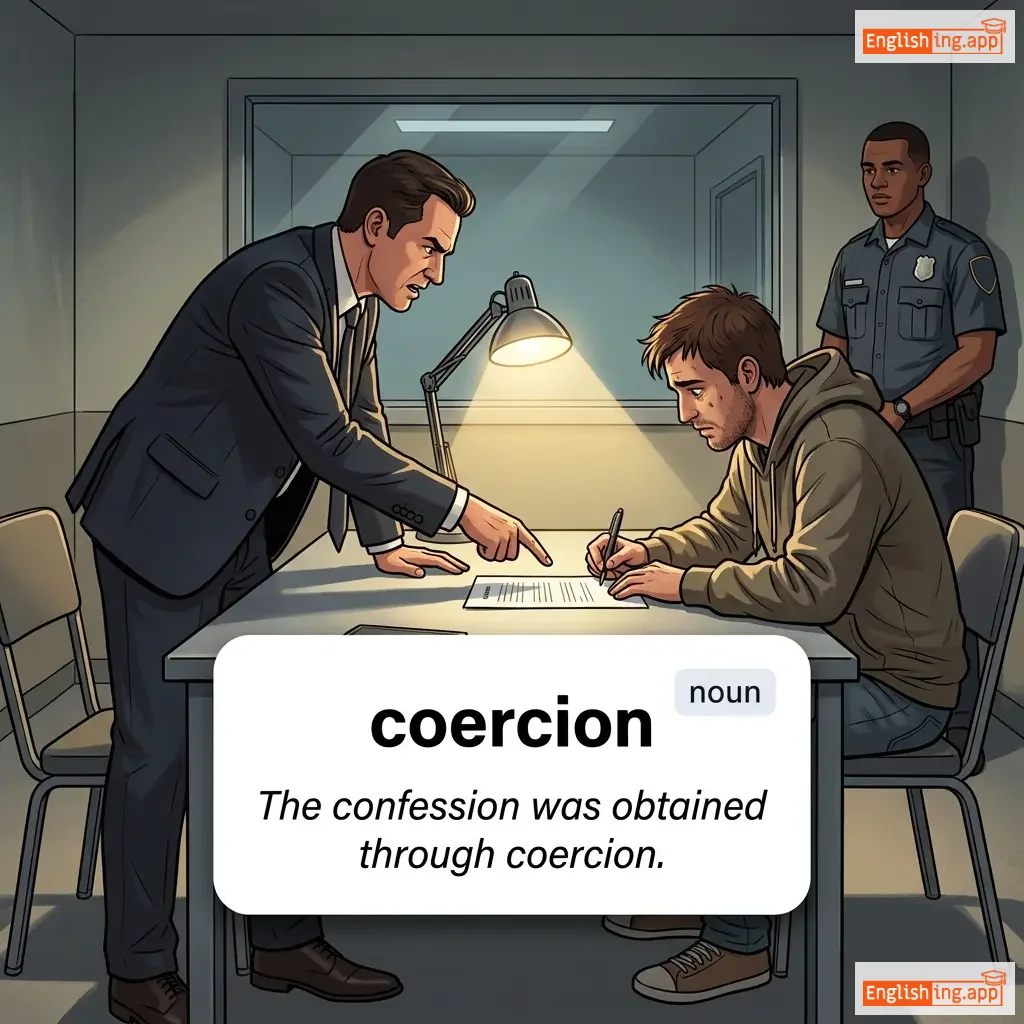
coercion definition card — visual illustration of the meaning
noun
/kəʊˈɜː.ʒən/
принуждение (prinuzhdenie)

the practice of forcing someone to act in a certain way by using threats or pressure

"The confession was obtained through coercion."

"Признание было получено под принуждением." (Priznanie bylo polucheno pod prinuzhdeniem.)
adjective
/koʊˈɜːrsɪv/
принудительный (prinuditiel'nyi)

Relating to or using force or threats to make someone do something.

"The government faced criticism for adopting coercive measures against protestors."

"Правительство столкнулось с критикой за принятие принудительных мер против протестующих." (Pravitel'stvo stolknulos' s kritikoi za priniatie prinuditiel'nykh mier protiv protestuiushchikh.)
adjective
/koʊˈiːvəl/
современник (sovremennik)

Having the same age, date of origin, or duration; contemporary.

"The philosopher was coeval with the rise of modern science."

"Философ был современником подъема современной науки." (Filosof byl sovremennikom pod'yema sovremennoj nauki.)
noun
/ˈkɔːfi/
счастье (schastye)

a hot drink made from roasted and ground coffee beans

"I drink a cup of coffee every morning."

"Она не могла скрыть своего счастья, когда получила награду." (Ona ne mogla skryt' svoego schast'ya, kogda poluchila nagradu.)
noun
/ˈkɒf.i ˈmeɪ.kər/
кофеварка (Kofe mayker)

an electric appliance used to brew coffee automatically

"I use my coffee maker every morning to brew fresh coffee."

"Я использую свою кофеварку каждое утро, чтобы заваривать свежий кофе." (Ya polzuyus svoey kofevarkoy kazhdoe utro chtoby zavarivat svezhiy kofe)
noun
/ˈkɔːfər/
сундук (sunduk)

A strongbox or small chest for holding valuables, often used metaphorically for funds or financial reserves.

"The city's coffers were drained after the costly project."

"Казна города была опустошена после дорогого проекта." (Kazna goroda byla opustoshena posle dorogogo proyeka.)
noun
/kɑːɡ/
зубец колеса или шестерёнки (zubets kolesa ili shesteryonki)

A tooth on the rim of a wheel or gear; metaphorically, a minor but necessary part of a larger system.

"He felt like just a small cog in a big machine."
"Он чувствовал себя маленьким шестерёнкой в большой машине." (On chuvstvoval sebya malen'kim shesteryonkoy v bol'shoy mashine.)
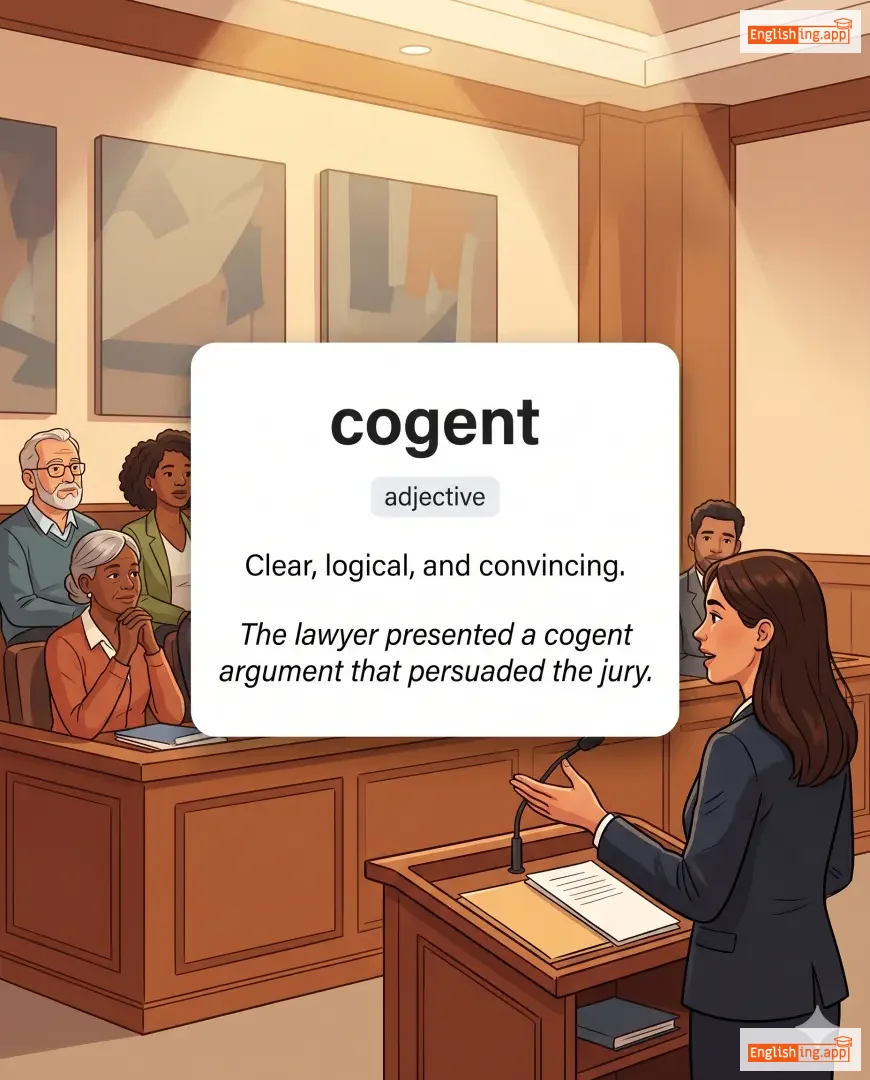
cogent definition card — visual illustration of the meaning
adjective
/ˈkoʊdʒənt/
ясный и логичный (yasnyy i logichnyy)

Clear, logical, and convincing.

"The lawyer presented a cogent argument that persuaded the jury."

"Адвокат представил ясный и логичный аргумент, который убедил присяжных." (Advokat predstavil yasnyy i logichnyy argument, kotoryy ubedil prisyazhnykh.)
verb
/ˈkɒdʒɪteɪt/
размышлять (razmyshlyat')

to think deeply about something; to meditate or reflect

"He sat by the river to cogitate on his future plans."

"Он сидел у реки, чтобы обдумать свои будущие планы." (On sidel u reki, chtoby obdumaty svoi budushchie plany.)
cogitation definition card — visual illustration of the meaning
noun
ˌkɒdʒ.ɪˈteɪ.ʃən
глубокие раздумья; размышление или медитация (glubokie razdumya; razmyshlenie ili meditatsiya)

Deep thought; contemplation or meditation.

"After much cogitation, he decided to change his career path."

"После долгих раздумий он решил изменить свой карьерный путь." (Posle dolgikh razdumiy on reshil izmenit' svoi kar'ernyi put'.)
noun
/ˈkɒɡneɪt/
когнат (kognat)

a word related to another word in origin; having the same linguistic root

"The Spanish word 'madre' and the English word 'mother' are cognates."
"Испанское слово 'madre' и английское слово 'mother' — когнаты." (Ispanskoe slovo 'madre' i angliyskoe slovo 'mother' — kognaty.)
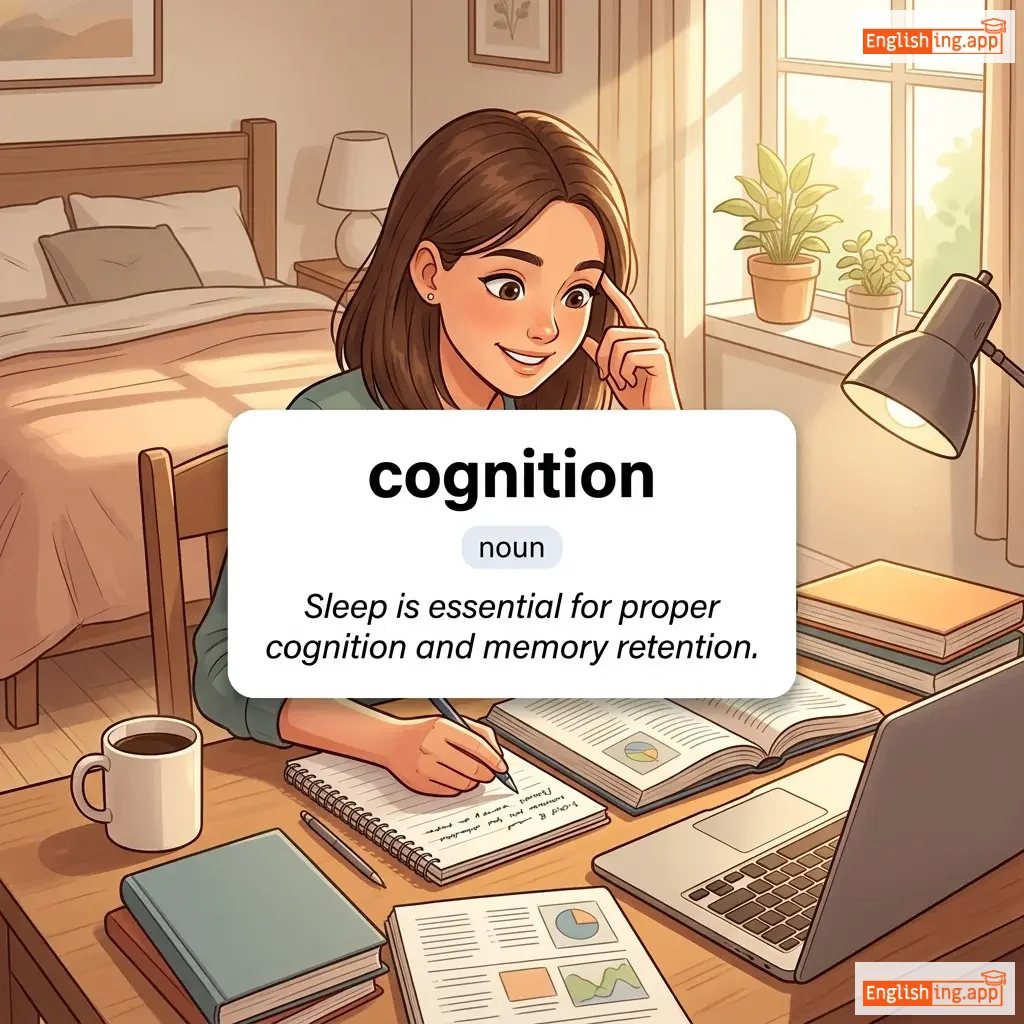
cognition definition card — visual illustration of the meaning
noun
kɒɡˈnɪʃ.ən
познание (koginishn)

The mental action or process of acquiring knowledge and understanding through thought, experience, and the senses.

"Sleep is essential for proper cognition and memory retention."
"Сон необходим для надлежащего познания и сохранения памяти." (Son neobkhodim dlya nadlezhashchego poznaniya i sokhraneniya pamyati.)
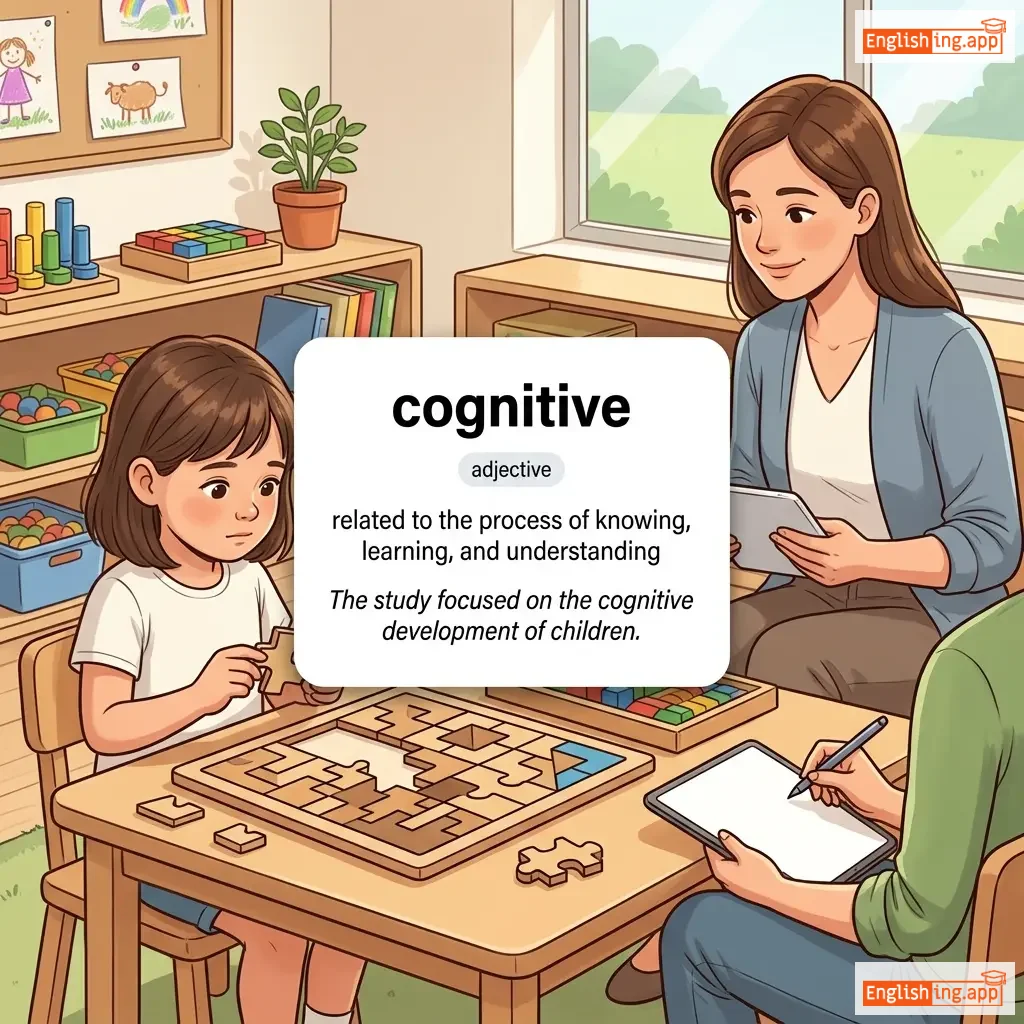
cognitive definition card — visual illustration of the meaning
adjective
/ˈkɒɡnətɪv/
когнитивный (kognitivny)

related to the process of knowing, learning, and understanding

"The study focused on the cognitive development of children."
"Исследование было сосредоточено на когнитивном развитии детей." (Issledovaniye bylo sosredotocheno na kognitivnom razvitii detey.)
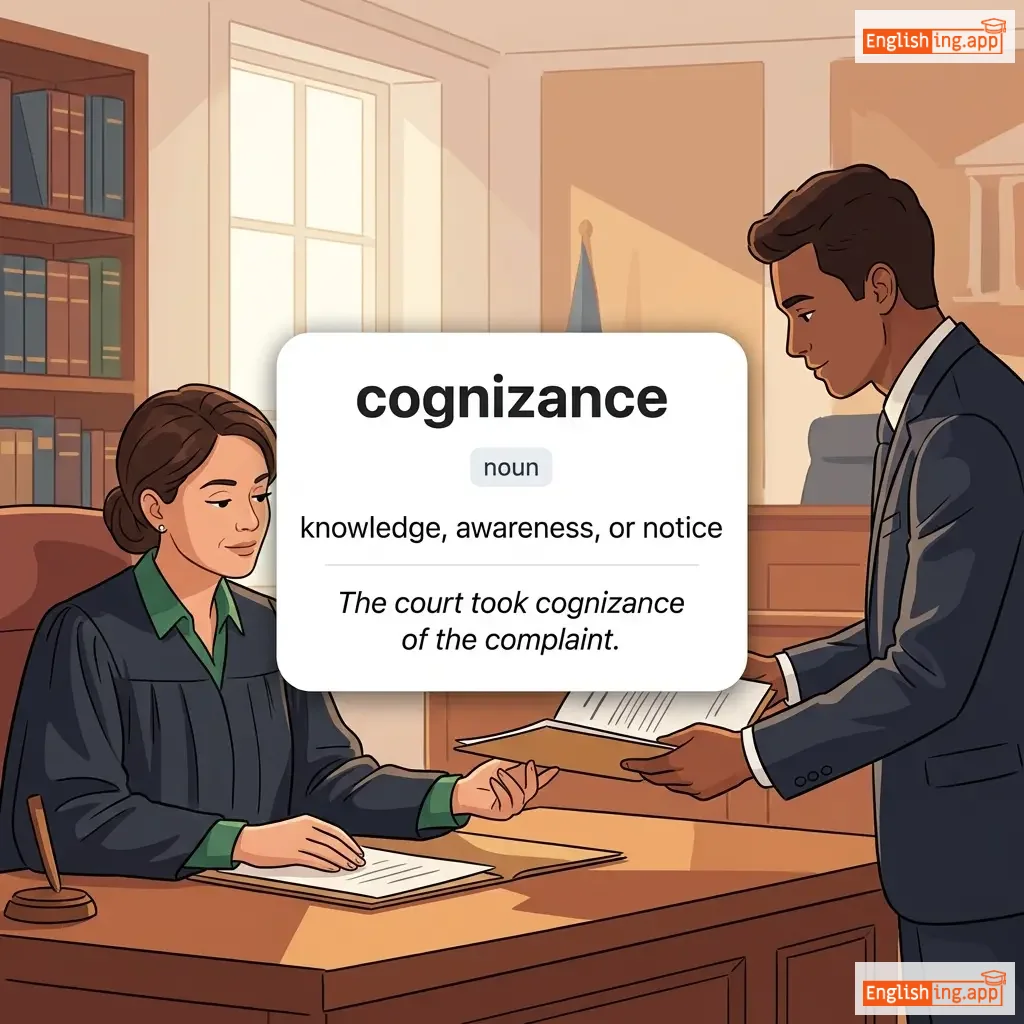
cognizance definition card — visual illustration of the meaning
noun
/ˈkɒɡnɪzəns/
знание, осведомленность или уведомление (znanie, osvedomlennost' ili uvedomlenie)

knowledge, awareness, or notice

"The court took cognizance of the complaint."
"Суд принял к сведению жалобу." (Sud prinjal k svedeniyu zhalobu.)
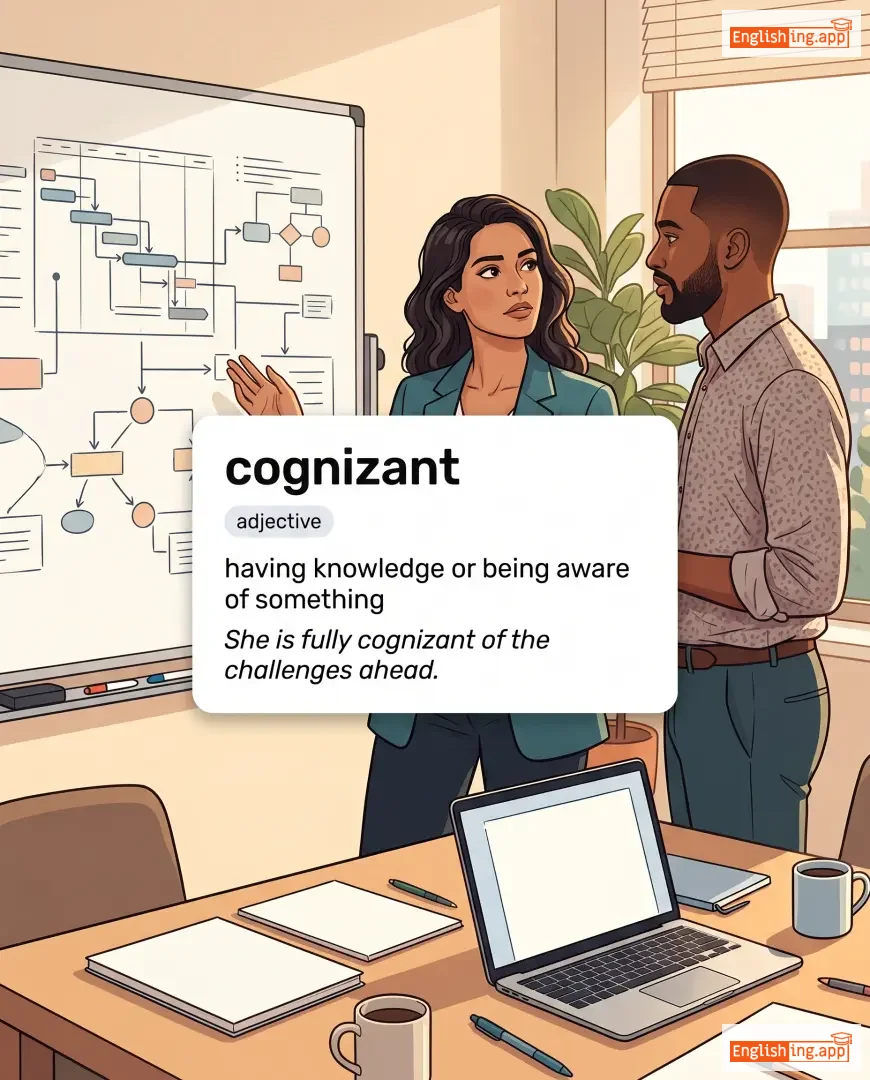
cognizant definition card — visual illustration of the meaning
adjective
/ˈkɒɡnɪzənt/
осведомлённый (osvedomlennyj)

having knowledge or being aware of something

"She is fully cognizant of the challenges ahead."

"Она полностью осведомлена о предстоящих вызовах." (Ona polnost'yu osvedomlena o predstoyashchikh vyzovakh.)
noun
/kɒɡˈnoʊmən/
фамилия / прозвище (familiya / prozvische)

A family name or surname; an additional name or nickname.

"His cognomen became widely known in literary circles."

"Его фамилия стала широко известна в литературных кругах." (Ego familiya stala shiroko izvestna v literaturnykh krugakh.)
verb
/koʊˈhæbɪt/
сожительствовать (sozhitel'stvovat')

To live together, often as partners without being married.

"They decided to cohabit before getting married."

"Они решили жить вместе до свадьбы." (Oni reshili zhit' vmeste do svad'by.)
verb
/koʊˈhɪr/
согласовываться (soglasovyvat'sya)

To stick together; to be united logically or physically.

"The ideas in his essay cohere well."
"Идеи в его эссе хорошо соединяются." (Idei v ego esse khorosho soedinayutsya.)
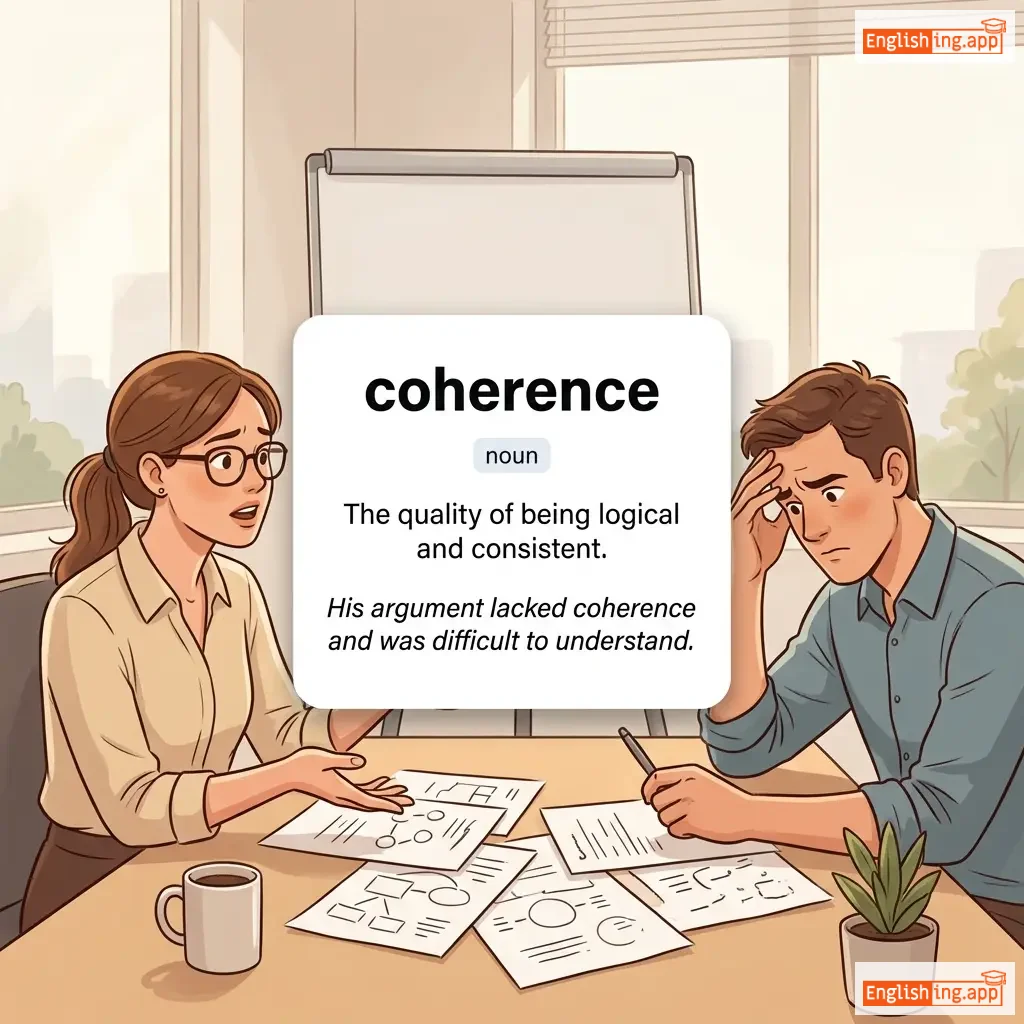
coherence definition card — visual illustration of the meaning
noun
/kəʊˈhɪə.rəns/
согласованность, логическая последовательность (soglasovannost, logicheskaya posledovatelnost)

The quality of being logical and consistent.

"His argument lacked coherence and was difficult to understand."

"Его аргумент не имел коэрентности и был труден для понимания." (Ego argument ne imel koherentnosti i byl trudyen dlya ponimaniya.)
coherent definition card — visual illustration of the meaning
adjective
/koʊˈhɪə.rənt/
когерентный (kogyerentny)

Logical and consistent; making sense.

"Her speech was clear and coherent."
"Ее речь была ясной и когерентной." (Eyo rech' byla yasnoy i kogyerentnoy.)
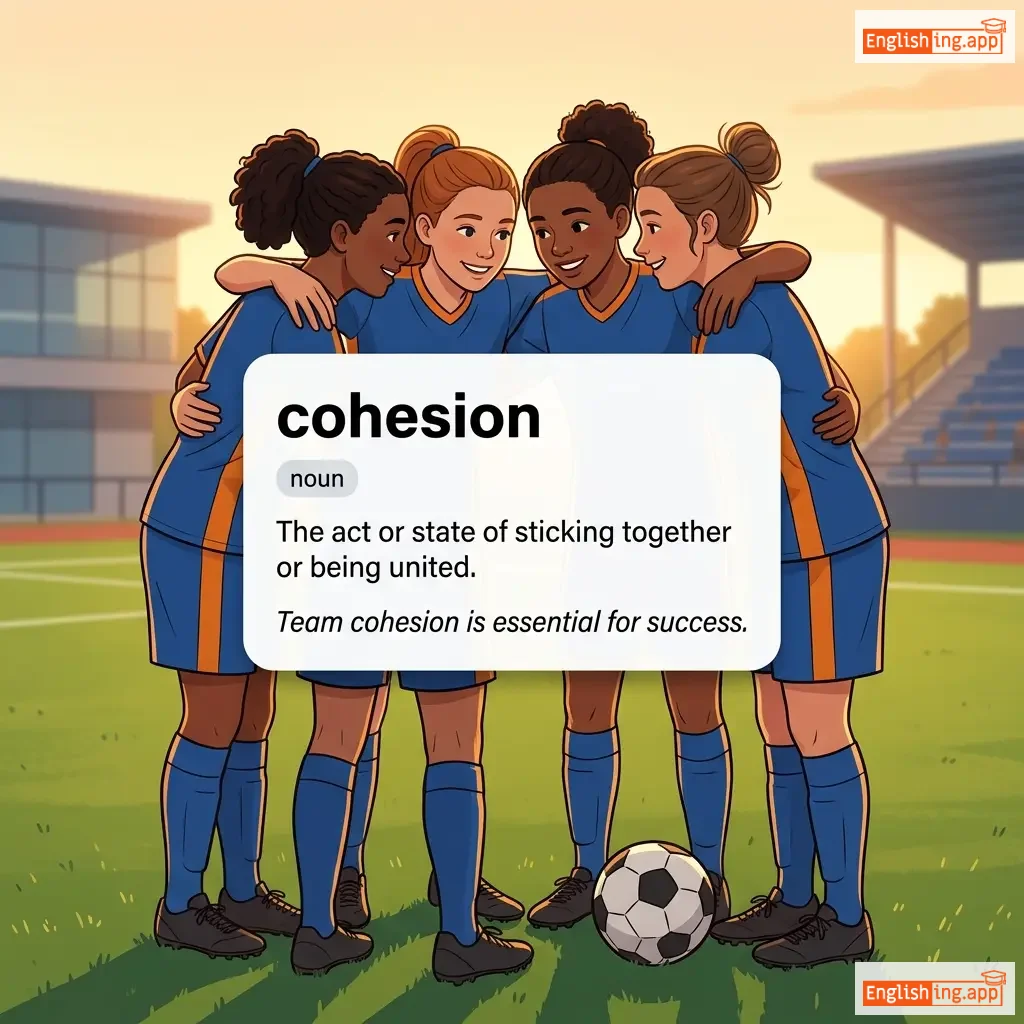
cohesion definition card — visual illustration of the meaning
noun
/koʊˈhiːʒən/
согласие (soglasie)

The act or state of sticking together or being united.

"Team cohesion is essential for success."

"Согласие в команде необходимо для успеха." (Soglasie v komande neobkhodimo dlya uspekha.)
cohesive definition card — visual illustration of the meaning
adjective
/koʊˈhiːsɪv/
сплочённый (splochyonnij)

Characterized by or causing unity and sticking together.

"The team presented a cohesive strategy."
"Команда представила сплочённую стратегию." (Komanda predstavyla splochyonnuyu strategiyu.)
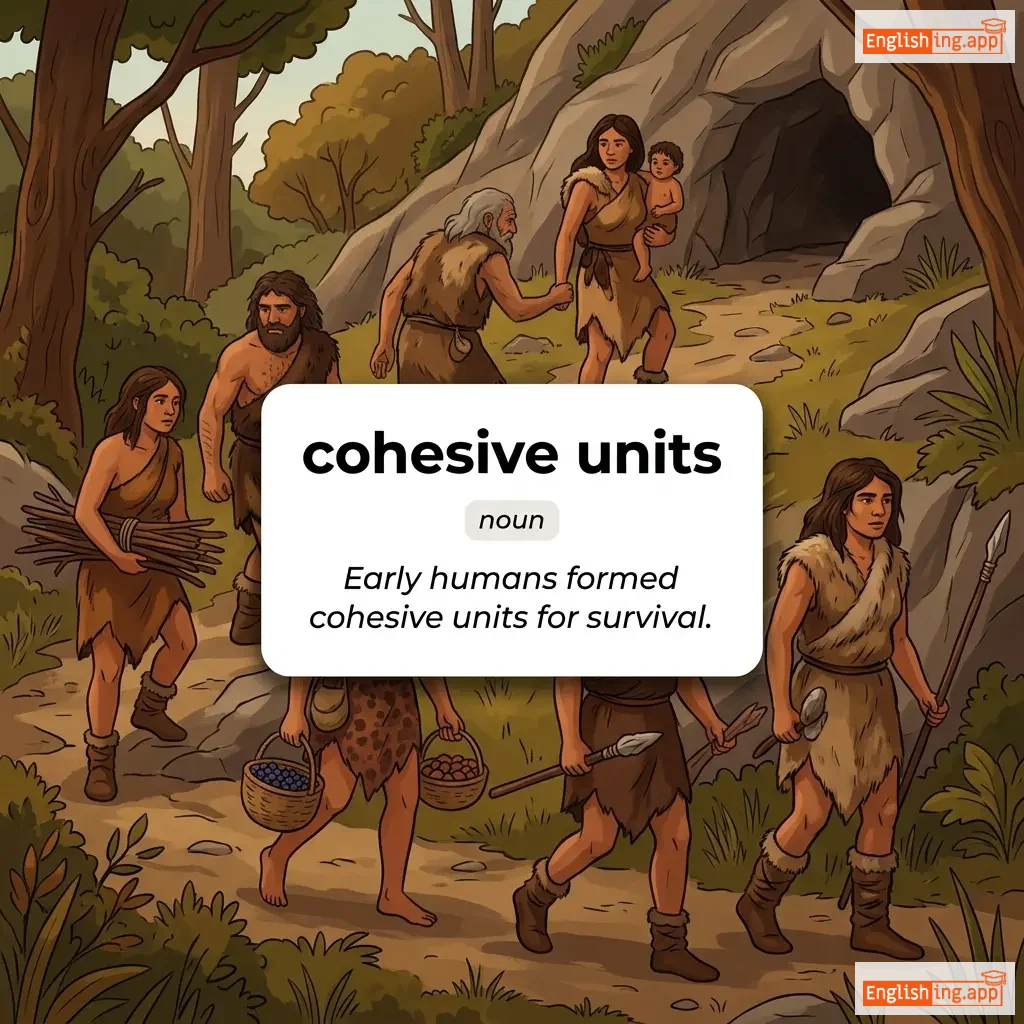
cohesive units definition card — visual illustration of the meaning
noun
koʊˈhisɪv ˈjunɪts
когезивные единицы (kohezivnye edinitsy)

Groups or organizations that work together as unified wholes, with members closely bound together.

"Early humans formed cohesive units for survival."

"Ранние люди создавали когезивные единицы для выживания." (Rannyye lyudi sozdavali kohezivnye edinitsy dlya vyzhivaniya.)
noun
/ˈkoʊhɔːrt/
когорта (kogorta)

A group of people with a shared characteristic, usually of the same age or with a common experience.

"The study tracked a cohort of students over ten years."

"Исследование отслеживало когорту студентов на протяжении десяти лет." (Issledovaniye otslezhivalo kogortu studentov na protyazhenii desyati let.)
👨‍👩‍👧‍👦

cohorts (кохорты)

noun
/ˈkoʊhɔːrts/
когорты (kogorty)

Groups of people who share a common feature or experience.

"Researchers compared the health outcomes of different cohorts."

"Исследователи сравнили результаты здоровья разных когорт." (Issledovateli sravnili rezul'taty zdorov'ya raznykh kogort.)
💇‍♀️

coiffure (kwo-feer)

noun
/kwɑːˈfjʊr/
прическа (pricheska)

A person's hairstyle, typically an elaborate one.

"Her elegant coiffure impressed everyone at the party."

"Её элегантная прическа произвела впечатление на всех на вечеринке." (Eyo elegatnaya prichoska proizvela vpechatlenie na vsekh na vecherinke.)
noun, verb
/kɔɪn/
монета (moneta)

A flat piece of metal used as money; as a verb, to invent a new word or phrase.

"The government decided to coin a new term for the program."

"Правительство решило ввести новый термин для программы." (Pravitel'stvo reshilo vvesti novyy termin dlya programmy.)
verb
/ˌkoʊ.ɪnˈsaɪd/
совпадать (sovpadat)

To occur at the same time or to be in agreement.

"The meeting coincided with her birthday."

"Встреча совпала с её днём рождения." (Vstrecha sovpala s yey dnyom rozhdeniya.)
noun
/koʊˈɪnsɪdəns/
совпадение (sovpadeniye)

A remarkable or surprising occurrence of events at the same time by chance.

"It was pure coincidence that we met at the airport."

"Это было чистое совпадение, что мы встретились в аэропорту." (Eto bylo chistoye sovpadeniye, chto my vstretilis' v aeroportu.)
adjective
/koʊˈɪnsɪdənt/
совпадающий (sovpadayushchiy)

Occurring at the same time; occupying the same position in space or time.

"The festival was coincident with the national holiday."

"Фестиваль был совпадающим с национальным праздником." (Festival byl sovpadayushchim s natsional'nym prazdnikom.)
noun
/kɔɪnz/
монеты (monety)

Flat, typically round pieces of metal issued by a government as money.

"He collected old coins from different countries."

"Он собрал старые монеты из разных стран." (On sobral staryje monety iz raznykh stran.)
noun
/ˈkɒləndər/
друшлаг (drushlag)

A bowl with holes used for draining liquid from food such as pasta or vegetables.

"She poured the pasta into a colander to drain the water."

"Она вылила пасту в друшлаг, чтобы слить воду." (Ona vylila pastu v drushlag, chtoby slity vodu.)
adjective/noun
/koʊld/
холодный (kholodny)

having a low temperature; lacking warmth

"It was so cold outside that she wore two jackets."

"На улице было так холодно, что она надела две куртки." (Na ulitse bylo tak kholodno, chto ona nadela dve kurtki.)
noun
/koʊld drɪŋk/
холодный напиток (kholodnyy napitok)

A chilled beverage; a refreshing drink served cold

"I ordered a cold drink to beat the summer heat."

"Я заказал холодный напиток, чтобы справиться с летней жарой." (Ya zakazal kholodnyy napitok, chtoby spravit'sya s letney zharoy.)
collaborate definition card — visual illustration of the meaning
verb
/kəˈlæbəreɪt/
сотрудничать (sotrudnichat)

To work jointly with others, especially on an intellectual or creative project.

"The two companies decided to collaborate on a new project."

"Две компании решили сотрудничать над новым проектом." (Dve kompanii reshili sotrudnichat' nad novym proyektom.)
collaboration definition card — visual illustration of the meaning
noun
/kəˌlæbəˈreɪʃən/
сотрудничество (sotrudnichestvo)

the action of working together with others to produce or achieve something

"The project was a result of close collaboration between two companies."

"Проект был результатом тесного сотрудничества между двумя компаниями." (Proyekt byl rezul'tatom tyesnogo sotrudnichestva mezhdu dvumya kompaniyami.)
collage definition card — visual illustration of the meaning
noun
/kəˈlɑːʒ/
коллаж (kolazh)

A piece of art made by sticking various materials such as photographs or paper onto a surface.

"She created a collage using old magazine pictures."

"Она создала коллаж, используя старые фотографии из журналов." (Ona sozdala kollazh, ispol'zuyushchiy staryye fotografii iz zhurnale.)
verb
/kəˈlæps/
коллапсировать (kollapsirovat)

to fall down or inward suddenly; to break down completely

"The old building collapsed after the earthquake."

"Старое здание рухнуло после землетрясения." (Staroe zдание rukhnulo posle zemletryaseniya.)
adjective
/kəˈlæpsəbl̩/
складной (skladnoy)

able to be folded down or reduced in size

"She bought a collapsible chair for camping."

"Она купила складной стул для кемпинга." (Ona kupila skladnoy stul dlya kempinga.)
noun
/ˈkɒlər/
воротник (vorotnik)

the part of a shirt, coat, or dress that goes around the neck

"He adjusted his shirt collar before entering the meeting."

"Он отрегулировал воротник своей рубашки перед тем, как войти на встречу." (On otreguliroval vorotnik svoey rubashki pered tem, kak voiti na vstrechu.)
noun
/ˈkɒl.ə.bəʊn/
ключица (klyuchitsa)

either of the pair of bones joining the breastbone to the shoulder blades; clavicle

"He broke his collar-bone in the accident."

"Он сломал ключицу в аварии." (On slomal klyuchitsu v avarii.)
verb
/kəˈleɪt/
собрать (sobrat)

to collect, arrange, and combine in order

"The secretary collated the reports before the meeting."

"Секретарь собрал отчеты перед встречей." (Sekretar' sobral otchety pered vstrechey.)
collateral definition card — visual illustration of the meaning
noun
/kəˈlætərəl/
обеспечение (obespechenie)

something pledged as security for repayment of a loan

"He used his house as collateral for the bank loan."

"Он использовал свой дом как обеспечение для банковского кредита." (On ispol'zoval svoi dom kak obespechenie dlya bankovskogo kredita.)
noun
/kəˈleɪʃən/
колляция (kollyatsiya)

the act of collecting, comparing, and arranging in proper order

"The librarian spent hours on the collation of old manuscripts."

"Библиотекарь провел часы, собирая старые манускрипты." (Bibliotekar' provel chasy, sobiraya starye manuskrypty.)
noun
/ˈkɒliːɡ/
коллега (kollega)

a person with whom one works, especially in a profession or business

"She invited her colleagues to the office party."

"Она пригласила своих коллег на офисную вечеринку." (Ona priglasila svoikh kolleg na ofisnuyu vecherinku.)
collect definition card — visual illustration of the meaning
verb
/kəˈlekt/
собирать (sobirat)

To gather or bring together items from different places.

"She likes to collect stamps as a hobby."

"Она любит собирать марки как хобби." (Ona lyubit sobirat marky kak hobbi.)
adjective
/kəˈlɛktɪd/
спокойный (spokoinyi)

calm and in control of oneself

"She remained calm and collected during the crisis."

"Она оставалась спокойной и собранной во время кризиса." (Ona ostavalas' spokoinoy i sobranoy vo vremya krizisa.)
noun
/kəˈlɛkʃən/
коллекция (kollekciya)

a group of things gathered together

"She has a large collection of rare books."

"У нее большая коллекция редких книг." (U nee bol'shaya kollekciya redkikh knig.)
collective definition card — visual illustration of the meaning
adjective
/kəˈlɛktɪv/
коллективный (kollektivnyy)

done by people acting as a group

"The decision was made by collective agreement."

"Решение было принято по коллективному соглашению." (Resheniye bylo prinyato po kollektivnomu soglasheniyu.)