Словари

Словарь английского языка | Значения слов, определения и примеры

noun
/ˌæplɪˈkeɪʃən/
заявка / приложение / программное обеспечение (zayavka / prilozhenie / programmnoe obespeshenie)

a formal request for something; the act of putting something into operation; or a software program

"She submitted her application for the scholarship."

"Она подала заявку на стипендию." (Ona podala zayavku na stipendiyu.)
verb
/əˈplaɪ/
подать заявление / применять (podat zayavlenie / primenyat)

to make a formal request for something; to put into practice

"He decided to apply for the scholarship."

"Он решил подать заявку на стипендию." (On reshil podat zayavlenie na stipendiyu.)
appoint definition card — visual illustration of the meaning
verb
/əˈpɔɪnt/
назначить (naznachit)

to officially assign a job or role to someone

"The board decided to appoint her as the new manager."

"Правление решило назначить её новым менеджером." (Pravlenie reshilo naznachit yeye novym menedzherom.)
appointed definition card — visual illustration of the meaning
verb
əˈpɔɪn.tɪd
назначен (naznachen)

Assigned to a job or role; nominated or designated for a position.

"He was appointed as the commission leader."

"Он был назначен руководителем комиссии." (On byl naznachen rukovoditelem komissii.)
noun
/əˈpɔɪntmənt/
встреча (vstrecha)

an arrangement to meet someone at a particular time

"I have a doctor's appointment tomorrow."

"У меня завтра прием у врача." (U menya zavtra priem u vracha.)
appointments definition card — visual illustration of the meaning
noun
əˈpɔɪnt.mənts
назначения (naznacheniya)

An arrangement to meet someone at a particular time and place; the action of assigning a job or role to someone.

"Government appointments follow meritocracy."
"Государственные назначения следуют за меритократией." (Gosudarstvennye naznacheniya sleduyut za meritokratiey.)
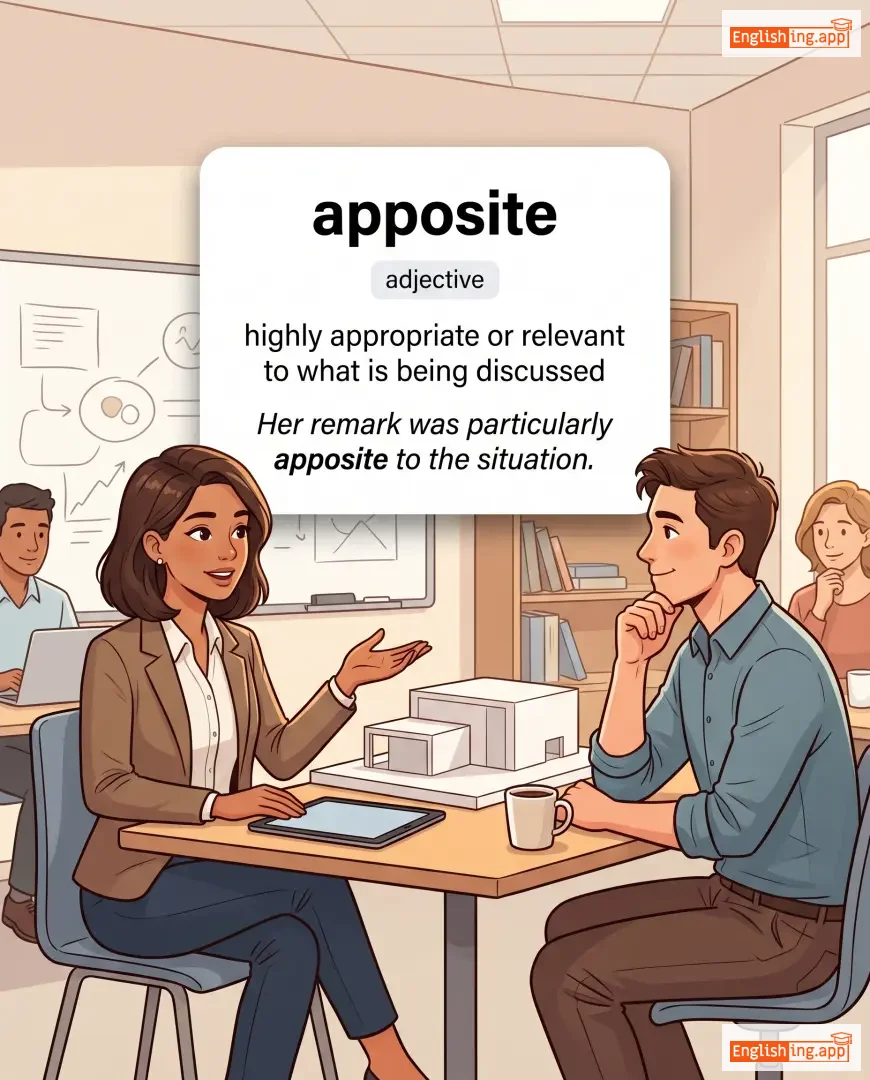
apposite definition card — visual illustration of the meaning
adjective
/ˈæpəzɪt/
уместный (umestny)

highly appropriate or relevant to what is being discussed

"Her remark was particularly apposite to the situation."

"Её замечание было особенно уместным для ситуации." (Eyo zamechaniye bylo osobenno umestnym dlya situatsii.)
noun
/ˌæpəˈzɪʃən/
аппозиция (параллельная грамматика) (appozitsiya (parallel'naya grammatika))

a grammatical construction in which two elements are placed side by side, with one explaining the other

"In the phrase 'my friend John,' the word 'John' is in apposition to 'my friend.'"
"В фразе 'мой друг Иван' слово 'Иван' находится в аппозиции с 'моим другом'." (V fraze 'moy drug Ivan' slovo 'Ivan' nakhoditsya v appozitsii s 'moim drugom'.)
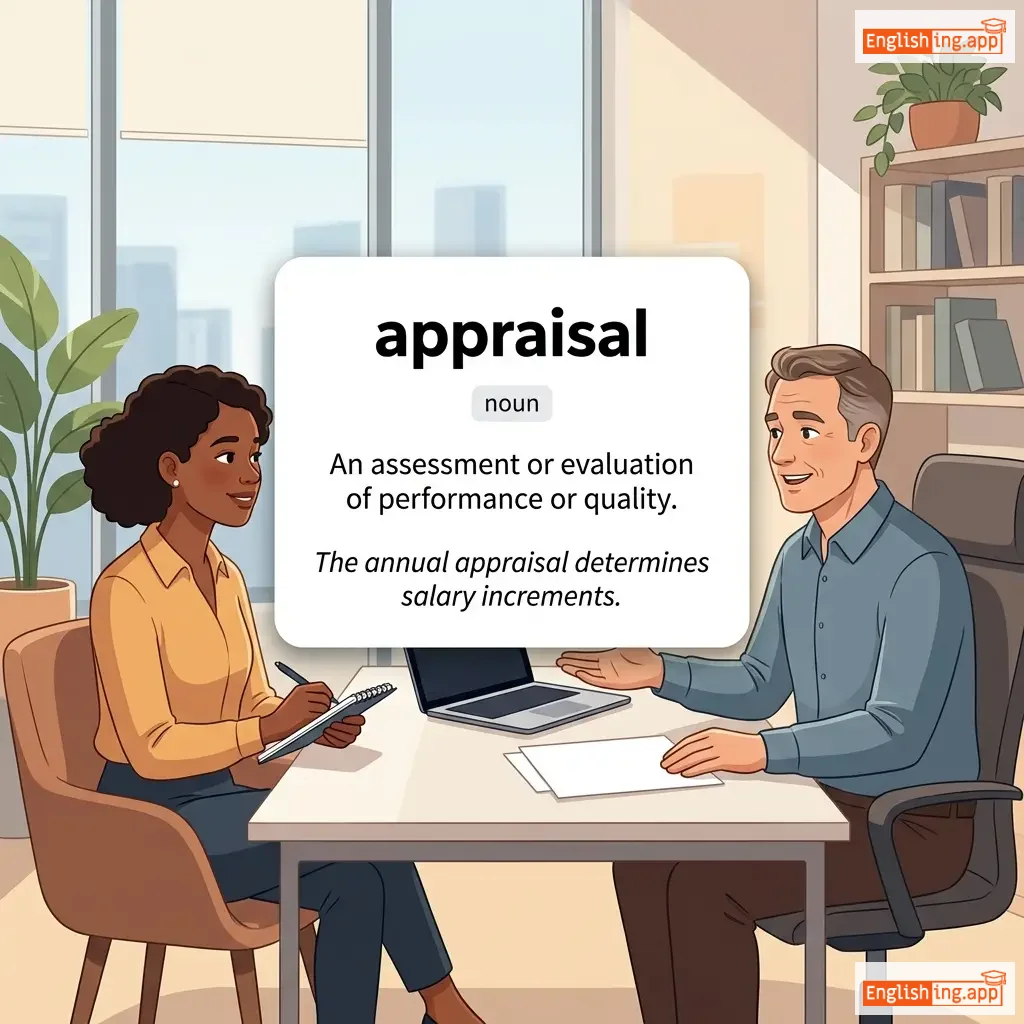
appraisal definition card — visual illustration of the meaning
noun
əˈpreɪ.zəl
оценка (otsenka)

An assessment or evaluation of performance or quality.

"The annual appraisal determines salary increments."

"Ежегодная оценка определяет повышение заработной платы." (Ezhegodnaya otsenka opredelyaet povyshenie zarabotnoy platy.)
verb
/əˈpreɪz/
оценивать (otsenivat)

to evaluate the value, quality, or importance of something

"The jeweler appraised the diamond before buying it."

"Ювелир оценил бриллиант перед покупкой." (Yuwelir otsenil brilliant pered pokupkoy.)
adjective
/əˈpriːʃəbl/
значительный (znachitel'nyy)

large or noticeable enough to be important

"There has been an appreciable improvement in her performance."

"Было значительное улучшение в её производительности." (Bylo znachitel'noye uluchsheniye v yeyo proizvoditel'nosti.)
appreciate definition card — visual illustration of the meaning
verb
/əˈpriːʃieɪt/
ценить (tsen-it)

to recognize the value of something or to be thankful for it

"I really appreciate your help with this project."

"Я действительно ценю вашу помощь в этом проекте." (Ya deystvitel'no tsenyu vashu pomoshch' v etom pro-yekte.)
appreciation definition card — visual illustration of the meaning
noun
/əˌpriːʃiˈeɪʃən/
признательность, благодарность (priznatelnosť, blagodarnost')

recognition and enjoyment of the good qualities of someone or something

"She showed great appreciation for his hard work."

"Она выразила глубокую признательность за его тяжелую работу." (Ona vyrazila glubokuyu priznatelnosť za ego tyazheluyu rabotu.)
verb
/ˌæprɪˈhɛnd/
задержать (zaderzhat)

to arrest or seize someone; to understand or perceive something

"The police managed to apprehend the thief after a long chase."

"Полиция сумела арестовать вора после долгой погони." (Politsiya sumela arestovat vori posle dolgoy pogoni.)
adjective
/ˌæprɪˈhɛnsəbl̩/
понятный (ponyatny)

capable of being understood or grasped

"The concept was not easily apprehensible to the new students."

"Концепция была не слишком легко понятна для новых студентов." (Kontseptsiya byla ne slishkom legko ponyatna dlya novykh studentov.)
apprehension definition card — visual illustration of the meaning
noun
/ˌæprɪˈhɛnʃən/
беспокойство или страх (bespokoystvo ili strakh)

anxiety or fear about the future; the act of understanding something

"She felt great apprehension before her job interview."

"Она почувствовала большое беспокойство перед своим собеседованием." (Ona pochuvstvovala bol'shoe bespokoystvo pered svoim sobesedovaniem.)
adjective
/ˌæprɪˈhɛnsɪv/
тревожный (trevozhny)

feeling anxious or fearful that something bad will happen

"He was apprehensive about starting a new job in a foreign country."
"Он был тревожен по поводу начала новой работы в чужой стране." (On byl trevozhen po povodu nachala novoy raboty v chuzhoy strane.)
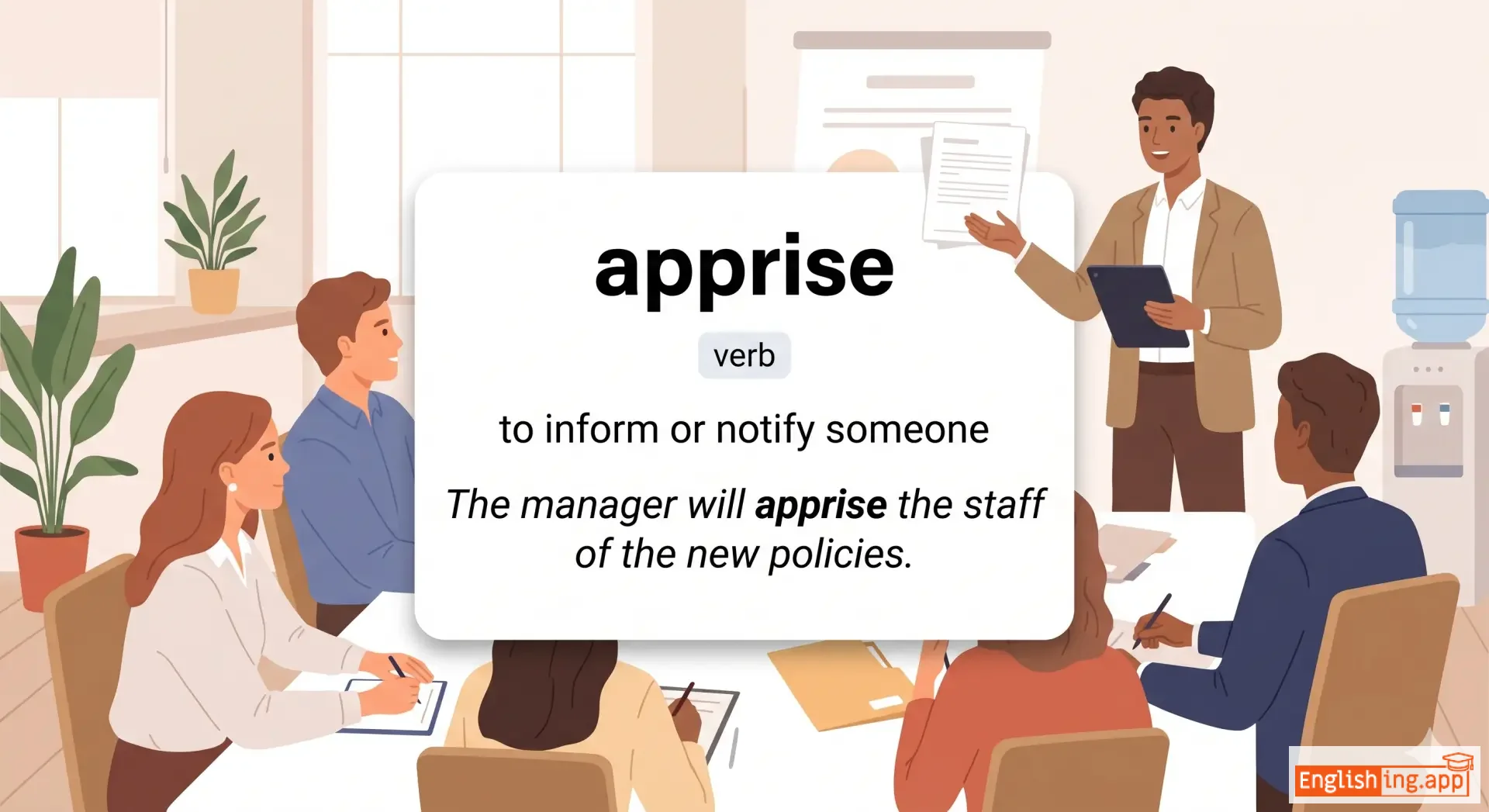
apprise definition card — visual illustration of the meaning
verb
/əˈpraɪz/
проинформировать (proinformirovat')

to inform or notify someone

"The manager will apprise the staff of the new policies."

"Менеджер проинформирует персонал о новых политиках." (Menedzher proinformiruet personal o novykh politikakh.)
verb
/əˈproʊtʃ/
подходить / решать проблему (podkhodit / reshat problemu)

to move closer to someone or something; to deal with a situation or problem

"The teacher approached the student to offer help."
"Учитель подошел к ученику, чтобы предложить помощь." (Uchitel' podoshel k ucheniku, chtoby predlozhit' pomoshch'.)
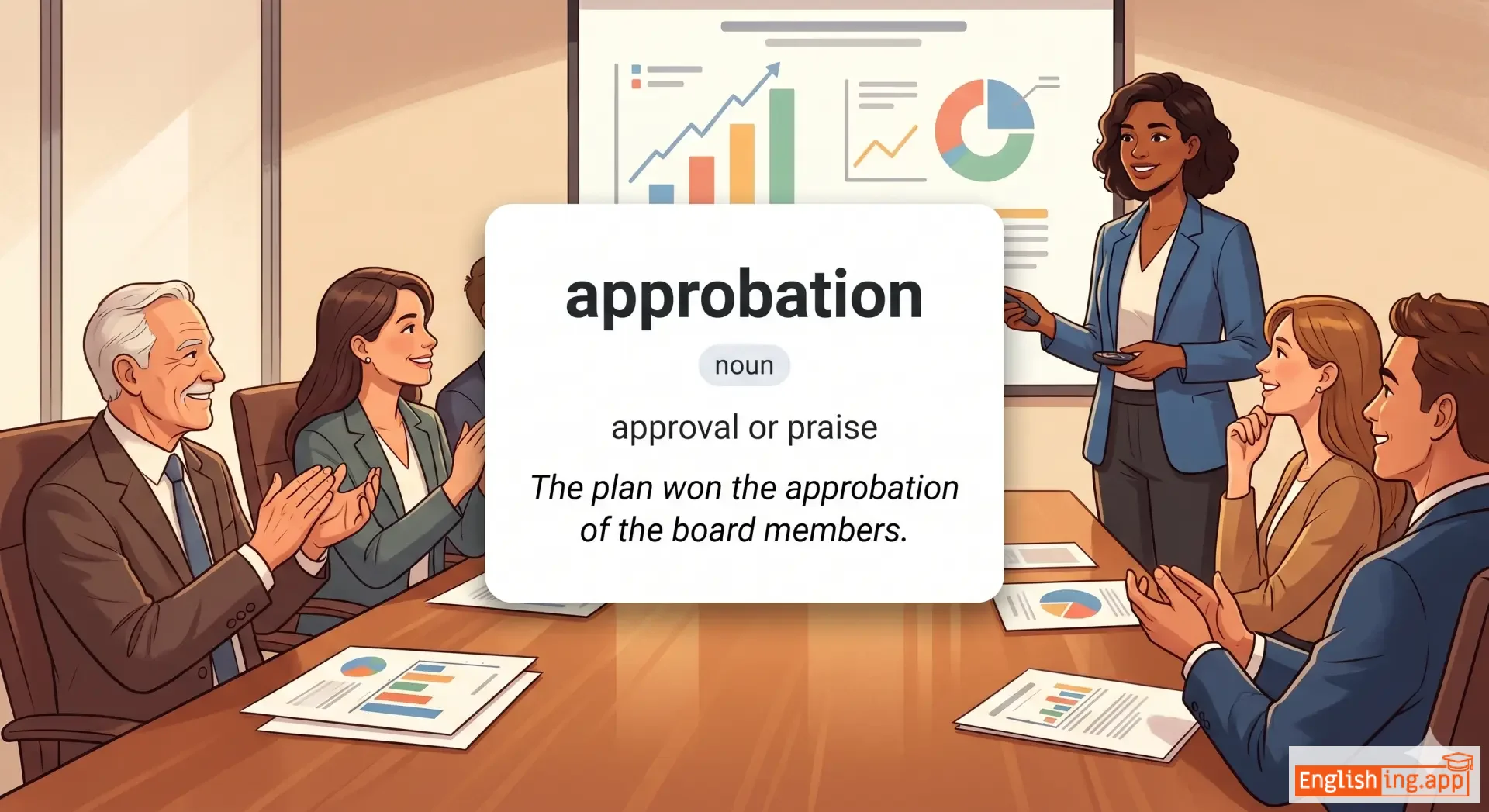
approbation definition card — visual illustration of the meaning
noun
/ˌæprəˈbeɪʃən/
одобрение / похвала (odobrenie / pokhvala)

approval or praise

"The plan won the approbation of the board members."

"План получил одобрение членов совета." (Plan poluchil odobrenie chlenov soveta.)
adjective
/ˈæprəbəˌtɔːri/
одобряющий (odobryayushchiy)

expressing approval or praise

"The teacher gave an approbatory nod after reading the essay."
"Учитель кивнул одобрительно, прочитав эссе." (Uchitel' kivnul odobritel'no, prochitav esse.)
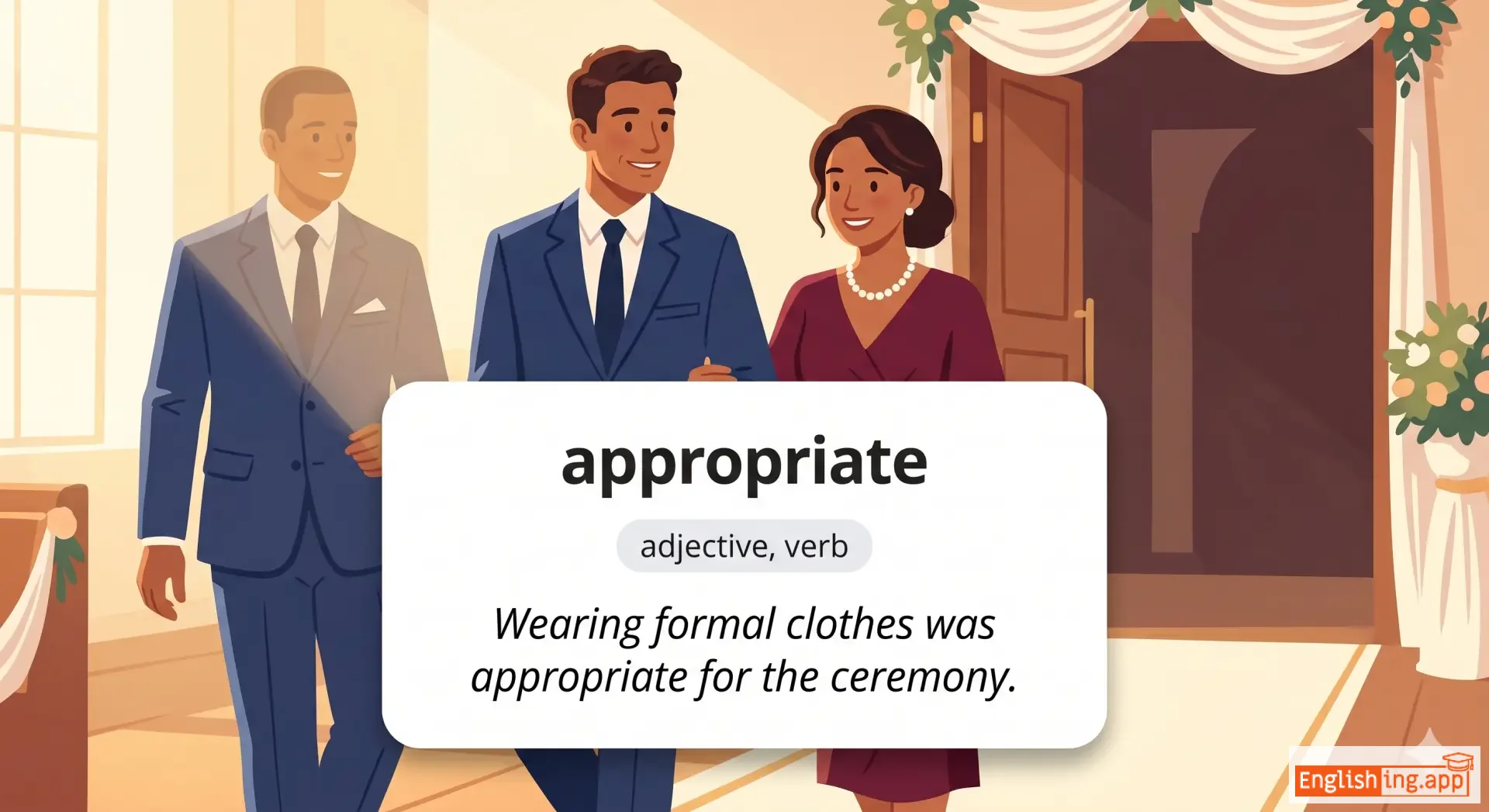
appropriate definition card — visual illustration of the meaning
adjective, verb
/əˈproʊpriət/ (adj), /əˈproʊprieɪt/ (verb)
уместный / присваивать (umestny / prisvaivat)

suitable or proper in the circumstances (adj); to take something for one’s own use, often without permission (verb)

"Wearing formal clothes was appropriate for the ceremony."

"Носить формальную одежду было уместно для церемонии." (Nosit' formal'nuyu odezhdu bylo umestno dlya tseremonii.)
adverb
/əˈproʊpriətli/
соответственно (sotvetstvenno)

in a way that is suitable or proper for a particular situation

"She was dressed appropriately for the event."

"Она была одета соответственно мероприятию." (Ona byla odita sotvetstvenno meropriyatiyu.)
noun
/əˈpruː.vəl/
одобрение (odobrenie)

official permission or agreement for something

"The project received government approval."

"Проект получил одобрение правительства." (Proyekt poluchil odobrenie pravitel'stva.)
verb
/əˈpruːv/
одобрить (odobrit)

to officially accept, agree to, or allow something

"The manager approved the budget for next year."

"Менеджер утвердил бюджет на следующий год." (Menedzher utverdil byudzhet na sleduyushchiy god.)
adjective/verb
/əˈprɒksɪmət/
приблизительный (priblizitelnyi)

close to the actual but not exact; to estimate or calculate roughly

"The cost is approximate and may change later."

"Стоимость приблизительная и может измениться позже." (Stoimost priblizitelnaya i mozhet izmenitsya pozzhe)
adverb
/əˈprɒk.sɪ.mət.li/
приблизительно (priblizitel'no)

used to show that something is almost, but not completely, accurate or exact

"The journey takes approximately three hours."

"Путешествие занимает приблизительно три часа." (Puteshestviye zanimaet priblizitel'no tri chasa.)
noun
/əˈpɜːrtənəns/
дополнение / аксессуар (dopolnenie / aksessuar)

an accessory or supplementary part of something

"The garage is an appurtenance of the main house."

"Гараж - это дополнение главного дома." (Garazh - eto dopolnenie glavnogu doma.)
noun
/əˈpɜːrtənənsɪz/
принадлежности (prinadlezhnosti)

Additional items or accessories associated with something, often used in a legal or property context.

"The house was sold along with all its appurtenances, including the garage and garden."

"Дом был продан вместе со всеми его принадлежностями, включая гараж и сад." (Dom byl prodan vmeste so vsemi ego prinadlezhnostyami, vklyuchaya garazh i sad.)
adjective
/əˈpɜːrtənənt/
принадлежащий (prinadlezhashchij)

Belonging to or associated with something, often used in legal/property contexts.

"The right of way is appurtenant to the landowner’s property."

"Право проезда принадлежит земле владельца." (Pravo proezda prinadlezhit zemle vladel'tsa.)
noun
/ˈeɪ.prɪ.kɒt/
абрикос (abrikos)

a small orange-colored fruit with a soft skin and sweet flesh

"The apricot tree produces sweet fruit in summer."

"Абрикосовое дерево производит сладкие плоды летом." (Abrikosovoye derevo proizvodit sladkiye plody letom.)
noun
/ˈeɪprɪl/
апрель (aprel)

the fourth month of the year in the Gregorian calendar

"April is known for its pleasant spring weather."

"Апрель известен своей приятной весенней погодой." (aprel izvesten svoei priyatnoi vesennei pogodoi)
👩‍🍳

apron

noun
/ˈeɪ.prən/

A protective garment worn over the front of one's clothes to keep them clean, especially while cooking.

"She tied an apron around her waist before cooking dinner."
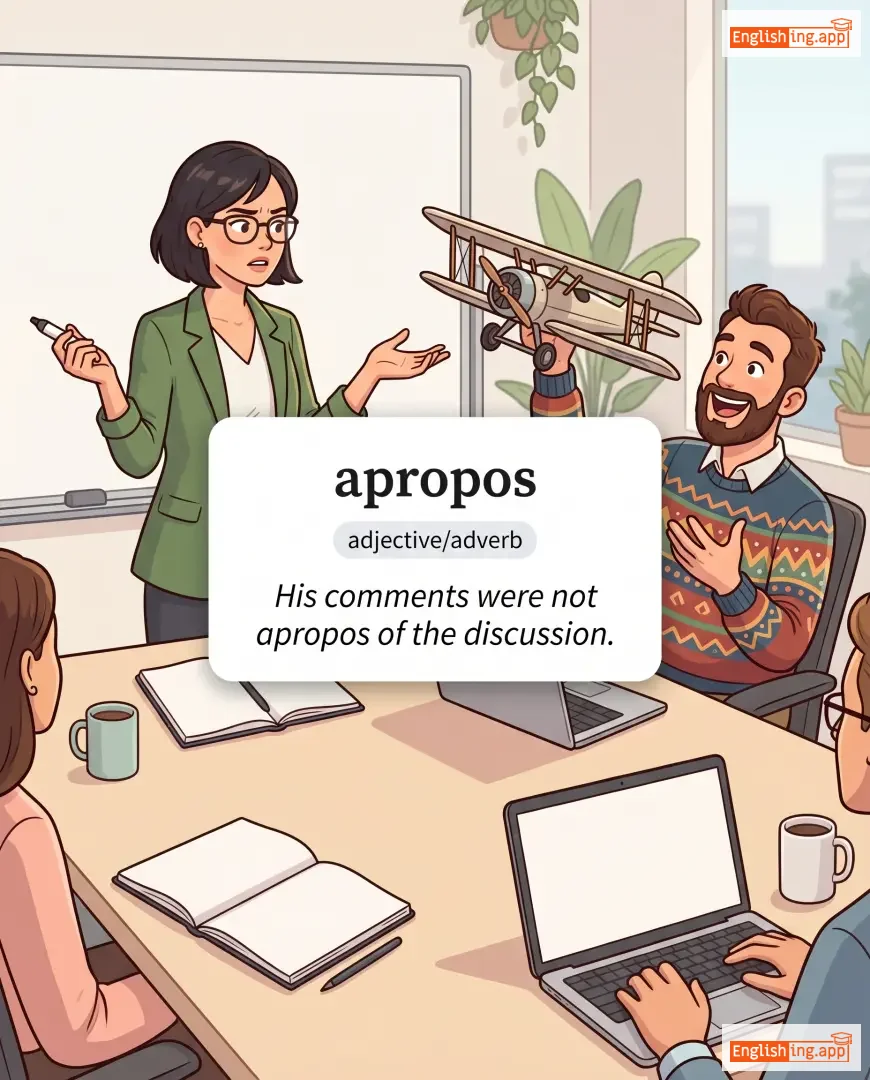
apropos definition card — visual illustration of the meaning
adjective/adverb
/ˌæ.prəˈpoʊ/
уместный (umestny)

Appropriate to the situation; relevant. As an adverb, it means 'with reference to' or 'regarding'.

"His comments were not apropos of the discussion."

"Его комментарии не были уместными для обсуждения." (Ego kommentarii ne byli umestnymi dlya obsuzhdeniya.)
adjective
/æpt/
подходящий (podkhodyashchiy)

Appropriate or suitable; having a natural tendency or quick to learn.

"She is an apt student who quickly understands new concepts."

"Она подходящий студент, которая быстро понимает новые концепции." (Ona podkhodyashchiy student, kotoraya bystro ponimayet novye kontseptsii.)
noun
/ˈæptɪˌtjuːd/
способность (sposobnost)

a natural ability or talent to do something well

"She has a strong aptitude for learning new languages."
"У нее есть сильная способность к изучению новых языков." (U nee yest' sil'naya sposobnost' k izuchyeniyu novykh yazykov.)
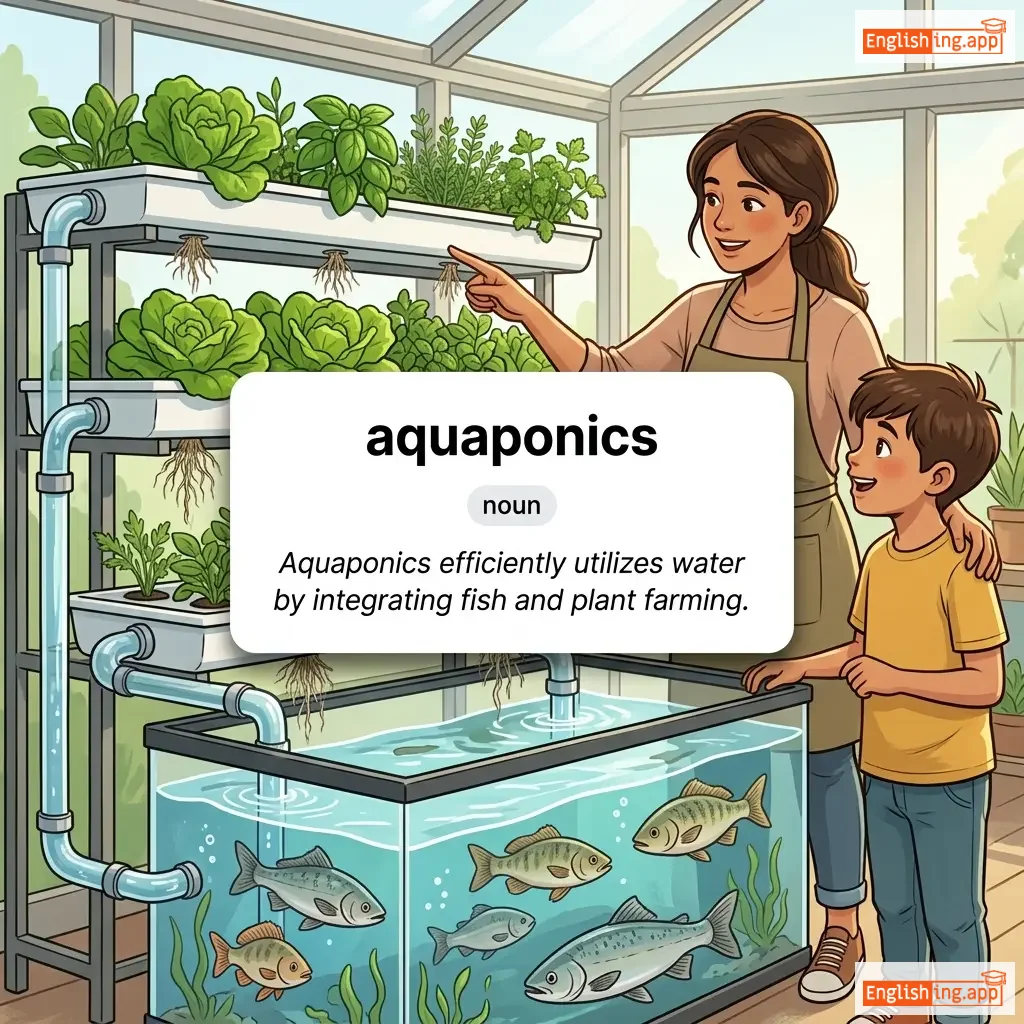
aquaponics definition card — visual illustration of the meaning
noun
/ˌækwəˈpɒnɪks/
аквапоника (akvaponika)

A system of aquaculture in which the waste produced by farmed fish or other aquatic animals supplies nutrients for plants grown hydroponically.

"Aquaponics efficiently utilizes water by integrating fish and plant farming."
"Аквапоника эффективно использует воду, интегрируя рыбоводство и растениеводство." (Akvaponika effektyvno ispol'zuyet vodu, integriruyushchaya rybovodstvo i rasten'evodstvo.)
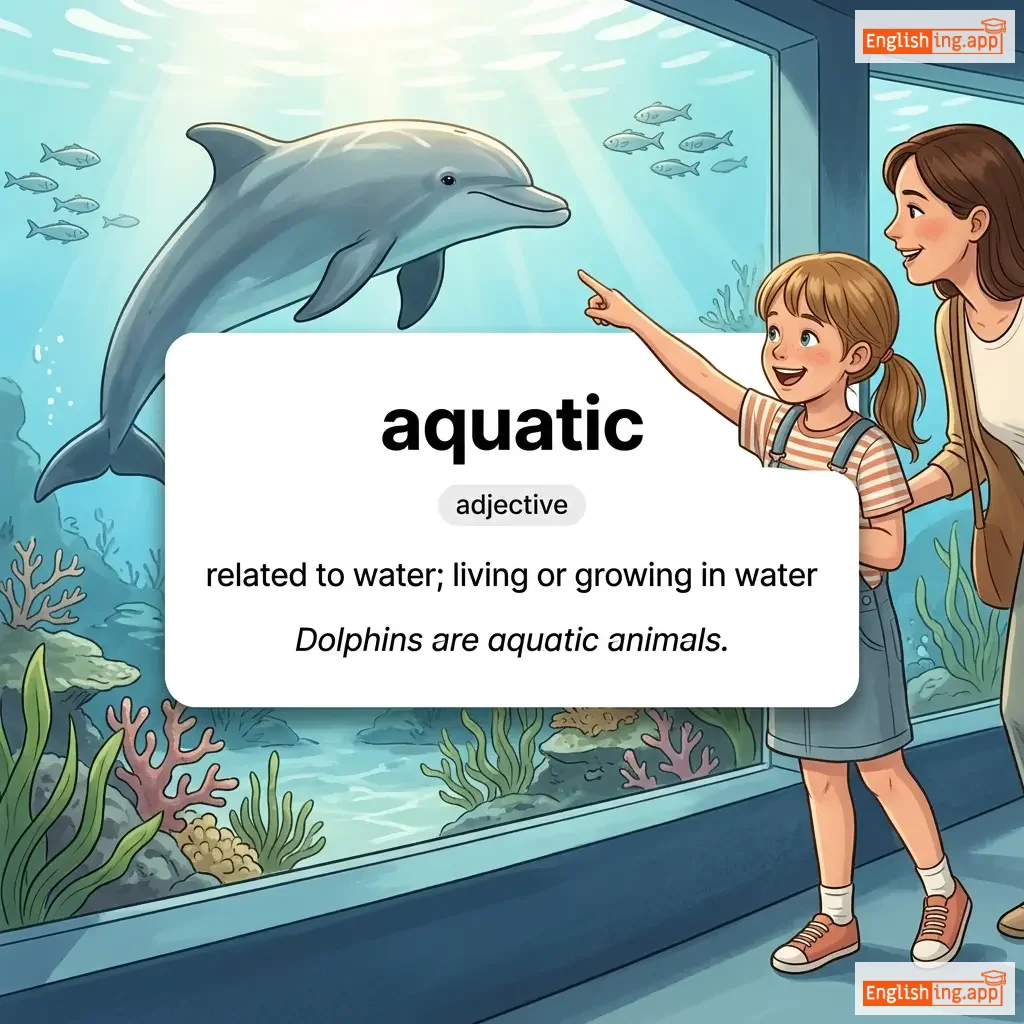
aquatic definition card — visual illustration of the meaning
adjective
/əˈkwætɪk/
акватический (akvaticheskiy)

related to water; living or growing in water

"Dolphins are aquatic animals."

"Дельфины - это акватические животные." (Del'finy - eto akvaticheskie zhivotnye.)
noun
/ˈækwɪˌdʌkt/
акведук (akveduk)

a structure built to carry water over long distances

"The Romans built aqueducts to supply water to their cities."

"Римляне построили акведуки для снабжения своих городов водой." (Rimlyane postroili akveduki dlya snabzheniya svoikh gorodov vodoy.)
adjective
/ˈeɪkwiəs/
водяной (vodyanoy)

related to or containing water; watery

"The solution was in an aqueous form."

"Решение было в водяной форме." (Reshenie bylo v vodyanoy forme.)
adjective
/ˈækwɪˌlaɪn/
орлиный (orlinyj)

curved like an eagle's beak; hooked

"He had an aquiline nose that gave him a distinguished appearance."

"У него был орлиный нос, который придавал ему выдающийся вид." (U nego byl orlinyj nos, kotoryj pridaval emu vydajushchijsja vid.)
🕌

arab

noun
/ˈær.əb/

a person belonging to the Semitic people of the Middle East and North Africa

"He is an Arab living in Dubai."
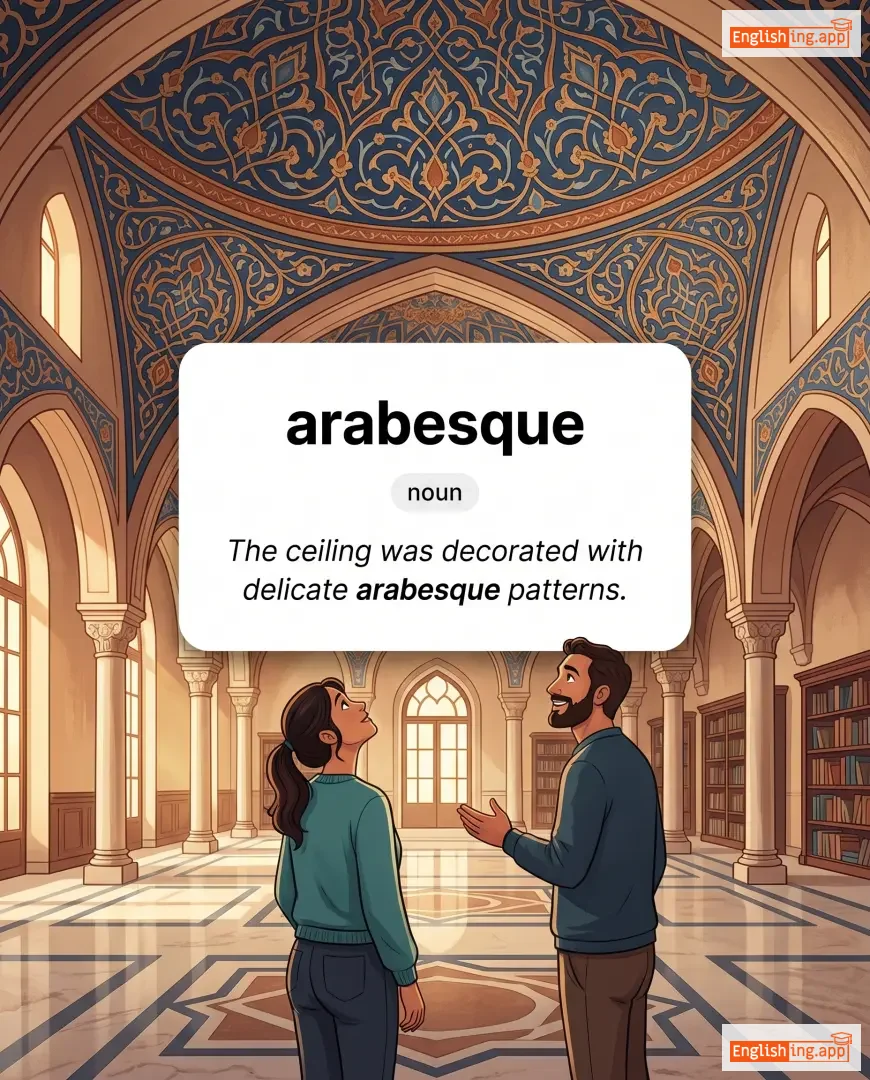
arabesque definition card — visual illustration of the meaning
noun
/ˌær.əˈbesk/
орнаментальный дизайн (ornamental'nyy dizayn)

a complex, ornate design featuring intertwined flowing lines, often used in architecture or ballet poses

"The ceiling was decorated with delicate arabesque patterns."

"Потолок был украшен изысканными арабесками." (Potolok byl ukrashen izyskannymi arabeskami.)
noun
/əˈreɪ.bi.ən ˈdʒæz.mɪn/
арабский жасмин (arabsky zhasmin)

A fragrant white flower native to South and Southeast Asia, commonly used in perfumes and religious ceremonies

"The Arabian jasmine filled the garden with its sweet fragrance."
"Арабский жасмин наполнил сад своим сладким ароматом." (Arabsky zhasmin napolnil sad svoim sladkim aromatom.)
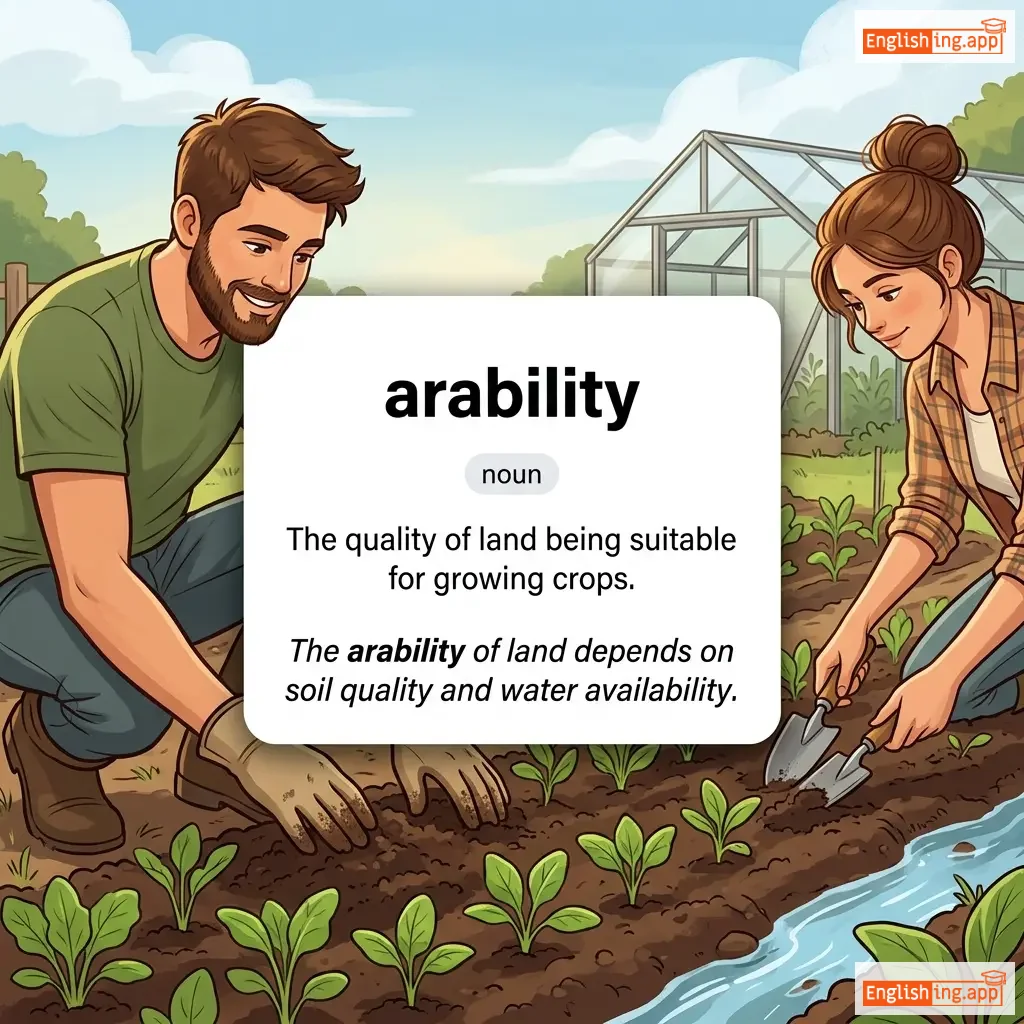
arability definition card — visual illustration of the meaning
noun
/ˌær.əˈbɪl.ɪ.ti/
плодородность (plodorodnost)

The quality of land being suitable for growing crops.

"The arability of land depends on soil quality and water availability."

"Плодородность земли зависит от качества почвы и доступности воды." (Plodorodnost zemli zavisit ot kachestva pochvy i dostupnosti vody.)
adjective
/ˈærəbəl/
пахотный (pakhotny)

suitable for growing crops or farming

"The farmer purchased arable land to expand his crops."

"Фермер купил пахотную землю, чтобы расширить свои посевы." (Fermyer kupil pakhotnuyu zemlyu, chtoby rasshirit' svoi posevy.)
noun
/ˈɑːrbɪtər/
арбитр (arbitr)

a person who has the authority to settle a dispute or decide an issue

"The principal acted as the arbiter in the conflict between the students."

"Директор выступил в роли арбитра в конфликте между учениками." (Direktor vystupil v roli arbitra v konflikte mezhdu uchenikami.)
arbitrage definition card — visual illustration of the meaning
noun
/ˈɑː.bɪ.trɑːʒ/
одновременная покупка и продажа ценных бумаг, валют или товаров на различных рынках для получения прибыли от ценовых различий (odnovremennaya pokupka i prodazha tsennykh bumag, valyut ili tovarov na razlichnykh rynkakh dlya polucheniya pribyli ot tsenovykh razlichiy)

The simultaneous buying and selling of securities, currency, or commodities in different markets to take advantage of price differences.

"Investors use arbitrage strategies in financial markets."

"Инвесторы используют стратегии арбитража на финансовых рынках." (Investory ispol'zuyut strategii arbitrage na finansovykh rynkakh.)
adjective
/ˈɑːrbɪˌtrɛri/
произвольный (proizvol'nyy)

based on random choice or personal whim, rather than reason or system

"The teacher's arbitrary grading upset many students."

"Произвольная оценка учителя расстроила многих студентов." (Proizvol'naya otsenka uchitelya rasstroila mnogikh studentov.)
verb
/ˈɑːrbɪtreɪt/
арбитрировать (arbitrirovat)

to settle a dispute between two parties by acting as an impartial judge

"The committee agreed to arbitrate the contract dispute."

"Комитет согласился арбитрировать спор по контракту." (Komitet soglasilsya arbitrirovat' spor po kontraktu.)