Словари

Словарь английского языка | Значения слов, определения и примеры
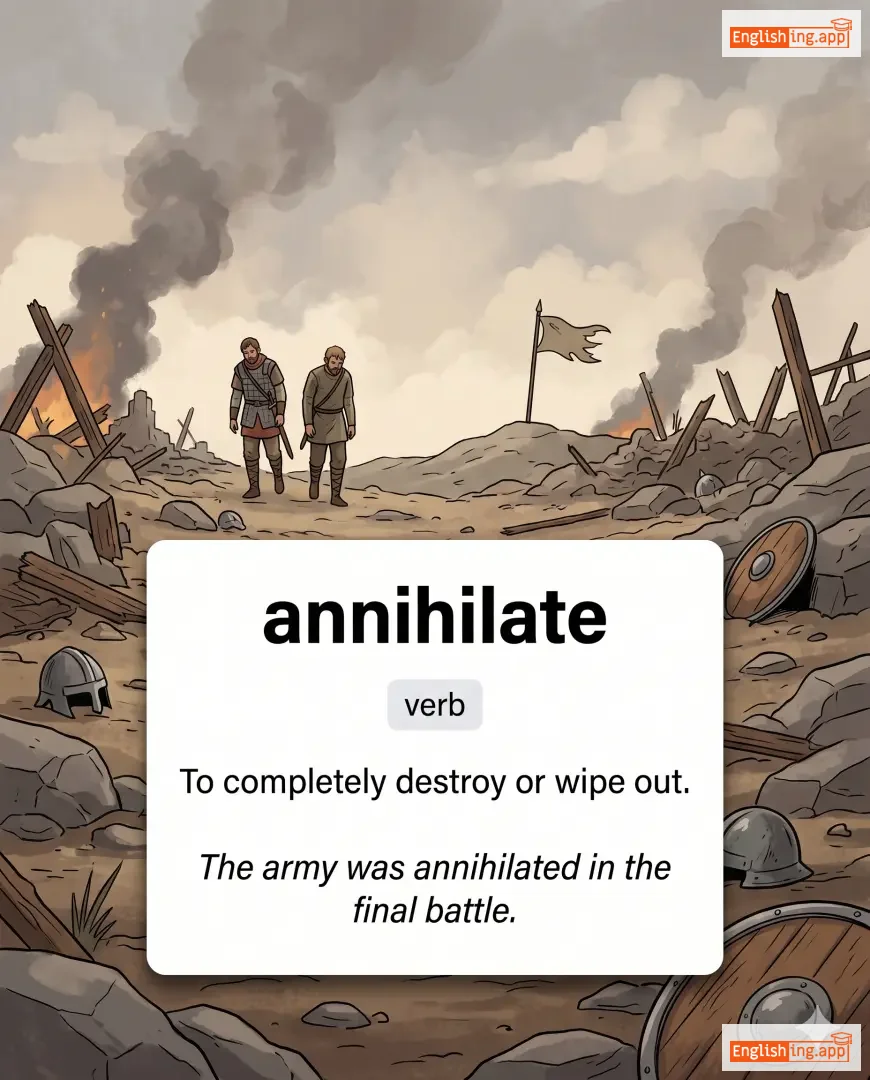
annihilate definition card — visual illustration of the meaning
verb
/əˈnaɪ.ə.leɪt/
уничтожить (unichtozhit)

To completely destroy or wipe out.

"The army was annihilated in the final battle."

"Армия была уничтожена в последней битве." (Armija byla unichtozhena v posledney bitve.)
noun
/ˌænɪˈvɜːrsəri/
годовщина (godovshchina)

the yearly recurrence of a date marking a past event

"They celebrated their wedding anniversary with a dinner."

"Они отпраздновали свою годовщину свадьбы ужином." (Oni otprazdnovali svoyu godovshchinu svad'by uzhinom.)
verb
/ˈæn.ə.teɪt/
dobavlyat' primetchaniya ili kommentarii (dobavlyat primetshaniya ili kommentarii)

to add notes or comments to a text, diagram, or document for explanation or clarification

"The teacher asked the students to annotate the poem with their interpretations."

"Uchitel' poprosil studentov anotirovat' stikhotvorenie so svoimi tolkovaniyami." (Uchitel' poprosil studentov anotirovat' stikhotvorenie so svoimi tolkovaniyami.)
verb
/əˈnaʊns/
объявить (obyavit)

to make a formal public statement about something

"The company will announce the new product tomorrow."

"Компания объявит новый продукт завтра." (Kompaniya obyavit novyj produkt zavtra.)
announced definition card — visual illustration of the meaning
verb
əˈnaʊnst
объявленный (obyavlennyy)

To make a public and typically formal declaration about a fact, occurrence, or intention.

"The mission was announced publicly."

"Миссия была объявлена публично." (Missiya byla ob'yavlena publichno.)
noun
/əˈnaʊnsmənt/
объявление (obyavlenie)

a public or formal statement giving information

"The principal made an important announcement about the new schedule."

"Директор сделал важное объявление о новом расписании." (Direktor sdelal vazhnoe ob'yavlenie o novom raspisanii.)
verb
/əˈnɔɪ/
раздражать (razdrazhat)

to irritate or bother someone and make them feel a little angry or uncomfortable

"His constant humming started to annoy everyone in the room."

"Его постоянное напевание начало раздражать всех в комнате." (Ego postoyannoe napevaniye nachalo razdrazhat' vsekh v komnate.)
adjective
/əˈnɔɪd/
раздражённый (razdrazhyonnyy)

feeling slightly angry or irritated

"She felt annoyed by the constant noise."

"Она была раздражена постоянным шумом." (ona byla razdrazhena postoyannym shumom)
adjective
/əˈnɔɪɪŋ/
раздражающий (razdrazhayushchiy)

causing irritation or mild anger; bothersome or troublesome

"The constant noise from the street was extremely annoying."

"Постоянный шум с улицы был очень раздражающим." (postoyannyy shum s ulitsy byl ochen razdrazhayushchim)
adjective
/ˈæn.ju.əl/
ежегодный (ezhegodny)

happening once every year

"The company holds an annual meeting for all its shareholders."

"Компания проводит ежегодное собрание для всех своих акционеров." (Kompaniya proyvodit ezhegodnoe sobranie dlya vsekh svoikh aktsionerov.)
adverb
/ˈænjuəli/
ежегодно (ezhegodno)

once every year; yearly

"The company holds a general meeting annually."

"Компания проводит общее собрание ежегодно." (Kompaniya provodit obshchee sobranie ezhegodno.)
noun
/əˈnjuː.ɪ.ti/
аннуитет (annuitet)

a fixed sum of money paid to someone each year, typically for the rest of their life

"She receives an annuity from her late husband's insurance policy."

"Она получает аннуитет от страхового полиса своего покойного мужа." (Ona poluchayet annuitet ot strakhovogo polisa svoego pokoynogo muzha.)
verb
/əˈnʌl/
аннулировать (annulirovat)

to declare something legally invalid or cancel it

"The court decided to annul the marriage due to fraud."

"Суд решил аннулировать брак из-за мошенничества." (Sud reshyl annulirovat' brak iz-za moshennichestva.)
noun
/əˌnʌn.siˈeɪ.ʃən/
благовещение, хорошая весть (blagoveshenie, khoroshaya vest)

The announcement of something; in Christianity, the announcement by the angel Gabriel to Mary that she would conceive Jesus.

"The church celebrated the Feast of the Annunciation with a special service."

"Церковь отпраздновала Праздник Благовещения с особым служением." (Tserkov' otprazdnovala Prazdnik Blagoveshcheniya s osobym sluzheniem.)
noun
/ˈæn.oʊd/
положительный электрод (pozitivnyy elektrood)

The positive electrode in a device such as a battery, where current flows into a polarized electrical device.

"The anode of the battery was corroded after long use."
"Положительный электрод батареи был поврежден после длительного использования." (Polojitel'nyj elektrod bateree byl povrezhden posle dlinnoho ispol'zovaniya.)
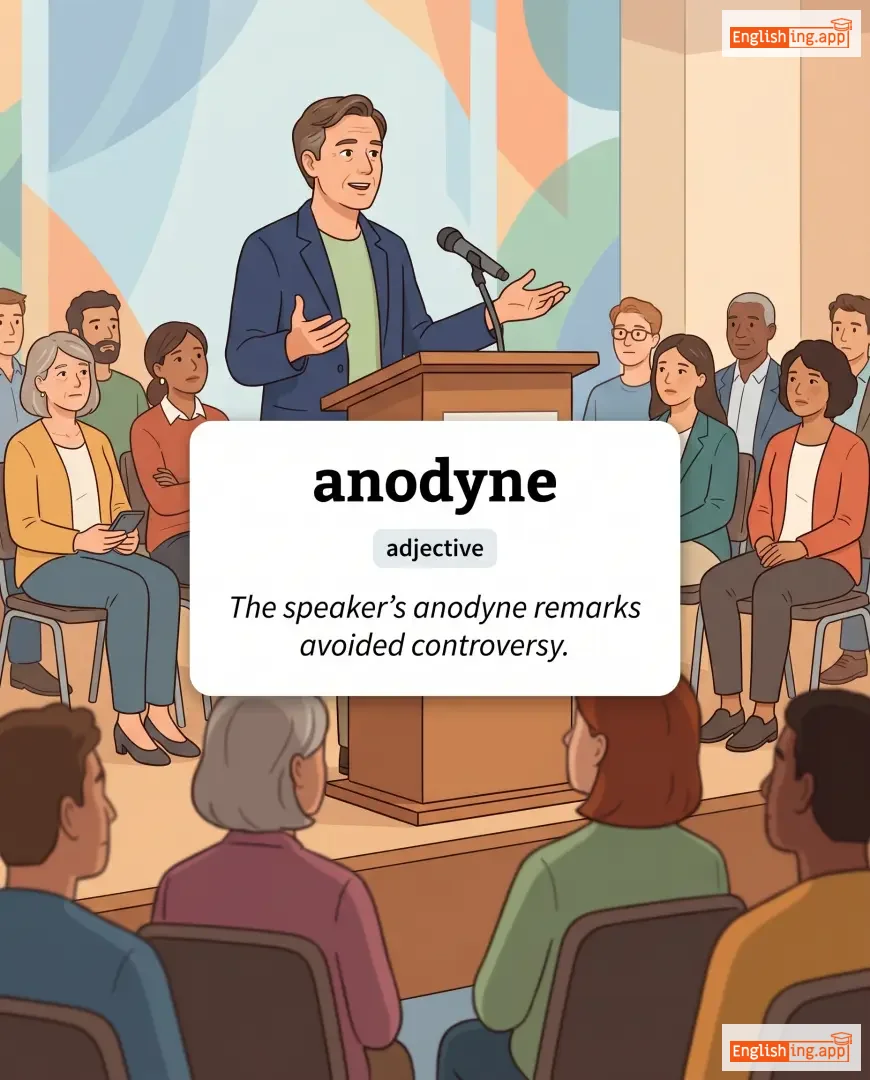
anodyne definition card — visual illustration of the meaning
adjective
/ˈæn.ə.daɪn/
безвредный, обезболивающий (bezvredny, obezbolivayushchiy)

Not likely to cause offense; bland or harmless. Also refers to something that relieves pain.

"The speaker’s anodyne remarks avoided controversy."

"Беспристрастные замечания оратора избегали контроверсий." (Bespristrastnye zamechaniya oratora izbegali kontroversiy.)
verb
/əˈnɔɪnt/
помазать, освятить (pomazat', osvyatit')

To smear or rub with oil, often as part of a religious ceremony or as a sign of consecration.

"The priest anointed the king with holy oil."

"Священник помазал короля святом маслом." (Svyashchennik pomazal korolya svyatom maslom.)
noun
/əˈnɔɪnt.mənt/
помазание (pomazanie)

The act of anointing, usually with oil, as part of a ritual or ceremony.

"The anointment of the new leader was a sacred ritual."
"Помазание нового лидера было священным ритуалом." (Pomazanie novogo lidera bylo svyashchennym ritualom.)
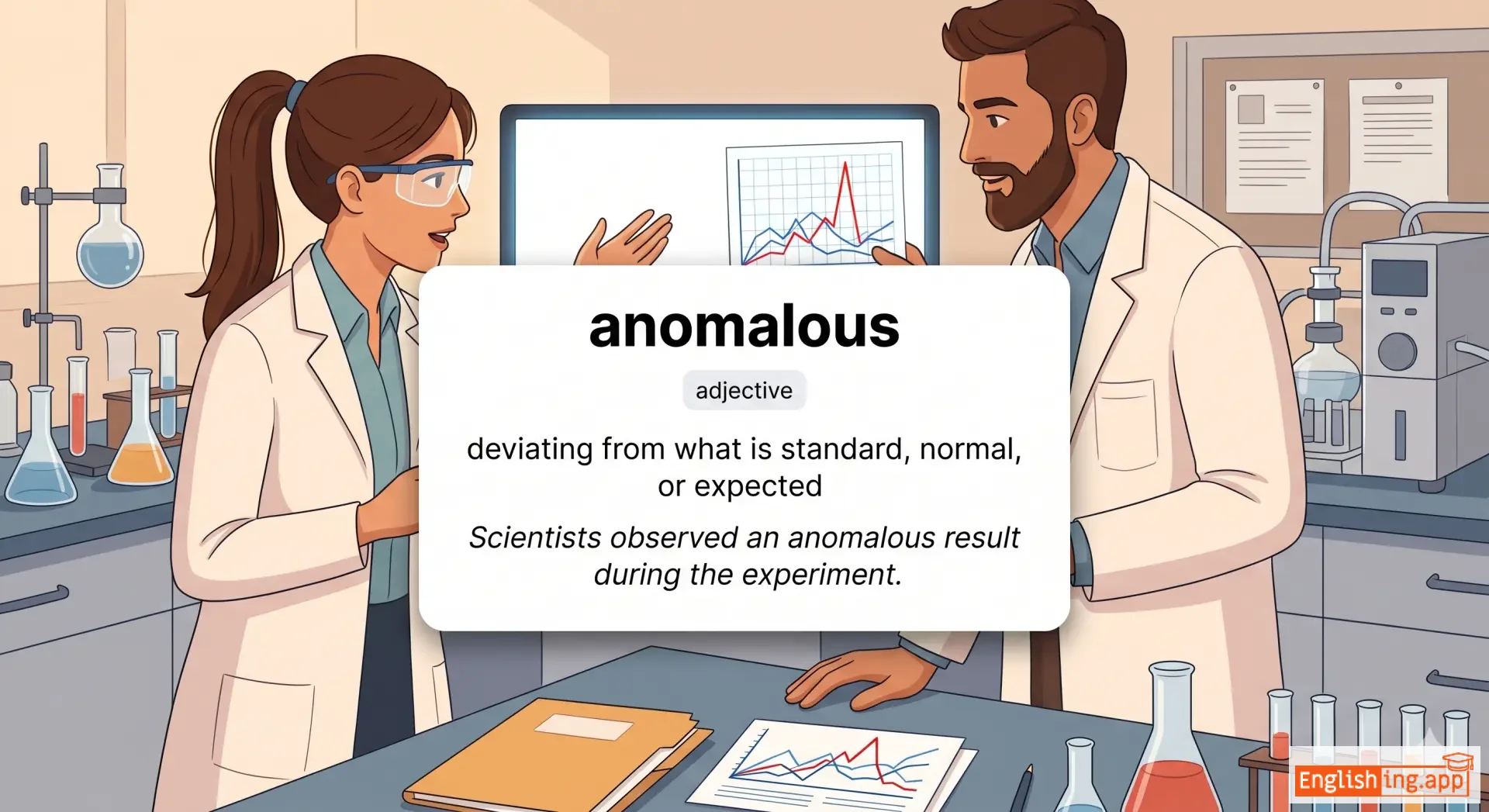
anomalous definition card — visual illustration of the meaning
adjective
/əˈnɒmələs/
аномальный (anomalny)

deviating from what is standard, normal, or expected

"Scientists observed an anomalous result during the experiment."

"Учёные наблюдали аномальный результат в ходе эксперимента." (Uchyonye nablyudali anomal'nyy rezul'tat v khode eksperimenta.)
noun
/əˈnɒməli/
аномалия (anomaliya)

something that deviates from the norm or expected result

"The sudden drop in temperature was considered an anomaly."
"Внезапное падение температуры было сочтено аномалией." (Vnezapnoe padenie temperatury bylo sochteno anomaliey.)
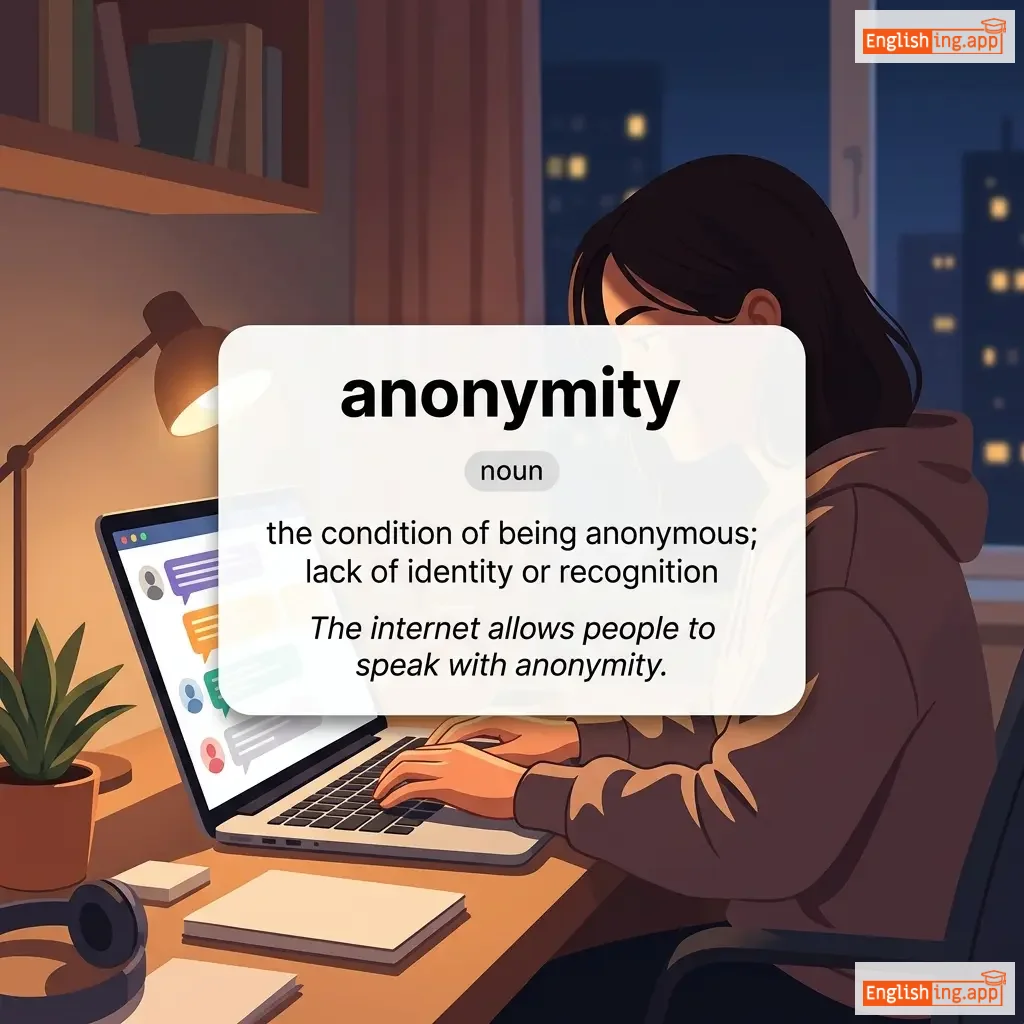
anonymity definition card — visual illustration of the meaning
noun
/ˌænəˈnɪməti/
анонимность (anonimnost)

the condition of being anonymous; lack of identity or recognition

"The internet allows people to speak with anonymity."

"Интернет позволяет людям говорить анонимно." (Internet pozvolyayet lyudyam govorit' anonimno.)
adjective
/əˈnɒnɪməs/
анонимный (anonimnyy)

without a name; not identified by name

"The donation was made by an anonymous benefactor."

"Пожертвование было сделано анонимным благотворителем." (Pozhertvovanie bylo sdelano anonimnym blagotovoritelem.)
determiner/pronoun
/əˈnʌðər/
другой (drugoy)

one more person or thing of the same type

"Can I have another cup of tea?"
"Можно мне еще одну чашку чая?" (Mozhno mne eshche odnu chashku chaya?)
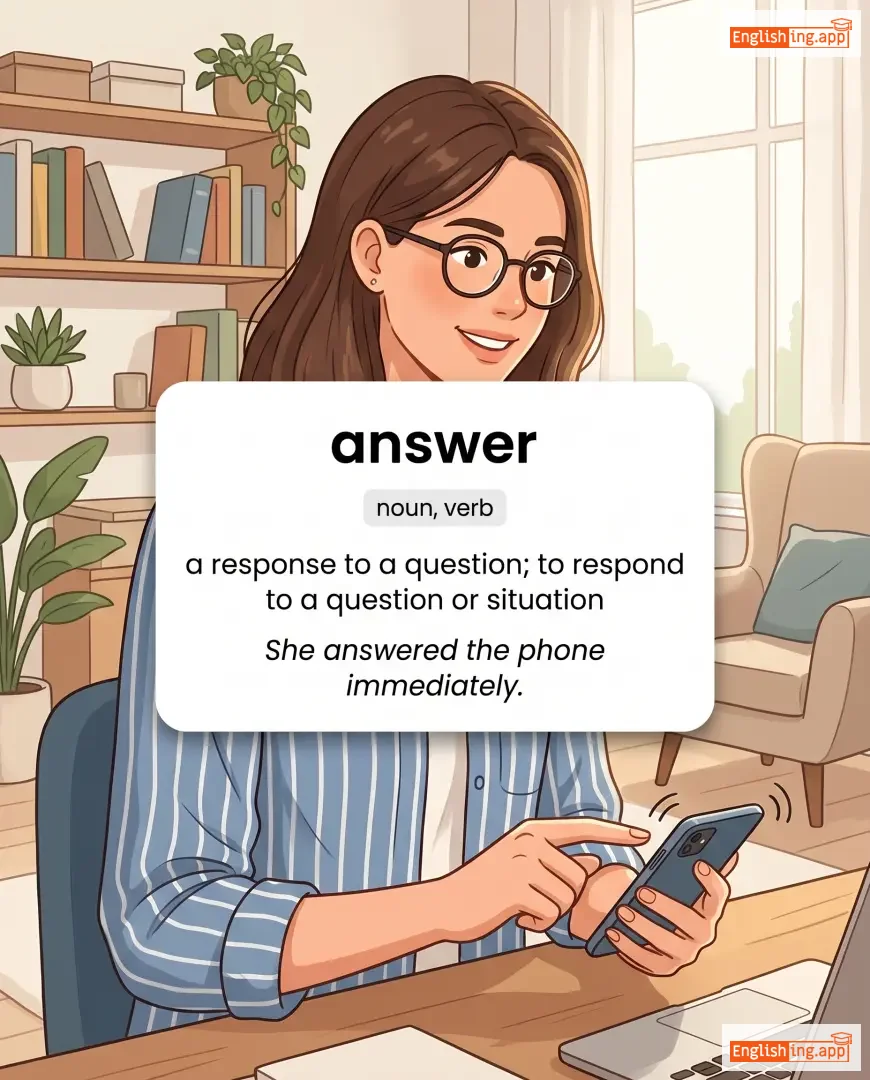
answer definition card — visual illustration of the meaning
noun, verb
/ˈænsər/
ответ (otvet)

a response to a question; to respond to a question or situation

"She answered the phone immediately."

"Она ответила на телефон немедленно." (Ona otvetila na telefon nemedlenno.)
noun
/ænt/
муравей (muravey)

a small insect that lives in organized colonies and is known for hard work

"The ant carried a crumb that was twice its size."

"Муравей пронес крошку, которая была в два раза больше его размера." (Muravey prones kroshku, kotoraya byla v dva raza bol'she yevo razmera)
noun
/ænˈtæɡənɪzəm/
антагонизм (antagonizm)

active hostility or opposition

"There was clear antagonism between the two political parties."

"Между двумя политическими партиями было явное antagonizm." (Mezhdu dvumya politicheskimi partiyami bylo yavnoe antagonizm.)
verb
/ænˈtæɡənaɪz/
провоцировать (provotsirovat)

to cause someone to become hostile or angry; to provoke opposition

"His rude remarks only served to antagonize his colleagues."

"Его грубые замечания только способствовали тому, чтобы вызвать враждебность у его коллег." (Ego grubye zamechaniya tol'ko sposobstvovali tomu, chtoby vyzvat' vrashdebnost' u ego kolleg.)
adjective
/ænˈtɑːrktɪk/
антарктический (antarkticheskiy)

relating to the region around the South Pole

"The Antarctic region is known for its extreme cold and icy landscapes."

"Антарктический регион известен своим экстремальным холодом и ледяными ландшафтами." (Antarkticheskiy region izvesten svoim ekstremal'nym kholodom i ledyanimi landshaftami.)
noun
/ˈænti/
анте (ante)

a stake put up by a player in poker or similar games before receiving cards; also used figuratively to mean an initial investment or contribution

"Each player placed an ante before the game began."

"Каждый игрок поставил анте перед началом игры." (Kazhdyy igrok postavil ante pered nachalom igry.)
verb
/ˌæntɪˈsiːd/
предшествовать (predshestvovat)

to come before in time or order

"A short introduction usually antecedes the main text."
"Краткое введение обычно предшествует основному тексту." (Kratkoe vvedenie obychno predshestvuyet osnovnomu tekstu.)
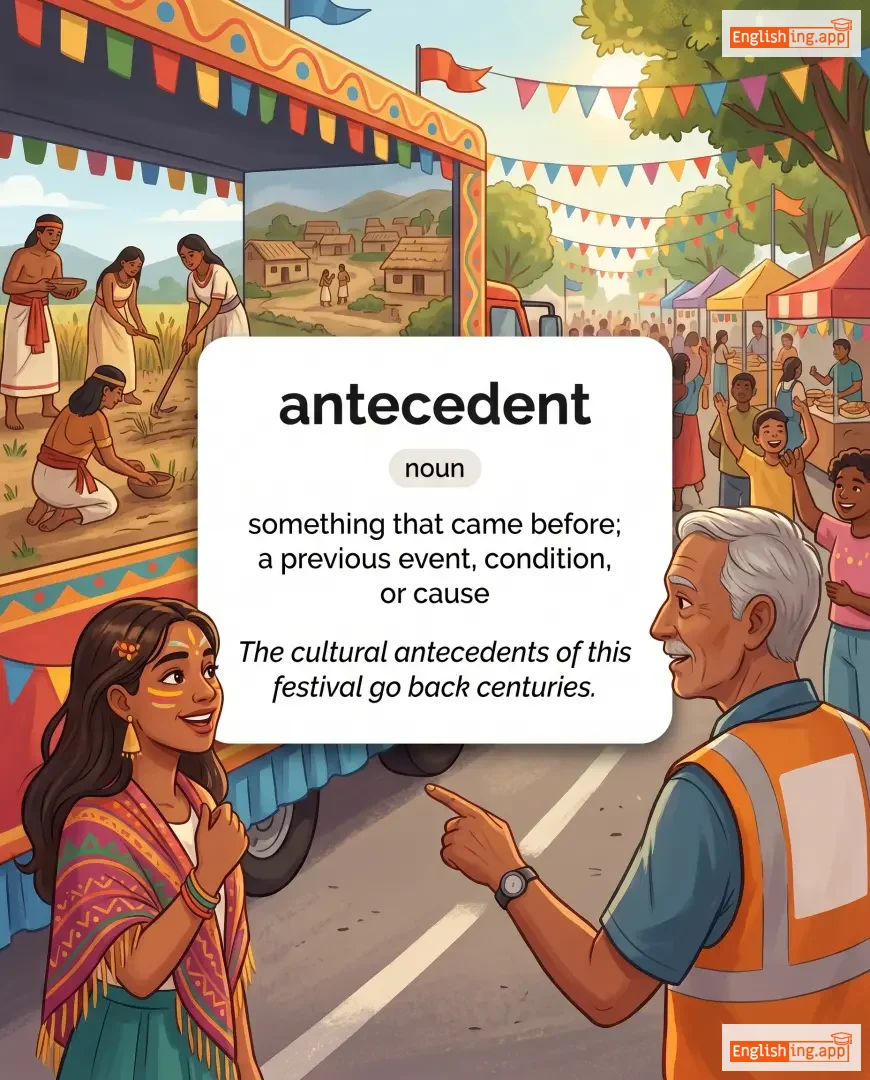
antecedent definition card — visual illustration of the meaning
noun
/ˌæntɪˈsiːdənt/
предшественник (predshestvennik)

something that came before; a previous event, condition, or cause

"The cultural antecedents of this festival go back centuries."

"Культурные предшественники этого праздника уходят корнями в века." (Kul'turnye predshestvenniki etogo prazdnika ukhodyat kornyami v veka.)
noun
/ˌæntɪˈsiːdənts/
предшествующие события (predshestvuyushchie sobytiya)

previous events, conditions, or people that influence or serve as a basis for something that follows

"The lawyer examined the criminal antecedents of the suspect."

"Адвокат изучил криминальные предшествующие события подозреваемого." (Advokat izuchil kriminalnye predshestvuyushchie sobytiya podozrevaemogo.)
noun
/ˈæntɪˌtʃeɪmbər/
предбанник (predbannik)

a small room serving as an entry to a larger one

"The guests waited in the antechamber before being admitted to the hall."

"Гости ждали в предбаннике, прежде чем были допущены в зал." (Gosti zhdali v predbannikye, prezhde chem byli dopushchenny v zal.)
verb
/ˈæntɪdeɪt/
предшествовать (predshestvovat)

to be earlier in time; to assign a date earlier than the actual one

"The manuscript antedates the modern printing press."

"Рукопись предшествует современному печатному прессу." (Rukopis' predshestvuet sovremennomu pechatnomu pressu.)
verb
/ˈæntɪdeɪtɪd/
датированный ранее (datiruyemyy ranee)

assigned to an earlier date than the actual one; happened earlier

"The letter was antedated to appear more official."
"Письмо было антикредитовано, чтобы выглядеть более официально." (Pismo bylo antikreditovano, chtoby vygljadet' boleye ofitsial'no.)
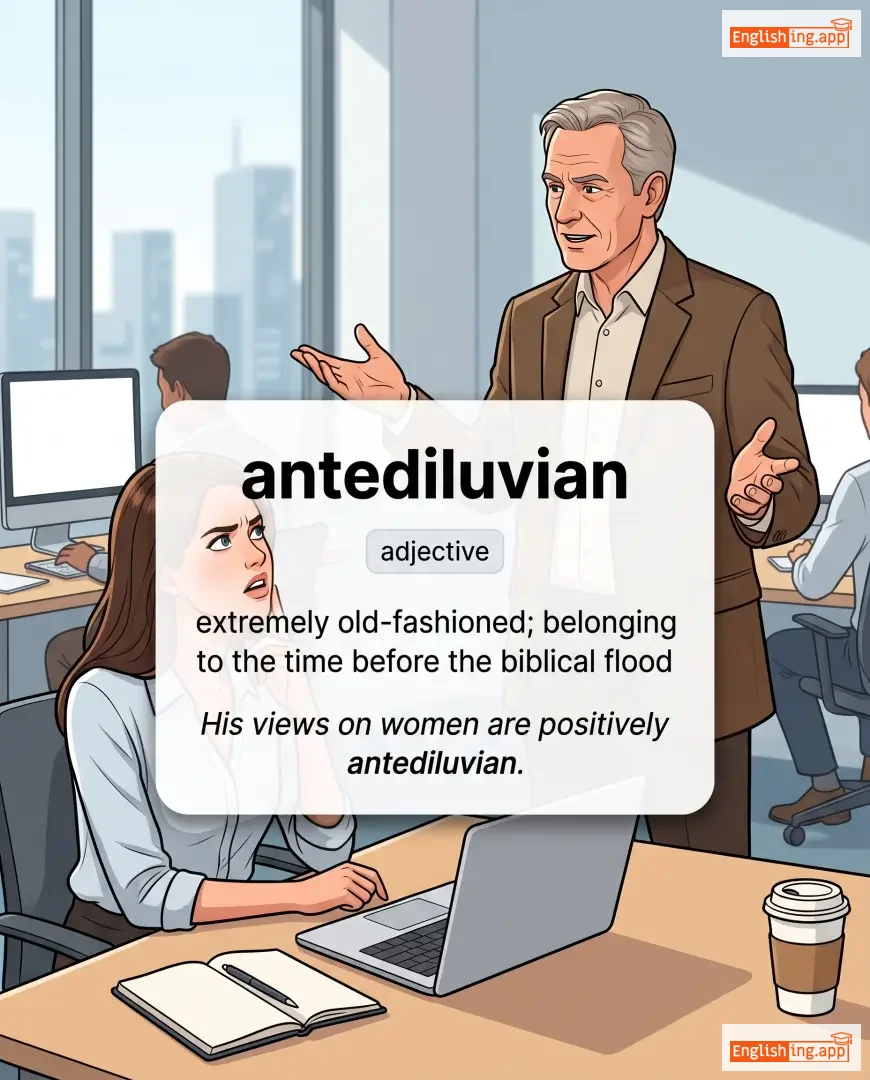
antediluvian definition card — visual illustration of the meaning
adjective
/ˌæntɪdəˈluːviən/
архаичный (arkhaichny)

extremely old-fashioned; belonging to the time before the biblical flood

"His views on women are positively antediluvian."

"Его взгляды на женщин совершенно архаичны." (Ego vzglyady na zhenshchin sovsem arkhaichny.)
adjective
/ˌæntɪməˈrɪdiən/
до полудня (do poludnya)

Relating to the time before noon; occurring in the morning.

"She scheduled all her important meetings during the antemeridian hours."

"Она запланировала все свои важные встречи в часы до полудня." (Ona zaplanirovala vse svoi vazhnie vstrechi v chasy do poludnya.)
adjective
/ˌæntɪˈmʌndeɪn/
до сотворения мира (do sotvoreniya mira)

Existing or occurring before the creation of the world.

"Some myths speak of an antemundane chaos before order was established."

"Некоторые мифы говорят о хаосе антемундане до того, как был установлен порядок." (Nekotorye mifyi govoryat o khaose antemundane do togo, kak byl ustanovlen poryadok.)
adjective
/ˌæntiˈneɪtl/
пренатальный (prenatal'nyy)

Relating to the medical care and treatment given to a pregnant woman before the birth of her child.

"She attended regular antenatal checkups throughout her pregnancy."

"Она посещала регулярные пренатальные обследования в течение всей своей беременности." (Ona poseshchala regulyarnye prenatal'nye obsledovaniya v techenie vsey svoey beremennosti.)
adjective
/ænˈtɪriər/
передний (peredniy)

Situated at or toward the front; coming before in position or time.

"The anterior part of the brain controls logical thinking."

"Передняя часть мозга контролирует логическое мышление." (Peryednyaya chast' mozga kontrolirovyet logicheskoye myshleniye.)
noun
/ˈæntiruːm/
прихожая (prikhozhaya)

A small room leading to a main one, often used as a waiting area.

"The guests waited in the anteroom before being called inside."

"Гости ждали в прихожей, прежде чем их пригласили внутрь." (gosti zhdaali v prikhozhei prezhde chem ikh priglasili vnutr.)
noun
/ˈænθəm/
гимн (gimn)

A song that is identified with a particular group, movement, or nation, often expressing pride or unity.

"The national anthem was played before the football match."

"Национальный гимн был исполнен перед футбольным матчем." (Natsional'nyy gimn byl ispolnen pered futbol'nym matchem.)
noun
/ænˈθɒlədʒi/
антология (antologiya)

A collection of literary works, such as poems, short stories, or essays, compiled into one volume.

"She contributed a poem to the new poetry anthology."

"Она внесла стихотворение в новую поэтическую антологию." (Ona vnesla stikhotvorenie v novuyu poeticheskuyu antologiyu.)
noun
/ˈænθrəsaɪt/
антрацит (antratsit)

A hard, shiny form of coal that burns with little smoke and a high heat value.

"The factory used anthracite as its primary fuel source."

"Фабрика использовала антрацит в качестве основного источника топлива." (Fabrika ispol'zovala antratsit v kachestve osnovnogo istochnika topliva.)
noun
/ˌænθrəpəˈsɛntrɪzəm/
антропоцентризм (antropotsentrizm)

The belief that human beings are the most important or central element of existence.

"Anthropocentrism often shapes environmental policies."
"Антропоцентризм часто формирует экологическую политику." (Antropotsentrizm chasto formiruet ekologoicheskuyu politiku.)
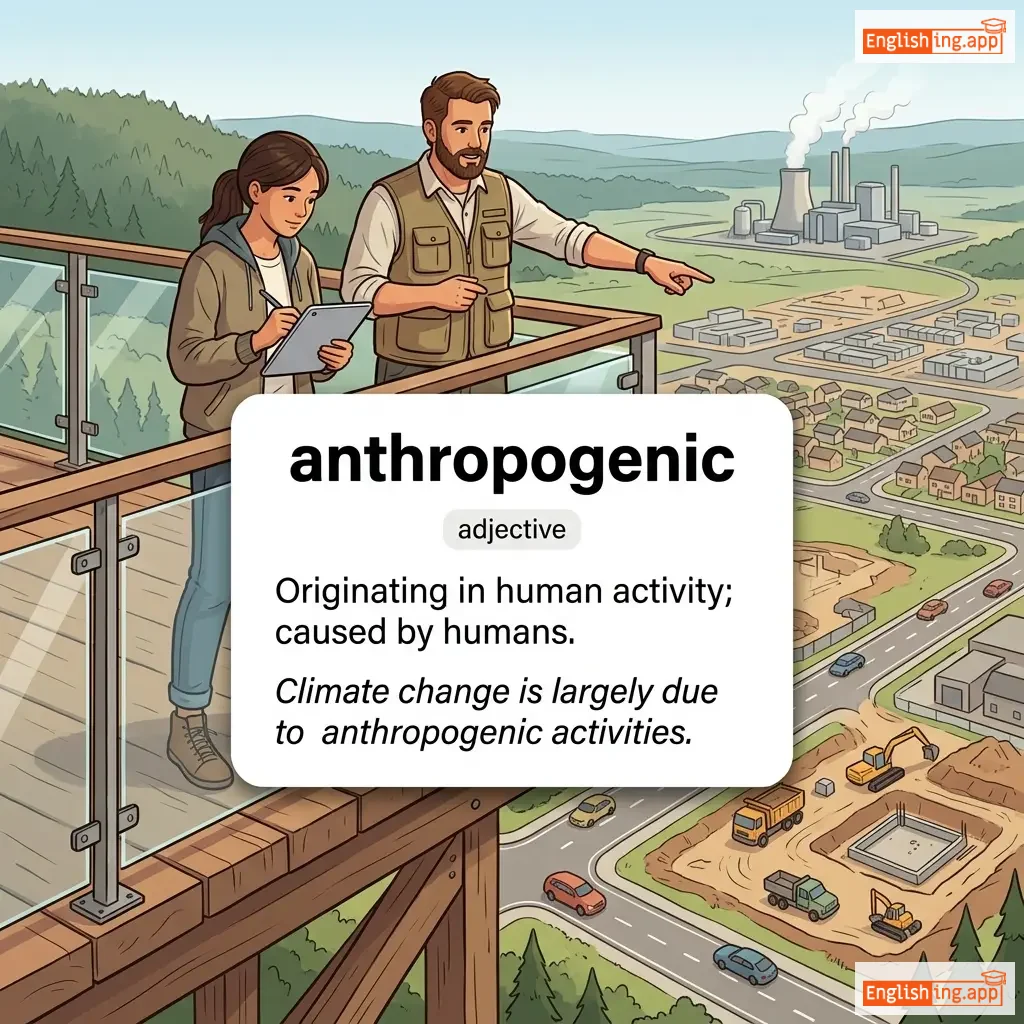
anthropogenic definition card — visual illustration of the meaning
adjective
/ˌæn.θrə.pəˈdʒen.ɪk/
антропогенный (antropogenny)

Originating in human activity; caused by humans.

"Climate change is largely due to anthropogenic activities."

"Изменение климата в значительной степени вызвано антропогенными факторами." (Izmenenie klimata v znachitel'noy stepeni vyzvano antropogennymi faktorami.)
adjective, noun
/ˈænθrəpɔɪd/
антропоид (antropoid)

Resembling a human being in form; a primate such as apes and monkeys.

"The gorilla is considered an anthropoid ape."

"Горилла считается антропоидным обезьяной." (Gorilla schitayetsya antropoidnym obez'yannoy.)
noun
/ˌænθrəˈpɒlədʒɪst/
антрополог (antropolog)

a person who studies human societies, cultures, and their development

"The anthropologist spent years studying the tribal community."

"Антрополог провел годы, изучая племенное сообщество." (Antropolog provel gody, izuchaya plemennoe soobshchestvo.)
noun
/ˌænθrəˈpɒlədʒi/
антропология (antropologiya)

the scientific study of humans, their societies, cultures, and development

"She decided to major in anthropology at university."

"Она решила специализироваться на антропологии в университете." (Ona reshila spetsializirovat'sya na antropologii v universitete.)
adjective
/ˌænθrəpəˈmɔːrfɪk/
антропоморфный (antropomorfny)

attributing human characteristics to non-human things, like animals or objects

"The cartoon shows an anthropomorphic cat walking on two legs."

"Мультсериал показывает антропоморфного кота, идущего на двух ногах." (Multserial pokazyvayet antropomorfnogo kota, idushchego na dvukh nogakh.)