|
絵文字
|
単語 | Images | 翻訳 | 過去 | 過去分詞 | 三人称単数 | 動名詞 | 意味 | 例文 | 例文の翻訳 | 表現例 | 表現例の意味 | 表現例の翻訳 | 同義語 | 対義語 | コロケーション | ニーモニック |
|---|---|---|---|---|---|---|---|---|---|---|---|---|---|---|---|---|---|
|
😒
••••••
|
/əˈnɔɪɪŋ/
adjective
(アノーイング)
••••••
|
- •••••• |
うるさい
urusai
••••••
|
- •••••• | - •••••• | - •••••• | - •••••• |
causing irritation or mild anger; bothersome or troublesome
••••••
|
The constant noise from the street was extremely annoying.
ザ コンスタント ノイズ フロム ザ ストリート ワズ エクストリームリー アノーイング。
••••••
|
通りからの絶え間ない騒音はとてもいらいらした。
toori kara no taemanai souon wa totemo iraira shita
••••••
|
annoying habit
アノーイング ハビット
••••••
|
a behavior that repeatedly irritates others
••••••
|
うるさい癖
urusai kuse
••••••
|
irritating, bothersome, frustrating, vexing, troublesome
••••••
|
pleasant, agreeable, enjoyable
••••••
|
annoying noise, annoying habit, annoying problem, really annoying
••••••
|
Annoying = うるさい、耳と心が疲れる
••••••
|
|
📅
••••••
|
/ˈæn.ju.əl/
adjective
(アニュアル)
••••••
|
- •••••• |
年次
nenji
••••••
|
- •••••• | - •••••• | - •••••• | - •••••• |
happening once every year
••••••
|
The company holds an annual meeting for all its shareholders. |
会社は毎年、すべての株主のために年次総会を開催します。
Kaisha wa mainen, subete no kabunushi no tame ni nenji sōkai o kaisai shimasu.
••••••
|
annual tradition |
a custom or event repeated every year
••••••
|
年次伝統
nenji dentō
••••••
|
yearly, once-a-year, periodic, regular
••••••
|
monthly, daily
••••••
|
annual meeting, annual report, annual budget, annual celebration
••••••
|
Annual は毎年、 ‘ANNUAlly 来る’の意味です。
••••••
|
|
📅
••••••
|
/ˈænjuəli/
adverb
(アンニュアリー)
••••••
|
- •••••• |
年次
nenji
••••••
|
- •••••• | - •••••• | - •••••• | - •••••• |
once every year; yearly
••••••
|
The company holds a general meeting annually. |
その会社は毎年年次総会を開きます。
Sono kaisha wa mainen nenji soukai wo hirakimasu.
••••••
|
annual report |
a document that summarizes a company's yearly activities and finances
••••••
|
年次報告書
nenji houkokusho
••••••
|
yearly, per year, every year, once a year
••••••
|
monthly, daily
••••••
|
annually report, meet annually, pay annually, celebrate annually
••••••
|
Annualは毎年の意味、annuallyも毎年です。年次報告書のように。
••••••
|
|
❌
••••••
|
/əˈnʌl/
verb
(アナル)
••••••
|
- •••••• |
取り消す
torikesu
••••••
|
annulled
アナルド
••••••
|
annulled
アナルド
••••••
|
annuls
アナルス
••••••
|
annulling
アナリング
••••••
|
to declare something legally invalid or cancel it
••••••
|
The court decided to annul the marriage due to fraud.
裁判所は詐欺のために結婚を取り消すことを決定しました。
••••••
|
裁判所は詐欺のために結婚を取り消すことを決定しました。
Saibansho wa sagi no tame ni kekkon o torikesu koto o kettei shimashita.
••••••
|
annul a contract
契約を取り消す
••••••
|
to cancel or invalidate a legal agreement
••••••
|
契約を取り消す
keiyaku o torikesu
••••••
|
cancel, invalidate, repeal, void, abolish
••••••
|
validate, enforce, approve
••••••
|
annul a contract, annul a marriage, annul a law, annul officially
••••••
|
Annulは無効にすることを意味します。
••••••
|
|
👤
••••••
|
/əˈnɒnɪməs/
adjective
(匿名)
••••••
|
- •••••• |
匿名
tokumei
••••••
|
- •••••• | - •••••• | - •••••• | - •••••• |
without a name; not identified by name
••••••
|
The donation was made by an anonymous benefactor.
寄付は匿名の支援者によって行われました。
••••••
|
寄付は匿名の支援者によって行われました。
Kifu wa tokumei no shien-sha ni yotte okonawaremashita.
••••••
|
anonymous tip
匿名のヒント
••••••
|
information given without revealing the identity of the informant
••••••
|
匿名のヒント
tokumei no hint
••••••
|
nameless, unidentified, unknown, incognito
••••••
|
named, identified
••••••
|
anonymous source, anonymous donor, remain anonymous, anonymous letter
••••••
|
匿名は名前なしを意味します - 名前がなければ匿名です。
••••••
|
|
➕
••••••
|
/əˈnʌðər/
determiner/pronoun
(アナザー)
••••••
|
- •••••• |
もう一つ
mou hitotsu
••••••
|
- •••••• | - •••••• | - •••••• | - •••••• |
one more person or thing of the same type
••••••
|
Can I have another cup of tea? |
もう一杯の紅茶をいただけますか?
Mou ippai no koucha o itadakemasu ka?
••••••
|
another day |
a different or additional day
••••••
|
もう一日
mou ichinichi
••••••
|
one more, additional, extra, different
••••••
|
same, identical
••••••
|
another chance, another reason, another person, another story
••••••
|
Anotherは「もう一つ」を意味する—もう一杯の紅茶が欲しい!
••••••
|
|
🗣️
••••••
|
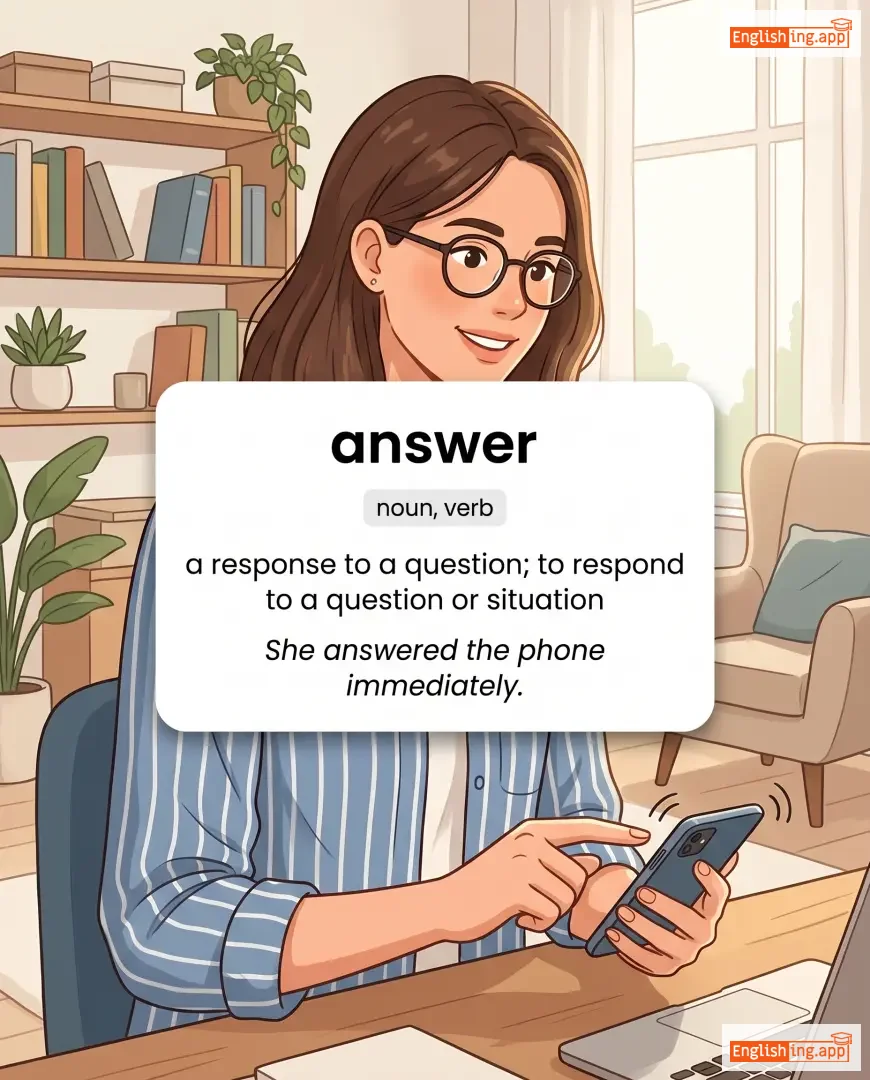
/ˈænsər/
noun, verb
(アンサー)
••••••
|
|
答え
kotae
••••••
|
answered
アンサード
••••••
|
answered
アンサード
••••••
|
answers
アンサーズ
••••••
|
answering
アンサリング
••••••
|
a response to a question; to respond to a question or situation
••••••
|
She answered the phone immediately.
彼女はすぐに電話に出ました。
••••••
|
彼女はすぐに電話に出ました。
Kanojo wa sugu ni denwa ni demashita.
••••••
|
have no answer
答えがない
••••••
|
to not know how to respond to a question or situation
••••••
|
答えがない
kotae ga nai
••••••
|
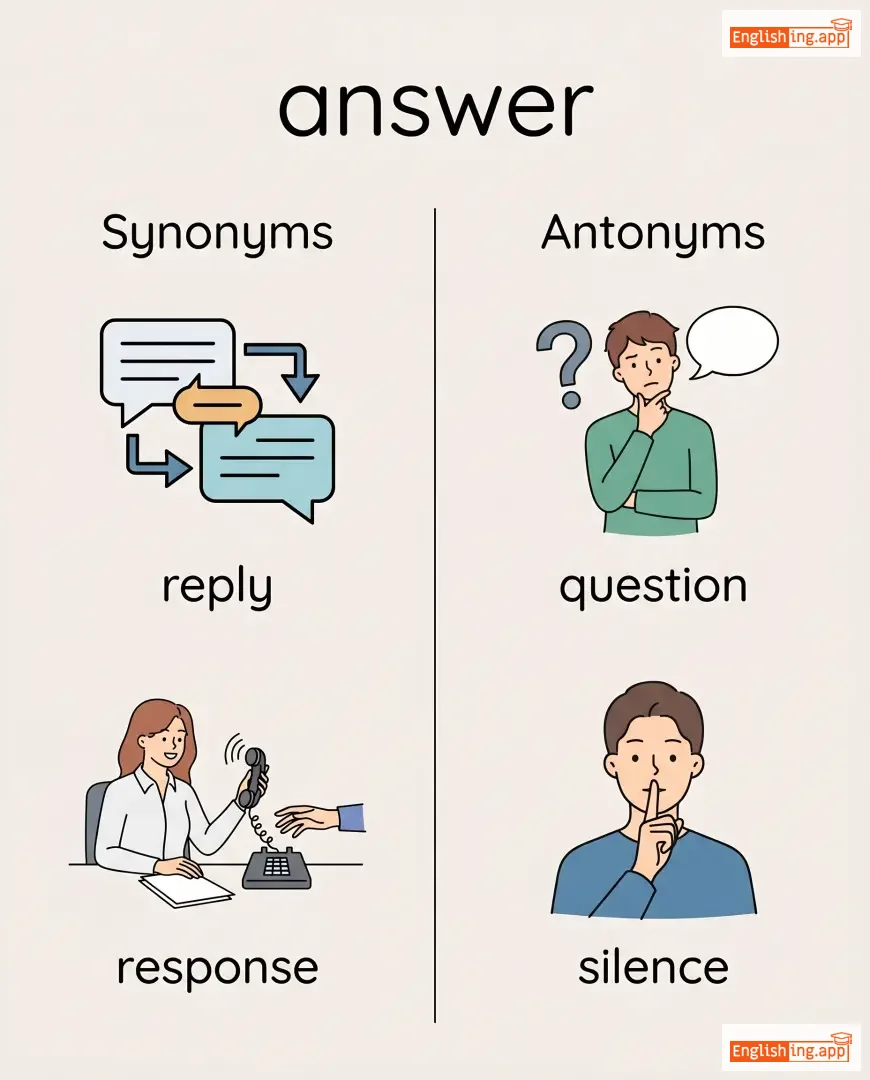
reply, response, solution, explanation, comeback
••••••
|
question, silence, ignorance
••••••
|
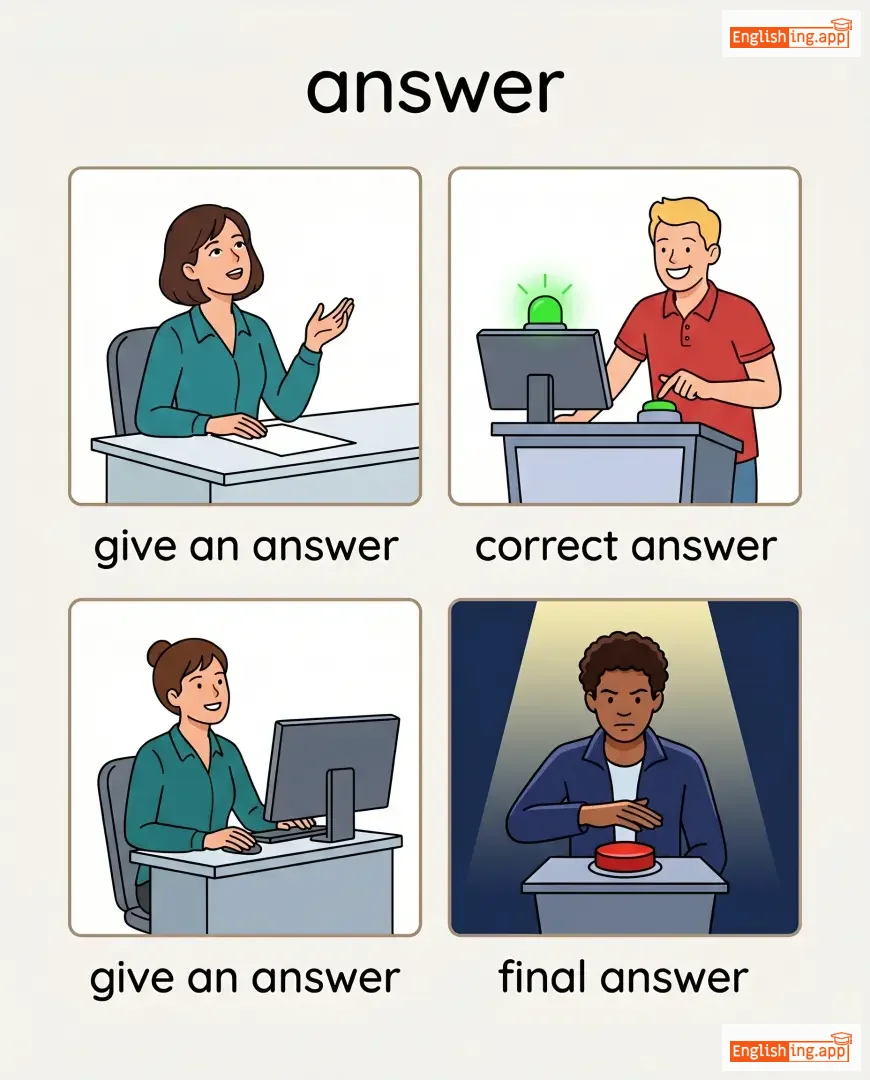
give an answer, correct answer, final answer, answer quickly
••••••
|
Answer(アンサー)は日本語で答え(kotae)と言います。
••••••
|
|
🔮
••••••
|
/ænˈtɪsɪˌpeɪt/
verb
(アンティシペイト)
••••••
|
- •••••• |
予期する
yoki suru
••••••
|
anticipated
アンティシペイテッド
••••••
|
anticipated
アンティシペイテッド
••••••
|
anticipates
アンティシペイツ
••••••
|
anticipating
アンティシペイティング
••••••
|
to expect or look forward to something; to realize or foresee in advance
••••••
|
We anticipate a large crowd at the event.
イベントには大勢の人が来ると予想しています。
••••••
|
イベントには大勢の人が来ると予想しています。
Ibento ni wa ōzei no hito ga kuru to yosō shiteimasu.
••••••
|
anticipate the worst
最悪を予想する
••••••
|
to expect the most negative or undesirable outcome
••••••
|
最悪を予想する
Saiaku o yosō suru
••••••
|
expect, foresee, predict, await, prepare
••••••
|
doubt, ignore, neglect
••••••
|
anticipate problems, anticipate demand, anticipate success, anticipate changes
••••••
|
予期することは、何かが起こる前にそれを想像することです。
••••••
|
|
😰
••••••
|
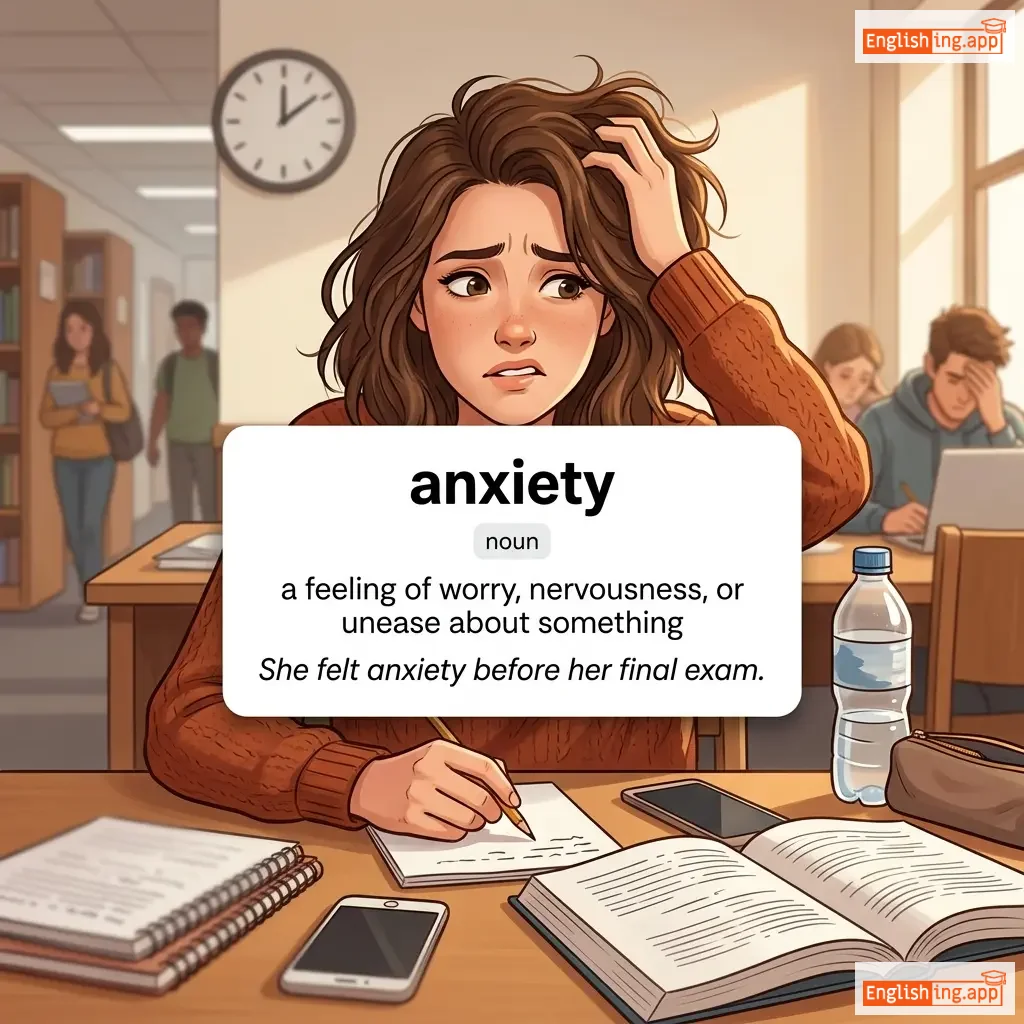
/æŋˈzaɪəti/
noun
(エンジアイティ)
••••••
|
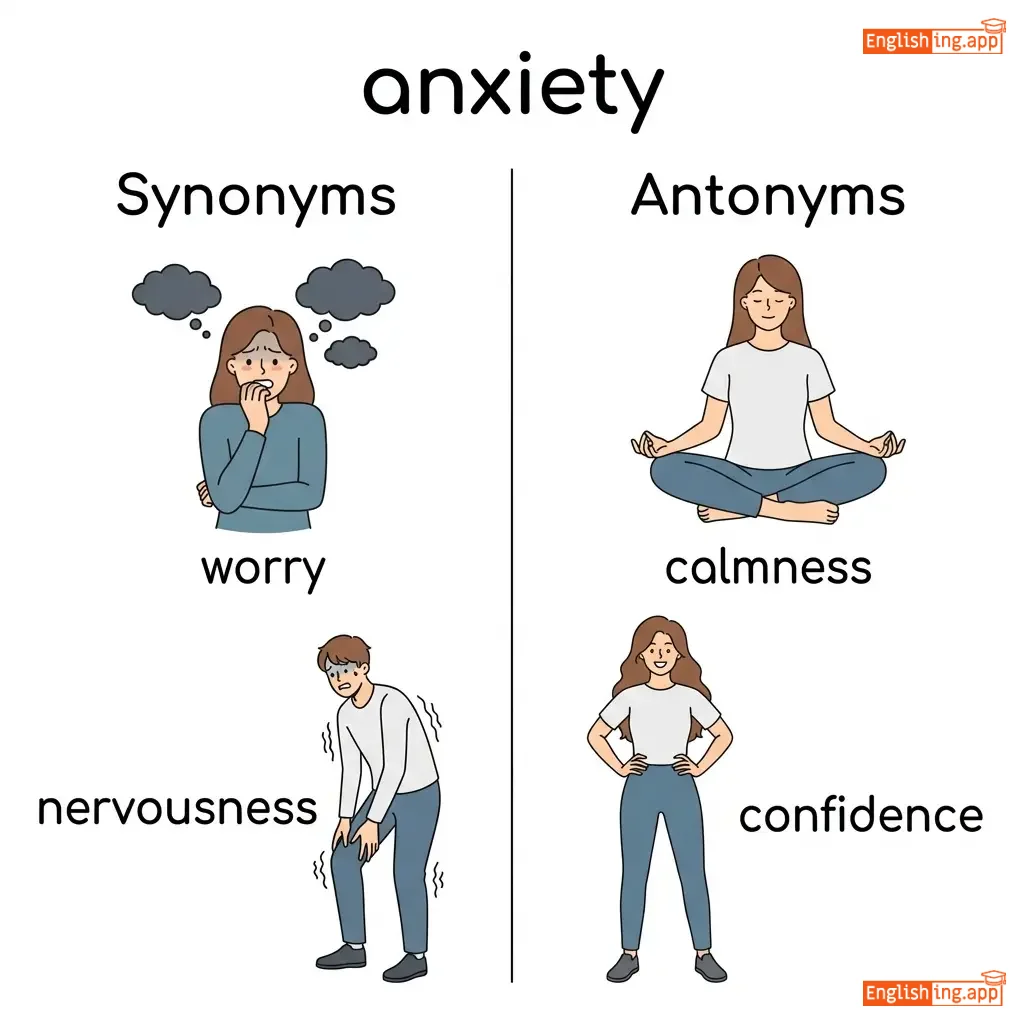
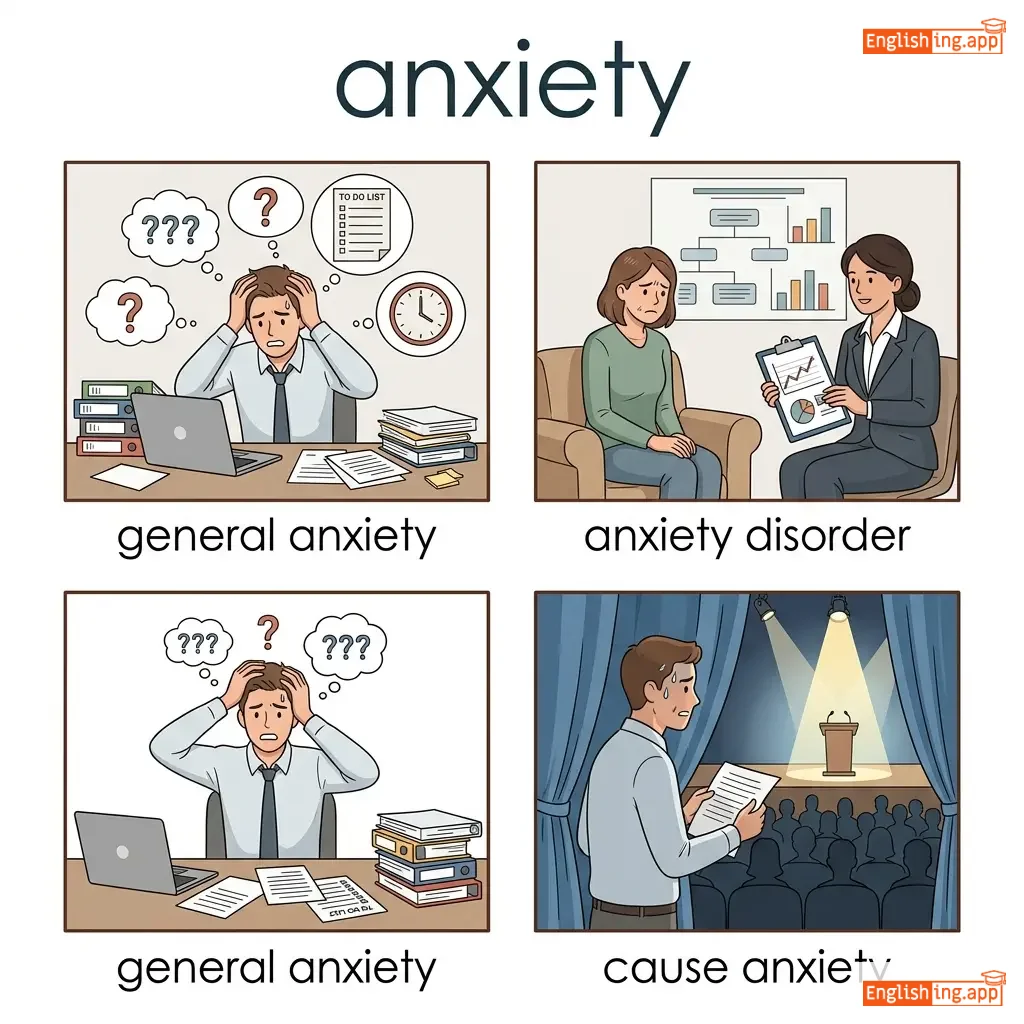
|
不安
fuan
••••••
|
- •••••• | - •••••• | - •••••• | - •••••• |
a feeling of worry, nervousness, or unease about something
••••••
|
She felt anxiety before her final exam. |
彼女は期末試験の前に不安を感じていた。
Kanojo wa kimatsu shiken no mae ni fuan wo kanjite ita.
••••••
|
separation anxiety |
a feeling of distress when separated from a loved one
••••••
|
分離不安
bunri fuan
••••••
|
worry, nervousness, unease, tension, apprehension
••••••
|
calmness, confidence, peace
••••••
|
general anxiety, anxiety disorder, cause anxiety, reduce anxiety
••••••
|
試験の前に不安が増え、不安は心配を意味する。
••••••
|
|
😟
••••••
|
/ˈæŋkʃəs/
adjective
(æŋkʃəs)
••••••
|
- •••••• |
不安な
fuan na
••••••
|
- •••••• | - •••••• | - •••••• | - •••••• |
feeling worried, nervous, or uneasy about something
••••••
|
She felt anxious before her job interview. |
彼女は面接前に不安を感じていた。
Kanojo wa mensetsu mae ni fuan o kanjite ita.
••••••
|
anxious about |
to feel worried or uneasy regarding something
••••••
|
〜について不安な
〜ni tsuite fuan na
••••••
|
worried, nervous, uneasy, restless, apprehensive
••••••
|
calm, relaxed, confident
••••••
|
feel anxious, anxious about, anxious to, anxious for
••••••
|
不安なは面接前に皆が感じるものです。
••••••
|
|
😰
••••••
|
/ˈæŋkʃəsli/
adverb
(アンクシャスリー)
••••••
|
- •••••• |
不安そうに
fuansou ni
••••••
|
- •••••• | - •••••• | - •••••• | - •••••• |
in a worried, nervous, or uneasy manner; with anxious anticipation
••••••
|
She waited anxiously for the exam results.
彼女は試験の結果を不安そうに待っていた。
••••••
|
彼女は試験の結果を不安そうに待っていた。
kanojo wa shiken no kekka o fuansou ni matte ita
••••••
|
wait anxiously
不安そうに待つ
••••••
|
to wait with worry or nervous expectation
••••••
|
不安そうに待つ
fuansou ni matsu
••••••
|
nervously, worriedly, uneasily, apprehensively
••••••
|
calmly, confidently
••••••
|
wait anxiously, watch anxiously, look anxiously, anxiously await
••••••
|
不安 (fuan) = anxiety, so anxiously
••••••
|
|
🔄
••••••
|
/ˈɛni/
determiner/pronoun
(エニ)
••••••
|
- •••••• |
いずれかの
izureka no
••••••
|
- •••••• | - •••••• | - •••••• | - •••••• |
one, some, or all, without specifying which
••••••
|
Do you have any questions? |
何か質問はありますか?
Nanika shitsumon wa arimasu ka?
••••••
|
any day now |
something expected to happen very soon
••••••
|
今すぐにどの日でも
Ima sugu ni dono hi demo
••••••
|
some, whatever, each, all, every
••••••
|
none, nothing
••••••
|
any chance, any time, any questions, any problem
••••••
|
ANYは「いずれかの」という意味、例えば'いずれかの日に起こるかもしれません'。
••••••
|
|
👤
••••••
|
/ˈɛniˌbɒdi/
pronoun
(エニボディ)
••••••
|
- •••••• |
誰でも
dare demo
••••••
|
- •••••• | - •••••• | - •••••• | - •••••• |
any person; anyone
••••••
|
Anybody can join the club. |
誰でもクラブに参加できます。
Dare demo kurabu ni sanka dekimasu.
••••••
|
- •••••• | - •••••• | - •••••• |
anyone, somebody, whoever, everyone
••••••
|
nobody, no one
••••••
|
ask anybody, tell anybody, anybody else, anybody interested
••••••
|
ANYBODY は誰でも、例えば Anybody can run in the park.
••••••
|
|
⏳
••••••
|
/ˌɛniˈmɔr/
adverb
(エニモア)
••••••
|
- •••••• |
もう〜ない
mou nai
••••••
|
- •••••• | - •••••• | - •••••• | - •••••• |
used to refer to the present time, typically to mean no longer
••••••
|
He doesn’t live here anymore. |
彼はもうここに住んでいません。
Kare wa mou koko ni sundeimasen.
••••••
|
- •••••• | - •••••• | - •••••• |
no longer, not now, no more
••••••
|
still, yet
••••••
|
not anymore, hardly anymore, anymore questions
••••••
|
もう〜ないはANYMOREを意味します、私がもうここに住んでいないように。
••••••
|
|
👤
••••••
|
/ˈɛniwʌn/
pronoun
(エニワン)
••••••
|
- •••••• |
誰か
dareka
••••••
|
- •••••• | - •••••• | - •••••• | - •••••• |
any person at all; used to refer to an unspecified person
••••••
|
Does anyone know the answer to this question? |
誰かこの質問の答えを知っていますか?
dareka kono shitsumon no kotae o shitte imasu ka?
••••••
|
anyone's guess |
something that is very difficult to predict or know
••••••
|
誰かの予想
dareka no yosou
••••••
|
somebody, anybody, person, individual, someone
••••••
|
nobody, no one
••••••
|
anyone else, if anyone, hardly anyone, ask anyone
••••••
|
ANYONEは「誰か」を意味します。日本語で言う「誰か」です。
••••••
|
|
🔑
••••••
|
/ˈɛnɪθɪŋ/
pronoun
(エニシング)
••••••
|
- •••••• |
何でも
nandemo
••••••
|
- •••••• | - •••••• | - •••••• | - •••••• |
any object, event, or matter; whatever thing
••••••
|
You can ask me anything about the project. |
プロジェクトについて何でも聞いてください。
Purojekuto ni tsuite nandemo kiite kudasai.
••••••
|
anything but |
definitely not something
••••••
|
何でもない
nandemo nai
••••••
|
whatever, everything, object, matter, item
••••••
|
nothing, none
••••••
|
do anything, say anything, anything else, almost anything
••••••
|
ANYTHING は '何でも' を意味します—日本語で言う '何でも' のように。
••••••
|
|
➡️
••••••
|
/ˈɛniweɪ/
adverb
(エニウェイ)
••••••
|
- •••••• |
とにかく
tonikaku
••••••
|
- •••••• | - •••••• | - •••••• | - •••••• |
used to emphasize a statement or to return to a previous subject; regardless of what happened
••••••
|
I was tired, but I went to the meeting anyway. |
疲れていたが、それでも会議に行った。
Tsukarete ita ga, sore demo kaigi ni itta.
••••••
|
anyway you slice it |
no matter how you look at it
••••••
|
どんな場合でも
donna baai demo
••••••
|
regardless, nevertheless, still, anyhow, though
••••••
|
because, therefore
••••••
|
but anyway, anyway you, anyway possible
••••••
|
とにかく彼は行く、どんな場合でも。
••••••
|
|
🌍
••••••
|
/ˈɛnɪwɛər/
adverb
••••••
|
- •••••• | - •••••• | - •••••• | - •••••• | - •••••• | - •••••• |
in, at, or to any place
••••••
|
You can find good food anywhere in this city. |
- •••••• |
go anywhere |
to have freedom to travel or move to any place
••••••
|
- •••••• |
everywhere, someplace, anyplace, location, place
••••••
|
nowhere, somewhere specific
••••••
|
anywhere else, almost anywhere, find anywhere, go anywhere
••••••
|
No •••••• |
|
↔️
••••••
|
/əˈpɑːrt/
adverb
••••••
|
- •••••• | - •••••• | - •••••• | - •••••• | - •••••• | - •••••• |
separated by distance or time; into pieces
••••••
|
They live miles apart from each other. |
- •••••• |
fall apart |
to break into pieces or fail completely
••••••
|
- •••••• |
separately, away, aside, alone, divided
••••••
|
together, close
••••••
|
miles apart, set apart, apart from, fall apart
••••••
|
No •••••• |
|
🏢
••••••
|
/əˈpɑːrtmənt/
noun
(アパートメント)
••••••
|
- •••••• |
アパートメント
apātomento
••••••
|
- •••••• | - •••••• | - •••••• | - •••••• |
a set of rooms forming a residence within a building
••••••
|
She rented an apartment in the city center.
彼女は市の中心にアパートメントを借りました。
••••••
|
彼女は市の中心にアパートメントを借りました。
Kanojo wa shi no chūshin ni apātomento o karimashita.
••••••
|
apartment complex
アパートメント群
••••••
|
a group of apartment buildings in one area
••••••
|
アパートメント群
apātomento gun
••••••
|
flat, unit, residence, condo, lodging
••••••
|
house, bungalow
••••••
|
rent an apartment, small apartment, apartment building, apartment complex
••••••
|
APARTMENTはアパートメント、英語で言うとそのままの意味です。
••••••
|
|
🙏
••••••
|
/əˈpɒlədʒaɪz/
verb
(アポロジャイズ)
••••••
|
- •••••• |
謝罪する
shazai suru
••••••
|
apologized
アポロジャイズド
••••••
|
apologized
アポロジャイズド
••••••
|
apologizes
アポロジャイズズ
••••••
|
apologizing
アポロジャイジング
••••••
|
to say sorry for something wrong you have done
••••••
|
He apologized for being late to the meeting.
彼は会議に遅れたことを謝罪しました。
••••••
|
彼は会議に遅れたことを謝罪しました。
Kare wa kaigi ni okureta koto o shazai shimashita.
••••••
|
apologize sincerely
誠実に謝罪する
••••••
|
to express genuine regret for a mistake or wrongdoing
••••••
|
誠実に謝罪する
seijitsu ni shazai suru
••••••
|
regret, repent, ask forgiveness, express remorse
••••••
|
accuse, blame, deny
••••••
|
apologize for mistake, apologize sincerely, apologize publicly
••••••
|
謝罪は、間違えたときに言う 'すみません' という意味です。
••••••
|
|
🙏
••••••
|
/əˈpɒlədʒi/
noun
••••••
|
- •••••• | - •••••• | - •••••• | - •••••• | - •••••• | - •••••• |
a statement expressing regret for something wrong or hurtful
••••••
|
He offered an apology for being late to the meeting. |
- •••••• |
make an apology |
to formally express regret for a mistake or offense
••••••
|
- •••••• |
regret, excuse, admission, acknowledgment
••••••
|
defiance, denial, justification
••••••
|
offer an apology, sincere apology, formal apology, public apology
••••••
|
No •••••• |
|
😱
••••••
|
/əˈpɔːl/
verb
(apōru)
••••••
|
- •••••• |
驚かす
odorokasu
••••••
|
appalled
apōrudo
••••••
|
appalled
apōrudo
••••••
|
appalls
apōrusu
••••••
|
appalling
apōringu
••••••
|
To shock or horrify someone with something unpleasant or bad.
••••••
|
The cruelty of the crime appalled the entire community.
犯罪の残酷さがコミュニティ全体を驚かせた。
••••••
|
犯罪の残酷さがコミュニティ全体を驚かせた。
Hanzai no zankokusa ga komyuniti zentai o odorokaseta.
••••••
|
- •••••• | - •••••• | - •••••• |
shock, horrify, disgust, outrage, distress
••••••
|
please, delight, satisfy
••••••
|
appall the public, appalling crime, appalling behavior, deeply appalled
••••••
|
Appall は 'all are shocked' という意味です—みんな驚いている。
••••••
|
|
🛠️
••••••
|
/ˌæpəˈreɪtəs/
noun
(アパラタス)
••••••
|
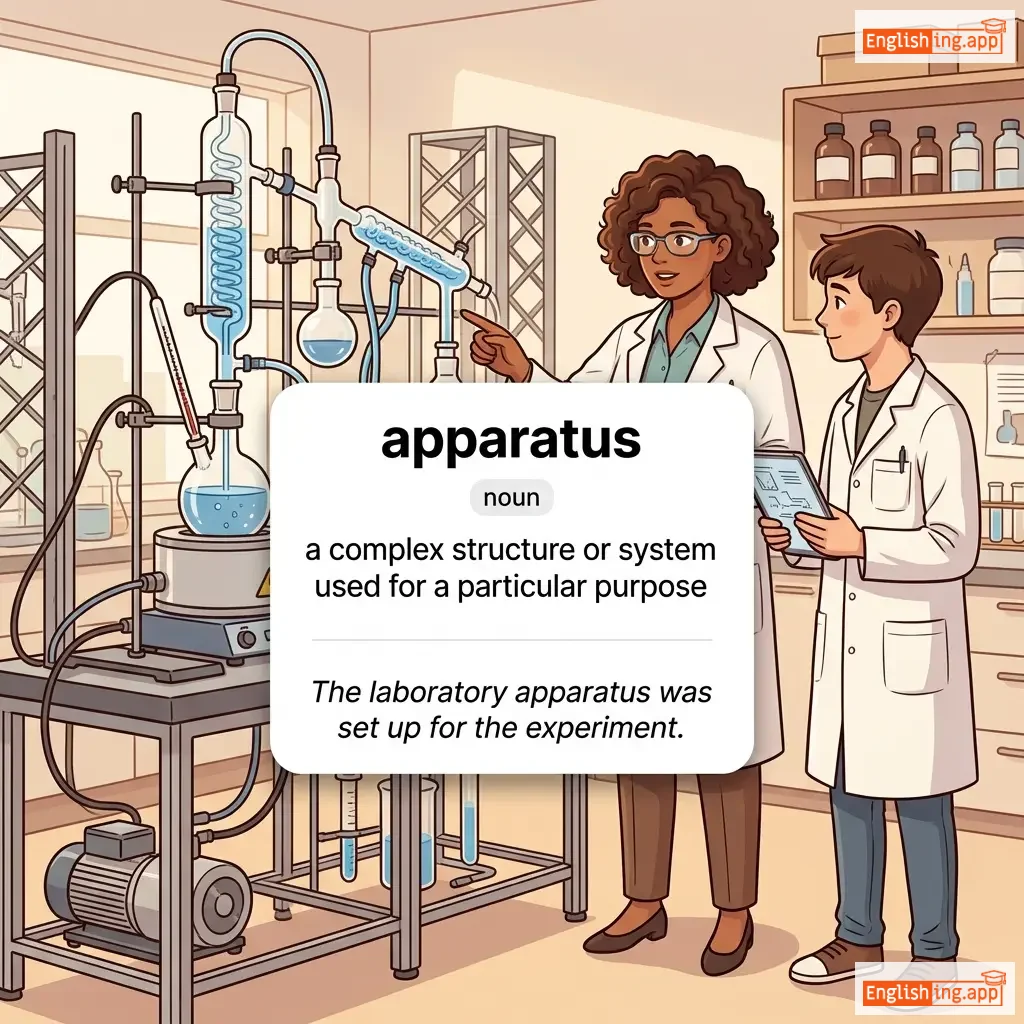
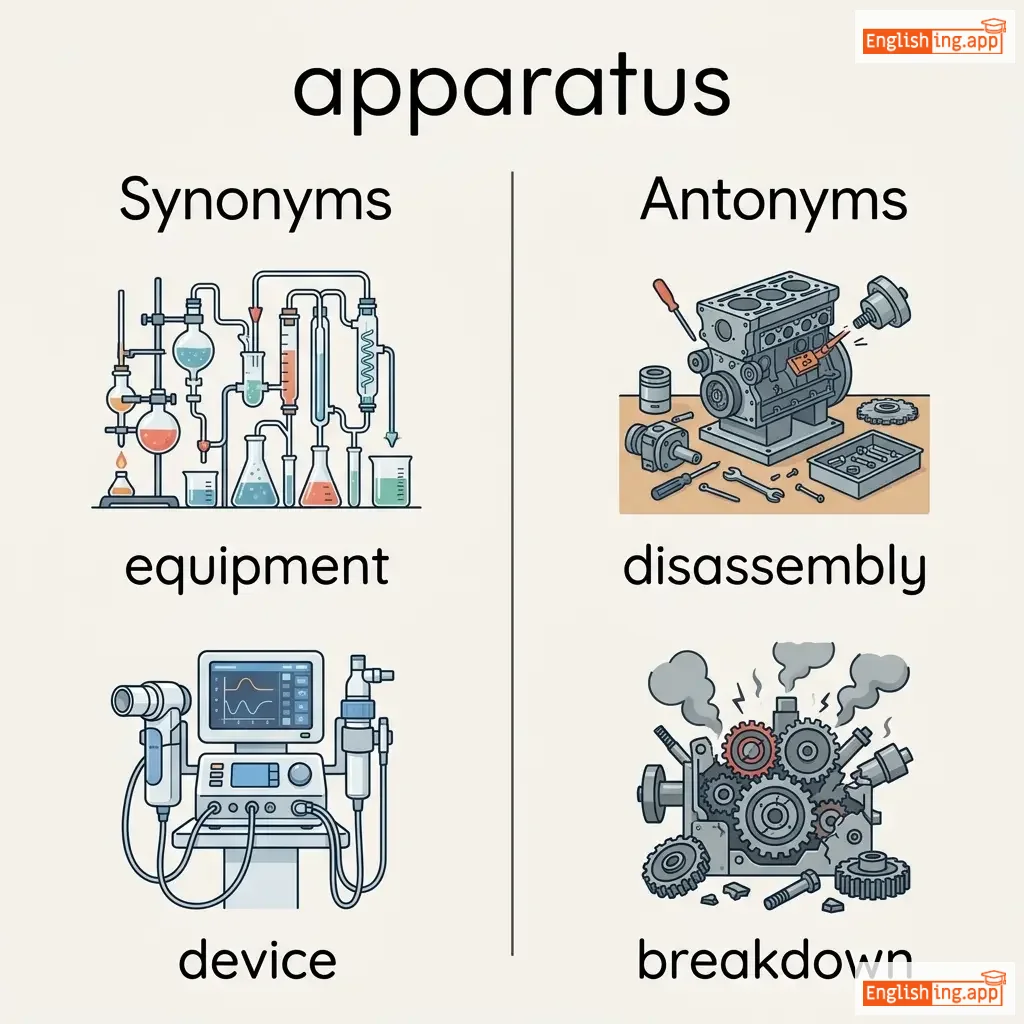
|
装置
souchi
••••••
|
- •••••• | - •••••• | - •••••• | - •••••• |
a complex structure or system used for a particular purpose
••••••
|
The laboratory apparatus was set up for the experiment.
実験のためにラボの装置が設定されました。
••••••
|
実験のためにラボの装置が設定されました。
Jikken no tame ni rabo no souchi ga settei saremashita.
••••••
|
- •••••• | - •••••• | - •••••• |
equipment, device, machinery, instrument
••••••
|
disassembly, breakdown
••••••
|
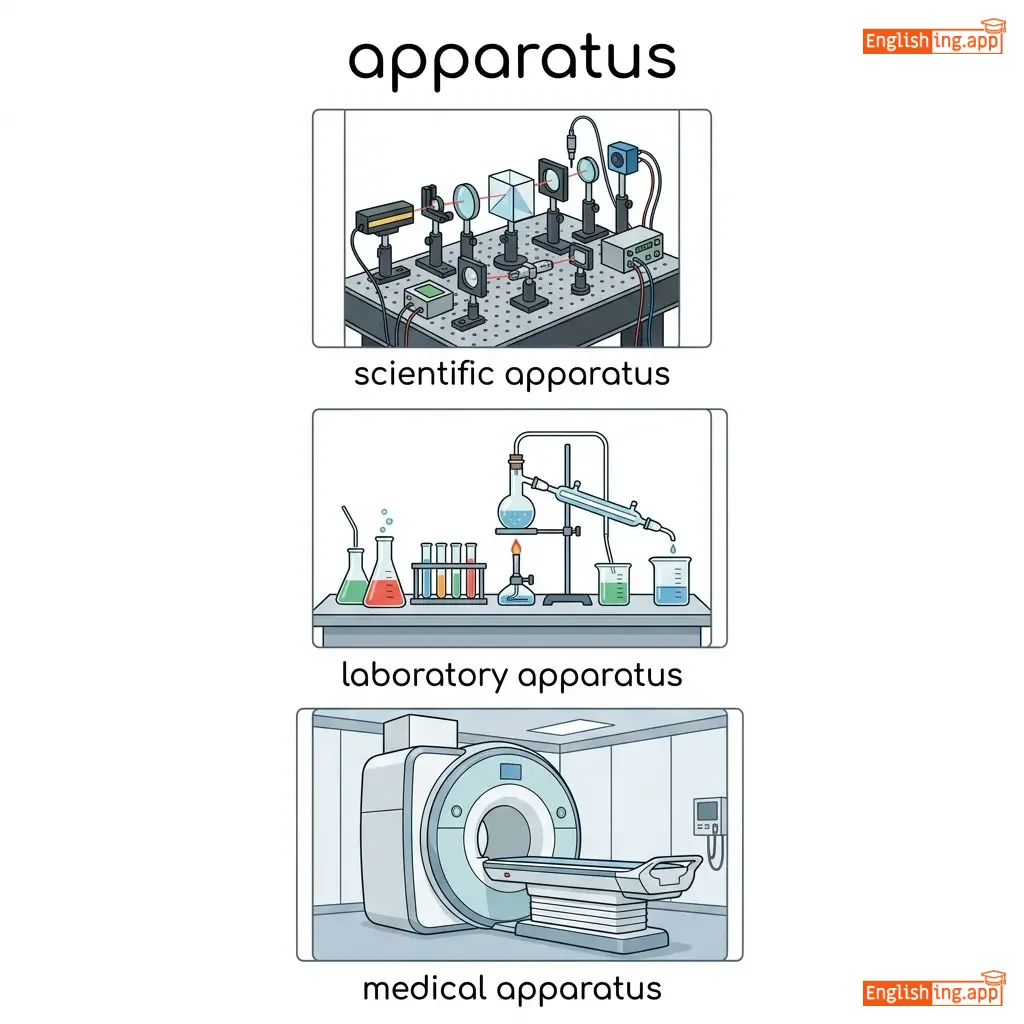
scientific apparatus, laboratory apparatus, medical apparatus
••••••
|
アパラタスを覚えて、実験室の装置のようなものです (Aparatasu o oboete, jikken-shitsu no souchi no you na mono desu)
••••••
|
|
👀
••••••
|
/əˈpærənt/
adjective
(アパレント)
••••••
|
- •••••• |
明らか
akiraka
••••••
|
- •••••• | - •••••• | - •••••• | - •••••• |
Clearly visible or understood; obvious.
••••••
|
It soon became apparent that he was not telling the truth.
それがすぐに明らかになった、彼が真実を話していないことが。
••••••
|
それがすぐに明らかになった、彼が真実を話していないことが。
Sore ga sugu ni akiraka ni natta, kare ga shinjitsu o hanashite inai koto ga.
••••••
|
apparent reason
明らかな理由
••••••
|
an obvious or clear reason
••••••
|
明らかな理由
akiraka na riyū
••••••
|
obvious, evident, clear, plain, visible
••••••
|
hidden, obscure, unclear
••••••
|
apparent reason, apparent mistake, became apparent, quite apparent
••••••
|
Apparent は見えたり理解できたりするもの、つまり明らか。
••••••
|
|
👀
••••••
|
/əˈperəntli/
adverb
(アパレントリー)
••••••
|
- •••••• |
明らかに;
akirakani
••••••
|
- •••••• | - •••••• | - •••••• | - •••••• |
seemingly; as far as one knows or can see; clearly; evidently
••••••
|
Apparently, the meeting has been postponed to next week.
アパレントリー、会議は来週に延期されたようです。
••••••
|
明らかに、会議は来週に延期されたようです。
akirakani, kaigi wa raishuu ni enki sareta you desu.
••••••
|
- •••••• | - •••••• | - •••••• |
seemingly, evidently, clearly, obviously
••••••
|
actually, really, truly, certainly
••••••
|
apparently not, apparently so, quite apparently
••••••
|
明らかに見えるもの、それがアパレントリーです。
••••••
|
|
📢
••••••
|
/əˈpiːl/
verb, noun
(アピール)
••••••
|
- •••••• |
アピール / 引きつけ
apīru / hikitsuke
••••••
|
appealed
アピールド
••••••
|
appealed
アピールド
••••••
|
appeals
アピールス
••••••
|
appealing
アピールイング
••••••
|
to make a serious request; to be attractive or interesting; a formal request to a higher authority for a decision to be changed
••••••
|
The charity appealed to the public for donations.
チャリティーは寄付のために一般市民にアピールしました。
••••••
|
チャリティーは寄付のために一般市民にアピールしました。
Charitī wa kifu no tame ni ippan shimin ni apīru shimashita.
••••••
|
make an appeal
アピールをする
••••••
|
to formally ask for something, often publicly
••••••
|
アピールをする
apīru o suru
••••••
|
request, petition, attraction, plea, entreaty
••••••
|
demand, order, repulsion
••••••
|
appeal to, appeal against, strong appeal, emotional appeal
••••••
|
Appeal = アピール、誰かが📢を使ってアピールしているのを想像してください — Appeal = アピール
••••••
|
|
😍
••••••
|
/əˈpiː.lɪŋ/
adjective
(アピールリング)
••••••
|
- •••••• |
魅力的な; 面白い; 楽しい
miryokuteki na; omoshiroi; tanoshii
••••••
|
- •••••• | - •••••• | - •••••• | - •••••• |
attractive; interesting; pleasing
••••••
|
The colorful garden looks very appealing to visitors.
色とりどりの庭は訪問者に非常に魅力的に見えます。
••••••
|
色とりどりの庭は訪問者に非常に魅力的に見えます。
Irotoridori no niwa wa hōmonsha ni hijō ni miryokuteki ni miemasu.
••••••
|
- •••••• | - •••••• | - •••••• |
attractive, charming, alluring, enticing
••••••
|
repulsive, unattractive, disgusting
••••••
|
appealing idea, appealing offer, visually appealing
••••••
|
Appealing sounds like 'miryokuteki' – this colorful garden looks very miryokuteki (appealing).
••••••
|
|
👀
••••••
|
/əˈpɪə/
verb
(アピア)
••••••
|
- •••••• |
現れる
arawareru
••••••
|
appeared
アピアード
••••••
|
appeared
アピアード
••••••
|
appears
アピアーズ
••••••
|
appearing
アピアリング
••••••
|
to become visible or come into sight; to seem
••••••
|
She appeared suddenly at the door.
彼女は突然ドアの前に現れました。
••••••
|
彼女は突然ドアの前に現れました。
Kanojo wa totsuzen doa no mae ni arawaremashita.
••••••
|
appear out of thin air
薄い空気から現れる
••••••
|
to emerge suddenly and unexpectedly
••••••
|
空気から現れる
Kūki kara arawareru
••••••
|
emerge, show, arise, surface, seem
••••••
|
disappear, vanish, hide
••••••
|
appear suddenly, appear in court, appear likely
••••••
|
Arawareru: ドアの前に突然現れる。
••••••
|
|
👀
••••••
|
/əˈpɪərəns/
noun
(apīrensu)
••••••
|
- •••••• |
外見
gaiken
••••••
|
- •••••• | - •••••• | - •••••• | - •••••• |
the way that someone or something looks
••••••
|
His sudden appearance surprised everyone. |
彼の突然の登場は皆を驚かせました。
Kare no totsuzen no tōjō wa mina o odorokasemashita.
••••••
|
keep up appearances |
to maintain an outward show of good behavior or success
••••••
|
見かけを保つ
mikake o tamotsu
••••••
|
look, aspect, presence, form, figure
••••••
|
disappearance, absence
••••••
|
physical appearance, public appearance, sudden appearance, outward appearance
••••••
|
Appearance は外見 — 外見で人がわかる。
••••••
|
|
🤲
••••••
|
/əˈpiːz/
verb
(アピース)
••••••
|
|
なだめる / 満たす
nadameru / mitasu
••••••
|
appeased
アピースド
••••••
|
appeased
アピースド
••••••
|
appeases
アピースズ
••••••
|
appeasing
アピースイング
••••••
|
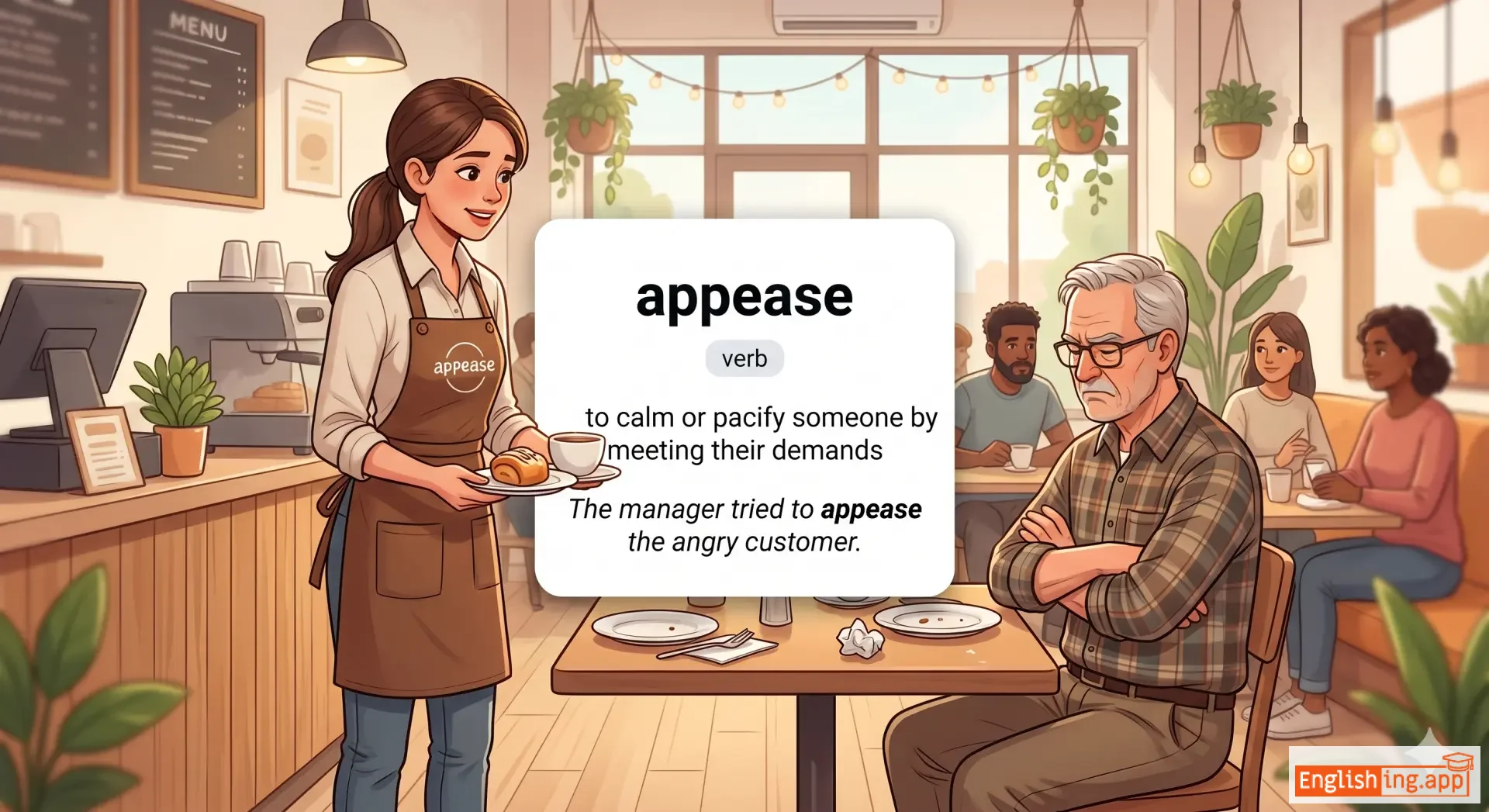
to calm or pacify someone by meeting their demands
••••••
|
The manager tried to appease the angry customer.
マネージャーは怒っている顧客をなだめようとしました。
••••••
|
マネージャーは怒っている顧客をなだめようとしました。
Manējā wa okotte iru kokyaku o nadameyō to shimashita.
••••••
|
appease someone's anger
誰かの怒りをなだめる
••••••
|
to reduce someone's anger by satisfying them
••••••
|
誰かの怒りをなだめる
dareka no ikari o nadameru
••••••
|
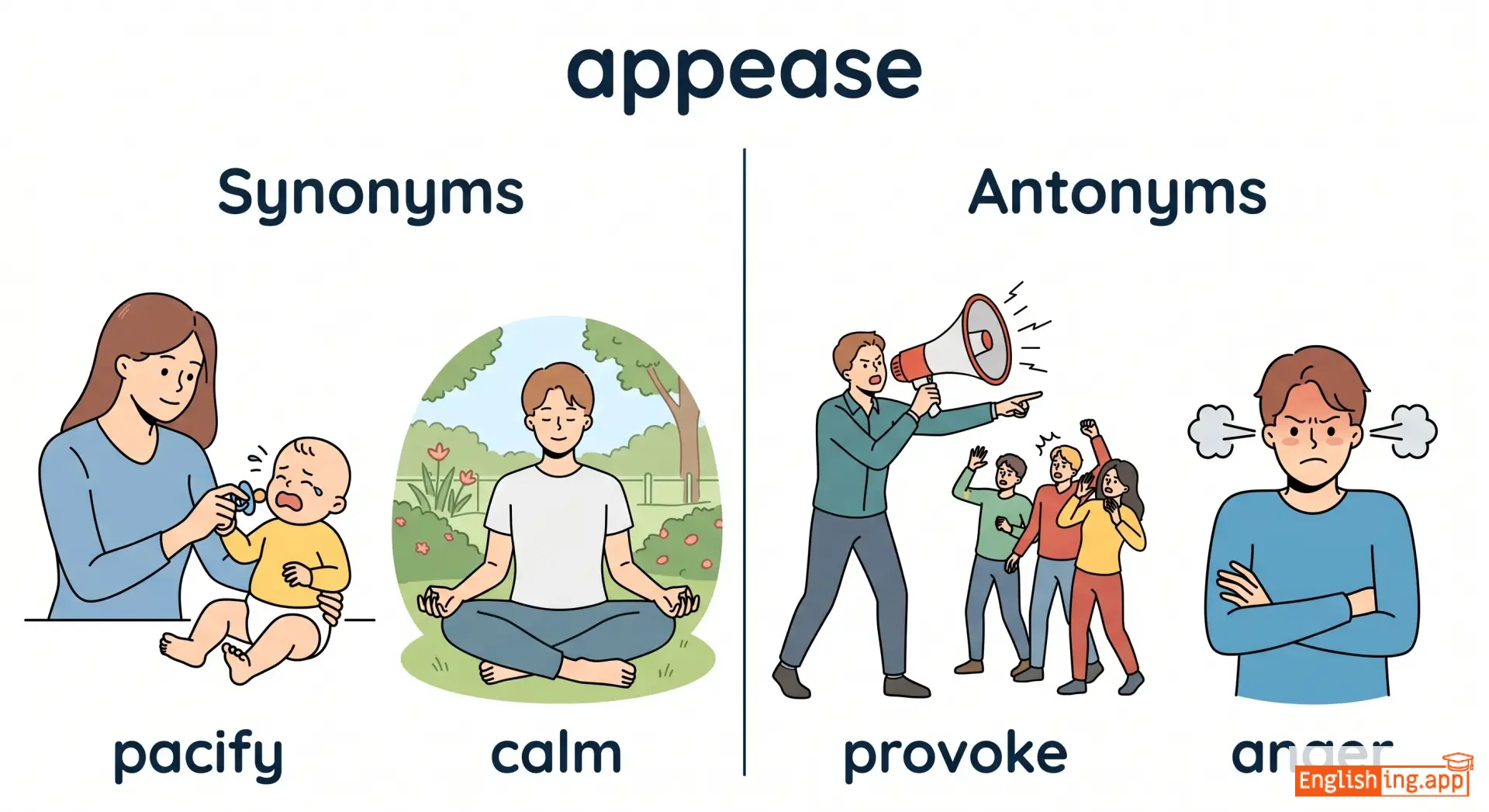
pacify, calm, satisfy, placate, soothe
••••••
|
provoke, anger, agitate
••••••
|
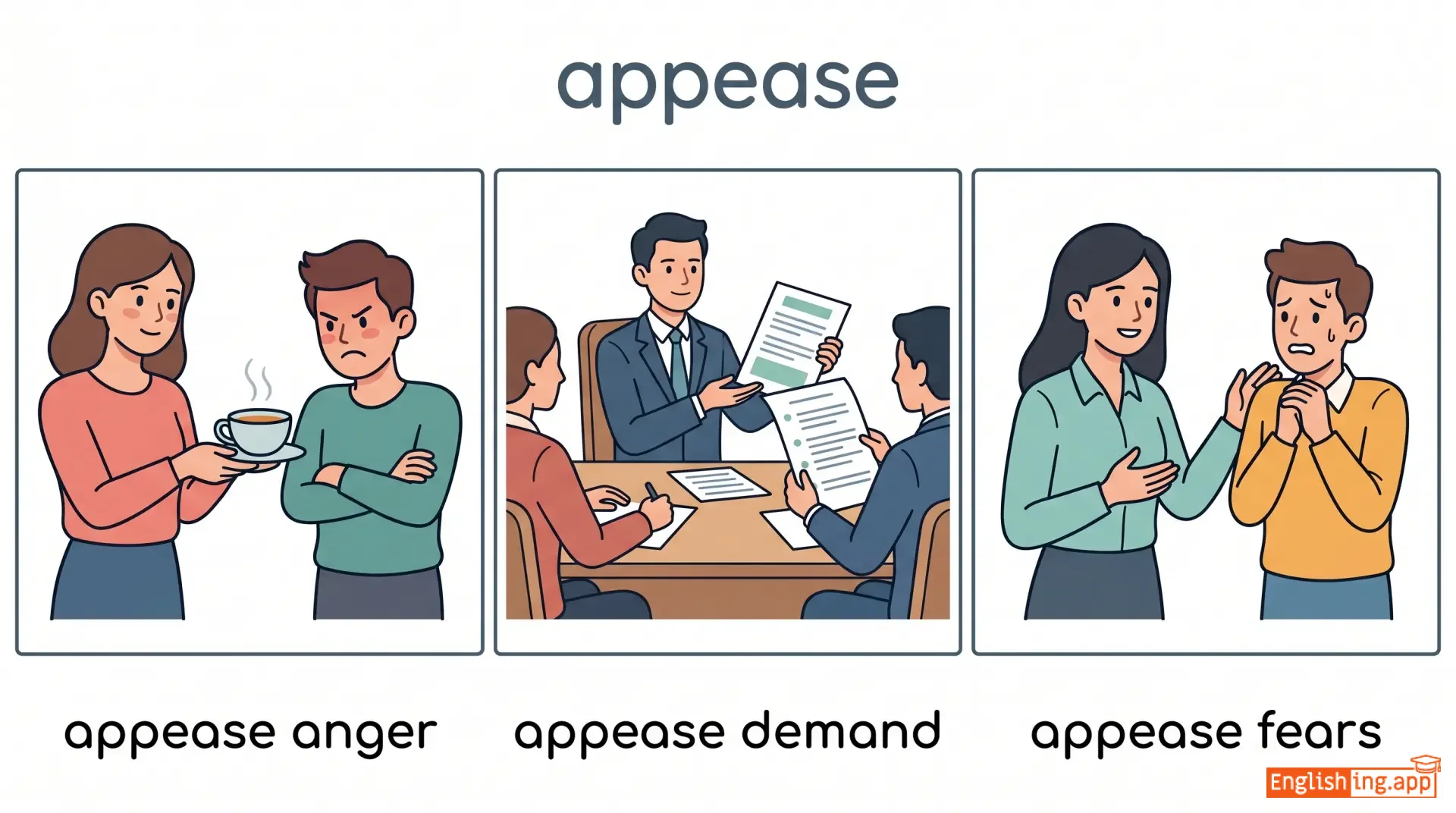
appease anger, appease demand, appease fears
••••••
|
Appeaseはなだめる意味です、‘Peace’をもたらすためになだめる必要があることを想像してください。
••••••
|
|
🍽️
••••••
|
/ˈæpɪtaɪt/
noun
(アペタイット)
••••••
|
|
食欲
shokuyoku
••••••
|
- •••••• | - •••••• | - •••••• | - •••••• |
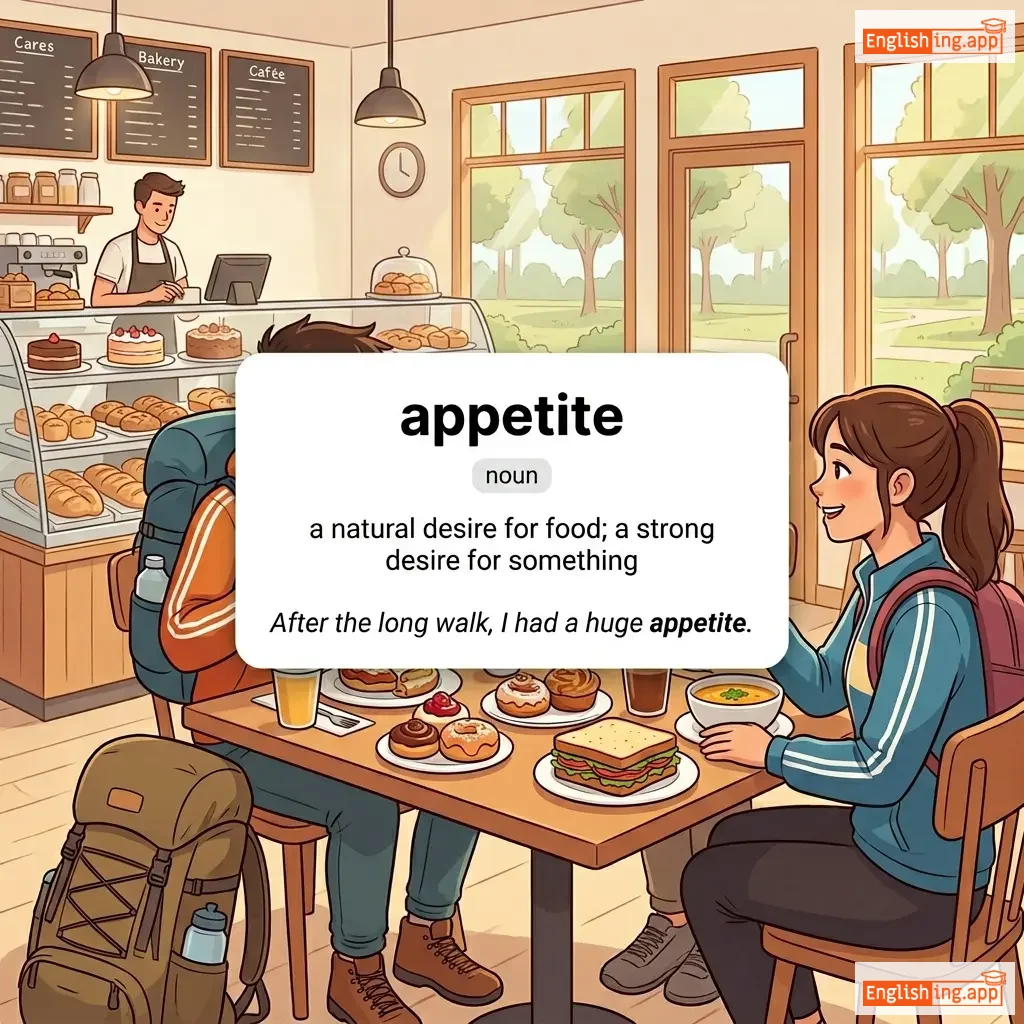
a natural desire for food; a strong desire for something
••••••
|
After the long walk, I had a huge appetite. |
長い散歩の後、私は大きな食欲を感じました。
Nagai sanpo no ato, watashi wa ōkina shokuyoku o kanjimashita.
••••••
|
whet the appetite |
to stimulate interest or desire
••••••
|
食欲をそそる
shokuyoku o sosoru
••••••
|
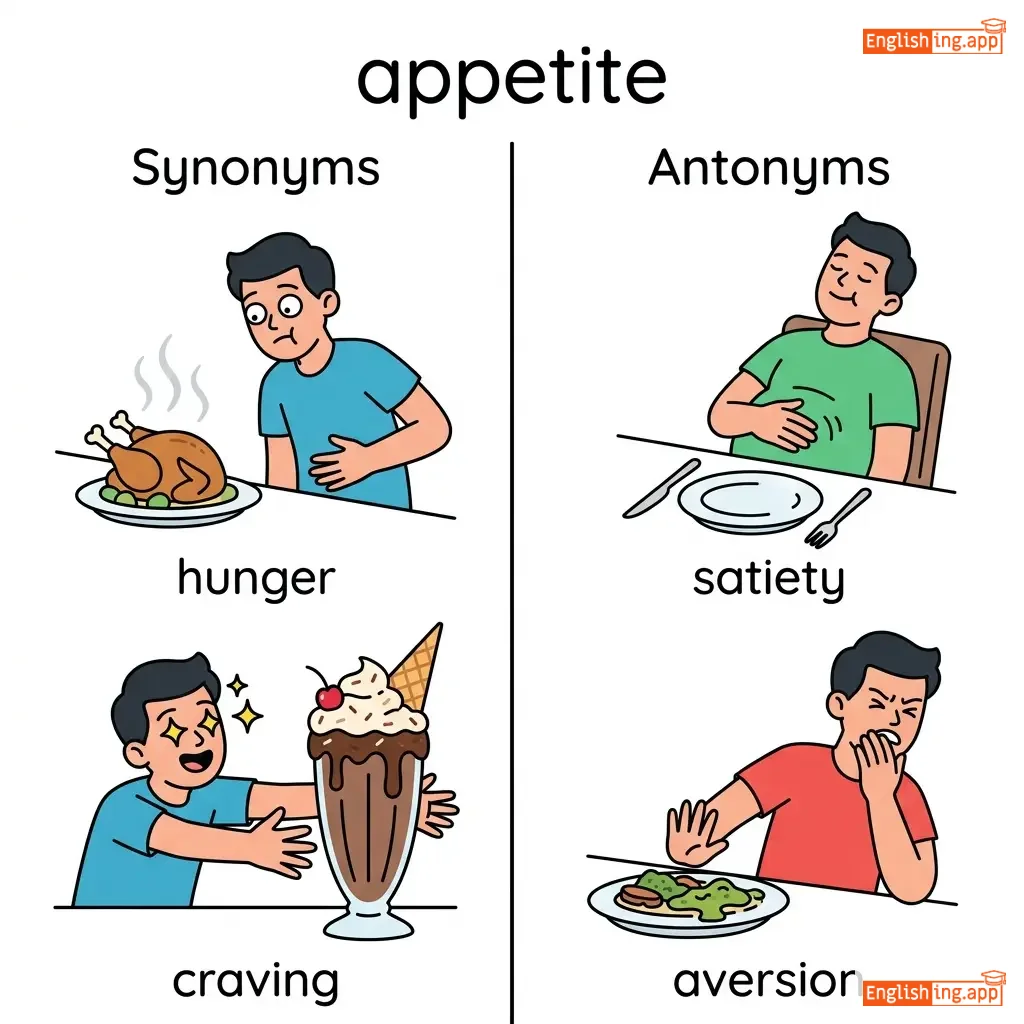
hunger, craving, desire, urge, longing
••••••
|
satiety, aversion
••••••
|
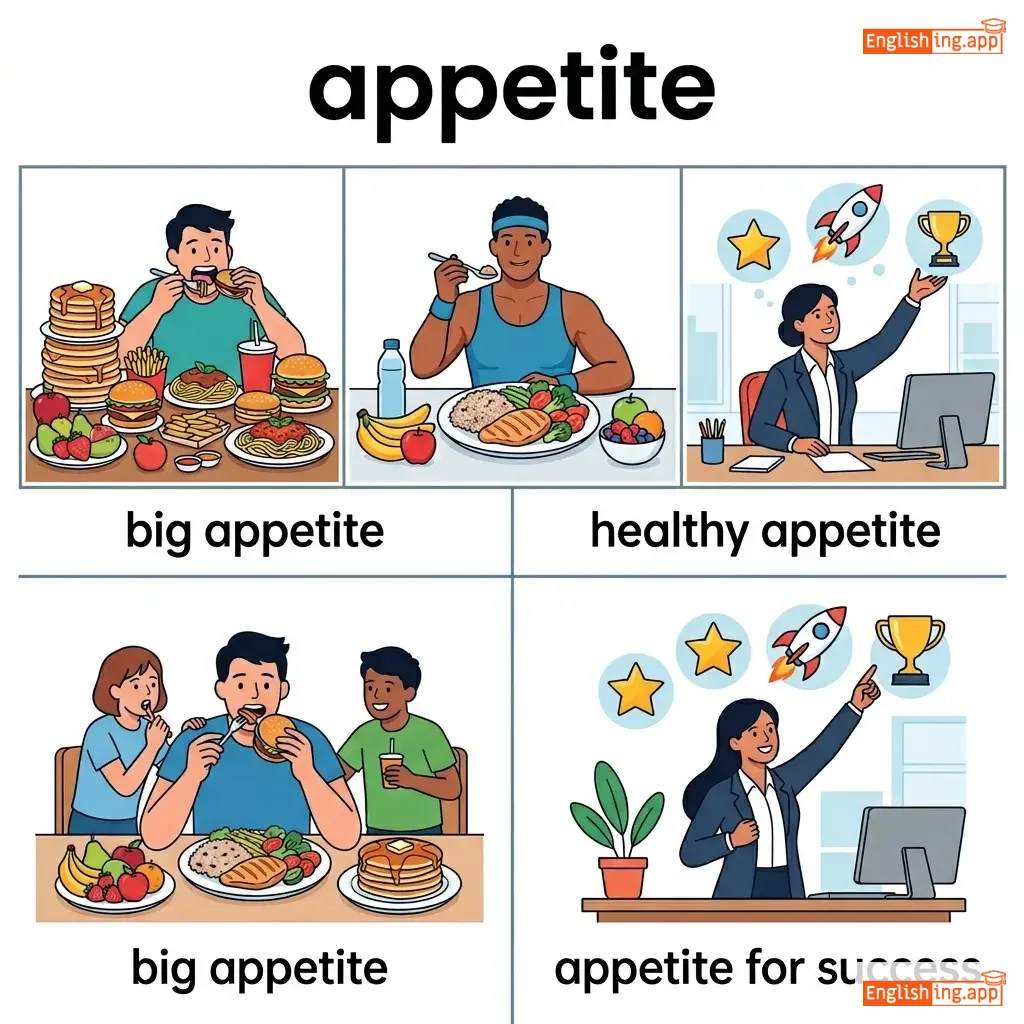
big appetite, healthy appetite, appetite for success
••••••
|
Appetite は食欲を意味する – 食欲 は食べたい欲望を意味します。
••••••
|
|
🍽️
••••••
|
/ˈæpɪtaɪz/
verb
(アペタイズ)
••••••
|
- •••••• |
食欲をそそる
shokuyoku o sosoru
••••••
|
appetized
アペタイズド
••••••
|
appetized
アペタイズド
••••••
|
appetizes
アペタイズズ
••••••
|
appetizing
アペタイズィング
••••••
|
to stimulate the appetite; to make someone eager or interested
••••••
|
The aroma of fresh bread will appetize the guests before dinner.
焼きたてのパンの香りが客をアペタイズする。
••••••
|
焼きたてのパンの香りが客の食欲をそそる。
yakitate no pan no kaori ga kyaku no shokuyoku o sosoru
••••••
|
- •••••• | - •••••• | - •••••• |
stimulate, whet, entice, tempt, arouse
••••••
|
repel, discourage, suppress
••••••
|
appetize the guests, appetize the senses, appetize appetite, appetize interest
••••••
|
アペタイズはアペタイト(appetite)を思い出すと覚えやすい。
••••••
|
|
👏
••••••
|
/əˈplɔːd/
verb
(アプラウド)
••••••
|
- •••••• |
拍手する
hakushu suru
••••••
|
applauded
アプラウデッド
••••••
|
applauded
アプラウデッド
••••••
|
applauds
アプラウズ
••••••
|
applauding
アプラウディング
••••••
|
to show approval by clapping or expressing admiration
••••••
|
The audience applauded the performance.
観客はパフォーマンスに拍手を送りました。
••••••
|
観客はパフォーマンスに拍手を送りました。
Kankyaku wa pafōmansu ni hakushu o okurimashita.
••••••
|
- •••••• | - •••••• | - •••••• |
cheer, praise, commend, hail
••••••
|
criticize, condemn
••••••
|
applaud enthusiastically, applaud someone for something
••••••
|
Applaud sounds like 'Appl' – だから、あなたが何かを気に入ったときに拍手します!
••••••
|
|
🍎
••••••
|
/ˈæpəl/
noun
(アップル)
••••••
|
- •••••• |
リンゴ
ringo
••••••
|
- •••••• | - •••••• | - •••••• | - •••••• |
a round fruit with red, green, or yellow skin
••••••
|
She ate a red apple for breakfast. |
彼女は朝食に赤いリンゴを食べました。
Kanojo wa chōshoku ni akai ringo o tabemashita.
••••••
|
the apple of one's eye |
a person or thing that is greatly loved or treasured
••••••
|
目の中のリンゴ
me no naka no ringo
••••••
|
fruit, pome, produce
••••••
|
null
••••••
|
apple pie, apple tree, apple juice, eat an apple
••••••
|
リンゴ(ringo)は‘毎日食べると元気’ - ‘An apple a day keeps doctor away’
••••••
|
|
📌
••••••
|
/ˈæplɪkəbl/
adjective
(apurikaburu)
••••••
|
|
適用可能な
tekiyou kanou na
••••••
|
- •••••• | - •••••• | - •••••• | - •••••• |
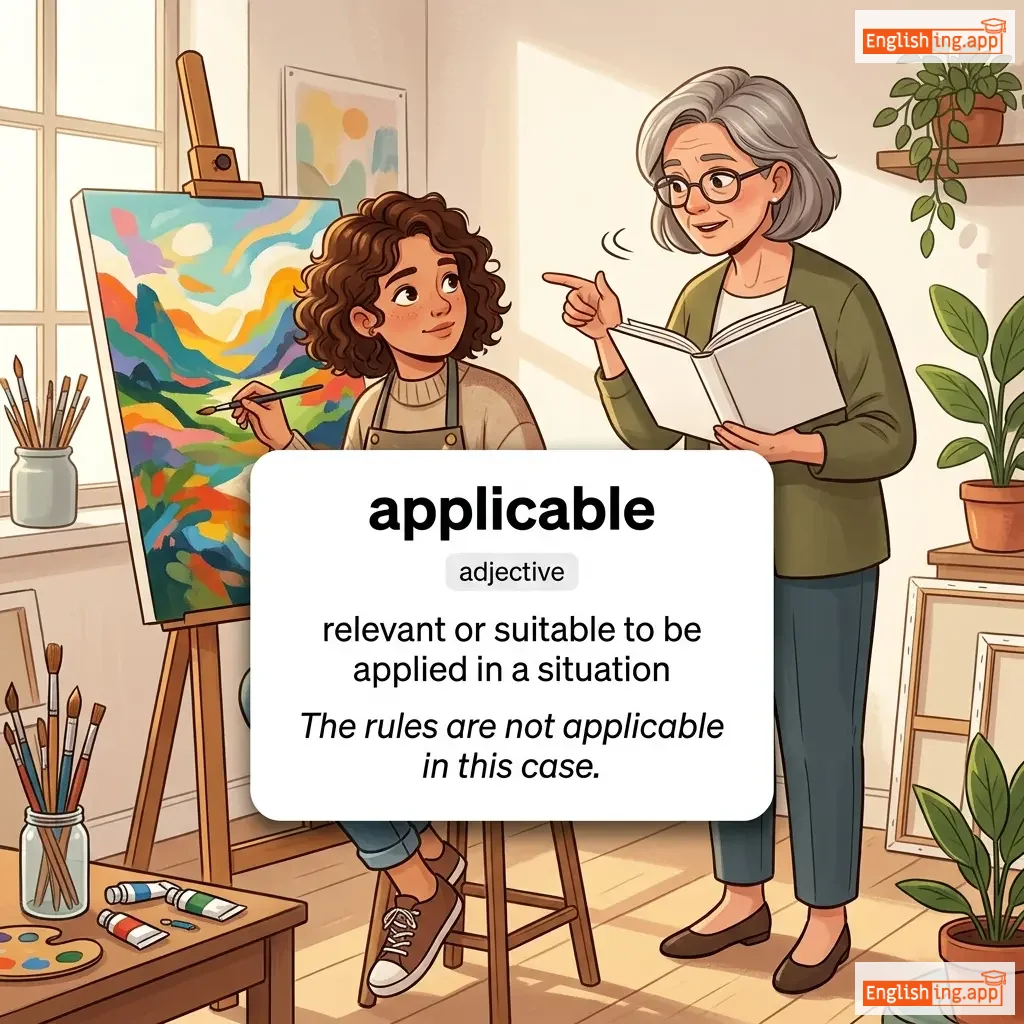
relevant or suitable to be applied in a situation
••••••
|
The rules are not applicable in this case. |
この場合、規則は適用されません。
Kono baai, kisoku wa tekiyou saremasen.
••••••
|
- •••••• | - •••••• | - •••••• |
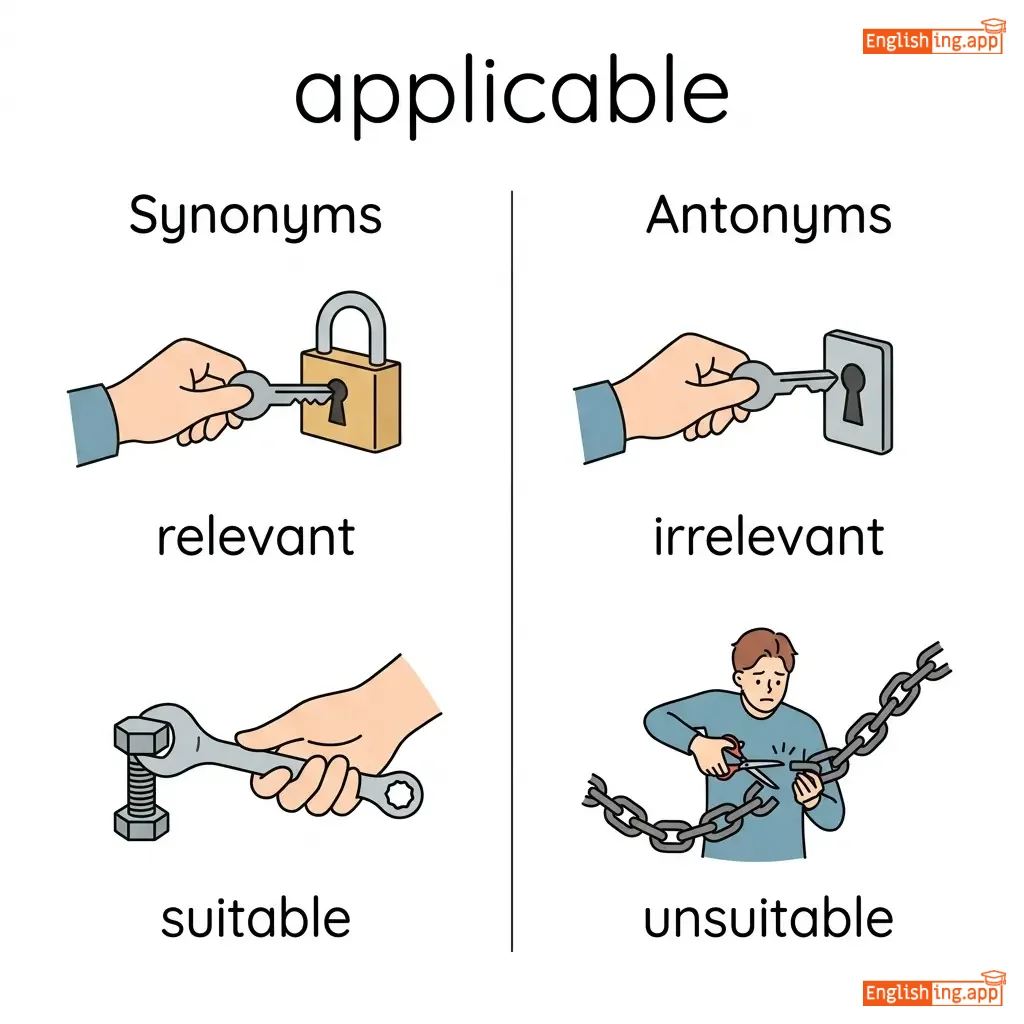
relevant, suitable, appropriate, pertinent, fitting
••••••
|
irrelevant, unsuitable, inappropriate
••••••
|
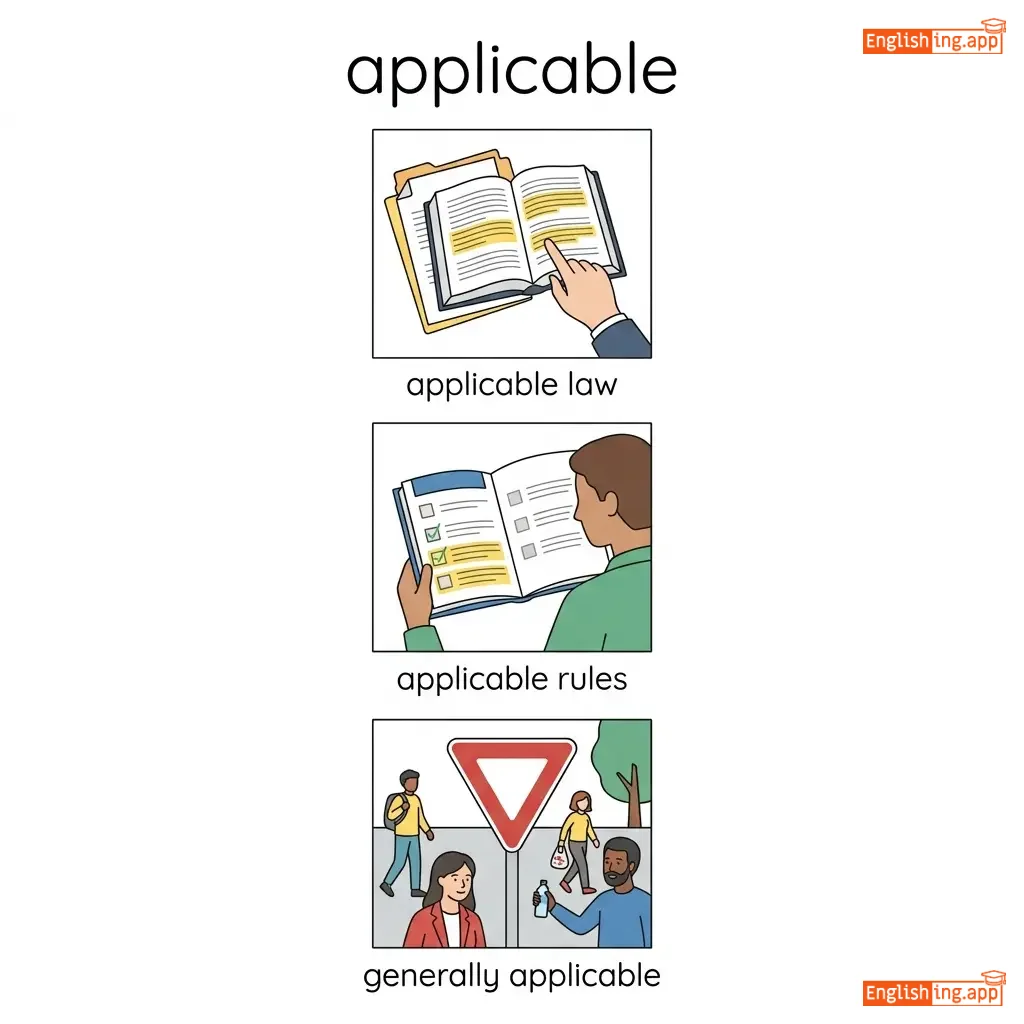
applicable law, applicable rules, generally applicable
••••••
|
Applicableは、適用可能なことを意味します – 適用可能な
••••••
|
|
📝
••••••
|
/ˈæplɪkənt/
noun
(アプリカント)
••••••
|
- •••••• |
応募者
ōbosha
••••••
|
- •••••• | - •••••• | - •••••• | - •••••• |
a person who applies for something, such as a job or a position
••••••
|
The applicant was interviewed for the position. |
応募者はそのポジションのために面接されました。
Ōbosha wa sono pojishon no tame ni mensetsu saremashita.
••••••
|
- •••••• | - •••••• | - •••••• |
candidate, contender, petitioner, seeker
••••••
|
employer, recruiter
••••••
|
job applicant, applicant form, qualified applicant
••••••
|
An applicant is someone who applies (ōbo suru) for a position.
••••••
|
|
📝
••••••
|
/ˌæplɪˈkeɪʃən/
noun
(アプリケーション)
••••••
|
- •••••• |
申請 / アプリケーション / ソフトウェア
shinsei / apurikeeshon / sofuto wea
••••••
|
- •••••• | - •••••• | - •••••• | - •••••• |
a formal request for something; the act of putting something into operation; or a software program
••••••
|
She submitted her application for the scholarship. |
彼女は奨学金の申請を提出しました。
Kanojo wa shōgakukin no shinsei o teishutsu shimashita.
••••••
|
put into application |
to use something practically
••••••
|
アプリケーションに投入する
apurikēshon ni tōnyū suru
••••••
|
request, use, implementation, petition, software
••••••
|
withdrawal, neglect
••••••
|
job application, application form, software application, practical application
••••••
|
Applicationは申請またはアプリケーション、両方とも使われます。
••••••
|
|
📄
••••••
|
/əˈplaɪ/
verb
(apurai)
••••••
|
- •••••• |
申請する / 適用する
shinsei suru / tekiyou suru
••••••
|
applied
apuraido
••••••
|
applied
apuraido
••••••
|
applies
apuraizu
••••••
|
applying
apuraiingu
••••••
|
to make a formal request for something; to put into practice
••••••
|
He decided to apply for the scholarship.
彼は奨学金の申請を決めた。
••••••
|
彼は奨学金の申請を決めた。
Kare wa shougakukin no shinsei wo kimeta.
••••••
|
apply oneself
自分に適用する
••••••
|
to make a serious effort to do something
••••••
|
一生懸命努力する
isshoukenmei doryoku suru
••••••
|
request, use, implement, employ, submit
••••••
|
ignore, neglect
••••••
|
apply for a job, apply pressure, apply rules, apply cream
••••••
|
Applyは申請するという意味 — 申請することでチャンスが広がります。
••••••
|
|
📌
••••••
|
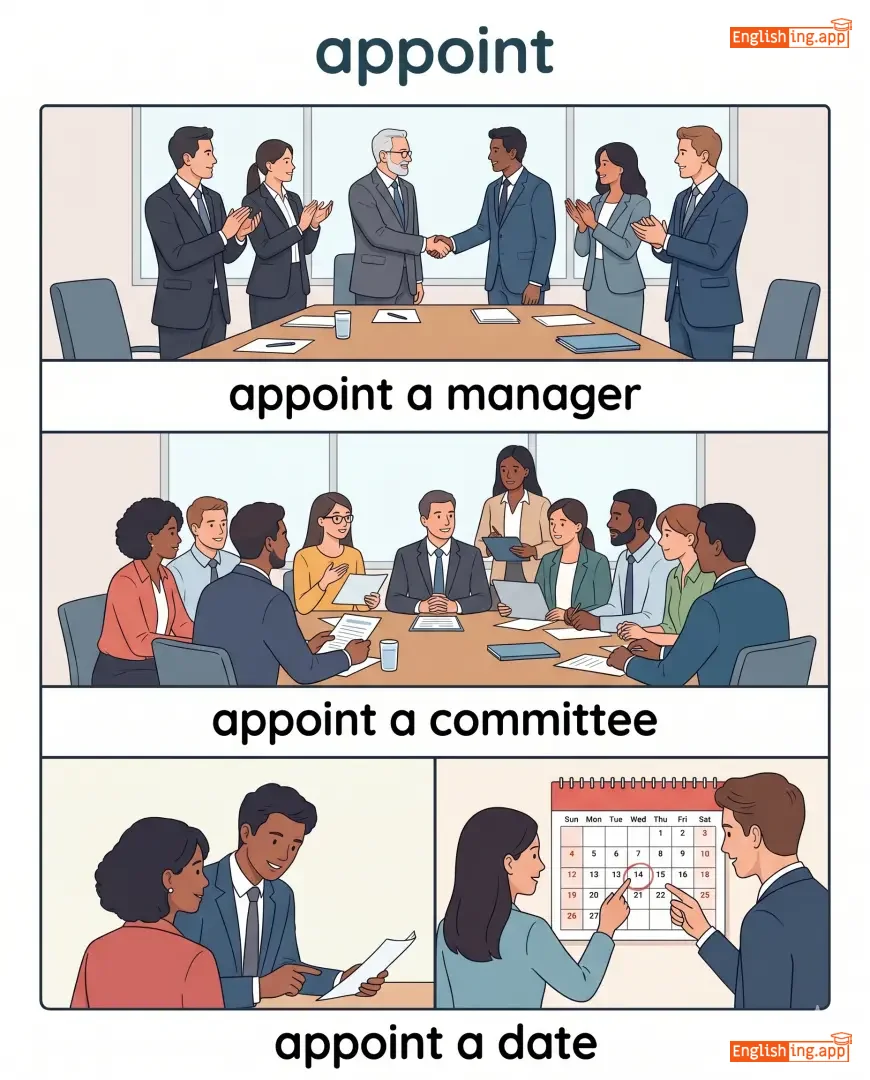
/əˈpɔɪnt/
verb
(アポイント)
••••••
|
|
任命する
ninmei suru
••••••
|
appointed
アポインテッド
••••••
|
appointed
アポインテッド
••••••
|
appoints
アポインツ
••••••
|
appointing
アポインティング
••••••
|
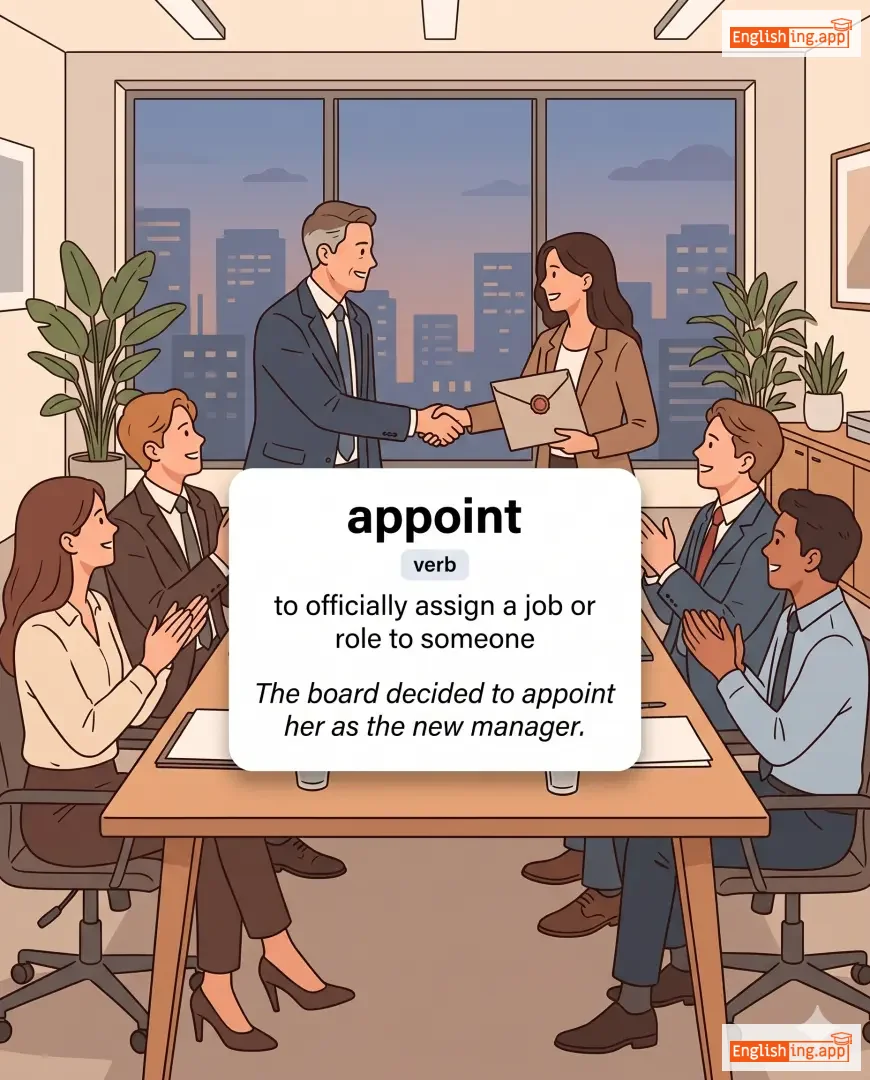
to officially assign a job or role to someone
••••••
|
The board decided to appoint her as the new manager.
ボードは彼女を新しいマネージャーに任命することを決定しました。
••••••
|
ボードは彼女を新しいマネージャーに任命することを決定しました。
Bōdo wa kanojo o atarashī manējā ni ninmei suru koto o kettei shimashita.
••••••
|
appoint someone to a post
誰かを職位に任命する
••••••
|
to officially give someone a position or job
••••••
|
誰かを職位に任命する
Dareka o shokui ni ninmei suru
••••••
|
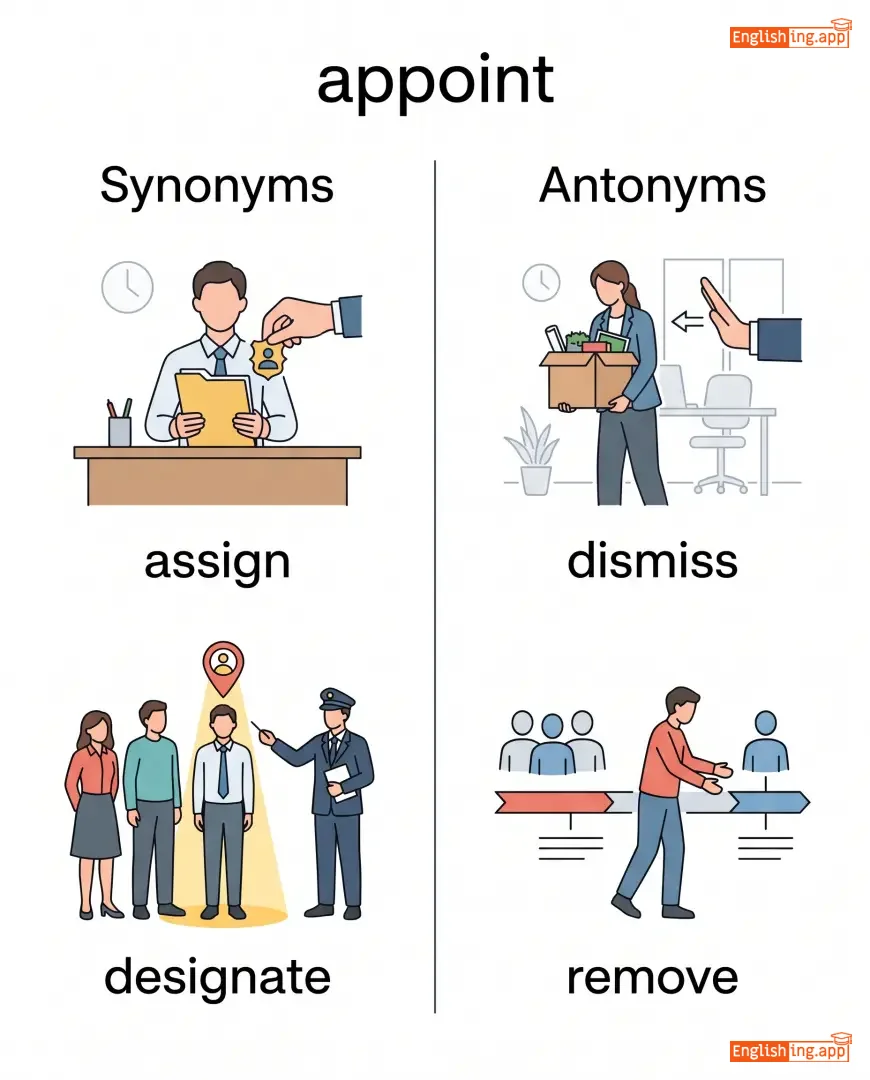
assign, designate, nominate, delegate, commission
••••••
|
dismiss, remove, reject
••••••
|
appoint a manager, appoint a committee, appoint a date, appoint someone
••••••
|
Appointとは任命すること—'Appは仕事を任せる意味です。'
••••••
|
|
📅
••••••
|
/əˈpɔɪntmənt/
noun
(アポイントメント)
••••••
|
- •••••• |
予約
yoyaku
••••••
|
- •••••• | - •••••• | - •••••• | - •••••• |
an arrangement to meet someone at a particular time
••••••
|
I have a doctor's appointment tomorrow. |
明日、医者の予約があります。
Ashita, isha no yoyaku ga arimasu.
••••••
|
keep an appointment |
to attend an arranged meeting
••••••
|
予約を守る
yoyaku o mamoru
••••••
|
meeting, arrangement, date, schedule, reservation
••••••
|
cancellation, absence
••••••
|
make an appointment, cancel an appointment, keep an appointment, appointment time
••••••
|
Appointmentは予約 — 時間を守って!
••••••
|
|
🙏
••••••
|
/əˈpriːʃieɪt/
verb
(アプリシエイト)
••••••
|
|
感謝する
kansha suru
••••••
|
appreciated
アプリシエイテッド
••••••
|
appreciated
アプリシエイテッド
••••••
|
appreciates
アプリシエイツ
••••••
|
appreciating
アプリシエイティング
••••••
|
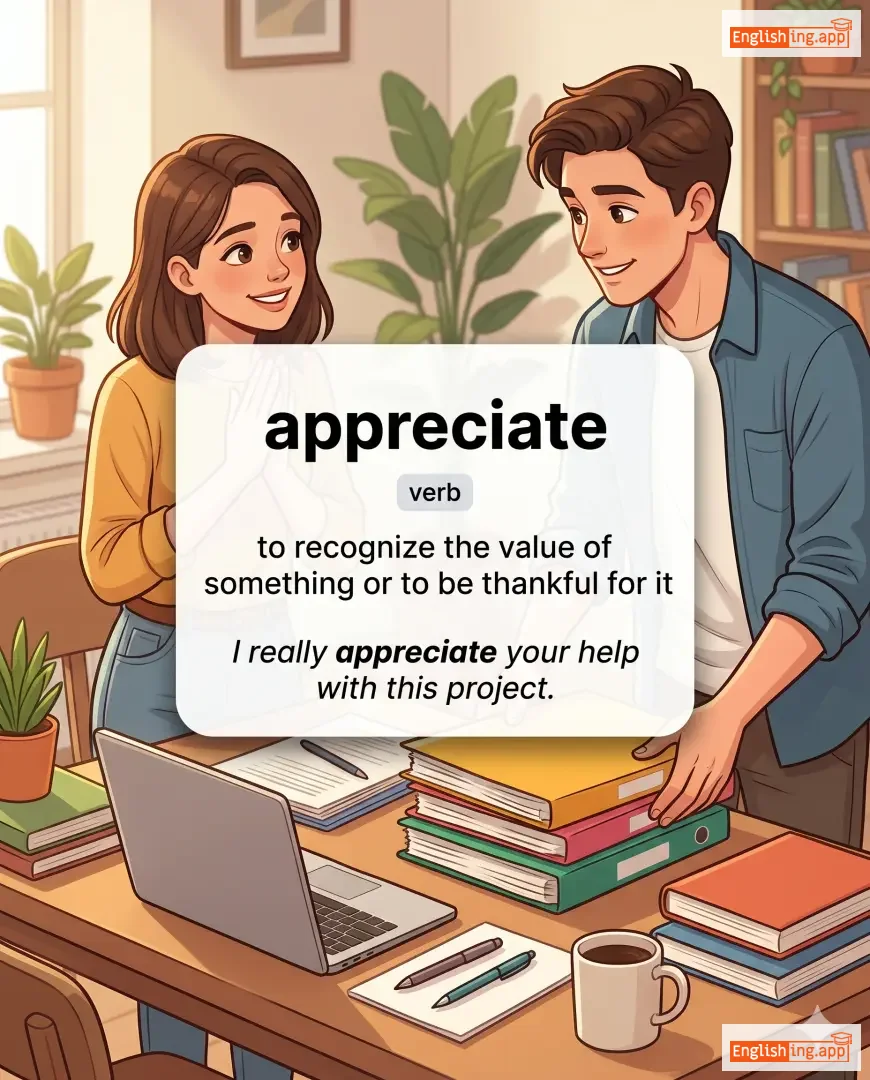
to recognize the value of something or to be thankful for it
••••••
|
I really appreciate your help with this project.
私はこのプロジェクトであなたの助けに本当に感謝しています。
••••••
|
私はこのプロジェクトであなたの助けに本当に感謝しています。
Watashi wa kono purojekuto de anata no tasuke ni hontō ni kansha shiteimasu.
••••••
|
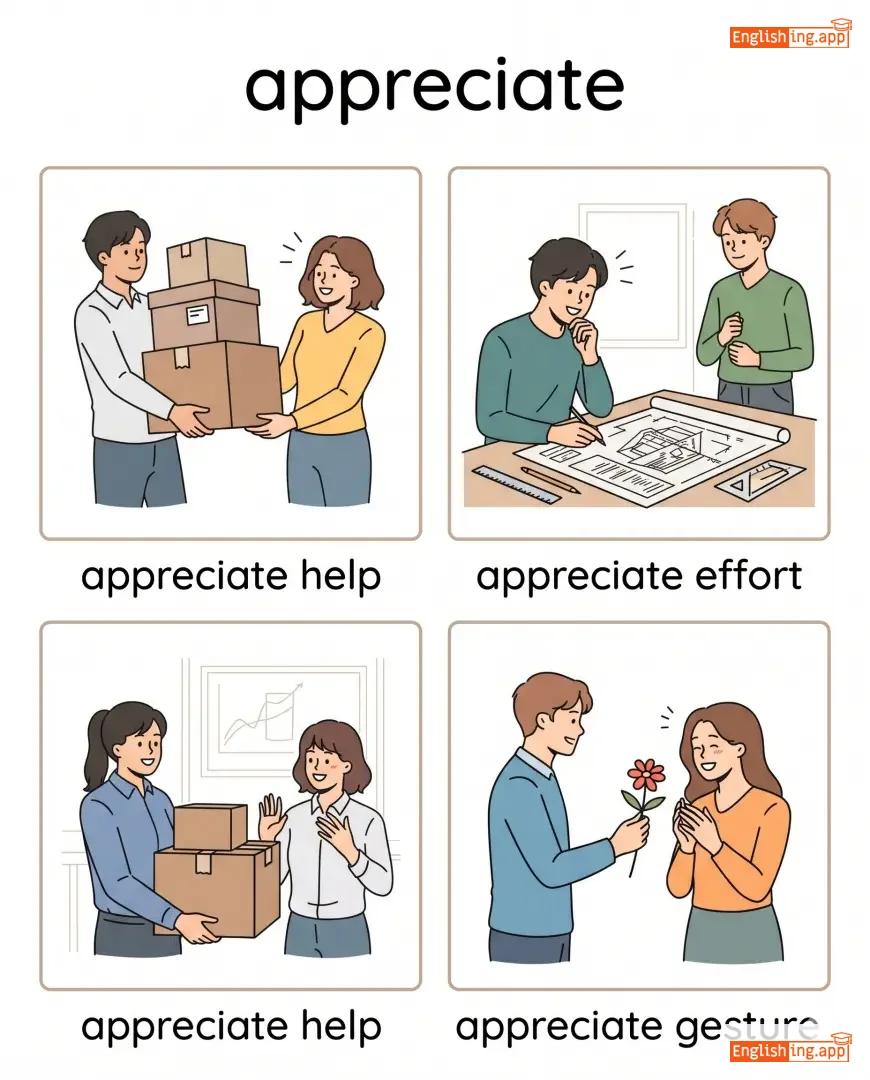
appreciate the gesture
そのジェスチャーを評価する
••••••
|
to value someone's action or kindness
••••••
|
そのジェスチャーを評価する
sono jesuchā o hyōka suru
••••••
|
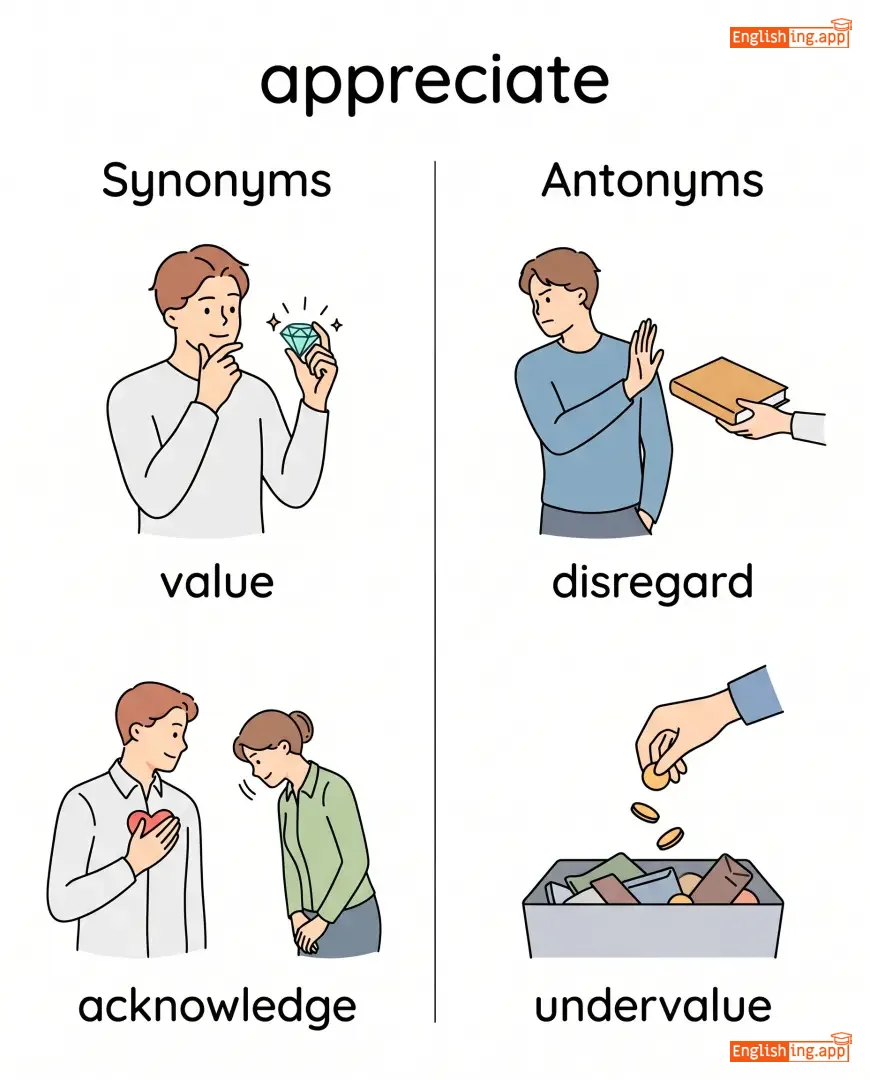
value, acknowledge, recognize, respect, admire
••••••
|
disregard, undervalue, ignore
••••••
|
appreciate help, appreciate effort, appreciate gesture, appreciate support
••••••
|
Appreciate は‘ありがとう’と言うこと 🙏
••••••
|
|
💐
••••••
|
/əˌpriːʃiˈeɪʃən/
noun
(アプリシエーション)
••••••
|
|
感謝、評価
kansha, hyōka
••••••
|
- •••••• | - •••••• | - •••••• | - •••••• |
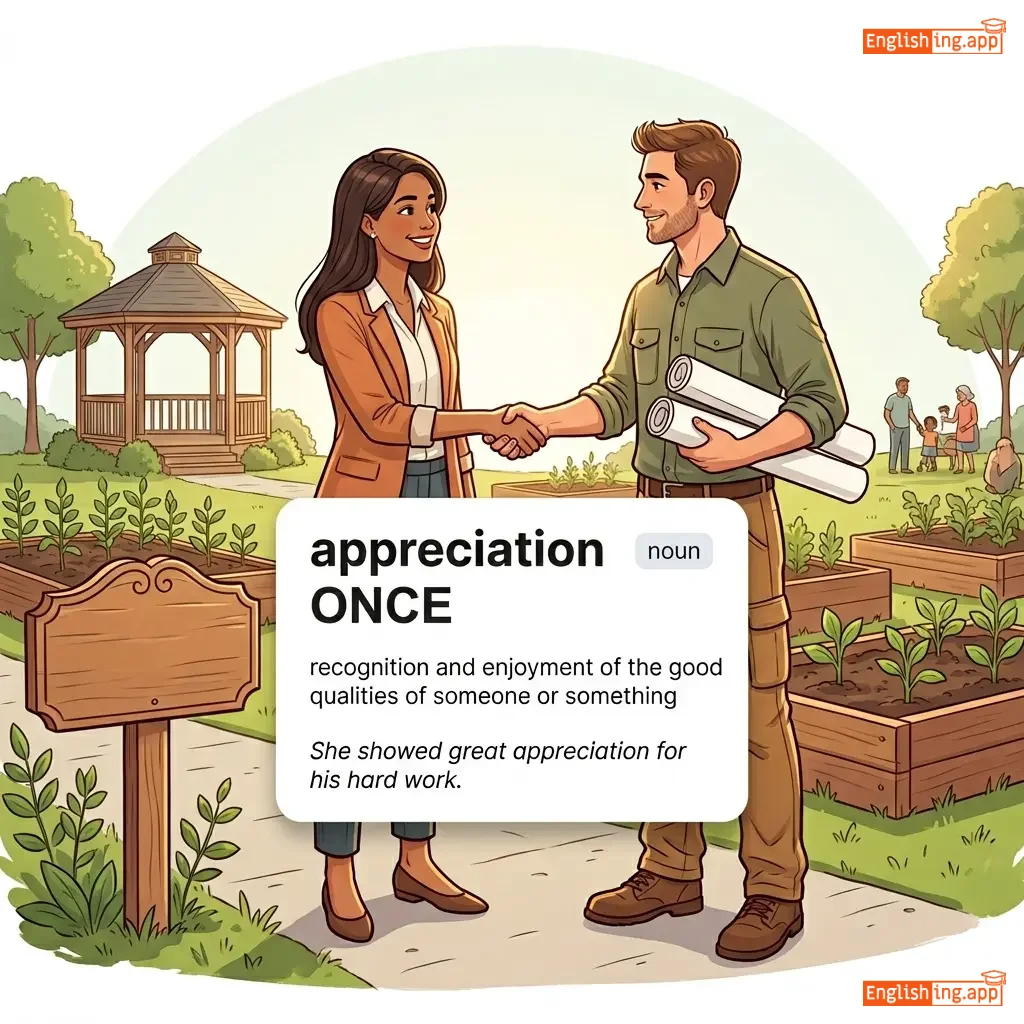
recognition and enjoyment of the good qualities of someone or something
••••••
|
She showed great appreciation for his hard work. |
彼女は彼の懸命な働きに対して大きな感謝を示しました。
Kanojo wa kare no kenmei na hataraki ni taishite ōkina kansha o shimeshimashita.
••••••
|
token of appreciation |
a small gift or gesture to show gratitude
••••••
|
感謝のしるし
kansha no shirushi
••••••
|
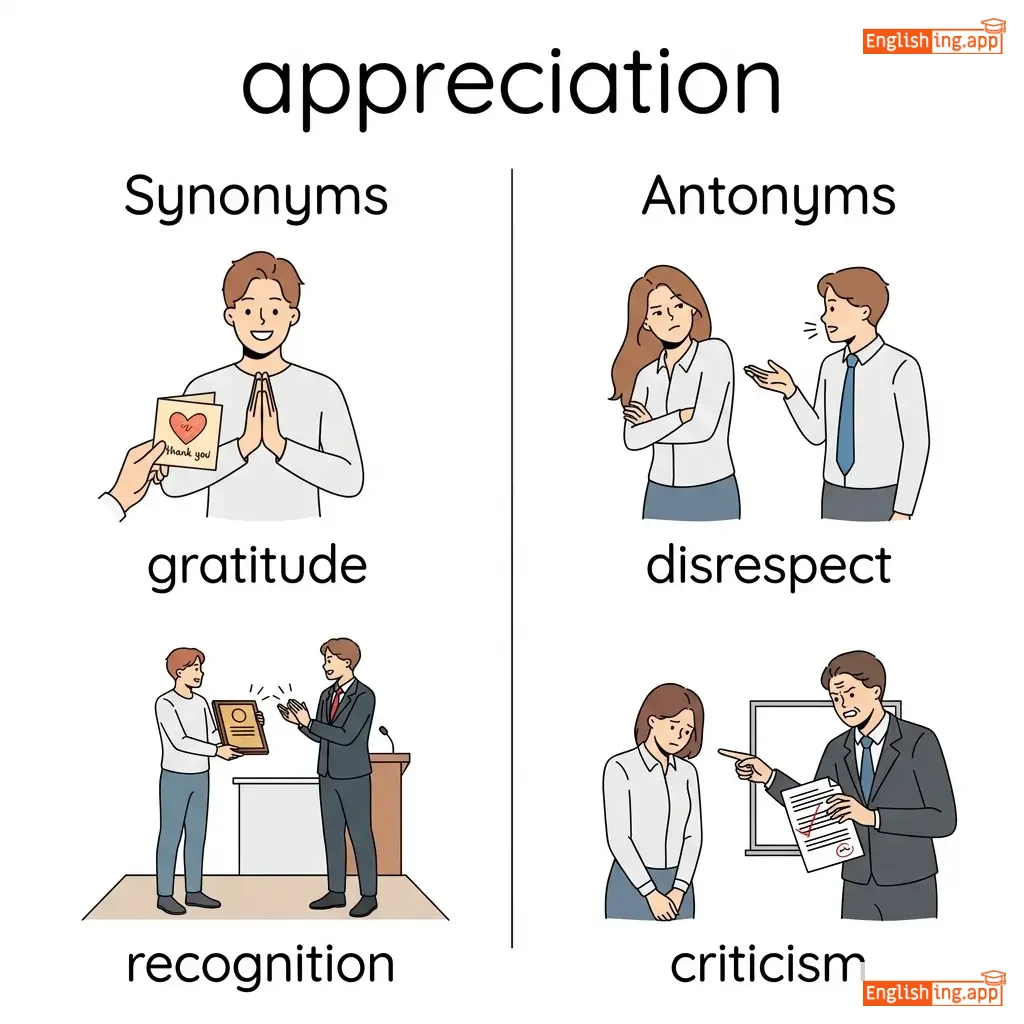
gratitude, recognition, admiration, thankfulness, respect
••••••
|
disrespect, criticism, ungratefulness
••••••
|
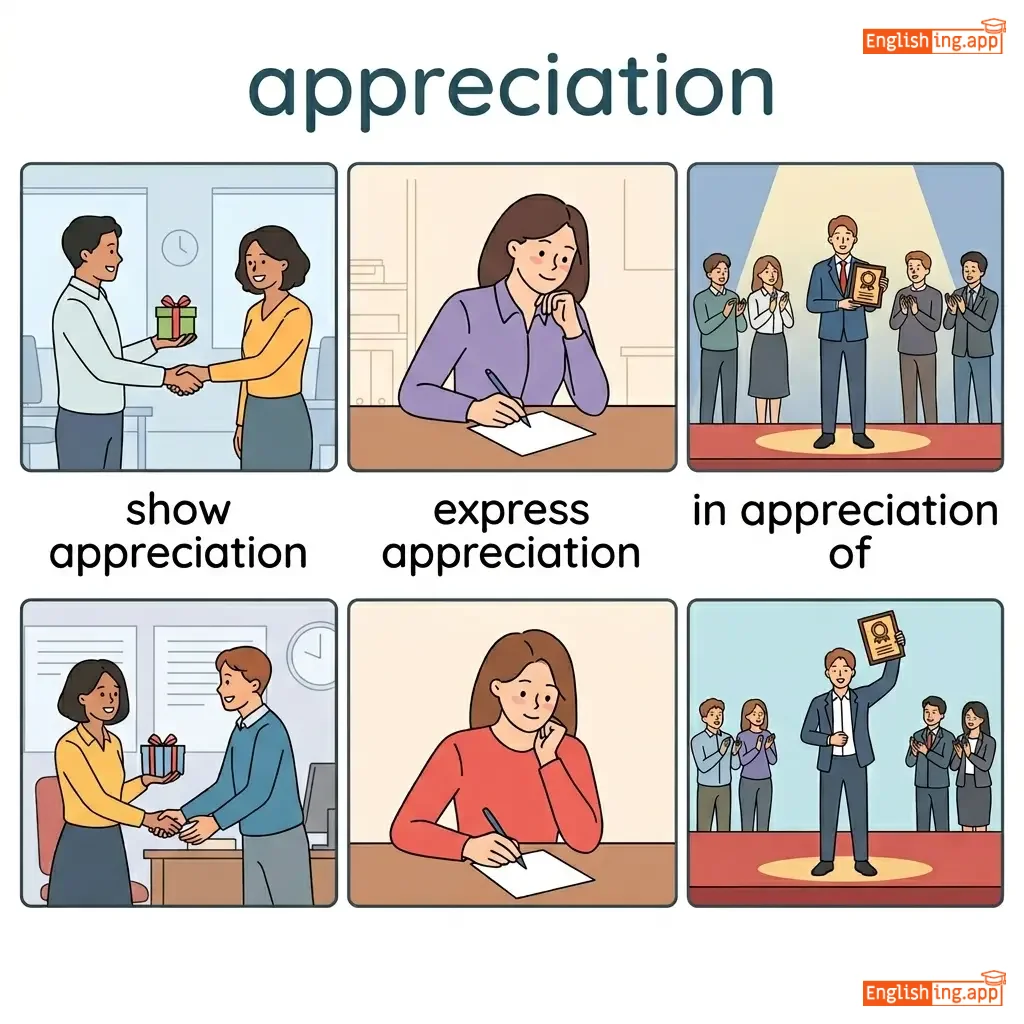
show appreciation, express appreciation, in appreciation of
••••••
|
Appreciationは評価すること、だから appreciation は評価すること — 覚えておいて、みんなappreciationを欲しがっています🎁
••••••
|
|
🚓
••••••
|
/ˌæprɪˈhɛnd/
verb
(エイプリヘンド)
••••••
|
- •••••• |
逮捕する
taiho suru
••••••
|
apprehended
エイプリヘンデッド
••••••
|
apprehended
エイプリヘンデッド
••••••
|
apprehends
エイプリヘンズ
••••••
|
apprehending
エイプリヘンディング
••••••
|
to arrest or seize someone; to understand or perceive something
••••••
|
The police managed to apprehend the thief after a long chase.
警察は長い追跡の後、泥棒を捕まえることに成功した。
••••••
|
警察は長い追跡の後、泥棒を捕まえることに成功した。
Keisatsu wa nagai tsuiseki no ato, dorobō o tsukamaeru koto ni seikō shita.
••••••
|
apprehend the meaning
意味を理解する
••••••
|
to understand or grasp the meaning
••••••
|
意味を理解する
imi o rikai suru
••••••
|
arrest, capture, seize, detain, grasp
••••••
|
release, free, liberate
••••••
|
apprehend a suspect, apprehend quickly, apprehend the meaning
••••••
|
逮捕は犯人を捕まえて意味を理解すること
••••••
|
|
📢
••••••
|
/əˈpraɪz/
verb
(apraizu)
••••••
|
|
知らせる
shiraseru
••••••
|
apprised
apuraizudo
••••••
|
apprised
apuraizudo
••••••
|
apprises
apuraizesu
••••••
|
apprising
apraizingu
••••••
|
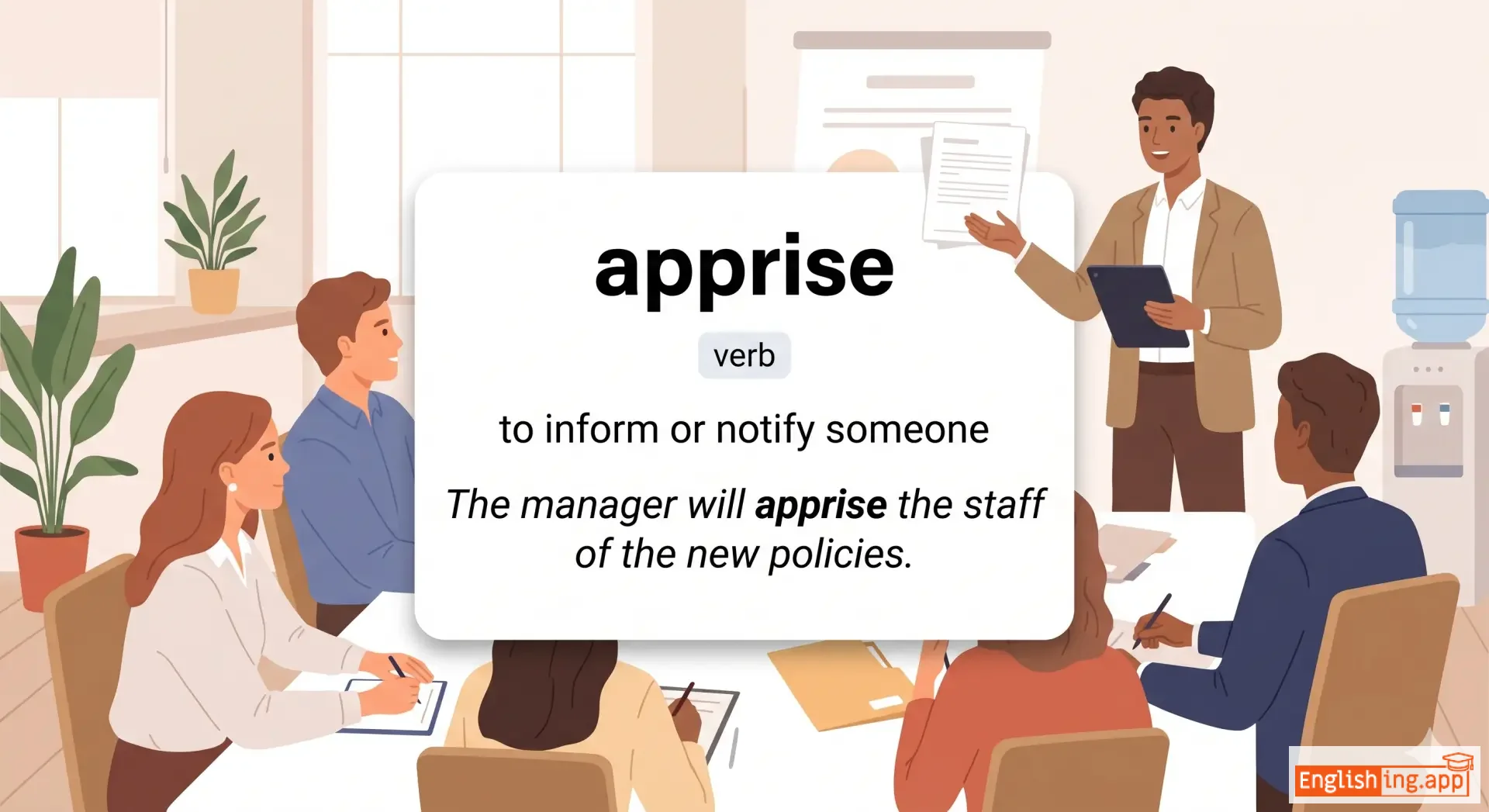
to inform or notify someone
••••••
|
The manager will apprise the staff of the new policies.
マネージャーはスタッフに新しい方針について知らせます。
••••••
|
マネージャーはスタッフに新しい方針について知らせます。
Manejā wa sutaffu ni atarashī hōshin ni tsuite shirasemasu.
••••••
|
keep apprised
情報を維持する
••••••
|
to keep informed about something
••••••
|
情報を維持する
jōhō o iji suru
••••••
|
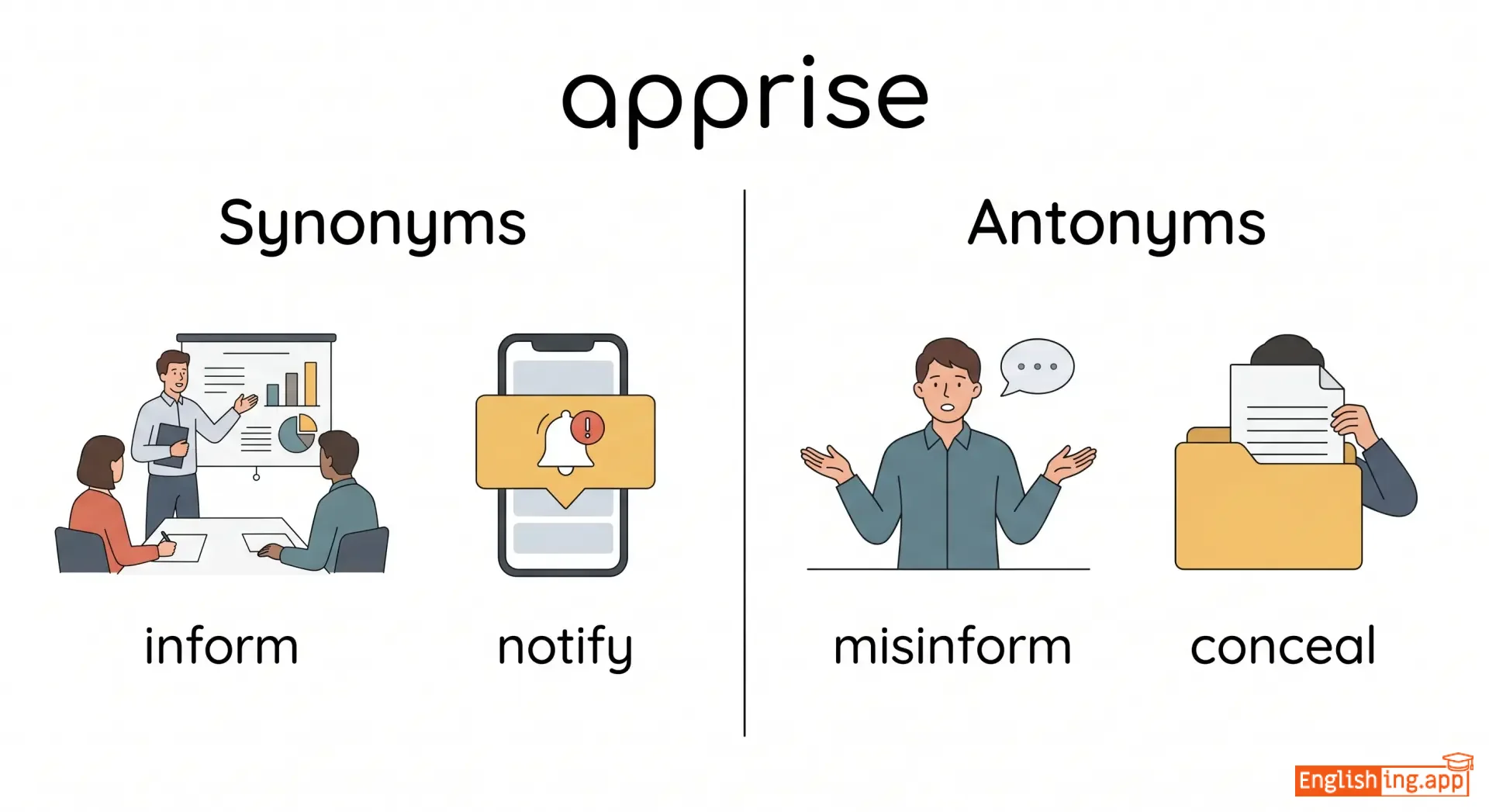
inform, notify, brief, update, advise
••••••
|
misinform, conceal
••••••
|
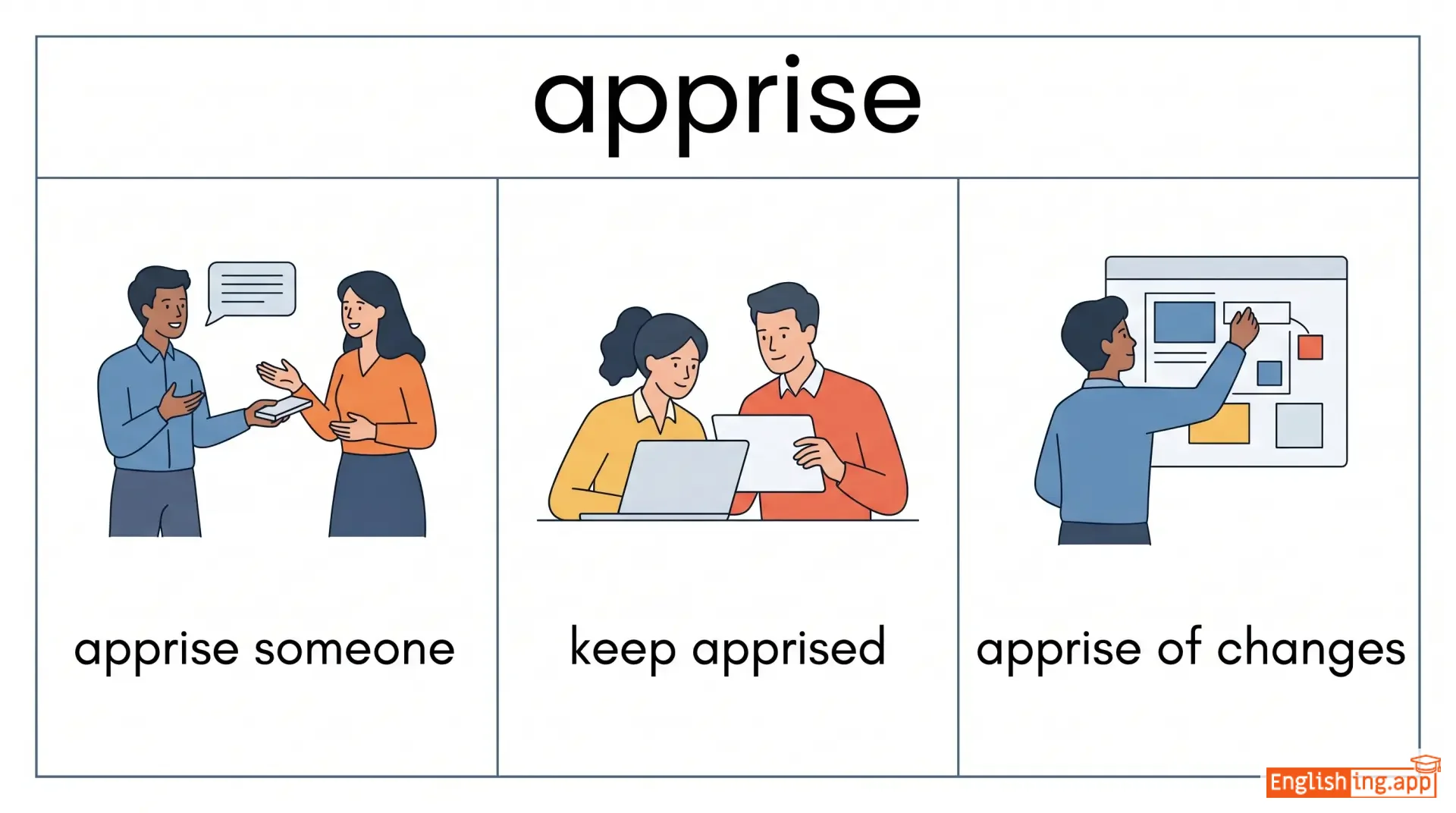
apprise someone, keep apprised, apprise of changes
••••••
|
Apprise は情報を'prise'する—更新を知らせる
••••••
|
|
➡️
••••••
|
/əˈproʊtʃ/
verb
(アプローチ)
••••••
|
- •••••• |
近づく / 解決する
chikaduku / kaiketsu suru
••••••
|
approached
アプローチド
••••••
|
approached
アプローチド
••••••
|
approaches
アプローチズ
••••••
|
approaching
アプローチング
••••••
|
to move closer to someone or something; to deal with a situation or problem
••••••
|
The teacher approached the student to offer help.
教師は学生に近づいて助けを申し出た。
••••••
|
教師は学生に近づいて助けを申し出た。
Kyoushi wa gakusei ni chikaduite tasuke o moushita.
••••••
|
approach with caution
慎重に近づく
••••••
|
to be careful when dealing with something or someone
••••••
|
慎重に近づく
shinchou ni chikaduku
••••••
|
come near, advance, move toward, reach, tackle
••••••
|
retreat, withdraw, avoid
••••••
|
new approach, practical approach, approach a problem, approach someone
••••••
|
近づくは問題を解決するようなものです:まず近づき、そして向き合うのです。
••••••
|
|
✔️
••••••
|
/əˈproʊpriət/ (adj), /əˈproʊprieɪt/ (verb)
adjective, verb
(アプロプリエイト)
••••••
|
|
適切 / 取る
tekisetsu / toru
••••••
|
appropriated
アプロプリエイテッド
••••••
|
appropriated
アプロプリエイテッド
••••••
|
appropriates
アプロプリエイツ
••••••
|
appropriating
アプロプリエイティング
••••••
|
suitable or proper in the circumstances (adj); to take something for one’s own use, often without permission (verb)
••••••
|
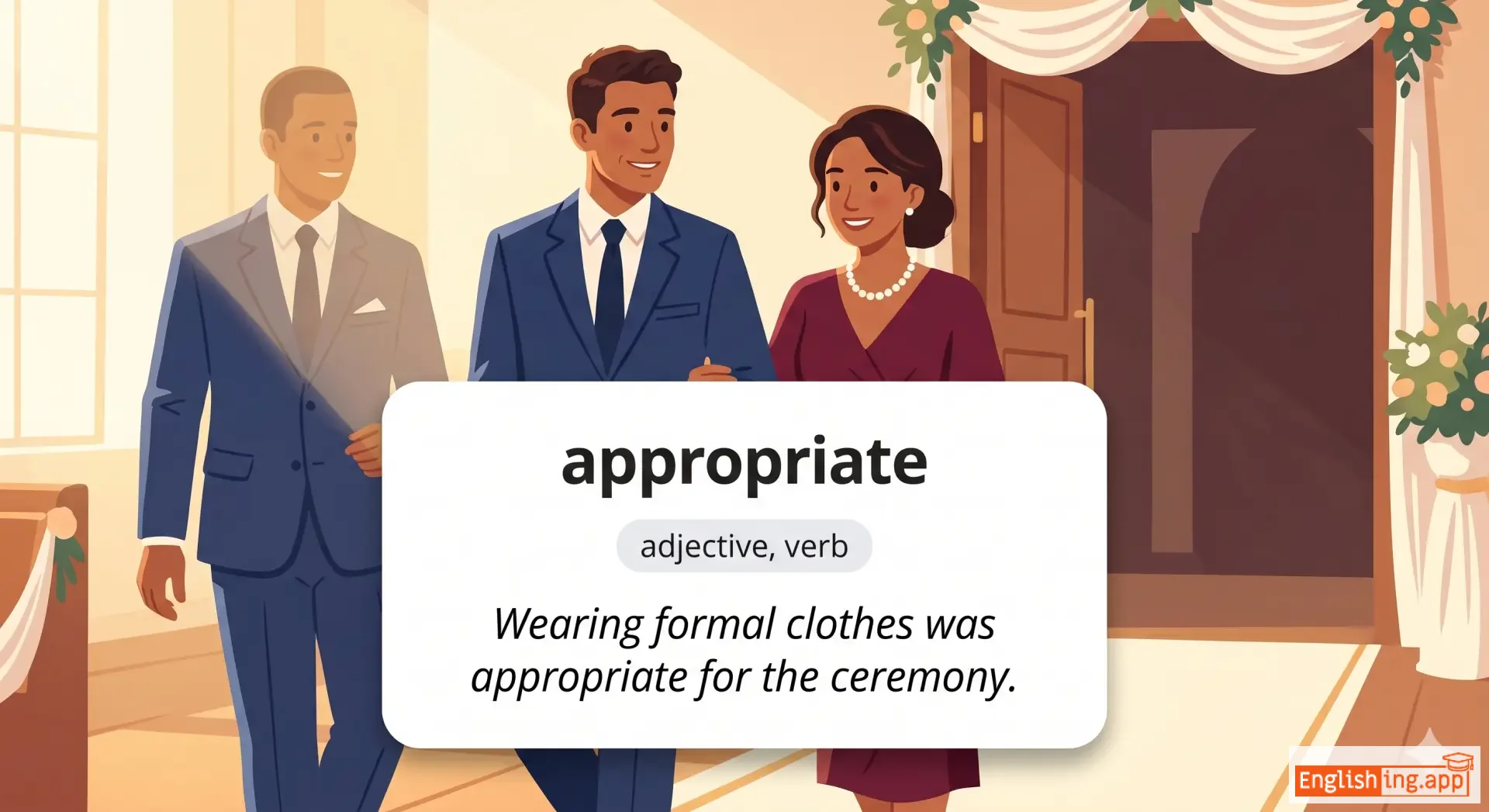
Wearing formal clothes was appropriate for the ceremony.
フォーマルな服を着ることはその儀式には適切でした。
••••••
|
フォーマルな服を着ることはその儀式には適切でした。
Fōmaru na fuku o kiru koto wa sono gishiki ni wa tekisetsu deshita.
••••••
|
- •••••• | - •••••• | - •••••• |
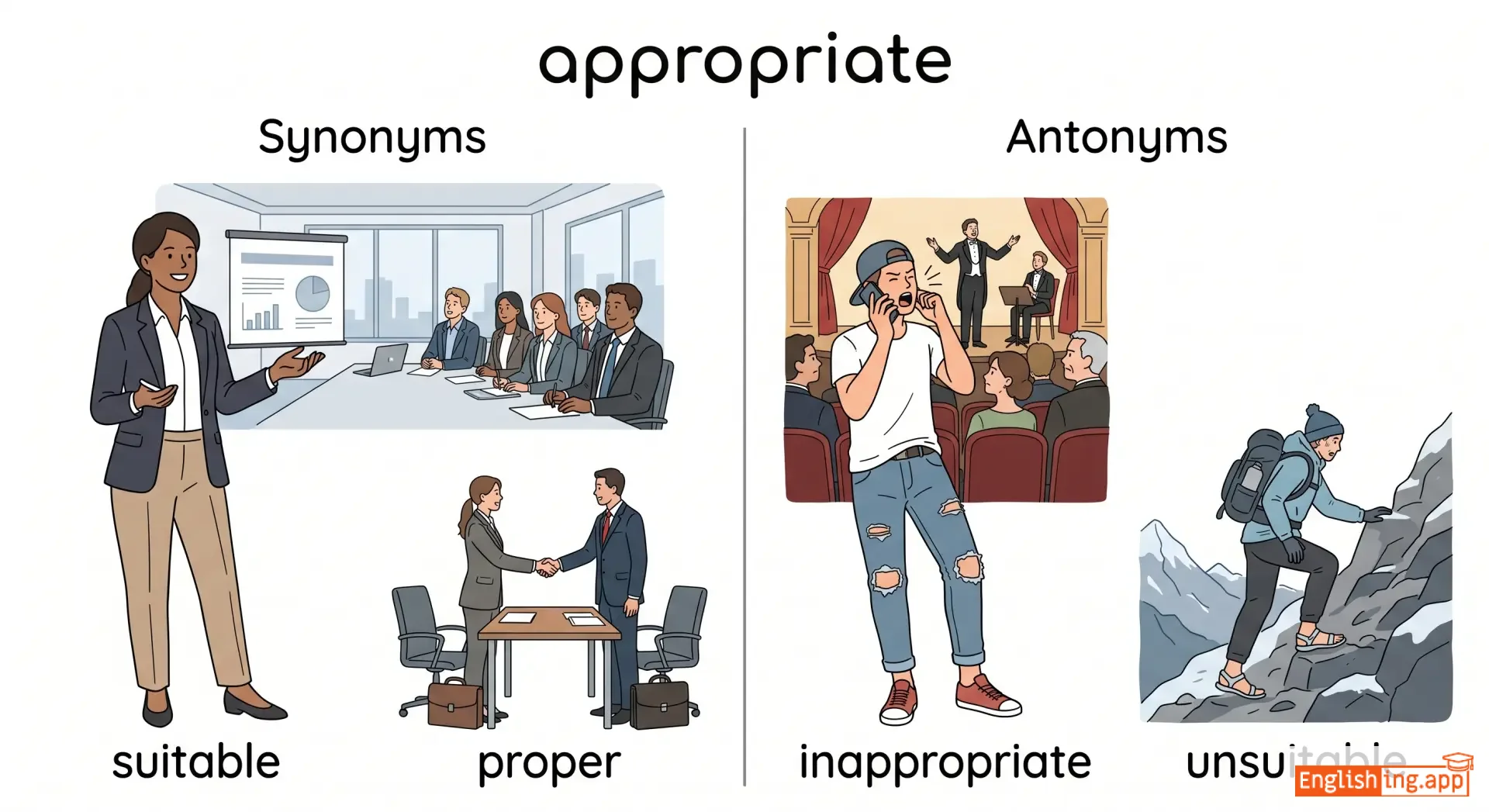
suitable, proper, fitting, apt, seize
••••••
|
inappropriate, unsuitable
••••••
|
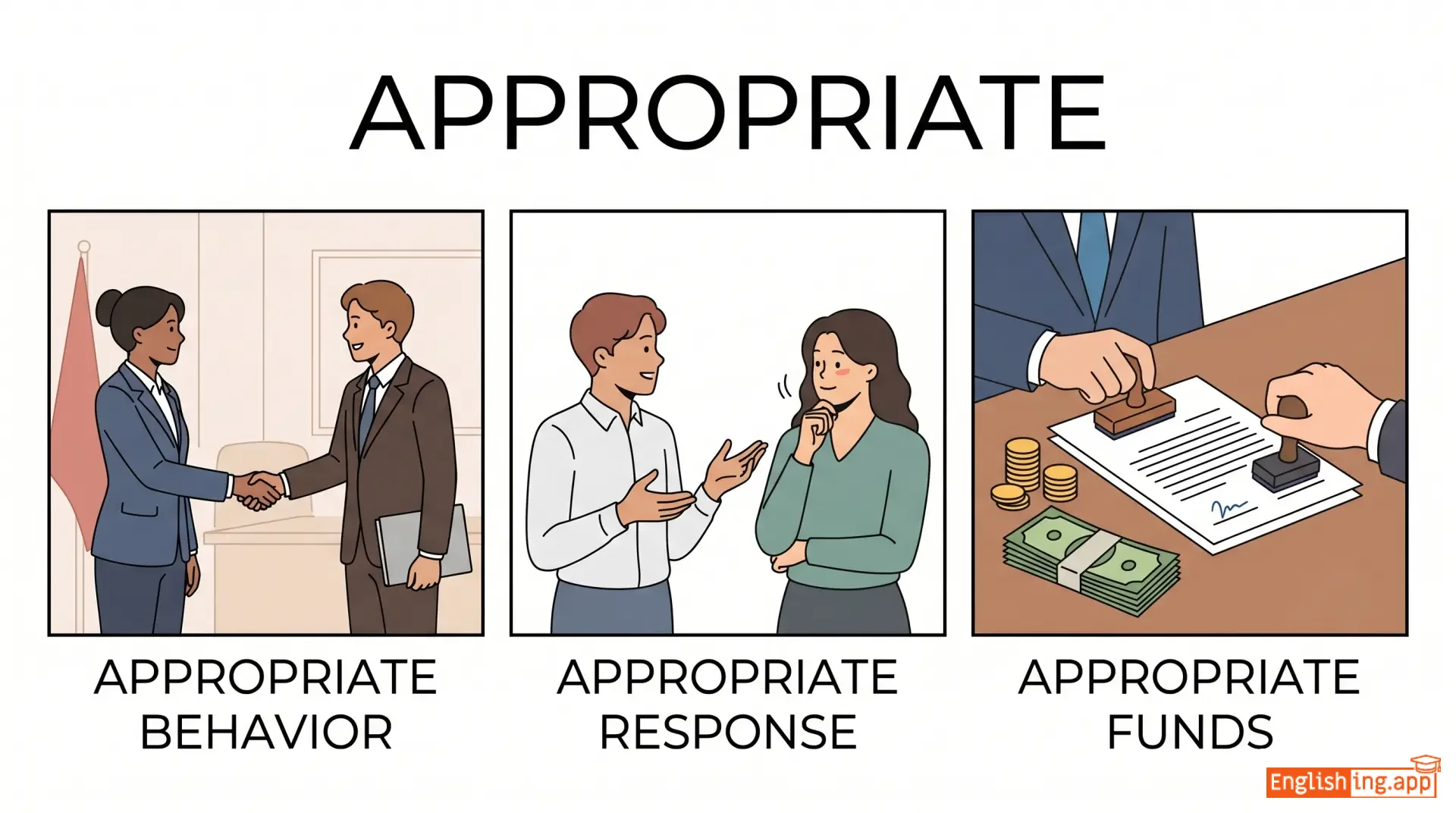
appropriate behavior, appropriate response, appropriate funds, culturally appropriate
••••••
|
Appropriate は適切—状況に合ったもの、時には許可なく取ることもある。
••••••
|
|
👌
••••••
|
/əˈproʊpriətli/
adverb
(アプロプリエイトリー)
••••••
|
- •••••• |
適切に
tekisetsu ni
••••••
|
- •••••• | - •••••• | - •••••• | - •••••• |
in a way that is suitable or proper for a particular situation
••••••
|
She was dressed appropriately for the event.
彼女はイベントに適切に服を着ていました。
••••••
|
彼女はイベントに適切に服を着ていました。
Kanojo wa ibento ni tekisetsu ni fuku wo kiteimashita.
••••••
|
- •••••• | - •••••• | - •••••• |
suitably, properly, fittingly, correctly
••••••
|
inappropriately, wrongly
••••••
|
act appropriately, dress appropriately, respond appropriately
••••••
|
適切に行動すると、その場にふさわしい服装をしているように感じます。
••••••
|
|
✔️
••••••
|
/əˈpruː.vəl/
noun
(apruval)
••••••
|
- •••••• |
承認
shounin
••••••
|
- •••••• | - •••••• | - •••••• | - •••••• |
official permission or agreement for something
••••••
|
The project received government approval. |
そのプロジェクトは政府の承認を得た。
Sono purojekuto wa seifu no shōnin o eta.
••••••
|
seal of approval |
official acceptance or endorsement
••••••
|
承認印
shōnin in
••••••
|
acceptance, consent, permission, endorsement, authorization
••••••
|
disapproval, rejection, denial
••••••
|
gain approval, seek approval, official approval, parental approval
••••••
|
Approval は承認 ✔️ — 承認を得たら、すべてが許可されます。
••••••
|
|
✅
••••••
|
/əˈpruːv/
verb
(apruv)
••••••
|
- •••••• |
承認する
shōnin suru
••••••
|
approved
apruvdo
••••••
|
approved
apruvdo
••••••
|
approves
apruvsu
••••••
|
approving
apruvingu
••••••
|
to officially accept, agree to, or allow something
••••••
|
The manager approved the budget for next year.
マネージャーは来年の予算を承認しました。
••••••
|
マネージャーは来年の予算を承認しました。
Manējā wa rainen no yosan o shōnin shimashita.
••••••
|
approve of
承認する
••••••
|
to think well of something or someone
••••••
|
承認する
shōnin suru
••••••
|
authorize, endorse, accept, permit, sanction
••••••
|
reject, deny, disapprove
••••••
|
approve plan, approve application, approve budget
••••••
|
承認する = ✅ 承認 – マネージャーは予算を承認しました
••••••
|

