|
表情符号
|
单词 | Images | 翻译 | 过去时 | 过去分词 | 第三人称单数 | 动名词 | 含义 | 例句 | 例句翻译 | 示例表达 | 示例表达含义 | 示例表达翻译 | 同义词 | 反义词 | 搭配词 | 助记符 |
|---|---|---|---|---|---|---|---|---|---|---|---|---|---|---|---|---|---|
|
😒
••••••
|
/əˈnɔɪɪŋ/
adjective
(安诺因)
••••••
|
- •••••• |
烦人的
fanren de
••••••
|
- •••••• | - •••••• | - •••••• | - •••••• |
causing irritation or mild anger; bothersome or troublesome
••••••
|
The constant noise from the street was extremely annoying.
街道传来的持续噪音非常annoying。
••••••
|
街道传来的持续噪音非常烦人。
jiedao chuanlai de chixu zaoyin feichang fanren
••••••
|
annoying habit
annoying habit
••••••
|
a behavior that repeatedly irritates others
••••••
|
烦人的习惯
fanren de xiguan
••••••
|
irritating, bothersome, frustrating, vexing, troublesome
••••••
|
pleasant, agreeable, enjoyable
••••••
|
annoying noise, annoying habit, annoying problem, really annoying
••••••
|
Annoying 听着就烦—烦人的!
••••••
|
|
📅
••••••
|
/ˈæn.ju.əl/
adjective
(年度)
••••••
|
- •••••• |
年度
niandu
••••••
|
- •••••• | - •••••• | - •••••• | - •••••• |
happening once every year
••••••
|
The company holds an annual meeting for all its shareholders. |
公司每年为所有股东举办年度会议。
Gongsi mei nian wei suoyou gudong juban niandu huiyi.
••••••
|
annual tradition |
a custom or event repeated every year
••••••
|
年度传统
niandu chuantong
••••••
|
yearly, once-a-year, periodic, regular
••••••
|
monthly, daily
••••••
|
annual meeting, annual report, annual budget, annual celebration
••••••
|
Annual代表每年一次,就像‘ANNUal’每年都到来。
••••••
|
|
📅
••••••
|
/ˈænjuəli/
adverb
(安努阿利)
••••••
|
- •••••• |
每年一次
mei nian yi ci
••••••
|
- •••••• | - •••••• | - •••••• | - •••••• |
once every year; yearly
••••••
|
The company holds a general meeting annually. |
公司每年举行一次全体会议。
Gongsi mei nian juxing yi ci quanti huiyi.
••••••
|
annual report |
a document that summarizes a company's yearly activities and finances
••••••
|
年度报告
niandu baogao
••••••
|
yearly, per year, every year, once a year
••••••
|
monthly, daily
••••••
|
annually report, meet annually, pay annually, celebrate annually
••••••
|
Annual意味着每年,annually也意味着每年。就像年度报告一样。
••••••
|
|
❌
••••••
|
/əˈnʌl/
verb
(安努尔)
••••••
|
- •••••• |
取消
qǔxiāo
••••••
|
annulled
安努尔德
••••••
|
annulled
安努尔德
••••••
|
annuls
安努尔斯
••••••
|
annulling
安努尔林
••••••
|
to declare something legally invalid or cancel it
••••••
|
The court decided to annul the marriage due to fraud.
法院决定因欺诈取消婚姻。
••••••
|
法院决定因欺诈取消婚姻。
fǎyuàn juédìng yīn qīzhà qǔxiāo hūnyīn.
••••••
|
annul a contract
取消合同
••••••
|
to cancel or invalidate a legal agreement
••••••
|
取消合同
qǔxiāo hé tóng
••••••
|
cancel, invalidate, repeal, void, abolish
••••••
|
validate, enforce, approve
••••••
|
annul a contract, annul a marriage, annul a law, annul officially
••••••
|
Annul意味着取消,即在法律上使其无效。
••••••
|
|
👤
••••••
|
/əˈnɒnɪməs/
adjective
(匿名)
••••••
|
- •••••• |
匿名
nìmíng
••••••
|
- •••••• | - •••••• | - •••••• | - •••••• |
without a name; not identified by name
••••••
|
The donation was made by an anonymous benefactor.
捐款是由匿名捐助者做出的。
••••••
|
捐款是由匿名捐助者做出的。
Juānkuǎn shì yóu nìmíng juānzhù zhě zuò chū de.
••••••
|
anonymous tip
匿名提示
••••••
|
information given without revealing the identity of the informant
••••••
|
匿名提示
nìmíng tíshì
••••••
|
nameless, unidentified, unknown, incognito
••••••
|
named, identified
••••••
|
anonymous source, anonymous donor, remain anonymous, anonymous letter
••••••
|
匿名意味着没有名字 - 就像没有名字的人是匿名的。
••••••
|
|
➕
••••••
|
/əˈnʌðər/
determiner/pronoun
(阿诺瑟)
••••••
|
- •••••• |
另一个
ling yi ge
••••••
|
- •••••• | - •••••• | - •••••• | - •••••• |
one more person or thing of the same type
••••••
|
Can I have another cup of tea? |
我可以再来一杯茶吗?
Wǒ kěyǐ zài lái yī bēi chá ma?
••••••
|
another day |
a different or additional day
••••••
|
另一天
ling yi tian
••••••
|
one more, additional, extra, different
••••••
|
same, identical
••••••
|
another chance, another reason, another person, another story
••••••
|
Another 代表 ‘另一个’—喝完茶,再来一个杯子!
••••••
|
|
🗣️
••••••
|
/ˈænsər/
noun, verb
(ānsà)
••••••
|
|
答案
dá'àn
••••••
|
answered
ānsàd
••••••
|
answered
ānsàd
••••••
|
answers
ānsàr
••••••
|
answering
ānsàrīng
••••••
|
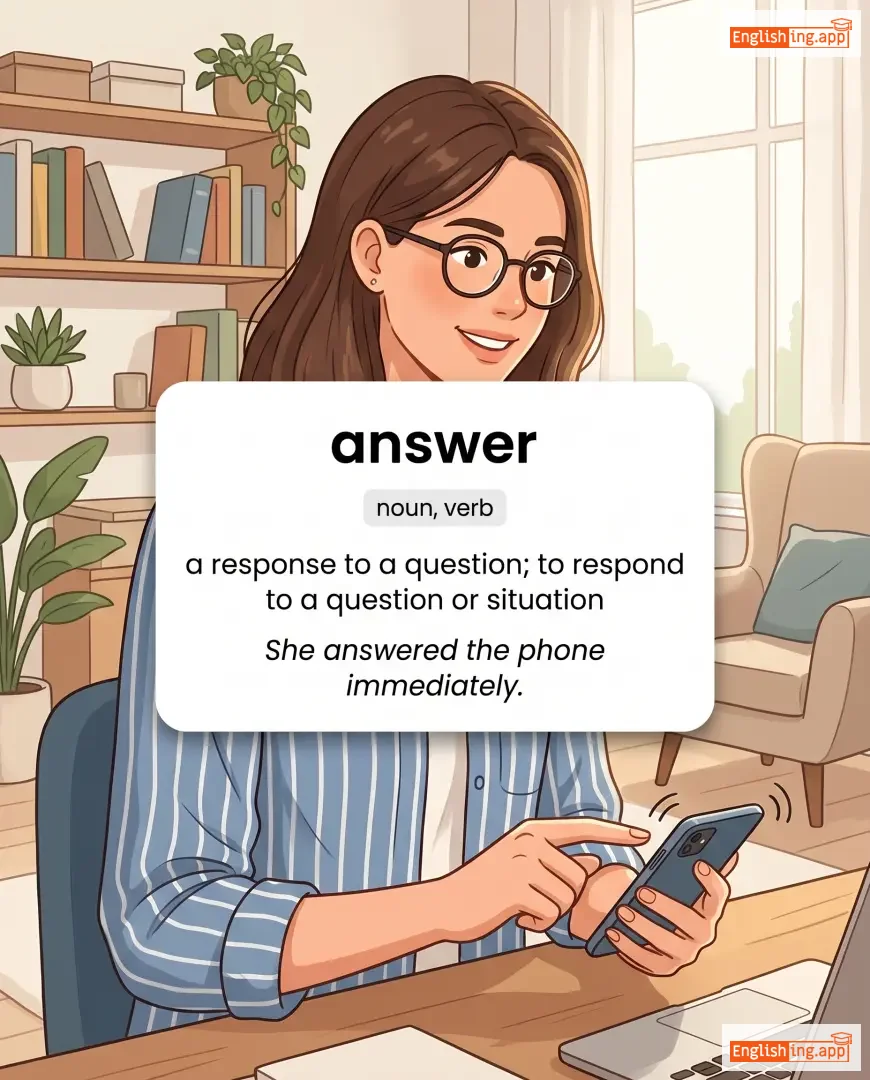
a response to a question; to respond to a question or situation
••••••
|
She answered the phone immediately.
她立即接了电话。
••••••
|
她立即接了电话。
Tā lìjí jiēle diànhuà.
••••••
|
have no answer
没有答案
••••••
|
to not know how to respond to a question or situation
••••••
|
没有答案
méiyǒu dá'àn
••••••
|
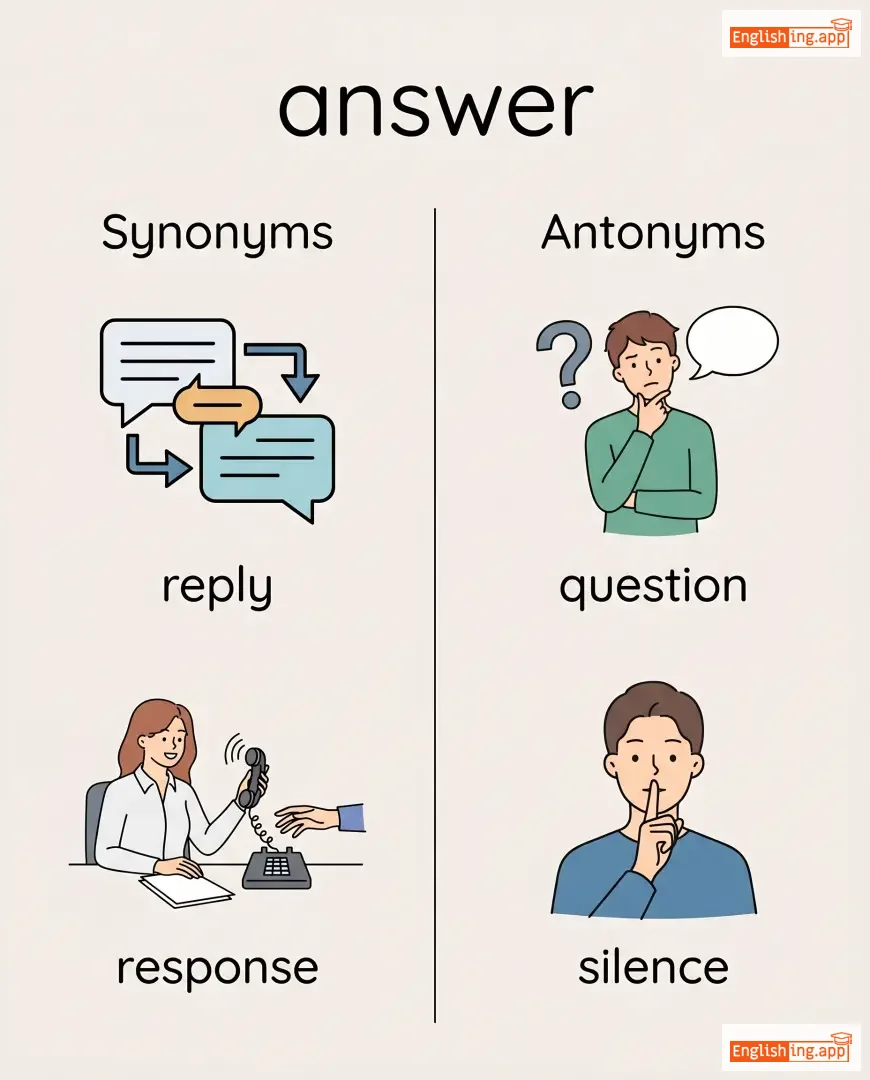
reply, response, solution, explanation, comeback
••••••
|
question, silence, ignorance
••••••
|
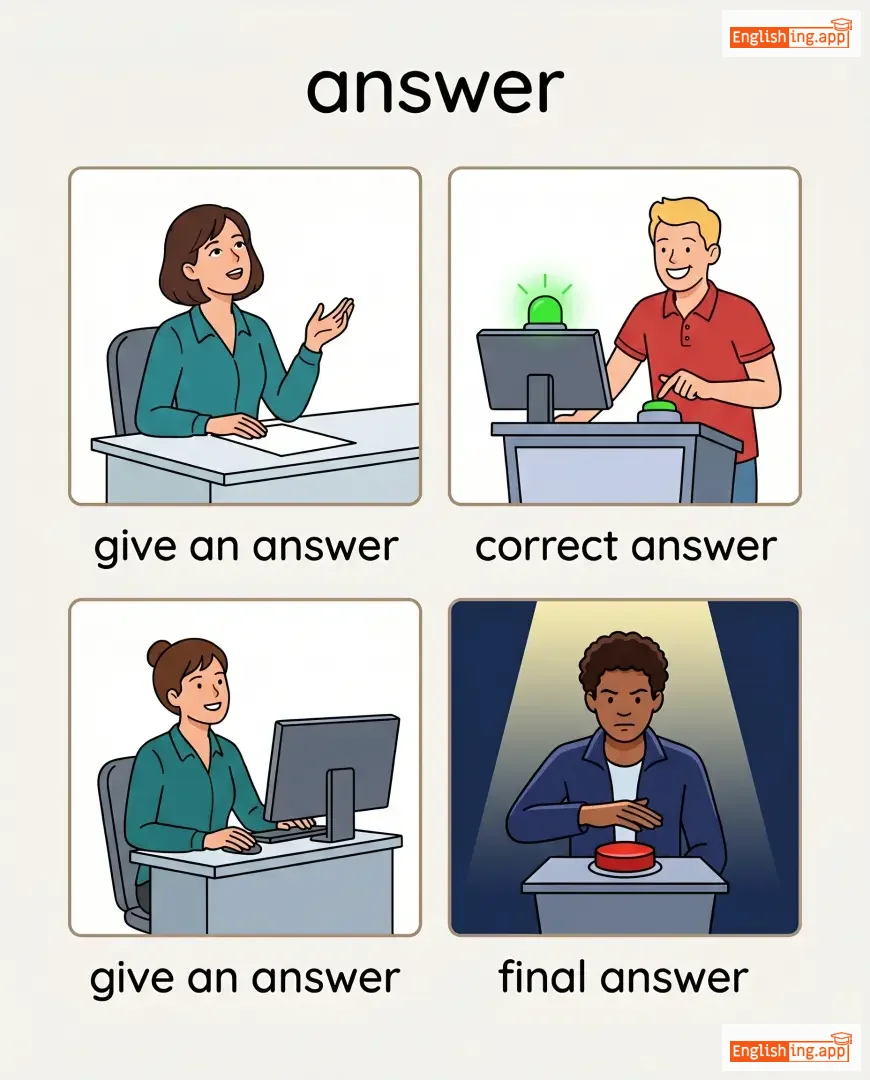
give an answer, correct answer, final answer, answer quickly
••••••
|
Answer是答案,意思是回答。
••••••
|
|
🔮
••••••
|
/ænˈtɪsɪˌpeɪt/
verb
(安提西佩特)
••••••
|
- •••••• |
预期
yùqī
••••••
|
anticipated
安提西佩特德
••••••
|
anticipated
安提西佩特德
••••••
|
anticipates
安提西佩特斯
••••••
|
anticipating
安提西佩特英
••••••
|
to expect or look forward to something; to realize or foresee in advance
••••••
|
We anticipate a large crowd at the event.
我们预期活动中会有大量人群。
••••••
|
我们预期活动中会有大量人群。
Wǒmen yùqī huódòng zhōng huì yǒu dàliàng rénqún.
••••••
|
anticipate the worst
预期最坏的情况
••••••
|
to expect the most negative or undesirable outcome
••••••
|
预期最坏的情况
Yùqī zuì huài de qíngkuàng
••••••
|
expect, foresee, predict, await, prepare
••••••
|
doubt, ignore, neglect
••••••
|
anticipate problems, anticipate demand, anticipate success, anticipate changes
••••••
|
Anticipate 是提前预期某件事发生。
••••••
|
|
😰
••••••
|
/æŋˈzaɪəti/
noun
(āngzāiyètí)
••••••
|
|
焦虑
jiaolü
••••••
|
- •••••• | - •••••• | - •••••• | - •••••• |
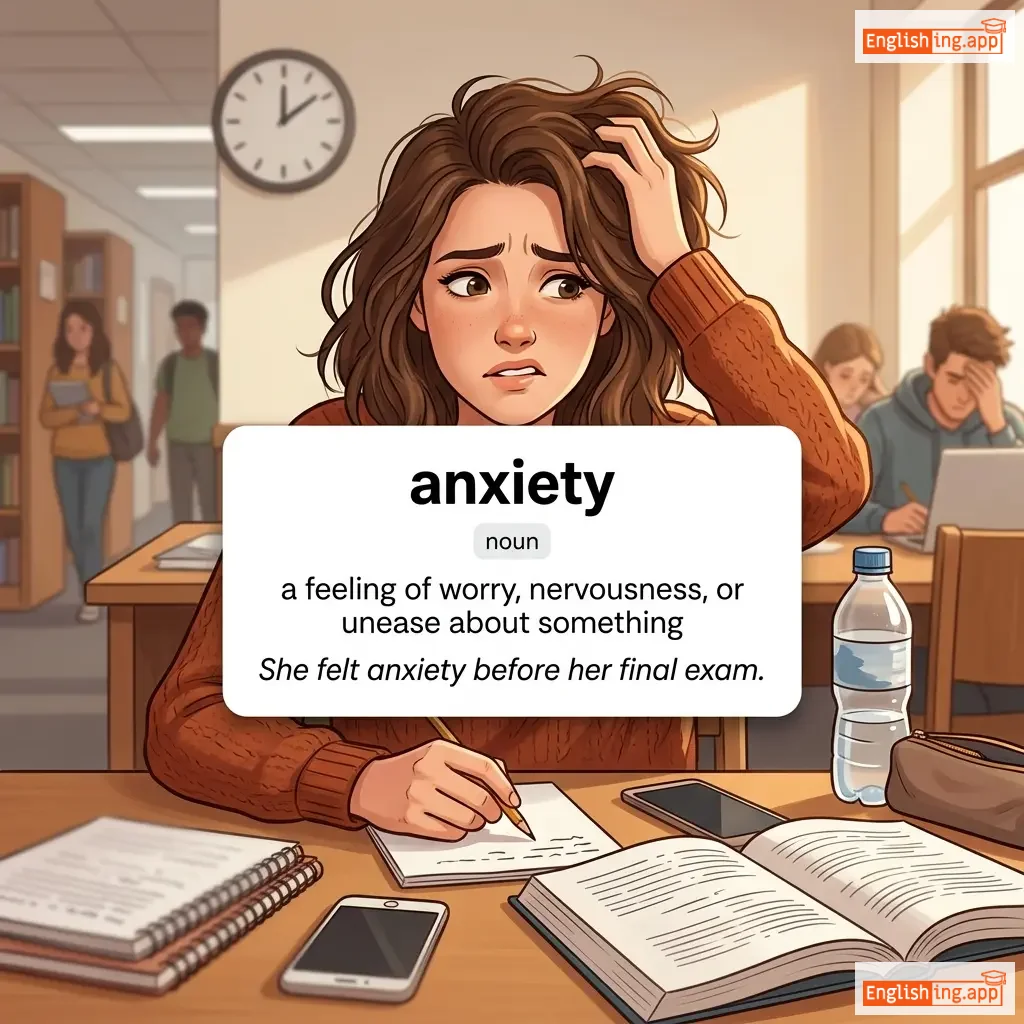
a feeling of worry, nervousness, or unease about something
••••••
|
She felt anxiety before her final exam. |
她在期末考试前感到焦虑。
Ta zai qimou kaoshi qian gandao jiaolu.
••••••
|
separation anxiety |
a feeling of distress when separated from a loved one
••••••
|
分离焦虑
fenli jiaolu
••••••
|
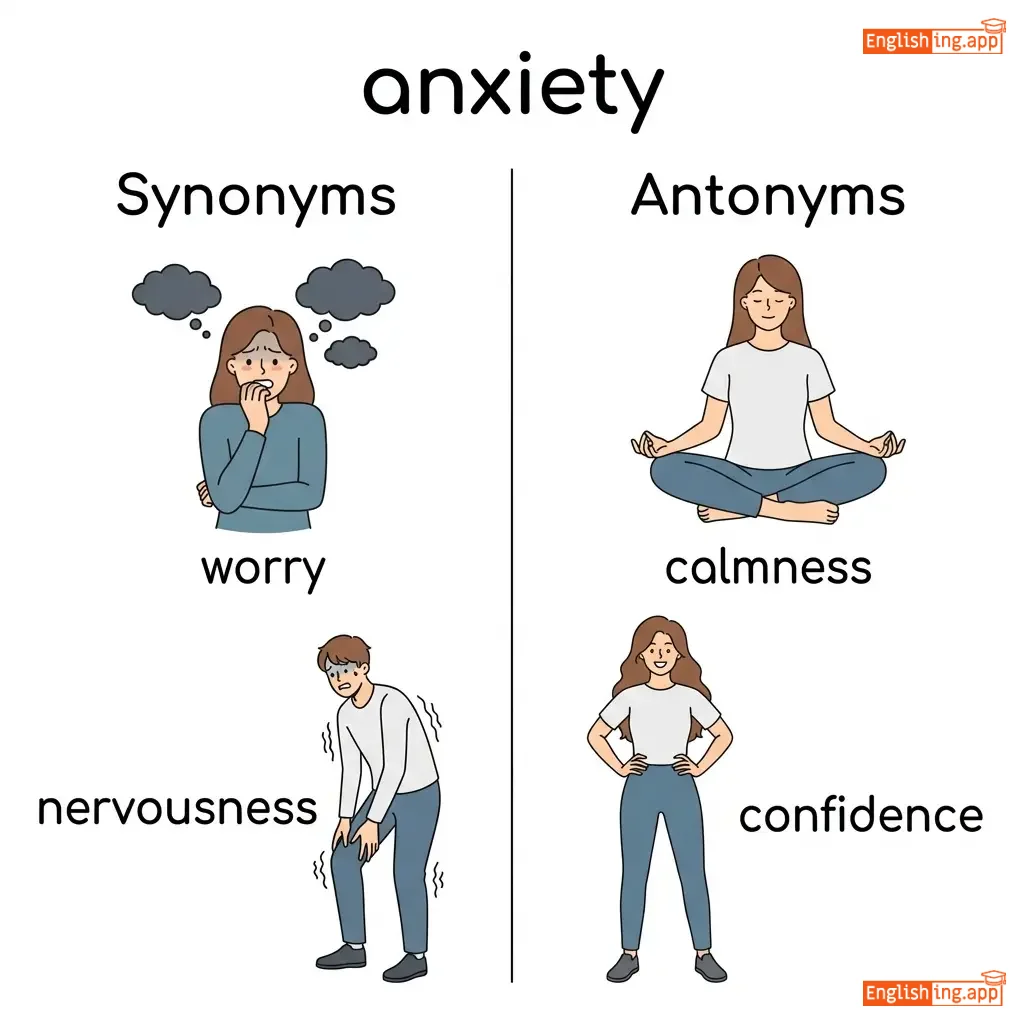
worry, nervousness, unease, tension, apprehension
••••••
|
calmness, confidence, peace
••••••
|
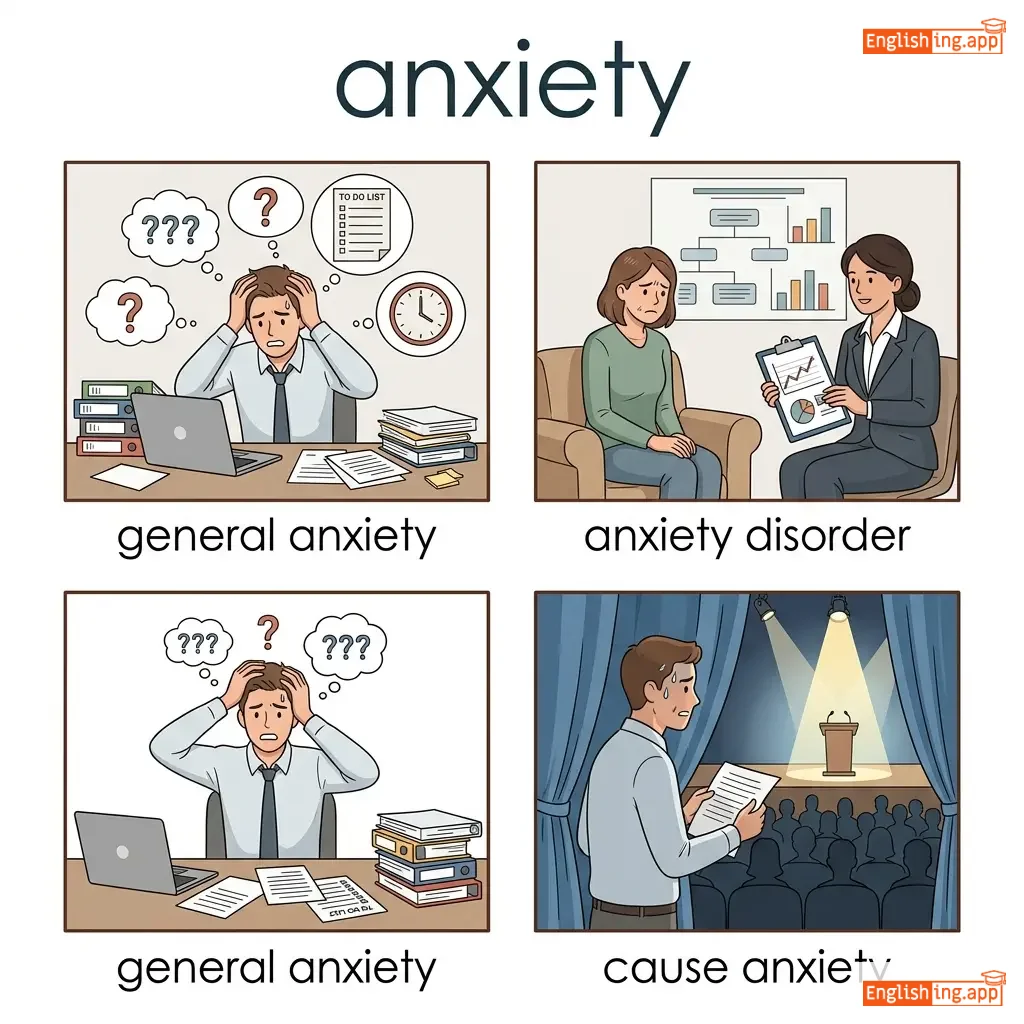
general anxiety, anxiety disorder, cause anxiety, reduce anxiety
••••••
|
期末考试前焦虑增多,焦虑意味着担忧。
••••••
|
|
😟
••••••
|
/ˈæŋkʃəs/
adjective
(æŋkʃəs)
••••••
|
- •••••• |
焦虑的
jiaolü de
••••••
|
- •••••• | - •••••• | - •••••• | - •••••• |
feeling worried, nervous, or uneasy about something
••••••
|
She felt anxious before her job interview. |
她在面试前感到焦虑。
Ta zai mianshi qian gandao jiaolü.
••••••
|
anxious about |
to feel worried or uneasy regarding something
••••••
|
对…感到焦虑
dui... gandao jiaolü
••••••
|
worried, nervous, uneasy, restless, apprehensive
••••••
|
calm, relaxed, confident
••••••
|
feel anxious, anxious about, anxious to, anxious for
••••••
|
焦虑的意思就是担心,面试前大家都很焦虑。
••••••
|
|
😰
••••••
|
/ˈæŋkʃəsli/
adverb
(安克舍斯李)
••••••
|
- •••••• |
焦急地
jiaojide
••••••
|
- •••••• | - •••••• | - •••••• | - •••••• |
in a worried, nervous, or uneasy manner; with anxious anticipation
••••••
|
She waited anxiously for the exam results.
她焦急地等待考试结果。
••••••
|
她焦急地等待考试结果。
ta jiaojide dengdai kaoshi jieguo
••••••
|
wait anxiously
焦急地等待
••••••
|
to wait with worry or nervous expectation
••••••
|
焦急地等待
jiaojide dengdai
••••••
|
nervously, worriedly, uneasily, apprehensively
••••••
|
calmly, confidently
••••••
|
wait anxiously, watch anxiously, look anxiously, anxiously await
••••••
|
焦急 = anxious, 心里很急
••••••
|
|
🔄
••••••
|
/ˈɛni/
determiner/pronoun
(èni)
••••••
|
- •••••• |
任何
rènhé
••••••
|
- •••••• | - •••••• | - •••••• | - •••••• |
one, some, or all, without specifying which
••••••
|
Do you have any questions? |
你有任何问题吗?
nǐ yǒu rènhé wèntí ma?
••••••
|
any day now |
something expected to happen very soon
••••••
|
任何一天现在
rènhé yītiān xiànzài
••••••
|
some, whatever, each, all, every
••••••
|
none, nothing
••••••
|
any chance, any time, any questions, any problem
••••••
|
ANY意思是任何,如'任何一天现在'。
••••••
|
|
👤
••••••
|
/ˈɛniˌbɒdi/
pronoun
(ènìbódi)
••••••
|
- •••••• |
任何人
rènhé rén
••••••
|
- •••••• | - •••••• | - •••••• | - •••••• |
any person; anyone
••••••
|
Anybody can join the club. |
任何人都可以加入俱乐部。
Rènhé rén dōu kěyǐ jiārù jùlèbù.
••••••
|
- •••••• | - •••••• | - •••••• |
anyone, somebody, whoever, everyone
••••••
|
nobody, no one
••••••
|
ask anybody, tell anybody, anybody else, anybody interested
••••••
|
ANYBODY 意味着任何人,例如 Anybody can play in the park.
••••••
|
|
⏳
••••••
|
/ˌɛniˈmɔr/
adverb
(ènìmó)
••••••
|
- •••••• |
不再
bù zài
••••••
|
- •••••• | - •••••• | - •••••• | - •••••• |
used to refer to the present time, typically to mean no longer
••••••
|
He doesn’t live here anymore. |
他不再住在这里。
Tā bù zài zhù zài zhèlǐ.
••••••
|
- •••••• | - •••••• | - •••••• |
no longer, not now, no more
••••••
|
still, yet
••••••
|
not anymore, hardly anymore, anymore questions
••••••
|
不再意味着ANYMORE,就像我不再住在这里。
••••••
|
|
👤
••••••
|
/ˈɛniwʌn/
pronoun
(èniwán)
••••••
|
- •••••• |
某人
mǒu rén
••••••
|
- •••••• | - •••••• | - •••••• | - •••••• |
any person at all; used to refer to an unspecified person
••••••
|
Does anyone know the answer to this question? |
有人知道这个问题的答案吗?
yǒu rén zhīdào zhège wèntí de dá'àn ma?
••••••
|
anyone's guess |
something that is very difficult to predict or know
••••••
|
任何人的猜测
rènhé rén de cāicè
••••••
|
somebody, anybody, person, individual, someone
••••••
|
nobody, no one
••••••
|
anyone else, if anyone, hardly anyone, ask anyone
••••••
|
ANYONE意味着'某人',就像我们在中文中说的'某人'。
••••••
|
|
🔑
••••••
|
/ˈɛnɪθɪŋ/
pronoun
(āi ní sīng)
••••••
|
- •••••• |
任何事物
ren he shi wu
••••••
|
- •••••• | - •••••• | - •••••• | - •••••• |
any object, event, or matter; whatever thing
••••••
|
You can ask me anything about the project. |
你可以问我关于项目的任何问题。
Ni keyi wen wo guanyu xiangmu de renhe wenti.
••••••
|
anything but |
definitely not something
••••••
|
除了...之外的任何东西
chu le...zhi wai de ren he dong xi
••••••
|
whatever, everything, object, matter, item
••••••
|
nothing, none
••••••
|
do anything, say anything, anything else, almost anything
••••••
|
ANYTHING 意味着 '任何事物'—就像我们在中文中说的 '任何事物'。
••••••
|
|
➡️
••••••
|
/ˈɛniweɪ/
adverb
(èniwēi)
••••••
|
- •••••• |
无论如何
wúlùn rúhé
••••••
|
- •••••• | - •••••• | - •••••• | - •••••• |
used to emphasize a statement or to return to a previous subject; regardless of what happened
••••••
|
I was tired, but I went to the meeting anyway. |
我很累,但我还是去了会议。
Wǒ hěn lèi, dàn wǒ háishì qùle huìyì.
••••••
|
anyway you slice it |
no matter how you look at it
••••••
|
无论如何
wúlùn rúhé
••••••
|
regardless, nevertheless, still, anyhow, though
••••••
|
because, therefore
••••••
|
but anyway, anyway you, anyway possible
••••••
|
无论如何,他会去 – 无论怎么做,结果一样。
••••••
|
|
🌍
••••••
|
/ˈɛnɪwɛər/
adverb
••••••
|
- •••••• | - •••••• | - •••••• | - •••••• | - •••••• | - •••••• |
in, at, or to any place
••••••
|
You can find good food anywhere in this city. |
- •••••• |
go anywhere |
to have freedom to travel or move to any place
••••••
|
- •••••• |
everywhere, someplace, anyplace, location, place
••••••
|
nowhere, somewhere specific
••••••
|
anywhere else, almost anywhere, find anywhere, go anywhere
••••••
|
No •••••• |
|
↔️
••••••
|
/əˈpɑːrt/
adverb
••••••
|
- •••••• | - •••••• | - •••••• | - •••••• | - •••••• | - •••••• |
separated by distance or time; into pieces
••••••
|
They live miles apart from each other. |
- •••••• |
fall apart |
to break into pieces or fail completely
••••••
|
- •••••• |
separately, away, aside, alone, divided
••••••
|
together, close
••••••
|
miles apart, set apart, apart from, fall apart
••••••
|
No •••••• |
|
🏢
••••••
|
/əˈpɑːrtmənt/
noun
(公寓)
••••••
|
- •••••• |
公寓
gongyu
••••••
|
- •••••• | - •••••• | - •••••• | - •••••• |
a set of rooms forming a residence within a building
••••••
|
She rented an apartment in the city center.
她在市中心租了一套公寓。
••••••
|
她在市中心租了一套公寓。
Ta zai shi zhongxin zu le yi tao gongyu.
••••••
|
apartment complex
公寓楼群
••••••
|
a group of apartment buildings in one area
••••••
|
公寓楼群
gongyu louqun
••••••
|
flat, unit, residence, condo, lodging
••••••
|
house, bungalow
••••••
|
rent an apartment, small apartment, apartment building, apartment complex
••••••
|
APARTMENT 就是公寓,和我们英语里说的一样。
••••••
|
|
🙏
••••••
|
/əˈpɒlədʒaɪz/
verb
(ā pō lò jī zī)
••••••
|
- •••••• |
道歉
dàoqiàn
••••••
|
apologized
ā pō lò jī zī dé
••••••
|
apologized
ā pō lò jī zī dé
••••••
|
apologizes
ā pō lò jī zī
••••••
|
apologizing
ā pō lò jī zī yīng
••••••
|
to say sorry for something wrong you have done
••••••
|
He apologized for being late to the meeting.
他因迟到而道歉。
••••••
|
他因迟到而道歉。
Tā yīn chídào ér dàoqiàn.
••••••
|
apologize sincerely
真诚地道歉
••••••
|
to express genuine regret for a mistake or wrongdoing
••••••
|
真诚地道歉
zhēnchéng de dàoqiàn
••••••
|
regret, repent, ask forgiveness, express remorse
••••••
|
accuse, blame, deny
••••••
|
apologize for mistake, apologize sincerely, apologize publicly
••••••
|
道歉就是说对不起,所以道歉是我们犯错后做的事情。
••••••
|
|
🙏
••••••
|
/əˈpɒlədʒi/
noun
••••••
|
- •••••• | - •••••• | - •••••• | - •••••• | - •••••• | - •••••• |
a statement expressing regret for something wrong or hurtful
••••••
|
He offered an apology for being late to the meeting. |
- •••••• |
make an apology |
to formally express regret for a mistake or offense
••••••
|
- •••••• |
regret, excuse, admission, acknowledgment
••••••
|
defiance, denial, justification
••••••
|
offer an apology, sincere apology, formal apology, public apology
••••••
|
No •••••• |
|
😱
••••••
|
/əˈpɔːl/
verb
(āpóu)
••••••
|
- •••••• |
震惊
zhenjing
••••••
|
appalled
āpóuld
••••••
|
appalled
āpóuld
••••••
|
appalls
āpóuls
••••••
|
appalling
āpóling
••••••
|
To shock or horrify someone with something unpleasant or bad.
••••••
|
The cruelty of the crime appalled the entire community.
犯罪的残忍让整个社区震惊。
••••••
|
犯罪的残忍让整个社区震惊。
Fànzuì de cánrěn ràng zhěnggè shèqū zhènjīng.
••••••
|
- •••••• | - •••••• | - •••••• |
shock, horrify, disgust, outrage, distress
••••••
|
please, delight, satisfy
••••••
|
appall the public, appalling crime, appalling behavior, deeply appalled
••••••
|
Appall 听起来像 'all are shocked'—大家都震惊了。
••••••
|
|
🛠️
••••••
|
/ˌæpəˈreɪtəs/
noun
(àpàlèitāsī)
••••••
|
|
设备
shebei
••••••
|
- •••••• | - •••••• | - •••••• | - •••••• |
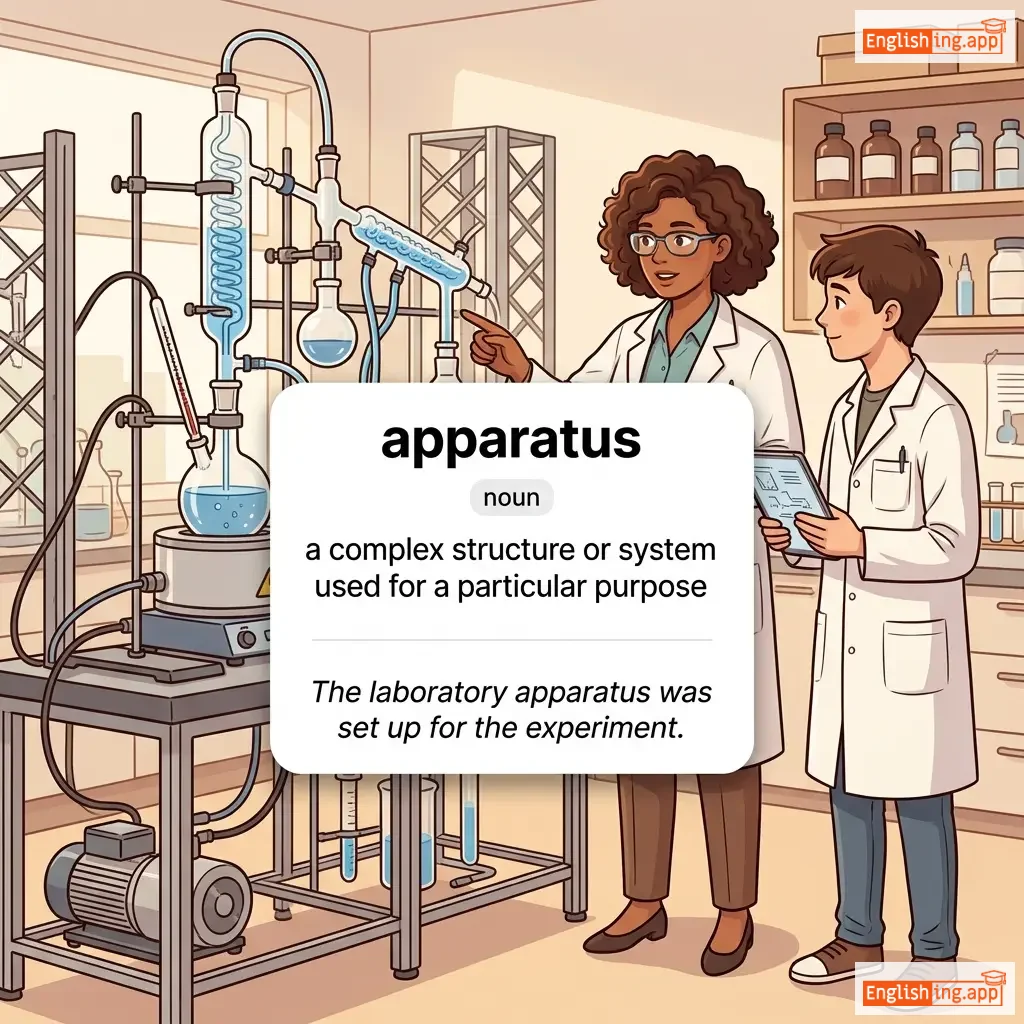
a complex structure or system used for a particular purpose
••••••
|
The laboratory apparatus was set up for the experiment.
实验室的设备已设置好进行实验。
••••••
|
实验室的设备已设置好进行实验。
Shíyàn shì de shèbèi yǐ shèzhì hǎo jìnxíng shíyàn.
••••••
|
- •••••• | - •••••• | - •••••• |
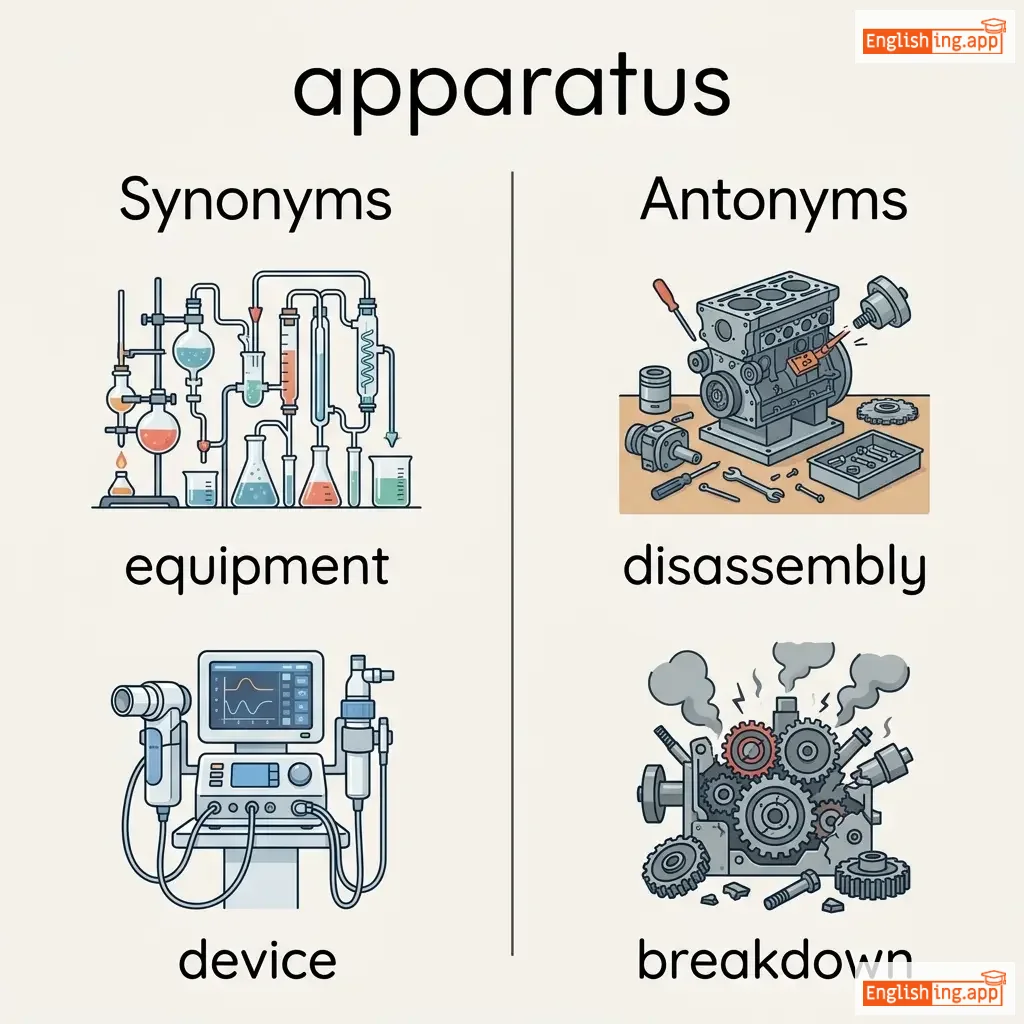
equipment, device, machinery, instrument
••••••
|
disassembly, breakdown
••••••
|
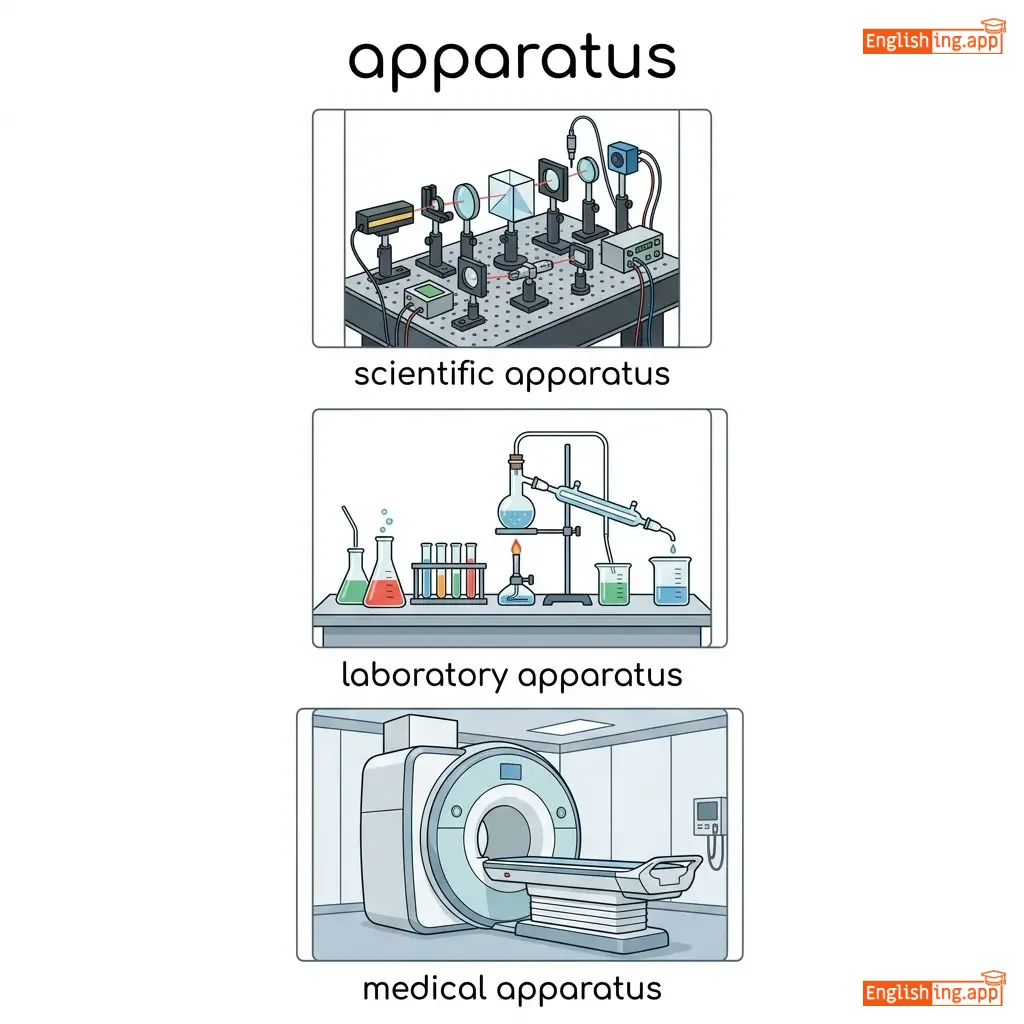
scientific apparatus, laboratory apparatus, medical apparatus
••••••
|
记住设备,就像实验室的工具 (jì zhù shèbèi, jiù xiàng shíyàn shì de gōngjù)
••••••
|
|
👀
••••••
|
/əˈpærənt/
adjective
(āpārènt)
••••••
|
- •••••• |
显而易见
xian er yi jian
••••••
|
- •••••• | - •••••• | - •••••• | - •••••• |
Clearly visible or understood; obvious.
••••••
|
It soon became apparent that he was not telling the truth.
很快就变得显而易见,他没有说实话。
••••••
|
很快就变得显而易见,他没有说实话。
Hěn kuài jiù biàn dé xiǎn ér yì jiàn, tā méiyǒu shuō shíhuà.
••••••
|
apparent reason
显而易见的原因
••••••
|
an obvious or clear reason
••••••
|
显而易见的原因
xiǎn ér yì jiàn de yuányīn
••••••
|
obvious, evident, clear, plain, visible
••••••
|
hidden, obscure, unclear
••••••
|
apparent reason, apparent mistake, became apparent, quite apparent
••••••
|
Apparent 就是显而易见,明摆着的意思。
••••••
|
|
👀
••••••
|
/əˈperəntli/
adverb
(ā bǎi rén lì)
••••••
|
- •••••• |
显然;
xianran
••••••
|
- •••••• | - •••••• | - •••••• | - •••••• |
seemingly; as far as one knows or can see; clearly; evidently
••••••
|
Apparently, the meeting has been postponed to next week.
显然,会议已被推迟到下周。
••••••
|
显然,会议已被推迟到下周。
xianran, huiyi yi bei tuichi dao xia zhou.
••••••
|
- •••••• | - •••••• | - •••••• |
seemingly, evidently, clearly, obviously
••••••
|
actually, really, truly, certainly
••••••
|
apparently not, apparently so, quite apparently
••••••
|
显然清晰的事情容易被看到
••••••
|
|
📢
••••••
|
/əˈpiːl/
verb, noun
(āpí ěr)
••••••
|
- •••••• |
呼吁 / 吸引
hūyù / xīyǐn
••••••
|
appealed
āpí ěr dé
••••••
|
appealed
āpí ěr dé
••••••
|
appeals
āpí ěr sī
••••••
|
appealing
āpí ěr líng
••••••
|
to make a serious request; to be attractive or interesting; a formal request to a higher authority for a decision to be changed
••••••
|
The charity appealed to the public for donations.
慈善机构向公众呼吁捐款。
••••••
|
慈善机构向公众呼吁捐款。
Císhàn jīgòu xiàng gōngzhòng hūyù juānkuǎn.
••••••
|
make an appeal
提出呼吁
••••••
|
to formally ask for something, often publicly
••••••
|
提出呼吁
tíchū hūyù
••••••
|
request, petition, attraction, plea, entreaty
••••••
|
demand, order, repulsion
••••••
|
appeal to, appeal against, strong appeal, emotional appeal
••••••
|
Appeal = 呼吁,想象有人使用📢发出呼吁 — Appeal = 呼吁
••••••
|
|
😍
••••••
|
/əˈpiː.lɪŋ/
adjective
(æpílɪŋ)
••••••
|
- •••••• |
吸引人的; 有趣的; 令人愉快的
xīyǐn rén de; yǒuqù de; lìng rén yúkuài de
••••••
|
- •••••• | - •••••• | - •••••• | - •••••• |
attractive; interesting; pleasing
••••••
|
The colorful garden looks very appealing to visitors.
五颜六色的花园对游客非常吸引人。
••••••
|
五颜六色的花园对游客非常吸引人。
Wǔyán liùsè de huāyuán duì yóukè fēicháng xīyǐn rén.
••••••
|
- •••••• | - •••••• | - •••••• |
attractive, charming, alluring, enticing
••••••
|
repulsive, unattractive, disgusting
••••••
|
appealing idea, appealing offer, visually appealing
••••••
|
Appealing sounds like 'xīyǐn rén de' – this colorful garden looks very xīyǐn rén de (appealing).
••••••
|
|
👀
••••••
|
/əˈpɪə/
verb
(á-pí-ér)
••••••
|
- •••••• |
出现
chūxiàn
••••••
|
appeared
á-pí-érd
••••••
|
appeared
á-pí-érd
••••••
|
appears
á-pí-érs
••••••
|
appearing
á-pí-éríng
••••••
|
to become visible or come into sight; to seem
••••••
|
She appeared suddenly at the door.
她突然出现在门口。
••••••
|
她突然出现在门口。
Tā túrán chūxiàn zài ménkǒu.
••••••
|
appear out of thin air
从空气中出现
••••••
|
to emerge suddenly and unexpectedly
••••••
|
凭空出现
píngkōng chūxiàn
••••••
|
emerge, show, arise, surface, seem
••••••
|
disappear, vanish, hide
••••••
|
appear suddenly, appear in court, appear likely
••••••
|
Chūxiàn: 就像突然从门口出现一样。
••••••
|
|
👀
••••••
|
/əˈpɪərəns/
noun
(āpīrénsī)
••••••
|
- •••••• |
外貌
waimào
••••••
|
- •••••• | - •••••• | - •••••• | - •••••• |
the way that someone or something looks
••••••
|
His sudden appearance surprised everyone. |
他突然的出现让所有人都吃惊。
Tā tūrán de chūxiàn ràng suǒyǒu rén dōu chī jīng.
••••••
|
keep up appearances |
to maintain an outward show of good behavior or success
••••••
|
保持外表
bǎochí wàibiǎo
••••••
|
look, aspect, presence, form, figure
••••••
|
disappearance, absence
••••••
|
physical appearance, public appearance, sudden appearance, outward appearance
••••••
|
Appearance 意味着外貌 — 外貌是一个人身份的象征。
••••••
|
|
🤲
••••••
|
/əˈpiːz/
verb
(ā pǐ zī)
••••••
|
|
安抚 / 满足
ānfǔ / mǎnzú
••••••
|
appeased
ā pǐ zī d
••••••
|
appeased
ā pǐ zī d
••••••
|
appeases
ā pǐ zī s
••••••
|
appeasing
ā pǐ zī ng
••••••
|
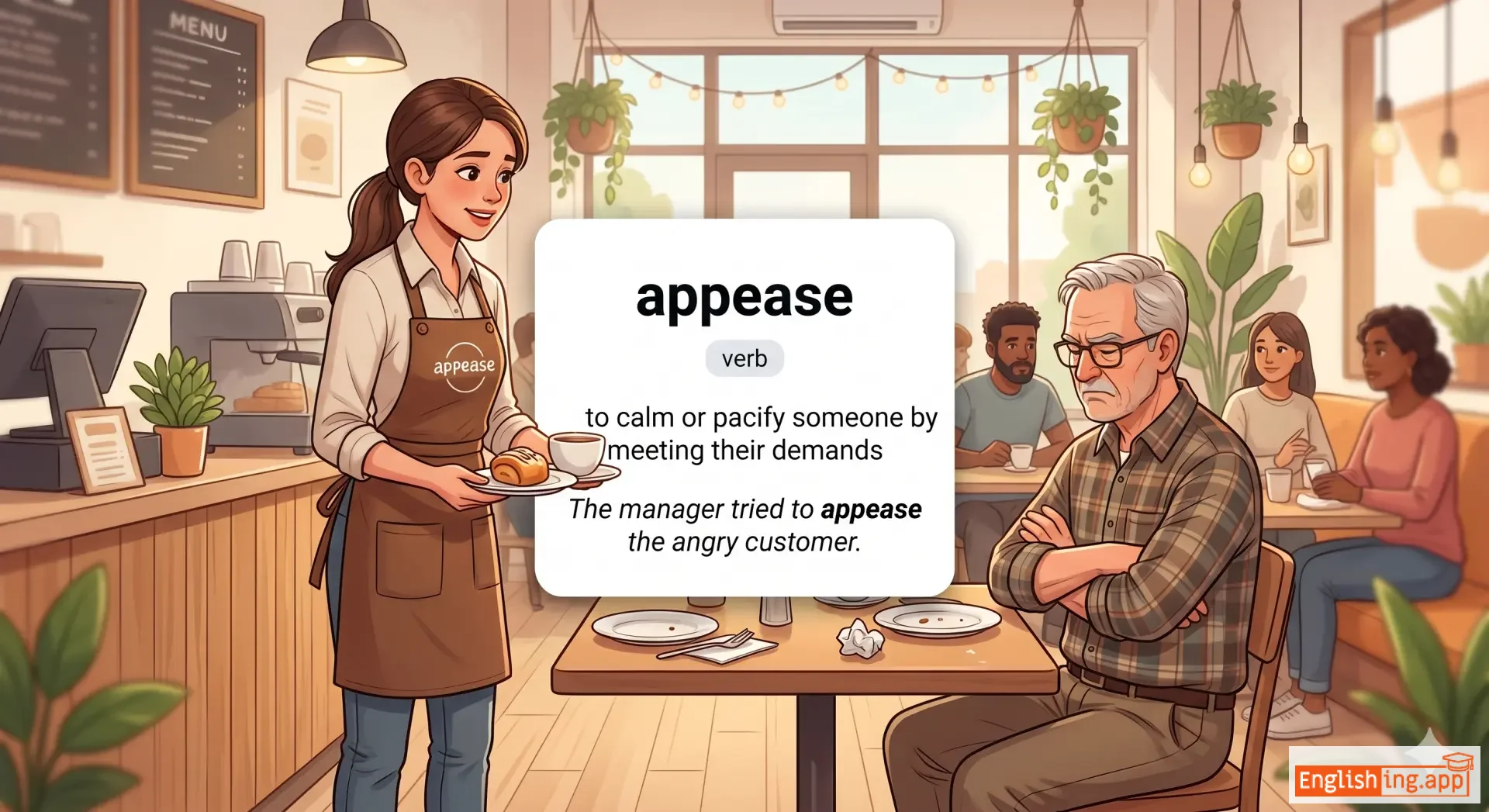
to calm or pacify someone by meeting their demands
••••••
|
The manager tried to appease the angry customer.
经理试图安抚愤怒的顾客。
••••••
|
经理试图安抚愤怒的顾客。
Jīnglǐ shìtú ānfǔ fènnù de gùkè.
••••••
|
appease someone's anger
安抚某人的愤怒
••••••
|
to reduce someone's anger by satisfying them
••••••
|
安抚某人的愤怒
ānfǔ mǒu rén de fènnù
••••••
|
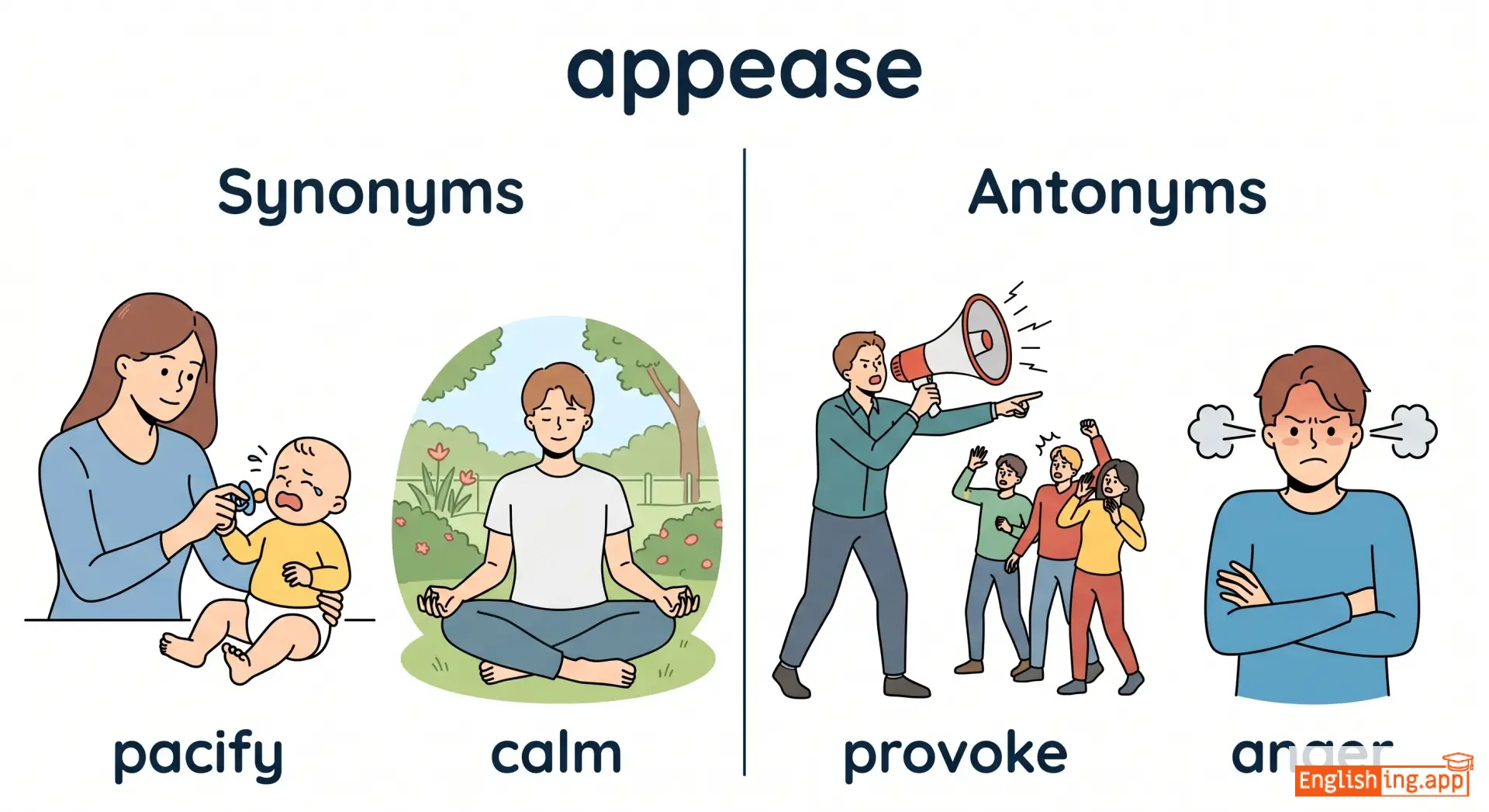
pacify, calm, satisfy, placate, soothe
••••••
|
provoke, anger, agitate
••••••
|
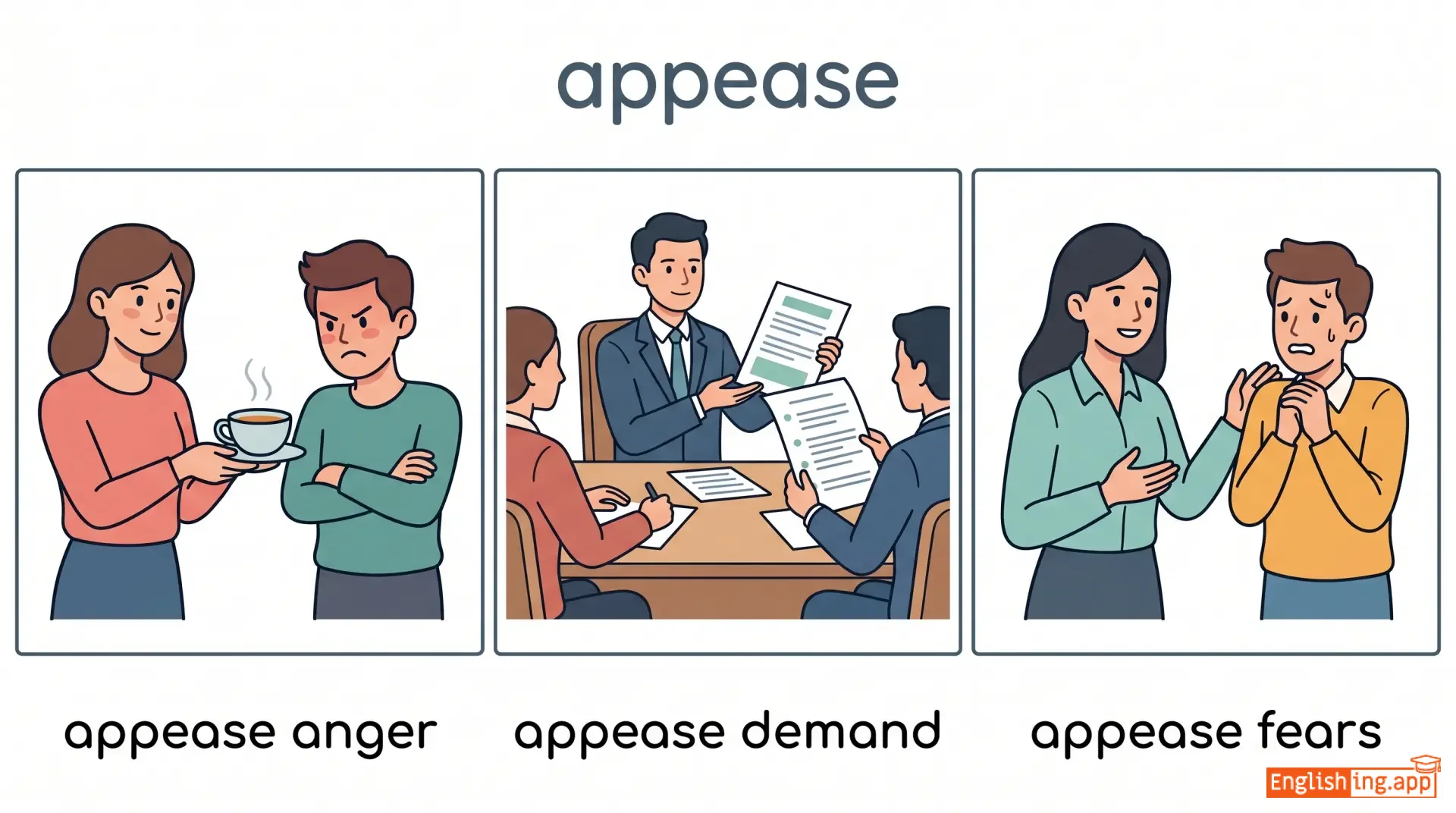
appease anger, appease demand, appease fears
••••••
|
Appease意味着安抚,想象你必须安抚以带来‘Peace’
••••••
|
|
🍽️
••••••
|
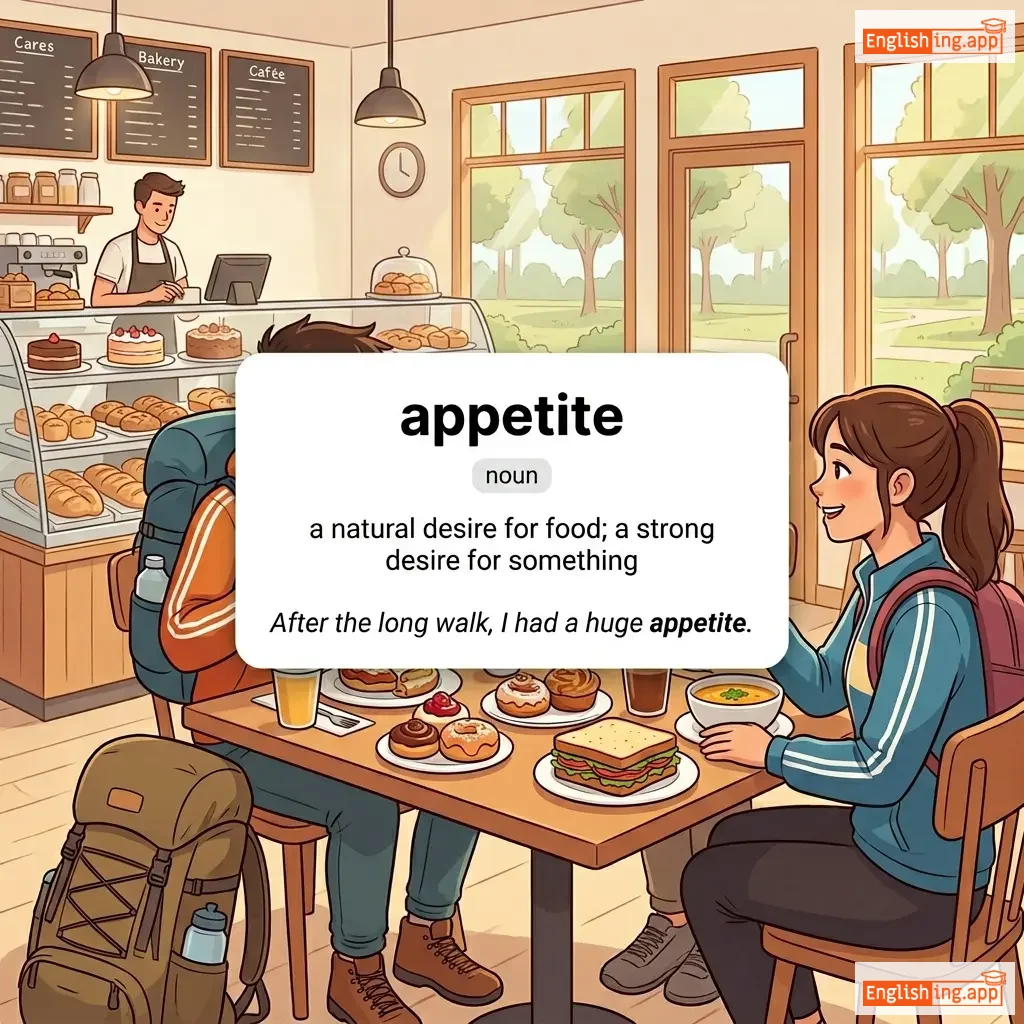
/ˈæpɪtaɪt/
noun
(阿佩塔特)
••••••
|

|
食欲
shí yù
••••••
|
- •••••• | - •••••• | - •••••• | - •••••• |
a natural desire for food; a strong desire for something
••••••
|
After the long walk, I had a huge appetite. |
长时间散步后,我感到非常饿。
Cháng shíjiān sànbù hòu, wǒ gǎndào fēicháng è.
••••••
|
whet the appetite |
to stimulate interest or desire
••••••
|
激起食欲
jī qǐ shí yù
••••••
|
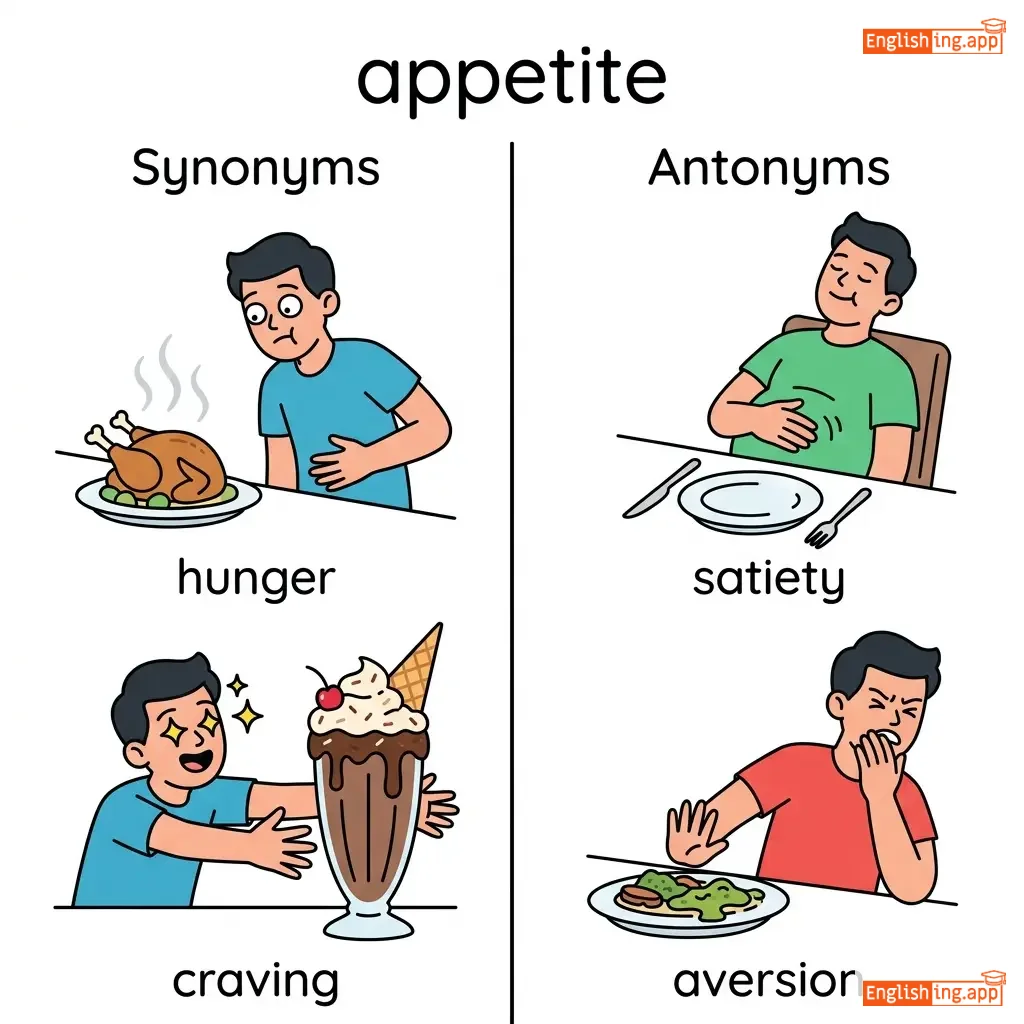
hunger, craving, desire, urge, longing
••••••
|
satiety, aversion
••••••
|
big appetite, healthy appetite, appetite for success
••••••
|
Appetite 意味着食欲 – 食欲意味着对食物的强烈渴望。
••••••
|
|
🍽️
••••••
|
/ˈæpɪtaɪz/
verb
(阿皮泰兹)
••••••
|
- •••••• |
刺激食欲
ciji shiyu
••••••
|
appetized
阿皮泰兹德
••••••
|
appetized
阿皮泰兹德
••••••
|
appetizes
阿皮泰兹斯
••••••
|
appetizing
阿皮泰兹英
••••••
|
to stimulate the appetite; to make someone eager or interested
••••••
|
The aroma of fresh bread will appetize the guests before dinner.
新鲜面包的香味会让客人产生食欲。
••••••
|
新鲜面包的香味会刺激客人的食欲。
xinxian mianbao de xiangwei hui ciji keren de shiyu
••••••
|
- •••••• | - •••••• | - •••••• |
stimulate, whet, entice, tempt, arouse
••••••
|
repel, discourage, suppress
••••••
|
appetize the guests, appetize the senses, appetize appetite, appetize interest
••••••
|
Appetize = appetite + rise,想到食欲上升。
••••••
|
|
👏
••••••
|
/əˈplɔːd/
verb
(ā-pu-lu-ō-d)
••••••
|
- •••••• |
鼓掌
gǔ zhǎng
••••••
|
applauded
ā-pu-lu-ō-d-ed
••••••
|
applauded
ā-pu-lu-ō-d-ed
••••••
|
applauds
ā-pu-lu-ō-ds
••••••
|
applauding
ā-pu-lu-ō-d-ing
••••••
|
to show approval by clapping or expressing admiration
••••••
|
The audience applauded the performance.
观众为表演鼓掌。
••••••
|
观众为表演鼓掌。
Guānzhòng wèi biǎoyǎn gǔzhǎng.
••••••
|
- •••••• | - •••••• | - •••••• |
cheer, praise, commend, hail
••••••
|
criticize, condemn
••••••
|
applaud enthusiastically, applaud someone for something
••••••
|
Applaud sounds like 'Appl' – 所以你在喜欢某事时鼓掌!
••••••
|
|
🍎
••••••
|
/ˈæpəl/
noun
(æpəl)
••••••
|
- •••••• |
苹果
pingguo
••••••
|
- •••••• | - •••••• | - •••••• | - •••••• |
a round fruit with red, green, or yellow skin
••••••
|
She ate a red apple for breakfast. |
她早餐吃了一个红苹果。
Tā zǎocān chīle yīgè hóng píngguǒ.
••••••
|
the apple of one's eye |
a person or thing that is greatly loved or treasured
••••••
|
心肝宝贝
xīngān bǎobèi
••••••
|
fruit, pome, produce
••••••
|
null
••••••
|
apple pie, apple tree, apple juice, eat an apple
••••••
|
苹果(pingguo)是‘日常必备’ - ‘An apple a day keeps doctor away’记住!
••••••
|
|
📌
••••••
|
/ˈæplɪkəbl/
adjective
(aplikabl)
••••••
|
|
适用的
shiyong de
••••••
|
- •••••• | - •••••• | - •••••• | - •••••• |
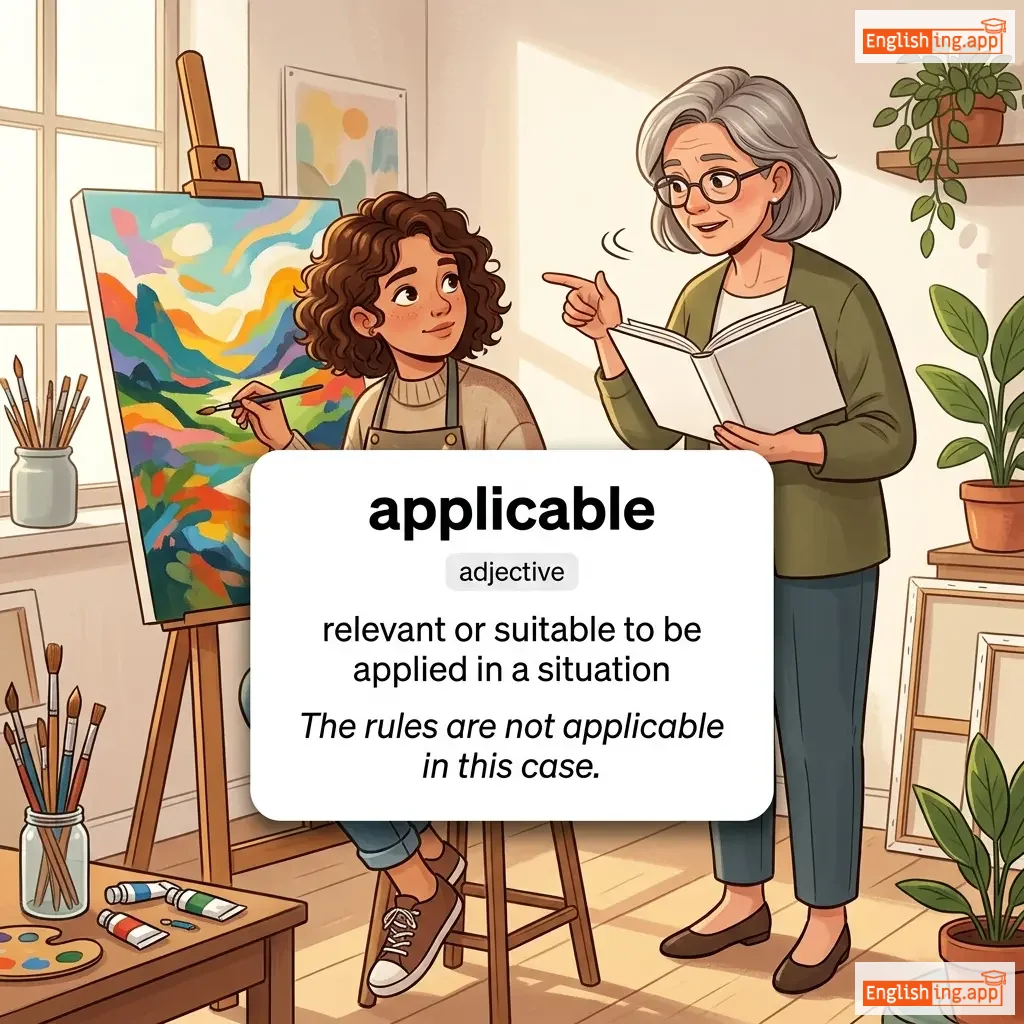
relevant or suitable to be applied in a situation
••••••
|
The rules are not applicable in this case. |
在这种情况下规则不适用。
Zai zhezhong qingkuang xia guize bu shiyong.
••••••
|
- •••••• | - •••••• | - •••••• |
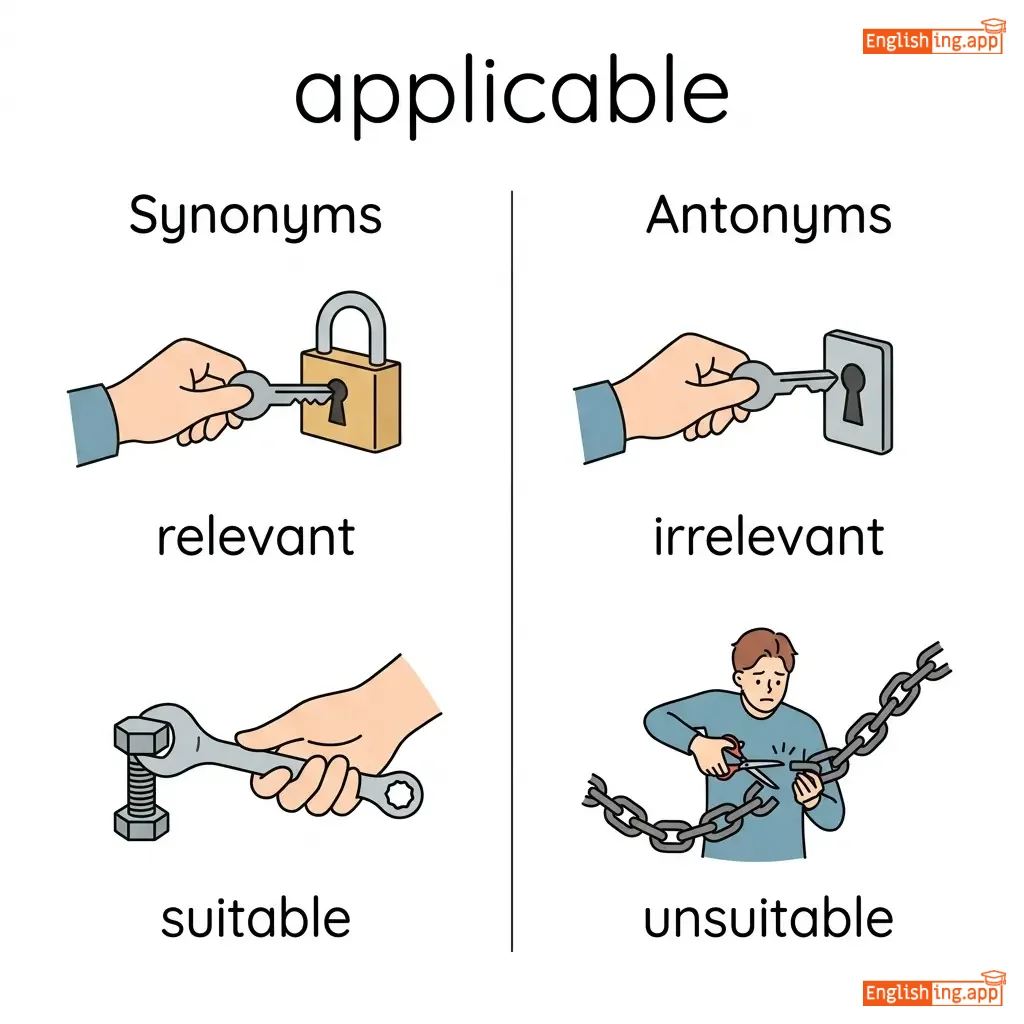
relevant, suitable, appropriate, pertinent, fitting
••••••
|
irrelevant, unsuitable, inappropriate
••••••
|
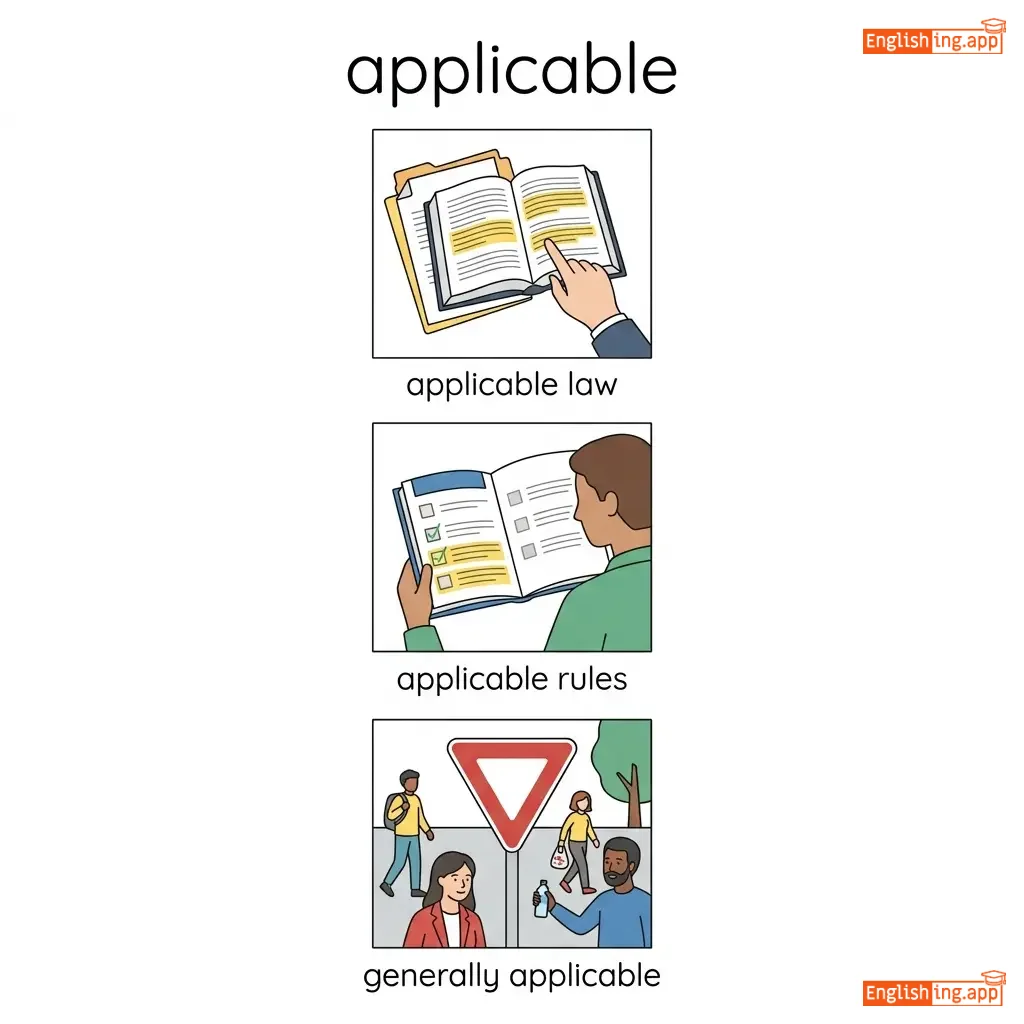
applicable law, applicable rules, generally applicable
••••••
|
Applicable意味着可以应用的,即适用的。
••••••
|
|
📝
••••••
|
/ˈæplɪkənt/
noun
(æplɪkænt)
••••••
|
- •••••• |
申请者
shenqingshe
••••••
|
- •••••• | - •••••• | - •••••• | - •••••• |
a person who applies for something, such as a job or a position
••••••
|
The applicant was interviewed for the position. |
申请者已被面试以获取该职位。
Shenqingshe yi bei mianshi yi huoqu gai zhiwei.
••••••
|
- •••••• | - •••••• | - •••••• |
candidate, contender, petitioner, seeker
••••••
|
employer, recruiter
••••••
|
job applicant, applicant form, qualified applicant
••••••
|
An applicant is someone who applies (shenqing) for a position.
••••••
|
|
📝
••••••
|
/ˌæplɪˈkeɪʃən/
noun
(应用程序)
••••••
|
- •••••• |
申请 / 应用 / 软件
shenqing / yingyong / ruanjian
••••••
|
- •••••• | - •••••• | - •••••• | - •••••• |
a formal request for something; the act of putting something into operation; or a software program
••••••
|
She submitted her application for the scholarship. |
她提交了奖学金申请。
Ta tijiao le jiangxuejin shenqing.
••••••
|
put into application |
to use something practically
••••••
|
投入应用
tóurù yìngyòng
••••••
|
request, use, implementation, petition, software
••••••
|
withdrawal, neglect
••••••
|
job application, application form, software application, practical application
••••••
|
Application 是一个请求或应用程序的缩写,两个都有相同的意思。
••••••
|
|
📄
••••••
|
/əˈplaɪ/
verb
(āpūlái)
••••••
|
- •••••• |
申请 / 应用
shēnqǐng / yìngyòng
••••••
|
applied
āpūláid
••••••
|
applied
āpūláid
••••••
|
applies
āpūlái zī
••••••
|
applying
āpūlái yīng
••••••
|
to make a formal request for something; to put into practice
••••••
|
He decided to apply for the scholarship.
他决定申请奖学金。
••••••
|
他决定申请奖学金。
Tā juédìng shēnqǐng jiǎngxuéjīn.
••••••
|
apply oneself
全力以赴
••••••
|
to make a serious effort to do something
••••••
|
全力以赴做某事
quánlì yǐfù zuò mǒu shì
••••••
|
request, use, implement, employ, submit
••••••
|
ignore, neglect
••••••
|
apply for a job, apply pressure, apply rules, apply cream
••••••
|
Apply意味着申请 — 申请更多,机会更多。
••••••
|
|
📌
••••••
|
/əˈpɔɪnt/
verb
(æpɔɪnt)
••••••
|


|
任命
rènmìng
••••••
|
appointed
æpɔɪntɪd
••••••
|
appointed
æpɔɪntɪd
••••••
|
appoints
æpɔɪnts
••••••
|
appointing
æpɔɪntɪŋ
••••••
|
to officially assign a job or role to someone
••••••
|
The board decided to appoint her as the new manager.
董事会决定任命她为新经理。
••••••
|
董事会决定任命她为新经理。
Dǒngshìhuì juédìng rènmìng tā wéi xīn jīnglǐ.
••••••
|
appoint someone to a post
任命某人担任职位
••••••
|
to officially give someone a position or job
••••••
|
任命某人担任职位
rènmìng mǒu rén dānrèn zhíwèi
••••••
|
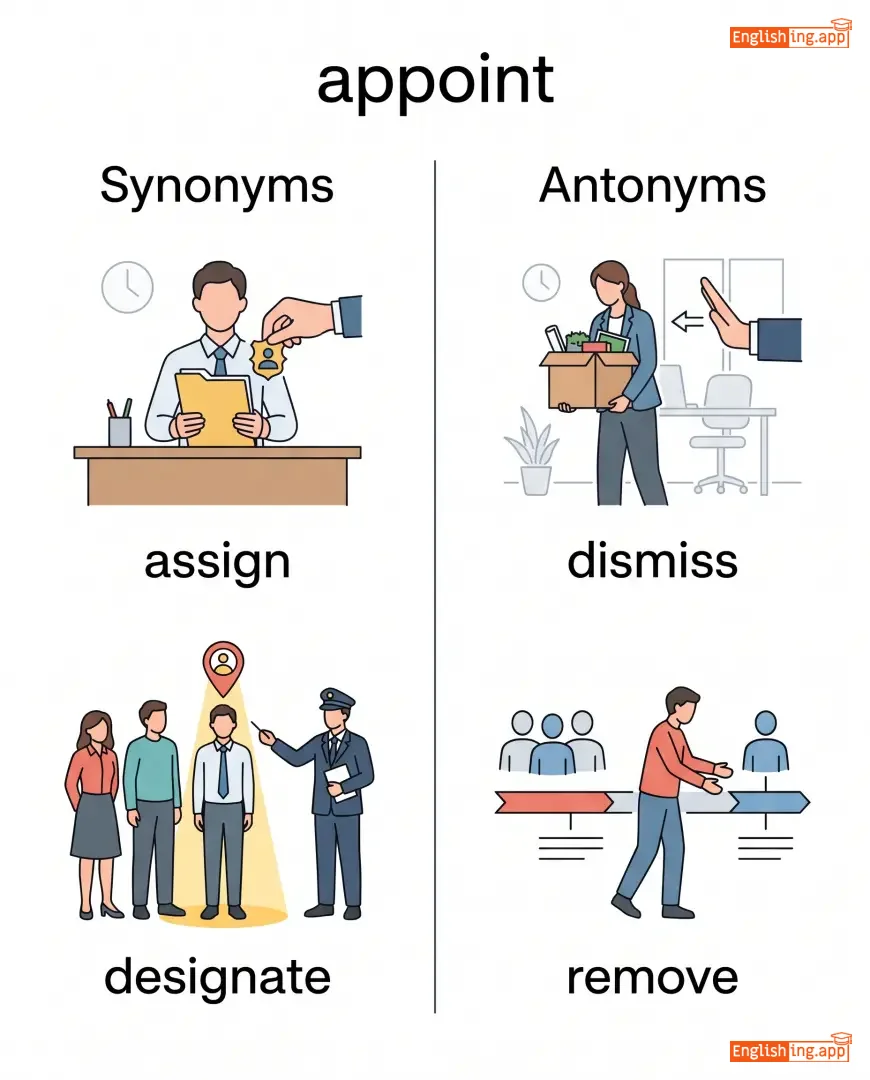
assign, designate, nominate, delegate, commission
••••••
|
dismiss, remove, reject
••••••
|
appoint a manager, appoint a committee, appoint a date, appoint someone
••••••
|
Appoint是任命—'App是分配工作或职位的意思。'
••••••
|
|
📅
••••••
|
/əˈpɔɪntmənt/
noun
(āipòyīntmènt)
••••••
|
- •••••• |
预约
yùyuē
••••••
|
- •••••• | - •••••• | - •••••• | - •••••• |
an arrangement to meet someone at a particular time
••••••
|
I have a doctor's appointment tomorrow. |
我明天有一个医生预约。
Wǒ míngtiān yǒu yīgè yīshēng yùyuē.
••••••
|
keep an appointment |
to attend an arranged meeting
••••••
|
保持预约
bǎochí yùyuē
••••••
|
meeting, arrangement, date, schedule, reservation
••••••
|
cancellation, absence
••••••
|
make an appointment, cancel an appointment, keep an appointment, appointment time
••••••
|
Appointment 是预约 — 不要忘记!
••••••
|
|
🙏
••••••
|
/əˈpriːʃieɪt/
verb
(ā-pǔrī-xī-è-tè)
••••••
|

|
欣赏
xīn shǎng
••••••
|
appreciated
ā-pǔrī-xī-è-tè-dè
••••••
|
appreciated
ā-pǔrī-xī-è-tè-dè
••••••
|
appreciates
ā-pǔrī-xī-è-tè-sī
••••••
|
appreciating
ā-pǔrī-xī-è-tè-īng
••••••
|
to recognize the value of something or to be thankful for it
••••••
|
I really appreciate your help with this project.
我真的很感激你在这个项目中的帮助。
••••••
|
我真的很感激你在这个项目中的帮助。
Wǒ zhēn de hěn gǎn jī nǐ zài zhè ge xiàng mù zhōng de bāng zhù.
••••••
|
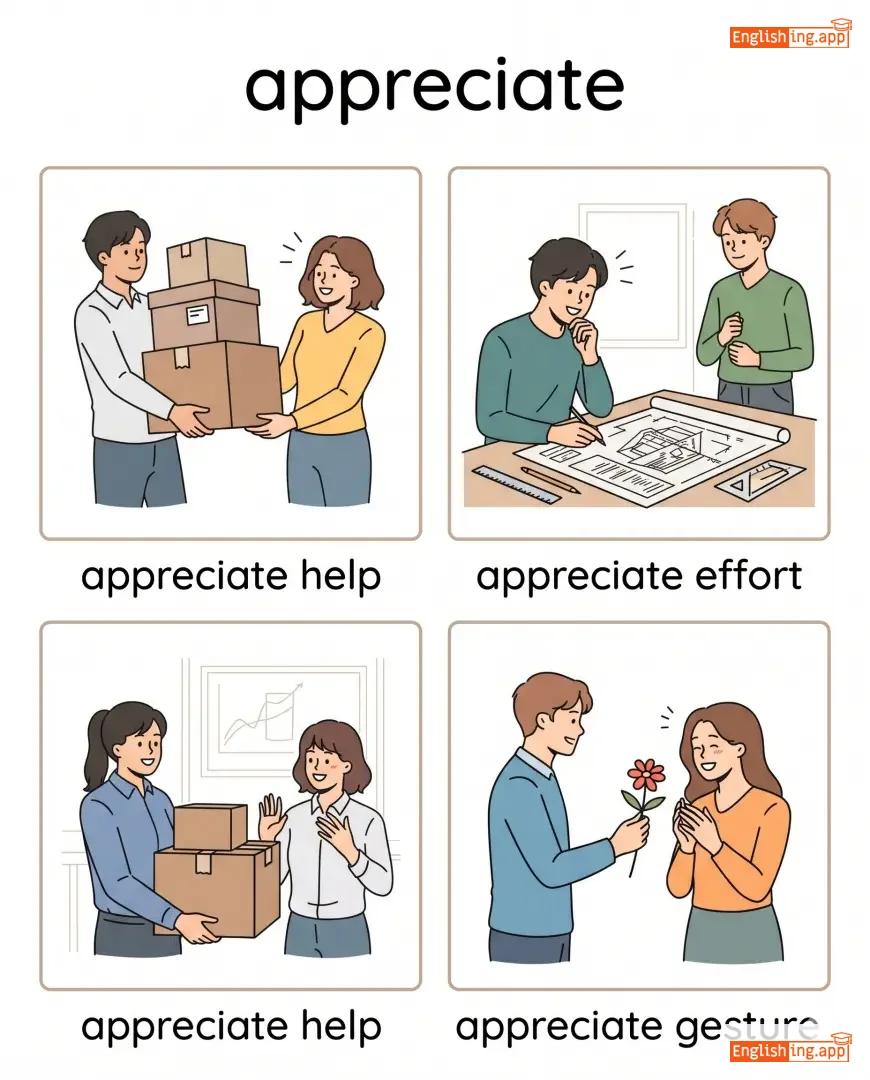
appreciate the gesture
欣赏这个手势
••••••
|
to value someone's action or kindness
••••••
|
欣赏这个手势
xīn shǎng zhè ge shǒu shì
••••••
|
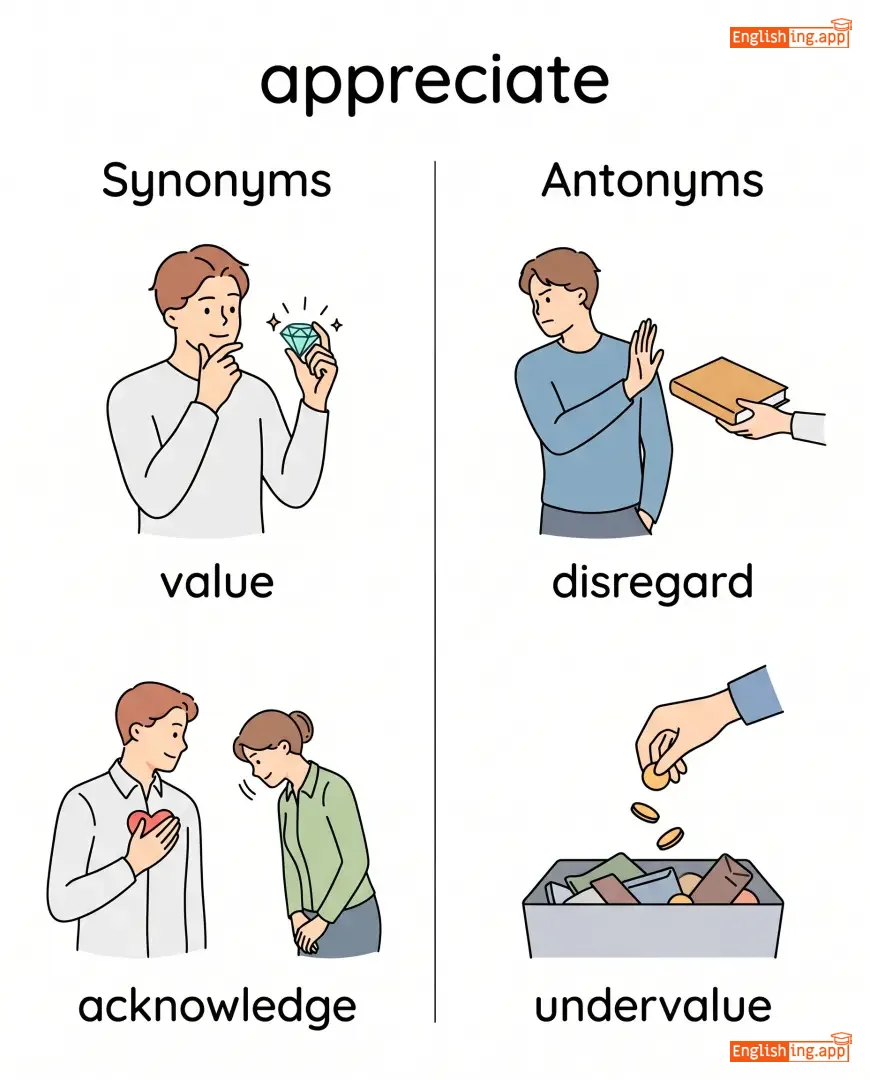
value, acknowledge, recognize, respect, admire
••••••
|
disregard, undervalue, ignore
••••••
|
appreciate help, appreciate effort, appreciate gesture, appreciate support
••••••
|
Appreciate 就是说‘谢谢’ 🙏
••••••
|
|
💐
••••••
|
/əˌpriːʃiˈeɪʃən/
noun
(āpǔlìxiēshān)
••••••
|
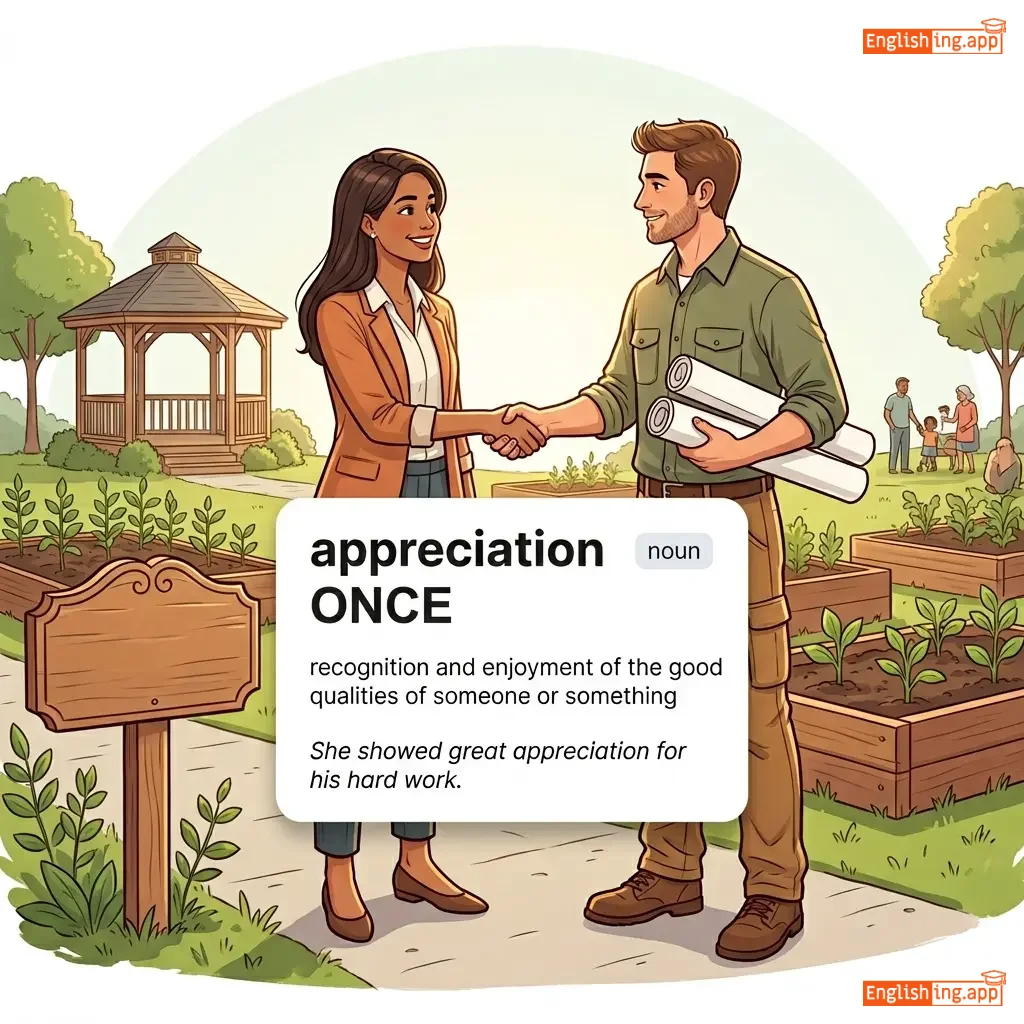
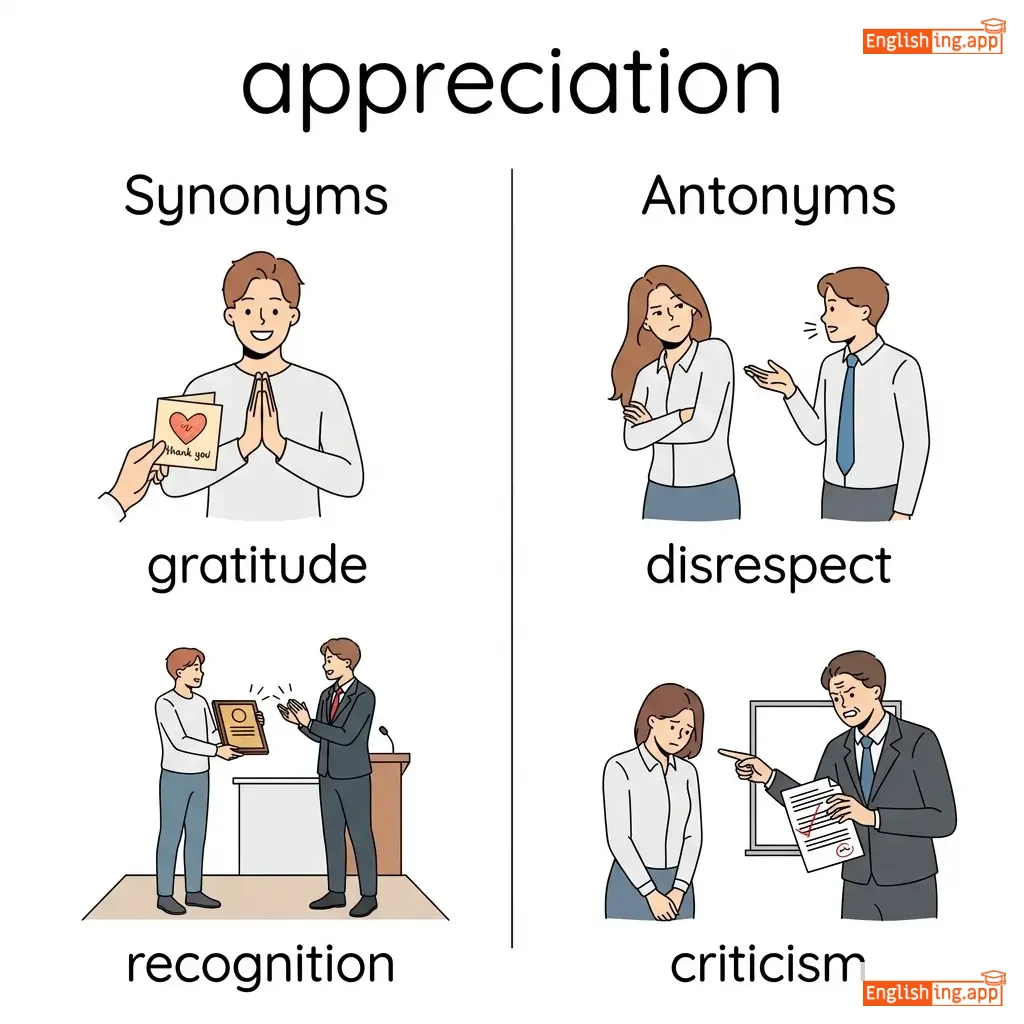
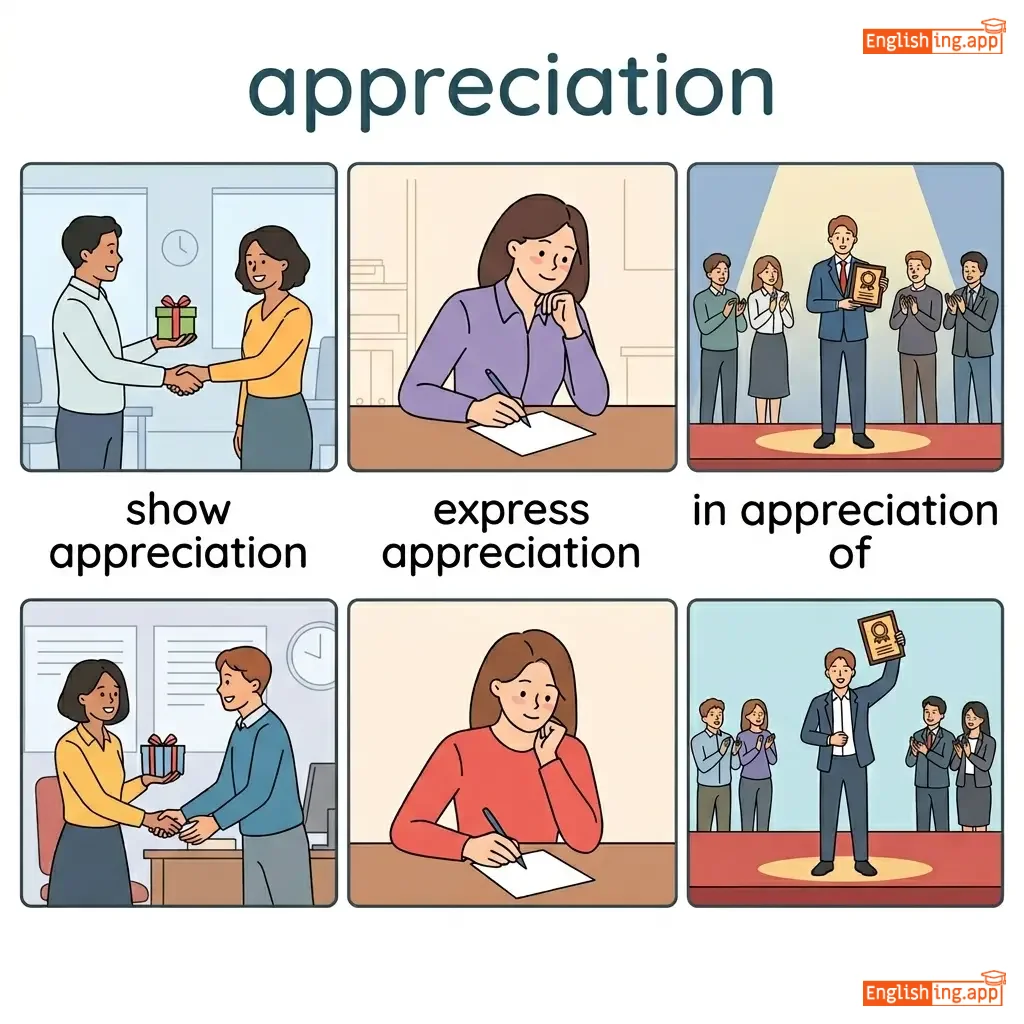
|
感激,赞赏
gǎnjī, zànshǎng
••••••
|
- •••••• | - •••••• | - •••••• | - •••••• |
recognition and enjoyment of the good qualities of someone or something
••••••
|
She showed great appreciation for his hard work. |
她对他的辛勤工作表示了极大的感激。
Tā duì tā de xīnqín gōngzuò biǎoshìle jí dà de gǎnjī.
••••••
|
token of appreciation |
a small gift or gesture to show gratitude
••••••
|
感激的象征
gǎnjī de xiàngzhēng
••••••
|
gratitude, recognition, admiration, thankfulness, respect
••••••
|
disrespect, criticism, ungratefulness
••••••
|
show appreciation, express appreciation, in appreciation of
••••••
|
Appreciation 是赞赏,因此 appreciation 就是赞赏 — 记住,每个人都想要 appreciation 🎁
••••••
|
|
🚓
••••••
|
/ˌæprɪˈhɛnd/
verb
(āpīhēnd)
••••••
|
- •••••• |
逮捕
dàibǔ
••••••
|
apprehended
āpīhēnded
••••••
|
apprehended
āpīhēnded
••••••
|
apprehends
āpīhēnds
••••••
|
apprehending
āpīhēnding
••••••
|
to arrest or seize someone; to understand or perceive something
••••••
|
The police managed to apprehend the thief after a long chase.
警察在一场长时间的追逐后成功逮捕了小偷。
••••••
|
警察在一场长时间的追逐后成功逮捕了小偷。
Jǐngchá zài yī chǎng zhǎng shíjiān de zhuīzhú hòu chénggōng dàibǔ le xiǎotōu.
••••••
|
apprehend the meaning
理解含义
••••••
|
to understand or grasp the meaning
••••••
|
理解含义
lǐjiě hán yì
••••••
|
arrest, capture, seize, detain, grasp
••••••
|
release, free, liberate
••••••
|
apprehend a suspect, apprehend quickly, apprehend the meaning
••••••
|
逮捕是为了理解犯人的行为(含义)
••••••
|
|
📢
••••••
|
/əˈpraɪz/
verb
(apraiz)
••••••
|
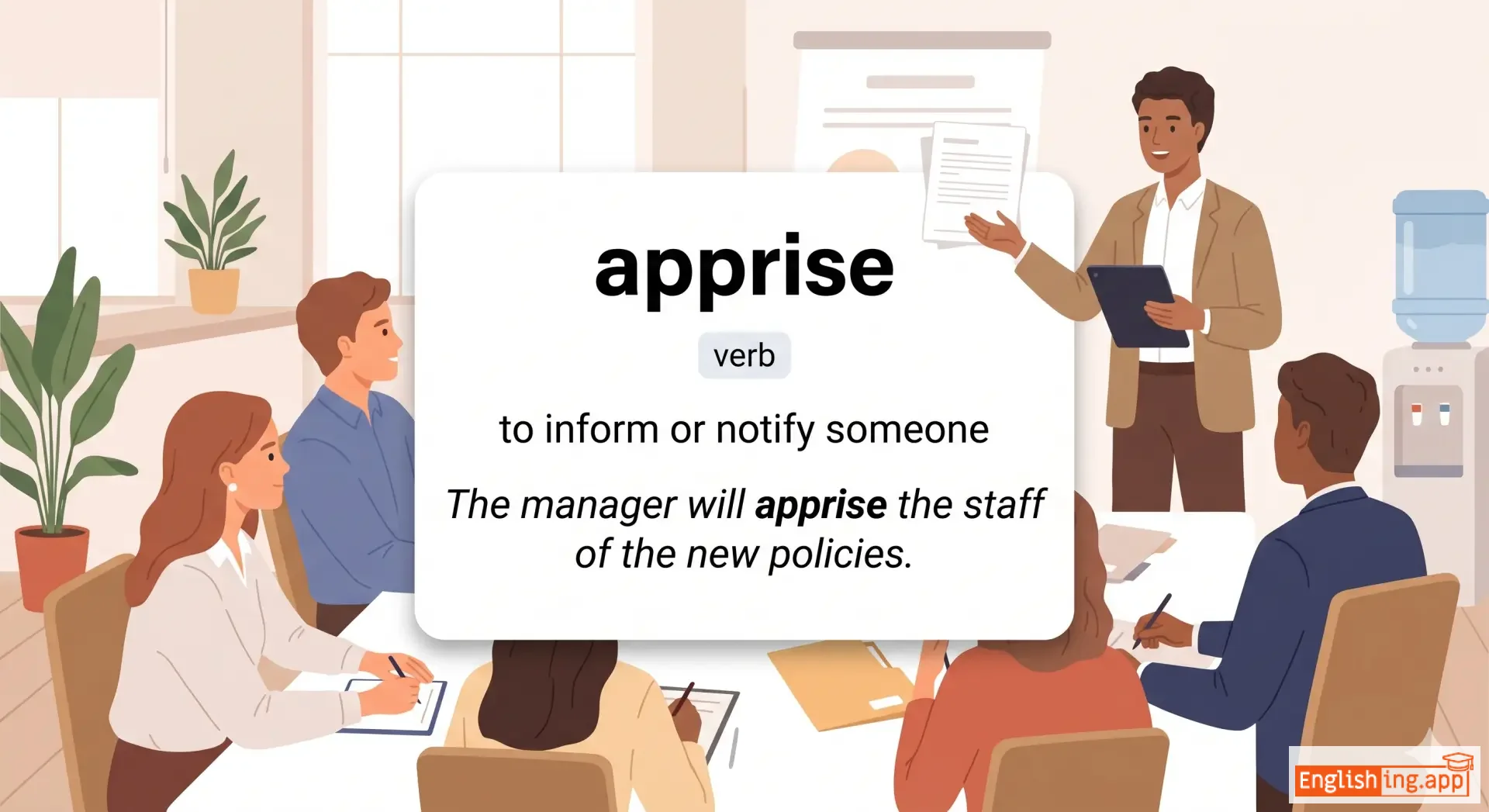
|
告知
gaozhi
••••••
|
apprised
apraizd
••••••
|
apprised
apraizd
••••••
|
apprises
apraizes
••••••
|
apprising
apraizing
••••••
|
to inform or notify someone
••••••
|
The manager will apprise the staff of the new policies.
经理将通知员工新的政策。
••••••
|
经理将通知员工新的政策。
Jingli jiang tongzhi yuangong xin de zhengce.
••••••
|
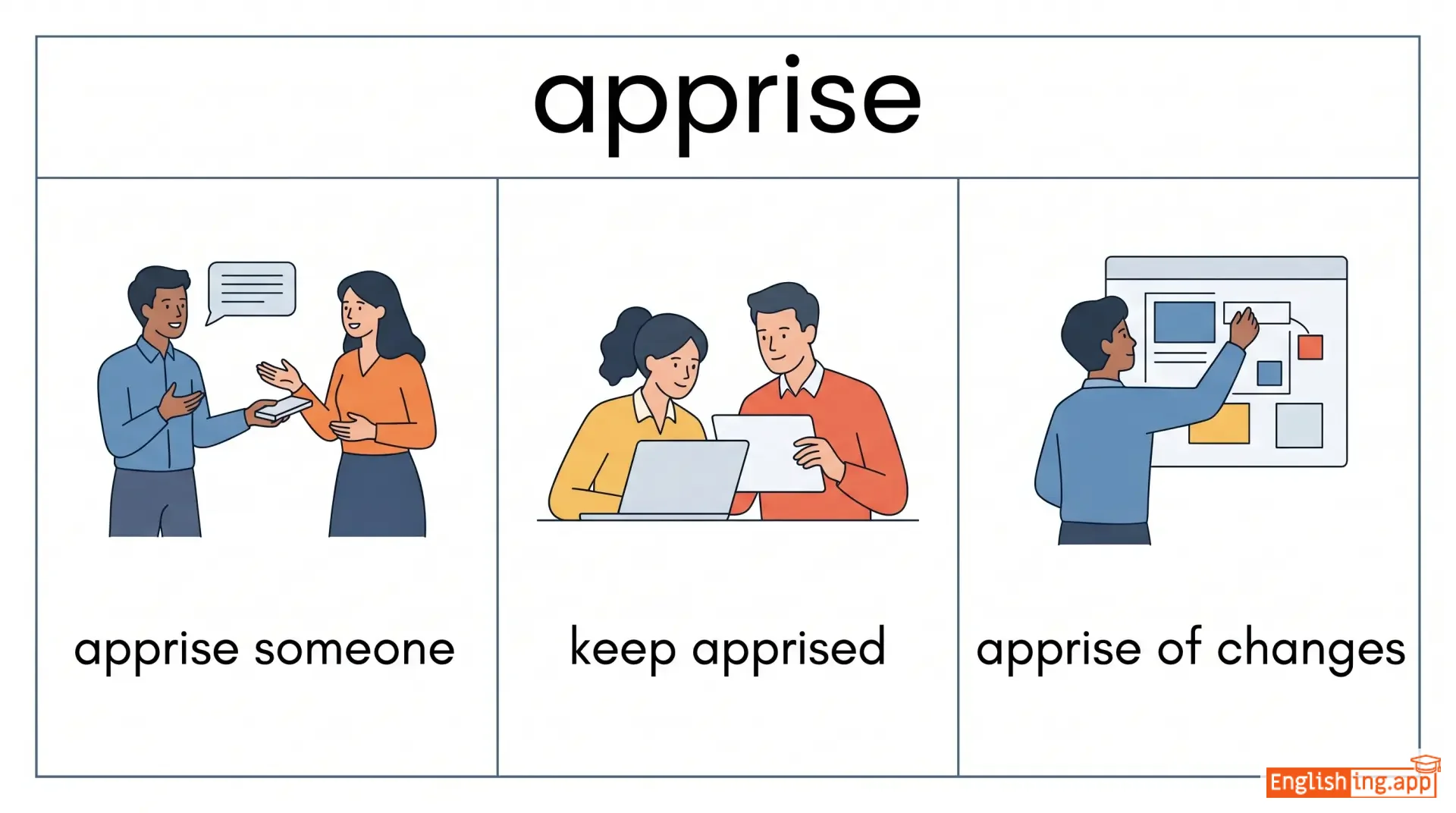
keep apprised
保持知情
••••••
|
to keep informed about something
••••••
|
保持知情
baochi zhiqing
••••••
|
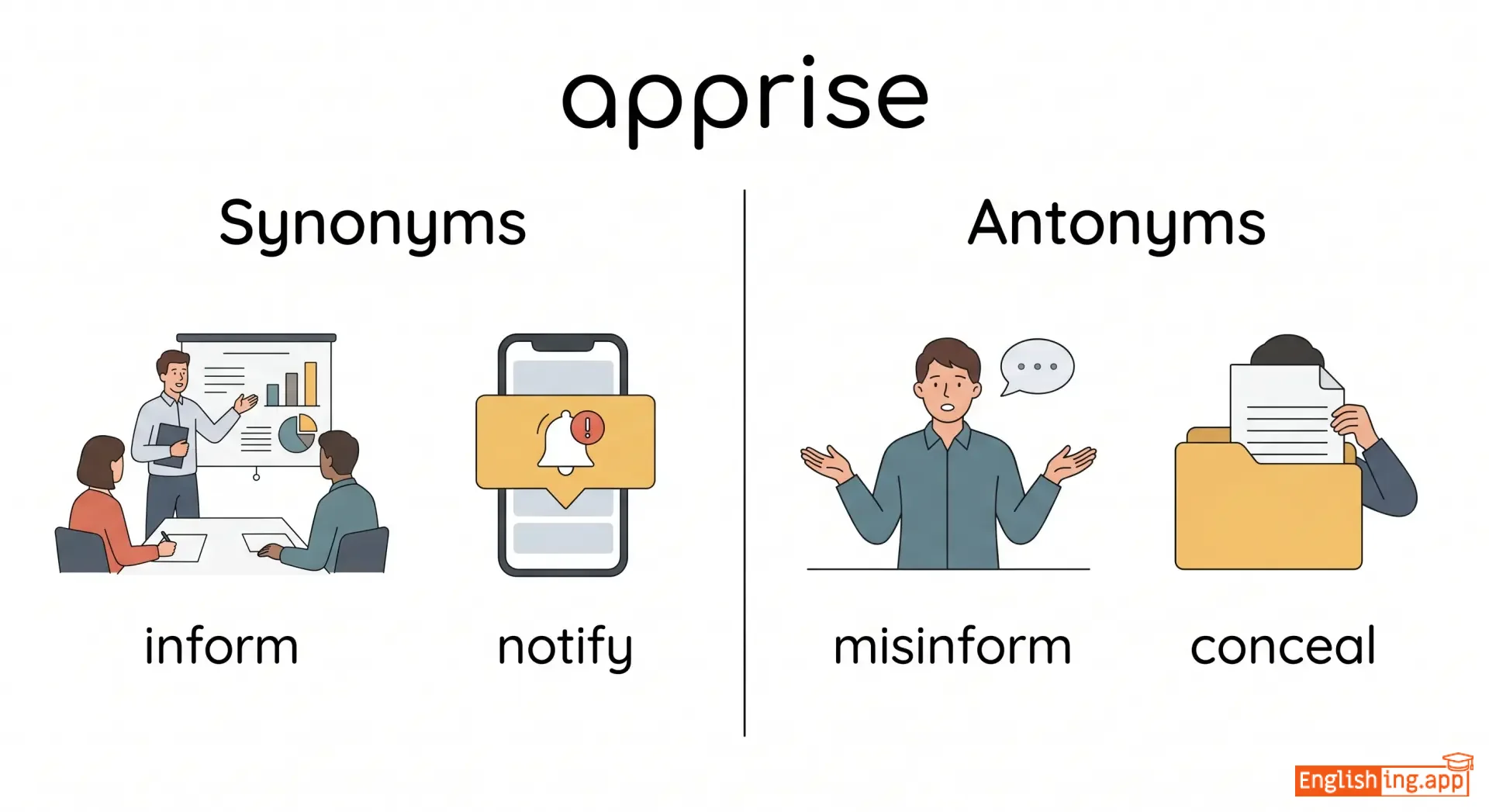
inform, notify, brief, update, advise
••••••
|
misinform, conceal
••••••
|
apprise someone, keep apprised, apprise of changes
••••••
|
Apprise 是信息的一个'prise',告知别人
••••••
|
|
➡️
••••••
|
/əˈproʊtʃ/
verb
(āi pǒu)
••••••
|
- •••••• |
接近 / 处理
jie jin / chu li
••••••
|
approached
āi pǒu dé
••••••
|
approached
āi pǒu dé
••••••
|
approaches
āi pǒu zhī
••••••
|
approaching
āi pǒu xíng
••••••
|
to move closer to someone or something; to deal with a situation or problem
••••••
|
The teacher approached the student to offer help.
教师接近学生以提供帮助。
••••••
|
教师接近学生以提供帮助。
Jiaoshi jiejin xuesheng yi tigong bangzhu.
••••••
|
approach with caution
小心接近
••••••
|
to be careful when dealing with something or someone
••••••
|
小心接近
xiaoxin jiejin
••••••
|
come near, advance, move toward, reach, tackle
••••••
|
retreat, withdraw, avoid
••••••
|
new approach, practical approach, approach a problem, approach someone
••••••
|
接近就像解决问题一样:你先接近它,然后面对它。
••••••
|
|
✔️
••••••
|
/əˈproʊpriət/ (adj), /əˈproʊprieɪt/ (verb)
adjective, verb
(āpɪəʊprɪət)
••••••
|
|
适当的 / 占用
shìdàng de / zhàn yòng
••••••
|
appropriated
āpɪəʊprɪeɪtɪd
••••••
|
appropriated
āpɪəʊprɪeɪtɪd
••••••
|
appropriates
āpɪəʊprɪeɪts
••••••
|
appropriating
āpɪəʊprɪeɪtɪŋ
••••••
|
suitable or proper in the circumstances (adj); to take something for one’s own use, often without permission (verb)
••••••
|
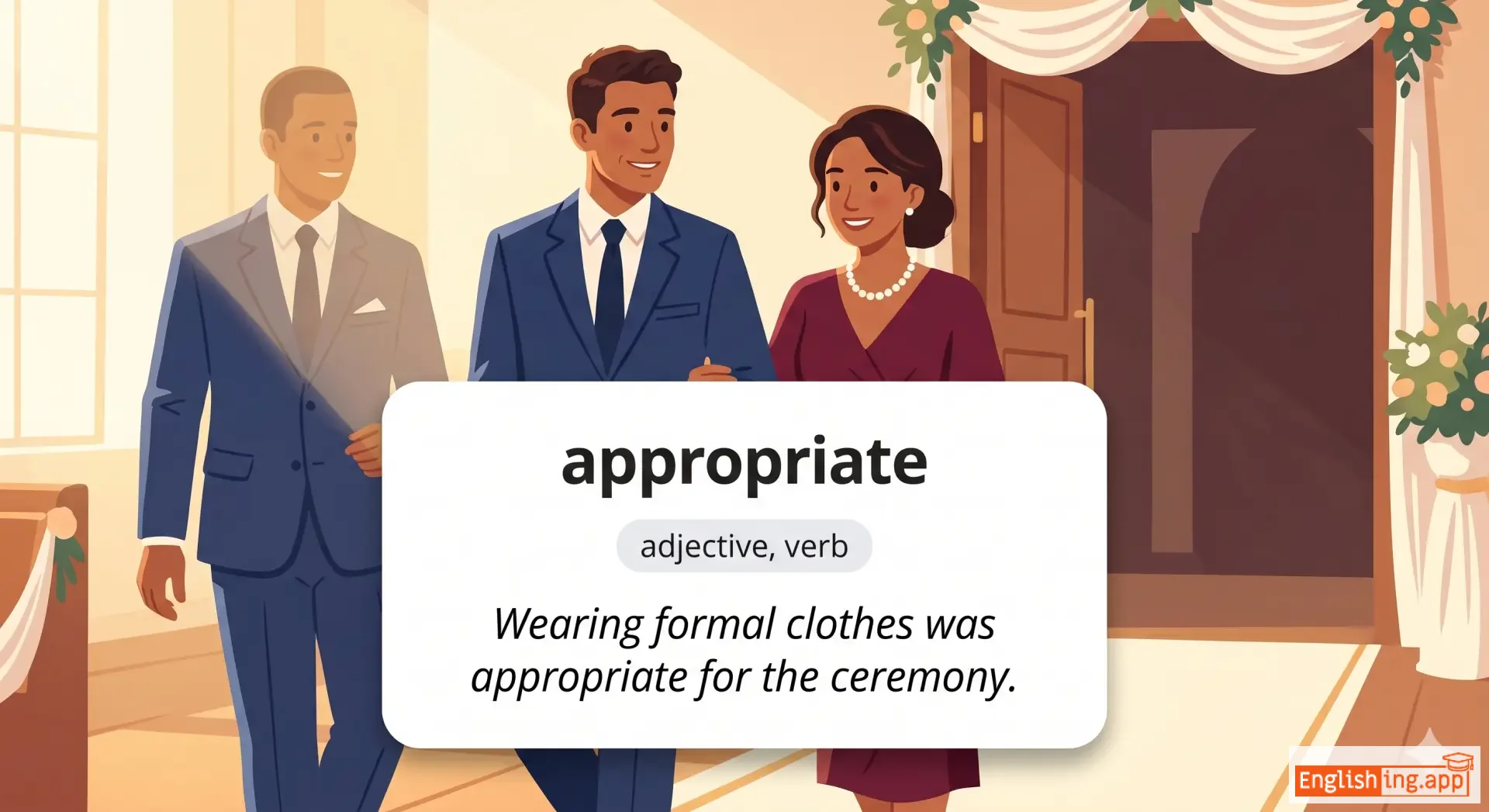
Wearing formal clothes was appropriate for the ceremony.
穿正式衣服是适合这个仪式的。
••••••
|
穿正式衣服是适合这个仪式的。
Chuān zhèngshì yīfú shì shìhé zhège yíshì de.
••••••
|
- •••••• | - •••••• | - •••••• |
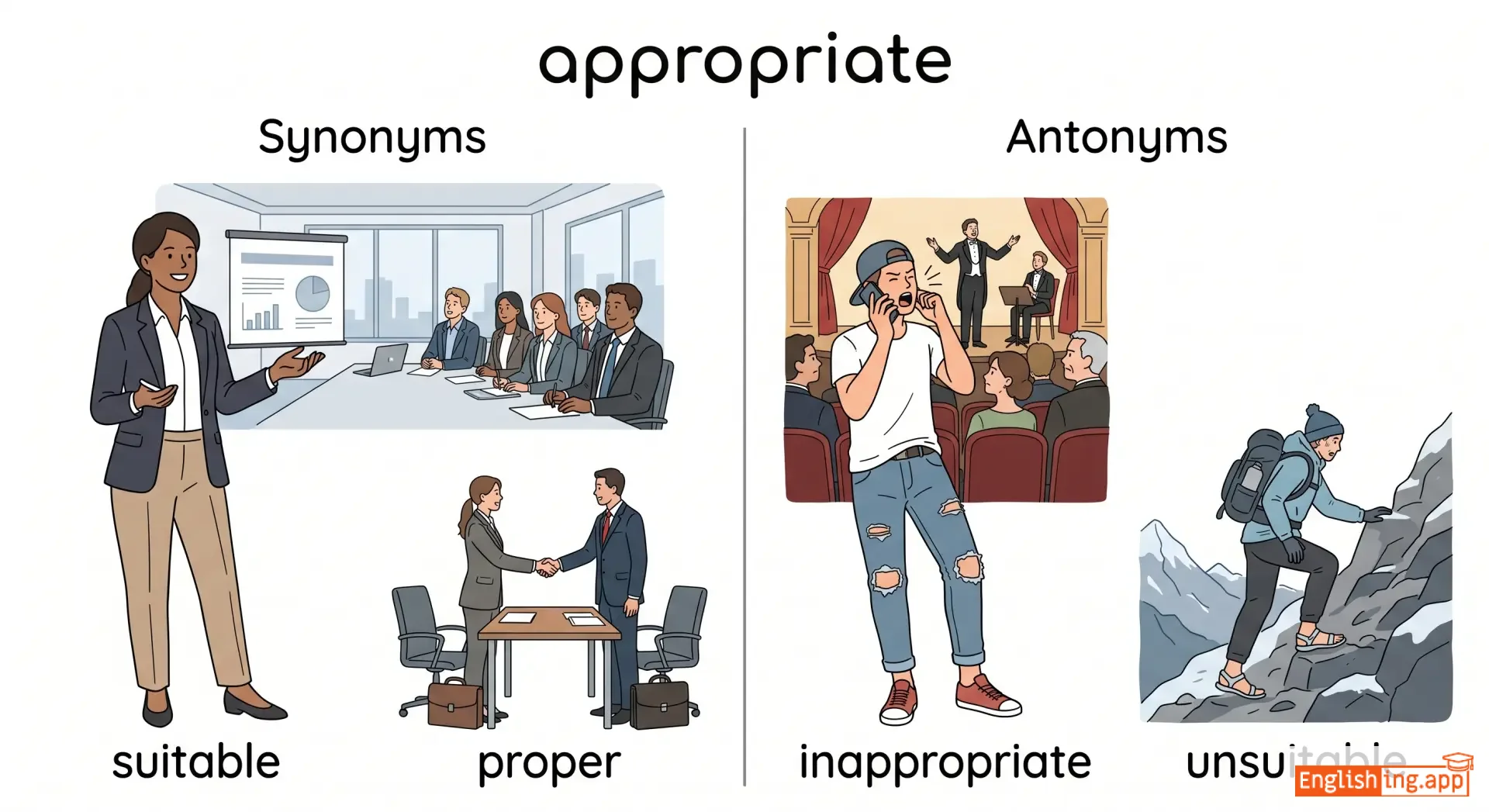
suitable, proper, fitting, apt, seize
••••••
|
inappropriate, unsuitable
••••••
|
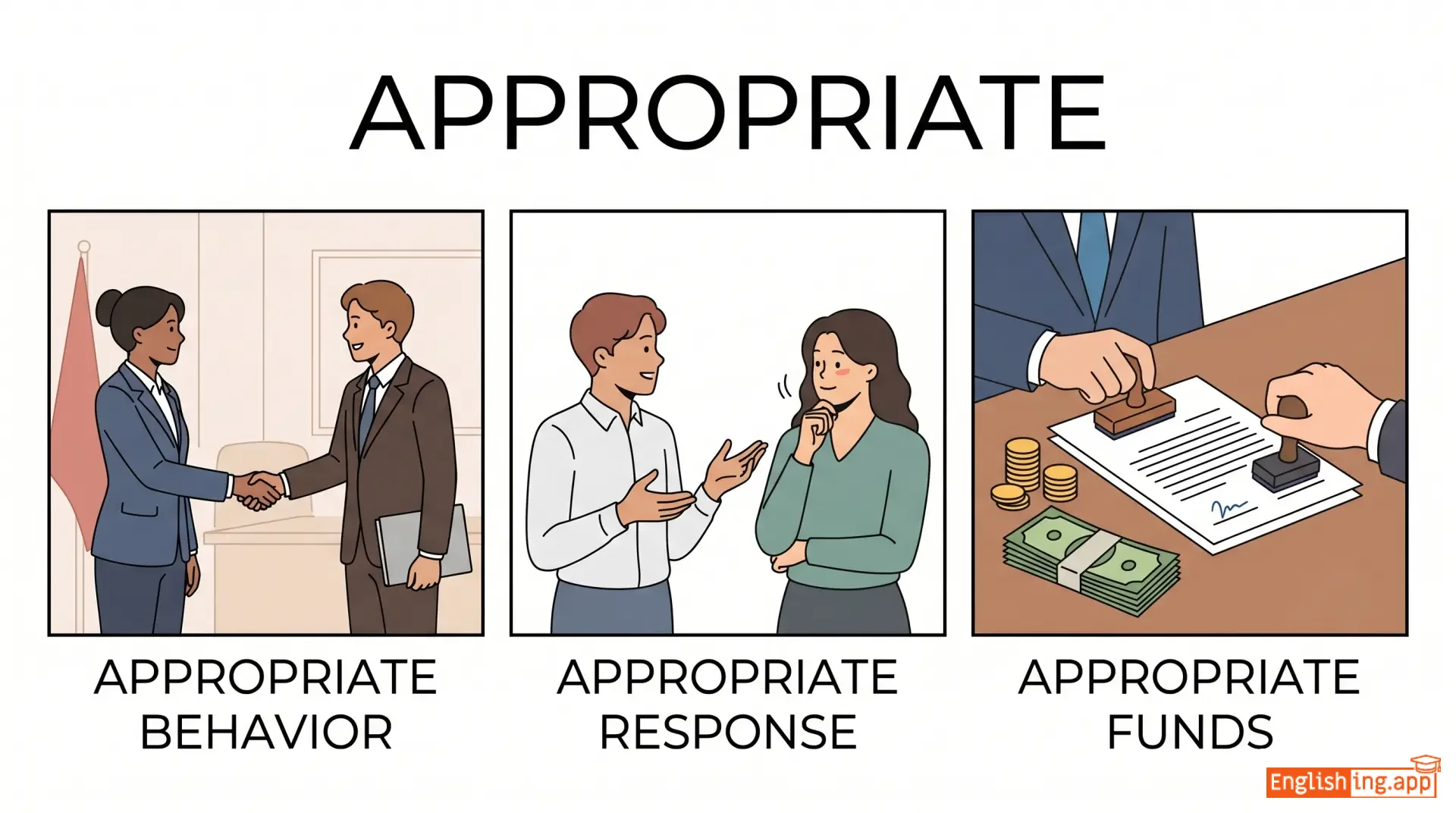
appropriate behavior, appropriate response, appropriate funds, culturally appropriate
••••••
|
Appropriate 意味着合适—根据情况来适应,有时也会未经允许占用某物。
••••••
|
|
👌
••••••
|
/əˈproʊpriətli/
adverb
(适当地)
••••••
|
- •••••• |
恰当地
qià dāng de
••••••
|
- •••••• | - •••••• | - •••••• | - •••••• |
in a way that is suitable or proper for a particular situation
••••••
|
She was dressed appropriately for the event.
她为活动穿着得体。
••••••
|
她为活动穿着得体。
Tā wèi huódòng chuānzhuó détǐ.
••••••
|
- •••••• | - •••••• | - •••••• |
suitably, properly, fittingly, correctly
••••••
|
inappropriately, wrongly
••••••
|
act appropriately, dress appropriately, respond appropriately
••••••
|
当你恰当地行动时,你就像是为特定场合穿戴得体。
••••••
|
|
✔️
••••••
|
/əˈpruː.vəl/
noun
(apruval)
••••••
|
- •••••• |
批准
pizhun
••••••
|
- •••••• | - •••••• | - •••••• | - •••••• |
official permission or agreement for something
••••••
|
The project received government approval. |
该项目获得了政府批准。
Gai xiangmu huodele zhengfu pizhun.
••••••
|
seal of approval |
official acceptance or endorsement
••••••
|
批准印章
pizhun yinzhang
••••••
|
acceptance, consent, permission, endorsement, authorization
••••••
|
disapproval, rejection, denial
••••••
|
gain approval, seek approval, official approval, parental approval
••••••
|
Approval 就是批准 ✔️ — 获得批准后,一切都可以进行。
••••••
|
|
✅
••••••
|
/əˈpruːv/
verb
(apruv)
••••••
|
- •••••• |
批准
pīzhǔn
••••••
|
approved
apruvd
••••••
|
approved
apruvd
••••••
|
approves
apruvs
••••••
|
approving
apruving
••••••
|
to officially accept, agree to, or allow something
••••••
|
The manager approved the budget for next year.
经理批准了明年的预算。
••••••
|
经理批准了明年的预算。
Jīnglǐ pīzhǔnle míngnián de yùsuàn.
••••••
|
approve of
批准
••••••
|
to think well of something or someone
••••••
|
批准
pīzhǔn
••••••
|
authorize, endorse, accept, permit, sanction
••••••
|
reject, deny, disapprove
••••••
|
approve plan, approve application, approve budget
••••••
|
批准 = ✅ 批准 – 经理批准了预算
••••••
|

