वोकैबुलरीज

इंग्लिश वोकैबुलरी डिस्कवर, लर्न और मास्टर करें

adverb
/wɛr/
कहाँ (kahan)

in or at what place or position

"Where do you live?"

"तुम कहाँ रहते हो?" (Tum kahan rehte ho?)
noun
/ˈwɛrəˌbaʊts/
स्थान (sthan)

the place where someone or something is

"The police are trying to find out the suspect's whereabouts."

"पुलिस संदिग्ध के स्थान का पता लगाने की कोशिश कर रही है।" (Police sandigdh ke sthaan ka pata lagane ki koshish kar rahi hai.)
conjunction
/wɛərˈæz/
जबकि (jabki)

used to introduce a contrast or comparison between two facts

"She prefers tea, whereas he likes coffee."

"वह चाय पसंद करती है, जबकि वह कॉफी पसंद करता है।" (Wah chai pasand karti hai, jabki wah coffee pasand karta hai.)
adverb
/wɛərˈbaɪ/
जिससे (jisse)

by which; because of which

"The company agreed to a contract whereby it would pay the penalty."

"कंपनी ने एक समझौते पर हस्ताक्षर किए जिसमें वह जुर्माना अदा करेगी।" (Kampani ne ek samjhaute par hastakshar kiye jismein vah jurmana ada karegi.)
adverb
/ˌwɛr.əˈpɒn/
तत्क्षण बाद (tatkshan baad)

Immediately after which; as a result of which.

"He confessed his mistake, whereupon she forgave him."

"उसने अपनी गलती कबूल की, तत्क्षण बाद उसने उसे माफ कर दिया।" (Usne apni galti kabool ki, tatkshan baad usne use maaf kar diya.)
adverb
/wɛrˈɛv.ər/
जहाँ भी (jahan bhi)

In or to any place.

"You can find good people wherever you go."

"आप अच्छे लोग जहाँ भी जाते हैं, वहाँ मिल सकते हैं।" (Aap achhe log jahan bhi jaate hain, wahan mil sakte hain.)
adverb, noun
/ˈwɛə.wɪð/
साधन (saadhan)

With which; the means or resources needed for something.

"He lacked the money wherewith to buy a new house."

"उसके पास नया घर खरीदने के लिए पैसे नहीं थे।" (Uske paas naya ghar kharidne ke liye paise nahi the.)
verb
/wɛt/
तेज़ करना/उत्तेजित करना (tez karna/uttejit karna)

To sharpen the blade of a tool or to stimulate interest or appetite.

"The smell of food whetted my appetite."

"खाने की खुशबू ने मेरी भूख बढ़ा दी।" (Khaane ki khushboo ne meri bhookh badha di.)
conjunction
/ˈwɛðər/
क्या (kya)

used to express a doubt or choice between alternatives

"I don’t know whether I should go."

"मुझे नहीं पता कि मुझे जाना चाहिए या नहीं।" (Mujhe nahi pata ki mujhe jana chahiye ya nahi.)
noun
/weɪ/
छाछ (chaach)

the watery part of milk that separates from the curds when making cheese

"Protein powder is often made from whey."

"प्रोटीन पाउडर अक्सर छाछ से बनता है।" (protein powder aksar chaach se banta hai.)
pronoun
/wɪtʃ/
कौन सा (kaun sa)

used to ask about one or more items from a defined set

"Which one do you prefer, the red or the blue?"

"आपको कौन सा पसंद है, लाल या नीला?" (Aapko kaun sa pasand hai, laal ya neela?)
noun, verb
/wɪf/
हल्की खुशबू (halki khushboo)

A brief, faint smell or puff of air; to get a quick smell of something.

"I caught a whiff of perfume as she passed by."

"मैंने जब वह पास से गुजर रही थी, तो एक हल्की खुशबू महसूस की।" (Maine jab vah paas se guzar rahi thi, to ek halki khushboo mehsoos ki.)
conjunction
/waɪl/
जब तक (jab tak)

during the time that something is happening

"She was reading while waiting for the bus."

"वह बस का इंतजार करते हुए पढ़ाई कर रही थी।" (Wah bas ka intezaar karte hue padhai kar rahi thi.)
noun
/wɪm/
अचानक ख्याल (achanak khyaal)

a sudden or unpredictable idea, desire, or decision

"She bought the dress on a whim."

"उसने अचानक ख्याल में वह ड्रेस खरीदी।" (Usne achanak khyaal mein vah dress khareedi.)
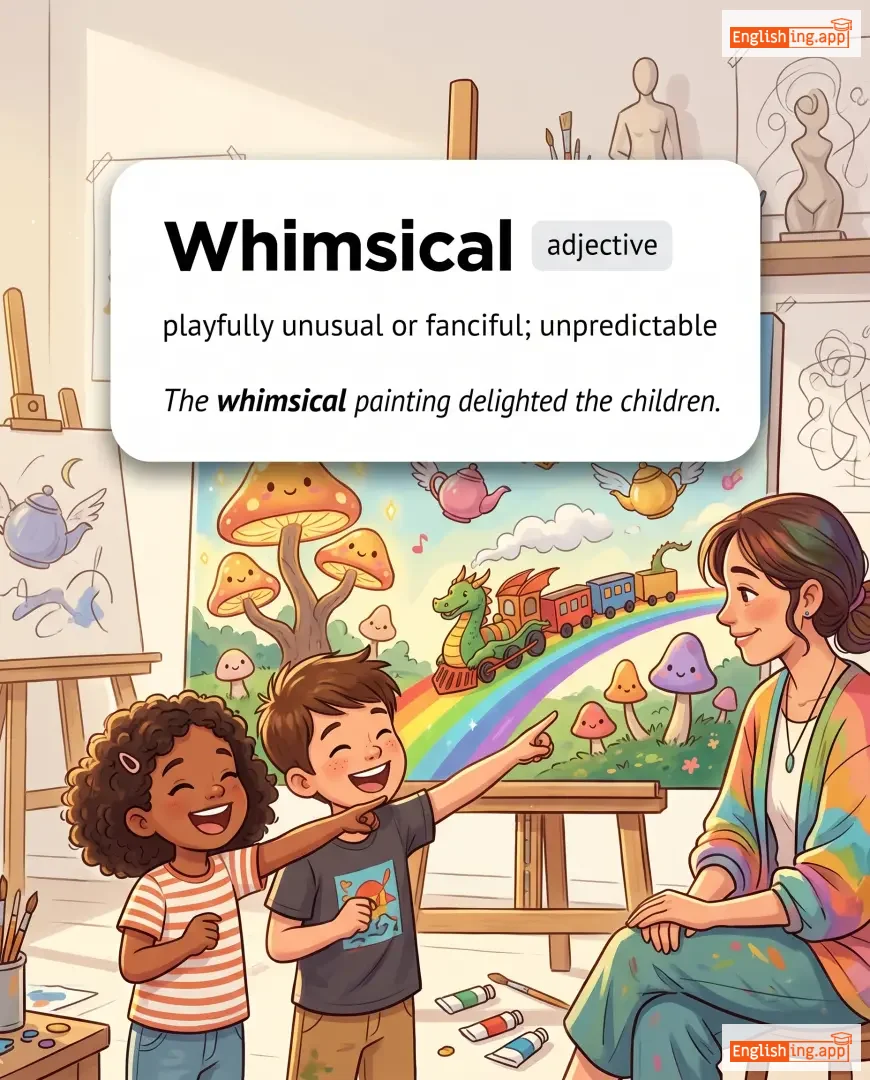
Whimsical definition card — visual illustration of the meaning
adjective
/ˈwɪmzɪkəl/
कल्पनाशील (kalpanasheel)

playfully unusual or fanciful; unpredictable

"The whimsical painting delighted the children."

"कल्पनाशील चित्र ने बच्चों को प्रसन्न कर दिया।" (Kalpanasheel chitra ne bachon ko prasann kar diya.)
adverb
/ˈwɪmzɪkli/
चंचल ढंग से (vhimsikali)

In a playful, fanciful, or capricious manner; with sudden changes of mind

"She decorated her room whimsically with colorful balloons."

"उसने अपने कमरे को रंग-बिरंगे गुब्बारों के साथ चंचल ढंग से सजाया।" (Usne apne kamre ko rang-birange gubbaron ke saath chanchal dhang se sajaaya.)
noun
/ˈwɪmzi/
विचित्रता (vichitrita)

playful or fanciful behavior or humor

"Her stories were full of whimsy and imagination."

"उसकी कहानियाँ विचित्रता और कल्पना से भरी हुई थीं।" (Uski kahaniyan vichitrita aur kalpna se bhari hui thi.)
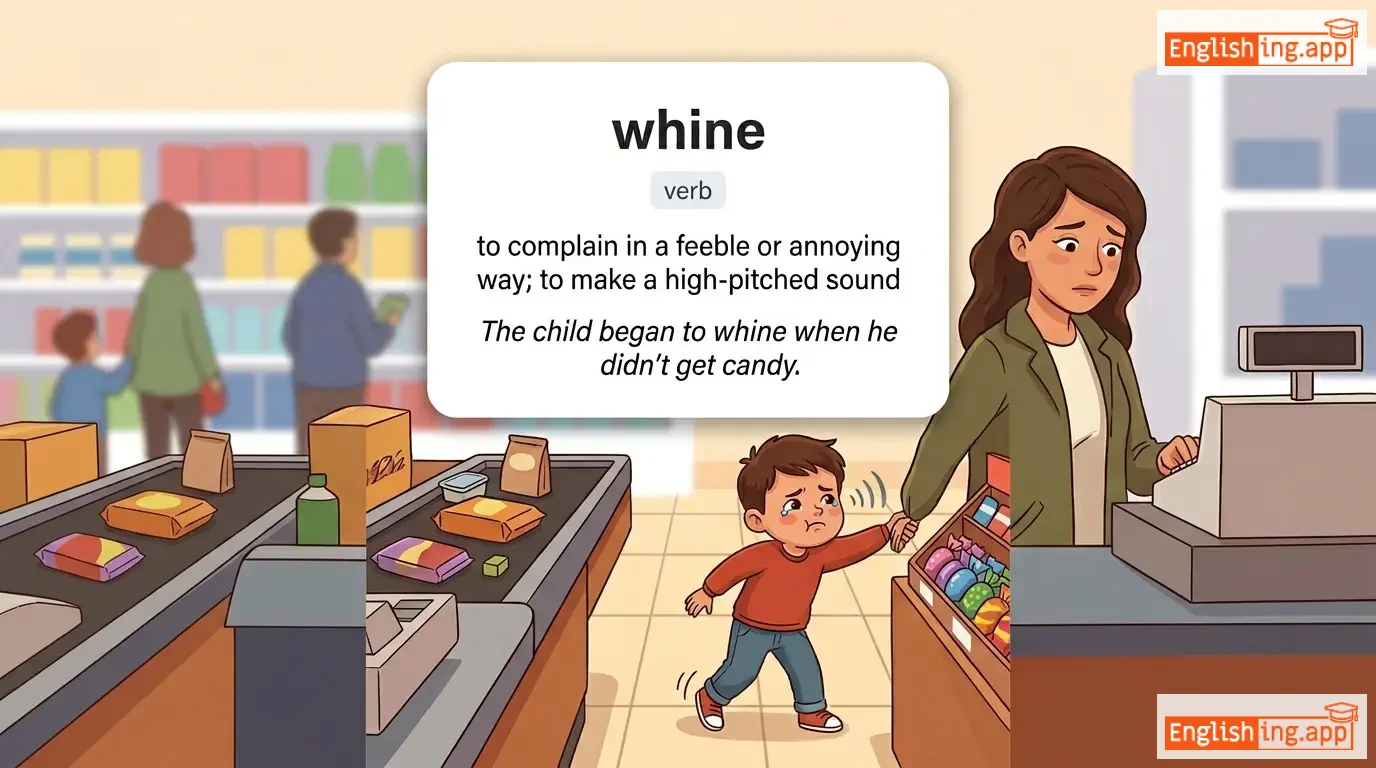
whine definition card — visual illustration of the meaning
verb
/waɪn/
रिरियाना (ririyana)

to complain in a feeble or annoying way; to make a high-pitched sound

"The child began to whine when he didn’t get candy."

"बच्चे ने शिकायत करना शुरू कर दिया जब उसे कैंडी नहीं मिली।" (Bacche ne shikayat karna shuru kar diya jab use candy nahi mili.)
verb
/ˈwɪni/
घोड़े की आवाज़ (ghode ki awaaz)

to make the high-pitched sound a horse makes

"The horse whinnied when it saw its rider."

"घोड़ा अपनी सवारी को देख कर ह्विनिड।" (Ghoda apni savari ko dekh kar whinnied.)
verb
/wɪp/
चाबुक मारना (chaabuk maarna)

to strike or beat with a flexible instrument such as a rope or cord

"The trainer whipped the horse to make it run faster."

"कोच ने घोड़े को तेज दौड़ने के लिए ह्विप किया।" (Koch ne ghode ko tej daudne ke liye hwip kiya.)
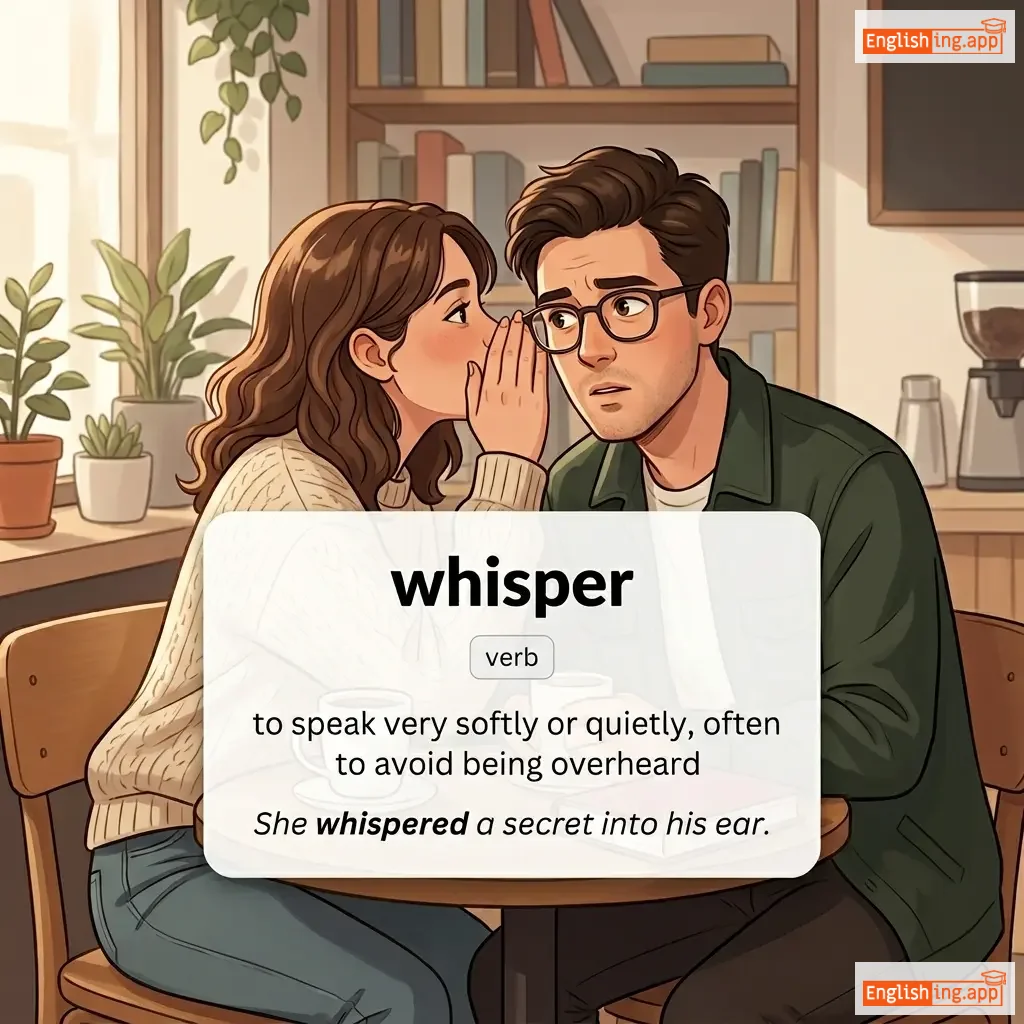
whisper definition card — visual illustration of the meaning
verb
/ˈwɪspər/
फुसफुसाना (phusphusana)

to speak very softly or quietly, often to avoid being overheard

"She whispered a secret into his ear."

"उसने उसके कान में एक राज़ फुसफुसाया।" (Usne uske kaan mein ek raaz phusphusaya.)
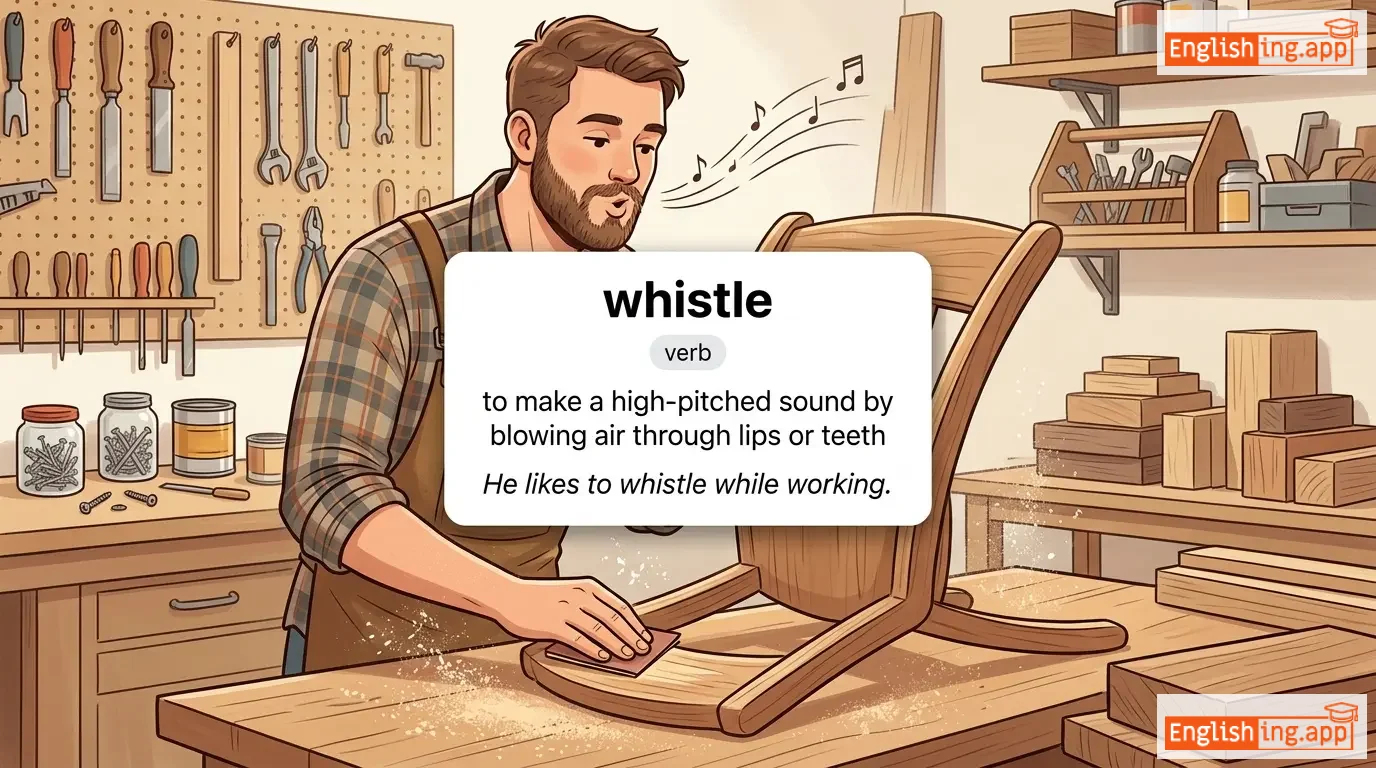
whistle definition card — visual illustration of the meaning
noun
/ˈwɪsəl/
सीटी (seeti)

a small wind instrument that produces a high-pitched sound when blown

"The referee blew his whistle to start the game."

"रेफरी ने खेल शुरू करने के लिए अपनी सीटी बजाई।" (refari ne khel shuru karne ke liye apni seeti bajayi.)
noun
/wɪt/
बहुत छोटी मात्रा (bahut chhoti matra)

a very small part or amount

"He doesn't care a whit about the outcome."

"वह परिणाम के बारे में एक भी बात नहीं करता।" (Vah parinaam ke baare mein ek bhi baat nahi karta.)
adjective
/waɪt/
सफेद (safed)

having the color of milk or fresh snow, the opposite of black

"She wore a beautiful white dress to the party."

"उसने पार्टी में एक खूबसूरत सफेद ड्रेस पहनी।" (Usne party mein ek khoobsurat safed dress pehni.)
noun
/waɪt ˈpɛpər/
सफ़ेद मिर्च (safed mirch)

a spice made from dried peppercorns with the outer husk removed

"She added white pepper to the cream soup for a mild spicy flavor."

"उसने क्रीमी सूप में हल्का तीखा स्वाद लाने के लिए सफेद मिर्च डाली।" (usne kreemi soop mein halka teekha swaad laane ke liye safed mirch daali.)
noun
/waɪt ænt/
सफेद चींटी (safed chinti)

a small social insect that lives in colonies and feeds on wood and plant matter

"White ants damaged the wooden furniture in our house."

"सफेद चींटियों ने हमारे घर के लकड़ी के फर्नीचर को नुकसान पहुँचाया।" (safed chintiyon ne hamare ghar ke lakdi ke furniture ko nuksan pahuchaya.)
whitelisting definition card — visual illustration of the meaning
noun
/ˈwaɪt.lɪst.ɪŋ/
सुरक्षित और विश्वसनीय उपयोगकर्ताओं, सॉफ़्टवेयर या आईपी पतों की पहचान करना (surakshit aur vishwasniya upayogkartao, software ya IP paton ki pehchaan karna)

Identifying specific users, software, or IP addresses as safe and trusted

"Only verified applications are allowed through whitelisting."

"केवल सत्यापित आवेदन ही व्हाइटलिस्टिंग के माध्यम से अनुमति प्राप्त करते हैं।" (Keval satyapit aavedan hi whitelisting ke madhyam se anumati prapt karte hain.)
verb
/ˈwaɪtˌwɑːʃ/
सच्चाई को छिपाना (sachchai ko chhupana)

to cover up faults, errors, or unpleasant facts; to paint with white paint or lime

"The report was criticized for trying to whitewash the company's failures."

"रिपोर्ट को कंपनी की विफलताओं को छिपाने की कोशिश करने के लिए आलोचना की गई थी।" (Report ko company ki viphaltaon ko chhupane ki koshish karne ke liye alochna ki gayi thi.)
verb
/ˈwɪtl/
काट-छाँट करना (kaat-chhaant karna)

to carve or shape something by cutting off small pieces; to gradually reduce

"He spent the afternoon whittling a piece of wood into a toy."

"उसने दोपहर का समय एक लकड़ी के टुकड़े को खिलौने में बदलने के लिए काट-छाँट करते हुए बिताया।" (Usne dopahar ka samay ek lakdi ke tukde ko khilone mein badalne ke liye kaat-chhaant karte hue bitaya.)
pronoun
/huː/
कौन (kaun)

used to ask about a person or people

"Who is coming to the party tonight?"

"आज रात पार्टी में कौन आ रहा है?" (Aaj raat party mein kaun aa raha hai?)
pronoun
/huːˈɛvər/
जो कोई भी (jo koi bhi)

any person who; no matter who

"Whoever wants to join the trip must register today."

"जो भी यात्रा में शामिल होना चाहता है, उसे आज ही पंजीकरण करना होगा।" (Jo bhi yatra mein shamil hona chahta hai, use aaj hi panjikaran karna hoga.)
adjective
/hoʊl/
पूर्ण (purn)

all of something; complete or entire

"He ate the whole cake by himself."

"उसने पूरा केक अकेले खा लिया।" (Usne pura kek akele kha liya.)
adjective
/ˌhoʊlˈhɑːrtɪd/
पूरी दिल से (puri dil se)

showing complete sincerity and commitment; fully enthusiastic

"She gave her wholehearted support to the project."

"उसने परियोजना को अपनी पूरी दिल से समर्थन दिया।" (Usne pariyojna ko apni puri dil se samarthan diya.)
adjective
/ˈhoʊlsəm/
स्वस्थ (swasth)

promoting health or well-being; morally good and beneficial

"The retreat offered wholesome food and peaceful surroundings."

"रिट्रीट ने स्वस्थ भोजन और शांतिपूर्ण वातावरण प्रदान किया।" (Retreat ne swasth bhojan aur shaantipoorn vatavaran pradan kiya.)
adverb
/ˈhoʊlli/
पूरी तरह से (poori tarah se)

completely; entirely

"She is wholly devoted to her family."

"वह अपने परिवार के प्रति पूरी तरह से समर्पित है।" (Wah apne parivar ke prati poori tarah se samarpit hai.)
pronoun
/huːm/
जिसे (jise)

used to refer to the person or people that something is done to

"The man whom I met yesterday is my friend."

"वह आदमी जिसे मैंने कल मिला था, वह मेरा दोस्त है।" (Wah aadmi jise maine kal mila tha, wah mera dost hai.)
noun
/wɜːrl/
वृत्ताकार पैटर्न (vruttakaar pattern)

A pattern of spirals or concentric circles, often found in fingerprints, shells, or flowers.

"The fingerprint displayed a clear whorl pattern."

"अंगुली के निशान में एक स्पष्ट वृत्ताकार पैटर्न दिखा।" (Anguli ke nishan mein ek spashṭ vruttakaar pattern dikha.)
pronoun
/huːz/
जिसका (jiska)

used to ask or talk about the person or thing that owns something

"The girl whose phone was stolen is my cousin."

"वह लड़की जिसका फोन चोरी हो गया था मेरी कजिन है।" (Wah ladki jiska phone chori ho gaya tha meri cajin hai.)
adverb
/waɪ/
क्यों (kyon)

used to ask or talk about the reason for something

"Why did you leave so early?"

"तुम्हें इतनी जल्दी क्यों जाना पड़ा?" (Tumhein itni jaldi kyon jana pada?)
noun
/wɪk/
मोमबत्ती का तंतु (mombatti ka tantu)

a cord or strand of cotton that burns to provide light in a candle or lamp

"The candle wick needs to be trimmed for better burning."

"मोमबत्ती के तंतु को बेहतर जलने के लिए काटने की आवश्यकता है।" (Mombatti ke tantu ko behtar jalne ke liye kaatne ki avashyakta hai।)
adjective
/ˈwɪkɪd/
दुष्ट (dusht)

morally bad or evil; also informally very good or impressive

"The villain in the story was truly wicked."

"कहानी में खलनायक वास्तव में दुष्ट था।" (Kahani mein khalaanyak vastav mein dusht tha.)
noun
/ˈwɪkɪdnəs/
दुष्टता, बुराई (dushtata, burai)

Evil or morally bad behavior.

"The story highlights the wickedness of the cruel king."

"कहानी निर्दयी राजा की बुराई को उजागर करती है।" (Kahani nirdai raja ki burai ko ujagar karti hai.)
adjective
/waɪd/
चौड़ा (chauda)

having a great extent from side to side; broad

"The river is wide enough to fit a boat."

"नदी इतनी चौड़ी है कि उसमें एक नाव समा सकती है।" (Nadi itni chowdi hai ki usmein ek naav sama sakti hai.)
adverb
/ˈwaɪdli/
व्यापक रूप से (vyapak roop se)

to a great extent or degree

"The news of his promotion spread widely across the company."

"उसकी पदोन्नति की खबर कंपनी में व्यापक रूप से फैल गई।" (uski padonnati ki khabar company mein vyapak roop se phail gayi.)
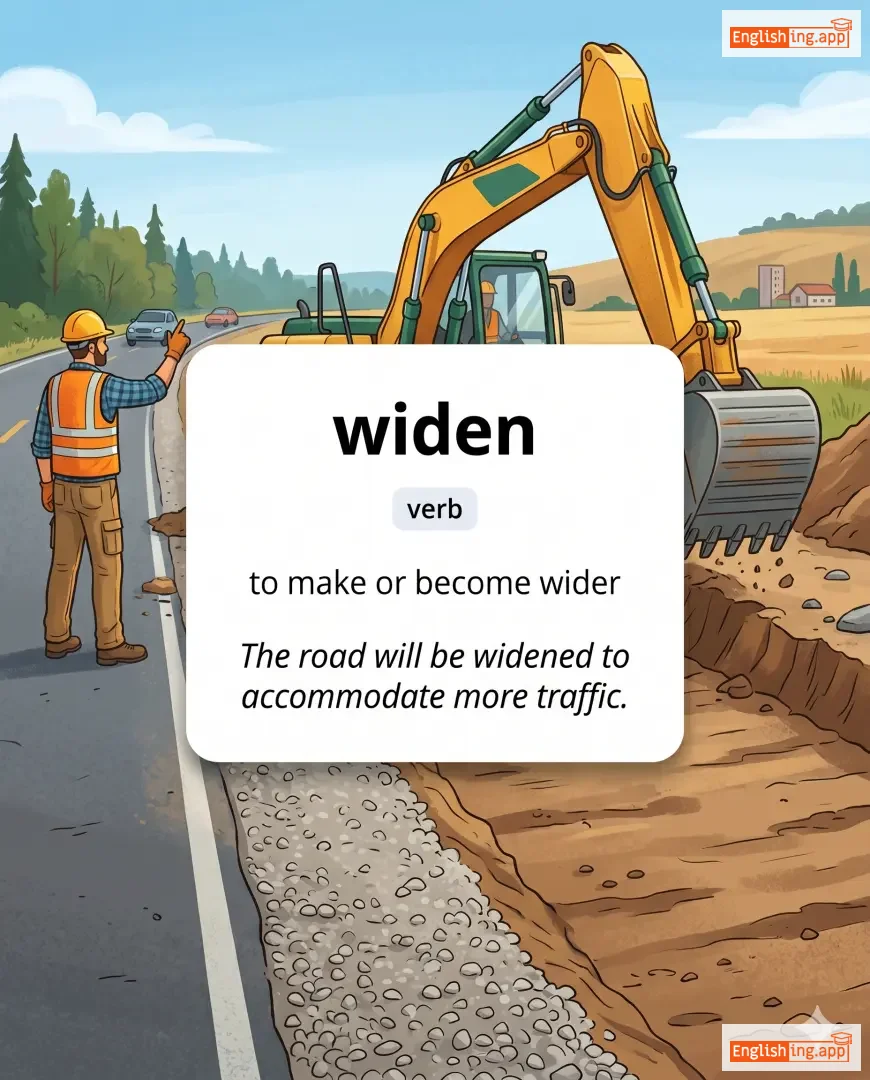
widen definition card — visual illustration of the meaning
verb
/ˈwaɪdən/
विस्तृत करना (vistrit karna)

to make or become wider

"The road will be widened to accommodate more traffic."

"सड़क को अधिक ट्रैफिक के लिए विस्तृत किया जाएगा।" (Sadak ko adhik traffic ke liye vistrit kiya jayega.)
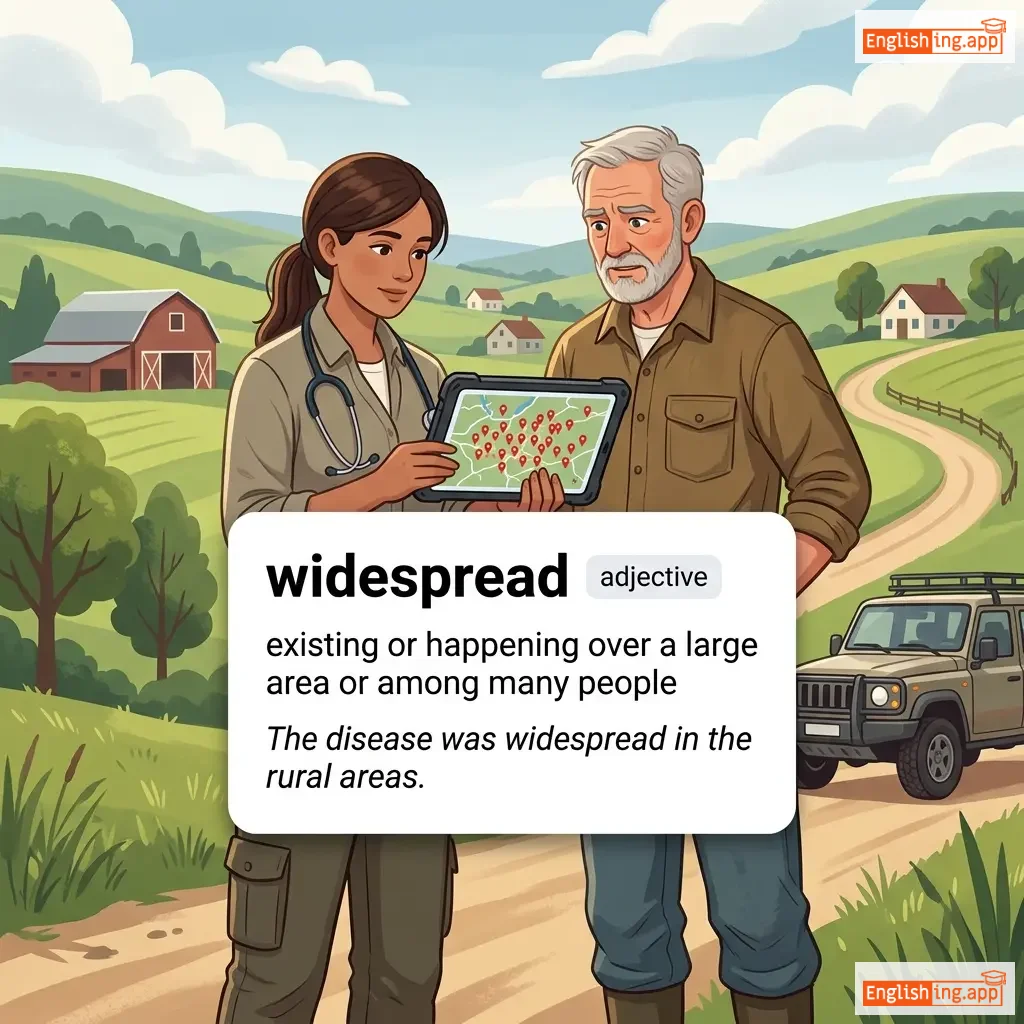
widespread definition card — visual illustration of the meaning
adjective
/ˈwaɪdˌsprɛd/
व्यापक (vyapak)

existing or happening over a large area or among many people

"The disease was widespread in the rural areas."

"रोग ग्रामीण क्षेत्रों में व्यापक था।" (rog gramin kshetron mein vyapak tha.)
noun
/ˈwɪdəʊ/
विधवा (vidhwa)

a woman whose husband has died and who has not married again

"She became a widow at a very young age."

"वह बहुत छोटी उम्र में विधवा हो गई।" (Woh bahut chhoti umr mein vidhwa ho gayi.)
noun
/ˈwɪd.oʊ.ər/
विधुर (vidhur)

a man whose wife has died and who has not married again

"The elderly widower lived alone but had regular visits from his children."

"वृद्ध विधुर अकेला रहता था लेकिन उसके बच्चों से नियमित रूप से मुलाकात होती थी।" (Vruddh vidhur akela rehta tha lekin uske bachon se niyamit roop se mulaqat hoti thi.)
noun
/wɪdθ/
चौड़ाई (chaudai)

the measurement or extent of something from side to side

"The width of the table is 2 meters."

"टेबल की चौड़ाई 2 मीटर है।" (Table ki chaudai 2 meter hai.)
verb
/wiːld/
धारण करना, उपयोग करना (dharan karna, upyog karna)

To hold and use a weapon, tool, or power effectively.

"The warrior wielded his sword with great skill."

"योधा ने अपनी तलवार को कुशलता से इस्तेमाल किया।" (Yodha ne apni talwar ko kushalta se istemal kiya.)