वोकैबुलरीज

इंग्लिश वोकैबुलरी डिस्कवर, लर्न और मास्टर करें

verb
/ʌnˈsɛtl/
अस्थिर करना (asthir karna)

To disturb or make someone feel anxious or uneasy.

"The sudden news unsettled the entire community."

"अचानक खबर ने पूरी समुदाय को अस्थिर कर दिया।" (achanak khabar ne puri samudaay ko asthir kar diya.)
adjective
/ʌnˈʃeɪkən/
अडिग; अडिग और स्थिर (adig; adig aur sthir)

not disturbed or affected; firm and steady; unwavering

"Her faith remained unshaken despite all the challenges."

"उसकी आस्था सभी चुनौतियों के बावजूद अडिग बनी रही।" (uski aastha sabhi chunautiyon ke bawajood adig bani rahi.)
adjective
/ʌnˈsaɪtli/
अपसंद (apsand)

Unpleasant to look at; ugly.

"The garbage pile created an unsightly view in the park."

"कचरे का ढेर पार्क में एक अपसंद दृश्य बना रहा था।" (kachre ka dher park mein ek apsand drishya bana raha tha.)
adjective
/ʌnˈskɪld/
अकुशल; अप्रशिक्षित श्रमिक (akushal; aprashikshit shramik)

lacking technical training or ability; not requiring special skills

"Many unskilled workers are looking for training opportunities."

"बहुत से अप्रशिक्षित श्रमिक प्रशिक्षण अवसरों की तलाश कर रहे हैं।" (bahut se aprashikshit shramik prashikshan avasharon ki talash kar rahe hain.)
adjective
/ʌnˈsəʊʃəbl/
असामाजिक (asamajik)

not enjoying the company of others; avoiding social interaction

"He became unsociable after moving to a new city."

"नए शहर में जाने के बाद वह असामाजिक हो गया।" (nae shahar mein jaane ke baad vah asamajik ho gaya)
adjective
/ʌnˈsəʊʃəl/
असामाजिक (asamajik)

not enjoying the company of others; avoiding social interaction; contrary to social norms

"He prefers unsocial hours so he can work alone without interruptions."

"वह अकेले काम करने के लिए असामाजिक समय पसंद करता है।" (vah akele kaam karne ke liye asamajik samay pasand karta hai)
adjective
/ʌnˈsoʊld/
अविक्रीत (avikrit)

not sold; remaining without a buyer

"The unsold goods were returned to the warehouse."

"अविक्रीत सामान गोदाम में वापस भेज दिया गया।" (avikrit samaan godaam mein vaapas bhej diya gaya)
adjective
/ˌʌnsəˈfɪstɪˌkeɪtɪd/
अपरिष्कृत (aparishkrit)

Lacking worldly experience, refinement, or complexity.

"The villagers led an unsophisticated but happy life."

"गांववालों ने एक अपरिष्कृत लेकिन खुशहाल जीवन जीया।" (gaonwalon ne ek aparishkrit lekin khushhal jeevan jeeya.)
adjective
/ʌnˈspɛərɪŋ/
निर्दयी (nirdayi)

Showing no mercy or generosity; harsh or severe.

"The critic was unsparing in his review of the play."

"समालोचक नाटक की समीक्षा में निर्दयी था।" (samalochak natak ki sameeksha mein nirdayi tha.)
adjective
/ʌnˈspiːkəbl/
अवर्णनीय (avarnaniy)

too bad or shocking to be expressed in words

"The survivors endured unspeakable horrors during the war."

"जीवित बचे हुए लोगों ने युद्ध के दौरान अवर्णनीय आतंक सहा।" (Jeevit bache hue logon ne yudh ke dauran avarnaniy aatank saha.)
adjective
/ʌnˈsteɪbəl/
अस्थिर (asthir)

likely to change; not steady or secure; unsteady

"The unstable economy made people worried about their jobs."

"अस्थिर अर्थव्यवस्था ने लोगों को अपनी नौकरियों के बारे में चिंतित कर दिया।" (asthir arthvyavastha ne logon ko apni naukriyon ke baare mein chintit kar diya.)
adjective
/ʌnˈsteɪtɪd/
अघोषित (aghoshit)

not expressed directly in words; implied or left unsaid

"The contract included several unstated expectations."

"ठेके में कई अघोषित अपेक्षाएँ शामिल थीं।" (Theke mein kai aghoshit apekshaen shamil thin.)
adjective
/ʌnˈstɛdi/
अस्थिर (asthir)

not firm or stable; likely to change or fail

"She felt unsteady on her feet after the long journey."

"लंबी यात्रा के बाद वह पैरों पर अस्थिर महसूस कर रही थी।" (lambi yatra ke baad vah pairon par asthir mehsoos kar rahi thi)
adjective
/ʌnˈstɪntɪŋ/
उदार (udar)

given generously without holding back

"She received unstinting support from her family."

"उसे उसके परिवार से बिना किसी रोक-टोक के समर्थन मिला।" (Use uske parivar se bina kisi rok-tok ke samarthan mila.)
adjective
/ˌʌnsəkˈsesfl/
असफल; विफल; (asafal; viphala)

not achieving desired aims or results; failing to accomplish a purpose

"His unsuccessful attempt to climb the mountain left him disappointed."

"पहाड़ पर चढ़ने का उसका असफल प्रयास उसे निराश छोड़ गया।" (pahaad par chadhne ka uska asafal prayaas use niraash chhod gaya.)
adjective
/ʌnˈsuːtəbl/
अयोग्य; अनुपयुक्त (ayogya; anupojukta)

not fitting or appropriate for a particular purpose or situation

"This formal dress is unsuitable for a casual beach party."

"यह औपचारिक पोशाक एक कैजुअल बीच पार्टी के लिए अनसूटेबल है।" (yah aupcharik poshaak ek kaijual beach party ke liye ansootebal hai.)
adjective
/ʌnˈsʌlid/
दाग रहित (daag rahit)

not spoiled or made impure; perfectly clean or pure

"His reputation remained unsullied despite the accusations."

"आरोपों के बावजूद उसकी प्रतिष्ठा दाग रहित बनी रही।" (Aropo ke bawajood uski pratishtha daag rahit bani rahi.)
adjective
/ʌnˈʃʊr/
अनिश्चित (anishchit)

not certain or confident; feeling doubt

"She felt unsure about the decision."

"वह निर्णय के बारे में अनिश्चित थी।" (vah nirnay ke baare mein anishchit thi)
adjective
/ʌnˈtiːtʃəbəl/
जिसे सिखाया न जा सके (jise sikhaya na ja sake)

not able or willing to learn; resistant to instruction or guidance

"He was so stubborn that he became almost unteachable."

"वह इतना जिद्दी था कि लगभग जिसे सिखाया न जा सके ऐसा हो गया।" (vah itna jiddi tha ki lagbhag jise sikhaya na ja sake aisa ho gaya)
adjective
/ʌnˈtɛmpərd/
अविन्यस्त (avinyast)

not moderated or softened; lacking proper balance or control

"The untempered anger of the crowd caused chaos."

"भीड़ का अविन्यस्त गुस्सा अराजकता का कारण बना।" (Bheed ka avinyast gussa arajakta ka karan bana.)
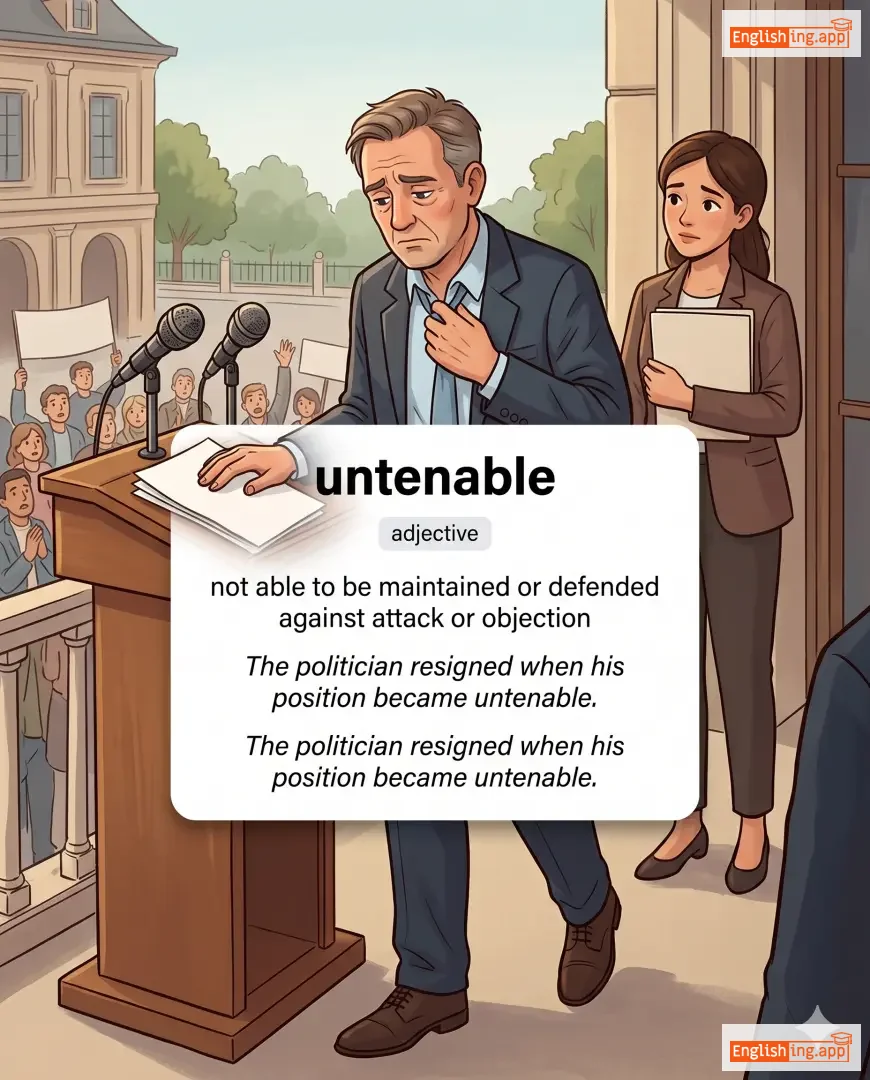
untenable definition card — visual illustration of the meaning
adjective
/ʌnˈtɛnəbl/
असंयोजनीय (asanyojniya)

not able to be maintained or defended against attack or objection

"The politician resigned when his position became untenable."

"राजनेता ने इस्तीफा दे दिया जब उसकी स्थिति असंयोजनीय हो गई।" (Raajneeta ne isteefa de diya jab uski sthiti asanyojniya ho gayi.)
adjective
/ʌnˈθɪŋkəbl/
अकल्पनीय (akalpneey)

impossible to conceive or imagine; beyond belief or consideration

"It was unthinkable that such a tragedy could happen in our peaceful town."

"यह असंभव था कि हमारे शांतिपूर्ण शहर में ऐसी कोई त्रासदी घटित हो सकती थी।" (Yeh asambhav tha ki hamare shaantipoorn shahar mein aisi koi traasdi ghatit ho sakti thi.)
adjective
/ʌnˈθɪŋkɪŋ/
अविवेकी (aviveki)

done without careful thought; automatic or thoughtless

"His unthinking remark hurt her feelings."

"उसकी अविवेकी टिप्पणी ने उसकी भावनाओं को ठेस पहुँचाई।" (uski aviveki tippani ne uski bhavnaon ko thes pahunchai)
adjective
/ʌnˈtaɪdi/
असंगठित; अव्यवस्थित; (antaidi)

not neat or orderly; messy and disorganized

"Her untidy room was filled with clothes scattered everywhere."

"उसका अव्यवस्थित कमरा कपड़ों से भरा हुआ था जो हर जगह बिखरे हुए थे।" (uska avyavasthit kamra kapdon se bhara hua tha jo har jagah bikhre hue the.)
verb
/ʌnˈtaɪ/
खोलना (kholna)

to loosen or remove a knot or binding; to release something that is tied

"She untied the rope to free the boat."

"उसने नाव को मुक्त करने के लिए रस्सी खोल दी।" (usne naav ko mukt karne ke liye rassi khol di)
preposition/conjunction
/ʌnˈtɪl/
जब तक (jab tak)

up to the time of

"I will wait until you come back."

"मैं तब तक इंतजार करूंगा जब तक तुम वापस नहीं आ जाते।" (Main tab tak intezaar karunga jab tak tum wapas nahi aa jaate.)
adjective
/ʌnˈtaɪmli/
असामयिक (asamayik)

Happening or done at an unsuitable or premature time.

"His untimely death shocked the entire community."

"उसकी असामयिक मृत्यु ने पूरे समुदाय को चौंका दिया।" (uski asamayik mrityu ne pure samuday ko chonka diya.)
adjective
/ʌnˈtaɪərɪŋ/
निरंतर; निराश्रित; अथक (nirantar; nirashrit; athak)

continuing without stopping; persistent; tireless

"Her untiring efforts finally led to success."

"उसकी निरंतर कोशिशों ने अंततः सफलता दिलाई।" (uski nirantar koshishon ne antatah safalta dilayi.)
adjective
/ʌnˈtoʊld/
अपरिमित (aprimith)

Too great or numerous to be described or counted.

"The project caused untold stress for everyone involved."

"परियोजना ने शामिल सभी के लिए अपरिमित तनाव उत्पन्न किया।" (pariyojana ne shamil sabhi ke liye aprimith tanav utpann kiya.)
adjective
/ʌnˈtʌtʃəbəl/
अस्पृश्य; जो छुआ न जा सके या आलोचना से परे हो (ashprishya; jo chhua na ja sake ya alochna se pare ho)

not able to be touched or affected; beyond criticism or attack

"The CEO seemed untouchable despite the scandal."

"सीईओ कांड के बावजूद अंटाचेबल लग रहे थे।" (CEO kaand ke bawajood anṭāchēbal lag rahe the.)
adjective
/ˌʌn.təˈwɔːrd/
अप्रत्याशित (apratyashit)

Unexpected and inappropriate or inconvenient.

"The meeting ended without any untoward incidents."

"बैठक बिना किसी अप्रत्याशित घटनाओं के समाप्त हुई।" (baithak bina kisi apratyashit ghatnaon ke samaapt hui.)
adjective
/ʌnˈtræməld/
असीम स्वतंत्रता (aseem svatantrata)

Not restricted or hampered; free and unrestricted.

"She enjoyed untrammeled freedom in her new life abroad."

"उसने अपनी नई ज़िन्दगी में असीम स्वतंत्रता का आनंद लिया।" (usne apni nai zindagi mein aseem svatantrata ka anand liya.)
adjective
/ʌnˈtruː/
झूठा (jhootha)

not true; false or incorrect

"The rumor about the company closing was completely untrue."

"कंपनी के बंद होने की अफवाह पूरी तरह से झूठी थी।" (Kampani ke band hone ki afwah puri tarah se jhoothi thi.)
adjective
/ʌnˈjuzd/
अप्रयुक्त; बिना उपयोग किया हुआ (aprayukt; bina upyog kiya hua)

not being used; not having been used before

"There are many unused rooms in this old mansion."

"वह पुरानी हवेली में कई अनयूज्ड कमरे हैं।" (vah purani haveli mein kai aniyujd kamre hain.)
adjective
/ʌnˈjuːʒuəl/
असामान्य (asaamanya)

not common or ordinary; remarkable or exceptional

"She has an unusual talent for solving complex problems."

"उसके पास जटिल समस्याओं को हल करने के लिए एक असामान्य प्रतिभा है।" (Uske paas jatil samasyaon ko hal karne ke liye ek asaamanya pratibha hai.)
adverb
/ʌnˈjuːʒuəli/
असामान्य रूप से (asamanya roop se)

in a way that is not typical or expected; to an uncommon degree

"It was unusually cold for this time of year."

"साल के इस समय के लिए मौसम असामान्य रूप से ठंडा था।" (saal ke is samay ke liye mausam asamanya roop se thanda tha)
adjective
/ʌnˈʌtərəbl/
अवर्णनीय (avarnaniya)

Too great, intense, or awful to be expressed or described in words.

"She was filled with unutterable joy at the news of her success."

"वह अपनी सफलता की खबर पर अवर्णनीय खुशी से भर गई थी।" (vah apni safalta ki khabar par avarnaniya khushi se bhar gayi thi.)
verb
/ʌnˈveɪl/
उघाड़ना (ugadna)

to reveal or disclose something, especially in a formal manner

"The company will unveil a new product next week."

"कंपनी अगले हफ्ते एक नया उत्पाद अनवेल करेगी।" (Kampani agle hafte ek naya utpad unveil karegi.)
adjective
/ʌnˈvaɪəbl/
अकार्यable (akaryable)

Not capable of working successfully; not feasible or practical.

"The project was deemed unviable due to high costs."

"इस परियोजना को उच्च लागत के कारण अकार्यable माना गया था।" (Is pariyojna ko uchch kharch ke karan akaryable maana gaya tha.)
adjective
/ʌnˈvɔɪst/
निर्वाचित (nirvachit)

not expressed in speech; in phonetics, a sound produced without vocal cord vibration

"The student kept her opinion unvoiced during the meeting."

"छात्रा ने बैठक के दौरान अपनी राय अनवॉयस्ट रखी।" (Chhatra ne baithak ke dauran apni ray anvoyst rakhi.)
adjective
/ʌnˈwɒn.tɪd/
अनचाहा (anachaha)

not desired or welcome; not wanted

"He felt like an unwanted guest at the meeting."

"उसे बैठक में एक अनचाहे अतिथि की तरह महसूस हुआ।" (use baithak mein ek anachaha atithi ki tarah mahsus hua)
unwarranted definition card — visual illustration of the meaning
adjective
/ʌnˈwɒrəntɪd/
अनधिकारित (anadhikarit)

Not justified or authorized; lacking good reason.

"The employee faced unwarranted criticism from his manager."

"कर्मचारी को उसके प्रबंधक से अनधिकारित आलोचना का सामना करना पड़ा।" (karmachari ko uske prabandhak se anadhikarit alochna ka samna karna pada.)
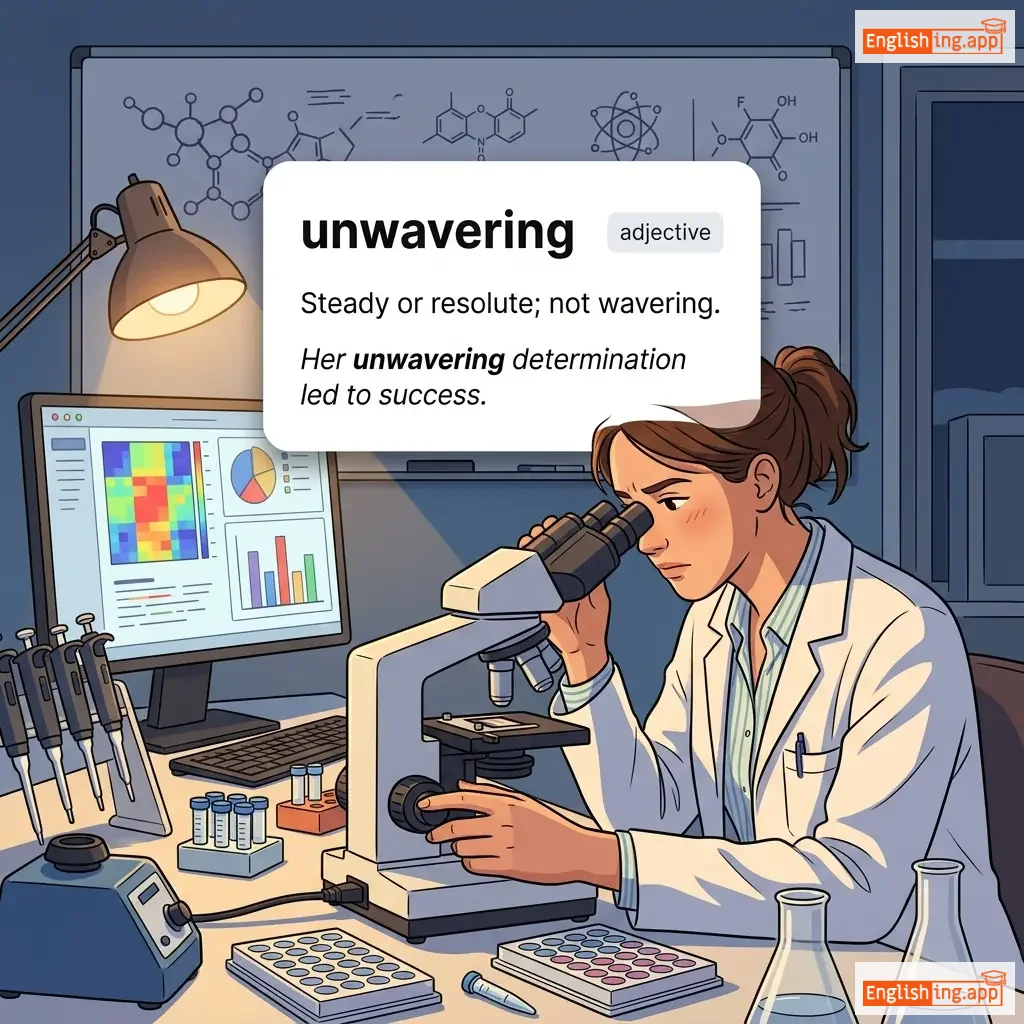
unwavering definition card — visual illustration of the meaning
adjective
/ʌnˈweɪ.vər.ɪŋ/
अडिग, अडिग, दृढ़ (adig, adig, dridh)

Steady or resolute; not wavering.

"Her unwavering determination led to success."

"उसकी अनवेरिंग निर्धारिता ने उसे सफलता दिलाई।" (Uski anwering nirdharta ne use safalta dilayi.)
adjective
/ʌnˈwel.kəm/
अप्रिय; अवांछित; अनचाहा; (apriya; avanchit; anchaha)

not wanted or accepted; not invited or pleasant

"The unwelcome news ruined their vacation plans."

"अप्रिय समाचार ने उनकी छुट्टियों की योजना को खराब कर दिया।" (apriya samachar ne unki chhuttiyon ki yojana ko kharab kar diya.)
adjective
/ʌnˈwel/
अस्वस्थ; बीमार (aswasth; beemar)

not in good health; feeling sick or ill

"She has been feeling unwell since yesterday."

"वह कल से अस्वस्थ महसूस कर रही है।" (vah kal se aswasth mahsus kar rahi hai.)
adjective
/ʌnˈwiːldi/
असुविधाजनक (asubidhajanik)

Difficult to carry or move because of its size, shape, or weight.

"The box was too unwieldy to carry up the stairs."

"बॉक्स स्टेयर ऊपर ले जाने के लिए बहुत असुविधाजनक था।" (box stair upar le jane ke liye bahut asubidhajanik tha.)
adjective
/ʌnˈwɪl.ɪŋ/
अनिच्छुक; ग़ैर-इच्छुक; (anichchhuk; gair-ichchhuk)

not ready to do something; reluctant; not wanting to do

"He was unwilling to share his secret with anyone."

"वह किसी को भी अपना राज़ साझा करने के लिए अनविलिंग था।" (vah kisi ko bhi apna raaz saanjha karne ke liye anawiling tha.)
adverb
/ʌnˈwɪlɪŋli/
अनिच्छा से (anichchha se)

in a way that shows reluctance or lack of desire; not willingly

"She unwillingly agreed to attend the meeting."

"वह अनिच्छा से बैठक में जाने के लिए सहमत हुई।" (vah anichchha se baithak mein jaane ke liye sahmat hui)
adjective
/ʌnˈwaɪz/
अविचारपूर्ण (avicharpurn)

Showing poor judgment; not sensible or prudent.

"It would be unwise to invest all your money in one company."

"यह एक ही कंपनी में अपना सारा पैसा निवेश करना अविचारपूर्ण होगा।" (Yeh ek hi company mein apna saara paisa nivesh karna avicharpurn hoga.)
adjective
/ʌnˈwɪtɪŋ/
अन्जाने में (anjane mein)

Not aware of what is happening; done without realizing.

"She became an unwitting participant in the scam."

"वह धोखाधड़ी में एक अनविटिंग सहभागी बन गई।" (vah dhokhadhadi mein ek anviting sahabhagi ban gayi.)