वोकैबुलरीज

इंग्लिश वोकैबुलरी डिस्कवर, लर्न और मास्टर करें

noun
/ˈtoʊstər/
टोस्टर (tostar)

an electric appliance used for toasting bread slices

"I put two slices of bread in the toaster for breakfast."

"मैंने नाश्ते के लिए टोस्टर में दो ब्रेड स्लाइस रखे।" (maine nashtay ke liye tostar mein do bred slice rakhe)
noun
/təˈbækoʊ/
तंबाकू (tambaaku)

a plant grown for its leaves, which are used in making cigarettes and cigars

"He stopped smoking tobacco after his health scare."

"उसने अपनी स्वास्थ्य समस्या के बाद तंबाकू पीना छोड़ दिया।" (Usne apni swasthya samasya ke baad tambaaku peena chhod diya.)
noun
/ˈtɒksɪn/
सतर्क घंटी (satark ghanti)

an alarm bell or signal; a warning that something bad is about to happen

"The data breach sounded a tocsin for stricter security."

"डेटा लीक ने सख्त सुरक्षा के लिए एक सतर्क घंटी बजाई।" (data leek ne sakht suraksha ke liye ek satark ghanti bajai.)
noun, adverb
/təˈdeɪ/
आज (aj)

on this present day

"She has a meeting today."

"आज उसका एक मीटिंग है।" (Aaj uska ek meeting hai.)
noun
/toʊ/
पैर की अंगुली (pair ki anguli)

any of the five digits at the end of the human foot

"He injured his toe while playing football."

"वह फुटबॉल खेलते समय अपनी पैर की अंगुली में चोट लगा बैठा।" (Vah football khelte samay apni pair ki anguli mein chot laga baitha.)
noun
/ˈtoʊɡə/
टोगा (toga)

A loose outer garment worn in ancient Rome, typically draped over the shoulders and body.

"The senator wore a white toga during the ceremony."

"सैनटोर ने समारोह के दौरान सफेद टोगा पहना।" (Senator ne samaroah ke dauran safed toga pehna.)
adverb
/təˈɡɛðər/
एकसाथ (eksath)

with each other; in a group or combined form

"They worked together to solve the problem."

"वे समस्या को हल करने के लिए एकसाथ काम कर रहे थे।" (Ve samasya ko hal karne ke liye eksath kaam kar rahe the.)
Toil definition card — visual illustration of the meaning
verb
/tɔɪl/
कठिन परिश्रम करना (kathin parishram karna)

To work extremely hard and continuously, often with difficulty.

"He had to toil for years to achieve success."

"उसे सफलता प्राप्त करने के लिए वर्षों तक कठिन परिश्रम करना पड़ा।" (Use safalta prapt karne ke liye varshon tak kathin parishram karna pada.)
noun
/ˈtɔɪlət/
टॉयलेट (toilet)

a fixture used for the disposal of human waste

"The public toilet was clean and well maintained."

"सार्वजनिक टॉयलेट साफ और अच्छी तरह से रख-रखाव किया गया था।" (Saarvajanik toilet saaf aur acchi tarah se rakh-rakhav kiya gaya tha.)
adjective
/ˈtɔɪl.səm/
कठिन (kathin)

Involving hard or exhausting work; laborious.

"The workers had a toilsome day in the hot sun."

"कामकाजी लोगों को गर्म सूरज में कठिन दिन बिताना पड़ा।" (Kaamkaji logon ko garm sooraj mein kathin din bitana pada.)
noun
/ˈtoʊ.kən/
चिह्न / प्रतीक (chihn / pratik)

A symbol or object that represents something, often given as a sign of appreciation or as a substitute for money.

"She gave him a small gift as a token of gratitude."

"उसने उसे आभार का एक छोटा सा उपहार दिया, एक टोकन के रूप में।" (Usne use aabhaar ka ek chhota sa uphaar diya, ek token ke roop mein.)
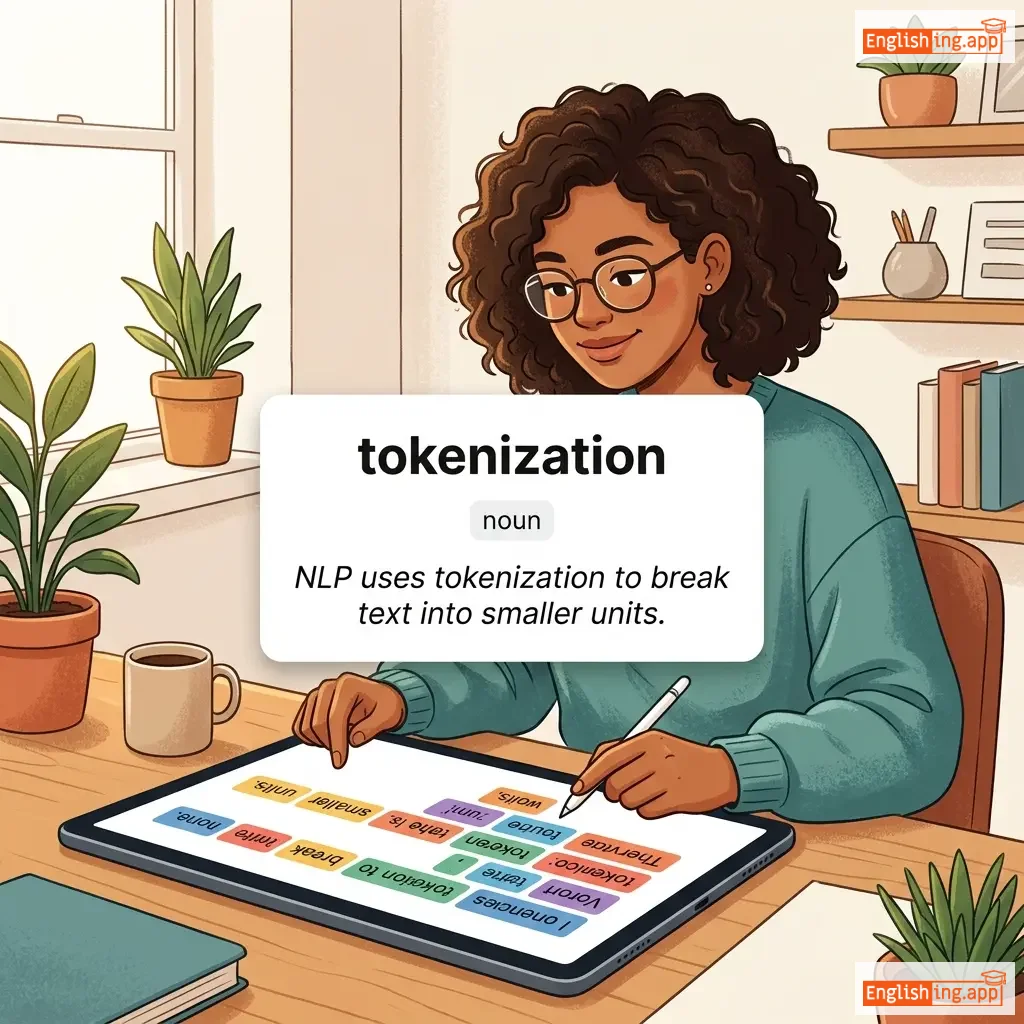
tokenization definition card — visual illustration of the meaning
noun
ˌtoʊ.kə.nɪˈzeɪ.ʃən
शब्दों, वाक्यांशों या प्रतीकों में टेक्स्ट को विभाजित करने की प्रक्रिया (tokenization)

The process of breaking text into smaller units like words, phrases, or symbols for analysis.

"NLP uses tokenization to break text into smaller units."

"एनएलपी टेक्स्ट को छोटे हिस्सों में विभाजित करने के लिए टोकनाइजेशन का उपयोग करता है।" (NLP text ko chhote hisso mein vibhajit karne ke liye tokenization ka upyog karta hai.)
adjective
/ˈtɒl.ər.ə.bəl/
सहनशील (sahansheel)

Able to be endured or put up with; fairly acceptable.

"The pain was tolerable after the medicine."

"दवा लेने के बाद दर्द सहनीय था।" (Dawa lene ke baad dard sahneey tha.)
noun
/ˈtɒlərəns/
सहिष्णुता (sahishnuta)

The ability or willingness to accept or endure differences, behaviors, or opinions without hostility.

"Her tolerance for different cultures impressed everyone."

"विभिन्न संस्कृतियों के प्रति उसकी सहिष्णुता ने सभी को प्रभावित किया।" (vibhinn sanskrityon ke prati uski sahishnuta ne sabhi ko prabhavit kiya.)
adjective
/ˈtɒlərənt/
सहिष्णु (sahishnu)

Showing willingness to allow the existence of opinions or behaviors that one dislikes or disagrees with.

"He is very tolerant of other people's beliefs."

"वह दूसरों के विश्वासों के प्रति बहुत सहिष्णु है।" (vah doosron ke vishwason ke prati bahut sahishnu hai.)
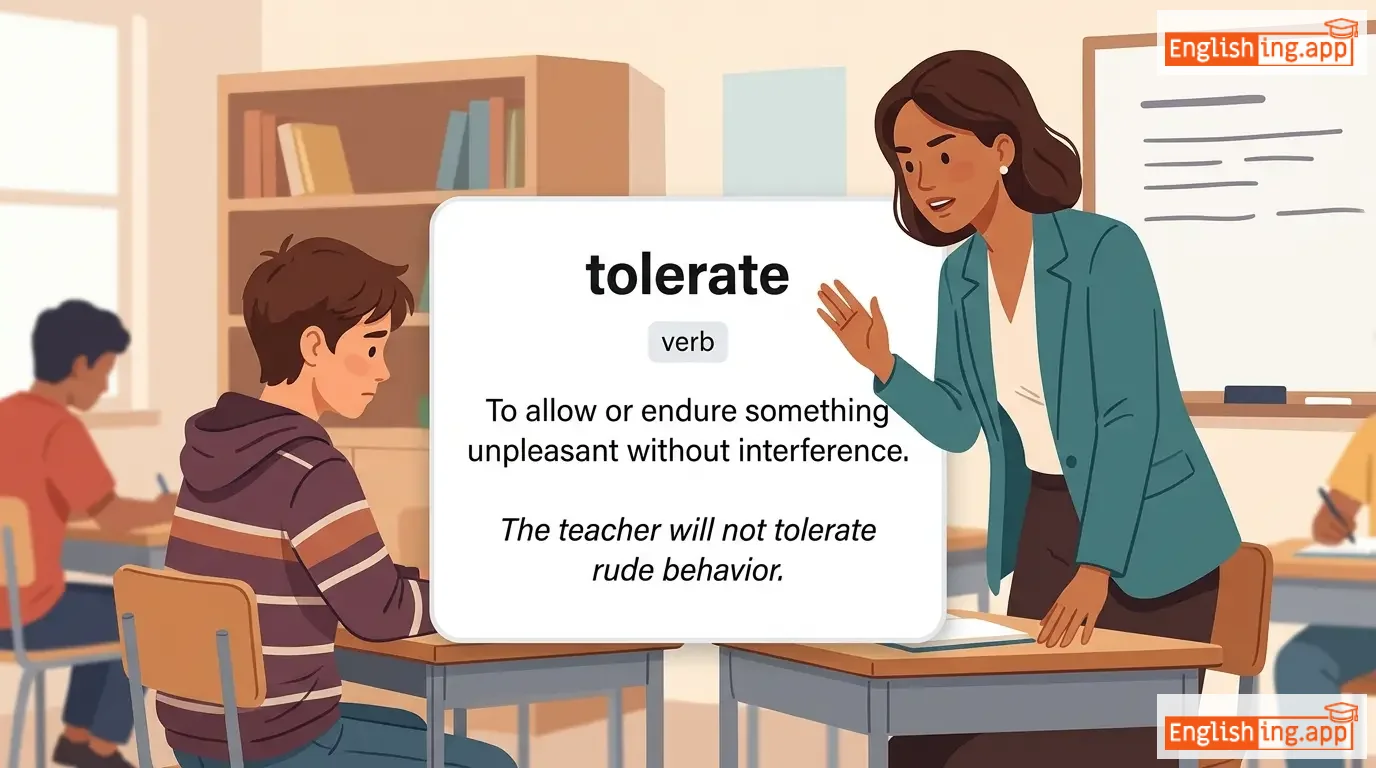
tolerate definition card — visual illustration of the meaning
verb
/ˈtɒləreɪt/
सहना (sahna)

To allow or endure something unpleasant without interference.

"The teacher will not tolerate rude behavior."

"शिक्षक रूड बहेवियर सहन नहीं करेंगे।" (shikshak rud behavior sahan nahi karenge.)
noun
/ˌtɒləˈreɪʃən/
सहिष्णुता (sahishnuta)

The practice of allowing something that one does not necessarily agree with.

"The government promoted religious toleration."

"सरकार ने धार्मिक सहिष्णुता को बढ़ावा दिया।" (sarkar ne dharmik sahishnuta ko badhava diya.)
noun
/toʊl/
शुल्क / क्षति (shulk / kshati)

A charge payable for using a road or bridge; also the extent of damage or suffering caused by something.

"The flood took a heavy toll on the village."

"बाढ़ ने गाँव में भारी टोल लिया।" (baadh ne gaanv mein bhaari toll liya.)
noun
/təˈmeɪtoʊ/
टमाटर (tamatar)

a red or yellowish fruit that is typically eaten as a vegetable

"I added some tomato to the salad."

"मैंने सलाद में कुछ टमाटर डाले।" (Maine salad mein kuch tamatar daale.)
tome definition card — visual illustration of the meaning
noun
/toʊm/
वह किताब (vah kitaab)

a large, heavy book, often scholarly or serious in nature

"She spent the afternoon reading an old tome on medieval history."

"उसने मध्यकालीन इतिहास पर एक पुरानी किताब पढ़ी।" (Usne madhyakalīn itihās par ek purānī kitāb paṛhī.)
noun, adverb
/təˈmɒroʊ/
कल (kal)

the day after today

"We are meeting tomorrow for the project discussion."

"हम कल परियोजना पर चर्चा करने के लिए मिल रहे हैं।" (Hum kal pariyojana par charcha karne ke liye mil rahe hain.)
noun
/tʌn/
टन (ṭan)

A unit of weight equal to 2,000 pounds (US) or 1,000 kilograms (metric); a large amount of something

"The truck carried a ton of apples to the market."

"ट्रक ने बाजार में एक टन सेब पहुँचाए।" (Truck ne bazaar me ek ton seb pahunchaye.)
noun, verb
/toʊn/
टोन (ton)

the general character or attitude of a place, piece of writing, situation, etc.

"The tone of the letter was very formal."

"चिट्ठी का टोन बहुत औपचारिक था।" (Chitthi ka ton bahut aupcharik tha.)
noun
/tɒŋ/
चिमटे (chimte)

a tool with two movable arms used to pick up and hold objects

"He used the tong to pick up the hot coal."

"उसने गर्म कोयले को उठाने के लिए चिमटे का इस्तेमाल किया।" (Usne garm koyle ko uthane ke liye chimte ka istemal kiya.)
noun
/tɒŋz/
चिमटा (chimta)

a tool consisting of two movable arms that are joined at one end, used for picking up and holding things

"Use the tongs to pick up the hot pieces of meat from the grill."

"ग्रिल से गर्म मांस के टुकड़े उठाने के लिए चिमटा का उपयोग करें।" (grill se garm maans ke tukde uthane ke liye chimta ka upyog karein.)
noun
/tʌŋ/
जीभ (jeebh)

a fleshy muscular organ in the mouth used for tasting, swallowing, and speaking

"She stuck out her tongue playfully."

"उसने खेल-खेल में अपनी जीभ बाहर निकाल दी।" (Usne khel-khel mein apni jeebh baahar nikaal di.)
noun
/ˈtɒnɪk/
टॉनिक (tonic)

a medicine or drink that restores or refreshes health and energy

"A glass of lemonade was the perfect tonic on a hot day."

"गर्म दिन में नींबू पानी एक बेहतरीन टॉनिक था।" (Garm din mein neemboo paani ek behatareen tonic tha.)
adverb, noun
/təˈnaɪt/
आज रात (aj raat)

on or during the night of the current day

"We're going to the party tonight."

"हम पार्टी के लिए आज रात जा रहे हैं।" (Hum party ke liye aj raat ja rahe hain.)
adjective
/tɒnˈsɔːriəl/
नापित से संबंधित (napit se sambandhit)

relating to barbers or hairdressing

"The town's new barber offered a wide range of tonsorial services."

"शहर के नए नापित ने टॉन्सोरियल सेवाओं की एक विस्तृत श्रृंखला प्रदान की।" (Sheher ke naye napit ne tonsorial sevaon ki ek vistaarit shrinkhla pradan ki.)
noun
/ˈtɒnʃər/
चोटी मूंडना (chhoti moondna)

the practice of shaving or cutting the hair on the scalp, especially in a religious context

"The monk received his tonsure as part of his religious initiation."

"भिक्षु ने अपनी धार्मिक दीक्षा के हिस्से के रूप में अपनी चोटी मूंडवाई।" (Bhikshu ne apni dharmik deeksha ke hisse ke roop mein apni chhoti moondwai.)
adverb
/tuː/
बहुत (bahut)

to a higher degree than is desirable, permissible, or possible

"She is too tired to continue working."

"वह काम जारी रखने के लिए बहुत थकी हुई है।" (Wah kaam jaari rakhne ke liye bahut thaki hui hai.)
noun
/tuːl/
उपकरण (upkaran)

a device or implement used to carry out a particular function

"He used a hammer as a tool to fix the chair."

"उसने कुर्सी को ठीक करने के लिए हैमर को एक उपकरण के रूप में इस्तेमाल किया।" (Usne kursi ko theek karne ke liye hammer ko ek upkaran ke roop mein istemal kiya.)
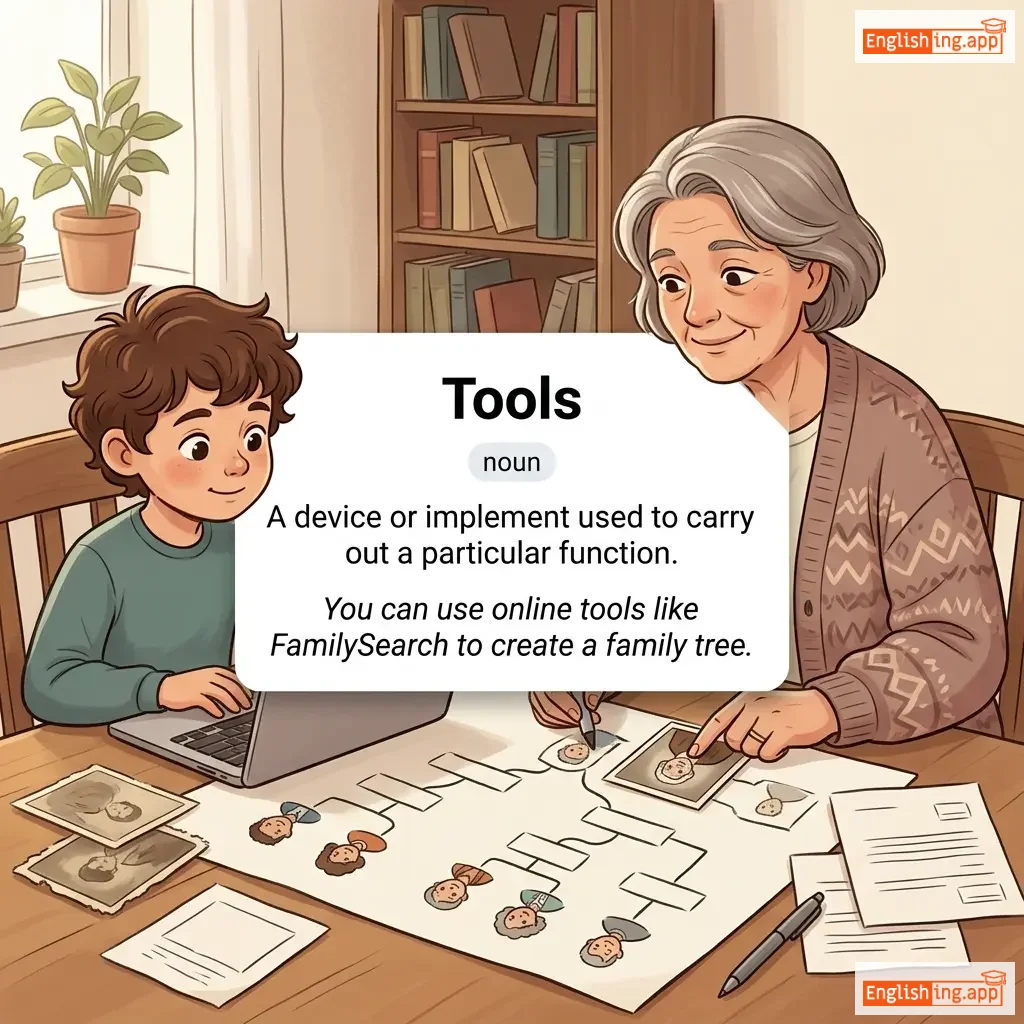
Tools definition card — visual illustration of the meaning
noun
tuːlz
उपकरण (upkaran)

A device or implement used to carry out a particular function.

"You can use online tools like FamilySearch to create a family tree."

"आप ऑनलाइन टूल्स का उपयोग करके FamilySearch जैसे परिवार के पेड़ बना सकते हैं।" (Aap online tools ka upyog karke FamilySearch jaise parivaar ke ped bana sakte hain.)
noun
/tuːθ/
दांत (daant)

each of the hard, pointed structures in the mouth used for biting and chewing food

"He has a toothache and needs to see the dentist."

"उसके दांत में दर्द है और उसे दंत चिकित्सक के पास जाना होगा।" (Uske daant mein dard hai aur use dant chikitsak ke paas jana hoga.)
noun
/tɒp/
शीर्ष (sheersh)

the highest or uppermost point, part, or surface of something

"The book is on the top shelf."

"किताब ऊपरी शेल्फ पर है।" (Kitaab oopari shelf par hai.)
noun
/ˈtoʊ.pæz/
टोपाज (topaz)

a precious stone, typically colorless, yellow, or blue, used in jewelry

"The queen's crown was adorned with a magnificent blue topaz."

"रानी का मुकुट शानदार नीले टोपाज से सजाया गया था।" (rani ka mukut shandaar neeley topaz se sajaya gaya tha.)
noun
/ˈtɒpɪk/
विषय (vishay)

a subject of conversation, discussion, or writing

"The topic of the meeting was company expansion."

"बैठक का विषय कंपनी के विस्तार पर था।" (Baithak ka vishay company ke vistaar par tha.)
adjective
/ˈtɒp.məʊst/
सबसे ऊपर; शीर्षस्थ (sabse upar; sheersh-sth)

highest in position or rank

"The flag was placed on the topmost branch of the tree."

"ध्वज को पेड़ की सबसे ऊँची शाखा पर रखा गया था।" (dhwaj ko ped ki sabse unchi shakha par rakha gaya tha.)
noun
/təˈpɒɡrəfi/
भू-रचना (bhoo-rachna)

the arrangement of the natural and artificial physical features of an area

"The topography of the region made construction very challenging."

"क्षेत्र की भू-रचना ने निर्माण को बहुत चुनौतीपूर्ण बना दिया था।" (Kshetra ki bho-rachna ne nirmaan ko bahut chunautipurn bana diya tha.)
verb
/ˈtɒpl/
उलटना (ultana)

to fall or cause to fall over; to overthrow

"The earthquake caused the old building to topple."

"भूकंप ने पुराने भवन को पलटने का कारण बना दिया।" (Bhookamp ne purane bhavan ko palatne ka karan bana diya.)
noun
/ˈtɒpˌsɔɪl/
ऊपरी मिट्टी (upari mitti)

the top layer of soil, which is rich in organic matter and nutrients

"Farmers rely on healthy topsoil for good crop yields."

"किसान अच्छे फसल उगाने के लिए स्वस्थ ऊपरी मिट्टी पर निर्भर करते हैं।" (Kisan achhe fasal ugane ke liye swasth upari mitti par nirbhar karte hain.)
adjective
/ˌtɒpsi ˈtɜːvi/
अव्यवस्थित (avyavasthit)

in a state of confusion, disorder, or upside down

"The sudden announcement left the office in a topsy-turvy state."

"अचानक घोषणा ने कार्यालय को पूरी तरह से अव्यवस्थित स्थिति में डाल दिया।" (Achanak ghoshna ne karyalaya ko poori tarah se avyavasthit sthiti mein daal diya.)
noun
/tɔːrtʃ/
टॉर्च (torch)

a portable electric lamp powered by batteries; a flaming stick used for light

"Use the torch to find your way in the dark."

"अंधेरे में अपना रास्ता खोजने के लिए टॉर्च का इस्तेमाल करें." (Andhere mein apna raasta khojne ke liye torch ka istemal karein)
noun, verb
/ˈtɔːr.ment/
यातना (yatna)

severe physical or mental suffering; to cause extreme suffering

"The prisoner was in constant torment."

"कैदी निरंतर यातना में था।" (Kaidi nirantar yatna mein tha.)
noun
/tɔːrˈneɪdoʊ/
बवंडर (bavandar)

a rapidly rotating column of air in contact with the ground and clouds, often destructive

"The tornado destroyed several houses in the village."

"बवंडर ने गांव में कई घरों को नष्ट कर दिया" (Bavandar ne gaon mein kai gharon ko nasht kar diya)
noun/verb
/tɔːrˈpiːdoʊ/
टॉरपीडो (torpedo)

A self-propelled underwater missile; to attack or destroy something suddenly and forcefully.

"The submarine launched a torpedo at the enemy ship."

"द सबमरीन ने शत्रु जहाज पर एक टॉरपीडो दागा।" (Da submarin ne shatrul jahaz par ek torpedo daaga.)
adjective
/ˈtɔːrpɪd/
सुस्त (torpid)

Mentally or physically inactive; sluggish or lethargic.

"After the long hike, he felt torpid and unmotivated."

"लंबी सैर के बाद, वह सुस्त और प्रेरणाहीन महसूस कर रहा था।" (Lambi sair ke baad, wah sust aur preranahin mehsoos kar raha tha.)
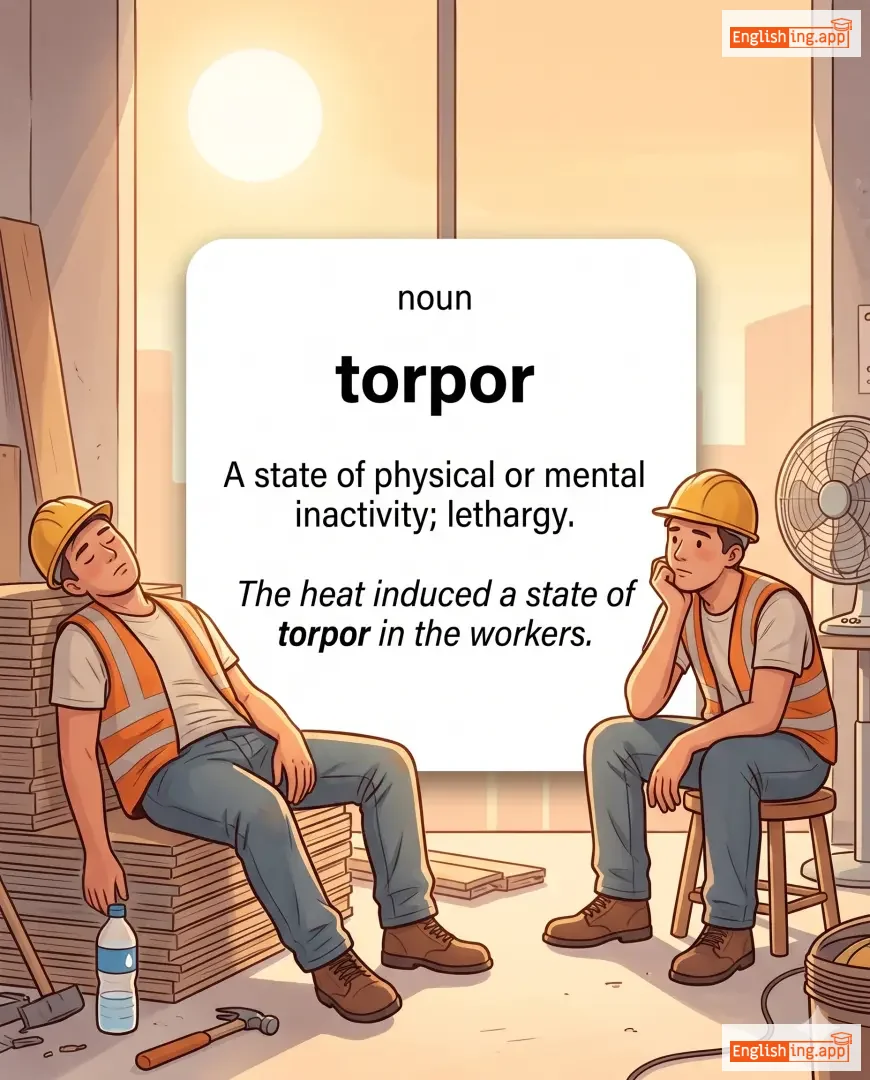
torpor definition card — visual illustration of the meaning
noun
/ˈtɔːrpər/
निःसक्रियता (torpor)

A state of physical or mental inactivity; lethargy.

"The heat induced a state of torpor in the workers."

"गर्मी ने श्रमिकों में निःसक्रियता की स्थिति उत्पन्न कर दी थी।" (Garmi ne shramikon mein nishkriyata ki stithi utpann kar di thi.)
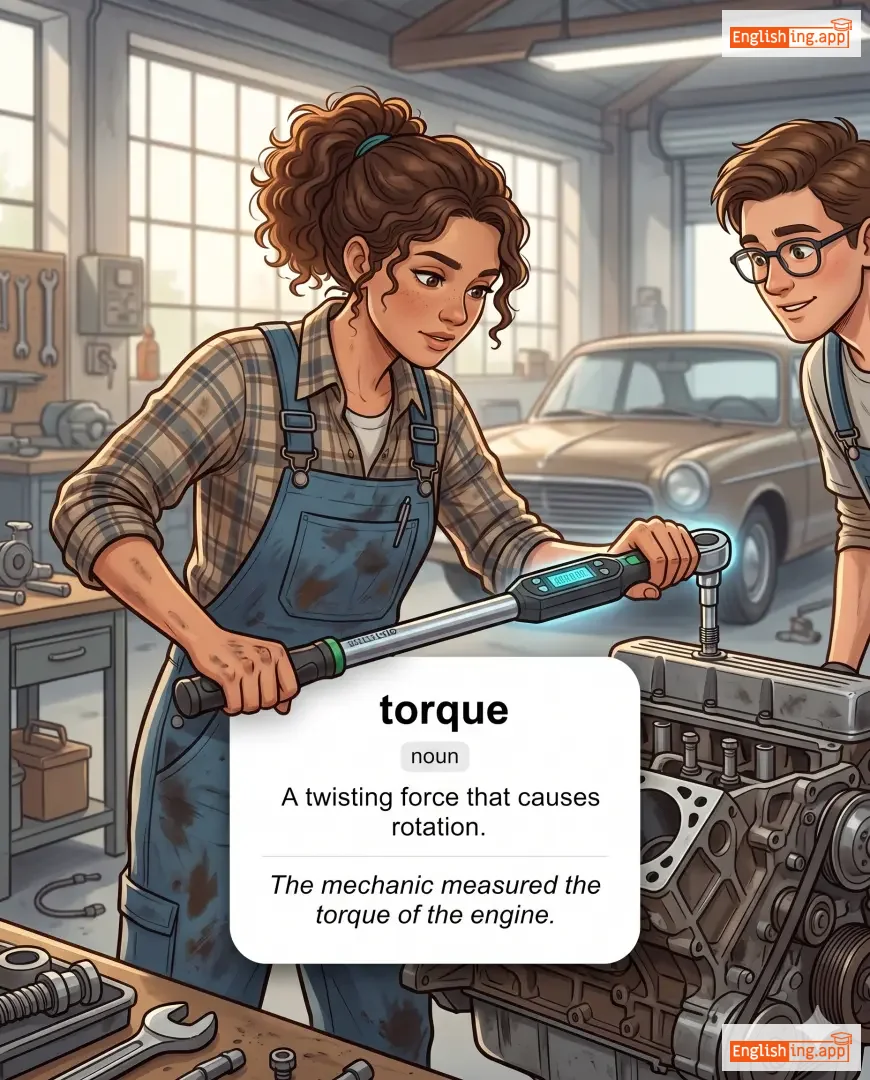
torque definition card — visual illustration of the meaning
noun
/tɔːrk/
घूर्ण बल (tork)

A twisting force that causes rotation.

"The mechanic measured the torque of the engine."

"मैकेनिक ने इंजन के टॉर्क को मापा।" (mekaanikneinjanketorqkomaapa)
noun
/ˈtɔːrənt/
सैलाब (sailab)

A strong and fast-moving stream of water; a sudden, violent outpouring of something.

"A torrent of rain flooded the streets."

"बारिश की एक सैलाब ने सड़कों को बहा दिया।" (baarish ki ek sailab ne sadkon ko baha diya.)