वोकैबुलरीज

इंग्लिश वोकैबुलरी डिस्कवर, लर्न और मास्टर करें

conjunction
/ðoʊ/
हालाँकि (haalanki)

used to introduce a fact that makes the main statement of the sentence seem surprising or unexpected

"Though it was raining, they still went outside."

"हालाँकि बारिश हो रही थी, फिर भी वे बाहर गए।" (Haalanki baarish ho rahi thi, phir bhi ve baahar gaye.)
noun
/θɔːt/
विचार (vichar)

an idea or opinion produced by thinking or considering something

"She had a sudden thought about the future."

"उसके मन में भविष्य के बारे में अचानक एक विचार आया।" (Uske man mein bhavishya ke baare mein achanak ek vichar aaya.)
adjective
/ˈθɔːtˌproʊvɪkɪŋ/
सोचने पर मजबूर करने वाला (sochne par majboor karne wala)

stimulating careful consideration or thought

"The movie was deeply thought-provoking and left a lasting impression."

"फिल्म गहरे रूप से सोचने पर मजबूर करने वाली थी और उसने स्थायी प्रभाव छोड़ा।" (Film gahare roop se sochne par majboor karne wali thi aur usne sthayi prabhav chhoda.)
adjective
/ˈθɔːtfəl/
विचारशील (vicharshil)

showing careful consideration or attention

"She gave a thoughtful response to every question asked."

"उसने हर सवाल का सोच-समझ कर जवाब दिया।" (Usne har sawaal ka soch-samajh kar jawab diya.)
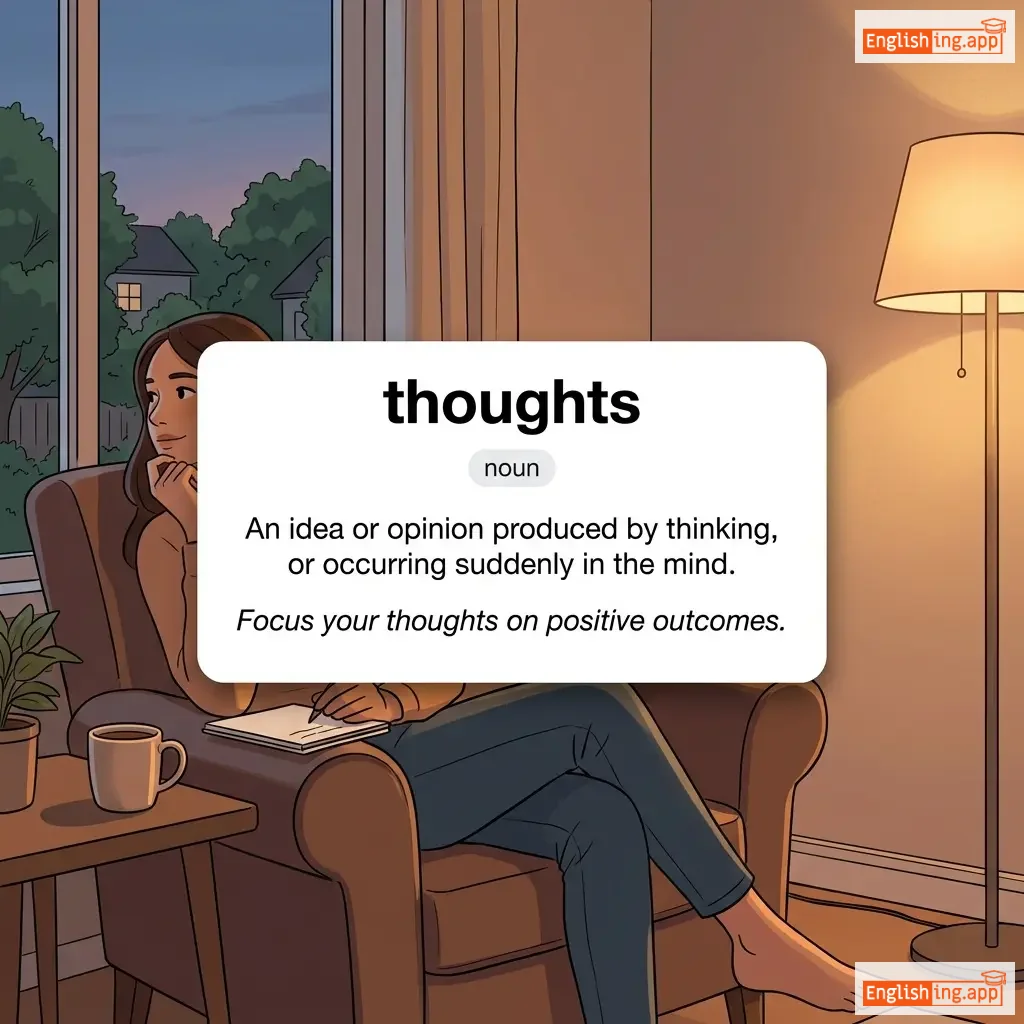
thoughts definition card — visual illustration of the meaning
noun
/θɔːts/
विचार (vichar)

An idea or opinion produced by thinking, or occurring suddenly in the mind.

"Focus your thoughts on positive outcomes."

"अपने विचारों को सकारात्मक परिणामों पर केंद्रित करें।" (apne vicharon ko sakaratmak parinaamon par kendrit karein.)
noun
/ˈθaʊzənd/
हजार (hazar)

the number equal to 10 hundred or 1,000

"There were a thousand people at the concert."

"कंसर्ट में हजार लोग थे।" (Concert mein hazar log the.)
noun
/θrɔːl/
दासता, अधीनता (daasta, adheenta)

The state of being in someone's power or under strong influence; slavery or bondage.

"He was in thrall to the powerful leader."

"वह शक्तिशाली नेता के अधीन था।" (Vah shaktishaali neta ke adheen tha.)
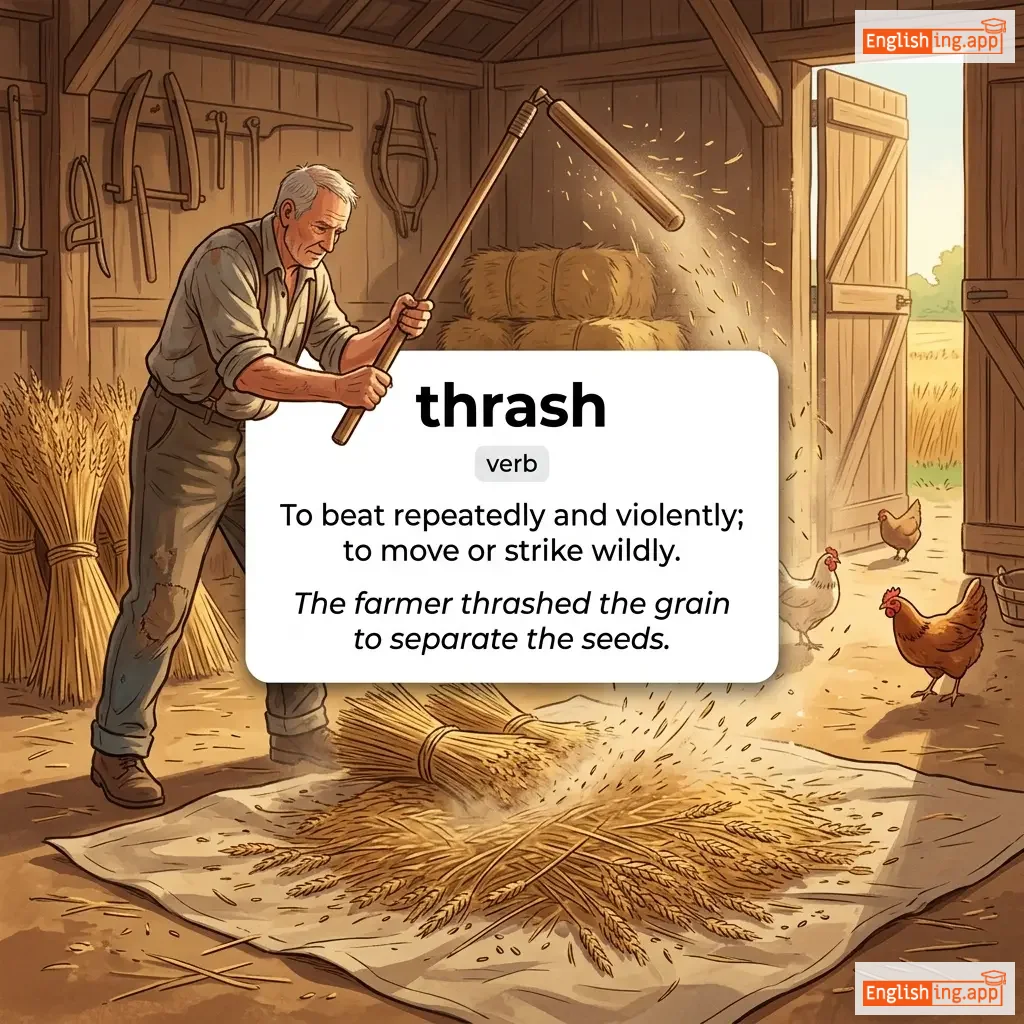
thrash definition card — visual illustration of the meaning
verb
/θræʃ/
पीटना, जोर से मारना (peetna, jor se maarna)

To beat repeatedly and violently; to move or strike wildly.

"The farmer thrashed the grain to separate the seeds."

"किसान ने बीज अलग करने के लिए अनाज को पीटा।" (Kisan ne beej alag karne ke liye anaaj ko peeta.)
noun
/θred/
सूती धागा (sooti dhaaga)

a long, thin strand of cotton, nylon, or other fibers used for sewing

"She used a red thread to sew the torn button back on."

"उसने फटे बटन को फिर से सिलने के लिए लाल धागा का इस्तेमाल किया।" (Usne phate button ko phir se silne ke liye laal dhaaga ka istemaal kiya.)
adjective
/ˈθrɛdˌbɛr/
पुराना और पतला, बहुत उपयोग से जर्जर (purana aur patla, bahut upyog se jarjar)

Worn out and thin from too much use; shabby.

"His threadbare coat could not keep him warm in winter."

"उसकी पुरानी कोट उसे सर्दी में गर्म नहीं रख सका।" (Uski purani kot use sardī mein garm nahin rakh sakā.)
noun
/θrɛt/
धमकी, खतरा (dhamki, khatra)

A statement or action indicating intent to cause harm or danger.

"The letter contained a threat against the company."

"चिट्ठी में कंपनी के खिलाफ एक धमकी थी।" (Chitthi mein company ke khilāf ek dhamki thī.)
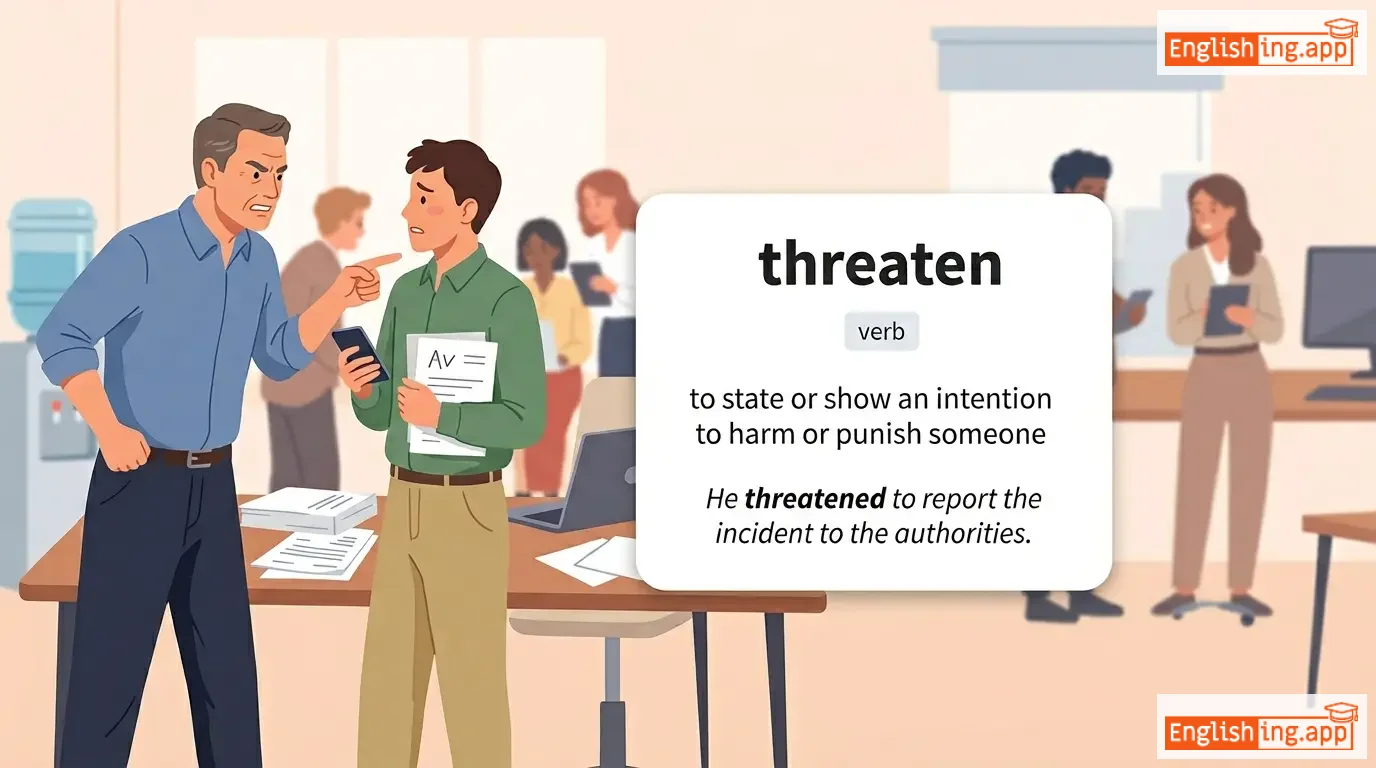
threaten definition card — visual illustration of the meaning
verb
/ˈθrɛtən/
ख़ुशी (khushi)

to state or show an intention to harm or punish someone

"He threatened to report the incident to the authorities."

"जब उसने पुरस्कार प्राप्त किया, तो वह अपनी खुशी छिपा नहीं सकी।" (Jab usne puraskar prapt kiya, to wah apni khushi chhupa nahi saki.)
adjective
/ˈθret.ən.ɪŋ/
धमकी देने वाला; डरावना; भयभीत करने वाला (dhamki dene wala; daravna; bhaybhit karne wala)

expressing a threat; menacing; intimidating

"The dark clouds looked threatening before the storm."

"आंधी से पहले काले बादल डरावने लग रहे थे।" (aandhi se pehle kaale baadal daravne lag rahe the.)
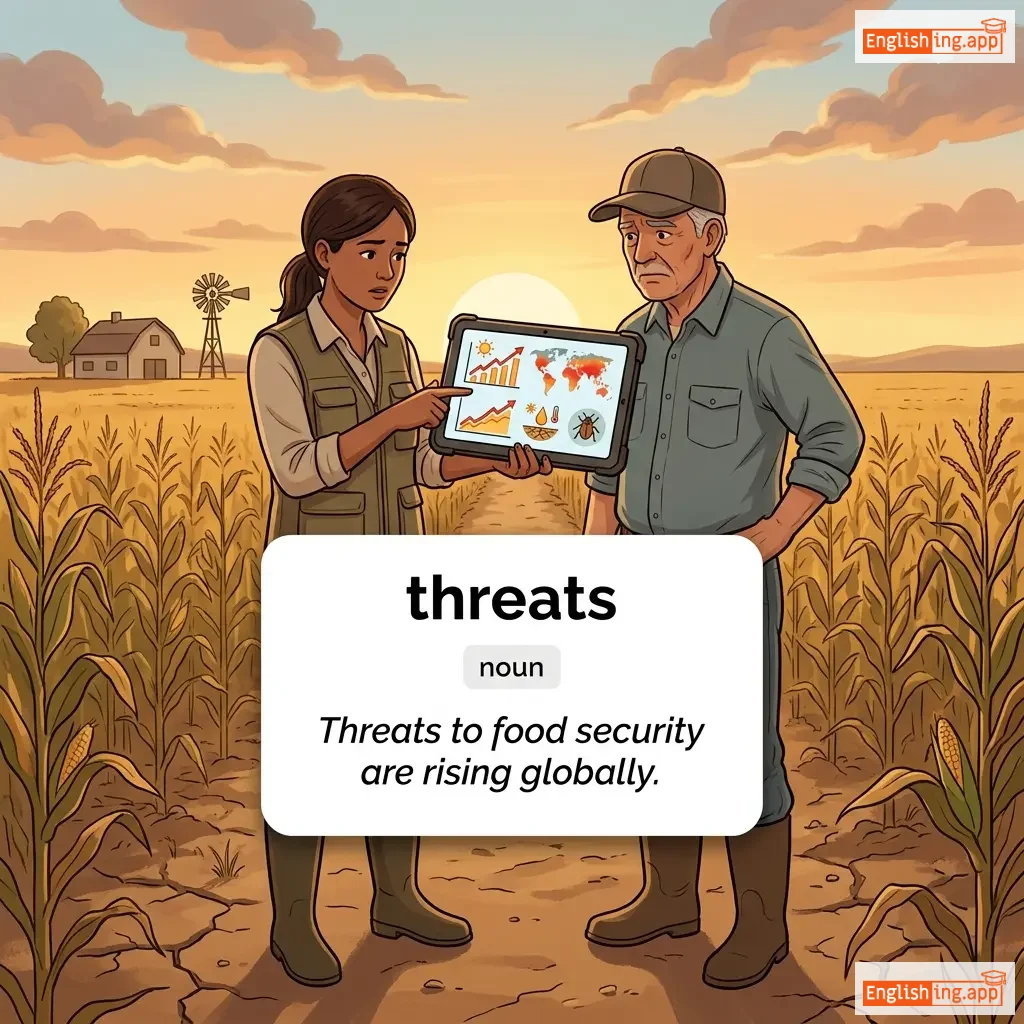
threats definition card — visual illustration of the meaning
noun
θrets
धमकी (dhamki)

A statement of an intention to inflict pain, injury, damage, or other hostile action.

"Threats to food security are rising globally."

"खाद्य सुरक्षा को लेकर धमकियाँ वैश्विक स्तर पर बढ़ रही हैं।" (Khadya suraksha ko lekar dhamkiyan vishvik star par badh rahi hain.)
numeral
/θriː/
तीन (teen)

the number equivalent to the sum of two and one

"She has three dogs at home."

"उसके पास घर में तीन कुत्ते हैं।" (Uske paas ghar mein teen kutte hain.)
noun
/ˈθrɛnədi/
शोकगीत, शोक कविता (shokgeet, shok kavita)

A song, poem, or speech of mourning for someone who has died; a lament.

"The poet composed a moving threnody for the fallen soldiers."

"कवि ने गिरते हुए सैनिकों के लिए एक दिल को छूने वाली शोकगीत रचना की।" (Kavi ne girte hue sainikon ke liye ek dil ko chhune wali shokgeet rachna ki.)
verb
/θrɛʃ/
धान अलग करना (dhan alag karna)

to separate grain from the plant by beating or by using a machine

"Farmers used machines to thresh the wheat after harvest."

"किसानों ने फसल कटने के बाद गेहूं को थ्रेश करने के लिए मशीनों का उपयोग किया।" (Kisano ne fasal katne ke baad gehun ko thresh karne ke liye mashinon ka upyog kiya.)
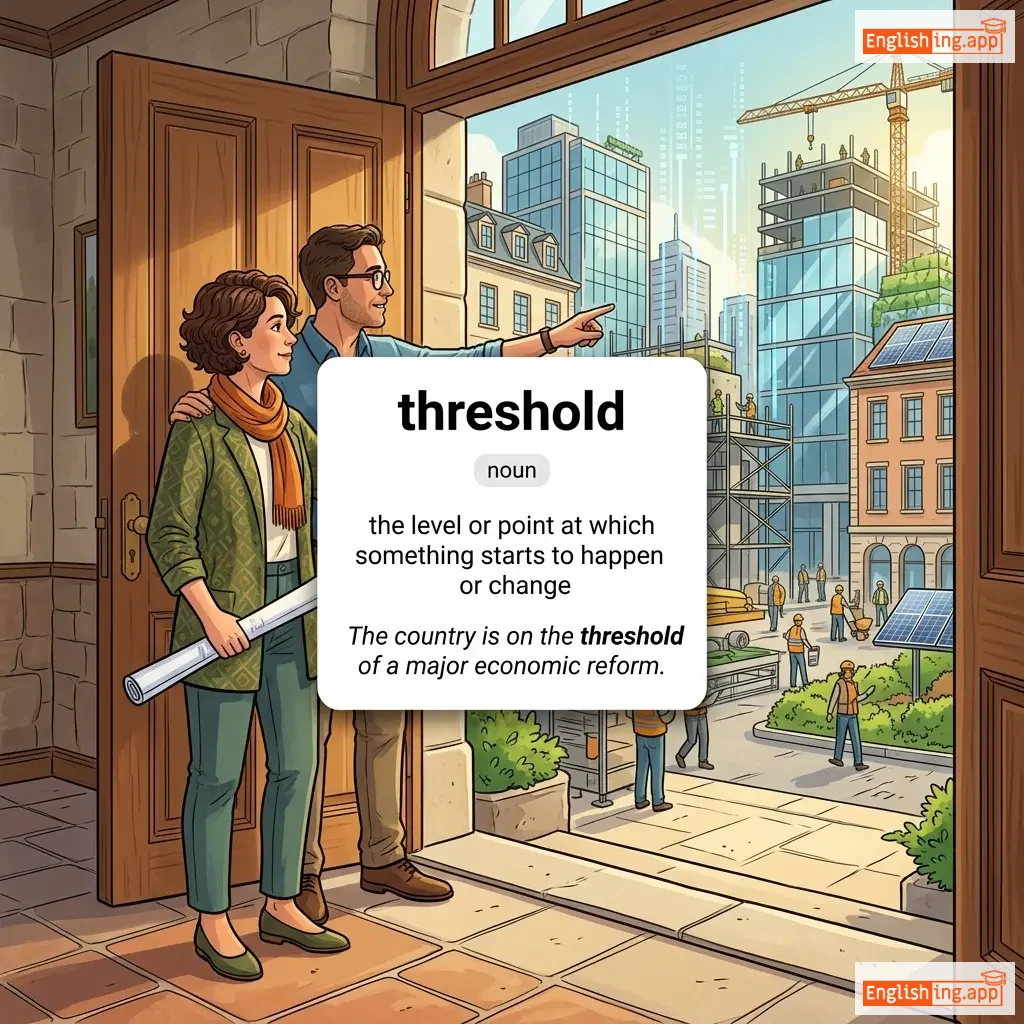
threshold definition card — visual illustration of the meaning
noun
/ˈθreʃ.həʊld/
सीमा (seema)

the level or point at which something starts to happen or change

"The country is on the threshold of a major economic reform."

"देश एक प्रमुख आर्थिक सुधार की सीमा पर है।" (Desh ek pramukh aarthik sudhaar ki seema par hai.)
adjective
/ˈθrɪfti/
किफायती (kifayati)

using money and resources carefully and not wastefully

"She is very thrifty and always saves money for the future."

"वह बहुत किफायती है और हमेशा भविष्य के लिए पैसे बचाती है।" (Wah bahut kifayati hai aur hamesha bhavishya ke liye paise bachati hai.)
Thrill definition card — visual illustration of the meaning
verb
/θrɪl/
उत्साहित करना (utsahit karna)

to cause someone to feel very excited and pleased

"The roller coaster ride thrills adventure seekers."

"रोलर कोस्टर राइड एडवेंचर सीकर्स को उत्साहित करती है।" (Roller coaster ride adventure seekers ko utsahit karti hai.)
adjective
/θrɪld/
खुश (khush)

extremely happy or excited

"She was thrilled with the surprise party."

"वह सरप्राइज पार्टी से खुश थी।" (Woh surprise party se khush thi.)
verb
/θraɪv/
समृद्ध होना (samriddh hona)

to grow, develop, or be successful

"Small businesses can thrive with proper support."

"छोटे व्यवसाय उचित समर्थन के साथ समृद्ध हो सकते हैं।" (Chhote vyavsay uchit samarthan ke saath samriddh ho sakte hain.)
noun
/θroʊt/
गला (gala)

the front part of the neck, containing the pharynx and larynx

"He felt a lump in his throat while speaking."

"उसे बोलते समय अपने गले में एक गांठ महसूस हुई।" (Use bolte samay apne gale mein ek ganth mahsus hui.)
verb
/θrɒb/
धड़कना (dhadakna)

to beat or pulse strongly, often with pain

"His head began to throb after the long day."

"लंबे दिन के बाद उसका सिर धड़कने लगा।" (Lambe din ke baad uska sir dhadakne laga.)
noun
/θroʊz/
वेदनादायक संघर्ष (vedanadayak sangharsh)

intense or violent pain and struggle, often at the beginning or end of something

"The country was in the throes of a political crisis."

"देश एक राजनीतिक संकट के वेदनादायक संघर्ष में था।" (Desh ek rajnaitik sankat ke vedanadayak sangharsh mein tha.)
noun/verb
/θrɒŋ/
भीड़ (bhid)

A large, densely packed crowd of people or animals; to fill or be present in a place in large numbers.

"Tourists thronged the streets during the festival."

"पर्यटकों ने त्योहार के दौरान सड़कों पर भीड़ जमा ली।" (Paryatkon ne tyohar ke dauran sadkon par bheed jama li.)
verb/noun
/ˈθrɒt.əl/
गला घोंटना/गति नियंत्रित करना (gala ghotna/gati niyantrit karna)

To choke or strangle; to control the flow of fuel or power in an engine.

"The driver throttled the engine to slow down the car."

"चालक ने कार को धीमा करने के लिए इंजन की गति कम की।" (Chaalak ne car ko dheema karne ke liye engine ki gati kam ki.)
preposition
/θruː/
के माध्यम से (ke madhyam se)

moving in one side and out the other side of something

"The train passed through the tunnel."

"ट्रेन सुरंग के माध्यम से गुजरी।" (Train surang ke madhyam se guzri.)
preposition
/θruːˈaʊt/
संपूर्ण (sampurn)

in every part of a place or during the whole time of an event

"She worked throughout the night."

"वह पूरी रात काम करती रही।" (Woh poori raat kaam karti rahi.)
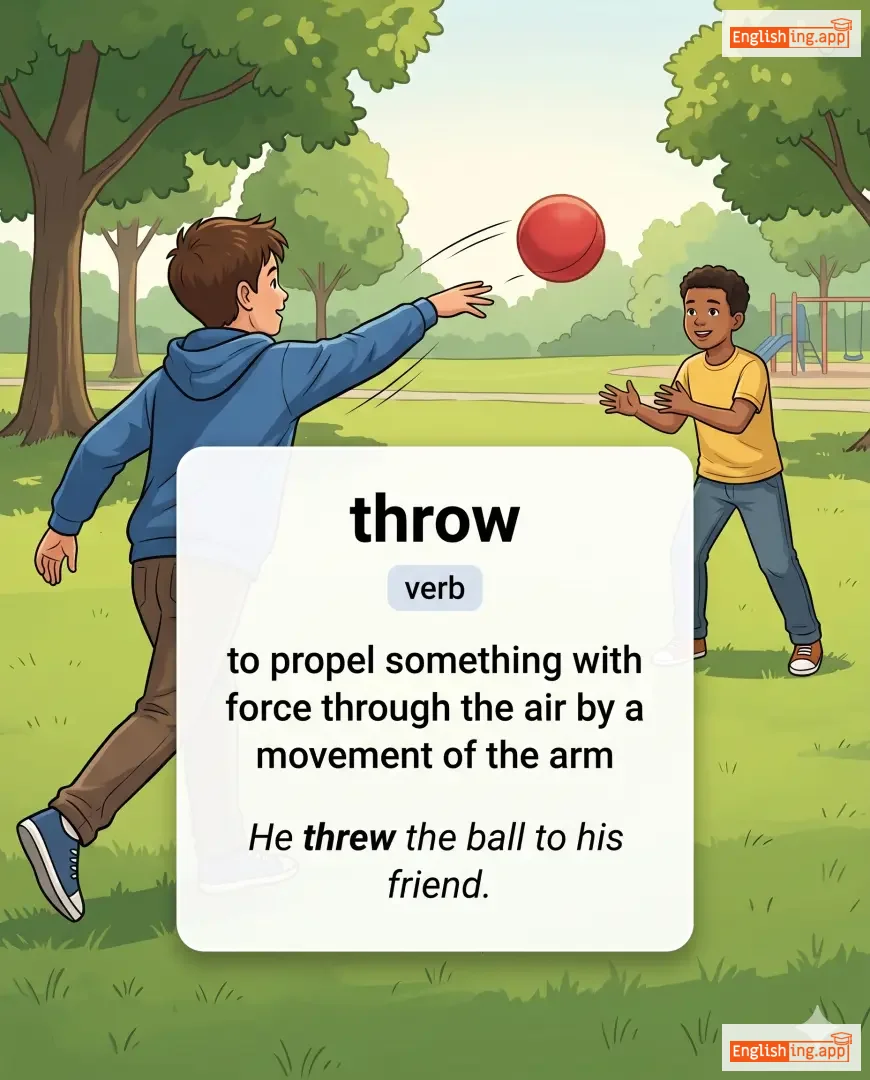
throw definition card — visual illustration of the meaning
verb
/θroʊ/
फेंकना (phenkna)

to propel something with force through the air by a movement of the arm

"He threw the ball to his friend."

"उसने गेंद को अपने दोस्त को फेंका।" (Usne gend ko apne dost ko phenka.)
noun
/θʌm/
अंगूठा (angutha)

the short, thick finger on the side of the hand, used for gripping and holding things

"He gave a thumbs-up to show his approval."

"उसने अपनी स्वीकृति दिखाने के लिए अंगूठा ऊपर किया।" (Usne apni sweekriti dikhane ke liye angutha upar kiya.)
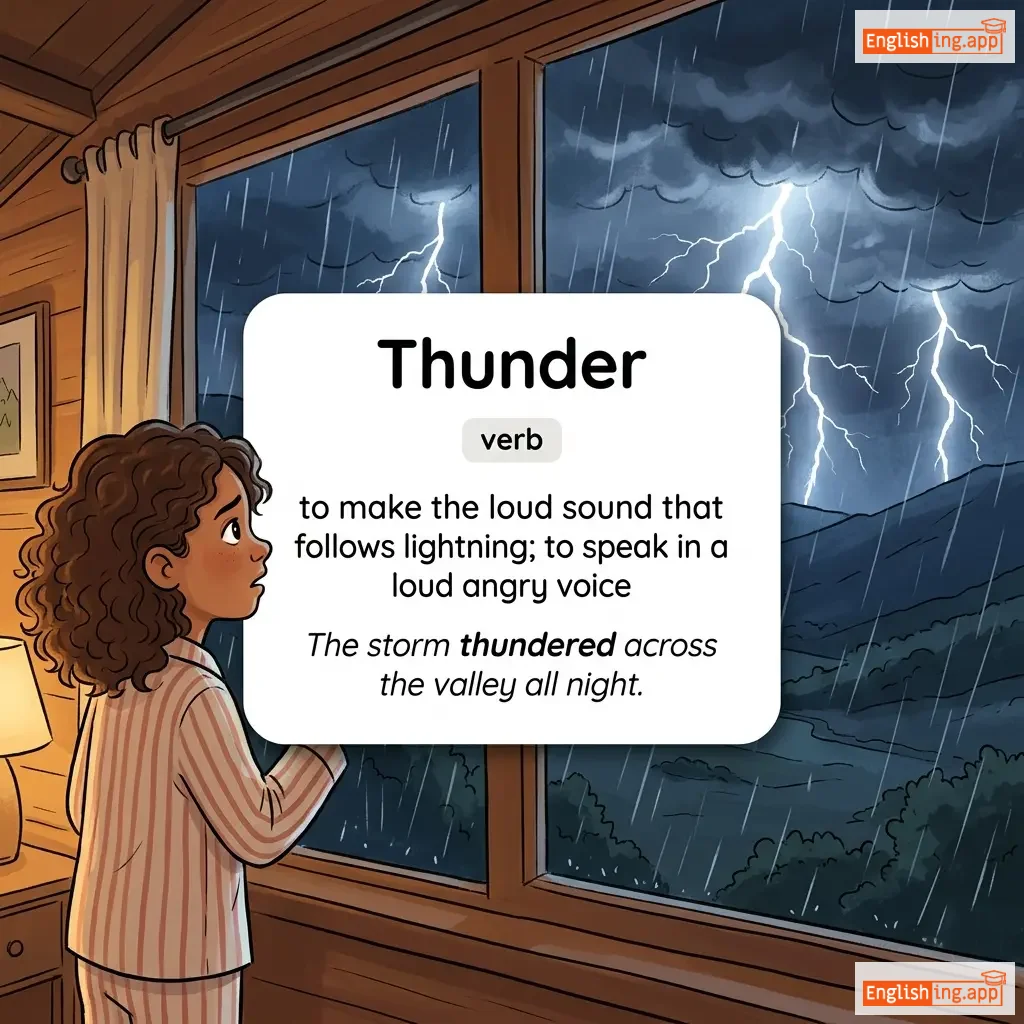
Thunder definition card — visual illustration of the meaning
noun
/ˈθʌn.dər/
गरज (garaj)

the loud rumbling or crashing noise heard after a lightning flash

"We heard thunder during the storm last night."

"हमने पिछली रात तूफान के दौरान गड़गड़ाहट सुनी।" (hamne pichhli raat toofan ke dauraan gadgadahat suni.)
noun
/ˈθɜːrzdeɪ/
गुरुवार (guruvar)

The fifth day of the week, following Wednesday and preceding Friday.

"We have a meeting scheduled for Thursday."

"हमारी मीटिंग गुरुवार को निर्धारित है।" (hamari meeting guruvar ko nirdharit hai.)
adverb
/ðʌs/
इस प्रकार (is prakar)

as a result or consequence of something previously stated

"He was late, thus he missed the meeting."

"वह देर से आया, इस प्रकार वह बैठक से चूक गया।" (Wah der se aaya, is prakar wah baithak se chook gaya.)
verb
/θwɔːrt/
विफल करना (vifal karna)

To prevent someone from accomplishing something; to oppose successfully.

"The police thwarted the robbery attempt."

"पुलिस ने लूटपाट के प्रयास को विफल कर दिया।" (Police ne lootpaat ke prayaas ko vifal kar diya.)
noun
/taɪm/
थाइम (thaima)

A small aromatic herb used in cooking and medicine.

"She sprinkled thyme on the roasted chicken."

"वह रोस्टेड चिकन पर थाइम छिड़क रही थी।" (Wah roasted chicken par thyme chhidak rahi thi.)
noun
/tiˈɑː.rə/
टीयारा (tiyara)

a jeweled ornamental crown worn on formal occasions

"The princess wore a sparkling diamond tiara at the royal ball."

"राजकुमारी ने शाही बॉल में एक चमकदार हीरे का टियारा पहना था।" (raajkumari ne shaahi baal mein ek chamakdaar heere ka tiyaara pehna tha)
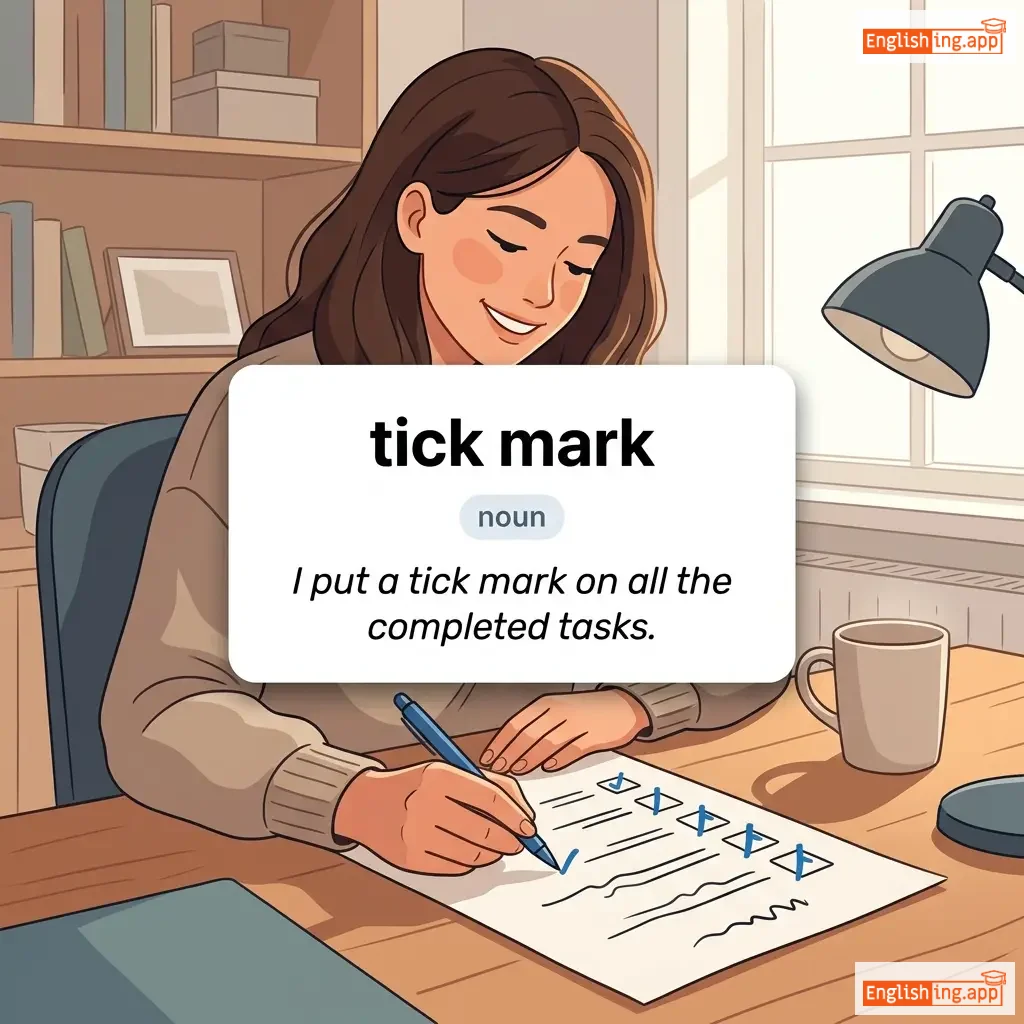
tick mark definition card — visual illustration of the meaning
noun
tɪk mɑːrk
टिक मार्क (tik mark)

A mark (✓) used to indicate that something is correct or has been chosen, checked, or dealt with.

"I put a tick mark on all the completed tasks."

"मैंने सभी पूर्ण किए गए कार्यों पर एक टिक मार्क डाला।" (Maine sabhi poorn kiye gaye karyo par ek tik mark dala.)
noun
/ˈtɪkɪt/
टिकट (ṭikaṭ)

a small piece of paper or card that gives the holder a right to access a service or event

"He bought a ticket to the concert."

"उसने संगीत कार्यक्रम के लिए एक टिकट खरीदी।" (Usne sangeet karyakram ke liye ek ṭikaṭ khareedi.)
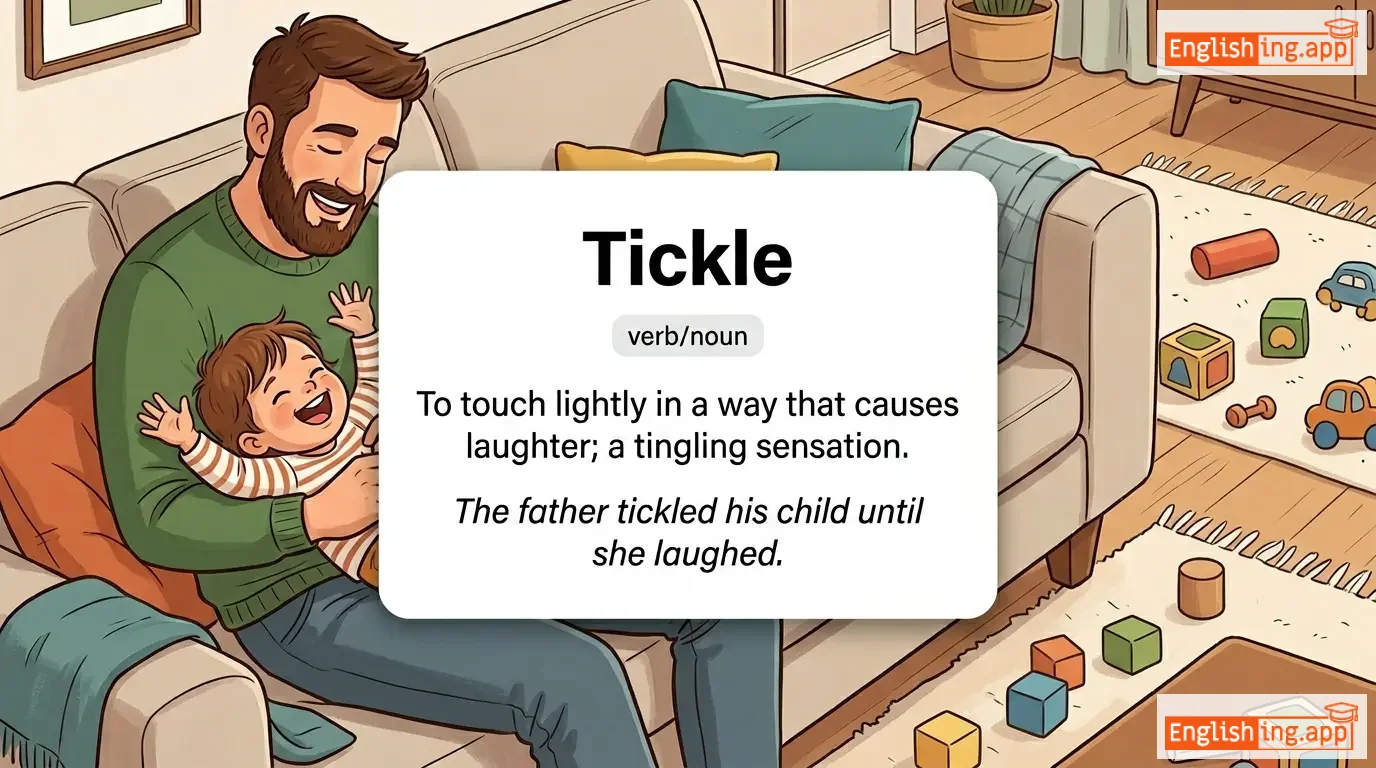
Tickle definition card — visual illustration of the meaning
verb/noun
/ˈtɪk.əl/
गुदगुदी करना (gudgudi karna)

To touch lightly in a way that causes laughter; a tingling sensation.

"The father tickled his child until she laughed."

"पिता ने अपनी बच्ची को गुदगुदी किया जब तक वह हंसी नहीं आ गई।" (Pita ne apni bachchi ko gudgudi kiya jab tak vah hansi nahi aa gayi.)
adjective
/ˈtɪklɪʃ/
संवेदनशील, हंसी में आसानी से लानेवाला (sanvedansheel, hansi mein aasani se lanewala)

easily made to laugh by being touched lightly; easily upset or sensitive

"She is very ticklish and bursts into laughter when touched on her feet."

"वह बहुत टिक्लिश है और जब उसके पैरों को हल्का सा छुआ जाता है, तो वह हंस पड़ती है।" (Vah bahut ticklish hai aur jab uske pairon ko halka sa chhua jaata hai, to vah hans padti hai.)
adjective
/ˈtɪd.li/
हल्का नशा; छोटा या नगण्य (tiddli)

slightly drunk; small or tiny

"After a few drinks, he felt a bit tiddley."

"कुछ ड्रिंक्स के बाद, वह थोड़ा टिडली महसूस करने लगा।" (kuch drinks ke baad, wah thoda tiddli mahsus karne laga.)
noun
/taɪd/
ज्वार-भाटा (jwar-bhata)

the regular rise and fall of the sea caused by the moon and sun's gravity; a powerful flow or movement

"The fisherman waited for the tide to come in."

"मछुआरा ज्वार के आने का इंतजार कर रहा था।" (Machhuara jwar ke aane ka intezaar kar raha tha.)
adjective
/ˈtaɪ.di/
साफ; व्यवस्थित (saaf; vyavasthit)

arranged neatly and in order; clean and organized

"She keeps her room very tidy and organized."

"वह अपने कमरे को बहुत साफ और व्यवस्थित रखती है।" (vah apne kamre ko bahut saaf aur vyavasthit rakhti hai)
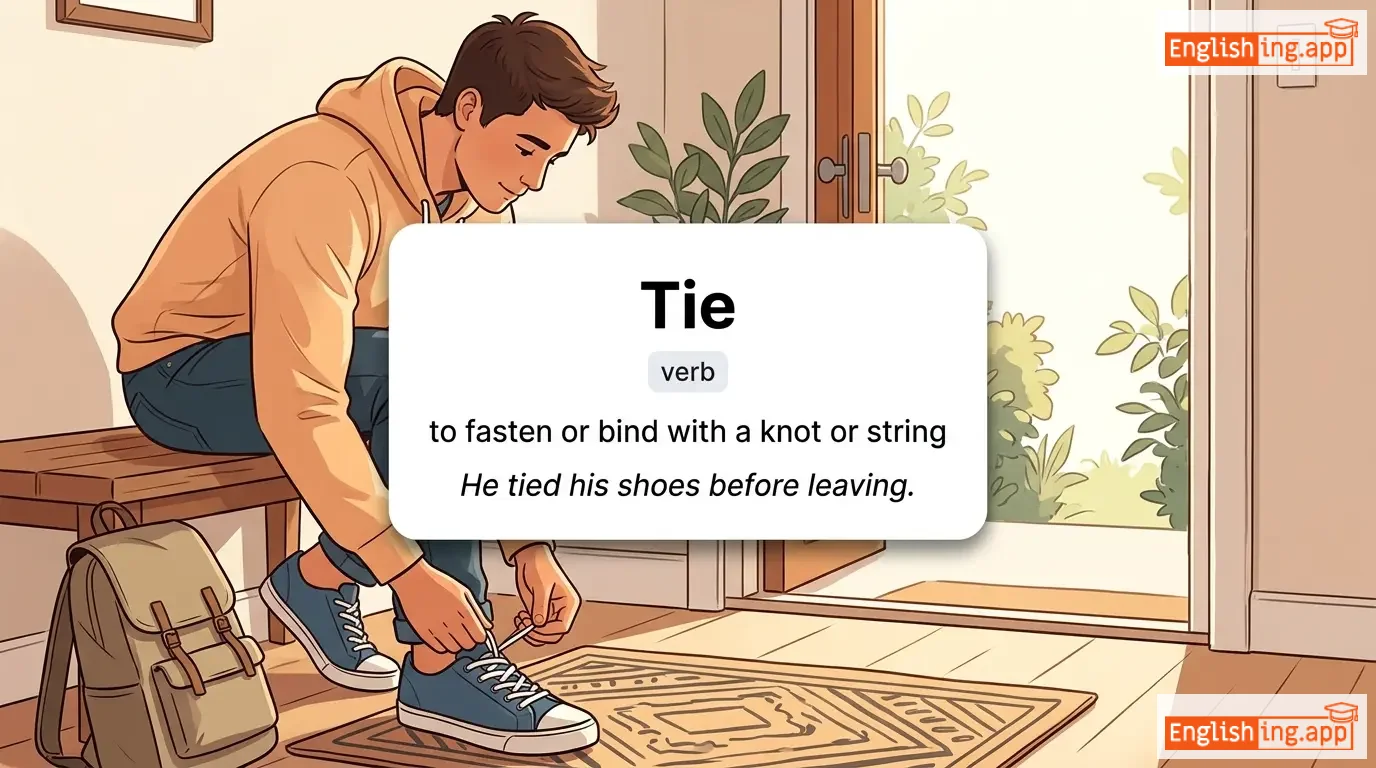
Tie definition card — visual illustration of the meaning
verb
/taɪ/
बाँधना (bandhna)

to fasten or bind with a knot or string

"He tied his shoes before leaving."

"उसने अपने जूते बांधने से पहले।" (Usne apne jute bandhne se pehle.)
noun
/tɪf/
तकरार (takraar)

a small or petty quarrel or argument

"They had a little tiff over what movie to watch."

"उन्होंने किस फिल्म को देखना है, इस पर एक छोटी तकरार की।" (Unhone kis film ko dekhna hai, is par ek chhoti takraar ki.)
noun
/ˈtaɪ.ɡər/
बाघ (bagh)

a very large solitary cat with a yellow-brown coat striped with black, native to the forests of Asia

"The tiger hunted silently through the jungle."

"बाघ चुपचाप जंगल में शिकार करने के लिए चला।" (bagh chupchaap janglal mein shikar karne ke liye chala.)
adjective
/taɪt/
टाइट (ṭāiṭ)

firmly held in place, not loose or slack

"The knot was too tight to untie."

"गाँठ बहुत टाइट थी, खोलना मुश्किल था।" (Gāṇṭh bahut ṭāiṭ thī, kholnā mushkil thā.)
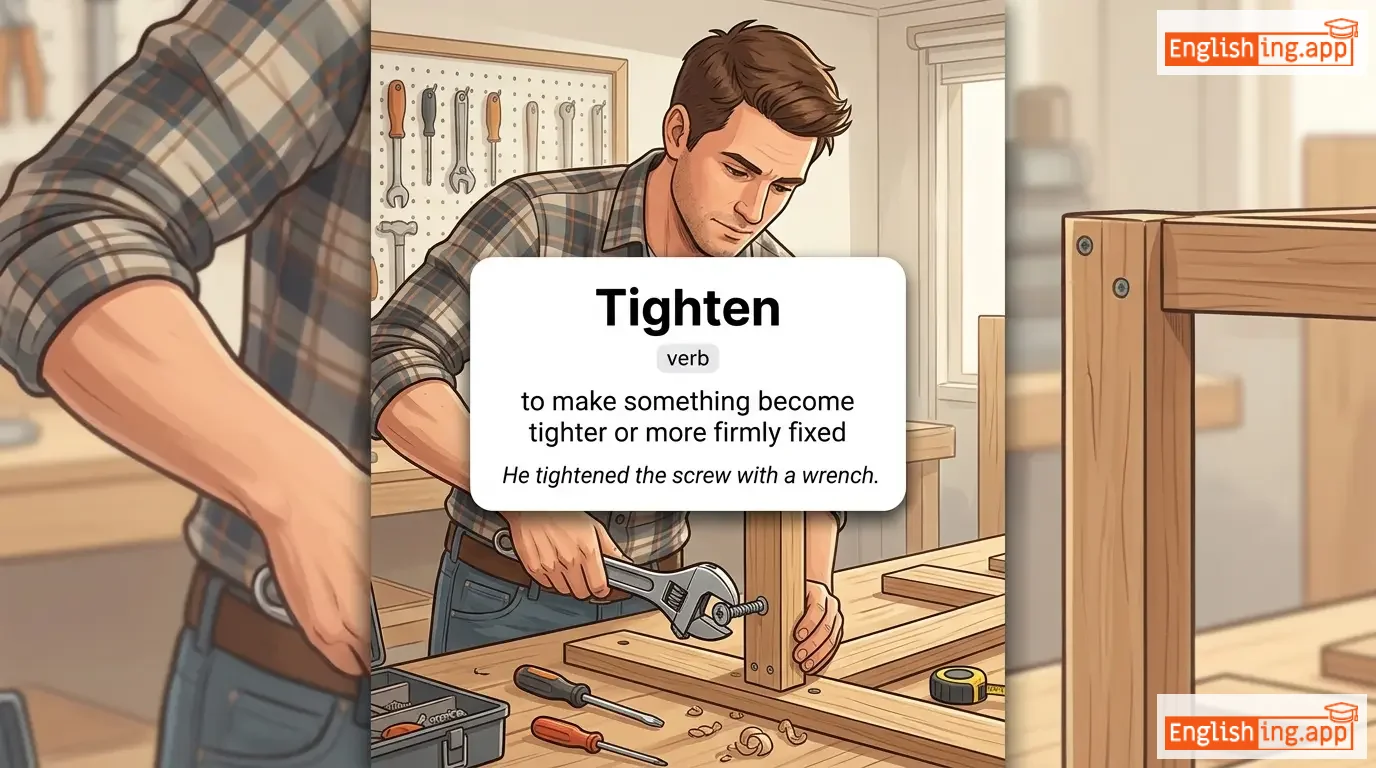
Tighten definition card — visual illustration of the meaning
verb
/ˈtaɪtən/
कसना (kasna)

to make something become tighter or more firmly fixed

"He tightened the screw with a wrench."

"उसने रिंच से स्क्रू को कस दिया।" (Usne wrench se screw ko kas diya.)
adjective
/ˌtaɪtˈfɪstɪd/
कृपण (kripan)

unwilling to spend money; stingy

"He is so tightfisted that he refuses to tip at restaurants."

"वह इतना कृपण है कि वह रेस्तरां में टिप देना भी मना कर देता है।" (Wah itna kripan hai ki wah restaurant mein tip dena bhi mana kar deta hai.)