वोकैबुलरीज

इंग्लिश वोकैबुलरी डिस्कवर, लर्न और मास्टर करें

noun
/ˌsætɪsˈfækʃən/
संतोष (santosh)

the feeling of being pleased or content with something

"Her satisfaction with the results was evident."

"उसके परिणामों से संतोष स्पष्ट था।" (Uske parinaamon se santosh spashṭ tha.)
adjective
/ˈsæt.ɪs.fæk.tər.i/
संतोषजनक (santoshjanak)

acceptable; meeting requirements; adequate

"The test results were satisfactory."

"परीक्षा के परिणाम संतोषजनक थे।" (parīkṣā ke pariṇām santoshjanak the.)
adjective
/ˈsætɪsfaɪd/
संतुष्ट (santusht)

Pleased or content with what has been achieved or received.

"He felt satisfied after finishing his project."

"वह अपने प्रोजेक्ट को खत्म करने के बाद संतुष्ट महसूस कर रहा था।" (Vah apne project ko khatm karne ke baad santusht mahsus kar raha tha.)
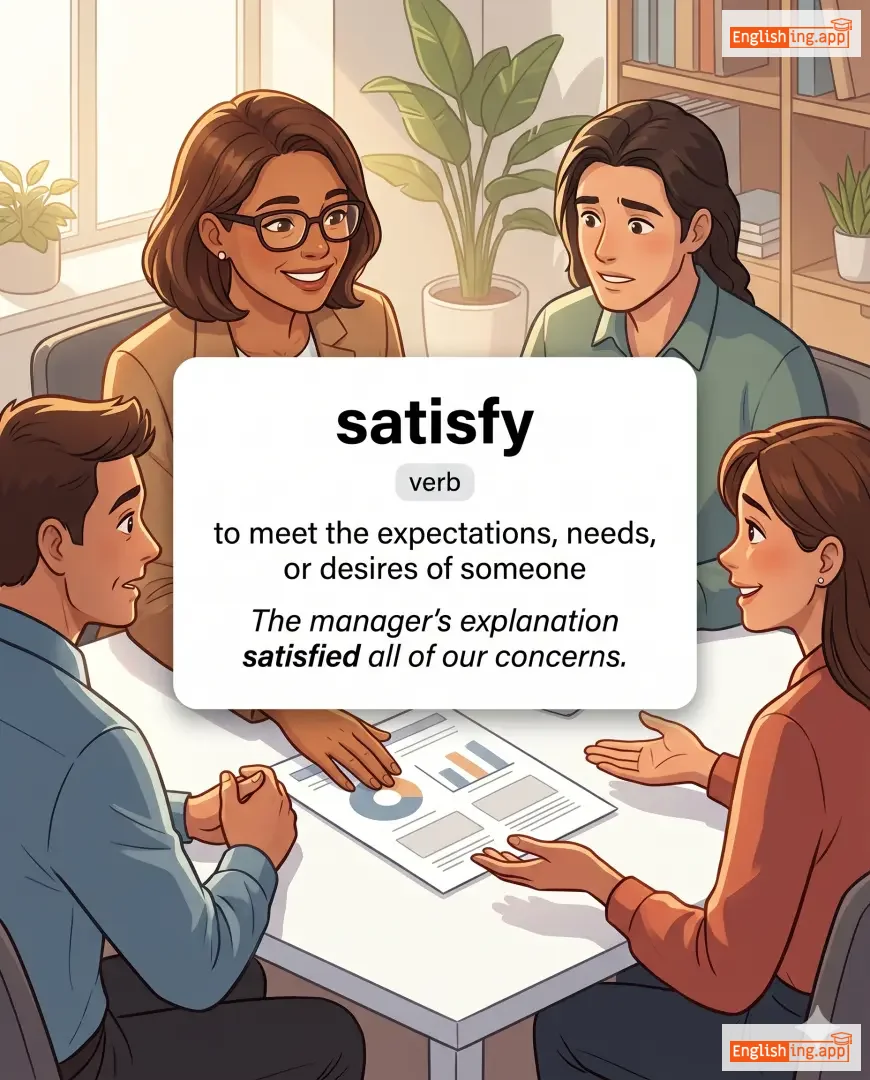
satisfy definition card — visual illustration of the meaning
verb
/ˈsætɪsfaɪ/
संतुष्ट करना (santusht karna)

to meet the expectations, needs, or desires of someone

"The manager's explanation satisfied all of our concerns."

"प्रबंधक का स्पष्टीकरण हमारे सभी चिंताओं को संतुष्ट कर दिया।" (Prabandhak ka spashteekaran humare sabhi chintao ko santusht kar diya.)
noun
/ˈsætræp/
राज्यपाल (rajyapal)

a governor of a province in ancient Persia; also used figuratively for a subordinate ruler

"The king appointed a satrap to oversee the distant province."

"राजा ने दूरदराज के प्रांत का संचालन करने के लिए एक राज्यपाल नियुक्त किया।" (Rājā ne dūrdarāj ke prānt kā san̄cālan karne ke liye ek rajyapal niyukt kiyā.)
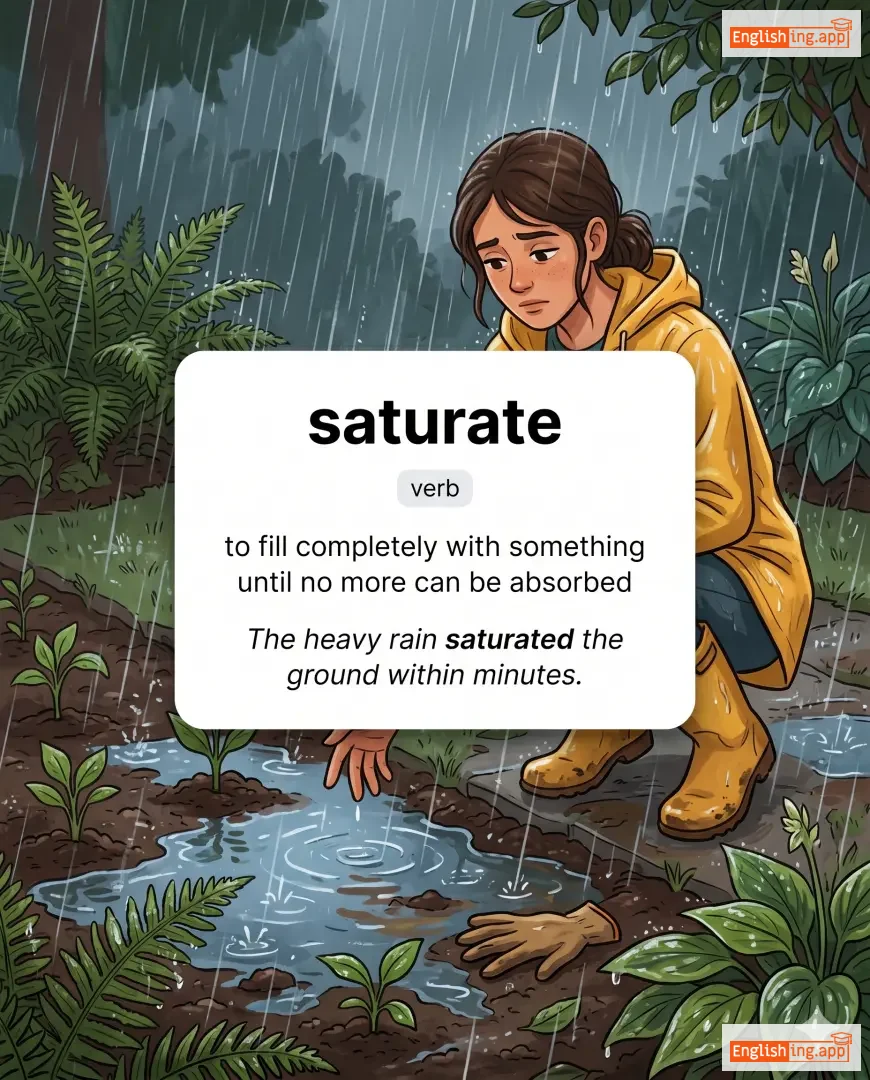
saturate definition card — visual illustration of the meaning
verb
/ˈsætʃəˌreɪt/
परिपूर्ण करना (paripurn karna)

to fill completely with something until no more can be absorbed

"The heavy rain saturated the ground within minutes."

"भारी बारिश ने कुछ मिनटों में ज़मीन को पूरी तरह से भिगो दिया।" (Bhaari baarish ne kuch minuton mein zameen ko puri tarah se bhigo diya.)
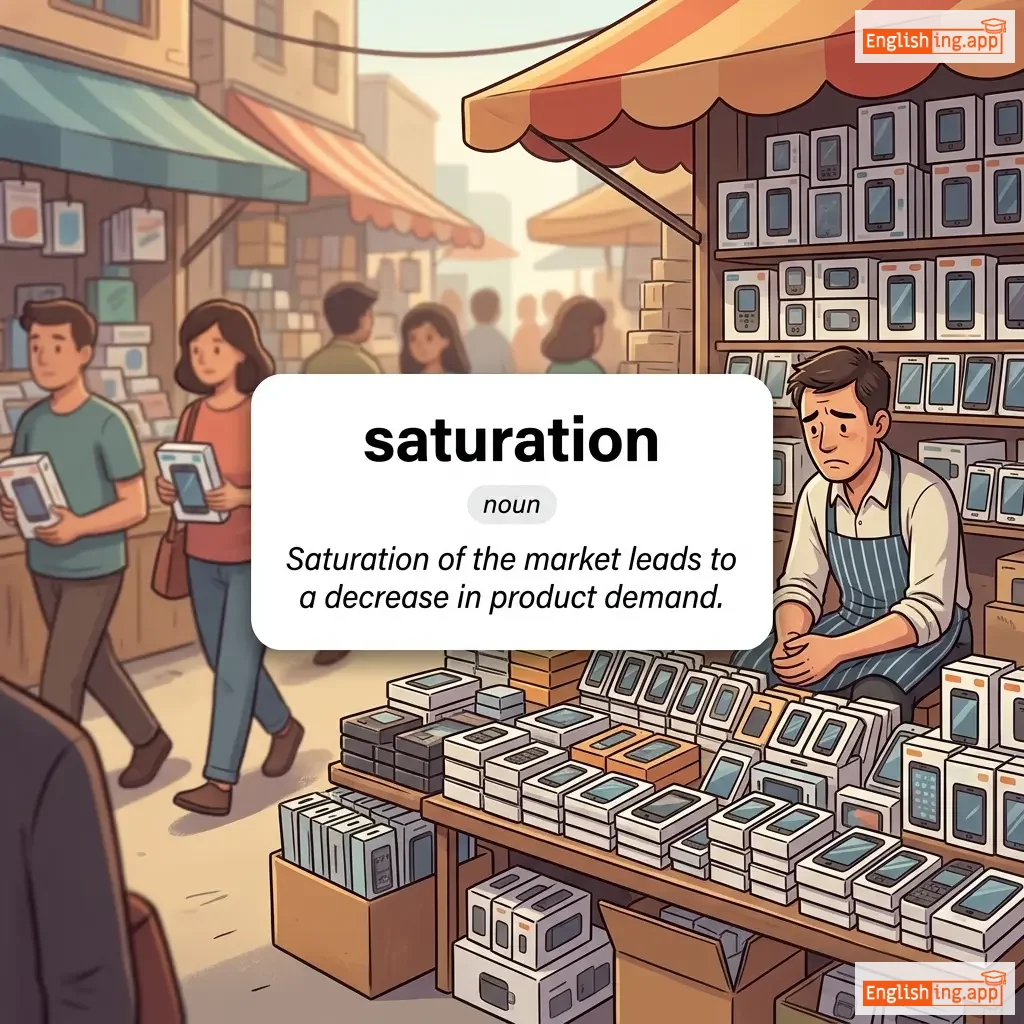
saturation definition card — visual illustration of the meaning
noun
/ˌsætʃəˈreɪʃən/
संतृप्ति (santrpti)

The state or process that occurs when no more of something can be absorbed, combined with, or added.

"Saturation of the market leads to a decrease in product demand."

"बाजार की संतृप्ति उत्पाद की मांग में गिरावट का कारण बनती है।" (Bazar ki santrpti utpad ki maang mein girawat ka kaaran banti hai.)
noun
/ˈsætərdeɪ/
शनिवार (shanivaar)

The day of the week between Friday and Sunday; traditionally the sixth day of the week

"We are going to the beach on Saturday."

"हम शनिवार को समुद्र तट पर जा रहे हैं।" (hum shanivaar ko samudra tat par ja rahe hain.)
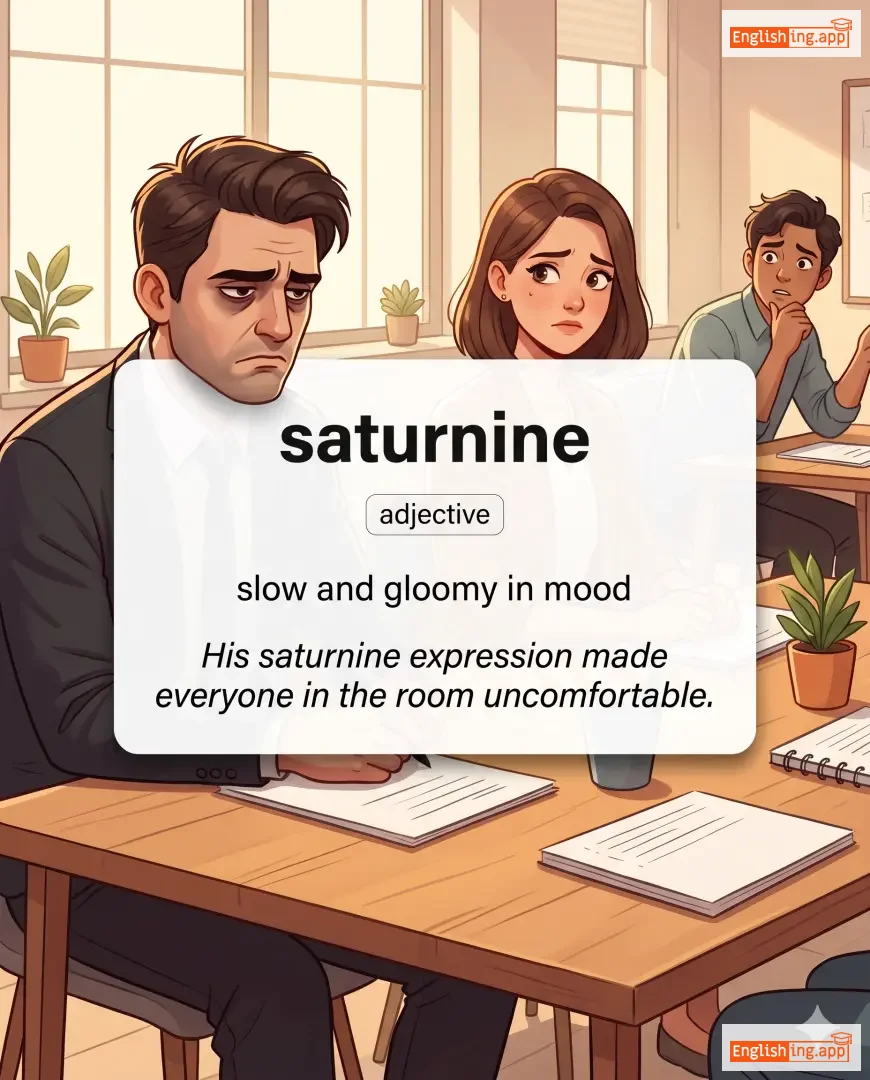
saturnine definition card — visual illustration of the meaning
adjective
/ˈsætərˌnaɪn/
उदास (udas)

slow and gloomy in mood

"His saturnine expression made everyone in the room uncomfortable."

"उसकी उदास अभिव्यक्ति ने कमरे में सभी को असहज कर दिया।" (Uski udas abhivyakti ne kamre mein sabhi ko asahaj kar diya.)
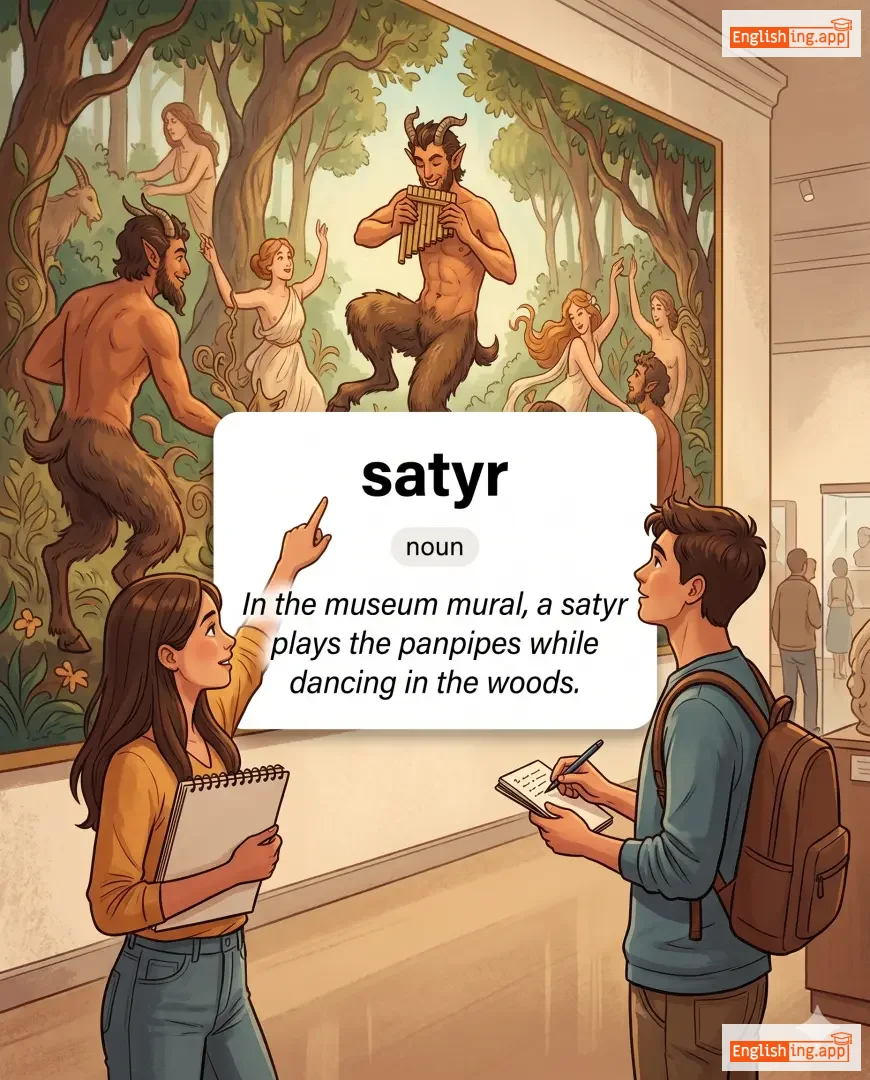
satyr definition card — visual illustration of the meaning
noun
/ˈsætər/
खुशी (khushi)

a creature from Greek mythology depicted as a lustful being, often half-man and half-goat; by extension, a lecherous man

"In the museum mural, a satyr plays the panpipes while dancing in the woods."

"जब उसने पुरस्कार प्राप्त किया तो वह अपनी खुशी को छिपा नहीं पाई।" (Jab usne puraskaar prapt kiya to vah apni khushi ko chhupa nahi paayi.)
noun
/sɔːs/
सॉस (sos)

a liquid or semi-liquid substance used to add flavor to food

"She added some tomato sauce to the pasta."

"उसने पास्ता में कुछ टमाटर सॉस डाली।" (Usne pasta mein kuch tamatar sos daali.)
adjective
/ˈsɔːsi/
उत्साही (utsahi)

Boldly rude, cheeky, or playfully disrespectful.

"The child gave a saucy reply to his teacher."

"बच्चे ने अपने शिक्षक को एक उत्साही जवाब दिया।" (Bacche ne apne shikshak ko ek utsahi jawab diya.)
verb
/ˈsɔːntər/
धीरे-धीरे चलना (dheere-dheere chalna)

to walk in a slow, relaxed manner without hurry or effort

"We sauntered along the riverside, stopping now and then to watch the boats."

"हम नदी के किनारे धीरे-धीरे चल रहे थे, कभी-कभी नावें देखने के लिए रुकते थे।" (ham nadi ke kinare dheere-dheere chal rahe the, kabhi-kabhi naaven dekhne ke liye rukte the.)
adjective
/ˈsævɪdʒ/
जंगली; बर्बर (jangli; barbar)

fierce, violent, or uncontrolled; cruel or brutal

"The storm brought savage winds that tore branches from the trees."

"आंधी ने ऐसे हिंसक तूफान लाए, जिन्होंने पेड़ों की शाखाएँ उखाड़ दीं।" (aandhi ne aise hinsak toofan laaye, jinhonne pedon ki shaakhayein ukhaad di.)
noun
/səˈvænə/
घास का मैदान (बिखरे हुए पेड़ों के साथ) (ghas ka maidan (bikhre hue pedon ke saath))

a grassy plain with scattered trees, typical of tropical and subtropical regions

"Giraffes browsed on acacia trees across the wide savanna."

"जिराफ़ों ने सवाना में आकेशिया के पेड़ों पर पत्तियाँ खाई।" (jirafon ne savana mein akeshia ke pedon par patiyan khai.)
noun
/səˈvɑːnt/
खुशी (khushi)

a learned person, especially a distinguished scientist or scholar; sometimes used in the phrase ‘savant syndrome’ for someone with exceptional abilities alongside developmental differences

"The conference keynote was delivered by a linguistic savant who studies endangered languages."

"उसने जब पुरस्कार प्राप्त किया तो अपनी खुशी छुपा नहीं पाई।" (Usne jab puraskaar praapt kiya to apni khushi chhupa nahi paayi.)
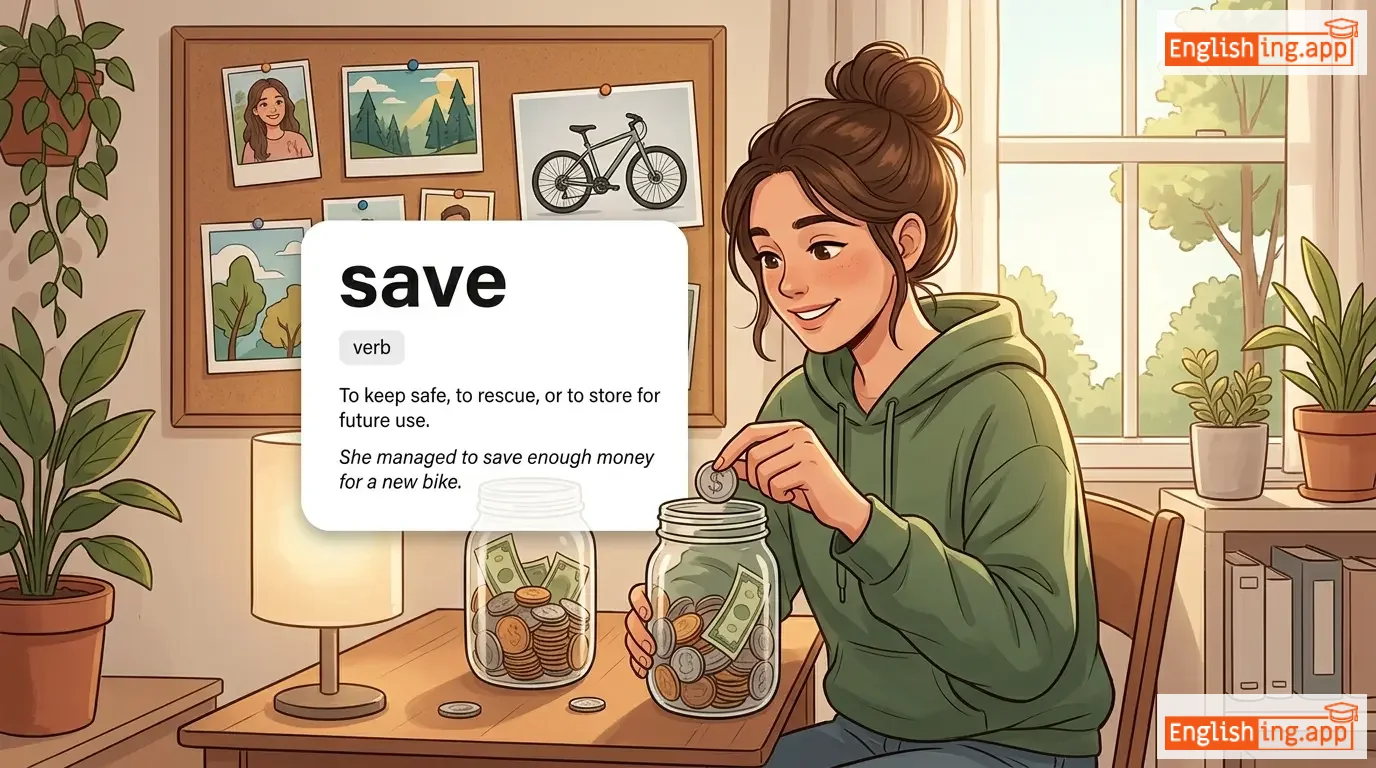
save definition card — visual illustration of the meaning
verb
/seɪv/
बचाना / संग्रह करना (bachana / sangrah karna)

To keep safe, to rescue, or to store for future use.

"She managed to save enough money for a new bike."

"उसने एक नई बाइक के लिए पर्याप्त पैसे बचा लिए।" (Usne ek nai bike ke liye paryapt paise bacha liye.)
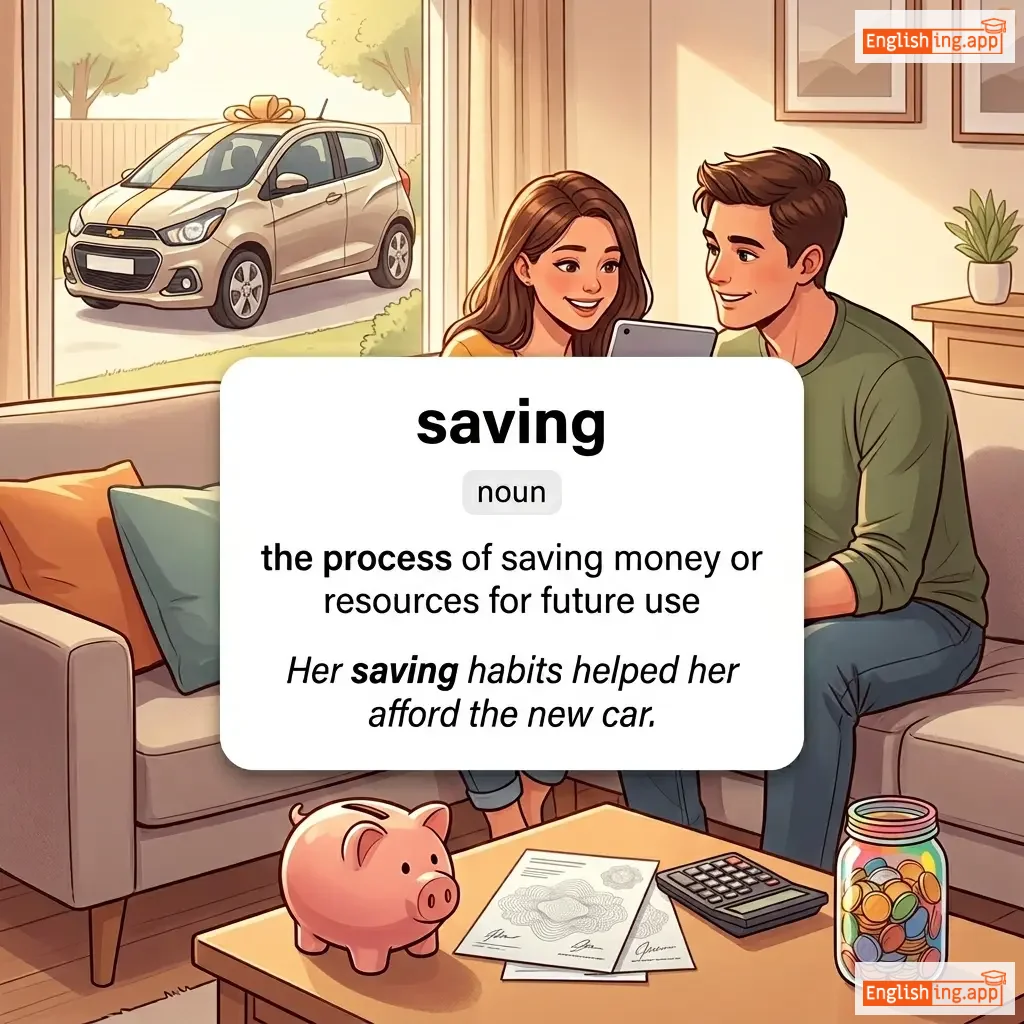
saving definition card — visual illustration of the meaning
noun
/ˈseɪvɪŋ/
बचत (bachat)

the process of saving money or resources for future use

"Her saving habits helped her afford the new car."

"उसकी बचत की आदतों ने उसे नई कार खरीदने में मदद की।" (Uski bachat ki aadaton ne use nayi car kharidne mein madad ki.)
savings definition card — visual illustration of the meaning
noun
ˈseɪ.vɪŋz
बचत (bachat)

Money that is kept for future use or investment.

"Many people invest their savings in real estate."

"कई लोग अपनी बचत रियल एस्टेट में निवेश करते हैं।" (Kai log apni bachat real estate mein nivesh karte hain.)
noun
/ˌsæv.wɑːr ˈfeər/
सामाजिक दक्षता (samajik dakshata)

The ability to act or speak appropriately in social situations; polished social skills.

"She handled the delicate situation with remarkable savoir-faire."

"उसने नाजुक स्थिति को अद्भुत सामाजिक दक्षता के साथ संभाला।" (Usne naazuk sthiti ko adbhut samajik dakshata ke saath sambhaala.)
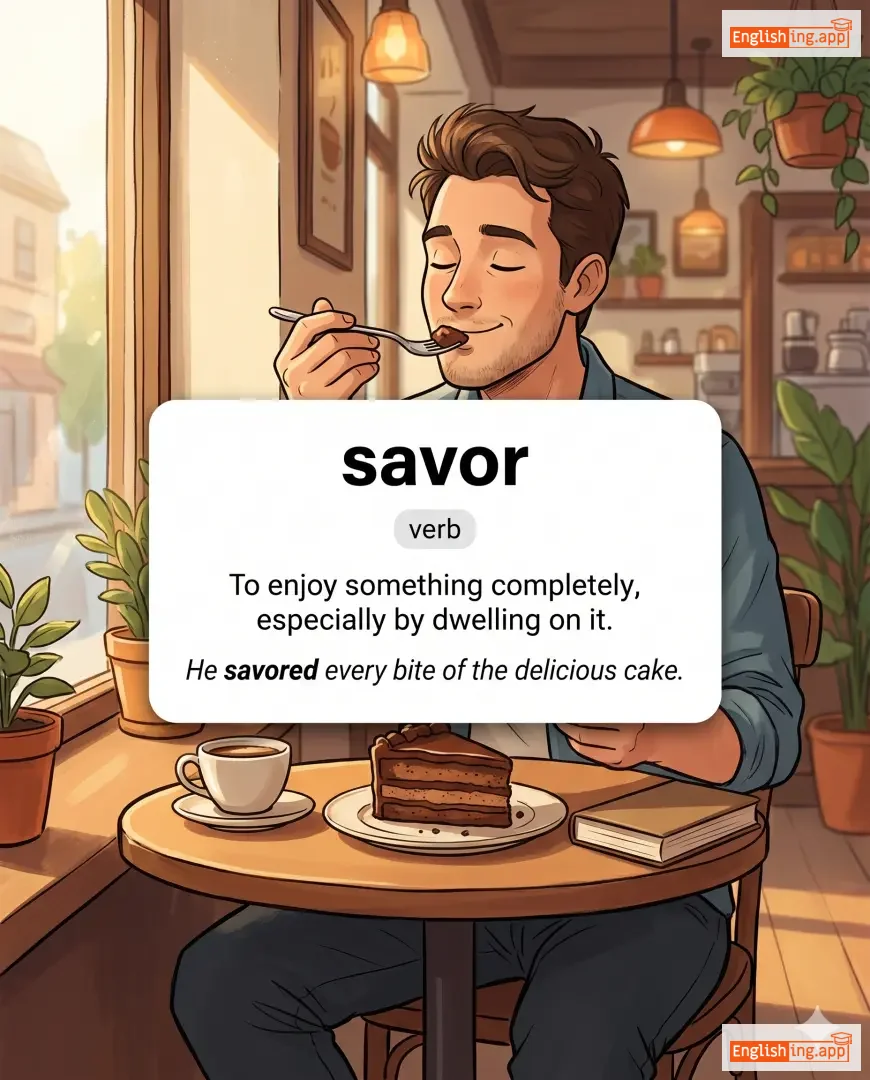
savor definition card — visual illustration of the meaning
verb
/ˈseɪ.vər/
पूर्ण आनंद के साथ अनुभव करना (poorn anand ke saath anubhav karna)

To enjoy something completely, especially by dwelling on it.

"He savored every bite of the delicious cake."

"उसने स्वादिष्ट केक के हर बाइट का आनंद लिया।" (Usne swadisht kek ke har bite ka anand liya.)
adjective
/ˈseɪ.vər.i/
स्वादिष्ट (नमकीन या मसालेदार) (swadisht (namkeen ya masaledar))

Having a pleasant salty or spicy taste; morally acceptable.

"The restaurant serves a variety of savory dishes."

"रेस्टोरेंट में विभिन्न प्रकार के स्वादिष्ट व्यंजन परोसे जाते हैं।" (Restaurant mein vibhinn prakar ke swadisht vyanjan porose jaate hain.)
adjective
/ˈsæv.i/
होशियार, समझदार (hoshiyaar, samajhdaar)

Having practical knowledge and the ability to make good judgments.

"She is a tech-savvy entrepreneur."

"वह एक तकनीकी-होशियार उद्यमी है।" (Vah ek takneeki-hoshiyar udyami hai.)
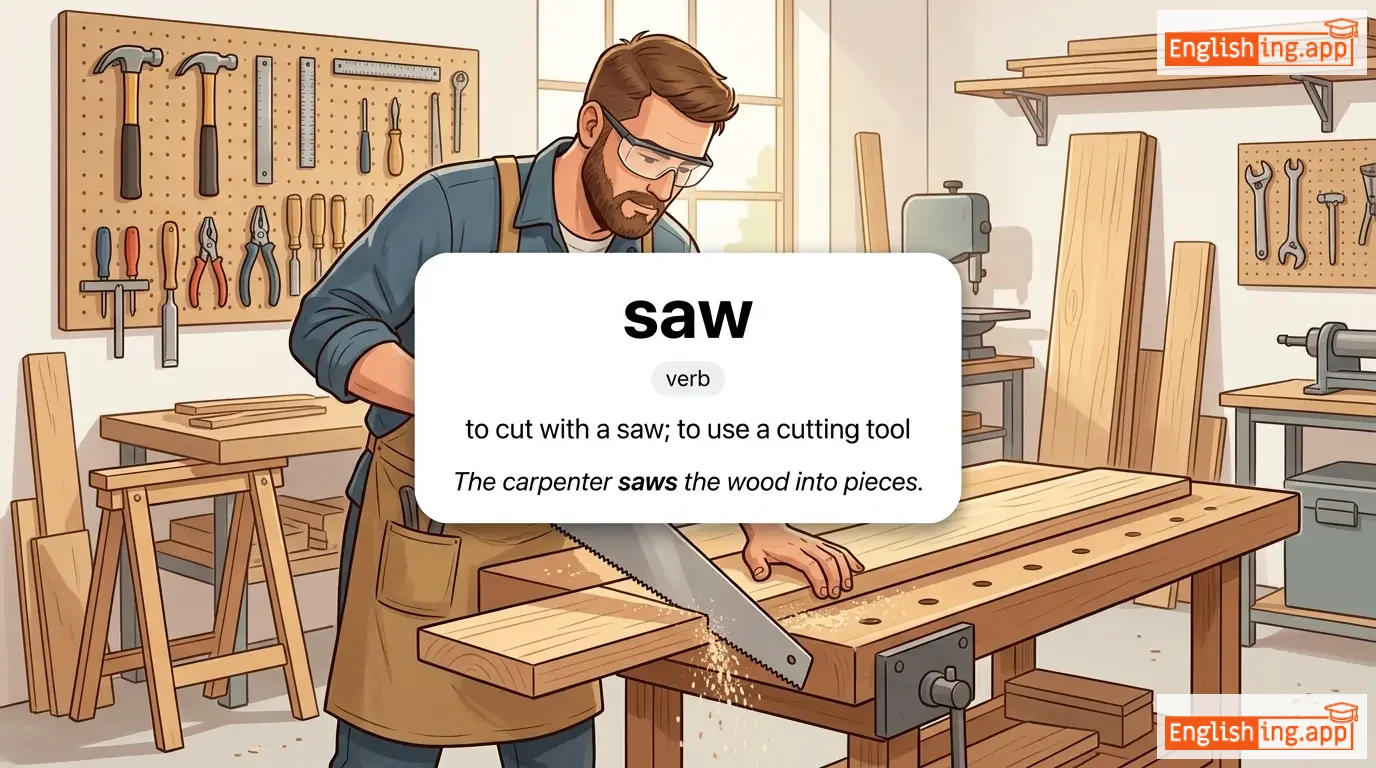
saw definition card — visual illustration of the meaning
noun
/sɔː/
आरी (aari)

a tool with a sharp blade used for cutting wood or other materials

"He used a saw to cut the wooden plank."

"उसने लकड़ी के तख्ते को काटने के लिए आरी का इस्तेमाल किया।" (usne lakdi ke takhte ko kaatne ke liye aari ka istemal kiya.)
noun
/ˈsɔː.dər/
चापलूसी; घुमा-फिरा के बातें (chaaploosee; ghuma-phira ke baatein)

flattering or wheedling talk; soft soap

"His sawder couldn't convince anyone of his sincerity."

"उसकी चापलूसी किसी को भी उसकी ईमानदारी पर विश्वास नहीं दिला सकी।" (Uski chaaploosee kisi ko bhi uski imaandari par vishwas nahi dila saki.)
noun
/ˈsɔː.dʌst/
आरा चूरा (aara choora)

The tiny particles of wood produced by sawing or sanding.

"The floor was covered with sawdust from the carpentry work."

"फर्श पर बढ़ईगीरी के काम से आरा चूरा फैला हुआ था।" (Farsh par badhaigiri ke kaam se aara choora phaila hua tha.)
noun
/ˈsɔːjər/
लकड़ी काटने वाला (lakdi katne wala)

a person who saws wood, especially as an occupation

"The skilled sawyer cut the logs into planks."

"कुशल लकड़ी काटने वाले ने लकड़ी को तख्तों में काटा।" (kushal lakdi katne wale ne lakdi ko takhton mein kata)
noun
/ˈsæksəfoʊn/
सैक्सोफोन (saiksofon)

a wind musical instrument with a curved metal body and a single reed mouthpiece

"The jazz musician played a beautiful solo on his saxophone."

"जैज संगीतकार ने अपने सैक्सोफोन पर एक सुंदर सोलो बजाया।" (jazz sangeetkaar ne apne saiksofon par ek sundar solo bajaya.)
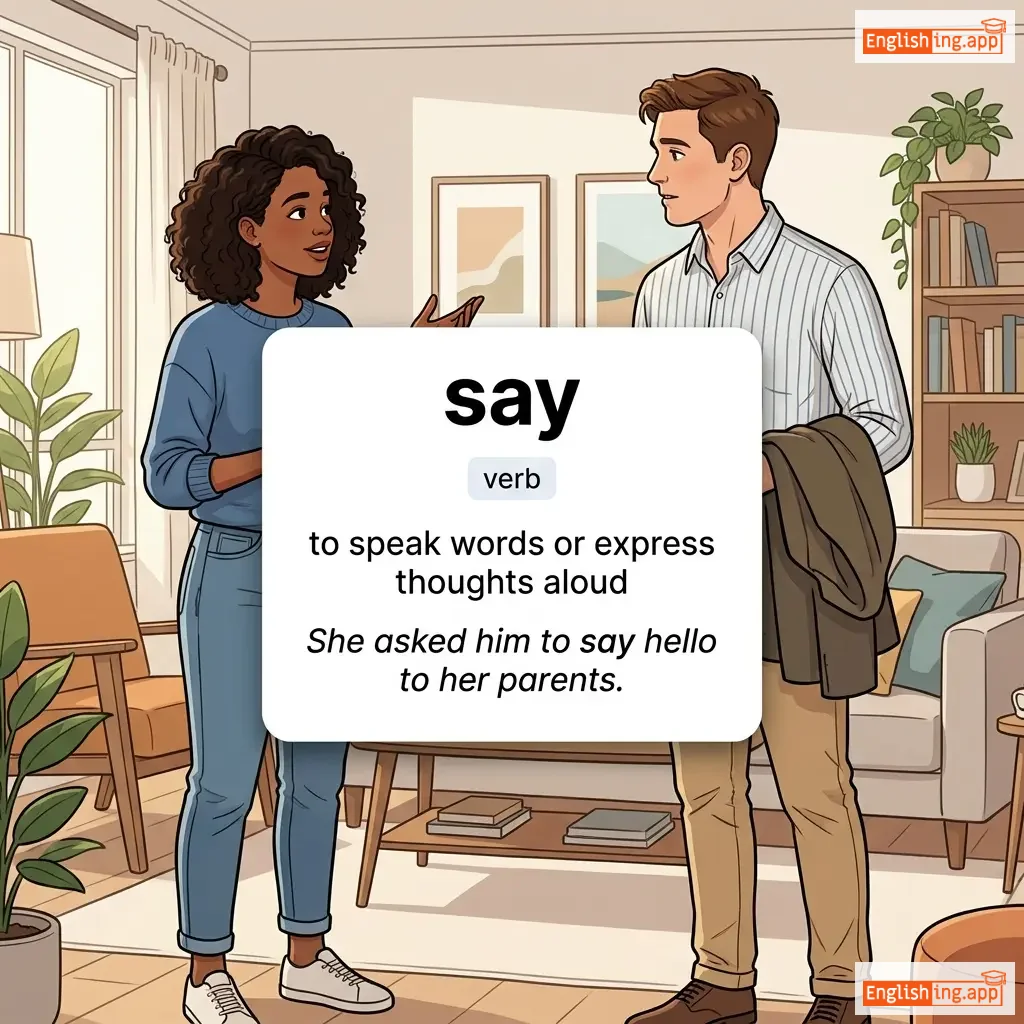
say definition card — visual illustration of the meaning
verb
/seɪ/
कहना (kahna)

to speak words or express thoughts aloud

"She asked him to say hello to her parents."

"उसने उससे कहा कि वह उसके माता-पिता को हैलो कहे।" (Usne usse kaha ki woh uske mata-pita ko hello kahe.)
noun
/ˈseɪ.ɪŋ/
कहावत (kahavat)

a well-known phrase that expresses something true about life; a proverb

"There's an old saying that practice makes perfect."

"एक पुरानी कहावत है कि अभ्यास से ही सिद्धि प्राप्त होती है।" (ek purani kahavat hai ki abhyas se hi siddhi prapt hoti hai.)
noun
/ˈskæb.ərd/
कवच (kavach)

A sheath for the blade of a sword or dagger, typically made of leather or metal.

"The knight drew his sword from the scabbard."

"रक्षक ने अपनी तलवार को कवच से निकाला।" (Rakshak ne apni talwar ko kavach se nikala.)
noun
/ˈskeɪ.biːz/
खुजली रोग (khujli rog)

a contagious skin disease caused by mites that causes intense itching

"The doctor diagnosed him with scabies after examining the rash."

"डॉक्टर ने उसके रैश की जांच करने के बाद उसे खुजली रोग का निदान किया।" (doktar ne uske raish ki jaanch karne ke baad use khujli rog ka nidaan kiya.)
noun
/skæd/
स्कैड मछली (scad machhli)

A type of fish of the jack family; also informally means a large number or quantity.

"The fisherman caught a scad in the net."

"मछुआरे ने जाल में एक स्कैड पकड़ा।" (Machhuare ne jaal mein ek scad pakda.)
noun (plural, informal)
/skædz/
काफी (kaafi)

A large number or quantity of something (informal).

"She has scads of friends in the city."

"उसके पास शहर में काफी दोस्त हैं।" (Uske paas shahar mein kaafi dost hain.)
noun
/ˈskæf.əʊld/
सहारा (sahara)

A temporary platform used to support workers and materials during the construction or repair of a building.

"The workers stood on the scaffold to paint the building."

"कामकाजी कर्मचारी भवन को रंगने के लिए सहारे पर खड़े थे।" (Kaamkaji karmachari bhavan ko rangne ke liye sahare par khade the.)
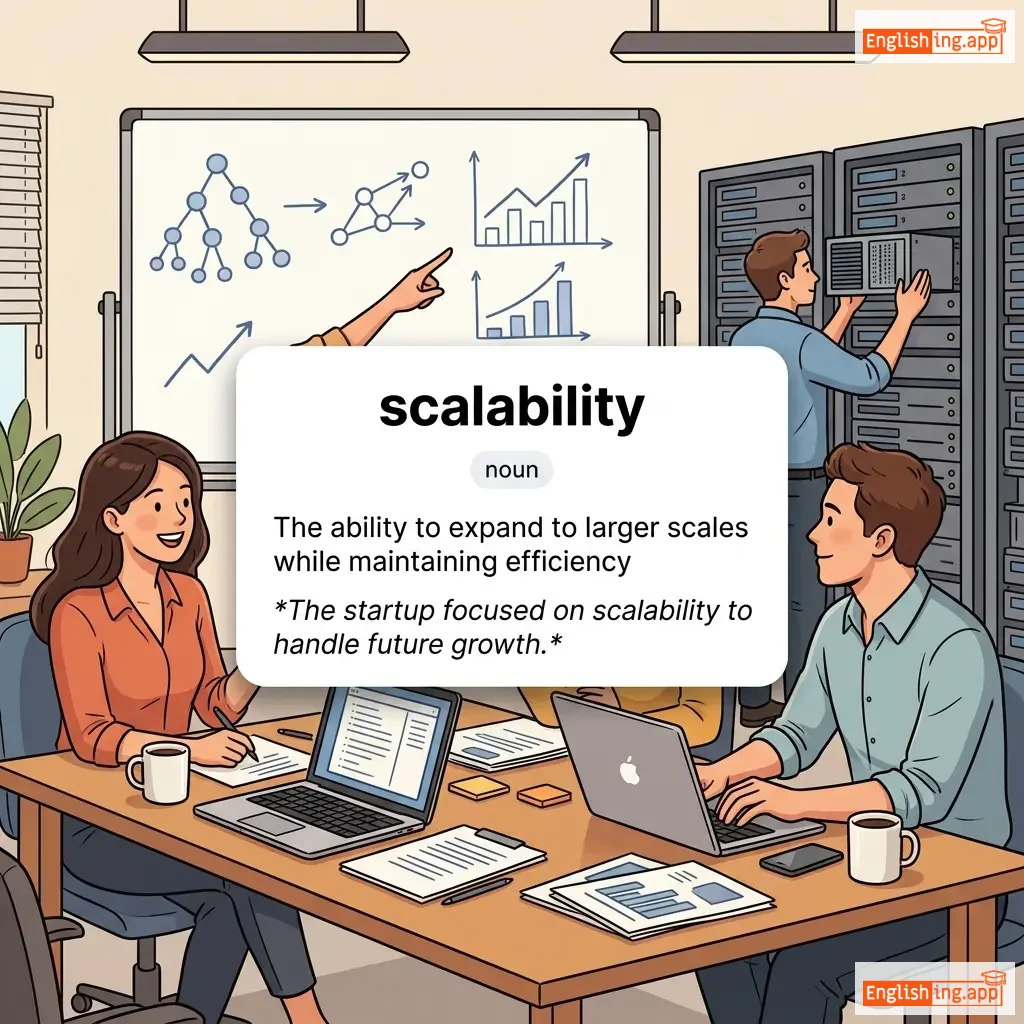
scalability definition card — visual illustration of the meaning
noun
/ˌskeɪ.ləˈbɪl.ə.ti/
विस्तारणीयता (vistaaraniyata)

The ability to expand to larger scales while maintaining efficiency

"The startup focused on scalability to handle future growth."

"स्टार्टअप ने भविष्य की वृद्धि को संभालने के लिए विस्तारनीयता पर ध्यान केंद्रित किया।" (Startap ne bhavishya ki vruddhi ko sambhalne ke liye vistaaraniyata par dhyan kendrit kiya.)
noun/verb
/skeɪl/
माप / आकार बढ़ाना (maap / aakaar badhana)

A system of ordered marks used for measurement; also means to climb or to adjust in size.

"The company plans to scale its operations globally."

"कंपनी अपनी संचालन गतिविधियों को वैश्विक रूप से विस्तार करने की योजना बना रही है।" (Kampani apni sanchaalan gatividhiyon ko vaishvik roop se vistar karne ki yojana bana rahi hai.)
noun
/ˈskælpəl/
सर्जरी के लिए चाकू (surgery ke liye chaku)

A small and extremely sharp bladed instrument used for surgery and dissection.

"The surgeon carefully used a scalpel to make the first incision."

"सर्जन ने पहले चीरे को बनाने के लिए सावधानी से एक स्कैल्पल का उपयोग किया।" (Sarjan ne pehle cheere ko banane ke liye saavdhaani se ek scalpel ka upyog kiya.)
adjective
/ˈskeɪ.li/
कुठलयुक्त; खुरदरा (kuthlayukto; khuradraa)

covered with scales; having a rough surface like scales

"The fish has scaly skin."

"मछली की त्वचा खुरदरी है।" (machhli ki tvacha khuradri hai.)
verb
/skæn/
खुशी (khushi)

To look at something carefully or quickly; to digitally copy or capture an image or document.

"She scanned the document before sending it by email."

"जब उसने पुरस्कार प्राप्त किया तो वह अपनी खुशी छिपा नहीं पाई।" (Jab usne puraskar prapt kiya to woh apni khushi chhupa nahi pai.)
noun
/ˈskændəl/
घोटाला (ghotala)

an event or action that causes public outrage or damage to one's reputation

"The politician's affair became a public scandal."

"राजनीतिक नेता का अफेयर एक सार्वजनिक घोटाले में बदल गया।" (Rajnaitik neta ka affair ek sarvajanik ghotale mein badal gaya.)
adjective
/skænt/
अल्प (alp)

Barely sufficient or inadequate in amount, degree, or quantity.

"There was scant evidence to support the claim."

"दावे का समर्थन करने के लिए बहुत कम प्रमाण था।" (Daave ka samarthan karne ke liye bahut kam pramaan tha.)
adjective
/ˈskænti/
अल्प (alp)

Small in quantity; insufficient or meager.

"The refugees survived on scanty food supplies."

"शरणार्थी अल्प भोजन आपूर्ति पर जीवित रहे।" (Shoranarthi alp bhojan aapurti par jeevit rahe.)
noun
/ˈskeɪpˌɡoʊt/
बलि का बकरा (bali ka bakra)

A person who is unfairly blamed for problems, mistakes, or faults of others.

"He became the scapegoat for the company’s financial troubles."

"वह कंपनी की वित्तीय समस्याओं के लिए बलि का बकरा बन गया।" (vah company ki vittiya samasyaon ke liye bali ka bakra ban gaya.)
noun
/skɑːr/
दाग (daag)

a mark left on the skin after a wound has healed; lasting emotional damage

"The accident left a permanent scar on his forehead."

"दुर्घटना ने उसके माथे पर स्थायी दाग छोड़ दिया।" (durghatna ne uske mathe par sthayi daag chhod diya.)
adjective
/skɛərs/
अभाव (abhaav)

insufficient in quantity; hard to find

"Water was scarce during the long drought."

"लंबी सूखा के दौरान पानी का अभाव था।" (Lambi sukha ke dauran paani ka abhaav tha.)
adverb
/ˈskeəs.li/
मुश्किल से; शायद ही; बस थोड़ी देर में (mushkil se; shayad hi; bas thodi der mein)

hardly; barely; only just

"I could scarcely believe my eyes."

"मैं अपनी आँखों पर मुश्किल से विश्वास कर सका।" (main apni aankhon par mushkil se vishwas kar saka)
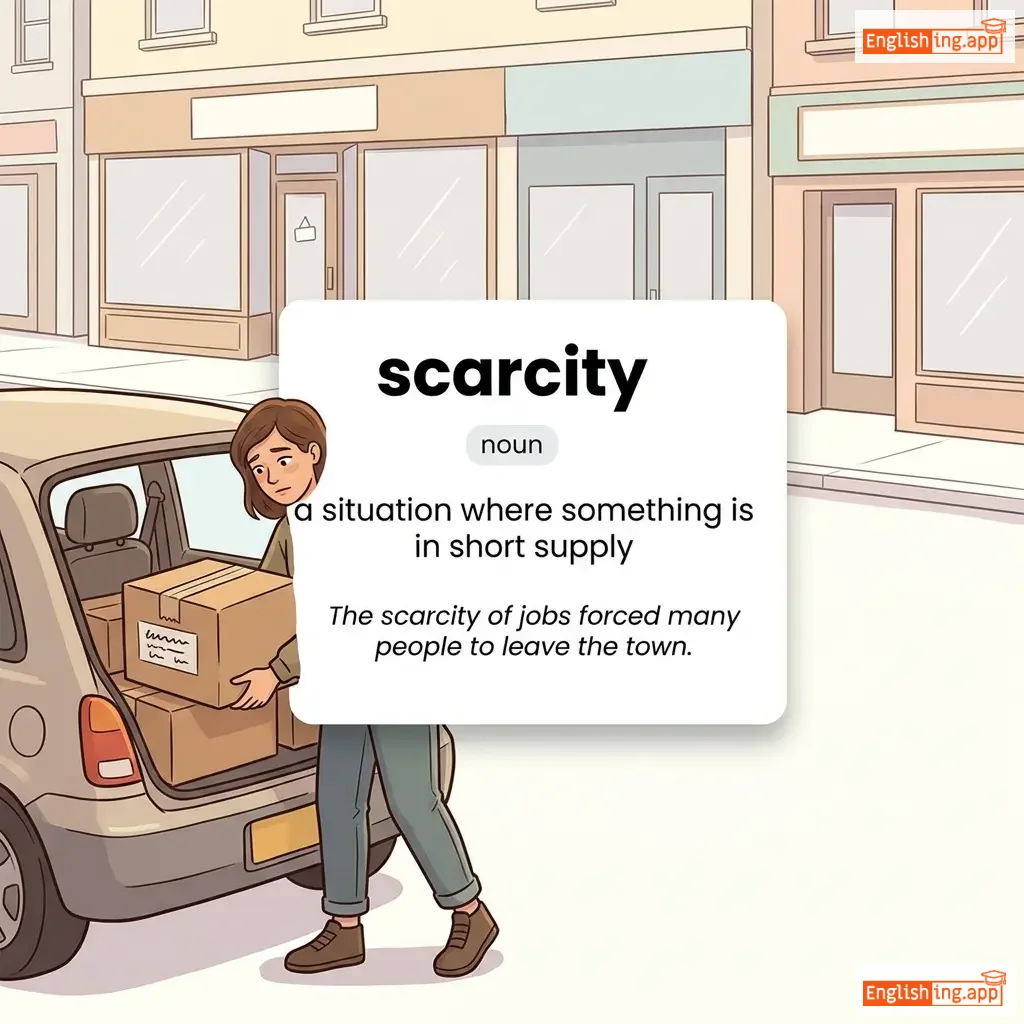
scarcity definition card — visual illustration of the meaning
noun
/ˈskɛərsəti/
कमी (kami)

a situation where something is in short supply

"The scarcity of jobs forced many people to leave the town."

"नौकरी की कमी ने कई लोगों को शहर छोड़ने पर मजबूर किया।" (Naukri ki kami ne kai logon ko shahar chhodne par majboor kiya.)
verb
/skeər/
डराना (darana)

to frighten someone or make them feel afraid

"The loud noise scared the baby."

"तेज़ आवाज़ ने बच्चे को डरा दिया।" (tez awaaz ne bachche ko dara diya.)
adjective
/skɛrd/
डरा हुआ (dara hua)

feeling afraid or worried

"She was scared of the dark."

"वह अंधेरे से डरी हुई थी।" (Woh andhere se dari hui thi.)