वोकैबुलरीज

इंग्लिश वोकैबुलरी डिस्कवर, लर्न और मास्टर करें

adjective
/ˈsɔːlti/
नमकीन (namkeen)

having the taste of salt; containing salt; tasting of seawater

"The salty ocean water made her thirsty."

"नमकीन समुद्र का पानी उसे प्यासा बना दिया।" (namkeen samudra ka pani use pyaasa bana diya)
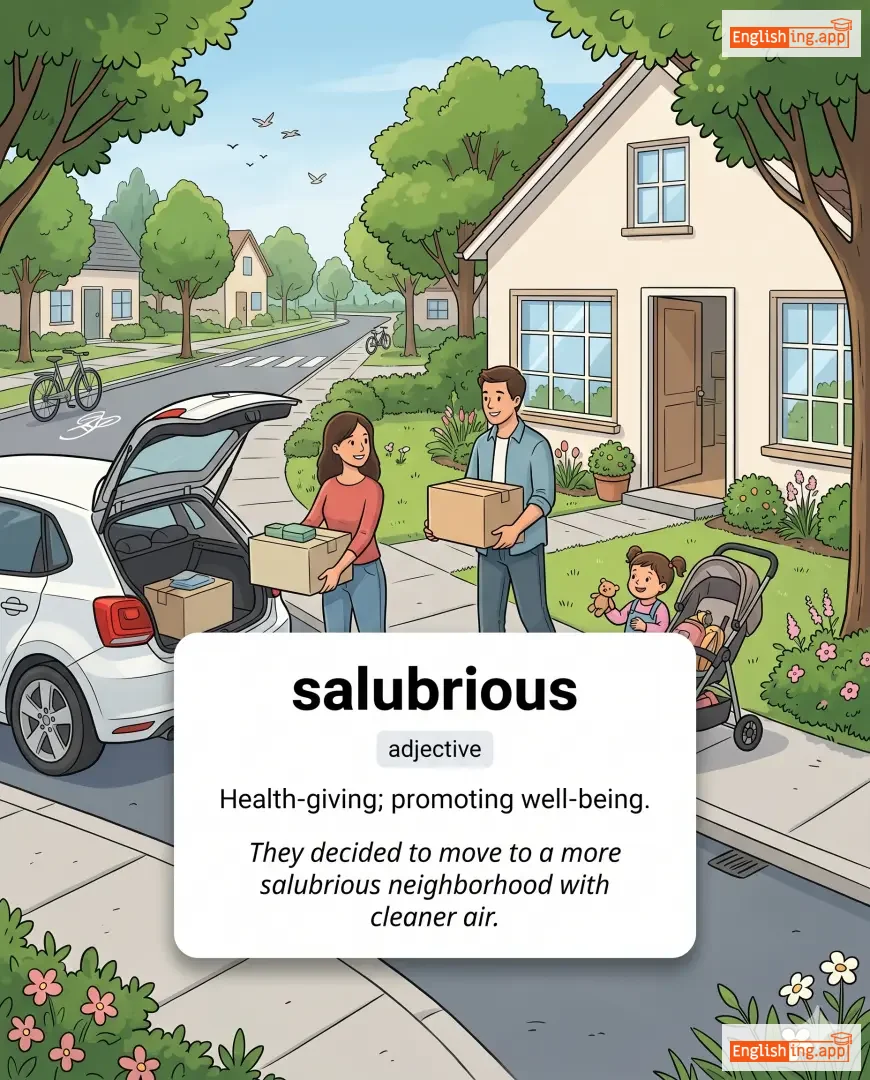
salubrious definition card — visual illustration of the meaning
adjective
/səˈluː.bri.əs/
स्वस्थकारी (swasthkari)

Health-giving; promoting well-being.

"They decided to move to a more salubrious neighborhood with cleaner air."

"उन्होंने स्वच्छ हवा वाले एक अधिक स्वस्थकारी मोहल्ले में रहने का निर्णय लिया।" (Unhone swachh hawa wale ek adhik swasthkaari mohalle mein rehne ka nirnay liya.)
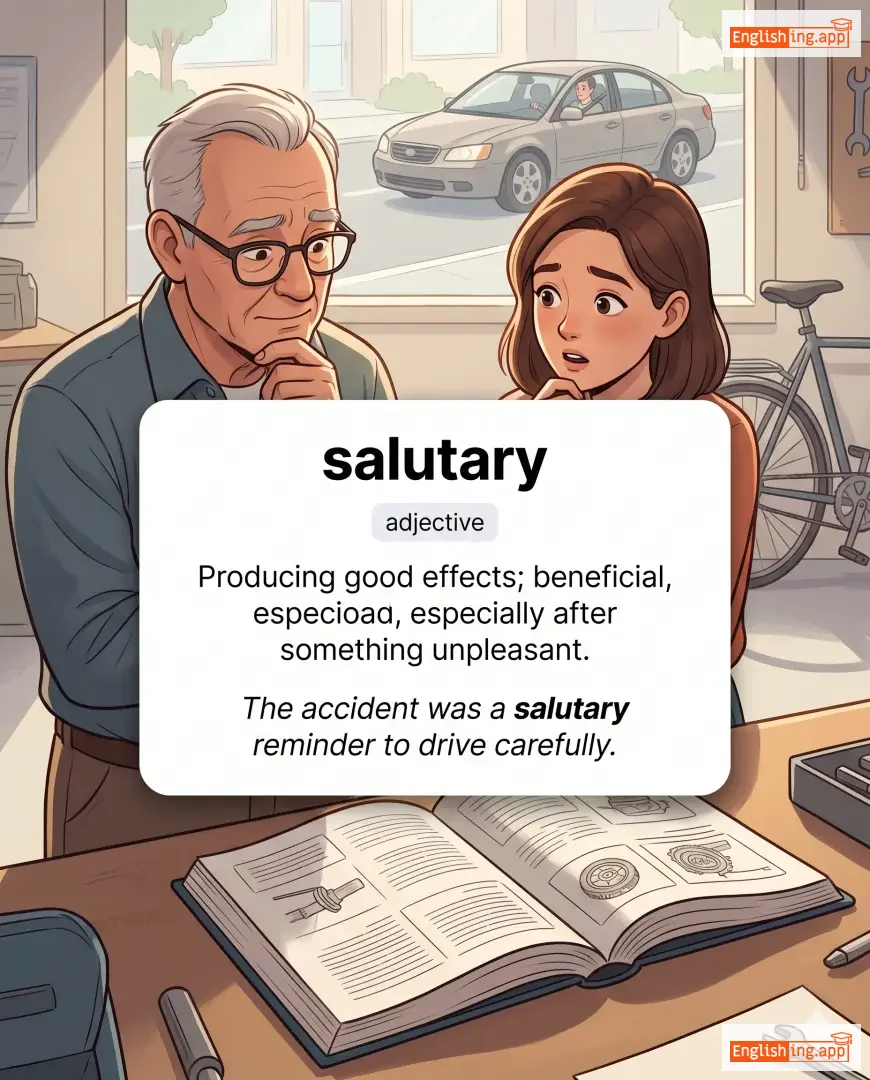
salutary definition card — visual illustration of the meaning
adjective
/ˈsæljʊˌtɛri/
कल्याणकारी (kalyankari)

Producing good effects; beneficial, especially after something unpleasant.

"The accident was a salutary reminder to drive carefully."

"दुर्घटना एक कल्याणकारी याददाश्त थी कि सावधानी से गाड़ी चलानी चाहिए।" (Durghatna ek kalyankari yaaddasht thi ki saavdhaani se gaadi chalaani chahiye.)
noun
/ˌsæljʊˈteɪʃən/
अभिवादन (abhivadan)

A gesture or utterance of greeting, goodwill, or courtesy.

"He raised his hat as a polite salutation."

"उसने एक शिष्टाचार के रूप में अपना हैट उठाया।" (Usne ek shishtachar ke roop mein apna hat uthaya.)
adjective
/səˈluːtəˌtɔri/
उद्घाटन संबोधन (udghatan sambodhan)

Relating to or expressing a greeting or an address, especially at the beginning of a speech.

"She delivered a salutatory address at the graduation ceremony."

"उसने स्नातक समारोह में एक उद्घाटन संबोधन दिया।" (Usne snatak samaroah mein ek udghatan sambodhan diya.)
salute definition card — visual illustration of the meaning
verb
/səˈluːt/
सलाम करना (salaam karna)

to greet with respect; to honor

"The soldiers saluted their commanding officer."

"सैनिकों ने अपने कमांडिंग ऑफिसर को सलाम किया।" (Sainikon ne apne commanding officer ko salaam kiya.)
verb
/ˈsælvɪdʒ/
बचाना (bachana)

To save something from loss, damage, or destruction.

"They managed to salvage some goods from the fire."

"उन्होंने आग से कुछ माल बचाने में कामयाबी पाई।" (Unhone aag se kuch maal bachane mein kaamyabi paayi.)
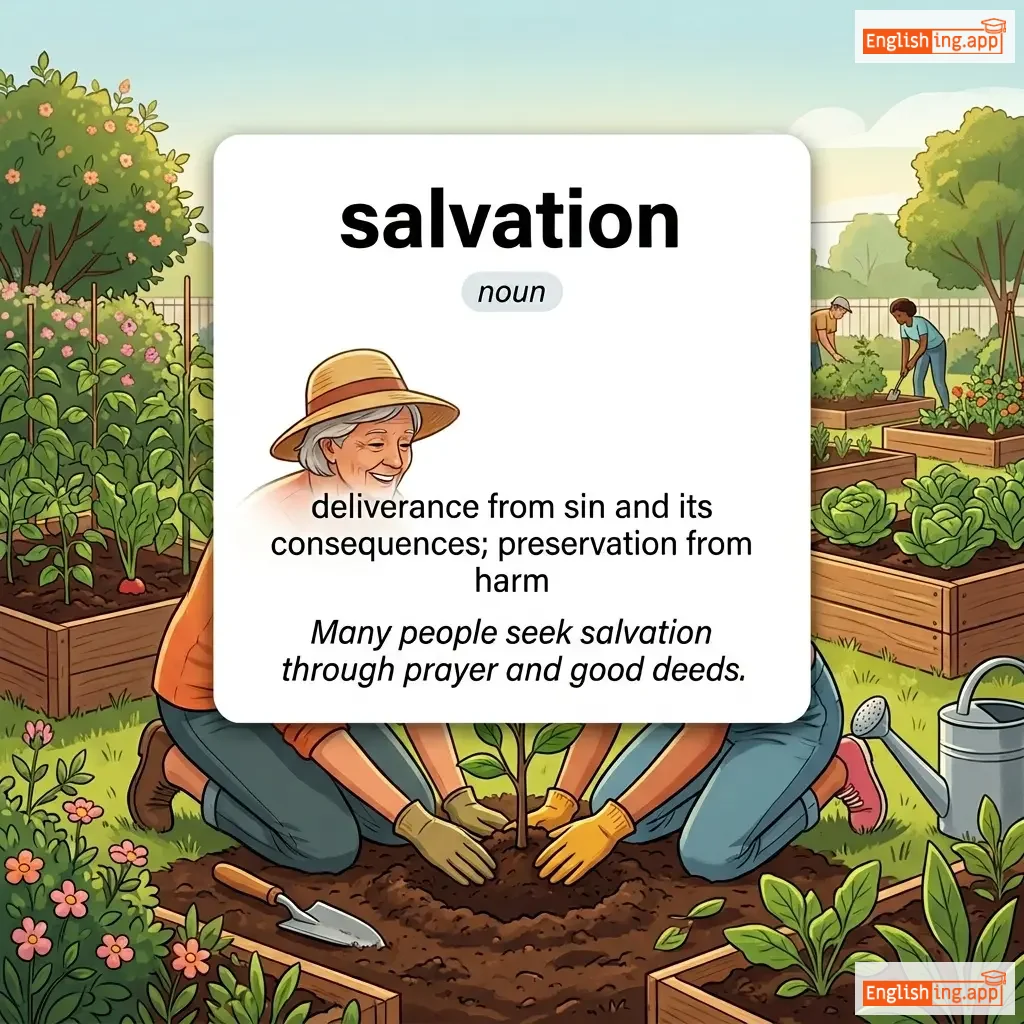
salvation definition card — visual illustration of the meaning
noun
/sælˈveɪ.ʃən/
मोक्ष (moksha)

deliverance from sin and its consequences; preservation from harm

"Many people seek salvation through prayer and good deeds."

"कई लोग प्रार्थना और अच्छे कामों के माध्यम से मोक्ष की तलाश करते हैं।" (kai log prarthna aur achhe kamon ke madhyam se moksha ki talash karte hain.)
noun
/sælv/
मलहम (malham)

An ointment used to promote healing of the skin or as protection.

"She applied a salve to the burn on her hand."

"उसने अपनी हाथ की जलन पर एक मलहम लगाया।" (Usne apni haath ki jalan par ek malham lagaya.)
noun
/ˈsælvər/
सिल्वर ट्रे (silver tre)

A tray, typically made of silver, used for serving food or drinks.

"The butler brought in the tea on a silver salver."

"बटलर चाय को सिल्वर ट्रे पर लाए।" (Butler chai ko silver tre par laaye.)
noun
/ˈsælvoʊ/
एक साथ गोलीबारी (ek saath golibaari)

A simultaneous discharge of guns or release of bombs; a sudden outburst of cheers or applause.

"The soldiers fired a salvo to honor the fallen general."

"सैनिकों ने मरे हुए जनरल को सम्मानित करने के लिए एक साथ गोलीबारी की।" (Sainikon ne mare hue general ko sammaanit karne ke liye ek saath golibaari ki.)
adjective
/seɪm/
एक जैसा (ek jaisa)

identical; not different or changed

"We wore the same dress at the party."

"हमने पार्टी में वही ड्रेस पहनी थी।" (Humne party mein wahi dress pehni thi.)
noun
/ˈsæm.pəl/
नमूना (namuna)

a small part or quantity intended to show what the whole is like

"She gave me a sample of the fabric to see if I liked it."

"उसने मुझे यह देखने के लिए कपड़े का एक नमूना दिया कि क्या मुझे यह पसंद आया" (Usne mujhe yah dekhne ke liye kapde ka ek namuna diya ki kya mujhe yah pasand aaya)
verb
/ˈsæŋktɪfaɪ/
पवित्र करना (pavitra karna)

To make holy or sacred; to set apart as holy.

"The priest sanctified the new church building."

"पादरी ने नए चर्च की इमारत को पवित्र किया।" (Padri ne naye church ki imarat ko pavitra kiya.)
adjective
/ˌsæŋktɪˈmoʊniəs/
ढोंगी धार्मिक (dhongi dharmik)

Making a show of being morally superior to others; hypocritically pious.

"He gave a sanctimonious speech about honesty while he himself was corrupt."

"उसने ईमानदारी पर एक ढोंगी भाषण दिया जबकि वह खुद भ्रष्ट था।" (Usne imandari par ek dhongi bhashan diya jabki wah khud bhrasht tha.)
Sanction definition card — visual illustration of the meaning
noun/verb
/ˈsæŋkʃən/
प्रतिबंध / अनुमोदन (pratibandh / anumodan)

An official permission or approval; also a penalty imposed to enforce rules.

"The government imposed sanctions on the company for violating trade laws."

"सरकार ने व्यापार कानूनों का उल्लंघन करने के लिए कंपनी पर प्रतिबंध लगाए।" (Sarkar ne vyapar kanoonon ka ullanghan karne ke liye company par pratibandh lagaye.)
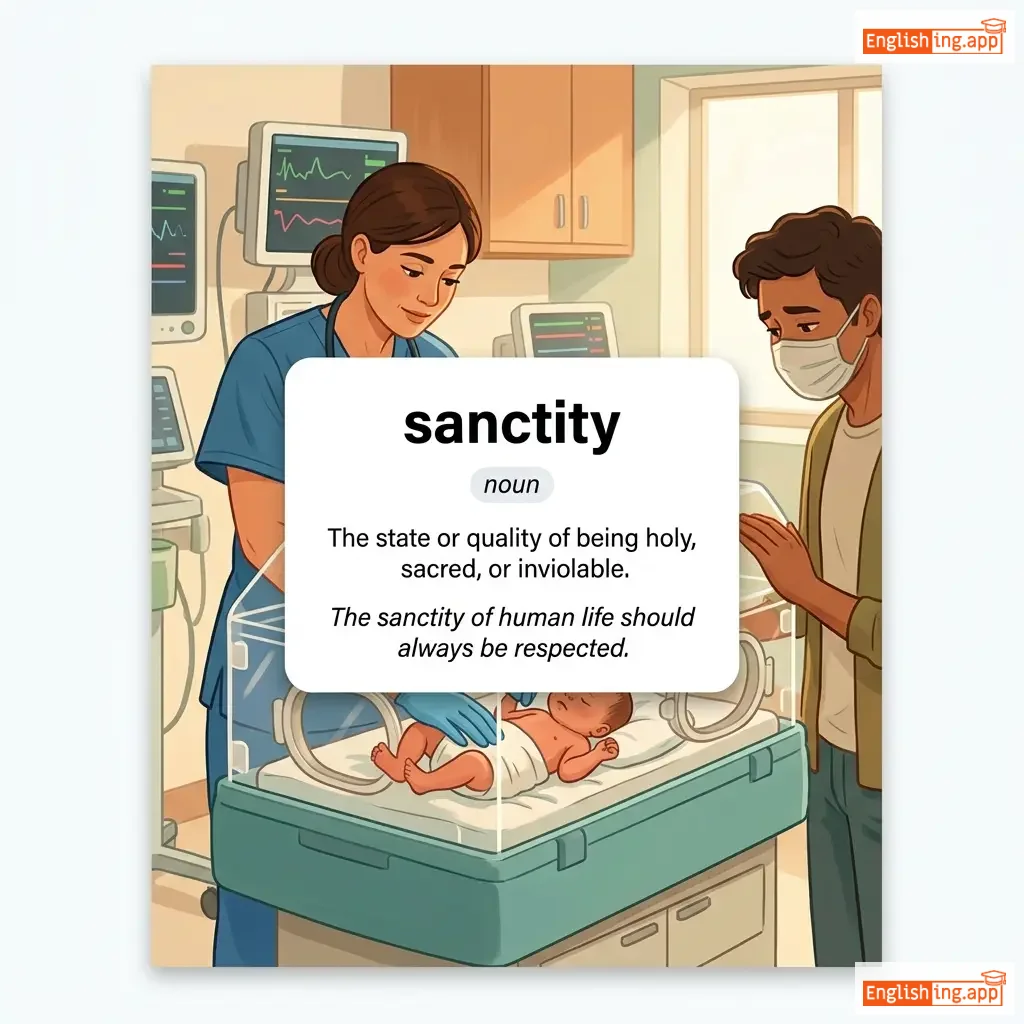
sanctity definition card — visual illustration of the meaning
noun
/ˈsæŋk.tə.ti/
पवित्रता (pavitrata)

The state or quality of being holy, sacred, or inviolable.

"The sanctity of human life should always be respected."

"मानव जीवन की पवित्रता को हमेशा सम्मानित किया जाना चाहिए।" (manav jeevan ki pavitrata ko hamesha sammaanit kiya jana chahiye.)
noun
/ˈsæŋk.tʃuˌɛr.i/
आश्रयस्थान (ashrayasthan)

A place of safety, refuge, or protection; a sacred place.

"The forest is a sanctuary for endangered animals."

"वन समाप्ति के लिए एक आश्रयस्थान है।" (van samapti ke liye ek ashrayasthan hai.)
noun
/sænd/
खुशी (khushi)

Small loose grains of crushed rock, found on beaches and deserts.

"Children built castles out of sand on the beach."

"उसे जब पुरस्कार मिला तो वह अपनी खुशी छिपा नहीं पाई।" (use jab puraskar mila to vah apni khushi chhupa nahin paayi.)
noun
/ˈsændwɪtʃ/
सैंडविच (sandwich)

two pieces of bread with food such as meat, cheese, or salad between them

"I made a chicken sandwich for lunch."

"मैंने लंच के लिए चिकन सैंडविच बनाया।" (maine lunch ke liye chicken sandwich banaya.)
adjective
/ˈsændi/
रेतिला; बालूदार; (retila, baludar)

covered with sand; containing sand; having the texture of sand

"The sandy beach stretched for miles along the coast."

"रेतिला समुद्र तट तट के साथ मीलों तक फैला हुआ था।" (retila samudra tat tat ke sath milon tak phaila hua tha)
noun
/ˌsɒ̃ˈfrwɑː/
ठंडा दिमाग (thanda dimaag)

Composure or coolness, especially in difficult situations.

"The leader handled the crisis with remarkable sang-froid."

"नेता ने संकट का सामना अद्वितीय ठंडे दिमाग के साथ किया।" (neta ne sankat ka samna advitiya thande dimaag ke saath kiya.)
noun
/ˌsɒ̃ˈfrwɑː/
संतुलन (santulan)

Composure or coolness under pressure.

"She impressed everyone with her sangfroid during the interview."

"साक्षात्कार के दौरान उसने अपने संतुलन से सभी को प्रभावित किया।" (saakshaatkaar ke dauraan usne apne santulan se sabhi ko prabhavit kiya.)
adjective
/ˈsæŋɡwɪˌnɛri/
रक्तरंजित (raktaranjit)

Involving or causing much bloodshed; bloodthirsty.

"The battle was one of the most sanguinary conflicts of the war."

"युद्ध सबसे रक्तरंजित संघर्षों में से एक था।" (Yudh sabse raktaranjit sangharshon mein se ek tha.)
adjective
/ˈsæŋɡwɪn/
आशावादी (aashavadi)

Optimistic or positive, especially in a difficult situation.

"Despite the challenges, she remained sanguine about the future."

"चुनौतियों के बावजूद, वह भविष्य को लेकर आशावादी रही।" (Chunautiyon ke bawajood, wah bhavishya ko lekar aashavadi rahi.)
adjective
/sæŋˈɡwɪniəs/
रक्त संबंधित (rakt sambandhit)

Relating to blood; bloody.

"The surgeon examined the sanguineous discharge from the wound."

"सर्जन ने घाव से रक्तमय स्राव की जांच की।" (Sarjan ne ghaav se raktamay sraav ki jaanch ki.)
sanitation definition card — visual illustration of the meaning
noun
/ˌsænɪˈteɪʃən/
स्वच्छता (swachhata)

The systems and practices for maintaining hygiene and public health, especially through clean water and sewage disposal.

"Improving sanitation can reduce the spread of diseases."

"स्वच्छता में सुधार से बीमारियों के फैलाव को कम किया जा सकता है।" (Swachhata mein sudhaar se bimariyon ke phailav ko kam kiya ja sakta hai.)
sanitization definition card — visual illustration of the meaning
noun
ˌsæn.ɪ.taɪˈzeɪ.ʃən
स्वच्छता (swachhata)

The process of cleaning and disinfecting to eliminate germs and bacteria.

"Regular sanitization keeps appliances germ-free."

"नियमित स्वच्छता उपकरणों को कीटाणुमुक्त रखती है।" (Niyamit swachhata upkaran ko keetaanumukt rakhti hai.)
verb, noun
/sæp/
रस / शक्ति घटाना (ras / shakti ghataana)

As a noun: the vital fluid in plants; As a verb: to gradually weaken or drain strength.

"The long journey began to sap his energy."

"लंबी यात्रा ने उसकी ऊर्जा को घटाना शुरू कर दिया।" (Lambi yatra ne uski urja ko ghataana shuru kar diya.)
noun
/ˈsæf.aɪər/
नीलमणि (neelmani)

a precious stone that is typically blue in color

"The royal crown was adorned with a large sapphire."

"राजसी मुकुट एक बड़े नीलमणि से सजा था।" (raajsi mukut ek bade neelmani se saja tha.)
adjective
/ˈsæpɪd/
स्वादिष्ट (swadisht)

Having a pleasant taste; flavorful.

"The chef prepared a sapid dish that delighted everyone at the table."

"शेफ ने एक स्वादिष्ट डिश तैयार की थी जो टेबल पर सभी को पसंद आई।" (Shef ne ek swadisht dish tayar ki thi jo table par sabhi ko pasand aayi.)
noun
/ˈseɪpiəns/
ज्ञान (gyan)

Wisdom or intelligence.

"Her sapience in solving problems earned her the respect of her colleagues."

"समस्याओं को हल करने में उसकी ज्ञानशीलता ने उसे अपने सहकर्मियों का सम्मान दिलाया।" (Samasyayon ko hal karne mein uski gyaan sheelta ne use apne sahkarmiyon ka sammaan dilaya.)
adjective
/ˈseɪpiənt/
ज्ञानी (gyani)

Wise, or appearing to be wise.

"The professor gave a sapient response to the complex question."

"प्रोफेसर ने जटिल प्रश्न का ज्ञानी उत्तर दिया।" (Professor ne jatil prashn ka gyani uttar diya.)
adjective
/ˌseɪpiˈɛnʃəl/
ज्ञानी से संबंधित (jnani se sambandhit)

Relating to wisdom or knowledge, often in a religious or philosophical sense.

"The monk shared sapiential teachings with his students."

"भिक्षु ने अपने छात्रों के साथ ज्ञानी से संबंधित शिक्षाएं साझा कीं।" (Bhikkhu ne apne chatron ke saath jnani se sambandhit shikshaayein saanjha ki.)
adjective
/ˌsæpəˈneɪʃəs/
साबुन जैसा (saabun jaisa)

Soapy or having the qualities of soap.

"The plant has saponaceous leaves that produce foam when rubbed in water."

"पौधे के पास साबुन जैसे पत्ते हैं जो पानी में रगड़ने पर झाग बनाते हैं।" (Paudhe ke paas saabun jaise patte hain jo paani mein ragadne par jhaag banaate hain.)
noun
/ˈsɑːrˌkæzəm/
व्यंग्य (vyangya)

The use of irony to mock or convey contempt.

"His sarcasm often made people laugh but sometimes offended them."

"उसका व्यंग्य अक्सर लोगों को हंसाता था लेकिन कभी-कभी उन्हें नाराज कर देता था।" (uska vyangya aksar logon ko hansata tha lekin kabhi-kabhi unhe naaraaz kar deta tha.)
adjective
/sɑːrˈkæstɪk/
व्यंग्यात्मक (vyangyatak)

Using irony or mockery to convey contempt or humor.

"She made a sarcastic remark about his cooking."

"उसने उसके पकवान के बारे में एक व्यंग्यात्मक टिप्पणी की।" (Usne uske pakwaan ke baare mein ek vyangyatak tippani ki.)
noun
/sɑːrˈkɒfəɡəs/
पत्थर का ताबूत (patthar ka taboot)

A stone coffin, often decorated, used in ancient times.

"The museum displayed a beautifully carved sarcophagus from ancient Egypt."

"संग्रहालय में प्राचीन मिस्र का एक खूबसूरती से खुदा हुआ पत्थर का ताबूत प्रदर्शित किया गया।" (Sangrahalay mein prachin misr ka ek khoobsurati se khuda hua patthar ka taboot pradarshit kiya gaya.)
sardonic definition card — visual illustration of the meaning
adjective
/sɑːrˈdɒnɪk/
सुख (sukh)

Grimly mocking or cynical.

"She gave him a sardonic smile after hearing his excuse."

"जब उसे पुरस्कार मिला, तो वह अपनी खुशी छुपा नहीं सकी।" (Jab use puraskaar mila, to vah apni khushi chhupa nahin sakee.)
noun
/ˈsɑːri/
साड़ी (saadi)

a garment consisting of a length of cotton or silk elaborately draped around the body, traditionally worn by women from South Asia

"She looked elegant in her red silk saree at the festival."

"वह त्योहार में अपनी लाल रेशमी साड़ी में बेहद खूबसूरत लग रही थी।" (vah tyohar mein apni lal reshmi saadi mein behad khoobsurat lag rahi thi.)
sartorial definition card — visual illustration of the meaning
adjective
/sɑːrˈtɔːriəl/
पोशाक संबंधित (poshaak sambandhit)

Relating to tailoring, clothes, or style of dress.

"The actor is known for his sartorial elegance on the red carpet."

"अभिनेता को रेड कार्पेट पर अपनी पोशाक संबंधी शौक के लिए जाना जाता है।" (abhineta ko red carpet par apni poshaak sambandhit shauk ke liye jana jata hai.)
noun
/ˈseɪ.tən/
शैतान (shaitan)

the chief evil spirit; the Devil in Christian and Islamic belief

"According to religious texts, Satan tempts people to sin."

"धार्मिक ग्रंथों के अनुसार, शैतान लोगों को पाप करने के लिए प्रेरित करता है।" (dharmik granthon ke anusar, shaitan logon ko paap karne ke liye prerit karta hai.)
verb
/seɪt/
तृप्त करना (tripta karna)

To satisfy fully or to excess.

"The huge meal sated their hunger after the long journey."

"लंबी यात्रा के बाद उस विशाल भोजन ने उनकी भूख को शांत कर दिया।" (lambi yatra ke baad us vishal bhojan ne unki bhukh ko shaant kar diya.)
satellite definition card — visual illustration of the meaning
noun
/ˈsætəlaɪt/
उपग्रह (upagrah)

An artificial body placed in orbit around the earth or another planet to collect information or for communication.

"The weather satellite provided real-time images of the storm."

"मौसम उपग्रह ने तूफान की वास्तविक समय की छवियाँ प्रदान की।" (Mausam upagrah ne toofan ki vastavik samay ki chhaviyaan pradan ki.)
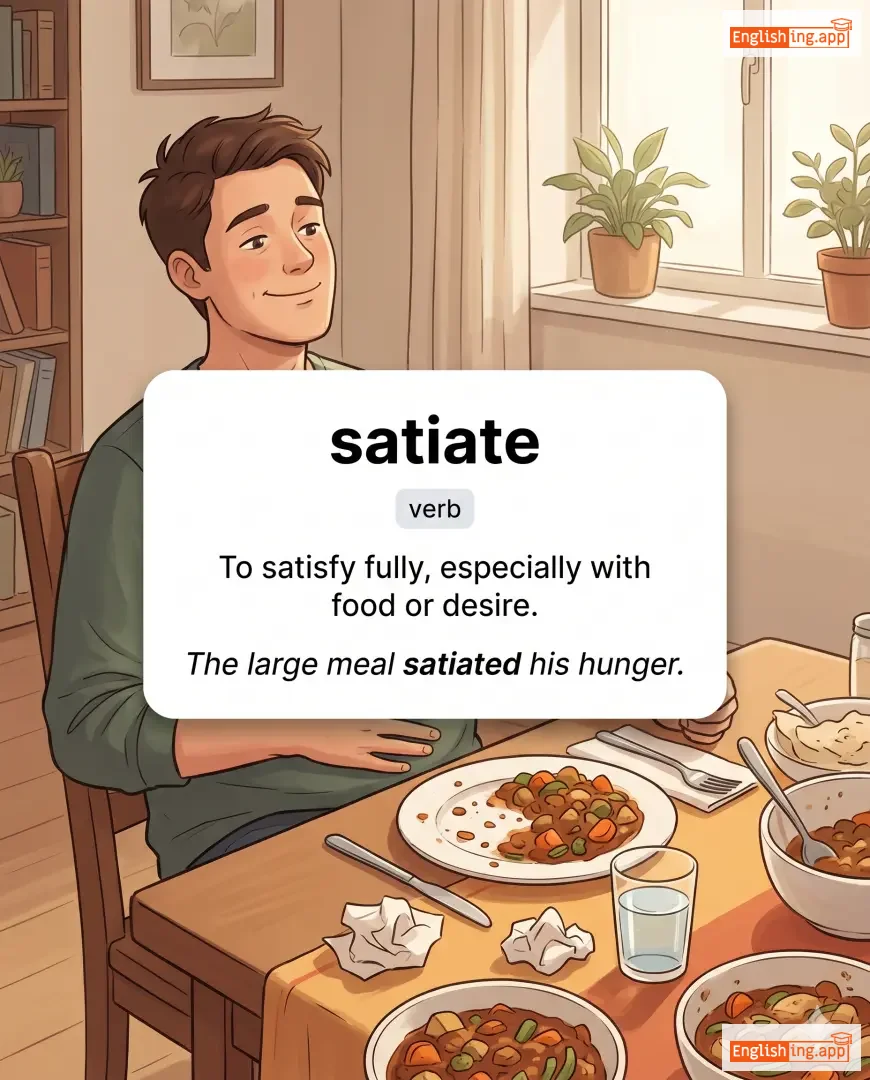
satiate definition card — visual illustration of the meaning
verb
/ˈseɪʃiˌeɪt/
पूर्ण तृप्त करना (purn tript karna)

To satisfy fully, especially with food or desire.

"The large meal satiated his hunger."

"बड़ा खाना उसकी भूख को संतुष्ट कर दिया।" (Bada khana uski bhukh ko santusht kar diya.)
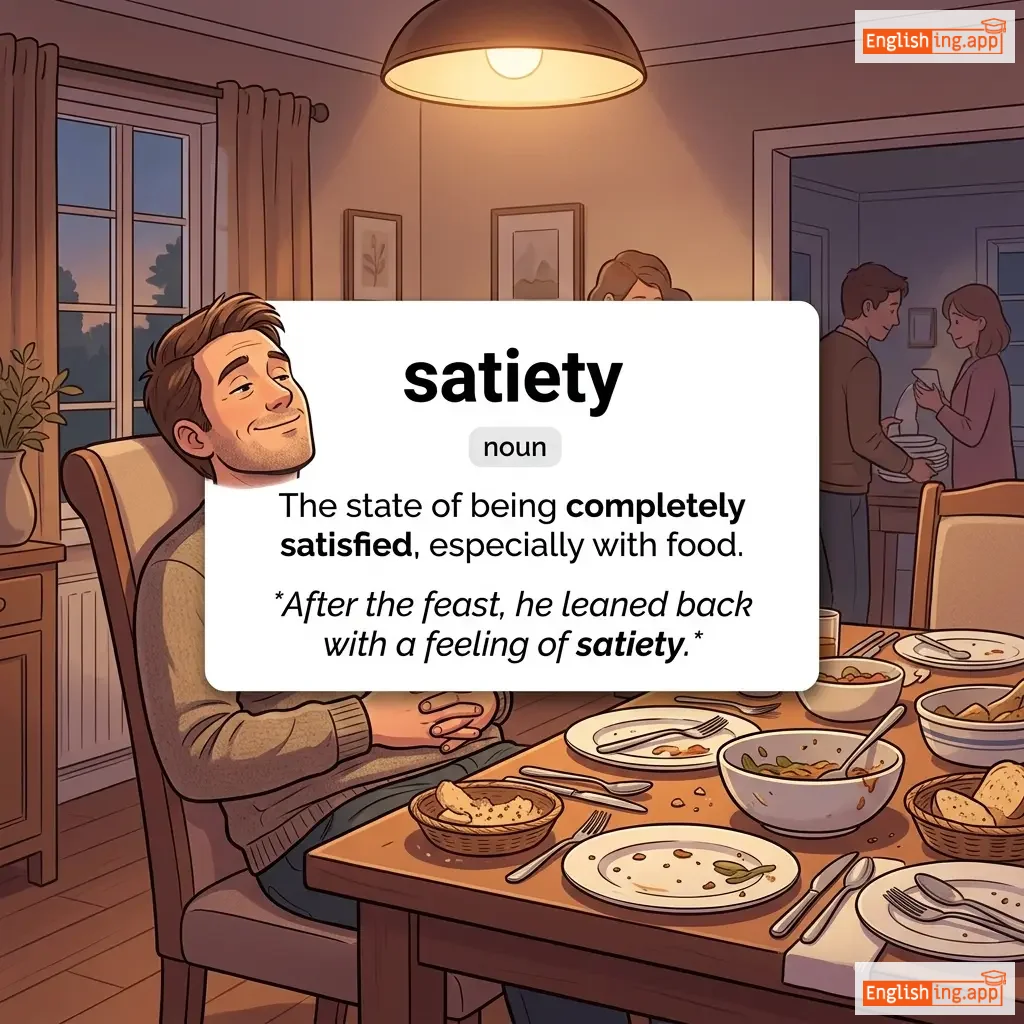
satiety definition card — visual illustration of the meaning
noun
/səˈtaɪ.ə.ti/
तृप्ति (tripti)

The state of being completely satisfied, especially with food.

"After the feast, he leaned back with a feeling of satiety."

"भोजन के बाद, वह तृप्ति के साथ पीछे झुका।" (Bhojan ke baad, wah tripti ke saath peeche jhuka.)
noun
/ˈsætaɪər/
व्यंग्य (vyangya)

The use of humor, irony, or exaggeration to criticize people's stupidity or vices.

"The play was a brilliant satire on modern politics."

"नाटक आधुनिक राजनीति पर एक शानदार व्यंग्य था।" (Natak aadhunik rajneeti par ek shandar vyangya tha.)
adjective
/səˈtɪrɪk/
व्यंग्यात्मक (vyangyatmaka)

Relating to or using satire.

"The novel takes a satiric view of urban life."

"उपन्यास शहरी जीवन पर एक व्यंग्यात्मक दृष्टिकोण प्रस्तुत करता है।" (Upanyas shahari jeevan par ek vyangyatmaka drishtikon prastut karta hai.)
adjective
/səˈtɪrɪkəl/
व्यंग्यात्मक (vyangyatmak)

containing or using satire to criticize or mock

"The satirical cartoon mocked the government's new policy."

"व्यंग्यात्मक कार्टून ने सरकार की नई नीति का मजाक उड़ाया।" (Vyangyatmak cartoon ne sarkar ki nai niti ka mazak udaaya.)
verb
/ˈsætəˌraɪz/
व्यंग्य करना (vyangya karna)

to mock or criticize something using satire

"The play satirizes the greed of modern corporations."

"नाटक आधुनिक कंपनियों की लालच का व्यंग्य करता है।" (Natak aadhunik kampaniyon ki lalach ka vyangya karta hai.)