वोकैबुलरीज

इंग्लिश वोकैबुलरी डिस्कवर, लर्न और मास्टर करें

adjective
/ˈsɪlkən/
रेशमी; मुलायम; चिकना; (silken)

made of silk; smooth and soft like silk

"She wore a beautiful silken dress to the party."

"वह पार्टी में एक सुंदर रेशमी ड्रेस पहनकर आई।" (vah party mein ek sundar reshmi dress pehankar aayi.)
adjective
/ˈsɪli/
मूर्ख (murkh)

showing a lack of good sense; foolish or playful

"He made a silly mistake on the test."

"उसने परीक्षा में एक मूर्खता भरी गलती की।" (Usne pariksha mein ek murkhta bhari galti ki.)
noun
/sɪlt/
कीचड़ (keechad)

Fine sand, clay, or other material carried by running water and deposited as a sediment.

"The river deposited layers of silt along its banks."

"नदी ने अपनी तटरेखाओं के साथ कीचड़ की परतें जमा की।" (Nadi ne apni tatrekhaon ke saath keechad ki paratein jama ki.)
noun, adjective
/ˈsɪlvər/
चांदी (chaandi)

a shiny gray-white metal, often used for coins, jewelry, and decoration

"She wore a beautiful silver necklace for the party."

"उसने पार्टी के लिए एक सुंदर चांदी की हार पहना।" (Usne party ke liye ek sundar chaandi ki haar pehna.)
noun
/ˈsɪlvər kɑrp/
रजत मछली (rajat machhli)

a large freshwater fish with silvery scales, commonly farmed for food

"Silver carp is widely cultivated in fish farms across Asia."

"रजत मछली एशिया भर में मछली के खेतों में व्यापक रूप से पाली जाती है।" (rajat machhli eshiya bhar me machhli ke kheton me vyapak roop se pali jati hai.)
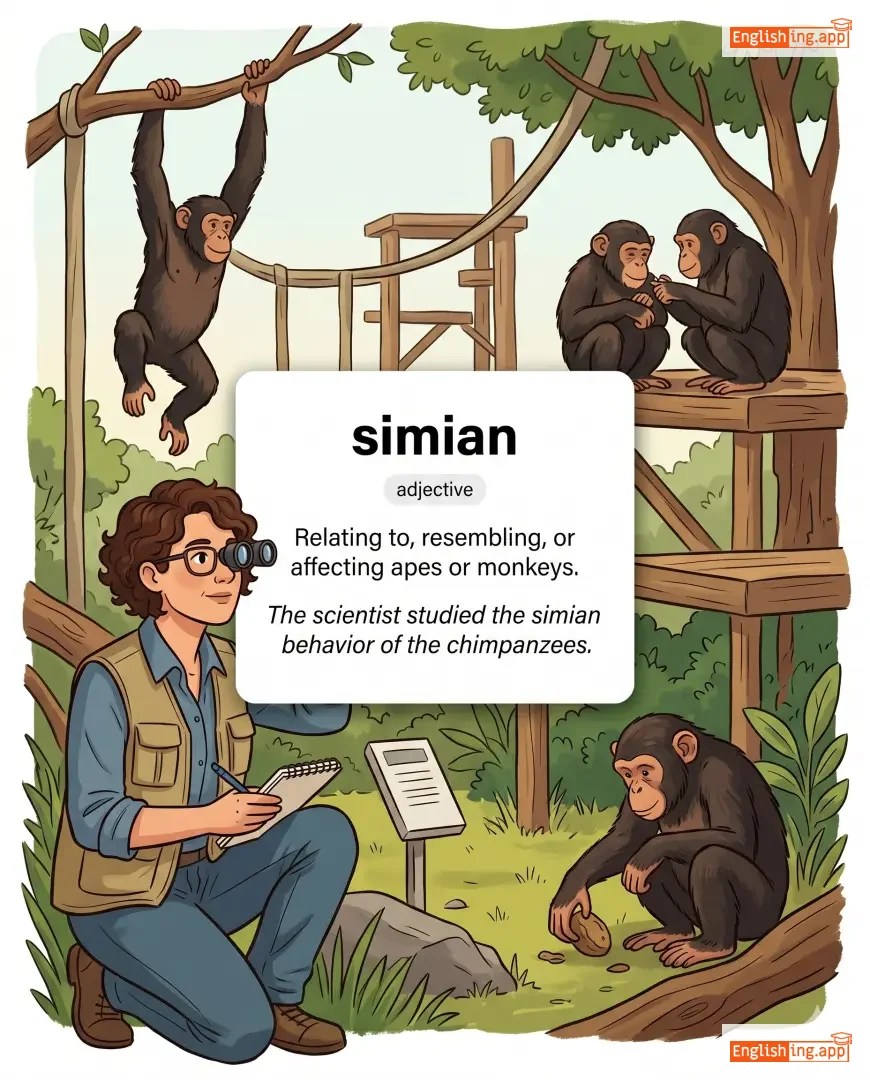
simian definition card — visual illustration of the meaning
adjective
/ˈsɪmiən/
मनुष्य से मिलता-जुलता (manushya se milta-julta)

Relating to, resembling, or affecting apes or monkeys.

"The scientist studied the simian behavior of the chimpanzees."

"वैज्ञानिक ने चिम्पांजी के मानव जैसे व्यवहार का अध्ययन किया।" (Vaigyanik ne chimpanzee ke manushya jaise vyavhaar ka adhyayan kiya.)
adjective
/ˈsɪmɪlər/
समान (samaan)

Having a resemblance in appearance, character, or quantity, without being identical.

"The twins wore similar clothes to the party."

"जुड़वां बच्चों ने पार्टी में समान कपड़े पहने थे।" (Judwa bachon ne party mein samaan kapde pehene the.)
noun
/ˌsɪmɪˈlærəti/
सादृश्य (sadrishya)

the state of being alike or having characteristics in common

"There is a strong similarity between the two paintings."

"दो पेंटिंग्स के बीच एक मजबूत समानता है।" (Do paintings ke beech ek majboot samanata hai.)
adverb
/ˈsɪmɪlərli/
समान रूप से (samaan roop se)

in a similar way

"Similarly, we can achieve success with dedication and hard work."

"समान रूप से, हम समर्पण और कड़ी मेहनत के साथ सफलता प्राप्त कर सकते हैं।" (Samaan roop se, hum samarpan aur kathin mehnat ke saath safalta prapt kar sakte hain.)
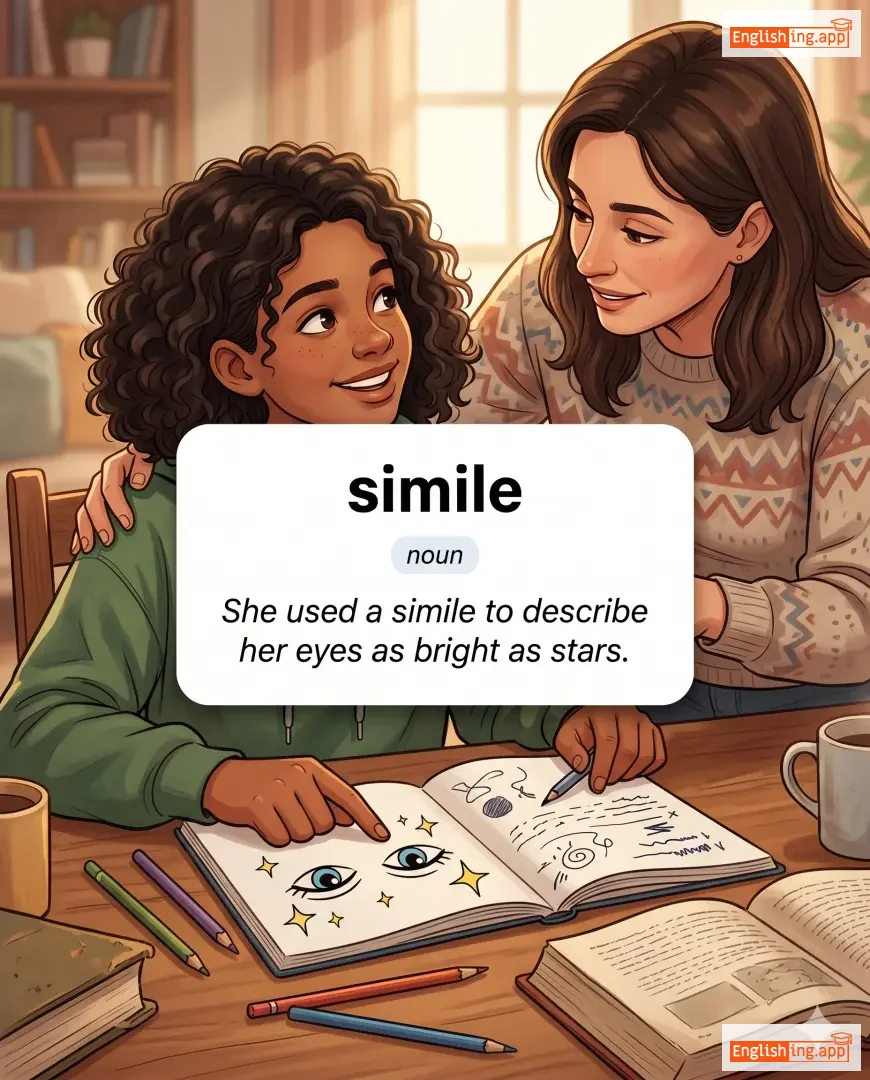
simile definition card — visual illustration of the meaning
noun
/ˈsɪməli/
उपमा (upma)

A figure of speech involving the comparison of one thing with another using 'like' or 'as'.

"She used a simile to describe her eyes as bright as stars."

"उसने अपनी आँखों को सितारों के समान चमकदार बताने के लिए एक उपमा का प्रयोग किया।" (Usne apni aankhon ko sitaron ke saman chamakdaar batane ke liye ek upma ka prayog kiya.)
noun
/sɪˈmɪlɪˌtjuːd/
सादृश्यता (sadrishyata)

The quality or state of being similar; resemblance or likeness.

"There is a striking similitude between the two paintings."

"दो पेंटिंग्स के बीच एक उत्तेजक सादृश्यता है।" (Do paintings ke beech ek uttejak sadrishyata hai.)
verb
/ˈsɪmpər/
बेवकूफी से हंसना (bewakoofi se hansna)

to smile in a silly, self-conscious, or affected way

"She simpered at his compliment, clearly embarrassed."

"वह उसके प्रति प्रशंसा पर बेवकूफी से हंसी, स्पष्ट रूप से शर्मिंदा थी।" (Vah uske prati prashansa par bewakoofi se hansi, spasht roop se sharminda thi.)
adjective
/ˈsɪmpəl/
सरल (sarl)

easy to understand or do; not complicated

"The instructions were simple and easy to follow."

"निर्देश सरल थे और अनुसरण करना आसान था।" (Nirdesh saral the aur anusaran karna aasan tha.)
noun
/ˈsɪmpəltən/
मूर्ख व्यक्ति (moorkh vyakti)

a foolish or gullible person

"They treated him like a simpleton who could not understand anything complex."

"उन्होंने उसे एक मूर्ख व्यक्ति की तरह ट्रीट किया जो कुछ भी जटिल नहीं समझ सकता था।" (Unhone use ek moorkh vyakti ki tarah treat kiya jo kuch bhi jatil nahi samajh sakta tha.)
noun
/sɪmˈplɪsɪti/
सरलता; स्पष्टता (sarlata; spashtata)

the quality of being simple; lack of complexity or intricacy

"The beauty of the design lies in its simplicity."

"डिजाइन की सुंदरता इसकी सरलता में निहित है।" (design ki sundarta iski sarlata mein nihit hai.)
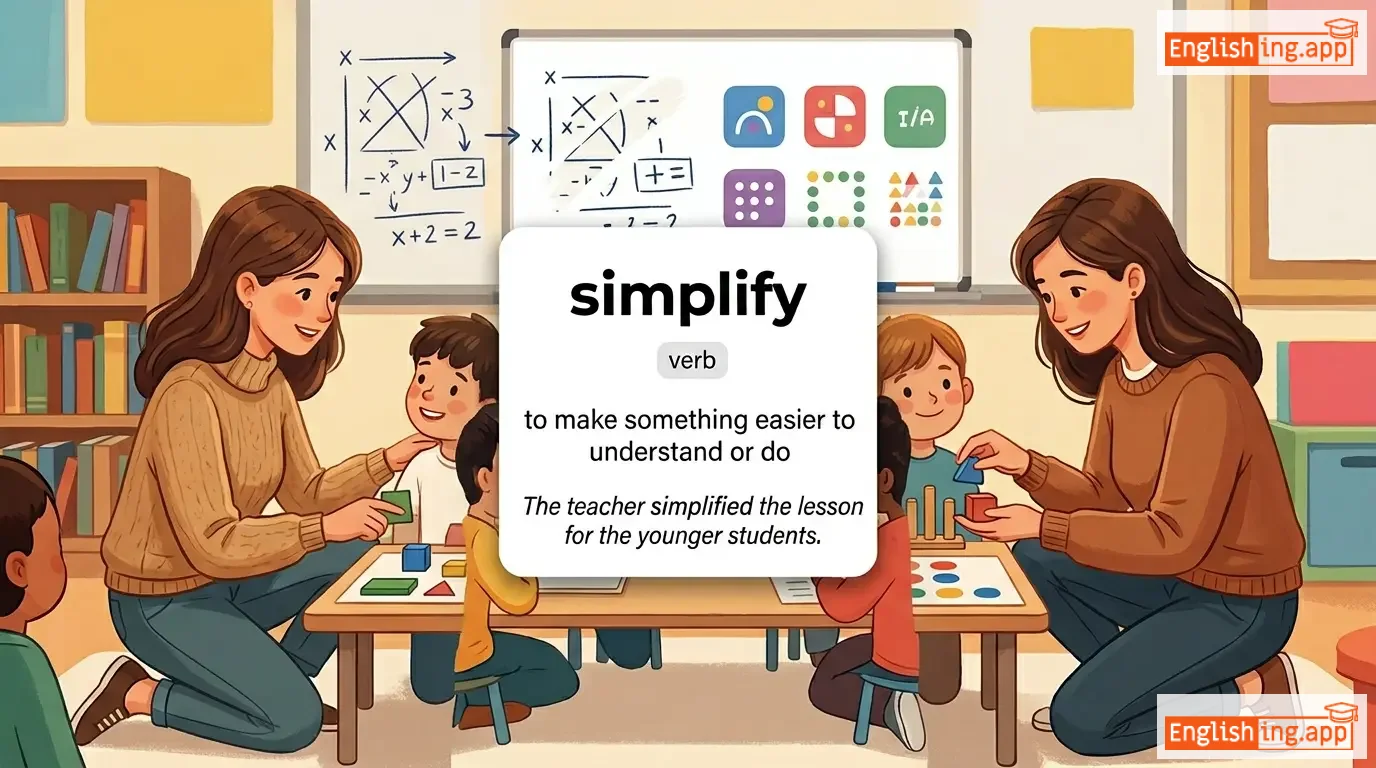
simplify definition card — visual illustration of the meaning
verb
/ˈsɪmplɪˌfaɪ/
सरल बनाना (sarl banana)

to make something easier to understand or do

"The teacher simplified the lesson for the younger students."

"शिक्षक ने छोटे छात्रों के लिए पाठ को सरल बना दिया।" (Shikshak ne chhote chhatron ke liye path ko saral bana diya.)
adjective
/sɪmˈplɪstɪk/
अत्यधिक सरलित (atyadhik saralit)

treating complex issues as if they were much simpler than they really are

"His explanation was too simplistic and ignored key details."

"उसकी व्याख्या अत्यधिक सरलित थी और महत्वपूर्ण विवरणों की अनदेखी की थी।" (Uski vyakhya atyadhik saralit thi aur mahatvapurn vivaron ki andekhi ki thi.)
adverb
/ˈsɪmpli/
सरलता से (sarlata se)

in a clear and easy to understand manner

"She explained the concept simply and clearly."

"उसने उस अवधारणा को सरलता से और स्पष्ट रूप से समझाया।" (Usne us avdharana ko sarlata se aur spasht roop se samjhaya.)
noun
/ˌsɪmjʊˈleɪkrəm/
अनुकरण (anukaran)

an image or representation of someone or something; a superficial likeness

"The statue was only a simulacrum of the ancient god."

"प्रतिमा केवल प्राचीन देवता का अनुकरण थी।" (Pratima keval prachin devta ka anukaran thi.)
verb
/ˈsɪmjʊˌleɪt/
अनुकरण करना (anukaran karna)

to imitate the appearance, character, or behavior of something; to pretend or reproduce conditions artificially

"The pilot had to simulate an emergency landing during training."

"पायलट को प्रशिक्षण के दौरान एक आपातकालीन लैंडिंग का अनुकरण करना पड़ा।" (Pailat ko prashikshan ke dauran ek aapatkalin landing ka anukaran karna pada.)
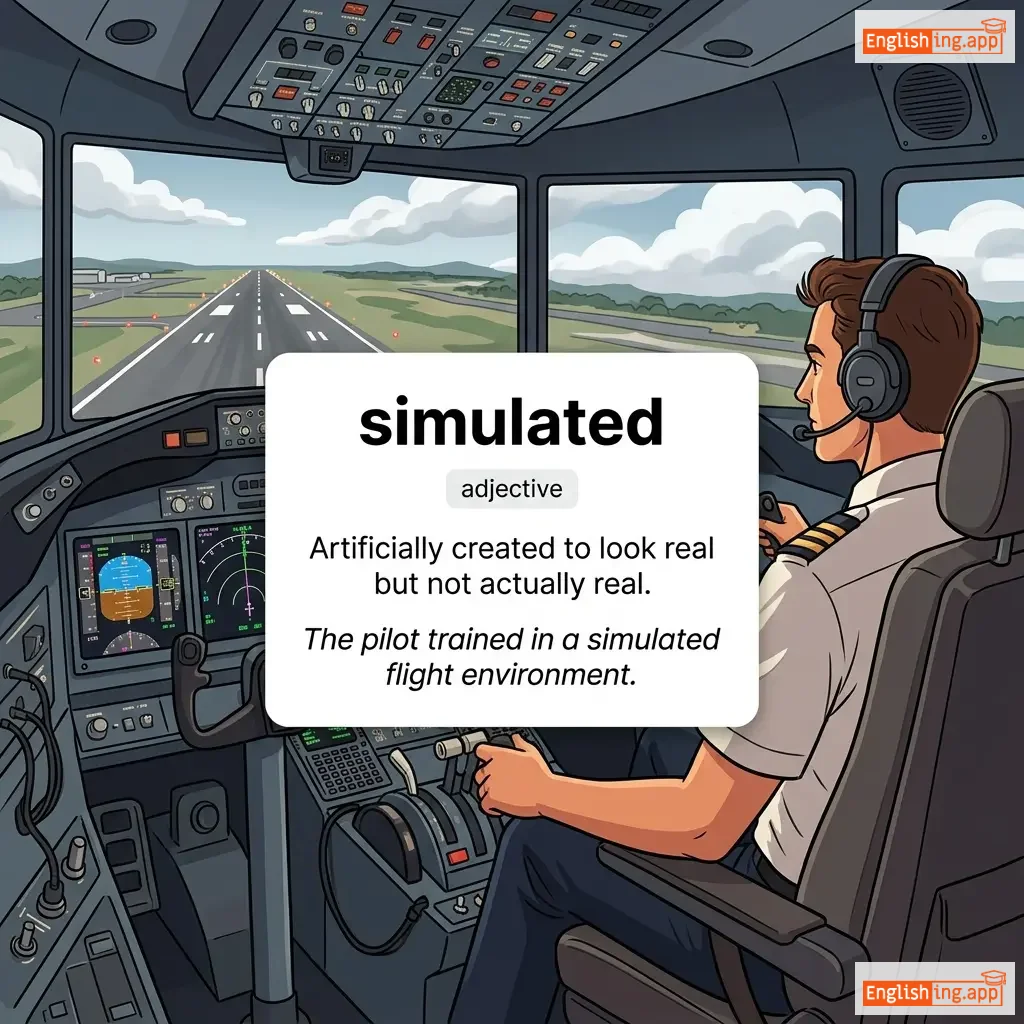
simulated definition card — visual illustration of the meaning
adjective
/ˈsɪm.jʊ.leɪ.tɪd/
अनुकरणीय (anukaraniya)

Artificially created to look real but not actually real.

"The pilot trained in a simulated flight environment."

"पायलट एक अनुकरणीय उड़ान वातावरण में प्रशिक्षित हुआ।" (Pilot ek anukaraniya udan vatavaran mein prashikshit hua.)
noun
/ˌsɪmjuˈleɪʃən/
अनुकरण (anukaran)

the imitation of a situation or process

"The simulation helped the students understand the complex theory."

"सिमुलेशन ने छात्रों को जटिल सिद्धांत समझने में मदद की।" (Simulation ne chhatron ko jatil siddhant samajhne mein madad ki.)
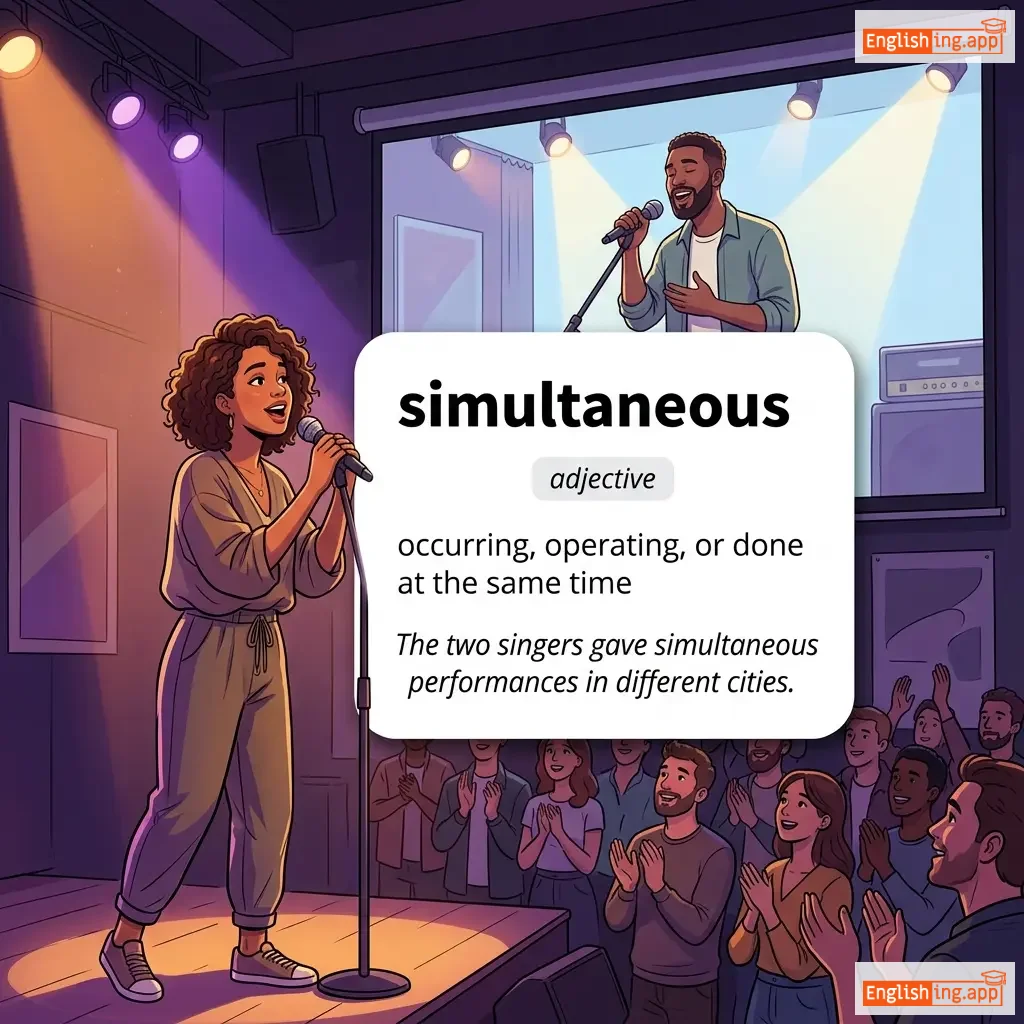
simultaneous definition card — visual illustration of the meaning
adjective
/ˌsaɪməlˈteɪniəs/
समानांतर (samaantar)

occurring, operating, or done at the same time

"The two singers gave simultaneous performances in different cities."

"दो गायकों ने अलग-अलग शहरों में समानांतर प्रदर्शन किए।" (do gayako ne alag-alag shaharon mein samaantar pradarshan kiye.)
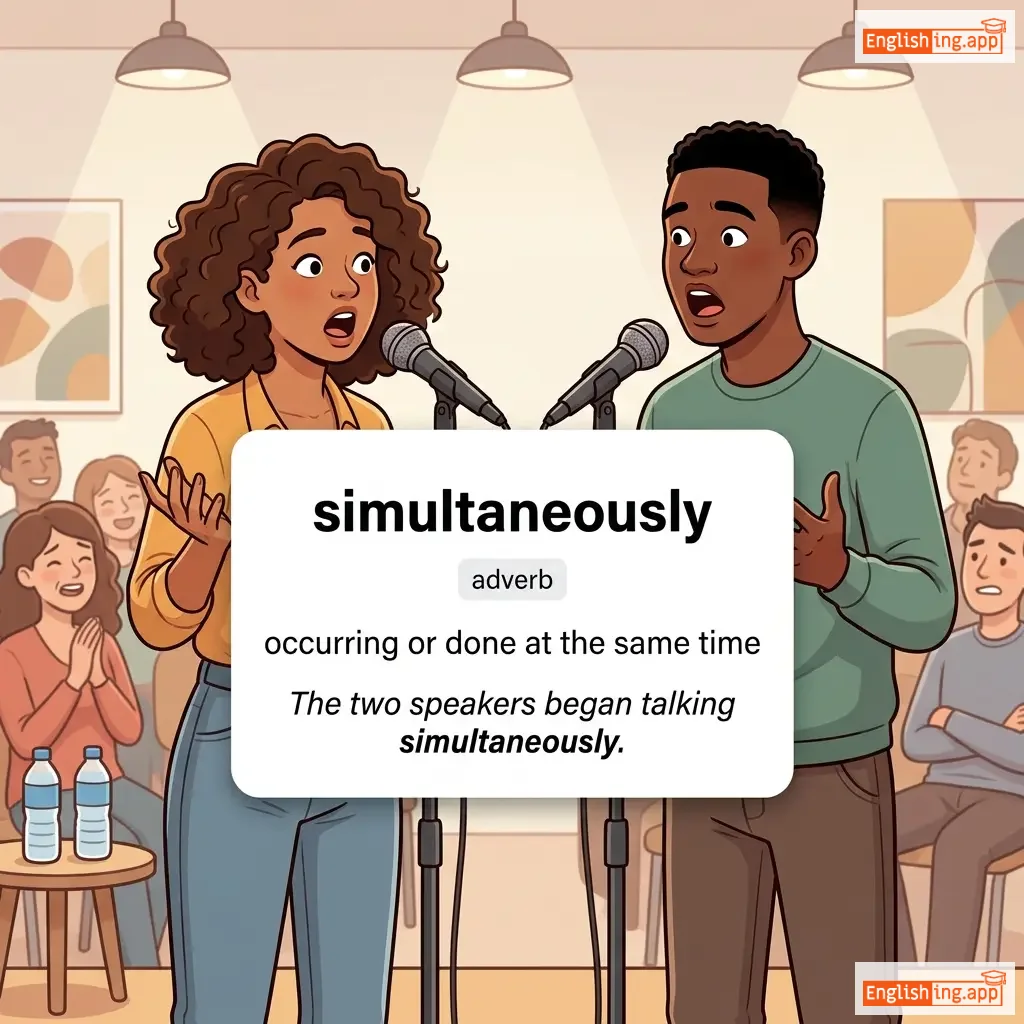
simultaneously definition card — visual illustration of the meaning
adverb
/ˌsaɪ.məlˈteɪ.ni.əs.li/
एक ही समय में (ek hi samay mein)

occurring or done at the same time

"The two speakers began talking simultaneously."

"दो वक्ताओं ने एक साथ बोलना शुरू किया।" (Do vaktaon ne ek saath bolna shuru kiya.)
noun, verb
/sɪn/
पाप (paap)

an immoral act considered to be a transgression against divine law; to commit an offense against religious or moral law

"He confessed his sin to the priest."

"उसने अपने पाप का स्वीकार पुरोहित से किया।" (Usne apne paap ka sweekar purohit se kiya.)
preposition
/sɪns/
से (se)

from a particular time in the past until now

"I have known her since childhood."

"मैं उसे बचपन से जानता हूँ।" (Main use bachpan se jaanta hoon.)
adjective
/sɪnˈsɪr/
ईमानदार (imaandar)

genuine and honest; free from pretense or deceit

"She gave a sincere apology for her mistake."

"उसने अपनी गलती के लिए ईमानदारी से माफी मांगी।" (Usne apni galti ke liye imaandari se maafi maangi.)
adverb
/sɪnˈsɪrli/
ईमानदारी से (eemandaari se)

with genuine feelings; honestly and truly

"I sincerely hope you recover soon."

"मैं ईमानदारी से आशा करता हूँ कि आप जल्द ही ठीक हो जाएँ।" (Main eemandaari se asha karta hoon ki aap jald hi theek ho jaayein.)
noun
/sɪnˈserɪti/
ईमानदारी (imaandari)

the quality of being free from pretense or deceit; honesty

"His sincerity in apologizing was evident to everyone."

"उसकी माफी माँगने में ईमानदारी सबको साफ़ दिखाई दी।" (uski maafi maangne mein imaandari sabko saaf dikhai di.)
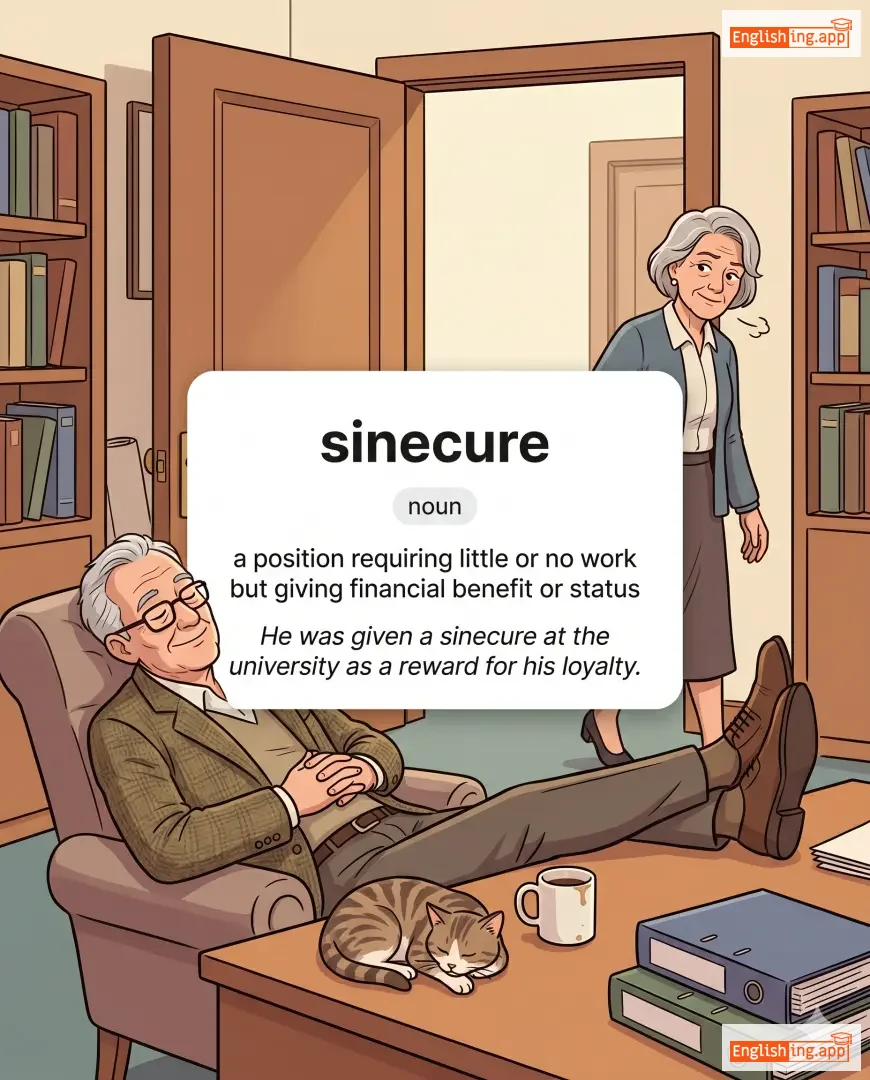
sinecure definition card — visual illustration of the meaning
noun
/ˈsaɪnɪkjʊər/
आसान नौकरी (aasan naukri)

a position requiring little or no work but giving financial benefit or status

"He was given a sinecure at the university as a reward for his loyalty."

"उसे विश्वविद्यालय में उसकी वफादारी के पुरस्कार के रूप में एक आसान नौकरी दी गई।" (Use vishwavidyalay mein uski wafadari ke puraskar ke roop mein ek aasan naukri di gayi.)
noun
/ˈsɪnjuː/
तनिका (tanika)

A tendon; figuratively, the source of strength, power, or resilience.

"The sinews in his arms stood out as he lifted the heavy box."

"जब उसने भारी बॉक्स उठाया तो उसके हाथों में टेनिका साफ दिखाई दे रहे थे।" (Jab usne bhaari box uthaya to uske haathon mein tanika saaf dikhayi de rahe the.)
adjective
/ˈsɪnjuːi/
मांसल और मजबूत (maansal aur majboot)

Lean and muscular; strong and tough.

"The athlete had a sinewy build that showed his strength."

"एथलीट का मांसल शरीर उसकी ताकत को दर्शाता था।" (Athleet ka maansal sharir uski taqat ko darshata tha.)
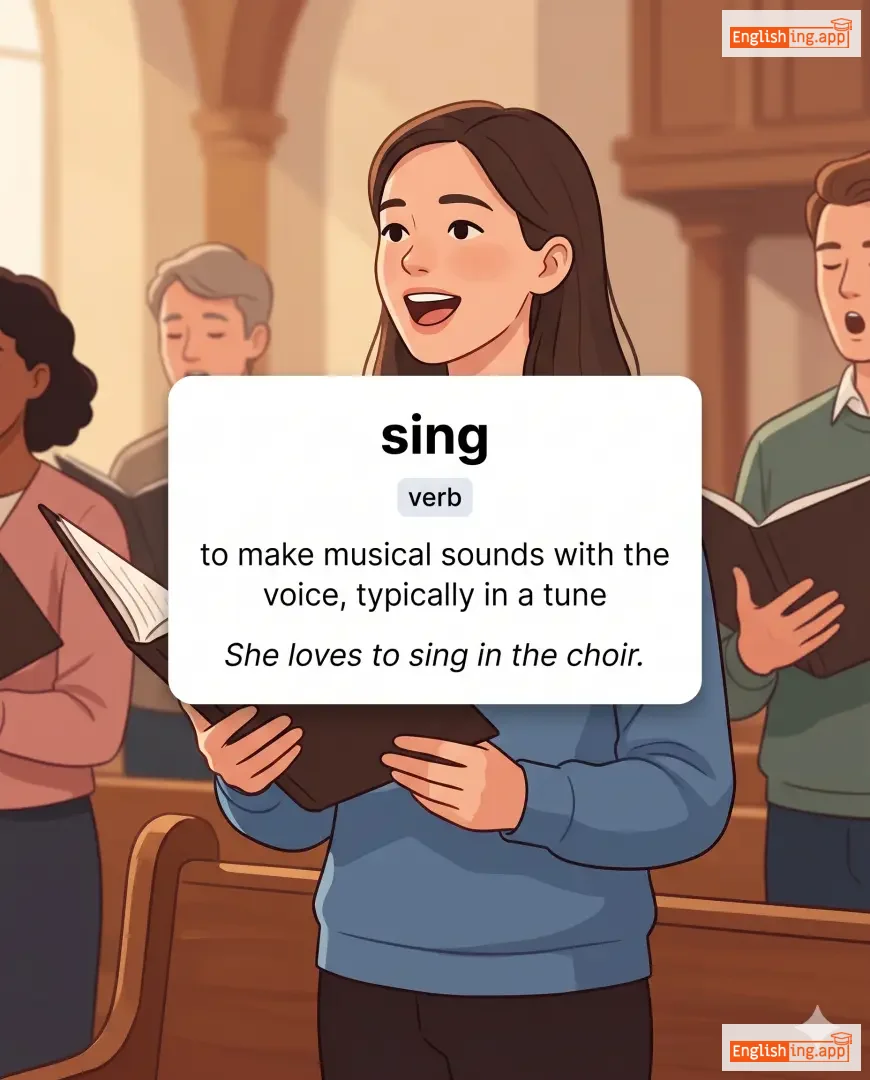
sing definition card — visual illustration of the meaning
verb
/sɪŋ/
गाना (gana)

to make musical sounds with the voice, typically in a tune

"She loves to sing in the choir."

"वह गाना गाने में बहुत पसंद करती है।" (Wah gana gane mein bahut pasand karti hai.)
verb
/sɪndʒ/
हल्का जलाना (halka jalana)

To burn something superficially or lightly, especially at the edges.

"The fire singed his eyebrows."

"आग ने उसकी भृकुटियों को हल्का जला दिया।" (Aag ne uski bhruḫitiyon ko halka jala diya.)
noun
/ˈsɪŋər/
गायक (gayak)

a person who sings, especially professionally

"The singer performed on stage last night."

"गायक ने पिछले रात मंच पर प्रदर्शन किया।" (Gayak ne pichhle raat manch par pradarshan kiya.)
adjective
/ˈsɪŋɡəl/
एकल (ekal)

only one; not one of several

"She bought a single ticket for the concert."

"उसने संगीत कार्यक्रम के लिए एक टिकट खरीदी." (Usne sangeet karyakram ke liye ek tiket kharidi.)
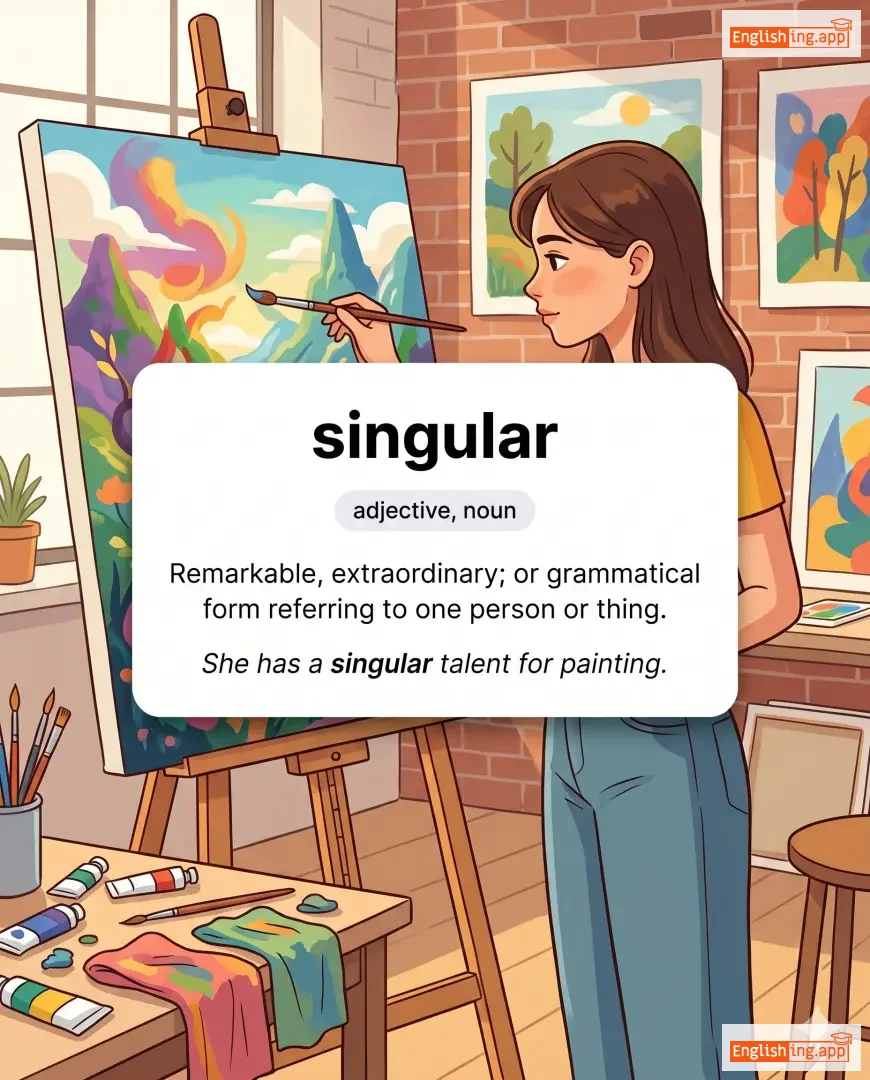
singular definition card — visual illustration of the meaning
adjective, noun
/ˈsɪŋɡjələr/
असाधारण / एकवचन (asadharan / ekavachan)

Remarkable, extraordinary; or grammatical form referring to one person or thing.

"She has a singular talent for painting."

"उसकी पेंटिंग के लिए असाधारण प्रतिभा है।" (Uski painting ke liye asadharan pratibha hai.)
adjective
/ˈsɪnɪstər/
दुष्ट (dusht)

Giving the impression that something harmful or evil is happening or will happen.

"The abandoned house had a sinister atmosphere."

"वह परित्यक्त घर एक दुष्ट वातावरण से भरा था।" (vah parityakt ghar ek dusht vatavaran se bhara tha.)
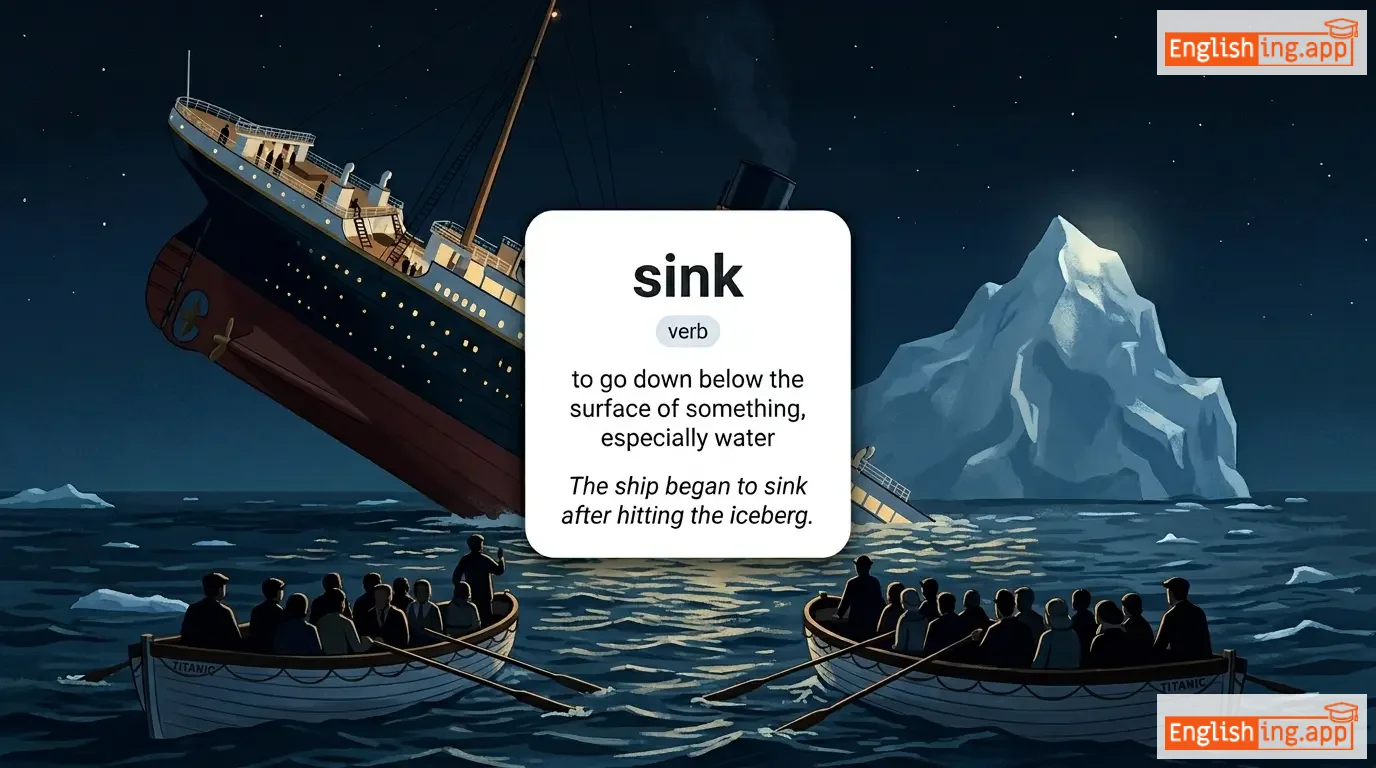
sink definition card — visual illustration of the meaning
verb
/sɪŋk/
डूबना (doobna)

to go down below the surface of something, especially water

"The ship began to sink after hitting the iceberg."

"जहाज बर्फ़ से टकराने के बाद डूबने लगा।" (Jahaz baraf se takrane ke baad doobne laga.)
adjective
/ˈsɪnləs/
पापमुक्त; निर्दोष; (papmukto; nirdosho)

free from sin; pure and innocent; without moral fault

"The innocent child appeared sinless in her pure white dress."

"निष्पाप बच्ची अपनी सफेद ड्रेस में पापमुक्त दिख रही थी।" (nishpap bachhi apni safed dress mein papmukto dikh rahi thi)
noun
/ˌsɪnjuˈɒsɪti/
वक्रता (vakrata)

The quality or state of being winding, curving, or having many turns.

"The sinuosity of the river made navigation challenging."

"नदी की वक्रता ने नौवहन को चुनौतीपूर्ण बना दिया।" (Nadi ki vakrata ne nauvahan ko chunautipurn bana diya.)
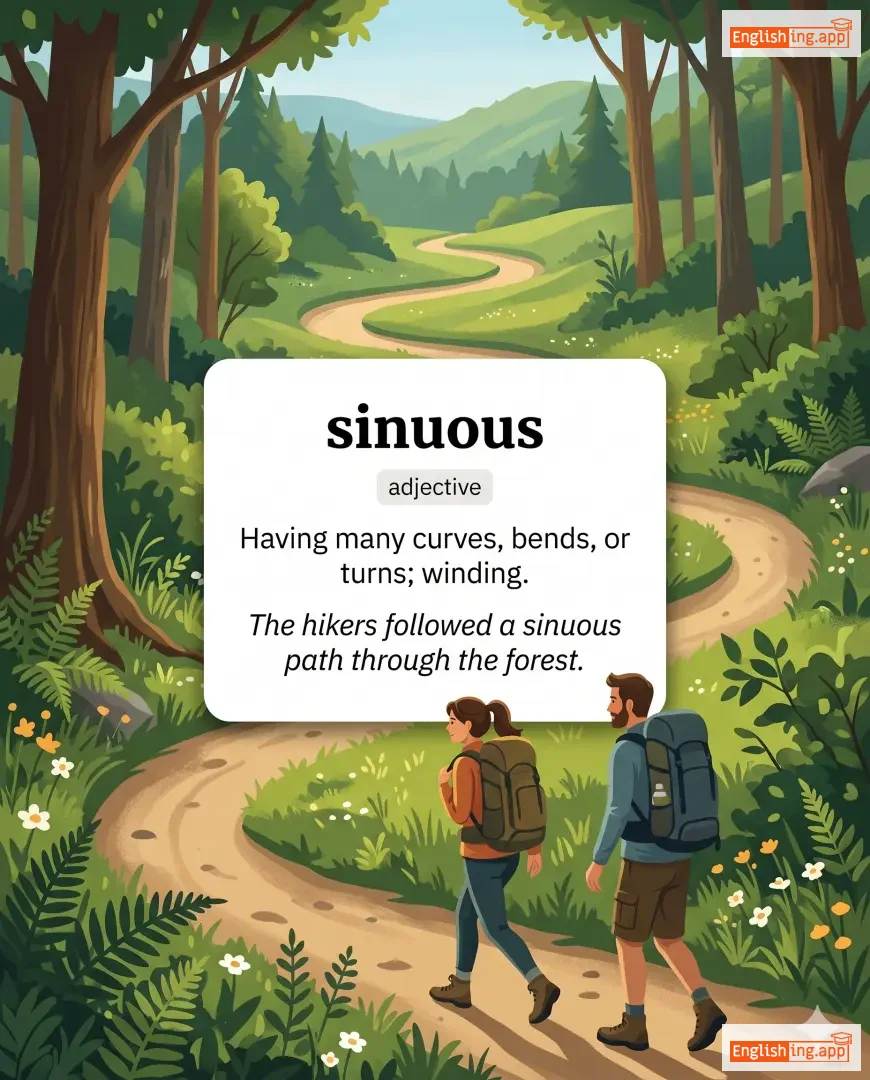
sinuous definition card — visual illustration of the meaning
adjective
/ˈsɪnjuəs/
घुमावदार (ghumavdar)

Having many curves, bends, or turns; winding.

"The hikers followed a sinuous path through the forest."

"हाइकर्स ने जंगल के बीच घुमावदार रास्ते का अनुसरण किया।" (Hikers ne jangal ke beech ghumavdar raste ka anusaran kiya.)
noun
/ˈsaɪnəs/
साइनस (sainas)

A cavity within a bone or tissue, especially those in the bones of the face connected with the nasal cavities.

"He suffered from a sinus infection that caused headaches."

"वह साइनस संक्रमण से पीड़ित था, जिससे सिर दर्द हो रहा था।" (Vah sainas sankraman se peedit tha, jisse sir dard ho raha tha.)
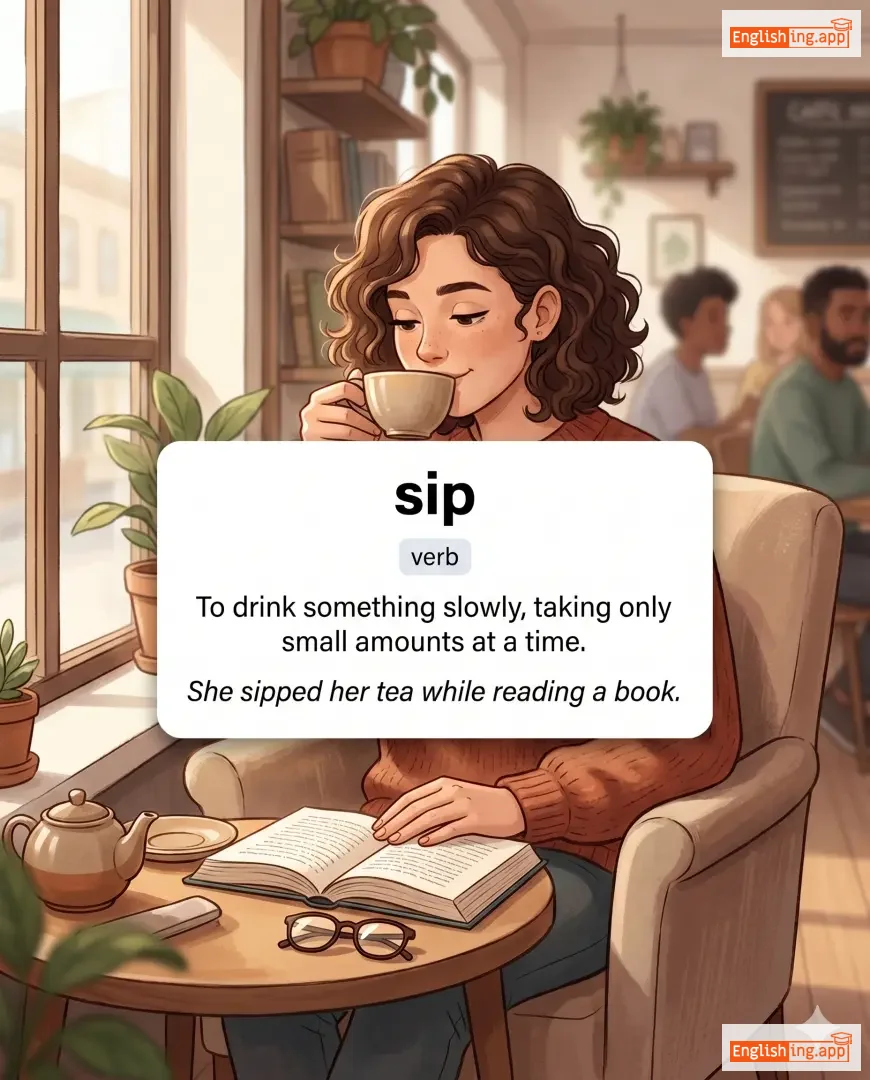
sip definition card — visual illustration of the meaning
verb
/sɪp/
चुस्की (chuski)

To drink something slowly, taking only small amounts at a time.

"She sipped her tea while reading a book."

"वह किताब पढ़ते हुए चाय की चुस्की ले रही थी।" (Wah kitaab padhte hue chai ki chuski le rahi thi.)
noun
/sɜːr/
सिर (sir)

a respectful or formal form of address used for a man, typically one of higher social status or authority

"Sir, may I assist you with your order?"

"सिर, क्या मैं आपकी ऑर्डर में मदद कर सकता हूँ?" (Sir, kya main aapki order mein madad kar sakta hoon?)
noun
/ˈsaɪrən/
सायरन (sairen)

A device that makes a loud prolonged sound as a signal or warning; in mythology, a creature that lures sailors with enchanting songs.

"The police car passed with its siren blaring."

"पुलिस की कार अपनी सायरन की आवाज़ के साथ पास हुई।" (Police ki car apni sairen ki aawaz ke saath paas hui.)
noun
/sɪˈrɒkoʊ/
गर्म, शुष्क हवा (garm, shushk hawa)

A hot, dry wind blowing from North Africa across the Mediterranean to southern Europe.

"The sirocco made the city unbearably hot and dusty."

"सिरोक्को ने शहर को असहनीय गर्म और धूल भरा बना दिया।" (Sirocco ne shahar ko asahniya garm aur dhool bhara bana diya.)
noun
/ˈsɪstər/
बहन (bahan)

a female sibling; a girl or woman in relation to other children of her parents

"My sister is coming to visit us next week."

"मेरी बहन अगले सप्ताह हमसे मिलने आ रही है।" (meri bahan agle saptah humse milne aa rahi hai)
noun
/ˈsɪstərhʊd/
बहनें का संबंध (bahnen ka sambandh)

The relationship between sisters, or a community of women united by shared experiences or goals.

"The feminist movement created a strong sense of sisterhood among women."

"नारीवादी आंदोलन ने महिलाओं के बीच बहनें के संबंध का एक मजबूत एहसास पैदा किया।" (Naareevaadee aandolan ne mahilaon ke beech behne ke sambandh ka ek majboot ehsaas paida kiya.)
verb
/sɪt/
बैठना (baithna)

to rest with the body supported by the buttocks, often in a chair or on the ground

"Please sit down and relax for a while."

"कृपया बैठ जाइए और थोड़ी देर आराम कीजिए।" (Kripya baith jaiye aur thodi der aaram kijiye.)