वोकैबुलरीज

इंग्लिश वोकैबुलरी डिस्कवर, लर्न और मास्टर करें

noun, verb
/rɪər/
पीछे / पालन-पोषण करना (peeche / paalan-poshan karna)

the back part of something; to bring up or raise children or animals

"The mother cat reared her kittens in a quiet corner."

"माँ बिल्ली ने अपने बच्चों को शांत कोने में पाला।" (Maan billi ne apne bachcho ko shaant kone mein paala.)
verb
/ˌriːəˈreɪndʒ/
फिर से व्यवस्थित करना (phir se vyavasthit karna)

to change the order or position of something

"She decided to rearrange the furniture in her living room."

"उसने अपने लिविंग रूम में फर्नीचर को फिर से व्यवस्थित करने का निर्णय लिया।" (Usne apne living room mein furniture ko phir se vyavasthit karne ka nirnay liya.)
noun, verb
/ˈriːzən/
कारण, तर्क (karon, tark)

A cause, explanation, or justification for an action or event; to think or argue logically.

"There is no reason to be upset."

"उदास होने का कोई कारण नहीं है।" (Udaas hone ka koi karan nahi hai.)
adjective
/ˈriːzənəbl/
उचित (uchit)

Fair and sensible; having sound judgment; not extreme or excessive.

"The price of the meal was quite reasonable."

"खाने की कीमत काफी उचित थी।" (Khaane ki keemat kaafi uchit thi.)
adverb
/ˈriːzənəbli/
व्यावहारिक रूप से (vyavaharik roop se)

in a fair, sensible, or logical manner

"The price was reasonably low compared to other products."

"कीमत अन्य उत्पादों की तुलना में व्यावहारिक रूप से कम थी।" (Keemat anya utpadon ki tulna mein vyavaharik roop se kam thi.)
noun
/ˈriːzənɪŋ/
तर्क (tark)

the process of thinking about something in a logical way in order to form a conclusion or judgment

"Her reasoning for leaving was clear and logical."

"उसका छोड़ने का तर्क स्पष्ट और तार्किक था।" (Uska chhodne ka tark spasht aur taarkik tha.)
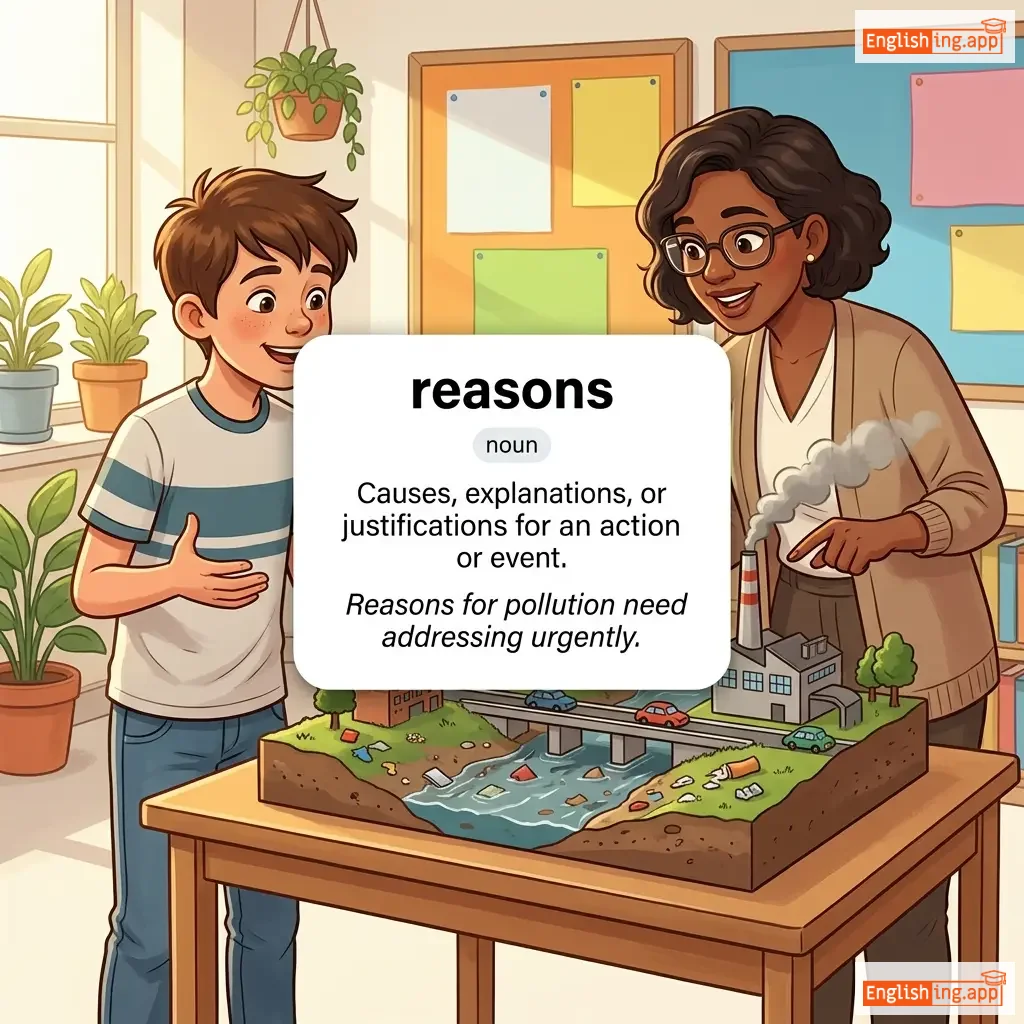
reasons definition card — visual illustration of the meaning
noun
/ˈriː.zənz/
कारण (karan)

Causes, explanations, or justifications for an action or event.

"Reasons for pollution need addressing urgently."

"पॉल्यूशन के कारणों को तुरंत संबोधित करने की आवश्यकता है।" (Pollution ke karanon ko turant sambodhit karne ki avashyakta hai.)
noun
/ˌriː.əˈʃʊr.əns/
आत्मसंतोष; आश्वासन (aatmsantosh; aashwasan)

comfort or confidence given to someone to remove their fears or doubts

"She needed reassurance that everything would be okay."

"उसे यह सुनिश्चित करने के लिए आश्वासन की आवश्यकता थी कि सब कुछ ठीक हो जाएगा।" (use yah sunishchit karne ke liye aashwasan ki avashyakta thi ki sab kuch theek ho jayega.)
verb
/ˌriːəˈʃʊr/
आश्वस्त करना (aashvast karna)

to say or do something to remove someone's doubts or fears

"The teacher reassured the students before the exam."

"टीचर ने परीक्षा से पहले छात्रों को आश्वस्त किया।" (Teacher ne pareeksha se pehle chhatron ko aashvast kiya.)
noun
/ˈriːbeɪt/
छूट/वापसी राशि (chhoot/vapasi rashi)

a partial refund given to someone who has paid too much money for something

"The store offered a rebate on bulk purchases."

"दुकान ने थोक खरीदारी पर छूट दी।" (Dukan ne thok khareedari par chhoot di.)
noun, verb
/ˈreb.əl/
विद्रोही / विद्रोह करना (vidrohi / vidroha karna)

a person who resists authority or control; to resist or fight against authority

"The students rebelled against the new dress code."

"छात्रों ने नए ड्रेस कोड के खिलाफ विद्रोह किया।" (Chhatron ne naye dress code ke khilaf vidroha kiya.)
noun
/rɪˈbɛljən/
विद्रोह (vidroh)

an act of violent or open resistance to an established government or ruler

"The rebellion was crushed by the army after a few months."

"विद्रोह को कुछ महीनों बाद सेना द्वारा कुचल दिया गया था।" (Vidroh ko kuch mahino baad sena dwara kuchal diya gaya tha.)
adjective
/rɪˈbɛljəs/
विद्रोही (vidrohi)

resisting authority or control; showing a desire to rebel

"The rebellious teenager refused to follow the school rules."

"विद्रोही किशोर स्कूल के नियमों का पालन करने से इनकार कर दिया।" (Vidrohi kishor school ke niyamon ka paalan karne se inkaar kar diya.)
verb
/rɪˈbʌf/
नकारा करना (nakara karna)

to reject or refuse in a sharp or abrupt way

"She rebuffed his invitation to dinner."

"उसने डिनर के लिए उसका निमंत्रण नकार दिया।" (Usne dinner ke liye uska nimantran nakara diya.)
verb
/ˌriːˈbɪld/
पुनर्निर्माण करना (punarnirman karna)

to build something again after it has been damaged or destroyed

"The villagers worked together to rebuild the bridge after the flood."

"ग्रामीणों ने बाढ़ के बाद पुल को फिर से बनाने के लिए मिलकर काम किया।" (Grameenon ne baadh ke baad pul ko phir se banane ke liye milkar kaam kiya.)
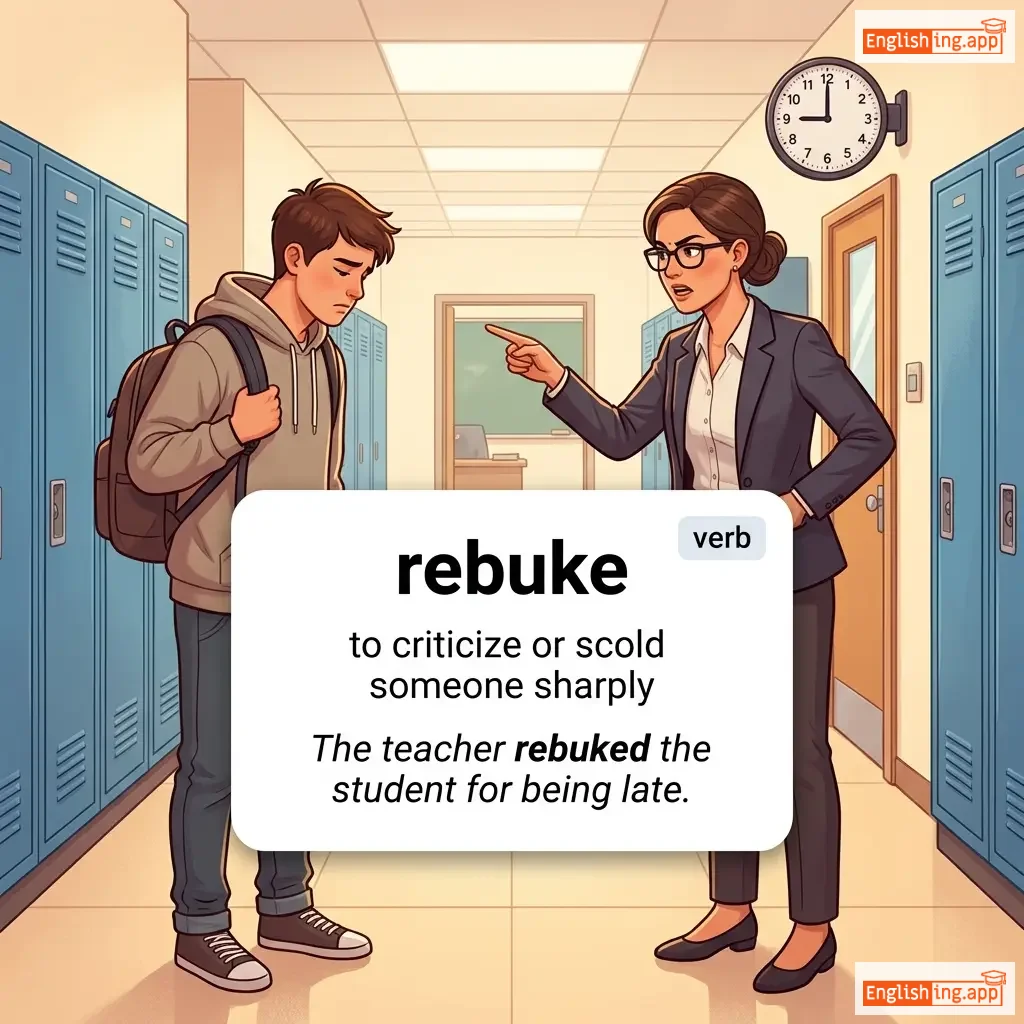
rebuke definition card — visual illustration of the meaning
verb
/rɪˈbjuːk/
तीव्र फटकार लगाना (teevra fatkaar lagana)

to criticize or scold someone sharply

"The teacher rebuked the student for being late."

"शिक्षक ने छात्र को देर होने पर फटकार लगाई।" (Shikshak ne chhaatr ko der hone par fatkaar lagayi.)
noun
/ˈriːbəs/
कोड (kod)

a puzzle in which words are represented by pictures, symbols, or letters

"The children enjoyed solving the rebus puzzles in the magazine."

"बच्चों ने पत्रिका में रीबस पहेलियाँ हल करने का आनंद लिया।" (Bachon ne patrika mein rebus paheliyan hal karne ka anand liya.)
verb
/rɪˈbʌt/
खंडन करना (khandan karna)

to argue against or prove wrong; to refute

"The lawyer rebutted the false accusations with strong evidence."

"वकील ने झूठे आरोपों का खंडन मजबूत सबूत से किया।" (Vakil ne jhoothe aaropon ka khandan majboot saboot se kiya.)
noun
/rɪˈbʌtəl/
प्रतिवाद (prativad)

a statement or argument made to oppose or disprove another

"Her rebuttal was clear and convincing."

"उसका प्रतिवाद स्पष्ट और विश्वासजनक था।" (Uska prativad spashṭ aur vishwāsjanak thā.)
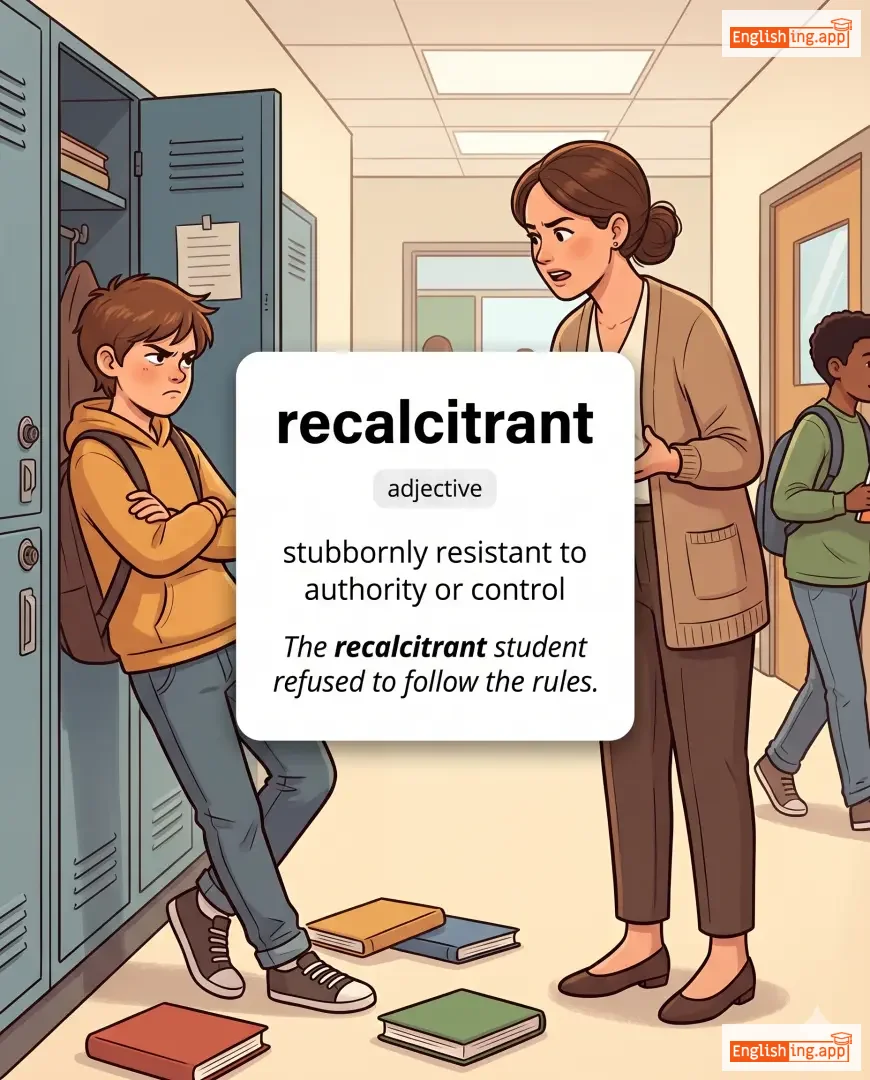
recalcitrant definition card — visual illustration of the meaning
adjective
/rɪˈkælsɪtrənt/
जिद्दी (jiddi)

stubbornly resistant to authority or control

"The recalcitrant student refused to follow the rules."

"हठीला छात्र नियमों का पालन करने से इनकार कर दिया।" (hathila chhatra niyamon ka paalan karne se inkaar kar diya.)
recalibrate definition card — visual illustration of the meaning
verb
ˌriːˈkæl.ɪ.breɪt
फिर से कैलिब्रेट करना (phir se calibrate karna)

To adjust or modify according to a new standard or plan; to reassess and realign.

"He had to recalibrate his strategy after the market crash."

"उसके पास बाज़ार की गिरावट के बाद अपनी रणनीति को फिर से कैलिब्रेट करने का काम था।" (Uske paas bazaar ki girawat ke baad apni rananiti ko phir se calibrate karne ka kaam tha.)
verb
/rɪˈkɔːl/
याद करना (yaad karna)

to bring (a memory, fact, or situation) back into one's mind

"I can't recall the last time we met."

"मैं पिछली बार जब हम मिले थे, यह याद नहीं कर पा रहा हूँ।" (Main pichhli baar jab hum mile the, yah yaad nahin kar pa raha hoon.)
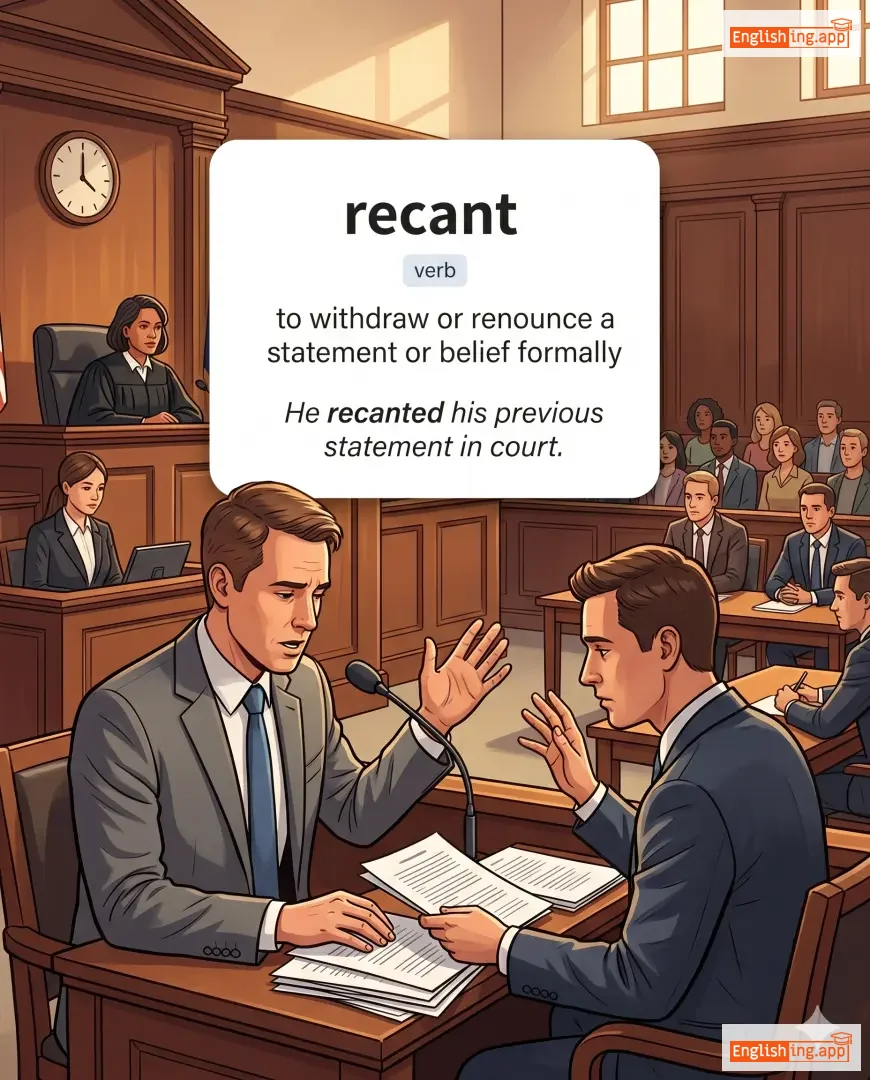
recant definition card — visual illustration of the meaning
verb
/rɪˈkænt/
पश्चाताप करना (pashchatap karna)

to withdraw or renounce a statement or belief formally

"He recanted his previous statement in court."

"उसने अदालत में अपनी पहले की बयानबाजी को वापस लिया।" (Usne adalat mein apni pehle ki bayanbaazi ko wapas liya.)
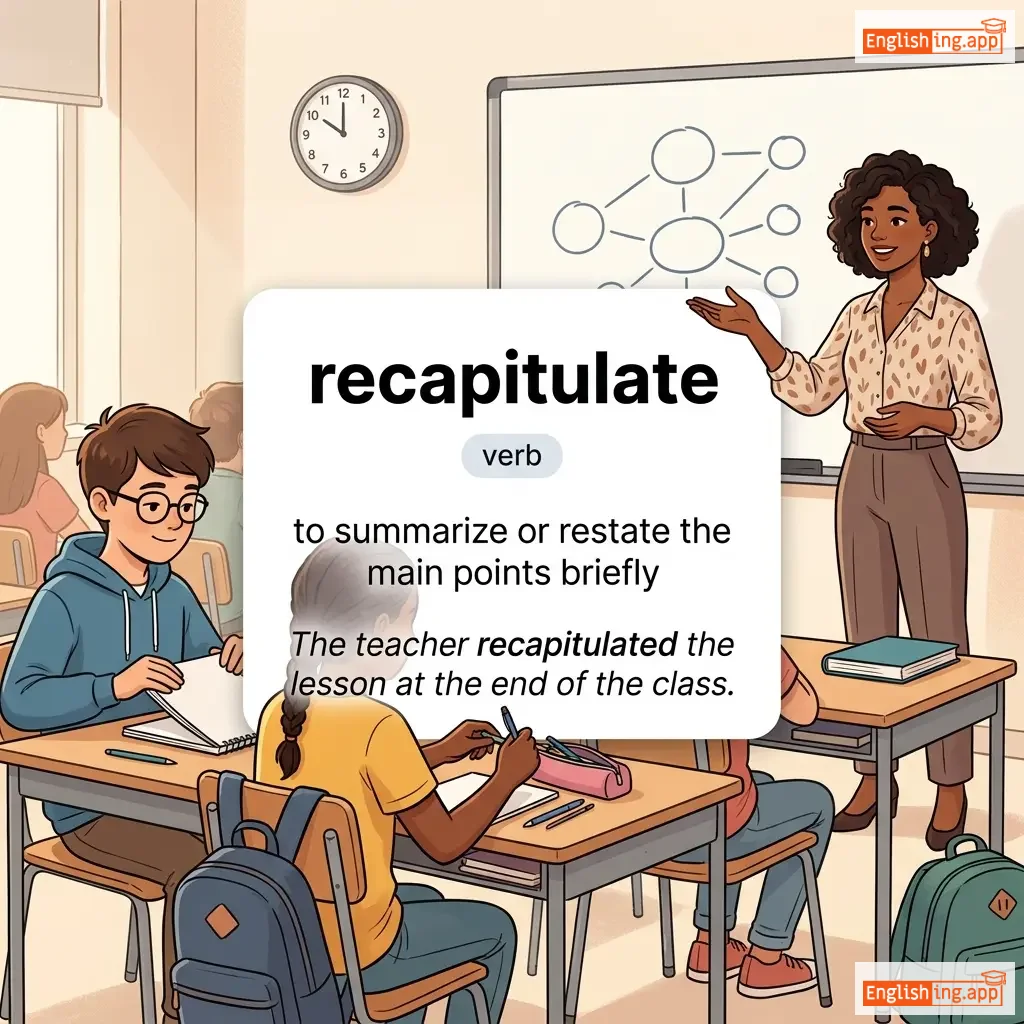
recapitulate definition card — visual illustration of the meaning
verb
/ˌriːkəˈpɪtjʊleɪt/
संक्षेप में दोहराना (sankhep mein dohrana)

to summarize or restate the main points briefly

"The teacher recapitulated the lesson at the end of the class."

"शिक्षक ने क्लास के अंत में पाठ का संक्षेप में पुनरावलोकन किया।" (Shikshak ne class ke ant mein path ka sankhep mein punaravlokan kiya.)
noun
/ˌriːkəˌpɪtjʊˈleɪʃən/
सारांश (saaransh)

The act of summarizing or repeating the main points of something.

"The professor gave a brief recapitulation of the lecture before ending the class."

"प्रोफेसर ने क्लास समाप्त करने से पहले व्याख्यान का संक्षिप्त सारांश दिया।" (Professor ne class samaapt karne se pehle vyaakhyaan ka sankshipt saaransh diya.)
verb
/riːˈkæptʃər/
फिर से कब्जा करना (phir se kabza karna)

To take back or regain possession of something.

"The army managed to recapture the lost territory."

"सेना ने खोई हुई ज़मीन को फिर से कब्जा कर लिया।" (Sena ne khoyi hui zameen ko phir se kabza kar liya.)
verb
/ˌriːˈkæst/
पुनर्निर्धारण (punarnirdharan)

To present or change something in a different form or style.

"The director decided to recast the role with a younger actor."

"निर्देशक ने भूमिका को एक युवा अभिनेता के साथ पुनः निर्धारित करने का निर्णय लिया।" (Nirdeshak ne bhumika ko ek yuva abhineta ke saath punah nirdharit karne ka nirnay liya.)
verb
/rɪˈsiːd/
पीछे हटना (peeche hatna)

To move back or further away from a previous position.

"The floodwaters began to recede after the heavy rain stopped."

"भारी बारिश रुकने के बाद बाढ़ का पानी पीछे हटने लगा।" (Bhari barish rukne ke baad baadh ka pani peeche hatne laga.)
adjective, noun
/rɪˈsiːvəbl/
प्राप्त करने योग्य (praapt karne yogya)

Money that is owed to a company and is expected to be paid.

"The company's receivables increased significantly this quarter."

"कंपनी के प्राप्त करने योग्य पैसे इस तिमाही में काफी बढ़ गए।" (Company ke praapt karne yogya paise is timahi mein kaafi badh gaye.)
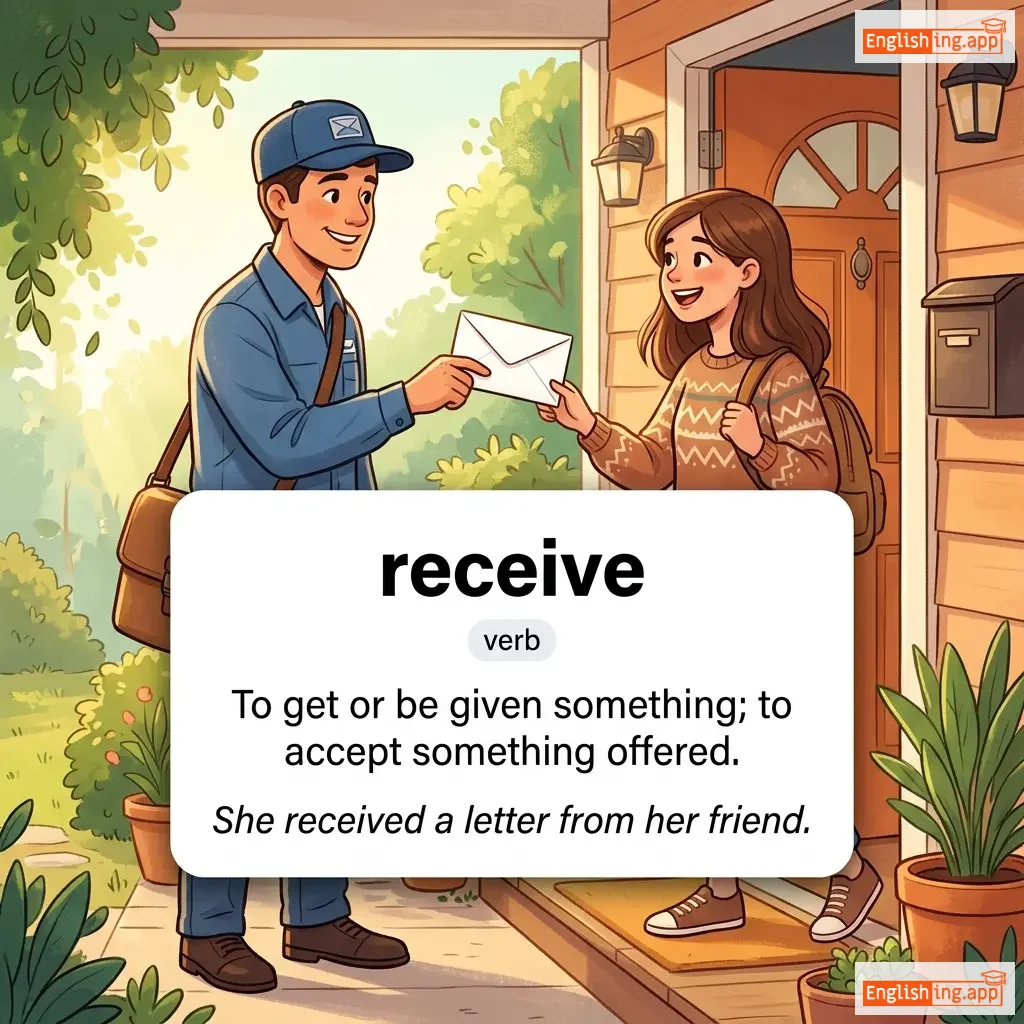
receive definition card — visual illustration of the meaning
verb
/rɪˈsiːv/
प्राप्त करना (praapt karna)

To get or be given something; to accept something offered.

"She received a letter from her friend."

"उसने अपने दोस्त से एक पत्र प्राप्त किया।" (Usne apne dost se ek patra praapt kiya.)
noun
/rɪˈsiːvər/
प्राप्तकर्ता (prahptakarta)

a person or device that receives something such as a signal, message, or object

"The radio receiver picks up signals from distant stations."

"रेडियो रिसीवर दूर के स्टेशनों से सिग्नल प्राप्त करता है।" (Radio receiver door ke stations se signal prapt karta hai.)
adjective
/ˈriːsənt/
हालिया (haaliya)

having happened or started only a short time ago

"The recent developments have been quite exciting."

"हालिया घटनाएँ काफी रोमांचक रही हैं।" (Haaliya ghatnayein kaafi romanchak rahi hain.)
adverb
/ˈriːsəntli/
हाल ही में (haal hi mein)

in the recent past; not long ago

"I recently visited the museum."

"मैं हाल ही में संग्रहालय गया था।" (Main haal hi mein sangrahalay gaya tha.)
noun
/rɪˈsepʃən/
स्वागत (swāgat)

the act of receiving something or someone; a formal social gathering

"We attended a wedding reception at the hotel."

"हमने होटल में एक शादी की रिसेप्शन में भाग लिया।" (Hamne hotel mein ek shaadi ki reception mein bhāg liyā.)
adjective
/rɪˈsɛptɪv/
ग्रहणशील (grahansheel)

Willing to listen to or accept new ideas, suggestions, or experiences.

"She was receptive to feedback from her colleagues."

"वह अपनी सहकर्मियों से फीडबैक लेने के लिए ग्रहणशील थी।" (Vah apni sahkarmiyon se feedback lene ke liye grahansheel thi.)
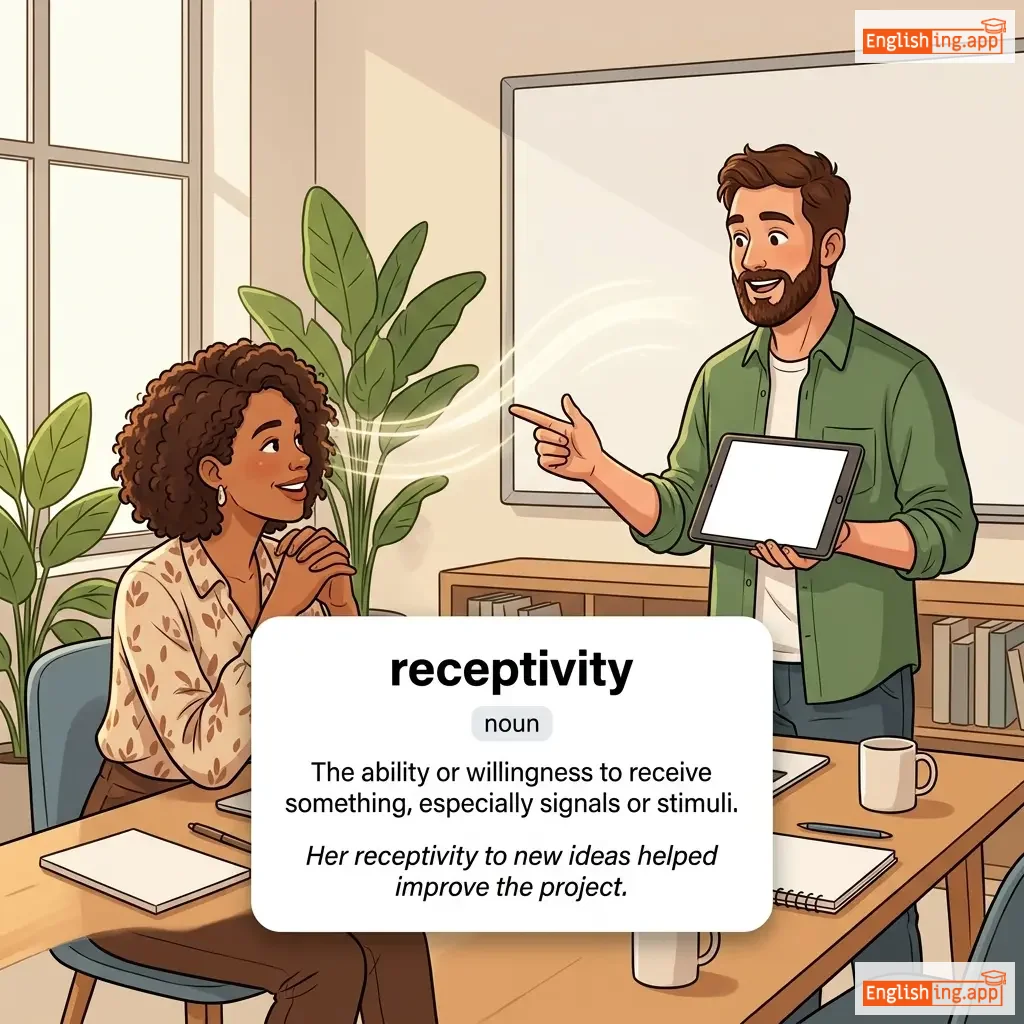
receptivity definition card — visual illustration of the meaning
noun
/rɪˌsɛptɪˈvɪti/
ग्राहीता (graahita)

The ability or willingness to receive something, especially signals or stimuli.

"Her receptivity to new ideas helped improve the project."

"नई विचारों के प्रति उसकी ग्रहिता ने परियोजना को सुधारने में मदद की।" (Nayi vicharon ke prati uski graahita ne pariyojna ko sudharne mein madad ki.)
noun
/rɪˈsɛs/
विश्राम (vishram)

A short break from work or school; also a small space set back in a wall.

"The children played outside during recess."

"बच्चों ने विश्राम के दौरान बाहर खेला।" (bachchon ne vishram ke dauran baahar khela.)
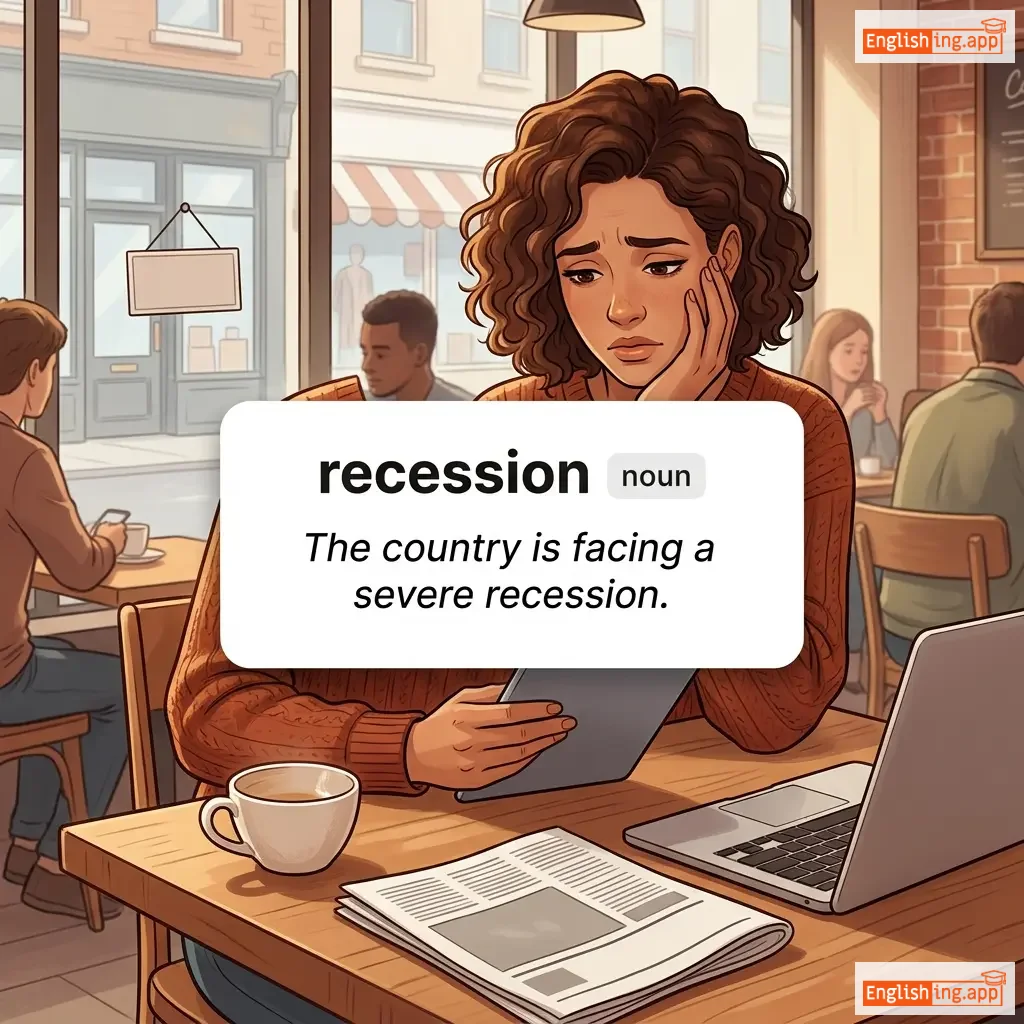
recession definition card — visual illustration of the meaning
noun
/rɪˈsɛʃən/
मंदी (riseshun)

A period of temporary economic decline during which trade and industrial activity are reduced.

"The country is facing a severe recession."

"देश एक गंभीर मंदी का सामना कर रहा है।" (desh ek gambhir mandi ka samna kar raha hai)
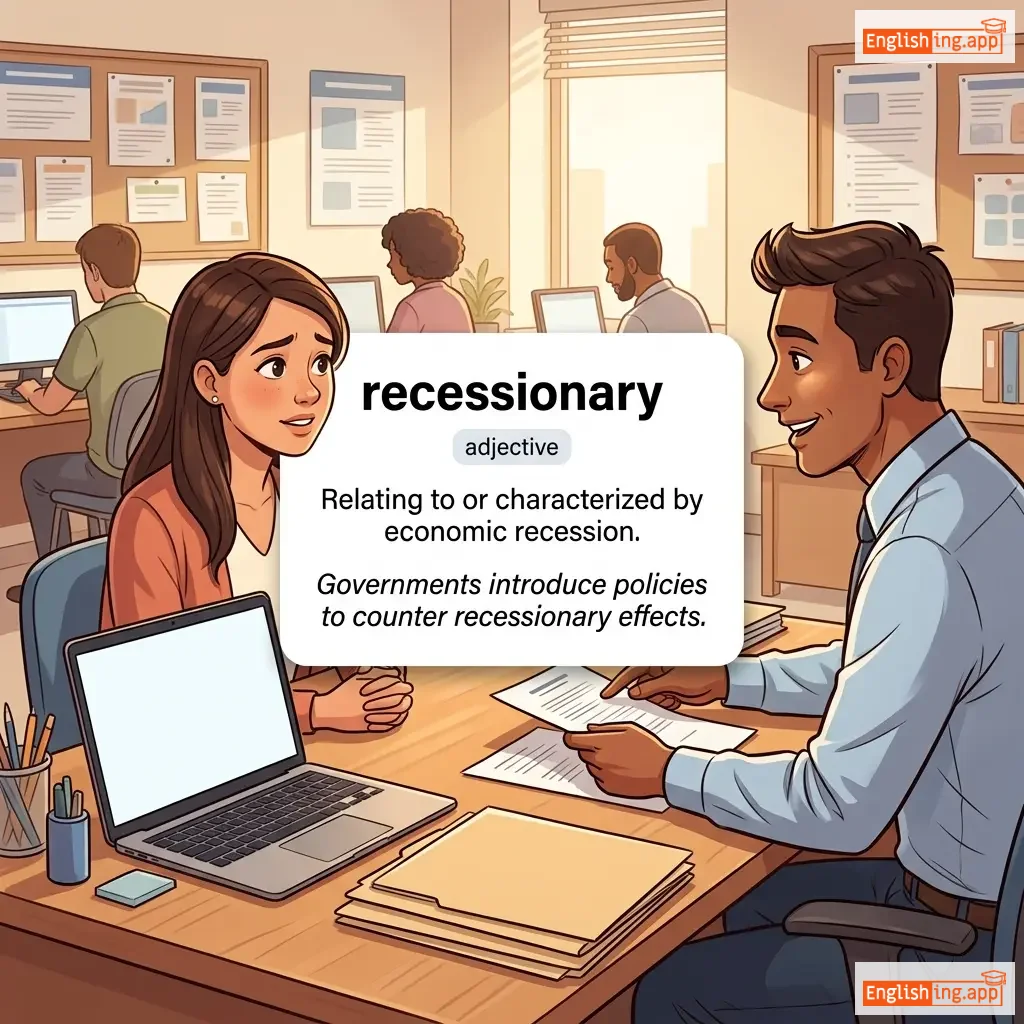
recessionary definition card — visual illustration of the meaning
adjective
rɪˈsɛʃ.ən.er.i
मंदी संबंधित (mandi sambandhit)

Relating to or characterized by economic recession.

"Governments introduce policies to counter recessionary effects."

"सरकारें रिसेशनरी प्रभावों का मुकाबला करने के लिए नीतियाँ पेश करती हैं।" (Sarkaren recessionary prabhavon ka muqabla karne ke liye neetiyan pesh karti hain.)
adjective
/rɪˈsɛsɪv/
पार्श्ववर्ती (parshvavarti)

In genetics, relating to a trait that is expressed only when two copies of the gene are present.

"Blue eye color is often a recessive trait."

"नीली आंखों का रंग अक्सर एक पार्श्ववर्ती गुण होता है।" (Neeli aankhon ka rang aksar ek parshvavarti gun hota hai.)
adjective
/rəˈʃɛrʃ/
दुर्लभ (durlabh)

Rare, exotic, or obscure, often in a sophisticated or refined way.

"The gallery displayed many recherche artworks from unknown artists."

"गैलरी ने अज्ञात कलाकारों के कई दुर्लभ कला कार्यों को प्रदर्शित किया।" (Gailari ne ajnat kalakaron ke kai durlabh kala karyon ko pradarshit kiya.)
noun
/rɪˈsɪdɪˌvɪzəm/
पुनः अपराध की प्रवृत्ति (rikidivijm)

The tendency of a convicted criminal to reoffend or relapse into criminal behavior.

"The government introduced new programs to reduce recidivism among former inmates."

"सरकार ने पूर्व कैदियों में पुनः अपराध की प्रवृत्ति को कम करने के लिए नए कार्यक्रम शुरू किए।" (sarkaar ne purva kaidiyon me punah aparadh ki pravrutti ko kam karne ke liye naye karyakram shuru kiye.)
noun
/rɪˈsɪdɪvɪst/
पुनः अपराधी (punah aparadhi)

A person who repeatedly commits crimes, especially after having been punished.

"The police identified him as a recidivist who had been arrested several times before."

"पुलिस ने उसे एक पुनः अपराधी के रूप में पहचाना, जिसे पहले कई बार गिरफ्तार किया जा चुका था।" (Police ne use ek punah aparadhi ke roop mein pehchana, jise pehle kai baar giraftar kiya ja chuka tha.)
noun
/ˈrɛsɪpi/
रेसिपी (resipi)

a set of instructions for preparing a particular dish, including a list of the ingredients required

"I found a great recipe for chocolate cake."

"मैंने चॉकलेट केक के लिए एक शानदार रेसिपी पाई।" (Maine chocolate cake ke liye ek shandaar resipi pai.)
noun
/rɪˈsɪpiənt/
प्राप्तकर्ता (praptakarta)

A person who receives something, such as an award, gift, or message.

"She was the recipient of the award for best performance."

"वह सर्वश्रेष्ठ प्रदर्शन के लिए पुरस्कार की प्राप्तकर्ता थीं।" (Vah sarvashreshth pradarshan ke liye puraskar ki praptakarta thi.)
adjective
/rɪˈsɪprəkəl/
परस्पर (paraspar)

Given, felt, or done in return; mutual.

"Their relationship is based on reciprocal respect and trust."

"उनका संबंध परस्पर सम्मान और विश्वास पर आधारित है।" (Unka sambandh paraspar samman aur vishwas par aadharit hai.)
verb
/rɪˈsɪprəˌkeɪt/
प्रतिदान देना (pratidaan dena)

To respond to an action or gesture by making a corresponding one.

"She smiled at him, and he reciprocated with a warm hug."

"वह मुस्कराई, और उसने एक गर्म आलिंगन के साथ प्रतिकार किया।" (Vah muskarayi, aur usne ek garm alingan ke saath pratikar kiya.)
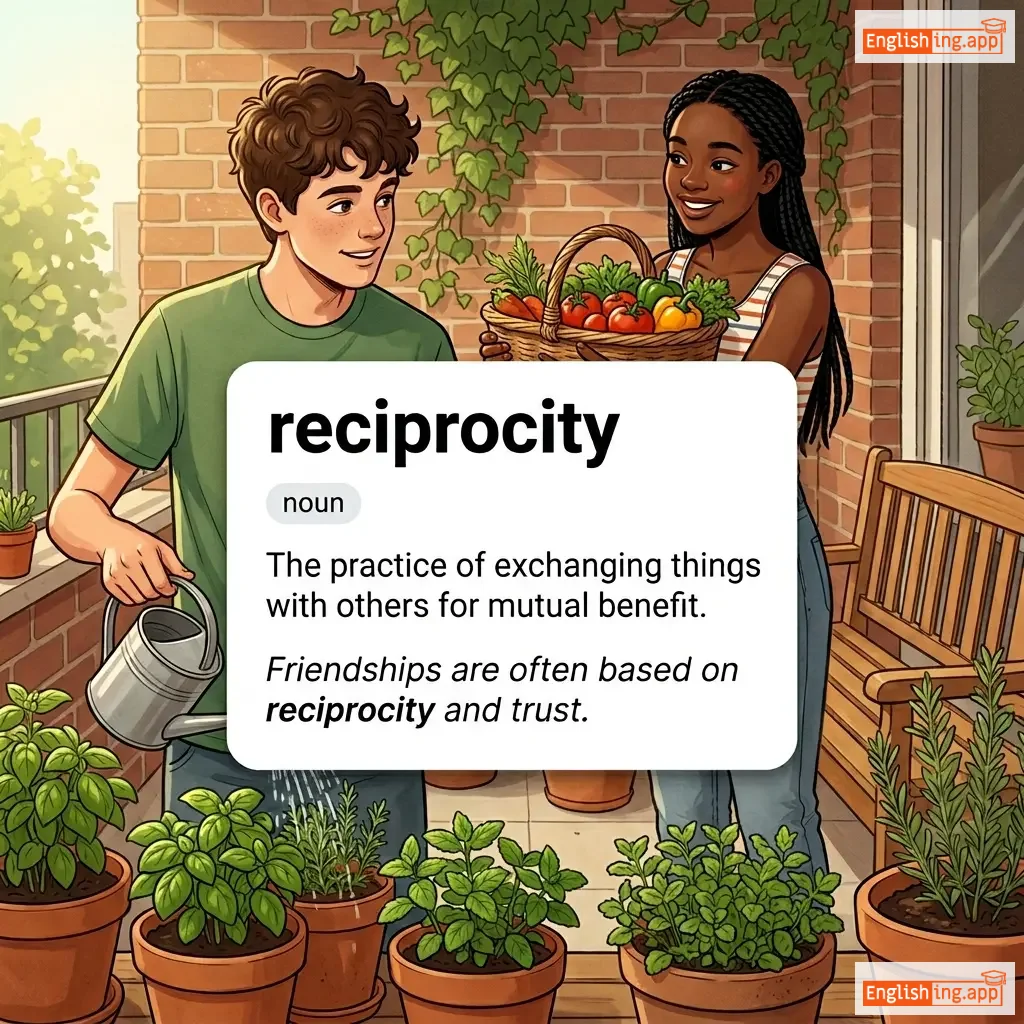
reciprocity definition card — visual illustration of the meaning
noun
/ˌrɛsɪˈprɒsɪti/
आपसी सहयोग (aapsi sahyog)

The practice of exchanging things with others for mutual benefit.

"Friendships are often based on reciprocity and trust."

"दोस्ती अक्सर आपसी सहयोग और विश्वास पर आधारित होती है।" (Dosti aksar aapsi sahyog aur vishwas par aadharit hoti hai.)
noun
/rɪˈsaɪtl/
संगीत कार्यक्रम (sangeet karyakram)

A performance of music, dance, or poetry, usually by a soloist.

"She gave a piano recital at the concert hall."

"उसने संगीत कार्यक्रम के दौरान एक पियानो रिसाइटल दिया।" (Usne sangeet karyakram ke dauraan ek piano recital diya.)
noun
/ˌrɛsɪˈteɪʃən/
उच्चारण (uccharan)

The act of reading or repeating something aloud, especially poetry or passages.

"The student won the prize for her poetry recitation."

"छात्रा ने अपनी कविता उच्चारण के लिए पुरस्कार जीता।" (Chhatra ne apni kavita uccharan ke liye puraskar jeeta.)