वोकैबुलरीज

इंग्लिश वोकैबुलरी डिस्कवर, लर्न और मास्टर करें

noun
/pɑːrt/
हिस्सा (hissa)

a piece or segment of something

"She gave me a part of her chocolate."

"उसने मुझे अपने चॉकलेट का एक हिस्सा दिया।" (Usne mujhe apne chocolate ka ek hissa diya.)
adjective
/ˈpɑːt taɪm/
आंशिक समय (aanshik samay)

working for only part of the usual working day or week

"She works part-time as a waitress."

"वह पार्ट-टाइम वेट्रेस के रूप में काम करती है।" (Vah part-time waitress ke roop mein kaam karti hai.)
adjective
/ˈpɑːrʃəl/
आंशिक, पक्षपाती (anshik, pakshapati)

existing only in part; biased toward one side

"The report gave a partial view of the situation."

"रिपोर्ट ने स्थिति का एक आंशिक दृश्य दिया।" (Report ne sthiti ka ek anshik drishya diya.)
noun
/ˌpɑːrʃiˈæləti/
पक्षपातीपन (pakshapatipan)

an unfair preference or bias toward one side or person

"The judge was criticized for showing partiality in the case."

"न्यायाधीश को मामले में पक्षपाती होने के लिए आलोचना की गई।" (Nyayadhish ko mamle mein pakshapati hone ke liye alochna ki gayi.)
adverb
/ˈpɑːrʃəli/
आंशिक रूप से (aanshik roop se)

to some extent but not completely

"The project was partially completed before the deadline."

"प्रोजेक्ट को समय सीमा से पहले आंशिक रूप से पूरा किया गया था।" (Project ko samay seema se pehle aanshik roop se poora kiya gaya tha.)
adjective
/ˈpɑːrtəbl/
विभाज्य (vibhajya)

capable of being divided or separated

"The estate was partible among the heirs."

"जमीन को उत्तराधिकारियों के बीच विभाज्य किया गया था।" (Jameen ko uttoradhikariyon ke beech vibhajya kiya gaya tha.)
noun
/pɑːrˈtɪsɪpənt/
भागीदार (bhagidar)

a person who takes part in an event or activity

"Each participant received a certificate after the workshop."

"प्रत्येक भागीदार को कार्यशाला के बाद प्रमाणपत्र प्राप्त हुआ।" (Pratyek bhagidar ko karyashala ke baad pramanpatra prapt hua.)
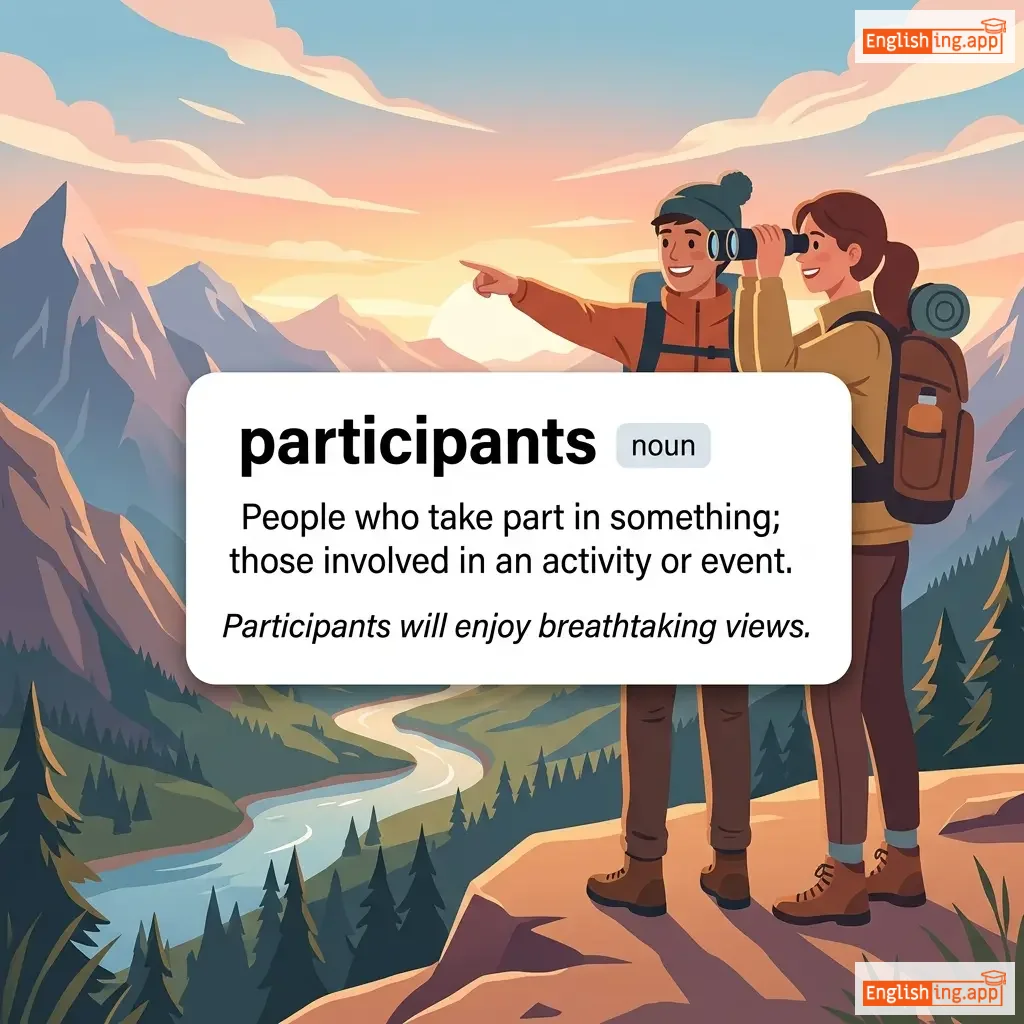
participants definition card — visual illustration of the meaning
noun
pɑːˈtɪs.ɪ.pənts
प्रतिभागी (pratibhagi)

People who take part in something; those involved in an activity or event.

"Participants will enjoy breathtaking views."

"प्रतिभागी breath-taking दृश्य का आनंद लेंगे।" (Pratibhagi breathtaking drishya ka anand lenge.)
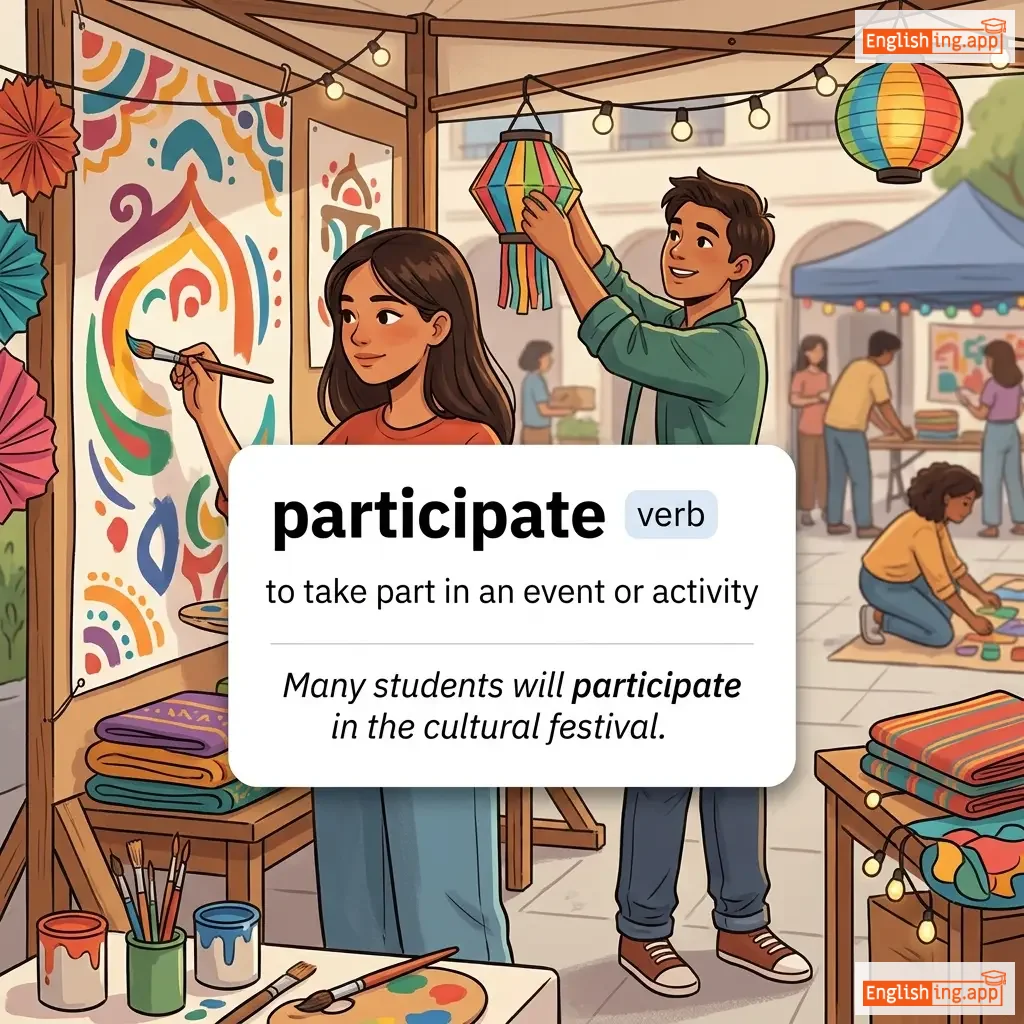
participate definition card — visual illustration of the meaning
verb
/pɑːrˈtɪsɪpeɪt/
भाग लेना (bhag lena)

to take part in an event or activity

"Many students will participate in the cultural festival."

"कई छात्र सांस्कृतिक महोत्सव में भाग लेंगे।" (Kai chhatr sanskritik mahotsav mein bhag lenge.)
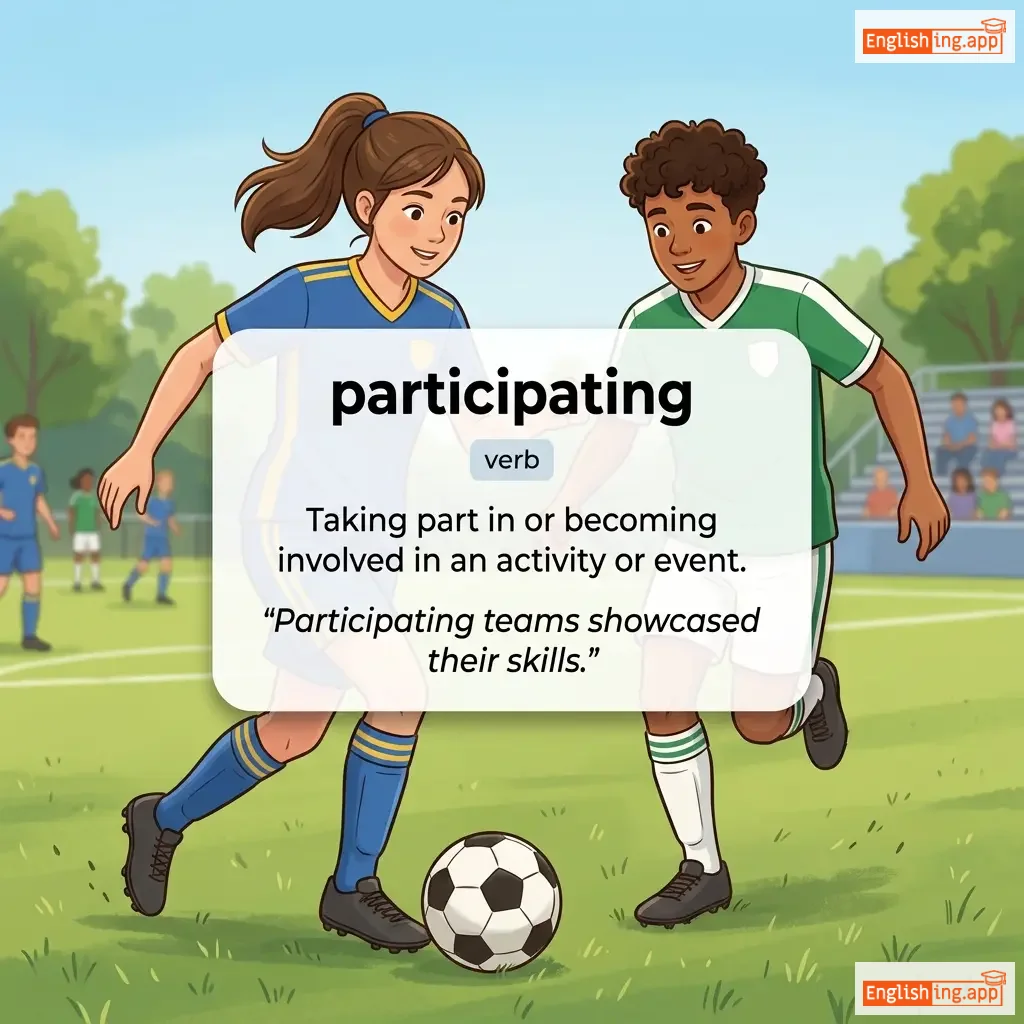
participating definition card — visual illustration of the meaning
verb
pɑːˈtɪs.ɪ.peɪ.tɪŋ
भाग लेना (bhag lena)

Taking part in or becoming involved in an activity or event.

"Participating teams showcased their skills."

"भाग लेने वाली टीमों ने अपनी क्षमताएं दिखाईं।" (Bhag lene wali teemon ne apni kshamataayein dikhayi.)
noun
/pɑːrˌtɪsɪˈpeɪʃən/
भागीदारी (bhagedari)

the action of taking part in something

"Her participation in the competition was commendable."

"प्रतियोगिता में उसकी भागीदारी सराहनीय थी।" (Pratiyogita mein uski bhagedari sarahniya thi.)
noun
/ˈpɑːrtɪkəl/
कणिका (kanika)

a very small piece or amount of something

"Dust particles floated in the air near the window."

"धूल के कण हवा में खिड़की के पास तैर रहे थे।" (Dhul ke kan hawa mein khidki ke paas tair rahe the.)
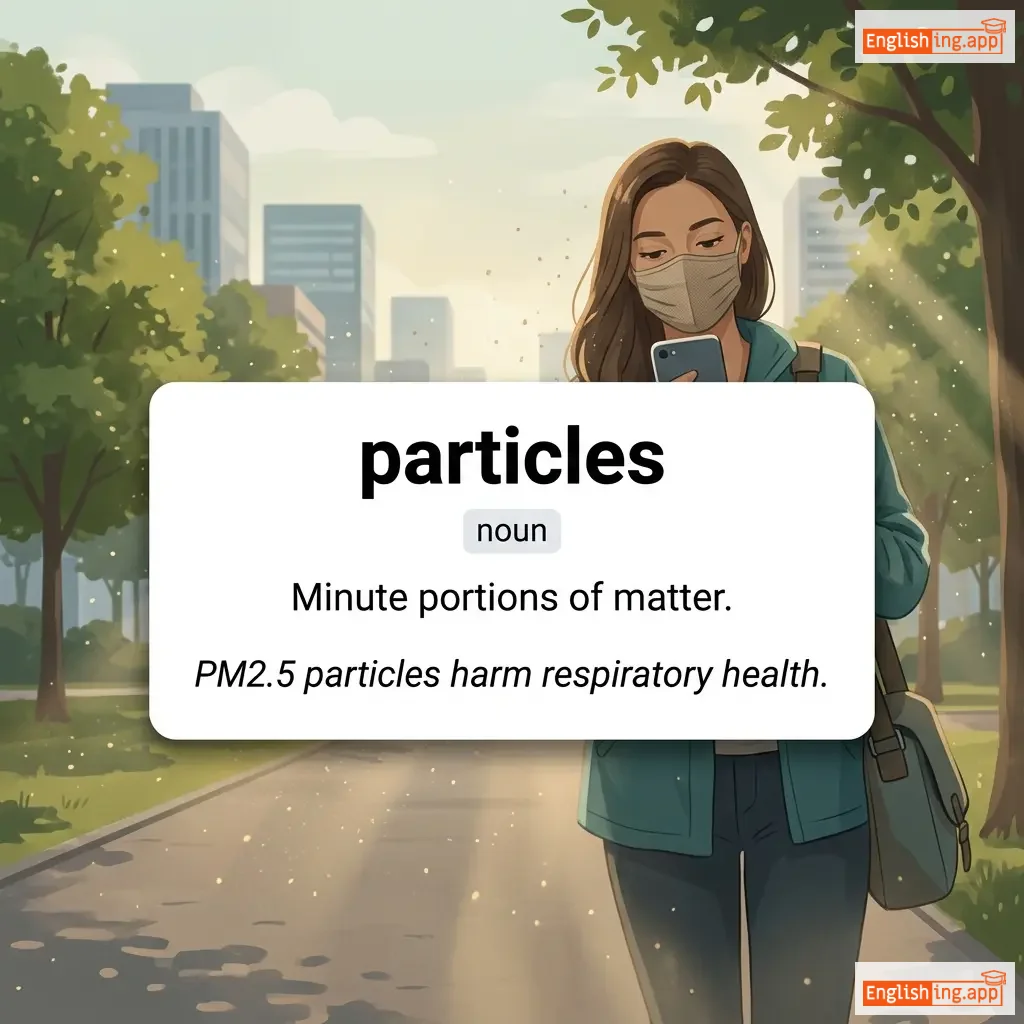
particles definition card — visual illustration of the meaning
noun
/ˈpɑː.tɪ.klz/
कण (kan)

Minute portions of matter.

"PM2.5 particles harm respiratory health."

"PM2.5 कण श्वसन स्वास्थ्य को नुकसान पहुँचाते हैं।" (PM2.5 kan shwasan swasthya ko nuksan pahuchate hain.)
adjective
/pərˈtɪk.jʊ.lər/
विशेष (vishes)

specific or special; distinct from others

"He is very particular about his diet."

"वह अपनी डाइट के बारे में बहुत खास है।" (Vah apni diet ke baare mein bahut khaas hai.)
verb
/pərˈtɪkjələrˌaɪz/
विशेष रूप से वर्णन करना (vishesh roop se varnan karna)

to mention or describe something in detail

"The witness was asked to particularize the events of that night."

"गवाह से उस रात की घटनाओं को विस्तार से बताने के लिए कहा गया था।" (Gawah se us raat ki ghatnaon ko vistaar se batane ke liye kaha gaya tha.)
adverb
/pɑːrˈtɪkjʊləli/
विशेष रूप से (vishesh roop se)

to a higher degree than is usual or expected

"She is particularly fond of Italian food."

"वह खासतौर पर इतालवी भोजन पसंद करती है।" (Woh khas taur par Italian bhojan pasand karti hai.)
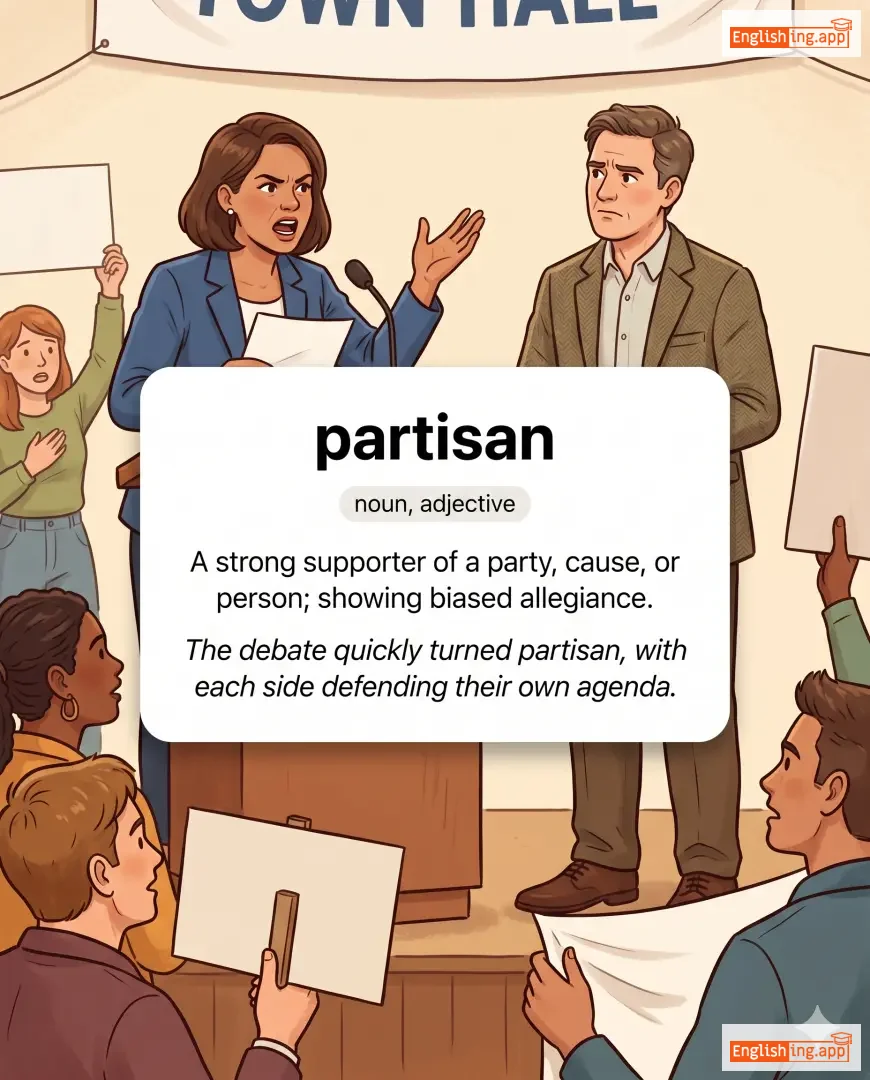
partisan definition card — visual illustration of the meaning
noun, adjective
/ˈpɑːrtɪzən/
पार्टी समर्थक (party samarthak)

A strong supporter of a party, cause, or person; showing biased allegiance.

"The debate quickly turned partisan, with each side defending their own agenda."

"विवाद जल्दी ही पार्टी परक हो गया, हर पक्ष अपनी खुद की एजेण्डा का बचाव कर रहा था।" (Vivad jaldi hi party park ho gaya, har paksh apni khud ki agenda ka bachav kar raha tha.)
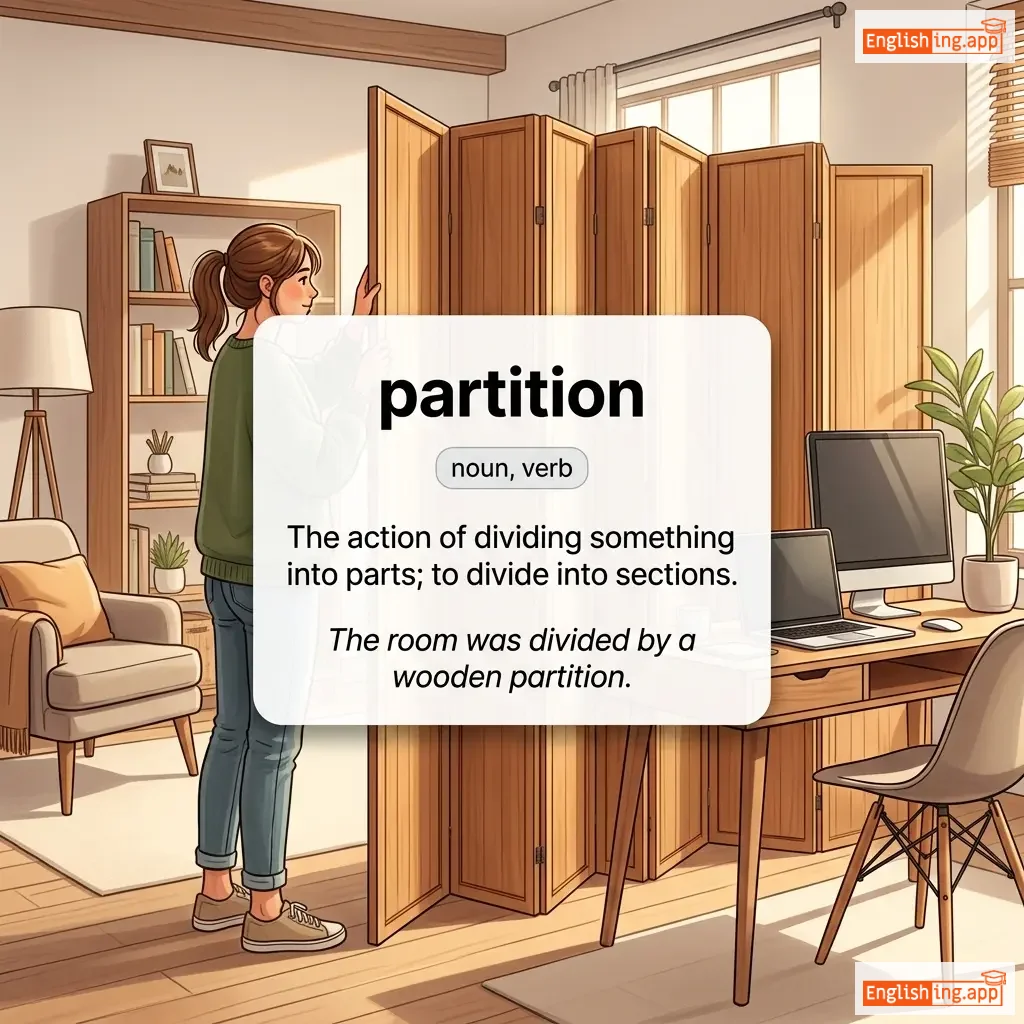
partition definition card — visual illustration of the meaning
noun, verb
/pɑːrˈtɪʃən/
विभाजन / भाग (vibhajan / bhag)

The action of dividing something into parts; to divide into sections.

"The room was divided by a wooden partition."

"कमरा एक लकड़ी के पार्टीशन से विभाजित था।" (Kamra ek lakdi ke partition se vibhajit tha.)
adverb
/ˈpɑːrtli/
आंशिक रूप से (aanchik roop se)

to some extent but not completely

"The project was partly successful, but more work is needed."

"प्रोजेक्ट आंशिक रूप से सफल था, लेकिन और अधिक काम की आवश्यकता है।" (Project aanchik roop se safal tha, lekin aur adhik kaam ki avashyakta hai.)
noun
/ˈpɑːtnər/
सहयोगी (sahyogi)

a person who shares or is associated with another in some action or endeavor

"She is my business partner in the new venture."

"वह मेरी नई परियोजना में व्यापारिक साझेदार है।" (Vah meri nai pariyojana mein vyaparik saajhedaar hai.)
noun
/ˈpɑːtnəʃɪp/
साझेदारी (saajhedari)

the state of being a partner or a group of partners

"Our partnership has helped both companies grow."

"हमारी पार्टनरशिप ने दोनों कंपनियों को बढ़ने में मदद की।" (Hamari partnership ne dono companyon ko badhne mein madad ki.)
noun
/ˌpɑːrtjʊˈrɪʃən/
प्रसव (prasav)

The act of giving birth; childbirth.

"The doctor explained the stages of parturition to the students."

"डॉक्टर ने छात्रों को प्रसव के चरणों के बारे में बताया।" (Doktor ne chhatron ko prasav ke charanon ke baare mein bataya.)
noun
/ˈpɑːti/
पार्टी (party)

a social gathering of people, typically for entertainment

"We had a great time at the birthday party."

"हमने जन्मदिन की पार्टी में शानदार समय बिताया।" (Hamne janmdin ki party mein shandaar samay bitaya.)
noun
/ˈpɑːrvənuː/
हाल ही में अमीर हुआ व्यक्ति (haal hi mein ameera hua vyakti)

A person who has recently gained wealth or influence but is not yet accepted socially.

"He was seen as a parvenu who lacked refinement despite his riches."

"उसे एक ऐसे पारवेनु के रूप में देखा गया था, जिसके पास धन तो था, लेकिन शिष्टता की कमी थी।" (Use ek aise parvenu ke roop mein dekha gaya tha, jiske paas dhan to tha, lekin shishtata ki kami thi.)
🏃‍♂️

pass (पास)

verb
/pæs/
अतिक्रमण करना (atikraman karna)

to move past or beyond something

"He passed the test with flying colors."

"उसने उड़ते हुए रंगों के साथ परीक्षा पास की।" (Usne udte hue rangon ke saath pareeksha paas ki.)
verb (phrasal)
/ˈpæs ˌɔːf/
जाल चीज़ को असली बताकर प्रस्तुत करना; बहाना करना (jal cheez ko asli batakar prastut karna; bahana karna)

to present something or someone falsely as something else; to pretend or deceive

"He tried to pass off the fake watch as a luxury brand."

"उसने नकली घड़ी को एक लक्जरी ब्रांड के रूप में पेश करने की कोशिश की।" (usne nakli ghadi ko ek luxury brand ke roop mein pesh karne ki koshish ki.)
adjective
/ˈpæs.ə.bəl/
स्वीकार्य (sweekarya)

good enough to be accepted, though not excellent

"The road is barely passable after the storm."

"तूफान के बाद सड़क मुश्किल से चलने योग्य है।" (Toofan ke baad sadak mushkil se chalne yogy hai.)
noun
/ˈpæsɪdʒ/
राह/संकीर्ण मार्ग; अंश/उद्धरण; पार करने की प्रक्रिया (raah/sankirn maarg; ansh/uddharan; paar karne ki prakriya)

a narrow way through or between; a section of text or music; the process of moving from one state or place to another

"The narrow passage led from the courtyard to the library."

"संकीर्ण मार्ग ने आंगन से पुस्तकालय तक का रास्ता दिखाया।" (sankirn maarg ne aangan se pustakalay tak ka raasta dikhaya.)
adjective
/pæˈseɪ/
पुराना; फैशन से बाहर (purana; fashion se baahar)

no longer fashionable or current; out of date

"Some trends from last decade feel utterly passé now."

"पिछले दशक के कुछ ट्रेंड अब पूरी तरह से पुराने लगते हैं।" (pichhle dashak ke kuch trend ab poori tarah se purane lagte hain.)
noun
/ˈpæsɪndʒər/
यात्री (yatri)

a person traveling in a vehicle but not operating it

"The passenger was reading a book during the trip."

"यात्री यात्रा के दौरान एक किताब पढ़ रहा था।" (Yatri yatra ke dauran ek kitaab padh raha tha.)
noun
/ˈpæsɪt/
पनीर (paneer)

Fresh cheese curds; cottage cheese made from curdled milk

"The cook prepared fresh passet by curdling warm milk with lemon juice."

"रसोइया ने नींबू के रस से गरम दूध को जाम करके ताजे पनीर को तैयार किया।" (rasoiya ne neemboo ke ras se garam dudh ko jam karke taze paneer ko tayar kiya.)
adjective
/ˈpæsɪbəl/
अनुभवयोग्य; दुःख भोगने योग्य (anubhavayogya; dukh bhogne yogya)

capable of feeling or suffering; susceptible to sensation or emotion (often theological)

"In some traditions, deities are described as passible, sharing human emotions."

"कुछ परंपराओं में, देवताओं को अनुभवयोग्य के रूप में वर्णित किया जाता है, जो मानव भावनाओं को साझा करते हैं।" (kuch paramparaon mein, devtaon ko anubhavayogya ke roop mein varnita kiya jata hai, jo manav bhavanao ko saanjha karte hain.)
noun
/ˈpæsɪŋ/
गमन, मृत्यु (gaman, mrityu)

the act of moving past something or the end of someone's life

"The passing of the leader was a great loss for the nation."

"नेता की मृत्यु राष्ट्र के लिए एक बड़ा नुकसान था।" (Neta ki mrityu rashtr ke liye ek bada nuksan tha.)
noun
/ˈpæʃ.ən/
उत्साह (utsah)

a strong feeling of enthusiasm or excitement for something or about doing something

"Her passion for teaching was evident in every class."

"उसका शिक्षण के प्रति उत्साह हर कक्षा में स्पष्ट था।" (uska shikshan ke prati utsah har kaksha mein spashth tha.)
noun
/ˈpæʃ.ən ˌflaʊ.ər/
पैशन फ्लावर (pashan phlaver)

A climbing plant with intricate, colorful flowers; also refers to royal poinciana tree with red-orange blooms

"The passion flower vine covered the garden wall with beautiful blooms."

"पैशन फ्लॉवर की बेल ने बागान की दीवार को खूबसूरत फूलों से ढक लिया।" (pashan phlaver ki bel ne bagan ki deewar ko khoobsurat phoolon se dhak liya.)
adjective
/ˈpæʃənət/
उत्साही (utsahi)

showing or caused by strong feelings or a strong belief

"He is passionate about environmental conservation."

"वह पर्यावरण संरक्षण के प्रति पैशननेट है।" (Wah paryavaran sanrakshan ke prati passionate hai.)
adjective
/ˈpæsɪv/
निष्क्रिय; (व्याकरण) कर्मवाच्य (nishkriya; (vyakaran) karmavachya)

not actively responding or participating; in grammar, denoting the voice in which the subject undergoes the action

"Instead of taking charge, he remained passive during the meeting."

"बैठक के दौरान, उसने जिम्मेदारी नहीं ली, वह निष्क्रिय बना रहा।" (baithak ke dauran, usne jimmedari nahin li, vah nishkriya bana raha.)
noun
/ˈpɑːsˌpɔːrt/
पासपोर्ट (passport)

an official government document that identifies a person and allows them to travel internationally

"She renewed her passport before traveling abroad."

"विदेश यात्रा से पहले उसने अपना पासपोर्ट नवीनीकृत किया।" (videsh yatra se pehle usne apna passport navinikrit kiya)
noun
/ˈpɑːswɜːd/
गुप्त शब्द (gupt shabd)

a secret word or phrase used to gain access to something

"Make sure your password is strong and unique."

"सुनिश्चित करें कि आपका पासवर्ड मजबूत और अद्वितीय है।" (Sunishchit karein ki aapka password majboot aur advitiya hai.)
noun/adjective/preposition
/pɑːst/
अतीत (atit)

the time before the present; gone by in time

"He often thinks about his past mistakes."

"वह अक्सर अपने अतीत की गलतियों के बारे में सोचता है।" (Vah aksar apne atit ki galtiyon ke baare mein sochta hai.)
noun
/ˈpæstə/
पास्ता (pasta)

an Italian food made from flour and water, typically shaped into noodles or sheets

"We had creamy pasta for dinner last night."

"हमने पिछले रात डिनर में क्रीमी पास्ता खाया।" (Humne pichle raat dinner mein creamy pasta khaya.)
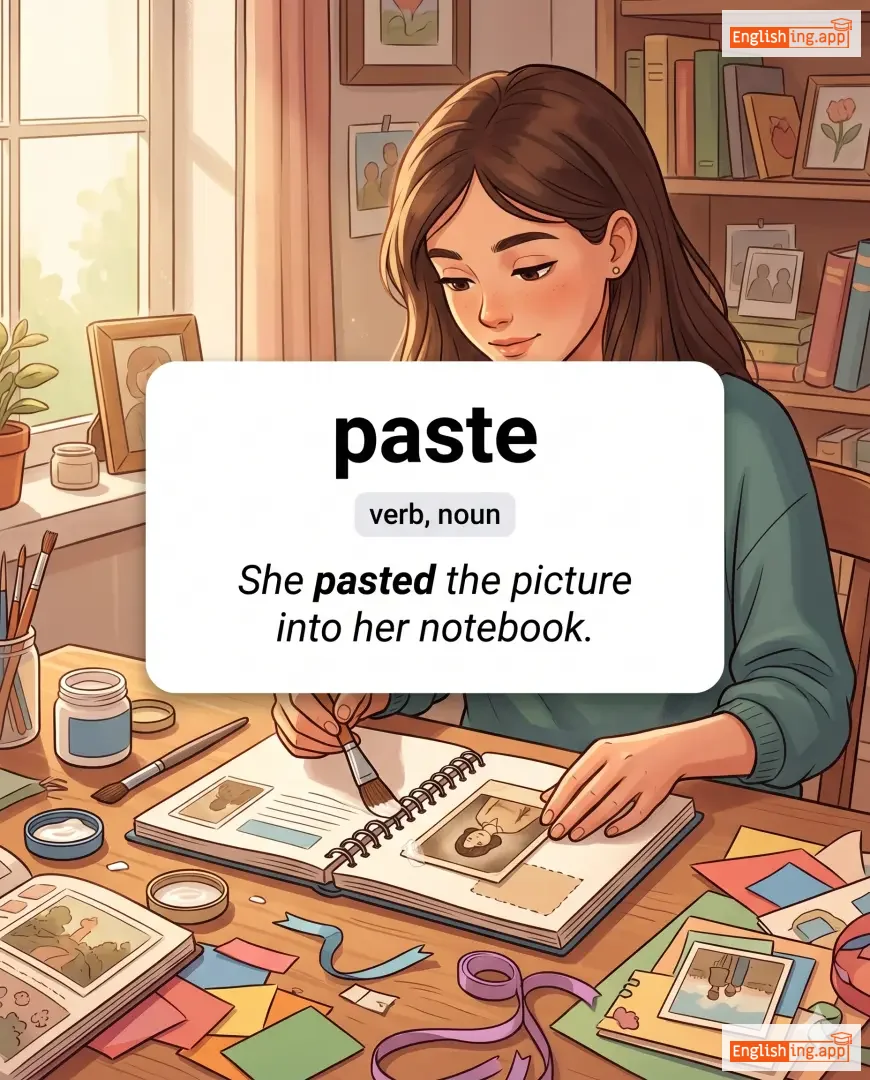
paste definition card — visual illustration of the meaning
verb, noun
/peɪst/
चिपकाना, पेस्ट (chipkaana, paste)

to stick or attach something using a soft, moist substance; also a thick, soft, moist substance itself

"She pasted the picture into her notebook."

"उसने चित्र को अपनी नोटबुक में चिपका दिया।" (Usne chitra ko apni notebook mein chipka diya.)
noun
/pæˈstiːʃ/
अनुकरणात्मक कृति (anukaranatmak kruti)

a work of art, literature, or music that imitates the style of another artist, period, or genre

"The film was a clever pastiche of 1950s detective movies."

"फिल्म 1950 के दशक की जासूसी फिल्मों का एक चतुर अनुकरण था।" (Film 1950 ke dashak ki jasoosi filmon ka ek chatur anukaran tha.)
noun
/ˈpæs.taɪm/
शौक (shauk)

an activity done regularly for enjoyment; a hobby or recreational activity

"Reading books is her favorite pastime during weekends."

"पढ़ना किताबों को सप्ताहांत में उसका पसंदीदा शौक है।" (padhna kitaabon ko saptahant mein uska pasandida shauk hai।)
noun
/ˈpæstər/
पादरी (padri)

a minister in charge of a Christian church or congregation

"The pastor delivered a heartfelt sermon on compassion."

"पादरी ने करुणा पर एक दिल से भरी उपदेश दिया।" (Padri ne karuna par ek dil se bhari upadesh diya.)
adjective, noun
/ˈpæstərəl/
ग्रामीण, चरवाहे से संबंधित (gramin, charwaha se sambandhit)

relating to the countryside, shepherds, or rural life; also relating to spiritual guidance by a pastor

"The painting had a calm pastoral scene with sheep grazing."

"चित्रकला में एक शांत ग्रामीण दृश्य था जिसमें भेड़ें चर रही थीं।" (Chitrakala mein ek shaant gramin drishya tha jismein bheden char rahi thin.)
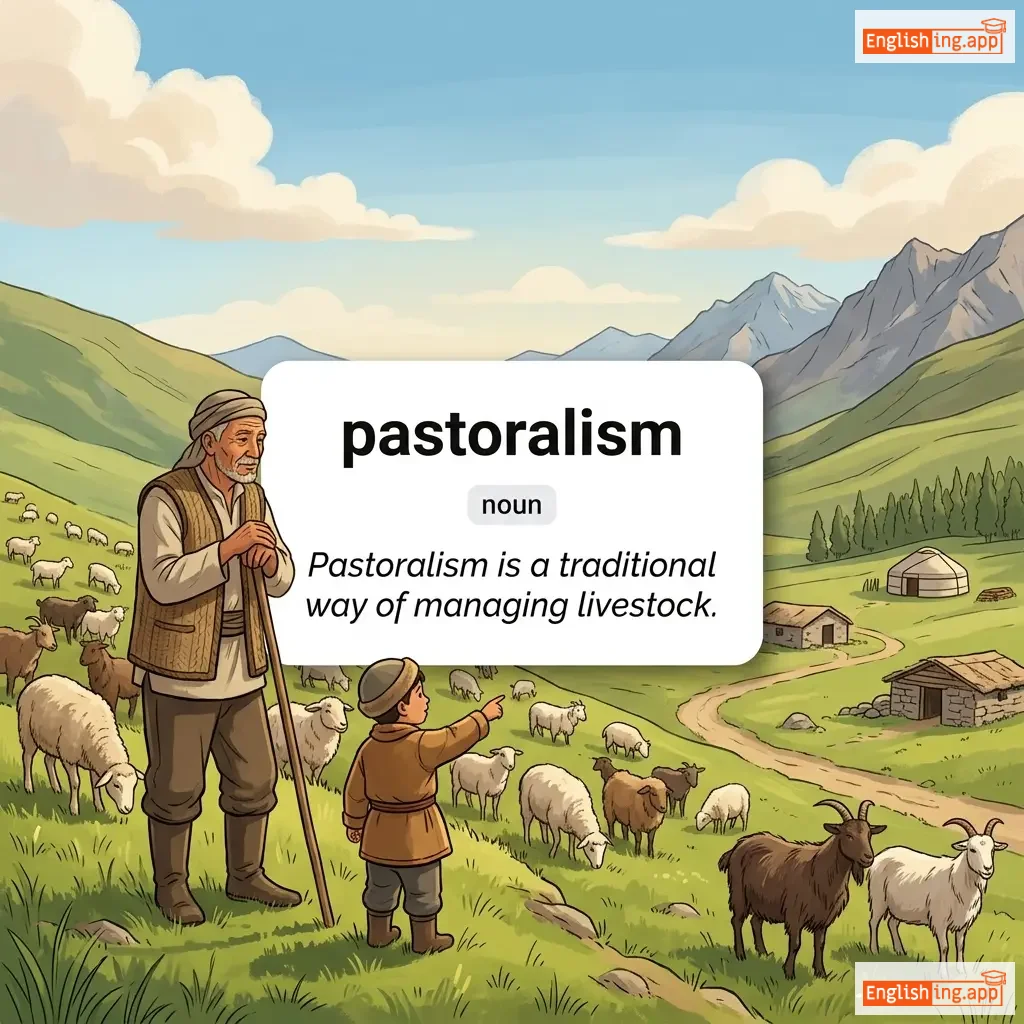
pastoralism definition card — visual illustration of the meaning
noun
ˈpɑː.stər.ə.lɪ.zəm
पशुपालन, घास आधारित चराई प्रणाली (pashupalan, ghas aadharit charai pranali)

A form of animal husbandry where domesticated animals are released onto large vegetated outdoor lands for grazing.

"Pastoralism is a traditional way of managing livestock."

"पैस्टोरलिज़म एक पारंपरिक तरीका है जिसमें मवेशियों की देखभाल की जाती है।" (Pastoralism ek paaramparik tareeka hai jismein maveshiyon ki dekhbhaal ki jaati hai.)
noun
/ˈpeɪstri/
पेस्ट्री (pestri)

a baked food product made from flour, fat, and water, often sweet or savory

"I bought a box of fresh pastries for breakfast."

"मैंने नाश्ते के लिए ताजे पेस्ट्री का एक डिब्बा खरीदा।" (Maine nashtay ke liye tazay pestri ka ek dibba khareeda.)
verb
/pæt/
खुशी (khushi)

to touch someone or something gently, often to show affection or approval

"She gently patted the dog on its head."

"जब उसने पुरस्कार प्राप्त किया तो वह अपनी खुशी छिपा नहीं पाई।" (Jab usne puraskaar praapt kiya to woh apni khushi chhupa nahin paayi.)
noun
/pætʃ/
पैच (patch)

a piece of cloth or material used to cover or mend a hole or a tear

"He put a patch on his jeans to cover the tear."

"उसने अपनी जीन्स पर छेद को ढकने के लिए एक पैच लगाया।" (usne apni jeans par chhed ko dhakne ke liye ek patch lagaya.)