वोकैबुलरीज

इंग्लिश वोकैबुलरी डिस्कवर, लर्न और मास्टर करें

adjective
/ˈplaɪəbəl/
लचीला (lachila)

easily bent or flexible; adaptable

"The metal is pliable enough to be shaped into jewelry."

"धातु इतनी लचीली है कि इसे गहनों में आकार दिया जा सकता है।" (Dhaatu itni lachili hai ki ise gahon mein aakaar diya ja sakta hai.)
adjective
/ˈplaɪənt/
लचीला, आसानी से प्रभावित या अनुकूलनीय (lachila, aasani se prabhavit ya anukoolneey)

flexible; easily influenced or adaptable

"She has a pliant personality that adapts well to new situations."

"उसकी एक लचीली व्यक्तित्व है जो नई परिस्थितियों में अच्छी तरह से समायोजित हो जाती है।" (Uski ek lachili vyaktitva hai jo nai paristhitiyon mein acchi tarah se samaayojit ho jaati hai.)
noun
/plaɪt/
कठिनाई, संकट (kathinai, sankat)

a difficult or dangerous situation

"The refugees described their plight during the war."

"शरणार्थियों ने युद्ध के दौरान अपनी कठिनाई का वर्णन किया।" (Sharanarthiyon ne yudh ke dauran apni kathinai ka varnan kiya.)
verb
/plɒd/
धीरे-धीरे काम करना (dheere-dheere kaam karna)

to work slowly and steadily, often with effort or difficulty

"He plodded through his homework despite feeling tired."

"वह थका हुआ होते हुए भी अपने गृहकार्य को धीरे-धीरे कर रहा था।" (Vah thaka hua hote huye bhi apne grihakarya ko dheere-dheere kar raha tha.)
adjective
/ˈplɒd.ɪŋ/
धीमा और उबाऊ (dheema aur ubaaoo)

slow-moving and unexciting; showing steady effort

"The movie was entertaining but a bit plodding in the middle."

"फिल्म मनोरंजक थी लेकिन बीच में थोड़ी धीमी और उबाऊ लगी।" (Film manoranjak thi lekin beech mein thodi dheemi aur ubaaoo lagi.)
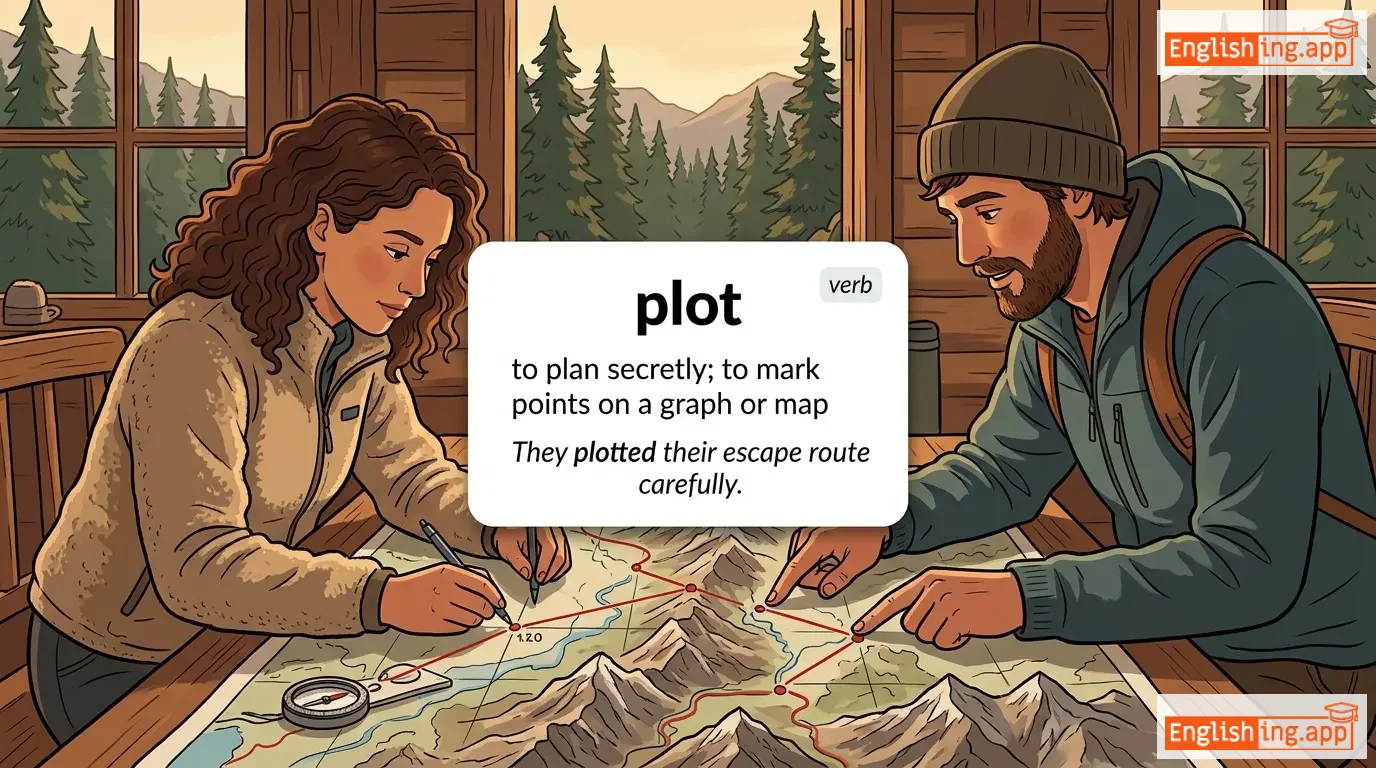
plot definition card — visual illustration of the meaning
noun
/plɒt/
साज़िश (saazish)

a secret plan or scheme, often with bad intentions

"The villain made a plot to steal the treasure."

"विलेन ने खजाना चुराने की साज़िश बनाई।" (Vilen ne khajana churaane ki saazish banayi.)
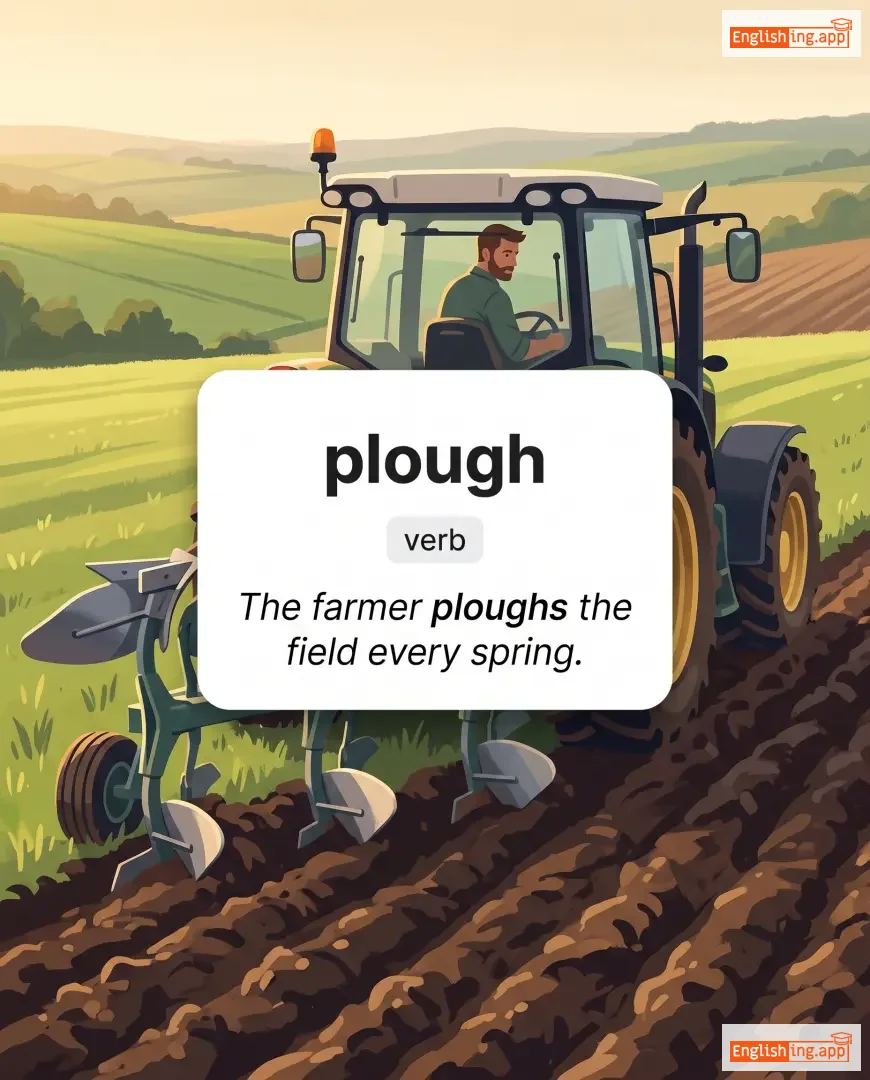
plough definition card — visual illustration of the meaning
noun
/plaʊ/
हल (hal)

a large farming tool used to break up and turn over soil before planting crops

"The oxen pulled the heavy plough across the field."

"बैलों ने भारी हल को खेत में खींचा।" (bailon ne bhari hal ko khet mein kheencha.)
noun
/plɔɪ/
चतुर चाल (chatur chaal)

a clever plan or action designed to gain an advantage

"She used a clever ploy to win the debate."

"उसने बहस जीतने के लिए एक चतुर चाल का इस्तेमाल किया।" (Usne bahas jeetne ke liye ek chatur chaal ka istemal kiya.)
verb
/plʌk/
उठाना, साहस जुटाना (uthana, sahas jutana)

to take hold of and quickly remove; to gather courage or determination

"She plucked a flower from the garden."

"उसने बाग़ से एक फूल तोड़ लिया।" (Usne bagh se ek phool tod liya.)
adjective
/ˈplʌk.i/
साहसी (sahasi)

having or showing courage and determination

"The plucky child rescued the kitten from the tree."

"साहसी बच्चे ने पेड़ से बिल्ली के बच्चे को बचाया।" (Sahasi bachche ne ped se billi ke bachche ko bachaya.)
noun
/plʌɡ/
प्लग (plug)

a device used to connect or block an opening

"She inserted the plug into the socket."

"उसने सॉकेट में प्लग डाला।" (Usne socket mein plug dala.)
noun
/plʌm/
बेर (ber)

a small round fruit with smooth red or purple skin, sweet flesh, and a single large seed

"The purple plum was juicy and delicious."

"बैंगनी बेर रसदार और स्वादिष्ट था।" (baingani ber rasdaar aur swaadisht tha.)
noun
/ˈpluː.mɪdʒ/
पक्षी की पंखों की संरचना (pakshi ki pankhon ki sanrachna)

the feathers covering a bird's body

"The peacock's plumage was vibrant and eye-catching."

"मोर के पंख जीवंत और आकर्षक थे।" (Mor ke pankh jeevant aur aakarshak the.)
verb
/plʌm/
गहराई मापना या करीब से जांचना (gahraai maapna ya kareeb se jaanchna)

to measure the depth of water or examine closely

"They used a line to plumb the depth of the lake."

"उन्होंने झील की गहराई मापने के लिए एक लाइन का इस्तेमाल किया।" (Unhone jheel ki gahraai maapne ke liye ek line ka istemaal kiya.)
noun
/ˈplʌm.ər/
प्लंबर (plumber)

a person who installs or repairs water pipes

"The plumber fixed the leaking pipe in the kitchen."

"प्लंबर ने किचन में लीक हो रही पाइप को ठीक किया।" (plumber ne kitchen mein leek ho rahi pipe ko theek kiya.)
noun
/pluːm/
एक बड़ा, मुलायम पंख या ऐसा कुछ जो पंख की तरह हो (ek bada, mulayam pankh ya aisa kuch jo pankh ki tarah ho)

a large, soft feather or something resembling a feather

"The soldier wore a red plume on his helmet."

"सैनिक ने अपने हेलमेट पर एक लाल पंख पहना था।" (Sainik ne apne helmet par ek lal pankh pehna tha.)
plummet definition card — visual illustration of the meaning
verb
/ˈplʌm.ɪt/
तेज गति से सीधा गिरना (tej gati se seedha girna)

to fall straight down at high speed

"Stock prices plummeted after the sudden market crash."

"मार्केट क्रैश के बाद स्टॉक की कीमतें तेजी से गिर गईं।" (Market crash ke baad stock ki keematein tezi se gir gayi.)
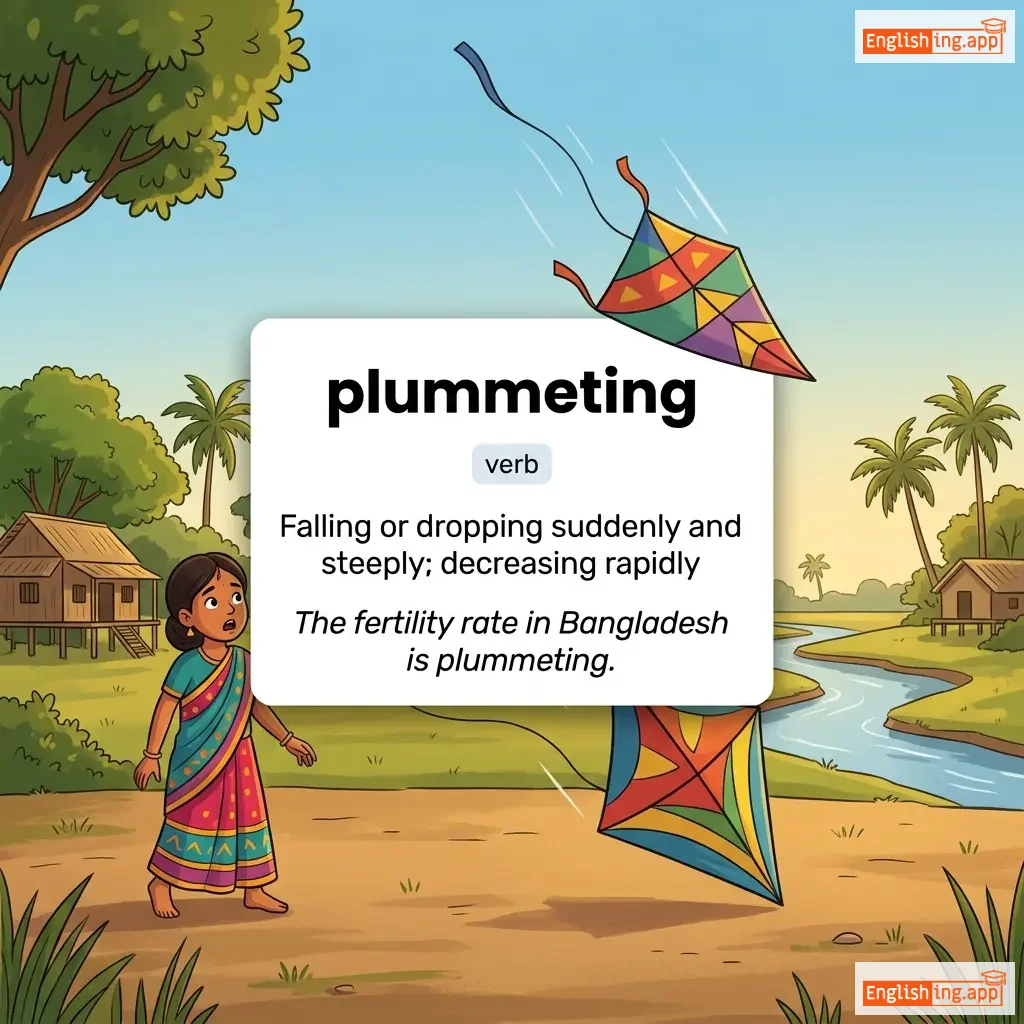
plummeting definition card — visual illustration of the meaning
verb
ˈplʌmɪtɪŋ
तेज़ गिरावट (tez giravat)

Falling or dropping suddenly and steeply; decreasing rapidly

"The fertility rate in Bangladesh is plummeting."

"बांग्लादेश में प्रजनन दर तेज़ी से गिर रही है।" (Banglades mein prajanan dar tezi se gir rahi hai.)
adjective
/plʌmp/
मोटा या गोल आकार में (mota ya gol aakaar mein)

having a full, rounded shape; pleasantly fat

"The cat was plump and well-fed."

"बिल्ली मोटी और अच्छी तरह से खिला हुआ था।" (Billi moti aur acchi tarah se khila hua tha.)
noun
/ˈplʌn.dər.ər/
लुटेरा (lutera)

a person who steals goods, especially during war or civil disorder

"The plunderers ransacked the village after the battle."

"युद्ध के बाद लुटेरों ने गांव को लूट लिया।" (yudh ke baad luteron ne gaon ko loot liya.)
verb
/plʌndʒ/
जल्दी से कूदना या डूबना; तेज़ी से गिरना (jaldi se koodna ya doobna; tez se girna)

to jump or dive quickly; to fall sharply

"She plunged into the swimming pool."

"वह स्विमिंग पूल में कूद पड़ी।" (vah swimming pool mein kood padi.)
adjective
/ˌpluːˈpɜːrfɪkt/
प्लूपरफेक्ट (pluperfect)

a verb tense expressing an action completed before another past action

"By the time she arrived, he had finished his homework, showing the pluperfect tense."

"जब तक वह पहुंची, उसने अपना होमवर्क खत्म कर लिया था, जो प्लूपरफेक्ट काल को दर्शाता है।" (Jab tak vah pahunchi, usne apna homework khatam kar liya tha, jo pluperfect kal ko darshata hai.)
adjective
/ˈplʊrəl/
बहुवचन (bahuvachan)

denoting more than one person or thing

"The word 'cats' is the plural of 'cat'."

"'cats' शब्द 'cat' का बहुवचन है।" ('cats' shabd 'cat' ka bahuvachan hai.)
noun
/plʊəˈrælɪti/
बहुलता या बहुमत (bahulata ya bahumat)

the state of being multiple; the greater part or majority

"In the election, she won by a plurality of votes."

"चुनाव में, उसने वोटों के बहुमत से जीत हासिल की।" (Chunav mein, usne voton ke bahumat se jeet haasil ki.)
preposition/conjunction/noun/adjective
/plʌs/
जोड़/लाभ (jod/labh)

in addition to; a positive aspect or advantage

"She received an A plus on her exam."

"उसे अपनी परीक्षा में ए प्लस मिला।" (Use apni pareeksha mein A plus mila.)
noun
/pluːˈtɒkrəsi/
धनवादित सरकार (dhanvadit sarkar)

a system of government where the wealthy hold power

"The country was ruled as a plutocracy."

"देश को प्लूटोक्रसी के रूप में शासित किया गया था।" (Desh ko plutocracy ke roop mein shasit kiya gaya tha.)
noun
/piːˈɛm/
पोस्ट मेरिडियम (peeem)

abbreviation for post meridiem; after midday

"The meeting is scheduled at 3 pm."

"बैठक शाम के तीन बजे निर्धारित है।" (Baithak shaam teen baje nirdharit hai)
adjective
/njuːˈmætɪk/
वायवीय (vaayaveey)

operated by air or gas under pressure

"The factory uses pneumatic tools for assembly."

"कारख़ाना विधानसभा के लिए वायवीय उपकरणों का उपयोग करता है।" (Karkhaana vidhansabha ke liye vaayaveey upkaranon ka upyog karta hai.)
noun
/ˈpɒkɪt/
जेब (poket)

a small, enclosed space in clothing for carrying items

"He put his phone in his pocket."

"उसने अपना फोन अपनी जेब में रख दिया." (usne apna phone apni jeb me rakh diya)
podcasts definition card — visual illustration of the meaning
noun
ˈpɒdkɑːsts
पॉडकास्ट (podcast)

A digital audio or video file or recording, usually part of a themed series, that can be downloaded from a website to a media player or computer.

"Podcasts are great for improving listening."

"पॉडकास्ट्स सुनना सुनने की क्षमता को सुधारने के लिए अच्छा है।" (Podcasts sunna sunne ki kshamata ko sudharne ke liye accha hai.)
noun
/ˈpoʊdiətrɪst/
पैर चिकित्सक (pair chikitsak)

a doctor specializing in foot care

"I have an appointment with the podiatrist for my ankle pain."

"मेरे टखने के दर्द के लिए मुझे पॉडियाट्रिस्ट से अपॉइंटमेंट है।" (Mere takhane ke dard ke liye mujhe podiatrist se appointment hai.)
noun
/ˈpoʊdiəm/
प्लेटफ़ॉर्म (platform)

a small platform on which a person stands to speak or conduct an orchestra

"The speaker stepped onto the podium to deliver the speech."

"वक्ता ने भाषण देने के लिए मंच पर कदम रखा।" (Vakta ne bhashan dene ke liye manch par kadam rakha.)
noun
/ˈpoʊɪm/
कविता (kavita)

a piece of writing that expresses ideas, feelings, or tells a story in a distinct form, often using rhyme or meter

"She wrote a beautiful poem for her mother."

"उसने अपनी माँ के लिए एक सुंदर कविता लिखी।" (Usne apni maan ke liye ek sundar kavita likhi.)
noun
/ˈpoʊ.ə.si/
कविता या काव्यकला (kavita ya kavyakala)

poetry; the art or composition of poems

"The anthology was filled with romantic poesy."

"एंथोलॉजी रोमांटिक कविता से भरी हुई थी।" (Anthology romantic kavita se bhari hui thi.)
noun
/ˈpoʊɪt/
कवि (kavi)

a person who writes poems

"The poet wrote about love and nature."

"कवि ने प्रेम और प्रकृति के बारे में लिखा।" (Kavi ne prem aur prakriti ke baare mein likha.)
noun
/ˈpoʊ.ɪˌtæs.tər/
एक तुच्छ या नीच कवि (ek tuchchh ya neech kavi)

an inferior or trivial poet

"He was mocked as a poetaster by the literary critics."

"वह साहित्यिक आलोचकों द्वारा एक पोएटास्टर के रूप में मजाक उड़ाया गया था।" (Vah sahityik alochako dwara ek poetaster ke roop mein mazaak udaaya gaya tha.)
adjective
/poʊˈɛt.ɪk/
कविता जैसी, कल्पनाशील (kavita jaisi, kalpanasheel)

having qualities of poetry; expressive, beautiful, or imaginative

"Her speech had a poetic rhythm that captivated the audience."

"उसके भाषण में एक कविता जैसा लय था जिसने श्रोताओं को मंत्रमुग्ध कर दिया।" (Uske bhashan mein ek kavita jaisa lay tha jisne shroton ko mantrmugdh kar diya.)
noun
/poʊˈɛt.ɪks/
काव्यशास्त्र, कविता का सिद्धांत (kavyashastra, kavita ka siddhant)

the study or theory of poetry and its principles

"He wrote a book on poetics explaining the art of verse."

"उसने कविता के सिद्धांतों पर एक किताब लिखी, जिसमें छंद कला की व्याख्या की गई।" (Usne kavita ke siddhanton par ek kitaab likhi, jismein chhand kala ki vyakhya ki gayi.)
noun
/ˈpoʊɪtri/
कविता (kavita)

a literary form that uses rhythmic and metaphorical language to express emotions or ideas

"She loves reading poetry in her free time."

"वह अपने फ्री समय में कविता पढ़ना पसंद करती है।" (Woh apne free samay mein kavita padhna pasand karti hai.)
noun
/ˈpɔɪ.nən.si/
दुःख, दर्दनाकता (dukh, dardnākata)

the quality of evoking a keen sense of sadness or regret; emotionally touching

"The poignancy of the farewell brought tears to everyone's eyes."

"अलविदा की दर्दनाकता ने सभी की आँखों में आंसू भर दिए।" (Alvida ki dardnākata ne sabhi ki aankhon mein aansu bhar diye.)
adjective
/ˈpɔɪ.njənt/
स्पर्शकात्क्ष, भावनात्मक (sparshokatksh, bhavnatmak)

evoking a keen sense of sadness or regret; deeply touching

"The movie's ending was so poignant that many in the audience were moved to tears."

"फ़िल्म का अंत इतना स्पर्शकात्क्ष था कि दर्शकों में से कई लोग आंसुओं से अभिभूत हो गए।" (Film ka ant itna sparshokatksh tha ki darshako mein se kai log aansuon se abhibhoot ho gaye.)
noun
/pɔɪnt/
बिंदु (bindu)

a particular spot, location, or position in space

"The mountain peak is the highest point in the region."

"पहाड़ी शिखर क्षेत्र का सबसे ऊँचा बिंदु है।" (Pahaadi shikhar kshetra ka sabse ooncha bindu hai.)
adjective
/ˈpɔɪn.tɪd/
तीखा; सीधा और स्पष्ट (teekha; seedha aur spasht)

having a sharp end; direct and unambiguous

"She made a pointed remark about his behavior."

"वह उसके व्यवहार के बारे में एक तीखी टिप्पणी कर रही थी।" (vah uske vyavhaar ke baare mein ek teekhi tippani kar rahi thi.)
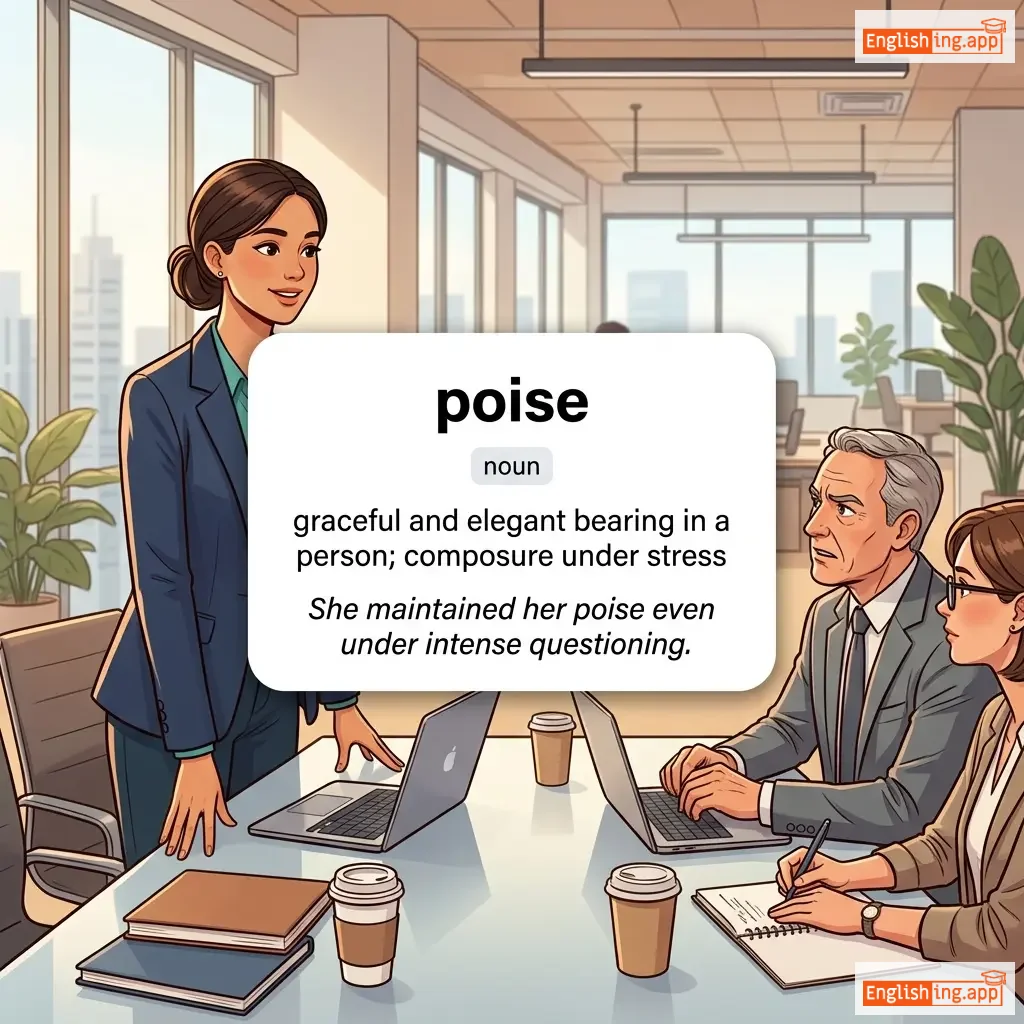
poise definition card — visual illustration of the meaning
noun
/pɔɪz/
शांति, संतुलन, संयम (shaanti, santulan, sanyam)

graceful and elegant bearing in a person; composure under stress

"She maintained her poise even under intense questioning."

"वह तीव्र प्रश्नों के बावजूद अपनी शांति बनाए रखी।" (Vah teevra prashno ke baavjood apni shaanti banaaye rakhi.)
noun
/ˈpɔɪ.zən/
जहर (poyzan)

a substance that is capable of causing death or illness

"The snake's bite contains deadly poison."

"साँप के काटने में घातक जहर होता है." (saanp ke kaatne mein ghaatak jahar hota hai)
adjective
/ˈpɔɪzənəs/
विषैला (vishaila)

Containing poison; capable of causing illness or death.

"Some mushrooms are highly poisonous."

"कुछ मशरूम बहुत विषैले होते हैं।" (Kuch mushroom bahut vishailay hote hain.)
verb
/poʊk/
धक्का देना (dhakka dena)

to push something with a finger or a pointed object

"He poked the fire with a stick."

"उसने एक लकड़ी से आग को छेड़ा।" (Usne ek lakdi se aag ko chheda.)
adjective
/ˈpoʊ.lər/
ध्रुवीय, ध्रुव से संबंधित (dhrubiy, dhrub se sambandhit)

relating to the North or South Pole; opposite in nature or character

"Penguins live in polar regions of the Earth."

"पेंगुइन पृथ्वी के ध्रुवीय क्षेत्रों में रहते हैं।" (Penguin prithvi ke dhrubiy kshetron mein rahte hain.)
noun
/ˈpoʊ.lər beər/
ध्रुवीय भालू (dhruveey bhaloo)

a large white bear that lives in the Arctic regions

"The polar bear swims in the icy Arctic waters."

"ध्रुवीय भालू आर्कटिक के ठंडे पानी में तैरता है।" (dhruveey bhaloo arktik ke ṭhande paani mein tairta hai.)
noun
/poʊˈlær.ɪ.ti/
विपरीतता (vipreetata)

the state of having two opposite or contradictory tendencies, opinions, or aspects

"The polarity between the two political parties is growing stronger."

"दो राजनीतिक दलों के बीच की विपरीतता और मजबूत हो रही है।" (Do rajnaitik dalon ke beech ki vipreetta aur majboot ho rahi hai.)