वोकैबुलरीज

इंग्लिश वोकैबुलरी डिस्कवर, लर्न और मास्टर करें

noun
/ˈlɪstɪŋ/
सूची (soochi)

a series of items or names written or printed in a specific order

"The listing of available jobs was updated daily."

"उपलब्ध नौकरियों की सूची रोज़ाना अपडेट की जाती थी।" (Upalabdh naukariyon ki soochi rozana update ki jati thi.)
adjective
/ˈlɪstləs/
निरुत्साही (nirutsahi)

lacking energy, enthusiasm, or interest

"She felt listless after working long hours without rest."

"लंबे समय तक आराम के बिना काम करने के बाद वह निरुत्साही महसूस कर रही थी।" (Lambe samay tak aaram ke bina kaam karne ke baad vah nirutsahi mahsus kar rahi thi.)
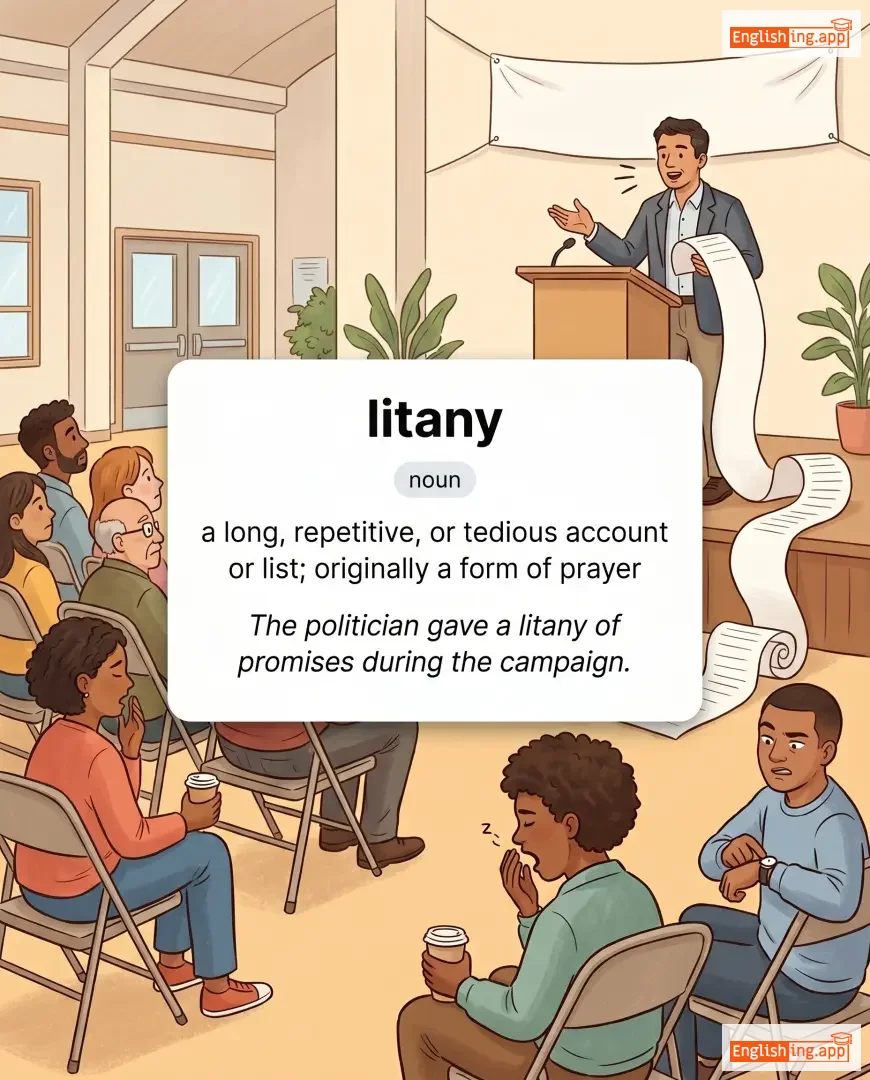
litany definition card — visual illustration of the meaning
noun
/ˈlɪtəni/
अंतहीन सूची (antheen soochi)

a long, repetitive, or tedious account or list; originally a form of prayer

"The politician gave a litany of promises during the campaign."

"राजनीतिक नेता ने अभियान के दौरान वादों की एक लंबी सूची दी।" (Rajnaitik neta ne abhiyan ke dauran vaadon ki ek lambi soochi di.)
noun
/ˈlaɪtʃi/
लीची (lichee)

a small oval pink-red tropical fruit with white translucent flesh and sweet taste

"The litchi has a rough pink shell that you peel to eat the sweet white fruit inside."

"लीची का एक खुरदुरा गुलाबी खोल होता है जिसे आप छीलकर अंदर के मीठे सफेद फल को खाते हैं।" (lichee ka ek khurdura gulabi khol hota hai jise aap cheelkar andar ke meethe safed phal ko khate hain.)
noun
/ˈlɪtə(r)/
लीटर (leetar)

a metric unit of volume equal to one cubic decimeter

"The recipe calls for two liters of water."

"रेसिपी में दो लीटर पानी चाहिए।" (Resipi mein do leetar paani chahiye)
noun
/ˈlɪtərəsi/
साक्षरता (sākṣaratā)

the ability to read and write

"Literacy programs help reduce poverty in rural areas."

"साक्षरता कार्यक्रम ग्रामीण क्षेत्रों में गरीबी कम करने में मदद करते हैं।" (Sākṣaratā kāryakram grāmīṇ kṣetron mein garībī kam karne mein madad karte hain.)
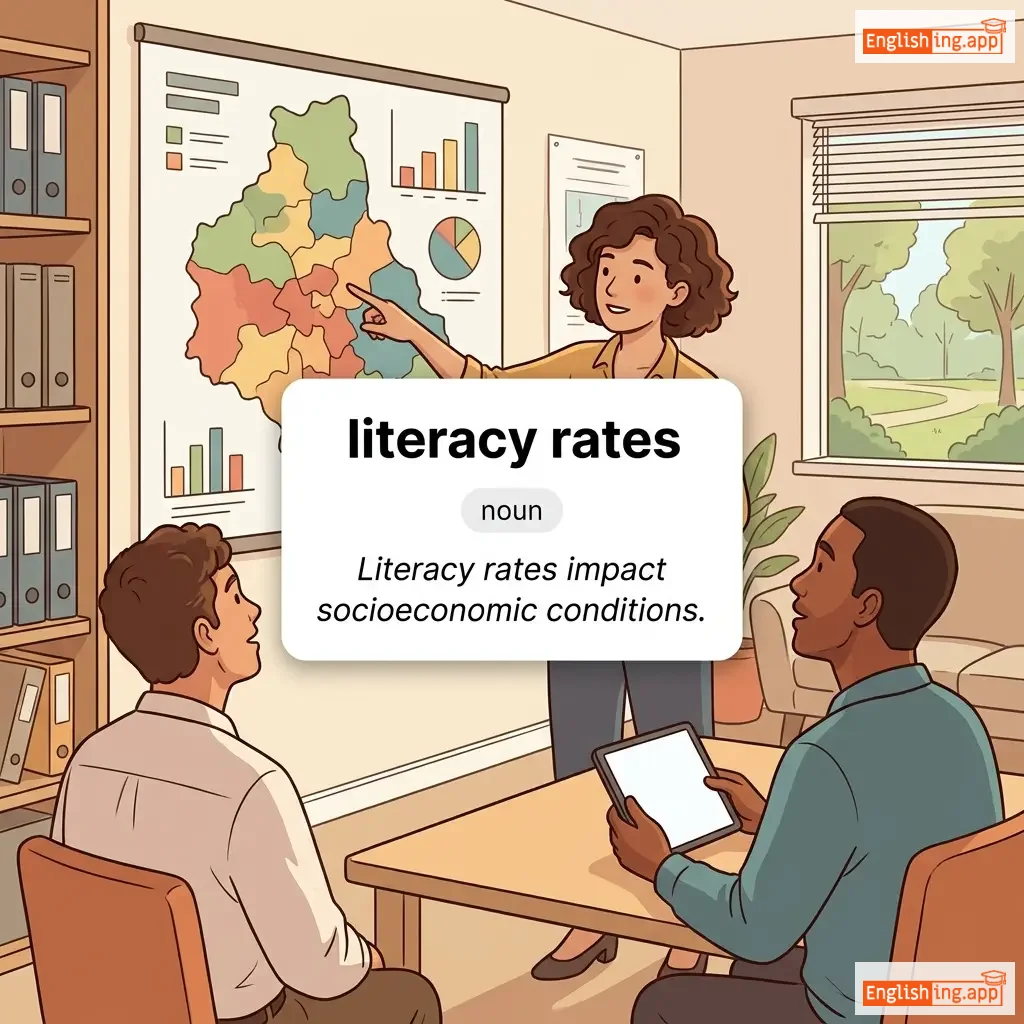
literacy rates definition card — visual illustration of the meaning
noun
ˈlɪt.ər.ə.si ˌreɪts
साक्षरता दर (sākṣartā dar)

The percentage of people in a population who can read and write; measures of educational levels in a population.

"Literacy rates impact socioeconomic conditions."

"साक्षरता दर सामाजिक-आर्थिक स्थितियों को प्रभावित करती है।" (Sākṣartā dar sāmaājik-ārthik sthitiyon ko prabhāvit kartī hai.)
adjective
/ˈlɪtərəl/
शाब्दिक (shaabdik)

taking words in their usual or most basic sense without metaphor or exaggeration

"His comment was meant as a joke, not to be taken in a literal sense."

"उसकी टिप्पणी मजाक के रूप में थी, जिसे शाब्दिक अर्थ में नहीं लिया जाना चाहिए था।" (Uski tipanni mazaak ke roop mein thi, jise shaabdik arth mein nahin liya jaana chahiye tha.)
adverb
/ˈlɪtərəli/
शाब्दिक रूप से (shabdik roop se)

in a literal manner or sense; exactly

"He was literally running for three hours without stopping."

"वह तीन घंटे तक बिना रुके शाब्दिक रूप से दौड़ रहा था।" (Wah teen ghante tak bina ruke shabdik roop se daud raha tha.)
adjective
/ˈlɪtərɛri/
साहित्यिक (sahityik)

concerning the writing, study, or content of literature

"She is a well-known figure in the literary world."

"वह साहित्यिक दुनिया में एक प्रसिद्ध शख्सियत है।" (Vah sahityik duniya mein ek prasiddh shakhsiat hai.)
adjective
/ˈlɪt.ər.ət/
साक्षर; शिक्षित; सुसंस्कृत (literate)

able to read and write; educated; well-educated

"She is a very literate person who reads extensively."

"वह एक बहुत साक्षर व्यक्ति है जो व्यापक रूप से पढ़ता है।" (vah ek bahut sakshar vyakti hai jo vyapak roop se padhta hai.)
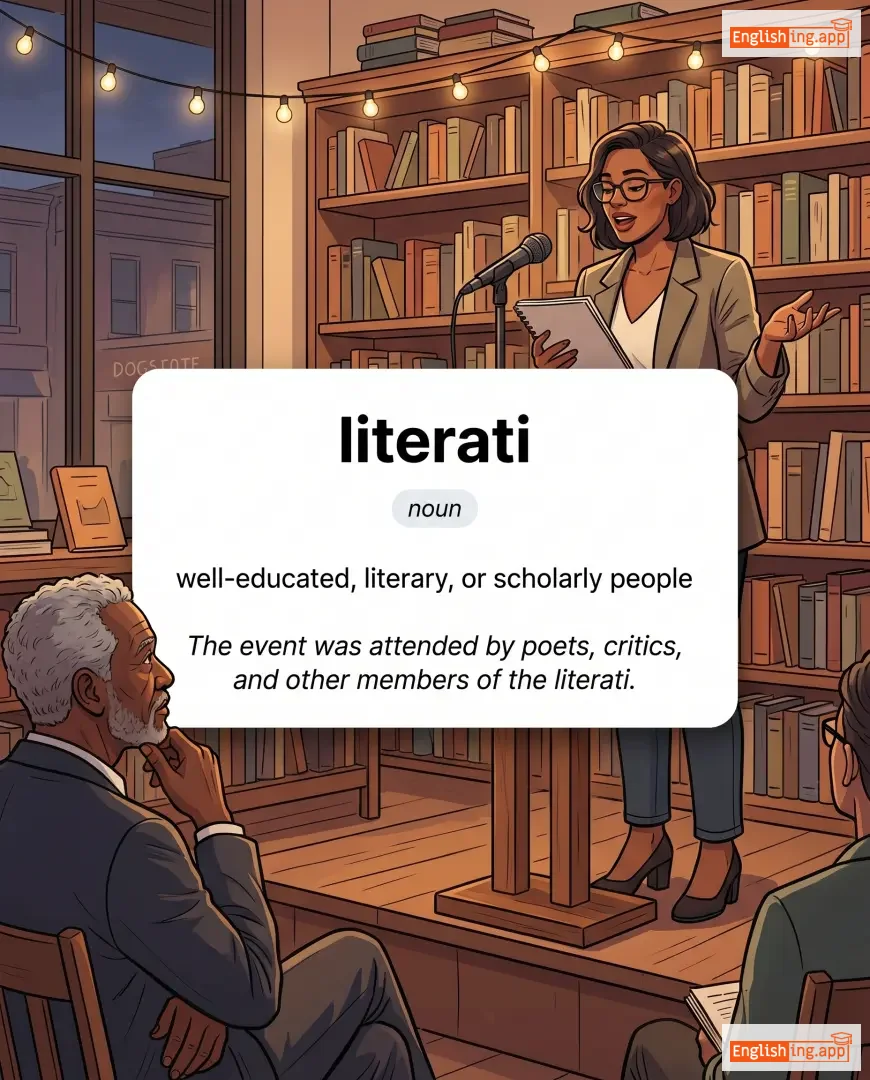
literati definition card — visual illustration of the meaning
noun
/ˌlɪt.əˈrɑː.ti/
साहित्य प्रेमी (sahitya premi)

well-educated, literary, or scholarly people

"The event was attended by poets, critics, and other members of the literati."

"इस कार्यक्रम में कवि, समीक्षक और अन्य साहित्य प्रेमी उपस्थित थे।" (Is karyakram mein kavi, sameekshak aur anya sahitya premi upasthit the.)
noun
/ˈlɪtərətʃər/
साहित्य (sahitya)

written works, especially those considered of superior or lasting artistic merit

"He studied English literature at university."

"उसने विश्वविद्यालय में अंग्रेजी साहित्य का अध्ययन किया।" (Usne vishwavidyalay mein angrezi sahitya ka adhyayan kiya.)
/laɪð/
लचीला और सुंदर (lachila aur sundar)

thin, supple, and graceful in movement

"The lithe dancer captivated the audience with her graceful spins."

"लचीली नर्तकी ने अपने सुंदर घूमें से दर्शकों को मंत्रमुग्ध कर दिया।" (lachili nartaki ne apne sundar ghoomne se darshako ko mantramugdh kar diya.)
adjective
/ˈlaɪðsəm/
नमनीय (namaniyo)

gracefully flexible and supple

"Her lithesome figure allowed her to move like a ballerina."

"उसका लचीला शरीर उसे बैलेरीना की तरह नृत्य करने की अनुमति देता था।" (uska lachila sharir use balerina ki tarah nritya karne ki anumati deta tha.)
noun
/ˈlɪθəˌɡræf/
लिथोग्राफ (पत्थर द्वारा चित्रण) (lithograph (patthar dwara chitraan))

a print made by lithography, often artistic

"The museum displayed a rare lithograph from the 19th century."

"संग्रहालय ने 19वीं शताब्दी का एक दुर्लभ लिथोग्राफ प्रदर्शित किया।" (Sangrahalay ne 19vi shatabdi ka ek durlabh lithograph pradarshit kiya.)
noun
/ˈlɪθəˌtaɪp/
लिथोटाइप (प्रिंटिंग सतह) (lithotype (printing sath))

a printing surface or type made for lithography

"The printer used a lithotype to produce multiple copies of the design."

"प्रिंटर ने डिज़ाइन की कई प्रतियाँ बनाने के लिए लिथोटाइप का उपयोग किया।" (printer ne design ki kai pratiyan banane ke liye lithotype ka upyog kiya.)
noun
/ˈlɪtɪɡənt/
मुकदमे में शामिल व्यक्ति (mukadme mein shamil vyakti)

a person involved in a lawsuit

"The court summoned both litigants for the hearing."

"कोर्ट ने सुनवाई के लिए दोनों मुकदमे में शामिल व्यक्तियों को समन भेजा।" (court ne sunwai ke liye dono mukadme mein shamil vyaktiyon ko saman bheja.)
verb
/ˈlɪtɪˌɡeɪt/
मुकदमा करना (mukadma karna)

to engage in legal proceedings or take a dispute to court

"The company decided to litigate the contract dispute."

"कंपनी ने अनुबंध विवाद को अदालत में लाने का निर्णय लिया।" (Kampani ne anubandh vivad ko adalat mein laane ka nirnay liya.)
litigation definition card — visual illustration of the meaning
noun
/ˌlɪtɪˈɡeɪʃən/
मुकदमा (mukadma)

the process of taking legal action or resolving disputes in court

"The litigation lasted for over three years."

"मुकदमा तीन साल से अधिक समय तक चला।" (Mukadma teen saal se adhik samay tak chala.)
adjective
/lɪˈtɪdʒəs/
मुकदमेबाज (mukadmebaaj)

prone to engage in lawsuits or overly inclined to argue legally

"He is known as a litigious neighbor who often sues people."

"वह एक मुकदमेबाज पड़ोसी के रूप में जाना जाता है जो अक्सर लोगों पर मुकदमा करता है।" (Wah ek mukadmebaaj padosi ke roop mein jaana jaata hai jo aksar logon par mukadma karta hai.)
noun
/ˈlaɪtoʊtiːz/
लाइटोटिस (litotis)

a figure of speech in which an affirmative is expressed by the negative of its contrary

"Saying 'not bad' as a compliment is an example of litotes."

"'नॉट बैड' कहना एक लाइटोटिस का उदाहरण है।" ('Not bad' kehna ek litotis ka udaharan hai.)
noun
/ˈliːtər/
लीटर (litar)

a metric unit of volume equal to 1,000 cubic centimeters; commonly used to measure liquids

"She bought a litre of milk from the shop."

"उसने दुकान से एक लीटर दूध खरीदा।" (usne dukan se ek litar doodh kharida)
noun/verb
/ˈlɪtər/
कचरा (kachra)

rubbish or waste left lying in a public place; to make a place untidy by leaving rubbish

"The park was full of litter after the festival."

"त्योहार के बाद पार्क कचरे से भरा हुआ था।" (Tyohar ke baad park kachre se bhara hua tha.)
adjective
/ˈlɪtl/
छोटा (chhota)

Small in size, amount, or degree.

"He drank a little water before going to bed."

"वह सोने से पहले थोड़ा पानी पिया था।" (Vah sone se pehle thoda pani piya tha.)
adjective
/ˈlɪtərəl/
तटीय (tatiya)

Related to or situated on the shore of the sea or a lake.

"The littoral zone is home to many unique marine species."

"तटीय क्षेत्र कई अद्वितीय समुद्री प्रजातियों का घर है।" (Tatiya kshetra kai advitiya samudri prajatiyon ka ghar hai.)
noun
/ˈlɪtərdʒi/
धार्मिक पूजा विधि (dharmik pooja vidhi)

A form or formulary according to which public religious worship is conducted.

"The priest followed the liturgy during the Sunday mass."

"पादरी ने रविवार की मास में लिटर्ज़ी का पालन किया।" (Paadri ne ravivaar ki mass mein liturgy ka paalan kiya.)
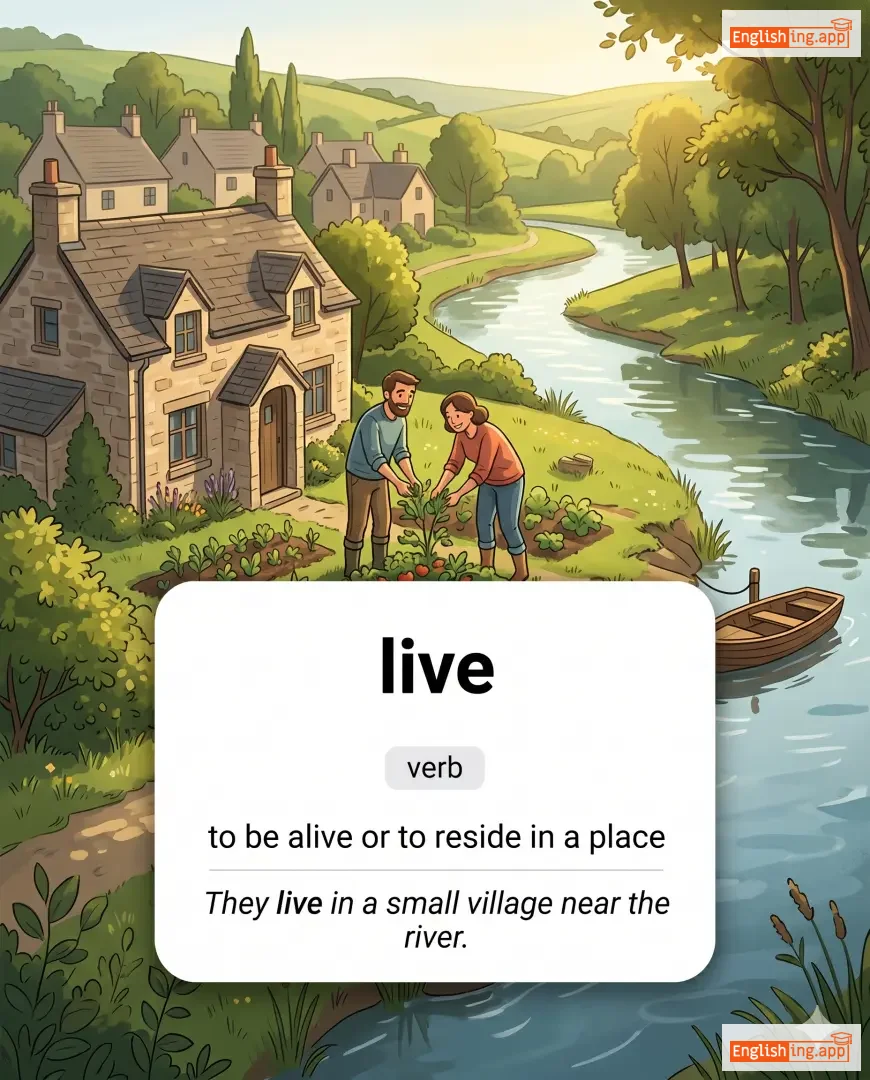
live definition card — visual illustration of the meaning
verb
/lɪv/
रहना / जीना (rehna / jeena)

to be alive or to reside in a place

"They live in a small village near the river."

"वे नदी के पास एक छोटे से गांव में रहते हैं।" (ve nadi ke paas ek chhote se gaon mein rahte hain.)
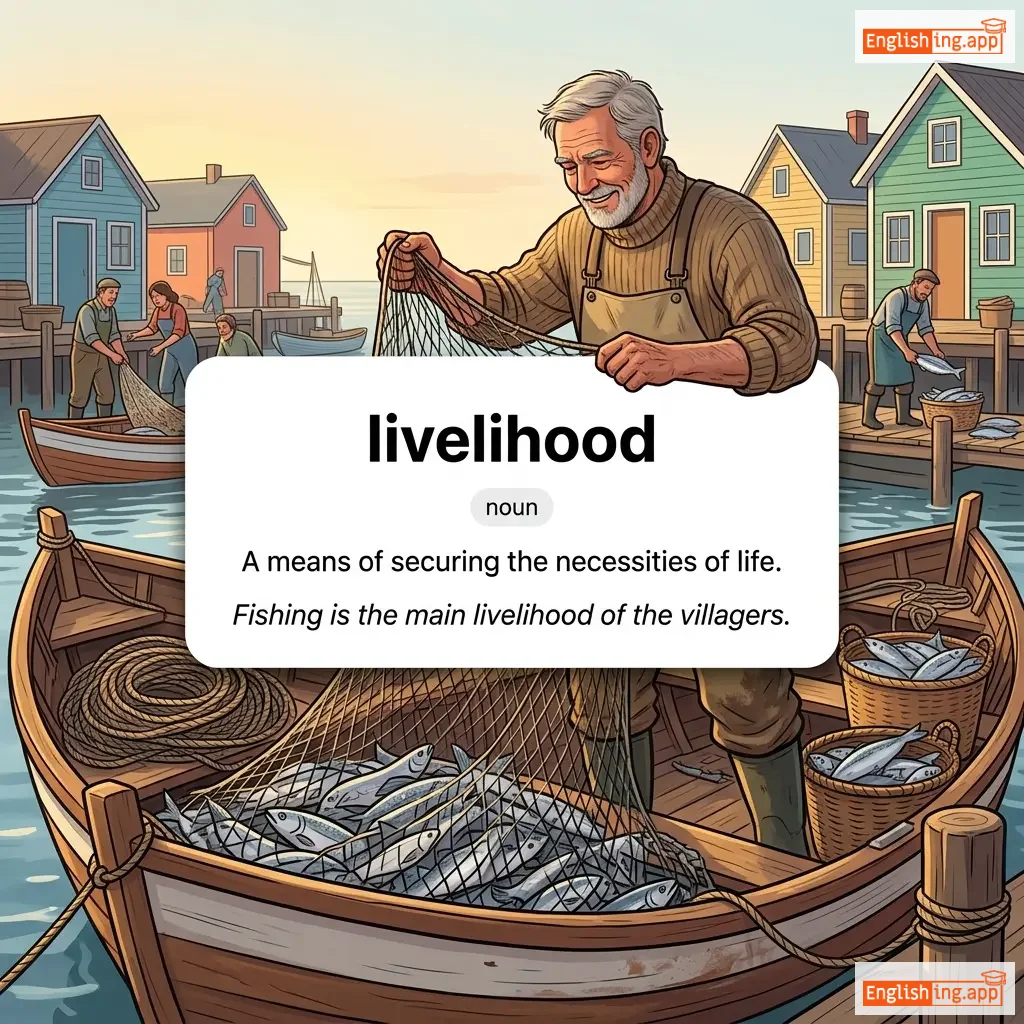
livelihood definition card — visual illustration of the meaning
noun
/ˈlaɪvlihʊd/
आजिविका (aajivika)

A means of securing the necessities of life.

"Fishing is the main livelihood of the villagers."

"मछली पकड़ना गाँव वालों की मुख्य आजिविका है।" (Machhli pakadna gaon walon ki mukhya aajivika hai.)
adjective
/ˈlaɪv.li/
जीवंत; चंचल; खुशमिजाज (laivli)

full of life and energy; animated; cheerful

"The children had a lively discussion about their favorite books."

"बच्चों ने अपनी पसंदीदा किताबों के बारे में एक जीवंत चर्चा की।" (bachon ne apni pasandeeda kitaabon ke baare mein ek jeevant charcha ki.)
noun
/ˈlɪvər/
यकृत (yakrit)

a large organ in the body that cleans the blood and produces bile to help digest food.

"The liver plays a vital role in removing toxins from the body."

"यकृत शरीर से विषाक्त पदार्थों को निकालने में एक महत्वपूर्ण भूमिका निभाता है।" (yakrit sharir se vishakt padartho ko nikaalne mein ek mahatvapurn bhumika nibhata hai.)
noun
/ˈlaɪv.stɒk/
पशुधन (pashudhan)

farm animals such as cattle, sheep, and pigs that are kept for use or profit

"The farmer raised livestock to supply meat and milk for the market."

"किसान ने बाजार के लिए मांस और दूध की आपूर्ति के लिए पशुधन पाला।" (Kisaan ne bazar ke liye maans aur doodh ki aapurti ke liye pashudhan paala.)
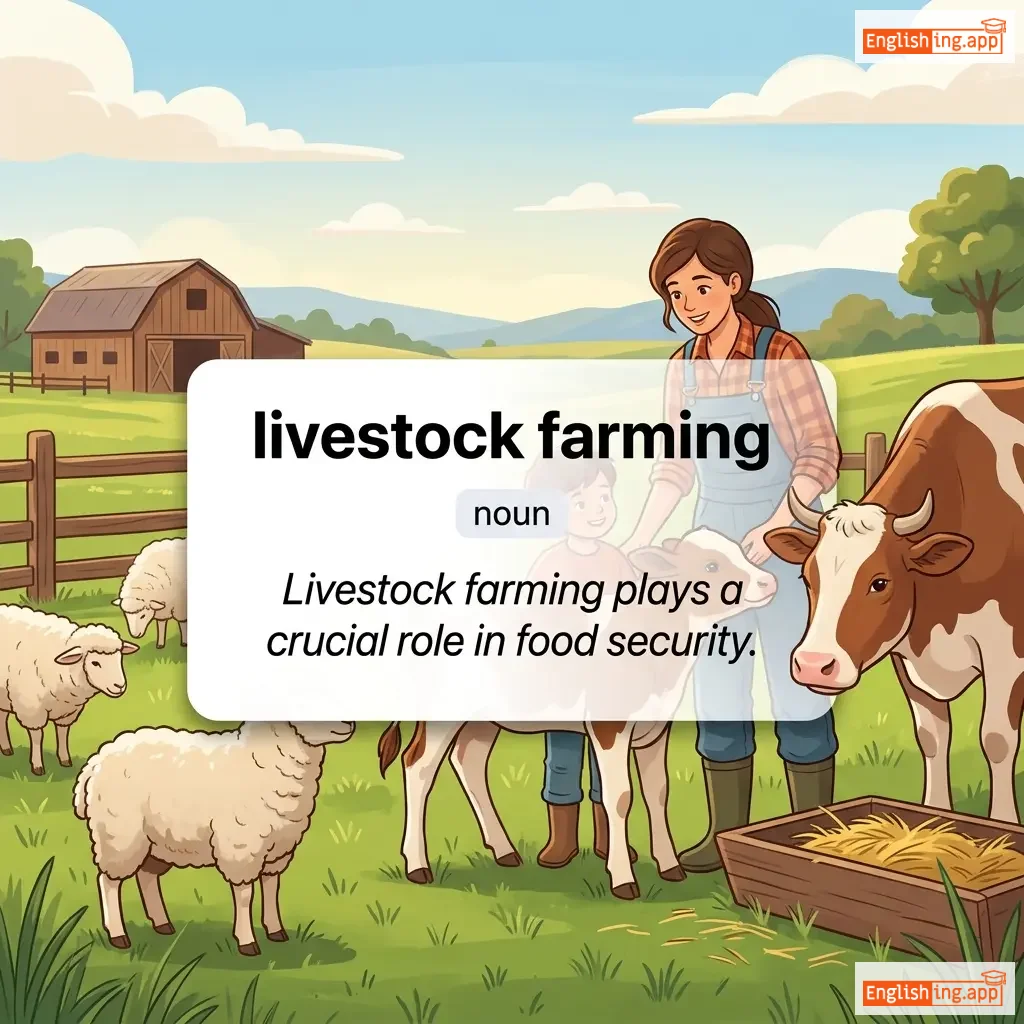
livestock farming definition card — visual illustration of the meaning
noun
ˈlaɪv.stɒk ˈfɑː.mɪŋ
पशुपालन कृषि (pashupalan krishi)

The breeding, raising, and care of farm animals such as cattle, horses, sheep, and pigs for food, fiber, and other products.

"Livestock farming plays a crucial role in food security."

"पशुपालन कृषि खाद्य सुरक्षा में महत्वपूर्ण भूमिका निभाता है।" (Pashupalan krishi khadya suraksha mein mahatvapurn bhumika nibhaata hai.)
adjective
/ˈlɪvɪd/
क्रोधित (krodhit)

Extremely angry; furious.

"She was livid when she found out about the betrayal."

"वह विश्वासघात के बारे में जानकर क्रोधित हो गई थी।" (Vah vishwasghat ke baare mein jaankar krodhit ho gayi thi.)
noun/adjective
/ˈlɪvɪŋ/
जीवन / आजीविका (jeevan / aajeevika)

the state of being alive; or a way of earning money

"He makes his living as a teacher."

"वह एक शिक्षक के रूप में अपनी आजीविका कमाता है।" (vah ek shikshak ke roop mein apni aajeevika kamata hai.)
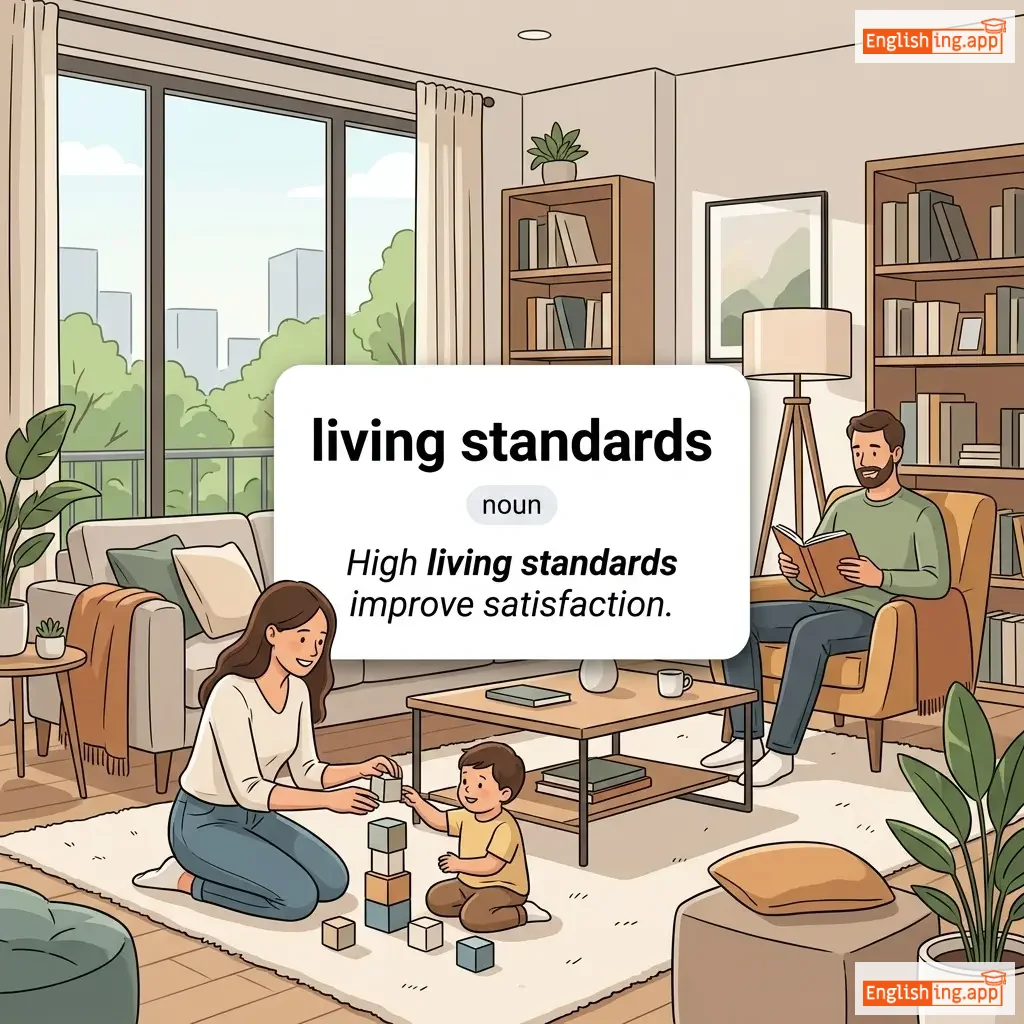
living standards definition card — visual illustration of the meaning
noun
ˈlɪv.ɪŋ ˈstæn.dədz
जीवन स्तर (jeevan star)

The degree of wealth and material comfort available to a person or community; quality of life.

"High living standards improve satisfaction."

"उच्च जीवन स्तर संतुष्टि में सुधार करता है।" (Ucch jeevan star santushti mein sudhaar karta hai.)
noun
/ˈlɪzərd/
छिपकली (chipkali)

A small reptile with a long body, four legs, and a tail, often found on walls or in gardens.

"A lizard crawled across the wall."

"एक छिपकली दीवार पर रेंग रही थी।" (Ek chipkali deewaar par reng rahi thi.)
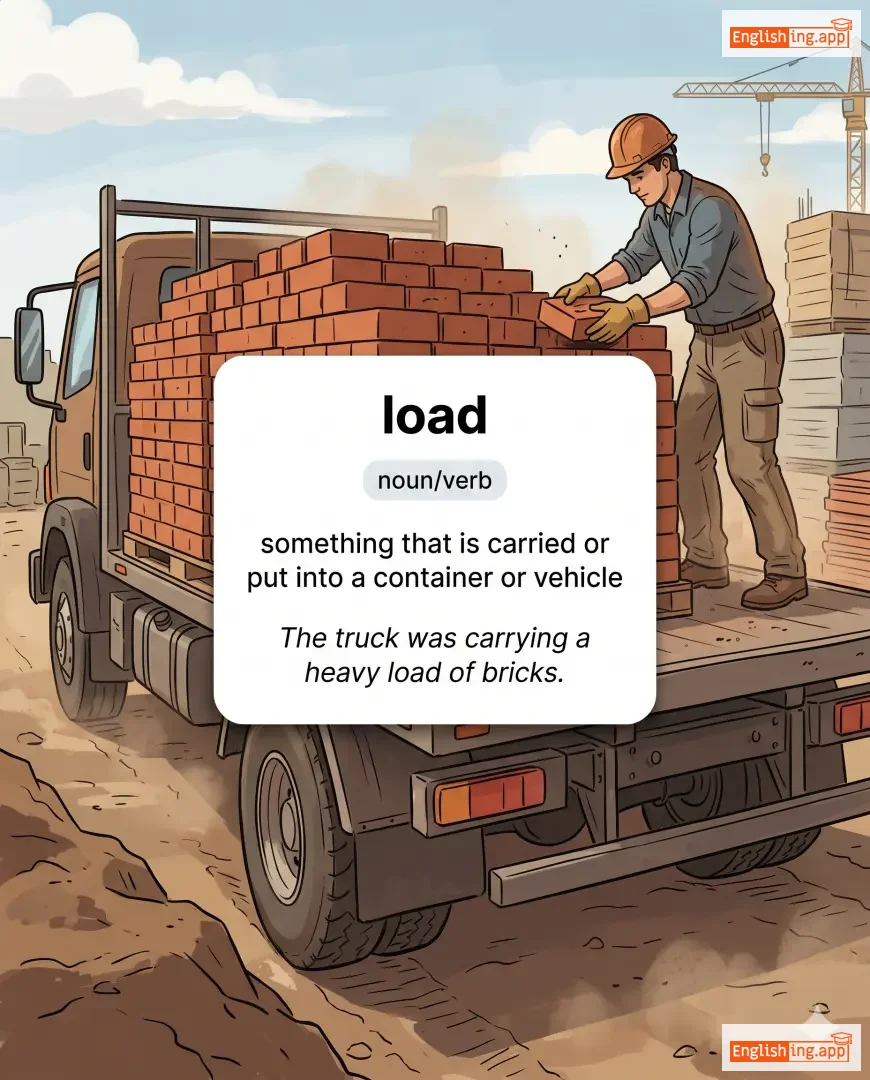
load definition card — visual illustration of the meaning
noun/verb
/loʊd/
भार (bhar)

something that is carried or put into a container or vehicle

"The truck was carrying a heavy load of bricks."

"ट्रक ईंटों का एक भारी भार ढो रहा था।" (truck eenton ka ek bhaari bhar dho raha tha.)
noun
/loʊf/
रोटी (roti)

a shaped mass of bread baked as a unit

"She bought a fresh loaf of bread from the bakery."

"वह बेकरी से ताजा रोटी की एक लोफ खरीदी।" (vah bakery se taja roti ki ek loaf khareedi.)
noun
/ˈloʊfər/
आलसी (aalsi)

A person who is lazy and avoids work; also a type of slip-on shoe.

"He was called a loafer because he never did his job properly."

"उसे आलसी कहा गया क्योंकि उसने कभी ठीक से अपना काम नहीं किया।" (Use aalsi kaha gaya kyunki usne kabhi theek se apna kaam nahin kiya.)
noun
/loʊm/
उर्वर मिट्टी (urvar mitti)

A fertile soil of clay and sand containing humus.

"The farmer used loam to improve the fertility of the field."

"किसान ने खेत की उर्वरता बढ़ाने के लिए लोअम का इस्तेमाल किया।" (Kisan ne khet ki urvarata badhane ke liye loam ka istemal kiya.)
noun
/loʊn/
ऋण (rin)

money that is borrowed and expected to be paid back with interest

"She took a loan from the bank to buy a house."

"उसने एक घर खरीदने के लिए बैंक से ऋण लिया।" (usne ek ghar kharidne ke liye bank se rin liya.)
adjective
/loʊθ/
असहमत (asahamat)

reluctant or unwilling to do something

"She was loath to admit her mistake in front of everyone."

"वह सबके सामने अपनी गलती स्वीकार करने के लिए असहमत थी।" (Vah sabke samne apni galti swikar karne ke liye asahamat thi.)
verb
/loʊð/
नफरत करना (nafrat karna)

to feel intense dislike or disgust for

"He absolutely loathes being late to meetings."

"वह मीटिंग्स में देर होने से बिल्कुल नफरत करता है।" (vah meetings mein der hone se bilkul nafrat karta hai.)
adjective
/ˈloʊð.səm/
घिनौना (loathsam)

causing hatred or disgust; repulsive

"The loathsome smell from the garbage made everyone leave the room."

"कचरे से आने वाली घिनौनी बदबू ने सभी को कमरे से बाहर चले जाने के लिए मजबूर कर दिया।" (di loathsam smell phrom di garbej med evarivan liv di rum)
noun
/ˈlɒbi/
लॉबी (lobby)

a large open area near the entrance of a building; also a group trying to influence decisions.

"We met the manager in the hotel lobby before the meeting."

"हमने मीटिंग से पहले होटल की लॉबी में मैनेजर से मुलाकात की।" (hamne meeting se pehle hotel ki lobby mein manager se mulaqat ki.)
noun
/ˈlɒbstər/
झींगा मछली (jhinga machhli)

a large marine crustacean with claws and a hard shell

"The lobster was served with melted butter and lemon."

"झींगा मछली को पिघले हुए मक्खन और नींबू के साथ परोसा गया।" (jhinga machhli ko pighle hue makhan aur neembu ke sath parosa gaya.)
adjective/noun
/ˈloʊkəl/
स्थानीय (sthaniya)

relating to a particular area or neighborhood

"We prefer buying fruits from the local market."

"हम स्थानीय बाजार से फल खरीदना पसंद करते हैं।" (ham sthaniya bazar se phal kharidna pasand karte hain.)
verb
/loʊˈkeɪt/
स्थान निर्धारित करना (sthan nirdharit karna)

to find the exact position or place of something

"They managed to locate the missing keys under the couch."

"वे गुम हुई चाबियाँ सोफ़े के नीचे ढूंढने में सफल रहे।" (ve gum hui chabiyan sofa ke niche dhoondhne mein safal rahe.)
noun
/loʊˈkeɪʃən/
स्थान (sthan)

a particular place or position

"This cafe is in a beautiful location near the lake."

"इस कैफे की एक सुंदर जगह झील के पास स्थित है।" (Is cafe ki ek sundar jagah jheel ke paas sthit hai.)