वोकैबुलरीज

इंग्लिश वोकैबुलरी डिस्कवर, लर्न और मास्टर करें

noun
/ˌɪntərˈmiːdiˌɛri/
मध्यस्थ (madhyasth)

A person who acts as a link between people in order to try to bring about an agreement; a mediator.

"The diplomat served as an intermediary between the two conflicting nations."

"राजनयिक ने दो संघर्षशील देशों के बीच एक मध्यस्थ के रूप में काम किया।" (Rajnayik ne do sangharshasheel deshon ke beech ek madhyasth ke roop mein kaam kiya.)
adjective
/ˌɪntərˈmiːdiət/
मध्यवर्ती (madhyavarti)

Coming between two things in time, place, or order; in the middle level or stage.

"She is taking an intermediate-level French course."

"वह एक मध्यवर्ती स्तर का फ्रेंच कोर्स कर रही है।" (Woh ek madhyavarti star ka French course kar rahi hai.)
noun
/ɪnˈtɜːrmənt/
दफनाना (dafnana)

The act of burying a dead body in a grave or tomb.

"The interment took place at the family cemetery."

"दफन प्रक्रिया परिवारिक कब्रिस्तान में हुई।" (Dafan prakriya parivarik kabristan mein hui.)
adjective
/ɪnˈtɜːrmənəbl/
अंतहीन (antheen)

Seemingly endless; having no apparent end.

"The meeting felt interminable and exhausting."

"बैठक अंतहीन और थकाऊ लग रही थी।" (Baithak antheen aur thakau lag rahi thi.)
noun
/ˌɪntərˈmɪʃən/
विराम (viraam)

A pause or break, especially during a performance or event.

"The play had a twenty-minute intermission."

"नाटक में बीस मिनट का विराम था।" (Natak mein bees minute ka viraam tha.)
verb
/ˌɪntərˈmɪt/
विराम लेना (viraam lena)

To suspend or stop for a time; to pause intermittently.

"The rain would intermit and then start again."

"बारिश रुकती और फिर शुरू होती।" (Barish rukti aur phir shuru hoti.)
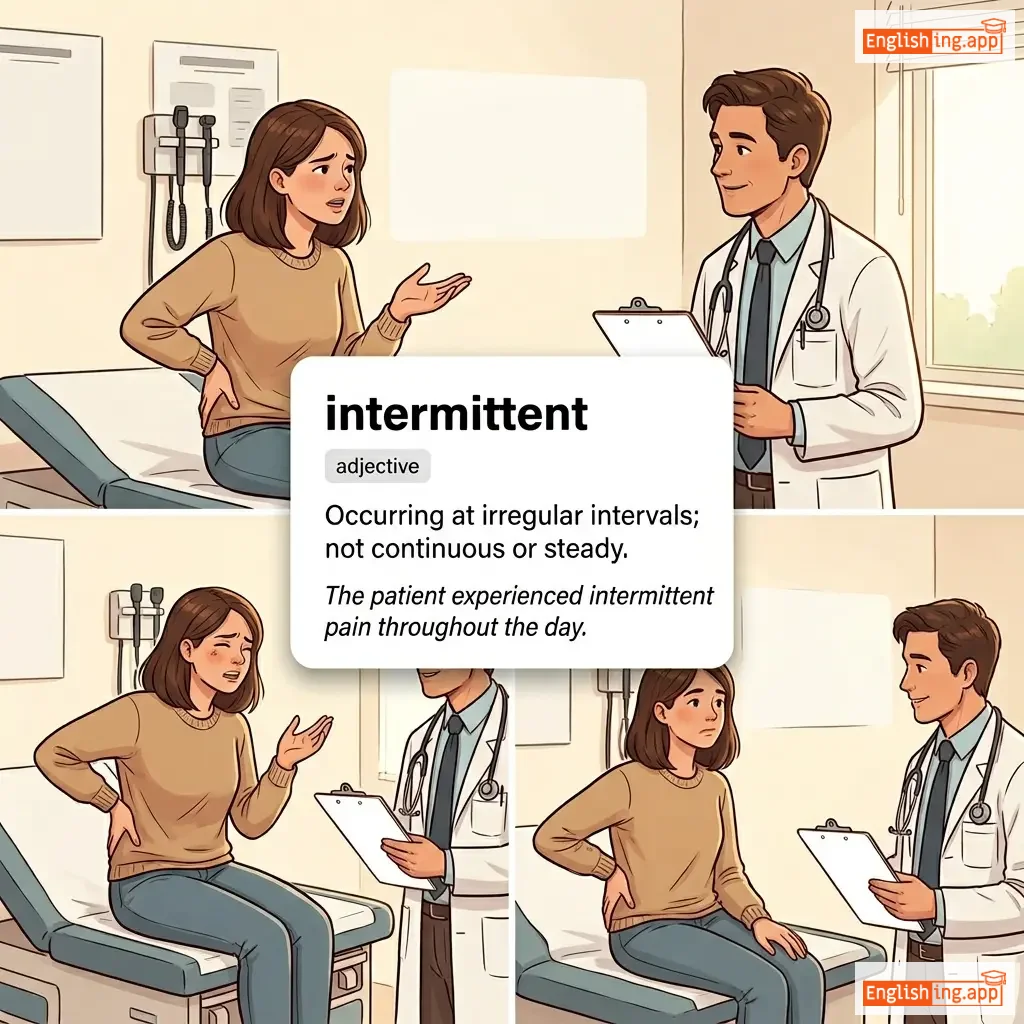
intermittent definition card — visual illustration of the meaning
adjective
/ˌɪntərˈmɪtənt/
अविरत (avirata)

Occurring at irregular intervals; not continuous or steady.

"The patient experienced intermittent pain throughout the day."

"रोगी ने पूरे दिन अविरत दर्द का अनुभव किया।" (Rogi ne poore din avirat dard ka anubhav kiya.)
adjective
/ɪnˈtɜːrnəl/
आंतरिक (aantarik)

situated inside; relating to the inside or inner part of something

"The company is conducting an internal audit this month."

"कंपनी इस महीने एक आंतरिक ऑडिट कर रही है।" (Company is maheene ek aantarik audit kar rahi hai.)
international definition card — visual illustration of the meaning
adjective
/ˌɪntərˈnæʃənəl/
अंतरराष्ट्रीय (antarrashtriya)

Existing, occurring, or carried on between nations.

"The company is planning to expand into international markets."

"कंपनी अंतरराष्ट्रीय बाजारों में विस्तार करने की योजना बना रही है।" (Company antarrashtriya bazaron mein vistaar karne ki yojna bana rahi hai.)
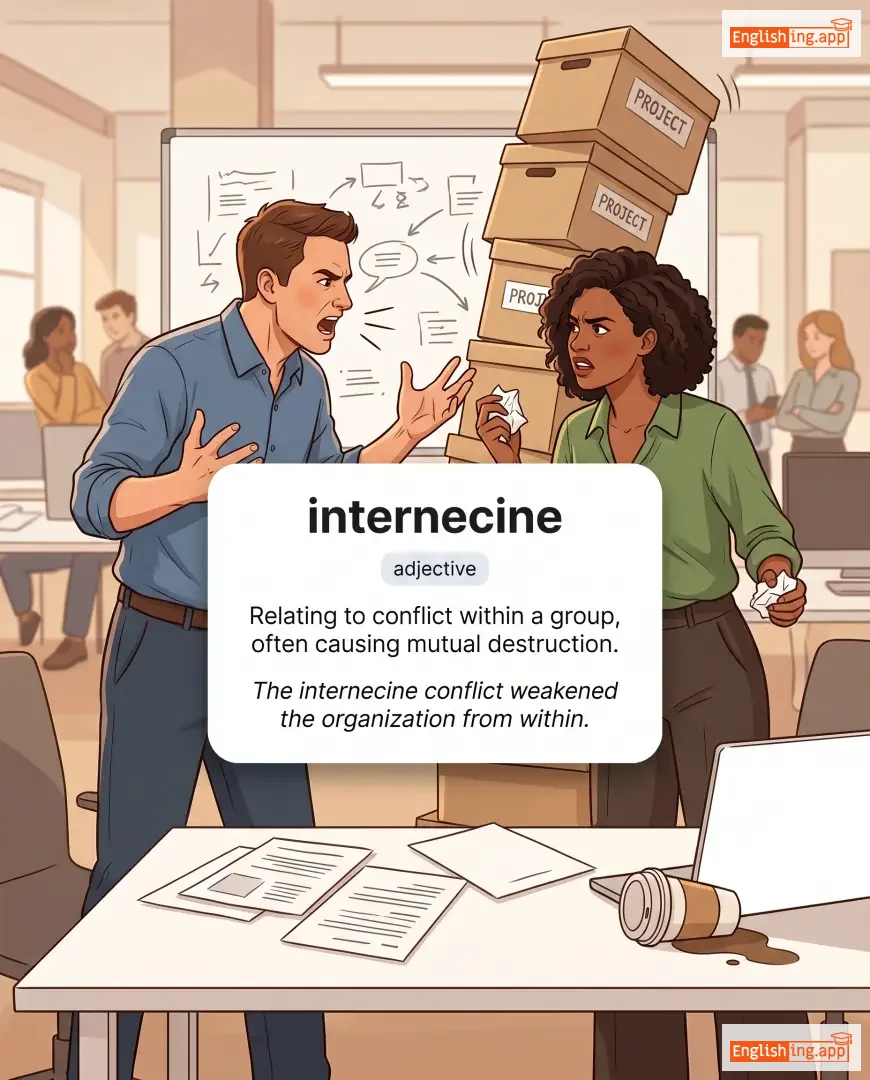
internecine definition card — visual illustration of the meaning
adjective
/ˌɪntərˈniːsaɪn/
आंतरिक संघर्ष (aantarik sangharsh)

Relating to conflict within a group, often causing mutual destruction.

"The internecine conflict weakened the organization from within."

"आंतरिक संघर्ष ने संगठन को भीतर से कमजोर कर दिया था" (aantarik sangharsh ne sangathan ko bhitar se kamzor kar diya tha)
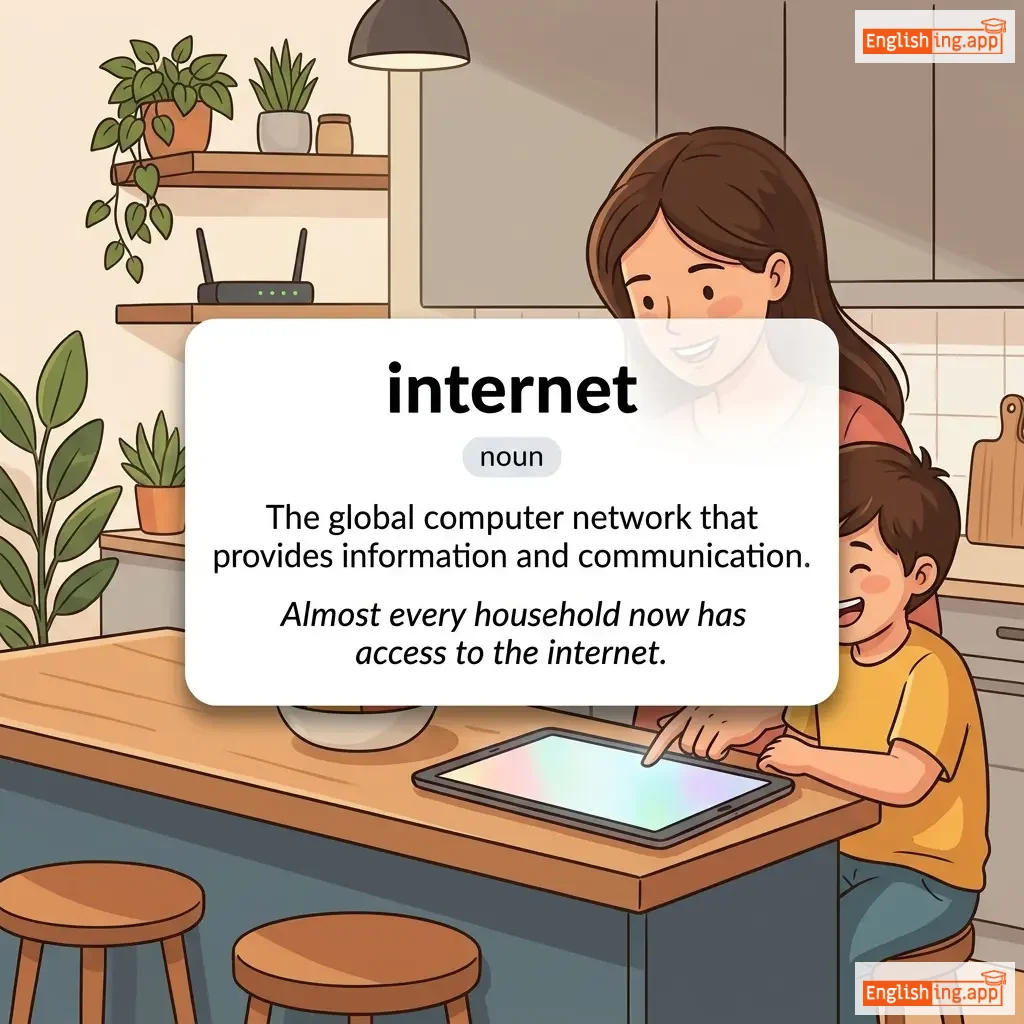
internet definition card — visual illustration of the meaning
noun
/ˈɪntərˌnɛt/
इंटरनेट (internet)

The global computer network that provides information and communication.

"Almost every household now has access to the internet."

"लगभग हर घर में अब इंटरनेट का उपयोग है।" (Lagbhag har ghar mein ab internet ka upyog hai.)
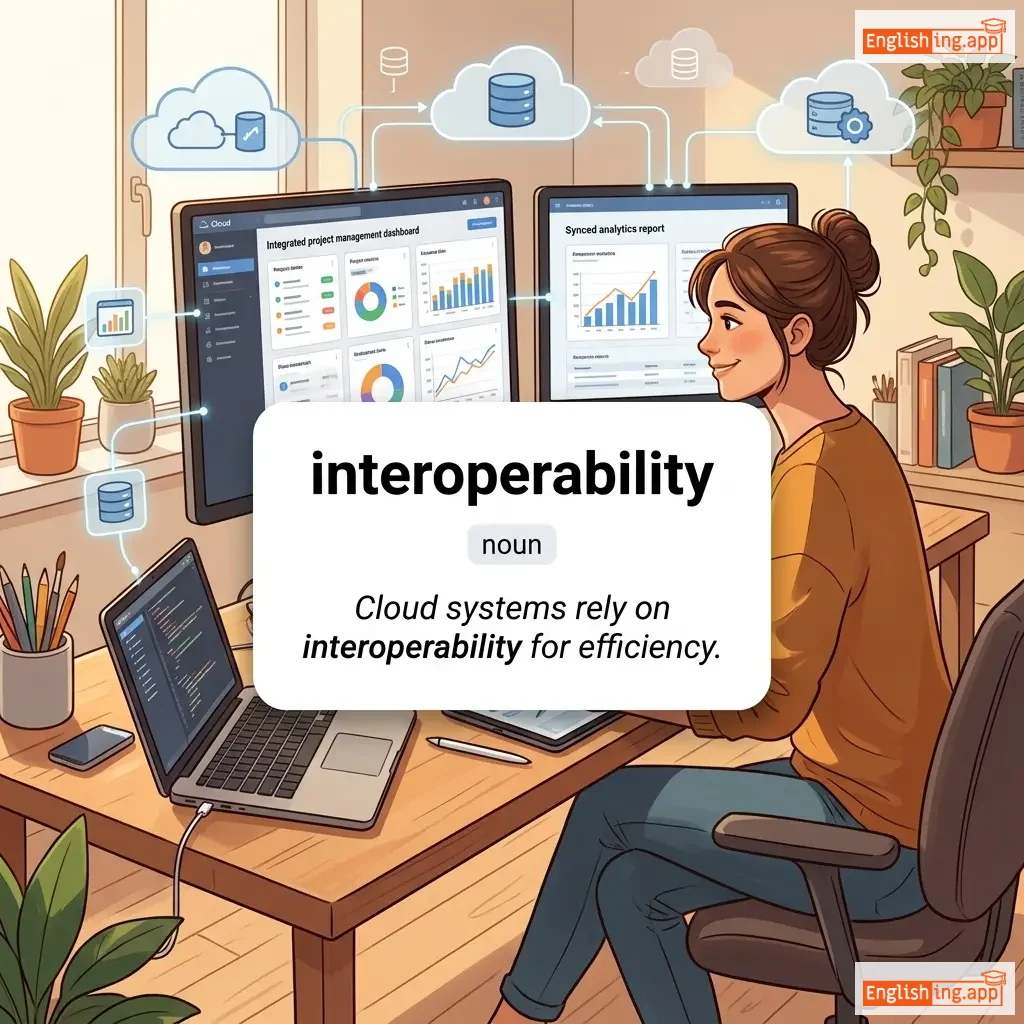
interoperability definition card — visual illustration of the meaning
noun
ˌɪn.tərˌɒp.ər.əˈbɪl.ɪ.ti
इंटरऑपरेबिलिटी (interoperability)

The ability of computer systems or software to exchange and make use of information.

"Cloud systems rely on interoperability for efficiency."

"क्लाउड सिस्टम्स की कार्यक्षमता के लिए इंटरऑपरेबिलिटी पर निर्भर करते हैं।" (Cloud systems ki karyakshemtā ke liye interoperability par nirbhar karte hain.)
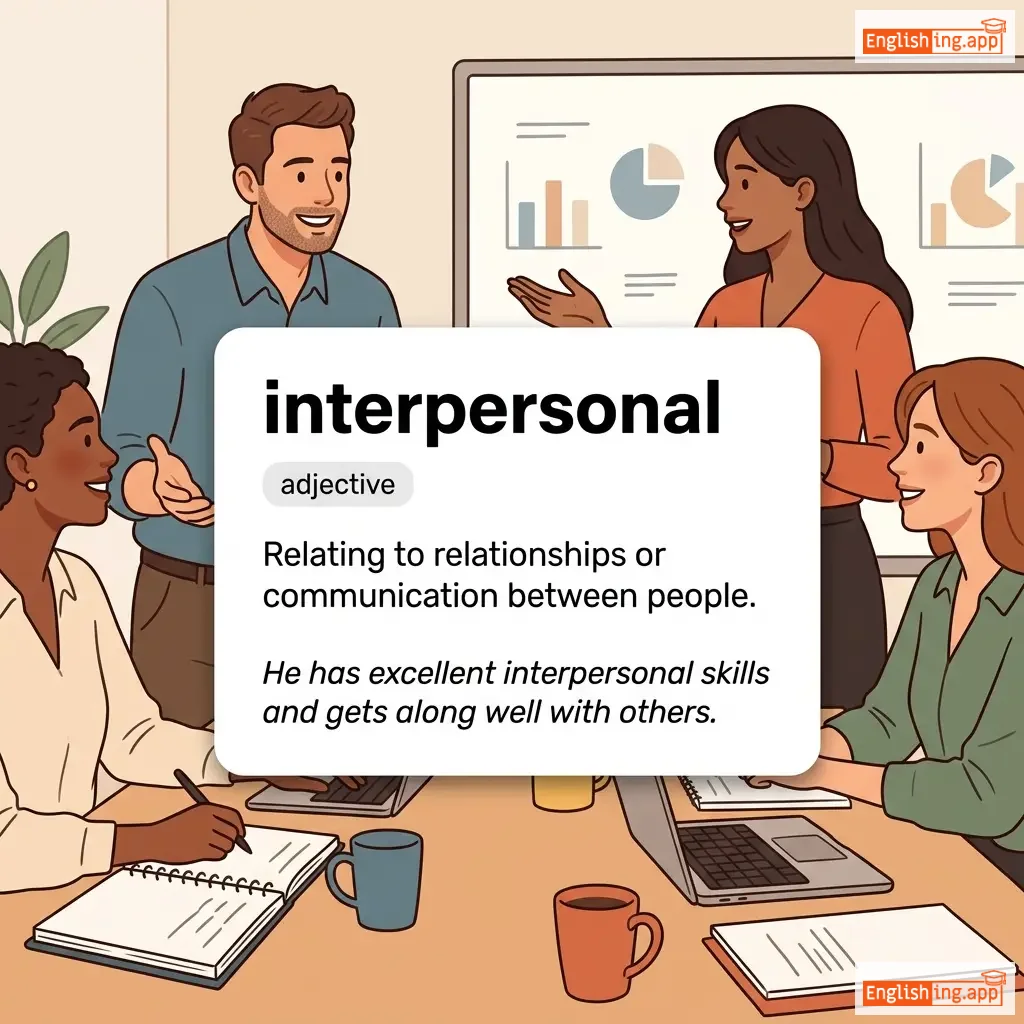
interpersonal definition card — visual illustration of the meaning
adjective
/ˌɪntəˈpɜːsənl/
अंतरव्यक्तिगत (antarvyaktigat)

Relating to relationships or communication between people.

"He has excellent interpersonal skills and gets along well with others."

"वह उत्कृष्ट अंतरव्यक्तिगत कौशल रखता है और दूसरों के साथ अच्छे से मिल जाता है।" (Vah utkrsht antarvyaktigat kaushal rakhta hai aur doosron ke saath achhe se mil jaata hai.)
noun
/ˈɪntərˌpleɪ/
परस्पर क्रिया (paraspar kriya)

The way in which two or more things have an effect on each other.

"The interplay between culture and technology shapes modern life."

"संस्कृति और प्रौद्योगिकी के बीच परस्पर क्रिया आधुनिक जीवन को आकार देती है।" (sanskruti aur praudyogiki ke beech paraspar kriya aadhunik jeevan ko aakaar deti hai.)
interpolate definition card — visual illustration of the meaning
verb
/ɪnˈtɜːrpəˌleɪt/
सम्मिलित करना (sammilit karna)

To insert something, often words, into a text or conversation; to estimate values between known data points.

"The editor interpolated a missing paragraph into the manuscript."

"संपादक ने मैन्यूस्क्रिप्ट में एक गायब पैराग्राफ सम्मिलित किया।" (sampadak ne manuuskript mein ek gayab paraagraaph sammilit kiya.)
noun
/ɪnˌtɜːrpəˈleɪʃən/
इंटरपोलेशन (interpolation)

The act of inserting something into a text or estimating values within a sequence of data.

"The scientist used interpolation to predict the missing data points."

"वैज्ञानिक ने अनुपस्थित डेटा बिंदुओं का अनुमान लगाने के लिए इंटरपोलेशन का उपयोग किया।" (vaigyanik ne anupasthit data binduon ka anuman lagane ke liye interpolation ka upyog kiya.)
verb
/ˌɪntərˈpoʊz/
हस्तक्षेप करना (hastakshep karna)

To place or insert between one thing and another; to intervene in a situation.

"He quickly interposed himself between the fighters to stop the quarrel."

"उसने झगड़े को रोकने के लिए खुद को लड़ाकों के बीच में जल्दी से इंटरपोज़ किया।" (usne jhagda rokne ke liye khud ko ladako ke beech mein jaldi se interpose kiya.)
noun
/ˌɪntərpəˈzɪʃən/
हस्तक्षेप (hastakshep)

The act of intervening or coming between two things, often to influence or prevent an outcome.

"The manager’s interposition prevented a heated argument from escalating."

"मैनेजर का हस्तक्षेप एक गरमागरम बहस को बढ़ने से रोक दिया।" (Manager ka hastakshep ek garamgaram behas ko badhne se rok diya.)
verb
/ɪnˈtɜːrprət/
व्याख्या करना / अनुवाद करना (vyakhya karna / anuvad karna)

to explain the meaning of something; to translate orally

"She had to interpret the speech for the foreign guests."

"उसे विदेशी मेहमानों के लिए भाषण का अनुवाद करना पड़ा।" (Use videshi mehmanon ke liye bhashan ka anuvad karna pada.)
noun
/ɪnˌtɜːrprəˈteɪʃən/
व्याख्या (vyakhya)

the action of explaining the meaning of something

"The teacher gave her own interpretation of the poem."

"शिक्षक ने कविता का अपनी व्याख्या दी।" (Shikshak ne kavita ka apni vyakhya di.)
noun
/ɪnˈtɜːrprɪtər/
अनुवादक (anuvadak)

A person who translates spoken language orally in real time.

"The interpreter helped the tourists communicate with the locals."

"अनुवादक ने पर्यटकों को स्थानीय लोगों से संवाद करने में मदद की।" (Anuvadak ne paryaton ko sthanīya logon se samvād karne mein madad ki.)
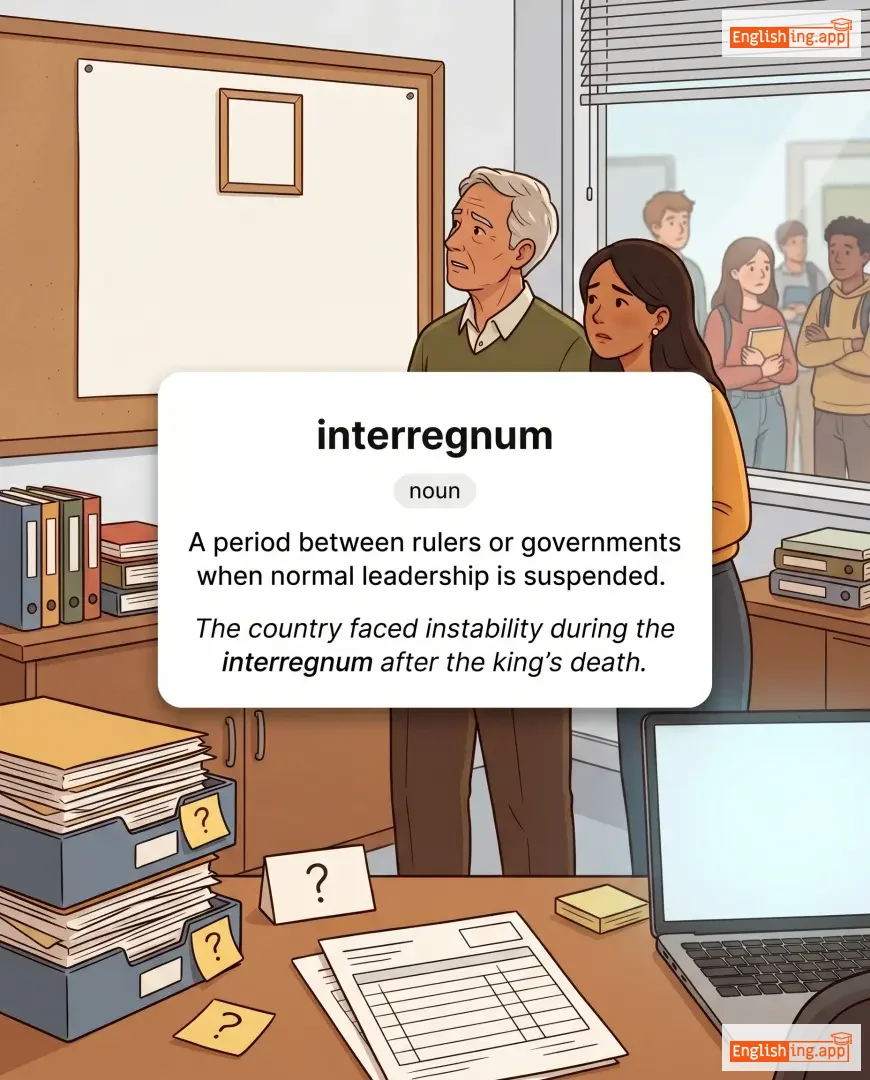
interregnum definition card — visual illustration of the meaning
noun
/ˌɪntərˈrɛɡnəm/
अंतरकाल (antarkal)

A period between rulers or governments when normal leadership is suspended.

"The country faced instability during the interregnum after the king’s death."

"राजा की मृत्यु के बाद देश ने अंतरकाल के दौरान अस्थिरता का सामना किया।" (Raja ki mrityu ke baad desh ne antarkal ke dauran asthirata ka samna kiya.)
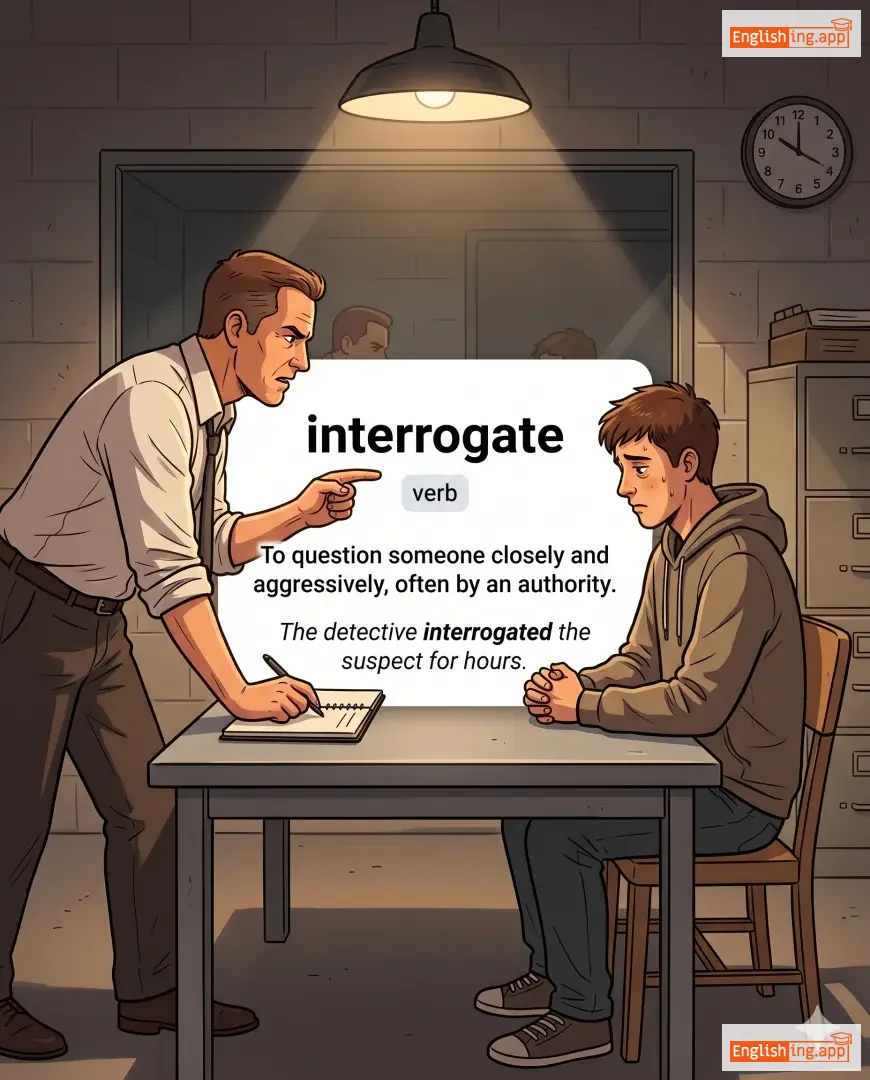
interrogate definition card — visual illustration of the meaning
verb
/ɪnˈtɛrəˌɡeɪt/
पूछताछ करना (poochhataach karna)

To question someone closely and aggressively, often by an authority.

"The detective interrogated the suspect for hours."

"जासूस ने संदिग्ध से घंटों तक पूछताछ की।" (Jasoos ne sandigdh se ghanton tak poochhataach ki.)
adjective
/ˌɪntəˈrɑːɡətɪv/
प्रश्नवाचक (prashnavachak)

Relating to or conveying a question; in grammar, used to form questions.

"She raised an interrogative eyebrow when she heard the news."

"जब उसने खबर सुनी, तो उसने प्रश्नवाचक भृकुटी उठाई।" (Jab usne khabar suni, to usne prashnavachak bhrikuti uthayi.)
adjective
/ˌɪntəˈrɒɡətəri/
प्रश्नात्मक (prashnatmak)

expressed in the form of a question; relating to questioning

"The lawyer’s interrogatory tone made the witness uncomfortable."

"वकील की प्रश्नात्मक आवाज ने गवाह को असहज कर दिया।" (Vakeel ki prashnatmak awaaz ne gawah ko asahaj kar diya.)
verb
/ˌɪntəˈrʌpt/
बात काटना (baat kaatna)

to stop someone from speaking or doing something by suddenly saying or doing something

"She tried not to interrupt while he was speaking."

"उसने बोलते समय बीच में बात नहीं काटने की कोशिश की।" (Usne bolte samay beech mein baat nahi kaatne ki koshish ki.)
noun
/ˌɪntəˈrʌpʃən/
रुकावट (rukavat)

the act of stopping or breaking the continuity of something; a pause caused by an external action

"The meeting was delayed due to an unexpected interruption."

"अप्रत्याशित रुकावट के कारण बैठक में देरी हुई।" (apratyashit rukavat ke karan baithak mein deri hui)
verb
/ˌɪntəˈsɛkt/
छेद करना (ched karna)

to cross or pass through each other

"The two roads intersect at the city center."

"दो सड़कें शहर के केंद्र में मिलती हैं।" (Do sadken shahar ke kendra mein milti hain.)
noun
/ˌɪntərˈsɛkʃən/
चौराहा (chauraha)

a point where two or more things intersect, especially a road or path

"The intersection of Main Street and 5th Avenue is always busy."

"मेन स्ट्रीट और 5वीं एवेन्यू का चौराहा हमेशा व्यस्त रहता है।" (Main Street aur 5vi Avenue ka chauraha hamesha vyast rehta hai.)
interstellar definition card — visual illustration of the meaning
adjective
ˌɪn.təˈstel.ər
तारों के बीच, अंतरतारकीय, अंतरिक्षीय (taron ke beech, antartarkiya, antarikshiya)

Occurring or situated between stars.

"Scientists study interstellar travel possibilities."

"वैज्ञानिक इंटरस्टेलर यात्रा की संभावनाओं का अध्ययन करते हैं।" (Vaigyanik interstellar yatra ki sambhavnayon ka adhyayan karte hain.)
noun
/ɪnˈtɜːrstɪs/
दरार (daraar)

a small space that lies between things

"Light filtered through the narrow interstices of the wall."

"रोशनी दीवार की संकरी दरारों से छनकर आई।" (Roshni deewar ki sankari daraaron se chhankar aayi.)
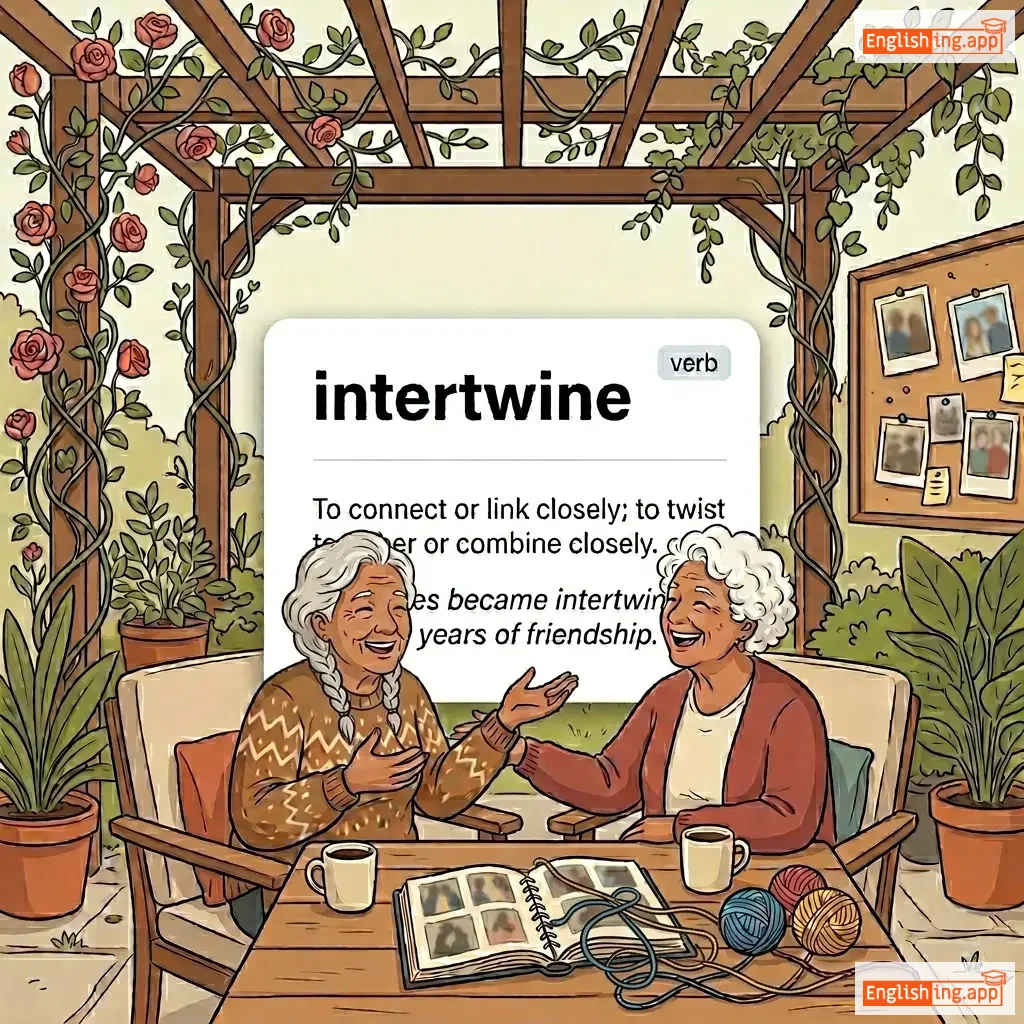
intertwine definition card — visual illustration of the meaning
verb
/ˌɪn.tɚˈtwaɪn/
एक दूसरे से जोड़ना या घुमा देना (ek doosre se jodna ya ghuma dena)

To connect or link closely; to twist together or combine closely.

"Their lives became intertwined through years of friendship."

"उनके जीवन कई सालों की दोस्ती से आपस में जुड़ गए थे।" (Unke jeevan kai saalon ki dosti se aapas mein jud gaye the.)
adjective
/ˌɪntərˈtwaɪnd/
खुशी (khushi)

closely connected or twisted together

"Their lives became deeply intertwined after the accident."

"जब उसे पुरस्कार मिला तो वह अपनी खुशी छुपा नहीं सकी।" (Jab use puraskar mila to wah apni khushi chhupa nahi saki.)
noun
/ˈɪntərvəl/
अंतराल (antaral)

a period of time between two events or points; a pause or break in activity

"There was a short interval between the two performances."

"दो प्रदर्शनों के बीच एक छोटा अंतराल था।" (Do pradarshanon ke beech ek chhota antaral tha.)
noun
/ˈɪntərˌveɪl/
नदी किनारे का समतल उपजाऊ भूमि (nadi kinare ka samatal upjaoo bhoomi)

A low-lying tract of land along a river, usually fertile and flat.

"The farmers cultivated crops on the lush intervale by the river."

"किसानों ने नदी के किनारे की समतल भूमि पर फसल उगाई।" (Kisano ne nadi ke kinare ki samatal bhoomi par fasal ugayi.)
verb
/ˌɪntərˈviːn/
हस्तक्षेप करना (hastakshep karna)

To come between people, groups, or events, often to prevent conflict or improve a situation.

"The teacher had to intervene to stop the fight between the students."

"शिक्षक को छात्रों के बीच लड़ाई रोकने के लिए हस्तक्षेप करना पड़ा।" (shikshak ko shiksharthiyon ke beech ladai rokne ke liye hastakshep karna pada.)
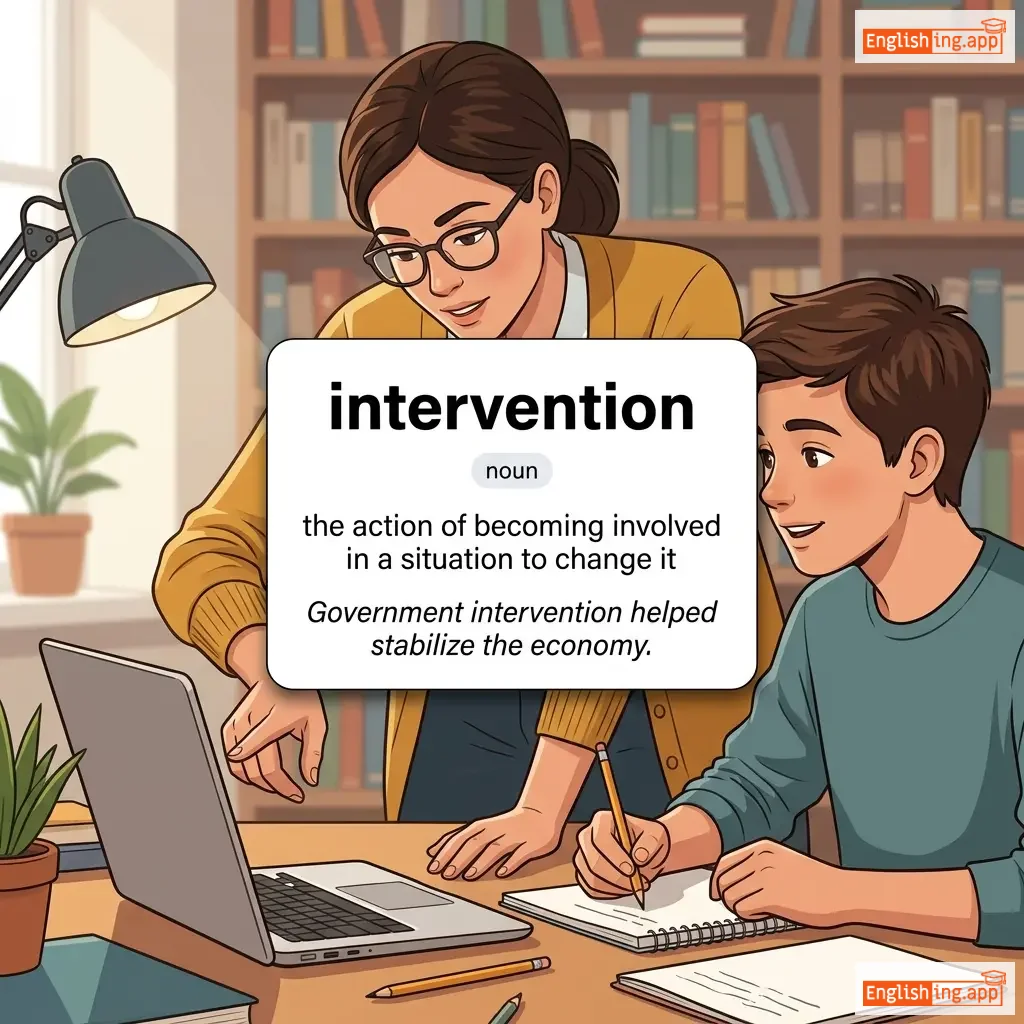
intervention definition card — visual illustration of the meaning
noun
/ˌɪntərˈvɛnʃən/
हस्तक्षेप (hastakshep)

the action of becoming involved in a situation to change it

"Government intervention helped stabilize the economy."

"सरकारी हस्तक्षेप ने अर्थव्यवस्था को स्थिर करने में मदद की।" (Sarkari hastakshep ne arthvyavastha ko sthir karne mein madad ki.)
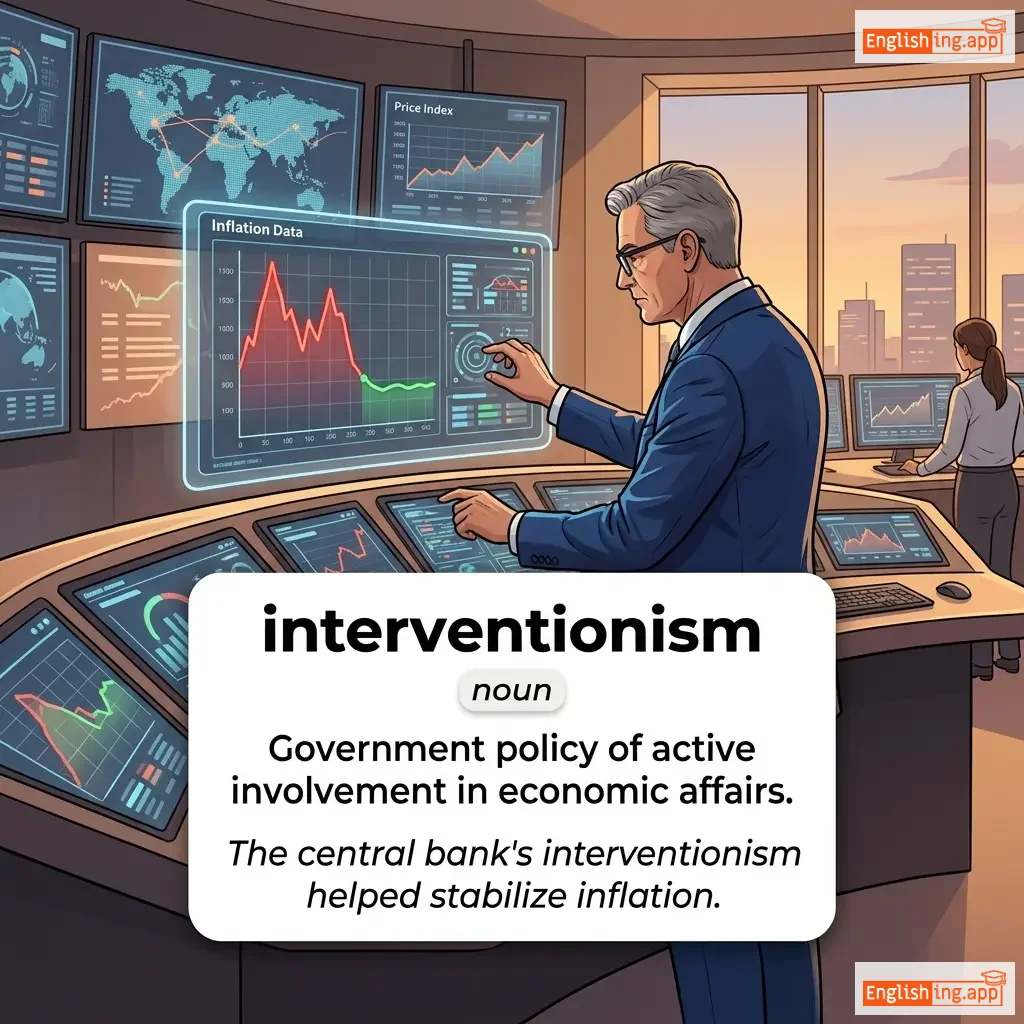
interventionism definition card — visual illustration of the meaning
noun
/ˌɪn.təˈvɛn.ʃə.nɪ.zəm/
हस्तक्षेपवाद (hastakshepvaad)

Government policy of active involvement in economic affairs.

"The central bank's interventionism helped stabilize inflation."

"केंद्रीय बैंक की हस्तक्षेपवाद ने महंगाई को स्थिर करने में मदद की।" (Kendriya bank ki hastakshepvaad ne mehngai ko sthir karne mein madad ki.)
interview definition card — visual illustration of the meaning
noun, verb
/ˈɪntərvjuː/
साक्षात्कार (saakshaatkaar)

a formal meeting in which one person asks another questions

"She prepared well for the job interview."

"वह नौकरी के इंटरव्यू के लिए अच्छे से तैयार हुई।" (vah naukri ke interview ke liye achhe se tayaar hui.)
noun
/ɪnˈtɛstəsi/
वसीयत के बिना मृत्यु (vasiayat ke bina mrityu)

The condition of dying without having made a valid will.

"His estate was divided according to the laws of intestacy."

"उनकी संपत्ति इंटेस्टेसी के कानूनों के अनुसार बाँटी गई थी।" (unki sampatti intestacy ke kanoonon ke anusar baanti gayi thi.)
adjective
/ɪnˈtɛsteɪt/
वसीयत के बिना मरा हुआ (vasiiyat ke bina mara hua)

Having died without leaving a valid will.

"She died intestate, so her assets were distributed by law."

"वह वसीयत के बिना मरी, इसलिए उसकी संपत्ति क़ानून के द्वारा वितरित की गई।" (vah vasiiyat ke bina mari, isliye uski sampatti kanun ke dwara vitrit ki gayi.)
noun
/ɪnˈtɛstɪn/
आंत्र (aantr)

The part of the digestive system where food is digested and absorbed, extending from the stomach to the anus.

"The doctor explained how nutrients are absorbed in the small intestine."

"डॉक्टर ने समझाया कि कैसे छोटे आंत्र में पोषक तत्व अवशोषित होते हैं।" (doktar ne samjhaya ki kaise chhote aantre mein poshak tatva avashoshit hote hain)
noun
/ˈɪntɪməsi/
घनिष्ठता (ghnishtata)

A close familiarity or friendship; a close personal relationship.

"Their friendship developed into a deep intimacy over the years."

"उनकी दोस्ती वर्षों में गहरी घनिष्ठता में बदल गई।" (Unki dosti varshon mein gehri ghnishtata mein badal gayi.)
Intimate definition card — visual illustration of the meaning
adjective
/ˈɪntɪmət/
घनिष्ठ (ghnisth)

Closely acquainted; very familiar and personal.

"They shared an intimate dinner by candlelight."

"उन्होंने मोमबत्तियों की रोशनी में एक घनिष्ठ रात्रि का भोजन साझा किया।" (Unhone mombattiyon ki roshni mein ek ghanishth raatri ka bhojan saanjha kiya.)
noun
/ˌɪntɪˈmeɪʃən/
संकेत (sanket)

A subtle or indirect hint or suggestion.

"She gave no intimation of her plans."

"उसने अपनी योजनाओं का कोई संकेत नहीं दिया।" (Usne apni yojnaon ka koi sanket nahi diya.)
verb
/ɪnˈtɪmɪdeɪt/
डरा देना (dara dena)

To frighten or overawe someone, especially to make them do what one wants.

"The bully tried to intimidate the smaller kids."

"बुली ने छोटे बच्चों को डराने की कोशिश की।" (Buli ne chhote bachchon ko darane ki koshish ki.)
noun
/ɪnˌtɪmɪˈdeɪʃən/
धमकी (dhamki)

The action of frightening or threatening someone to make them do something.

"The workers reported cases of intimidation by the management."

"कर्मचारियों ने प्रबंधन द्वारा धमकी देने के मामलों की रिपोर्ट की।" (Karmachariyon ne prabandhan dwara dhamki dene ke mamlon ki report ki.)
preposition
/ˈɪntuː/
के अंदर (ke andar)

expressing movement or direction to the inside of something

"She walked into the room quietly."

"वह चुपचाप कमरे में घुसी।" (vah chupchap kamre mein ghusi.)
adjective
/ɪnˈtɒlərəbl̩/
असहनीय (asahniya)

so bad, difficult, or unpleasant that it cannot be endured

"The heat during the summer was almost intolerable."

"गर्मी का मौसम लगभग असहनीय था।" (garmi ka mausam lagbhag asahniya tha.)
noun
/ɪnˈtɒlərəns/
असहिष्णुता (asahishnuta)

unwillingness to accept or endure beliefs, behaviors, or conditions different from one's own

"The leader was criticized for his intolerance toward other religions."

"नेता को अन्य धर्मों के प्रति अपनी असहिष्णुता के लिए आलोचना की गई थी।" (Neta ko anya dharmon ke prati apni asahishnuta ke liye alochana ki gayi thi.)