वोकैबुलरीज

इंग्लिश वोकैबुलरी डिस्कवर, लर्न और मास्टर करें

noun
/hɪp/
कूल्हा (kulha)

The part of the body on either side of the pelvis, or informal: trendy and fashionable.

"She put her hands on her hips."

"उसने अपने हाथ अपने कूल्हों पर रखे।" (usne apne haath apne kulhon par rakhe.)
noun
/ˌhɪp.əˈpɒt.ə.məs/
हिप्पोपोटामस (hippopotamus)

a large, mostly herbivorous mammal that lives in and around water in Africa

"The hippopotamus spends most of its day in the water."

"हिप्पोपोटामस अपना अधिकांश समय पानी में बिताता है।" (hippopotamus apna adikansh samay pani mein bitata hai)
hire definition card — visual illustration of the meaning
verb
/ˈhaɪə(r)/
भर्ती करना (bharti karna)

to employ someone for a job or task

"The company decided to hire more staff this year."

"कंपनी ने इस साल ज्यादा स्टाफ हायर करने का फैसला लिया।" (Kampani ne is saal zyada staff hire karne ka faisla liya.)
noun
/ˈhaɪərlɪŋ/
मजदूरी करने वाला (majdoori karne wala)

A person who works for payment only, often with little loyalty or principle.

"The mercenary was dismissed as just a hireling with no real loyalty."

"मर्सेनरी को केवल एक हायरलिंग के रूप में बर्खास्त कर दिया गया था जिसमें कोई वास्तविक निष्ठा नहीं थी।" (Mercenary ko keval ek hireling ke roop mein barkhast kar diya gaya tha jisme koi vastavik nishtha nahi thi.)
hirsute definition card — visual illustration of the meaning
adjective
/ˈhɜːrsuːt/
घने बालों वाला (hirsoot)

Having a lot of hair, especially in an unusual place.

"The hirsute man stood out in the crowd with his long beard."

"घने बालों वाला आदमी अपनी लंबी दाढ़ी के कारण भीड़ में अलग-सा खड़ा रहा।" (Ghane balon wala aadmi apni lambi daadhi ke kaaran bheed mein alag-sa khada raha.)
pronoun
/hɪz/
उसका (uska)

belonging to or associated with a male person previously mentioned

"This is his book on the table."

"यह उसकी किताब मेज पर है।" (Yah uski kitaab mej par hai.)
adjective
/hɪˈspænɪk/
हिस्पैनिक / स्पैनिश बोलने वाला (hispanik / spainish bolne wala)

relating to Spain or Spanish-speaking countries, especially Latin America.

"She studies Hispanic culture and language."

"वह हिस्पैनिक संस्कृति और भाषा का अध्ययन करती है।" (Wah hispanik sanskriti aur bhasha ka adhyayan karti hai.)
noun
/hɪˈstɔːriən/
इतिहासकार (itihaskaar)

a person who studies or writes about history

"The historian gave a lecture on ancient civilizations."

"इतिहासकार ने प्राचीन सभ्यताओं पर एक व्याख्यान दिया।" (Itihaskaar ne prachin sabhyataon par ek vyakhyan diya.)
historic definition card — visual illustration of the meaning
adjective
/hɪˈstɔːrɪk/
ऐतिहासिक (aithaasik)

Famous or important in history; likely to be remembered in history.

"The historic agreement changed the course of the nation."

"ऐतिहासिक समझौते ने देश के भविष्य को बदल दिया।" (aithaasik samjhote ne desh ke bhavishya ko badal diya.)
adjective
/hɪˈstɔːrɪkəl/
ऐतिहासिक (aitihasik)

Related to history or past events.

"The museum has a large collection of historical documents."

"संग्रहालय में ऐतिहासिक दस्तावेजों का एक बड़ा संग्रह है।" (Sangrahalay mein aitihasik dastavezon ka ek bada sangrah hai.)
adverb
/hɪˈstɒrɪkli/
ऐतिहासिक रूप से (aitihasik roop se)

in a way that relates to history or past events

"Historically, this city was a major trade center."

"ऐतिहासिक रूप से, यह शहर एक प्रमुख व्यापार केंद्र था।" (Aitihasik roop se, yah shahar ek pramukh vyapar kendra tha.)
History definition card — visual illustration of the meaning
noun
/ˈhɪstəri/
इतिहास (itihas)

the study of past events

"She is studying the history of medieval Europe."

"वह मध्यकालीन यूरोप का इतिहास अध्ययन कर रही है।" (Woh madhyakaleen Europe ka itihas adhyayan kar rahi hai.)
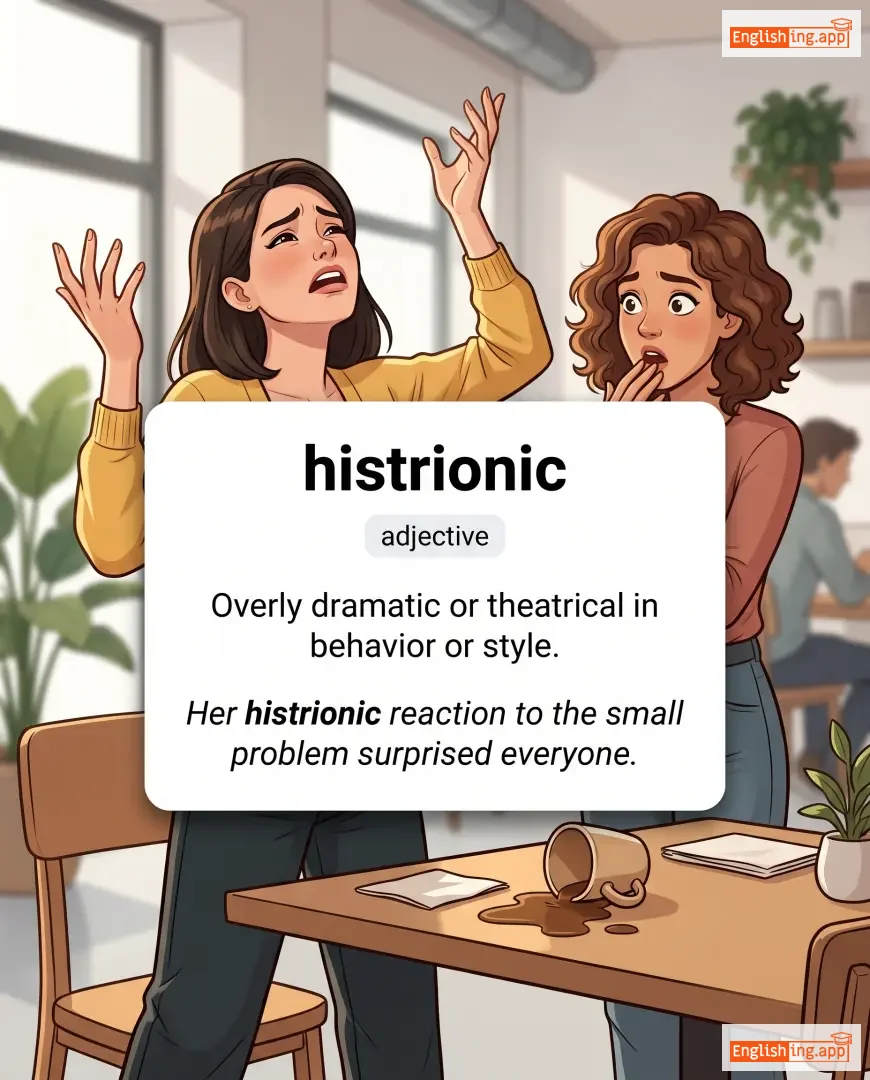
histrionic definition card — visual illustration of the meaning
adjective
/ˌhɪstriˈɒnɪk/
अत्यधिक नाटकीय (atyadhik natakiya)

Overly dramatic or theatrical in behavior or style.

"Her histrionic reaction to the small problem surprised everyone."

"उसकी हिस्ट्रीओनिक प्रतिक्रिया ने सभी को चौंका दिया।" (uski histrionic pratikriya ne sabhi ko chonka diya.)
verb
/hɪt/
मारना (maarna)

to strike someone or something with force

"He accidentally hit the ball into the window."

"उसने गलती से गेंद को खिड़की में मार दिया।" (Usne galti se gend ko khidki mein maar diya.)
noun
/haɪv/
छत्ता (chhatta)

A structure where bees live and produce honey; also a place full of busy activity.

"The office was a hive of activity before the deadline."

"ऑफिस डेडलाइन से पहले एक छत्ते की तरह व्यस्त था।" (office deadline se pehle ek chhatte ki tarah vyast tha.)
verb
/hɔːrd/
संग्रह करना (sangrah karna)

to accumulate and hide away a large supply of something, often secretly

"During the crisis, many people began to hoard food and water."

"संकट के दौरान, कई लोग खाने-पीने की चीज़ें इकट्ठा करने लगे।" (Sankat ke dauran, kai log khane-peene ki cheezein ikattha karne lage.)
adjective
/hɔːrs/
खरखराहट (kharkharahat)

having a rough, harsh, or weak voice, often due to illness or shouting

"After shouting all day at the rally, his voice was hoarse."

"रैली में पूरे दिन चिल्लाने के बाद, उसकी आवाज़ भद्दी हो गई थी।" (Raily mein poore din chillane ke baad, uski aawaz bhaddi ho gayi thi.)
adjective
/ˈhɔːri/
धूसर, प्राचीन (dhusar, prachin)

gray or white with age; very old and respected

"The hoary oak tree stood as a witness to centuries of history."

"धूसर ओक का पेड़ शताब्दियों के इतिहास का गवाह था।" (Dhusar oak ka ped shatabdiyon ke itihas ka gawah tha.)
noun
/hoʊks/
धोखा, झूठी कहानी (dhokha, jhoothi kahani)

a trick or false story meant to deceive people

"The news about aliens landing turned out to be a hoax."

"एलियंस के उतरने के बारे में खबर एक धोखा निकली।" (Aliens ke utarne ke baare mein khabar ek dhokha nikli.)
verb
/ˈhɑːbəl/
लंगड़ा चलना (langda chalna)

to walk awkwardly with difficulty, usually due to injury

"He hobbled across the room after twisting his ankle."

"उसने अपनी एड़ी मरोड़ने के बाद कमरे में लंगड़ाते हुए कदम बढ़ाए।" (Usne apni edhi marodne ke baad kamre mein langdate hue kadam badhaye.)
noun
/ˈhɑː.bi/
शौक; रुचि का काम; पसंदीदा काम; (shauk, ruchi ka kaam, pasandida kaam)

an activity done regularly in one's leisure time for pleasure; a pastime or recreation

"Photography became her favorite hobby after she received a camera for her birthday."

"फोटोग्राफी उसकी पसंदीदा हॉबी बन गई जब उसने अपना जन्मदिन पर एक कैमरा प्राप्त किया।" (photography uski pasandida hobby ban gayi jab usne apna janmadin par ek camera prapt kiya.)
noun
/ˈhɒki/
हॉकी (hockey)

a sport played with sticks and a ball or puck on ice or a field

"He plays hockey for the national team."

"वह राष्ट्रीय टीम के लिए हॉकी खेलता है।" (Wah rashtriya team ke liye hockey khelta hai.)
noun
/ˈhɒdʒ.pɒdʒ/
असंबद्ध मिश्रण (asambaddh mishran)

A confusing mixture of different things; a jumble.

"The essay was a hodgepodge of unrelated ideas."

"निबंध एक असंबद्ध मिश्रण था।" (Nibandh ek asambaddh mishran tha.)
noun
/hoʊ/
कुदाल (kudal)

a gardening tool with a thin metal blade used for breaking up soil and removing weeds

"The farmer used a hoe to remove weeds from his vegetable garden."

"किसान ने अपने सब्जी के बग़ीचे से घास निकालने के लिए कुदाल का उपयोग किया।" (Kisan ne apne sabji ke bagiche se ghaas nikaalne ke liye kudal ka upyog kiya.)
noun
/hɔːɡ plʌm/
होग प्लम (hog plum)

tropical fruit with yellow skin and sour taste

"Hog plums are often used to make pickles and chutneys."

"हॉग प्लम्स का उपयोग अक्सर अचार और चटनी बनाने में किया जाता है।" (hog plums ka upyog aksar achar aur chatni banane mein kiya jata hai)
noun
/ˈhɒɡz.hɛd/
बड़ा बैरल (bada barrel)

A large cask or barrel, traditionally used for storing liquids like wine or beer.

"The cellar was filled with hogsheads of ale."

"तलघर में एले के बड़े बैरल भरे हुए थे।" (Talghar mein ale ke bade barrel bhare hue the.)
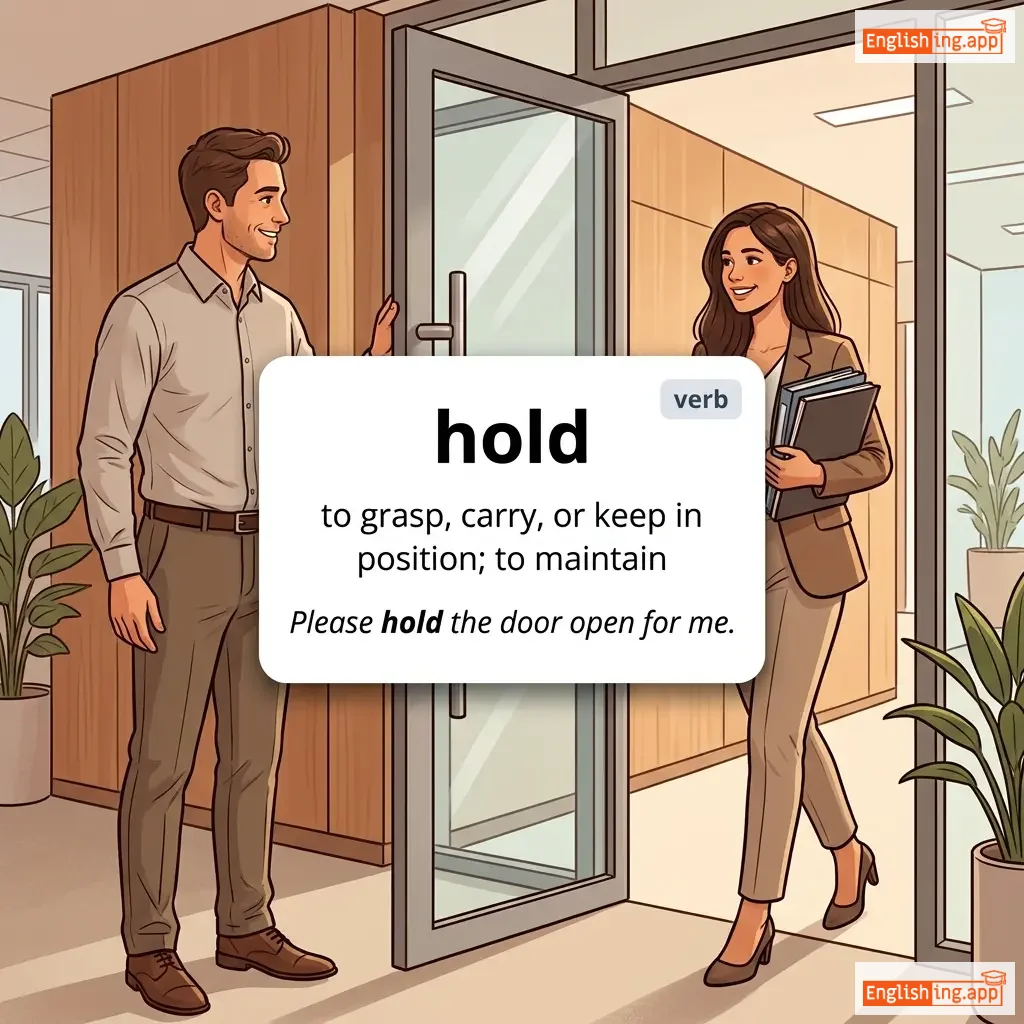
hold definition card — visual illustration of the meaning
verb
/hoʊld/
पकड़ना (pakadna)

to grasp, carry, or keep in position; to maintain

"Please hold the door open for me."

"कृपया मेरे लिए दरवाजा खोलकर रखें।" (Kripya mere liye darwaza kholkar rakhen.)
noun
/hoʊl/
छेद (ched)

an opening, gap, or hollow place in a solid surface

"There is a hole in my shirt."

"मेरी शर्ट में एक छेद है।" (Meri shirt mein ek ched hai.)
noun
/ˈhɒlɪdeɪ/
अवकाश (avkash)

A day of celebration or rest when most people do not work.

"We are planning a trip during the summer holiday."

"हम गर्मी की छुट्टी के दौरान यात्रा की योजना बना रहे हैं।" (ham garmi ki chhutti ke dauran yatra ki yojna bana rahe hain.)
holistic definition card — visual illustration of the meaning
adjective
/hoʊˈlɪstɪk/
समग्रवादी (samagravadi)

considering the whole rather than just the parts; comprehensive

"The doctor took a holistic approach to treatment."

"डॉक्टर ने इलाज के लिए समग्रवादी दृष्टिकोण अपनाया।" (Doktar ne ilaaj ke liye samagravadi drishtikon apnaya.)
adjective
/ˈhɑlːoʊ/
ख़ाली; शून्य; (khali; shunya;)

having an empty space inside; lacking substance or meaning; insincere

"The hollow tree trunk provided shelter for small animals."

"ख़ाली पेड़ की छाल ने छोटे जानवरों के लिए आश्रय प्रदान किया।" (khali ped ki chhaal ne chhote janwaron ke liye aashray pradan kiya.)
noun
/ˈhɒl.ə.kɔːst/
होलोकॉस्ट (holocaust)

A large-scale destruction, especially by fire; historically, the genocide of Jews during World War II.

"Millions of people perished during the Holocaust."

"द्वितीय विश्व युद्ध के दौरान लाखों लोग होलोकॉस्ट में मारे गए।" (Dwitiya vishw yudh ke dauran laakhon log holocaust mein maare gaye.)
noun
/ˈhoʊl.stər/
होल्स्टर (holster)

A holder or case for carrying a gun, typically worn on a belt or shoulder.

"The sheriff kept his revolver in a leather holster."

"शेरिफ ने अपनी रिवॉल्वर को चमड़े के होल्स्टर में रखा था।" (Sherif ne apni revolver ko chamde ke holster mein rakha tha.)
adjective
/ˈhoʊli/
पवित्र (pavitra)

Dedicated to God or a religious purpose; sacred.

"This temple is considered a holy place."

"यह मंदिर एक पवित्र स्थान माना जाता है।" (Yeh mandir ek pavitra sthan mana jata hai.)
noun
/ˈhɒm.ɪdʒ/ or /ˈɑː.mɑːʒ/
श्रद्धांजलि (shraddhanjali)

Special honor, respect, or tribute shown publicly.

"The statue was built as an homage to the national hero."

"प्रतिमा को राष्ट्रीय नायक को सम्मान देने के रूप में एक होमेज के रूप में बनाया गया था।" (Pratima ko rashtriya nayak ko samman dene ke roop mein ek homage ke roop mein banaya gaya tha.)
noun
/hoʊm/
घर (ghar)

the place where one lives, especially with family; a residence

"She finally returned home after a long journey."

"वह लंबे सफर के बाद आखिरकार घर लौट आई।" (vah lambe safar ke baad aakhirkar ghar laut aayi.)
home appliances definition card — visual illustration of the meaning
noun
hoʊm əˈplaɪ.ənsɪz
गृह उपकरण (grih upkaran)

Electrical devices and machines used in households for daily tasks and convenience.

"Modern home appliances enhance convenience."

"आधुनिक गृह उपकरण सुविधा बढ़ाते हैं।" (Aadhunik grih upkaran suvidha badhate hain.)
noun
/hoʊm ˈdɪstrɪkt/
मूल जिला (mul jila)

the district where a person was born or originally comes from

"He returned to his home district after many years abroad."

"वह कई वर्षों बाद अपने मूल जिले में लौटा।" (vah kai varshon baad apne mul jile mein lauta)
noun
/ˈhoʊmlænd/
मूल देश (mool desh)

a person's native country or region

"She returned to her homeland after ten years abroad."

"वह दस साल विदेश में रहने के बाद अपने मूल देश वापस लौट आई।" (Vah das saal videsh mein rehne ke baad apne mool desh wapas laut aayi.)
adjective
/ˈhoʊmləs/
बेघर (begar)

Without a home, and therefore typically living on the streets.

"The organization helps homeless people find shelter."

"द संगठन बेघर लोगों को आश्रय खोजने में मदद करता है।" (Da sangathan begar logon ko aashray khojne mein madad karta hai.)
adjective
/ˈhoʊmli/
सादा (sada)

Plain or unattractive in appearance; simple and comfortable in style or character.

"Despite being homely, the cottage felt warm and welcoming."

"सादा होने के बावजूद, कॉटेज गर्म और स्वागतयोग्य महसूस हुआ।" (sada hone ke bawajood, cottage garam aur swagatayogya mehsoos hua.)
noun
/ˌhoʊmiˈɑːpəθi/
होमियोपैथी (homeopathy)

a system of alternative medicine based on treating diseases with highly diluted substances

"He believes in homeopathy for treating common colds."

"वह सामान्य सर्दी-खांसी के इलाज के लिए होमियोपैथी में विश्वास करते हैं।" (Vah samanya sardi-khansi ke ilaj ke liye homeopathy mein vishwas karte hain.)
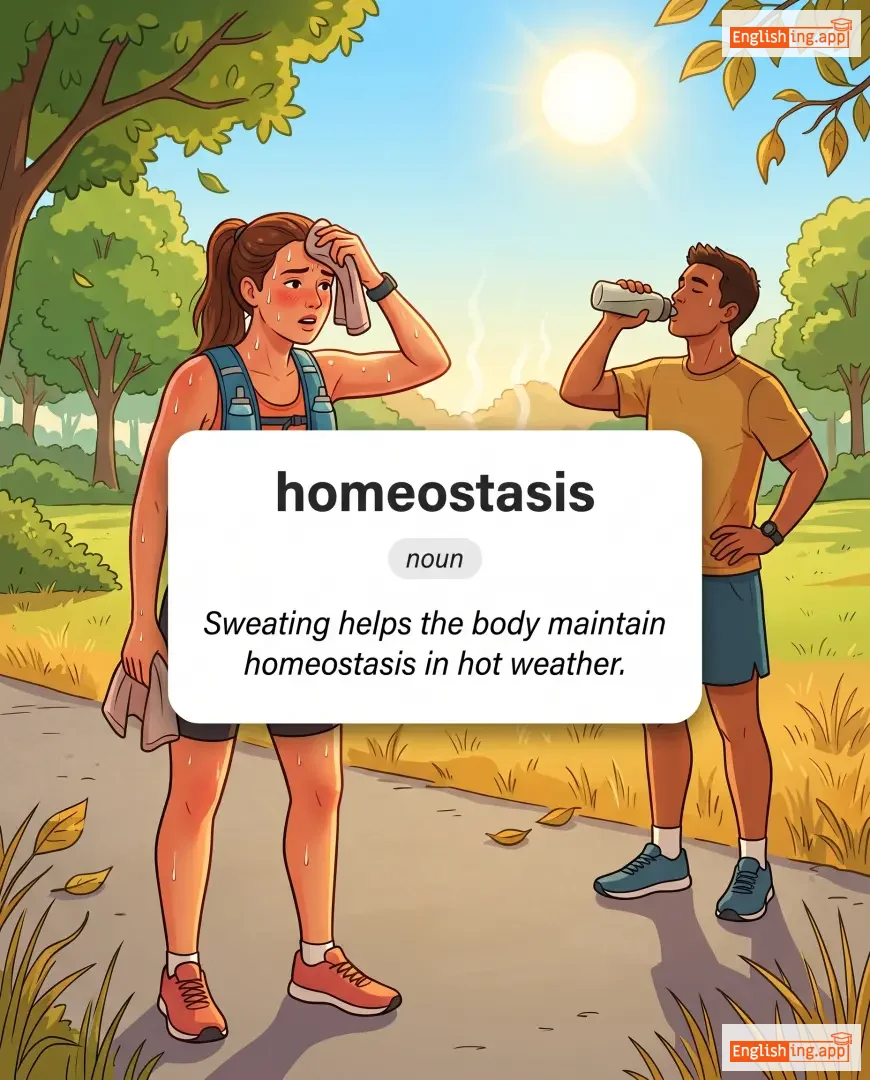
homeostasis definition card — visual illustration of the meaning
noun
/ˌhoʊmi.oʊˈsteɪsɪs/
गृहस्थिरता (grhasthirata)

The ability of a living system or organism to maintain internal stability despite changes in external conditions.

"Sweating helps the body maintain homeostasis in hot weather."

"पसीना आना शरीर को गर्म मौसम में होमियोस्टेसिस बनाए रखने में मदद करता है।" (paseena aana sharir ko garm mausam mein homeostasis banaye rakhne mein madad karta hai.)
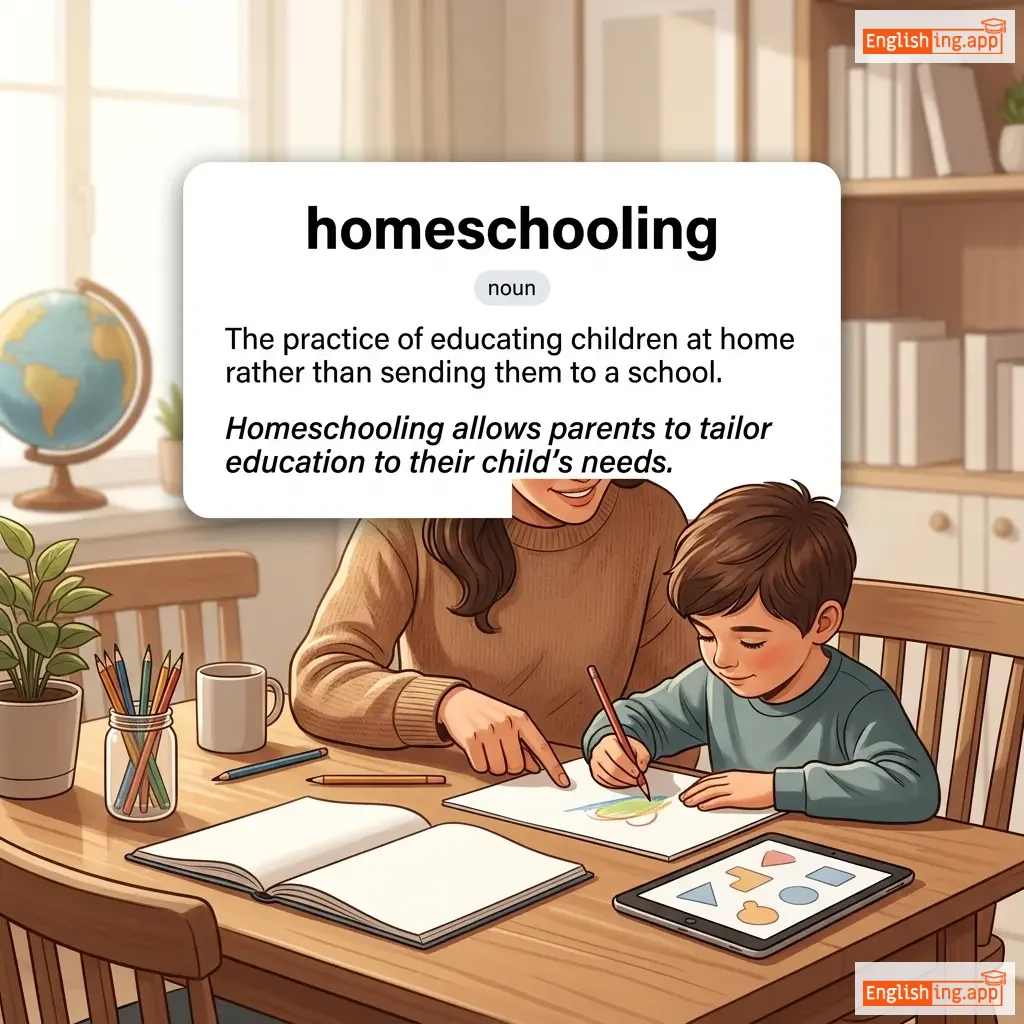
homeschooling definition card — visual illustration of the meaning
noun
ˈhoʊmˌskuː.lɪŋ
गृह विद्यालय (gruh vidyalay)

The practice of educating children at home rather than sending them to a school.

"Homeschooling allows parents to tailor education to their child's needs."

"होमस्कूलिंग माता-पिता को उनके बच्चे की ज़रूरतों के अनुसार शिक्षा प्रदान करने की अनुमति देती है।" (Homeschooling mata-pita ko unke bachche ki zaruraton ke anusar shiksha pradan karne ki anumati deti hai.)
adjective
/ˈhoʊmˌsɪk/
घर से दूर होना; घर और परिवार के लिए तरसना (ghar se door hona; ghar aur parivaar ke liye tarsna)

feeling sad because you are away from home; longing for one's home and family

"She felt homesick during her first week at college."

"वह कॉलेज में अपने पहले सप्ताह के दौरान घर की याद से दुखी हो गई थी।" (vah college mein apne pehle saptah ke dauran ghar ki yaad se dukhi ho gayi thi.)
adjective
/ˈhoʊm.spʌn/
घरेलू (gharelu)

Simple and unsophisticated; made at home rather than in a factory.

"She wore a homespun dress to the village festival."

"उसने गांव के मेले में एक घरेलू ड्रेस पहनी थी।" (Usne gaanv ke mele mein ek gharelu dress pehni thi.)
noun
/ˈhoʊmwɜːrk/
होमवर्क (homework)

schoolwork that a student does at home

"I need to finish my math homework before dinner."

"मुझे डिनर से पहले अपना गणित का होमवर्क खत्म करना है।" (Mujhe dinner se pehle apna ganit ka homework khatam karna hai.)
noun
/ˈhɑːmɪsaɪd/
हत्या (hatya)

the killing of one human being by another

"The police are investigating a case of homicide."

"पुलिस एक हत्या के मामले की जांच कर रही है।" (Police ek hatya ke mamle ki jaanch kar rahi hai.)
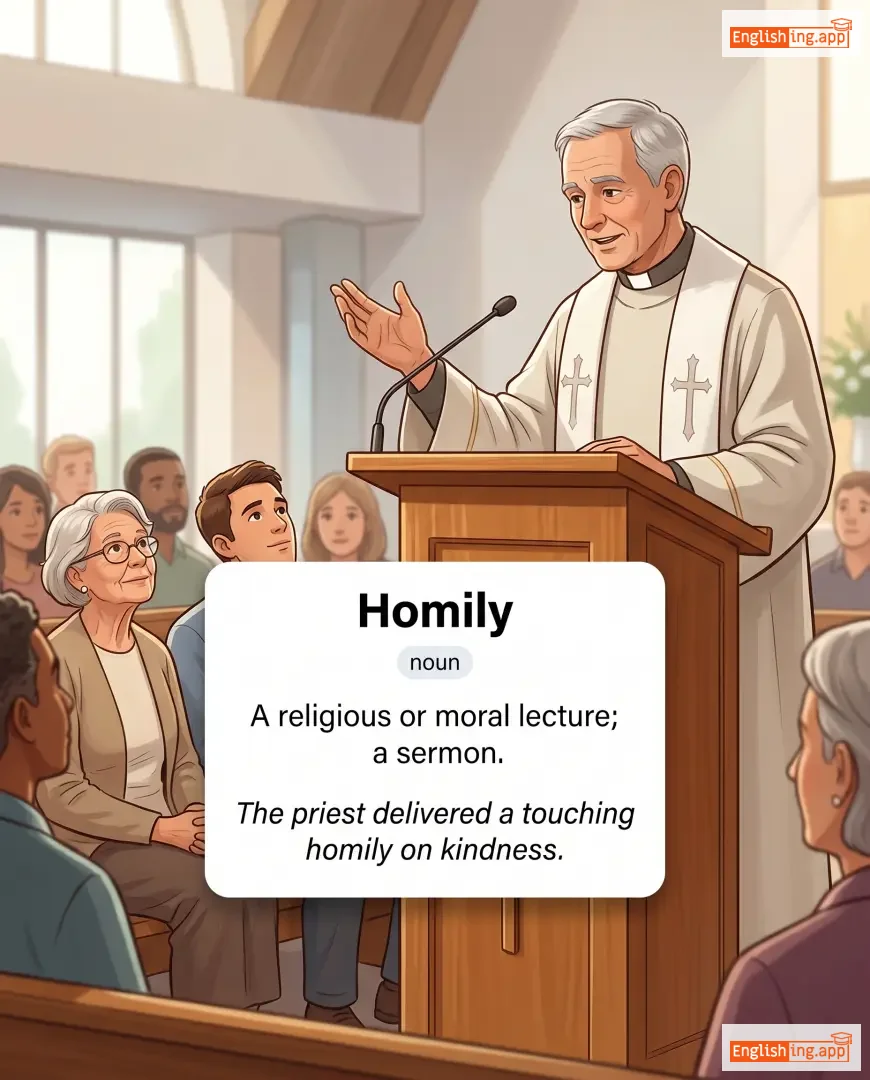
Homily definition card — visual illustration of the meaning
noun
/ˈhɑː.mə.li/
धार्मिक उपदेश (dharmik updesh)

A religious or moral lecture; a sermon.

"The priest delivered a touching homily on kindness."

"पादरी ने दया पर एक छूने वाला धार्मिक उपदेश दिया।" (paadri ne daya par ek chhoone wala dharmik updesh diya.)
noun
/ˌhoʊmə.dʒəˈniːəti/
समरूपता (samarupata)

The quality or state of being all the same or all of the same kind.

"The cultural homogeneity of the village made it feel unified."

"गांव की सांस्कृतिक समरूपता ने उसे एकजुट महसूस कराया।" (gaon ki sanskritik samarupata ne use ekjut mehsoos karaya.)