वोकैबुलरीज

इंग्लिश वोकैबुलरी डिस्कवर, लर्न और मास्टर करें

noun
/ˈhænd ˌrɪŋɪŋ/
अत्यधिक चिंता व्यक्त करना (atyadhik chinta vyakt karna)

excessive worry or concern expressed in a visible or dramatic way.

"There was much hand-wringing over the political crisis."

"वह राजनीतिक संकट को लेकर बहुत चिंता व्यक्त कर रहा था।" (Wah rajnaitik sankat ko lekar bahut chinta vyakt kar raha tha.)
noun
/ˈhænd.fʊl/
एक मुट्ठी (ek mutthi)

the amount of something that can be held in one hand; a small number

"She took a handful of nuts."

"उसने एक मुट्ठी मेवे उठाए।" (usne ek mutthi meve uthaye.)
noun
/ˈhæn.di.krɑːft/
हस्तकला (hastkala)

an activity involving the making of decorative domestic or other objects with the hands; handmade artistic work

"The local market featured beautiful handicrafts made by skilled artisans from the region."

"स्थानीय बाजार में क्षेत्र के कुशल कारीगरों द्वारा बनाई गई सुंदर हस्तकला दिखाई गई।" (sthaniya bazaar mein kshetra ke kushal kaarigaron dwaara banai gayi sundar hastkala dikhai gayi.)
noun
/ˈhæŋ.kər.tʃɪf/
हैण्डकीरचीफ (handkerchief)

a small piece of cloth used for wiping the nose or face

"She always carries a clean handkerchief in her purse."

"वह हमेशा अपने पर्स में एक साफ़ हैंडकीरचीफ रखती है।" (vah hamesha apne purse mein ek saaf handkerchief rakhti hai.)
Handle definition card — visual illustration of the meaning
noun, verb
/ˈhændl̩/
हैंडल / संभालना (handle / sambhalna)

the part of an object designed to be held in the hand; to deal with or manage a situation

"He could not handle the pressure of the job."

"वह नौकरी के दबाव को संभाल नहीं सका।" (vah naukri ke dabav ko sambhal nahi saka.)
noun
/ˈhændlɪŋ/
हैंडलिंग (handling)

the act of managing or dealing with something or someone

"His handling of the situation was impressive."

"उसकी स्थिति को संभालने की क्षमता प्रभावशाली थी।" (Uski sthiti ko sambhalne ki kshamata prabhavshali thi.)
adjective
/ˈhæn.səm/
खुशी (khushi)

attractive in appearance, usually referring to men; also can mean generous or impressive in size.

"He looked very handsome in his new suit."

"वह पुरस्कार प्राप्त करते समय अपनी खुशी छुपा नहीं पाई।" (Wah puraskar prapt karte samay apni khushi chhupa nahin paayi.)
noun
/ˈhændˌraɪ.tɪŋ/
हस्ताक्षर (hastakshar)

the style or manner of writing by hand.

"Her handwriting is very neat and easy to read."

"उसका हस्ताक्षर बहुत साफ और पढ़ने में आसान है।" (Uska hastakshar bahut saaf aur padhne mein aasan hai.)
adjective
/ˈhændi/
आसान से उपयोग करने योग्य (aasan se upyog karne yogya)

convenient to use or easily accessible; skillful with the hands

"This pocket knife is very handy when you go camping."

"यह पॉकेट चाकू कैम्पिंग करते समय बहुत उपयोगी है।" (Yeh pocket chaku camping karte samay bahut upyogi hai.)
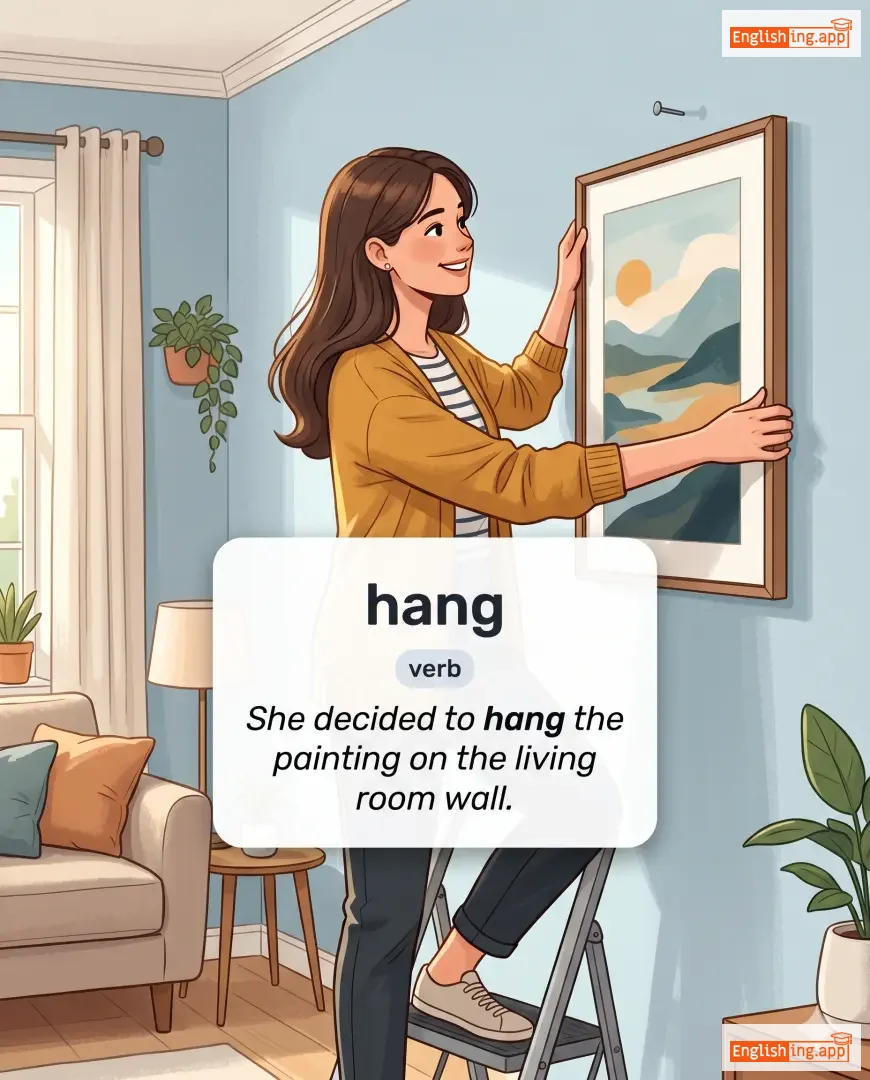
hang definition card — visual illustration of the meaning
verb
/hæŋ/
लटकाना (latkana)

to suspend or attach something from above so that it moves freely or is supported

"She decided to hang the painting on the living room wall."

"उसने बैठक कक्ष की दीवार पर चित्र लटकाने का निर्णय लिया।" (Usne baithak kaksh ki deewaar par chitra latkane ka nirnaya liya.)
noun
/ˈhæŋ.ər/
हैंगर (hangar)

a large building with extensive floor area, typically for housing aircraft; an aircraft shelter

"The airplane was stored safely in the hangar during the severe thunderstorm."

"विमान को तूफ़ान के दौरान सुरक्षित रूप से हैंगर में रखा गया था" (Vimaan ko toofan ke dauran surakshit roop se hangar mein rakha gaya tha)
adjective
/ˈhæŋ.dɔːɡ/
लज्जित (lajit)

looking or feeling ashamed, guilty, or defeated.

"He gave me a hangdog look after being caught lying."

"झूठ बोलने के बाद पकड़े जाने पर उसने लज्जित चेहरा बनाया।" (Jhooth bolne ke baad pakde jaane par usne lajit chehra banaya.)
noun
/ˈhæŋ.ər/
हैंगर (hangar)

a shaped piece of wood, plastic, or metal with a hook at the top, used to hang up clothes

"She hung her dress on a wooden hanger to prevent it from getting wrinkled."

"उसने अपनी ड्रेस को मोढ़ा होने से बचाने के लिए लकड़ी के हैंगर पर लटका दिया।" (Usne apni dress ko modha hone se bachane ke liye lakdi ke hanger par latka diya.)
noun
/ˌhæŋ.ər ˈɒn/
साथी (saathi)

a person who spends time with a powerful or famous person to gain benefits.

"The celebrity was always surrounded by hangers-on."

"सेलिब्रिटी हमेशा साथियों से घिरा रहता था।" (Celebrity hamesha saathiyon se ghira rehta tha.)
noun
/ˈhæŋ.kər/
लालसा, चाहत (laalsa, chahat)

a feeling of yearning or craving; a strong desire for something

"After years abroad, she developed a deep hanker for her homeland's traditional cuisine."

"वर्षों विदेश में रहने के बाद, उसने अपनी मातृभूमि के पारंपरिक व्यंजन के लिए गहरी लालसा विकसित की।" (Varshon videsh mein rehne ke baad, usne apni matribhoomi ke paaramparik vyanjan ke liye gahri laalsa viksit ki.)
noun
/ˈhæŋ.kər.ɪŋ/
तीव्र इच्छा (teevra ichchha)

a strong desire or craving for something.

"She had a hankering for chocolate late at night."

"उसे रात को चॉकलेट खाने की तीव्र इच्छा थी।" (Use raat ko chocolate khane ki teevra ichchha thi.)
noun
/ˌhæŋ.ki ˈpæŋ.ki/
धोखाधड़ी; संदिग्ध गतिविधि; बेईमानी या छल (dhokhadhadi; sandigdh gatividhi; beimani ya chhal)

dishonest or suspicious activity; unethical behavior; trickery or deception

"The audit revealed some hanky-panky in the company's financial records."

"ऑडिट ने कंपनी के वित्तीय रिकॉर्ड में कुछ धोखाधड़ी का खुलासा किया।" (audit ne company ke vittiya record mein kuch dhokhadhadi ka khulasa kiya.)
noun
/hæp/
भाग्य, सौभाग्य, दैव (bhagya, saubhagya, daiv)

luck, fortune, or chance occurrence

"By sheer hap, he discovered the old letter hidden in the drawer."

"सिर्फ भाग्य से उसने पुराने पत्र को दराज में खोज लिया।" (Sirf bhagya se usne purane patra ko daraj mein khoj liya.)
adjective
/hæpˈhæzərd/
बेहद अव्यवस्थित, यादृच्छिक (behad avyavasthit, yadṛcchik)

lacking any obvious order or organization; random

"The books were stacked in a haphazard way on the table."

"किताबें टेबल पर अव्यवस्थित तरीके से रखी गई थीं।" (Kitabein table par avyavasthit tareeke se rakhi gayi thi.)
adjective
/ˈhæpləs/
निर्दय, दुर्भाग्यपूर्ण (nirdai, durbhagyapurn)

unfortunate, unlucky, deserving pity

"The hapless traveler lost his passport on the very first day."

"निर्दय यात्री ने पहले ही दिन अपना पासपोर्ट खो दिया था।" (Nirdai yatri ne pehle hi din apna passport kho diya tha.)
verb
/ˈhæpən/
घटना (ghatna)

to take place or occur, usually by chance

"Accidents can happen at any time."

"दुर्घटनाएँ किसी भी समय हो सकती हैं।" (Durghatanayein kisi bhi samay ho sakti hain.)
adverb
/ˈhæpɪli/
खुशी से (khushi se)

in a happy manner; with pleasure or satisfaction

"The children played happily in the garden."

"बच्चों ने बग़ीचे में खुशी से खेला।" (Baccho ne bagiche mein khushi se khela.)
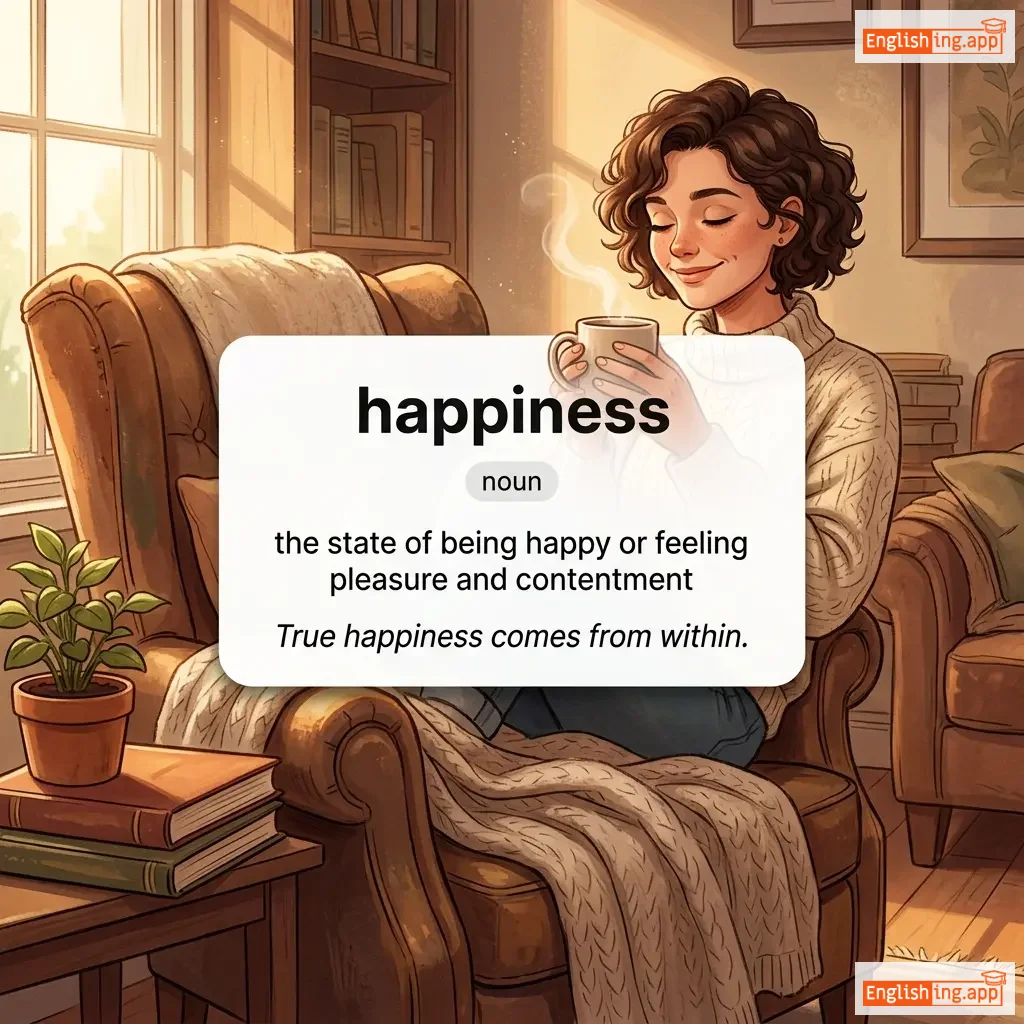
happiness definition card — visual illustration of the meaning
noun
/ˈhæpinəs/
खुशी (khushi)

the state of being happy or feeling pleasure and contentment

"True happiness comes from within."

"सच्ची खुशी भीतर से आती है।" (sachchi khushi bhitar se aati hai.)
adjective
/ˈhæpi/
ख़ुशी (khushi)

feeling or showing pleasure, contentment, or joy

"She was very happy to receive the gift."

"उसे तोहफा मिलने पर वह बहुत खुश थी।" (Use tohfaa milne par vah bahut khush thi.)
adjective
/ˌhæpi ɡoʊ ˈlʌki/
चिंतामुक्त, निराश्रित, carefree (chintamukt, niraashrit, carefree)

cheerfully unconcerned about the future; carefree

"She has a happy-go-lucky attitude and never worries about tomorrow."

"वह एक हैपी-गो-लकी रवैया रखती है और कभी भी कल के बारे में नहीं सोचती।" (Wah ek happy-go-lucky ravayya rakhti hai aur kabhi bhi kal ke baare mein nahi sochti.)
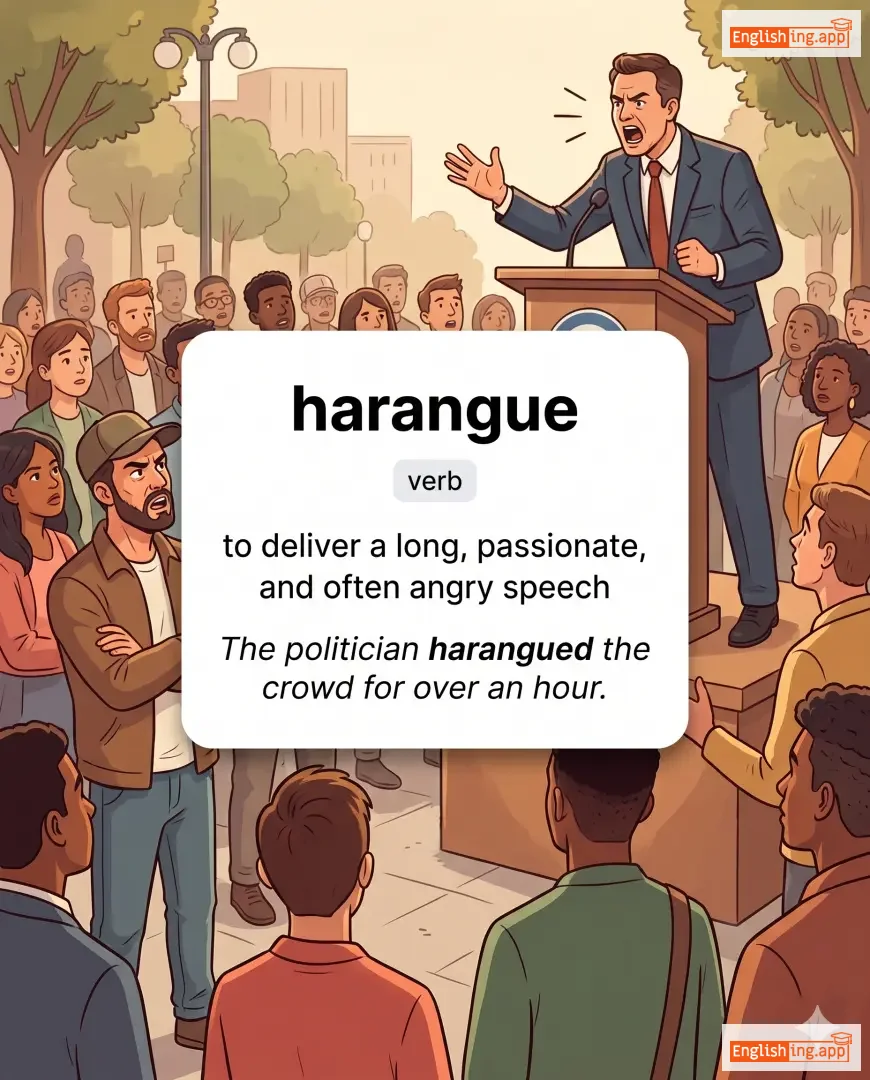
harangue definition card — visual illustration of the meaning
verb
/həˈræŋ/
लंबा और गुस्से में भरा भाषण देना (lamba aur gusse mein bhara bhashan dena)

to deliver a long, passionate, and often angry speech

"The politician harangued the crowd for over an hour."

"राजनेता ने भीड़ को एक घंटे से अधिक समय तक भाषण दिया।" (Rajneeta ne bheed ko ek ghante se adhik samay tak bhashan diya.)
verb
/həˈræs/
उत्पीड़न करना (utpidan karna)

to annoy or trouble someone repeatedly in an aggressive or persistent way

"The journalist claimed she was being harassed online."

"पत्रकार ने दावा किया कि उसे ऑनलाइन उत्पीड़न किया जा रहा था।" (Patrakar ne daawa kiya ki use online utpidan kiya ja raha tha.)
noun
/həˈræsmənt/
उत्पीड़न (utpeerdan)

aggressive pressure or intimidation; unwanted and repeated behavior causing discomfort

"The company has a strict policy against workplace harassment."

"कंपनी के पास कार्यस्थल पर उत्पीड़न के खिलाफ सख्त नीति है।" (Kampani ke paas karyasthal par utpeerdan ke khilaf sakht neeti hai.)
noun
/ˈhɑːrbɪndʒər/
सूचक (soochak)

a person or thing that announces or signals the approach of another

"The sudden drop in temperature was a harbinger of winter."

"टेम्प्रेचर में अचानक गिरावट सर्दियों के हारबिंजर की तरह थी।" (Temperature mein achanak girawat sardiyon ke harbinger ki tarah thi.)
noun, verb
/ˈhɑːrbər/
बंदरगाह / शरण देना (bandargah / sharan dena)

noun: a place on the coast where ships may find shelter; verb: to keep (a thought or feeling, often negative) in one's mind

"He continued to harbor resentment towards his former boss."

"वह अपने पूर्व बॉस के प्रति नफरत को अपने मन में पाले रहा।" (Wah apne poorv boss ke prati nafrat ko apne man mein paale raha.)
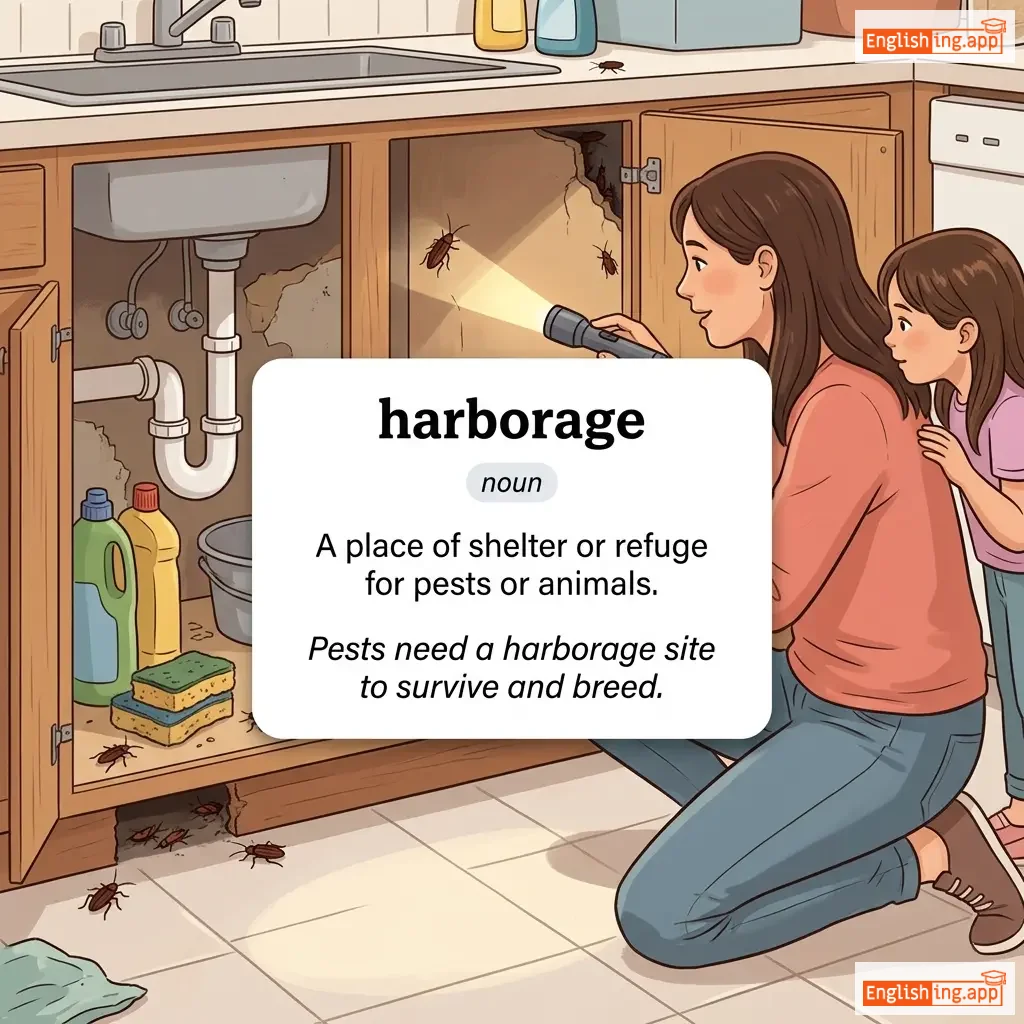
harborage definition card — visual illustration of the meaning
noun
ˈhɑːrbərɪdʒ
आश्रय स्थल (aashray sthal)

A place of shelter or refuge for pests or animals.

"Pests need a harborage site to survive and breed."

"कीटों को जीवित रहने और प्रजनन करने के लिए एक आश्रय स्थल की आवश्यकता होती है।" (Keeton ko jeevit rehne aur prajnan karne ke liye ek aashray sthal ki avashyakta hoti hai.)
noun
/ˈhɑːr.bər/
बंदरगाह (bandargah)

a place on the coast where vessels may find shelter; a place of safety or refuge

"The fishing boats returned safely to the harbour before the storm hit the coastline."

"मछली पकड़ने वाली नौकाएँ तूफान से पहले सुरक्षित रूप से बंदरगाह लौट आईं।" (machhli pakadne wali naukaen toofan se pehle surakshit roop se bandargah laut aayi.)
adjective
/hɑːrd/
कठिन (kathin)

solid, firm, or difficult to do or endure

"The exam was very hard for most students."

"परीक्षा अधिकांश छात्रों के लिए बहुत कठिन थी।" (Pariksha adhikansh chhatron ke liye bahut kathin thi.)
adjective
/ˌhɑːrdˈbɪtn̩/
कठोर और अनुभवी (kathor aur anubhavi)

tough and experienced, not easily affected by emotions or hardship

"The hard-bitten detective showed no sign of surprise at the crime scene."

"कठोर और अनुभवी जासूस ने अपराध स्थल पर कोई हैरानी नहीं दिखाई।" (Kathor aur anubhavi jasoos ne apradh sthal par koi hairani nahi dikhai.)
adjective
/ˌhɑːrdˈhɑːrtɪd/
निर्दयी (nirdai)

showing no kindness or sympathy; cruel

"The landlord was hard-hearted and refused to help the poor family."

"मालिक निर्दयी थे और गरीब परिवार की मदद करने से मना कर दिया।" (Malik nirdai the aur gareeb parivar ki madad karne se mana kar diya.)
noun
/ˈhɑːdɪhʊd/
साहस, दुस्साहस (sahas, dusahas)

Courage, boldness, or daring behavior; also physical robustness.

"The mountaineer's hardihood impressed the entire team."

"माउंटेनियर का हार्डिहूड पूरे टीम को प्रभावित कर गया।" (Mountaineer ka hardihood pure team ko prabhavit kar gaya.)
adverb
/ˈhɑːrdli/
लगभग नहीं (lagbhag nahi)

almost not; scarcely

"She could hardly believe her eyes."

"वह अपनी आँखों पर विश्वास hardly कर पा रही थी।" (Woh apni aankhon par vishwas hardly kar pa rahi thi.)
noun
/ˈhɑːrd.ʃɪp/
कठिनाई, कठिन समय (kathinai, kathin samay)

severe suffering or privation; difficulty or distress

"Despite facing many hardships during the war, the family remained united and hopeful."

"युद्ध के दौरान कई कठिनाइयों का सामना करने के बावजूद, परिवार एकजुट और आशावादी बना रहा।" (yuddh ke dauran kai kathinaaiyon ka saamna karne ke bawajood, parivaar ekjut aur aashaavadi bana raha.)
noun
/ˈhɑːrdˌwɛr/
हार्डवेयर (hardware)

the physical parts of a computer or electronic system, such as the monitor, keyboard, and processor

"The company upgraded its computer hardware to improve performance."

"कंपनी ने प्रदर्शन सुधारने के लिए अपने कंप्यूटर हार्डवेयर को अपग्रेड किया।" (Company ne pradarshan sudharne ke liye apne computer hardware ko upgrade kiya.)
adjective
/ˈhɑːrdi/
मजबूत, सहनशील (mazboot, sahansheel)

Strong, robust, and capable of enduring difficult conditions.

"Hardy plants can survive the harsh winter."

"मजबूत पौधे कठोर सर्दी में भी जीवित रह सकते हैं।" (Mazboot paudhe kathor sardi mein bhi jeevit rah sakte hain.)
noun
/heə(r)/
सांबेर (saamber)

a fast-running long-eared mammal that resembles a large rabbit

"The hare quickly ran across the field."

"सांबेर जल्दी से खेत के पार दौड़ गया।" (saamber jaldi se khet ke paar daud gaya)
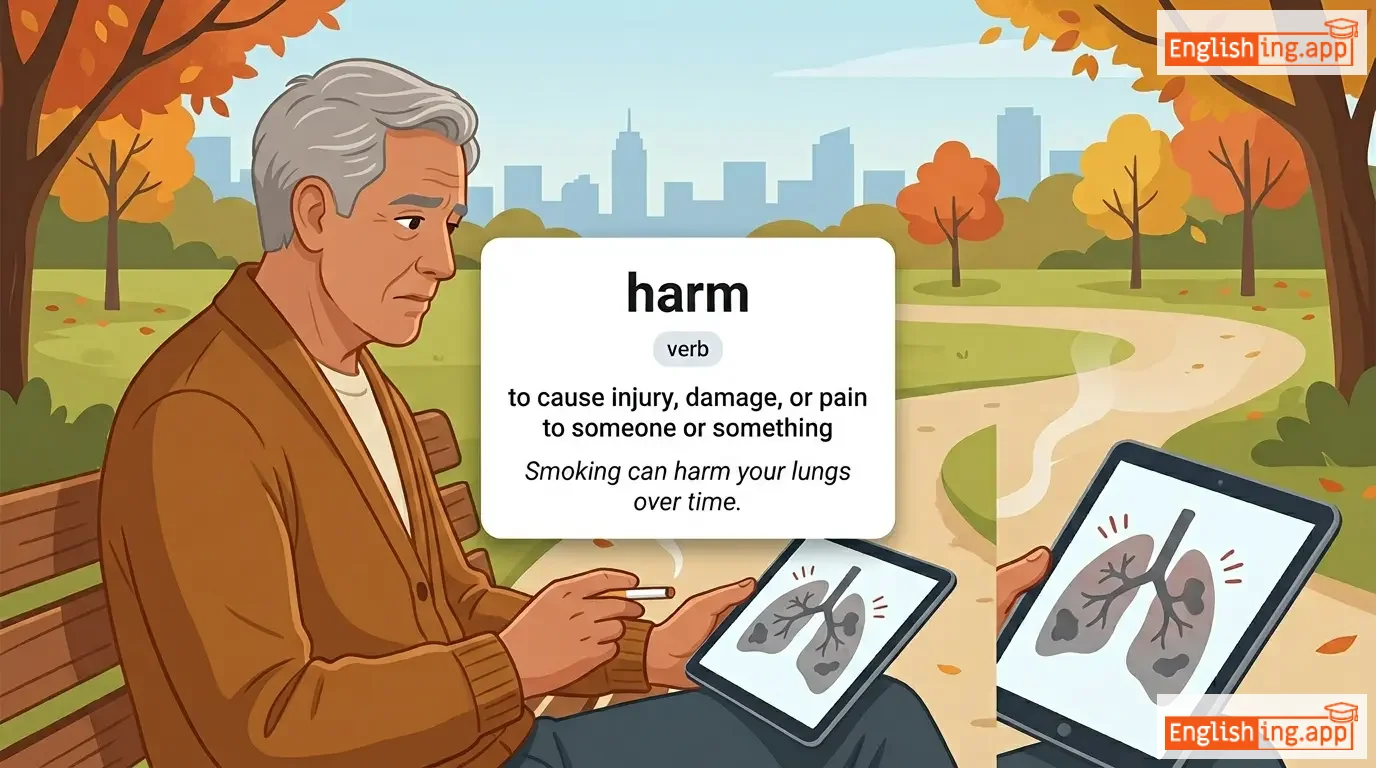
harm definition card — visual illustration of the meaning
verb
/hɑːrm/
नुकसान करना (nuksan karna)

to cause injury, damage, or pain to someone or something

"Smoking can harm your lungs over time."

"धूम्रपान समय के साथ आपके फेफड़ों को नुकसान पहुँचा सकता है।" (Dhoomrapan samay ke sath aapke phephdo ko nuksan pahucha sakta hai.)
adjective
/ˈhɑːrmfəl/
हानिकारक (hānīkārak)

causing or likely to cause harm; damaging

"Smoking is harmful to your health."

"धूम्रपान आपके स्वास्थ्य के लिए हानिकारक है।" (dhūmrāpān āpke svāsthya ke liye hānīkārak hai.)
adjective
/ˈhɑːrmləs/
निरापद; निर्दोष; सुरक्षित (nirāpad; nirdoṣ; surakṣit)

not able or likely to cause harm; innocent; safe

"The snake looks dangerous but it's actually harmless."

"सांप खतरनाक लगता है लेकिन यह वास्तव में निरापद है।" (sāmp khataranāk lagatā hai lekin yah vāstav mein nirāpad hai.)
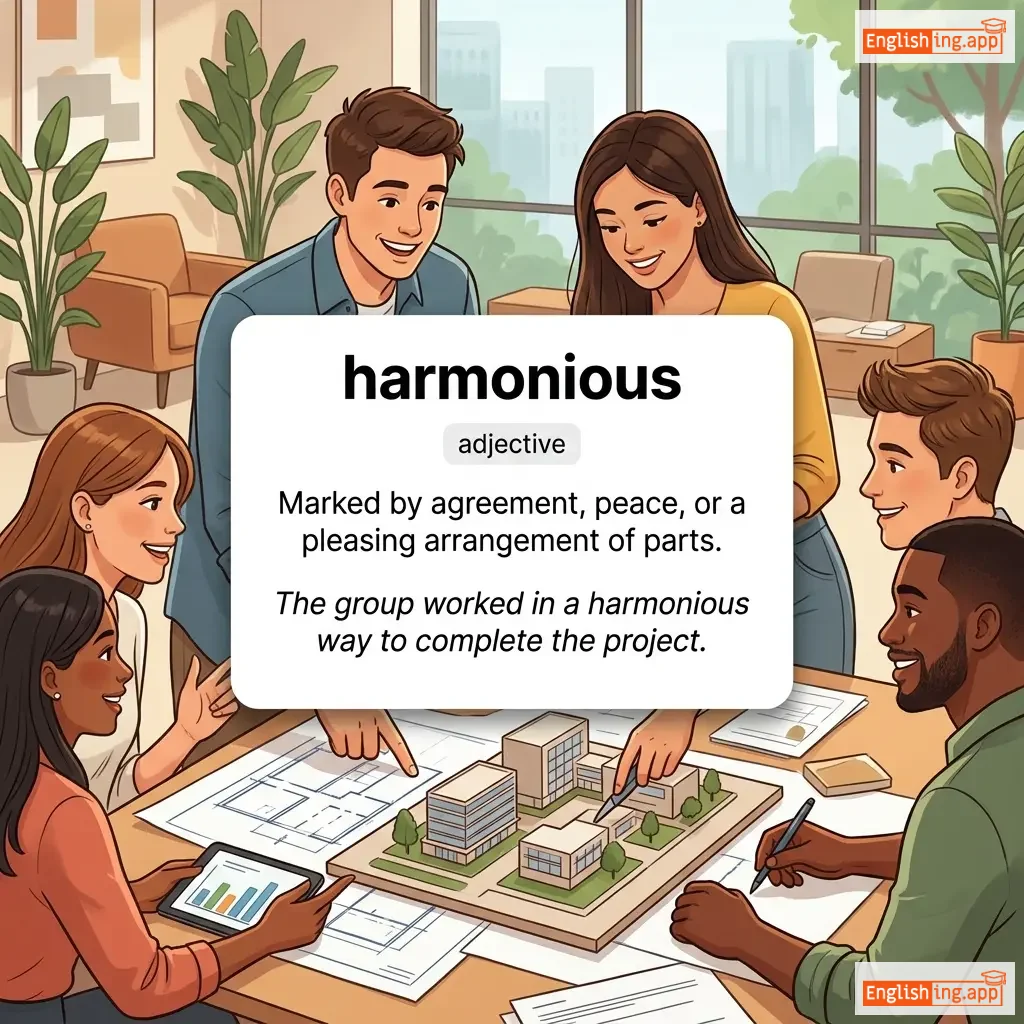
harmonious definition card — visual illustration of the meaning
adjective
/hɑːrˈmoʊniəs/
सुरेल, सामंजस्यपूर्ण (surel, samanjasyapurn)

Marked by agreement, peace, or a pleasing arrangement of parts.

"The group worked in a harmonious way to complete the project."

"समूह ने परियोजना को पूरा करने के लिए सामंजस्यपूर्ण तरीके से काम किया।" (samooh ne pariyojna ko poora karne ke liye samanjasyapurn tareeke se kaam kiya.)
noun
/hɑrˈmoʊniəm/
हार्मोनियम (harmonium)

a keyboard musical instrument similar to an organ, using air to produce sound

"She played devotional songs on the harmonium at the temple."

"उसने मंदिर में हार्मोनियम पर भक्ति गीत बजाए." (Usne mandir mein harmonium par bhakti geet bajaye.)
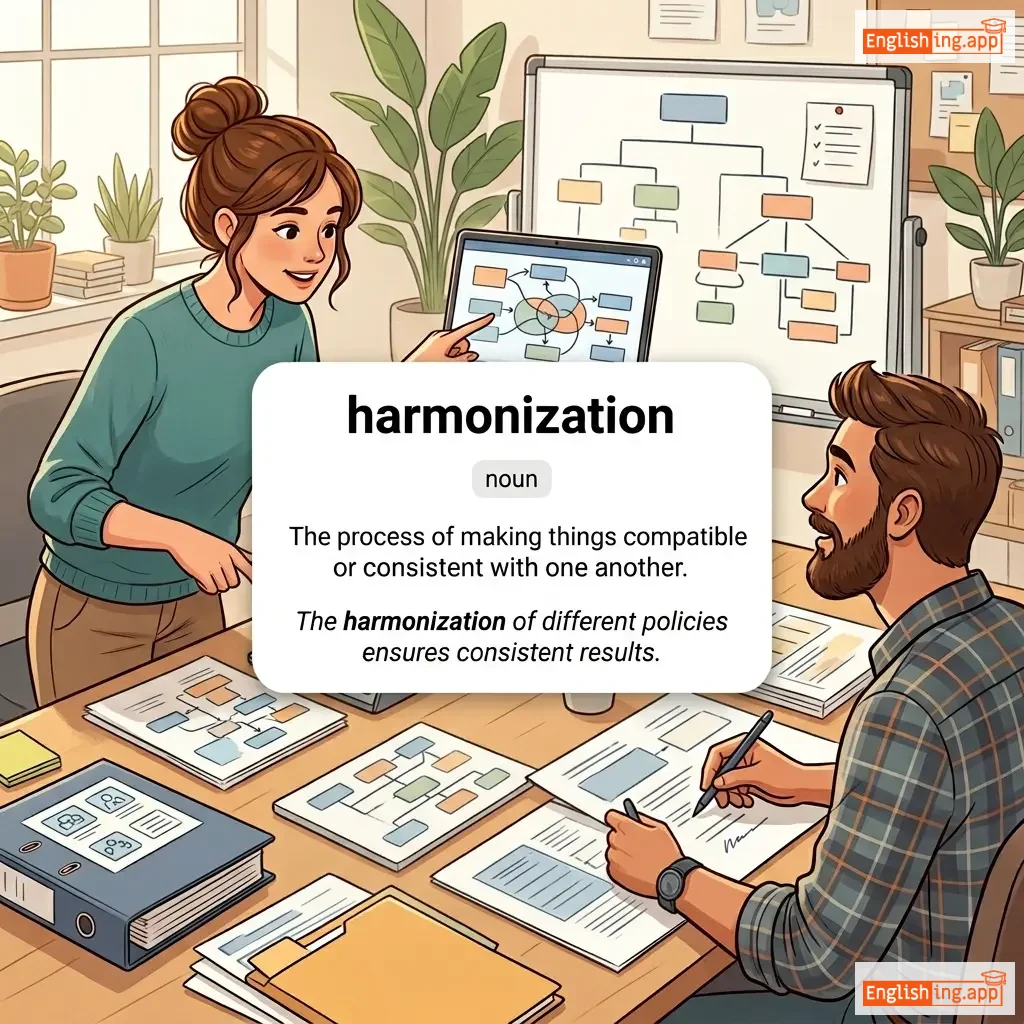
harmonization definition card — visual illustration of the meaning
noun
/ˌhɑːmənaɪˈzeɪʃən/
मेलजोल, समायोजन (meljol, samaayojan)

The process of making things compatible or consistent with one another.

"The harmonization of different policies ensures consistent results."

"विभिन्न नीतियों का मेलजोल सुसंगत परिणाम सुनिश्चित करता है।" (Vibhinn neetiyon ka meljol susangat parinaam nishchit karta hai.)
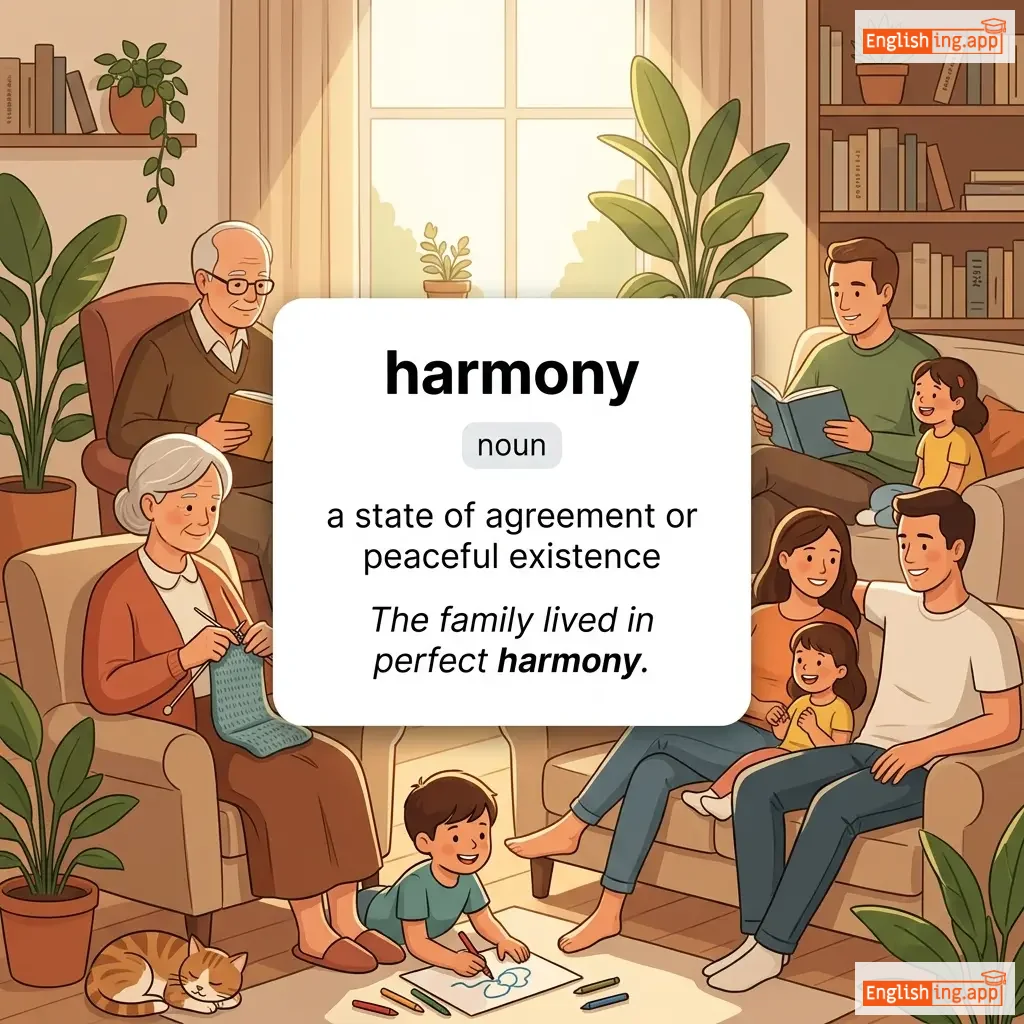
harmony definition card — visual illustration of the meaning
noun
/ˈhɑːrməni/
सामंजस्य (samajhya)

a state of agreement or peaceful existence

"The family lived in perfect harmony."

"परिवार ने पूरी सामंजस्य में जीवन बिताया।" (Parivaar ne poori samajhya mein jeevan bitaaya.)
verb
/ˈhɑːrnɪs/
नियंत्रण में लाना, उपयोग में लाना (niyantran mein lana, upyog mein lana)

To control and make use of natural resources, especially energy.

"Scientists are working to harness solar power effectively."

"वैज्ञानिकों ने सौर ऊर्जा को प्रभावी ढंग से Harness करने के लिए काम किया है।" (Vigyanikon ne saur urja ko prabhavi dhang se harness karne ke liye kaam kiya hai.)
verb
/hɑːrp/
बार-बार बोलना, शिकायत करना (baar-baar bolna, shikayat karna)

To dwell on or complain about something persistently.

"He kept harping on the same mistake over and over."

"वह एक ही गलती पर बार-बार शिकायत कर रहा था।" (vah ek hi galti par baar-baar shikayat kar raha tha.)