वोकैबुलरीज

इंग्लिश वोकैबुलरी डिस्कवर, लर्न और मास्टर करें

verb
/ɡruːm/
सजाना (sajana)

to clean, brush, and care for the appearance of someone or something

"She spends hours grooming her dog every week."

"वह हर हफ्ते अपने कुत्ते को घंटों तक सजाती है।" (Vah har hafte apne kutte ko ghanton tak sajati hai.)
noun
/ɡruːv/
नाली / लय (naali / lay)

a long narrow cut or depression, or a rhythmic pattern in music

"The DJ kept the crowd dancing to the groove."

"डीजे ने भीड़ को ग्रूव पर नाचते हुए रखा।" (DJ ne bheed ko groove par nachte hue rakha.)
adjective
/ɡroʊs/
गंदा / भद्दा (ganda / bhadda)

extremely unpleasant or disgusting; total before deductions

"He thought the food looked gross, but it tasted fine."

"उसे लगा कि खाना गंदा दिख रहा था, लेकिन उसका स्वाद ठीक था।" (Use laga ki khana ganda dikh raha tha, lekin uska swad theek tha.)
adjective
/ɡroʊˈtɛsk/
विकृत (vikrit)

comically or repulsively ugly or distorted

"The sculpture was so grotesque that it frightened the children."

"उस मूर्तिकला को देखकर बच्चों को डर लग गया था।" (Us moortikala ko dekhkar bachon ko dar lag gaya tha.)
noun
/ˈɡrɑːtoʊ/
गुफा (gufa)

a small picturesque cave, often artificial

"Tourists visited the grotto hidden behind the waterfall."

"पर्यटक जलप्रपात के पीछे छिपी गुफा में गए थे।" (Paryatak jalprapat ke peeche chhupi gufa mein gaye the.)
noun/verb
/ɡraʊtʃ/
शिकायत करने वाला व्यक्ति (shikayat karne wala vyakti)

a person who complains a lot or to complain in a grumpy way

"He is such a grouch in the morning before coffee."

"वह सुबह कॉफी से पहले हमेशा एक ग्राउच होता है।" (Vah subah coffee se pehle hamesha ek grouch hota hai.)
noun/verb
/ɡraʊnd/
भूमि (bhumi)

the solid surface of the earth; to prohibit someone (often a child) from going out

"The children played on the ground near the house."

"बच्चे घर के पास ज़मीन पर खेल रहे थे।" (Bacche ghar ke paas zameen par khel rahe the.)
noun
/ˈɡraʊnd kruː/
भूमि चालक दल (bhumi chalaak dal)

a team of people who maintain and service aircraft on the ground

"The ground crew prepared the plane for takeoff."

"ग्राउंड क्रू ने विमान को उड़ान भरने के लिए तैयार किया।" (Ground crew ne vimaan ko udan bharne ke liye tayar kiya.)
noun
/ˈɡraʊnd flɔːr/
भूतल (bhutal)

the floor of a building at ground level; the starting level of an organization or activity

"The grocery shop is located on the ground floor of the building."

"किराने की दुकान भूतल पर है।" (kirane ki dukaan bhutal par hai)
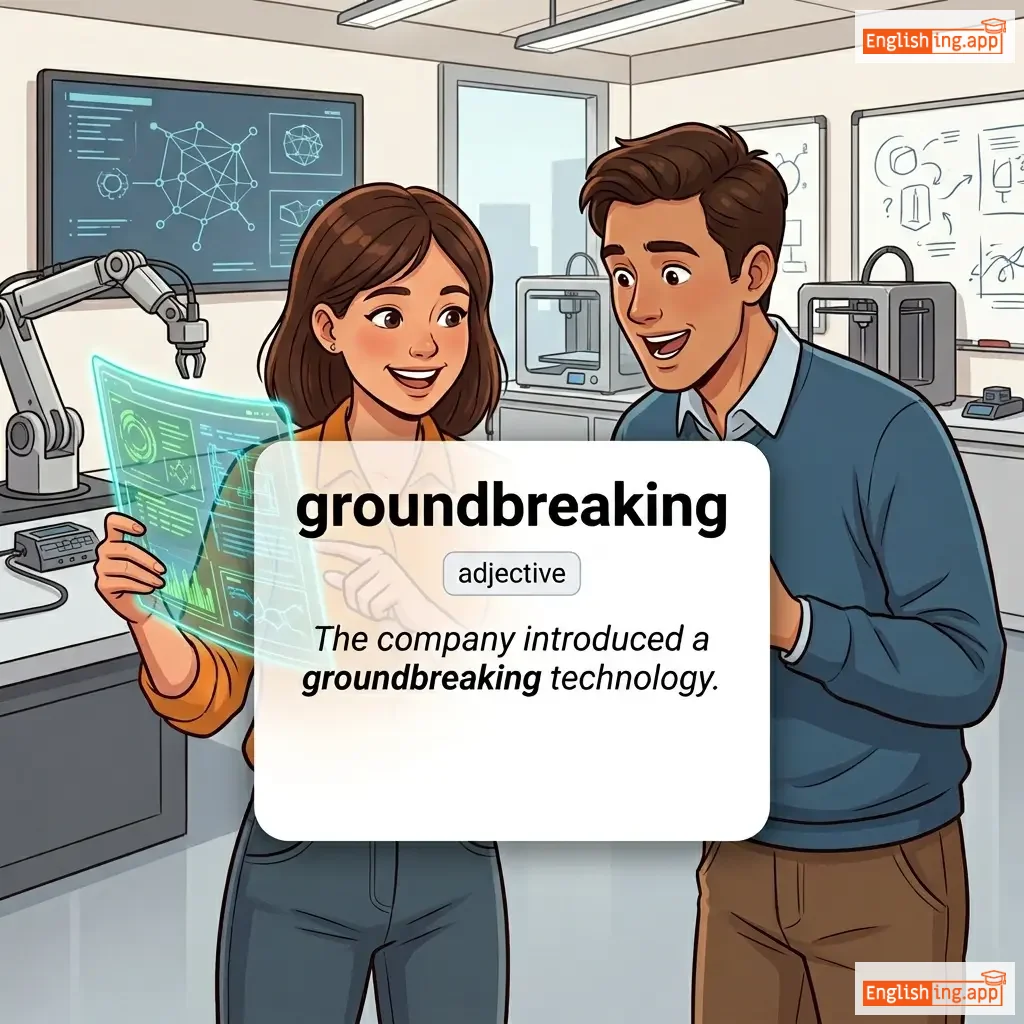
groundbreaking definition card — visual illustration of the meaning
adjective
ˈɡraʊndˌbreɪ.kɪŋ
क्रांतिकारी (krantikari)

Innovative and pioneering; introducing new ideas or methods that change conventional approaches.

"The company introduced a groundbreaking technology."

"कंपनी ने एक क्रांतिकारी प्रौद्योगिकी पेश की।" (Kampani ne ek krantikari praudyogiki pesh ki.)
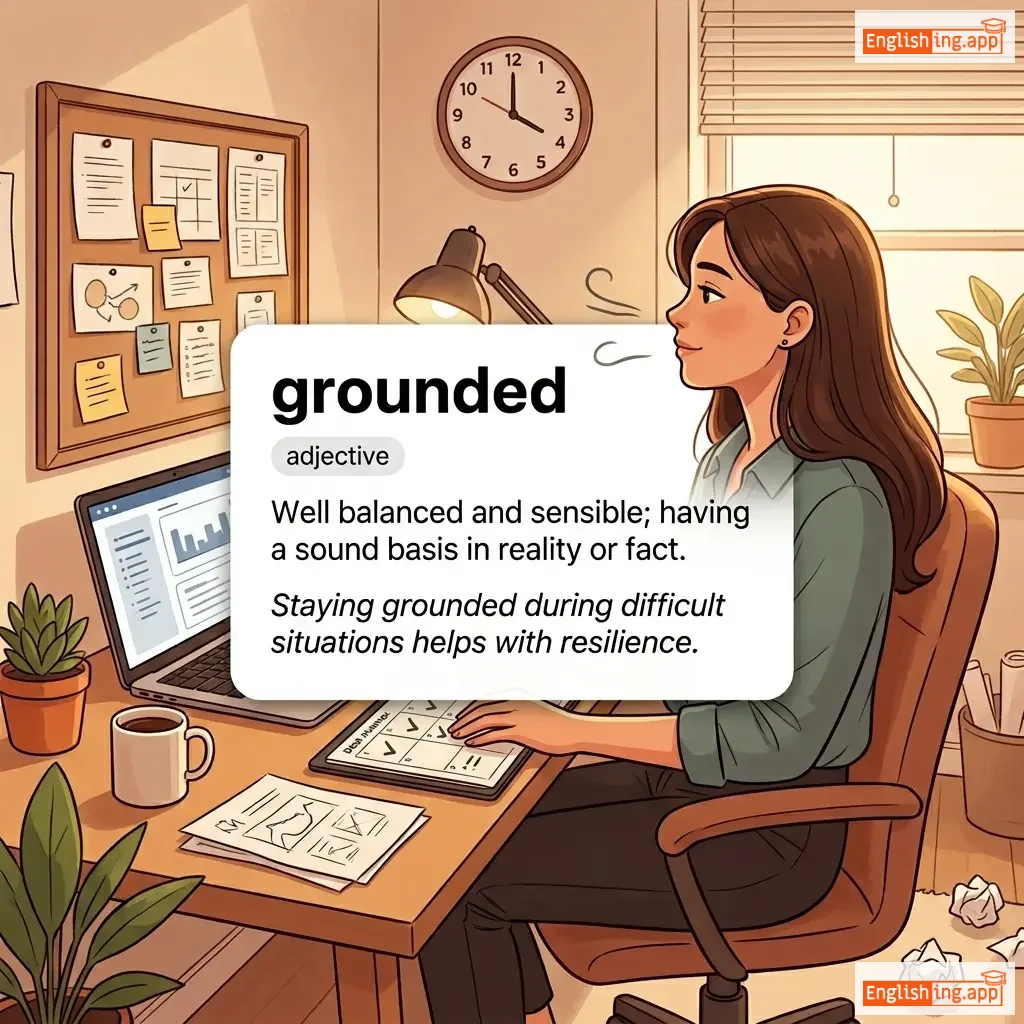
grounded definition card — visual illustration of the meaning
adjective
/ˈɡraʊndɪd/
वास्तविक (vastavik)

Well balanced and sensible; having a sound basis in reality or fact.

"Staying grounded during difficult situations helps with resilience."

"कठिन परिस्थितियों में grounded रहना सहनशीलता में मदद करता है।" (Kathin paristhitiyon mein grounded rehna sahansheelta mein madad karta hai.)
adjective
/ˈɡraʊnd.ləs/
बिना आधार का; निराधार (bina aadhar ka; niraadhaar)

without foundation or justification; baseless

"His accusations against her were completely groundless."

"उसके खिलाफ आरोप पूरी तरह से निराधार थे।" (Uske khilaf aarop poori tarah se niraadhaar the.)
noun, verb
/ɡruːp/
समूह (samuh)

A number of people or things considered together; to arrange things or people into categories.

"The students formed a study group."

"छात्रों ने एक अध्ययन समूह बनाया।" (Chatron ne ek adhyayan samuh banaya.)
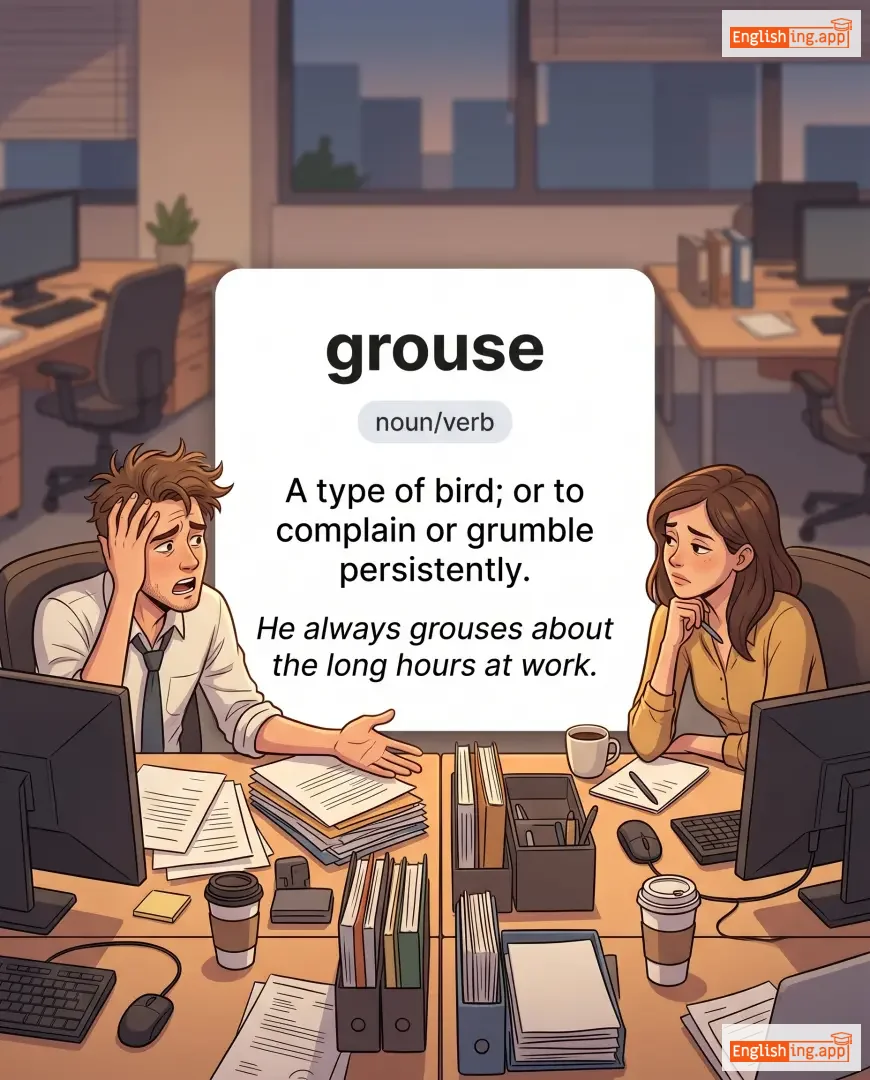
grouse definition card — visual illustration of the meaning
noun/verb
/ɡraʊs/
शिकारी पक्षी / शिकायत करना (shikari pakshi / shikayat karna)

A type of bird; or to complain or grumble persistently.

"He always grouses about the long hours at work."

"वह हमेशा काम के लंबे घंटों पर शिकायत करता है।" (vah hamesha kaam ke lambe ghanton par shikayat karta hai.)
noun
/ɡroʊv/
बाग़ / छोटा जंगल (bagh / chhota jangal)

A small group of trees growing close together.

"They walked through the orange grove."

"वे संतरे के बाग से गुजर रहे थे।" (Ve santare ke baag se guzare the.)
verb
/ˈɡrʌvəl/
नम्रता से बिछना (namrata se bichhna)

To act in an excessively humble or submissive way to gain favor.

"He groveled before his boss to avoid punishment."

"शास्ति से बचने के लिए उसने अपने बॉस के सामने बिछना किया।" (Shasti se bachne ke liye usne apne boss ke samne bichhna kiya.)
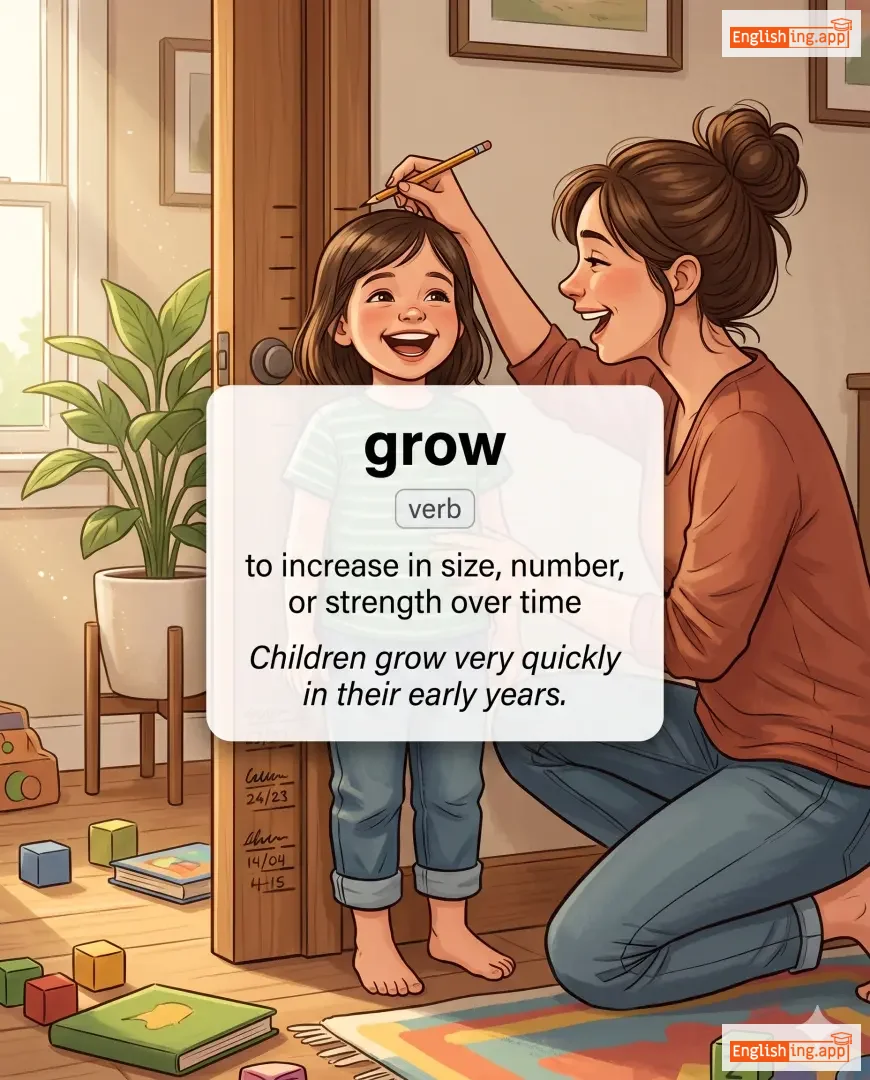
grow definition card — visual illustration of the meaning
verb
/ɡroʊ/
बढ़ना (badhna)

to increase in size, number, or strength over time

"Children grow very quickly in their early years."

"बच्चे बहुत जल्दी अपनी शुरुआती वर्षों में बढ़ते हैं।" (bachche bahut jaldi apni shuruati varsho mein badhte hain.)
verb
/ˈɡroʊ.ɪŋ/
बढ़ता हुआ (badhata hua)

continuously increasing or developing

"There is a growing demand for renewable energy."

"नवीकरणीय ऊर्जा के लिए बढ़ती हुई मांग है।" (Navikaranīya urjā ke liye badhti hui māng hai.)
verb/noun
/ɡraʊl/
गर्जन करना (garjan karna)

To make a low, guttural sound, often in anger (by animals or humans).

"The dog growled at the stranger."

"कुत्ता अजनबी पर गुस्से में गर्जन कर रहा था।" (Kutta ajnabi par gusse mein garjan kar raha tha.)
Growth definition card — visual illustration of the meaning
noun
/ɡroʊθ/
वृद्धि (vruddhi)

the process of increasing in size, number, or importance

"The company has shown remarkable growth in the last year."

"कंपनी ने पिछले साल में अद्वितीय वृद्धि दिखाई है।" (Company ne pichhle saal mein advitiya vruddhi dikhayi hai.)
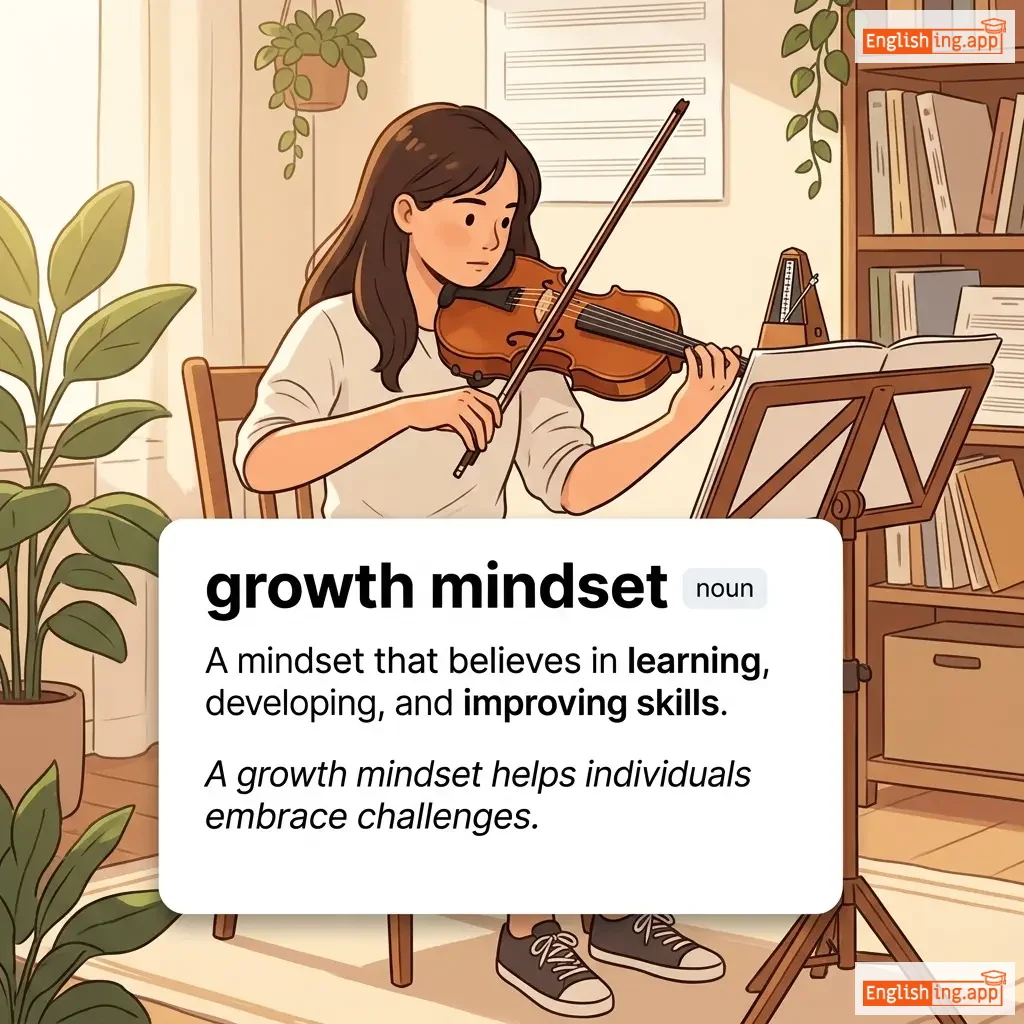
growth mindset definition card — visual illustration of the meaning
noun
/ɡroʊθ ˈmaɪnd.sɛt/
विकास मानसिकता (vikas mansikta)

A mindset that believes in learning, developing, and improving skills.

"A growth mindset helps individuals embrace challenges."

"एक विकास मानसिकता व्यक्तियों को चुनौतियों को अपनाने में मदद करती है।" (Ek vikas mansikta vyaktiyon ko chunautiyon ko apnane mein madad karti hai.)
noun/verb
/ɡrʌdʒ/
नफरत / बैर (nafrat / bair)

A persistent feeling of ill will or resentment from a past insult or injury.

"She still holds a grudge against him for what happened years ago."

"वह अभी भी सालों पहले हुई घटना के लिए उससे नफरत रखती है।" (Vah abhi bhi salon pehle hui ghatna ke liye usse nafrat rakhti hai.)
adjective
/ˈɡrʌdʒɪŋ/
अनिच्छुक (anichchhuk)

Reluctant or unwilling; given or allowed only with hesitation.

"She gave him a grudging smile after the argument."

"झगड़े के बाद उसने एक अनिच्छुक मुस्कान दी।" (Jhagde ke baad usne ek anichchhuk muskaan di.)
noun
/ˈɡruːəl/
पानी या दूध में अनाज उबालकर बनाया गया पतला भोजन (pani ya doodh mein anaj ubalkar banaya gaya patla bhojan)

A thin liquid food made by boiling cereal (like oats) in water or milk.

"The poor children were given a bowl of gruel each morning."

"गरीब बच्चों को हर सुबह एक कटोरी पतला भोजन दिया जाता था।" (Gareeb bachon ko har subah ek katori patla bhojan diya jata tha.)
adjective
/ˈɡruːəlɪŋ/
बहुत थका देने वाला (bahut thaka dene wala)

Extremely tiring and demanding.

"The athletes faced a grueling training session."

"एथलीट्स ने एक बहुत थका देने वाला ट्रेनिंग सत्र का सामना किया।" (Athletes ne ek bahut thaka dene wala training session ka samna kiya.)
adjective
/ˈɡruːsəm/
भयावह (bhayavah)

Causing horror or disgust.

"The police discovered a gruesome crime scene."

"पुलिस ने एक भयावह अपराध स्थल खोजा।" (Police ne ek bhayavah apradh sthal khoja.)
adjective
/ɡrʌf/
कठोर (kathor)

Rough or stern in manner, speech, or voice.

"Despite his gruff manner, he was very kind-hearted."

"उसके कठोर व्यवहार के बावजूद, वह बहुत दयालु था।" (Uske kathor vyavhaar ke bawajood, vah bahut dayalu tha.)
verb
/ˈɡrʌmbəl/
गुड़गुड़ाना (gudgudana)

to complain quietly or in a low voice

"She often grumbles about the traffic."

"वह अक्सर ट्रैफिक के बारे में गुड़गुड़ाती है।" (Vah aksar traffic ke baare mein gudgudati hai.)
adjective
/ˈɡrʌm.pi/
चिड़चिड़ा; गुस्सैल; (chidhchidhā; gussail;)

bad-tempered and irritable; easily annoyed

"He was grumpy all morning because he didn't sleep well."

"वह सारा सुबह चिड़चिड़ा था क्योंकि उसे अच्छी नींद नहीं आई थी।" (vah sārā subah chidhchidhā thā kyonki use acchī nīnd nahīn āī thī。)
verb
/ɡrʌnt/
गड़गड़ाहट करना (gargadahat karna)

to make a low, rough sound, often when exerting effort or expressing annoyance

"He grunted as he lifted the heavy box."

"वह भारी बॉक्स उठाते समय गड़गड़ाहट कर रहा था।" (Wah bhaari box uthate samay gargadahat kar raha tha.)
noun/verb
/ˌɡærənˈtiː/
गैरंटी (gairanti)

a formal promise or assurance, especially about the quality or durability of a product

"The company guarantees a refund if the product is faulty."

"कंपनी यह गैरंटी देती है कि अगर उत्पाद दोषपूर्ण हो तो रिफंड मिलेगा।" (Company yah gairanti deti hai ki agar utpad doshpoorn ho to refund milega.)
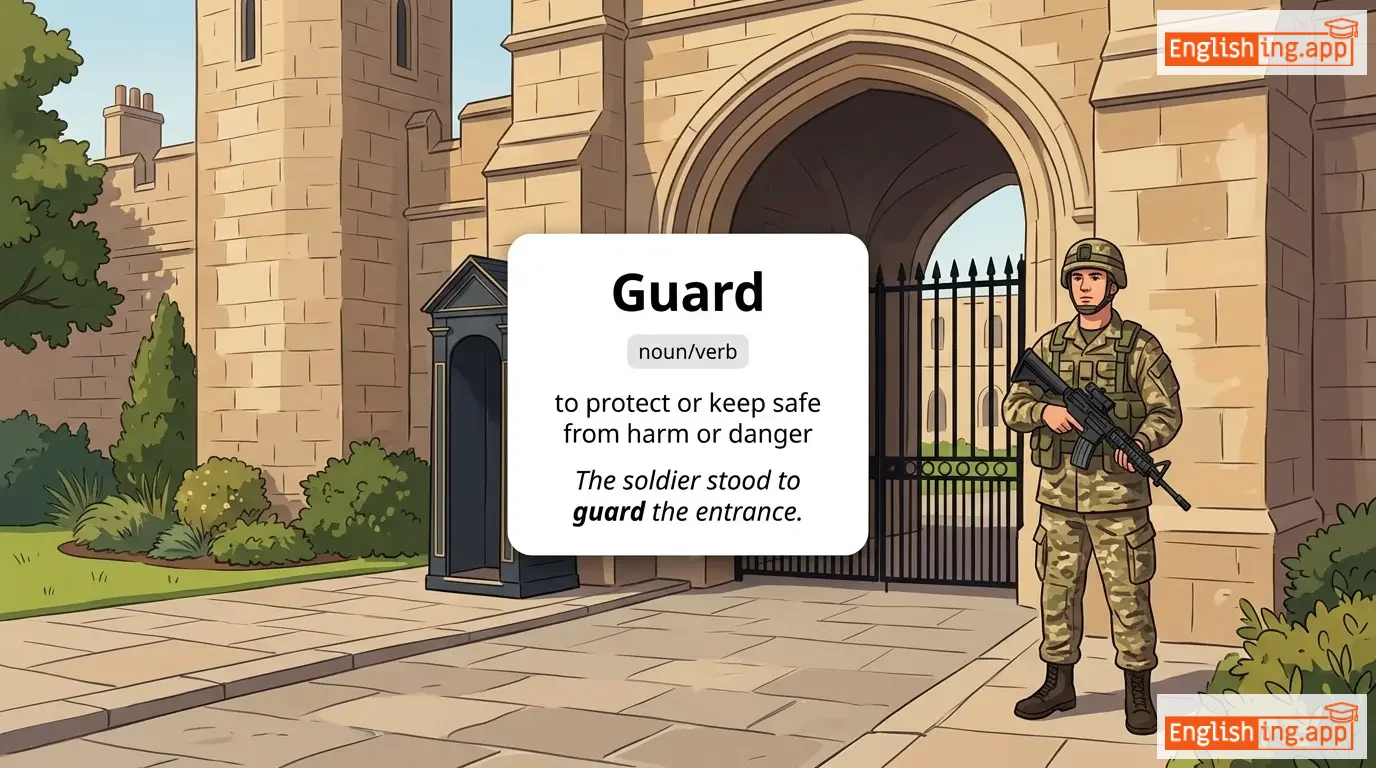
Guard definition card — visual illustration of the meaning
noun/verb
/ɡɑːrd/
रक्षक / सुरक्षा करना (rakshak / suraksha karna)

to protect or keep safe from harm or danger

"The soldier stood to guard the entrance."

"सैनिक ने प्रवेश द्वार की सुरक्षा करने के लिए खड़ा किया।" (Sainik ne pravesh dwar ki suraksha karne ke liye khada kiya.)
adjective
/ˈɡɑːrdɪd/
सतर्क (satark)

Cautious and careful in speech or action, often to avoid giving too much away.

"He gave a guarded reply to the journalist."

"उसने पत्रकार को एक सतर्क जवाब दिया।" (Usne patrakaar ko ek satark jawab diya.)
👨‍👩‍👧‍👦

Guardian (गार्डियन)

noun
/ˈɡɑːr.di.ən/
संरक्षक; अभिभावक (sarnrakshak; abhibhavak)

a defender, protector, or keeper; a person legally responsible for the care of someone unable to manage their own affairs

"After her parents died, her uncle became her legal guardian and took care of her."

"जब उसके माता-पिता की मृत्यु हो गई, तो उसके चाचा ने उसका कानूनी संरक्षक बनकर उसकी देखभाल की।" (jab uske mata-pita ki mrityu ho gayi, to uske chacha ne uska kanuni sarnrakshak bankar uski dekhabhal ki.)
noun
/ˈɡwɑːvə/
अमरूद (amrood)

a tropical fruit with sweet pink or white flesh and small seeds

"I love eating fresh guava from the tree in our garden."

"मुझे हमारे बगीचे से ताजे अमरूद खाना बहुत पसंद है।" (mujhe hamare bagiche se taje amrood khana bahut pasand hai)
noun
/ˈɡɜːrn.zi/
स्वेटर (swetar)

a knitted sweater; a type of woolen pullover

"He wore a warm guernsey during the cold winter evening."

"उसने ठंडी सर्दियों की शाम में एक गर्म स्वेटर पहना था।" (Usne thandi sardiyon ki shaam mein ek garm swetar pehna tha.)
noun
/ɡəˈrɪlə/
गुएरिला (guerila)

a member of a small independent group taking part in irregular fighting, typically against larger forces

"The guerrilla fighters used ambushes to attack enemy positions."

"गुएरिला लड़ाकों ने दुश्मन की स्थितियों पर हमला करने के लिए घात लगाई।" (Guerila ladako ne dushman ki sthitiyon par hamla karne ke liye ghat lagayi.)
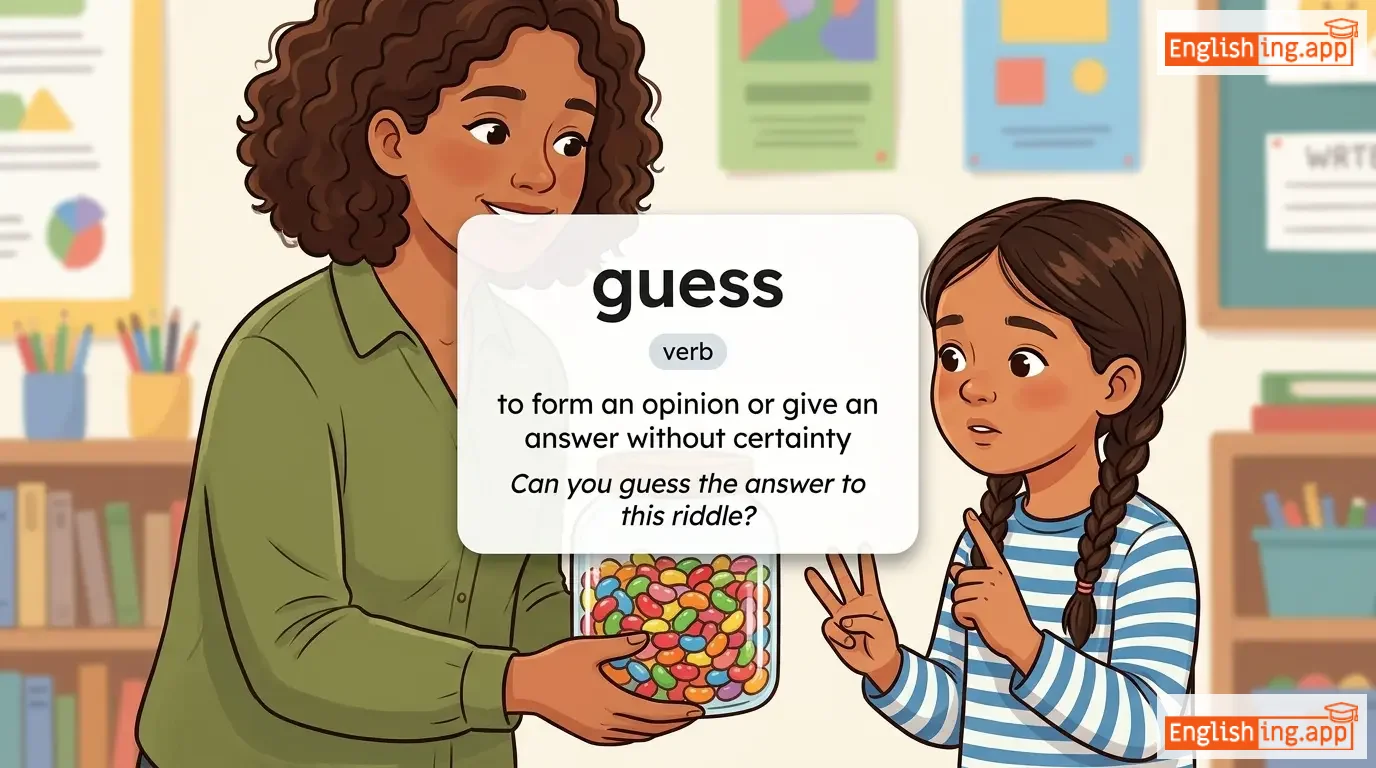
guess definition card — visual illustration of the meaning
verb
/ɡɛs/
अनुमान करना (anumaan karna)

to form an opinion or give an answer without certainty

"Can you guess the answer to this riddle?"

"क्या आप इस पहेली का उत्तर अनुमान लगा सकते हैं?" (Kya aap is paheli ka uttar anuman laga sakte hain?)
noun
/ɡɛst/
अतिथि (atithi)

a person invited to visit or stay in someone's home or attend an event

"We welcomed our guest with a warm smile."

"हमने अपने अतिथि का गर्म मुस्कान के साथ स्वागत किया।" (Hamne apne atithi ka garm muskan ke saath swagat kiya.)
noun/verb
/ɡəˈfɔː/
हंसी (hansi)

a loud and boisterous laugh

"The audience guffawed at the comedian’s joke."

"दर्शकों ने हास्य अभिनेता के मजाक पर जोर से हंसी मारी।" (Darshako ne haasya abhineta ke mazaak par zor se hansi maari.)
noun
/ˈɡaɪdəns/
मार्गदर्शन (margdarshan)

help or advice that is given to someone about what to do

"She sought her teacher’s guidance before making a decision."

"उसने निर्णय लेने से पहले अपने शिक्षक से मार्गदर्शन लिया।" (Usne nirnay lene se pehle apne shikshak se margdarshan liya.)
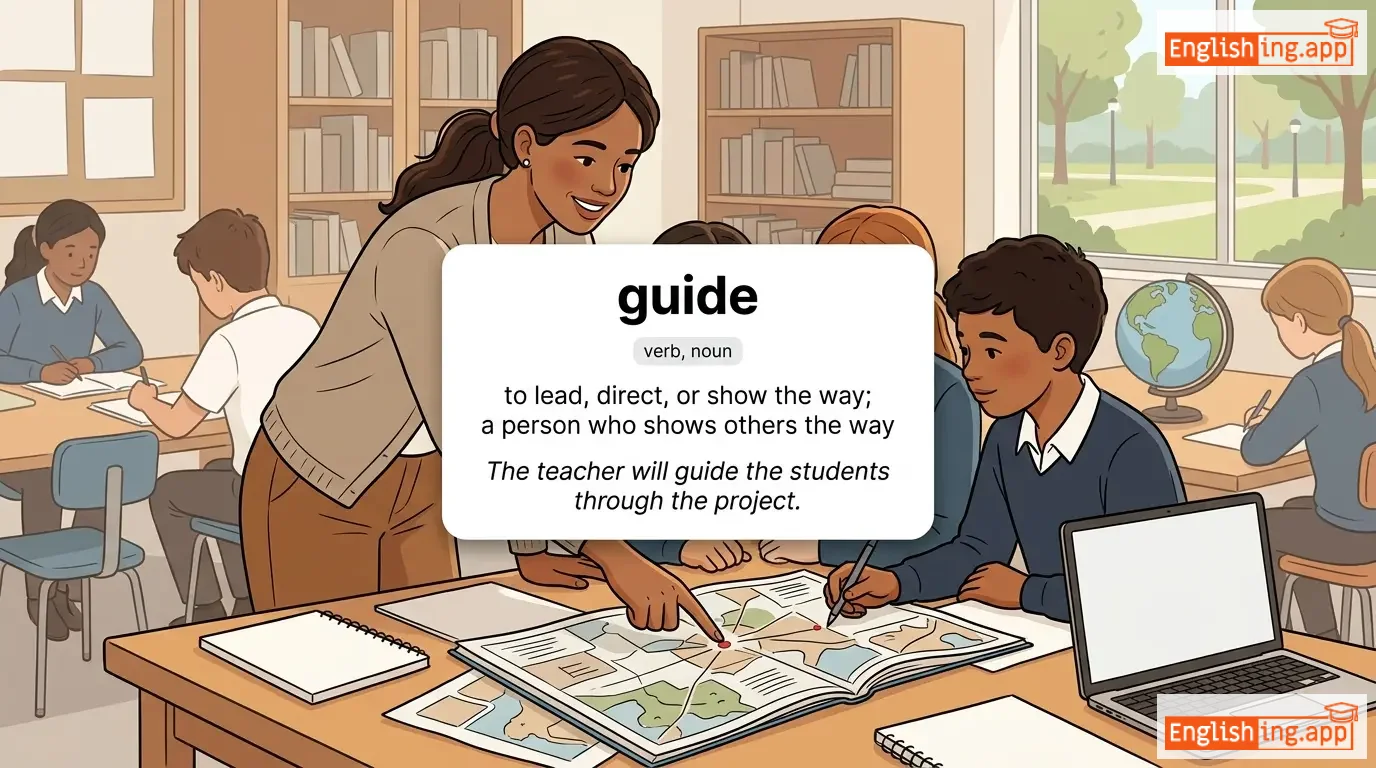
guide definition card — visual illustration of the meaning
verb, noun
/ɡaɪd/
खुशी (khushi)

to lead, direct, or show the way; a person who shows others the way

"The teacher will guide the students through the project."

"वह पुरस्कार मिलने पर अपनी खुशी नहीं छुपा सकी।" (Wah puraskar milne par apni khushi nahi chhupa sakee.)
noun
/ˈɡaɪd.laɪn/
निर्देशिका (nirdeshika)

a rule, instruction, or principle that provides direction

"The company issued new guidelines for employee safety."

"कंपनी ने कर्मचारी सुरक्षा के लिए नए निर्देश जारी किए।" (Company ne karmchari suraksha ke liye naye nirdesh jari kiye.)
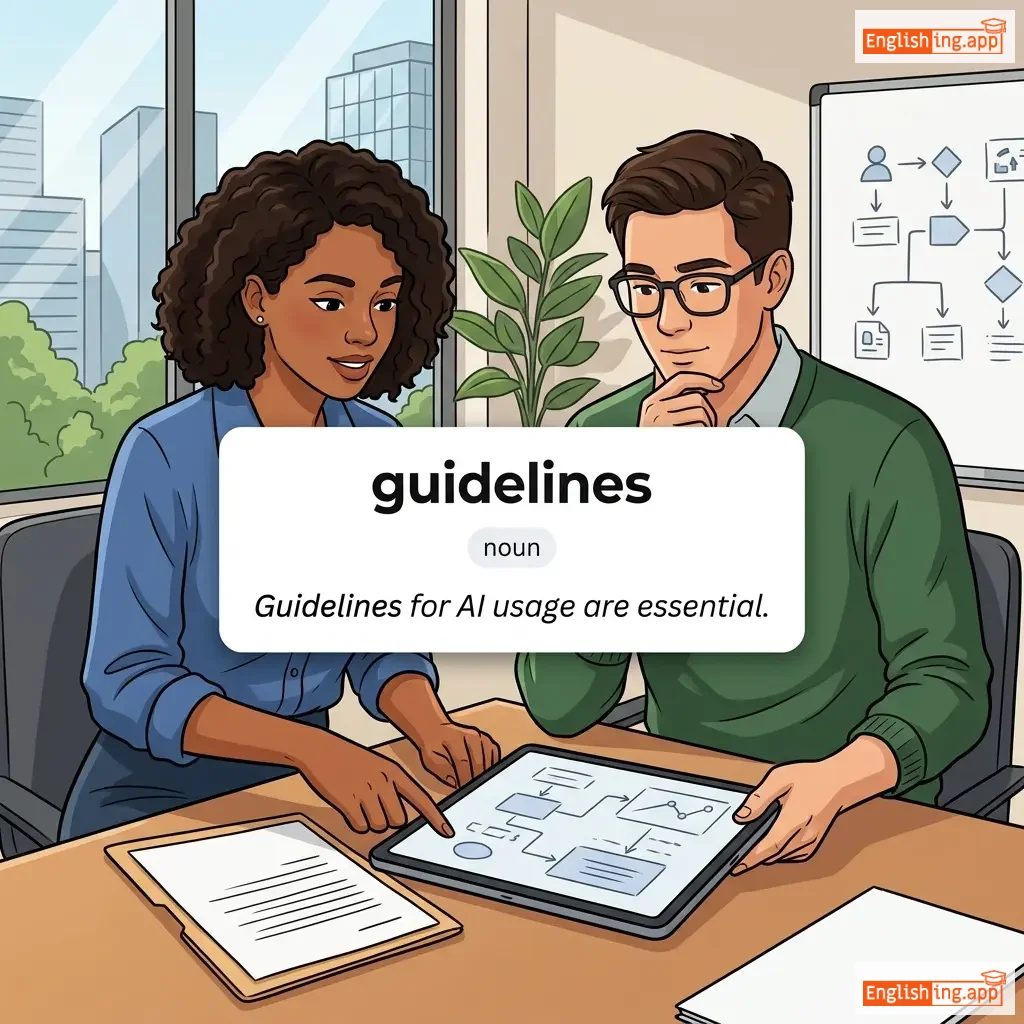
guidelines definition card — visual illustration of the meaning
noun
ˈɡaɪd.laɪnz
निर्देशिका (nirdesika)

Rules or instructions that are given by an official organization telling you how to do something

"Guidelines for AI usage are essential."

"एआई उपयोग के लिए गाइडलाइंस आवश्यक हैं।" (AI upyog ke liye guidelines aavashyak hain.)
noun
/ɡaɪl/
धूर्तता (dhurta)

Cleverness or cunning used to achieve a goal, often in a deceptive way

"He used guile to win the negotiation."

"उसने बातचीत जीतने के लिए धूर्तता का इस्तेमाल किया।" (Usne baatcheet jeetne ke liye dhurta ka istemal kiya.)
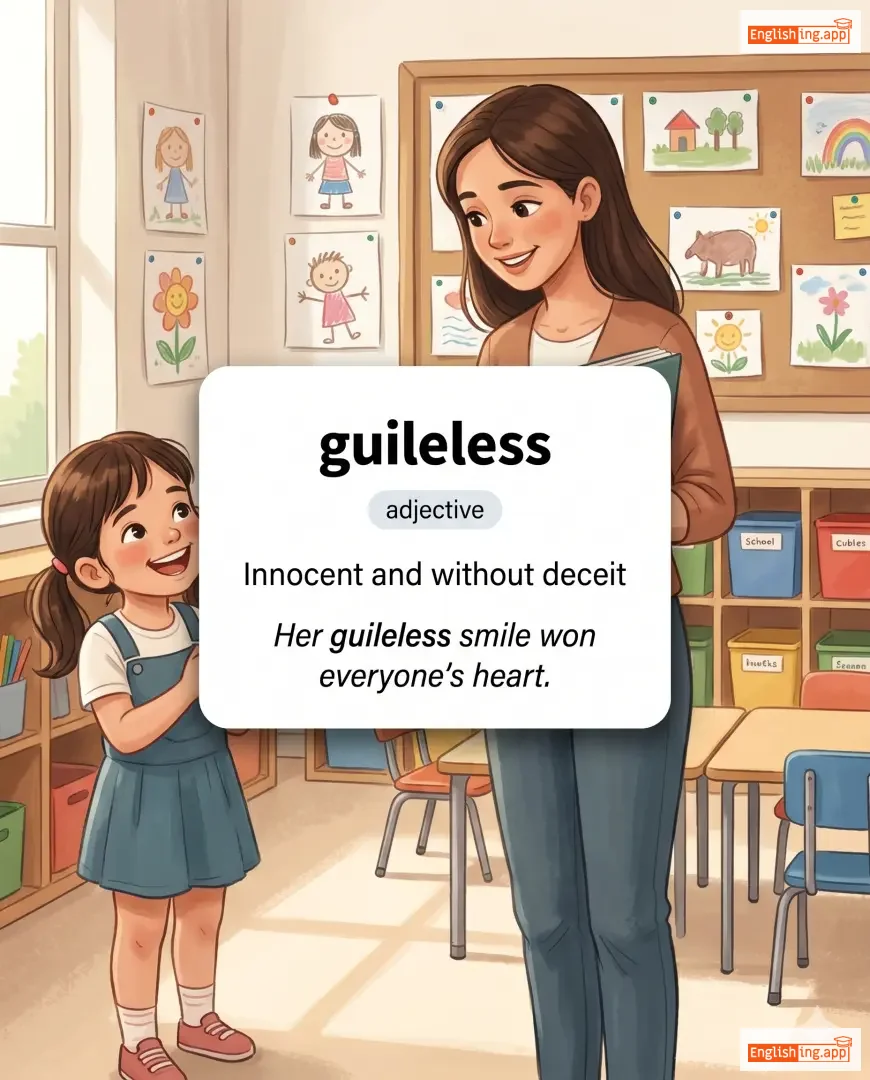
guileless definition card — visual illustration of the meaning
adjective
/ˈɡaɪlləs/
निर्दोष (nirdosh)

Innocent and without deceit

"Her guileless smile won everyone’s heart."

"उसकी निर्दोष मुस्कान ने सबका दिल जीत लिया।" (Uski nirdosh muskaan ne sabka dil jeet liya.)
noun
/ɡɪlt/
अपराधबोध (apraadhbodh)

A feeling of responsibility or remorse for an offense or wrongdoing

"She felt deep guilt after lying to her friend."

"उसने अपने दोस्त से झूठ बोलने के बाद गहरी अपराधबोध महसूस किया।" (Usne apne dost se jhooth bolne ke baad gehri apraadhbodh mehsoos kiya.)
adjective
/ˈɡɪl.ti/
दोषी (doshi)

responsible for a crime or wrongdoing; feeling shame or regret

"He felt guilty after lying to his friend."

"उसने अपने दोस्त से झूठ बोलने के बाद दोषी महसूस किया।" (Usne apne dost se jhooth bolne ke baad doshi mehsoos kiya.)
noun
/ˈɡɪni/
गिनी (पूर्व ब्रिटिश सोने की मुद्रा) (gini)

A former British gold coin; also refers to Guinea, a country in West Africa

"The antique coin was worth one guinea."

"प्राचीन सिक्का एक गिनी के बराबर था।" (Prachin sikka ek gini ke barabar tha.)
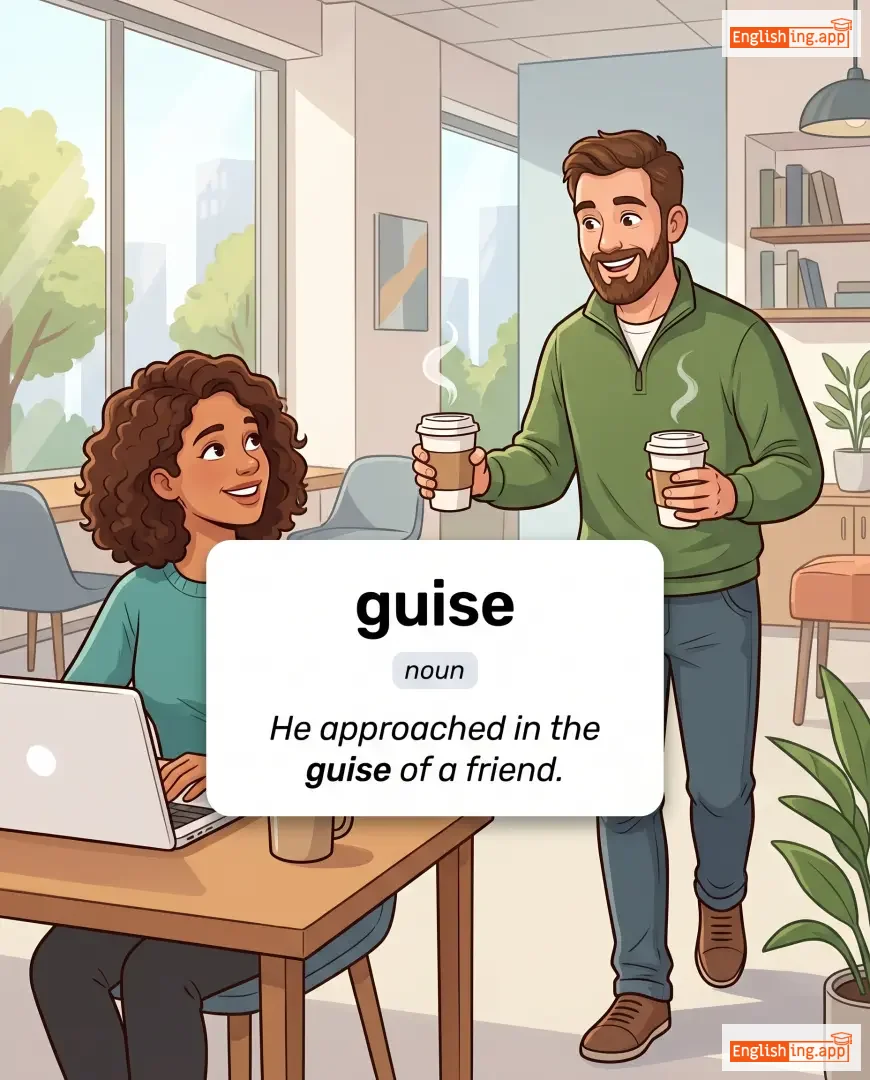
guise definition card — visual illustration of the meaning
noun
/ɡaɪz/
वेशभूषा (veshbhusha)

An external form, appearance, or manner of presentation, often hiding the true nature

"He approached in the guise of a friend."

"वह दोस्त के रूप में आया।" (Vah dost ke roop mein aaya.)