वोकैबुलरीज

इंग्लिश वोकैबुलरी डिस्कवर, लर्न और मास्टर करें

adjective
/fjuːˈɡeɪʃəs/
क्षणिक (kshanik)

Lasting only a short time; fleeting or ephemeral.

"Youth is beautiful but fugacious."

"युवावस्था सुंदर होती है लेकिन क्षणिक होती है।" (Yuvavastha sundar hoti hai lekin kshanik hoti hai.)
noun
/ˈfjuːdʒətɪv/
फरार (faraar)

A person who has escaped from captivity or is in hiding, usually to avoid arrest.

"The police captured the fugitive after a long chase."

"पुलिस ने लंबी दौड़ के बाद फरार को पकड़ लिया।" (police ne lambi daud ke baad faraar ko pakad liya.)
noun
/ˈfʊl.krəm/
केंद्रबिंदु (kendrabindu)

The point or support on which a lever pivots; a central or essential point of activity or support.

"The teacher became the fulcrum of change in the school."

"शिक्षक स्कूल में बदलाव का केंद्रबिंदु बन गए।" (Shikshak school mein badlav ka kendrabindu ban gaye.)
verb
/fʊlˈfɪl/
पूरा करना (poora karna)

to complete or achieve something that was expected or promised; to satisfy a requirement or desire

"She worked hard to fulfil her dream of becoming a doctor."

"डॉक्टर बनने का सपना पूरा करने के लिए उसने कड़ी मेहनत की।" (doktar banne ka sapna poora karne ke liye usne kadi mehnat ki)
verb
/fʊlˈfɪl/
पूरा करना (poora karna)

to complete or accomplish something, especially a task or promise

"He worked hard to fulfill his dreams."

"उसने अपने सपनों को पूरा करने के लिए कठिन मेहनत की।" (Usne apne sapno ko poora karne ke liye kathin mehnat ki.)
adjective
/ˈfʊl.dʒənt/
चमकदार (chamakdaar)

Shining brightly; dazzling.

"The fulgent stars lit up the night sky."

"चमकदार तारे रात के आसमान को रोशन कर रहे थे।" (Chamakdaar tare raat ke aasman ko roshan kar rahe the.)
adjective
/fʊl/
पूर्ण (purn)

Containing as much or as many as possible; complete.

"The glass is full of water."

"गिलास पानी से भरपूर है।" (Gilaas paani se bharpoor hai.)
adjective
/ˌfʊl ˈbɒd.id/
गहरा स्वादयुक्त (gahra swadyukt)

Having a strong, rich, and robust quality, especially of wine, coffee, or voice.

"He prefers a full-bodied red wine with his dinner."

"वह अपनी रात के खाने के साथ एक गहरे स्वाद वाली लाल शराब पसंद करता है।" (Vah apni raat ke khane ke saath ek gahre swad wali lal sharab pasand karta hai.)
adjective, adverb
/ˈfʊl taɪm/
पूर्णकालिक (purnokalik)

working or studying for the whole standard period of time

"She works full-time as a teacher."

"वह एक शिक्षक के रूप में पूर्णकालिक काम करती है।" (Wah ek shikshak ke roop mein purnokalik kaam karti hai.)
adverb
/ˈfʊli/
पूरी तरह से (poori tarah se)

completely or entirely; to the fullest extent

"She is fully aware of the risks."

"वह जोखिमों के बारे में पूरी तरह से जागरूक है।" (Woh jokhimon ke baare mein poori tarah se jaagruk hai.)
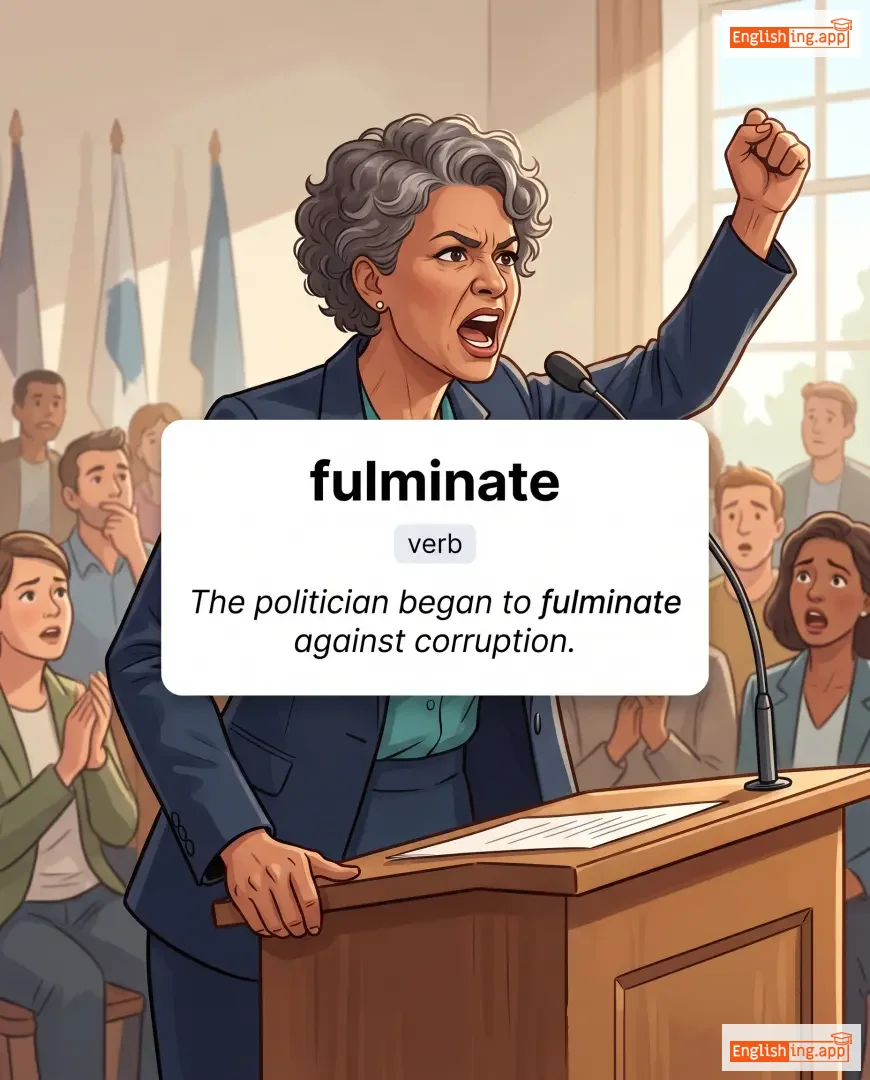
fulminate definition card — visual illustration of the meaning
verb
/ˈfʊl.mɪ.neɪt/
उच्च स्वर में विरोध करना (uchch swar mein virodh karna)

To express strong protest or criticism loudly and forcefully; to explode violently.

"The politician began to fulminate against corruption."

"राजनीतिज्ञ ने भ्रष्टाचार के खिलाफ विरोध करना शुरू किया।" (Rajneetijee ne bhrashtachar ke khilaf virodh karna shuru kiya.)
fulsome definition card — visual illustration of the meaning
adjective
/ˈfʊl.səm/
अत्यधिक प्रशंसा (atyadhik prashansa)

Excessively flattering or insincere; abundant or generous in amount.

"He offered fulsome praise to his boss."

"उसने अपने बॉस को अत्यधिक प्रशंसा दी।" (Usne apne boss ko atyadhik prashansa di.)
verb
/ˈfʌmbəl/
गड़बड़ करना (gadbadh karna)

to handle something clumsily or to make mistakes while doing something

"He fumbled with the keys and dropped them on the floor."

"वह चाबियों के साथ उलझ गया और उन्हें फर्श पर गिरा दिया।" (Wah chaabiyon ke saath uljha gaya aur unhein farsh par gira diya.)
verb
/ˈfjuːmɪˌɡeɪt/
धुँआ से शुद्ध करना (dhua se shuddh karna)

to disinfect or purify an area by using chemical fumes

"They fumigated the warehouse to kill the insects."

"उन्होंने कीड़ों को मारने के लिए गोदाम को फ्युमिगेट किया।" (Unhone keedon ko maarne ke liye godaam ko fumigate kiya.)
fumigation definition card — visual illustration of the meaning
noun
ˌfjuːmɪˈɡeɪʃən
धुएं द्वारा कीटाणु नाशक लागू करना (dhue dwara keetanu nashak lagu karna)

The practice of disinfecting or purifying an area using gas or smoke.

"Fumigation is an effective method to control pest infestations."

"फ्यूमिगेशन एक प्रभावी तरीका है कीटों के हमलों को नियंत्रित करने के लिए।" (Fumigation ek prabhavi tareeka hai keeton ke hamlon ko niyantrit karne ke liye.)
noun
/fʌn/
मज़ा (maza)

enjoyment, amusement, or light-hearted pleasure

"We had a lot of fun at the party."

"हमने पार्टी में बहुत मज़ा किया।" (Hamne party mein bahut maza kiya.)
noun
/ˈfʌŋkʃən/
कार्य (karya)

An activity or purpose natural to or intended for a person or thing.

"The main function of the heart is to pump blood."

"दिल का मुख्य कार्य रक्त पंप करना है।" (Dil ka mukhya karya rakt pump karna hai.)
adjective
/ˈfʌŋkʃənl/
कार्यात्मक (karyatmak)

designed to be practical and useful, rather than just decorative

"The design of the chair is simple but highly functional."

"कुर्सी का डिज़ाइन साधारण है लेकिन अत्यधिक कार्यात्मक है।" (Kursi ka dizain saadhaaran hai lekin atyadhik karyatmak hai.)
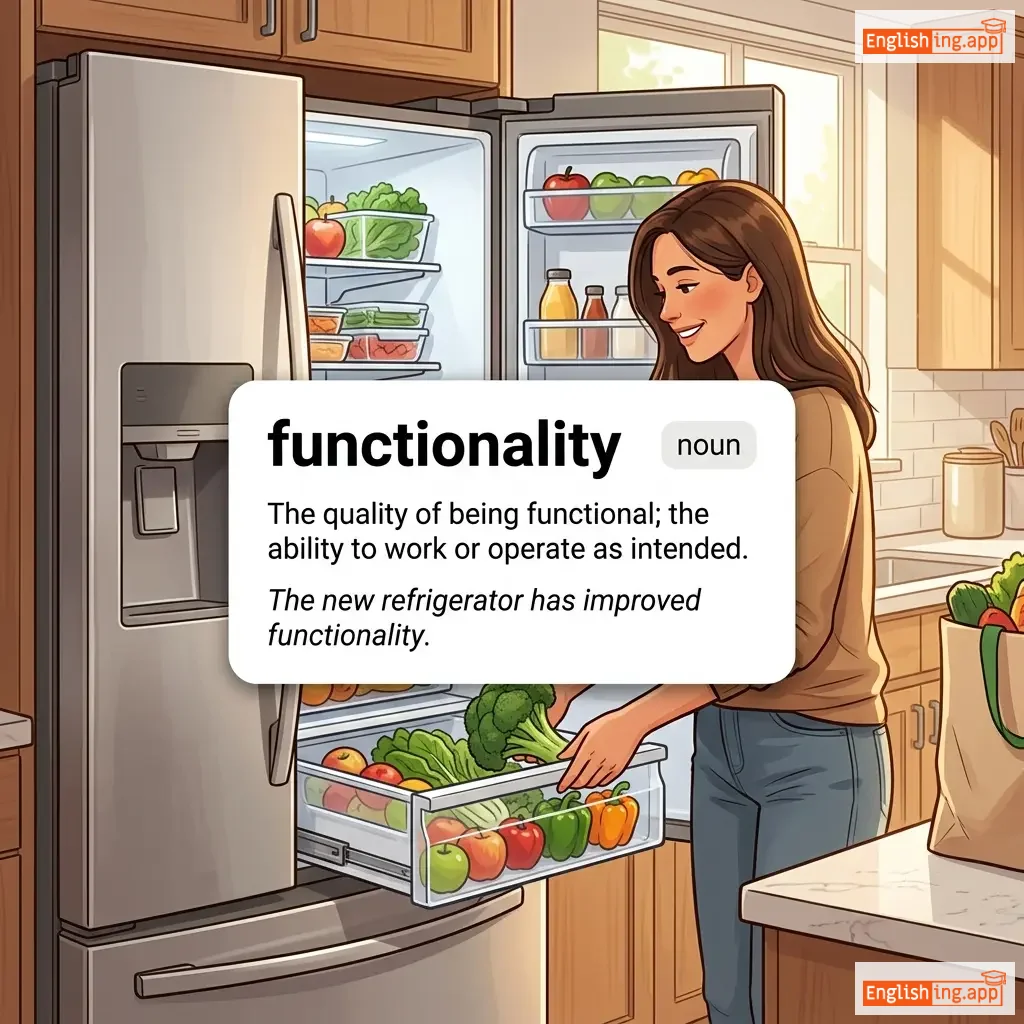
functionality definition card — visual illustration of the meaning
noun
ˌfʌŋk.ʃəˈnæl.ə.ti
कार्यात्मकता (karyatmakta)

The quality of being functional; the ability to work or operate as intended.

"The new refrigerator has improved functionality."

"नया फ्रिज कार्यात्मकता में सुधार हुआ है।" (Naya frij karyatmakta mein sudhaar hua hai.)
noun
/ˈfʌŋkʃəˌnɛri/
कर्मचारी (karmachari)

a person who has official duties in an organization, especially one with little authority

"The minor functionary was responsible for filing reports."

"निम्न श्रेणी का कर्मचारी रिपोर्ट दाखिल करने के लिए जिम्मेदार था।" (Nimn shreni ka karmachari report daakhil karne ke liye zimmedaar tha.)
fund definition card — visual illustration of the meaning
noun/verb
/fʌnd/
कोष (kosh)

a sum of money saved or made available for a particular purpose; to provide money for

"The government created a fund for education."

"सरकार ने शिक्षा के लिए एक कोष बनाया।" (Sarkar ne shiksha ke liye ek kosh banaya.)
adjective
/ˌfʌndəˈmɛntl/
मौलिक (moulik)

forming a necessary base or core; of central importance

"Honesty is a fundamental principle of good leadership."

"ईमानदारी अच्छे नेतृत्व का एक मौलिक सिद्धांत है।" (Imaandari achhe netritva ka ek moulik siddhant hai.)
adverb
/ˌfʌndəˈmɛntəli/
मौलिक रूप से (maulik roop se)

in a basic and important way; at the core

"The two theories are fundamentally different."

"दो सिद्धांत मौलिक रूप से अलग हैं।" (Do siddhant maulik roop se alag hain.)
noun
/ˈfʌndɪŋ/
वित्तपोषण (vittaposhann)

financial support for a project or organization

"The startup is seeking funding from investors."

"स्टार्टअप निवेशकों से वित्तपोषण प्राप्त करने की कोशिश कर रहा है।" (Startup niveshakon se vittaposhann prapt karne ki koshish kar raha hai.)
noun
/ˈfʌndˌreɪzɪŋ/
धन उगाहना (dhan ugaana)

the process of collecting money for a cause or project

"The organization is organizing a fundraising event."

"संगठन एक धन उगाहने का आयोजन कर रहा है।" (Sangathan ek dhan ugaane ka aayojan kar raha hai.)
noun
/ˈfjuːnərəl/
अंत्येष्टि (antyeshti)

a ceremony held to honor and bury or cremate someone who has died

"The family attended the funeral of their grandfather."

"परिवार ने अपने दादा की अंत्येष्टि में भाग लिया।" (Parivaar ne apne dada ki antyeshti mein bhag liya.)
adjective
/fjuːˈnɪəriəl/
शोकपूर्ण (shokpoorn)

having the mournful, somber character of a funeral

"The room was filled with a funereal silence after the announcement."

"घोषणा के बाद कमरे में शोकपूर्ण चुप्पी छा गई।" (Ghoshna ke baad kamre mein shokpoorn chuppi chha gayi.)
noun (plural of fungus)
/ˈfʌndʒaɪ/
कवक (kavak)

a group of spore-producing organisms such as mushrooms, molds, and yeasts

"Fungi play an important role in breaking down organic matter in nature."

"फंजी प्राकृतिक रूप से जैविक पदार्थों को तोड़ने में महत्वपूर्ण भूमिका निभाते हैं।" (Fungi prakritik roop se jaivik padarthon ko todne mein mahatvapurn bhumika nibhate hain.)
adjective
/ˈfʌndʒəbl/
परिवर्तनीय (parivartaniy)

interchangeable; able to replace or be replaced by another identical item

"In finance, money is considered a fungible asset."

"वित्त में, पैसा एक परिवर्तनीय संपत्ति मानी जाती है।" (Vitt mein, paisa ek parivartaniy sampatti maani jaati hai.)
adjective
/ˈfʌŋɡəs/
फंगस जैसा (fungus jaisa)

relating to or resembling a fungus

"The damp basement had a fungous smell."

"गीली बेसमेंट में फंगस जैसा गंध था।" (Geeli basement mein fungus jaisa gandh tha.)
noun
/ˈfʌŋɡəs/
फंगस (fungus)

a spore-producing organism feeding on organic matter, including molds, yeast, and mushrooms

"A strange fungus was growing on the old tree."

"एक अजीब फंगस पुराने पेड़ पर उग रहा था।" (Ek ajeeb fungus purane ped par ug raha tha.)
adjective
/ˈfʌni/
मजेदार (majedar)

Causing laughter or amusement; humorous.

"The comedian told a very funny joke."

"कॉमेडियन ने एक बहुत ही मजेदार जोक सुनाया।" (Comedian ne ek bahut hi mazedar joke sunaya.)
noun
/fɜːr/
रुई (rui)

the thick hair covering the skin of certain animals

"The cat’s fur is soft and shiny."

"बिल्ली का फर मुलायम और चमकदार है।" (Billi ka far mulayam aur chamakdar hai.)
verb
/ˈfɜːrbɪʃ/
धोना (dhona)

to polish, renovate, or give a fresh look to something

"The workers furbished the old sword until it gleamed like new."

"कर्मचारियों ने पुराने तलवार को तब तक फरबिश किया जब तक वह नए जैसा चमकने नहीं लगा।" (karmachariyon ne purane talwar ko tab tak farbish kiya jab tak vah naye jaisa chamakne nahi laga.)
adjective
/ˈfjʊəriəs/
गुस्से में (gusse mein)

Extremely angry.

"She was furious when she heard the bad news."

"वह बुरी खबर सुनकर गुस्से में थी।" (Wah buri khabar sunkar gusse mein thi.)
noun
/ˈfɜːrlɔːŋ/
दूरी की इकाई (220 गज या लगभग 201 मीटर) (doori ki ikai (220 gaj ya lagbhag 201 meter))

a unit of distance equal to 220 yards or about 201 meters

"The horse ran a furlong before slowing down."

"घोड़ा एक फर्लॉन्ग दौड़ने के बाद धीमा हो गया।" (ghoda ek furlong daudne ke baad dheema ho gaya.)
noun, verb
/ˈfɜːrloʊ/
अस्थायी अवकाश (asthaayi avkash)

temporary leave of absence from work, especially that granted to an employee or soldier

"Many workers were placed on furlough during the crisis."

"कई श्रमिकों को संकट के दौरान फर्लो पर रखा गया।" (kai shramikon ko sankat ke dauran furlow par rakha gaya.)
noun
/ˈfɜːrneɪs/
भट्ठी (bhathhi)

an enclosed structure in which heat is produced for a building or for melting metal

"The factory's furnace melted the metal quickly."

"कारखाने की भट्ठी ने धातु को जल्दी पिघला दिया।" (karkhane ki bhathhi ne dhaatu ko jaldi pighla diya.)
verb
/ˈfɜːrnɪʃ/
सज्जित करना, प्रदान करना (sajjit karna, pradan karna)

to provide or supply with furniture or equipment

"They furnished the new house with modern furniture."

"उन्होंने नए घर को आधुनिक फर्नीचर से सजाया।" (unhone naye ghar ko aadhunik furniture se sajaya.)
noun
/ˈfɜːrnɪtʃər/
फर्नीचर (furniture)

Objects such as chairs, tables, beds, or cupboards used to make a room suitable for living or working.

"The living room was filled with beautiful wooden furniture."

"लिविंग रूम सुंदर लकड़ी के फर्नीचर से भरा हुआ था।" (Living room sundar lakdi ke furniture se bhara hua tha.)
noun
/ˈfjʊərɔːr/
उद्वेलन (udvelan)

An outbreak of public anger or excitement.

"The politician's remarks created a furor in the media."

"राजनेता की टिप्पणियों ने मीडिया में एक हलचल पैदा कर दी।" (Rajneeta ki tippaniyon ne media mein ek halchal paida kar di.)
noun
/ˈfʌriər/
मोहरेवाला (mohrewala)

A person who prepares or deals in furs.

"The furrier displayed fine coats in his shop."

"मोहरेवाला अपनी दुकान में बेहतरीन कोट्स दिखा रहा था।" (Mohrewala apni dukaan mein behateerein kots dikha raha tha.)
noun/verb
/ˈfʌrəʊ/
खांचा (khacha)

A long narrow trench made in the ground by a plow; to make wrinkles or grooves.

"The farmer plowed furrows in the field."

"किसान ने खेत में खांचे बनाये।" (Kisan ne khet mein khanche banaye.)
adverb/adjective/verb
/ˈfɜːrðər/
आगे बढ़ाना (aage badhana)

At a greater distance; to advance or promote something.

"She studied hard to further her career."

"वह अपनी करियर को आगे बढ़ाने के लिए कड़ी मेहनत करती थी।" (Wah apni career ko aage badhane ke liye kadi mehnat karti thi.)
noun
/ˈfɜːrðərəns/
प्रगति (pragati)

The advancement or promotion of something.

"The new policy was introduced in furtherance of social justice."

"नई नीति सामाजिक न्याय की प्रगति के लिए लागू की गई थी।" (Nayi niti samajik nyay ki pragati ke liye lagu ki gayi thi.)
adverb
/ˌfɜːrðərˈmɔːr/
इसके अलावा (iske alawa)

Used to introduce an additional point or idea; in addition.

"The plan is simple and, furthermore, it is affordable."

"योजना सरल है और इसके अलावा, यह किफायती है।" (Yojana saral hai aur iske alawa, yah kifayati hai.)
adjective
/ˈfɜːrtɪv/
गुप्त (gupt)

Attempting to avoid notice or attention, typically because of guilt or a belief that discovery would lead to trouble.

"He cast a furtive glance at the door before leaving."

"उसने दरवाजे की ओर एक गुप्त नज़र डाली, फिर बाहर निकलते हुए।" (Usne darwaze ki or ek gupt nazar dali, phir baahar nikalte hue.)
noun
/ˈfjʊr.ʌŋ.kəl/
फोड़ा; गाँठ; (phoda, ganth)

a painful pus-filled bump under the skin caused by infected, inflamed hair follicles

"The doctor prescribed antibiotics to treat the painful furuncle on his neck."

"डॉक्टर ने उसके गले में दर्दनाक फ्यूरंकल का इलाज करने के लिए एंटीबायोटिक्स प्रिस्क्राइब किए।" (doktar ne uske gale mein dardnaak fyurankal ka ilaj karne ke liye antibiotics priskraib kiye.)
noun
/ˈfjʊri/
क्रोध (krodh)

Wild or violent anger; extreme rage.

"She was trembling with fury after the insult."

"वह अपमान के बाद क्रोध से काँप रही थी।" (Vah apmaan ke baad krodh se kaamp rahi thi.)
verb
/fjuːz/
मिलाना (milaana)

To join or blend two or more things together into one.

"The two metals fused under high heat."

"दो धातु उच्च तापमान में मिल गई।" (do dhaatu uchch taapmaan mein mil gayi.)