वोकैबुलरीज

इंग्लिश वोकैबुलरी डिस्कवर, लर्न और मास्टर करें

noun
/ɪkˌspɒstjʊˈleɪʃən/
विरोध (virodh)

the act of expressing protest or disagreement

"His expostulation against the unfair rules was ignored."

"उसका विरोध अनौचित्यपूर्ण नियमों के खिलाफ अनदेखा किया गया था।" (Uska virodh anauchityapurn niyamon ke khilaf andekha kiya gaya tha.)
noun
/ɪkˈspəʊʒər/
उन्मुक्तता (unmuktata)

the state of being exposed to contact with something, especially harmful

"Prolonged exposure to the sun can damage your skin."

"सूरज के संपर्क में अधिक समय तक रहना आपकी त्वचा को नुकसान पहुँचा सकता है।" (Suraj ke sampark mein adhik samay tak rehna aapki twacha ko nuksan pahunchaa sakta hai.)
verb
/ɪkˈspaʊnd/
विस्तृत रूप से समझाना (vistṛt rūp se samjhānā)

to present and explain in detail

"The professor expounded the theory in simple terms."

"प्रोफेसर ने सरल शब्दों में सिद्धांत का विस्तार से व्याख्या किया।" (Professor ne saral shabdon mein siddhant ka vistaar se vyakhya kiya.)
verb
/ɪkˈsprɛs/
व्यक्त करना (vyakt karna)

to convey a thought, feeling, or idea in words, actions, or other forms

"She expressed her gratitude with a warm smile."

"वह अपनी कृतज्ञता एक गर्म मुस्कान के साथ व्यक्त करती थी।" (Wah apni krutagnata ek garm muskaan ke saath vyakt karti thi.)
noun
/ɪkˈspres treɪn/
एक्सप्रेस ट्रेन (express train)

a fast train that travels between major stations with few or no intermediate stops

"The express train reached the destination in half the usual time."

"एक्सप्रेस ट्रेन ने सामान्य समय के आधे समय में गंतव्य तक पहुँचने में सफलता पाई।" (express train ne samanya samay ke aadhe samay mein gantavya tak pahuchne mein safalta payi)
noun
/ɪkˈsprɛʃən/
अभिव्यक्ति (abhivyakti)

the act of putting thoughts or feelings into words, actions, or facial gestures

"His facial expression showed surprise."

"उसके चेहरे की अभिव्यक्ति में आश्चर्य था।" (Uske chehre ki abhivyakti mein aashcharya tha.)
adjective
/ɪkˈsprɛsɪv/
व्यक्तिवादी (vyaktivaadi)

Effectively conveying thought or feeling.

"Her eyes were so expressive that no words were needed."

"उसकी आँखें इतनी व्यक्तिवादी थीं कि शब्दों की आवश्यकता नहीं थी।" (Uski aankhen itni vyaktivaadi thin ki shabdon ki avashyakta nahi thi.)
verb
/ɛksˈproʊprieɪt/
अधिग्रहण करना (adhigrahan karna)

To take property from its owner, especially by authority or for public use.

"The government decided to expropriate the land for a new highway."

"सरकार ने एक नई राजमार्ग के लिए ज़मीन अधिग्रहण करने का फ़ैसला किया।" (Sarkar ne ek nai rajmarg ke liye zameen adhigrahan karne ka faisla kiya.)
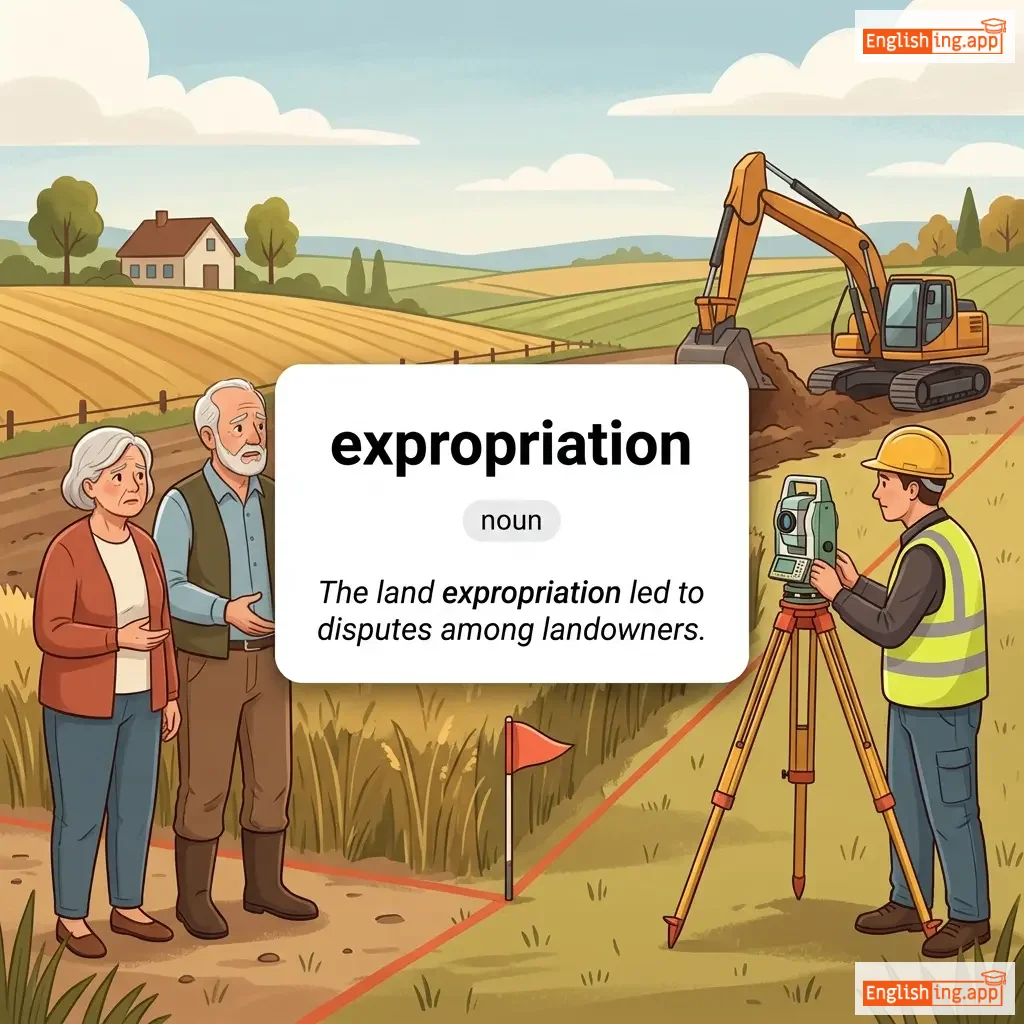
expropriation definition card — visual illustration of the meaning
noun
/ɪkˌsprəʊ.priˈeɪ.ʃən/
संपत्ति अधिग्रहण (sampatti adhigrahan)

The act of government taking private property, also known as confiscation, nationalization, or seizure.

"The land expropriation led to disputes among landowners."

"जमीन अधिग्रहण के कारण भूमि मालिकों के बीच विवाद उत्पन्न हुआ।" (Jameen adhigrahan ke karan bhoomi malikoon ke beech vivaad utpann hua.)
noun
/ɪkˈspʌlʃən/
निकाला (nikala)

The act of forcing someone to leave a place, especially a school or country.

"His constant misbehavior led to his expulsion from school."

"उसके लगातार बुरे व्यवहार के कारण उसे स्कूल से निकाला गया।" (Uske lagatar bure vyavhaar ke kaaran use school se nikala gaya.)
verb
/ɪkˈspʌndʒ/
मिटाना (mitana)

To erase or remove completely, often something unwanted.

"He managed to expunge the embarrassing memory from his mind."

"उसने अपनी शर्मनाक याद को अपने मन से हटा दिया।" (Usne apni sharmnak yaad ko apne mann se hata diya.)
verb
/ˈekspərˌɡeɪt/
अश्लील अंश हटाना (ashleel ansh hatana)

To remove offensive or objectionable parts from a text or speech.

"The publisher decided to expurgate the novel before reprinting it."

"प्रकाशक ने पुनर्मुद्रण से पहले उपन्यास को संशोधित करने का निर्णय लिया।" (prakashak ne punarmudran se pahle upanyas ko sanshodhit karne ka nirnay liya)
exquisite definition card — visual illustration of the meaning
adjective
/ɪkˈskwɪzɪt/
अत्यधिक सुंदर (atyadhik sundar)

Extremely beautiful, delicate, or finely made.

"The bride wore an exquisite gown made of silk."

"दुल्हन ने रेशमी एक अत्यधिक सुंदर गाउन पहना था।" (Dulhan ne reshmi ek atyadhik sundar gaun pehna tha.)
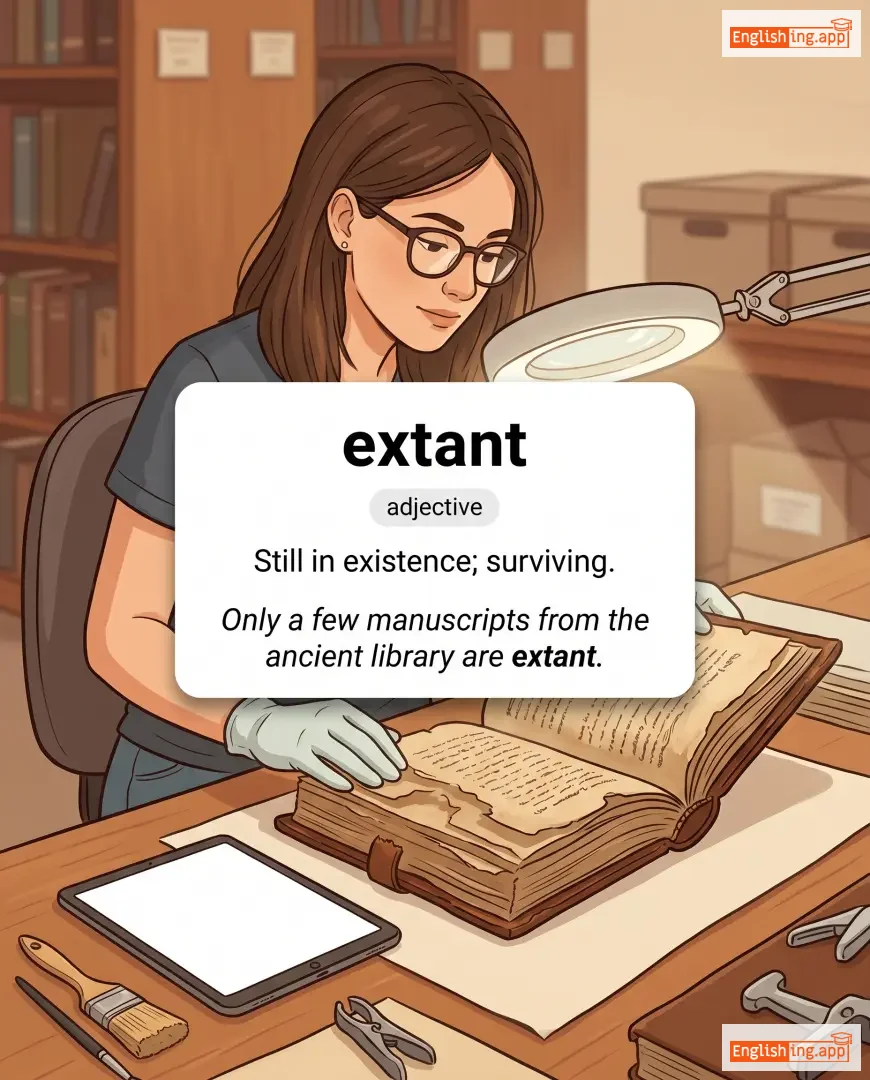
extant definition card — visual illustration of the meaning
adjective
/ˈɛkstənt/
अस्तित्व में (astitva mein)

Still in existence; surviving.

"Only a few manuscripts from the ancient library are extant."

"केवल प्राचीन पुस्तकालय से कुछ ही पांडुलिपियाँ अस्तित्व में हैं।" (Keval pracheen pustakalay se kuch hi pandulipiyan astitva mein hain.)
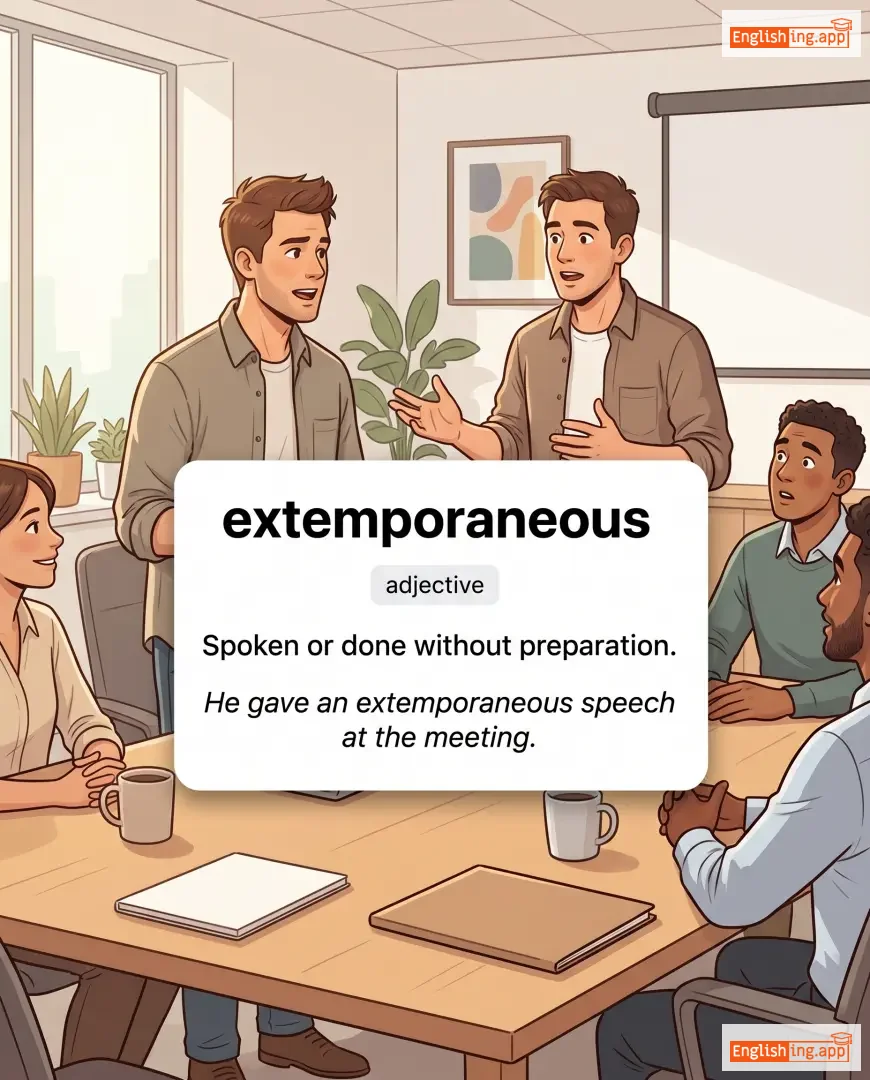
extemporaneous definition card — visual illustration of the meaning
adjective
/ɪkˌstɛmpəˈreɪniəs/
अपर्याप्त तैयारी के बिना किया गया (aparyapt tayari ke bina kiya gaya)

Spoken or done without preparation.

"He gave an extemporaneous speech at the meeting."

"उसने बैठक में बिना तैयारी के एक भाषण दिया।" (Usne baithak mein bina tayari ke ek bhashan diya.)
adverb
/ɪkˈstɛmpəri/
बिना तैयारी के (bina taiyari ke)

Spoken or done without preparation; impromptu.

"She recited the poem extempore in class."

"उसने कक्षा में बिना तैयारी के कविता सुनाई।" (Usne kaksha mein bina taiyari ke kavita sunai.)
verb
/ɪkˈstɛmpəraɪz/
बिना तैयारी के बोलना (bina taiyari ke bolna)

To speak or perform without preparation; improvise.

"The actor had to extemporize when he forgot his lines."

"अभिनेता को जब अपनी लाइन्स भूल गईं तो उसे बिना तैयारी के अभिनय करना पड़ा।" (Abhinetā ko jab apnī līnsa bhool ga'īn to use binā taiyārī ke abhinay karnā paṛā.)
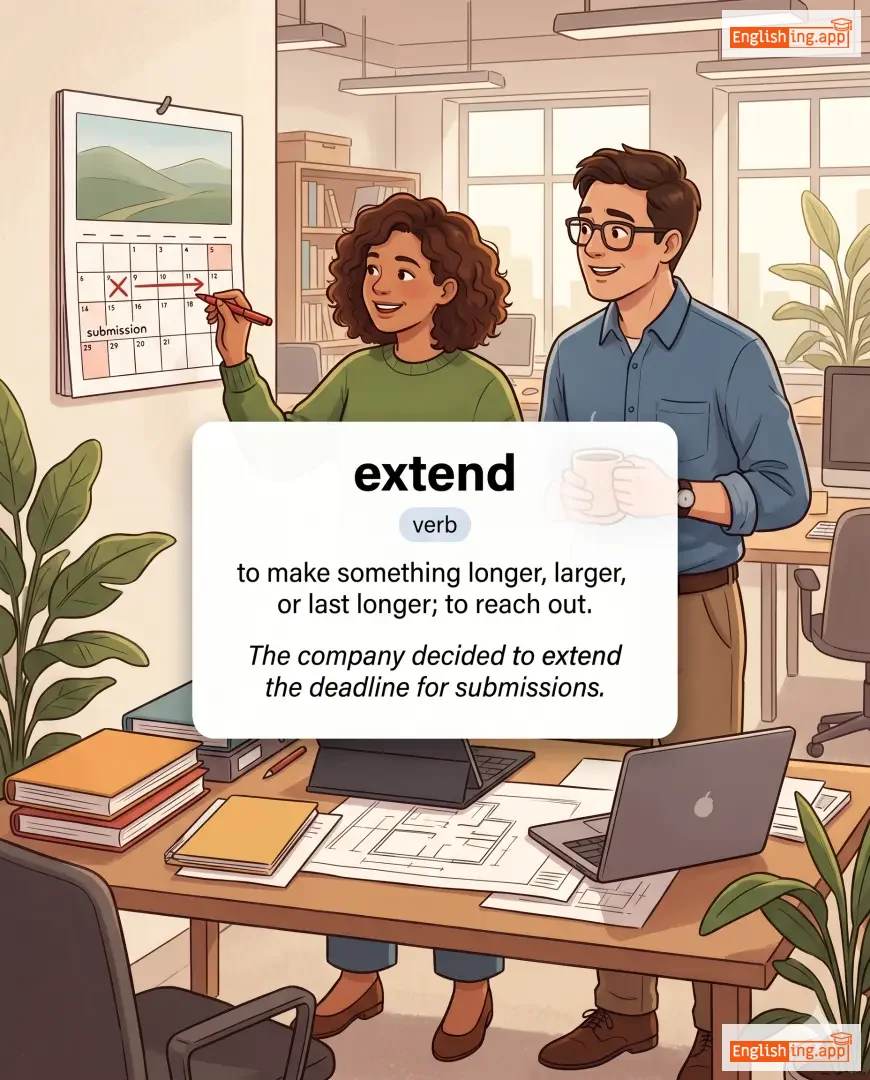
extend definition card — visual illustration of the meaning
verb
/ɪkˈstɛnd/
विस्तार करना (vistar karna)

to make something longer, larger, or last longer; to reach out.

"The company decided to extend the deadline for submissions."

"कंपनी ने सबमिशन के लिए समयसीमा बढ़ाने का निर्णय लिया।" (Company ne submission ke liye samayseema badhane ka nirnay liya.)
adjective
/ɪkˈstendɪd/
विस्तारित (vistarit)

longer or larger than usual; continuing for a longer time

"They took an extended vacation in Europe this summer."

"उन्होंने इस गर्मी में यूरोप में एक विस्तारित छुट्टी ली।" (Unhone is garmi mein Europe mein ek vistarit chhutti li.)
adjective
/ɪkˈstɛnsəbl/
विस्तार योग्य (vistaar yogya)

able to be extended; capable of expansion.

"The software is designed to be extensible with new features."

"सॉफ़्टवेयर को नए फीचर्स के साथ विस्तार योग्य बनाने के लिए डिज़ाइन किया गया है।" (Software ko naye features ke saath vistaar yogya banane ke liye design kiya gaya hai.)
noun
/ɪkˈstɛnʃən/
विस्तार (vistar)

a part that is added to something to make it longer or bigger; an increase in time.

"She asked for an extension on her assignment deadline."

"उसने अपनी असाइनमेंट की समय सीमा बढ़ाने का अनुरोध किया।" (Usne apni assignment ki samay seema badhane ka anurodh kiya.)
adjective
/ɪkˈstɛnsɪv/
व्यापक (vyaapak)

covering a large area or involving a lot; wide in range.

"The museum has an extensive collection of ancient artifacts."

"संग्रहालय में प्राचीन वस्तुओं का एक व्यापक संग्रह है।" (Sangrahalay mein prachin vastuon ka ek vyaapak sangrah hai.)
adverb
/ɪkˈstɛnsɪvli/
विस्तार से (vistar se)

in a thorough or wide-ranging manner

"She traveled extensively across Europe for her research."

"वह अपनी शोध के लिए यूरोप में विस्तार से यात्रा करती थीं।" (Woh apni shodh ke liye Europe mein vistar se yatra karti thin.)
noun
/ɪkˈstɛnsər/
विस्तारक मांसपेशी (vistarak maanspeshi)

a muscle that serves to extend or straighten a limb or part of the body.

"The extensor muscles in the arm help straighten the elbow."

"हाथ में एक्सटेंसर मांसपेशियाँ कोहनी को सीधा करने में मदद करती हैं।" (Haath mein extensor maanspeshiyaan kohani ko seedha karne mein madad karti hain.)
noun
/ɪkˈstɛnt/
मात्रा (matra)

the area, degree, or scope of something

"The extent of the damage was greater than expected."

"नुकसान की मात्रा अपेक्षित से अधिक थी।" (Nuksan ki matra apekshit se adhik thi.)
verb
/ɪkˈstɛnjueɪt/
कम गंभीर बनाना (kam gambhir banana)

to make an offense, fault, or situation seem less serious by providing an excuse or explanation

"The lawyer tried to extenuate his client's actions by highlighting his difficult childhood."

"वकील ने अपने मुवक्किल के कठिन बचपन को उजागर करके उसके कार्यों को कम गंभीर बनाने की कोशिश की।" (Vakeel ne apne muvakkil ke kathin bachpan ko ujagar karke uske kaaryon ko kam gambhir banane ki koshish ki.)
adjective
/ɪkˈstɛnjueɪtɪŋ/
कम करनेवाला (kam karnewala)

serving to make a fault or an offense seem less serious

"She asked for leniency due to extenuating circumstances."

"उसने कम करनेवाले परिस्थितियों के कारण दया की अपील की।" (Usne kam karnewale paristhitiyon ke kaaran daya ki apeel ki.)
noun/adjective
/ɪkˈstɪəriər/
बाहरी हिस्सा (bahari hissa)

the outer surface or part of something; relating to the outside

"The exterior of the house was painted white."

"घर का बाहरी हिस्सा सफेद रंग से रंगा गया था।" (Ghar ka bahari hissa safed rang se ranga gaya tha.)
adjective
/ɪkˈstɜrnəl/
बाहरी (baahri)

situated on or relating to the outside of something; coming from outside

"The external factors affected the company's growth."

"बाहरी कारणों ने कंपनी की वृद्धि को प्रभावित किया।" (Baahri kaaron ne company ki vruddhi ko prabhavit kiya.)
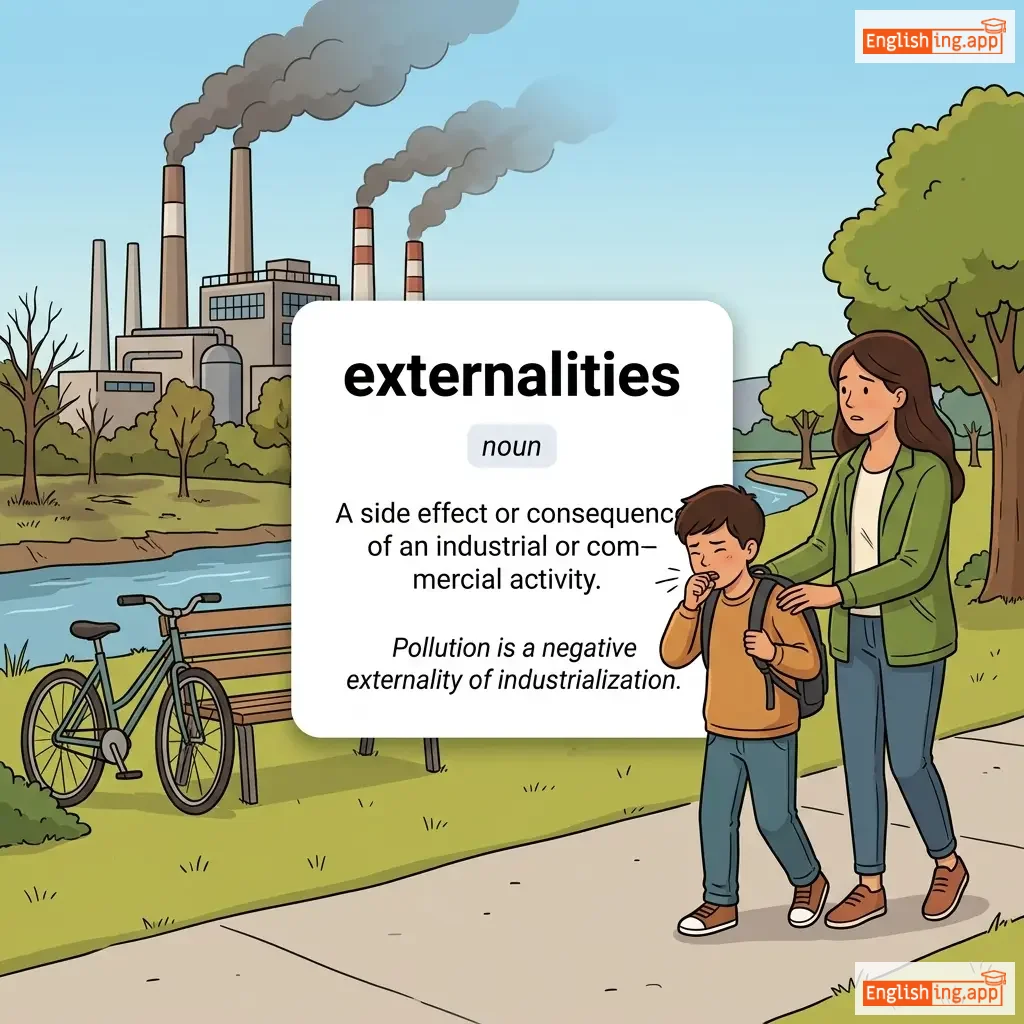
externalities definition card — visual illustration of the meaning
noun
ˌɛkstərˈnælɪtiz
बाहरी प्रभाव (baahri prabhaav)

A side effect or consequence of an industrial or commercial activity.

"Pollution is a negative externality of industrialization."

"प्रदूषण औद्योगिकीकरण का एक नकारात्मक बाहरी प्रभाव है।" (Pradushan audyogikikaran ka ek nakaratmak baahri prabhaav hai.)
adverb
/ɪkˈstɜrnəli/
बाहरी रूप से (bahari roop se)

in a way that relates to the outer surface or outside appearance

"The building appeared externally modern, but inside it was quite old-fashioned."

"भवन बाहरी रूप से आधुनिक दिखाई देता था, लेकिन अंदर यह काफी पुराना था।" (bhavan bahari roop se aadhunik dikhai deta tha, lekin andar yah kaafi purana tha)
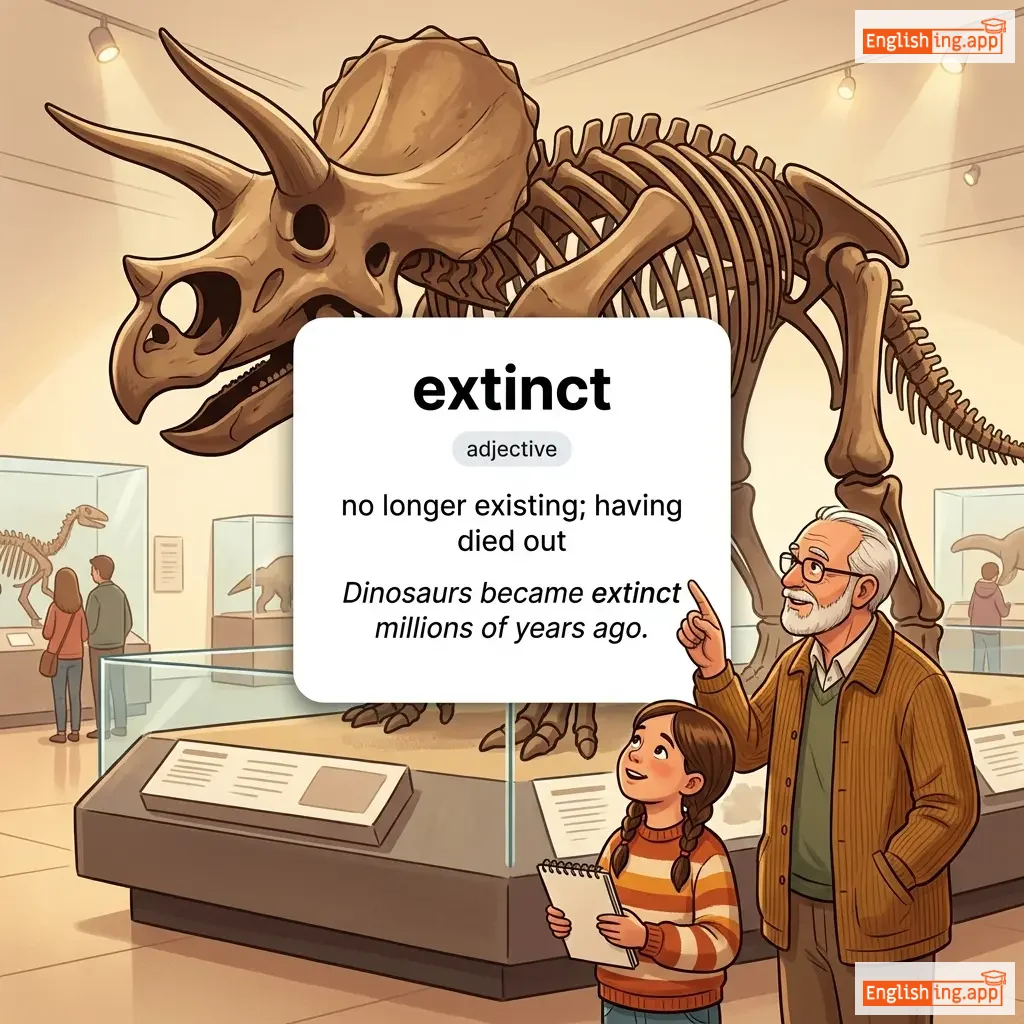
extinct definition card — visual illustration of the meaning
adjective
/ɪkˈstɪŋkt/
विलुप्त (vilupt)

no longer existing; having died out

"Dinosaurs became extinct millions of years ago."

"डायनासोर लाखों साल पहले विलुप्त हो गए थे।" (Dinosaur laakhon saal pehle vilupt ho gaye the.)
verb
/ɪkˈstɪŋ.ɡwɪʃ/
बुझाना (bujhana)

to put out a fire, light, or to end something

"The firefighters managed to extinguish the blaze within an hour."

"फायरफाइटर्स ने एक घंटे के भीतर आग बुझा ली।" (Firefighters ne ek ghante ke bhitar aag bujha li.)
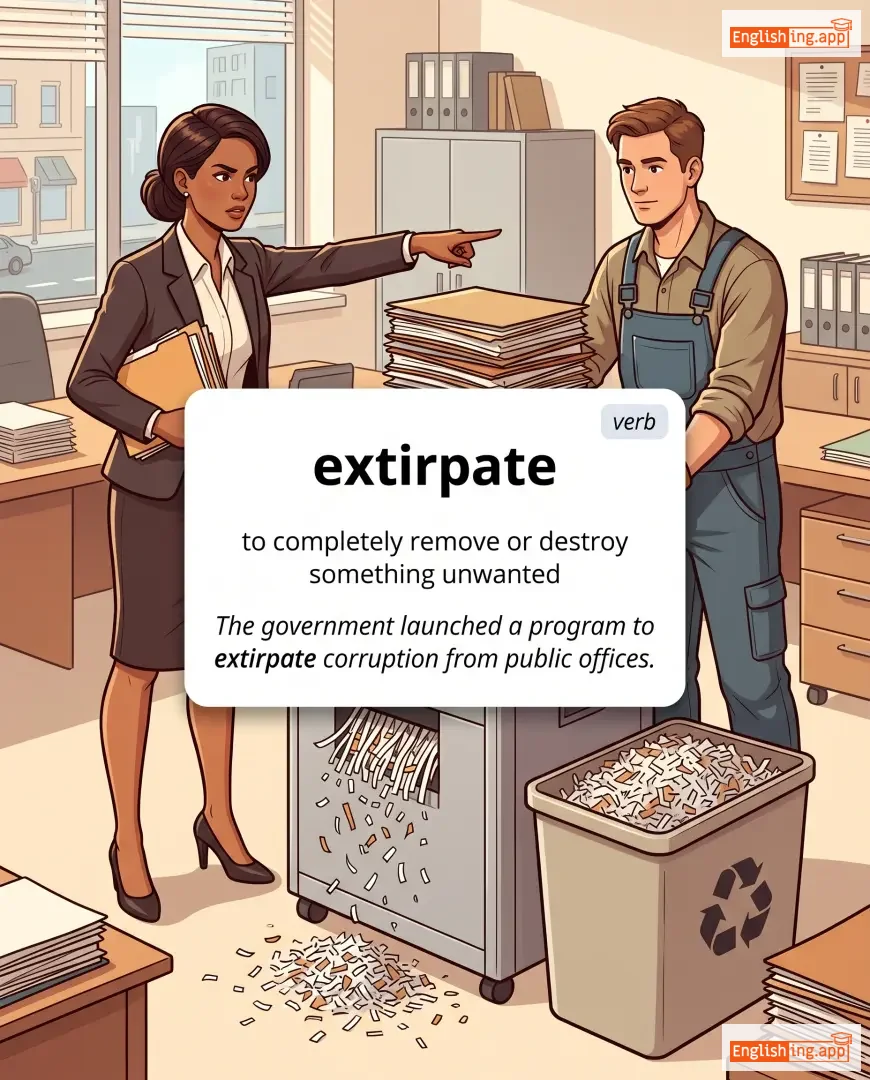
extirpate definition card — visual illustration of the meaning
verb
/ˈek.stər.peɪt/
निकालना (nikalna)

to completely remove or destroy something unwanted

"The government launched a program to extirpate corruption from public offices."

"सरकार ने सरकारी दफ्तरों से भ्रष्टाचार उखाड़ फेंकने के लिए एक कार्यक्रम शुरू किया।" (Sarkar ne sarkari daftaron se bhrashtachar ukhad fenkne ke liye ek karyakram shuru kiya.)
verb
/ɪkˈstoʊl/
प्रशंसा करना (prashansa karna)

to praise enthusiastically and highly

"The teacher extolled the student's dedication and hard work."

"अध्यापक ने छात्र की समर्पण और कड़ी मेहनत की सराहना की।" (Adhyapak ne chatra ki samarpan aur kathin mehnat ki sarahna ki.)
verb
/ɪkˈstɔːrt/
जबरदस्ती वसूल करना (jabardasti vasool karna)

to obtain something, especially money, by force, threats, or unfair means

"The gang attempted to extort money from local shopkeepers."

"गैंग ने स्थानीय दुकानदारों से पैसे वसूलने की कोशिश की।" (Gang ne sthanīya dukānādāron se paise vasool karne ki koshish ki.)
noun
/ɪkˈstɔːr.ʃən/
जबरन वसूल करना (jabran wasool karna)

the practice of obtaining something, especially money, through force or threats

"The businessman was arrested for extortion after threatening his partner."

"व्यवसायी को अपने साथी को धमकी देने के बाद जबरन वसूली के आरोप में गिरफ्तार किया गया था।" (Vyavsayee ko apne saathi ko dhamki dene ke baad jabran wasooli ke aarop mein giraftaar kiya gaya tha.)
adjective
/ˈɛkstrə/
अतिरिक्त (atirikt)

More than what is usual, expected, or necessary

"She brought some extra food for the picnic."

"उसने पिकनिक के लिए अतिरिक्त खाना लाया।" (Usne picnic ke liye atirikt khana laya.)
verb
/ɪkˈstrækt/
निकालना (nikaalna)

to remove or take out something, often with effort

"The dentist had to extract the damaged tooth."

"दंत चिकित्सक को क्षतिग्रस्त दांत को निकालना पड़ा।" (Dant chikitsak ko kshatigrast daant ko nikaalna pada.)
noun
/ɪkˈstrækʃən/
निकासी (nikasi)

the act of removing something, especially by pulling it out

"The extraction of oil from the ground requires special equipment."

"भूमि से तेल निकालने के लिए विशेष उपकरण की आवश्यकता होती है।" (Bhoomi se tel nikaalne ke liye vishesh upkaran ki avashyakta hoti hai.)
verb
/ˈɛkstrəˌdaɪt/
अपराधी को प्रत्यर्पित करना (apradhi ko pratyarpit karna)

to hand over a person accused or convicted of a crime to another country or state

"The government agreed to extradite the fugitive to his home country."

"सरकार ने भगोड़े को उसके गृह देश प्रत्यर्पित करने पर सहमति जताई।" (Sarkar ne bhagode ko uske grih desh pratyarpit karne par sahmati jatayi.)
noun
/ˌɛkstrəˈdɪʃən/
प्रत्यर्पण (pratyarpan)

the official process of sending someone accused of a crime to another country or state

"The extradition of the suspect was delayed due to legal issues."

"संदेहास्पद का प्रत्यर्पण कानूनी मुद्दों के कारण देर से हुआ।" (Sandehaspad ka pratyarpan kanuni muddon ke kaaran der se hua.)
adjective
/ˌɛkstrəˌdʒuːˈdɪʃəl/
न्यायिक प्रक्रिया के बाहर किया गया (nyayik prakriya ke bahar kiya gaya)

done outside the authority of the legal system or judicial process

"The activists condemned the extrajudicial killings."

"कार्यकर्ताओं ने न्यायिक प्रक्रिया के बाहर की हत्याओं की निंदा की।" (Karyakartaon ne nyayik prakriya ke bahar ki hatyaon ki ninda ki.)
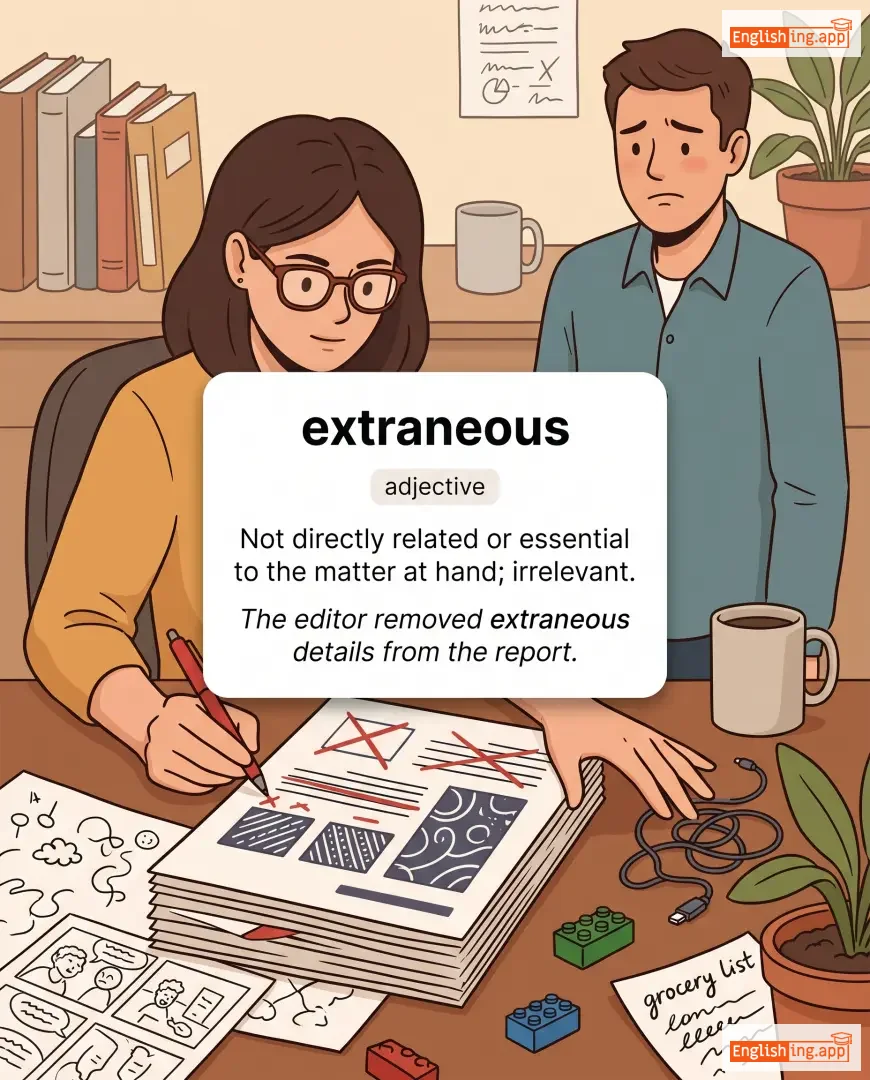
extraneous definition card — visual illustration of the meaning
adjective
/ɪkˈstreɪ.ni.əs/
अप्रासंगिक (aprasangik)

Not directly related or essential to the matter at hand; irrelevant.

"The editor removed extraneous details from the report."

"संपादक ने रिपोर्ट से अप्रासंगिक विवरण हटा दिए।" (Sampadak ne report se aprasangik vivaran hata diye.)
adjective
/ɪkˈstrɔːr.dəˌnɛr.i/
असाधारण (asadharan)

Very unusual, remarkable, or exceptional.

"She showed extraordinary courage during the crisis."

"उसने संकट के दौरान असाधारण साहस दिखाया।" (Usne sankat ke dauran asadharan sahas dikhaya.)
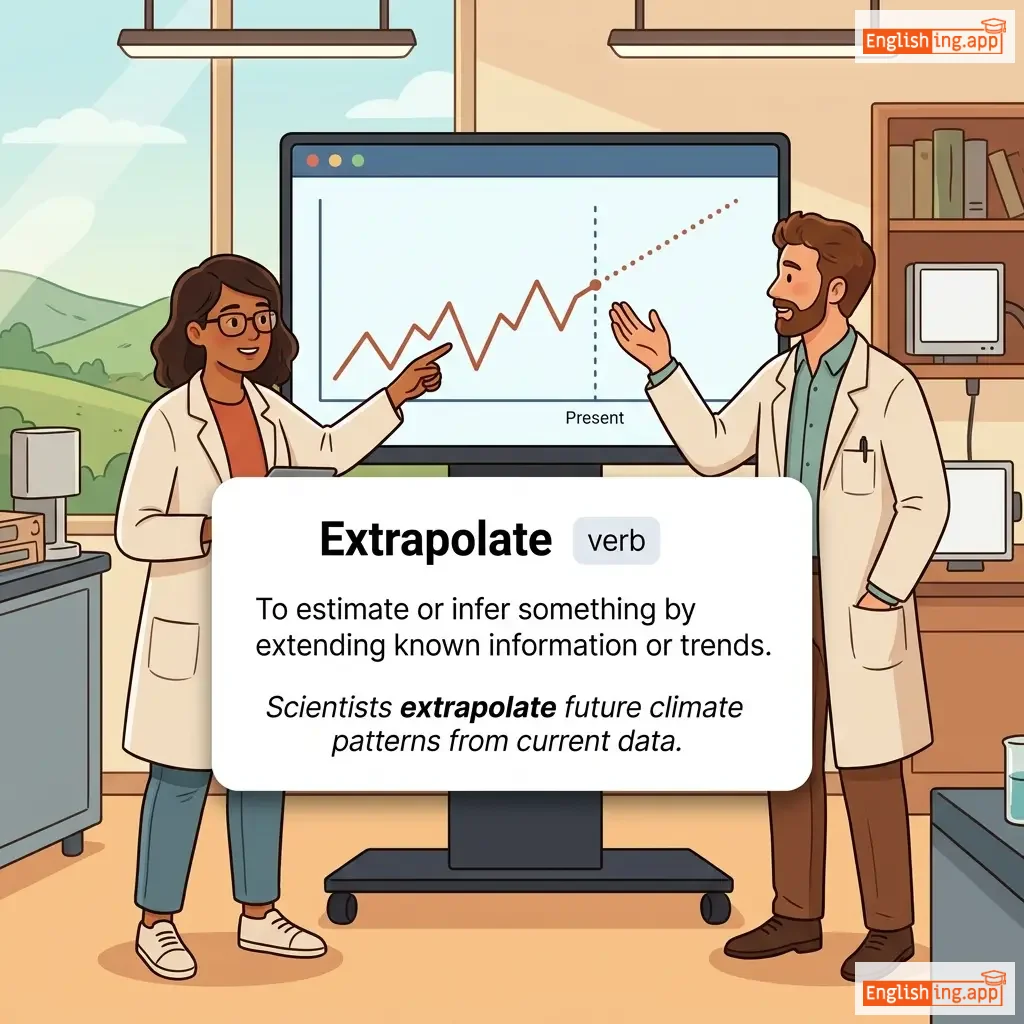
Extrapolate definition card — visual illustration of the meaning
verb
/ɪkˈstræp.əˌleɪt/
पूर्वानुमान करना (purvanuman karna)

To estimate or infer something by extending known information or trends.

"Scientists extrapolate future climate patterns from current data."

"वैज्ञानिक वर्तमान डेटा से भविष्य के जलवायु पैटर्न का अनुमान लगाते हैं।" (Vigyanik vartaman data se bhavishya ke jalvayu pattern ka anuman lagate hain.)
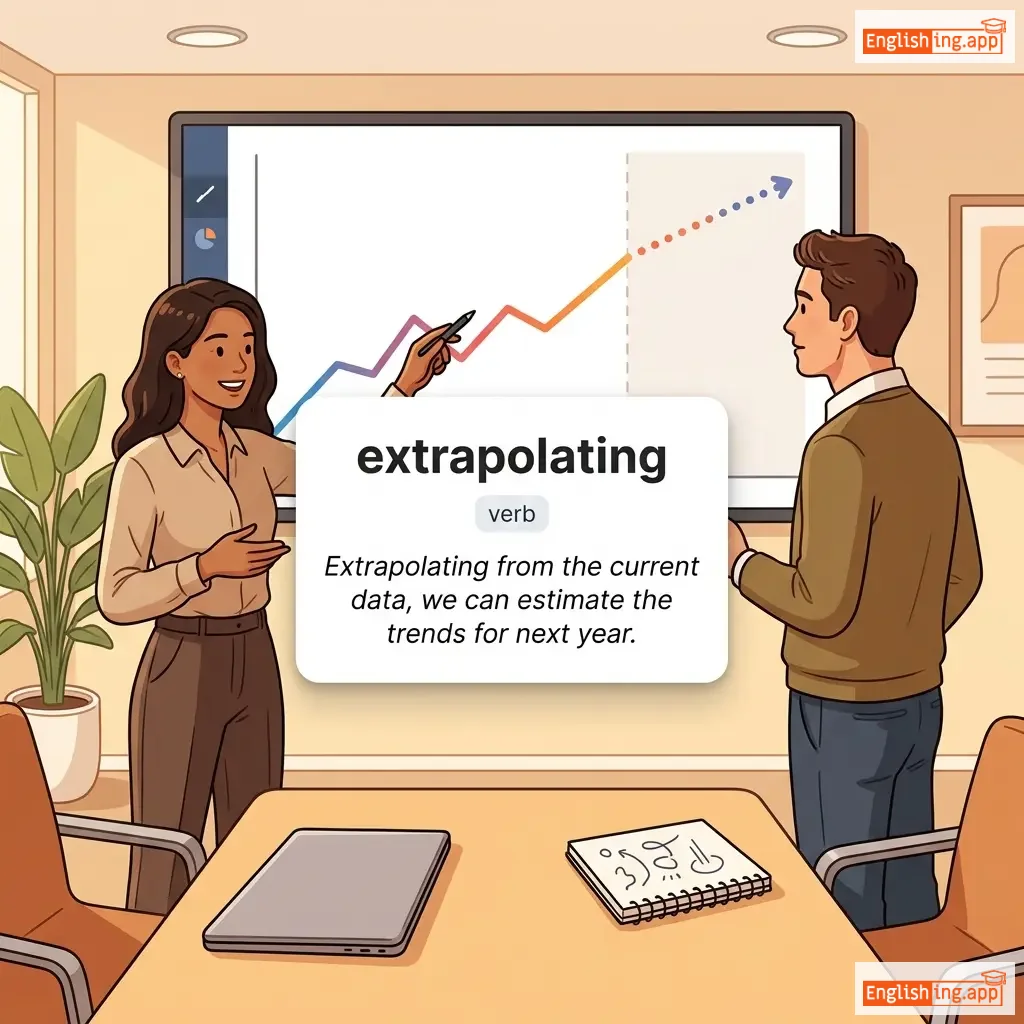
extrapolating definition card — visual illustration of the meaning
verb
/ɪkˈstræpəleɪtɪŋ/
अनुमान करना (anumaan karna)

Extend the application of (a method or conclusion) to an unknown situation by assuming that existing trends will continue.

"Extrapolating from the current data, we can estimate the trends for next year."

"वर्तमान डेटा से अनुमान लगाते हुए, हम अगले वर्ष के रुझानों का अनुमान लगा सकते हैं।" (vartaman data se anumaan lagate hue, ham agle varsh ke rujaanon ka anumaan laga sakte hain.)
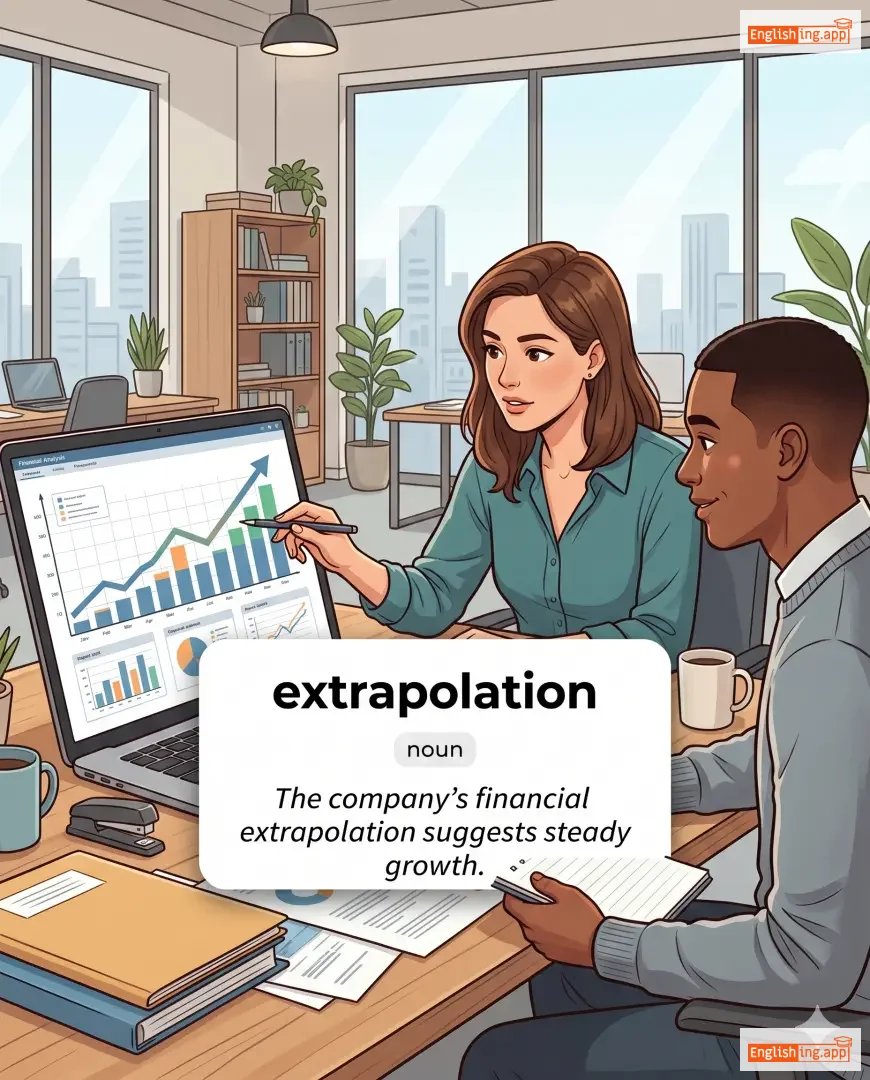
extrapolation definition card — visual illustration of the meaning
noun
/ɪkˌstræp.əˈleɪ.ʃən/
अनुमानिक पूर्वानुमान (anumaanik purvaanumaan)

The process of estimating or predicting something based on extending known information.

"The company's financial extrapolation suggests steady growth."

"कंपनी का वित्तीय अनुमानित पूर्वानुमान स्थिर वृद्धि का सुझाव देता है।" (Company ka vittiya anumaanit purvaanumaan sthir vruddhi ka sujhaav deta hai.)
noun
/ɪkˈstræv.ə.ɡəns/
विलासिता (vilasita)

Excessive spending or lack of restraint in using resources.

"His extravagance on luxury cars worried his family."

"लक्जरी कारों पर उसका अत्यधिक खर्च उसके परिवार को चिंतित कर रहा था।" (Lajuri karon par uska atyadhik kharch uske parivar ko chintit kar raha tha.)
adjective
/ɪkˈstrævəɡənt/
अत्यधिक खर्चीला (atyadhik kharchila)

Spending or using more than is necessary; excessively elaborate or luxurious.

"She wore an extravagant dress to the party."

"वह पार्टी में एक अत्यधिक खर्चीला ड्रेस पहने हुए थी।" (Wah party mein ek atyadhik kharchila dress pehne hue thi.)