Словари

Словарь английского языка | Значения слов, определения и примеры

adverb
/wɛr/
где (gde)

in or at what place or position

"Where do you live?"

"Где ты живешь?" (Gde ty zhivesh'?)
noun
/ˈwɛrəˌbaʊts/
местоположение (mesto-polojeniye)

the place where someone or something is

"The police are trying to find out the suspect's whereabouts."

"Полиция пытается найти местоположение подозреваемого." (Politsiya pytayetsya nayti mestopolozheniye podozrevaemogo.)
conjunction
/wɛərˈæz/
тогда как (togda kak)

used to introduce a contrast or comparison between two facts

"She prefers tea, whereas he likes coffee."

"Она предпочитает чай, тогда как он любит кофе." (Ona predpochitayet chay, togda kak on lyubit kofe.)
adverb
/wɛərˈbaɪ/
посредством которого (posredstvom kotorogo)

by which; because of which

"The company agreed to a contract whereby it would pay the penalty."

"Компания согласилась на контракт, посредством которого она выплатит штраф." (Kompaniya soglasilas' na kontrakt, posredstvom kotorogo ona vyplatit shtraf.)
adverb
/ˌwɛr.əˈpɒn/
немедленно после этого (nemedlenno posle etogo)

Immediately after which; as a result of which.

"He confessed his mistake, whereupon she forgave him."

"Он признал свою ошибку, немедленно после этого она его простила." (On priznal svoyu oshibku, nemedlenno posle etogo ona ego prostila.)
adverb
/wɛrˈɛv.ər/
где угодно (gde ugodno)

In or to any place.

"You can find good people wherever you go."

"Ты можешь найти хороших людей где угодно." (Ty mozhesh' nayti khoroshikh lyudey gde ugodno.)
adverb, noun
/ˈwɛə.wɪð/
средства (sredstva)

With which; the means or resources needed for something.

"He lacked the money wherewith to buy a new house."

"У него не было денег, с которыми он мог бы купить новый дом." (U nego ne bylo deneg, s kotorymi on mog by kupit' novyj dom.)
🍴

whet

verb
/wɛt/

To sharpen the blade of a tool or to stimulate interest or appetite.

"The smell of food whetted my appetite."

conjunction
/ˈwɛðər/
ли (li)

used to express a doubt or choice between alternatives

"I don’t know whether I should go."

"Я не знаю, должен ли я идти." (Ya ne znayu, dolzhen li ya idti.)
noun
/weɪ/
сыворотка (syvorotka)

the watery part of milk that separates from the curds when making cheese

"Protein powder is often made from whey."

"Протеиновый порошок часто делают из сыворотки." (Proteinovyj poroshok chasto delayut iz syvorotki.)
pronoun
/wɪtʃ/
который (kotoryi)

used to ask about one or more items from a defined set

"Which one do you prefer, the red or the blue?"

"Какой ты предпочитаешь, красный или синий?" (Kakoy ty predpochitayesh', krasnyy ili siniy?)
noun, verb
/wɪf/
легкий запах (legkiy zapakh)

A brief, faint smell or puff of air; to get a quick smell of something.

"I caught a whiff of perfume as she passed by."

"Я почувствовал легкий запах духов, когда она прошла мимо." (Ya pochuvstvoval legkiy zapakh dukhov, kogda ona proshla mimo.)
conjunction
/waɪl/
пока (poka)

during the time that something is happening

"She was reading while waiting for the bus."

"Она читала, пока ждала автобус." (Ona chitala, poka zhdala avtobus.)
noun
/wɪm/
прихоть (prikhot)

a sudden or unpredictable idea, desire, or decision

"She bought the dress on a whim."
"Она купила платье по прихоти." (Ona kupila plat'ye po prikhoti.)
Whimsical definition card — visual illustration of the meaning
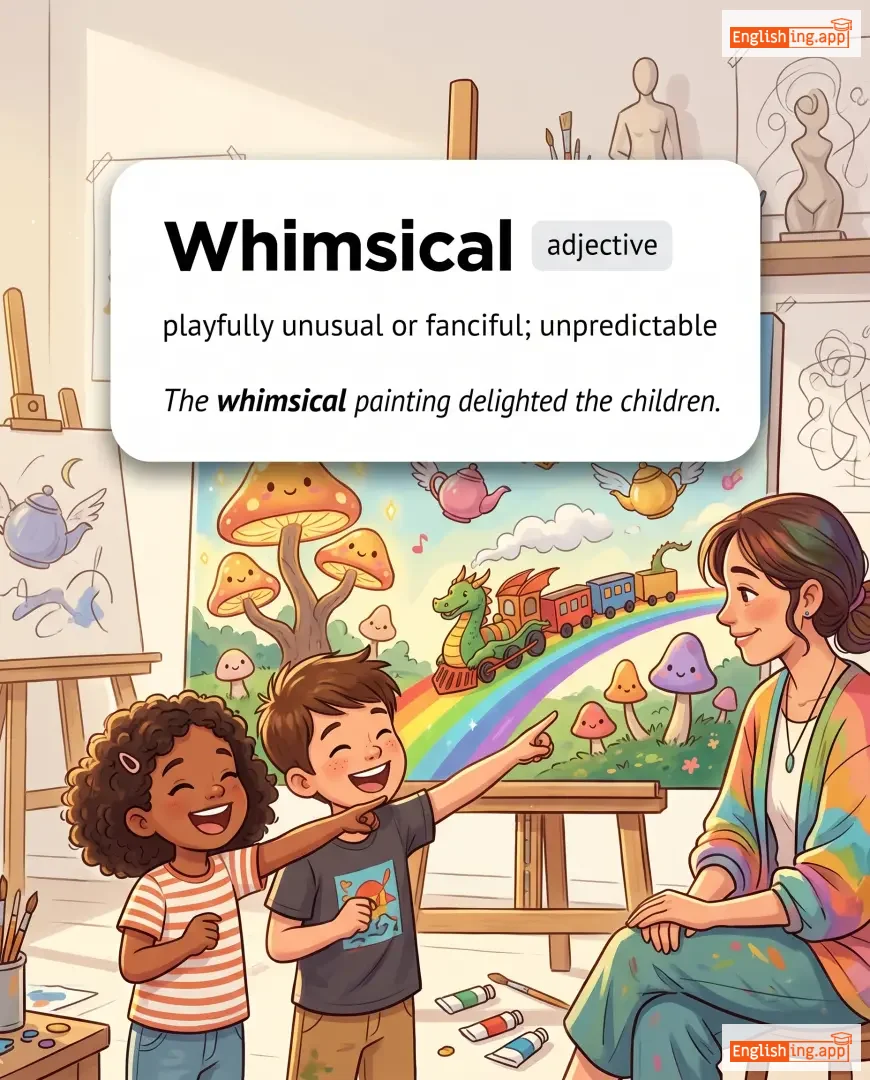
adjective
/ˈwɪmzɪkəl/
прихотливый (prikhotlivyy)

playfully unusual or fanciful; unpredictable

"The whimsical painting delighted the children."

"Прихотливая картина порадовала детей." (Prikhotlivaya kartina poradovala detey.)
adverb
/ˈwɪmzɪkli/
причудливо (Uimzikli)

In a playful, fanciful, or capricious manner; with sudden changes of mind

"She decorated her room whimsically with colorful balloons."

"Она украсила свою комнату причудливо разноцветными воздушными шарами." (Ona ukrasila svoyu komnatu prichudlivo raznotsvetnymi vozdushnymi sharami.)
noun
/ˈwɪmzi/
каприз (kapriz)

playful or fanciful behavior or humor

"Her stories were full of whimsy and imagination."
"Её истории были полны каприза и воображения." (Yeyo istorii byli polny kapriza i voobrazheniya.)
whine definition card — visual illustration of the meaning
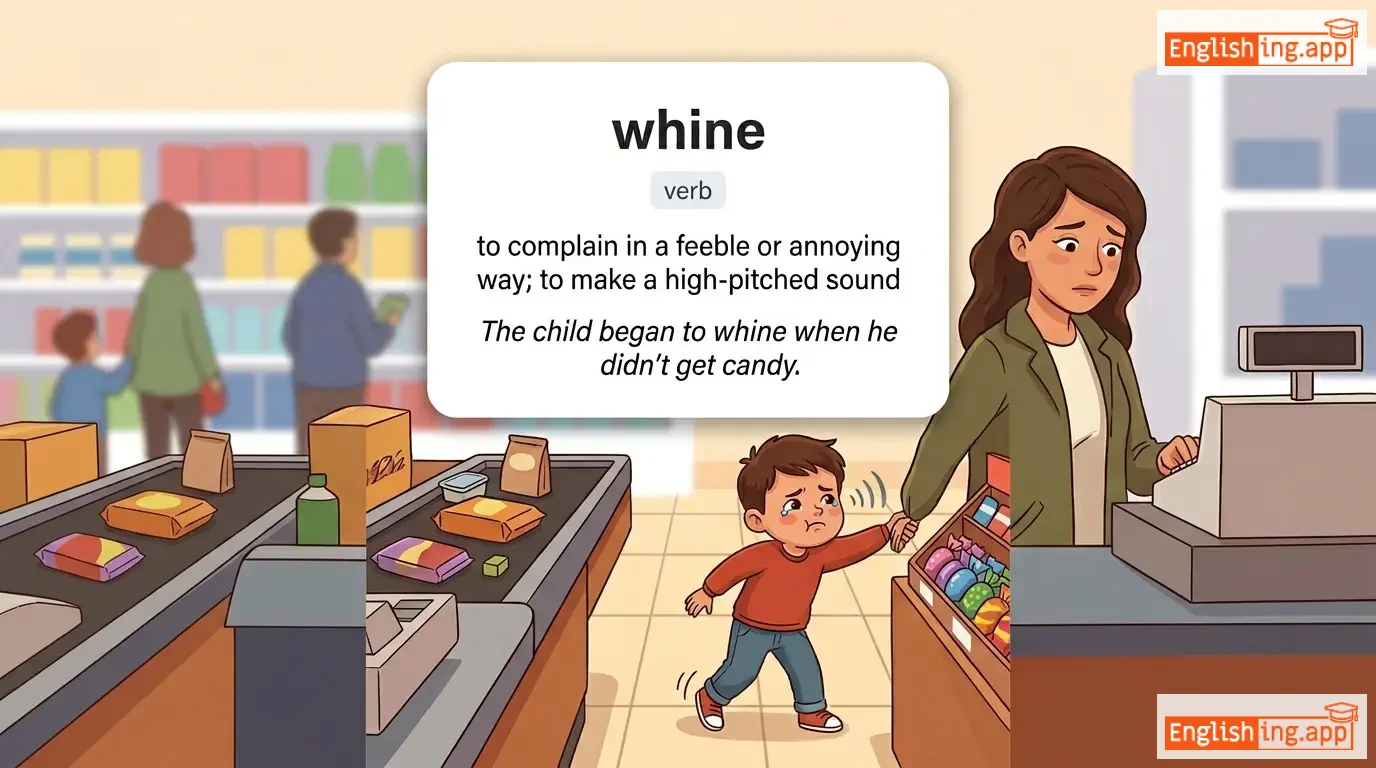
verb
/waɪn/
ныть (nyt)

to complain in a feeble or annoying way; to make a high-pitched sound

"The child began to whine when he didn’t get candy."

"Ребенок начал ныть, когда не получил конфет." (Rebyonok nachal nyt', kogda ne poluchil konfet.)
verb
/ˈwɪni/
ржание (rzhaniye)

to make the high-pitched sound a horse makes

"The horse whinnied when it saw its rider."

"Лошадь ржала, когда увидела своего всадника." (Loshad' rzhala, kogda uvidela svoego vsadnika.)
verb
/wɪp/
хлестать (khlyestat)

to strike or beat with a flexible instrument such as a rope or cord

"The trainer whipped the horse to make it run faster."
"Тренер хлестал лошадь, чтобы заставить ее бегать быстрее." (Trener khlestal loshad', chtoby zastavit' yey begat' bystree.)
whisper definition card — visual illustration of the meaning
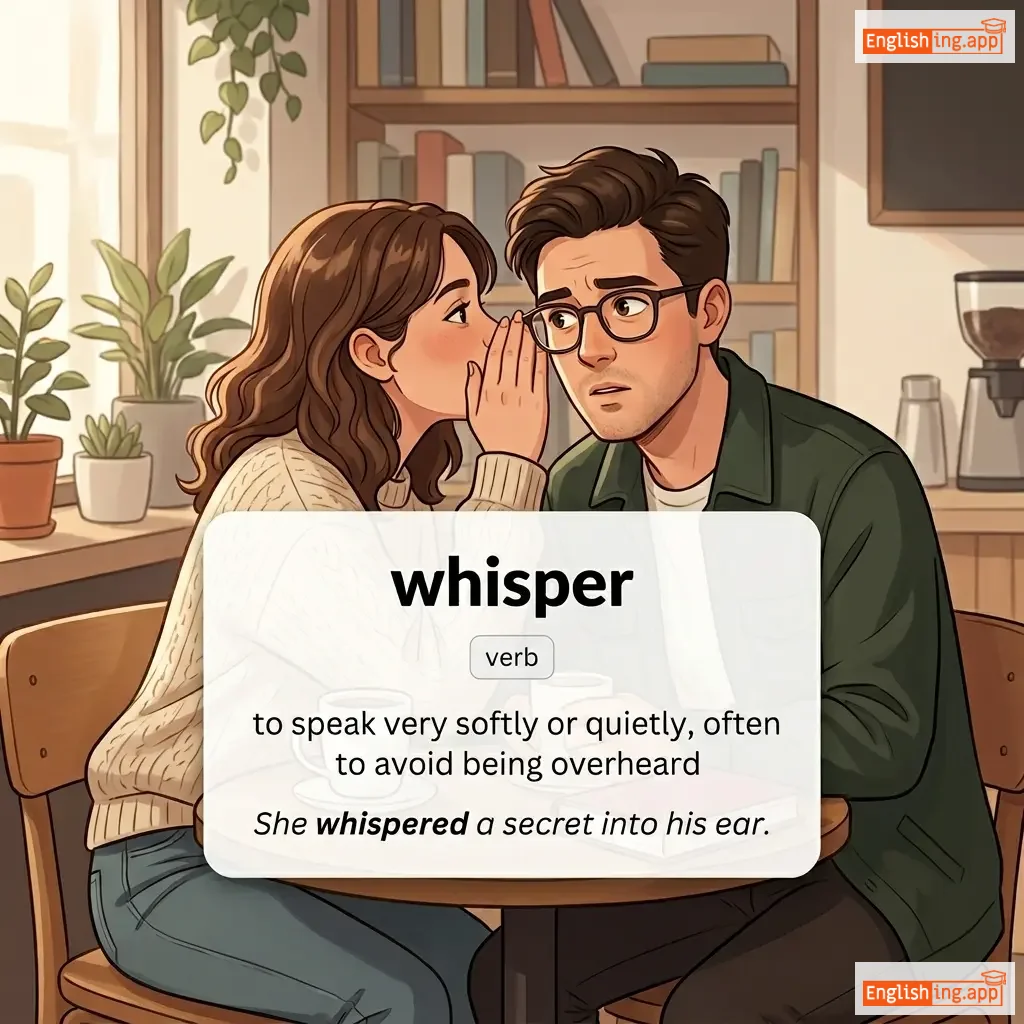
verb
/ˈwɪspər/
шептать (sheptat)

to speak very softly or quietly, often to avoid being overheard

"She whispered a secret into his ear."
"Она шептала ему секрет на ухо." (Ona sheptala emu sekret na ukho.)
whistle definition card — visual illustration of the meaning
noun
/ˈwɪsəl/
свисток (svistok)

a small wind instrument that produces a high-pitched sound when blown

"The referee blew his whistle to start the game."

"Судья подул в свисток, чтобы начать игру." (Sud'ya podul v svistok, chtoby nachat' igru.)
noun
/wɪt/
очень маленькое количество (ochen' malen'koye kolichestvo)

a very small part or amount

"He doesn't care a whit about the outcome."

"Ему не важен результат ни в малейшей степени." (Emu ne vazhen rezul'tat ni v maleyshey stepeni.)
adjective
/waɪt/
белый (bely)

having the color of milk or fresh snow, the opposite of black

"She wore a beautiful white dress to the party."

"Она носила красивое белое платье на вечеринке." (Ona nosila krasivoe belye plat'e na vecherinke.)
noun
/waɪt ˈpɛpər/
белый перец (belyy perets)

a spice made from dried peppercorns with the outer husk removed

"She added white pepper to the cream soup for a mild spicy flavor."

"Она добавила белый перец в крем-суп, чтобы придать ему мягкий острый вкус." (Ona dobavila belyy perets v krem-sup, chtoby pridayt' emu myagkiy ostry vkus)
noun
/waɪt ænt/
белая муравей (belaya muravey)

a small social insect that lives in colonies and feeds on wood and plant matter

"White ants damaged the wooden furniture in our house."

"Белые муравьи повредили деревянную мебель в нашем доме." (Belyye muravi povredili derevyannuyu mebel' v nashem dome.)
whitelisting definition card — visual illustration of the meaning
noun
/ˈwaɪt.lɪst.ɪŋ/
Идентификация пользователей, программного обеспечения или IP-адресов как безопасных и доверенных (Identifikatsiya polzovateley, programmogo obespecheniya ili IP-adresov kak bezopasnykh i doverennykh)

Identifying specific users, software, or IP addresses as safe and trusted

"Only verified applications are allowed through whitelisting."

"Только проверенные приложения могут быть разрешены через белый список." (Tol'ko proverennye prilozheniya mogut byt' razresheny cherez belyy spisok.)
verb
/ˈwaɪtˌwɑːʃ/
белить; замазывать недостатки; прикрывать факты (belit zamazyvat nedostatki prikryvat fakty)

to cover up faults, errors, or unpleasant facts; to paint with white paint or lime

"The report was criticized for trying to whitewash the company's failures."

"Доклад подвергся критике за попытку замазать неудачи компании." (Doklad podvergnulsya kritike za popytku zamazat neudachi kompanii)
verb
/ˈwɪtl/

to carve or shape something by cutting off small pieces; to gradually reduce

"He spent the afternoon whittling a piece of wood into a toy."

pronoun
/huː/
кто (kto)

used to ask about a person or people

"Who is coming to the party tonight?"

"Кто приходит на вечеринку сегодня вечером?" (Kto prikhodit na vecherinku segodnya vecherom?)
pronoun
/huːˈɛvər/
кто угодно (kto ugodno)

any person who; no matter who

"Whoever wants to join the trip must register today."

"Кто угодно, кто захочет присоединиться к поездке, должен зарегистрироваться сегодня." (Kto ugodno, kto zakhochet prisoyedinitsya k poyezdke, dolzhen zaregistrirovatsya segodnya.)
adjective
/hoʊl/
целый (tsely)

all of something; complete or entire

"He ate the whole cake by himself."

"Он съел весь торт сам." (On syel ves' tort sam.)
adjective
/ˌhoʊlˈhɑːrtɪd/
от всего сердца (ot vsego serdtsa)

showing complete sincerity and commitment; fully enthusiastic

"She gave her wholehearted support to the project."

"Она оказала свою поддержку проекту от всего сердца." (Ona okazala svoyu podderzhku proyektu ot vsego serdtsa.)
adjective
/ˈhoʊlsəm/
здоровый (zdorovy)

promoting health or well-being; morally good and beneficial

"The retreat offered wholesome food and peaceful surroundings."

"Убежище предложило здоровую пищу и спокойную атмосферу." (Ubezhishche predlozhilo zdorovuyu pishchu i spokoynuyu atmosferu.)
adverb
/ˈhoʊlli/
целиком (tselikom)

completely; entirely

"She is wholly devoted to her family."

"Она полностью предана своей семье." (Ona polnostyu predana svoey sem'ye.)
pronoun
/huːm/
которому (kotorymu)

used to refer to the person or people that something is done to

"The man whom I met yesterday is my friend."

"Человек, которого я встретил вчера, мой друг." (Chelovek, kotorogo ya vstretel vchera, moy drug.)
noun
/wɜːrl/
спираль (spiral)

A pattern of spirals or concentric circles, often found in fingerprints, shells, or flowers.

"The fingerprint displayed a clear whorl pattern."

"Отпечаток пальца показывал четкий узор спирали." (Otpechatok pal'tsa pokazyval chetkiy uzor spirali.)
pronoun
/huːz/
чей (chey)

used to ask or talk about the person or thing that owns something

"The girl whose phone was stolen is my cousin."

"Девочка, чей телефон был украден, моя кузина." (Devochka, chey telefon byl ukraden, moya kuzina.)
adverb
/waɪ/
почему (pochemu)

used to ask or talk about the reason for something

"Why did you leave so early?"

"Почему ты ушел так рано?" (Pochemu ty ushel tak rano?)
noun
/wɪk/
фитиль свечи (fitil svechi)

a cord or strand of cotton that burns to provide light in a candle or lamp

"The candle wick needs to be trimmed for better burning."

"Фитиль свечи нужно обрезать для лучшего горения." (Fitil svechi nuzhno obrezat' dlya luchshego gorenija.)
adjective
/ˈwɪkɪd/
злой (zloy)

morally bad or evil; also informally very good or impressive

"The villain in the story was truly wicked."

"Злодей в истории был действительно злой." (Zlodей v istorii byl deystvitel'no zloy.)
noun
/ˈwɪkɪdnəs/
злодейство, злость (zlodeystvo, zlost)

Evil or morally bad behavior.

"The story highlights the wickedness of the cruel king."

"История подчеркивает злодейство жестокого короля." (Istoriya podcherkivayet zlodeystvo zhestokogo korolya.)
adjective
/waɪd/
широкий (shirokiy)

having a great extent from side to side; broad

"The river is wide enough to fit a boat."

"Река достаточно широкая, чтобы в нее поместилась лодка." (Reka dostatochno shirokaya, chtoby v nee pomestilas' lodka.)
adverb
/ˈwaɪdli/
широко (shiroko)

to a great extent or degree

"The news of his promotion spread widely across the company."
"Новости о его повышении широко распространились по компании." (Novosti o ego povyshenii shiroko rasprostranilis' po kompanii.)
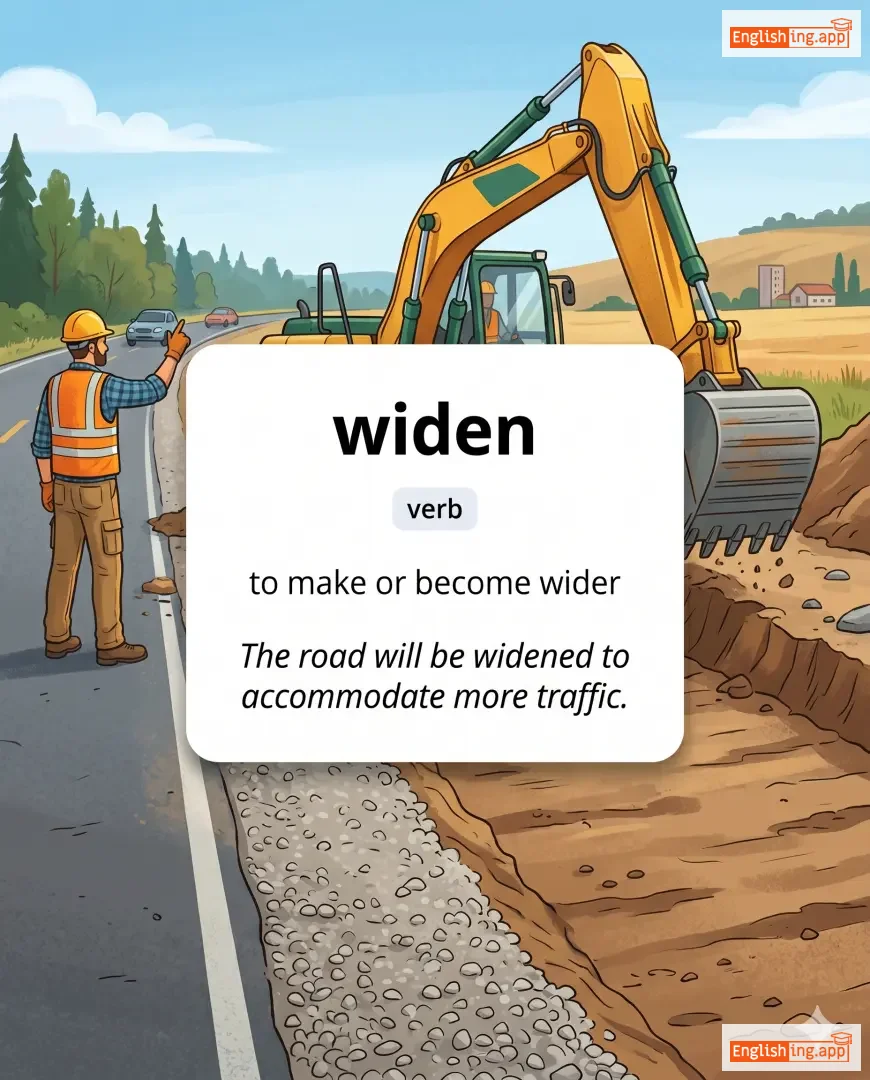
widen definition card — visual illustration of the meaning
verb
/ˈwaɪdən/
расширять (rasshiryat')

to make or become wider

"The road will be widened to accommodate more traffic."
"Дорога будет расширена для увеличения потока движения." (Doroga budet rasshirena dlya uvelicheniya potoka dvizhdeniya.)
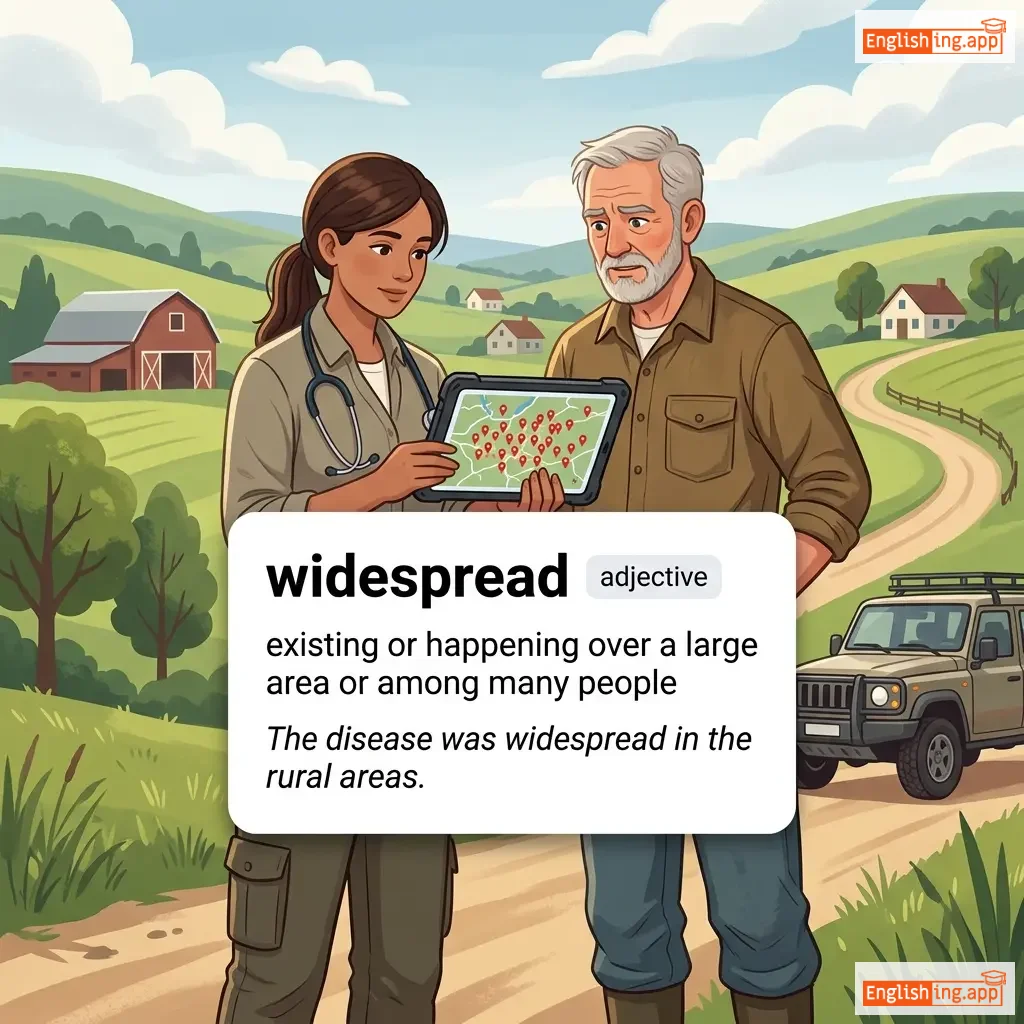
widespread definition card — visual illustration of the meaning
adjective
/ˈwaɪdˌsprɛd/
широко распространенный (shiroko rasprostranenny)

existing or happening over a large area or among many people

"The disease was widespread in the rural areas."

"Заболевание было широко распространено в сельских районах." (Zabolevaniye bylo shiroko rasprostraneno v selskih rayonah.)
noun
/ˈwɪdəʊ/
вдова (vdova)

a woman whose husband has died and who has not married again

"She became a widow at a very young age."

"Она стала вдовой в очень молодом возрасте." (Ona stala vdovoy v ochen' molodom vozraste.)
noun
/ˈwɪd.oʊ.ər/
вдовец (vdovec)

a man whose wife has died and who has not married again

"The elderly widower lived alone but had regular visits from his children."

"Пожилой вдовец жил один, но регулярно получал визиты от своих детей." (Pozhiloy vdovets zhil odin, no regulyarno poluchal vizity ot svoikh detey.)
noun
/wɪdθ/
ширина (shirina)

the measurement or extent of something from side to side

"The width of the table is 2 meters."

"Ширина стола составляет 2 метра." (Shirina stola sostavlyayet 2 metra.)
verb
/wiːld/
держать, использовать (derzhat', ispol'zovat')

To hold and use a weapon, tool, or power effectively.

"The warrior wielded his sword with great skill."

"Воин использовал свой меч с большой ловкостью." (Voyn ispol'zoval svoy mech s bol'shoy lovkost'yu.)