Словари

Словарь английского языка | Значения слов, определения и примеры

noun
/ˈtoʊstər/
тостер (toster)

an electric appliance used for toasting bread slices

"I put two slices of bread in the toaster for breakfast."

"Я положил два куска хлеба в тостер на завтрак." (ya polozhil dva kuska khleba v toster na zavtrak)
noun
/təˈbækoʊ/
табак (tabak)

a plant grown for its leaves, which are used in making cigarettes and cigars

"He stopped smoking tobacco after his health scare."

"Он бросил курить табак после проблемы со здоровьем." (On brosil kurit' tabak posle problemy so zdorov'yem.)
noun
/ˈtɒksɪn/
тревожный колокол (trevoznyy kolokol)

an alarm bell or signal; a warning that something bad is about to happen

"The data breach sounded a tocsin for stricter security."

"Утечка данных прозвучала как тревожный колокол для ужесточения безопасности." (Utechka dannykh prozvuchala kak trevoznyy kolokol dlya uzheshcheniya bezopasnosti.)
noun, adverb
/təˈdeɪ/
сегодня (segodnya)

on this present day

"She has a meeting today."

"У неё встреча сегодня." (U nee vstrecha segodnya.)
noun
/toʊ/
палец на ноге (palets na noge)

any of the five digits at the end of the human foot

"He injured his toe while playing football."

"Он повредил палец на ноге, играя в футбол." (On povredil palets na noge, igrya v futbol.)
noun
/ˈtoʊɡə/
тога (toga)

A loose outer garment worn in ancient Rome, typically draped over the shoulders and body.

"The senator wore a white toga during the ceremony."

"Сенатор носил белую тогу во время церемонии." (Senator nosil belyyu togu vo vremya tseremonii.)
adverb
/təˈɡɛðər/
вместе (vmeste)

with each other; in a group or combined form

"They worked together to solve the problem."

"Они работали вместе, чтобы решить проблему." (Oni rabotali vmeste, chtoby reshit' problemy.)
Toil definition card — visual illustration of the meaning
verb
/tɔɪl/
трудиться (trudit'sya)

To work extremely hard and continuously, often with difficulty.

"He had to toil for years to achieve success."

"Он должен был трудиться годами, чтобы достичь успеха." (On dolzhen byl trudit'sya godami, chtoby dostich' uspekha.)
noun
/ˈtɔɪlət/
туалет (tualet)

a fixture used for the disposal of human waste

"The public toilet was clean and well maintained."

"Общественный туалет был чистым и хорошо обслуживаемым." (Obshchestvennyy tualet byl chistym i khorosho obsluzhivayemym.)
adjective
/ˈtɔɪl.səm/
трудный (trudnyy)

Involving hard or exhausting work; laborious.

"The workers had a toilsome day in the hot sun."

"Рабочие провели трудный день на жарком солнце." (Rabochie proveli trudnyy den' na zharkom solntse.)
noun
/ˈtoʊ.kən/
символ / жетон (simvol / zheton)

A symbol or object that represents something, often given as a sign of appreciation or as a substitute for money.

"She gave him a small gift as a token of gratitude."
"Она дала ему маленький подарок как токен благодарности." (Ona dala yemu malen'kiy podarok kak token blagodarnosti.)
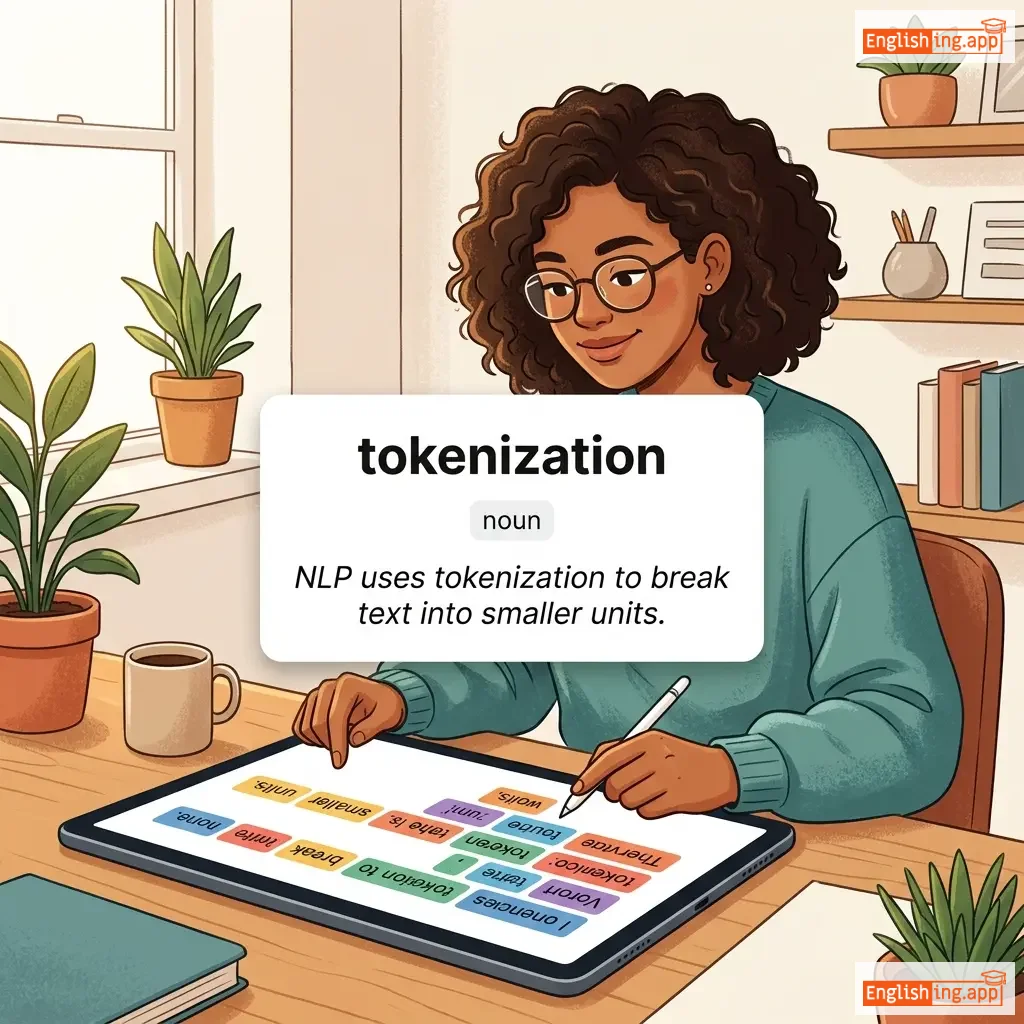
tokenization definition card — visual illustration of the meaning
noun
ˌtoʊ.kə.nɪˈzeɪ.ʃən
Процесс разбивки текста на меньшие единицы, такие как слова, фразы или символы, для анализа. (tokenization)

The process of breaking text into smaller units like words, phrases, or symbols for analysis.

"NLP uses tokenization to break text into smaller units."

"NLP использует токенизацию для разбиения текста на более мелкие единицы." (NLP ispol'zuyet tokenizatsiyu dlya razbieniya teksta na boleye melkiye yedinitsy.)
adjective
/ˈtɒl.ər.ə.bəl/
терпимый (terpimy)

Able to be endured or put up with; fairly acceptable.

"The pain was tolerable after the medicine."

"Боль была терпимой после лекарства." (Bol' byla terpimoy posle lekarstva.)
noun
/ˈtɒlərəns/
терпимость (terpimost)

The ability or willingness to accept or endure differences, behaviors, or opinions without hostility.

"Her tolerance for different cultures impressed everyone."

"Её терпимость к разным культурам впечатлила всех." (Yeyo terpimost' k raznym kul'turam vpechatlila vsekh.)
adjective
/ˈtɒlərənt/
терпимый (terpimy)

Showing willingness to allow the existence of opinions or behaviors that one dislikes or disagrees with.

"He is very tolerant of other people's beliefs."
"Он очень терпим к убеждениям других людей." (On ochen' terpim k ubezhdeniyam drugikh lyudey.)
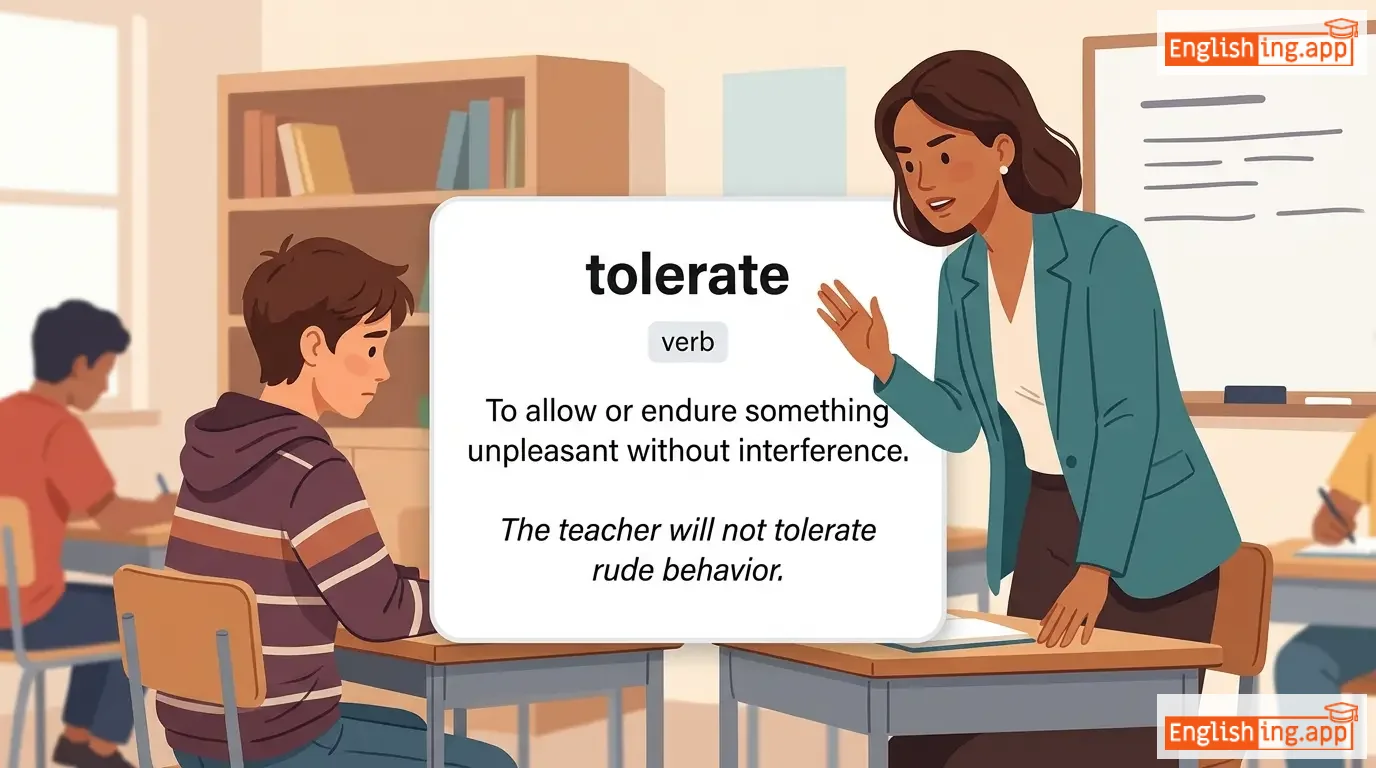
tolerate definition card — visual illustration of the meaning
verb
/ˈtɒləreɪt/
терпеть (terpet')

To allow or endure something unpleasant without interference.

"The teacher will not tolerate rude behavior."

"Учитель не потерпит грубого поведения." (Uchitel' ne poterpit grubogo povedeniya.)
noun
/ˌtɒləˈreɪʃən/
терпимость (terpimost)

The practice of allowing something that one does not necessarily agree with.

"The government promoted religious toleration."

"Правительство продвигало религиозную терпимость." (Pravitel'stvo prodvigalo religioznuyu terpinost.)
noun
/toʊl/
пошлина / ущерб (poshlina / ushcherb)

A charge payable for using a road or bridge; also the extent of damage or suffering caused by something.

"The flood took a heavy toll on the village."

"Наводнение нанесло большой ущерб деревне." (Navodnenie naneslo bol'shoy ushcherb derevne.)
noun
/təˈmeɪtoʊ/
помидор (pomidor)

a red or yellowish fruit that is typically eaten as a vegetable

"I added some tomato to the salad."

"Я добавил немного помидора в салат." (Ya dobavil nemnogo pomidora v salat.)
tome definition card — visual illustration of the meaning
noun
/toʊm/
толстая книга (tolstaya kniga)

a large, heavy book, often scholarly or serious in nature

"She spent the afternoon reading an old tome on medieval history."

"Она провела послеобеденное время, читая старую толстую книгу по средневековой истории." (Ona provela posleobedennoye vremya, chitaya staruyu tolstuyu knigu po srednevekovoy istorii.)
noun, adverb
/təˈmɒroʊ/
завтра (zavtra)

the day after today

"We are meeting tomorrow for the project discussion."

"Мы встречаемся завтра для обсуждения проекта." (My vstrechayemsya zavtra dlya obsuzhdeniya proekta.)
noun
/tʌn/
тонна (tonna)

A unit of weight equal to 2,000 pounds (US) or 1,000 kilograms (metric); a large amount of something

"The truck carried a ton of apples to the market."

"Грузовик перевез тонну яблок на рынок." (Gruzovik perevez tonnu yablok na rynok.)
noun, verb
/toʊn/
тон (ton)

the general character or attitude of a place, piece of writing, situation, etc.

"The tone of the letter was very formal."

"Тон письма был очень формальным." (Ton pis'ma byl ochen' formal'nym.)
noun
/tɒŋ/
щипцы (shchiptsy)

a tool with two movable arms used to pick up and hold objects

"He used the tong to pick up the hot coal."

"Он использовал щипцы, чтобы поднять горячий уголь." (On ispol'zoval shchiptsy, chtoby podnyat' goryachiy ugol'.)
noun
/tɒŋz/
щипцы (shchiptsy)

a tool consisting of two movable arms that are joined at one end, used for picking up and holding things

"Use the tongs to pick up the hot pieces of meat from the grill."

"Используйте щипцы, чтобы поднять горячие куски мяса с гриля." (Ispol'zuyte shchiptsy, chtoby podnyat' goryachie kuski myasa s grilya.)
noun
/tʌŋ/
язык (yazyk)

a fleshy muscular organ in the mouth used for tasting, swallowing, and speaking

"She stuck out her tongue playfully."

"Она игриво высунула язык." (Ona igryvo vysunula yazyk.)
noun
/ˈtɒnɪk/
тоник (tonik)

a medicine or drink that restores or refreshes health and energy

"A glass of lemonade was the perfect tonic on a hot day."

"Стакан лимонада был идеальным тоником в жаркий день." (Stakan limonada byl ideal'nym tonikom v zharkiy den'.)
adverb, noun
/təˈnaɪt/
сегодня ночью (segodnya nochyu)

on or during the night of the current day

"We're going to the party tonight."

"Мы идем на вечеринку сегодня ночью." (My idyom na vecherinku segodnya nochyu.)
adjective
/tɒnˈsɔːriəl/
относящийся к парикмахеру (otnosyashchiesya k parikmakheru)

relating to barbers or hairdressing

"The town's new barber offered a wide range of tonsorial services."

"Новый парикмахер города предложил широкий ассортимент парикмахерских услуг." (Novyy parikmakher goroda predlozhil shirokiy assortiment parikmakherskikh uslug.)
noun
/ˈtɒnʃər/
тону́зура (tonuzura)

the practice of shaving or cutting the hair on the scalp, especially in a religious context

"The monk received his tonsure as part of his religious initiation."

"Монах получил свою тонзуру как часть своей религиозной инициации." (Monakh poluchil svoju tonuzuru kak chast' svoej religioznoj initsiatsii.)
adverb
/tuː/
слишком (slishkom)

to a higher degree than is desirable, permissible, or possible

"She is too tired to continue working."

"Она слишком устала, чтобы продолжить работать." (Ona slishkom ustala, chtoby prodolzhit' rabotat'.)
noun
/tuːl/
инструмент (instrument)

a device or implement used to carry out a particular function

"He used a hammer as a tool to fix the chair."
"Он использовал молоток как инструмент для починки стула." (On ispol'zoval molotok kak instrument dlya pochinki stula.)
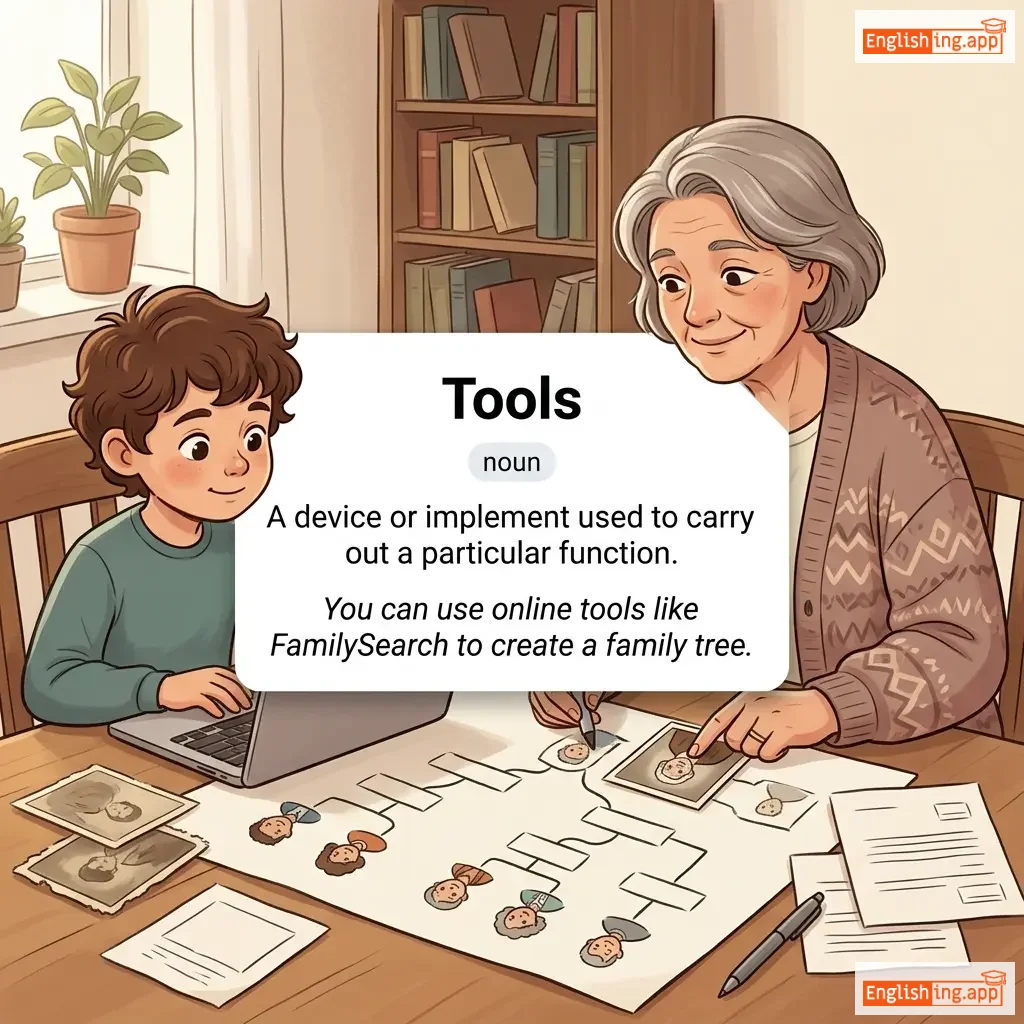
Tools definition card — visual illustration of the meaning
noun
tuːlz
инструменты (instrumenty)

A device or implement used to carry out a particular function.

"You can use online tools like FamilySearch to create a family tree."

"Вы можете использовать онлайн-инструменты, такие как FamilySearch, для создания генеалогического древа." (Vy mozhete ispol'zovat' onlayn-instrumenty, takie kak FamilySearch, dlya sozdaniya genealogicheskogo dreva.)
noun
/tuːθ/
зуб (zub)

each of the hard, pointed structures in the mouth used for biting and chewing food

"He has a toothache and needs to see the dentist."

"У него болит зуб, и ему нужно пойти к стоматологу." (U nego bolit zub, i emu nuzhno poyti k stomatologu.)
noun
/tɒp/
вершина (vershina)

the highest or uppermost point, part, or surface of something

"The book is on the top shelf."

"Книга на верхней полке." (Kniga na verkhney polke.)
noun
/ˈtoʊ.pæz/
топаз (topaz)

a precious stone, typically colorless, yellow, or blue, used in jewelry

"The queen's crown was adorned with a magnificent blue topaz."

"Корона королевы была украшена великолепным синим топазом." (Korona korolevy byla ukrashena velikolepnym sinim topazom.)
noun
/ˈtɒpɪk/
тема (tema)

a subject of conversation, discussion, or writing

"The topic of the meeting was company expansion."

"Тема встречи была расширение компании." (Tema vstrechi byla rasshirenie kompanii.)
adjective
/ˈtɒp.məʊst/
самый верхний; наивысший (samyy verhniy; naivysshiy)

highest in position or rank

"The flag was placed on the topmost branch of the tree."

"Флаг был размещен на самой верхней ветке дерева." (Flag byl razmeshen na samoy verkhney vetke dereva.)
noun
/təˈpɒɡrəfi/
топография (topografiya)

the arrangement of the natural and artificial physical features of an area

"The topography of the region made construction very challenging."

"Топография региона сделала строительство очень сложным." (Topografiya regiona sdelala stroitel'stvo ochen' slozhnym.)
verb
/ˈtɒpl/
опрокинуть (oprokinut)

to fall or cause to fall over; to overthrow

"The earthquake caused the old building to topple."

"Землетрясение вызвало падение старого здания." (Zemletryaseniye vyzvalo padenie starogo zdaniya.)
noun
/ˈtɒpˌsɔɪl/
верхний слой почвы (verkhniy sloy pochvy)

the top layer of soil, which is rich in organic matter and nutrients

"Farmers rely on healthy topsoil for good crop yields."

"Фермеры зависят от здорового верхнего слоя почвы для получения хороших урожаев." (Fermery zavisyat ot zdorovogo verkhnego sloya pochvy dlya polucheniya khoroshikh urozhaev.)
adjective
/ˌtɒpsi ˈtɜːvi/
хаотичный (khaotichnyy)

in a state of confusion, disorder, or upside down

"The sudden announcement left the office in a topsy-turvy state."

"Внезапное объявление оставило офис в совершенно хаотичном состоянии." (Vnezapnoye ob'yavleniye ostavilo ofis v sovershenno khaotichnom sostoyanii.)
noun
/tɔːrtʃ/
фонарик (fonarik)

a portable electric lamp powered by batteries; a flaming stick used for light

"Use the torch to find your way in the dark."

"Используйте фонарик, чтобы найти дорогу в темноте." (Ispolzuyte fonarik chtoby nayti dorogu v temnote.)
noun, verb
/ˈtɔːr.ment/
мука (muka)

severe physical or mental suffering; to cause extreme suffering

"The prisoner was in constant torment."

"Заключённый был в постоянных мучениях." (Zaklyuchyonnyy byl v postoyannykh mucheniyakh.)
noun
/tɔːrˈneɪdoʊ/
торнадо (tornado)

a rapidly rotating column of air in contact with the ground and clouds, often destructive

"The tornado destroyed several houses in the village."

"Торнадо разрушило несколько домов в деревне" (Tornado razrushilo neskol'ko domov v derevne)
noun/verb
/tɔːrˈpiːdoʊ/
торпеда (torpeda)

A self-propelled underwater missile; to attack or destroy something suddenly and forcefully.

"The submarine launched a torpedo at the enemy ship."

"Подводная лодка выпустила торпеду по вражескому кораблю." (Podvodnaya lodka vypustila torpedu po vrazheskomu korablyu.)
adjective
/ˈtɔːrpɪd/
вялый (torpid)

Mentally or physically inactive; sluggish or lethargic.

"After the long hike, he felt torpid and unmotivated."
"После долгого похода он почувствовал себя вялым и безмотивационным." (Posle dolgogo pokhoda on pochuvstvoval sebya vyalym i bezmotivatsionnym.)
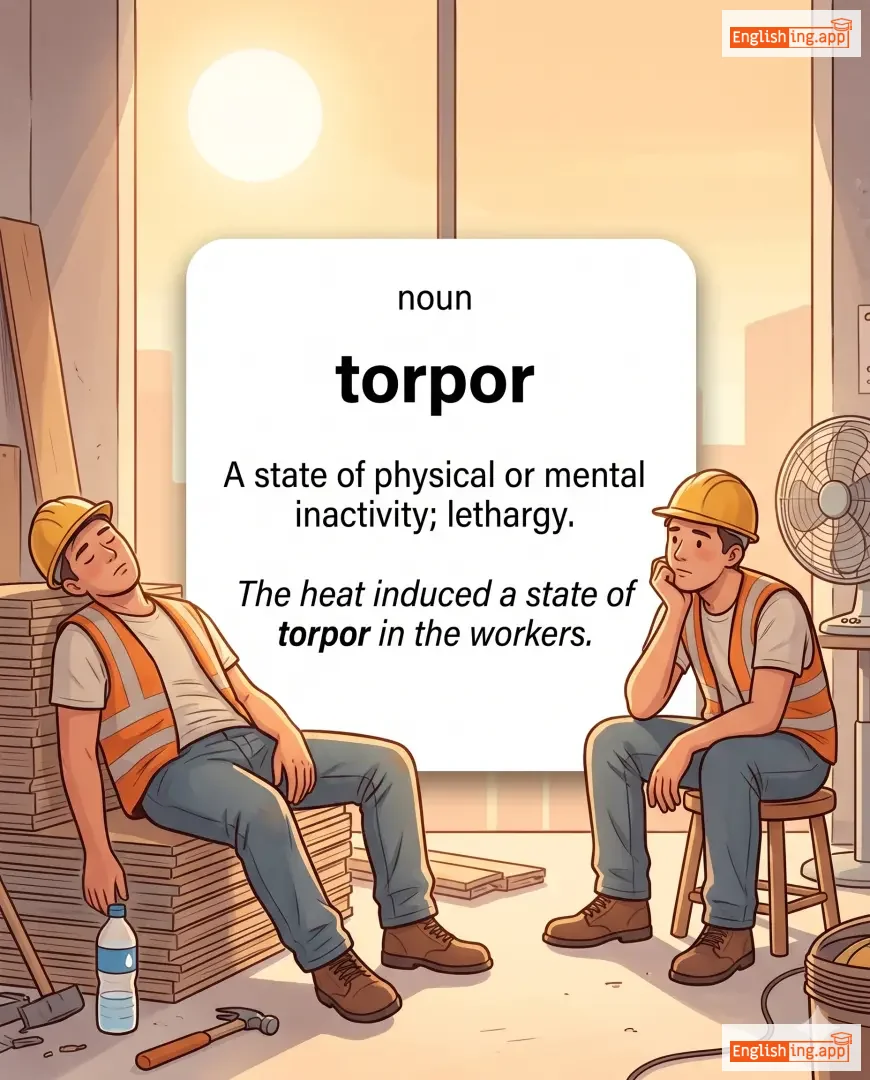
torpor definition card — visual illustration of the meaning
noun
/ˈtɔːrpər/
летаргия (torpor)

A state of physical or mental inactivity; lethargy.

"The heat induced a state of torpor in the workers."
"Жара вызвала состояние летаргии у рабочих." (Zhara vyzvala sostoyanie letargii u rabochikh.)
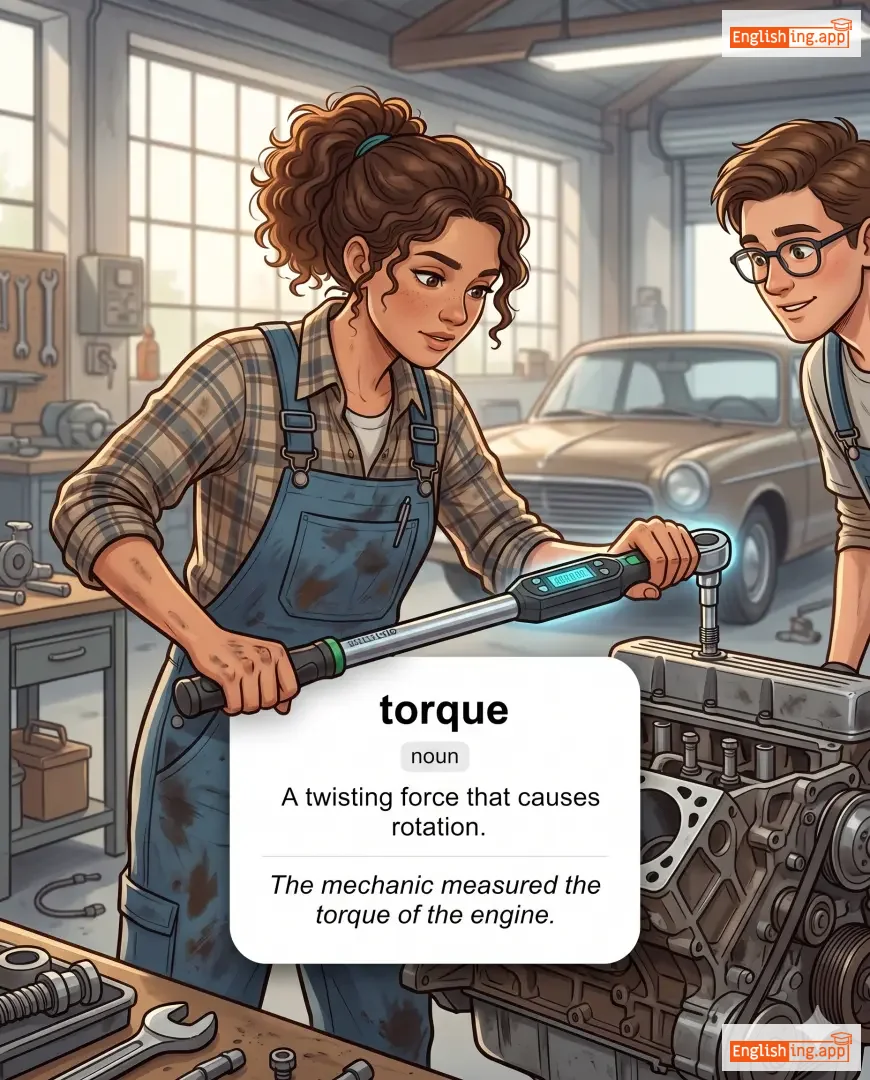
torque definition card — visual illustration of the meaning
noun
/tɔːrk/

A twisting force that causes rotation.

"The mechanic measured the torque of the engine."

noun
/ˈtɔːrənt/
поток (potok)

A strong and fast-moving stream of water; a sudden, violent outpouring of something.

"A torrent of rain flooded the streets."

"Поток дождя затопил улицы." (Potok dozhdya zatopil ulitsy.)