Словари

Словарь английского языка | Значения слов, определения и примеры

👩‍🏫

Teacher (tichar)

noun
/ˈtiːtʃər/
учитель (uchitel)

a person who teaches, especially in a school

"Mr. Smith is the teacher of the math class."

"Мистер Смит - учитель математического класса." (Mister Smit - uchitel matematicheskogo klassa.)
noun
/ˈtiːtʃɪŋ/
преподавание (prepodavanie)

the profession or practice of teaching

"Teaching is a noble profession."

"Преподавание - благородная профессия." (Prepodavanie - blagorodnaya professiya.)
noun
/tiːm/
команда (komanda)

a group of people working together towards a common goal

"Our team won the match after a great effort."

"Наша команда выиграла матч после больших усилий." (Nasha komanda viygrala match posle bol'shikh usiliy.)
noun
/ˈtiːmmeɪt/
товарищ по команде (tovarishtch po komande)

a member of the same team

"He congratulated his teammate after scoring the goal."
"Он поздравил своего товарища по команде после того, как забил гол." (On pozdravil svoego tovarishcha po komande posle togo, kak zabil gol.)
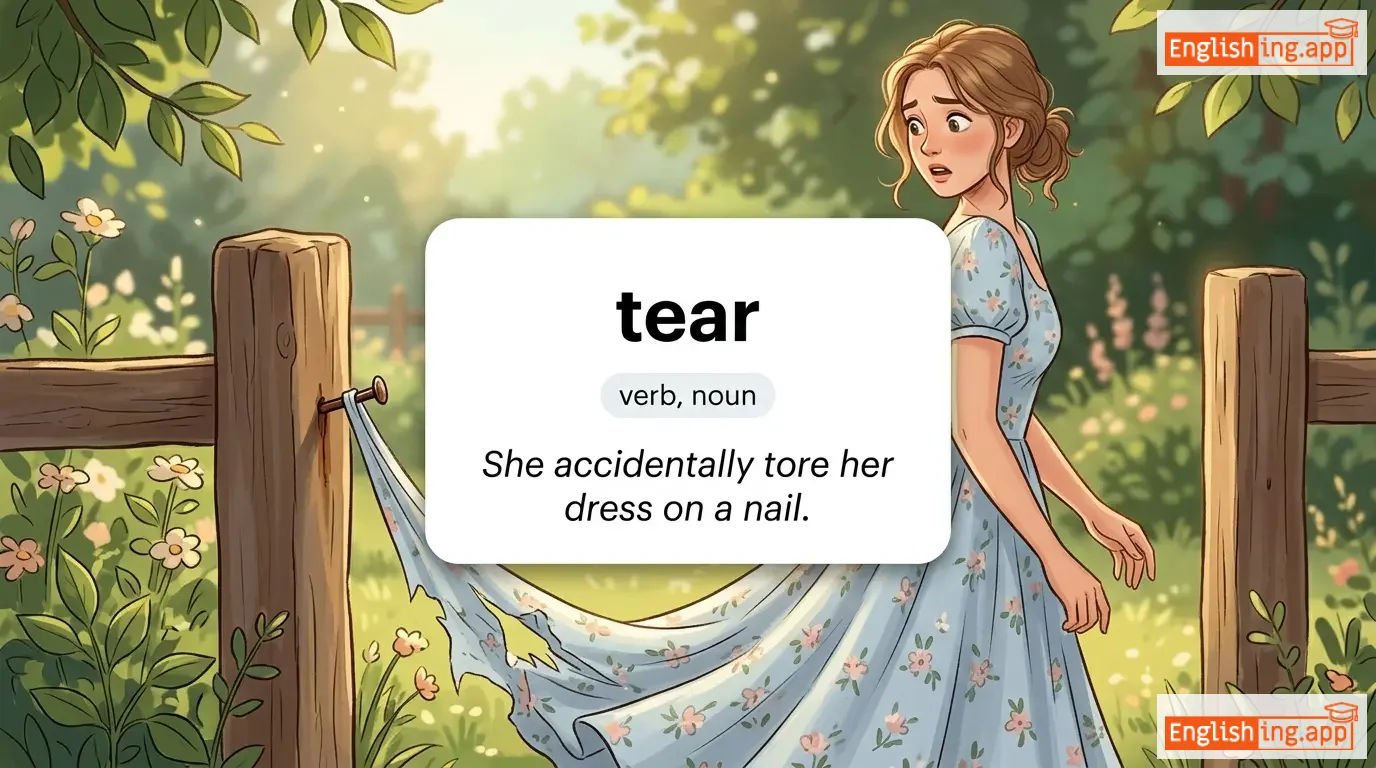
tear definition card — visual illustration of the meaning
💧

tear

verb, noun
/tɪər/ (noun: liquid) /tɛər/ (verb: rip)

As a verb: to pull apart or rip something. As a noun: a drop of clear salty liquid produced by glands in your eyes.

"She accidentally tore her dress on a nail."

adjective
/ˈtɪərfəl/
со слезами; склонный к плачу (so slezami; sklony k plachu)

expressing or showing sadness and sorrow; inclined to weep

"She gave a tearful goodbye to her friends at the airport."

"Она попрощалась с друзьями, прослезившись в аэропорту." (Ona poproshchalas' s druz'yami, proslezhivshis' v aeroportu.)
verb
/tiːz/
дразнить (draznit)

to make fun of someone in a playful or unkind way

"Children often tease their younger siblings playfully."

"Дети часто дразнят своих младших братьев и сестер игриво." (Deti chasto draznyat svoikh mladsikh brat'yev i sestroy igrivo.)
noun
/ˈtiːspuːn/
счастье (schast'ye)

a small spoon used for stirring drinks or eating soft foods, or for measuring small amounts of ingredients.

"Add a teaspoon of sugar to the tea."
"Она не могла скрыть своего счастья, когда получила награду." (Ona ne mogla skryt' svoego schast'ya, kogda poluchila nagradu.)
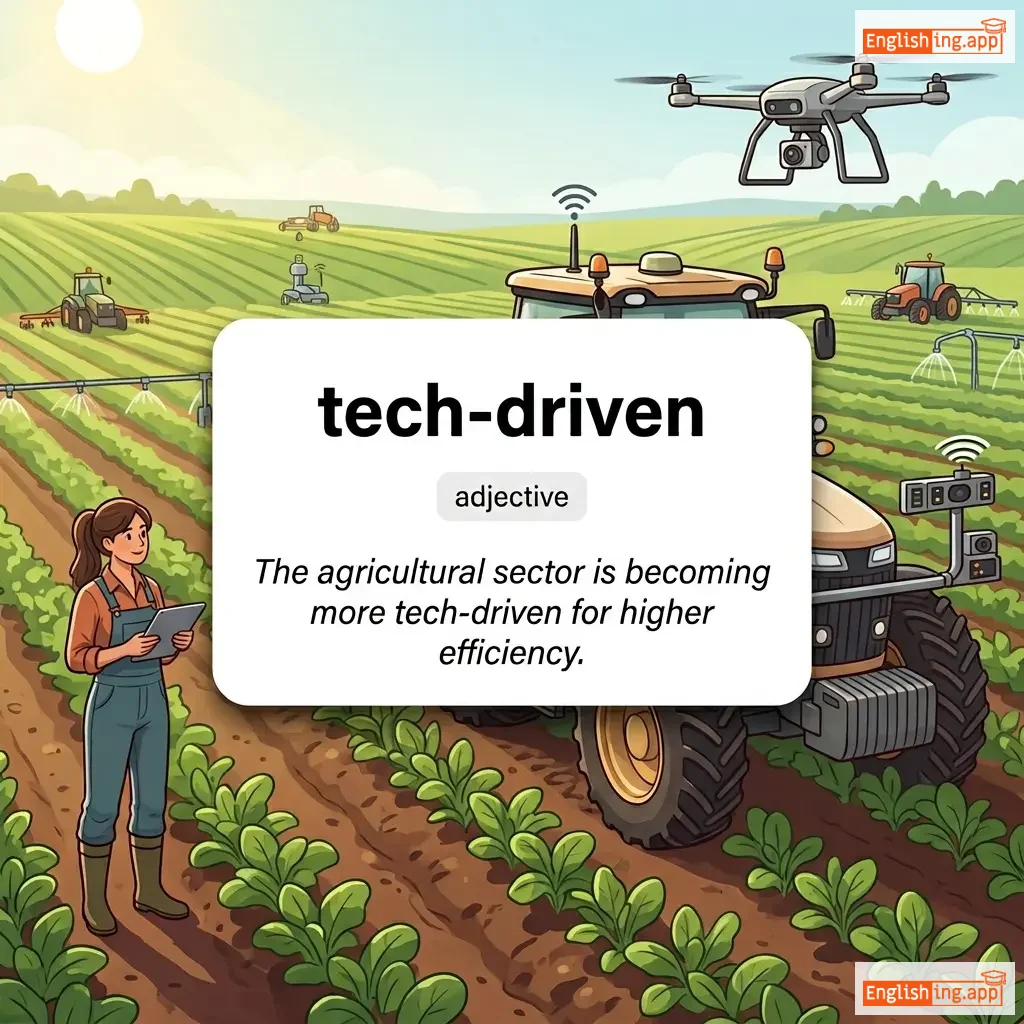
tech-driven definition card — visual illustration of the meaning
adjective
/tɛk ˈdrɪv.ən/
зависящий от технологий (zavisyashchiy ot tekhnologiy)

Powered or guided by technology; dependent on technological advancement for operation.

"The agricultural sector is becoming more tech-driven for higher efficiency."

"Сельское хозяйство становится всё более технологически зависимым для повышения эффективности." (Sel'skoye khozyaystvo stanovitsya vse bolee tekhnologicheski zavisimym dlya povysheniya effektivnosti.)
noun
/ˈtɛknɪk/
техника (tekhnika)

A method, skill, or art in a particular field, especially in the arts or sciences.

"The artist’s technic in watercolor impressed the judges."

"Техника художника в акварели впечатлила судей." (Tekhnika khudozhnika v akvareli vpechatlila sudej.)
adjective
/ˈtɛknɪkəl/
технический (tekhnicheskiy)

relating to a specific subject, art, or craft, or its techniques.

"He has a technical background in engineering."

"У него техническое образование в области инженерии." (U nego tekhnicheskoe obrazovanie v oblasti inzhenerii.)
noun
/ˌtɛknɪˈkæləti/
технический момент (tekhnicheskiy moment)

A small detail of law, rule, or procedure; a minor point that affects an outcome.

"The case was dismissed on a technicality."

"Дело было отклонено из-за технического момента." (Delo bylo otkloneno iz-za tekhnicheskogo momenta.)
noun
/tɛkˈnɪʃən/
техник (tekhnik)

a person skilled in the practical aspects of a particular science, art, or job

"The technician repaired the computer within an hour."

"Техник отремонтировал компьютер за час." (Tekhnik otremontiroval komp'yuter za chas.)
noun
/tɛkˈniːk/
техника (tekhnika)

A particular way of carrying out a task, especially with skill.

"She learned a new breathing technique in yoga class."

"Она изучила новую технику дыхания на занятиях йогой." (Ona izuchila novuyu tekhniku dykhaniya na zanyatiyakh yogoy.)
noun
/tɛkˈnɒɡrəfi/
технография (tekhnohrafiya)

the descriptive study or writing about the practical arts, technologies, or technical methods of a society

"The anthropologist specialized in technography to understand indigenous tool-making traditions."

"Антрополог специализировался на технографии, чтобы понять традиции создания орудий у коренных народов." (Antropolog spetsializirovalsya na tekhnografii, chtoby ponyat' traditsii sozdaniya orudiy u korennykh narodov.)
technological definition card — visual illustration of the meaning
adjective
/ˌteknəˈlɒdʒɪkəl/

relating to or involving technology or technical processes

"The company is investing heavily in technological innovation."

technological advancement definition card — visual illustration of the meaning
noun
/tekˈnɒl.ə.dʒɪ.kəl ədˈvɑːns.mənt/
технологический прогресс (tekhnologicheskiy progress)

Progress or improvement in technology that leads to better solutions or capabilities.

"Technological advancement is revolutionizing healthcare."

"Технологический прогресс революционизирует здравоохранение." (Tekhnologicheskiy progress revolyutsioniziruet zdravookhranenie.)
technology definition card — visual illustration of the meaning
noun
/tɛkˈnɒlədʒi/
технология (tekhnologiya)

the application of scientific knowledge for practical purposes, especially in industry

"Modern technology has revolutionized communication."
"Современные технологии произвели революцию в коммуникациях." (Sovremennye tekhnologii prozveli revolyutsiyu v kommunikatsiyakh.)
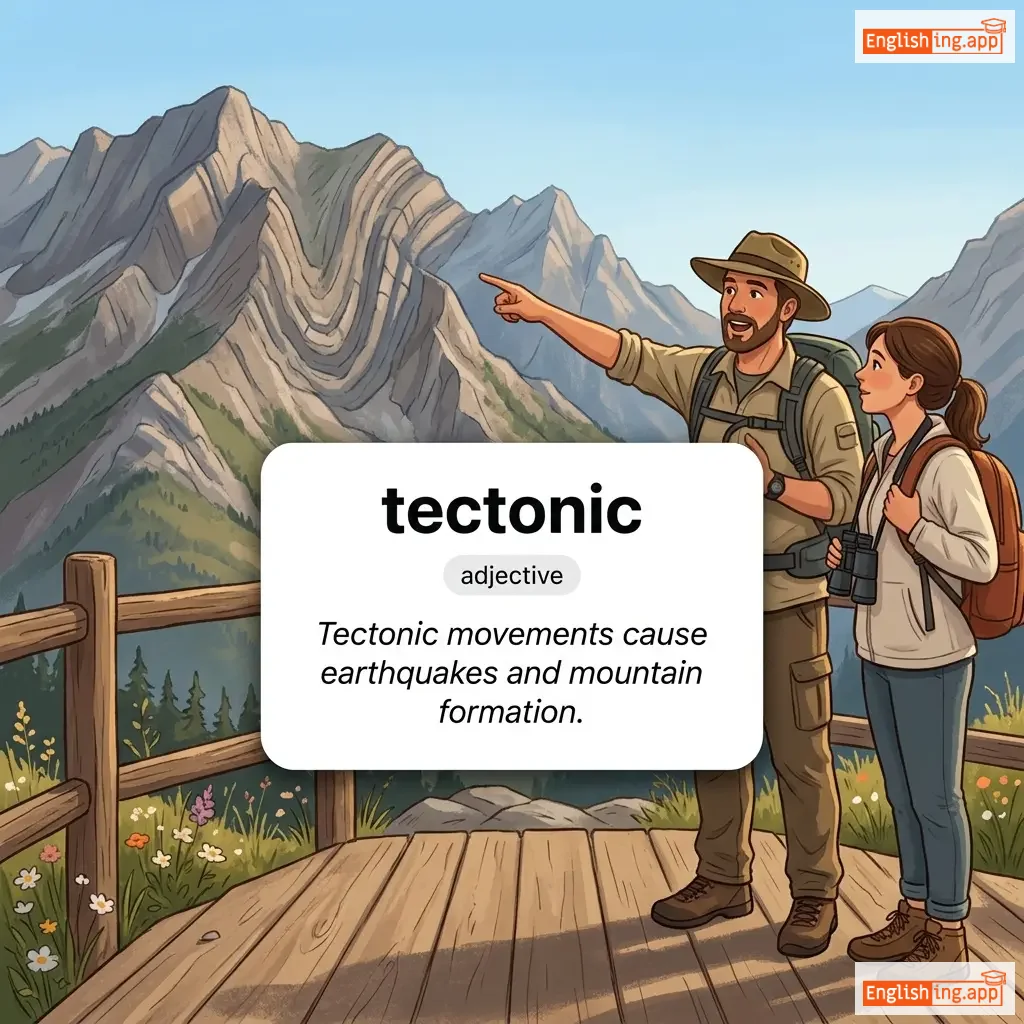
tectonic definition card — visual illustration of the meaning
adjective
/tɛkˈtɑː.nɪk/
тектонический (tektonicheskiy)

Relating to the structure of the earth's crust and the large-scale processes that take place within it.

"Tectonic movements cause earthquakes and mountain formation."

"Тектонические движения вызывают землетрясения и образование гор." (Tektonicheskie dviženiya vyzyvayut zemletryaseniya i obrazovanie gor.)
adjective
/ˈtiːdiəs/
скучный (skuchnyy)

too long, slow, or dull; tiresome or monotonous

"Filling out endless forms can be a tedious task."

"Заполнение бесконечных форм может быть скучным занятием." (Zapolnenie beskonechnykh form mozhet byt' skuchnym zanyatiem.)
noun
/ˈtiːdiəm/
тоска (toska)

the state of being tedious; monotony or boredom

"The tedium of long meetings often drains motivation."

"Тоска от долгих встреч часто истощает мотивацию." (Toska ot dolgikh vstrech chasto istochayut motivatsiyu.)
verb
/tiːm/
кишеть (kishet')

to be full of or swarming with

"The forest teems with wildlife."

"Лес кишит дикой природой." (Les kishit dikoy prirodoy.)
adjective
/ˈtiːmɪŋ/
переполненный (perepolnenny)

full of or swarming with things or people

"The market was teeming with shoppers."

"Рынок был переполнен покупателями." (Rynok byl perepolnen pokupatelyami.)
noun
/tiːn/
подросток (podrostok)

a person aged between 13 and 19 years.

"He's a teenager who loves sports."

"Он подросток, который любит спорт." (On podrostok, kotoryj lyubit sport.)
adjective
/ˈtiːnˌeɪdʒ/
подростковый (podrostkovyj)

relating to or characteristic of people aged between 13 and 19 years old

"She spent her teenage years in a small town."

"Она провела свои подростковые годы в маленьком городе." (Ona provela svoi podrostkovye gody v malen'kom gorode.)
noun
/ˈtiːneɪdʒər/
подросток (podrostok)

a person aged between 13 and 19 years.

"Teenagers often enjoy hanging out with friends."

"Подростки часто любят проводить время с друзьями." (Podrostki chasto lyubyat provodit vremya s druz'yami.)
verb
/ˈtiːtər/
шататься (shatatsya)

to move or balance unsteadily; to wobble

"The glass began to teeter on the edge of the table."

"Стакан начал шататься на краю стола." (Stakan nachal shatatsya na krayu stola.)
noun
/tiːˈtoʊtəlɪzəm/
полное воздержание от алкоголя (polnoe vozderzhanie ot alkogolya)

the practice or principle of abstaining completely from alcoholic drinks

"He practiced teetotalism throughout his life."
"Он практиковал титотализм всю свою жизнь." (On praktikovav titotalizm vsyu svoyu zhizn.)
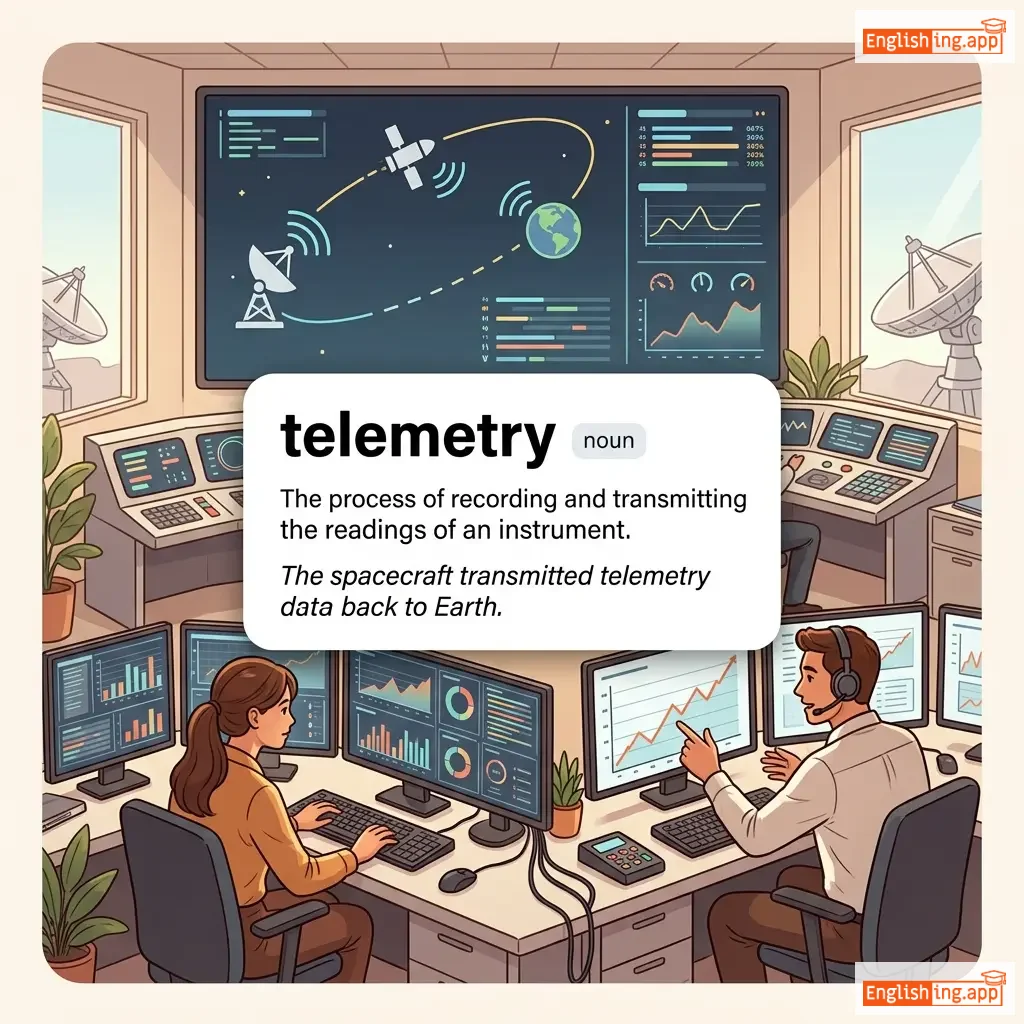
telemetry definition card — visual illustration of the meaning
noun
ˈtɛlɪˌmɛtri
телеметрия (telemetriya)

The process of recording and transmitting the readings of an instrument.

"The spacecraft transmitted telemetry data back to Earth."

"Космический аппарат передал данные телеметрии на Землю." (Kosmicheskiy apparat peredal dannye telemetrii na Zemlyu.)
noun
/ˌtɛliˈɒlədʒi/
телеология (teleologiya)

the explanation of phenomena by the purpose they serve rather than by cause

"Aristotle is often associated with the concept of teleology in philosophy."

"Аристотель часто ассоциируется с концепцией телеологии в философии." (Aristotel' chasto assotsiirovetsya s kontseptsiey teleologii v filosofii.)
noun
/təˈlɛpəθi/
телепатия (telepatia)

the supposed communication of thoughts or ideas by means other than the known senses

"The twins claimed to share telepathy with each other."

"Близнецы заявили, что между ними существует телепатия." (Bliznetsy zayavili, chto mezhdu nimi sushchestvuet telepatia.)
noun
/ˈtɛlɪfəʊn/
телефон (telefon)

a system for transmitting voices over a distance using wire or radio, typically for communication.

"I need to make a telephone call to my friend."

"Мне нужно сделать телефонный звонок другу." (Mne nuzhno sdelat' telefonnyy zvonok drugu.)
noun
/təˈlɛfəni/
телефония (telefoniya)

the technology and systems for transmitting voice over distances by telephone

"Modern telephony has evolved to include internet-based calls."

"Современная телефония развилась, чтобы включать интернет-звонки." (Sovremennaya telefoniya razvila, chtoby vklyuchat' internet-zvonki.)
noun
/ˈtɛlɪˌskoʊp/
телескоп (teleskop)

An optical instrument used to make distant objects appear closer and larger by collecting and focusing light.

"The astronomer used a telescope to observe the distant planets."

"Астроном использовал телескоп для наблюдения за удалёнными планетами." (Astronom ispol'zoval teleskop dlya nablyudeniya za udalennymi planetami.)
noun
/ˈtɛlɪˌvɪʒən/

a device that receives television signals and displays them on a screen

"I like to watch the news on television."

tell definition card — visual illustration of the meaning
verb
/tɛl/
сказать (skazat)

to communicate information, give an account of something, or instruct someone to do something

"She asked him to tell the truth."

"Она попросила его сказать правду." (Ona poprosila ego skazat' pravdu.)
noun
/ˈtɛl.ər/
кассир; рассказчик (kassir; rasskazchik)

A person who counts and manages money at a bank; a person who tells or relates something

"The bank teller counted the cash carefully before handing it over."

"Банковский кассир тщательно пересчитал наличные перед выдачей." (Bankovskiy kassir tscatel'no pereschital nalichnye pered vydachey.)
adjective
/ˈtɛlɪŋ/
знаменательный (znamenatel'ny)

Revealing something significant or giving important information.

"Her silence was more telling than words."

"Ее молчание было более значимым, чем слова." (Eye molchanie bylo bolee znachimym, chem slova.)
adjective
/ˈtɛlˌteɪl/
выдающийся (vydajushchijsja)

Revealing something that is usually hidden; giving away a secret or clue.

"The telltale signs of fatigue were visible on his face."

"Выдающиеся признаки усталости были видны на его лице." (Vydajushchiesya priznakj ustalosti byli vidny na ego litse.)
adjective
/ˌtɛmɪˈrɛəriəs/
безрассудный (bezrassudnyy)

Reckless or rash; showing a lack of caution.

"It was a temerarious decision to cross the river during the storm."

"Это было безрассудное решение пересечь реку во время шторма." (Eto bylo bezrassudnoe reshenie peresech' reku vo vremya shtorma.)
noun
/təˈmɛrɪti/
дерзость (derzost)

Excessive confidence or boldness; audacity.

"He had the temerity to challenge the professor’s argument."

"У него хватило дерзости оспорить аргумент профессора." (U nego khvatilo derzosti osporit' argument professora.)
verb
/ˈtɛmpər/
умерить (umerit)

to moderate, soften, or tone down something; also to strengthen by heat treatment (as in metal).

"She tried to temper her criticism with kindness."

"Она попыталась смягчить свою критику с помощью доброты." (Ona popytalsya smyagchit' svoyu kritiku s pomoshch'yu dobroty.)
noun
/ˈtɛmpərəmənt/
темперамент (temperament)

a person's characteristic mood, disposition, or nature.

"He has a calm temperament that makes him a good leader."

"У него спокойный темперамент, который делает его хорошим лидером." (U nego spokoynyy temperament, kotoryy delayet ego khoroshim liderom.)
temperance definition card — visual illustration of the meaning
noun
/ˈtɛmpərəns/
воздержание (vozderzhanie)

moderation in action, thought, or feeling; restraint, especially regarding alcohol.

"The monk practiced temperance in all aspects of his life."

"Монах практиковал воздержание во всех аспектах своей жизни." (Monakh praktikovall vozderzhanie vo vsekh aspektakh svoey zhizni.)
adjective
/ˈtɛmpərət/
умеренный (umerennyy)

showing moderation or self-restraint; also describing mild climate.

"He is known for his temperate behavior even in stressful situations."
"Он известен своим умеренным поведением даже в стрессовых ситуациях." (On izvesten svoim umerenym povedeniem dazhe v stressovykh situatsiyakh.)
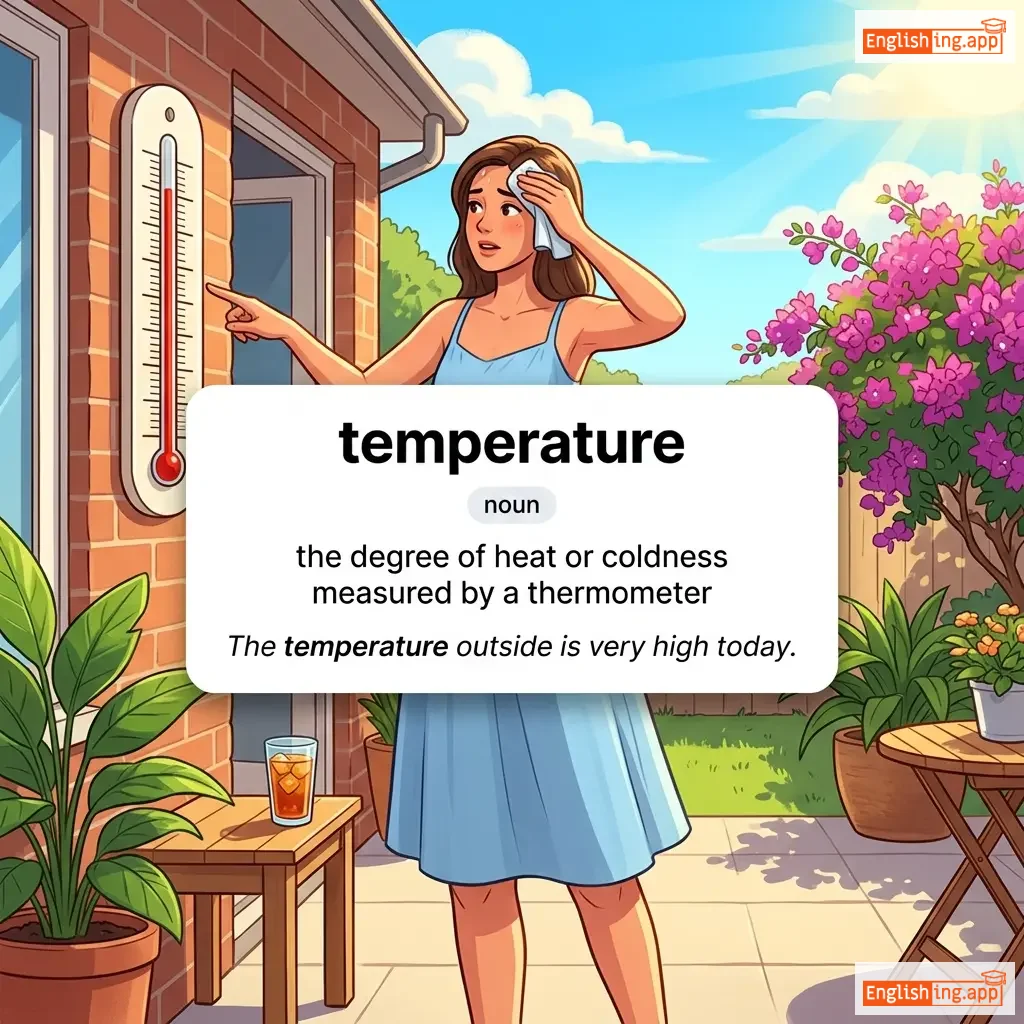
temperature definition card — visual illustration of the meaning
noun
/ˈtɛmpərətʃər/
температура (temperatura)

the degree of heat or coldness measured by a thermometer

"The temperature outside is very high today."

"Сегодня температура на улице очень высокая." (Segodnya temperatura na ulitse ochen' vysokaya.)
adjective
/ˈtɛmpərd/
умеренный (umerennyy)

having a specified temper or disposition; strengthened or moderated.

"She gave a tempered response to the criticism."

"Она дала умеренный ответ на критику." (Ona dala umerenyy otvet na kritiku.)
noun
/ˈtem.pɪst/
шторм (shtorm)

a violent storm with strong winds; a state of great disturbance or tumult

"The sailors struggled to navigate through the fierce tempest."

"Моряки боролись с тем, чтобы пройти через яростный шторм." (Moryaki borolis' s tem, chtoby proyti cherez yarostnyy shtorm.)
adjective
/tɛmˈpɛstjuəs/
бурный (burniy)

Characterized by strong and turbulent emotions or stormy conditions.

"Their tempestuous relationship often swung between love and anger."

"Их бурные отношения часто колебались между любовью и гневом." (Ikh burnye otnosheniya chasto kolebalis mezhdu lyubovyu i gnevom.)
noun
/ˈtɛmpəl/
храм (khram)

a building used for the worship of a god or gods

"They visited an ancient temple during their trip to India."

"Они посетили древний храм во время своей поездки в Индию." (Oni posetili drevniy khram vo vremya svoey poezdki v Indiyu.)