Словари

Словарь английского языка | Значения слов, определения и примеры
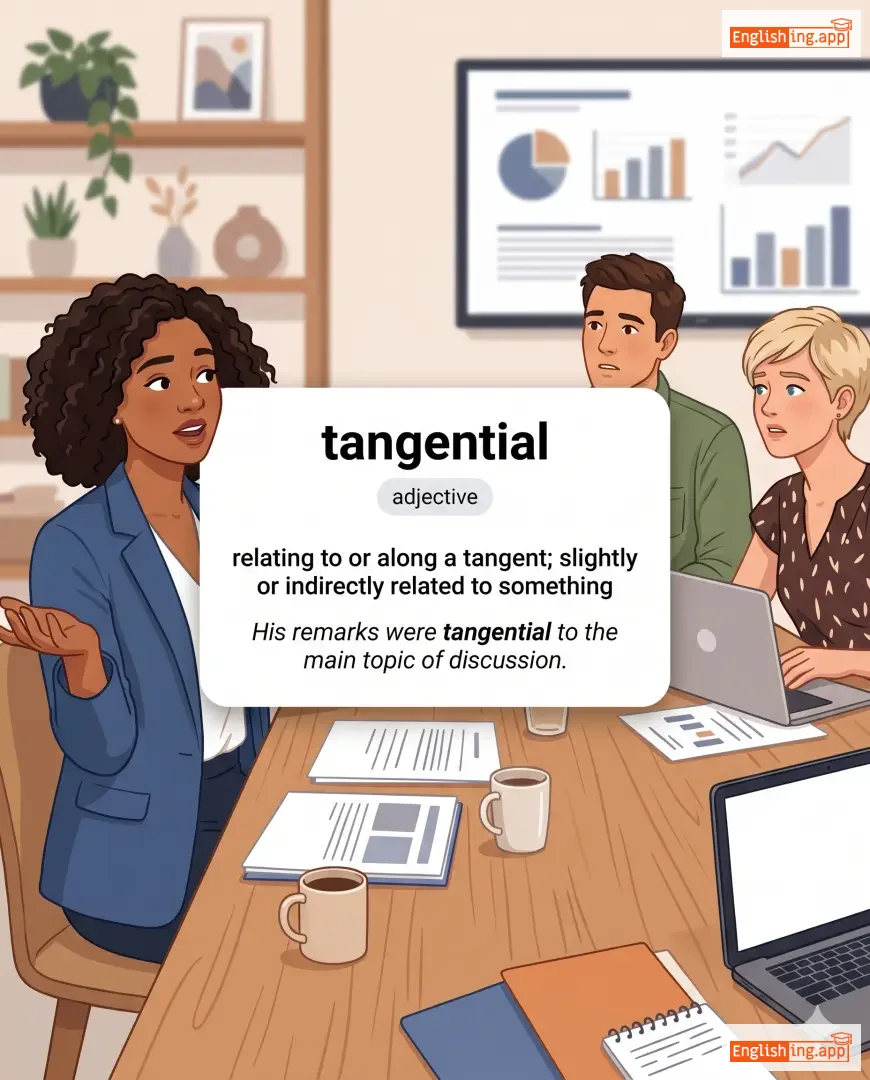
tangential definition card — visual illustration of the meaning
adjective
/tænˈdʒɛnʃəl/
касательный (kasatel'nyy)

relating to or along a tangent; slightly or indirectly related to something

"His remarks were tangential to the main topic of discussion."

"Его замечания были касательными к основной теме обсуждения." (Ego zamechaniya byli kasatel'nymi k osnovnoy teme obsuzhdeniya.)
tangible definition card — visual illustration of the meaning
adjective
/ˈtændʒəbl/
осязаемый (osyazaemyy)

perceptible by touch; real and concrete

"The excitement in the room was almost tangible."

"Возбуждение в комнате было почти осязаемым." (Vozbuzhdenie v komnate bylo pochti osyazayemym.)
adjective
/ˈtæŋ.i/
острый (ostryy)

Having a strong, sharp, and pleasantly biting flavor or taste.

"The sauce had a tangy flavor that brightened the dish."

"Соус имел острый вкус, который сделал блюдо еще более вкусным." (Sous imel ostry vkus, kotoryy sdelal blyudo eshche bolee vkusnym.)
🚙

Tank

noun
/tæŋk/

a large, heavy military vehicle that moves on tracks and is armed with weapons

"The army sent tanks to the front lines."

noun
/ˈtæn.ər/
кожевник (kozhevnik)

A person whose job is to tan animal hides to make leather.

"The tanner worked long hours to produce fine leather."

"Кожевник работал долгие часы, чтобы произвести качественную кожу." (Kozhevnik rabotal dolgye chasy, chtoby proizvesti kachestvennuyu kozhu.)
noun
/ˈtæn.ə.ri/
кожевня (kozhevnya)

A place where animal hides are processed into leather.

"The tannery produced high-quality leather for export."

"Кожевня производила кожу высокого качества для экспорта." (Kozhevnya proizvodila kozhu vysokogo kachestva dlya eksporta.)
verb
/ˈtæn.tə.laɪz/
соблазнять (soblazyat)

To tease or torment someone with the promise of something desirable but unattainable.

"The aroma of the bakery tantalized the hungry children."

"Аромат пекарни манил голодных детей." (Aromat pekarni manil golodnykh detey.)
adjective
/ˈtæn.tə.laɪ.zɪŋ/
манящий (manyashchiy)

Something that excites desire or interest, often by being just out of reach.

"She wore a tantalizing perfume that caught everyone's attention."

"Она носила манящий аромат, который привлек внимание всех." (Ona nosila manyashchiy aromat, kotoryy privlek vnimanie vsekh.)
adjective
/ˈtæntəmaʊnt/
эквивалентный (ekvivalentnyy)

Equivalent in seriousness or effect; virtually the same as.

"His refusal to speak was tantamount to an admission of guilt."

"Его отказ говорить был эквивалентен признанию вины." (Yego otkaz govorit' byl ekvivalenten priznaniju viny.)
noun
/ˈtæntrəm/
истерика (isterika)

An uncontrolled outburst of anger and frustration, typically in a young child.

"The child threw a tantrum when he didn’t get the toy."

"Ребёнок устроил истерику, когда не получил игрушку." (Rebyonok ustroil isteriku, kogda ne poluchil igrooshku.)
verb
/tæp/
постучать (postuchat)

to strike something lightly, usually with a quick, sharp sound

"He tapped on the door to get her attention."

"Он постучал в дверь, чтобы привлечь её внимание." (On postuchal v dver', chtoby privlech' yeye vnimanie.)
noun
/teɪp/
скотч (skotch)

a long, narrow strip of material, often sticky on one side, used for fastening or sticking things together

"I need some tape to seal this box."

"Мне нужно немного скотча, чтобы запечатать эту коробку." (Mne nuzhno nemnogo skotcha, chtoby zapechatat' etu korobku.)
verb
/ˈteɪpər/
сужаться (sujatsya)

To gradually decrease in width, thickness, or intensity.

"The road tapers off as it reaches the mountains."

"Дорога сужается по мере того, как она достигает гор." (Doroga suzhayetsya po mere togo, kak ona dostigaet gor.)
noun
/ˈtæpəstri/
гобелен (gobelen)

A piece of thick textile fabric with pictures or designs woven into it, often hung on walls.

"The museum displayed an ancient tapestry from the 15th century."

"Музей выставил древний гобелен XV века." (Muzei vystavil drevniy gobelen XV veka.)
noun
/təˈræntjʊlə/
тарантула (tarantula)

A large hairy spider found in warm regions.

"The tarantula crawled across the desert floor."

"Тарантула ползла по песчаному полу пустыни." (Tarantula polzla po peschanomuu polu pustyni.)
adjective
/ˈtɑːrdi/
опоздавший (opozdavshiy)

Delayed; arriving or happening late.

"The student received a warning for being tardy to class."

"Студент получил предупреждение за опоздание в класс." (Student poluchil preduprezhdenie za opozdanie v klass.)
target definition card — visual illustration of the meaning
noun
/ˈtɑːɡɪt/
цель (tsel)

a goal or objective that one aims to achieve

"The team set a target to increase sales by 20%."
"Команда установила цель увеличить продажи на 20%." (Komanda ustanovila tsel' uvelichit' prodazhi na 20%.)
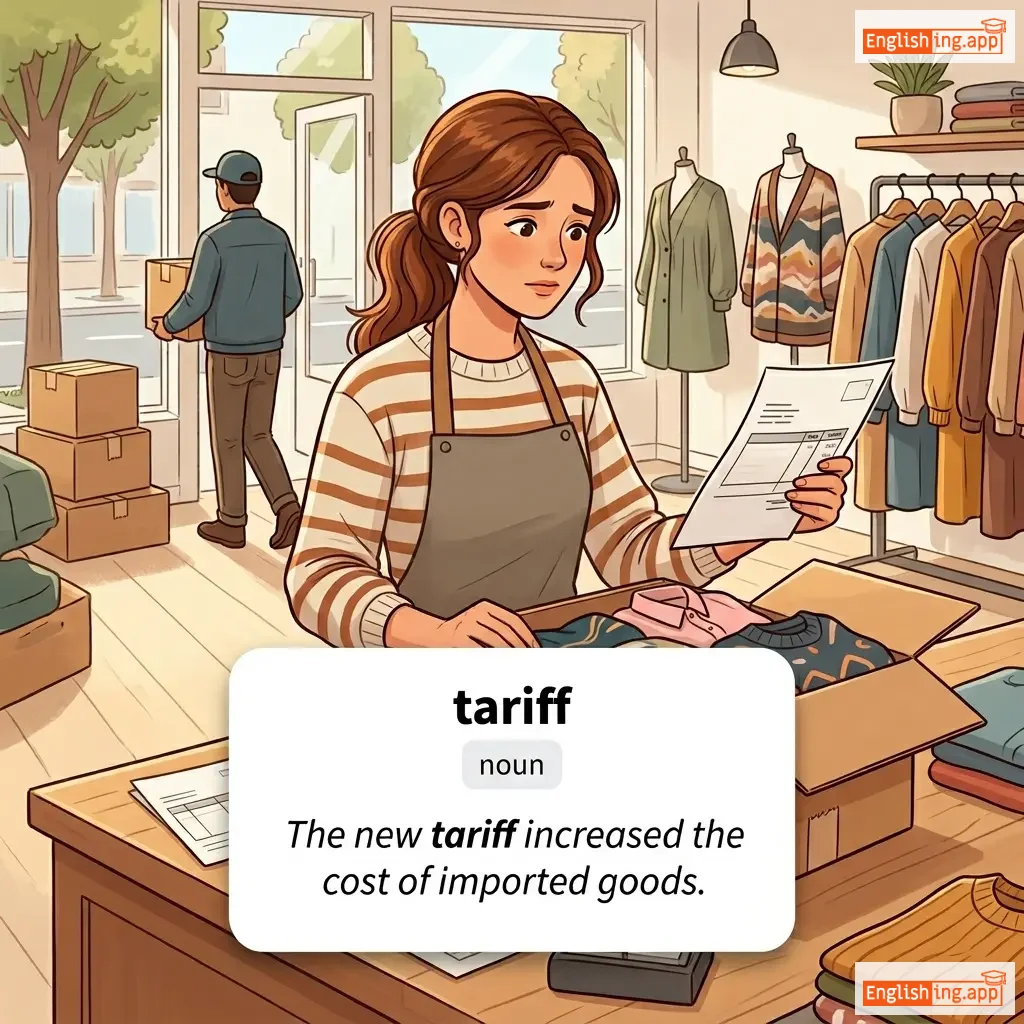
tariff definition card — visual illustration of the meaning
noun
/ˈtær.ɪf/
тариф (tarif)

A tax imposed by the government on imported or exported goods, also known as duty, customs tax, or levy.

"The new tariff increased the cost of imported goods."

"Новый тариф увеличил стоимость импортированных товаров." (Novyj tarif uvelichil stoimost' importirovannyh tovarov.)
noun
/tɑːrn/
горное озеро (gornoye ozero)

A small mountain lake or pool.

"We camped near a tranquil tarn in the highlands."

"Мы разбили лагерь рядом с тихим горным озером в высокогорье." (My razbili lager' ryadom s tikhim gornym ozerom v vysokogorye.)
verb
/ˈtɑːrnɪʃ/
потускнеть (potusknet')

To lose luster, especially as a result of exposure to air or moisture; to damage reputation.

"The silver jewelry tarnished quickly when left in the open air."

"Серебряные украшения быстро потускнели, когда их оставили на воздухе." (Serebryanye ukrasheniya bystro potuskneli, kogda ikh ostavili na vozdukhe.)
noun
/tɑːrˈpɔːlɪn/
брезент (brezent)

A large sheet of strong, flexible, water-resistant material used for covering or protecting things.

"The workers used a tarpaulin to cover the construction materials from rain."

"Рабочие использовали брезент, чтобы накрыть строительные материалы от дождя." (Rabochie ispolzovali brezent chtoby nakryt stroitelnyye materialy ot dozhdya.)
verb
/ˈtæri/
задерживаться (zaderzhivat'sya)

To delay or linger; to stay longer than intended.

"Do not tarry, or you will miss the train."

"Не задерживайся, иначе опоздаешь на поезд." (Ne zaderzhivaysya, inache opozdaesh' na poezd.)
noun, adjective
/tɑːrt/
пирог (tart)

A small pie with a sweet or savory filling; or having a sharp, sour taste.

"She served a delicious apple tart for dessert."

"Она подала на десерт вкусный яблочный пирог." (Ona podala na desert vkusnyy yablochnyy pirog.)
noun
/tɑːsk/
задача (zadacha)

a piece of work or duty to be done

"He completed the task before the deadline."
"Он завершил задачу до срока." (On zavershil zadachu do sroka.)
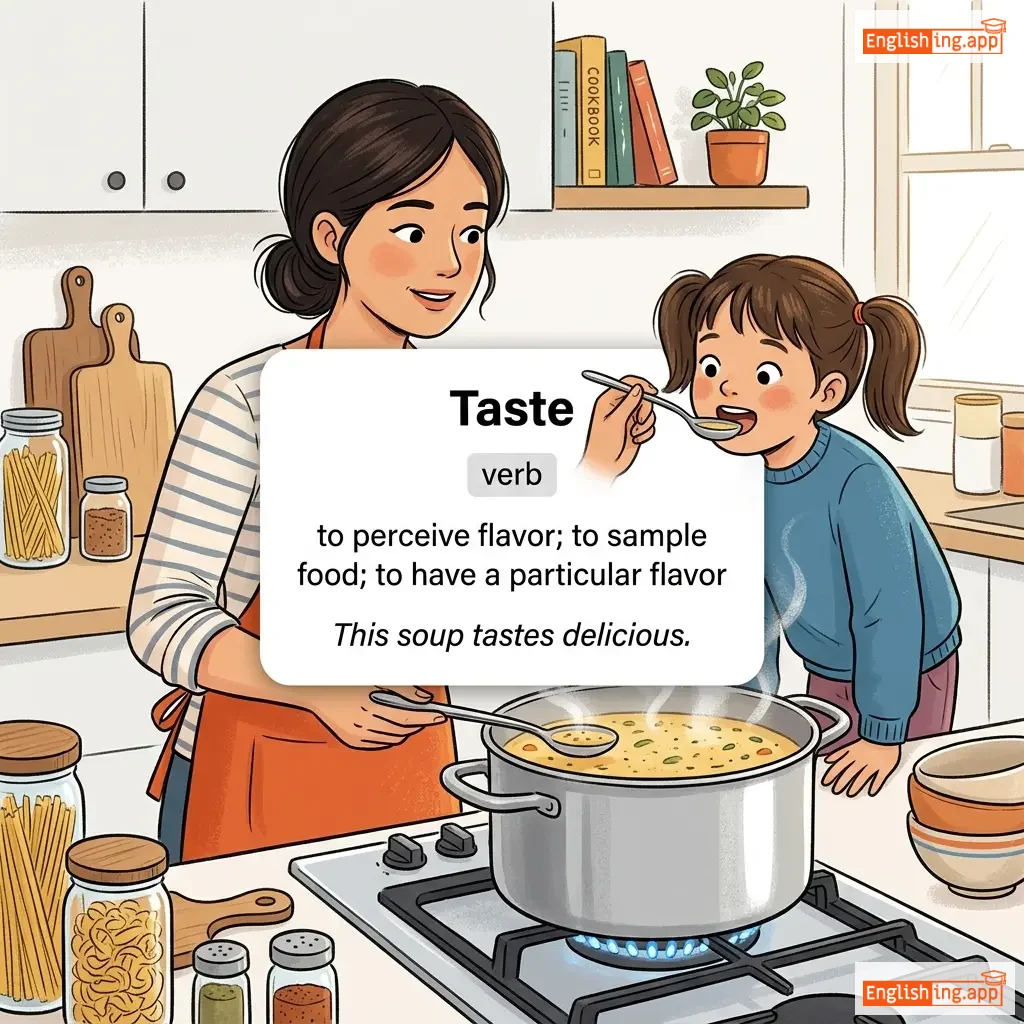
Taste definition card — visual illustration of the meaning
noun
/teɪst/
вкус (vkus)

the sensation of flavor perceived in the mouth

"The cake had a delicious taste."

"Торт имел восхитительный вкус." (Tort imel voskhititel'nyy vkus.)
adjective
/ˈteɪst.fəl/
вкусный; элегантный; со вкусом (vkusnyy; elegantnyy; so vkusom)

showing good judgment in matters of style and beauty

"She decorated her home in a very tasteful manner."

"Она украсила свой дом очень со вкусом." (Ona ukrasila svoi dom ochen' so vkusom.)
adjective
/ˈteɪst.ləs/
безвкусный (bezvkusny)

lacking flavor; showing poor judgment in style

"The soup was completely tasteless and needed more seasoning."

"Суп был полностью безвкусный и нуждался в дополнительных специях." (Sup byl polnost'yu bezvkusny i nuzhdalsya v dopolnitel'nykh spetciyakh.)
adjective
/ˈteɪsti/
вкусный (vkusnyy)

Having a pleasant, distinct flavor; delicious.

"The chef prepared a very tasty curry."

"Шеф-повар приготовил очень вкусное карри." (Shef-povar prigotovil ochen' vkusnoe karri.)
noun, verb
/ˈtætər/
лохмотья (tatter)

A torn piece of cloth or clothing; to become ragged or torn.

"The old flag hung in tatters after the storm."

"Старый флаг висел в лохмотьях после шторма." (Staryy flag visel v lohmotyakh posle shtorma.)
noun, adjective
/ˌtætərdɪˈmeɪliən/
человек в рваной одежде (chelovek v rvanoy odezhde)

A person dressed in ragged clothes; ragged or dilapidated in appearance.

"A tatterdemalion wandered the streets in search of food."

"Тэттердемалион бродил по улицам в поисках еды." (Tetterdemalion brodil po ulitsam v poiskakh yedy.)
adjective
/ˈtæti/
потрепанный (potrepyanniy)

Worn out, shabby, or in poor condition.

"The sofa looked old and tatty after years of use."

"Диван выглядел старым и потрепанным после многих лет использования." (Divan viglyadel starym i potrepyannym posle mnogikh let ispol'zovaniya.)
verb
/tɔːnt/
дразнить (draznit)

to provoke or challenge someone with insulting remarks

"The bully tried to taunt him with cruel words."

"Задира пытался дразнить его жестокими словами." (Zadira pytalsya draznit ego zhestokimi slovami.)
adjective
/tɔːt/
натянутый (natyanutyj)

stretched or pulled tight; tense

"The rope was pulled taut between the two poles."

"Веревка была натянута между двумя столбами." (Veriovka byla natianuta mezhdu dvumia stolbami.)
adjective
/ˌtɔːtəˈlɒdʒɪkəl/
тавтологичный (tavtologichnyy)

expressing something by repeating the same idea in different words; redundant

"Saying 'free gift' is considered tautological."
"Сказать 'бесплатный подарок' считается тавтологией." (Skazat' 'besplatnyy podarok' schitayetsya tavtologiyey.)
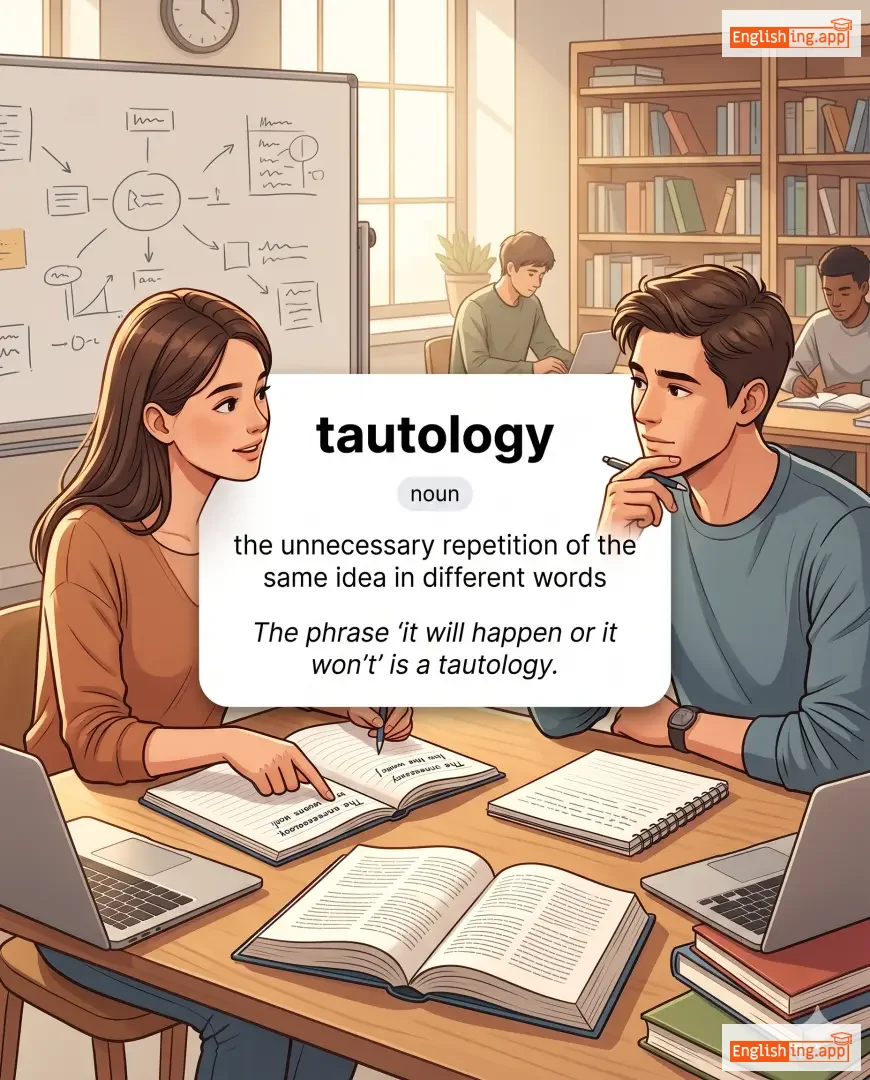
tautology definition card — visual illustration of the meaning
noun
/tɔːˈtɒlədʒi/
ненужное повторение (nenuzhnoe povtorenie)

the unnecessary repetition of the same idea in different words

"The phrase 'it will happen or it won’t' is a tautology."

"Фраза 'это случится или не случится' — это тавтология." (Fraza 'eto sluchitsya ili ne sluchitsya' — eto tautologiya.)
adjective
/ˈtɔːdri/
дешевый и показной, но низкого качества (deshevyy i pokaznoy, no nizkogo kachestva)

cheap and showy but of poor quality

"She wore a tawdry necklace that broke easily."

"Она носила дешевое и показное ожерелье, которое легко сломалось." (Ona nosila deshevoye i pokaznoye ozherelye, kotoroye legko slomalos'.)
adjective
/ˈtɔːni/
жёлто-коричневый цвет (zhelto-korichnevyy tsvet)

A warm, sandy or golden-brown color.

"The owl's tawny feathers blended with the tree bark."

"Жёлто-коричневые перья совы сливались с корой дерева." (Zhelto-korichnevye per'ya sovy slivalis' s koroy dereva.)
noun
/tæks/
налог (nalog)

a compulsory contribution to state revenue, typically levied on income or sales

"The government increased the tax rate on luxury goods."

"Правительство увеличило налоговую ставку на предметы роскоши." (Pravitel'stvo uvelichilo nalogovuyu stavku na predmesty roskoshi.)
noun
/tækˈseɪʃən/
налогообложение (nalogooblozhenie)

The system of imposing and collecting taxes.

"Taxation is necessary for funding public services."

"Налогообложение необходимо для финансирования общественных услуг." (Nalogooblozhenie neobkhodimo dlya finansirovaniya obshchestvennykh uslug.)
noun
/ˈtæksi/
такси (taksi)

A car licensed to transport passengers in exchange for payment of a fare.

"We hailed a taxi to get to the airport."

"Мы вызвали такси, чтобы доехать до аэропорта." (My vyzvali taksi, chtoby doyekhat do aeroporta.)
noun
/ˈtæk.si kæb/
такси (taksi)

A car that carries passengers for a fare, usually in cities

"We took a taxi cab to the restaurant."

"Мы поехали на такси в ресторан." (my poekhali na taksi v restoran.)
noun
/ˈtæksɪˌdɜːrmi/
таксидермия (taksidermiya)

The art of preparing, stuffing, and mounting the skins of animals for display.

"The museum had a large collection of taxidermy animals."

"В музее была большая коллекция чучел животных." (V muzeye byla bol'shaya kollektsiya chuchel zhivotnykh.)
adjective
/ˈtæksɪŋ/
изнурительный (iznuryitel'nyy)

Requiring a lot of effort; physically or mentally demanding.

"Preparing for the exam was a taxing experience."

"Подготовка к экзамену была изнурительным опытом." (Podgotovka k ekzameny byla iznuryitel'nym opytom.)
noun
/tækˈsɒnəmɪst/
таксономист (taksonomist)

A scientist who classifies organisms into groups based on their characteristics.

"The taxonomist discovered a new species of insect."
"Таксономист обнаружил новый вид насекомых." (Taksonomist obnaruzhil novyy vid nasekomykh.)
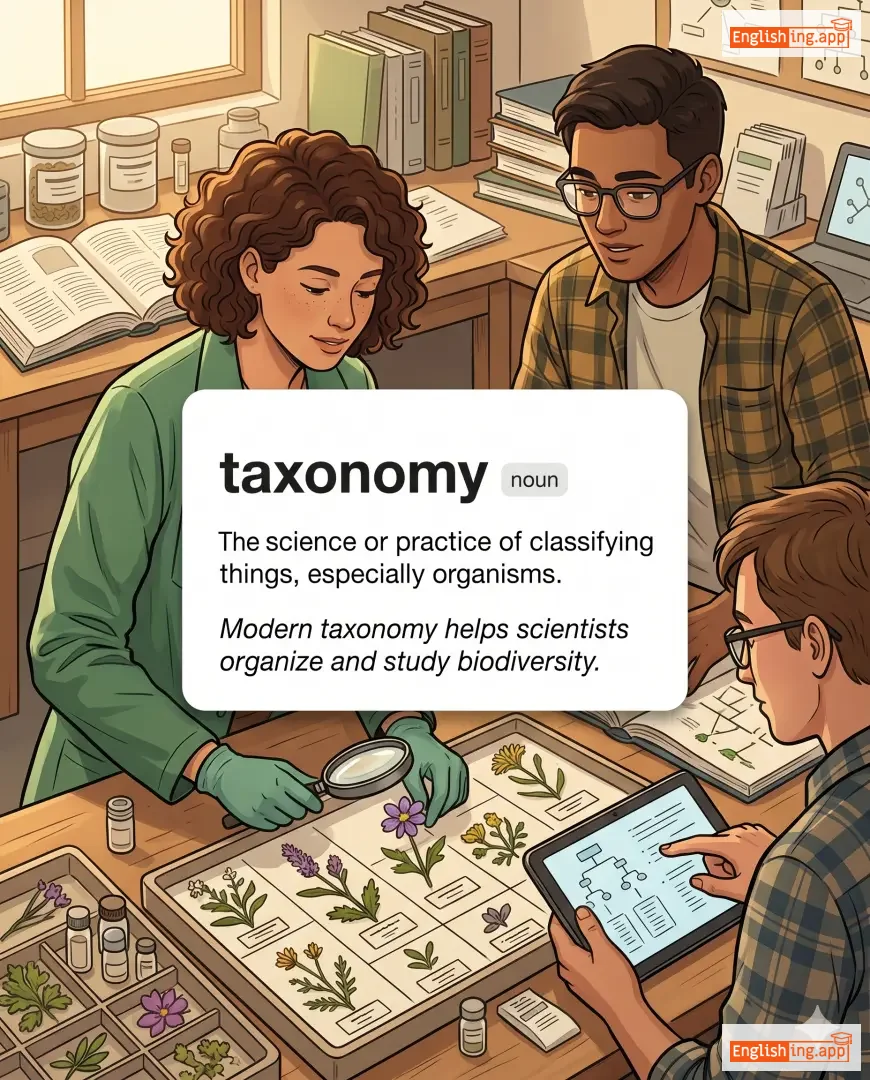
taxonomy definition card — visual illustration of the meaning
noun
/tækˈsɒnəmi/
наука о классификации (nauka o klassifikatsii)

The science or practice of classifying things, especially organisms.

"Modern taxonomy helps scientists organize and study biodiversity."

"Современная таксономия помогает ученым организовывать и изучать биологическое разнообразие." (Sovremennaya taksonomiya pomogaet uchenym organizovyvat' i izuchat' biologicheskoe raznoobrazie.)
noun
/ˈtæksˌpeɪər/
налогоплательщик (nalogoplatel'shchik)

a person who pays tax to the government

"The taxpayers' money is used to fund public services."

"Деньги налогоплательщиков используются для финансирования общественных услуг." (Dengi nalogoplatel'shchikov ispol'zuyutsya dlya finansirovaniya obshchestvennykh uslug.)
noun
/tiː/
чай (chay)

a hot drink made by infusing the dried, crushed leaves of the tea plant in boiling water

"I drink tea every morning to start my day."

"Я пью чай каждое утро, чтобы начать свой день." (Ya p'yu chay kazhdoye utro, chtoby nachat' svoy den'.)
noun
/ˈtiː.pɒt/
чайник (chaynik)

a container with a lid, handle, and spout for brewing and serving tea

"She poured hot water into the tea-pot to make tea."

"Она наливала горячую воду в чайник, чтобы заварить чай." (Ona nalivala goryachuyu vodu v chaynik, chtoby zavarit' chay.)
noun
/tiː ˈstreɪnər/
чайный сито (chaynyy sito)

a small perforated device used to strain tea leaves from brewed tea

"I always use a tea-strainer when pouring tea into cups."

"Я всегда использую чайное сито, когда наливаю чай в чашки." (Ya vsegda ispol'zuyu chaynoe sito, kogda nalivayu chay v chashki.)
teach definition card — visual illustration of the meaning
verb
/tiːʧ/
учить (uchit)

to impart knowledge or skill to someone by instruction or example

"She teaches English to students at the local school."

"Она преподает английский язык студентам местной школы." (Ona prepodayet angliyskiy yazyk studentam mestnoy shkoly.)