Словари

Словарь английского языка | Значения слов, определения и примеры
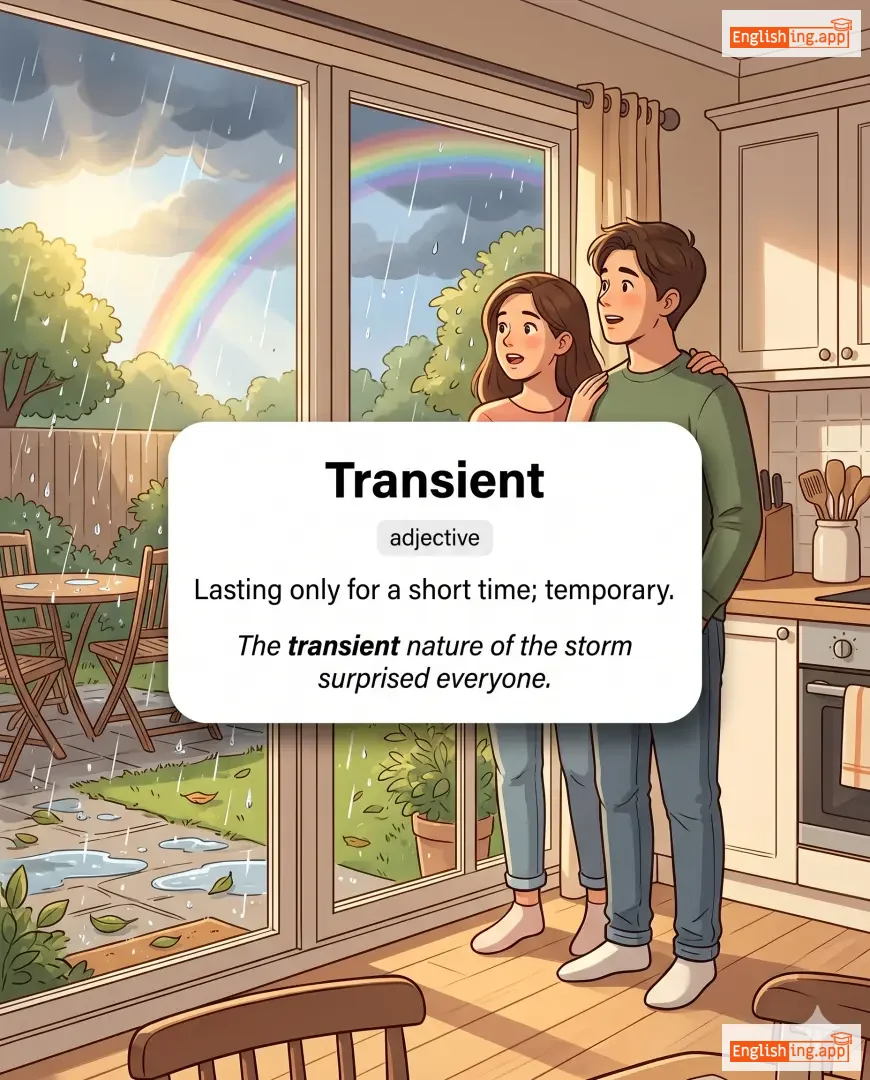
Transient definition card — visual illustration of the meaning
adjective
/ˈtrænziənt/
временный (vremennyy)

Lasting only for a short time; temporary.

"The transient nature of the storm surprised everyone."
"Природа транзитного шторма удивила всех." (Priroda tranzitnogo shtorma udivila vsekh.)
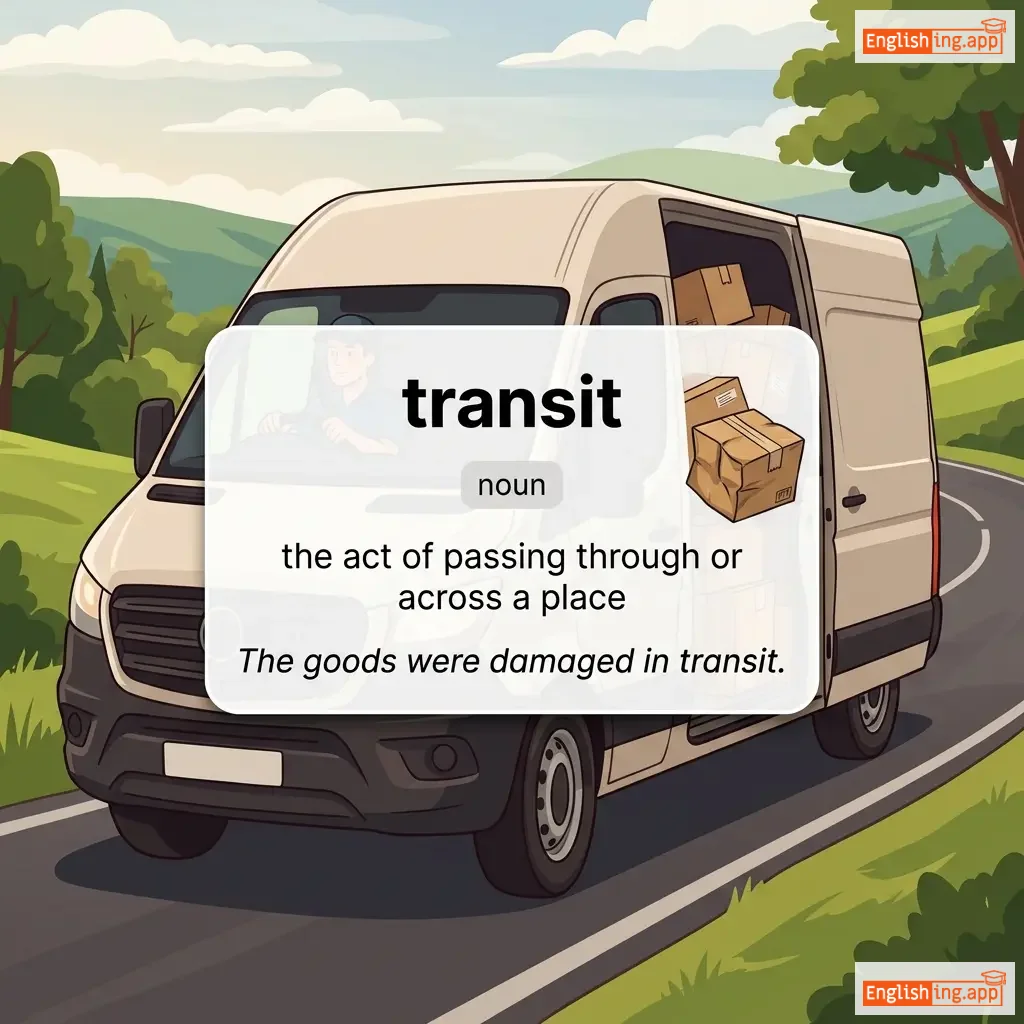
transit definition card — visual illustration of the meaning
noun
/ˈtrænzɪt/
транспортировка (transportirovka)

the act of passing through or across a place

"The goods were damaged in transit."
"Товары были повреждены во время транспортировки." (Tovary byli povrezhdeny vo vremya transportirovki.)
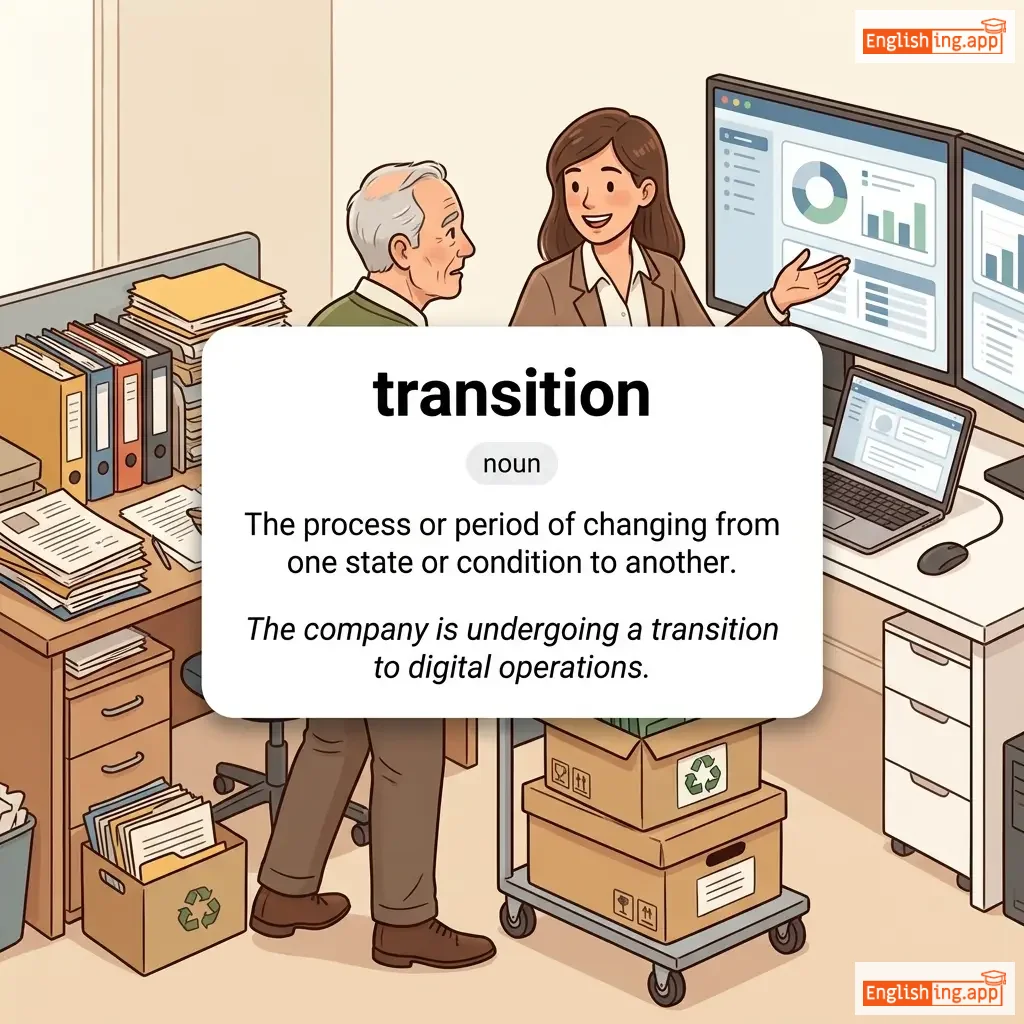
transition definition card — visual illustration of the meaning
noun
/trænˈzɪʃən/
переход (perekhod)

The process or period of changing from one state or condition to another.

"The company is undergoing a transition to digital operations."
"Компания проходит через переход к цифровым операциям." (Kompaniya prokhodit cherez perekhod k tsifrovym operatsiyam.)
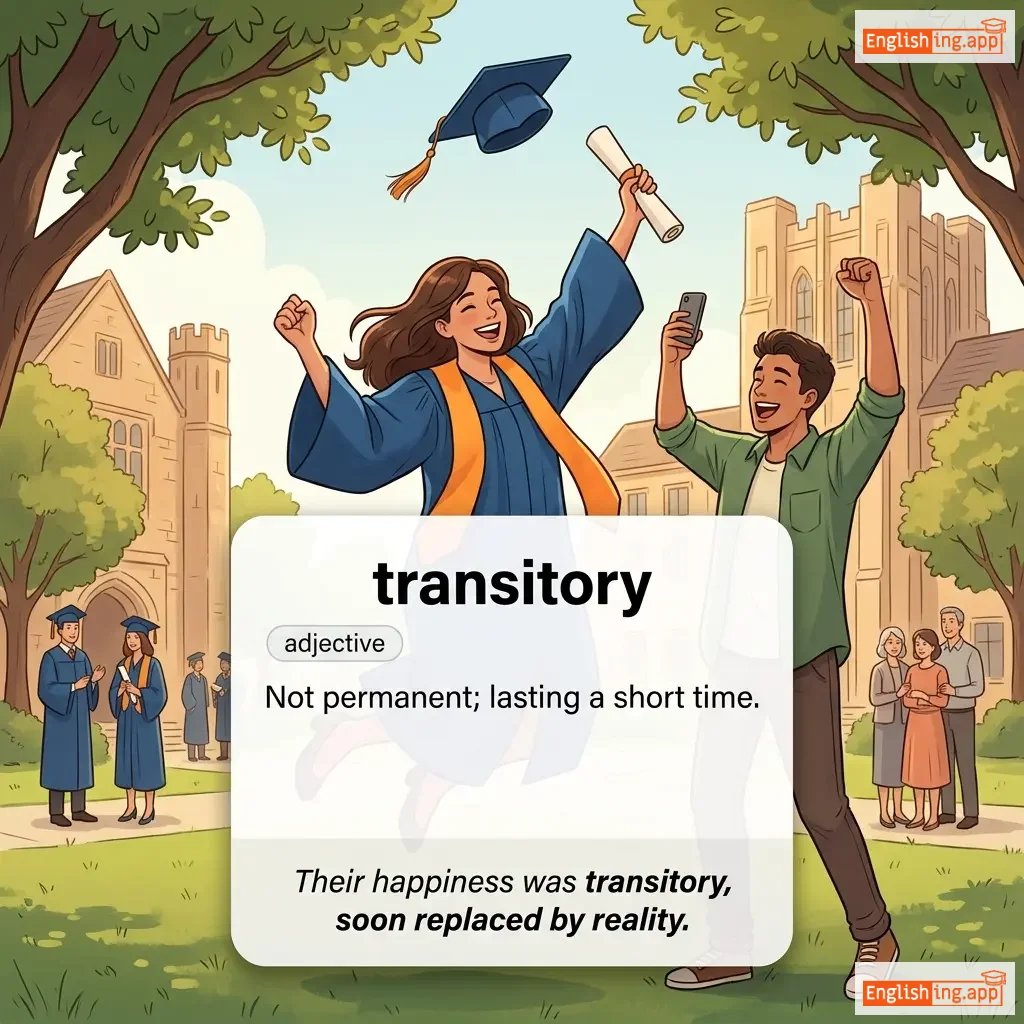
transitory definition card — visual illustration of the meaning
adjective
/ˈtrænzɪtɔːri/
мимолетный (mimoletnyy)

Not permanent; lasting a short time.

"Their happiness was transitory, soon replaced by reality."

"Их счастье было мимолетным, вскоре его заменил реальность." (Ikh schast'ye bylo mimoletnym, vskore ego zamenil real'nost'.)
translate definition card — visual illustration of the meaning
verb
/trænsˈleɪt/
переводить (translayt)

To express the meaning of speech or text in another language.

"She will translate the novel into Bengali."

"Она переведёт роман на бенгальский язык." (Ona perevedet roman na bengalskiy yazik.)
noun
/trænzˈleɪʃən/
перевод (perevod)

the process of converting text or speech from one language into another

"She completed the translation of the book within two months."

"Она завершила перевод книги за два месяца." (Ona zavershila perevod knigi za dva mesyatsa.)
noun
/trænzˈleɪtər/
переводчик (perevodchik)

a person or tool that converts words or text from one language into another

"The translator helped the tourists understand the guide."

"Переводчик помог туристам понять гид." (Perevodchik pomog turistikam ponyat' gid.)
noun
/trænsˈluːsəns/
полупрозрачность (poluproznachnost)

the quality of allowing light to pass through but not detailed shapes

"The translucence of the curtains filled the room with soft light."

"Полупрозрачность занавесок наполнила комнату мягким светом." (Poluproznachnost zanavesok napolnila komnatu myagkim svetom.)
translucent definition card — visual illustration of the meaning
adjective
/trænsˈluːsənt/
полупрозрачный (poluprozrachnyy)

allowing light to pass through, but not clearly enough to see detailed images

"She placed the flower in a translucent vase."

"Она поставила цветок в полупрозрачную вазу." (Ona postavila tsvetok v poluprozrachnuyu vazu.)
adjective
/trænzˈmɪsəbl/
заражённый (zarazhyonyi)

able to be passed or spread from one person or thing to another

"COVID-19 is a highly transmissible disease."

"COVID-19 — это чрезвычайно заразная болезнь." (COVID-19 — eto chrezvychaino zaraznaya bolezn.)
noun
/trænzˈmɪʃən/
передача, трансмиссия (peredacha, transmisiya)

the act of sending, passing, or spreading something such as information, energy, or disease

"The transmission of data over the internet is very fast."

"Передача данных через интернет очень быстрая." (Peredacha dannykh cherez internet ochen bystraya.)
verb
/trænzˈmɪt/
транслировать (translirovat')

to send or pass something from one place or person to another

"The antenna can transmit signals over a long distance."

"Антенна может транслировать сигналы на большое расстояние." (Antenna mozhet translirovat' signaly na bol'shoe rasstoyanie.)
verb
/trænzˈmjuːt/
трансмутировать (transmutirovat')

to change in form, nature, or substance

"Alchemy aimed to transmute lead into gold."

"Алхимия пыталась трансмутировать свинец в золото." (Alhimiya pytalas' transmutirovat' svinets v zoloto.)
transparency definition card — visual illustration of the meaning
noun
/trænsˈpærənsi/
прозрачность (prozrachnost)

the quality of being open and honest; the condition of being easily understood or seen through

"The company is known for its transparency in business practices."

"Компания известна своей прозрачностью в бизнес-практиках." (Kompaniya izvestna svoey prozrachnost'yu v biznes-praktikakh.)
adjective
/trænsˈpɛrənt/
прозрачный (prozrachnyy)

allowing light to pass through so that objects behind can be clearly seen

"The glass is transparent enough to see through."
"Стекло достаточно прозрачное, чтобы можно было через него смотреть." (Steklo dostatochno prozrachnoye, chtoby mozhno bylo cherez nego smotret'.)
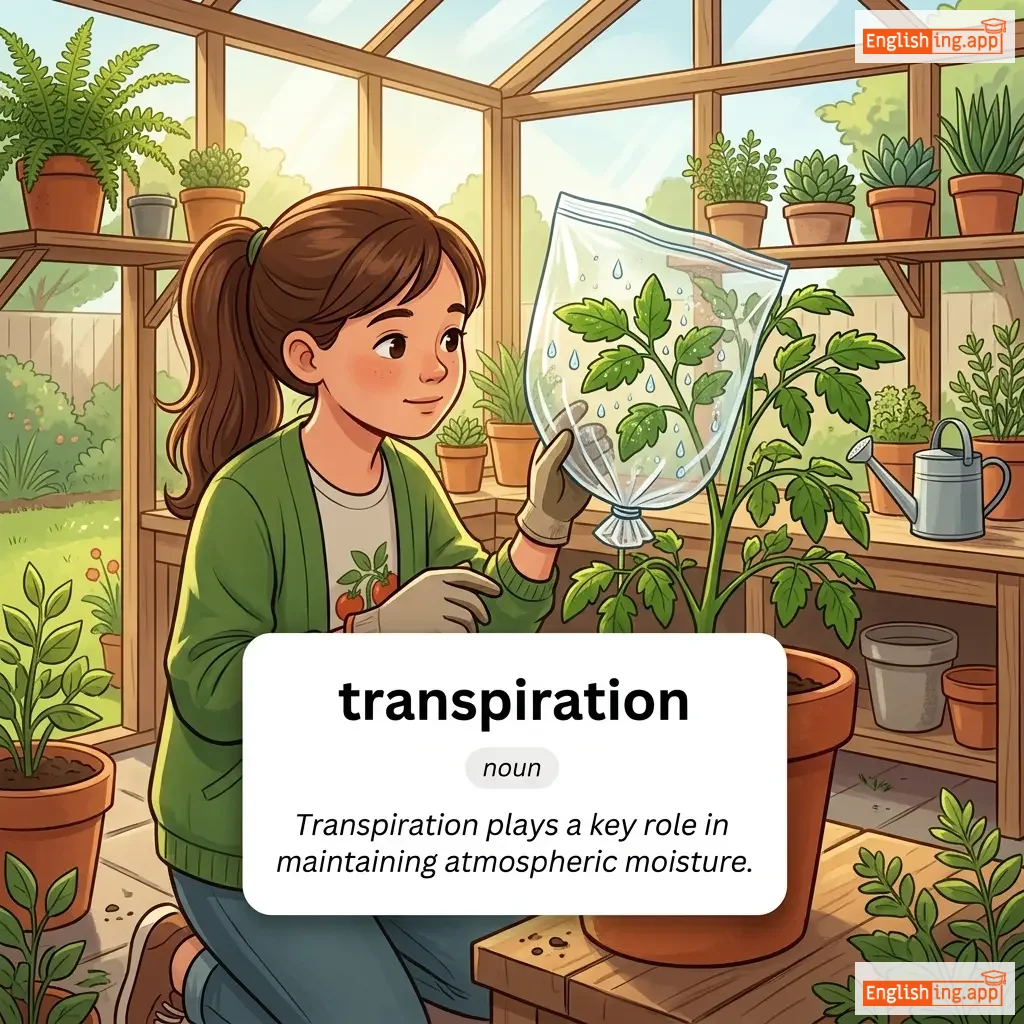
transpiration definition card — visual illustration of the meaning
noun
ˌtræn.spɪˈreɪ.ʃən
транспирация (transpiration)

The process by which moisture is carried through plants from roots to small pores on the underside of leaves, where it changes to vapor and is released to the atmosphere.

"Transpiration plays a key role in maintaining atmospheric moisture."

"Транспирация играет ключевую роль в поддержании атмосферной влажности." (Transpiratsiya igraet klyuchevuyu rol' v podderzhanii atmosfernoi vlazhnosti.)
verb
/trænˈspaɪər/
случиться (sluchitsya)

to occur, happen, or become known

"It transpired that he had lied about his age."

"Оказалось, что он солгал о своем возрасте." (Okazalos, chto on solgal o svoem vozraste.)
verb
/ˈtrænsplænt/
трансплантировать (transplantirovat)

to move something, especially a plant or organ, from one place to another

"The doctors transplanted a kidney into the patient."
"Врачи трансплантировали почку пациенту." (Vrachi transplantirovali pochku patsiyentu.)
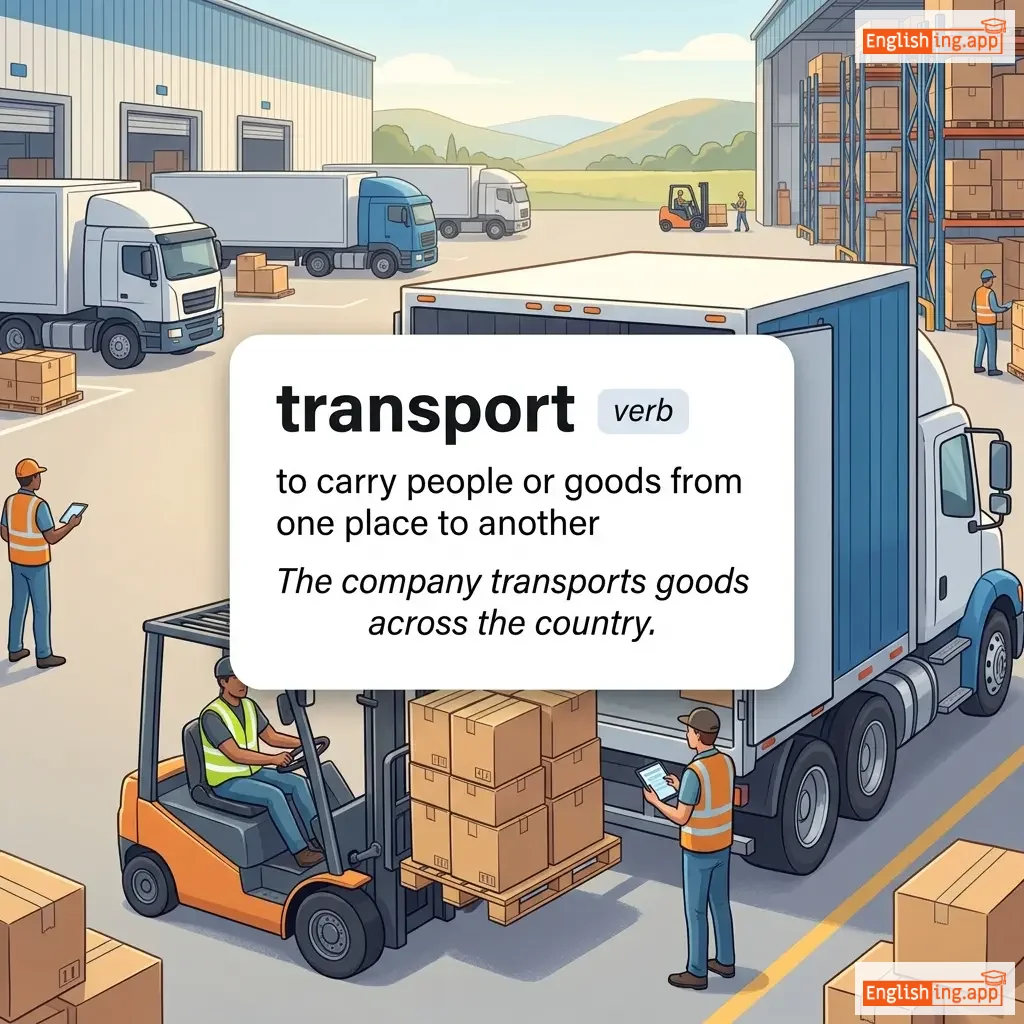
transport definition card — visual illustration of the meaning
verb
/ˈtrænspɔːrt/
транспорт (transport)

to carry people or goods from one place to another

"The company transports goods across the country."
"Компания транспортирует товары по всей стране." (Kompaniya transportiruet tovarý po vsej strane.)
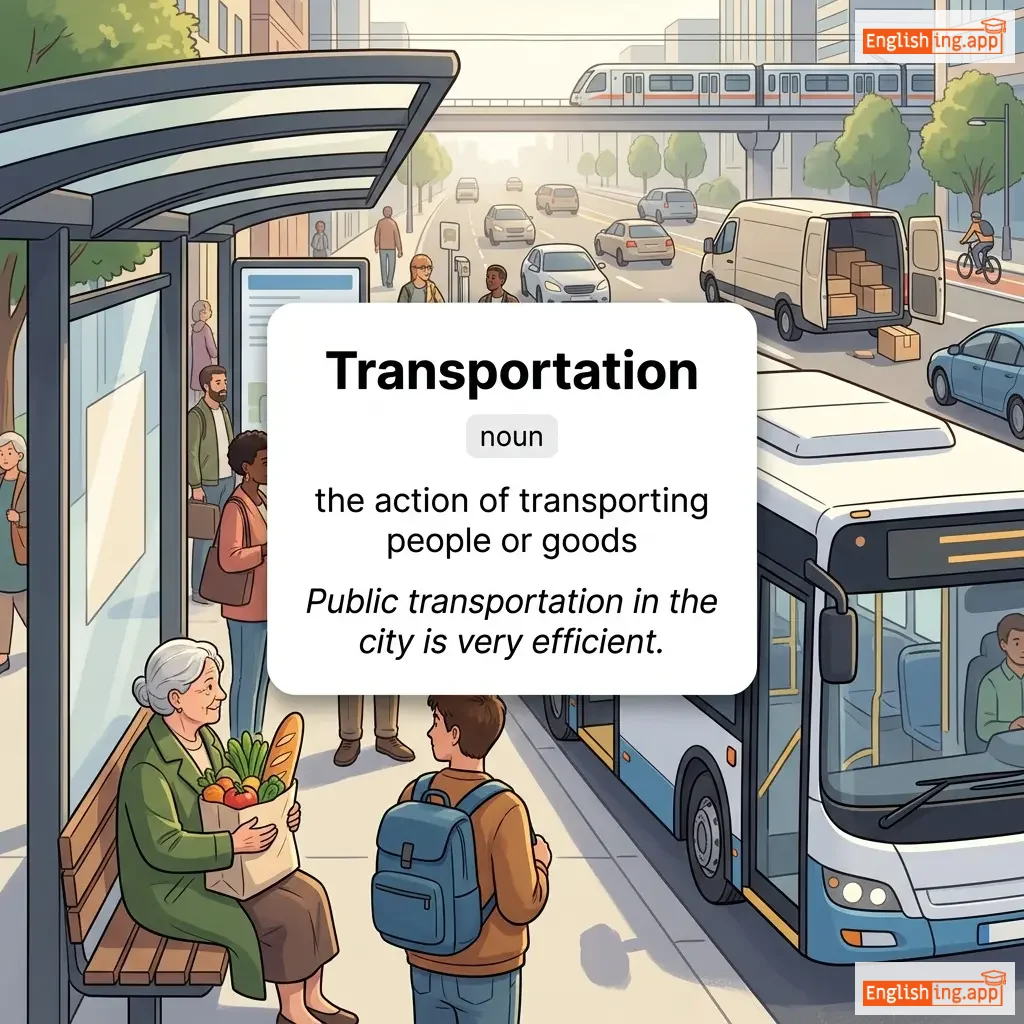
Transportation definition card — visual illustration of the meaning
noun
/ˌtræns.pɔːˈteɪ.ʃən/
транспорт (transport)

the action of transporting people or goods

"Public transportation in the city is very efficient."

"Общественный транспорт в городе очень эффективен." (Obshchestvennyy transport v gorode ochen' effektiven.)
verb
/trænˈspoʊz/
транспонировать (transponirovat)

to change the order or position of something

"The editor transposed two paragraphs in the article."

"Редактор транспонировал два абзаца в статье." (Redaktor transponiroval dva abzatsa v state.)
noun
/ˌtrænspəˈzɪʃən/
транспозиция (transpociziya)

the act of changing the order or position of something

"The transposition of digits caused an error in the calculation."

"Транспозиция цифр вызвала ошибку в вычислениях." (Transpozitsiya tsifr vyzvala oshibku v vychisleniyakh.)
adjective
/ˈtrænzvɜːrs/
поперечный (poperechny)

situated or lying across something

"The transverse road connects two highways."

"Поперечная дорога соединяет две автомагистрали." (Poperechnaya doroga soyedinyaet dvey avtomagistrali.)
verb
/træp/
попасть в ловушку (popast v lovushku)

to catch or hold something or someone so they cannot escape

"The fox was trapped in a cage."

"Лиса была поймана в клетке." (Lisa byla poymana v kletke.)
noun
/ˈtræpɪŋz/
атрибуты (atributy)

the outward signs, features, or objects associated with a role, event, or status

"The king appeared with all the trappings of royalty."

"Король появился со всеми атрибутами королевской власти." (Korol' poyavilsya so vsemi atributami korolevskoy vlasti.)
🗑️

Trash

noun
/træʃ/

waste material; things that are no longer useful or wanted

"Please take out the trash before you go to bed."

noun
/ˈtrɔːmə/
травма (trawma)

a deeply distressing or disturbing experience; physical injury or emotional shock

"The accident left her with lasting emotional trauma."

"Авария оставила у неё длительную эмоциональную травму." (Avariya ostavila u nёj dlinnyuju emotsional'nuyu trawmu.)
adjective
/trɔːˈmætɪk/
травматический (travmaticheskiy)

Deeply distressing or disturbing, often related to emotional or physical injury.

"The accident was a traumatic experience for the entire family."

"Авария стала травматическим опытом для всей семьи." (Avariya stala travmaticheskim opytom dlya vsey sem'i.)
travail definition card — visual illustration of the meaning
noun
/trəˈveɪl/
трудные усилия (trudnye usiliya)

Painful or laborious effort; suffering or hardship.

"After years of travail, she finally completed her degree."

"После лет трудных усилий она наконец завершила свою степень." (Posle let trudnykh usiliy ona nakonec zavershila svoiu stepen'.)
verb
/ˈtrævəl/
путешествовать (puteshestvovat)

to make a journey, typically to a distant or unfamiliar place

"I love to travel around the world and explore new cultures."
"Мне нравится путешествовать по миру и исследовать новые культуры." (Mne nravitsya puteshestvovat' po miru i issledovat' novye kul'tury.)
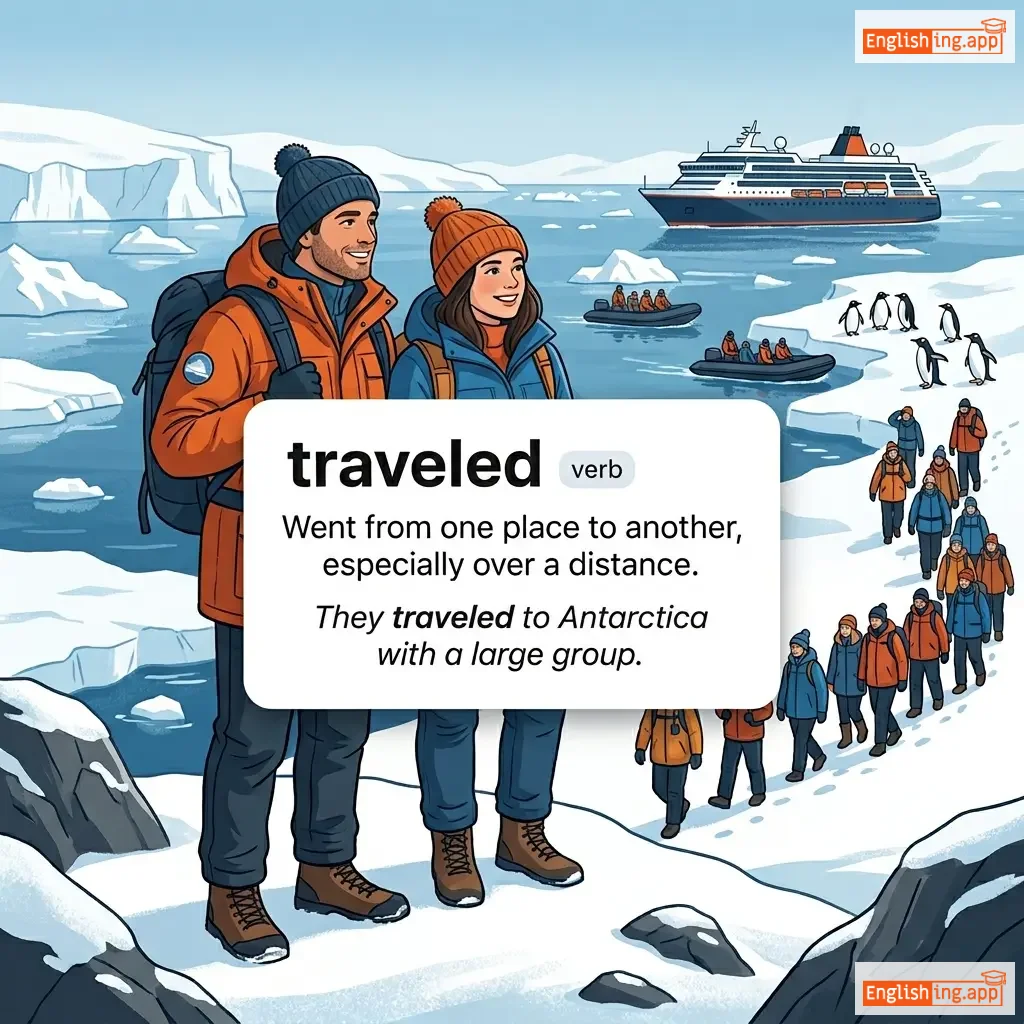
traveled definition card — visual illustration of the meaning
verb
/ˈtrævəld/
путешествовать (puteshestvovat)

Went from one place to another, especially over a distance.

"They traveled to Antarctica with a large group."

"Они путешествовали в Антарктиду с большой группой." (Oni puteshestvovali v Antarktidu s bol'shoy gruppoy.)
noun
/ˈtrævələr/
путешественник (puteshestvennik)

a person who is traveling or who often travels

"The traveler rested at a small inn after a long journey."

"Путешественник отдохнул в маленькой гостинице после долгого путешествия." (Puteshestvennik otdokhnul v malen'koy gostinitse posle dolgogo puteshestviya.)
noun
/ˈtrævələr/
путешественник (puteshestvennik)

A person who is on a journey or frequently travels to different places.

"The traveller set out early in the morning to explore new lands."

"Путешественник отправился рано утром, чтобы исследовать новые земли." (Puteshestvennik otpravilsya rano utrom, chtoby issledovat novye zemli.)
verb
/trəˈvɜːrs/
пересекать (peresekat')

To travel across or through something.

"They traversed the desert on camels."

"Они пересекли пустыню на верблюдах." (Oni peresekli pustynyu na verblyudakh.)
travesty definition card — visual illustration of the meaning
noun
/ˈtrævɪsti/
фарс (travesti)

A false, absurd, or distorted representation of something.

"The trial was a travesty of justice."

"Судебный процесс был фарсом справедливости." (Sudebnyy protsess byl farsom spravedlivosti.)
noun
/treɪ/
поднос (podnos)

a flat, shallow container used for carrying or holding items

"She brought the tea cups on a silver tray."

"Она принесла чашки с чаем на серебряном подносе." (Ona prinesla chashki s chayem na serebryanom podnose.)
adjective
/ˈtrɛtʃərəs/
предательский (predatelskiy)

Dangerously unstable or deceptive; likely to betray trust.

"The treacherous road made driving difficult."

"Предательская дорога сделала вождение трудным." (Predatelskaya doroga sdelala vozdeniye trudnym.)
noun
/ˈtrɛtʃəri/
предательство (predatel'stvo)

Betrayal of trust; deceptive action or nature.

"His treachery was revealed when he sided with the enemy."

"Его предательство было раскрыто, когда он стал на сторону врага." (Ego predatel'stvo bylo raskryto, kogda on stal na storonu vraga.)
noun
/ˈtriːkəl/
густой сладкий сироп (gustoy sladkiy sirop)

A thick, sweet syrup; excessively sentimental speech or writing.

"She poured treacle over the pancakes."

"Она полила сиропом блинчики." (Ona polila siropom blinchiki.)
adjective
/ˈtriːkli/
Черезмерно сладкий или сентиментальный, как патока. (Cherezmerno sladkiy ili sentimental'nyy, kak patoka.)

Excessively sweet or sentimental, like treacle.

"The movie was too treacly for my taste."

"Фильм был слишком приторным для моего вкуса." (Film byl slishkom pritornym dlya moyego vkusa.)
verb
/trɛd/
идти (idti)

To walk on or along something.

"Be careful not to tread on the flowers."

"Будь осторожен, не наступи на цветы." (Bud' ostorozhen, ne nastupi na tsvety.)
noun
/ˈtriːzən/
измена (izmena)

the crime of betraying one's country, especially by attempting to kill or overthrow the sovereign or government

"He was accused of treason against the state."

"Его обвинили в измене против государства." (Ego obvinili v izmeni protiv gosudarstva.)
adjective
/ˈtriːzənəbl/
изменнический (izmennicheskij)

Relating to or involving the crime of treason.

"The general was accused of treasonable conduct."

"Генерал был обвинён в изменническом поведении." (General byl obvinjon v izmennicheskom povedenii.)
noun, verb
/ˈtrɛʒər/
сокровище (sokrovishche)

a collection of valuable things such as gold, jewels, or anything of great worth; to value something highly

"She kept the necklace as a family treasure."

"Она хранила колье как семейное сокровище." (Ona khranila kol'ye kak semeynoye sokrovishche.)
noun
/ˈtrɛʒərər/
казначей (kaznachey)

a person responsible for managing the financial affairs of an organization

"The treasurer presented the annual financial report."

"Казначей представил ежегодный финансовый отчет." (Kaznachey predstavil yezhgodnyy finansovyy otchet.)
verb
/triːt/
лечить (lechit)

to behave toward someone or something in a particular way

"The doctor treated me with great care during my recovery."

"Врач лечил меня с большой осторожностью во время моего восстановления." (Vrach lechil menya s bol'shoy ostorozhnost'yu vo vremya moyego vosstanovleniya.)
treatise definition card — visual illustration of the meaning
noun
/ˈtriːtɪs/
трактат (traktat)

a formal and systematic written work dealing with a subject in detail

"He wrote a treatise on modern economic theory."

"Он написал трактат о современной экономической теории." (On napisal traktat o sovremennoy ekonomicheskoy teoryi.)
noun
/ˈtriːtmənt/
лечение (lechenie)

the action or manner of treating someone or something

"She received excellent treatment at the hospital."

"Она получила отличное лечение в больнице." (Ona poluchila otlichnoe lechenie v bol'nitse.)
noun
/ˈtriːti/
договор (dogovor)

a formally concluded and ratified agreement between states

"The two countries signed a peace treaty."

"Две страны подписали мирный договор." (Dve strany podpisali mirnyy dogovor.)
adjective, noun, verb
/ˈtrɛbəl/
тройной, высокий тон (troynoy, vysokiy ton)

triple; consisting of three parts; high-pitched sound in music

"The company's profits trebled in just two years."

"Прибыль компании утроилась за два года." (Pribyl' kompanii utroilas' za dva goda.)