Словари

Словарь английского языка | Значения слов, определения и примеры
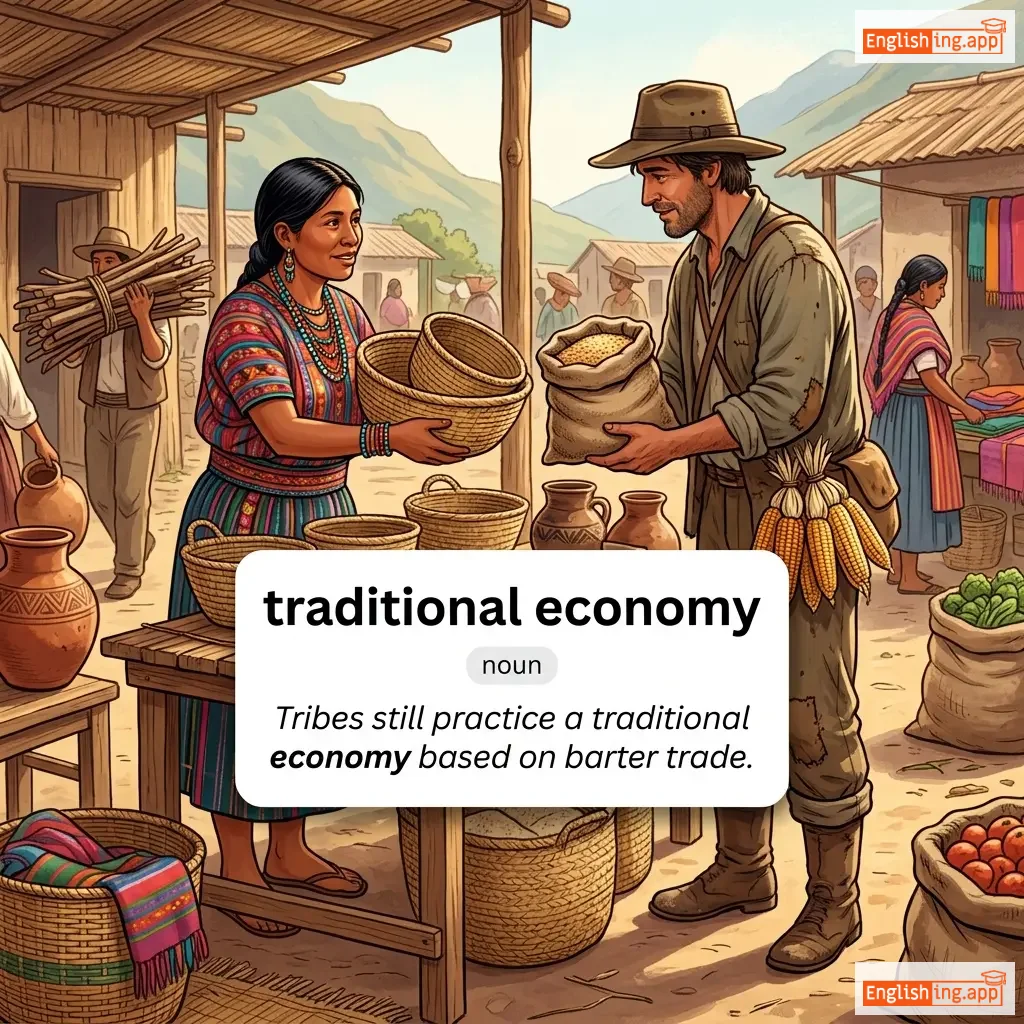
traditional economy definition card — visual illustration of the meaning
noun
/trəˈdɪʃ.ən.əl ɪˈkɒn.ə.mi/
традиционная экономика (traditsionnaya ekonomika)

An economic system based on customs and traditions, often involving barter trade.

"Tribes still practice a traditional economy based on barter trade."

"Племена до сих пор практикуют традиционную экономику, основанную на обмене товарами." (Plemya do sikh por prakticuyut tradicionnuyu ekonomiku, osnovannuyu na obmene tovarami.)
adverb
/trəˈdɪʃənəli/
традиционно (traditsionno)

according to custom or long-established practice

"Bangladesh is traditionally known for its hospitality."

"Бангладеш традиционно известен своим гостеприимством." (Bangladesh traditsionno izvesten svoim gostepriimstvom.)
verb
/trəˈdjuːs/
клеветать (klevetat)

To speak badly of someone or tell lies to damage their reputation.

"He was furious when he found out that his rivals had traduced him."

"Он был в ярости, когда узнал, что его соперники его оклеветали." (On byl v yarosti, kogda uznal, chto ego sooperniki ego oklevetali.)
noun
/ˈtræfɪk/
трафик (trafik)

movement of vehicles, goods, or people

"There was heavy traffic on the highway this morning."

"Утром на шоссе был сильный трафик." (Utro na shosse byl sil'nyy trafik.)
noun
/ˈtrædʒədi/
трагедия (tragediya)

an event causing great suffering or distress

"The earthquake was a tragedy for the entire country."

"Землетрясение стало трагедией для всей страны." (Zemletryasenie stalo tragediey dlya vsey strany.)
adjective
/ˈtrædʒɪk/
трагичный (tragičnyj)

causing great sadness or suffering; very unfortunate

"The news of the accident was truly tragic."

"Новость о несчастном случае была действительно трагичной." (Novost' o neschastnom sluchaye byla deystvitel'no tragichnoj.)
noun
/treɪl/
тропа (tropa)

a path or track left by something that has passed

"The hikers followed the trail through the forest."

"Путники следовали по тропе через лес." (Putniki sleduyut po trope cherez les.)
noun
/ˈtreɪlər/
трейлер / превью (treyler / preview)

a preview of a movie or a vehicle used for transporting goods

"The movie trailer was released last week."
"Трейлер фильма был выпущен на прошлой неделе." (Trejler fil'ma byl vypushchen na proshloy nedele.)
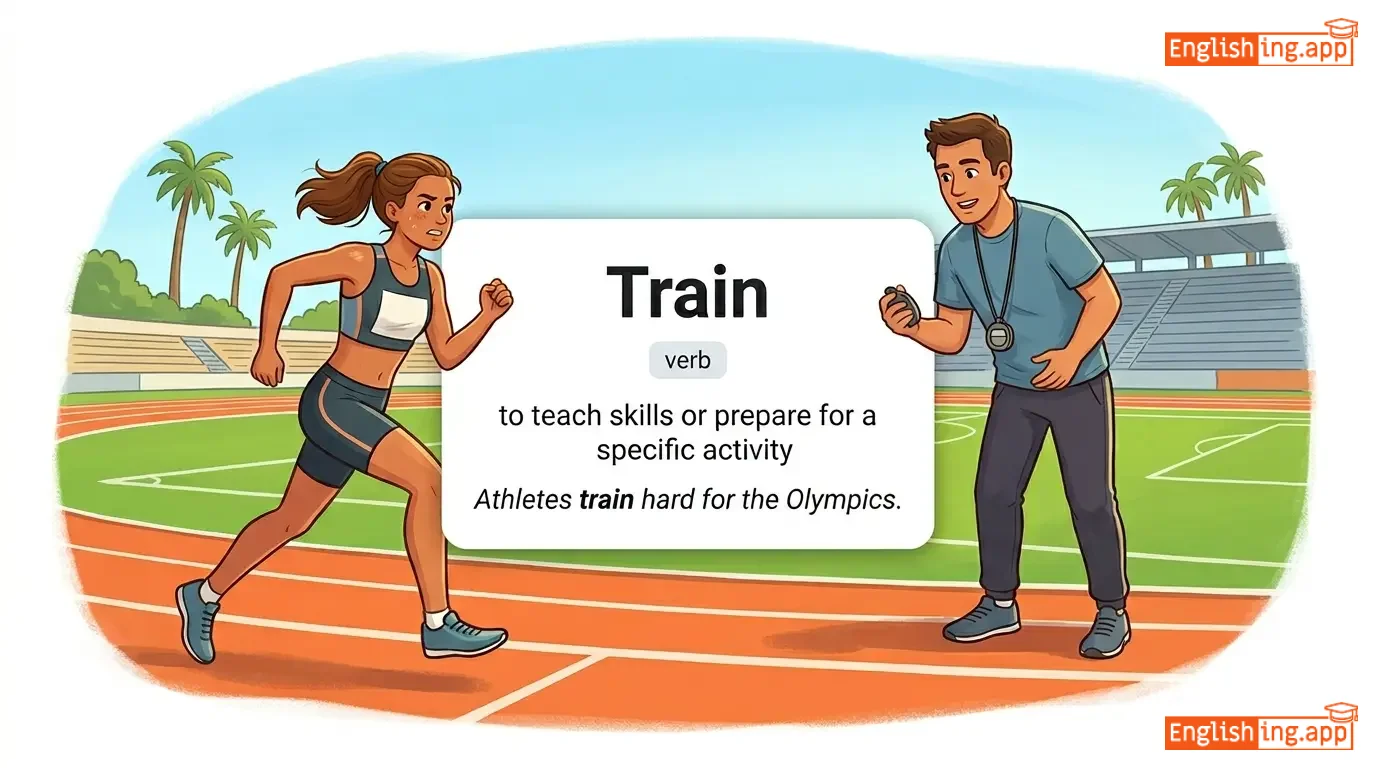
Train definition card — visual illustration of the meaning
noun
/treɪn/
поезд (poezd)

a series of connected vehicles that run on tracks and are used for transporting people or goods

"The train departed from the station on time."

"Поезд отправился со станции вовремя." (Poezd otpravil'sya so stantsii vovremya.)
noun
/treɪˈniː/
стажёр; ученик (trainee)

a person undergoing training for a particular job or profession; a novice learner

"The medical trainee worked long hours to gain practical experience."

"Медицинский стажёр работал долгие часы, чтобы получить практический опыт." (Meditsinskiy stazhyor rabotal dolgye chasy, chtoby poluchit' prakticheskiy opyt.)
noun
/ˈtreɪnər/
тренер (trener)

a person who teaches skills or gives training

"The fitness trainer helped me improve my posture."

"Фитнес тренер помог мне улучшить осанку." (Fitness trener pomog mne uluchshit' osanku.)
noun
/ˈtreɪnɪŋ/
обучение (obucheniye)

the process of teaching or learning a particular skill or type of behavior

"She completed her training as a nurse last year."

"Она завершила свое обучение как медсестра в прошлом году." (Ona zavershila svoe obucheniye kak medsestra v proshlom godu.)
noun
/treɪt/
черта (cherta)

A distinguishing quality or characteristic, typically belonging to a person.

"Honesty is considered an admirable trait in a leader."

"Честность считается достойной чертой лидера." (Chestnost' schitaetsya dostoynoy chertoy lidera.)
noun
/ˈtreɪtər/
предатель (predatel)

A person who betrays their country, friends, or a cause by acting against them.

"The soldier was labeled a traitor for giving secrets to the enemy."
"Солдата назвали предателем за то, что он передал секреты врагу." (Soldata nazvali predatelem za to, chto on peredal sekrety vragu.)
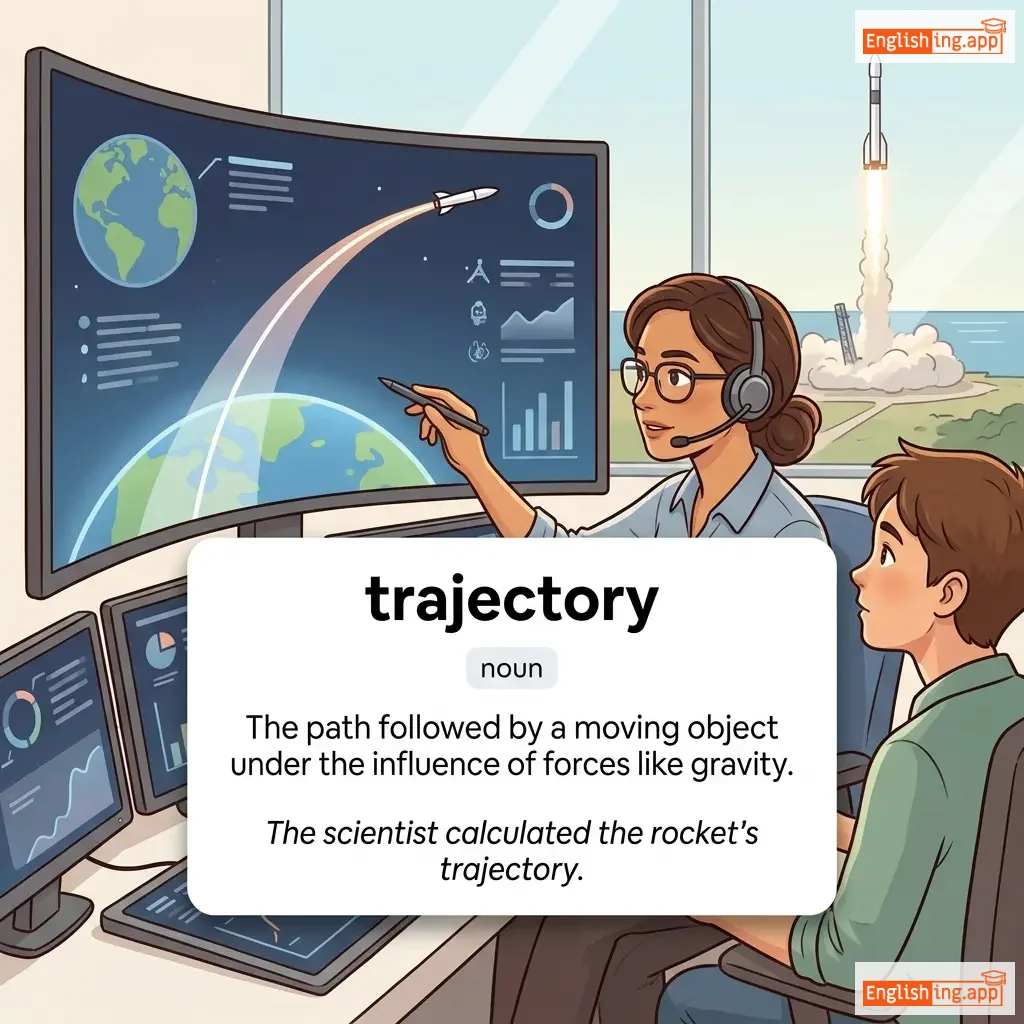
trajectory definition card — visual illustration of the meaning
noun
/trəˈdʒɛktəri/
траектория (traektoriya)

The path followed by a moving object under the influence of forces like gravity.

"The scientist calculated the rocket's trajectory."

"Учёный вычислил траекторию ракеты." (Uchonyy vychislyl traektoriyu rakety.)
noun
/træm kɑːr/
трамвай (tramvay)

An electric vehicle that runs on rails along the street

"The tram car stopped at every station in the city center."

"Трамвай остановился на каждой станции в центре города." (Tramvay ostanovilsya na kazhdoy stantsii v tsentre goroda.)
noun, verb
/ˈtræməl/
ограничение (ogranichenie)

A restriction or impediment to freedom of action; to restrict.

"The strict rules trammel the creativity of the students."

"Жесткие правила ограничивают креативность студентов." (Zhestkiye pravila ogranichivayut kreativity studentov.)
verb, noun
/træmp/
бездомный / тяжело идти (bezdomnyy / tyazhelo idti)

to walk heavily or noisily; a person who travels from place to place on foot, often homeless

"They tramped through the forest in heavy boots."

"Они шли через лес в тяжелых ботинках." (Oni shli cherez les v tyazhelykh botinkakh.)
verb
/ˈtræmpəl/
топтать (trempl)

to tread heavily on something and cause damage or injury

"The crowd trampled the flowers in the park."

"Толпа растоптала цветы в парке." (Tolpa rastoptala tsvety v parke)
noun
/træns/
транс (trans)

a half-conscious state like dreaming, often with loss of awareness of surroundings

"She stared out of the window as if in a trance."
"Она смотрела в окно, как будто была в трансе." (Ona smotrela v okno, kak budto byla v transe.)
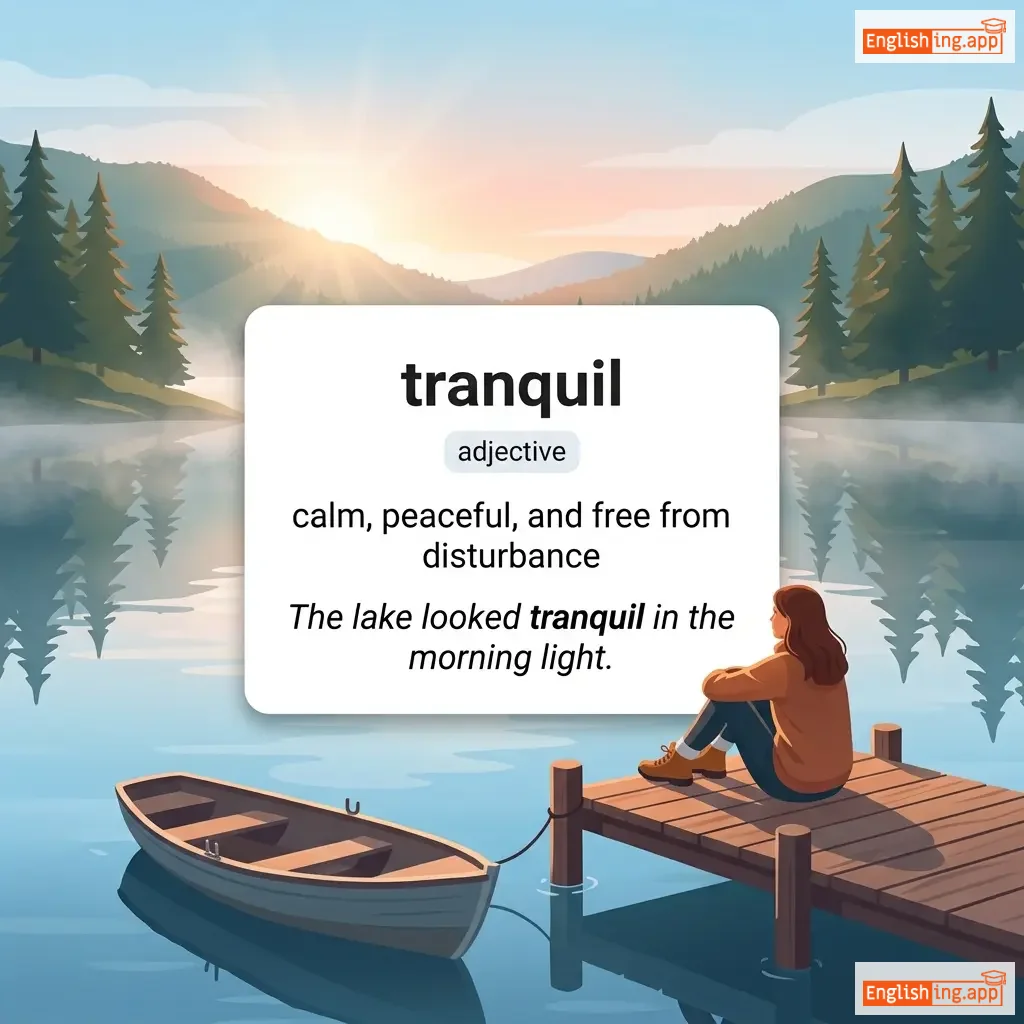
tranquil definition card — visual illustration of the meaning
adjective
/ˈtræŋkwɪl/
спокойный (spokoynyy)

calm, peaceful, and free from disturbance

"The lake looked tranquil in the morning light."

"Озеро выглядело спокойным в утреннем свете." (Ozero viglyadelo spokoynym v utrenem svete.)
noun
/træŋˈkwɪləti/
спокойствие (spokoystvie)

the quality or state of being calm and peaceful

"He enjoyed the tranquility of the countryside."

"Он наслаждался спокойствием сельской местности." (On naslazhdalsya spokoystviem selskoj mestnosti.)
verb
/ˈtræŋ.kwɪ.laɪz/
успокаивать (uspokaivat')

to make someone or something calm or less anxious, often by using drugs

"The veterinarian had to tranquilize the tiger before moving it."

"Ветеринару пришлось транквилизировать тигра перед его перемещением." (Veterinaru prishlos' tranqvilizirovat' tigra pered ego peremeshcheniem.)
noun
/træŋˈkwɪl.ɪ.ti/
спокойствие (spokoystvie)

the state of being calm, peaceful, and free from disturbance

"She enjoyed the tranquillity of the countryside after years in the city."

"Она наслаждалась спокойствием сельской местности после многих лет в городе." (Ona naslazhdalas' spokoystviyem selskoj mestnosti posle mnogikh let v gorode.)
verb
/trænˈzækt/
совершать сделку (sovershat' sdelku)

to conduct or carry out business, a deal, or activity

"Customers can transact their banking online."

"Клиенты могут совершать свои банковские операции онлайн." (Klienty mogut sovershat' svoi bankovskie operatsii onlajn.)
noun
/trænˈzækʃən/
транзакция (tranzaktsiya)

an instance of buying or selling something; a business deal or exchange

"Every online transaction is recorded for security purposes."

"Каждая онлайн-транзакция записывается для целей безопасности." (Kazhdaya onlayn-tranzaktsiya zapisyvayetsya dlya tseley bezopasnosti.)
adjective
/trænzˈæl.paɪn/
за пределами Альп (za predelami Al'p)

situated beyond or across the Alps, especially from the viewpoint of Italy

"The Romans referred to France as Transalpine Gaul."

"Римляне называли Францию Транзальпийской Галией." (Rimlyane nazyvali Frantsiyu Transalpijskoy Galiyej.)
adjective
/ˌtræn.zətˈlæn.tɪk/
пересекать Атлантический океан (peresekat' Atlanticheskiy okean)

crossing or spanning the Atlantic Ocean

"They took a transatlantic flight from New York to London."

"Они сели на трансантлантический рейс из Нью-Йорка в Лондон." (Oni sieli na transatlanticheskiy reis iz N'yu-Yorka v London.)
transcend definition card — visual illustration of the meaning
verb
/trænˈsɛnd/
превосходить (prevoskhodit)

to go beyond the limits of something; to surpass or exceed

"Her art transcends traditional boundaries."
"Ее искусство превосходит традиционные границы." (Eyo iskusstvo prevoshodit traditsionnye granitsy.)
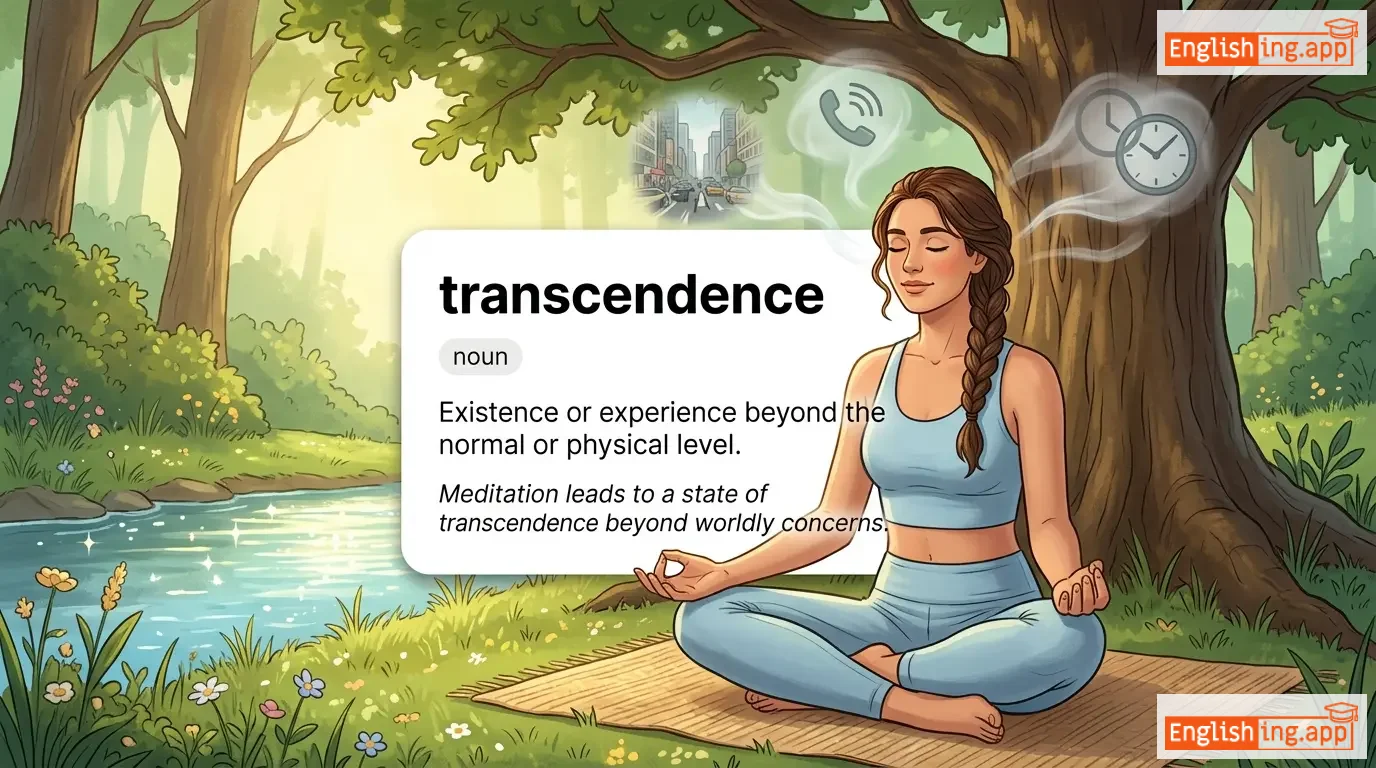
transcendence definition card — visual illustration of the meaning
noun
/trænˈsɛnd.əns/
существование или опыт за пределами нормального или физического уровня (sushchestvovanie ili opyt za predelami normal'nogo ili fizicheskogo urovnya)

Existence or experience beyond the normal or physical level.

"Meditation leads to a state of transcendence beyond worldly concerns."
"Медитация ведет к состоянию трансценденции, выходящему за пределы мирских забот." (Meditatsiya vedet k sostoyaniyu transsendenzii, vykhodyashchemu za predely mirskikh zabot.)
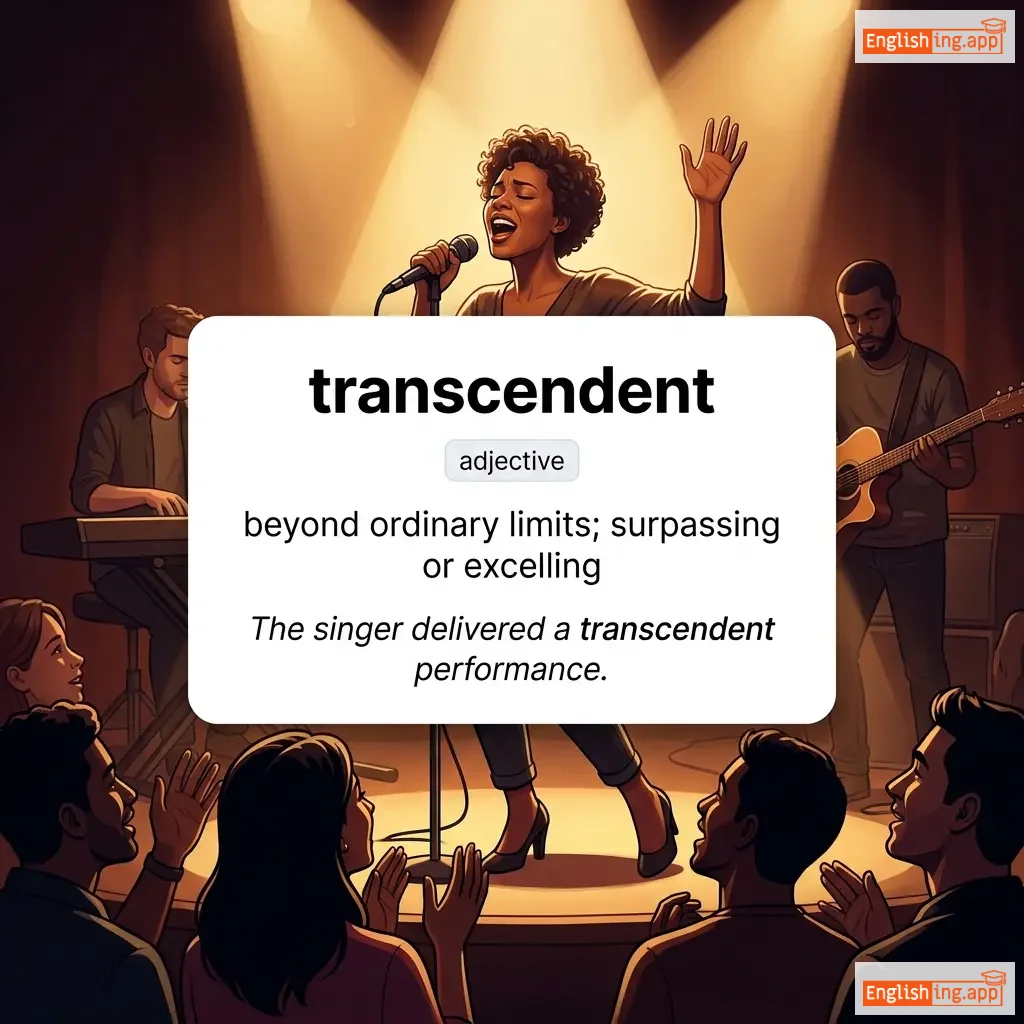
transcendent definition card — visual illustration of the meaning
adjective
/trænˈsɛndənt/
трансцендентный (transcendentnyy)

beyond ordinary limits; surpassing or excelling

"The singer delivered a transcendent performance."

"Певец исполнил трансцендентное выступление." (Pevets ispolnil transcendentnoe vystuplenie.)
adjective
/ˌtræn.senˈdɛn.təl/
трансцендентальный (transcendentalny)

relating to the spiritual or non-physical realm; surpassing ordinary experience

"Meditation can lead to transcendental experiences."

"Медитация может привести к трансцендентальному опыту." (Meditaciya mozhet privesti k transcendental'nomu opytu.)
verb
/trænˈskraɪb/

to make a written copy of spoken words or notes

"The secretary transcribed the meeting minutes."

noun
/ˈtrænskrɪpt/
транскрипция (transkripciya)

a written or printed version of material originally presented in another medium

"The professor asked for a transcript of the meeting."
"Профессор попросил транскрипцию совещания." (Professor poprosil transkripciju soveshchaniya.)
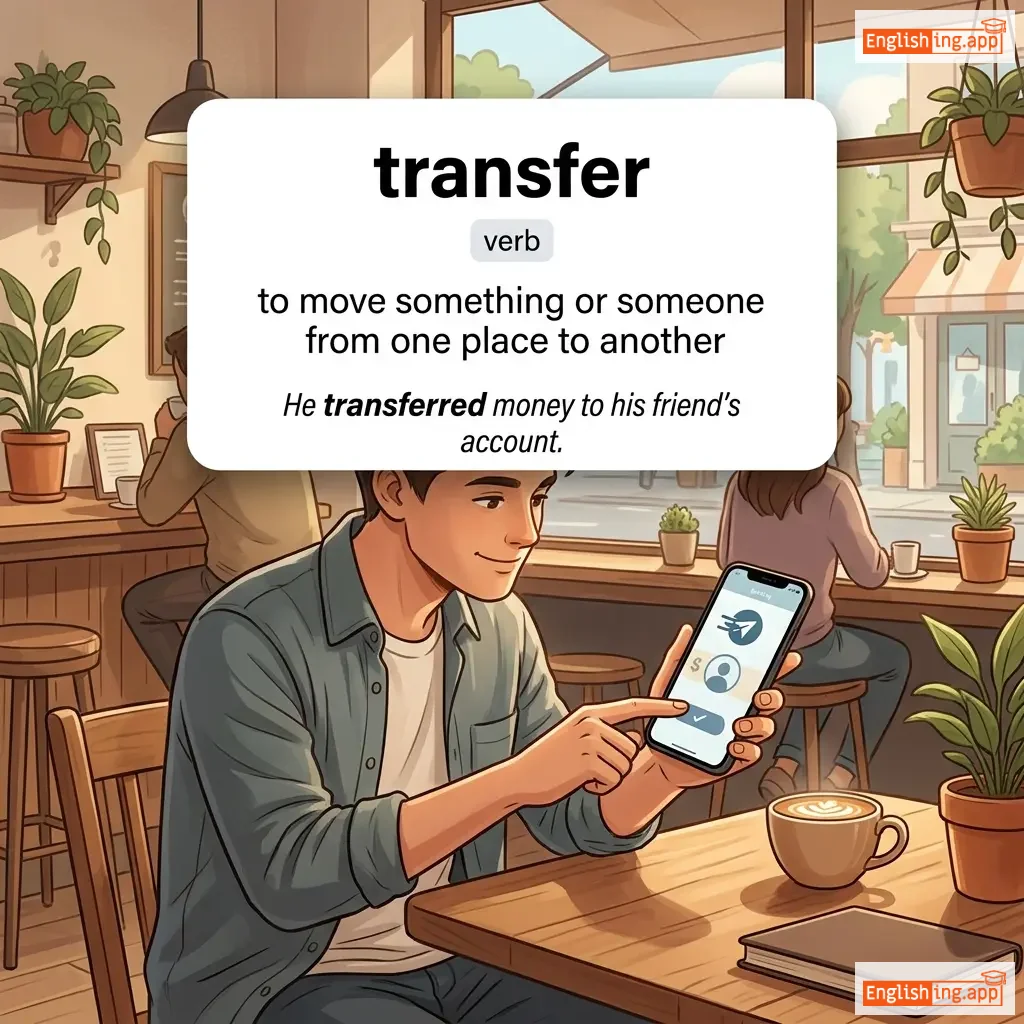
transfer definition card — visual illustration of the meaning
verb
/ˈtrænsfɜːr/
счастье (schastye)

to move something or someone from one place to another

"He transferred money to his friend's account."

"Она не могла скрыть своего счастья, когда получила награду." (Ona ne mogla skryt' svoego schast'ya, kogda poluchila nagradu.)
adjective
/ˈtrænsfərəbl/
передаваемый (peredavaemyy)

Able to be moved, passed, or changed from one person, place, or situation to another.

"The ticket is transferable to another passenger."

"Билет передаваемый другому пассажиру." (Bilet peredavayemyy drugomu passazhiru.)
noun
/ˌtrænsfəˈriː/
перемещенный (peremeshchennyy)

A person to whom a right, property, or responsibility is transferred.

"The transferee must sign the contract before taking ownership."

"Перемещенный должен подписать контракт перед тем, как получить право собственности." (Peremeshchennyy dolzhen podpisat' kontrakt pered tem, kak poluchit' pravo sobstvennosti.)
noun
/ˈtrænsfərəns/
передача (peredacha)

The act of moving something from one place, person, or situation to another.

"The transference of knowledge is essential in education."

"Передача знаний является необходимой в образовании." (Peredacha znaniy yavljayetsya neobkhodimoy v obrazovanii.)
noun
/trænsˈfɜːrər/
передатчик (peredatchik)

A person who transfers something, such as property, rights, or responsibilities, to another.

"The transferrer is responsible for ensuring the property is legally passed on."

"Передатчик несет ответственность за обеспечение того, чтобы собственность была передана законным образом." (Peredatchik neset otvetstvennost' za obespechenie togo, chtoby sobstvennost' byla peredana zakonnyj obrazom.)
verb
/trænsˈfɪɡjʊər/
преобразовать (preobrazovat)

To transform the outward appearance or form, often in a way that elevates or glorifies.

"The artist managed to transfigure simple clay into a beautiful sculpture."

"Художник сумел преобразовать простую глину в красивую скульптуру." (Kudozhnik sumel preobrazovat prostuyu glinu v krasivuyu skul'pturu.)
transform definition card — visual illustration of the meaning
verb
/trænsˈfɔːrm/
трансформировать (transformirovat)

To change something completely in form, appearance, or character.

"The new policy will transform the healthcare system."
"Новая политика преобразует систему здравоохранения." (Novaya politika preobrazuyet sistemy zdravookhraneniya.)
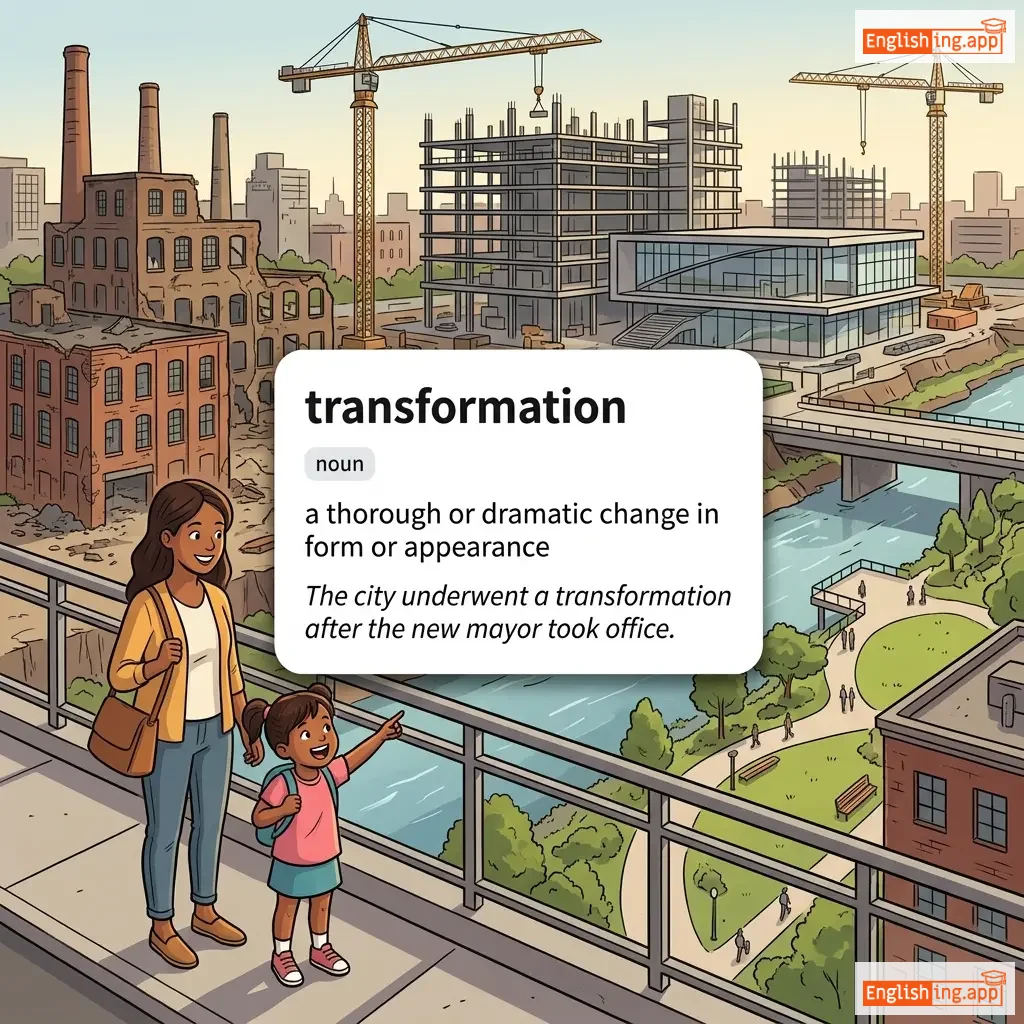
transformation definition card — visual illustration of the meaning
noun
/ˌtrænsfərˈmeɪʃən/
трансформация (transformaciya)

a thorough or dramatic change in form or appearance

"The city underwent a transformation after the new mayor took office."

"Город пережил трансформацию после того, как новый мэр приступил к своим обязанностям." (Gorod perezhil transformaciyu posle togo, kak novyj mer pristupil k svoim obyazannostyam.)
transformational definition card — visual illustration of the meaning
adjective
ˌtræns.fəˈmeɪ.ʃən.əl
трансформационный (transformatsionnyy)

Causing or able to cause an important and lasting change in someone or something.

"Transformational projects redefine progress."

"Трансформационные проекты переопределяют прогресс." (Transformatsionnye proyekt vyzvodyat progress.)
transformative definition card — visual illustration of the meaning
adjective
/trænsˈfɔː.mə.tɪv/
трансформирующий (transformiruyushchiy)

Causing a marked change in someone or something.

"His transformative ideas changed the direction of the company."

"Его трансформирующие идеи изменили направление компании." (Yego transformiruyushchie idei izmenili napravlenie kompanii.)
verb
/trænsˈfjuːz/

to transfer blood or another fluid into a vein or body part; to instill a quality or idea into someone or something

"The doctor had to transfuse blood into the patient after the surgery."

adjective
/trænsˈfjuːzəbl̩/
трансфузируемый (transfuziruemyy)

capable of being transfused, especially referring to blood or fluids

"Only transfusible blood types are used in the hospital."

"Только трансфузируемые группы крови используются в больнице." (Tol'ko transfuziruemye gruppy krovi ispol'zuyutsya v bol'nitse.)
noun
/trænsˈfjuːʒən/
переливание крови (perelivanie krovi)

the process of transferring blood or another fluid into a person's vein

"The patient received a blood transfusion after the accident."

"Пациент получил переливание крови после аварии." (Patsiyent poluchil perelivanie krovi posle avarii.)
verb
/trænsˈɡrɛs/
нарушить (narushit')

to go beyond the limits of a moral law, command, or boundary; to sin

"He apologized after realizing he had transgressed the community's rules."
"Он извинился, поняв, что нарушил правила сообщества." (On izviniilsya, ponyav, chto narushil pravila soobshchestva.)
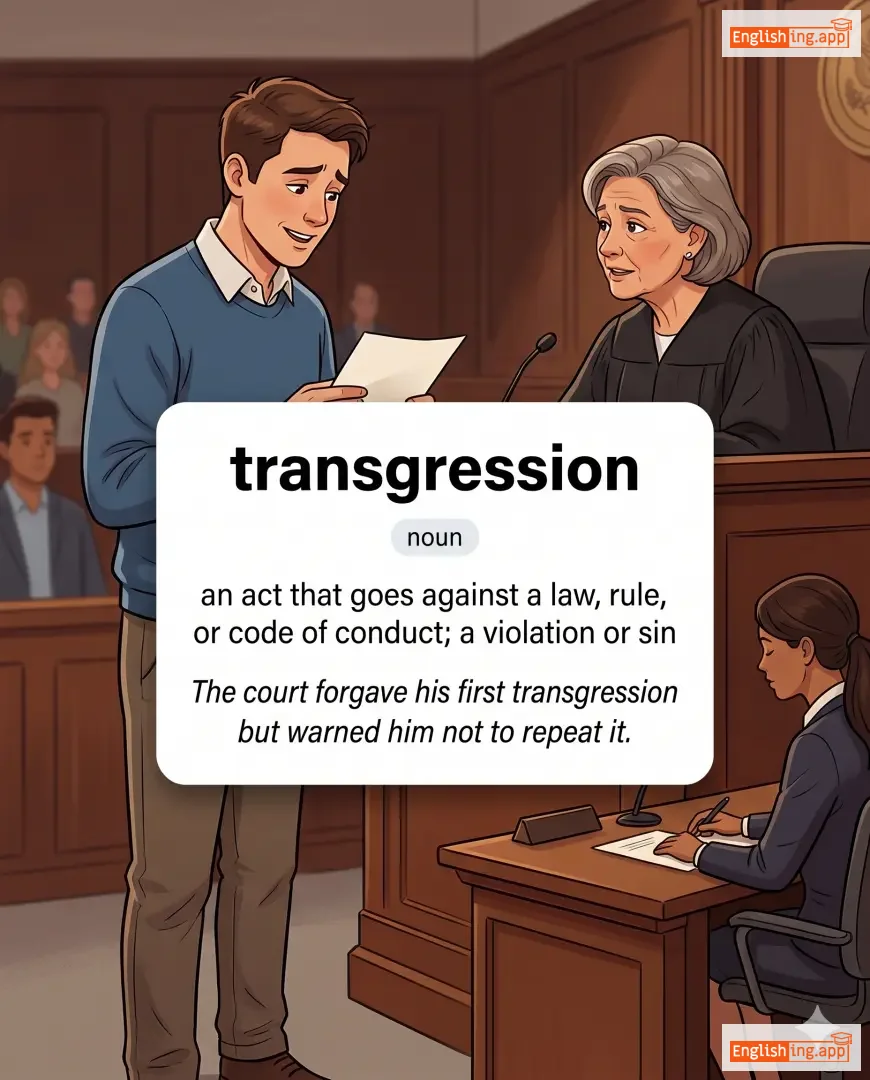
transgression definition card — visual illustration of the meaning
noun
/trænsˈɡrɛʃən/
нарушение, преступление (narushenie, prestuplenie)

an act that goes against a law, rule, or code of conduct; a violation or sin

"The court forgave his first transgression but warned him not to repeat it."
"Суд простил его первое нарушение, но предупредил его не повторять этого." (Sud prostil ego pervoye narusheniye, no predostergil ego ne povtoryat' etogo.)
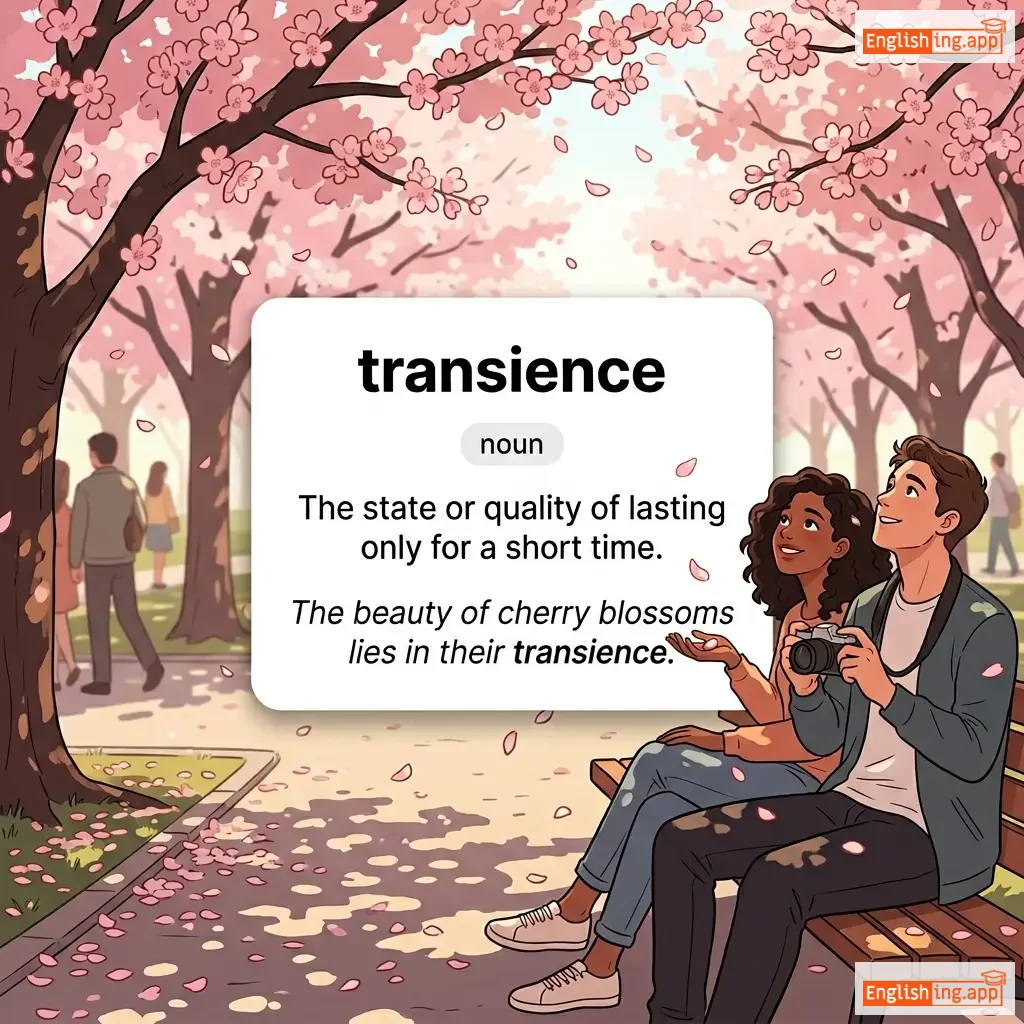
transience definition card — visual illustration of the meaning
noun
/ˈtrænziəns/
мимолетность (mimoletnost)

The state or quality of lasting only for a short time.

"The beauty of cherry blossoms lies in their transience."

"Красота цветущих вишен заключается в их мимолетности." (Krasota tsvetyushchikh vishen zaklyuchayetsya v ikh mimoletnosti.)