Словари

Словарь английского языка | Значения слов, определения и примеры

noun
/ˈsɑːrdʒənt/
сержант (serzhant)

A rank of non-commissioned officer in the armed forces or police.

"The sergeant gave orders to the soldiers before the mission."

"Сержант отдал приказы солдатам перед миссией." (Serzhant oddal prikazy soldatam pered missiej.)
noun
/ˈsɑːrdʒənt ət ɑːrmz/
старшина (starshina)

An officer responsible for maintaining order during meetings or legislative sessions.

"The sergeant-at-arms escorted the disruptive member out of the hall."

"Старшина вывел нарушителя из зала." (Starshina vyvel narushitelya iz zala.)
noun
/ˌsɑːrdʒənt ˈmeɪdʒər/
сержант-майор (serzhant-major)

A senior non-commissioned officer in the army responsible for discipline and administration within a unit.

"The sergeant-major inspected the troops before the parade."

"Сержант-майор проверил войска перед парадом." (Serzhant-major proveryl vojska pered parodom.)
adjective
/ˈsɪəriəl/
сериал (serial)

occurring in a series or sequence

"The serial killer was apprehended after a long investigation."

"Серийный убийца был задержан после длительного расследования." (Seriynyy ubiytsa byl zaderzhan posle dlinnoe rassledovaniya.)
noun
/ˈsɪəriːz/
серия (seriya)

a number of things or events that are related in some way

"This series of books is really popular among young readers."

"Эта серия книг очень популярна среди молодых читателей." (Eta seriya knig ochen populyarna sredi molodykh chitateley)
adjective
/ˈsɪəriəs/
серьезный (seryozny)

showing deep thought, sincerity, or importance; not joking

"She gave me a serious look before making her decision."

"Она взглянула на меня серьезным взглядом перед тем, как принять решение." (Ona vzglyanula na menya ser'eznym vzglyadom pered tem, kak prinyat' reshenie.)
adverb
/ˈsɪə.ri.əs.li/
серьезно (ser'yezno)

in a solemn or thoughtful manner

"She took the matter very seriously."

"Она восприняла этот вопрос очень серьезно." (Ona vosprinyala etot vopros ochen' ser'yezno.)
noun
/ˈsɪr.i.əs.nəs/
серьезность; важность (ser'yoznost'; vazhnost')

the quality of being serious; gravity; importance

"The seriousness of the situation became clear when the doctor spoke."

"Серьезность ситуации стала очевидной, когда врач заговорил." (Ser'yoznost' situatsii stala ochevidnoy, kogda vrach zagovoril.)
noun
/ˈsɜːrmən/
проповедь (propoved')

A religious discourse delivered by a preacher, often offering moral instruction or spiritual guidance.

"The pastor gave a moving sermon about compassion and forgiveness."

"Пастор произнес проповедь о сострадании и прощении." (Pastor proiznes propoved' o sostradanii i proshchenii.)
adjective
/ˈsɜːrpənˌtiːn/
змееподобный (zmeepodobny)

Having the shape, movement, or qualities of a serpent; winding or twisting.

"The road took a serpentine path through the mountains."

"Дорога шла извилистой тропой через горы." (Doroga shla izvilistoj tropoj cherez gory.)
verb
/ˈsɛreɪt/
создавать зубчатый край (sozdavat' zubchatyy kray)

To make a saw-toothed edge or notched margin.

"The craftsman serrated the knife blade for better cutting."

"Ремесленник серрит нож для лучшего реза." (Remeslennik serrit nozh dlya luchshego reza.)
adjective
/ˈsɛreɪtɪd/
зубчатый (zubchatyi)

Having a notched or saw-toothed edge.

"The bread knife had a serrated blade."

"У ножа для хлеба было зубчатое лезвие." (U nozha dlya khleba bylo zubchatoye lezviy.)
adjective
/ˈsɛrid/
плотно стоящий (plotno stoyashchiy)

pressed or crowded together, often in rows or ranks

"The soldiers stood in serried ranks, ready for inspection."

"Солдаты стояли в плотных рядах, готовые к осмотру." (Soldaty stoyali v plotnykh ryadakh, gotovye k osmotru.)
noun
/ˈsɜːvənt/
слуга (sluga)

a person who performs duties for others, especially in a household

"The servant opened the door for the guests."

"Слуга открыл дверь для гостей." (Sluga otkryl dver' dlya gostey.)
verb
/sɜːv/
обслуживать (obsluzhivat')

to provide service or assistance to others

"He serves the customers with a smile."

"Он обслуживает клиентов с улыбкой." (On obsluzhivayet klientov s ulybkoy.)
service definition card — visual illustration of the meaning
noun
/ˈsɜːrvɪs/
обслуживание (obsluzhivanie)

the action of helping or doing work for someone; a system providing a public need

"The hotel provides excellent customer service."

"Отель предоставляет отличный сервис для клиентов." (Otel predostavlyayet otlichnyy servis dlya klientov.)
adjective
/ˈsɜːrvɪsəbl/
пригодный (prigodny)

fit for use; usable; in working order

"The old bicycle is still serviceable despite its age."

"Старый велосипед все еще пригоден к использованию, несмотря на свой возраст." (Staryy velosiped vse eshche prigoden k ispol'zovaniyu, nesmotrya na svoy vozrast.)
services definition card — visual illustration of the meaning
noun
ˈsɜːvɪsɪz
услуги (uslugi)

The action of helping or doing work for someone.

"Services in the healthcare industry are essential for well-being."
"Услуги в области здравоохранения необходимы для благосостояния." (Uslugi v oblasti zdravookhraneniya neobkhodimy dlya blagosostoyaniya.)
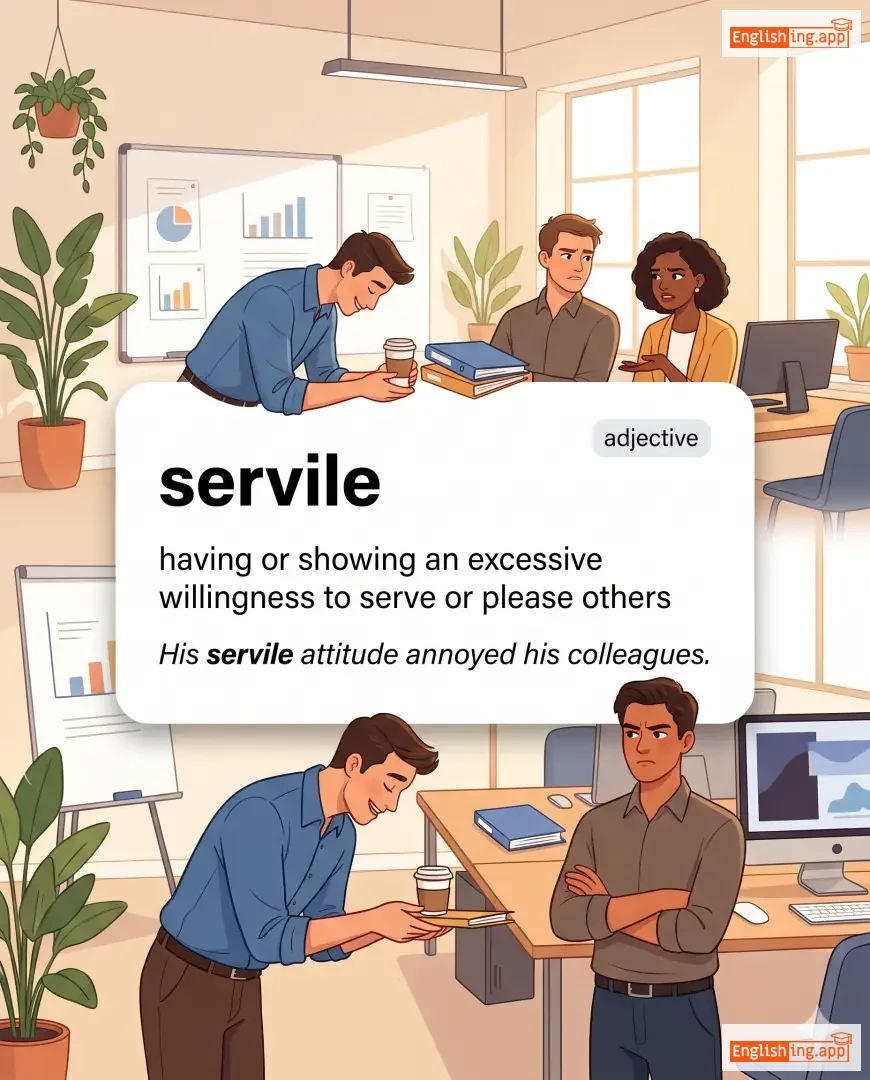
servile definition card — visual illustration of the meaning
adjective
/ˈsɜːrvaɪl/ or /ˈsɜːrvəl/
угодливый (ugodlivyy)

having or showing an excessive willingness to serve or please others

"His servile attitude annoyed his colleagues."

"Его угодливая манера раздражала коллег." (Yego ugodlivaya manera razdrazhala kolleg.)
noun
/ˈsɜːvɪŋ/
порция (portsiya)

a portion of food for one person; the act of giving food or drink to someone

"He ate a large serving of rice and curry."

"Он съел большую порцию риса с карри." (On syel bol'shuyu portsiyu risa s karri.)
noun
/ˈsɜːrvɪtuːd/
рабство (rabstvo)

the state of being a slave or completely subject to someone more powerful

"The prisoners were forced into servitude."

"Заключённые были вынуждены работать в рабстве." (Zaklyuchyonnye byli vynuzhdeny rabotat' v rabstve.)
noun
/ˈsɛsəmi sidz/
семена кунжута (semena kunzhuta)

small edible seeds from the sesame plant used in cooking and baking

"Sprinkle sesame seeds on top of the bread before baking."

"Посыпьте семена кунжута на хлеб перед выпечкой." (Posyp'te semena kunzhuta na khleb pered vypechkoy.)
session definition card — visual illustration of the meaning
noun
/ˈsɛʃ.ən/
сессия (sessiya)

a meeting or a period of time devoted to a specific activity

"The session will begin at 10 AM."
"Сессия начнется в 10 утра." (Sessiya nachnyotsya v 10 utra.)
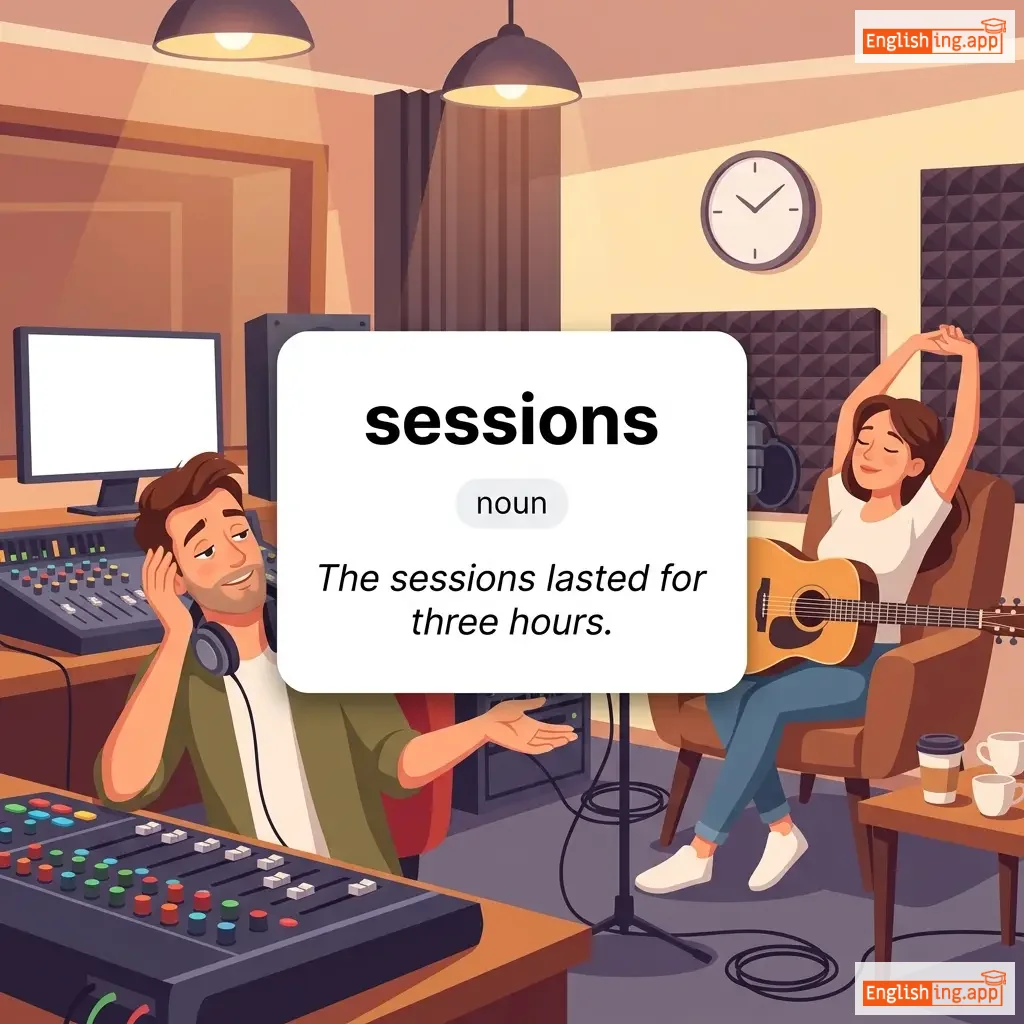
sessions definition card — visual illustration of the meaning
noun
ˈsɛʃənz
сессии, собрания, период (sessii, sobraniya, period)

A meeting of an official body, especially a court of law, to conduct its business; a period devoted to a particular activity.

"The sessions lasted for three hours."
"Сессии длились три часа." (Sessii dlilis' tree chasa.)
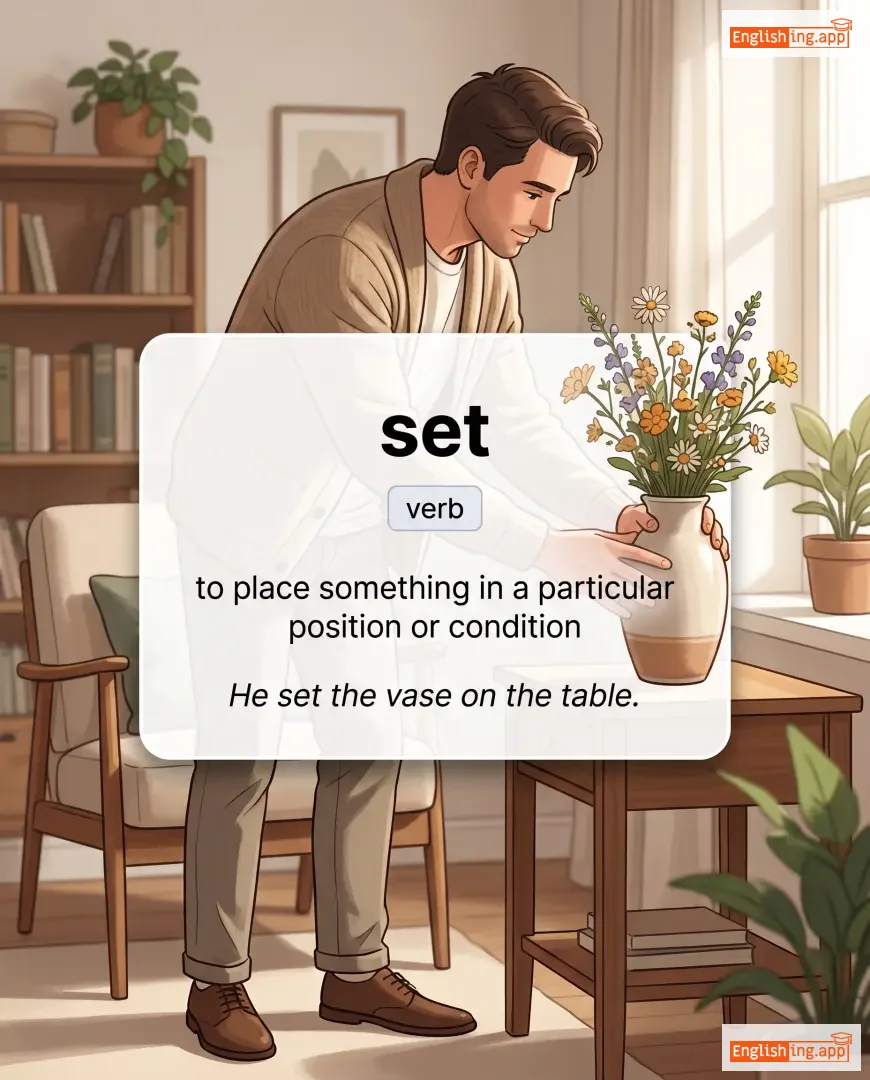
set definition card — visual illustration of the meaning
verb
/sɛt/
установить (ustanovit)

to place something in a particular position or condition

"He set the vase on the table."

"Он поставил вазу на стол." (On postavil vazu na stol.)
noun
/ˈsɛt ʌp/
установка (ustanovka)

The arrangement or organization of something; a planned structure or scheme

"The company presented a new set-up for the office layout."

"Компания представила новый сет-ап для расположения офиса." (Kompaniya predstavila novyy set-up dlya raspolozheniya ofisa.)
noun
/ˈsɛtɪŋ/
обстановка (obstanovka)

the environment or place where something happens

"The setting of the movie was a beautiful beach."

"Место действия фильма было красивым пляжем." (Mesto deystviya fil'ma bylo krasivym plyazhem.)
settle definition card — visual illustration of the meaning
verb
/ˈsɛtl/
урегулировать (uregulirovat')

to resolve or come to an agreement about something; to establish a residence or position

"After a long negotiation, they were able to settle the dispute."

"После долгих переговоров они смогли урегулировать спор." (Posle dolgikh peregovorov oni smogli uregulirovat' spor.)
noun
/ˈsɛtlmənt/
соглашение (soglashenie)

an agreement reached after a dispute, or a community or area where people establish a home

"The settlement between the companies was finalized after months of talks."

"Соглашение между компаниями было завершено после месяцев переговоров." (Soglashenie mezhdu kompaniyami bylo zaversheno posle mesyatsev peregovorov.)
noun
/ˈsɛtlər/
поселенец (poselenets)

a person who settles in a new area or land

"The settlers arrived in the new town and started building homes."

"Поселенцы прибыли в новый город и начали строить дома." (Poselentsy pribyli v novyy gorod i nachali stroyt' doma.)
noun
/ˈsɛtʌp/
настройка (nastroyka)

an arrangement of things or the way in which something is organized or prepared

"The setup of the event took hours to complete."

"Настройка мероприятия заняла несколько часов." (Nastroyka meropriyatiya zanyala neskol'ko chasov.)
noun
/ˈsɛvən/
семь (seven)

the number following six and preceding eight

"She has seven apples in her basket."

"У неё семь яблок в её корзине." (U eyo sem yablok v eyo korzine.)
seven habits definition card — visual illustration of the meaning
phrase
ˈsɛvən ˈhæbɪts
семь привычек (sem' privityek)

Regular behaviors or actions that are done consistently over time, specifically referring to a set of seven key practices.

"Even habits help in maintaining a balanced lifestyle."

"Даже привычки помогают поддерживать сбалансированный образ жизни." (Dazhe privityeki pomogayut podderzhivat' sbalansirovannyy obraz zhizni.)
Seven Wonders definition card — visual illustration of the meaning
noun
ˈsɛv.ən ˈwʌn.dərz
семь чудес света (syem' chudyes sveta)

The seven most remarkable and famous structures in the world, representing architectural feats and cultural significance.

"The Seven Wonders of the world reflect human brilliance."

"Семь чудес света отражают человеческое величие." (Syem' chudyes sveta otrazhayut chelovecheskoye velichiye.)
adjective
/ˈsɛvənθ/
седьмой (sed'moy)

constituting number seven in a sequence; coming after the sixth

"Her birthday is on the seventh of July."

"Её день рождения — седьмое июля." (Yeyo den' rozhdeniya — sed'moye iyulya.)
verb
/ˈsɛvər/
разрезать, разрывать отношения (razrezyvat, razryvat otnosheniya)

to cut off or separate, especially by cutting; to end a connection or relationship

"He had to sever ties with the company after the dispute."

"Ему пришлось разорвать связи с компанией после спора." (Emu prishlos' razorvat' svyazi s kompaniyey posle spora.)
adjective
/ˈsɛvrəl/
несколько (neskol'ko)

more than one but not many; a few

"Several people attended the meeting yesterday."

"Несколько человек посетили встречу вчера." (Neskol'ko chelovek posetili vstrechu vchera.)
noun
/ˈsɛvərəns/
выходное пособие (vikhodnoye posobiye)

the act of ending something, especially a relationship or employment; compensation paid upon termination

"The company offered him severance pay after his job ended."
"Компания предложила ему выходное пособие после окончания его работы." (Kompaniya predlozhila yemu vykhodnoye posobiye posle okonchaniya yego raboty.)
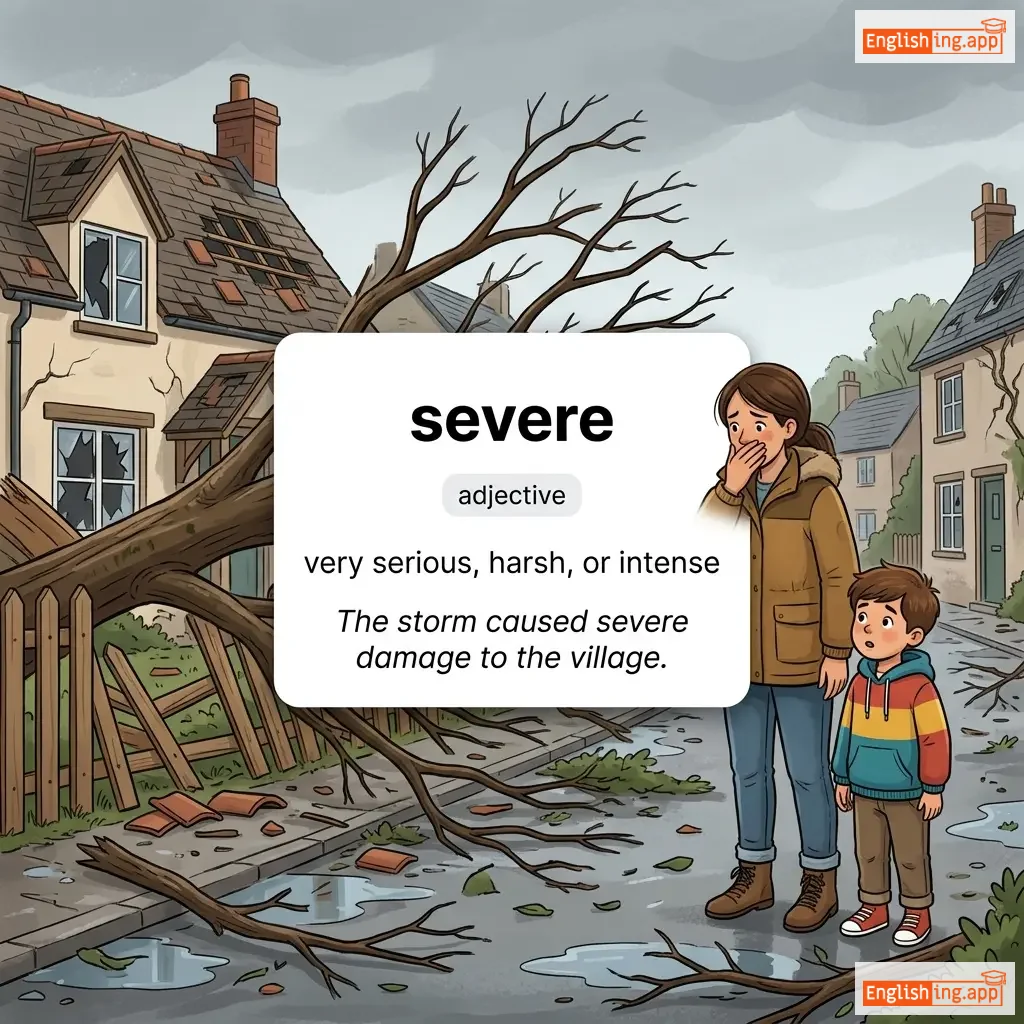
severe definition card — visual illustration of the meaning
adjective
/sɪˈvɪər/
серьезный (seryozny)

very serious, harsh, or intense

"The storm caused severe damage to the village."

"Шторм нанес серьезный ущерб деревне." (Shtorm nanes seryoznyy ushcherb derevne.)
adverb
/sɪˈvɪərli/
тяжело (tyazhelo)

to a great degree; very seriously or harshly

"The patient was severely injured in the accident."

"Пациент был тяжело ранен в аварии." (Patsiyent byl tyazhelo ranyen v avarii.)
noun
/sɪˈvɛrɪti/
серьезность (seryoznost)

the quality of being very serious or harsh

"The doctor explained the severity of the disease."

"Доктор объяснил серьезность заболевания." (Doktor ob'yasnil ser'yoznost' zabolevaniya.)
verb
/səʊ/
счастье (schastye)

to join pieces of fabric or material together using a needle and thread

"She learned to sew her own clothes at an early age."

"Она не могла скрыть свое счастье, когда получила награду." (Ona ne mogla skryt' svoe schast'ye, kogda poluchila nagradu.)
noun/verb
/ˈsoʊ.ɪŋ/
шитье (shite)

The activity or skill of joining fabric using a needle and thread

"She enjoys sewing her own clothes on weekends."

"Она любит шить свою одежду по выходным." (Ona lyubit shit' svoyu odezhdu po vykhodnym.)
noun
/sɛks/
пол (pol)

the biological distinction between male and female; sexual activity

"He was asked about his sex at the doctor's office."
"Его спросили о его поле в кабинете врача." (Ego sprosili o yego pole v kabinete vracha.)
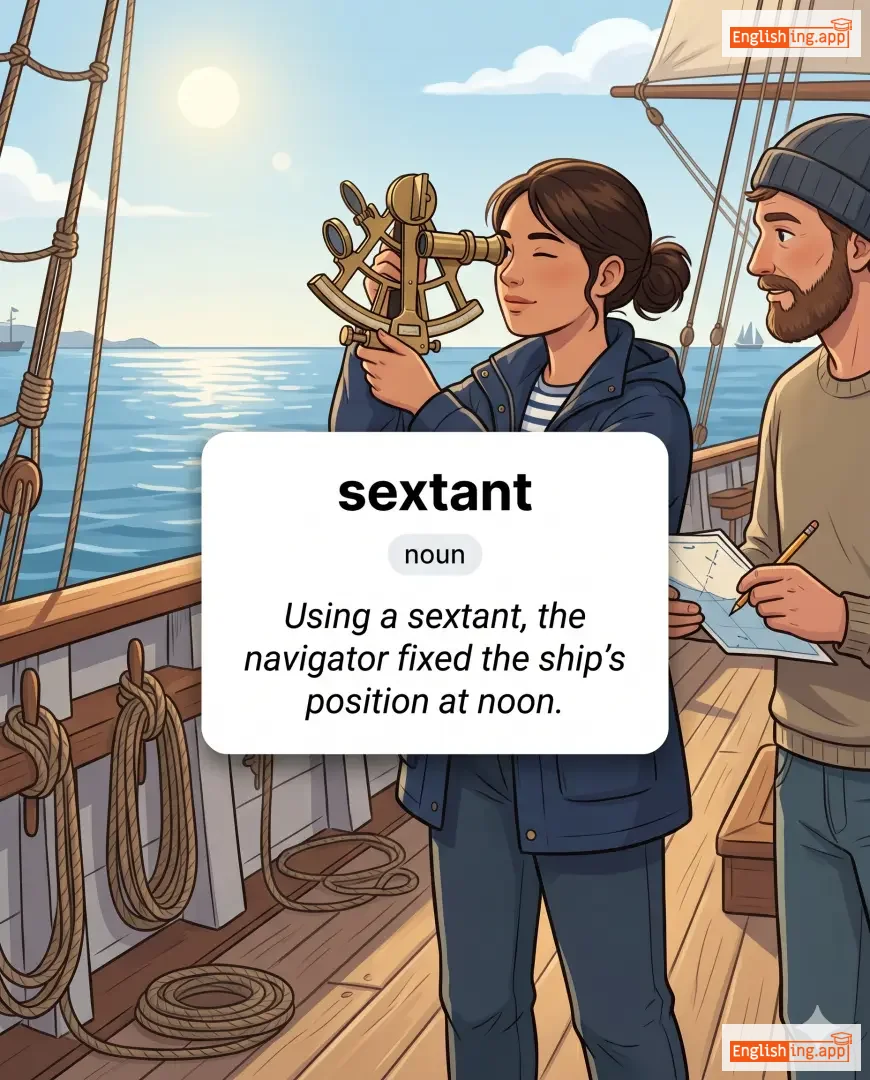
sextant definition card — visual illustration of the meaning
noun
/ˈsɛkstənt/
секстант (sekstant)

a navigational instrument with a graduated arc of 60°, used to measure the angle between a celestial object and the horizon

"Using a sextant, the navigator fixed the ship’s position at noon."

"Используя секстант, навигатор определил положение корабля в полдень." (Ispol'zuyya sekstant, navigátor opredelil polozhenie korablya v poldin.)
noun
/sɛkˈstɛt/
секстет (seks'tet)

a group of six people playing music or a piece written for six performers

"The jazz sextet filled the small club with a warm, layered sound."

"Джазовый секстет заполнил маленький клуб теплым, многослойным звуком." (Dzhazovyy seks'tet zapolnil malen'kiy klub teplym, mnogosloynym zvukom.)
verb
/sɛkˈstuːpəl/
сексуплицировать (seksuplit͡sirovatʹ)

to make or become six times as great or as many

"Within two quarters, the campaign sextupled their daily sign-ups."

"Через два квартала кампания увеличила их ежедневные регистрации в шесть раз." (Cherez dva kvartala kampaniya uvelichila ikh ezhednevnyye registratsii v shest' raz.)
adjective
/ˈsɛkʃʊəl/
сексуальный (seksual'nyy)

relating to the instincts, physiological processes, and activities connected with physical attraction or intimate physical contact between individuals

"The sexual health of individuals is an important topic in modern medicine."

"Сексуальное здоровье людей — важная тема в современной медицине." (Seksual'noye zdorov'ye lyudey — vazhnaya tema v sovremennoy meditsine.)
noun
/ˌsɛkʃuˈæləti/
сексуальность (seksual'nost')

a person's capacity for sexual feelings and orientation

"She spoke openly about her sexuality and identity."

"Она откровенно говорила о своей сексуальности и идентичности." (Ona otkrovenno govoryla o svoey seksual'nosti i identichnosti.)
adverb
/ˈsɛkʃuəli/
сексуально (seksual'no)

in a way that relates to or involves sexual activity or feelings

"The film was considered too sexually explicit for young audiences."

"Фильм был признан слишком сексуально откровенным для молодой аудитории." (Fil'm byl priznan slishkom seksual'no otkrovennym dlya molodoy auditorii.)