Словари

Словарь английского языка | Значения слов, определения и примеры

adverb
/ˈsɜːrtʃɪŋli/
исследовательно (issledovatel'no)

In a way that seems to look for hidden meanings or truth.

"She looked at him searchingly, hoping for an honest answer."

"Она посмотрела на него с любопытством, ожидая честного ответа." (Ona posmotrela na nego s lyubopytstvom, ozhidaya chestnogo otveta.)
noun
/ˈsiːskeɪp/
морской пейзаж (morskoj pejzazh)

A view or painting of the sea.

"The artist painted a beautiful seascape at sunset."

"Художник нарисовал красивый морской пейзаж на закате." (Kudozhnik narisoval krasivyj morskoj pejzazh na zakate.)
season definition card — visual illustration of the meaning
noun/verb
/ˈsiːzən/
время года / приправлять (vremya goda / pripravljat)

One of the four periods of the year characterized by specific weather conditions; also, to add flavor to food.

"Spring is my favorite season of the year."

"Весна — мой любимый сезон года." (Vesna — moy lyubimyy sezon goda.)
adjective
/ˈsiːzənəbl/
сезонный (sezonnij)

Appropriate to the time of year or season.

"We had seasonable weather for autumn."

"У нас была подходящая погода для осени." (U nas byla podkhodyashchaya pogoda dlya oseni.)
adjective
/ˈsiːzənl/
сезонный (sezonnij)

Relating to or dependent on a particular season.

"Seasonal fruits are available in the market."
"Сезонные фрукты доступны на рынке." (Sezonnye frukty dostupny na rynke.)
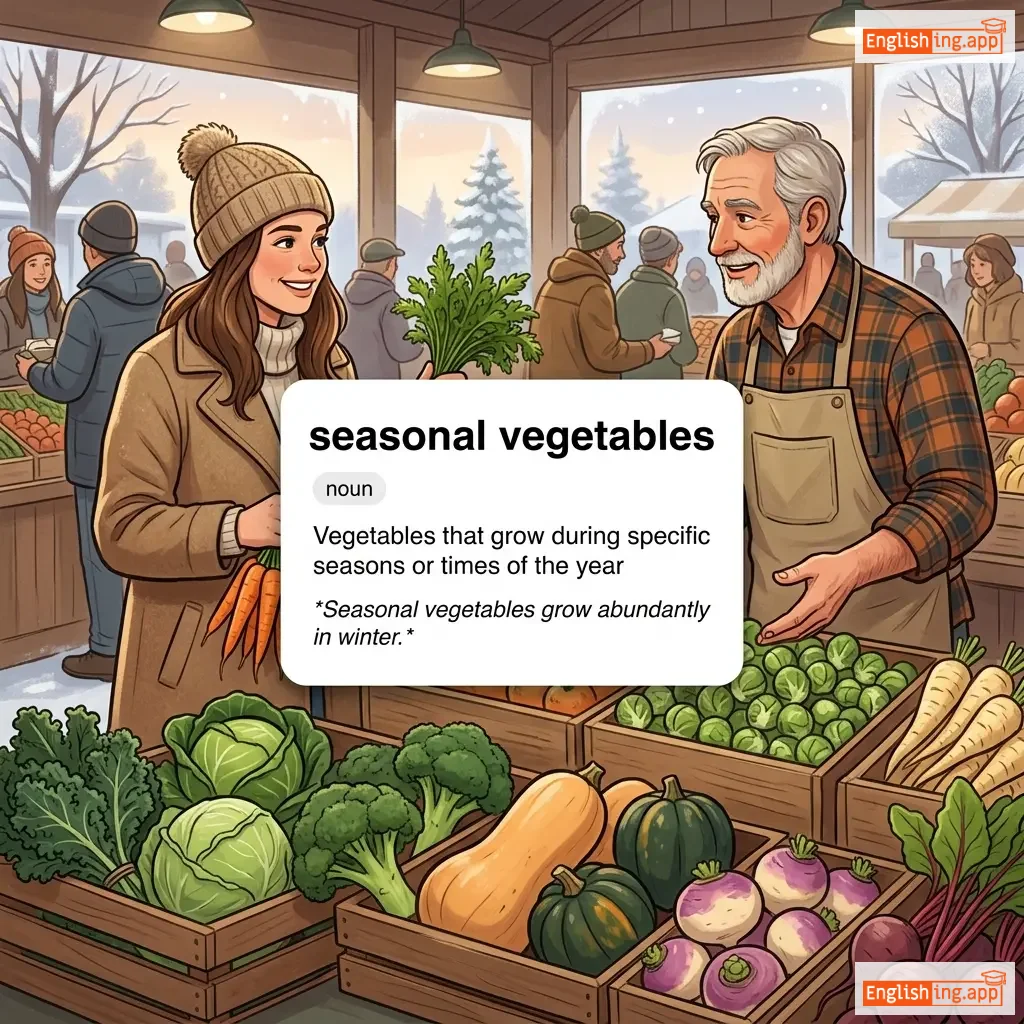
seasonal vegetables definition card — visual illustration of the meaning
noun
ˈsiːzənəl ˈvedʒtəbəlz
сезонные овощи (sezonnye ovoshchi)

Vegetables that grow during specific seasons or times of the year

"Seasonal vegetables grow abundantly in winter."

"Сезонные овощи растут в изобилии зимой." (Sezonnye ovoshchi rastut v izobilie zimoy.)
adjective/verb
/ˈsiːzənd/
опытный / приправленный (opytnyy / pripravljennyy)

Experienced in a particular activity; also, flavored with spices.

"She is a seasoned teacher with over 20 years of experience."
"Она опытный учитель с более чем 20-летним стажем." (Ona opytnyy uchitel' s bolee chem 20-letnim stazhem.)
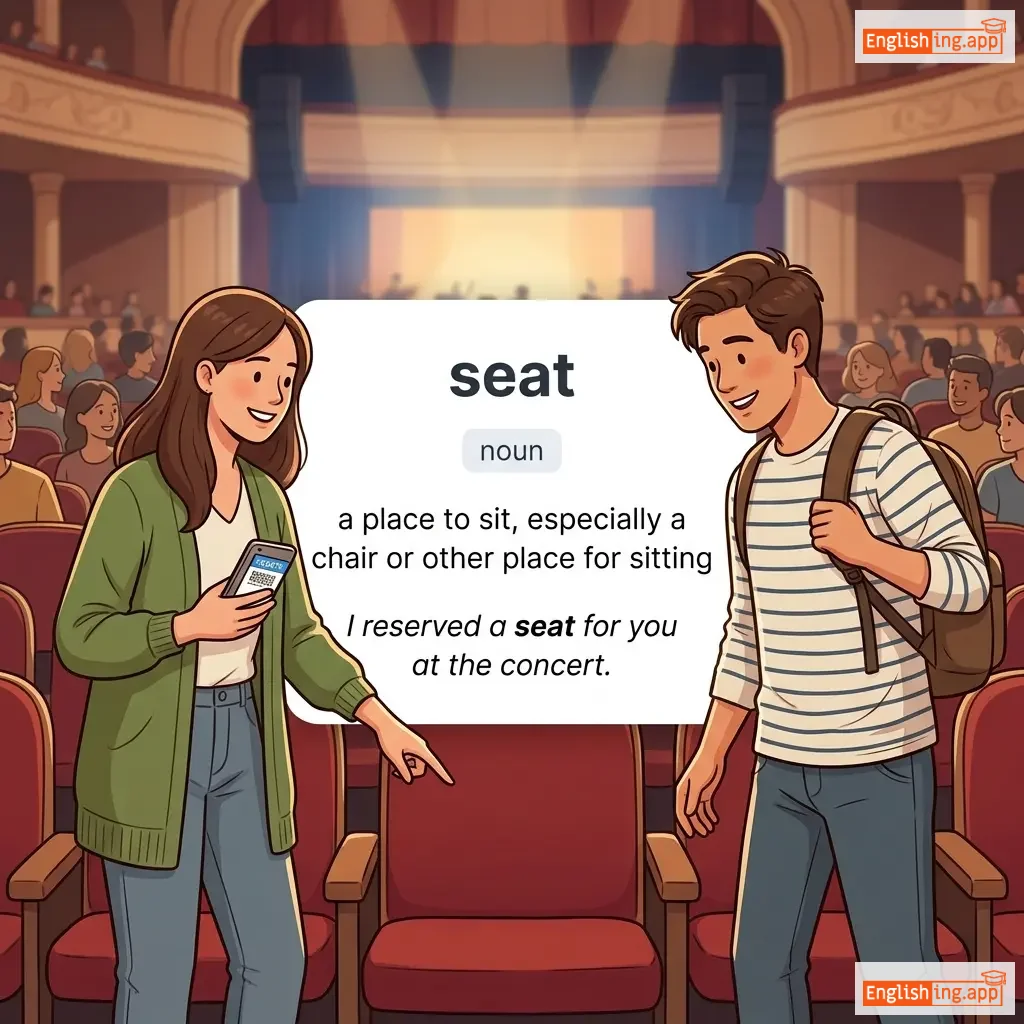
seat definition card — visual illustration of the meaning
noun
/siːt/
место (mesto)

a place to sit, especially a chair or other place for sitting

"I reserved a seat for you at the concert."

"Я забронировал место для тебя на концерте." (Ya zabroniroval mesto dlya tebya na kontserte.)
adjective
/sɪˈbeɪʃəs/
связанный с себумом (svyazannyy s sebumom)

Relating to or secreting sebum, an oily substance from the skin.

"Acne is often caused by overactive sebaceous glands."

"Акне часто вызвано гиперактивными сальными железами." (Akne chasto vyzvano giperaktivnymi sal'nymi zhelezami.)
noun
/ˈsiːkənt/
секущая (sekushchaya)

A straight line that intersects a curve at two or more points.

"In geometry, a secant cuts the circle at two distinct points."

"В геометрии секущая пересекает окружность в двух различных точках." (V geometrii sekushchaya peresekaet okruzhnost' v dvukh razlichnykh tochkakh.)
verb
/sɪˈsiːd/
выходить (vikhodit)

To formally withdraw from a political or organizational union.

"Several states threatened to secede from the union."

"Несколько штатов угрожали выйти из союза." (Neskol'ko shtatov ugrozhali vyyti iz soyuza.)
noun
/sɪˈsɛʃən/
сецессия (tsetesiya)

The action of formally withdrawing from membership of a federation or body.

"The secession of the southern states led to the Civil War."

"Сецессия южных штатов привела к Гражданской войне." (Tsetesiya yuzhnykh shtatov privela k Grazhdanskoy voyne.)
verb
/sɪˈkluːd/
изолировать (izolirovat)

To keep someone away from other people; to isolate.

"The monk chose to seclude himself in the mountains."

"Монах выбрал изолироваться в горах." (Monakh vybral izolirovat'sya v gorakh.)
adjective
/sɪˈkluːdɪd/
уединённый (uyedinenny)

Placed apart from other people or things; private and quiet.

"They spent their vacation in a secluded beach house."

"Они провели свой отпуск в уединённом домике на пляже." (Oni proveli svoy otpusk v uyedinennom domike na plyazhe.)
noun
/sɪˈkluːʒən/
уединение (uedinenie)

The state of being private, away from other people.

"She spent the weekend in complete seclusion in her cabin."

"Она провела выходные в полном уединении в своей хижине." (Ona provela vykhodnye v polnom uedinenii v svoey khizhine.)
noun
/ˈsekənd/
секунда; второе место (sekunda vtoroje mesto)

a unit of time equal to one sixtieth of a minute; also the position after first

"He finished the race in second place."

"Он занял второе место в гонке." (On zanyal vtoroje mesto v gonke.)
adjective
/ˌsekənd ˈreɪt/
второсортный (vtorosortnyy)

Of mediocre or inferior quality.

"The movie was entertaining but clearly second-rate compared to the original."

"Фильм был увлекательным, но явно второсортным по сравнению с оригиналом." (Film byl uvelikatel'nym, no yavno vtorosortnym po sravneniyu s originalom.)
adjective
/ˈsekənderi/
второстепенный (vtorostepennyy)

Less important than something else; derived from or dependent on something primary.

"Safety is our primary concern, while speed is only secondary."

"Безопасность — наша основная забота, в то время как скорость лишь второстепенна." (Bezopasnost’ — nasha osnovnaya zabota, v to vremya kak skorost’ lish’ vtorostepennaya.)
adverb
/ˈsekəndli/
во-вторых (vo-vtorykh)

Used to introduce the second point in a list of arguments or ideas.

"Firstly, we need funding; secondly, we need a strong team."

"Во-первых, нам нужно финансирование; во-вторых, нам нужна сильная команда." (Vo-pervykh, nam nuzhno finansirovanie; vo-vtorykh, nam nuzhna sil'naya komanda.)
noun
/ˈsiːkrəsi/
секретность (sekretnost')

The action of keeping something secret or the state of being kept secret.

"The negotiations were conducted in complete secrecy."

"Переговоры велись в полной секретности." (Peregovory velis' v polnoy sekretnosti.)
secret definition card — visual illustration of the meaning
noun
/ˈsiːkrət/
секрет (sekret)

something that is kept or meant to be kept unknown or unseen by others

"He told me a secret about his childhood."

"Он рассказал мне секрет о его детстве." (On rasskazal mne sekret o ego detstve.)
noun
/ˈsɛkrəteri/
секретарь (sekretar)

a person employed to handle correspondence and manage routine tasks for an individual or organization

"The secretary scheduled the meeting for tomorrow."
"Секретарь запланировал встречу на завтра." (Sekretar zaplaniroval vstrechu na zavtra.)
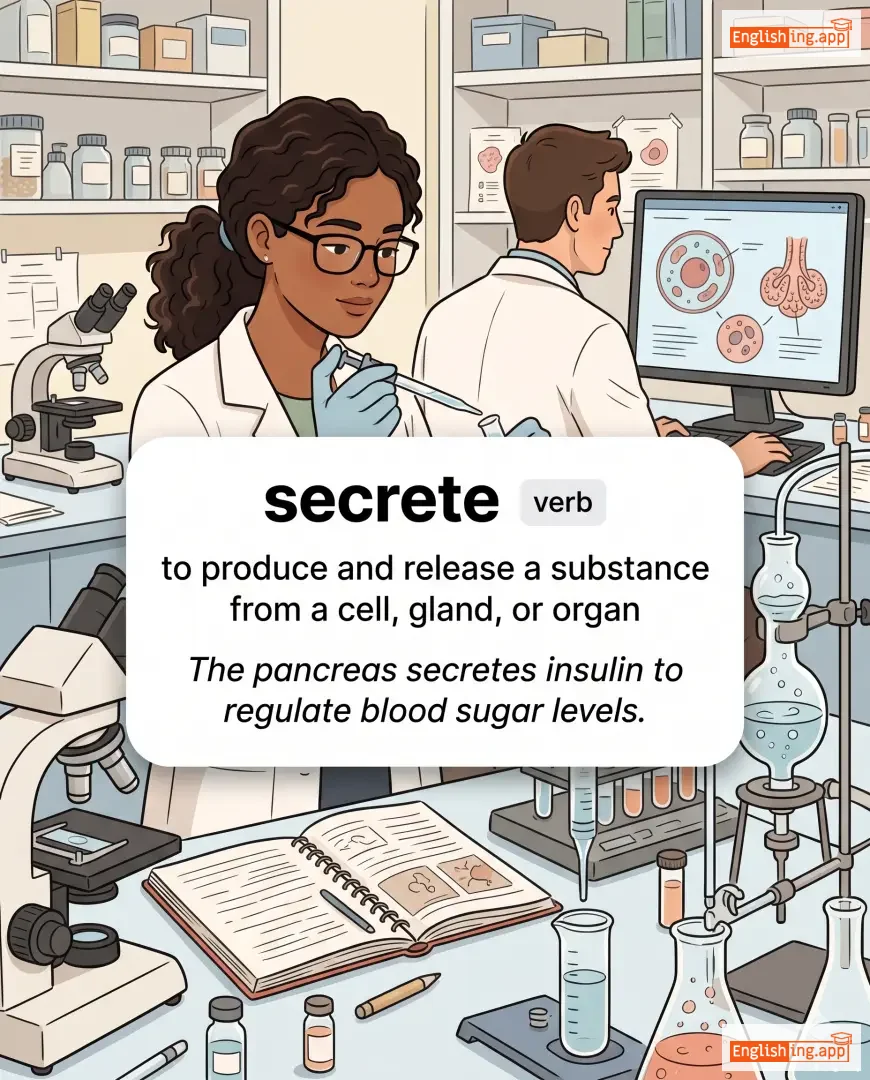
secrete definition card — visual illustration of the meaning
verb
/sɪˈkriːt/
секретировать (sekretirovat)

to produce and release a substance from a cell, gland, or organ

"The pancreas secretes insulin to regulate blood sugar levels."

"Поджелудочная железа секретирует инсулин для регуляции уровня сахара в крови." (Podzheludochnaya zheleza sekretiruet insulín dlya regulatsii urovnya sakhara v krovi.)
noun
/sɪˈkriː.ʃən/
секреция (sekreciya)

a process by which substances are produced and discharged from a cell or gland

"Insulin secretion is crucial for blood sugar regulation."

"Секреция инсулина имеет решающее значение для регулирования уровня сахара в крови." (sekreciya insulina imeet reshayushchee znachenie dlya regulirovaniya urovnya sahara v krovi)
adverb
/ˈsiː.krət.li/
тайно (taino)

in a way that is hidden or not known by others

"She secretly planned a surprise party for her friend."

"Она тайно спланировала вечеринку-сюрприз для своей подруги." (Ona tayno splanirovala vecherinku-syurpriz dlya svoei podrugi.)
noun
/sɛkt/
секта (sekta)

a subgroup of a larger religious or political group, often with differing beliefs

"The group split into different sects due to doctrinal differences."

"Группа разделилась на разные секты из-за доктринальных различий." (Gruppa razdelilas' na raznye sekty iz-za doktrinal'nykh razlichiy.)
adjective
/sɛkˈtɛəriən/
сектантский (sektantskiy)

relating to or characterized by the differences between sects, often leading to conflict

"The region has been troubled by sectarian violence for decades."

"Регион страдает от сектантского насилия на протяжении десятилетий." (Region stradayet ot sektantskogo nasiliya na protyazhenii desyatiletiy.)
noun
/ˈsɛkʃən/
раздел (razdel)

a distinct part or subdivision of something larger

"This section of the report needs further review."

"Этот раздел отчета требует дальнейшего рассмотрения." (Etot razdel otcheta trebuet dal'neyshego rassmotreniya.)
noun
/ˈsɛktər/
сектор (sektor)

a distinct part or area of an economy, society, or industry

"The technology sector is growing rapidly."

"Технологический сектор быстро растет." (Tekhnologicheskiy sektor bystro rastet.)
sector-specific definition card — visual illustration of the meaning
adjective
ˈsek.tər spəˈsɪf.ɪk
секторный (sektornyy)

Relating to or designed for a particular sector or industry.

"Sector-specific policies attract targeted investments."

"Секторные политики привлекают целевые инвестиции." (Sektornye politiki privlekayut tselevye investitsii.)
adjective
/ˈsɛkjʊlər/
светский (svetskiy)

not connected with religious or spiritual matters

"The country adopted a secular constitution separating religion from state affairs."

"Страна приняла светскую конституцию, отделяющую религию от государственных дел." (Strana prinяла svetskuyu konstitutsiyu, otdelyayushchuyu religiyu ot gosudarstvennykh del.)
secure definition card — visual illustration of the meaning
verb/adjective
/sɪˈkjʊər/
обезопасить (obezopasit')

to make safe or protect; to fix something firmly in place

"Please secure the door before you leave."

"Пожалуйста, закрепите дверь, прежде чем уйдете." (Pozhaluysta, zakrepite dver', prezhde chem uydyote.)
security definition card — visual illustration of the meaning
noun
/sɪˈkjʊərɪti/
безопасность (bezopasnost)

the state of being free from danger or threat

"We need to improve our security measures at the airport."

"Нам нужно улучшить меры безопасности в аэропорту." (Nam nuzhno uluchshit' mery bezopasnosti v aeroportu.)
adjective, verb
/sɪˈdeɪt/
седировать (sedirovat)

calm, quiet, and composed; or to administer a drug to make someone calm or sleep

"The nurse sedated the patient before the operation."

"Медсестра оседлатила пациента перед операцией." (Medsestra osedlatila patsiyenta pered operatsiyey.)
noun
/ˈsɛdətɪv/
успокаивающее средство (uspokaivayushchee sredstva)

A substance that calms the nerves or induces sleep.

"The doctor prescribed a sedative to help the patient sleep."

"Врач прописал седативное средство, чтобы помочь пациенту уснуть." (Vrach propisal sedativnoe sredstva, chtoby pomoch' patsiyentu usnut'.)
sedentary definition card — visual illustration of the meaning
adjective
/ˈsɛdntɛri/
малоподвижный (malopodvizhnyy)

Characterized by much sitting and little physical activity.

"A sedentary lifestyle can lead to health problems."

"Малоподвижный образ жизни может привести к проблемам со здоровьем." (malopodvizhnyy obraz zhizni mozhet privesti k problemam so zdorovyem)
noun
/ˈsɛdəmənt/
осадок (osadok)

Solid particles that settle at the bottom of a liquid.

"The river carries a lot of sediment downstream."
"Река несет много осадка вниз по течению." (Reka neset mnogo osadka vniz po techyonyu.)
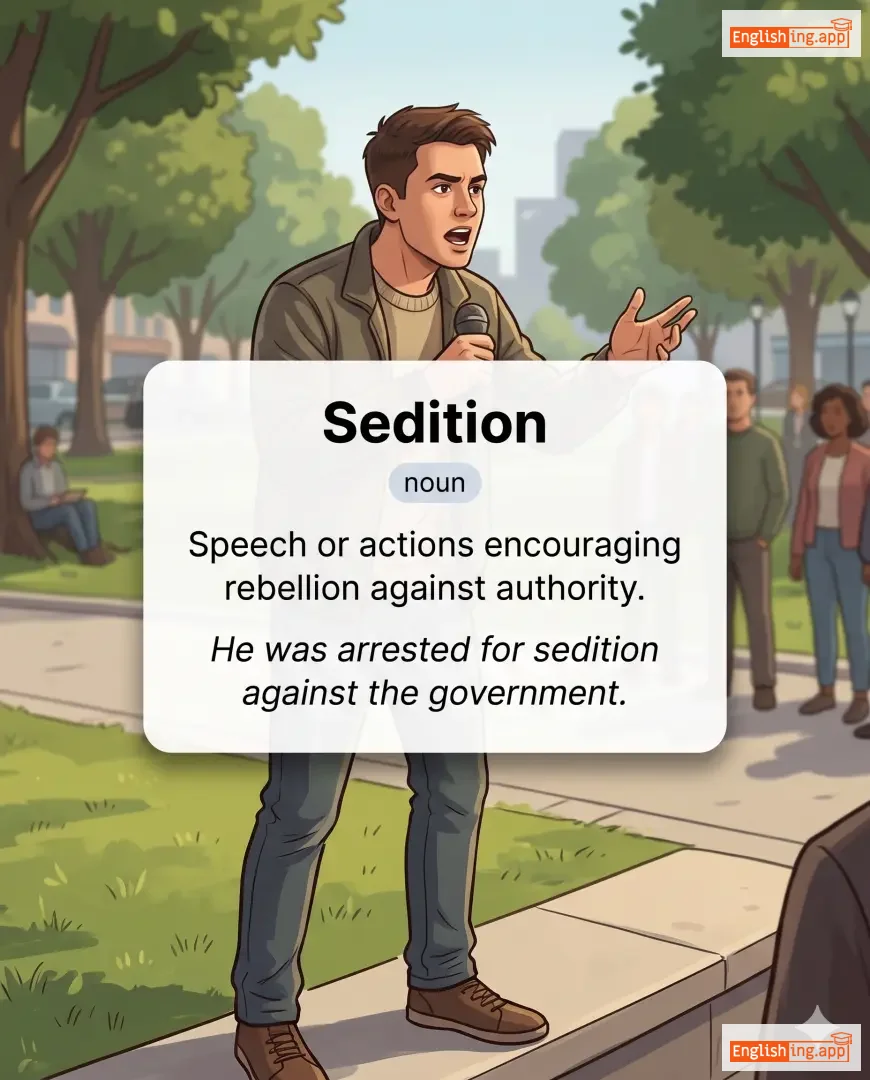
Sedition definition card — visual illustration of the meaning
noun
/sɪˈdɪʃən/
мятеж (myatezh)

Speech or actions encouraging rebellion against authority.

"He was arrested for sedition against the government."

"Его арестовали за мятеж против правительства." (Ego arestovali za myatezh protiv pravitel'stva.)
adjective
/sɪˈdɪʃəs/
мятежный (myatezhny)

Encouraging rebellion against authority.

"The activist spread seditious pamphlets among the crowd."

"Активист распространял мятежные листовки среди толпы." (Aktivist rasprostranyal myatezhnye listovki sredi tolpy.)
verb
/sɪˈdjuːs/
соблазнять (soblaznyat)

to attract someone into doing something, especially something they might not normally do

"The advertisement was designed to seduce customers into buying luxury products."

"Реклама была разработана, чтобы соблазнить покупателей купить роскошные товары." (Reklama byla razrabotana, chtoby soblaznit' pokupateley kupit' roskoshnyye tovaru.)
noun
/sɪˈdʌk.ʃən/
соблазн; искушение (soblazn; iskushenie)

the action of seducing someone; temptation to do something wrong

"He fell victim to the seduction of easy money."

"Он стал жертвой соблазна легких денег." (On stal zhertvoy soblazna legkikh deneg.)
Sedulous definition card — visual illustration of the meaning
adjective
/ˈsɛdʒʊləs/
прилежный (prilezhny)

showing great care, attention, and diligence in work or tasks

"She was admired for her sedulous efforts in completing the project on time."
"Её восхищали за прилежные усилия по завершению проекта вовремя." (Eyo voskhishchali za prilezhnyye usiliya po zaversheniyu proyektov vovremya.)
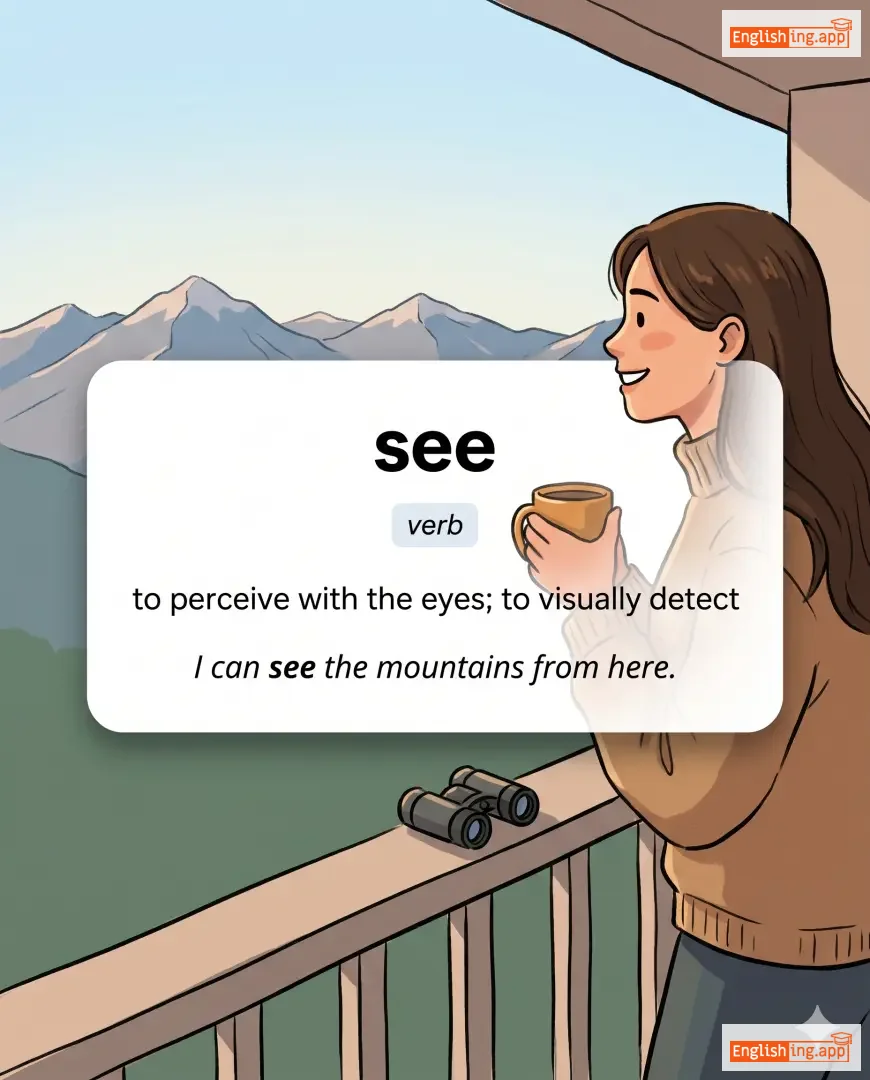
see definition card — visual illustration of the meaning
verb
/siː/
видеть (videt')

to perceive with the eyes; to visually detect

"I can see the mountains from here."
"Я могу видеть горы отсюда." (Ya mogu videt' gory otsyuda.)
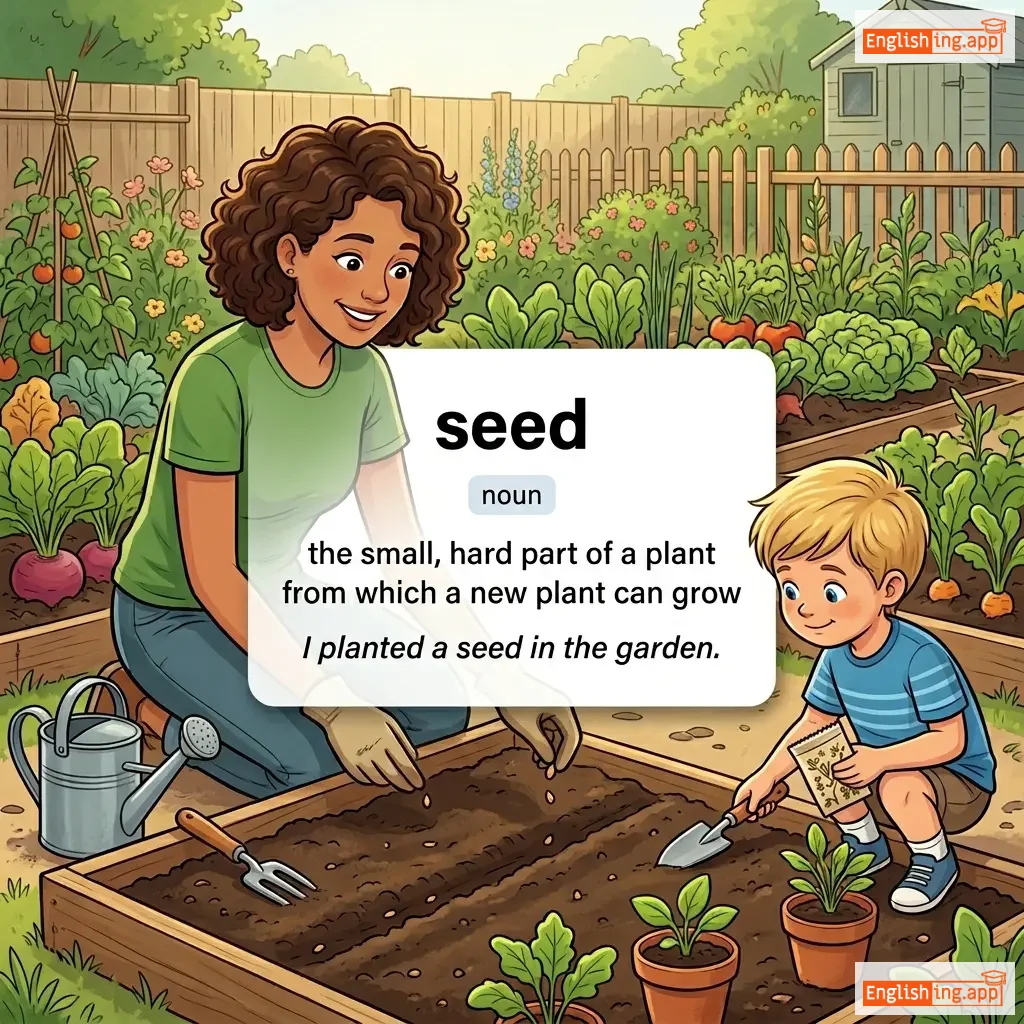
seed definition card — visual illustration of the meaning
noun
/siːd/
семя (semya)

the small, hard part of a plant from which a new plant can grow

"I planted a seed in the garden."

"Я посадил семя в саду." (Ya posadil semya v sadu.)
adjective
/ˈsiːdi/
грязный / обветшалый (gryaznyy / obvetshalyy)

dirty, shabby, or in bad condition; also feeling slightly unwell

"He stayed in a seedy motel near the bus station."

"Он остановился в захудалом мотеле возле автовокзала." (On ostanovilsya v zakhudalom motele vozle avtovokzala.)
verb
/siːk/
искать (iskat')

to try to find or obtain something; to attempt or desire to achieve

"He decided to seek advice from his mentor."

"Он решил искать совет у своего наставника." (On reshil iskat' sovet u svoego nastavnika.)
noun
/ˈsiːkər/
ищущий (ishchushchiy)

a person who is looking for something, especially knowledge or truth

"The seeker traveled far to find the answers to his questions."

"Ищущий путешествовал далеко, чтобы найти ответы на свои вопросы." (Ishchushchiy puteshestvoval daleko, chtoby nayti otvety na svoi voprosy.)
verb
/siːm/
казаться (kazat'sya)

to give the impression of being something or having a particular quality

"He seems tired after the long journey."

"Он кажется усталым после долгого путешествия." (On kazhetsya ustalym posle dolgogo puteshestviya.)
adverb
/ˈsiː.mɪŋ.li/
по-видимому, кажется спокойным (po-vidimomu, kazhetsya spokoynym)

appearing to be true, but not necessarily so

"He was seemingly calm despite the chaos around him."

"Он был по-видимому спокойным, несмотря на хаос вокруг него." (On byl po-vidimomu spokoynym, nesmotrya na khaos vokrug nego.)
adjective
/ˈsiːmli/
подобающий (podobayushchiy)

proper or appropriate in behavior or appearance

"It was not seemly to argue loudly during the ceremony."

"Не было подобающим спорить громко во время церемонии." (Ne bylo podobayushchim sporit' gromko vo vremya tseremonii.)