Словари

Словарь английского языка | Значения слов, определения и примеры

verb
/ˈstɪp.əl/
покрывать маленькими точками (pokryvat' malenkimi tochkami)

to cover a surface with numerous small dots or specks, often in drawing or painting

"The artist stippled the canvas to create a textured effect."
"Художник покрыл холст маленькими точками, чтобы создать текстурный эффект." (Khudozhnik pokryl kholst malenkimi tochkami, chtoby sozdats' teksturnyy effekt.)
stipulate definition card — visual illustration of the meaning
verb
/ˈstɪp.jʊ.leɪt/
установить (ustanovit)

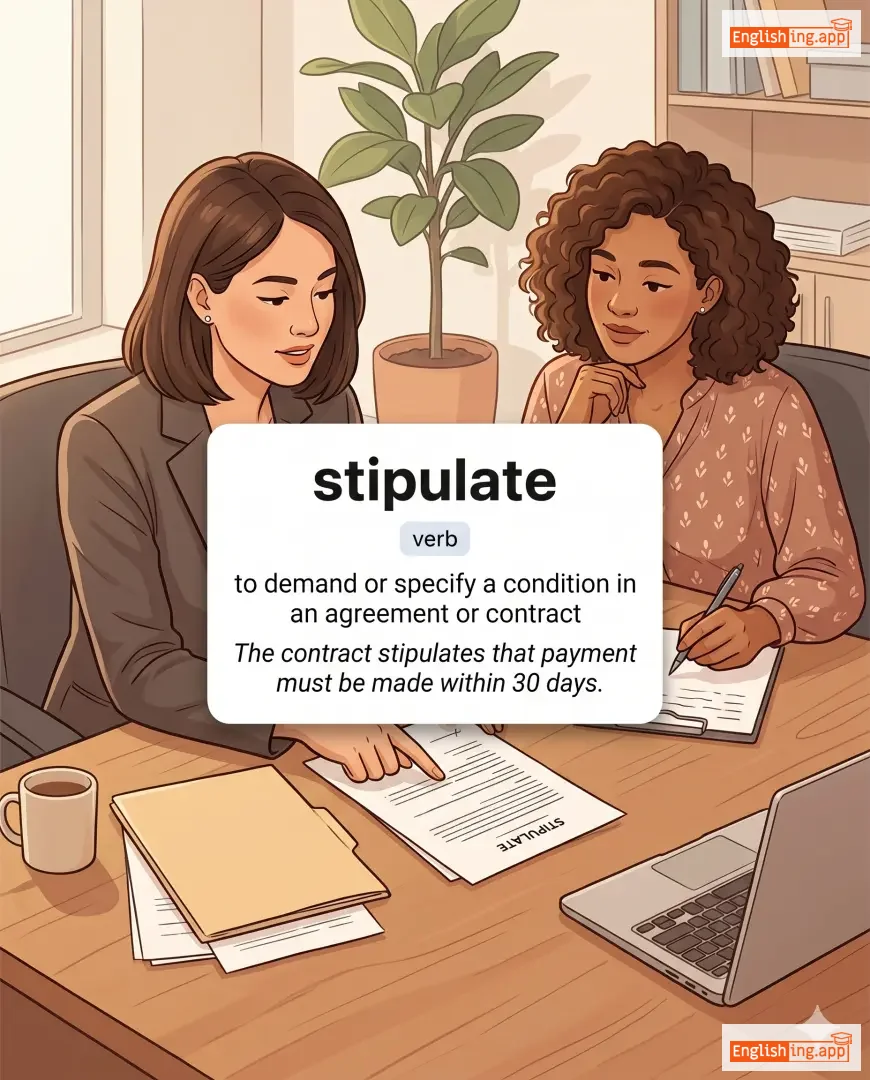
to demand or specify a condition in an agreement or contract

"The contract stipulates that payment must be made within 30 days."

"Контракт стыпулирует, что оплата должна быть произведена в течение 30 дней." (Kontrakt stypuliruet, chto oplata dolzhna byt' proizvedena v techeniye 30 dney.)
verb
/stɜːr/
перемешивать (peremeshivat)

to mix or move something in a circular motion, especially in liquid

"She stirred the soup to make sure it didn't burn."
"Она перемешала суп, чтобы убедиться, что он не сгорит." (Ona peremeshala sup, chtoby ubeditsya, chto on ne sgorit.)
stitch definition card — visual illustration of the meaning
noun, verb
/stɪtʃ/

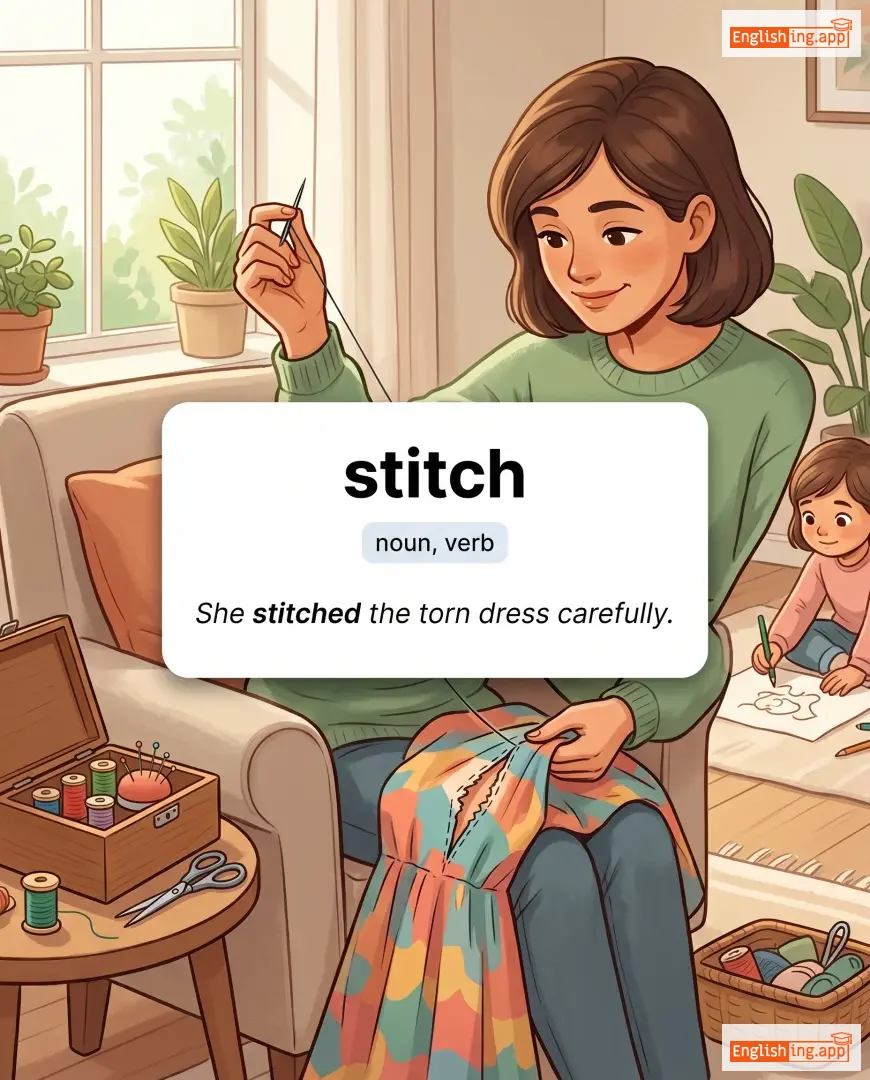
to sew fabric together using a needle and thread; also a single loop of thread in sewing

"She stitched the torn dress carefully."

noun, verb
/stɒk/
запас (zapas)

a supply of goods kept for sale or use; to keep or fill with goods

"The shop stocks a wide variety of products."

"Магазин имеет широкий ассортимент продуктов." (Magazin imeet shirokij assoriment produktov.)
noun
/stɒˈkeɪd/
деревянный забор (derevyannyy zabor)

a defensive barrier made of strong posts or timbers, often around a fort or prison

"The prisoners were kept inside the wooden stockade."

"Заключенные были помещены внутрь деревянного забора." (Zaklyuchennyye byli pomeshcheny vnutr' derevyannogo zabora.)
adjective
/ˈstɒdʒi/
тяжелый, старомодный (tyazhely, staromodny)

Dull, uninspired, or old-fashioned; also heavy and hard to digest when referring to food.

"The lecture was so stodgy that many students struggled to stay awake."

"Лекция была настолько тяжелой, что многим студентам было трудно оставаться бодрыми." (Lektsiya byla nastol'ko tyazhel'oy, chto mnogim studentam bylo trudno ostavatsya bodrymi.)
adjective
/ˈstoʊɪk/
стоический, невозмутимый (stoicheskiy, nevozmutimyy)

Showing little or no emotion, even in difficult situations.

"She remained stoic during the crisis, never showing fear or panic."

"Она оставалась стоической во время кризиса, не показывая страха или паники." (Ona ostavalas' stoicheskoj vo vremya krizisa, ne pokazyvaya strakha ili paniki.)
stoicism definition card — visual illustration of the meaning
noun
/ˈstoʊɪˌsɪzəm/
стоицизм (stoitsizm)

The endurance of pain or hardship without showing feelings or complaining.

"He faced the loss of his job with remarkable stoicism."

"Он столкнулся с потерей работы с замечательным стоицизмом." (On stolknulsya s poterey raboty s zamechatel'nym stoitsizmom.)
verb
/stoʊk/
разжигать огонь; поощрять или усиливать сильное чувство или активность (razzhigat ogon; pooshcheryat ili usilivat' sil'noe chuvstvo ili aktivnost')

To add fuel to a fire; to encourage or increase a strong feeling or activity.

"The politician’s speech stoked anger among the crowd."
"Речь политика разожгла гнев среди толпы." (Rech' politika razozhglá gnev sredi tolpy.)
stolid definition card — visual illustration of the meaning
adjective
/ˈstɒlɪd/
невозмутимый, стойкий (nevozmutimyi, stoiki)

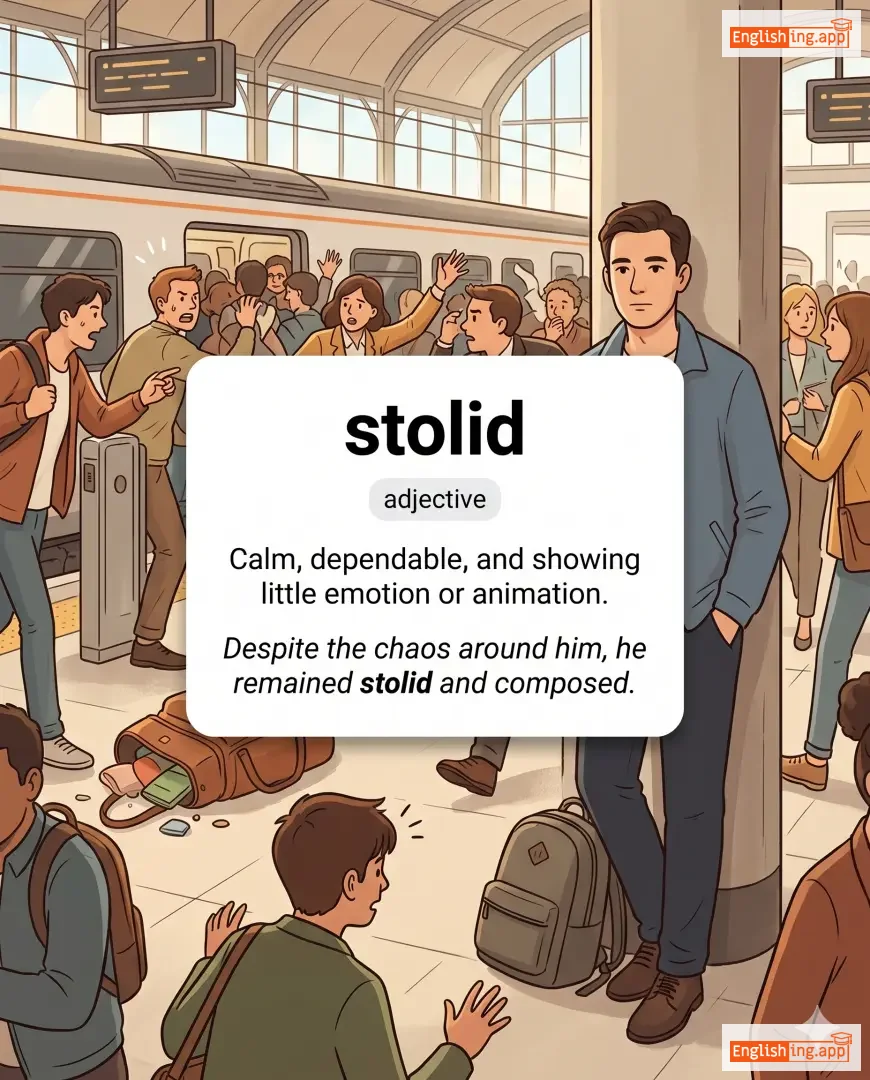
Calm, dependable, and showing little emotion or animation.

"Despite the chaos around him, he remained stolid and composed."

"Несмотря на хаос вокруг него, он оставался спокойным и собранным." (Nesmotrya na khaos vokrug nego, on ostavalsya spokoinym i sobrannym.)
noun/verb
/ˈstʌmək/
желудок / терпеть (zheludok / terpet)

The internal organ in which food is digested; also to tolerate or endure something

"She couldn’t stomach the sight of violence."

"Она не могла вынести вида насилия." (Ona ne mogla vynesti vida nasilija.)
noun
/ˈstʌmək eɪk/
боль в животе (bol v zhivote)

Pain in the stomach or abdominal area

"I have a stomach ache after eating too much."

"У меня болит живот после того, как я переел." (U menya bolit zhivot posle togo, kak ya pereel)
noun
/stoʊn/
камень (kamen)

a hard, naturally occurring mineral material found in the earth

"He threw a stone into the lake."

"Он бросил камень в озеро." (On brosil kamen' v ozero.)
verb
/ˈstoʊnwɔːl/
блокировать (blokirovat)

To delay or block progress by refusing to cooperate or answer

"The witness tried to stonewall during the investigation."

"Свидетель пытался заблокировать процесс во время расследования." (Svidetel' pytalsya zablokirovat' protsess vo vremya rassledovaniya.)
verb/noun
/stuːp/
счастье (schast'ye)

To bend one's body forward and downward; also a small porch or staircase at the entrance of a house

"He had to stoop to pick up the coin."

"Она не смогла скрыть своего счастья, когда получила награду." (Ona ne smogla skryt' svoego schast'ya, kogda poluchila nagradu.)
verb
/stɑːp/
остановить (ostanovit)

to bring to an end or cause to cease

"Please stop talking while I’m working."

"Пожалуйста, прекрати говорить, пока я работаю." (Pozhaluysta, prekrati govorit', poka ya rabotayu.)
noun
/ˈstɒpɪdʒ/
остановка; прекращение (ostanovka; prekrashchenie)

The act of stopping or ceasing; a halt in operation or activity

"The sudden stoppage of the train caused delays for all passengers."
"Внезапная остановка поезда вызвала задержки у всех пассажиров." (Vnezapnaya ostanovka poezda vyzvala zaderzhki u vsekh passazhirov.)
stopping definition card — visual illustration of the meaning
verb
/ˈstɒpɪŋ/
остановка (ostanovka)

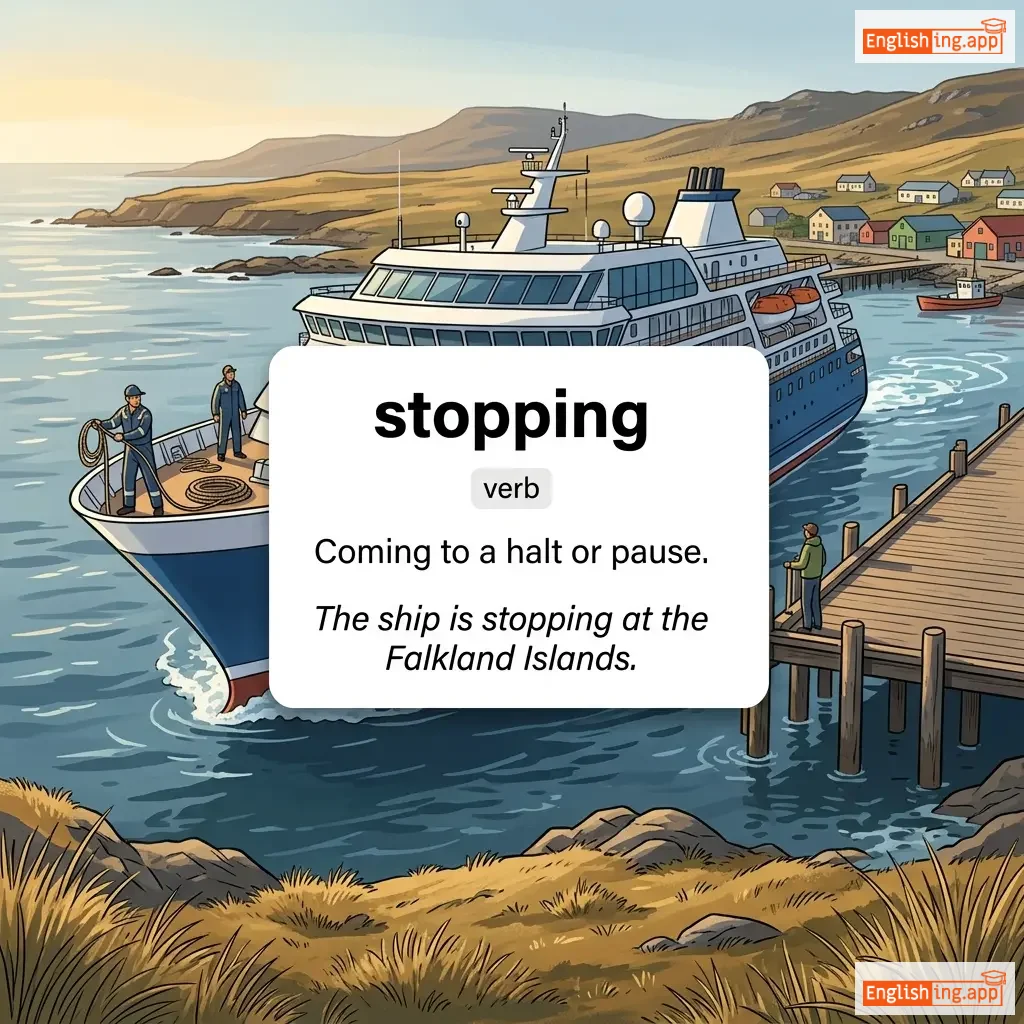
Coming to a halt or pause.

"The ship is stopping at the Falkland Islands."

"Корабль останавливается на Фолклендских островах." (Korabl' ostanavlivaetsya na Falklandskikh ostrovakh.)
noun
/ˈstɔːrɪdʒ/
хранение (khraneniye)

the action or method of storing something for future use

"The warehouse offers plenty of storage space."
"Склад предлагает много места для хранения." (Sklad predlagaet mnogo mesta dlya khraneniya.)
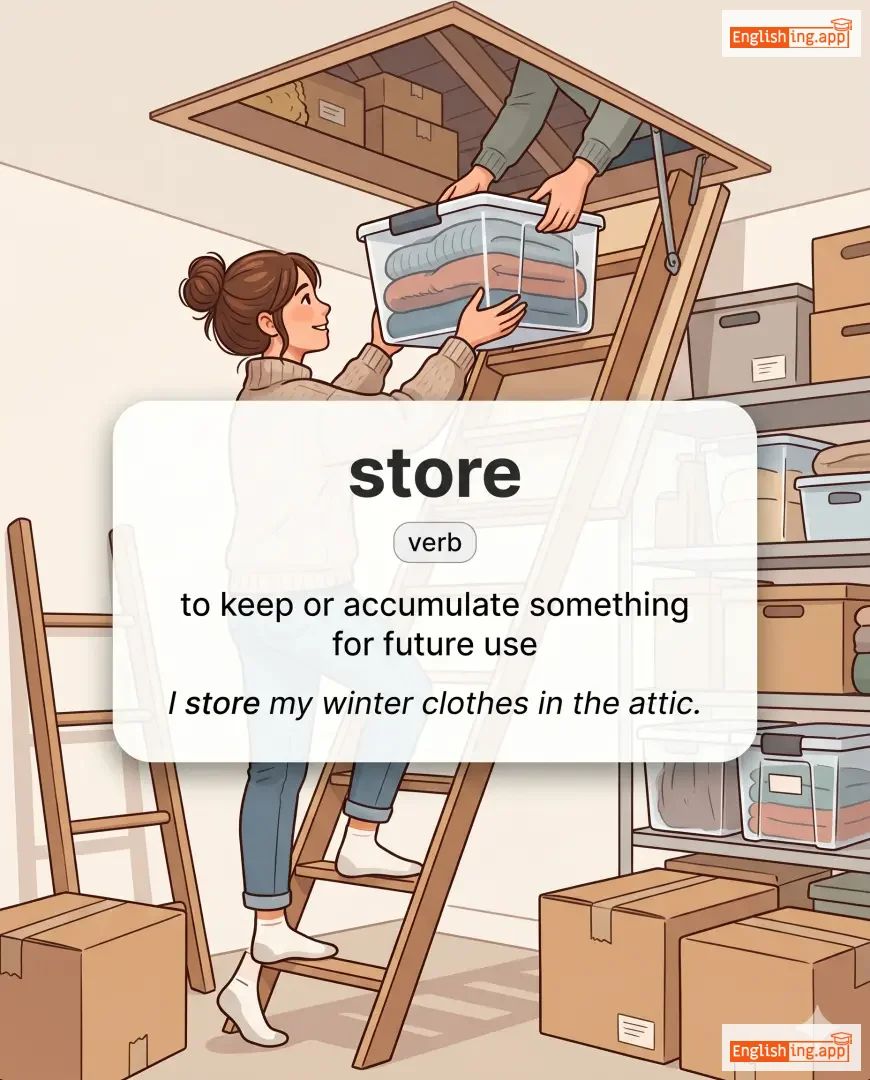
store definition card — visual illustration of the meaning
verb
/stɔːr/
хранить (khranit')

to keep or accumulate something for future use

"I store my winter clothes in the attic."

"Я храню свою зимнюю одежду на чердаке." (Ya khranyu svoyu zimnyuyu odezhdu na cherdake.)
noun
/ˈstɔːrhaʊs/
склад (sklad)

A place where goods, supplies, or valuables are stored; a repository

"The warehouse acted as a storehouse for all the imported goods."

"Склад служил сторхаусом для всех импортированных товаров." (Sklad sluzhil storhausom dlya vsekh importirovannykh tovarov.)
noun
/stɔːrk/
Аист (aist)

large wading bird with long legs and a long neck

"The stork built its nest on top of the tall chimney."

"Аист построил своё гнездо на вершине высокого дымохода." (Aist postroil svoe gnezdo na vershine vysokogo dymokhoda.)
noun
/stɔːrm/
шторм (shtorm)

a violent disturbance of the atmosphere with strong winds, rain, and often thunder

"The storm caused major flooding in the area."
"Шторм вызвал сильные наводнения в этом районе." (Shtorm vyzval sil'nye navodneniya v etom rayone.)
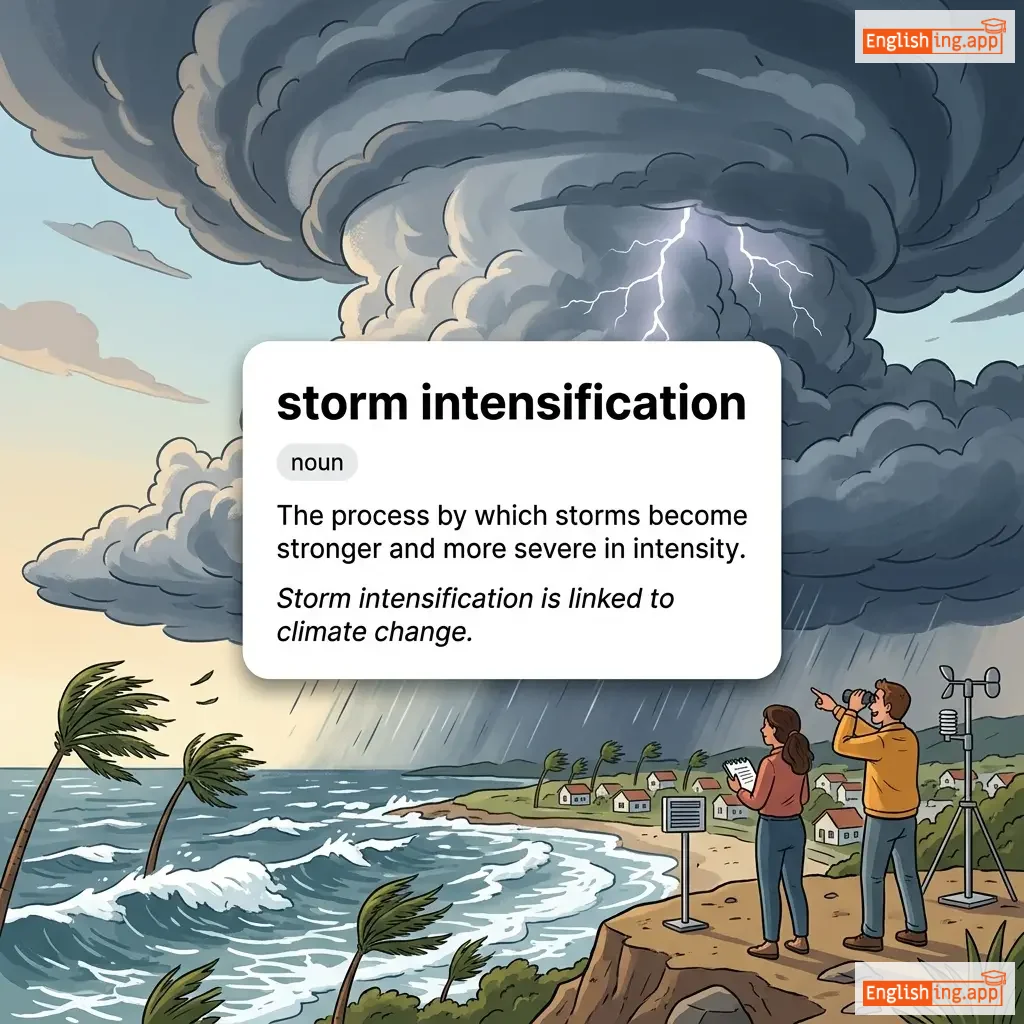
storm intensification definition card — visual illustration of the meaning
noun
stɔːrm ɪnˌtensɪfɪˈkeɪʃən
усиление шторма (usilenie shtorma)

The process by which storms become stronger and more severe in intensity.

"Storm intensification is linked to climate change."

"Усиление шторма связано с изменением климата." (Usilenie shtorma svyazano s izmeneniem klimata.)
noun
/ˈstɔːri/
история (istoriya)

a narrative of real or imaginary events

"She told a fascinating story about her travels."

"Она рассказала захватывающую историю о своих путешествиях." (Ona rasskazala zakhvatyvayushchuyu istoriyu o svoikh puteshestviyakh.)
adjective/noun
/staʊt/
крепкий / толстый (krepkiy / tolstyy)

Strong, thick, or heavily built; also a kind of dark beer

"The stout man lifted the heavy box with ease."

"Толстый мужчина легко поднял тяжелую коробку." (Tolstyy muzhchina legko podnyal tyazhelyy korobku.)
adjective
/ˌstaʊtˈhɑːrtɪd/
отважный (otvazhny)

Brave, determined, and courageous

"The stouthearted soldier never gave up."

"Отважный солдат никогда не сдавался." (Otvazhnyy soldat nikogda ne sdavalsya.)
noun
/stoʊv/
плита (plita)

a device that produces heat for cooking or heating

"She cooked rice on the gas stove."

"Она готовила рис на газовой плите." (Ona gotovila ris na gazovoy plite.)
noun
/ˈstoʊəˌweɪ/
нелегальный пассажир (nelegal'nyy passazhir)

A person who hides on a ship, plane, or other vehicle in order to travel secretly without paying.

"The crew discovered a stowaway hiding in the cargo hold."

"Экипаж обнаружил нелегального пассажира, прячущегося в грузовом отсеке." (Ekipazh obnaruzhil nelegal'nogo passazhira, pryachushchegosya v gruzovom otseke.)
verb
/ˈstræɡəl/
двигаться неравномерно (dvigat'sya neravnomerno)

To move or spread in an irregular, scattered, or untidy way.

"The children began to straggle behind on the long hike."

"Дети начали отставать на долгом походе." (Deti nachali otstavat' na dolgomm pokhode.)
adjective, adverb
/streɪt/
прямой (pryamoy)

Extending or moving uniformly in one direction only; not curved or bent.

"He walked straight to the door without stopping."

"Он шел прямо к двери, не останавливаясь." (On shel pryamo k dveri, ne ostanavlivayas'.)
adjective
/ˌstreɪt ˈfɔːr.wərd/
честный и прямой; не сложный; легко понять (chestnyy i pryamoy; ne slozhnyy; legko ponyat')

honest and open; not complicated; easy to understand

"His explanation was very straightforward and easy to follow."

"Его объяснение было очень простым и легким для восприятия." (Yego obyasneniye bylo ochen' prostym i legkim dlya vospriyatiya.)
verb
/ˈstreɪtən/
выпрямить (vypryamit)

to make something straight or tidy; to correct or organize

"She straightened her hair before the meeting."

"Она выпрямила волосы перед встречей." (Ona vypryamilа volosy pered vstrechey.)
adjective
/ˌstreɪtˈfɔːwəd/
простой (prostoy)

easy to understand or do; simple

"Her explanation was straightforward and clear."

"Ее объяснение было простым и ясным." (Eyo obyasneniye bylo prostym i yasnym.)
noun, verb
/streɪn/
напряжение / растяжение (napryazhenie / rastyazhenie)

To force something beyond its normal limits; to injure by overexertion; or a type or variety of something.

"He strained his back while lifting the heavy box."

"Он потянул спину, поднимая тяжелую коробку." (On potyanul spinu, podnimaya tyazholuyu korobku.)
noun
/ˈstreɪnər/
сито (sito)

a device having holes punched in it or made of crossed wires for separating solid matter from a liquid

"Use a strainer to drain the pasta water."

"Используйте сито, чтобы слить воду с пасты." (Ispol'zuyte sito, chtoby slity vodu s pasty.)
noun
/streɪt/
пролив (proliv)

A narrow passage of water connecting two seas or two large areas of water.

"The Strait of Gibraltar connects the Atlantic Ocean and the Mediterranean Sea."

"Пролив Гибралтар соединяет Атлантический океан и Средиземное море." (Proliv Gibraltar soedinyayet Atlanticheskiy okean i Sredizemnoe more.)
noun
/strəˈmoʊ.ni.əm ˌflaʊ.ər/
цветок дурмана (tsvetok durmana)

A trumpet-shaped white or purple flower from the jimsonweed plant, known for its toxic properties

"The stramonium flower blooms at night with a sweet fragrance."

"Цветок дурмана цветет ночью с сладким запахом." (tsvetok durmana tsvetet noch'yu s sladkim zapakhom)
noun, verb
/strænd/
нить / застрявший (nit' / zastrjavshij)

Noun: A single thin length of thread, wire, or similar. Verb: To leave someone or something without a way of moving or leaving.

"The storm stranded many tourists on the island."

"Шторм оставил многих туристов на острове." (Shtorm ostavil mnogikh turistov na ostrove.)
adjective
/streɪndʒ/
странный (strannyy)

unusual or not normal

"It was strange to see him at the party after so long."

"Было странно видеть его на вечеринке после такого долгого времени." (Bylo stranno videt' ego na vecherinke posle takogo dolgogo vremeni.)
noun
/ˈstreɪndʒər/
незнакомец (neznakomec)

A person whom one does not know.

"A stranger knocked on the door at midnight."

"Незнакомец постучал в дверь в полночь." (Neznakomec postuchal v dver' v polnoch'.)
verb
/ˈstræŋɡəl/

to kill or stop someone or something by squeezing the throat or restricting flow

"The villain tried to strangle his opponent in the dark alley."

noun
/ˈstrætədʒəm/
стратегема (strategema)

a plan or scheme designed to achieve a particular goal, often by trickery

"The general devised a clever stratagem to outwit the enemy."

"Генерал разработал хитрый стратегему, чтобы обмануть врага." (General razrabotal khitruyu strategemu, chtoby obmanut vraga.)
strategic definition card — visual illustration of the meaning
adjective
/strəˈtiːdʒɪk/
стратегический (strategicheskiy)

relating to the identification of long-term or overall aims and interests and the means of achieving them

"His strategic thinking helped the company grow."

"Его стратегическое мышление помогло компании расти." (Ego strategicheskoe myshlenie pomoglo kompanii rasti.)
strategic insights definition card — visual illustration of the meaning
noun
/strəˈtiː.dʒɪk ˈɪn.saɪts/
стратегические инсайты (strategicheskie insayty)

Deep understanding and wisdom gained through careful analysis for planning purposes.

"Strategic insights guide policymaking."

"Стратегические инсайты направляют политику." (Strategicheskie insayty napravlyayut politiku.)
strategies definition card — visual illustration of the meaning
noun
ˈstræt.ə.dʒiz
стратегии (strategii)

A plan of action designed to achieve a long-term or overall aim.

"Effective strategies ensure success."

"Эффективные стратегии обеспечивают успех." (Effektivnye strategii obespechivayut uspek.)
strategy definition card — visual illustration of the meaning
noun
/ˈstrætədʒi/
стратегия (strategiya)

a plan of action designed to achieve a long-term or overall aim

"They developed a new strategy to increase sales."
"Они разработали новую стратегию для увеличения продаж." (Oni razrabotali novuyu strategiyu dlya uvelicheniya prodazh.)
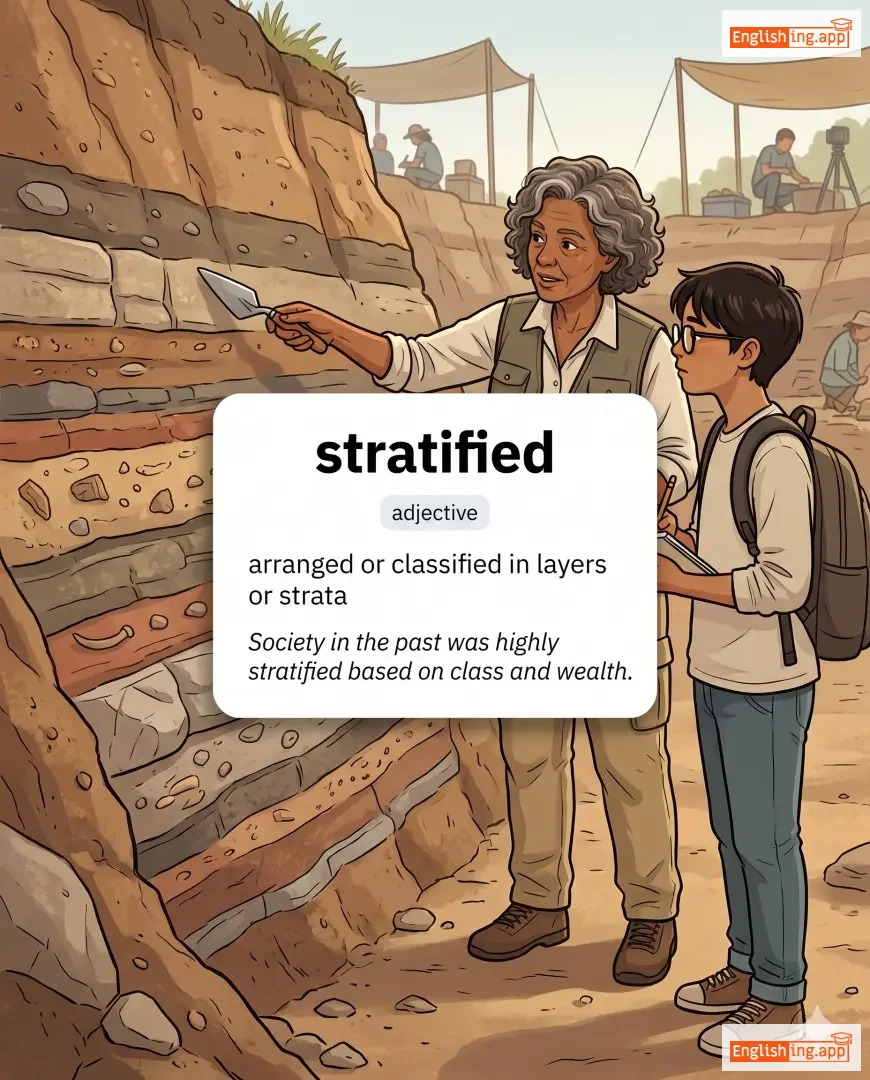
stratified definition card — visual illustration of the meaning
adjective
/ˈstrætɪfaɪd/

arranged or classified in layers or strata

"Society in the past was highly stratified based on class and wealth."

verb
/ˈstrætɪfaɪ/
стратифицировать (stratificirovat)

to arrange or divide into layers, classes, or categories

"The researchers plan to stratify the data based on age groups."

"Исследователи планируют стратифицировать данные по возрастным группам." (Issledovateli planiruyut stratificirovat dannye po vozrastnym gruppam.)