Словари

Словарь английского языка | Значения слов, определения и примеры

noun
/ˈspɛʃəlɪst/
специалист (spetsialist)

a person who is an expert in a particular area or field

"She is a specialist in pediatric medicine."

"Она специалист в области педиатрии." (Ona spetsialist v oblasti pediatrii.)
noun
/ˌspeʃiˈælɪti/
специализация (spetsializatsiya)

a particular area of activity or interest that someone focuses on; expertise in a specific field

"His speciality is Italian cuisine."

"Его специализация — итальянская кухня." (ego spetsializatsiya - italiyanskaya kukhnya.)
verb
/ˈspɛʃəˌlaɪz/
специализироваться (specializirovatsya)

to focus on a particular subject or activity and become an expert in it

"He decided to specialize in cardiology."

"Он решил специализироваться в кардиологии." (On reshil specializirovatsya v kardiologii.)
adjective
/ˈspɛʃəˌlaɪzd/
специализированный (spetsializirovannyi)

designed or developed for a particular purpose or function

"He has a specialized knowledge of ancient civilizations."

"У него есть специализированные знания об античных цивилизациях." (U nego est' spetsializirovannye znaniya ob antichnykh tsivilizatsiyakh.)
adverb
/ˈspeʃ.əl.i/
специально (spetsial'no)

for a particular purpose; especially; specifically

"This gift was specially made for you."

"Этот подарок был сделан специально для тебя." (Etot podarok byl sdelan spetsial'no dlya tebya.)
noun
/ˈspɛʃəlti/
специализация (specializatsiya)

a particular area of study, work, or interest; something in which a person or place excels

"Her specialty is pediatric medicine."

"Её специализация — педиатрия." (eyo spetsializatsiya — pediatriya)
noun
/ˈspiːʃiː/
монета (moneta)

money in the form of coins rather than notes or credit

"The transaction was made in specie."

"Транзакция была проведена монетами." (Transakciya byla provedena monetami.)
noun
/ˈspiːʃiːz/
вид (vid)

a group of living organisms consisting of similar individuals capable of exchanging genes or interbreeding

"The panda is an endangered species."
"Панда — это вымирающий вид." (Panda — eto vymirayushchiy vid.)
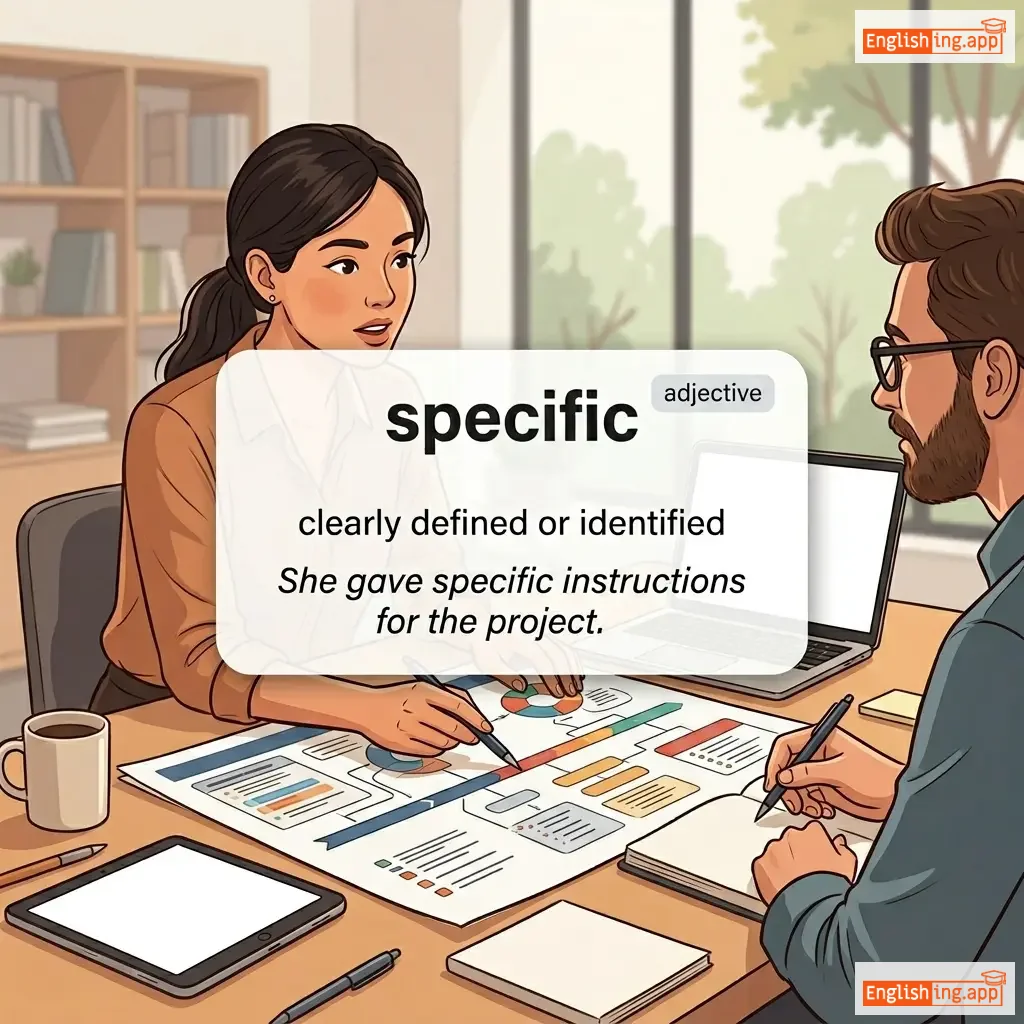
specific definition card — visual illustration of the meaning
adjective
/spəˈsɪfɪk/
специфический (spetsificheskiy)

clearly defined or identified

"She gave specific instructions for the project."

"Она дала специфические инструкции для проекта." (Ona dala spetsificheskiye instruktsii dlya proyekta.)
adverb
/spəˈsɪfɪkli/
специально (spetsial'no)

in a clear and exact way

"He was specifically asked to handle the finances."

"Его специально попросили заняться финансами." (Ego spetsial'no poprosili zanyatsya finansami.)
noun
/ˌspɛsɪfɪˈkeɪʃən/
спецификация (specifikatsiya)

a detailed description or assessment of something

"The product specification includes all the necessary details."

"Спецификация продукта включает все необходимые детали." (Spektsifikatsiya produkta vklyuchayet vse neobkhodimye detali.)
verb
/ˈspɛsɪfaɪ/
указать (ukazat)

to state or describe something clearly and exactly

"Please specify the time and place of the meeting."

"Пожалуйста, укажите время и место встречи." (Pozhaluysta, ukazhite vremya i mesto vstrechi.)
noun
/ˈspɛsəmən/
образец (obrazets)

an individual animal, plant, piece of a mineral, etc., used as an example of its species or type for scientific study

"The museum has a rare butterfly specimen."
"В музее есть редкий образец бабочки." (V muzeie yest' redkiy obrazets babochki.)
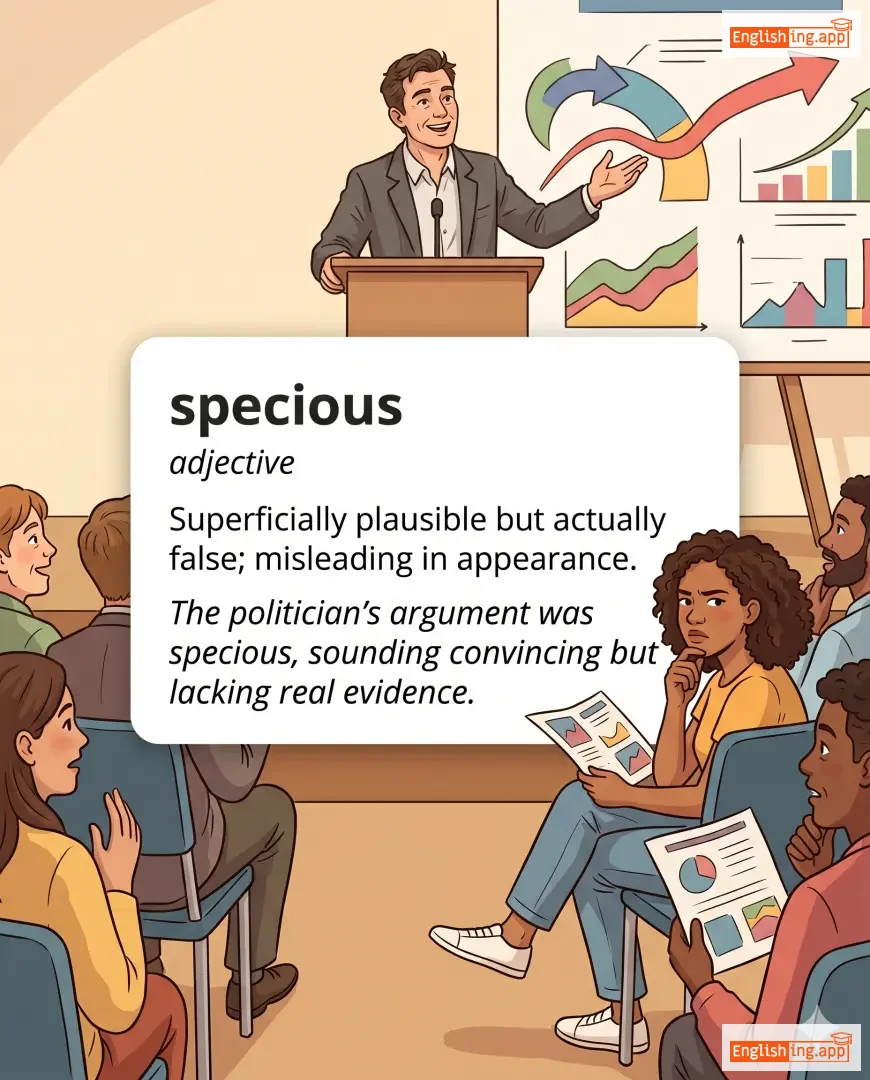
specious definition card — visual illustration of the meaning
adjective
/ˈspiːʃəs/
обманчивый (obmanchivyy)

Superficially plausible but actually false; misleading in appearance.

"The politician’s argument was specious, sounding convincing but lacking real evidence."

"Аргумент политика был обманчивым, он звучал убедительно, но не имел реальных доказательств." (Argument politika byl obmanchivym, on zvuchal ubeditel'no, no ne imel real'nykh dokazatel'stv.)
noun
/spɛk/
пятно (pyatno)

A very small spot, mark, or particle.

"There was a tiny speck of dust on the glass table."
"На стеклянном столе была маленькая пылинка." (Na steklyannom stole byla malen'kaya pylinka.)
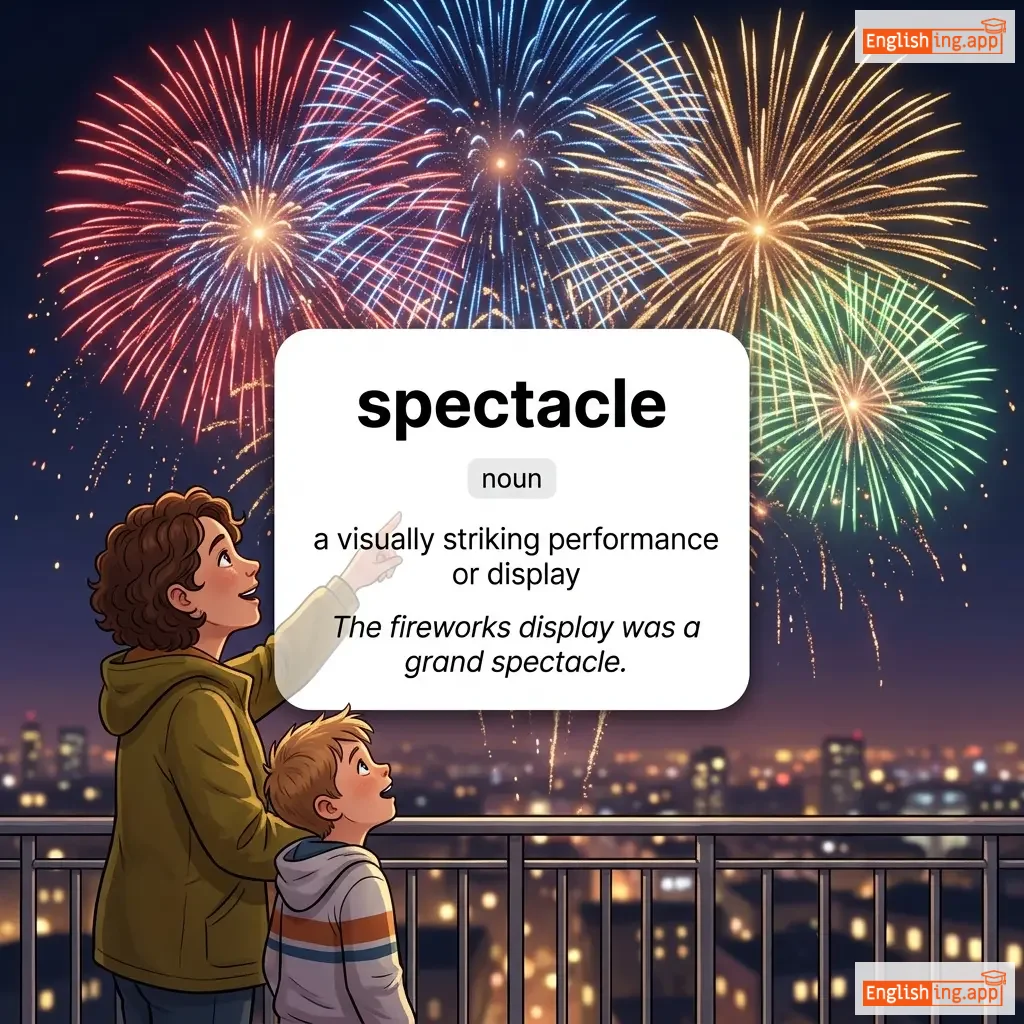
spectacle definition card — visual illustration of the meaning
noun
/ˈspɛktəkəl/
визуальное шоу (vizual'noye shou)

a visually striking performance or display

"The fireworks display was a grand spectacle."
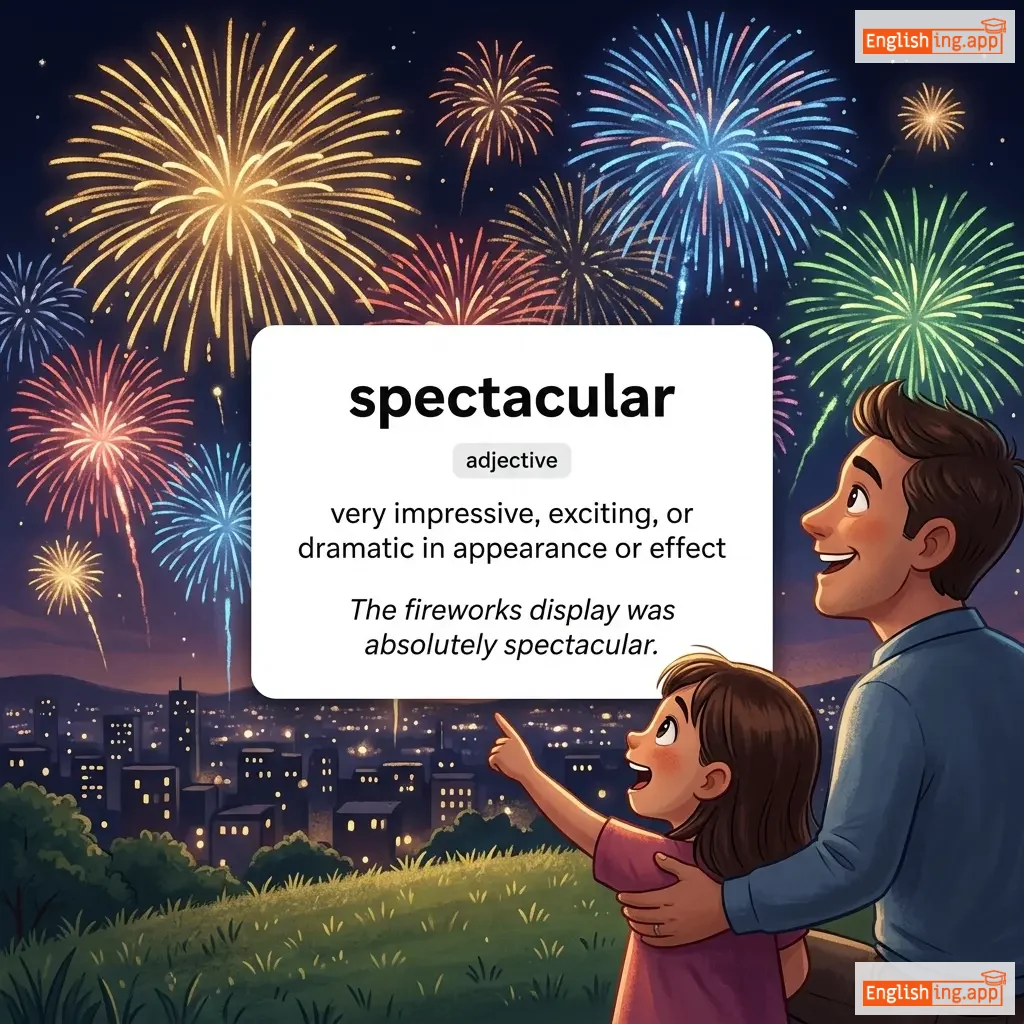
"Фейерверк был грандиозным зрелищем." (Feyerverk byl grandioznym zrelishchem.)
spectacular definition card — visual illustration of the meaning
adjective
/spɛkˈtækjələr/
зрелищный (zrelishnyy)

very impressive, exciting, or dramatic in appearance or effect

"The fireworks display was absolutely spectacular."

"Шоу фейерверков было абсолютно зрелищным." (Sho fireverkov bylo absolutno zrelishnym.)
noun
/ˈspɛkteɪtər/
зритель (zritel)

A person who watches an event, show, or game without taking part.

"Thousands of spectators gathered to watch the football match."

"Тысячи зрителей собрались, чтобы посмотреть футбольный матч." (Tysyachi zriteley sobralis', chtoby posmotret' futbol'nyy match.)
noun
/ˈspɛktər/
призрак (prizrak)

A ghost or spirit; something that causes fear or dread.

"The specter of war still haunts the region."

"Призрак войны все еще преследует регион." (Prizrak voyny vse yeshcho presleduyet region.)
adjective
/ˈspɛktrəl/
призрачный (prizratchny)

Relating to a ghost or specter; ghostly. Also relating to a spectrum.

"The old mansion had a spectral atmosphere at night."
"Старый особняк имел призрачную атмосферу ночью." (Staryy osobjnak imel prizrachnuyu atmosferu noch'yu.)
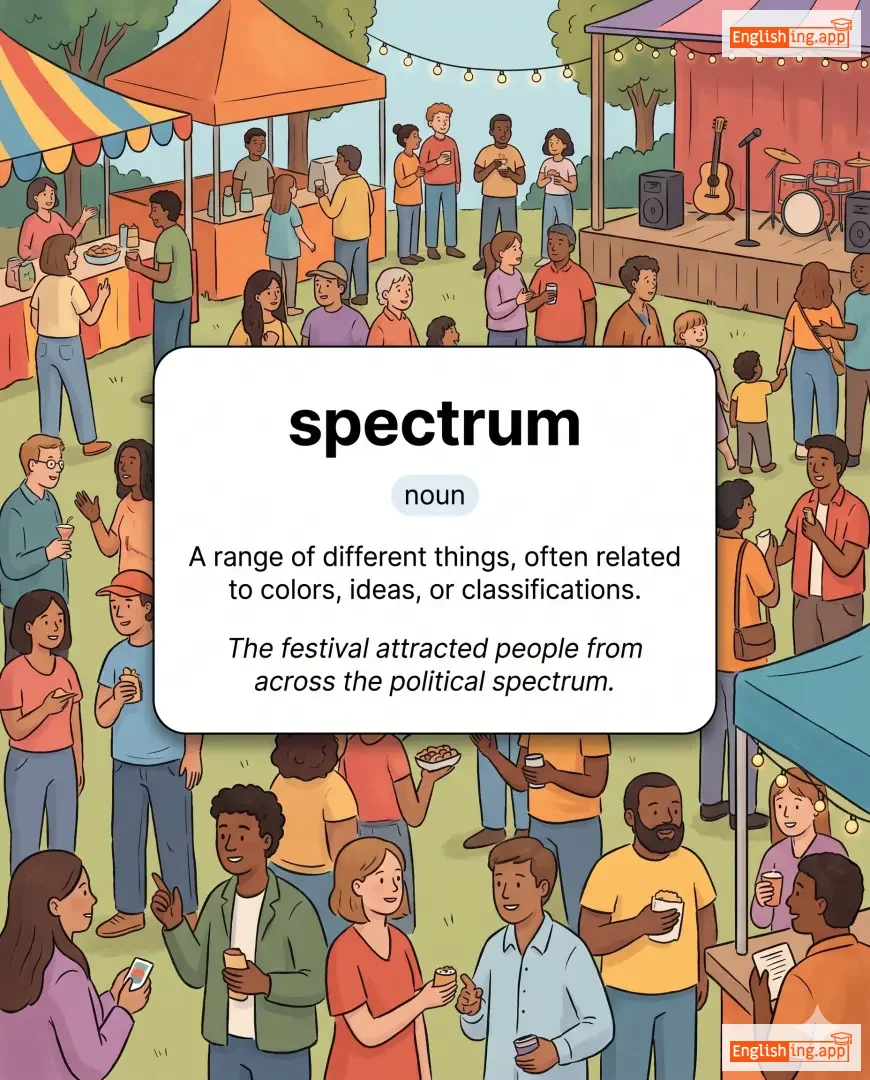
spectrum definition card — visual illustration of the meaning
noun
/ˈspɛktrəm/
спектр (spektar)

A range of different things, often related to colors, ideas, or classifications.

"The festival attracted people from across the political spectrum."

"Фестиваль привлек людей со всего политического спектра." (Festival prilyek lyudey so vsego politicheskogo spektra.)
verb
/ˈspɛkjʊˌleɪt/
спекулировать / инвестировать (spekulirovat' / investirovat')

To form a theory or guess without firm evidence; to invest in stocks, property, etc. hoping for profit.

"Experts speculate that the company may expand into new markets."
"Эксперты спекулируют, что компания может расшириться на новые рынки." (Eksperty spekulyruyut, chto kompaniya mozhet rasshirit'sya na novye rynki.)
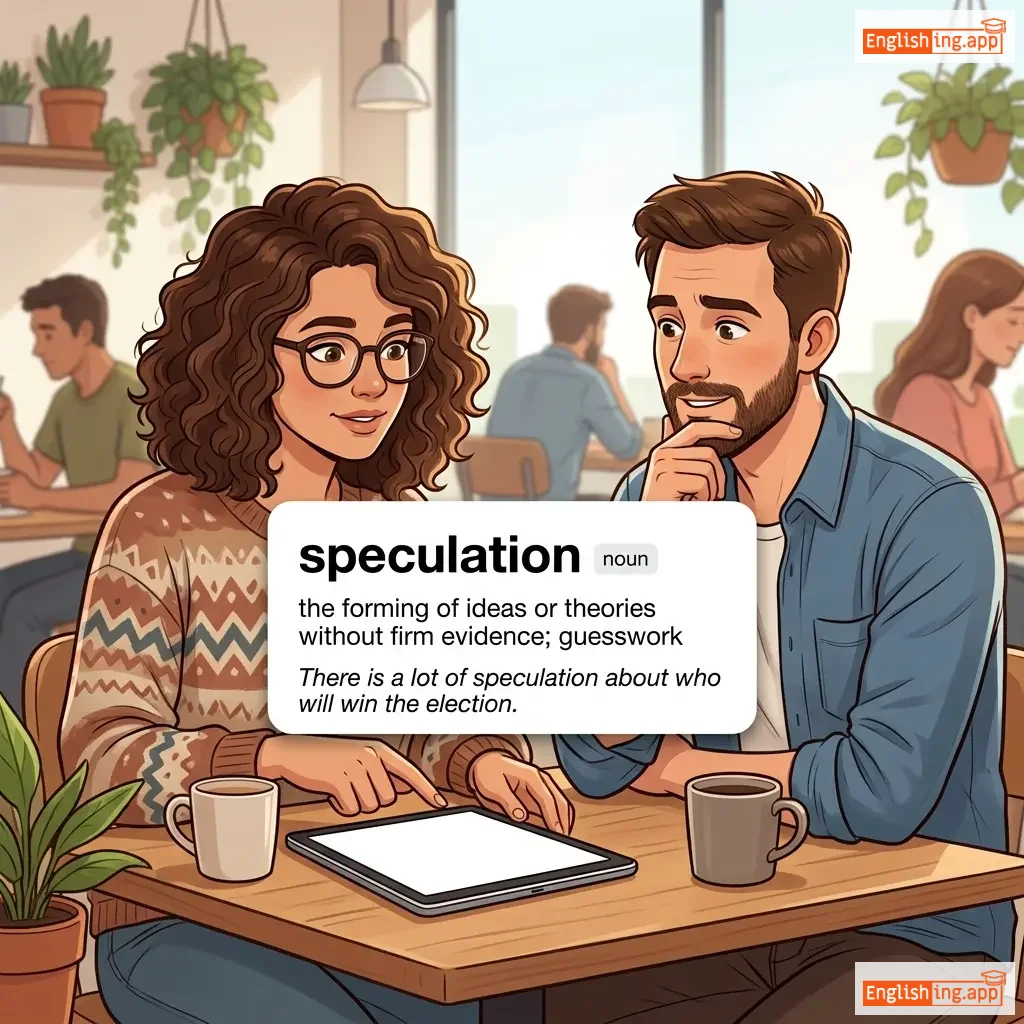
speculation definition card — visual illustration of the meaning
noun
/ˌspɛkjʊˈleɪʃən/
спекуляция (spekulyatsiya)

the forming of ideas or theories without firm evidence; guesswork

"There is a lot of speculation about who will win the election."

"Существует много спекуляций относительно того, кто выиграет выборы." (Sushchestvuyet mnogo spekulyatsiy otnositel'no togo, kto vyigraet vyibory.)
noun
/ˈspɛkjʊˌleɪtər/
спекулянт (spetsulyant)

A person who forms theories without evidence, or invests in assets hoping for profit.

"The real estate speculator bought land hoping its value would rise."

"Спекулянт на недвижимости купил землю в надежде, что её стоимость возрастёт." (Spekulyant na nedvizhimosti kupil zemlyu v nadezhde, chto yey stoimost' vozrastet.)
noun
/spiːʧ/
речь (rech)

the expression of thoughts and feelings through spoken words

"The president delivered a speech on national unity."

"Президент произнес речь о национальном единстве." (Prezident proyiznes rech o natsional'nom yedinstve.)
adjective
/ˈspiːtʃləs/
без слов (bez slov)

Unable to speak because of shock, surprise, or strong emotion.

"She was speechless when she received the award."

"Она была без слов, когда получила награду." (Ona byla bez slov, kogda poluchila nagradu.)
noun/verb
/spiːd/
скорость (skorost)

the rate at which something moves or happens

"The car was moving at high speed."

"Машина ехала на большой скорости." (Mashina yekhala na bol'shoy skorosti.)
adjective
/ˈspiː.di/
быстрый; скоростной; ловкий; (bystryy, skorostnoy, lovkiy)

moving or happening quickly; fast

"The speedy delivery service arrived within an hour."

"Служба быстрой доставки прибыла в течение часа." (Sluzhba bystroi dostavki pribyila v techenie chasa.)
verb
/spɛl/
произносить / заклинание (proiznosit' / zaklinanie)

to write or name the letters of a word in the correct order; also a short period of time or a state of enchantment

"She asked me to spell her name correctly on the form."

"Она попросила меня правильно написать её имя на форме." (Ona poprosila menya pravil'no napisat' yeë imya na forme.)
adjective
/ˈspel.baʊnd/
очарованный; завороженный (ocharovannyy, zavorozhennyy)

completely fascinated and unable to move or think about anything else; enchanted

"The children sat spellbound as the magician performed his tricks."

"Дети сидели зачарованные, когда маг показывал свои фокусы." (Deti sideliy zacharovannye, kogda mag pokazyval svoi fokusy.)
noun
/spɪˈlʌŋkər/
спелеолог (speleolog)

A person who explores caves as a hobby.

"The spelunker carried ropes and lights into the dark cave."

"Спелеолог принёс верёвки и фонари в тёмную пещеру." (Speleolog prines verjovki i fonari v tyomnuyu peshcheru.)
spend definition card — visual illustration of the meaning
verb
/spɛnd/
тратить (tratit)

to use money to buy or pay for something

"He spent all his money on books."

"Он потратил все свои деньги на книги." (On potratil vse svoi den'gi na knigi.)
noun
/ˈspɛndɪŋ/
расходы (spending)

the act of paying money for goods or services

"Her spending on clothes was higher than expected."
"Её траты на одежду были выше, чем ожидалось." (Eyo traty na odezhdu byli vyshe chem ozhidalos)
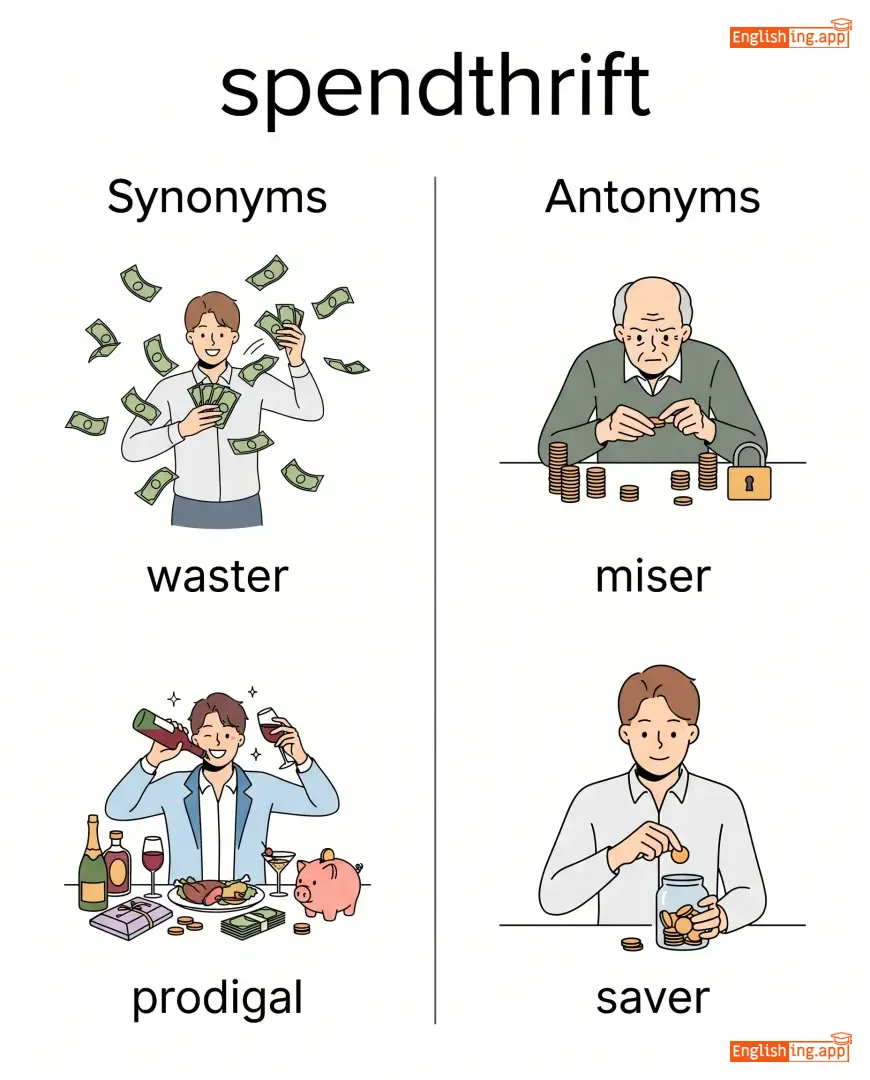
spendthrift definition card — visual illustration of the meaning
noun
/ˈspɛndˌθrɪft/
расточитель (rastochitel)

A person who spends money extravagantly or wastefully.

"The young prince was known as a spendthrift, wasting his fortune on lavish parties."

"Молодой принц был известен как расточитель, тратящий свое состояние на роскошные вечеринки." (Molodoj prints byl izvesten kak rastočitel', tratjashchij svoe sostojanie na roskoshnye vecherinki.)
verb, adjective
/spɛnt/
потраченный, исчерпанный (potrachennyi, ishcherpannyi)

Past tense and past participle of 'spend'; also used as an adjective meaning exhausted or used up.

"She spent all her energy preparing for the exam."

"Она потратила всю свою энергию на подготовку к экзамену." (Ona potratila vsyu svoyu energiyu na podgotovku k ekzameny.)
noun
/sfɪər/
сфера (sfera)

a round, three-dimensional shape that is perfectly symmetrical around its center; an area of activity or knowledge

"The Earth is almost a perfect sphere."

"Земля почти идеальная сфера." (Zemlya pochti ideal'naya sfera.)
noun
/sfɛˈrɪsɪti/
сферичность (sferichnost)

The quality or state of being spherical; roundness.

"The sphericity of the ball made it roll smoothly on the ground."

"Сферичность мяча позволила ему гладко катиться по земле." (Sferichnost myacha pozvolila emu gladko katitsya po zemle.)
noun
/ˈsfɛrɔɪd/
сфероид (sferoid)

A three-dimensional shape that is almost spherical but slightly flattened or elongated.

"The Earth is not a perfect sphere but an oblate spheroid."

"Земля не идеальная сфера, а сплюснутый сфероид." (Zemlya ne idealnaya sfera a splyusnutyi sferoid)
noun
/sfɪˈrɒmɪtər/
сферометр (sferometr)

An instrument used for measuring the curvature of spherical surfaces.

"The scientist used a spherometer to measure the lens curvature."

"Ученый использовал сферометр для измерения кривизны линзы." (Uchenyy ispol'zoval sferometr dlya izmereniya krivizny linzy.)
adjective
/ˈsfɪŋks laɪk/
таинственный (tainstvennyy)

Mysterious, enigmatic, or difficult to interpret

"Her sphinx-like smile made it hard to guess what she was thinking."

"Её улыбка, как у сфинкса, заставляла гадать, о чём она думает." (Yeyo ulybka, kak u sfinksa, zastavlyala gadat', o chyom ona dumayet.)
noun
/spaɪs/
специя (speciya)

a substance used to add flavor to food

"She added a pinch of spice to the curry for extra flavor."

"Она добавила щепотку специй в карри для усиления вкуса." (Ona dobavila shchepotku spetciy v karri dlya usileniya vkusa.)
noun
/ˈspaɪs bɒks/
коробка с приправами (korobka s pribravami)

a container used to store various spices and seasonings

"She opened the spice box to find cumin for her curry."

"Она открыла коробку с приправами, чтобы найти тмин для своего карри." (Ona otkryla korobku s pribravami, chtoby nayti tmin dlya svoego karri.)
adjective
/spɪk/
крайне чистый и аккуратный; безупречный (spik)

extremely clean and neat; immaculate

"The house was spick and span after the cleaning."

"Дом был безупречно чистым и аккуратным после уборки." (Dom byl bezuprechno chistym i akuratnym posle uborki.)
adjective
/ˈspaɪ.si/
острый (ostryy)

having a strong, hot flavor from spices; containing spices

"This curry is too spicy for me to eat."

"Это карри слишком острое для меня." (Eto karri slishkom ostroye dlya menya.)
noun
/ˈspaɪ.dər/
паук (pauk)

a small creature with eight legs that makes webs to catch insects

"The spider caught a fly in its web."

"Паук поймал муху в своей паутине." (Pauk poymal mukhu v svoey pautine.)
verb
/spɪl/
пролить (prolit)

to cause liquid to flow or fall out of a container by accident

"Be careful not to spill your coffee."

"Будь осторожен, не пролей свой кофе." (Bud' ostorozhen, ne proley svoy kofe.)
verb
/spɪn/
крутить (krutit)

To turn around quickly or cause something to rotate

"The dancer began to spin gracefully on the stage."

"Танцовщица начала грациозно вращаться на сцене." (Tantsovshchitsa nachala gratsiozno vrashchatsya na stsene.)
noun
/ˈspɪn.ɪtʃ/
шпинат (shpinat)

a vegetable with large dark green leaves that are eaten cooked or uncooked

"Fresh spinach is very nutritious."

"Свежий шпинат очень питателен." (Svezhiy shpinat ochen' pitatelen.)
adjective
/ˈspɪndli/
тонкий и слабый (tonkiy i slaby)

Long, thin, and weak-looking

"The spindly tree bent under the weight of the snow."

"Тонкое дерево согнулось под тяжестью снега." (Tonkoe derevo sognylos pod tyazhest'yu snega.)
noun
/spaɪn/
позвоночник (pozvonochnik)

the backbone; a series of bones extending from the skull to the lower back

"The doctor examined her spine after the accident."

"Врач осмотрел ее позвоночник после аварии." (Vrach osmotrel yeye pozvonochnik posle avarii.)