Словари

Словарь английского языка | Значения слов, определения и примеры

adjective
/ˈsɔːlti/
соленый (soleny)

having the taste of salt; containing salt; tasting of seawater

"The salty ocean water made her thirsty."
"Соленая океанская вода сделала её жаждущей." (Solenaya okeanskaya voda sdelala yey zhazhdyushchey)
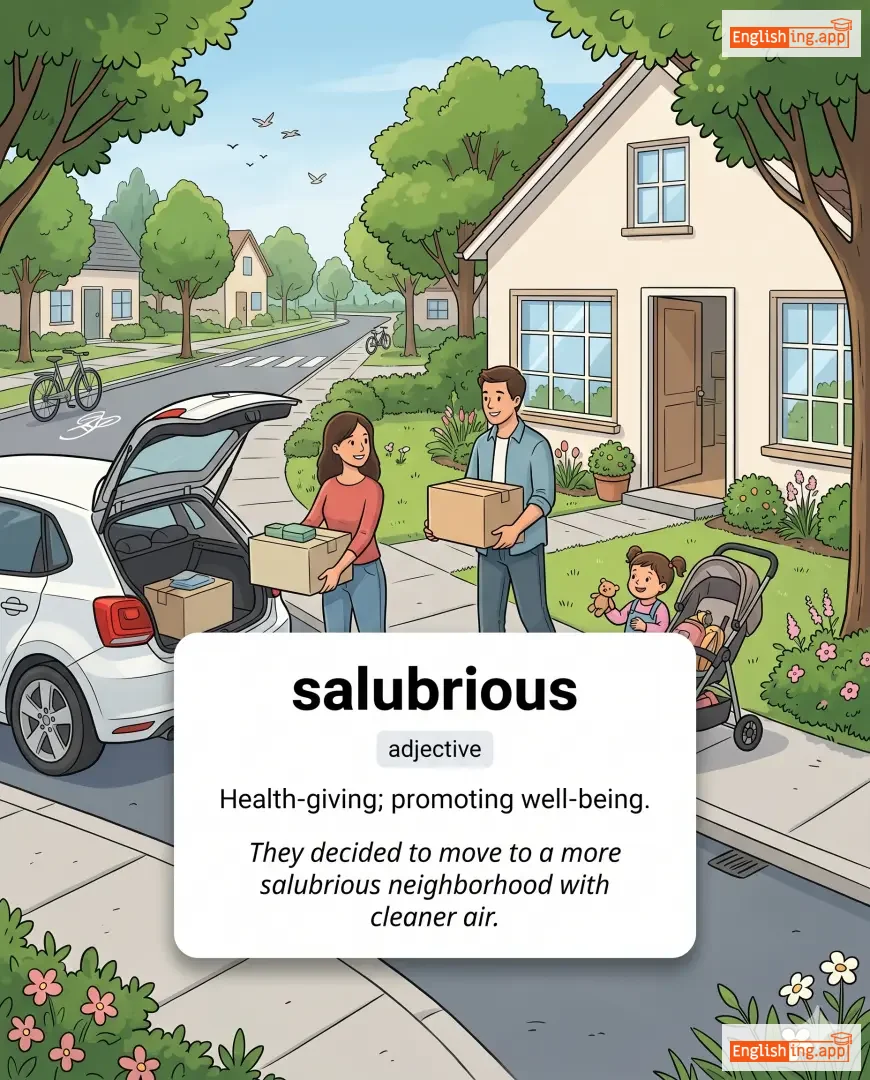
salubrious definition card — visual illustration of the meaning
adjective
/səˈluː.bri.əs/
оздоровительный (ozdorovitelnij)

Health-giving; promoting well-being.

"They decided to move to a more salubrious neighborhood with cleaner air."
"Они решили переехать в более оздоровительный район с чистым воздухом." (Oni reshilis' pereyekhat' v boleye ozdorovitelnij rajon s chistym vozdukham.)
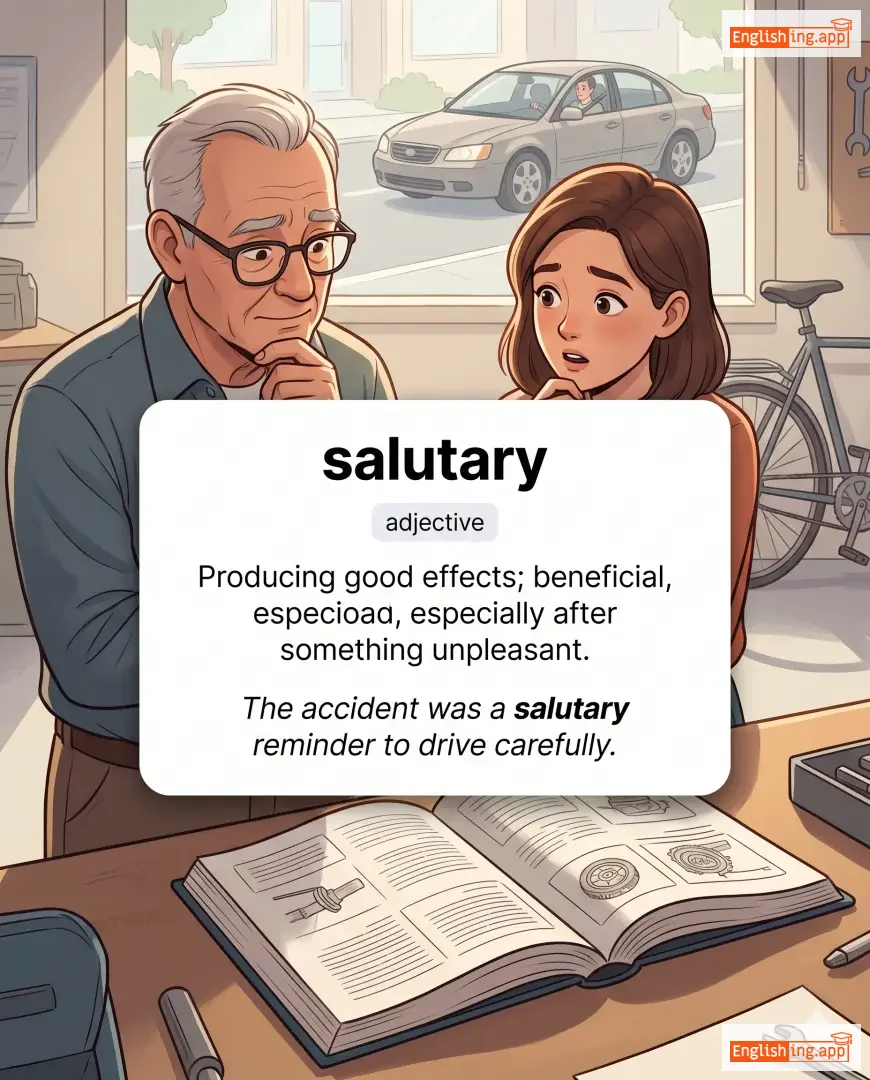
salutary definition card — visual illustration of the meaning
adjective
/ˈsæljʊˌtɛri/
полезный (poleznyj)

Producing good effects; beneficial, especially after something unpleasant.

"The accident was a salutary reminder to drive carefully."

"Авария стала полезным напоминанием о том, чтобы водить осторожно." (Avariya stala poleznym napominaniem o tom, chtoby vodit' ostorozhno.)
noun
/ˌsæljʊˈteɪʃən/
приветствие (privetstvie)

A gesture or utterance of greeting, goodwill, or courtesy.

"He raised his hat as a polite salutation."

"Он поднял свою шляпу как вежливое приветствие." (On podnyal svoju shlyapu kak vezhlivoe privetstvie.)
adjective
/səˈluːtəˌtɔri/
приветственная речь (privetstvennaya rech)

Relating to or expressing a greeting or an address, especially at the beginning of a speech.

"She delivered a salutatory address at the graduation ceremony."

"Она произнесла приветственную речь на церемонии вручения дипломов." (Ona proiznesla privetstvennuyu rech na tseremonii vrucheniya diplomov.)
salute definition card — visual illustration of the meaning
verb
/səˈluːt/
поздравить (pozdravit)

to greet with respect; to honor

"The soldiers saluted their commanding officer."

"Солдаты поздравили своего командующего офицера." (Soldaty pozdravili svoego komanduyushchego offitsera.)
verb
/ˈsælvɪdʒ/
спасти (spasti)

To save something from loss, damage, or destruction.

"They managed to salvage some goods from the fire."
"Им удалось спасти некоторые товары из огня." (Im udalos' spasti nekotorye tovaryi iz ognya.)
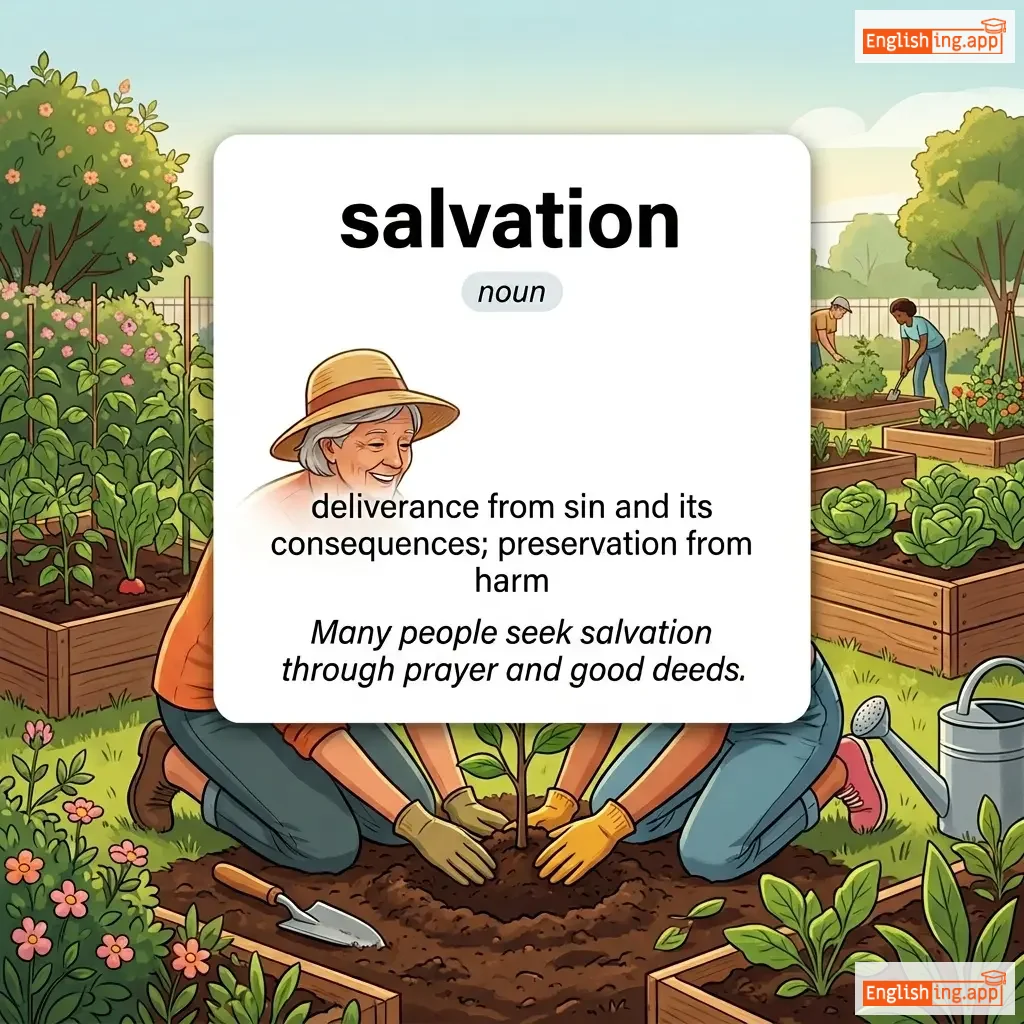
salvation definition card — visual illustration of the meaning
noun
/sælˈveɪ.ʃən/
спасение (spaseniye)

deliverance from sin and its consequences; preservation from harm

"Many people seek salvation through prayer and good deeds."

"Многие люди ищут спасение через молитву и добрые дела." (mnogiye lyudi ishchut spaseniye cherez molitvu i dobre dela.)
noun
/sælv/
мазь (maz)

An ointment used to promote healing of the skin or as protection.

"She applied a salve to the burn on her hand."

"Она нанесла мазь на ожог на своей руке." (Ona nanesla maz' na ozhog na svoey ruke.)
noun
/ˈsælvər/
серебряный поднос (serebryanyy podnos)

A tray, typically made of silver, used for serving food or drinks.

"The butler brought in the tea on a silver salver."

"Дворецкий принес чай на серебряном подносе." (Dvoretskiy prines chay na serebryanom podnose.)
noun
/ˈsælvoʊ/
залп (zalp)

A simultaneous discharge of guns or release of bombs; a sudden outburst of cheers or applause.

"The soldiers fired a salvo to honor the fallen general."

"Солдаты выстрелили залп, чтобы почтить память погибшего генерала." (Soldaty vystreliili zalp, chtoby pochtit' pamyat' pogibshego generala.)
adjective
/seɪm/
одинаковый (odinakovyy)

identical; not different or changed

"We wore the same dress at the party."

"Мы носили одинаковые платья на вечеринке." (My nosili odinakovyye plat'ya na vecherinke.)
noun
/ˈsæm.pəl/
образец (obrazets)

a small part or quantity intended to show what the whole is like

"She gave me a sample of the fabric to see if I liked it."

"Она дала мне образец ткани, чтобы я посмотрел, понравится ли мне это." (Ona dala mne obrazets tkani, chtoby ya posmotre, ponravitsya li mne eto.)
verb
/ˈsæŋktɪfaɪ/
освящать (osvyashchat)

To make holy or sacred; to set apart as holy.

"The priest sanctified the new church building."

"Священник освятил новое здание церкви." (Svyashchennik osvyatil novoye zdaniye tserkvi.)
adjective
/ˌsæŋktɪˈmoʊniəs/
лицемерно набожный (litsemernno nabozhny)

Making a show of being morally superior to others; hypocritically pious.

"He gave a sanctimonious speech about honesty while he himself was corrupt."

"Он дал лицемерную речь о честности, хотя сам был коррумпирован." (On dal litsemernuyu rech' o chestnosti, hotya sam byl kurrumpirovannym.)
Sanction definition card — visual illustration of the meaning
⚖️

Sanction

noun/verb
/ˈsæŋkʃən/

An official permission or approval; also a penalty imposed to enforce rules.

"The government imposed sanctions on the company for violating trade laws."
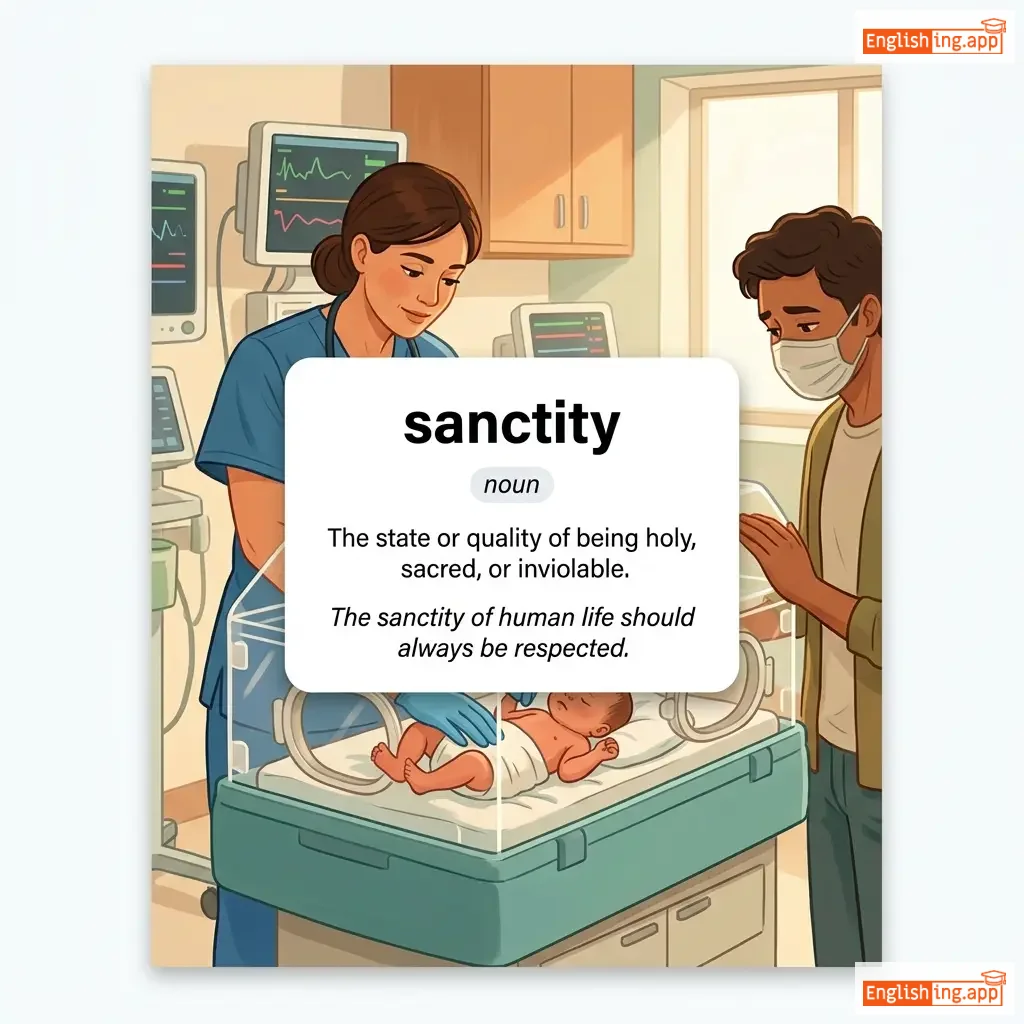
sanctity definition card — visual illustration of the meaning
noun
/ˈsæŋk.tə.ti/
святость (svyatost)

The state or quality of being holy, sacred, or inviolable.

"The sanctity of human life should always be respected."

"Святость человеческой жизни должна всегда уважаться." (Svyatost' chelovecheskoy zhizni dolzhna vsegda uzhazhatsya.)
noun
/ˈsæŋk.tʃuˌɛr.i/
убежище (ubezhishche)

A place of safety, refuge, or protection; a sacred place.

"The forest is a sanctuary for endangered animals."

"Лес — это убежище для исчезающих животных." (Les — eto ubezhishche dlya ischezayushchikh zhivotnykh.)
noun
/sænd/
счастье (schastye)

Small loose grains of crushed rock, found on beaches and deserts.

"Children built castles out of sand on the beach."

"Она не могла скрыть своего счастья, когда получила награду." (Ona ne mogla skryt' svoego schast'ya, kogda poluchila nagradu.)
noun
/ˈsændwɪtʃ/
сэндвич (sendvich)

two pieces of bread with food such as meat, cheese, or salad between them

"I made a chicken sandwich for lunch."

"Я сделал куриный сэндвич на обед." (Ya sdelal kurinyy sendvich na obed.)
adjective
/ˈsændi/
песчаный; песчаный (peschany, peschany)

covered with sand; containing sand; having the texture of sand

"The sandy beach stretched for miles along the coast."

"Песчаный пляж тянулся на мили вдоль побережья." (Peschany plyazh tyanulsya na mili vdol' poberezh'ya.)
noun
/ˌsɒ̃ˈfrwɑː/
хладнокровие (khladnokroviye)

Composure or coolness, especially in difficult situations.

"The leader handled the crisis with remarkable sang-froid."

"Лидер справился с кризисом с замечательным хладнокровием." (Lider spravilsya s krizisom s zamechatel'nym khladnokroviyem.)
noun
/ˌsɒ̃ˈfrwɑː/
хладнокровие (khladnokroviye)

Composure or coolness under pressure.

"She impressed everyone with her sangfroid during the interview."

"Она произвела впечатление на всех своим хладнокровием во время интервью." (Ona proyizvela vpechatleniye na vsekh svoim khladnokroviem vo vremya interv'yu.)
adjective
/ˈsæŋɡwɪˌnɛri/
кровавый (krovavy)

Involving or causing much bloodshed; bloodthirsty.

"The battle was one of the most sanguinary conflicts of the war."

"Битва была одним из самых кровавых конфликтов войны." (Bitva byla odnim iz samykh krovavykh konfliktov voiny.)
adjective
/ˈsæŋɡwɪn/
оптимистичный (optimistichny)

Optimistic or positive, especially in a difficult situation.

"Despite the challenges, she remained sanguine about the future."

"Несмотря на трудности, она оставалась оптимистичной насчет будущего." (Nesmotrya na trudnosti, ona ostavalas' optimistichnoy naschet budushchego.)
adjective
/sæŋˈɡwɪniəs/
кровавый (krovavy)

Relating to blood; bloody.

"The surgeon examined the sanguineous discharge from the wound."
"Хирург осмотрел сангвинозный discharge из раны." (Khirurg osmotrel sanguinozny discharge iz rany.)
sanitation definition card — visual illustration of the meaning
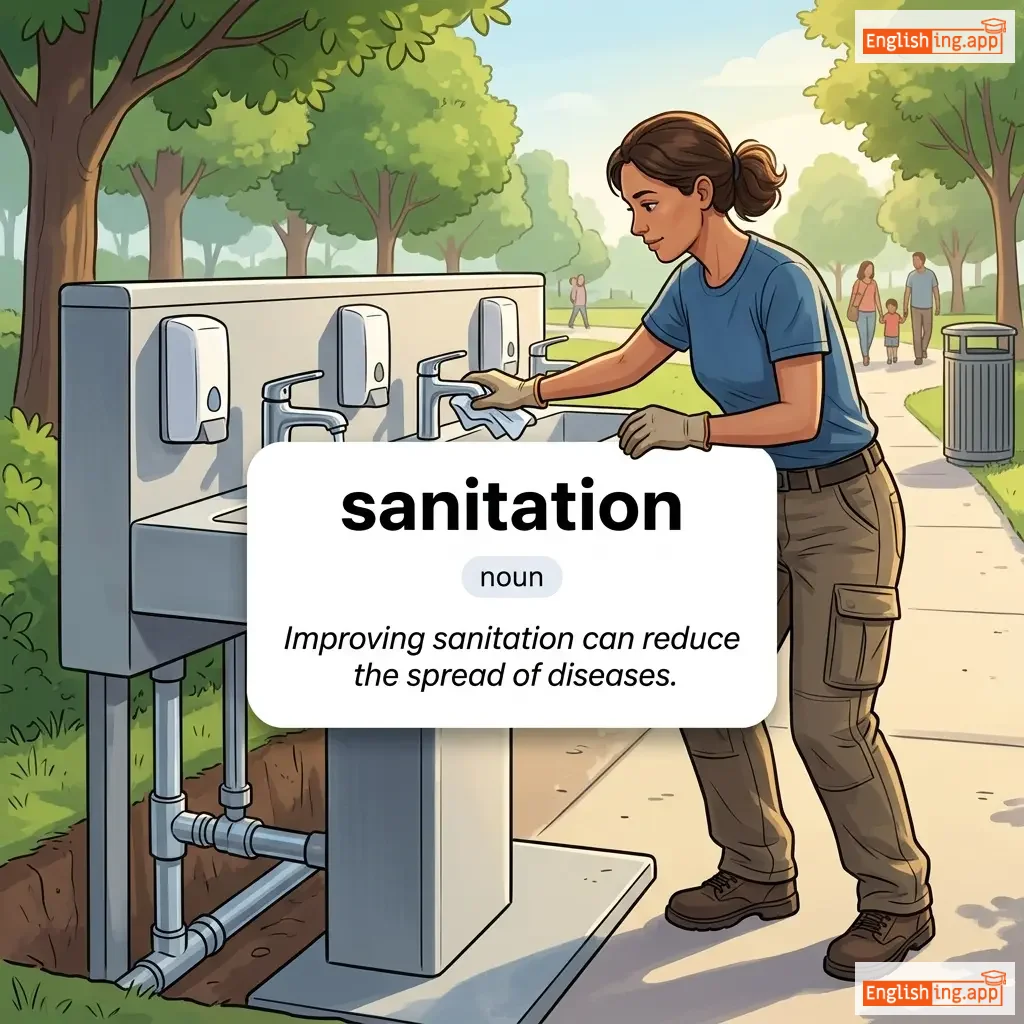
noun
/ˌsænɪˈteɪʃən/
санитария (sanitariya)

The systems and practices for maintaining hygiene and public health, especially through clean water and sewage disposal.

"Improving sanitation can reduce the spread of diseases."

"Улучшение санитарии может снизить распространение заболеваний." (Ulychsheniye sanitarii mozhet snizit' rasprostraneniye zabolevaniy.)
sanitization definition card — visual illustration of the meaning
noun
ˌsæn.ɪ.taɪˈzeɪ.ʃən
санитарная обработка (sanitarnaya obrabotka)

The process of cleaning and disinfecting to eliminate germs and bacteria.

"Regular sanitization keeps appliances germ-free."

"Регулярная санитарная обработка сохраняет оборудование свободным от микробов." (Regulyarnaya sanitarnaya obrabotka sokhranyayet oborudovaniye svobodnym ot mikroby.)
verb, noun
/sæp/
сок / ослаблять (sok / oslablyat)

As a noun: the vital fluid in plants; As a verb: to gradually weaken or drain strength.

"The long journey began to sap his energy."

"Долгий путь начал ослаблять его энергию." (Dolgiy put' nachal oslablyat' ego energiyu.)
noun
/ˈsæf.aɪər/
сапфир (safpir)

a precious stone that is typically blue in color

"The royal crown was adorned with a large sapphire."

"Корона была украшена большим сапфиром." (Korona byla ukrashena bol'shim safpirom.)
adjective
/ˈsæpɪd/
вкусный (vkusnyy)

Having a pleasant taste; flavorful.

"The chef prepared a sapid dish that delighted everyone at the table."

"Шеф-повар приготовил вкусное блюдо, которое понравилось всем за столом." (Shef-povar prigotovil vkusnoe blyudo, kotoroe ponravilos' vseim za stolom.)
noun
/ˈseɪpiəns/
мудрость (mudrost)

Wisdom or intelligence.

"Her sapience in solving problems earned her the respect of her colleagues."

"Её мудрость в решении проблем принесла ей уважение коллег." (Yeyo mudrost' v reshenii problem prinesla yey uzhazhenie kolleg.)
adjective
/ˈseɪpiənt/
мудрый (mudryj)

Wise, or appearing to be wise.

"The professor gave a sapient response to the complex question."

"Профессор дал мудрый ответ на сложный вопрос." (Professor dal mudryj otvet na slozhnyj vopros.)
adjective
/ˌseɪpiˈɛnʃəl/
связанный с мудростью (svyazannyy s mudrost'yu)

Relating to wisdom or knowledge, often in a religious or philosophical sense.

"The monk shared sapiential teachings with his students."

"Монах поделился учениями, связанными с мудростью, со своими учениками." (Monakh podelilsya ucheniyami, svyazannymi s mudrost'yu, so svoimi uchenikami.)
adjective
/ˌsæpəˈneɪʃəs/
мыльный (mylnyy)

Soapy or having the qualities of soap.

"The plant has saponaceous leaves that produce foam when rubbed in water."

"У растения мыльные листья, которые образуют пену, когда их трут в воде." (U rasteniya mylnye list'ya, kotoryye obrazyuyut penu, kogda ikh trut v vode.)
noun
/ˈsɑːrˌkæzəm/
сарказм (sarkazm)

The use of irony to mock or convey contempt.

"His sarcasm often made people laugh but sometimes offended them."

"Его сарказм часто заставлял людей смеяться, но иногда обижал их." (Ego sarkazm chasto zastavlyal lyudey smeyat'sya, no inogda obizhal ikh.)
adjective
/sɑːrˈkæstɪk/
саркастичный (sarkastichny)

Using irony or mockery to convey contempt or humor.

"She made a sarcastic remark about his cooking."

"Она сделала саркастическое замечание о его кулинарии." (Ona sdelała sarkasticheskoe zamechanie o yevo kulinarii.)
noun
/sɑːrˈkɒfəɡəs/
каменный гроб (kamenniy grob)

A stone coffin, often decorated, used in ancient times.

"The museum displayed a beautifully carved sarcophagus from ancient Egypt."

"Музей выставил красиво вырезанный каменный гроб из Древнего Египта." (Muzey vystavil krasivo vyrezannyy kamenniy grob iz Drevnego Egipta.)
sardonic definition card — visual illustration of the meaning
adjective
/sɑːrˈdɒnɪk/
счастье (schast'ye)

Grimly mocking or cynical.

"She gave him a sardonic smile after hearing his excuse."

"Она не могла скрыть своего счастья, когда получила награду." (Ona ne mogla skryt' svoego schast'ya, kogda poluchila nagradu.)
noun
/ˈsɑːri/
сари (sari)

a garment consisting of a length of cotton or silk elaborately draped around the body, traditionally worn by women from South Asia

"She looked elegant in her red silk saree at the festival."

"Она выглядела элегантно в своём красном шелковом сари на фестивале." (Ona vyglyadela eleganto v svoem krasnom shelkovom sari na festivale.)
sartorial definition card — visual illustration of the meaning
adjective
/sɑːrˈtɔːriəl/
относящийся к портняжному делу (otnosyashchijsya k portnyazhnomu delu)

Relating to tailoring, clothes, or style of dress.

"The actor is known for his sartorial elegance on the red carpet."

"Этот актер известен своей сарториальной элегантностью на красной дорожке." (Etot akter izvesten svoej sartorial'noj eleganc'ej na krasnoj dorozhke.)
noun
/ˈseɪ.tən/
Сатана (Satana)

the chief evil spirit; the Devil in Christian and Islamic belief

"According to religious texts, Satan tempts people to sin."

"Согласно религиозным текстам, Сатана искушает людей к греху." (Soglasno religioznym tekstam, Satana iskushayet lyudey k grekhu.)
verb
/seɪt/
удовлетворить (udovletvorit)

To satisfy fully or to excess.

"The huge meal sated their hunger after the long journey."

"Огромная еда удовлетворила их голод после долгого путешествия." (Ogromnaya yeda udovletvorila ikh golod posle dolgogo puteshestviya.)
satellite definition card — visual illustration of the meaning
noun
/ˈsætəlaɪt/
спутник (sputnik)

An artificial body placed in orbit around the earth or another planet to collect information or for communication.

"The weather satellite provided real-time images of the storm."
"Метеорологический спутник предоставил изображения шторма в реальном времени." (Meteorologicheskiy sputnik predostavil izobrazheniya shtorma v real'nom vremeni.)
satiate definition card — visual illustration of the meaning
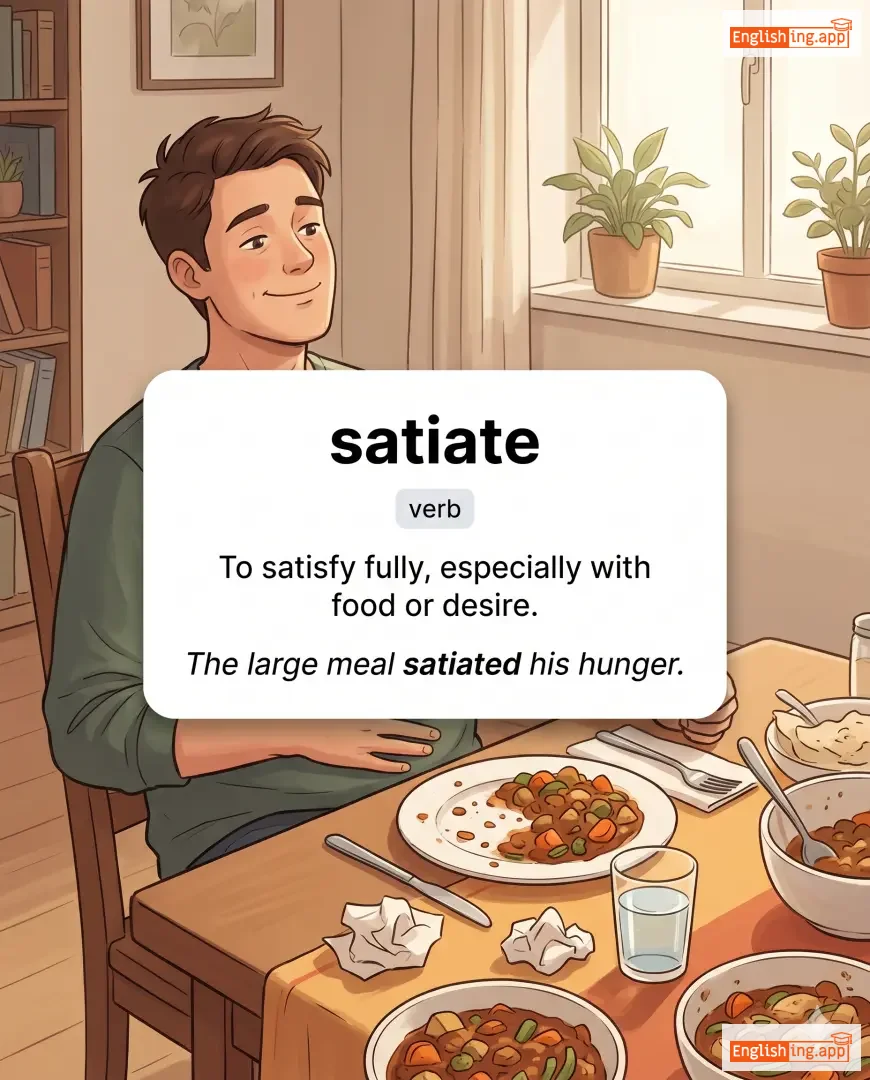
verb
/ˈseɪʃiˌeɪt/
удовлетворить (udovletvorit)

To satisfy fully, especially with food or desire.

"The large meal satiated his hunger."
"Большой обед утолил его голод." (Bol'shoy obed utolil ego golod.)
satiety definition card — visual illustration of the meaning
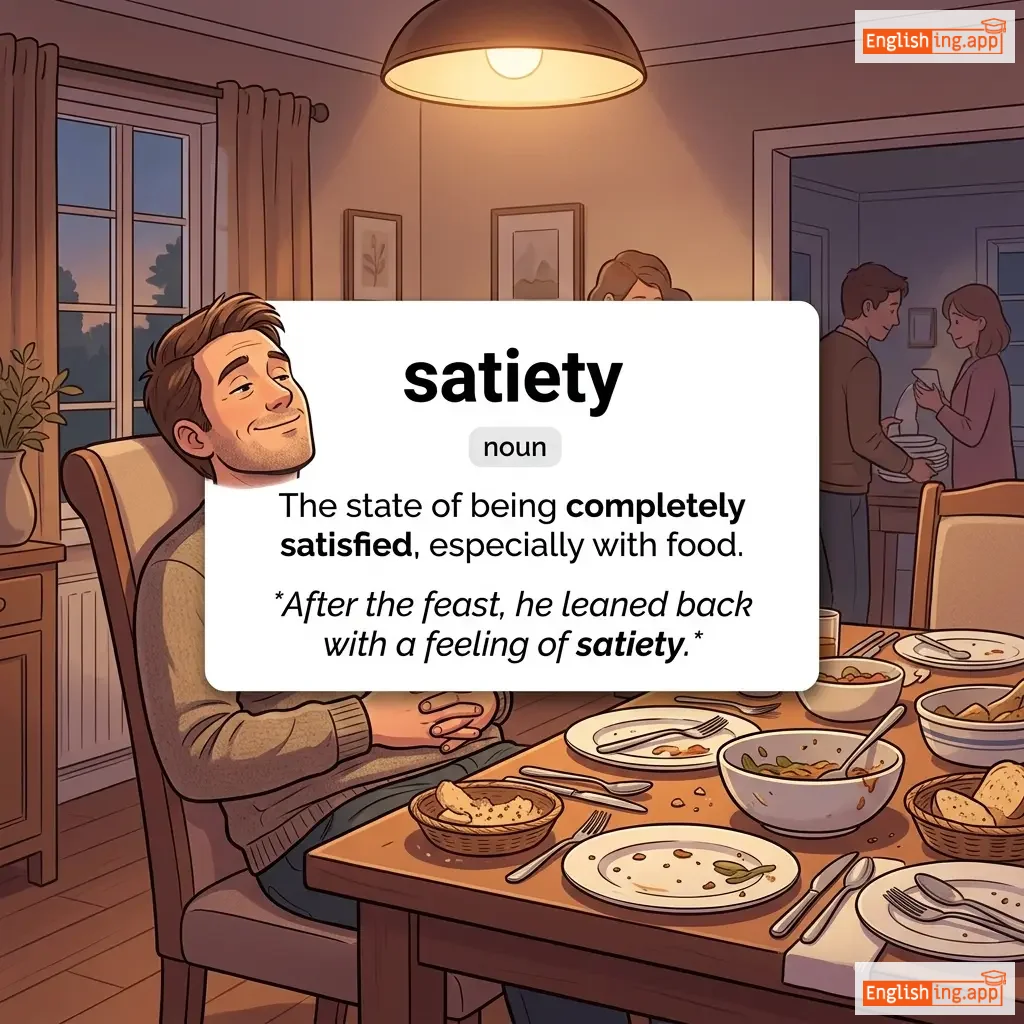
noun
/səˈtaɪ.ə.ti/
сытость (sytost)

The state of being completely satisfied, especially with food.

"After the feast, he leaned back with a feeling of satiety."

"После пира он откинулся с чувством сытости." (Posle pira on otkinulsya s chuvstvom sytości.)
noun
/ˈsætaɪər/
сатира (satira)

The use of humor, irony, or exaggeration to criticize people's stupidity or vices.

"The play was a brilliant satire on modern politics."

"Пьеса была блестящей сатирой на современную политику." (P'yesa byla blestyashchey satiroy na sovremennuyu politiku.)
adjective
/səˈtɪrɪk/
сатирический (satiricheskiy)

Relating to or using satire.

"The novel takes a satiric view of urban life."

"Роман представляет собой сатирическое видение городской жизни." (Roman predstavlyaet soboy satiricheskoe videnie gorodskoy zhizni.)
adjective
/səˈtɪrɪkəl/
сатирический (satiricheskiy)

containing or using satire to criticize or mock

"The satirical cartoon mocked the government's new policy."

"Сатирический рисунок высмеивал новую политику правительства." (Satiricheskiy risunok vysmeival novuyu politiku pravitel'stva.)
verb
/ˈsætəˌraɪz/
сатиризировать (satirizirovat)

to mock or criticize something using satire

"The play satirizes the greed of modern corporations."

"Пьеса сатирает жадность современных корпораций." (P'esа satirayet zhадnost' sovremennykh korporatsiy.)