Словари

Словарь английского языка | Значения слов, определения и примеры

adjective
/ˈsɪlkən/
шелковый; мягкий; гладкий; (shelkovyy)

made of silk; smooth and soft like silk

"She wore a beautiful silken dress to the party."

"Она надела красивое шелковое платье на вечеринку." (Ona nadela krasivoye shelkovoye plat'ye na vecherinku.)
adjective
/ˈsɪli/
глупый (glupyy)

showing a lack of good sense; foolish or playful

"He made a silly mistake on the test."

"Он сделал глупую ошибку на экзамене." (On sdelal glupuyu oshibku na ekzamene.)
noun
/sɪlt/
ил (il)

Fine sand, clay, or other material carried by running water and deposited as a sediment.

"The river deposited layers of silt along its banks."

"Река отложила слои ила вдоль своих берегов." (Reka otlozhila sloi ila vdol' svoikh beregov.)
noun, adjective
/ˈsɪlvər/
серебро (serebro)

a shiny gray-white metal, often used for coins, jewelry, and decoration

"She wore a beautiful silver necklace for the party."

"Она носила красивое серебряное ожерелье на вечеринке." (Ona nosila krasivoe serebryanoe ozherelye na vecherinke.)
noun
/ˈsɪlvər kɑrp/
серебряный карп (serebryany karp)

a large freshwater fish with silvery scales, commonly farmed for food

"Silver carp is widely cultivated in fish farms across Asia."
"Серебряный карп широко разводится на рыбных фермах по всей Азии." (serebryany karp shiroko razvoditsya na rybnykh fermakh po vsei azii.)
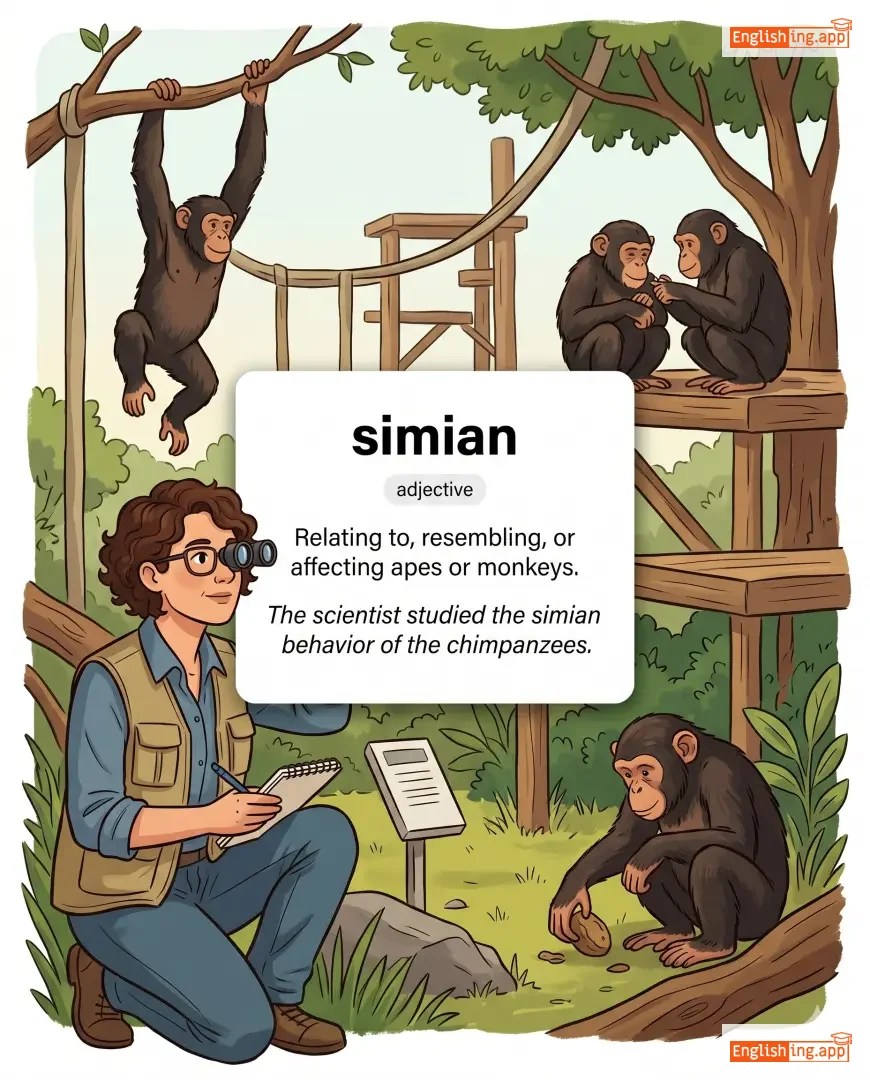
simian definition card — visual illustration of the meaning
adjective
/ˈsɪmiən/
обезьяноподобный (obez'yanopodobnyy)

Relating to, resembling, or affecting apes or monkeys.

"The scientist studied the simian behavior of the chimpanzees."

"Учёный изучал обезьяноподобное поведение шимпанзе." (Uchyonnyy izuchal obez'yanopodobnoe povedenie shimpanze.)
adjective
/ˈsɪmɪlər/
похожий (pokhozhiy)

Having a resemblance in appearance, character, or quantity, without being identical.

"The twins wore similar clothes to the party."

"Близнецы носили похожую одежду на вечеринке." (Bliznetsy nosili pokhozhuyu odezhdu na vecherinke.)
noun
/ˌsɪmɪˈlærəti/
сходство (skhodstvo)

the state of being alike or having characteristics in common

"There is a strong similarity between the two paintings."

"Между двумя картинами существует сильное сходство." (Mezhdu dvumya kartinami sushchestvuyet sil'noye skhodstvo.)
adverb
/ˈsɪmɪlərli/
аналогично (analogichno)

in a similar way

"Similarly, we can achieve success with dedication and hard work."
"Аналогично, мы можем достичь успеха с помощью преданности и усердной работы." (Analogichno, my mozhem dostich' uspekha s pomoshch'yu predannosti i userdnoy raboty.)
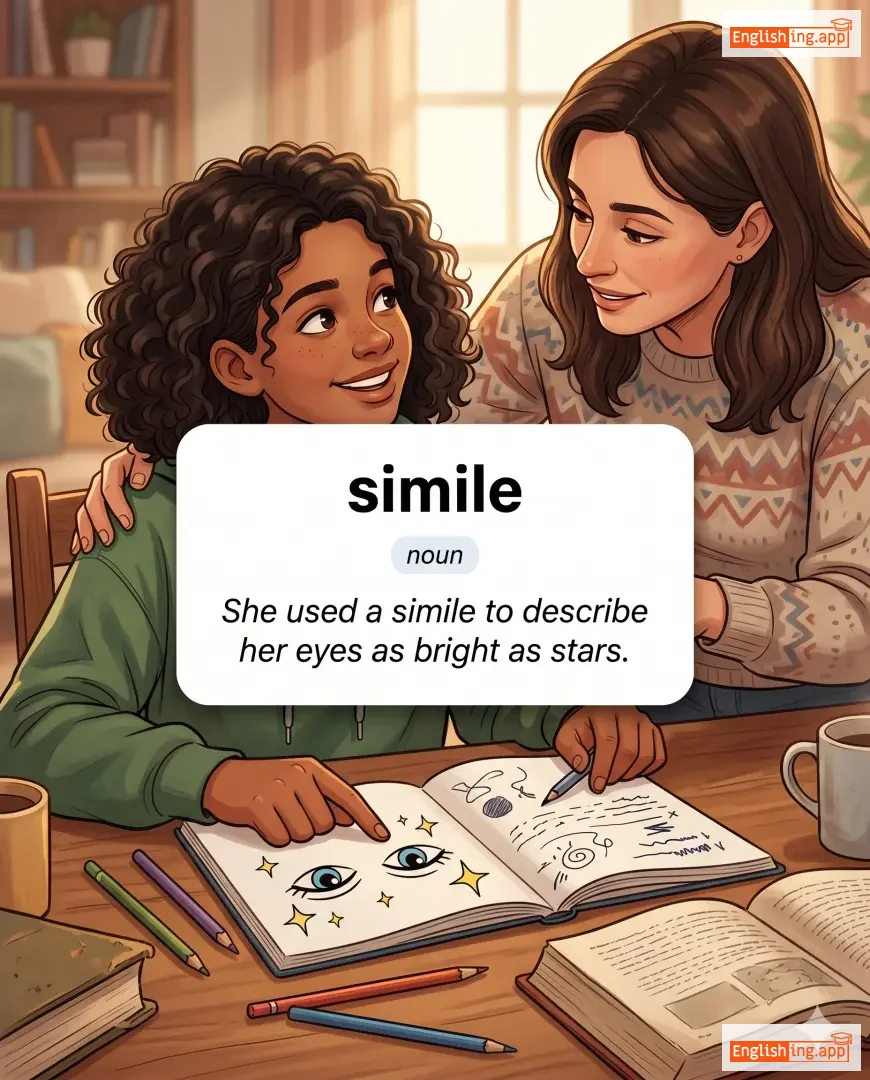
simile definition card — visual illustration of the meaning
noun
/ˈsɪməli/
сравнение (sravnenie)

A figure of speech involving the comparison of one thing with another using 'like' or 'as'.

"She used a simile to describe her eyes as bright as stars."

"Она использовала сравнение, чтобы описать свои глаза, как яркие звезды." (Ona ispol'zovala sravnenie, chtoby opisat' svoi glaza, kak yarkie zvezdy.)
noun
/sɪˈmɪlɪˌtjuːd/
подобие (podobie)

The quality or state of being similar; resemblance or likeness.

"There is a striking similitude between the two paintings."

"Между этими двумя картинами есть поразительное сходство." (Mezhdu etimi dvumya kartinami yest' porazitel'noe skhodstvo.)
verb
/ˈsɪmpər/
улыбаться глупо или натянуто (ulybat'sya glupo ili natyanuto)

to smile in a silly, self-conscious, or affected way

"She simpered at his compliment, clearly embarrassed."

"Она улыбнулась глупо на его комплимент, явно смущенная." (Ona ulybnulas' glupo na ego kompliment, yavno smushchennaya.)
adjective
/ˈsɪmpəl/
простой (prostoy)

easy to understand or do; not complicated

"The instructions were simple and easy to follow."

"Инструкции были простыми и легкими для выполнения." (Instruktsii byli prostymi i legkimi dlya vypolneniya.)
noun
/ˈsɪmpəltən/
простофиля (prostofilya)

a foolish or gullible person

"They treated him like a simpleton who could not understand anything complex."

"Они обращались с ним как с простофилей, который не мог понять ничего сложного." (Oni obreshchalis s nim kak s prostofiley, kotoryy ne mog ponyat' nichego slozhnogo.)
noun
/sɪmˈplɪsɪti/
простота; ясность (prostota; yasnost)

the quality of being simple; lack of complexity or intricacy

"The beauty of the design lies in its simplicity."
"Красота дизайна заключается в его простоте." (Krasota dizajna zaklyuchayetsya v yego prostote.)
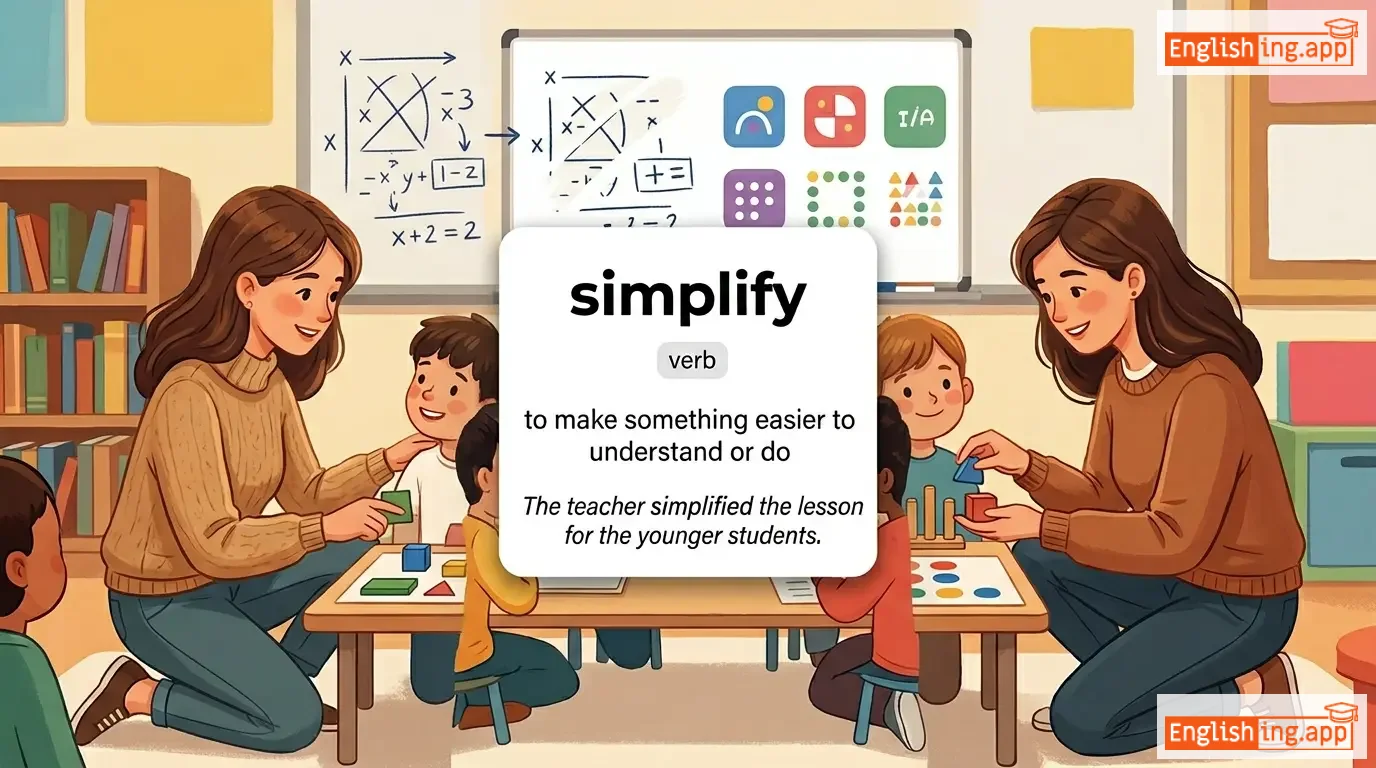
simplify definition card — visual illustration of the meaning
verb
/ˈsɪmplɪˌfaɪ/
упростить (uprostit')

to make something easier to understand or do

"The teacher simplified the lesson for the younger students."

"Учитель упростил урок для младших студентов." (Uchitel' uprostil urok dlya mladsikh studentov.)
adjective
/sɪmˈplɪstɪk/
слишком упрощенный (slishkom uproshchyonniy)

treating complex issues as if they were much simpler than they really are

"His explanation was too simplistic and ignored key details."

"Его объяснение было слишком упрощенным и игнорировало ключевые детали." (Ego ob'yasneniye bylo slishkom uproshchyonnym i ignorirovalo klyuchevyye detali.)
adverb
/ˈsɪmpli/
просто (prosto)

in a clear and easy to understand manner

"She explained the concept simply and clearly."

"Она объяснила концепцию просто и ясно." (Ona ob'yasnila kontseptsiyu prosto i yasno.)
noun
/ˌsɪmjʊˈleɪkrəm/
симулякр (simulyakr)

an image or representation of someone or something; a superficial likeness

"The statue was only a simulacrum of the ancient god."

"Статуя была всего лишь симулякром древнего бога." (Statuya byla vsego lish' simulyakrom drevnego boga.)
verb
/ˈsɪmjʊˌleɪt/
симулировать (simulirovat)

to imitate the appearance, character, or behavior of something; to pretend or reproduce conditions artificially

"The pilot had to simulate an emergency landing during training."
"Пилот должен был смоделировать экстренную посадку во время тренировки." (Pilot dolzhen byl smodelirovat' ekstrennuyu posadku vo vremya trenirovki.)
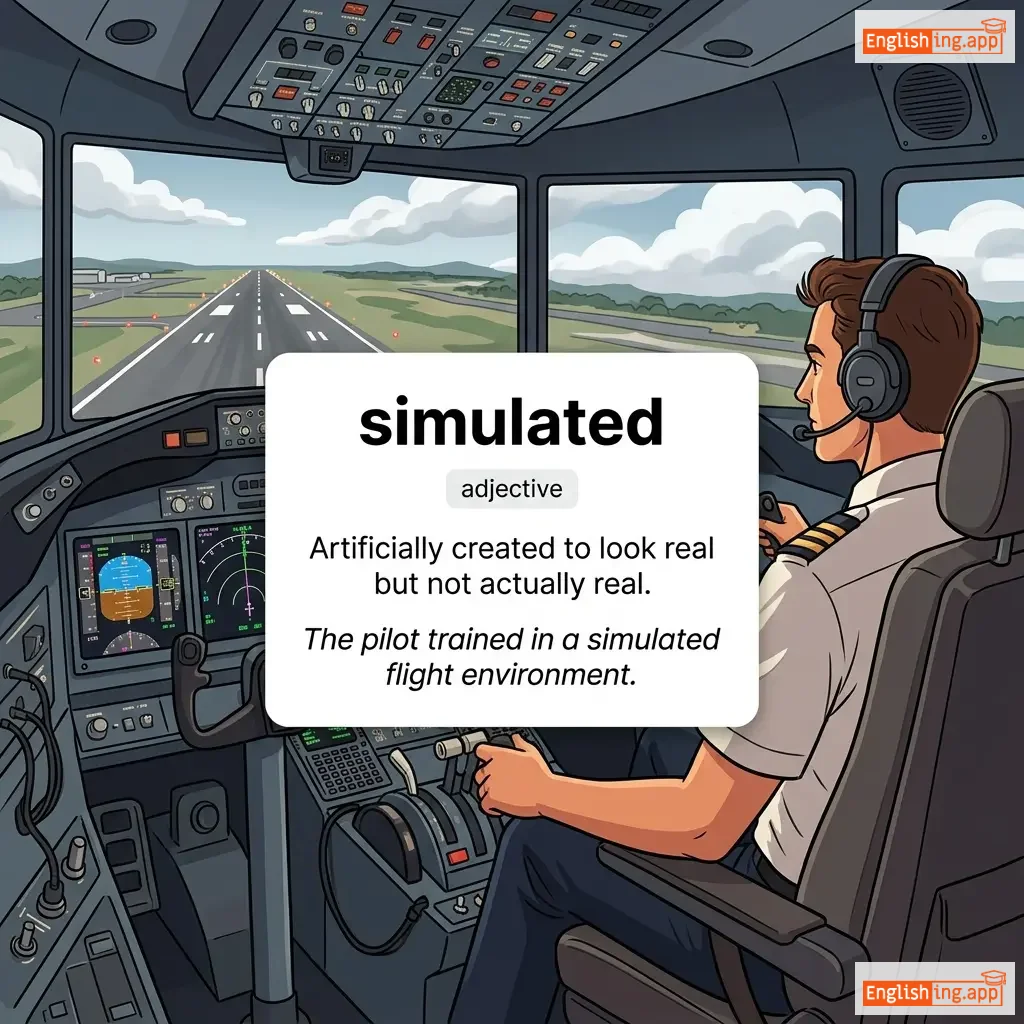
simulated definition card — visual illustration of the meaning
adjective
/ˈsɪm.jʊ.leɪ.tɪd/
моделированный (modelirovannyy)

Artificially created to look real but not actually real.

"The pilot trained in a simulated flight environment."

"Пилот тренировался в смоделированной среде полета." (Pilot trenirovalsya v smodelirovannoy srede poleta.)
noun
/ˌsɪmjuˈleɪʃən/
симуляция (simulyatsiya)

the imitation of a situation or process

"The simulation helped the students understand the complex theory."
"Симуляция помогла студентам понять сложную теорию." (Simulyatsiya pomogla studentam ponyat' slozhnuyu teoriya.)
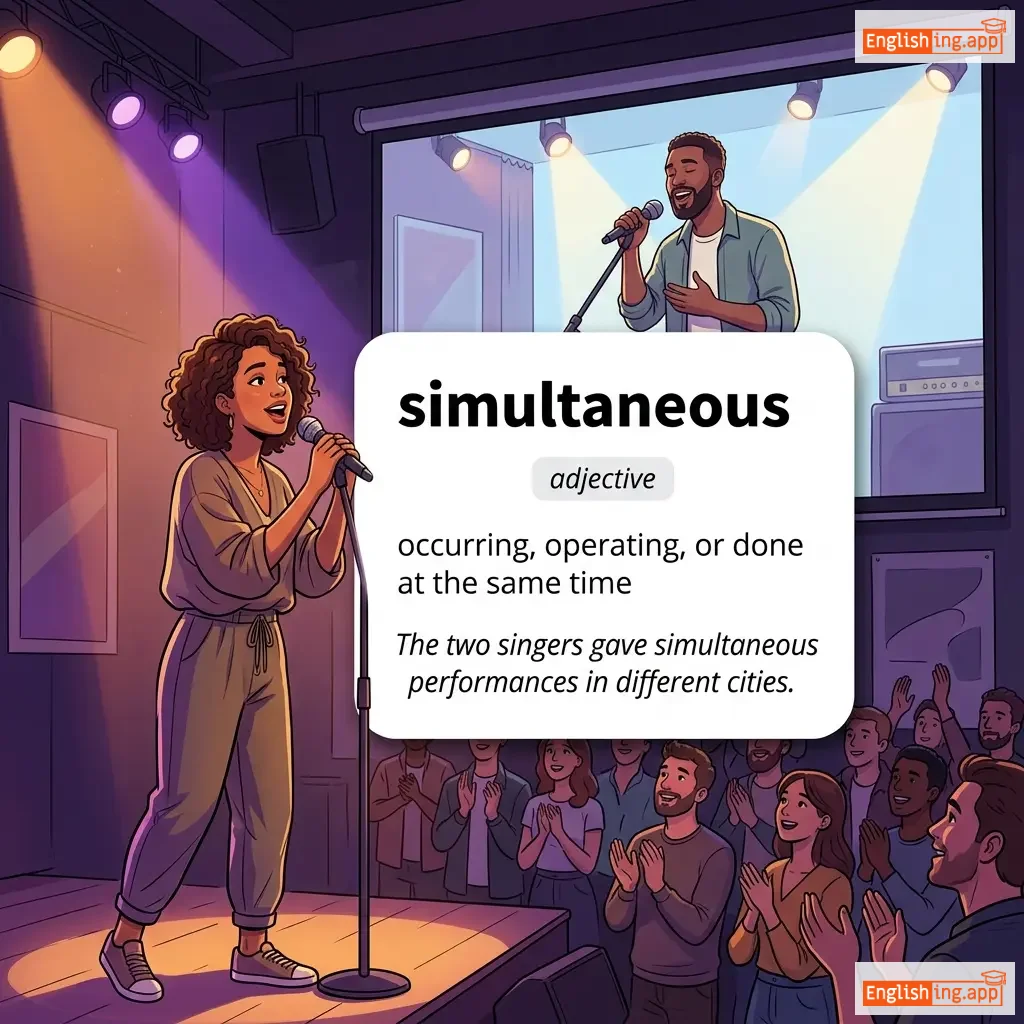
simultaneous definition card — visual illustration of the meaning
adjective
/ˌsaɪməlˈteɪniəs/
одновременный (odnovremennyy)

occurring, operating, or done at the same time

"The two singers gave simultaneous performances in different cities."
"Два певца выступили с одновременными выступлениями в разных городах." (Dva pevtsa vystupili s odnovremennymi vystupleniyami v raznykh gorodakh.)
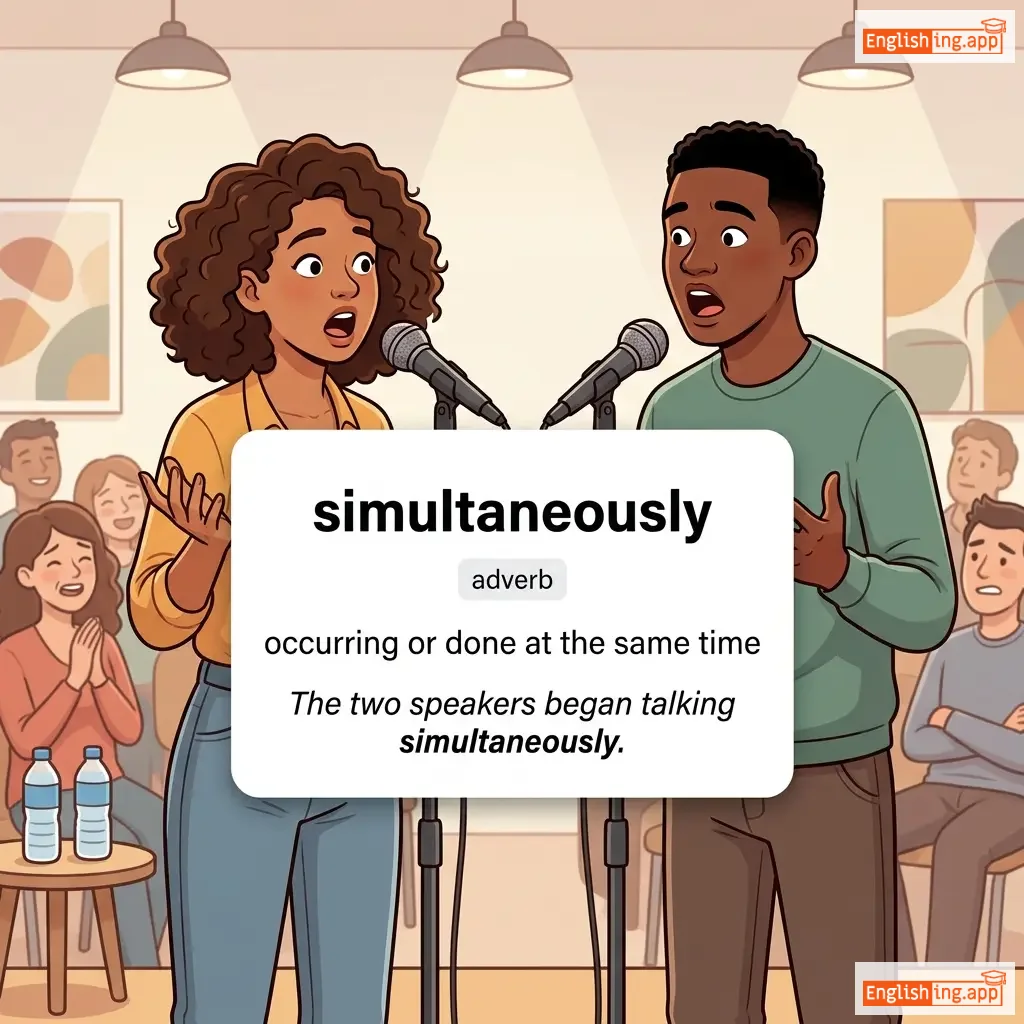
simultaneously definition card — visual illustration of the meaning
adverb
/ˌsaɪ.məlˈteɪ.ni.əs.li/
одновременно (odnovremenno)

occurring or done at the same time

"The two speakers began talking simultaneously."

"Два оратора начали говорить одновременно." (Dva oratora nachali govorit' odnovremenno.)
noun, verb
/sɪn/
грех (greh)

an immoral act considered to be a transgression against divine law; to commit an offense against religious or moral law

"He confessed his sin to the priest."

"Он исповедал свой грех священнику." (On ispovedal svoi greh svyashchenniku.)
preposition
/sɪns/
с (s)

from a particular time in the past until now

"I have known her since childhood."

"Я знаю её с детства." (Ya znayu yeyo s detstva.)
adjective
/sɪnˈsɪr/
искренний (iskrenniy)

genuine and honest; free from pretense or deceit

"She gave a sincere apology for her mistake."

"Она извинилась искренне за свою ошибку." (Ona izvinilas' iskrenne za svoyu oshibku.)
adverb
/sɪnˈsɪrli/
искренне (iskrenne)

with genuine feelings; honestly and truly

"I sincerely hope you recover soon."

"Я искренне надеюсь, что вы скоро поправитесь." (Ya iskrenne nadeyus, chto vy skoro popravites.)
noun
/sɪnˈserɪti/
искренность (iskrennost)

the quality of being free from pretense or deceit; honesty

"His sincerity in apologizing was evident to everyone."
"Его искренность при извинении была очевидна для всех." (Ego iskrennost pri izvinении byla ochevidna dlya vsekh.)
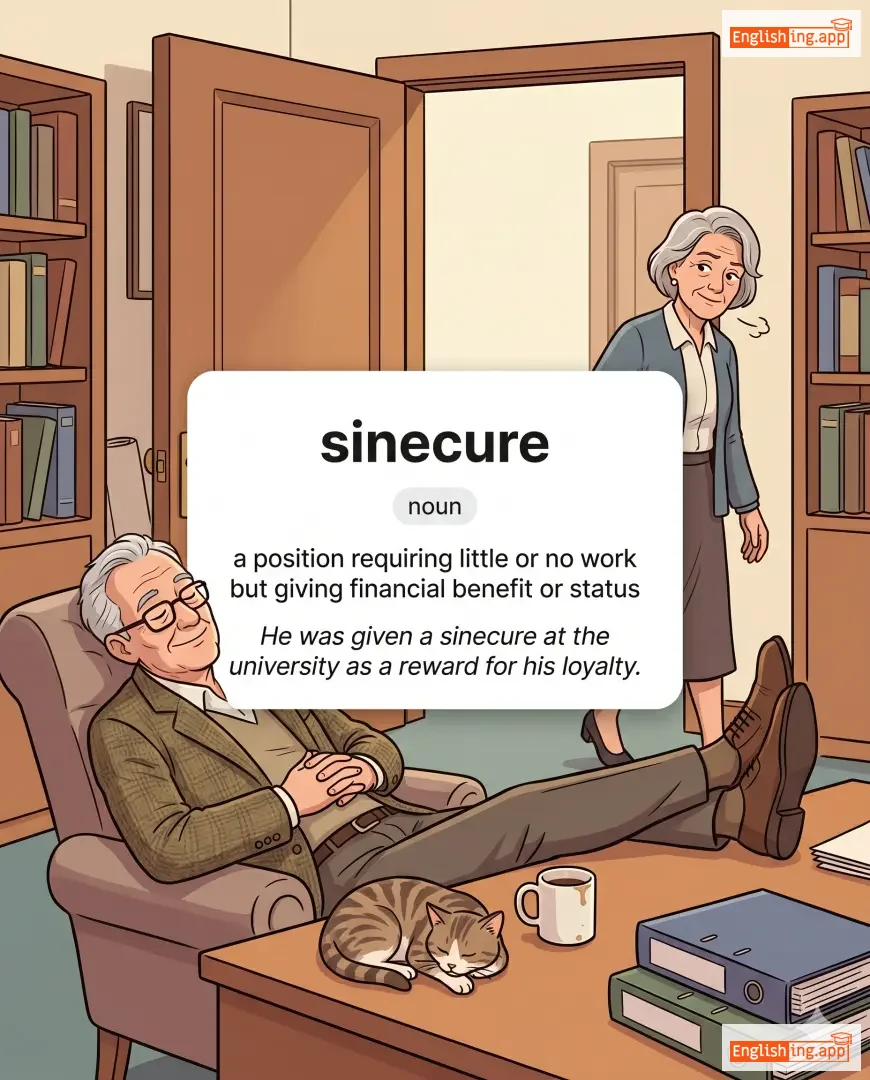
sinecure definition card — visual illustration of the meaning
noun
/ˈsaɪnɪkjʊər/
лёгкая работа (lyogkaya rabota)

a position requiring little or no work but giving financial benefit or status

"He was given a sinecure at the university as a reward for his loyalty."

"Ему дали лёгкую работу в университете как награду за его лояльность." (Emu dali lyogkuyu rabotu v universitete kak nagradu za ego loyal'nost'.)
noun
/ˈsɪnjuː/
сухожилие (sukhozhilie)

A tendon; figuratively, the source of strength, power, or resilience.

"The sinews in his arms stood out as he lifted the heavy box."

"Сухожилия в его руках выделялись, когда он поднял тяжелую коробку." (Sukhozhiliya v yego rukakh vydelyalis, kogda on podnyal tyazhelyu korobku.)
adjective
/ˈsɪnjuːi/
мускулистый и сильный (muskulistyy i sil'nyy)

Lean and muscular; strong and tough.

"The athlete had a sinewy build that showed his strength."
"У атлета было мускулистое телосложение, которое показывало его силу." (U atleta bylo muskulistoye teleslozheniye, kotoroye pokazyvalo yego silu.)
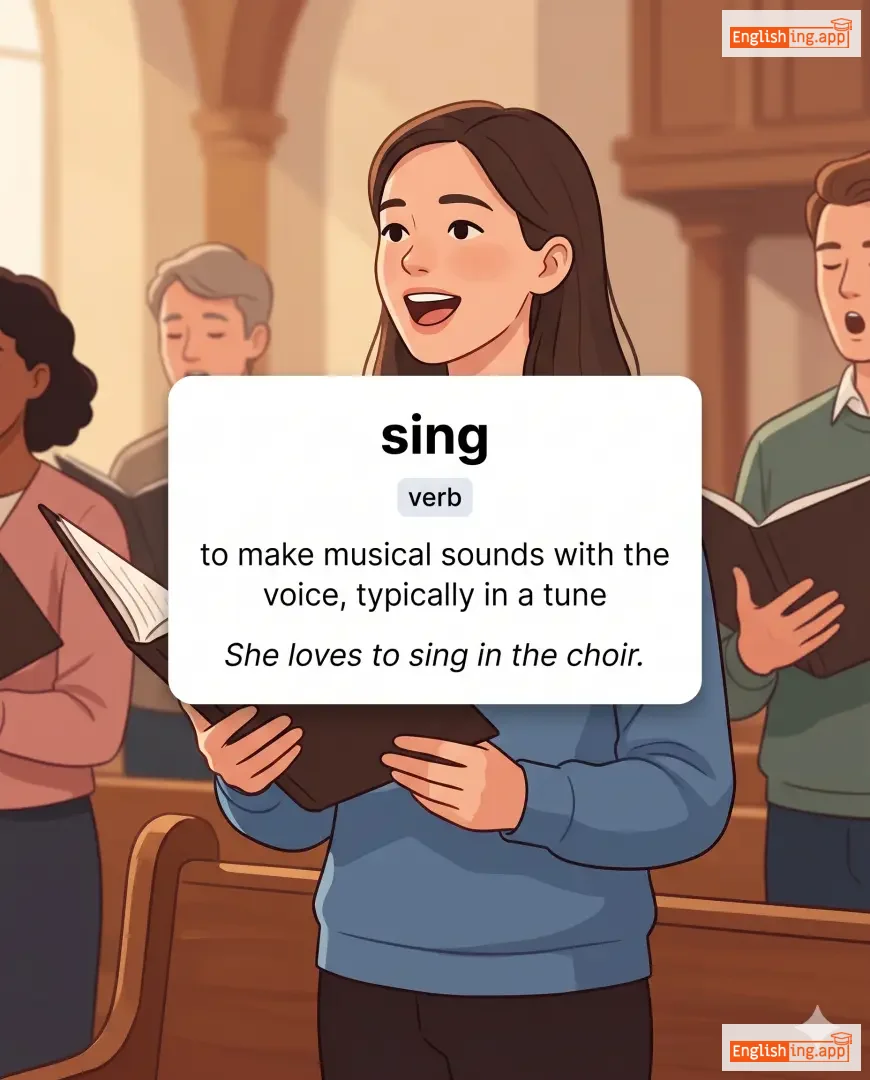
sing definition card — visual illustration of the meaning
verb
/sɪŋ/
петь (pet)

to make musical sounds with the voice, typically in a tune

"She loves to sing in the choir."

"Она любит петь в хоре." (Ona lyubit pet' v khore.)
verb
/sɪndʒ/
легко обжигать (legko obzhigat)

To burn something superficially or lightly, especially at the edges.

"The fire singed his eyebrows."

"Огонь обжег его брови." (Ogon' obzheg ego brovi.)
noun
/ˈsɪŋər/
певец (pevets)

a person who sings, especially professionally

"The singer performed on stage last night."

"Певец выступил на сцене прошлой ночью." (Pevets vystupil na stsene proshloy noch'yu.)
adjective
/ˈsɪŋɡəl/
один (singl)

only one; not one of several

"She bought a single ticket for the concert."
"Она купила один билет на концерт." (Ona kupila odin bilet na kontsert.)
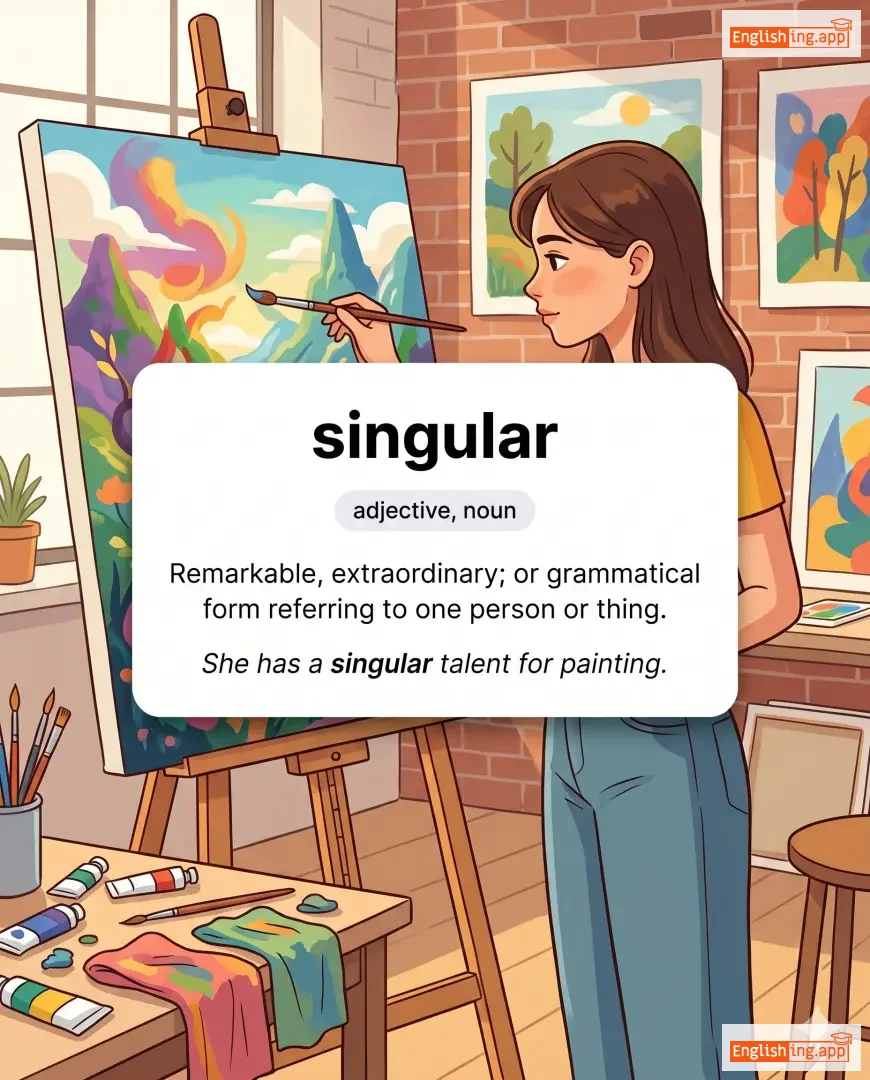
singular definition card — visual illustration of the meaning
adjective, noun
/ˈsɪŋɡjələr/
необыкновенный / сингулярный (neobyknovennyy / singulyarnyy)

Remarkable, extraordinary; or grammatical form referring to one person or thing.

"She has a singular talent for painting."

"У нее необыкновенный талант к живописи." (U nee neobyknovennyy talant k zhivopisi.)
adjective
/ˈsɪnɪstər/
зловещий (zloveschij)

Giving the impression that something harmful or evil is happening or will happen.

"The abandoned house had a sinister atmosphere."
"Покинутое здание имело зловещую атмосферу." (Pokinutoe zdanie imelo zloveschuyu atmosferu.)
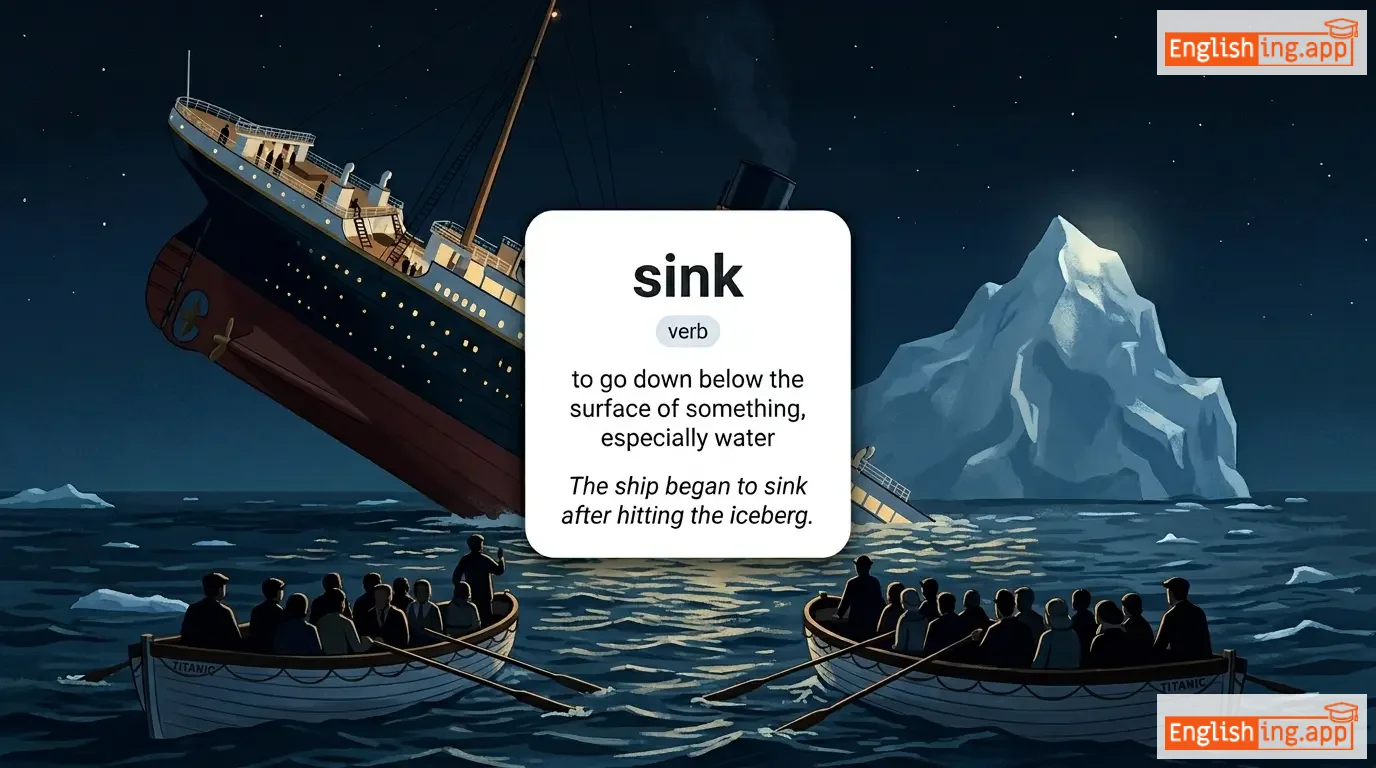
sink definition card — visual illustration of the meaning
verb
/sɪŋk/
тонуть (tonut')

to go down below the surface of something, especially water

"The ship began to sink after hitting the iceberg."

"Корабль начал тонуть после столкновения с айсбергом." (Korabl' nachal tonut' posle stolknoveniya s ayzbergom.)
adjective
/ˈsɪnləs/
без греха; невинный; чистый (bez grekha; nevinny; chistyy)

free from sin; pure and innocent; without moral fault

"The innocent child appeared sinless in her pure white dress."

"Невинный ребенок выглядел без греха в своем чистом белом платье." (Nevinnyy rebenok viglyadel bez grekha v svoem chistom belom plat'e.)
noun
/ˌsɪnjuˈɒsɪti/
извилистость (izvilistost)

The quality or state of being winding, curving, or having many turns.

"The sinuosity of the river made navigation challenging."
"Извилистость реки сделала навигацию сложной." (Izvilistost reki sdelala navigatsiyu slozhnoy.)
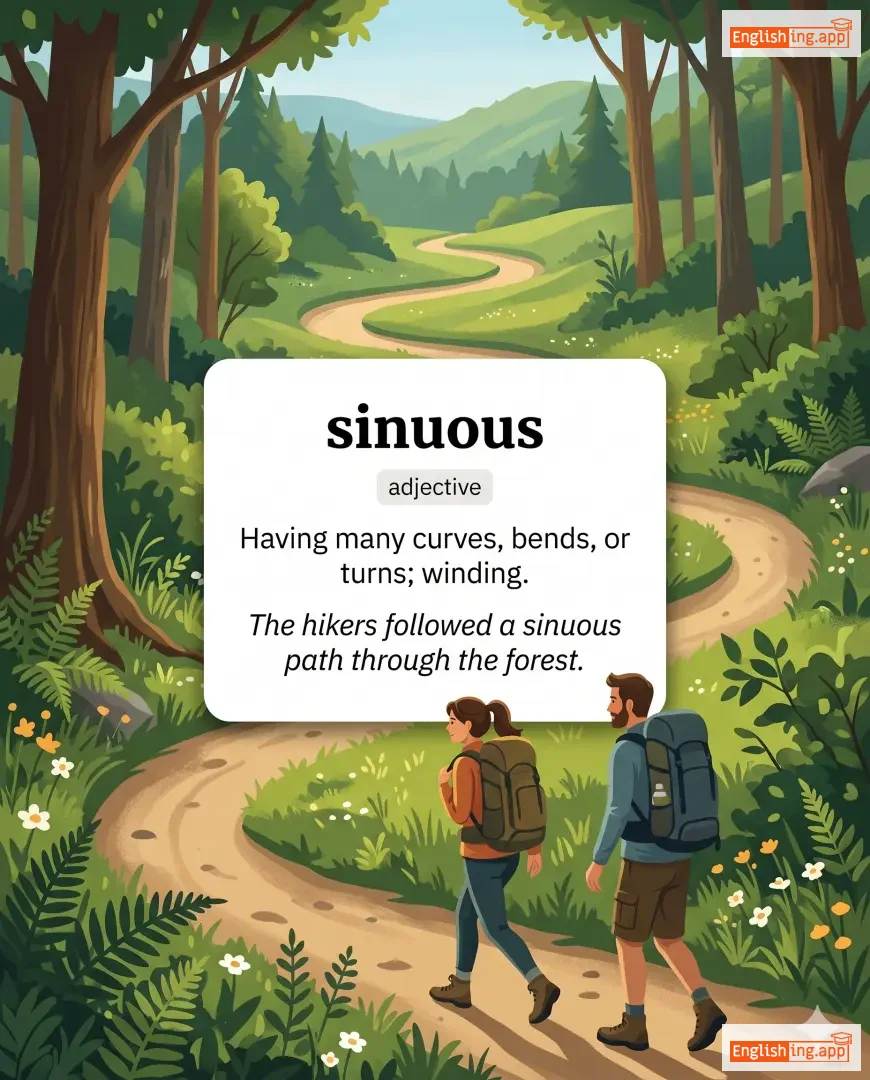
sinuous definition card — visual illustration of the meaning
adjective
/ˈsɪnjuəs/
изогнутый (izognutyy)

Having many curves, bends, or turns; winding.

"The hikers followed a sinuous path through the forest."

"Путешественники шли по извилистому пути через лес." (Puteshestvenniki shli po izvilistomu puti cherez les.)
noun
/ˈsaɪnəs/
синус (sinus)

A cavity within a bone or tissue, especially those in the bones of the face connected with the nasal cavities.

"He suffered from a sinus infection that caused headaches."
"Он страдал от инфекции синусов, которая вызвала головную боль." (On stradal ot infektsii sinusoov, kotoraya vyzvala golovnuyu bol'.)
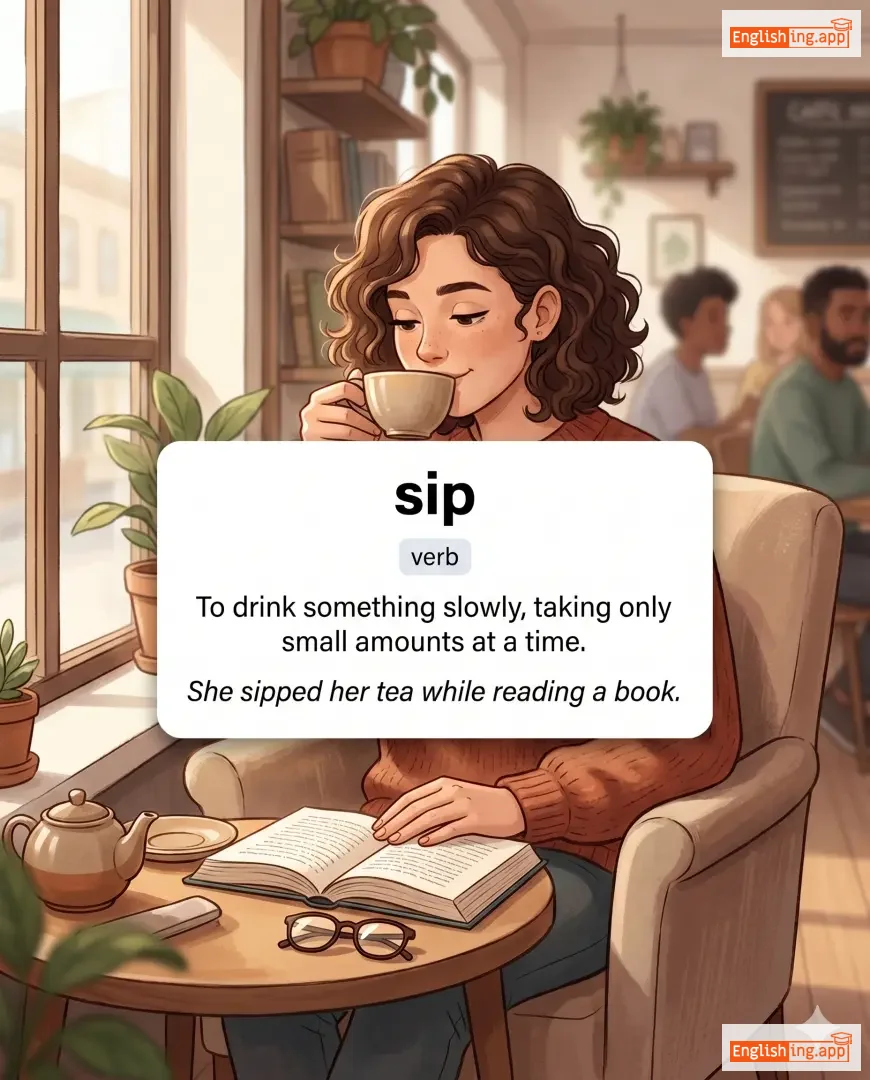
sip definition card — visual illustration of the meaning
verb
/sɪp/
глоток (glotok)

To drink something slowly, taking only small amounts at a time.

"She sipped her tea while reading a book."

"Она сделала глоток чая, читая книгу." (Ona sdelala glotok chaya, chitaya knigu.)
noun
/sɜːr/
сэр (ser)

a respectful or formal form of address used for a man, typically one of higher social status or authority

"Sir, may I assist you with your order?"

"Сэр, могу ли я помочь вам с вашим заказом?" (Ser, mogu li ya pomoch' vam s vashim zakazom?)
noun
/ˈsaɪrən/
сирена (sirena)

A device that makes a loud prolonged sound as a signal or warning; in mythology, a creature that lures sailors with enchanting songs.

"The police car passed with its siren blaring."

"Полиция проехала с включенной сиреной." (Politsiya proiekhala s vkliuchennoy sirenoy.)
noun
/sɪˈrɒkoʊ/
горячий и сухой ветер (goryachiy i sukhoy veter)

A hot, dry wind blowing from North Africa across the Mediterranean to southern Europe.

"The sirocco made the city unbearably hot and dusty."

"Сирокко сделала город невыносимо горячим и пыльным." (Sirokko sdelala gorod nevynosimo goryachim i pyl'nym.)
noun
/ˈsɪstər/
сестра (sestra)

a female sibling; a girl or woman in relation to other children of her parents

"My sister is coming to visit us next week."

"Моя сестра приедет к нам на следующей неделе." (moya sestra priedet k nam na sleduyushchey nedele)
noun
/ˈsɪstərhʊd/
сестринство (sestrinstvo)

The relationship between sisters, or a community of women united by shared experiences or goals.

"The feminist movement created a strong sense of sisterhood among women."

"Феминистское движение создало сильное чувство сестринства среди женщин." (Feministskoe dvizhdenie sozdalo sil'noe chuvstvo sestrinstva sredi zhenshchin.)
verb
/sɪt/
сидеть (sidet)

to rest with the body supported by the buttocks, often in a chair or on the ground

"Please sit down and relax for a while."

"Пожалуйста, сядьте и расслабьтесь на некоторое время." (Pozhaluysta, syad'te i rasslabb'tes' na nekotorye vremya.)