Словари

Словарь английского языка | Значения слов, определения и примеры

shroud definition card — visual illustration of the meaning
verb
/ʃraʊd/
покрывать (pokryvat')

to cover or hide; to wrap in cloth

"The mountain peak was shrouded in mist."

"Вершина горы была скрыта в тумане." (Vershina gory byla skryta v tumane.)
verb
/ʃrʌɡ/
пожать плечами (pozhat plechami)

To raise and lower the shoulders to express uncertainty or indifference.

"He shrugged when asked about the missing file."

"Он пожал плечами, когда его спросили о потерянном файле." (On pozhat plechami, kogda ego sprosili o poteryannom fayle.)
verb
/ʃʌk/
снимать оболочку (snimat' obolochku)

To remove the outer covering, such as the husk of corn or shell of shellfish.

"She learned how to shuck oysters quickly."

"Она научилась быстро открывать устриц." (Ona nauchilas' bystro otkryvat' ustrits.)
verb
/ˈʃʌdər/
дрожать (drozhat)

to tremble or shake suddenly, often due to fear, cold, or strong emotion

"She shuddered at the thought of walking alone in the dark forest."

"Она вздрогнула при мысли о том, чтобы идти одной в темном лесу." (Ona vzdrognula pri mysli o tom, chtoby idti odnoi v temnom lesu.)
verb
/ˈʃʌfəl/

to walk by dragging one's feet along or without lifting them fully; to mix or rearrange

"He shuffled the cards before dealing them."

Shun definition card — visual illustration of the meaning
verb
/ʃʌn/
избегать (izbegat)

to deliberately avoid or stay away from someone or something

"He was shunned by his colleagues after the scandal."

"Он был отвергнут своими коллегами после скандала." (On byl otvergnut svoimi kollegami posle skandala.)
verb
/ʃʌnt/
переводить (perevodit)

to move or turn aside; to push or divert from one track to another

"The train was shunted onto a different track."

"Поезд был переведен на другой путь." (Poyezd byl pereveden na drugoy put'.)
verb
/ʃʌt/
закрыть (zakryt)

to close something, especially a door or window

"Please shut the door before you leave."

"Пожалуйста, закройте дверь, прежде чем уйти." (Pozhaluysta, zakroyte dver', prezhde chem uyti.)
noun
/ˈʃʌtəl/
транспортное средство, которое регулярно курсирует между двумя местами (transportnoe sredstva, kotoroe reguljarnno kursiruet mezhdu dvumya mestami)

a vehicle or craft that travels regularly between two places.

"The airport shuttle runs every 30 minutes."

"Аэропортовый шаттл ходит каждые 30 минут." (Aeroportovy shatll khodit kazhdye 30 minut.)
adjective
/ʃaɪ/
застенчивый (zastenchivyy)

Being reserved or nervous around other people.

"The child was too shy to speak in class."

"Ребёнок был слишком застенчив, чтобы говорить в классе." (Rebyonok byl slishkom zastenchiv, chtoby govorit' v klasse.)
noun
/ˈʃaɪstər/
мошенник (moshennik)

a person, especially a lawyer, who uses unscrupulous or dishonest methods

"The businessman was exposed as a shyster who cheated clients."

"Бизнесмен был разоблачен как мошенник, который обманывал клиентов." (Biznesmen byl razoblachen kak moshennik, kotoryy obmanyval klientov.)
noun
/ˈsɪbɪləns/
шипящий звук (shipyashchij zvuk)

A hissing or hushing sound, especially in speech with 's' or 'sh'.

"The poet used sibilance to create a soft, hissing effect in the verse."

"Поэт использовал сибилянт для создания мягкого, шипящего эффекта в стихах." (Poet ispol'zoval sibiljant dlya sozdaniya myagkogo, shipyashchego effekta v stikhakh.)
adjective
/ˈsɪbɪlənt/
с шипящим звуком (s shipyashchim zvukom)

Making or characterized by a hissing sound.

"The word 'snake' starts with a sibilant sound."

"Слово 'snake' начинается с сибилантного звука." (Slovo 'snake' nachinayetsya s sibilantnogo zvuka.)
verb
/ˈsɪbəleɪt/
произносить с шипящим звуком (proiznosit' s shipyashchim zvukom)

To pronounce with a hissing sound.

"The actor sibilated his lines for dramatic effect."

"Актер произнес свои реплики с шипящим звуком для драматического эффекта." (Akter proiznes svoi repliky s shipyashchim zvukom dlya dramaticheskogo effekta.)
noun
/ˈsɪblɪŋ/
брат/сестра (brat/sestra)

A brother or sister.

"She has three siblings, two brothers and one sister."
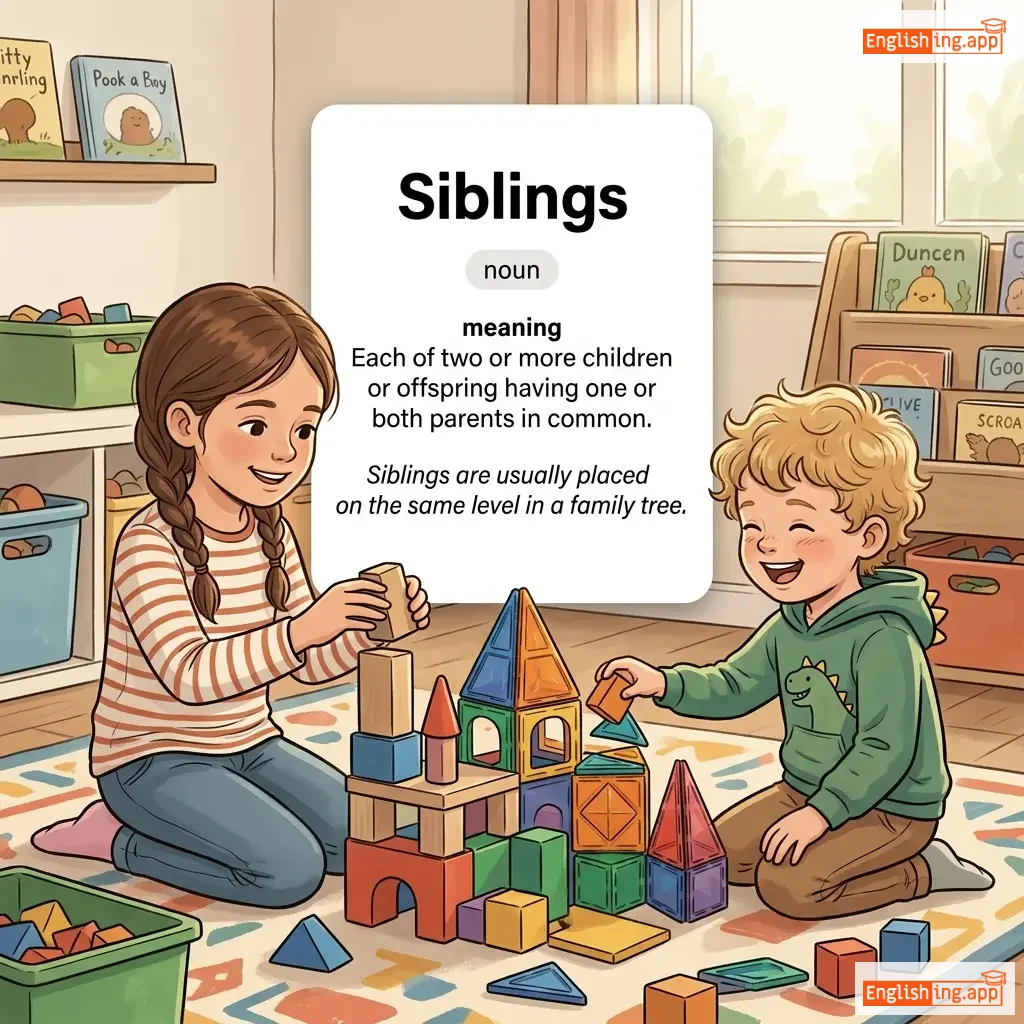
"У неё три брата и сестры, два брата и одна сестра." (U nee tree brata i sestry, dva brata i odna sestra.)
Siblings definition card — visual illustration of the meaning
noun
ˈsɪblɪŋz
братья и сестры (brat'ya i sestry)

Each of two or more children or offspring having one or both parents in common.

"Siblings are usually placed on the same level in a family tree."

"Братья и сестры обычно находятся на одном уровне в семейном дереве." (Brat'ya i sestry obychno nakhodyatsya na odnom urovne v semeynom dereve.)
adjective
/ˈsɪbɪlaɪn/
сибиллинский (sibillinskiy)

Prophetic, mysterious, or cryptic in meaning.

"The old woman gave a sibylline warning about the future."

"Старая женщина дала сибиллинское предупреждение о будущем." (Staraya zhenshchina dala sibillinskoe preduprezhdenie o budushchem.)
adjective
/sɪk/
больной (bolnoy)

feeling unwell or suffering from illness

"She stayed home because she was feeling sick."

"Она осталась дома, потому что чувствовала себя больной." (Ona ostalas doma potomu chto chuvstvovala sebya bolnoy)
noun
/ˈsɪk.əl/
серп (serp)

a tool with a curved metal blade and short handle used for cutting grain crops

"The farmer harvested wheat using a traditional sickle."

"Фермер собрал пшеницу с помощью традиционного серпа." (Fermyer sobral pshenitsu s pomoshch'yu traditsionnogo serpa.)
adjective
/ˈsɪk.li/
слабый; больной; бледный (slabyy)

weak and unhealthy; prone to illness; appearing weak or pale

"The sickly child needed extra care and attention."

"Больной ребенок нуждался в дополнительном уходе и внимании." (Bol'noy rebenok nuzhdalsya v dopolnitel'nom ukhode i vnimanii)
noun
/ˈsɪk.nəs/
болезнь; заболевание (bolezn'; zabolevanie)

the state of being ill; a disease or illness

"She took time off work due to sickness."

"Она взяла время от работы из-за болезни." (Ona vzyala vremya ot raboty iz-za bolezni.)
noun
/saɪd/
сторона (storona)

a position to the left or right of something

"The store is on the side of the road."

"Магазин находится сбоку от дороги." (Magazin nakhoditsya sboku ot dorogi.)
sideline definition card — visual illustration of the meaning
noun
/ˈsaɪd.laɪn/
второстепенная работа (vtorostepennaya rabota)

An activity done in addition to one's main job or area of work.

"The sideline discussions led to mutual understanding."

"Второстепенные обсуждения привели к взаимопониманию." (Vtorostepennyye obsuzhdeniya priveli k vzaimoponimaniyu.)
sideline discussions definition card — visual illustration of the meaning
noun
/ˈsaɪd.laɪn dɪˈskʌʃənz/
второстепенные обсуждения (vtorostepennye obsuzhdeniya)

Informal or secondary conversations that occur outside the main agenda of a formal meeting.

"Sideline discussions often lead to agreements."

"Второстепенные обсуждения часто приводят к соглашениям." (Vtorostepennye obsuzhdeniya chasto privodyat k soglasheniyam.)
adjective, adverb
/ˈsaɪdlɔːŋ/
косой взгляд (kosoy vzglyad)

Directed to the side; indirect, furtive, or not straightforward.

"She gave him a sidelong glance across the room."

"Она бросила на него косой взгляд через комнату." (Ona brosila na nego kosoy vzglyad cherez komnatu.)
sidereal definition card — visual illustration of the meaning
adjective
/saɪˈdɪəriəl/
сидериальный (siderial'nyy)

Relating to the stars or constellations; measured relative to the stars.

"Astronomers use sidereal time to track the positions of stars."

"Астрономы используют сидериальное время для отслеживания положения звёзд." (Astronomy ispol'zuyut siderial'noe vremya dlya otslezhivaniya polozheniya zvyozd.)
verb
/ˈsaɪdˌstɛp/
уклоняться (uklonyatsya)

To avoid something by stepping aside; to evade a problem or question indirectly.

"The politician tried to sidestep the difficult question."

"Политик попытался уклониться от сложного вопроса." (Politik popytalsya uklonit'sya ot slozhnogo voprosa.)
verb
/ˈsaɪdˌtræk/
отвлекать (otvlekat)

To distract from the main subject or activity.

"She was sidetracked by an unexpected phone call."

"Она была отвлечена неожиданным телефонным звонком." (Ona byla otvlechena neozhidannym telefonnyhm zvonkom.)
noun
/ˈsaɪdˌwɔːk/
тротуар (trotuar)

a paved path for pedestrians at the side of a street.

"Children were playing on the sidewalk."

"Дети играли на тротуаре." (Deti igrali na trotuare.)
noun
/siːdʒ/
осада (osada)

A military operation in which a place is surrounded to force its surrender.

"The castle fell after a long siege."

"Замок пал после долгой осады." (Zamok pal posle dolgoy osady.)
Sierra Club definition card — visual illustration of the meaning
noun
/siˈɛrə klʌb/
Сьерра Клуб (Sierra Klub)

An American environmental organization founded in 1892 by John Muir, focused on promoting conservation of the natural environment by influencing public policy decisions.

"John Muir founded the Sierra Club in 1892 to protect wild areas."

"Джон Мьюир основал Сьерра Клуб в 1892 году для защиты дикой природы." (Dzhon Myuhr osnoval Sierra Klub v 1892 godu dlya zashchity dikoy prirody.)
noun
/sɪv/
сито (sito)

a utensil with a mesh or perforated bottom, used for straining or sifting

"She used a sieve to strain the pasta."

"Она использовала сито, чтобы процеживать пасту." (Ona ispol'zovala sito, chtoby protsedzhivat' pastu.)
noun
/siːdʒ/
осада (osada)

a military operation to capture a place by surrounding it and cutting off supplies

"The siege of the castle lasted for three months."

"Осадка замка продолжалась три месяца." (Osadka zamka prodolzhalsya tree mesyatsa.)
verb
/sɪft/
просеять / внимательно осматривать (proseyat' / vnimatel'no osmatrivat')

to separate or sort through carefully, often using a sieve or by examining closely

"She sifted the flour before adding it to the cake mixture."

"Она просеяла муку, прежде чем добавить ее в тесто для торта." (Ona prosejala muku, prezhde chem dobavit' yeyo v testo dlya torta.)
verb
/saɪ/
вздыхать (vzdykhat')

to let out a long, deep breath as an expression of tiredness, relief, or sadness

"She sighed with relief when she heard the good news."

"Она вздохнула с облегчением, когда услышала хорошие новости." (Ona vzdokhnula s oblegcheniem, kogda uslyshala khoroshie novosti.)
noun
/saɪt/
зрение (zrenie)

the ability to see or something that is seen

"The sight of the sunset took her breath away."

"Вид солнца унес ее дыхание." (Vid solnca unes yeje dykhanie.)
👁️‍🗨️

Sightless (saytləs)

adjective
/ˈsaɪt.ləs/
слепой; без зрения (slepoi; bez zreniya)

unable to see; blind; lacking vision

"The sightless man navigated the street with his guide dog."

"Слепой человек шел по улице с помощью своей собаки-проводника." (Slepoy chelovek shel po ulitse s pomoshch'yu svoey sobaki-provodnika)
sign definition card — visual illustration of the meaning
noun
/saɪn/
знак (znak)

a symbol, mark, or gesture that conveys information or instructions

"The sign on the door said 'Closed for lunch'."

"Знак на двери гласил 'Закрыто на обед'." (Znak na dveri glasila 'Zakryto na obed'.)
noun/verb
/ˈsɪɡnəl/
сигнал (signal)

a gesture, sound, or action used to convey information or instructions

"The driver gave a hand signal before turning left."
"Водитель подал знак рукой перед тем, как повернуть налево." (Vodytel' podal znak rukoy pered tem, kak povernut' nalevo.)
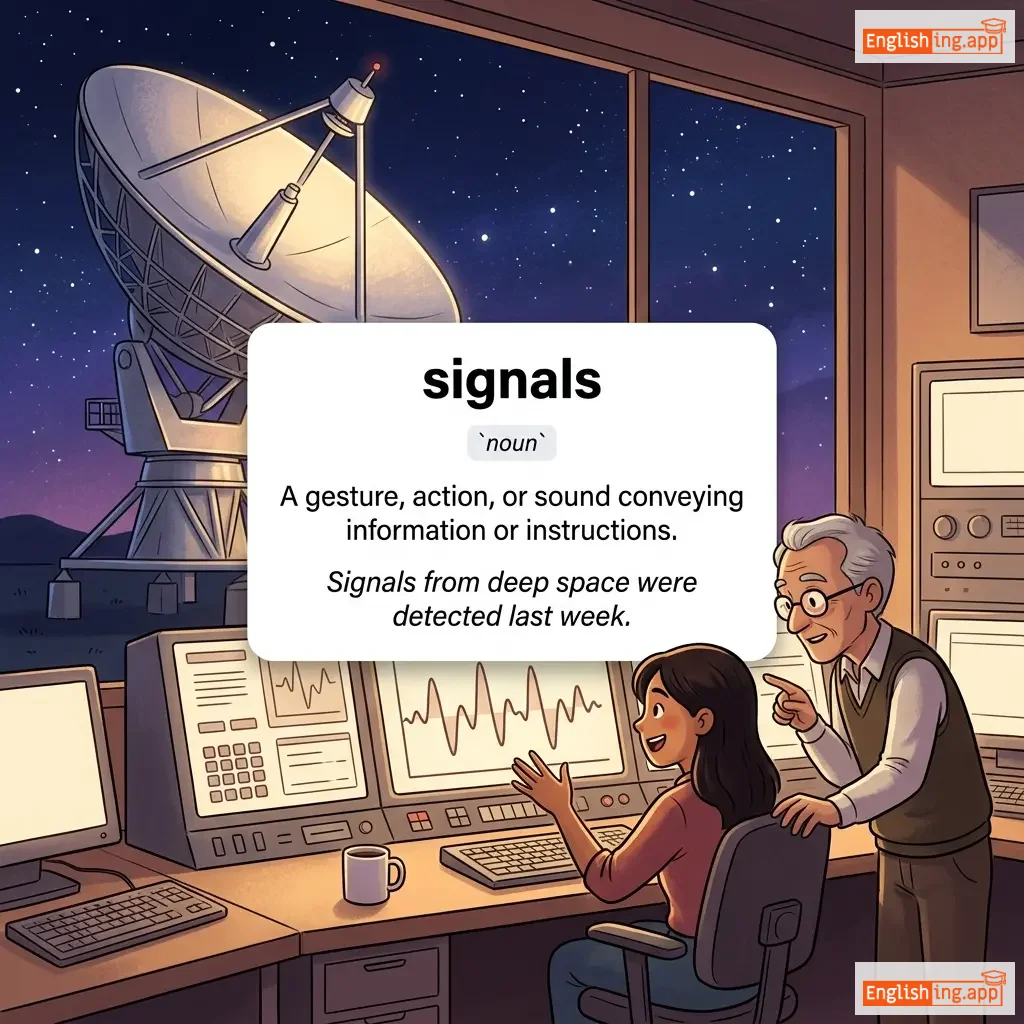
signals definition card — visual illustration of the meaning
noun
/ˈsɪɡ.nəlz/
сигналы (signaly)

A gesture, action, or sound conveying information or instructions.

"Signals from deep space were detected last week."

"Сигналы из глубокого космоса были зафиксированы на прошлой неделе." (Signaly iz glubokogo kosmosa byli zafiksirovany na proshloy nedele.)
noun
/ˈsɪɡ.nə.tʃər/
подпись (podpis)

a person's name written by themselves, often as a form of identification or authorization

"She signed the contract with her elegant signature."

"Она подписала контракт своим элегантным автографом." (Ona podpisala kontrakt svoim elegantnym avtografom.)
noun
/sɪɡˈnɪfɪkəns/
значимость (znachimost)

the quality of being important, meaningful, or worthy of attention

"The significance of the discovery was recognized worldwide."

"Значимость открытия была признана по всему миру." (Znachimost' otkrytiya byla priznata po vsemu miru.)
significant definition card — visual illustration of the meaning
adjective
/sɪɡˈnɪfɪkənt/
значительный (znachitelnyy)

important, meaningful, or having a noticeable effect

"The company made a significant investment in new technology."

"Компания сделала значительные инвестиции в новые технологии." (Kompaniya sdelala znachitel'nyye investitsii v novyye tekhnologii.)
adverb
/sɪɡˈnɪfɪkəntli/
значительно (znachitel'no)

in a way that is large or important enough to have an effect

"The economy has significantly improved over the last decade."

"Экономика значительно улучшилась за последние десять лет." (Ekonomika znachitel'no uluchshilas' za poslednie desyat' let.)
noun
/ˌsɪɡnɪfɪˈkeɪʃən/
значение (znacheniye)

the meaning or sense conveyed by a word, action, or symbol

"The signification of the gesture was misunderstood."
"Значение жеста было понято неверно." (Znachenie zhesta bylo ponyato neverno.)
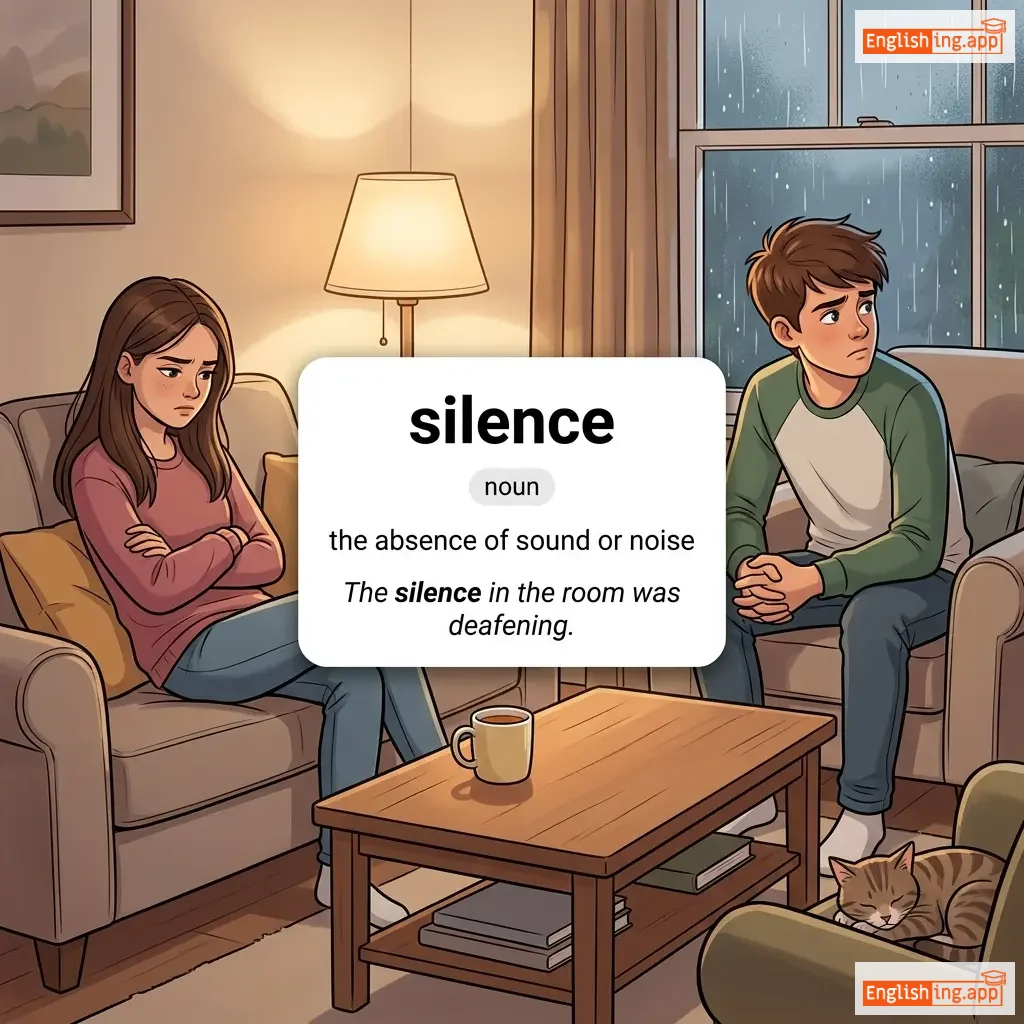
silence definition card — visual illustration of the meaning
noun
/ˈsaɪləns/
тишина (tishina)

the absence of sound or noise

"The silence in the room was deafening."

"Тишина в комнате была оглушающей." (Tishina v komnate byla oglushayushchey.)
adjective
/ˈsaɪlənt/
тихий (tikhiy)

not speaking or making noise

"The room was silent as everyone waited for the announcement."

"Комната была тихой, пока все ждали объявления." (Komnata byla tikhoy, poka vse zhdyali ob'yavleniya.)
noun
/sɪlk/
шелк (shelk)

a fine, smooth fabric made from the threads produced by silkworms

"The dress was made of pure silk."

"Платье было сделано из чистого шелка." (Plat'ye bylo sdelano iz chistogo shelka.)
noun
/sɪlk klɔːθ/
шелковая ткань (shelkovaya tkán)

fabric made from natural fibers produced by silkworms

"The bride wore a beautiful dress made of silk cloth."

"Невеста была в красивом платье из шелкового материала." (Nevesta byla v krasivom plat'ye iz shelkovoy tkan'yi.)
noun
/ˈsɪlk.wɜːrm/
шелкопряд (shelkopryad)

the caterpillar of a moth that produces silk fibers used to make silk fabric

"Silkworms feed on mulberry leaves to produce silk."

"Шелкопряды питаются листьями тутового дерева, чтобы производить шелк." (Shelkopryady pitayutsya list'yami tutovogo dereva, chtoby proizvodit shelk.)