Словари

Словарь английского языка | Значения слов, определения и примеры

adjective
/ˈrɪdʒɪd/
жесткий (zhestkiy)

stiff, unbending, or strictly inflexible

"The teacher had a rigid set of rules for the class."

"У преподавателя были жесткие правила для класса." (U prepodavatelya byli zhestkiye pravila dlya klassa.)
noun
/rɪˈdʒɪdəti/
жесткость (zhestkost)

inability to bend or be forced out of shape; unwillingness to change or compromise

"The rigidity of the old system prevented any innovation."

"Жесткость старой системы препятствовала любым инновациям." (Zhestkost' staroy sistemy prepyatstvovala lyubym innovatsiyam.)
adverb
/ˈrɪdʒɪdli/
жестко; без компромиссов (zhestko; bez kompromissov)

in a strict, inflexible manner; without compromise

"The rules are rigidly enforced in this institution."

"Правила жестко применяются в этой организации." (Pravila zhestko primenyayutsya v etoy organizatsii.)
noun
/ˈrɪɡməˌroʊl/
сложность (slozhnost)

a long, complicated, and confusing process or story

"Getting a visa was such a rigmarole of paperwork and interviews."

"Получение визы было настоящим замешательством из бумаги и интервью." (Polucheniye vizi bylo nastoyashchim zameshatel'stvom iz bumagi i intervyu.)
noun
/ˈrɪɡər/
строгость (strohost)

strictness, severity, or demanding conditions

"The training was carried out with great rigor."

"Обучение проводилось с большой строгостью." (Obucheniye provodilys' s bol'shoy strohost'yu.)
rigorous definition card — visual illustration of the meaning
adjective
/ˈrɪɡərəs/
строгий (strogiy)

extremely thorough, strict, or demanding

"He followed a rigorous fitness program."

"Он следовал строгой фитнес-программе." (On sleduval strogoy fitness-programme.)
😠

rile

verb
/raɪl/

to irritate or annoy someone

"His careless comments really riled her."

noun
/rɪm/
край (kraj)

the outer edge or border of a circular object

"The coffee cup had a chip on its rim."

"У чашки с кофе был скол на краю." (U chashki s kofe byl skol na krayu.)
noun
/raɪm/
инашение (inashenije)

frost formed on cold surfaces by freezing water vapor

"The trees were covered with a white rime after the cold night."
"Деревья были покрыты белым инеем после холодной ночи." (Derev'ya byli pokryty belym inem posle kholodnoy nochi.)
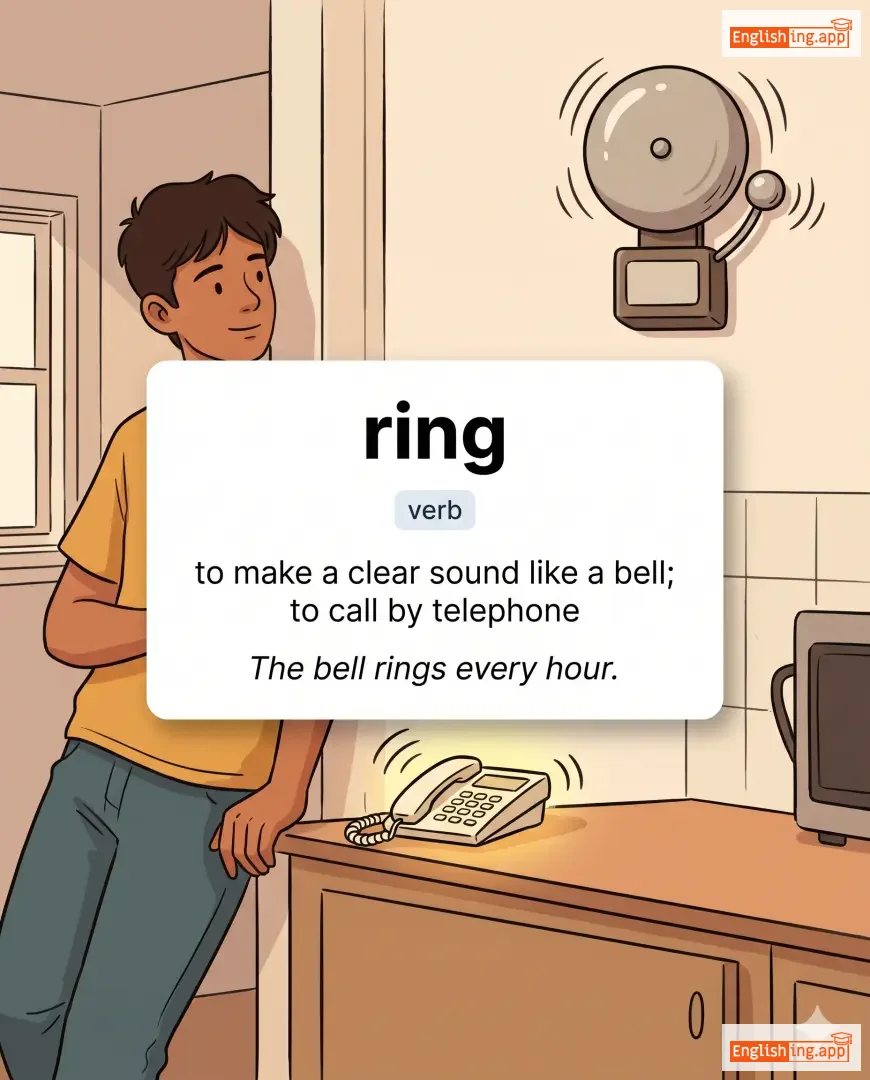
ring definition card — visual illustration of the meaning
noun
/rɪŋ/
кольцо (kol'tso)

a small circular band, typically worn on the finger as jewelry or a symbol

"She received a beautiful engagement ring."

"Она получила прекрасное обручальное кольцо." (Ona poluchila prekrasnoe obruchal'noe kol'tso.)
noun
/ˈraɪət/
беспорядки (besporyadki)

a violent disturbance by a crowd

"The protest turned into a violent riot."

"Протест превратился в насильственные беспорядки." (Protest prevratilsya v nasilstvennye besporyadki.)
verb
/rɪp/
рвать (rvat)

to tear something quickly or violently

"He accidentally ripped his shirt on the fence."
"Он случайно порвал свою рубашку на заборе." (On sluchayno porval svoyu rubashku na zabore.)
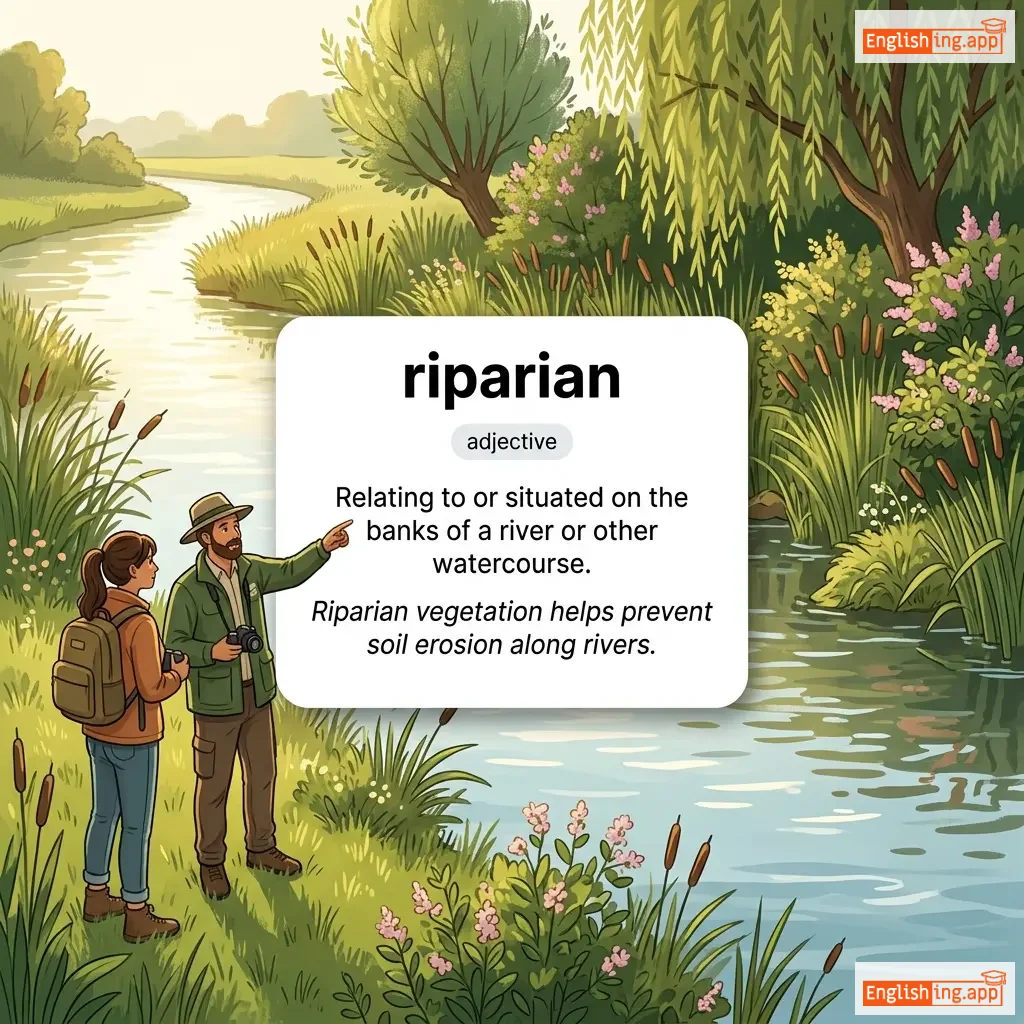
riparian definition card — visual illustration of the meaning
adjective
/raɪˈpɛə.ri.ən/
относящийся к или расположенный на берегах реки или другого водоема (otnosyashchijsya k ili raspolozhennyj na beregakh reki ili drugogo vodoema)

Relating to or situated on the banks of a river or other watercourse.

"Riparian vegetation helps prevent soil erosion along rivers."

"Рипарская растительность помогает предотвращать эрозию почвы вдоль рек." (Riparskaya rastenitel'nost' pomogayet predotvrashchat' eroziyu pochvy vdol' rek.)
adjective
/raɪp/
спелый; готовый к употреблению (spelyy; gotovyy k upotrebleniyu)

fully developed and ready to eat; mature; ready for action or use

"The bananas are ripe and ready to eat."

"Бананы спелые и готовы к употреблению." (Banany spelyye i gotovy k upotrebleniyu.)
verb
/ˈraɪpən/
счастье (schastye)

to become or make something ready to eat or fully developed

"The bananas ripened quickly in the warm weather."
"Она не могла скрыть своего счастья, когда получила награду." (Ona ne mogla skryt' svoego schast'ya, kogda poluchila nagradu.)
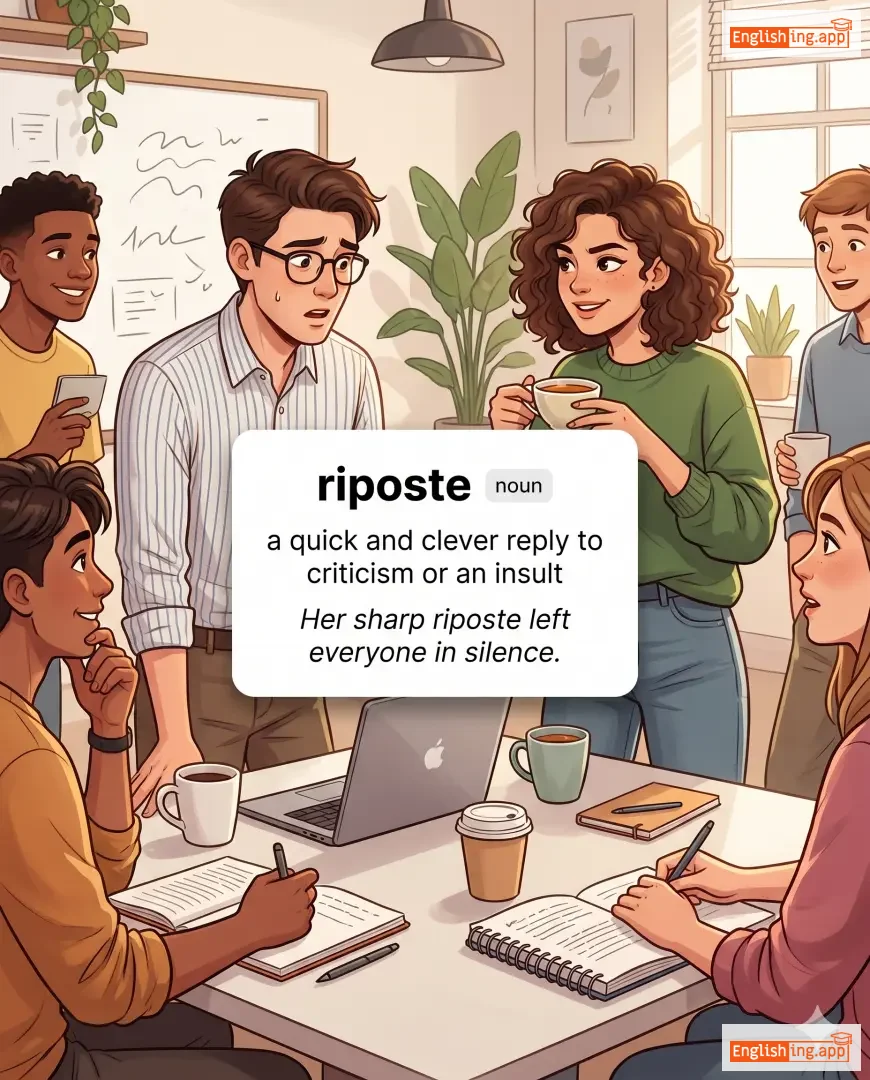
riposte definition card — visual illustration of the meaning
noun
/rɪˈpoʊst/
острая реплика (ostrya replika)

a quick and clever reply to criticism or an insult

"Her sharp riposte left everyone in silence."

"Ее острая реплика оставила всех в молчании." (Eyo ostryaya replika ostavila vsekh v molchanii.)
verb
/ˈrɪp.l̩/
колебание (kolebaniye)

to form or cause small waves on the surface of water or spread through like waves

"The wind rippled the surface of the pond."

"Ветер заставил поверхность пруда колебаться." (Veter zastavil poverkhnost' pruda kolebat'sya.)
noun
/ˈrɪp.lɪt/
маленькая волна (malenkaya volna)

a small or tiny ripple

"Tiny ripplets appeared on the lake as the fish moved."

"Маленькие волны появились на озере, когда рыба двигалась." (Malen'kiye volny poyavilis' na ozyere, kogda ryba dvigalas'.)
rise definition card — visual illustration of the meaning
🌅

rise

verb
/raɪz/

to move upwards or increase in level or amount

"The sun rises in the east every morning."

adjective
/ˈrɪz.ə.bəl/
смешной (smeshnoy)

so absurd or ridiculous that it deserves to be laughed at

"The idea of flying pigs is completely risible."
"Идея летающих свиней совершенно смешная." (Ideya letayushchikh sviney sovershenno smeshnaya.)
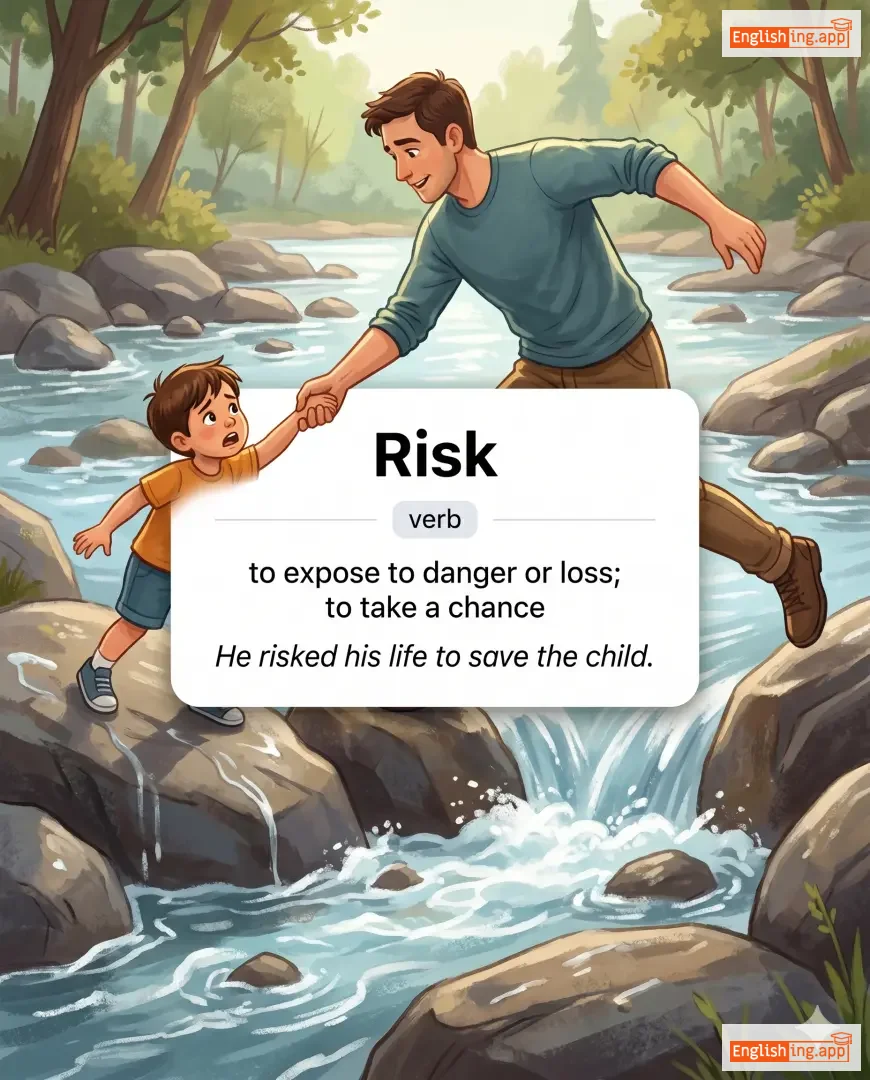
Risk definition card — visual illustration of the meaning
noun
/rɪsk/
риск (risk)

the possibility of harm, loss, or danger

"There is a risk of rain this afternoon."
"Есть риск дождя этим днем." (Yest' risk dozhdya etim dnyom.)
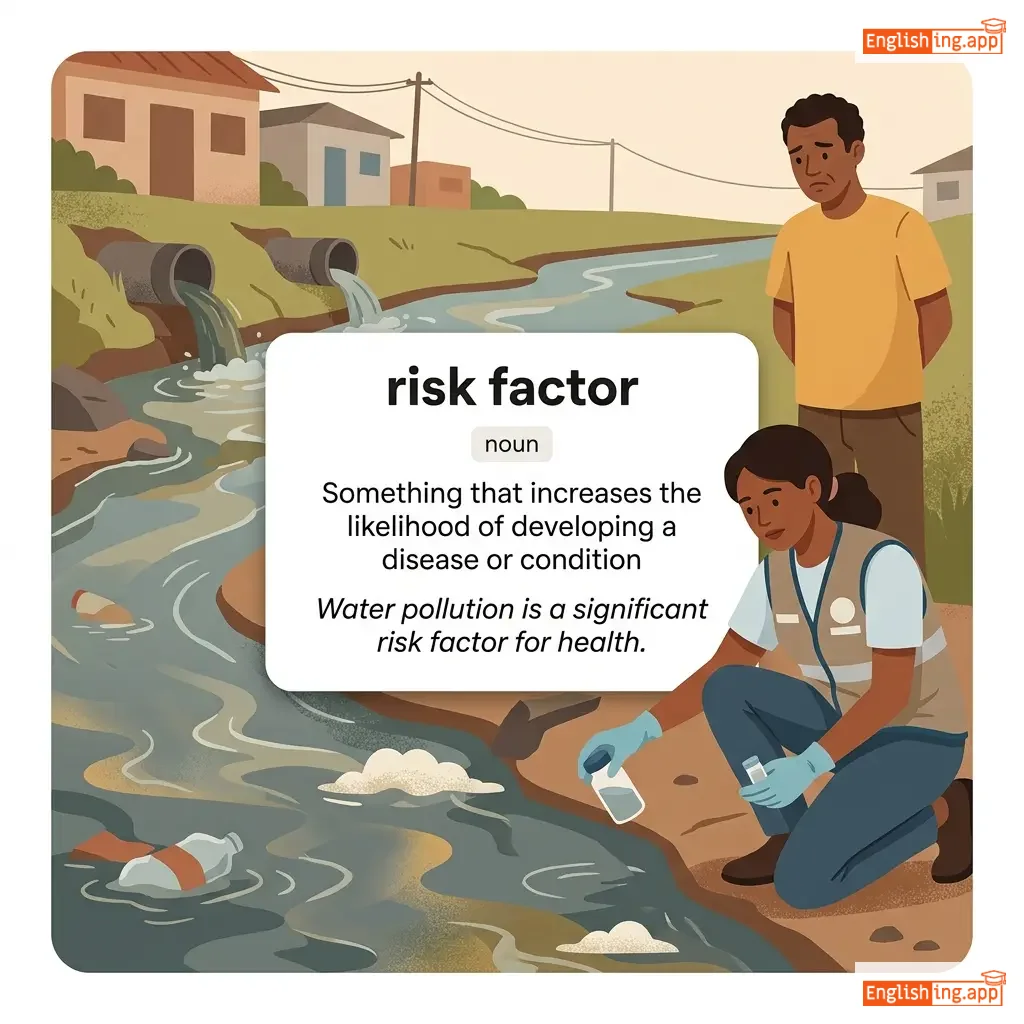
risk factor definition card — visual illustration of the meaning
noun
rɪsk ˈfæktər
фактор риска (faktor riska)

Something that increases the likelihood of developing a disease or condition

"Water pollution is a significant risk factor for health."

"Загрязнение воды является значительным фактором риска для здоровья." (Zagryaznenie vody yavyayetsya znachitim faktorem riska dlya zdorov'ya.)
risk-adjusted definition card — visual illustration of the meaning
adjective
rɪsk-ədˈʤɛstɪd
скорректировано по риску (skorrektirovano po risku)

Modified or calibrated to account for risk factors in investment returns.

"Risk-adjusted returns consider both potential profit and loss."

"Риск-скорректированная доходность учитывает как потенциальную прибыль, так и убытки." (Risk-skorrektivannaya dokhodnost' uzhityvayet kak potentsial'nuyu pribyl', tak i ubytki.)
⚠️

risky

adjective
/ˈrɪski/

Involving the possibility of danger, harm, or loss

"Investing in that startup is risky but could bring high rewards."

noun
/raɪt/
ритуал (ritual)

a religious or ceremonial act

"The wedding rite was performed with great solemnity."

"Свадебный ритуал был выполнен с большой торжественностью." (Svadebnyy ritual byl vypolnen s bol'shoy torzhestvennost'yu.)
🕯️

Ritual

noun
/ˈrɪtʃ.u.əl/
счастье (schast'ye)

a set of fixed actions and sometimes words performed regularly, especially as part of a ceremony or religion

"Morning coffee has become a daily ritual for him."

"Она не могла скрыть своего счастья, когда получила приз." (Ona ne mogla skryt' svoego schast'ya, kogda poluchila priz.)
noun, verb
/ˈraɪvəl/
соперник (sopernik)

a person or thing competing with another for the same goal or superiority in the same field

"The two companies are fierce rivals in the smartphone market."

"Две компании являются ожесточёнными конкурентами на рынке смартфонов." (Dve kompanii yavyayutsya ozhestochennymi konkurentami na rynke smartfonov.)
noun
/ˈraɪvəlri/
соперничество; конкуренция (sopernichestvo; konkurentsiya)

competition for the same objective or for superiority in the same field; the state of being rivals

"The rivalry between the two teams made the match exciting."

"Соперничество между двумя командами сделало матч захватывающим." (Sopernichestvo mezhdu dvumya komandami sdelalo match zakhvatyvayushchim.)
verb
/raɪv/
рвать (rvat)

to tear apart violently

"The earthquake rived the ground in several places."

"Землетрясение разорвало землю в нескольких местах." (Zemletryaseniye razorvalo zemlyu v neskol'kikh mestakh.)
noun
/ˈrɪvər/
река (reka)

a large, flowing body of water

"The river flows through the city."

"Река течет через город." (Reka techyot cherez gorod.)
verb
/ˈrɪvɪt/
закрепить с помощью заклепки / привлечь внимание (zakreplit' s pomoshch'yu zaklepki / privlech' vnimanie)

to fasten or secure with a rivet; to hold someone’s attention firmly

"The craftsman riveted the metal plates together."

"Ремесленник закрепил металлические пластины с помощью заклепок." (Remeslennik zakrepil metalliskie plastiny s pomoshch'yu zaklepok.)
adjective
/ˈrɪvɪtɪŋ/
завораживающий (zavorazhivayushchiy)

extremely interesting; holding the complete attention

"The movie was so riveting that nobody looked away."

"Фильм был настолько завораживающим, что никто не отвел взгляд." (Film byl nastol'ko zavorazhivayushchim, chto nikto ne otvel vzglyad.)
noun
/ˈrɪvjʊlət/
ручей (ruchey)

a small stream of water; a tiny brook

"A rivulet ran down the hillside after the rain."

"Ручей спустился с холма после дождя." (Ruchey spustilsya s kholma posle dozhdya.)
noun
/roʊd/
дорога (doroga)

a wide way leading from one place to another

"We drove along the road to the village."
"Мы ехали по дороге в деревню." (My yekhali po doroge v derevnyu.)
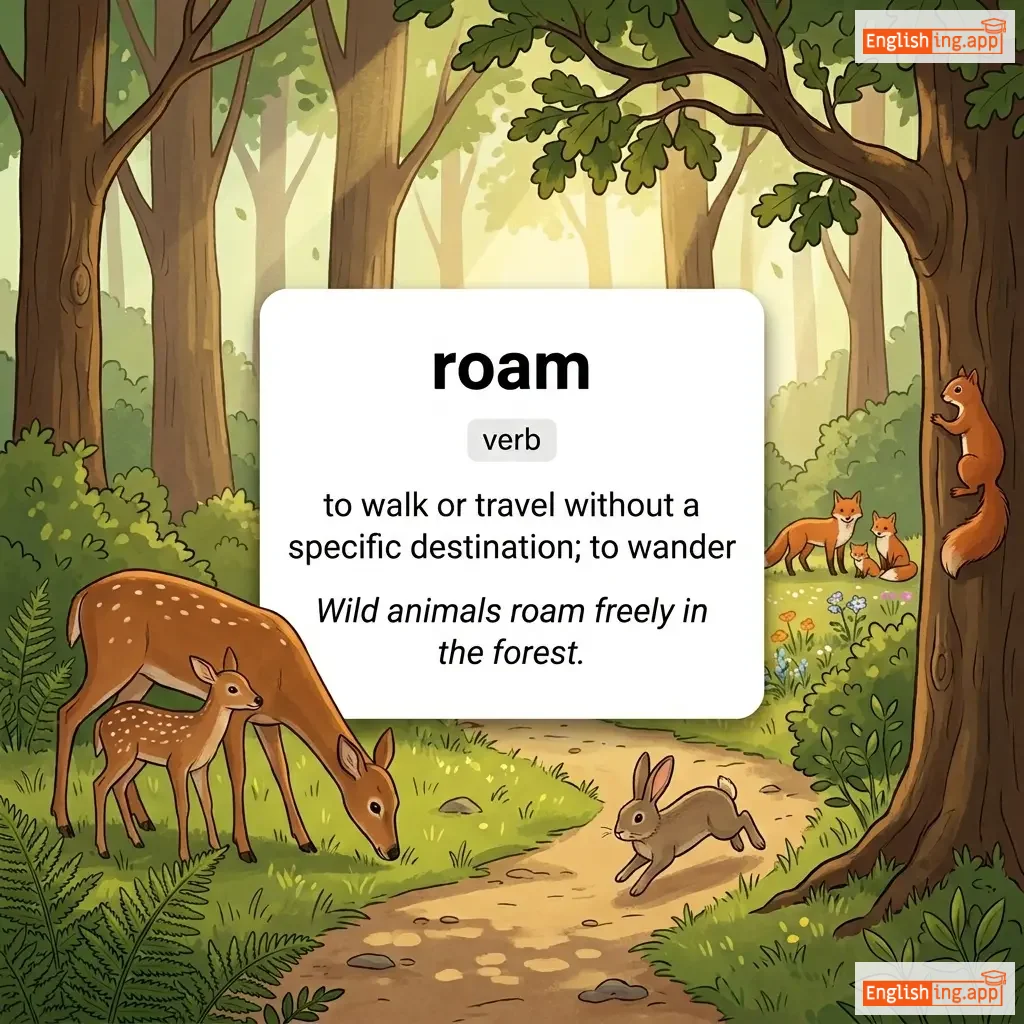
roam definition card — visual illustration of the meaning
verb
/roʊm/
блуждать (bluzhdat')

to walk or travel without a specific destination; to wander

"Wild animals roam freely in the forest."

"Дикие животные бродят по лесу свободно." (Dikie zhivotnye brodyat po lesu svobodno.)
adjective
/roʊn/
роан (roan)

denoting an animal, especially a horse, having a coat of mixed colors, typically reddish-brown and white

"The rider mounted a roan horse with a speckled coat."

"Наездник вскочил на лошадь роан с пятнистым окрасом." (Naezdnik vskochil na loshad' roan s pyatnistym okrasom.)
noun
/roʊst/
жаркое (zharkoe)

Meat cooked by dry heat in an oven or over an open fire

"The Sunday roast was perfectly cooked and very tender."

"Воскресный рост был идеально приготовлен и очень нежный." (Voskresnyy rost byl ideal'no prigotovlen i ochen' nezhnyy)
noun
/ˈroʊstɪd miːt/
жареное мясо (zharenoye myaso)

meat cooked by dry heat in an oven or over fire

"The roasted meat was perfectly seasoned and tender."

"Жареное мясо было идеально приправлено и мягким." (Zharenoye myaso bylo ideal'no priravleno i myagkim.)
verb
/rɒb/
грабить (grabit)

to take something by force or threat, especially from a person or place

"He was caught trying to rob the bank."

"Его поймали, когда он пытался ограбить банк." (Ego poymali, kogda on pytalsya ograbit' bank.)
noun
/ˈrɒbər/
грабитель (grabitel)

a person who steals property from others, often using force or threat

"The robber was caught after a quick police chase."

"Грабителя поймали после быстрой полицейской погони." (Grabitelya poymali posle bystroy politseyskoy pogoni)
noun
/ˈrɒbəɹi/
ограбление (ograblenie)

the crime of stealing from someone or somewhere using force or threat

"The police are investigating the robbery at the local store."

"Полиция расследует ограбление в местном магазине." (Politsiya rassleduyet ograblenie v mestnom magazine.)
noun
/ˈroʊbɒt/
робот (robot)

a machine capable of carrying out a complex series of actions automatically

"The factory uses robots to assemble cars efficiently."
"Завод использует роботов для эффективной сборки автомобилей." (Zavod ispol'zuyet robotov dlya effektivnoy sborki avtomobiley.)
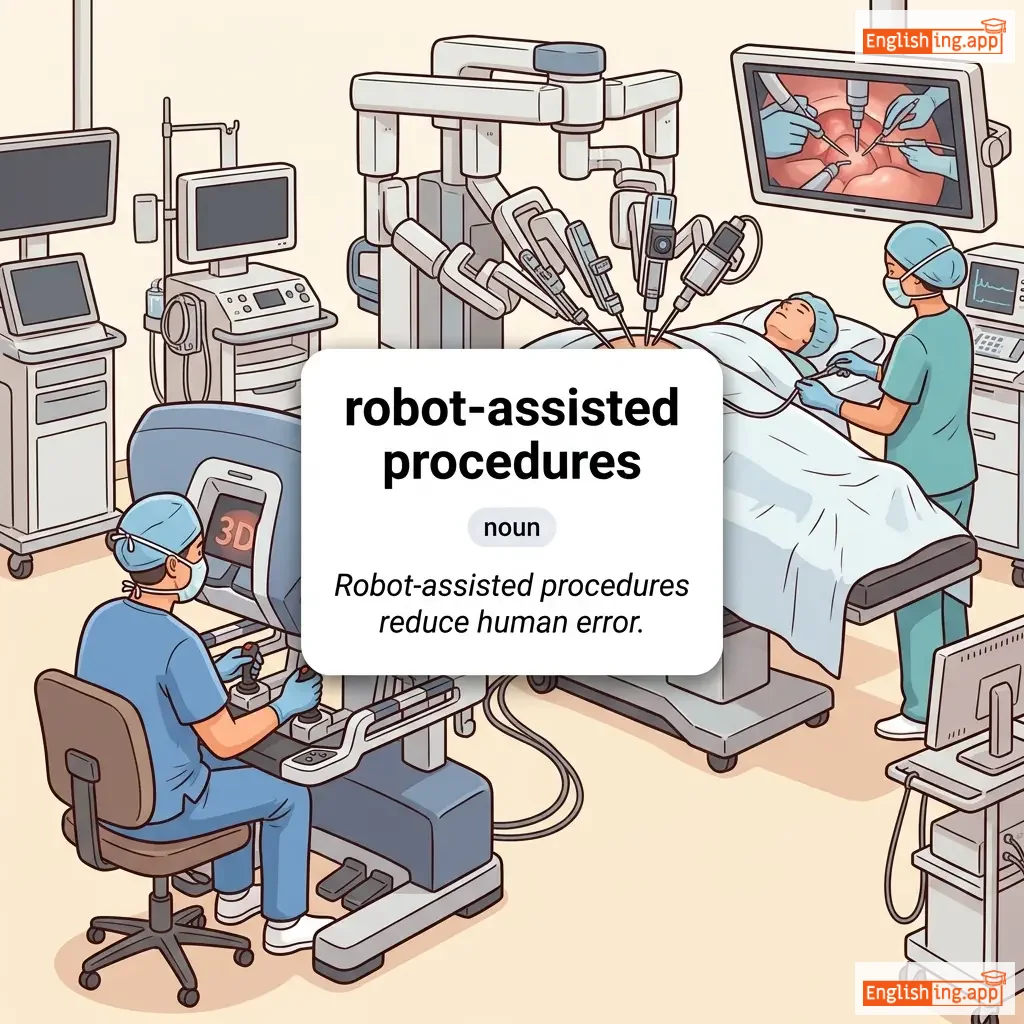
robot-assisted procedures definition card — visual illustration of the meaning
noun
/ˈrəʊ.bɒt əˈsɪs.tɪd prəˈsiː.dʒərz/
роботизированные процедуры (robotizirovannye protsedury)

Medical operations performed with the help of robotic systems to enhance precision and control.

"Robot-assisted procedures reduce human error."
"Роботизированные процедуры снижают человеческие ошибки." (Robotizirovannye protsedury snizhayut chelovecheskie oshibki.)
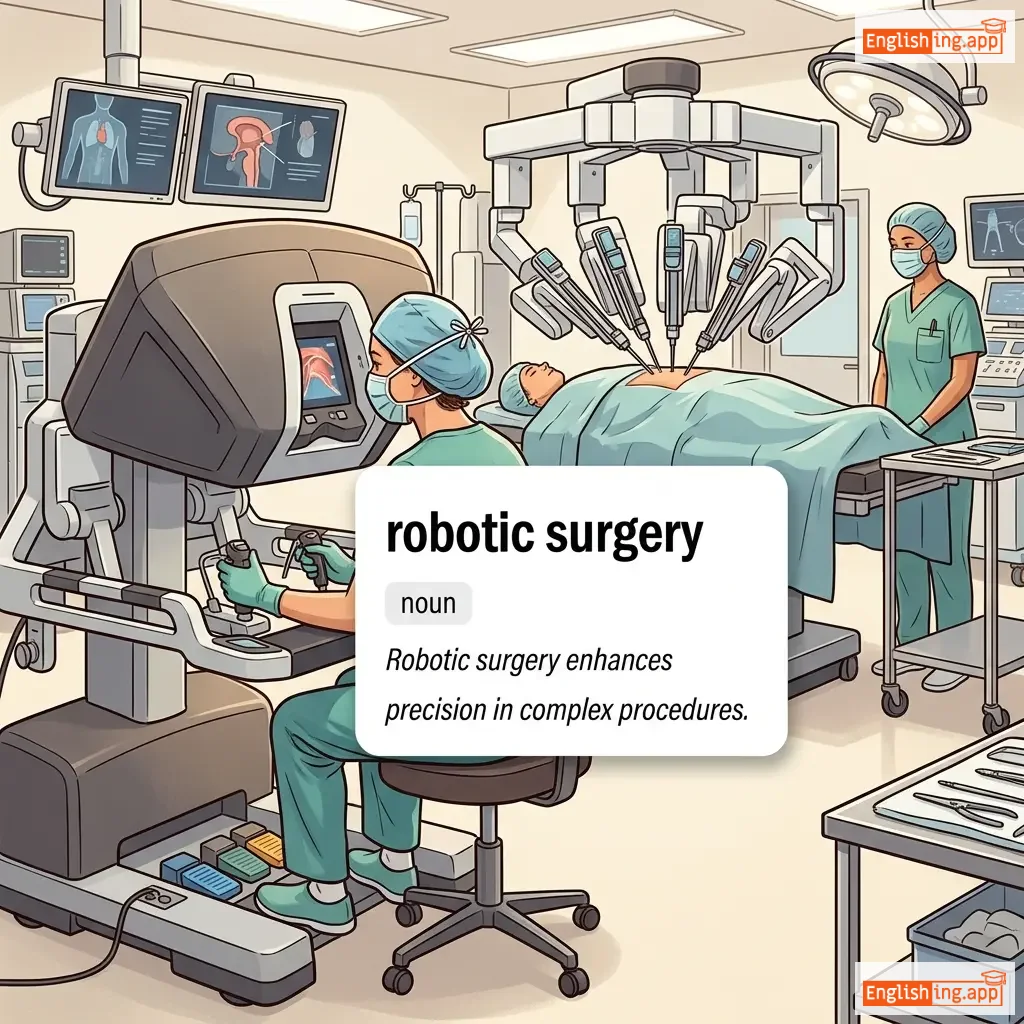
robotic surgery definition card — visual illustration of the meaning
noun
/rəʊˈbɒt.ɪk ˈsɜː.dʒər.i/
роботизированная хирургия (robotizirovannaya khirurgiya)

Surgery performed with the assistance of robotic systems to enhance precision and reduce invasiveness.

"Robotic surgery enhances precision in complex procedures."
"Роботизированная хирургия повышает точность в сложных процедурах." (Robotizirovannaya khirurgiya povyshaet tochnost' v slozhnykh protsedurakh.)
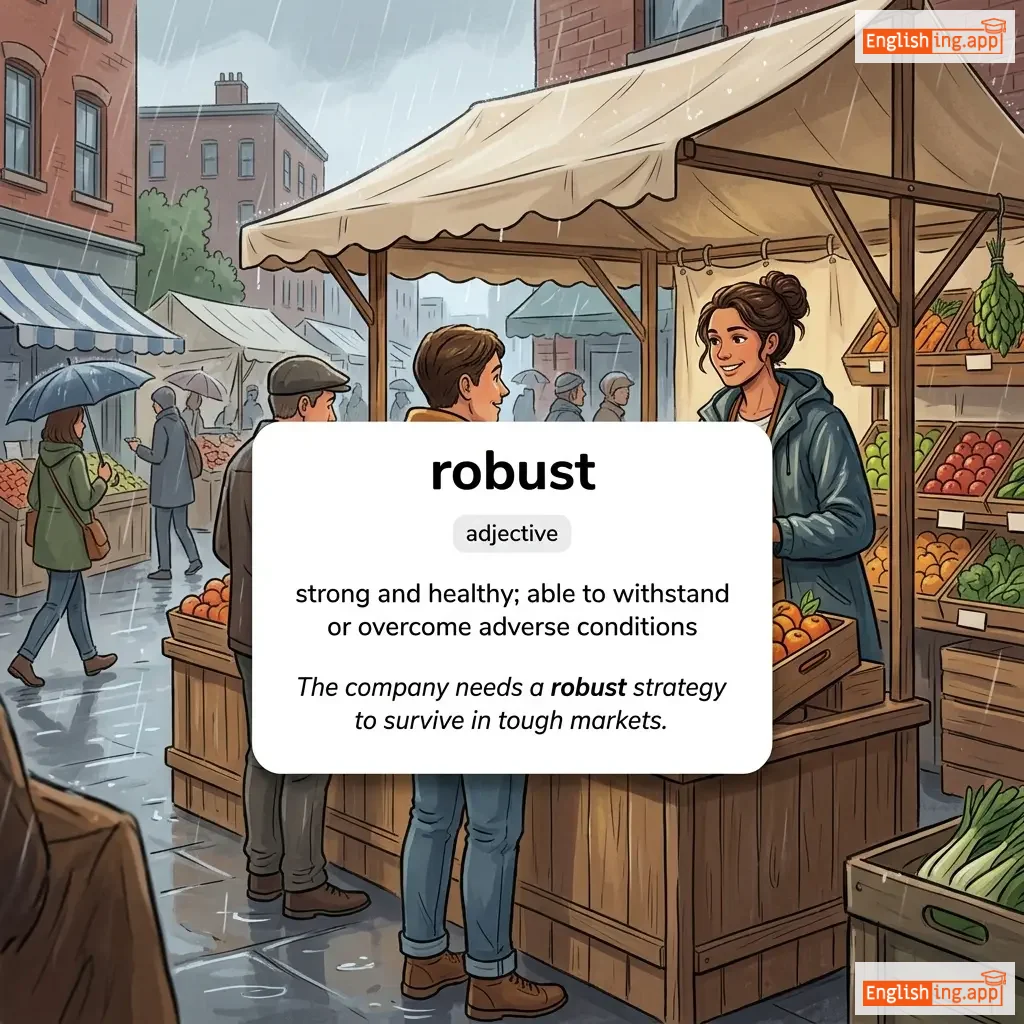
robust definition card — visual illustration of the meaning
adjective
/roʊˈbʌst/
робуст (robust)

strong and healthy; able to withstand or overcome adverse conditions

"The company needs a robust strategy to survive in tough markets."

"Компания нуждается в прочной стратегии, чтобы выжить на трудных рынках." (Kompaniya nuzhdaetsya v prochnoy strategii, chtoby vyzhit' na trudnykh rynkakh.)
noun
/rɒk/
скала (skala)

a large, solid piece of mineral matter

"The mountain was made of solid rock."

"Гора была сделана из твердой скалы." (Gora byla sdelana iz tverdoj skaly.)
noun
/rɑk sɔlt/
каменная соль (kamennaya sol)

natural salt crystals formed from evaporated ancient seas; unrefined salt

"Rock salt is considered healthier than table salt."

"Каменная соль считается более полезной, чем поваренная соль." (Kamennaya sol schitayetsya boleye poleznoy, chem povaryennaya sol.)
noun, verb
/ˈrɒkɪt/
счастье (schastye)

a missile or vehicle propelled by a rocket engine; to increase or move very quickly

"The company’s profits rocketed after the new product launch."

"Она не могла скрыть свое счастье, когда получила награду." (Ona ne mogla skryt' svoe schast'ye, kogda poluchila nagradu.)
adjective
/ˈrɑː.ki/
каменистый; нестабильный; трудный (kamenistyy; nestabil'nyy; trudnyy)

full of rocks; unsteady; difficult

"The rocky path made hiking difficult for the tourists."
"Каменистая тропа сделала поход сложным для туристов." (Kamenistaya tropa sdelala pokhod slozhnym dlya turistsov.)
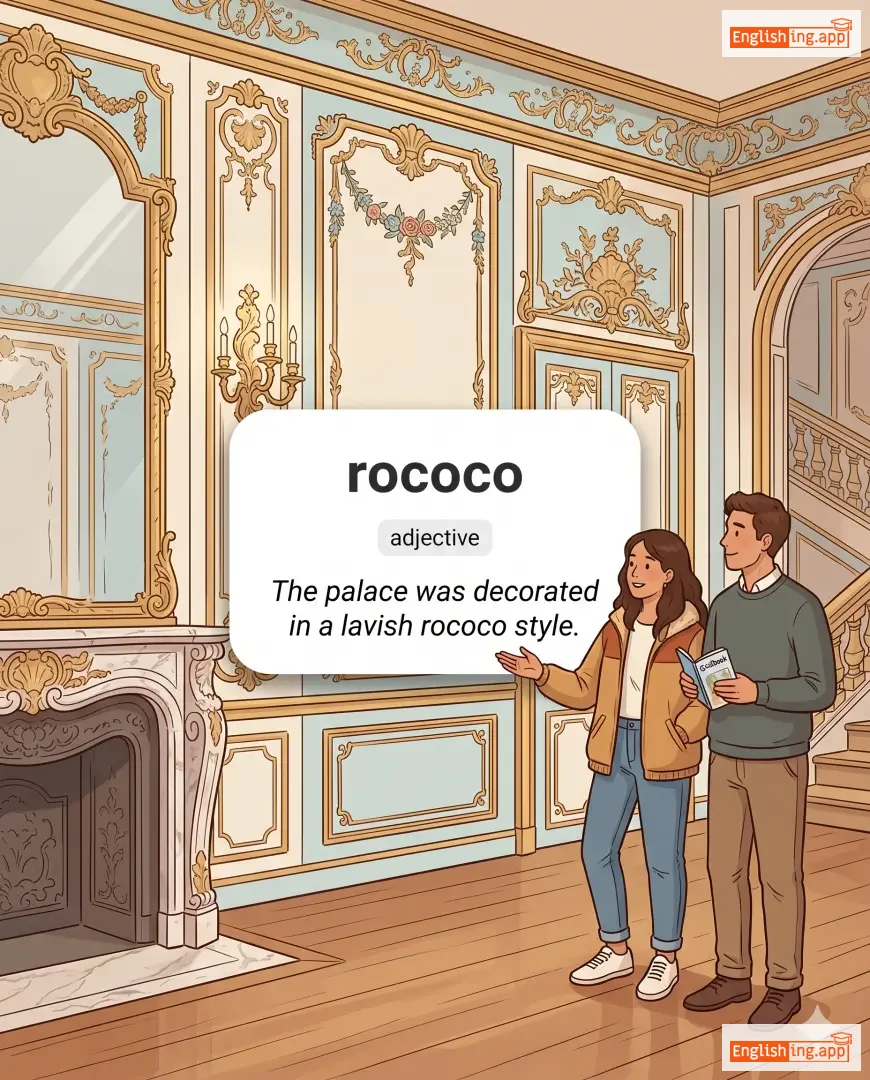
rococo definition card — visual illustration of the meaning
adjective
/rəˈkoʊkoʊ/
рококо (rococo)

characterized by ornate detail and elaborate decoration, especially in art, architecture, and design

"The palace was decorated in a lavish rococo style."

"Дворец был украшен в роскошном стиле рококо." (Dvorets byl ukrashchen v roskoshnom stile rokoko.)