Словари

Словарь английского языка | Значения слов, определения и примеры

noun
/ˈrɛnəˌsɑːns/
ренессанс (renessans)

a revival of art, culture, or learning; a period of renewed interest and growth

"The city experienced a cultural renaissance during the 1990s."

"Город пережил культурный ренессанс в 1990-е годы." (Gorod perezhil kul'turnyi renessans v 1990-e gody.)
verb
/rɛnd/
разрывать (razryvat)

to tear something apart violently or forcefully

"The explosion rent the air with a deafening noise."
"Взрыв разорвал воздух оглушающим шумом." (Vzryv razorval vozdukh oglushayushchim shumom.)
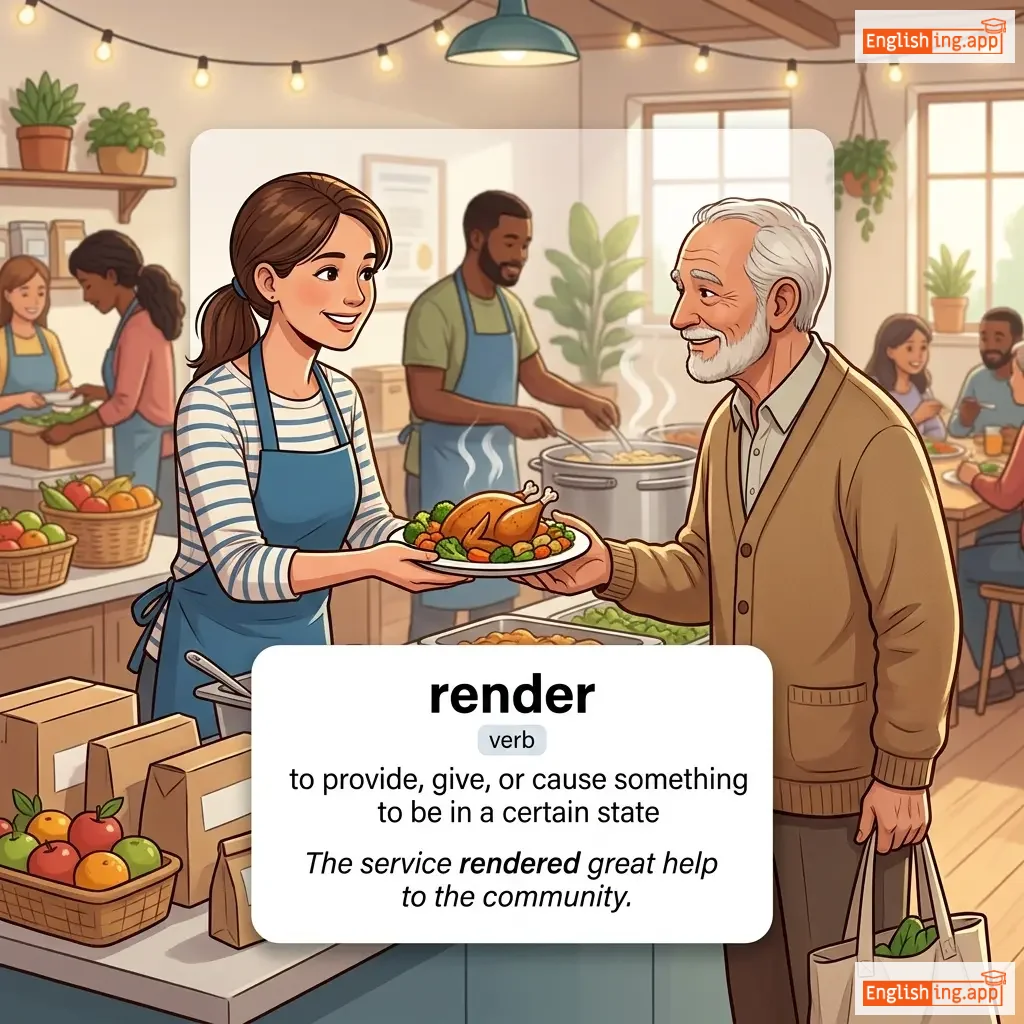
render definition card — visual illustration of the meaning
verb
/ˈrɛndər/
оказывать (okazyvat')

to provide, give, or cause something to be in a certain state

"The service rendered great help to the community."

"Эта услуга оказала большую помощь обществу." (Eta usluga okazyvala bol'shuyu pomoshch' obshchestvu.)
noun
/ˈrɒndɪvuː/
встреча (vstrecha)

a meeting or appointment at an agreed time and place

"They arranged a secret rendezvous at the café."

"Они устроили секретное свидание в кафе." (Oni ustroili sekretnoye svidaniye v kafe.)
noun
/rɛnˈdɪʃən/
исполнение (ispolnenie)

a performance or interpretation of a piece of art, music, or text

"The singer gave a moving rendition of the classic song."

"Певец исполнил трогательное исполнение классической песни." (Pevets ispolnil trogatelnoye ispolneniye klassicheskoy pesni.)
noun
/ˈrɛnɪˌɡeɪd/
ренегат (renegat)

a person who deserts or betrays an organization, country, or principles

"He was labeled a renegade after leaving the party and criticizing its policies."

"Его назвали ренегатом после того, как он покинул партию и раскритиковал её политику." (Ego nazvali renegatom posle togo, kak on pokinul partiyu i raskritikoval yeye politiku.)
renege definition card — visual illustration of the meaning
verb
/rɪˈnɛɡ/
нарушить обещание (narushit' obeshchanie)

to go back on a promise, agreement, or commitment

"The company reneged on its promise to increase wages."

"Компания нарушила обещание повысить зарплаты." (Kompaniya narushila obeshchanie povysit' zarplaty.)
🔄

renew

verb
/rɪˈnuː/

to make something new again or extend its period of validity

"I need to renew my passport before traveling."
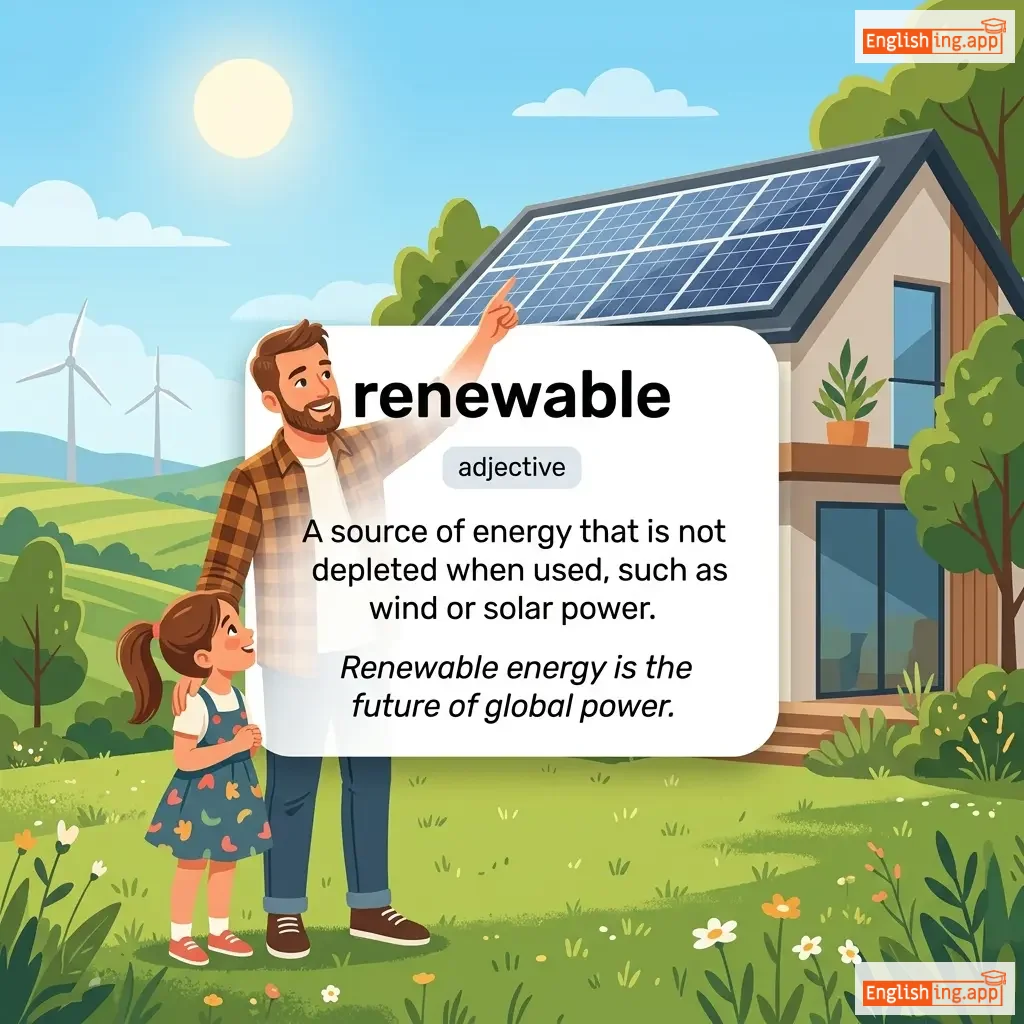
renewable definition card — visual illustration of the meaning
adjective
rɪˈnjuː.ə.bəl
возобновляемый (vozobnovlyayemy)

A source of energy that is not depleted when used, such as wind or solar power.

"Renewable energy is the future of global power."

"Возобновляемая энергия - это будущее глобальной энергии." (Vozobnovlyayemaya energiya - eto budushcheye global'noy energii.)
verb
/rɪˈnaʊns/
отказаться (otkazat'sya)

to formally declare rejection of something, such as a claim, belief, or way of life

"She renounced her citizenship to move abroad permanently."

"Она отказалась от своего гражданства, чтобы переехать за границу на постоянное место жительства." (Ona otkazalas' ot svoego grazhdanstva, chtoby pereyekhat' za granitsu na postoyannoye mesto zhitel'stva.)
verb
/ˈrɛnəˌveɪt/
реновировать (renovirovat)

to restore something old to a good state or to improve it

"They decided to renovate the old house before moving in."

"Они решили отремонтировать старый дом перед переездом." (Oni reshilи otremontirovat' staryi dom pered pereezdom.)
noun
/ˌren.əˈveɪ.ʃən/
реновация; восстановление (renovatsiya; vosstanovlenie)

the act of renovating; restoration to a former better state

"The old house underwent a complete renovation last year."

"Старый дом прошел полную реконструкцию в прошлом году." (Staryy dom proshel polnuyu rekonstruktsiyu v proshlom godu.)
noun
/rɪˈnaʊn/
известность (izvestnost)

the condition of being widely known and highly respected

"The scientist gained international renown for his groundbreaking research."

"Учёный приобрёл международную известность благодаря своим революционным исследованиям." (Uchonyy priobrelyo mezhdunarodnuyu izvestnost' blagodarya svoim revolyutsionnym issledovaniyam.)
renowned definition card — visual illustration of the meaning
adjective
/rɪˈnaʊnd/
знаменитый (znamenity)

famous or well-known for a particular skill or achievement

"She is a renowned artist in the country."

"Она известная художница в стране." (Ona izvestnaya khudozhnitsa v strane.)
noun, verb
/rɛnt/
аренда (arenda)

payment made regularly by a tenant to a landlord for the use of property or land; also to pay for the use of something

"They decided to rent an apartment in the city center."

"Они решили арендовать квартиру в центре города." (Oni reshili arendovat' kvartiru v tsentre goroda.)
noun
/ˈrɛntəl/
аренда (arenda)

an arrangement in which something is rented, or the amount paid for renting

"The car rental was more expensive than we expected."

"Аренда машины была дороже, чем мы ожидали." (Arenda mashiny byla dorozhe, chem my ozhidali.)
noun
/rɪˌnʌnsiˈeɪʃən/
отречение (otrecheniye)

the formal rejection or giving up of something, usually a belief, claim, or way of life

"His renunciation of worldly pleasures impressed the monks."

"Его отречение от мирских удовольствий впечатлило монахов." (Yego otrecheniye ot mirskikh udovol'stviy vpechatlilo monakhov.)
verb
/riːˈɔːrɡənaɪz/
реорганизовать (reorganizovat)

to arrange something again in a different way for greater efficiency or order

"The manager decided to reorganize the team structure."
"Менеджер решил реорганизовать структуру команды." (Menedzher reshil reorganizovat' strukturu komandy.)
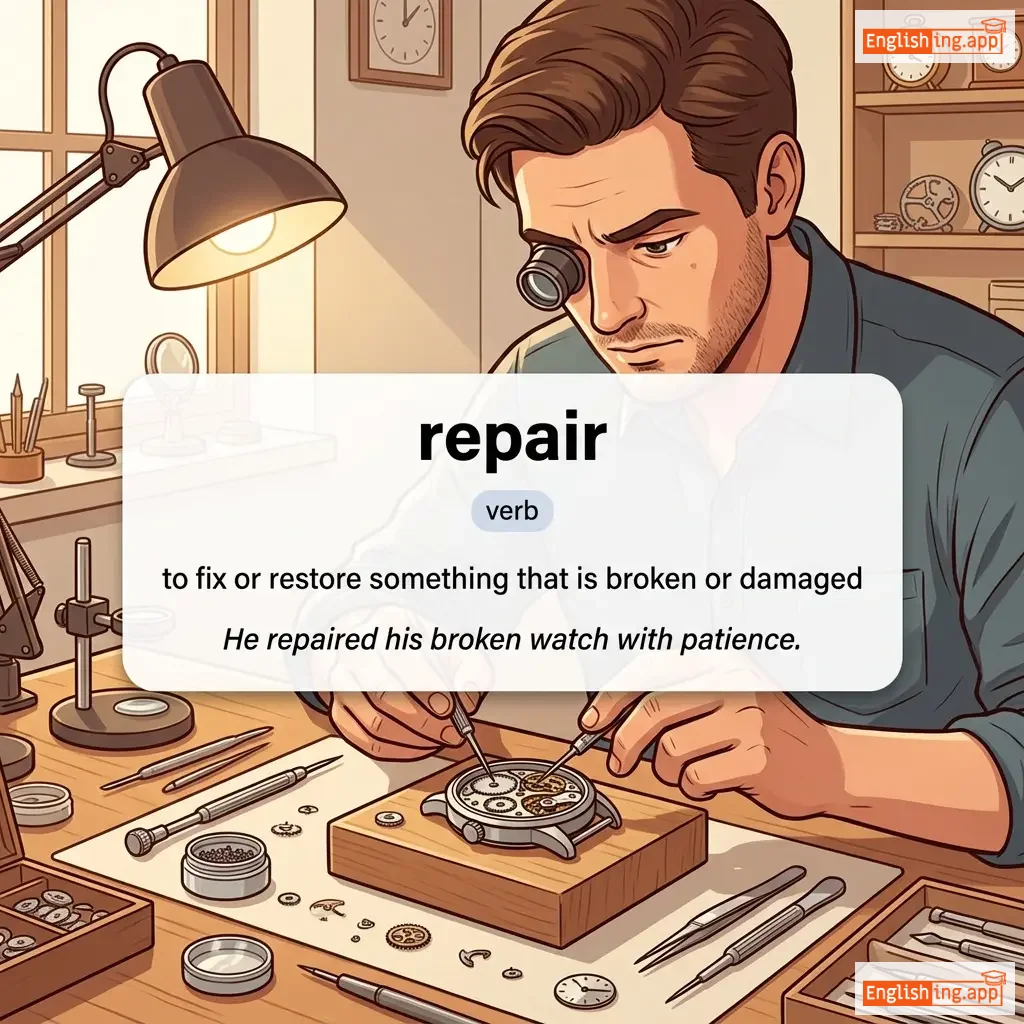
repair definition card — visual illustration of the meaning
verb
/rɪˈpɛər/

to fix or restore something that is broken or damaged

"He repaired his broken watch with patience."

adjective
/rɪˈper.ə.bəl/
ремонтируемый (remontiruemyy)

able to be fixed or mended; capable of being repaired

"The broken phone is repairable with the right parts."

"Сломанный телефон можно починить с правильными деталями." (Slomannyy telefon mozhno pochinit' s pravil'nymi detal'yami.)
noun
/rɪˈpɛərə/
ремонтник (remontnik)

a person whose job is to fix damaged or broken things

"The repairer fixed the broken washing machine quickly."

"Ремонтник быстро починил сломанную стиральную машину." (remontnik bystro pochinil slomannuyu stiralnuyu mashinu)
adjective
/ˈrɛpərəbəl/
ремонтопригодный (remontoprigojnyj)

able to be repaired or fixed

"The damage to the car was serious but still reparable."
"Повреждения автомобиля были серьезными, но все еще ремонтопригодными." (Povrezhdeniya avtomobily byli seryoznymi, no vse eshche remontoprigojnymi.)
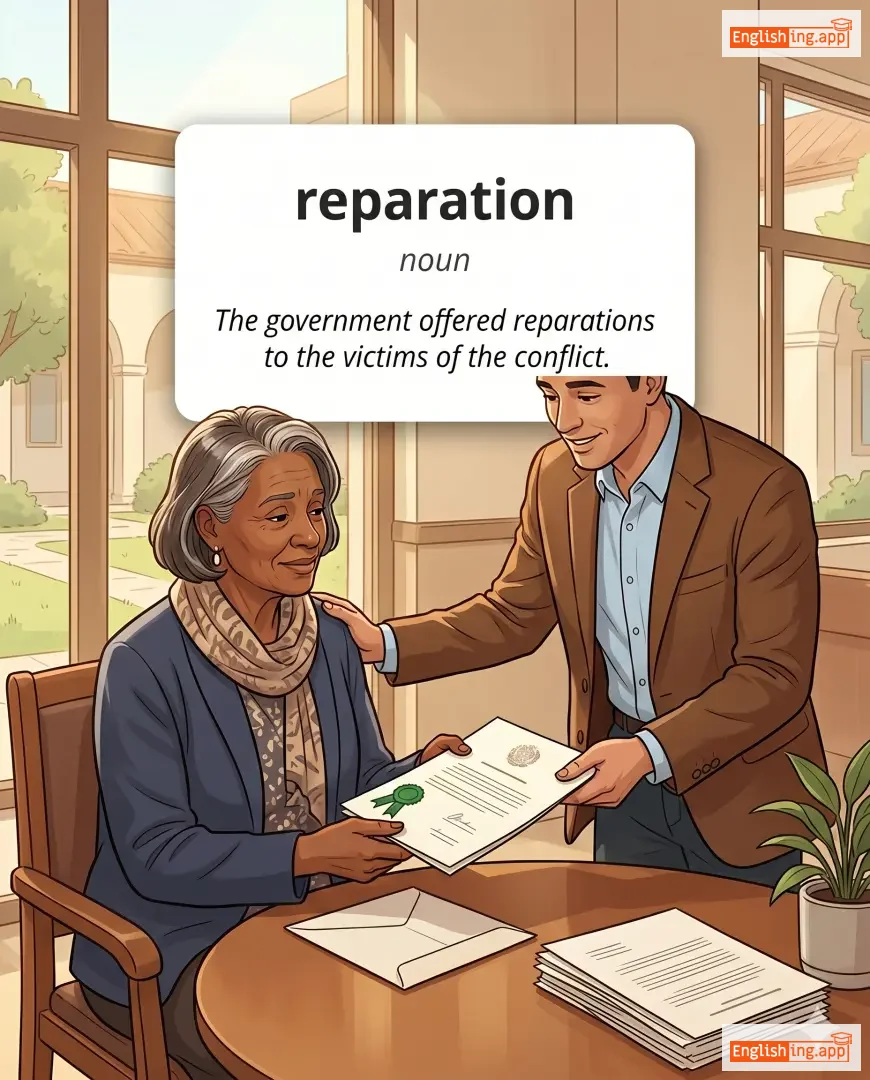
reparation definition card — visual illustration of the meaning
noun
/ˌrɛpəˈreɪʃən/
репарации (reparatsii)

the making of amends for a wrong done by paying money or helping those who were wronged

"The government offered reparations to the victims of the conflict."

"Правительство предложило репарации жертвам конфликта." (Pravitel'stvo predlozhilo reparatsii zhertvam konflikta.)
noun
/ˌrɛpɑːrˈtiː/
остроумный ответ (ostroumnyy otvet)

A quick, witty, and clever reply in conversation.

"The debate was full of sharp repartee between the two speakers."

"Дебаты были полны остроумных ответов между двумя ораторами." (Debaty byli polny ostroumnykh otvetov mezhdu dvumya oratorami.)
noun
/rɪˈpæst/
трапеза (trapeza)

A meal or the food eaten during a meal.

"They enjoyed a delicious repast by the riverside."

"Они насладились вкусной трапезой у реки." (Oni naslazhdalis' vkusnoy trapezoy u reki.)
verb
/riːˈpeɪ.tri.eɪt/
репатриировать (repatriirovat)

To return someone to their own country, often after war or imprisonment.

"The government worked to repatriate the refugees safely."

"Правительство работало над тем, чтобы безопасно репатриировать беженцев." (Pravitel'stvo rabotalo nad tem, chtoby bezopasno repatriirovat' bezhentsev.)
verb
/rɪˈpiːl/
отменить (otmenit)

To officially cancel or revoke a law or decision.

"The government decided to repeal the outdated law."

"Правительство решило отменить устаревший закон." (Pravitel'stvo reshilo otmenit' ustarevshij zakon.)
verb
/rɪˈpiːt/
повторить (povtorit')

to say again or do again

"Could you please repeat that sentence?"

"Можешь, пожалуйста, повторить это предложение?" (Mozhesh', pozhaluysta, povtorit' eto predlozhenie?)
adjective
/rɪˈpiː.tɪd/
повторный; происходящий несколько раз (povtorny; proiskhodyashchiy neskol'ko raz)

done again; happening again; occurring multiple times

"He made repeated attempts to contact her."

"Он сделал повторные попытки связаться с ней." (On sdelal povtornye popytki svyazatsya s ney)
adverb
/rɪˈpiːtɪdli/
неоднократно (neodnokратно)

in a way that is repeated or done many times

"She apologized repeatedly for the mistake."
"Она извинялась неоднократно за ошибку." (Ona izvinyalas' neodnokратно za oshibku.)
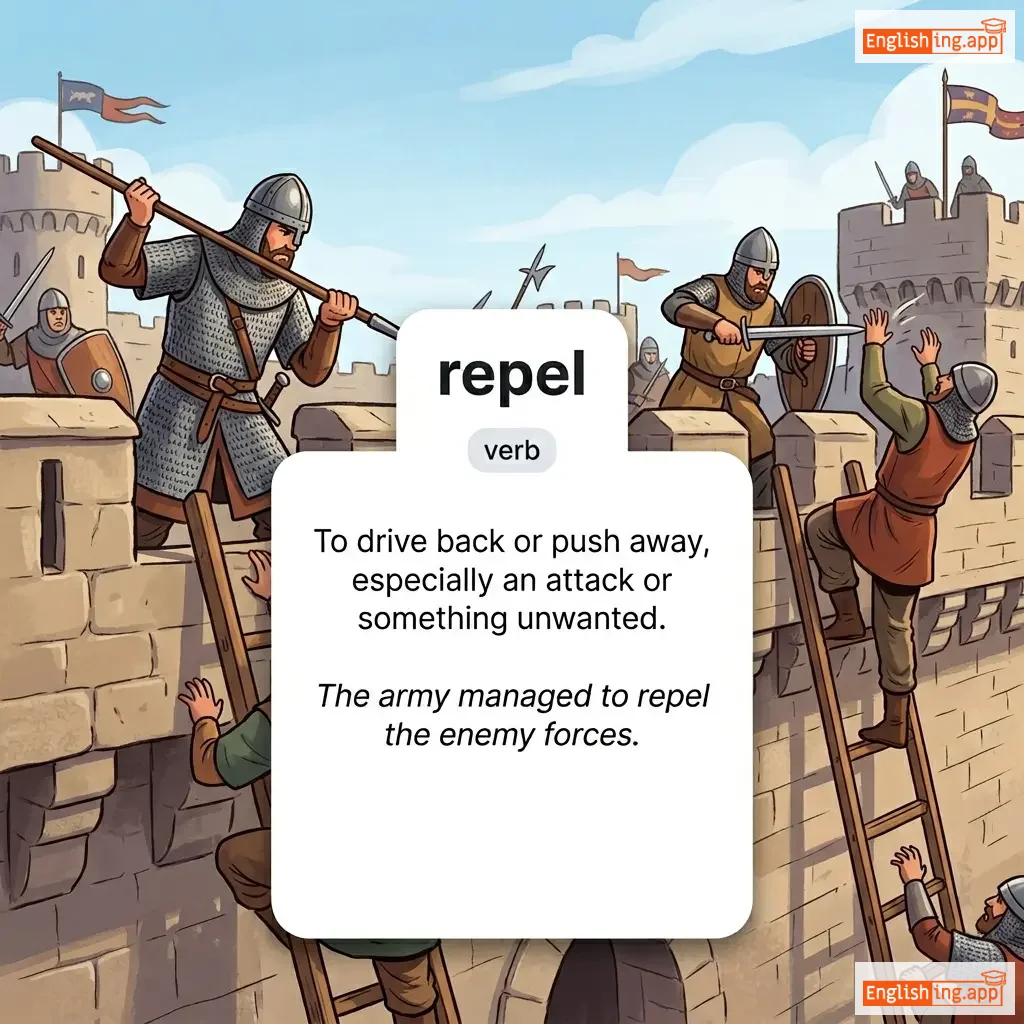
repel definition card — visual illustration of the meaning
verb
/rɪˈpɛl/
отражать (otrazhat)

To drive back or push away, especially an attack or something unwanted.

"The army managed to repel the enemy forces."

"Армия смогла отразить вражеские силы." (Armiya smogla otrazit' vragekiye sily.)
adjective
/rɪˈpɛlənt/
отпугивающий (otpugivayushchiy)

Able to drive away something, especially insects or unpleasant things; causing disgust or distaste.

"This cream is highly effective as a mosquito repellent."

"Этот крем очень эффективен как средство от комаров." (Etot krem ochen' effektiven kak sredstva ot komarov.)
noun
/rɪˈpɛntəns/
раскаяние (raskayanie)

Deep regret or remorse for wrongdoing; sincere sorrow for one's sins or mistakes.

"He showed true repentance after apologizing for his mistakes."

"Он продемонстрировал настоящее раскаяние после того, как извинился за свои ошибки." (On prodemonstriroval nastoyashchee raskayanie posle togo, kak izviniilsya za svoi oshibki.)
adjective
/rɪˈpen.tənt/
раскаявшийся; сожалеющий; виновный (raskayavshiysya; sozhaleyushchiy; vinovnyy)

feeling or expressing sincere regret and remorse; sorry for one's actions

"The repentant thief returned the stolen money."
"Раскаявшийся вор вернул украденные деньги." (Raskayavshiysya vor vernul ukradennyye den'gi.)
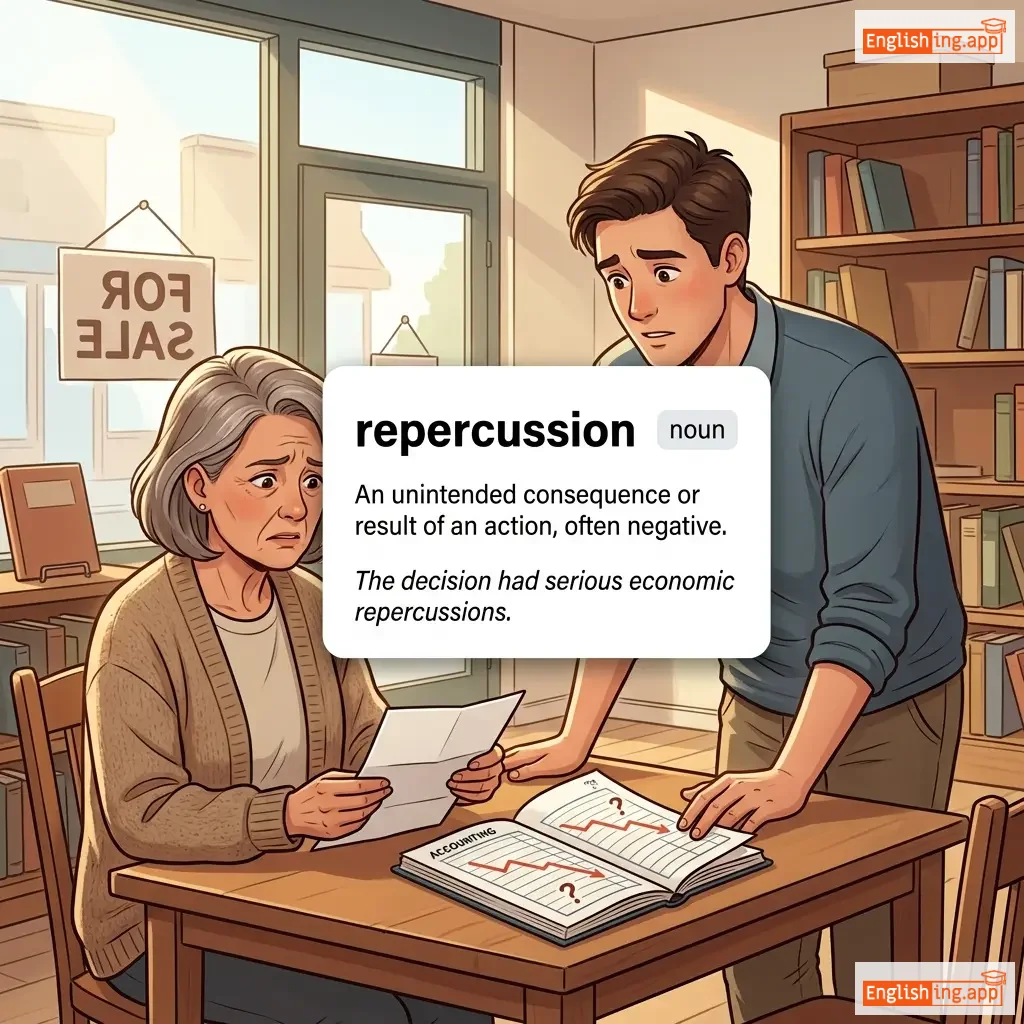
repercussion definition card — visual illustration of the meaning
noun
/ˌriːpərˈkʌʃən/
последствие (riperkushn)

An unintended consequence or result of an action, often negative.

"The decision had serious economic repercussions."
"Решение имело серьёзные экономические последствия." (Reshenie imelo seryoznyye ekonomicheskie posledstviya)
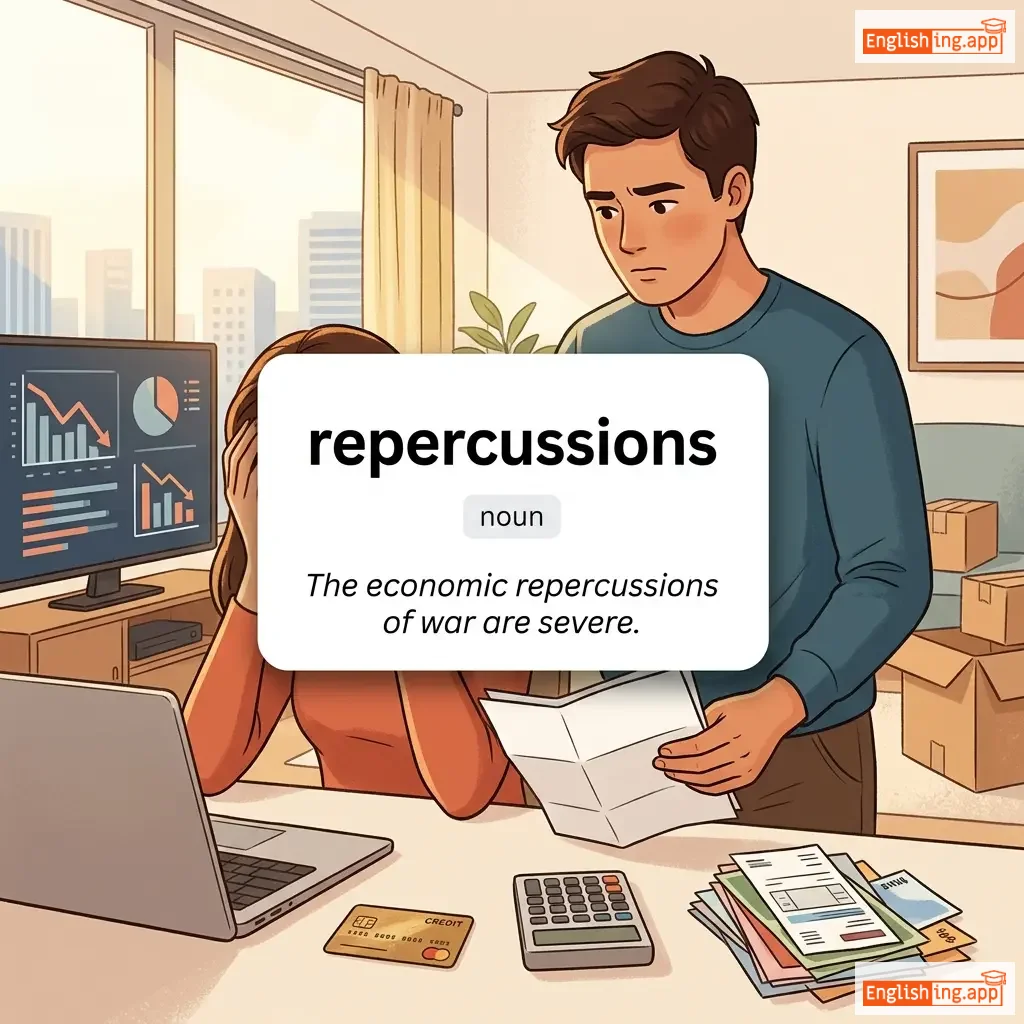
repercussions definition card — visual illustration of the meaning
noun
/ˌriː.pəˈkʌʃ.ənz/
последствия (posledstviya)

An unintended consequence occurring some time after an event or action; the effects or results of something.

"The economic repercussions of war are severe."
"Экономические последствия войны тяжелы." (Ekonomicheskie posledstviya voyny tyazhely.)
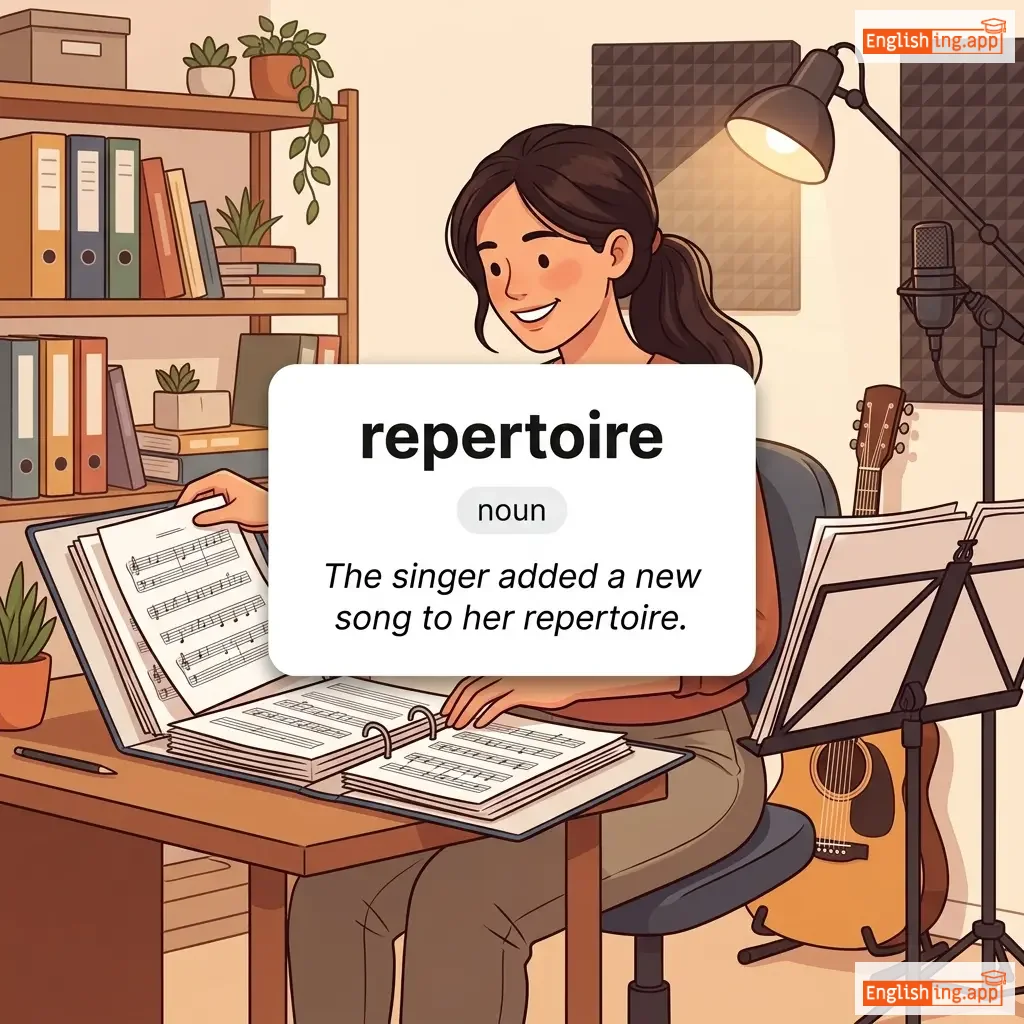
repertoire definition card — visual illustration of the meaning
noun
/ˈrɛpərˌtwɑːr/
репертуар (repertuar)

The entire range of skills, works, or pieces that a person or group is prepared to perform or use.

"The singer added a new song to her repertoire."

"Певица добавила новую песню в свой репертуар." (Pevitsa dobavila novuyu pesnyu v svoy repertuar.)
adjective
/ˌrɛpərˈtɔːriəl/
репортерский (reporterskiy)

Relating to or characteristic of a repertoire, especially in journalism or performance contexts.

"The journalist's repertorial style captured every detail of the unfolding story."

"Репортерский стиль журналиста запечатлел каждую деталь разворачивающейся истории." (Reporterkiy stil' zhurnalista zapechatlel kazhduyu detal' razvorachivayushcheysya istorii.)
noun
/ˈrɛpərˌtɔːri/
репертуар (repertuar)

A collection of works that a company, performer, or institution regularly performs; also a storehouse of information or skills.

"The theater has a repertory of classic plays."

"В театре есть репертуар классических пьес." (V teatre yest' repertuar klassicheskikh p'yes.)
noun
/ˌrɛpɪˈtɪʃən/
повторение (povtoreniye)

The action of repeating something that has already been said, written, or done.

"The teacher emphasized the importance of repetition in learning new vocabulary."
"Учитель подчеркнул важность повторения при изучении новых слов." (Uchitel' podcherknul vazhnost' povtoreniya pri izuchenii novykh slov.)
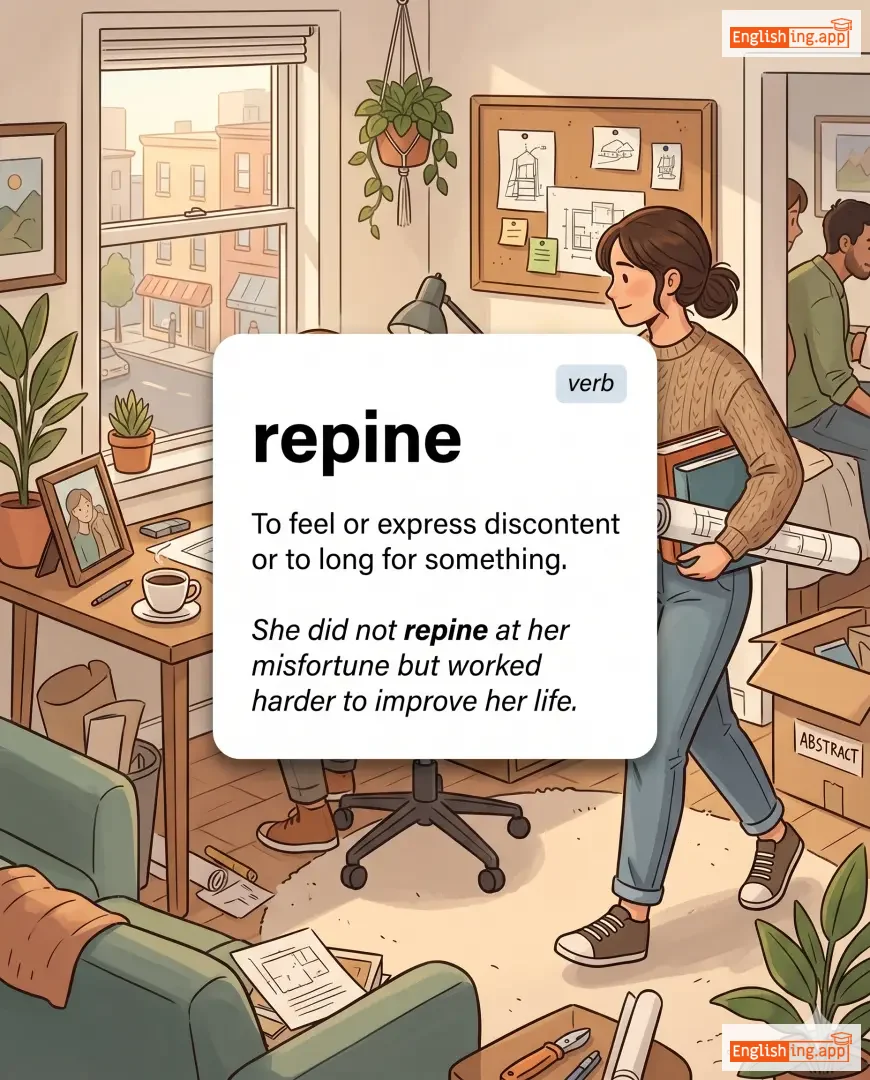
repine definition card — visual illustration of the meaning
verb
/rɪˈpaɪn/
горевать (gorevat)

To feel or express discontent or to long for something.

"She did not repine at her misfortune but worked harder to improve her life."

"Она не горевала по поводу своей беды, а работала усерднее, чтобы улучшить свою жизнь." (Ona ne gorevala po povodu svoey bedy, a rabotala usyerdnee, chtoby uluchshit' svoyu zhizn'.)
verb
/rɪˈpleɪs/
заменить (zamienit)

to take the place of something or someone; to put something new in place of something old

"He decided to replace the broken lamp with a new one."

"Он решил заменить сломанную лампу на новую." (On reshil zamenit' slomannuyu lampu na novuyu.)
noun
/rɪˈpleɪsmənt/
замена (zamena)

the act of substituting one thing or person for another

"She got a replacement for her damaged phone."
"Она получила замену для своего поврежденного телефона." (Ona poluchila zamenу dlya svoego povrezhdennogo telefona.)
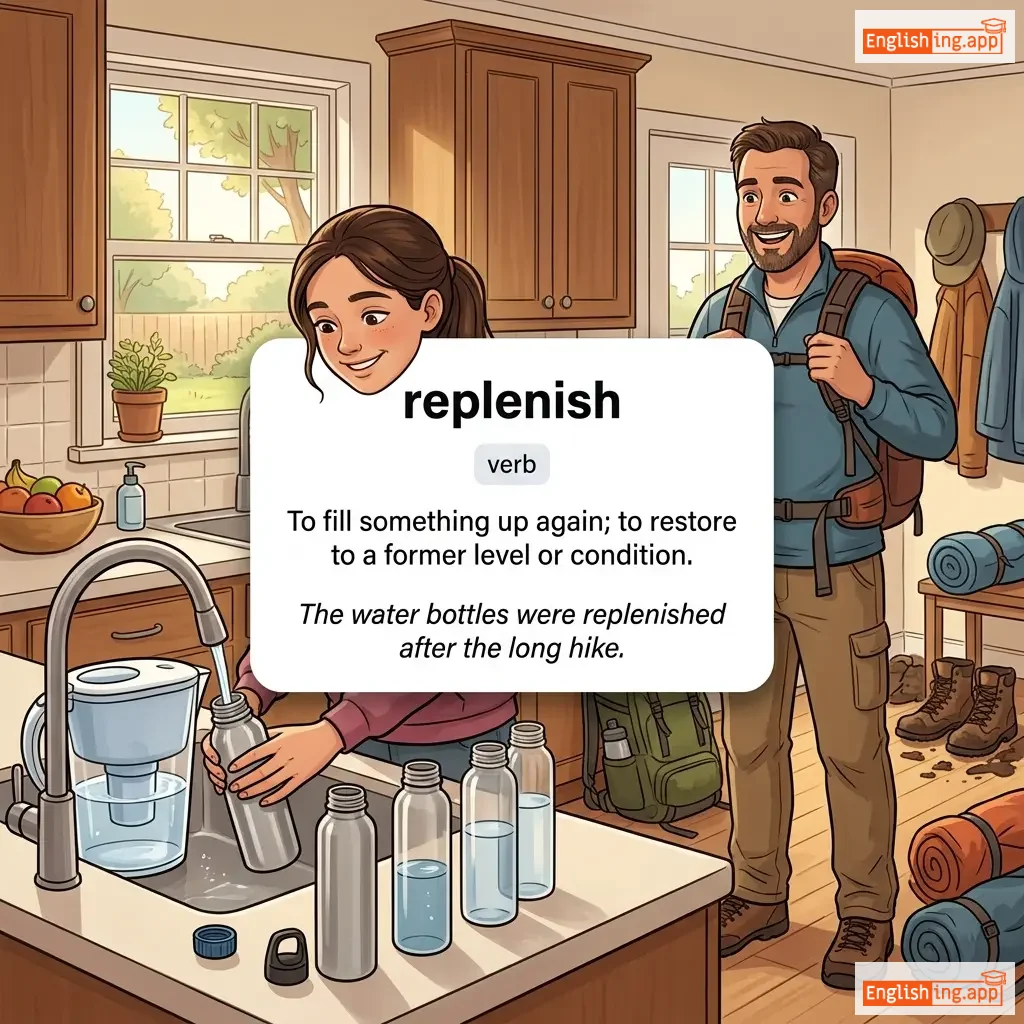
replenish definition card — visual illustration of the meaning
verb
/rɪˈplɛnɪʃ/
пополнять (popolnyat)

To fill something up again; to restore to a former level or condition.

"The water bottles were replenished after the long hike."

"Бутылки с водой были пополнены после долгого похода." (Butylki s vodoy byli popolneny posle dolgogo pokhoda.)
adjective
/rɪˈpliːt/
наполненный (napolnennyy)

Filled or well-supplied with something; abundantly full.

"The book is replete with fascinating historical details."

"Книга наполнена увлекательными историческими деталями." (Kniga napolnena uvekayushchimi istoricheskimi detal'yami.)
noun
/ˈrɛplɪkə/
реплика (replika)

An exact copy or model of something, especially one on a smaller scale.

"The museum displayed a replica of the ancient sculpture."

"Музей выставил реплику древней скульптуры." (Muzey vystavil repliky drevney skul'ptury.)
verb
/ˈrɛplɪkeɪt/
реплицировать (replitsirovat')

to copy, reproduce, or duplicate something exactly

"The scientist tried to replicate the experiment for accuracy."

"Учёный пытался реплицировать эксперимент для точности." (Uchyonyy pytalsya replitsirovat' eksperiment dlya tochnosti.)
verb, noun
/rɪˈplaɪ/
отвечать (otvechat)

to respond to someone or something

"She didn't reply to my message."
"Она не ответила на мое сообщение." (Ona ne otvetila na moyo soobshcheniye.)
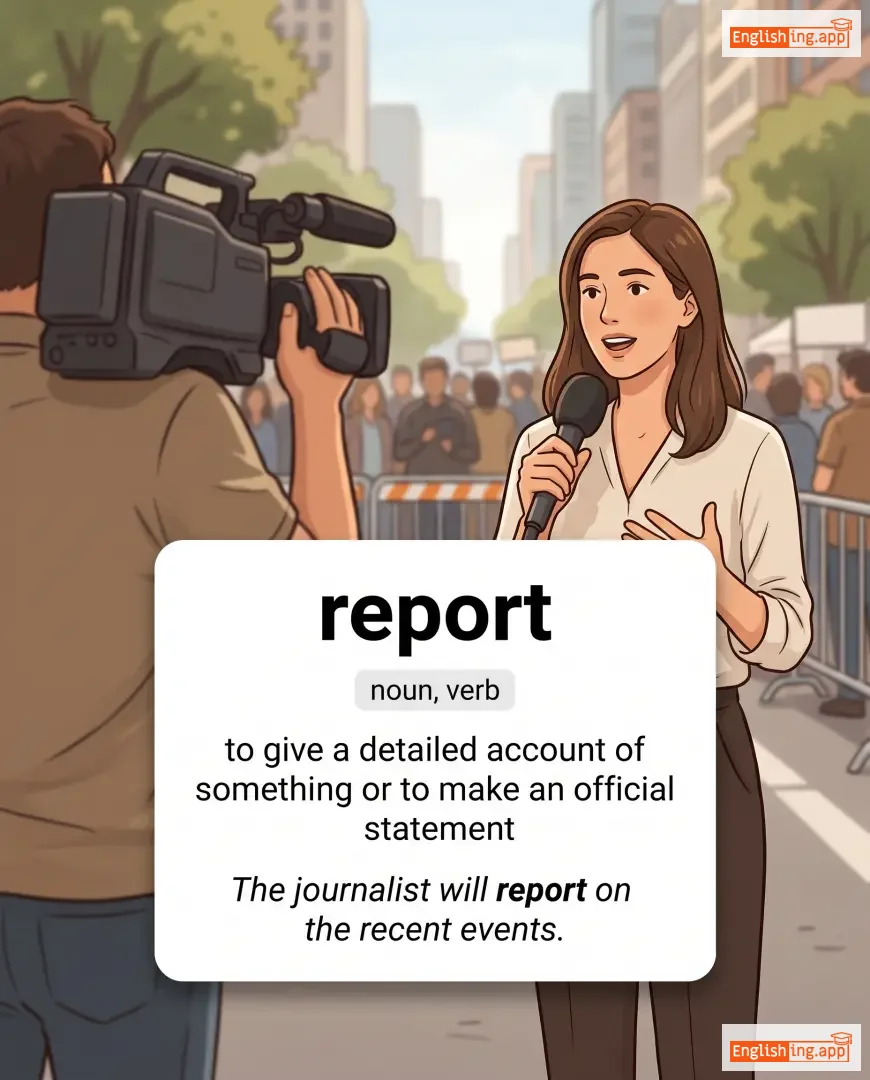
report definition card — visual illustration of the meaning
noun, verb
/rɪˈpɔːrt/
отчет (otchet)

to give a detailed account of something or to make an official statement

"The journalist will report on the recent events."

"Журналист будет сообщать о недавних событиях." (Zhurnalist budet soobshchat' o nedavnikh sobytiyakh.)
noun
/rɪˈpɔːrtɪʒ/
репортаж (reportazh)

the act of reporting news or describing events in the media

"The magazine is known for its detailed reportage of political issues."

"Журнал известен своим подробным репортажем о политических вопросах." (Zhurnal izvesten svoim podrobnym reportazhem o politicheskikh voprosakh.)