Словари

Словарь английского языка | Значения слов, определения и примеры

adjective
/ˈprɛvələnt/
распространенный (rasprostranyonny)

widespread or commonly occurring

"Flu is prevalent during the winter season."
"Грипп широко распространен в зимний период." (Gripp shiroko rasprostranyon v zimniy period.)
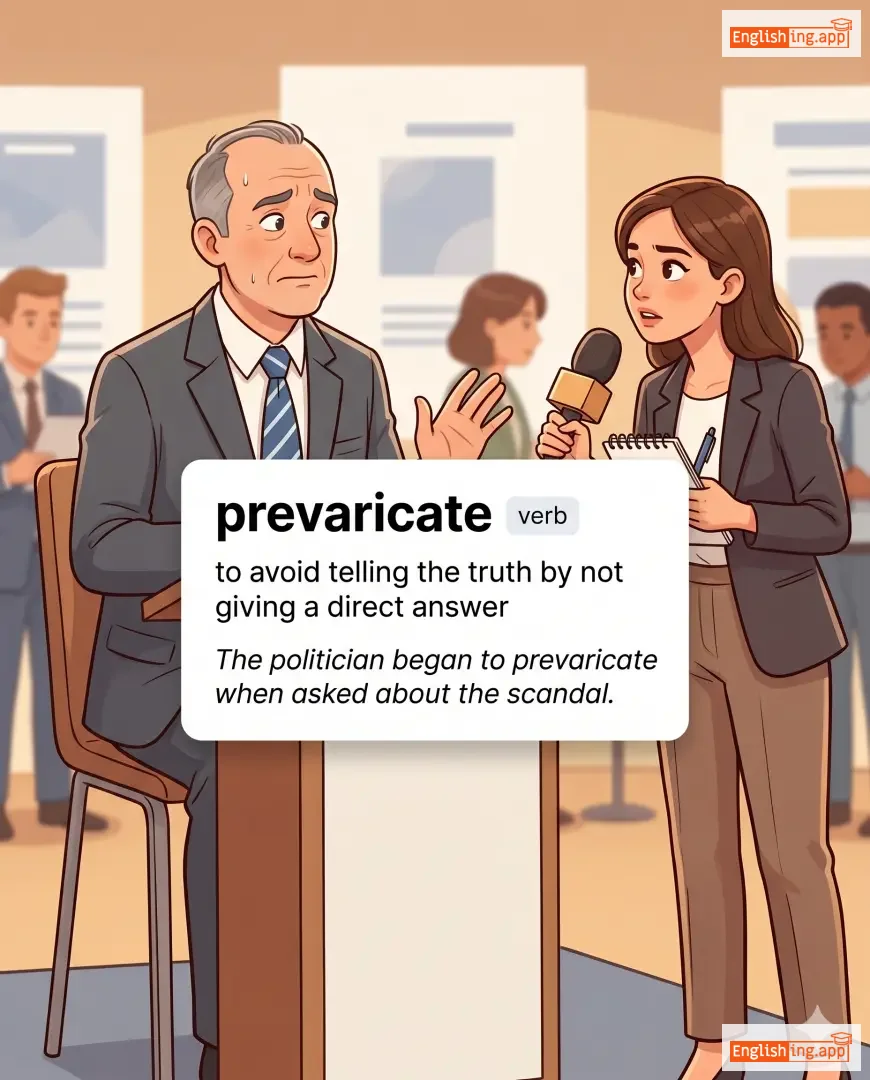
prevaricate definition card — visual illustration of the meaning
verb
/prɪˈværɪkeɪt/

to avoid telling the truth by not giving a direct answer

"The politician began to prevaricate when asked about the scandal."
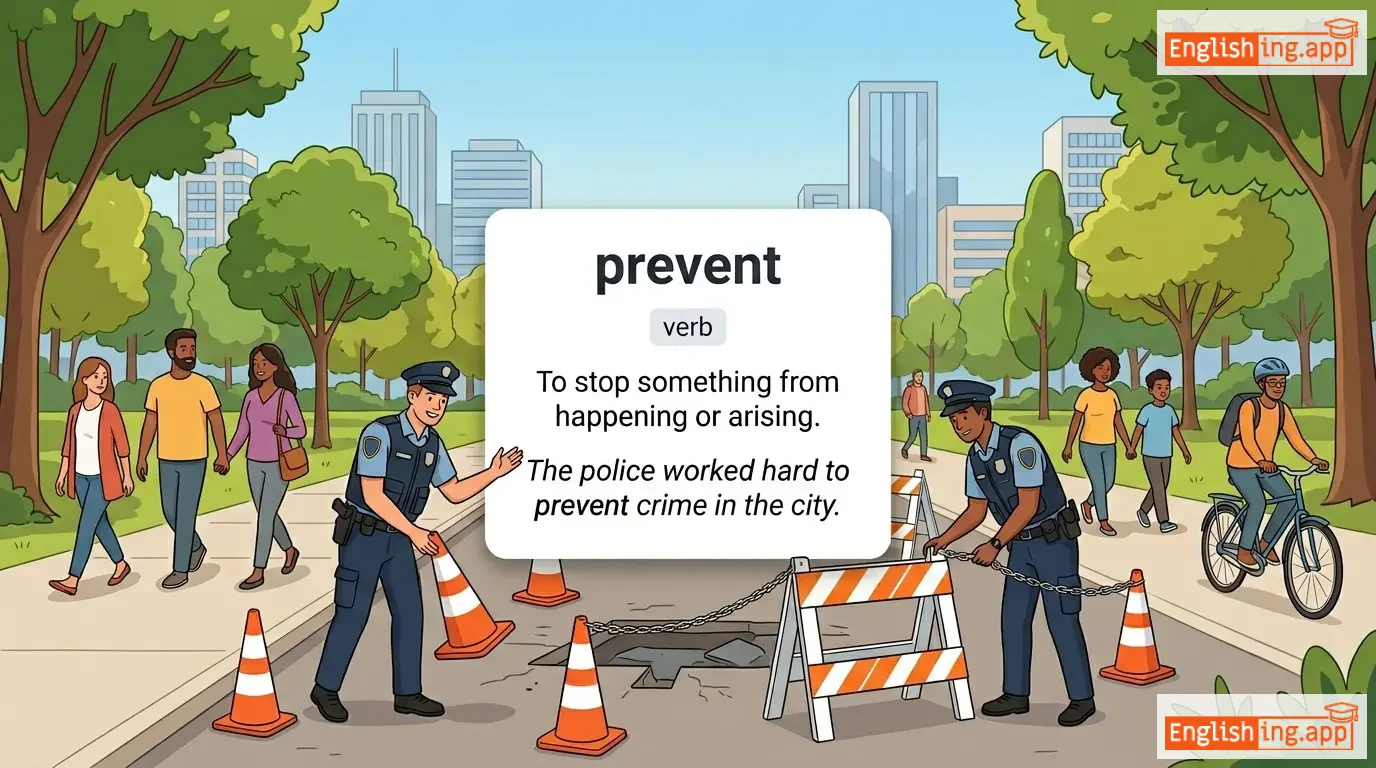
prevent definition card — visual illustration of the meaning
verb
/prɪˈvɛnt/
предотвращать (predotvrashchat)

To stop something from happening or arising.

"The police worked hard to prevent crime in the city."
"Полиция усердно работала, чтобы предотвратить преступность в городе." (Politsiya userdno rabotala, chtoby predotvratit' prestupnost' v gorode.)
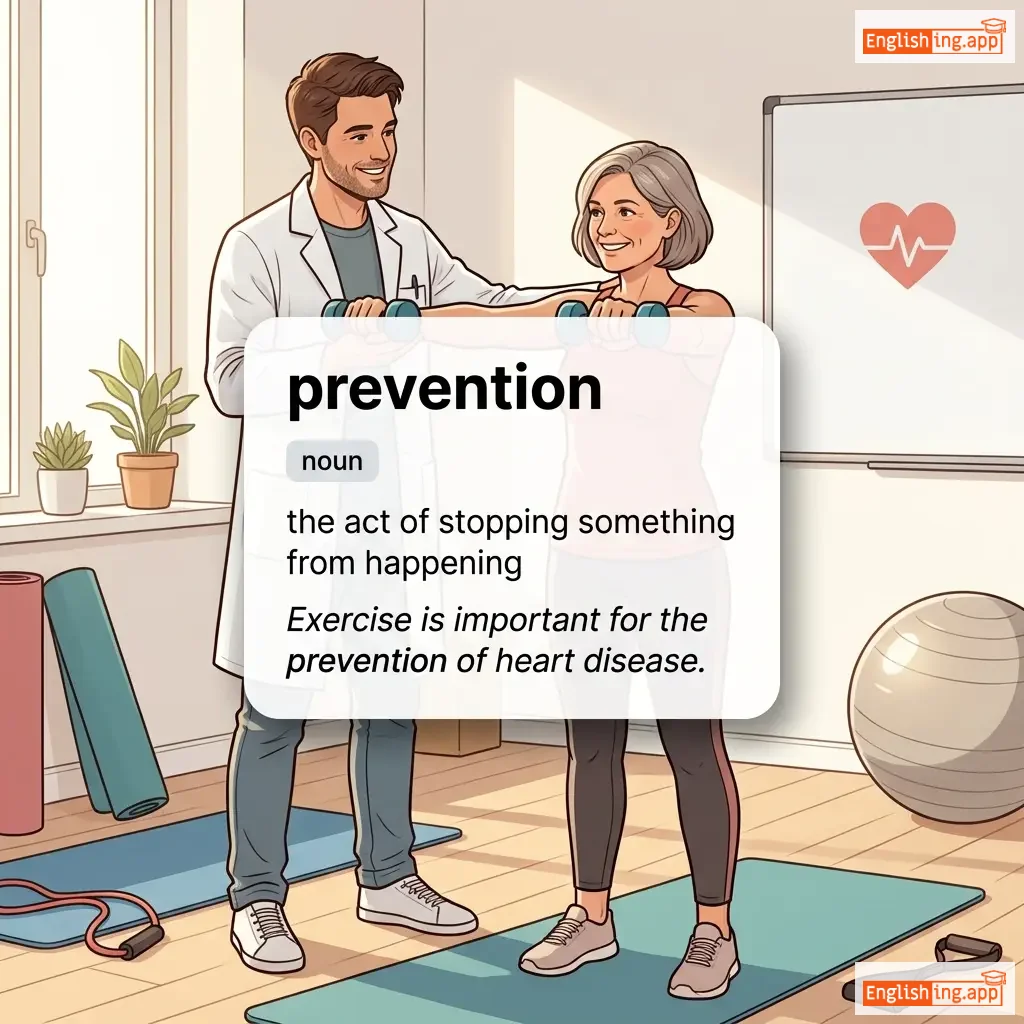
prevention definition card — visual illustration of the meaning
noun
/prɪˈvɛnʃən/
профилактика (profilaktika)

the act of stopping something from happening

"Exercise is important for the prevention of heart disease."

"Упражнения важны для профилактики сердечных заболеваний." (Upryazhneniya vazhny dlya profilaktiki serdechnykh zabolevaniy.)
adjective
/prɪˈventɪv/
профилактический; предназначен для предотвращения чего-либо (profilakticheskiy)

designed to prevent something from happening; protective against disease

"Regular exercise is a preventive measure against heart disease."
"Регулярные физические упражнения — это профилактическая мера против сердечных заболеваний." (Regulyarnye fizicheskie uprazhneniya — eto profilakticheskaya mera protiv serdechnykh zabolevaniy.)
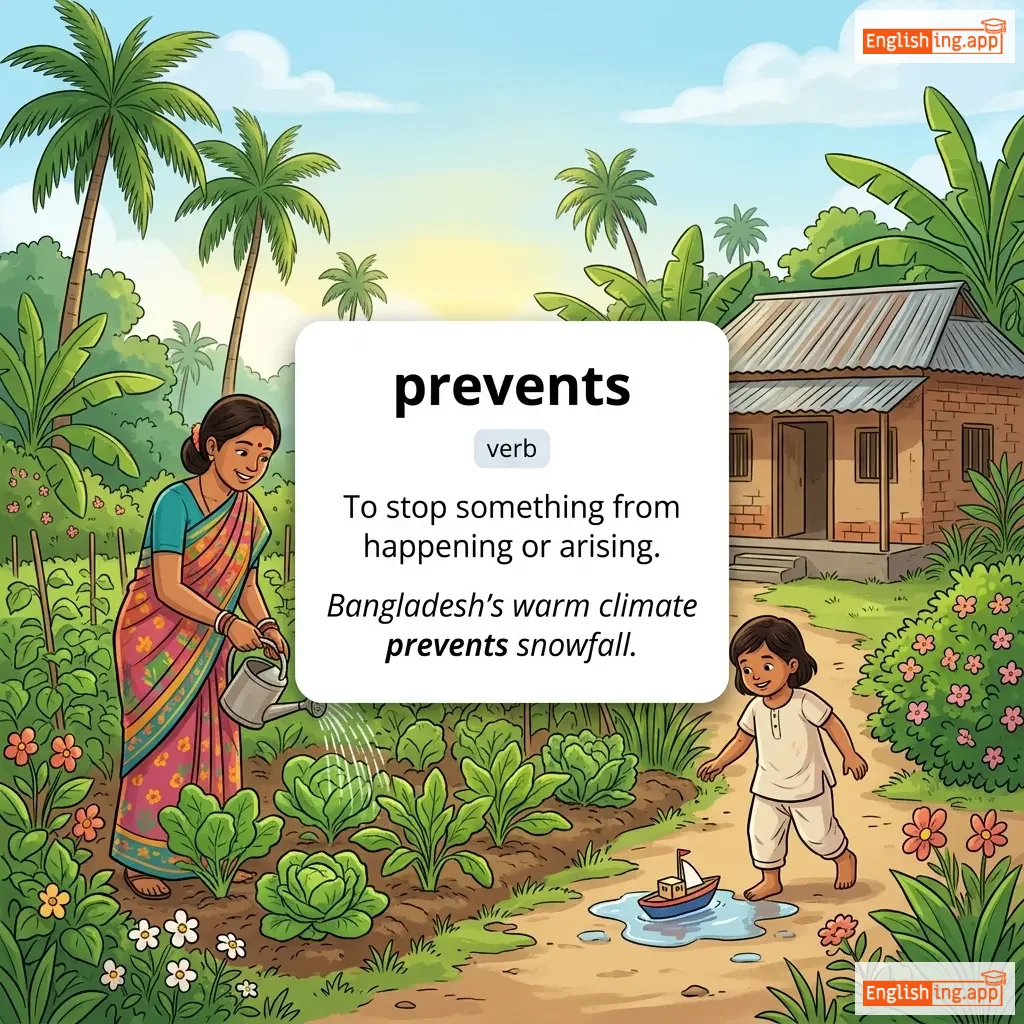
prevents definition card — visual illustration of the meaning
verb
প্রিভেন্টস
предотвращает (predotvrashchayet)

To stop something from happening or arising.

"Bangladesh's warm climate prevents snowfall."

"Тёплый климат Бангладеш предотвращает снегопад." (Tyoplyy klimat Bangladesha predotvrashchayet snezhopad.)
adjective
/ˈpriːviəs/
предыдущий (predyduyushchiy)

Existing or happening before the present time.

"He referred to the previous meeting to explain his point."

"Он сослался на предыдущее заседание, чтобы объяснить свою точку зрения." (On soslalsya na predydushchee zasedanie, chtoby obyasnit' svoyu tochku zreniya.)
adverb
/ˈpriːviəsli/
ранее (ranee)

at an earlier time or before now

"She had previously worked at a bank before starting her own business."

"Она ранее работала в банке до того, как начала свой собственный бизнес." (Ona ranee rabotala v banke do togo, kak nachala svoi sobstvennyi biznes.)
noun/verb
/preɪ/
добыча (prei)

an animal hunted by another for food; to hunt and feed on

"Lions prey on zebras in the wild."

"Львы охотятся на зебрах в дикой природе." (Lyvy okhotitsya na zebrah v dikoy prirode)
noun
/praɪs/
цена (tsena)

the amount of money expected, required, or given for something

"The price of the car has increased recently."

"Цена машины недавно увеличилась." (Tsená mashiny nedavno uvelichilas'.)
adjective
/ˈpraɪs.ləs/
бесценный; неоценимый (bescennyy; neotsenimyy)

extremely valuable; invaluable; beyond price

"Her grandmother's antique jewelry is absolutely priceless."
"Древние драгоценности её бабушки абсолютно бесценны." (Drevnie dragotsennosti yeyo babushki abslutno besstsenny.)
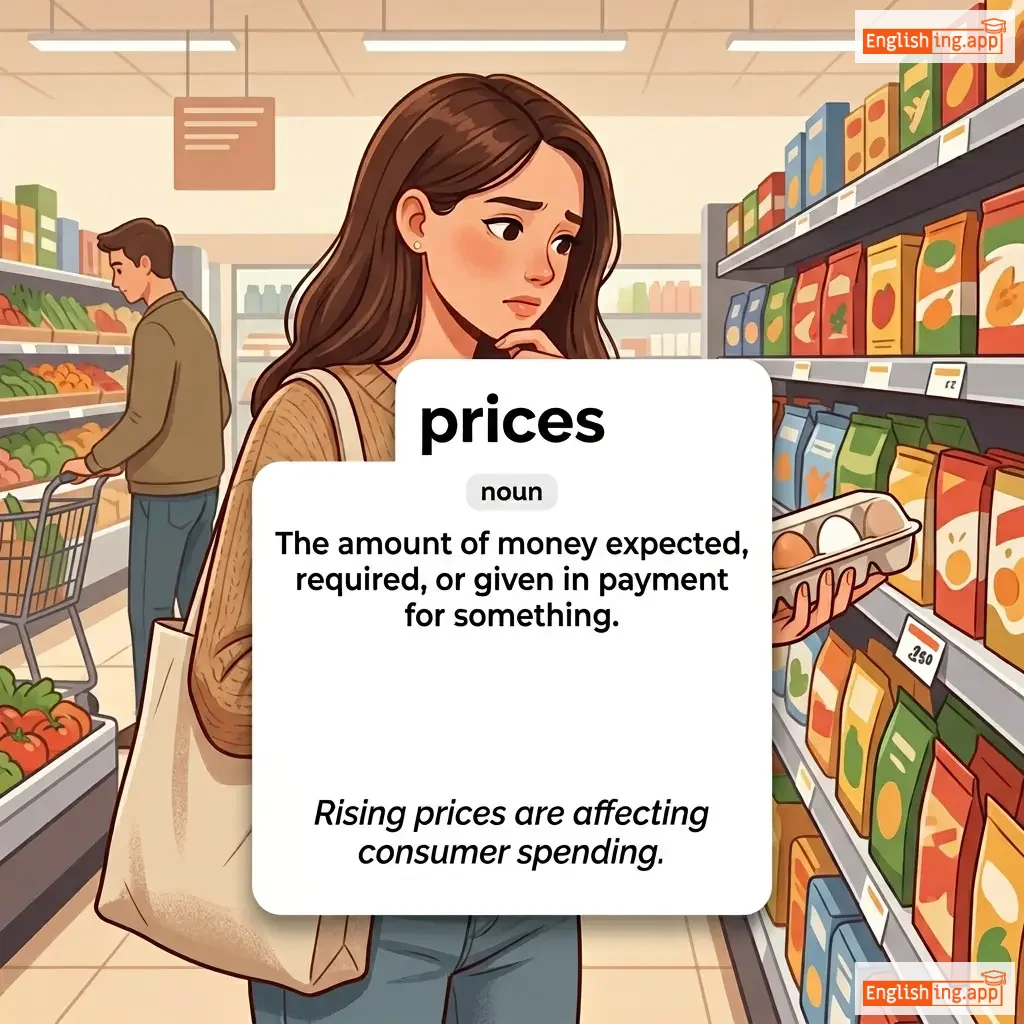
prices definition card — visual illustration of the meaning
noun
ˈpraɪsɪz
цены (tseny)

The amount of money expected, required, or given in payment for something.

"Rising prices are affecting consumer spending."

"Растущие цены влияют на потребительские расходы." (Rastushchie tseny vliyayut na potrebitelskie raskhody.)
verb
/ˈprɪkəl/

to cause a slight stinging or tingling sensation on the skin

"Her skin began to prickle in the cold wind."

pride definition card — visual illustration of the meaning
noun
/praɪd/
гордость (gordost)

a feeling of deep pleasure or satisfaction derived from one's own achievements

"He took pride in his work and always aimed for perfection."

"Он гордился своей работой и всегда стремился к совершенству." (On gordilsya svoey rabotoy i vsegda stremilsya k sovershenstvu.)
noun
/priːst/
священник (svyashchennik)

a person who performs religious duties and ceremonies

"The priest blessed the congregation during the Sunday service."

"Священник благословил прихожан во время воскресной службы." (Svyashchennik blagoslovil prikhodjan vo vremya voskresnoy sluzhby.)
adjective
/ˈprɪɡɪʃ/
моралистичный и самодовольный (moralistichnyy i samodovol'nyy)

self-righteously moralistic and superior

"He came across as priggish when correcting everyone's manners."

"Он казался моралистом и самодовольным, когда исправлял манеры всех." (On kazalsya moralistom i samodovol'nym, kogda ispravlyal manery vsekh.)
adjective
/prɪm/
чрезмерно формальный или правильный (chrezmerno formal'nyy ili pravil'nyy)

stiffly formal and proper in appearance or behavior

"She looked prim in her neatly pressed dress."

"Она выглядела прим в своем аккуратно поглаженном платье." (Ona vyglyadela prim v svoem akuratno poglazhennom plat'e.)
adjective
/ˈpriːmə/
основной, отличный (osnovnoy, otlichnyy)

first or most important; excellent

"She was treated as the prima ballerina of the troupe."

"Ее считали главной балериной группы." (Eyo schitali glavnoy balerinoy gruppy.)
noun
/ˈpraɪməsi/
приоритет (prioritet)

the state of being first in importance or authority

"The primacy of education cannot be denied."

"Приоритет образования не может быть оспорен." (Prioritet obrazovaniya ne mozhet byt' osporen.)
adjective
/ˈpraɪ.məl/
первобытный, основной (pervobytnyy, osnovnoy)

Relating to the earliest stage of development; essential or fundamental.

"Fear is one of the most primal emotions humans experience."

"Страх - это одно из самых примитивных эмоций, которые испытывают люди." (Strakh - eto odno iz samykh primitivnykh emotsiy, kotoryye ispytyvayut lyudi.)
adverb
/praɪˈmɛrɪli/
преимущественно (preimushchestvenno)

for the most part; mainly

"She is primarily responsible for managing the finances."

"Она в основном отвечает за управление финансами." (Ona v osnovnom otvechayet za upravleniye finansami.)
adjective
/ˈpraɪ.mɛr.i/
основной, первичный (osnovnoy, pervichny)

Most important; main; happening first.

"Education is a primary factor in economic growth."
"Образование — основной фактор экономического роста." (Obrazovanie - osnovnoy faktor ekonomicheskogo rosta.)
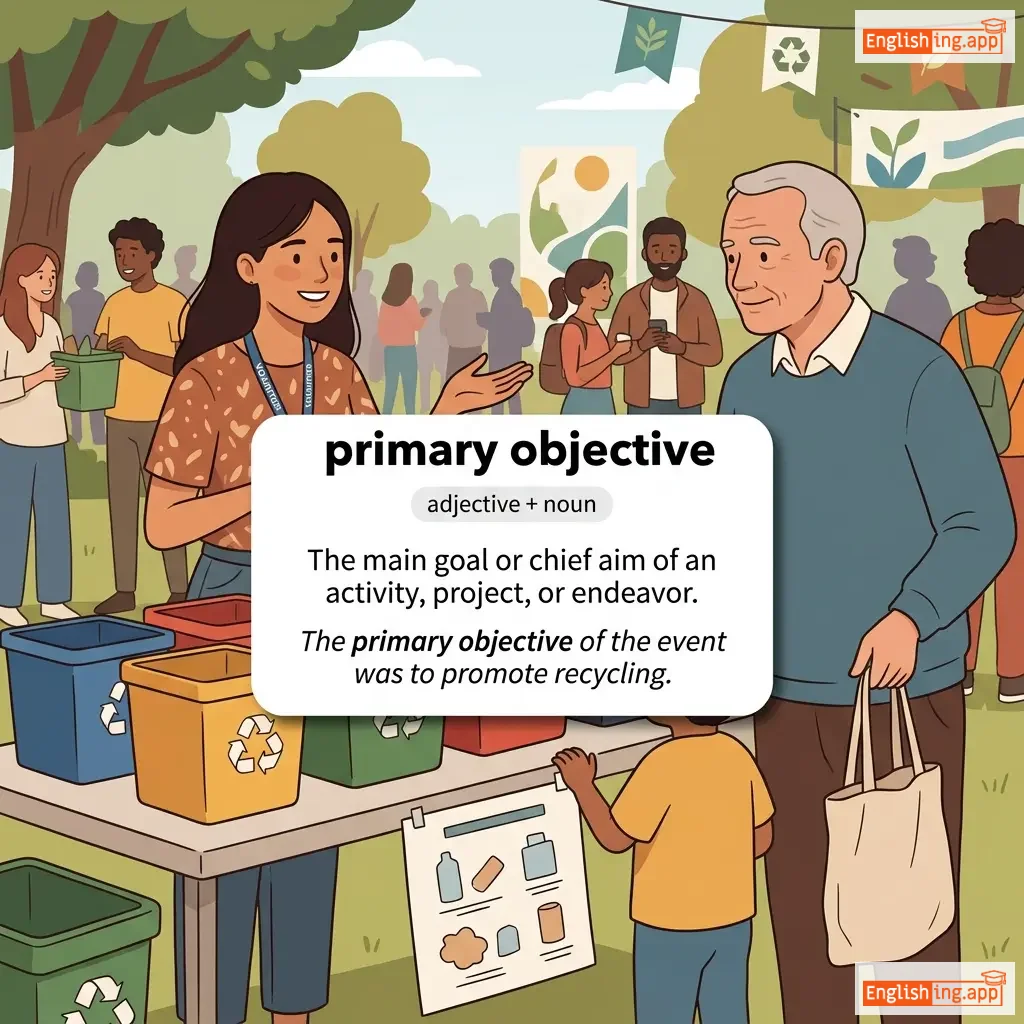
primary objective definition card — visual illustration of the meaning
adjective + noun
ˈpraɪməri əbˈdʒektɪv
основная цель (osnovnaya tsel)

The main goal or chief aim of an activity, project, or endeavor.

"The primary objective of the event was to promote recycling."

"Основная цель мероприятия заключалась в продвижении переработки." (Osnovnaya tsel' meropriyatiya zaklyuchalas' v prodvizhenii pererabotki.)
noun
/ˈpraɪ.meɪt/
примат, обезьяна или человекоподобное существо (primate, obez'yana ili chelovekopodobnoe sushchestvo)

A member of the group of animals including humans, apes, and monkeys.

"Humans are classified as primates."

"Люди классифицируются как приматы." (Lyudi klassifitsiruyutsya kak primaty.)
adjective
/praɪm/
первоклассный, важный (pervoklassnyy, vazhnyy)

Of the best quality; most important; peak condition.

"She is in the prime of her career."

"Она на лучшем этапе своей карьеры." (Ona na luchshem etape svoey kar'ery.)
noun
/ˈpraɪ.mər/ (US), /ˈprɪm.ər/ (UK)
вводная книга, грунтовка (vvodnaya kniga, gruntovka)

A basic introductory book or a substance used to prepare a surface for painting.

"He read a primer on programming before starting his course."

"Он прочитал вводную книгу по программированию перед началом курса." (On prochital vvodnuyu knigu po programmirovaniyu pered nachalom kursa.)
adjective
/praɪˈmiːvəl/
древний (drevniy)

Relating to the earliest ages in history; ancient and primitive.

"The explorers ventured into the primeval forest untouched by humans."

"Исследователи отправились в древний лес, не тронутый людьми." (Issledovateli otpravilis' v drevniy les, ne tronutyy lyud'mi.)
adjective
/ˈprɪmətɪv/
примитивный (primitivnyy)

Relating to an early stage of development; simple and basic.

"The tribe lived in primitive huts made of mud and straw."

"Племя жило в примитивных хижинах, сделанных из глины и соломы." (Plemya zhilo v primitivnykh khizhinakh, sdelannykh iz gliny i solomy.)
noun
/ˌpraɪmoʊˈdʒɛnɪtʃər/
прамогенитура (pramogenitura)

The right of the firstborn child to inherit the family estate or title.

"Under primogeniture, the eldest son inherited the entire estate."

"По праву первородства старший сын унаследовал все имущество." (Po pravu pervorodstva starshiy syn unasledoval vse imushchestvo.)
adjective
/praɪˈmɔːrdiəl/
первобытный (pervobytnyy)

Existing at or from the beginning of time; fundamental and original.

"Scientists study the primordial soup from which life emerged."

"Учёные изучают первобытный суп, из которого возникла жизнь." (Uchënyye izuchayut pervobytnyy sup, iz kotorogo voznikla zhizn'.)
verb
/prɪmp/
счастье (schast'ye)

To spend time making minor adjustments to one's appearance.

"She primped in front of the mirror before the party."

"Она не могла скрыть своего счастья, когда получила награду." (Ona ne mogla skryt' svoego schast'ya, kogda poluchila nagradu.)
noun
/prɪns/
принц (prints)

a male member of a royal family, especially the son of a king or queen; a ruler of a principality

"The prince addressed the nation on his birthday."

"Принц обратился к нации в свой день рождения." (prints obratilsya k natsii v svoi den rozhdeniya)
noun
/ˈprɪn.ses/
принцесса (printsessa)

a female royal family member, especially the daughter of a king or queen; a woman regarded as noble, cherished, or elegant

"The princess waved to the crowd from the palace balcony."

"Принцесса помахала толпе с балкона дворца." (printsessa pomahala tolpe s balkona dvortsa)
noun, adjective
/ˈprɪnsəpəl/
директор, главный (direktor, glavniy)

the person with the highest authority or most important position; main or most important

"The school principal addressed the students in the auditorium."

"Директор школы обратился к ученикам в аудитории." (Direktor shkoly obratilsya k uchenikam v auditorii.)
noun
/ˌprɪnsɪˈpæləti/
княжество (knyazhestvo)

a state ruled by a prince

"Monaco is a famous principality in Europe."

"Монако — известное княжество в Европе." (Monako — izvestnoe knyazhestvo v Evrope.)
principle definition card — visual illustration of the meaning
noun
/ˈprɪnsəpəl/
принцип (printsip)

a fundamental truth, law, or rule that serves as the foundation for a system of belief or behavior

"She refused to lie because it was against her principles."

"Она отказалась лгать, потому что это шло против её принципов." (Ona otkazalas' lgat', potomu chto eto shlo protiv yeye printsipov.)
adjective
/ˈprɪnsəpəld/
принципиальный (printsipal'nyy)

acting in accordance with moral or ethical standards

"He is a principled leader who always puts honesty first."

"Он принципиальный лидер, который всегда ставит честность на первое место." (On printsipal'nyy lider, kotoryy vsegda stavit chestnost' na pervoye mesto.)
verb
/prɪnt/
печатать (pechatat)

to produce text or images on paper or other materials using a machine

"He will print the report tomorrow morning."

"Он напечатает отчет завтра утром." (On napetchatayet otchet zavtra utrom.)
noun
/ˈprɪn.tər/
принтер (printer)

a person whose job is printing books, newspapers, or other materials; a machine that prints documents

"The printer delivered the wedding invitations on time."

"Принтер доставил свадебные приглашения вовремя." (Printer dostavil svadebnye priglasheniya vovremya.)
adjective
/ˈpraɪər/
предшествующий (predshestvuyushchiy)

existing or coming before something in time or order

"He had no prior knowledge of the event."
"У него не было предварительных знаний о событии." (U nego ne bylo predvaritel'nykh znaniy o sobytii.)
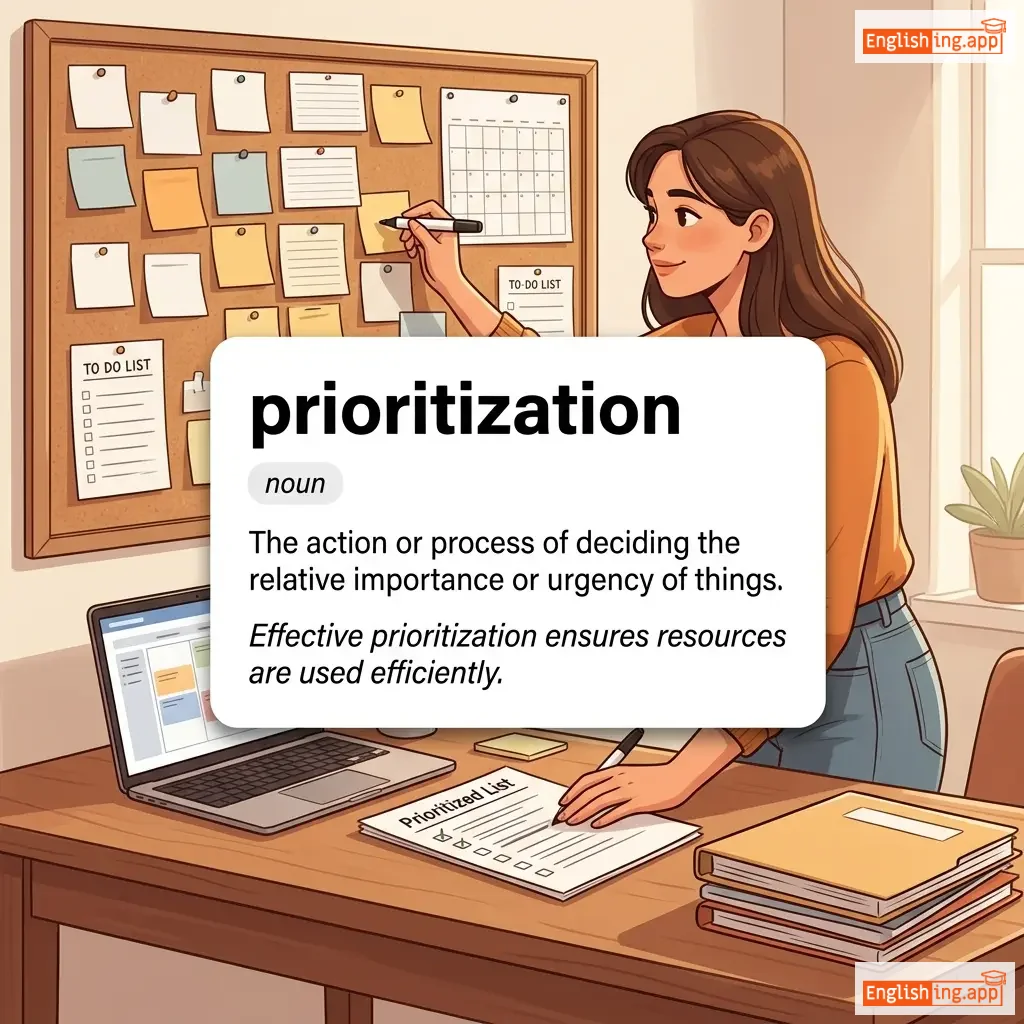
prioritization definition card — visual illustration of the meaning
noun
ˌpraɪɔːrɪtaɪˈzeɪʃən
приоритизация (prioritizatsiya)

The action or process of deciding the relative importance or urgency of things.

"Effective prioritization ensures resources are used efficiently."

"Эффективная приоритизация гарантирует, что ресурсы используются эффективно." (Effektivnaya prioritizatsiya garantiruyet, chto resursy ispol'zuyutsya effektivno.)
prioritize definition card — visual illustration of the meaning
verb
/praɪˈɔːrətaɪz/
приоритизировать (prioritizirovat')

To designate or treat something as more important than other things.

"Always prioritize tasks to avoid delay."

"Всегда приоритизируйте задачи, чтобы избежать задержек." (Vsegda prioritiziruyte zadachi, chtoby izbezhat' zaderzhek.)
noun
/praɪˈɒrɪti/
приоритет (prioritet)

Something that is regarded as more important than other things.

"Safety is the top priority in this company."

"Безопасность — это главный приоритет в этой компании." (Bezopasnost' — eto glavnyy prioritet v etoy kompanii.)
noun
/ˈpraɪəri/
приорат (priorat)

a small monastery or convent governed by a prior or prioress

"The old priory was converted into a museum."

"Старый приорат был преобразован в музей." (Staryy priorat byl preobrazovan v muzey.)
noun
/ˈprɪzən/
тюрьма (tyur'ma)

a building where people are kept as punishment for a crime or while waiting for trial

"He was sent to prison for his crimes."

"Его отправили в тюрьму за его преступления." (Yego otpravili v tyur'mu za yego prestupleniya.)
noun
/ˈprɪzənər/
узник (uznik)

a person who is in prison

"The prisoner was granted parole after serving 10 years."

"Узник был освобожден по условно-досрочному освобождению после 10 лет." (Uznik byl osvobozhden po uslovno-dosrochnomu osvobozhdeniyu posle 10 let.)
pristine definition card — visual illustration of the meaning
adjective
/ˈprɪstiːn/

In its original condition; unspoiled, clean, and fresh.

"The hikers were amazed by the pristine beauty of the untouched forest."

noun
/ˈpraɪvəsi/
конфиденциальность (konfidentsial'nost')

the state of being free from public attention or intrusion

"Everyone has the right to privacy in their own home."

"У каждого есть право на конфиденциальность в своем доме." (U kazhdogo est' pravo na konfidentsial'nost' v svoem dome.)
adjective
/ˈpraɪvət/
личный (lichny)

belonging to or for the use of one particular person or group

"She enjoys her private time away from work."

"Она наслаждается своим личным временем вдали от работы." (Ona naslazhdaetsya svoim lichnym vremenem vdali ot raboty.)
noun
/ˈpraɪ.vət ˈtuː.tər/
частный репетитор (chastnyy repetitor)

a teacher who gives individual instruction to a student outside of regular school

"The private tutor helped the student improve his math skills."

"Частный репетитор помог студенту улучшить его математические навыки." (Chastnyy repetitor pomog studentu uluchshit' ego matematicheskiye navyki)