Словари

Словарь английского языка | Значения слов, определения и примеры

adjective
/ˌpoʊstˈwɔːr/
послевоенный (poslevoennyy)

relating to the period after a war has ended

"The country experienced rapid economic growth in the post-war years."

"В послевоенные годы страна быстро развивалась." (v poslevoennye gody strana bystro razvivalas)
verb
/ˌpoʊstˈdeɪt/
поставить позднюю дату (postavit' pozdnyuyu datu)

To assign a date later than the actual date to a document or event.

"She postdated the check to next month."

"Она поставила дату чека на следующий месяц." (Ona postavila datu cheka na sleduyushchiy mesyats.)
noun
/ˈpoʊstər/
постер (poster)

a large printed picture or notice that is put on a wall for decoration or to advertise something

"They put up a movie poster outside the theater."

"Они повесили постер фильма снаружи театра." (Oni povesili poster fil'ma snaruzhi teattra.)
adjective
/pɒˈstɪəriər/
постериор (posterior)

Situated at or toward the back; later in time.

"The posterior part of the brain controls vision."

"Задняя часть мозга контролирует зрение." (Zadnyaya chast' mozga kontroliruet zrenie.)
noun
/pɒˈstɛrɪti/
потомство (potomstvo)

All future generations of people.

"The monument was built for the benefit of posterity."

"Памятник был построен на благо будущих поколений." (Pamyatnik byl postroen na blago budushchikh pokoleniy.)
noun, adjective
/ˌpəʊstˈɡrædʒuət/
аспирант (aspirant)

A student who has completed a first degree and is studying for a further degree.

"She is doing postgraduate research in physics."

"Она занимается аспирантскими исследованиями по физике." (Ona zanimaetsya aspirantskimi issledovaniyami po fizike.)
adjective
/ˈpɒstjʊməs/
посмертный (posmertny)

Occurring, awarded, or appearing after the death of the originator.

"He received a posthumous award for his bravery."

"Он получил посмертную награду за свою храбрость." (On poluchil posmertnuyu nagradu za svoyu khrabrost'.)
noun, adjective
/ˌpəʊstˈmɔːtəm/
посмертное вскрытие (posmertnoe vskrytie)

An examination of a dead body to determine the cause of death.

"The doctor carried out a postmortem on the body."

"Доктор провел посмертное вскрытие тела." (Doktor provel posmertnoe vskrytie telya.)
verb
/pəʊs(t)ˈpəʊn/
отсрочить (otsrochit)

to delay something to a later time

"The meeting was postponed until next week."

"Встреча была отложена на следующую неделю." (Vstrecha byla otlozhena na sleduyushchuyu nedelyu.)
adjective
/ˌpəʊstˈprændɪəl/
после еды (posle yedy)

Occurring after a meal.

"He went for a postprandial walk after dinner."

"Он пошел на постпрандиальный прогулку после ужина." (On poshel na postprandial'nuyu progulku posle uzhina.)
noun
/ˈpəʊstˌskrɪpt/
постскриптум (postskriptum)

an additional remark at the end of a letter or text, after the signature

"She added a brief postscript to thank him again."
"Она добавила краткое постскриптум, чтобы снова поблагодарить его." (Ona dobavila kratkoe postskriptum, chtoby snova poblagodarit' ego.)
postulate definition card — visual illustration of the meaning
verb
/ˈpɒstjʊˌleɪt/
постулировать (postulirovat)

to suggest or assume the existence of something as a basis for reasoning

"The scientist postulated that life could exist on other planets."

"Учёный постулировал, что жизнь может существовать на других планетах." (Uchënyy postuliroval, chto zhizn' mozhet sushchestvovat' na drugikh planetakh.)
noun
/ˈpɒstʃə/
счастье (schast'ye)

the position in which someone holds their body; an attitude or approach

"Good posture helps prevent back pain."

"Она не могла скрыть свое счастье, когда получила награду." (Ona ne mogla skryt' svoe schast'ye, kogda poluchila nagradu.)
adjective
/ˈpəʊstwɔːr/
послевоенный (poslevoenny)

occurring or existing after a war

"The postwar period saw significant economic growth."

"Поствоенное время увидело значительный экономический рост." (Postvoyennoye vremya uvidelo znachitel'nyy ekonomicheskiy rost.)
noun
/pɒt/
горшок (gorshok)

a container, typically round and deep, used for cooking or holding plants

"She put the soup in a pot and set it on the stove."

"Она положила суп в горшок и поставила его на плиту." (Ona polozhila sup v gorshok i postavila ego na plitu.)
adjective
/ˈpəʊtəbl/
питьевой (pit'yevoy)

safe to drink; drinkable

"The villagers did not have access to potable water."

"Жители деревни не имели доступа к питьевой воде." (Zhiteli derevni ne imeli dostupa k pit'yevoy vode.)
noun
/pəˈteɪtoʊ/
картофель (kartofel)

a starchy plant tuber that is a staple food around the world

"We had mashed potato with our dinner."

"Мы ели пюре из картофеля на ужин." (My yeli pure iz kartofelya na uzhin.)
noun
/ˈpɒtˌbɔɪlə/
дешевый продукт (deshevy produkt)

a book, play, or film produced quickly to make money rather than for artistic value

"The novel was dismissed by critics as a mere potboiler."

"Роман был отвергнут критиками как дешевый продукт." (Roman byl otvergnut kritikaimi kak deshevy produkt.)
noun
/ˈpoʊtənsi/
мощность (moshchnost)

The power or ability of something to affect or influence; strength or effectiveness.

"The potency of the new medicine amazed the doctors."

"Мощность нового лекарства поразила врачей." (Moshchnost' novogo lekarstva porazila vrachey.)
adjective
/ˈpoʊtənt/
мощный (moshnyy)

Having great power, influence, or effect.

"This is a very potent drug that should be used carefully."

"Это очень мощное лекарство, которое следует использовать с осторожностью." (Eto ochen' moshchnoe lekarstvo, kotoroe sleduyet ispol'zovat' s ostorozhnost'yu.)
noun
/ˈpoʊtənˌteɪt/
потентат (potentat)

A monarch or ruler, especially one with absolute power.

"The ancient land was ruled by a powerful potentate."

"Древняя земля была управляемая мощным потентатом." (Drevnyaya zemlya byla uderzhivayemaya moshchnym potentatom.)
potential definition card — visual illustration of the meaning
noun, adjective
/pəˈtɛnʃəl/
потенциал (potentsial)

Having the capacity to develop into something in the future; latent ability.

"She has great potential to become a successful leader."

"У неё есть большой потенциал стать успешным лидером." (U neyo yest' bol'shoy potentsial stat' uspeshnym liderom.)
adverb
/pəˈtɛnʃəli/
потенциально (potentsial'no)

with the possibility of becoming something in the future

"This project is potentially a huge success."

"Этот проект потенциально может стать большим успехом." (Etot proyekt potentsial'no mozhet stat' bol'shim uspekham.)
verb
/poʊˈtɛnʃiˌeɪt/
потенциировать (potentsirovat)

To increase the power, effect, or likelihood of something.

"Caffeine can potentiate the effects of some medicines."

"Кофеин может потенцировать эффекты некоторых лекарств." (Kofein mozhet potentsirovat' effekty nekotorykh lekarstv.)
noun
/ˈpoʊʃən/
отвар (otvar)

a liquid with healing, magical, or poisonous properties

"The witch gave the hero a healing potion."

"Ведьма дала герою целебный отвар." (Ved'ma dala geroiu tselebnyi otvar.)
noun
/ˌpoʊpʊˈriː/
смесь сухих цветов (smes' sukhikh tsvetov)

a mixture of dried flowers and spices kept in a bowl to perfume a room; a miscellaneous collection

"The living room was filled with the scent of potpourri."

"Гостиная была наполнена ароматом потпури." (Gostinaya byla napolnena aromatom potpuri.)
noun
/ˈpɑː.tər/
гончар (gonchar)

a person who makes pottery

"The potter shaped clay on the spinning wheel."

"Гончар формировал глину на вращающемся колесе." (Gonchar formiroval glinu na vrashchayushchemsya kolese.)
noun
/paʊtʃ/
мешок (meshok)

a small bag or pocket, often used to carry small items

"She kept her coins in a small leather pouch."

"Она положила свои монеты в маленький кожаный мешок." (Ona polozhila svoi monety v malen'kiy kozhanый meshok.)
noun
/ˈpoʊltɪs/
тёплый травяной компресс (tyoplyy travyanoy kompress)

a soft, moist mass of material applied to the body to relieve soreness and inflammation

"The nurse applied a warm poultice to his injured leg."

"Медсестра приложила теплую повязку на его поврежденную ногу." (Medsestra prilozhila tyopluyu povyazku na yego povrezhdennuyu nogu.)
noun, verb
/paʊnd/
фунт (funt)

a unit of weight equal to 16 ounces or a unit of currency

"The price of the book is five pounds."

"Цена книги пять фунтов." (Tsená knigi pyat' funtov.)
verb
/pɔːr/
лить (lit')

to cause a liquid to flow from a container

"She poured the tea into the cup."

"Она наливала чай в чашку." (Ona nalivala chai v chashku.)
verb
/paʊt/
надуть губы (nadut' guby)

to push one's lips forward as an expression of annoyance or sulkiness

"The child began to pout when he didn’t get the toy."

"Ребёнок начал надувать губы, когда не получил игрушку." (Rebyonok nachal naduvat' guby, kogda ne poluchil igrooshku.)
noun
/ˈpɒvəti/
бедность (bednost)

the state of being extremely poor

"Poverty is a major issue in many countries."

"Бедность является важной проблемой во многих странах." (Bednost yavylyaetsya vazhnoy problemoy vo mnogikh stranakh.)
noun
/ˈpaʊdər/
порошок (poroshok)

a fine, dry substance made of very tiny particles

"She sprinkled some powder on the cake."
"Она посыпала немного порошка на торт." (Ona posypala nemnogo poroshka na tort.)
power definition card — visual illustration of the meaning
noun
/ˈpaʊər/
сила (sila)

the ability or capacity to do something or influence others

"Knowledge is power."

"Знание — это сила." (Znanie — eto sila.)
powerful definition card — visual illustration of the meaning
adjective
/ˈpaʊərfəl/
мощный (moshny)

having great strength or influence

"She is a powerful leader in her community."

"Она мощный лидер в своем сообществе." (Ona moshchnyy lider v svoem soobshchestve.)
adjective
/ˈpaʊərləs/
бессильный (bessil'nyy)

without ability, influence, or strength

"She felt powerless against the unfair system."

"Она чувствовала себя бессильной против несправедливой системы." (Ona chuvstvovala sebya bessil'noy protiv nespravedlivoy sistemy.)
noun
/ˈpaʊ.waʊ/
неформальная встреча (neformal'naya vstrecha)

an informal meeting or conference to discuss something

"The team held a quick powwow before the presentation."

"Команда провела быструю неформальную встречу перед презентацией." (Komanda provela bystruyu neformal'nuyu vstrechu pered prezentatsiey.)
adjective
/ˈpræk.tɪ.kə.bəl/
осуществимый (osushchestvimyy)

able to be done or put into practice successfully

"The plan is not practicable without more resources."
"План не является осуществимым без дополнительных ресурсов." (Plan ne yavyayetsya osushchestvimym bez dopolnitel'nykh resursov.)
practical definition card — visual illustration of the meaning
adjective
/ˈpræk.tɪ.kəl/
практический (praktičeskij)

concerned with what is real and possible rather than ideas or theories

"She offered a practical solution to the problem."

"Она предложила практическое решение проблемы." (Ona predlozhila prakticheskoe reshenie problemy.)
adverb
/ˈpræktɪkli/
практически (prakticheski)

in a way that is almost or nearly; in a realistic or functional manner

"The movie theater was practically empty."

"Кинотеатр был практически пуст." (Kinoteatr byl prakticheski pust.)
practice definition card — visual illustration of the meaning
noun/verb
/ˈpræk.tɪs/
практика (praktika)

the act of doing something repeatedly to improve skill, or the actual application of an idea

"He practices the piano every day."
"Он практикует игру на пианино каждый день." (On praktikuet igru na pianino kazhdyi den'.)
practise definition card — visual illustration of the meaning
verb
/ˈpræktɪs/
практиковать (praktikovat)

to do something repeatedly to improve skill; to work in a profession

"She practises piano for two hours daily."

"Она практикует игру на пианино два часа в день." (Ona praktikuet igru na pianino dva chasa v den'.)
noun
/prækˈtɪʃ.ən.ər/
практикующий (praktikuyushchiy)

a person actively engaged in a profession, especially medicine or law

"She is a skilled medical practitioner."
"Она квалифицированный медицинский практикующий." (Ona kvalifitsirovannyy meditsinskiy praktikuyushchiy.)
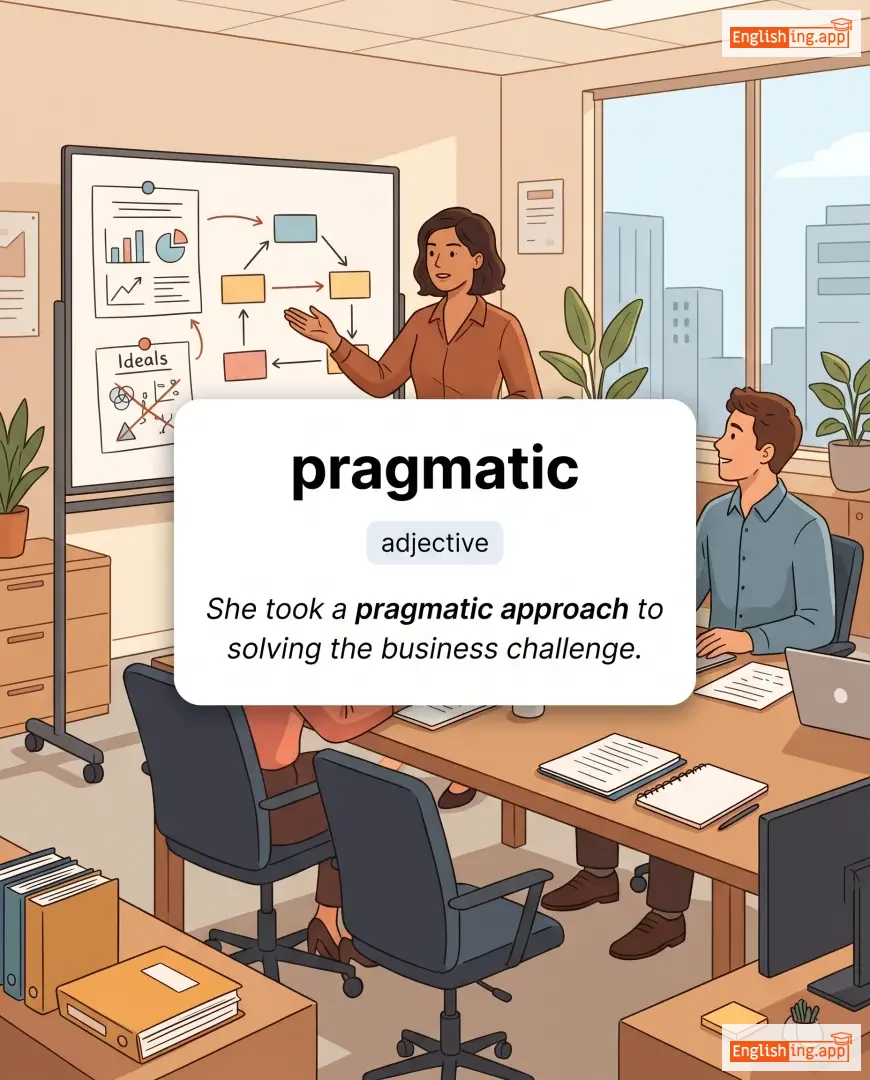
pragmatic definition card — visual illustration of the meaning
adjective
/præɡˈmætɪk/
прагматичный (pragmatic)

Dealing with problems in a practical and sensible way rather than depending on theories or ideals.

"She took a pragmatic approach to solving the business challenge."
"Она приняла прагматичный подход к решению бизнес-задачи." (Ona prinyala pragmatichnyj podhod k resheniyu biznes zadachi)
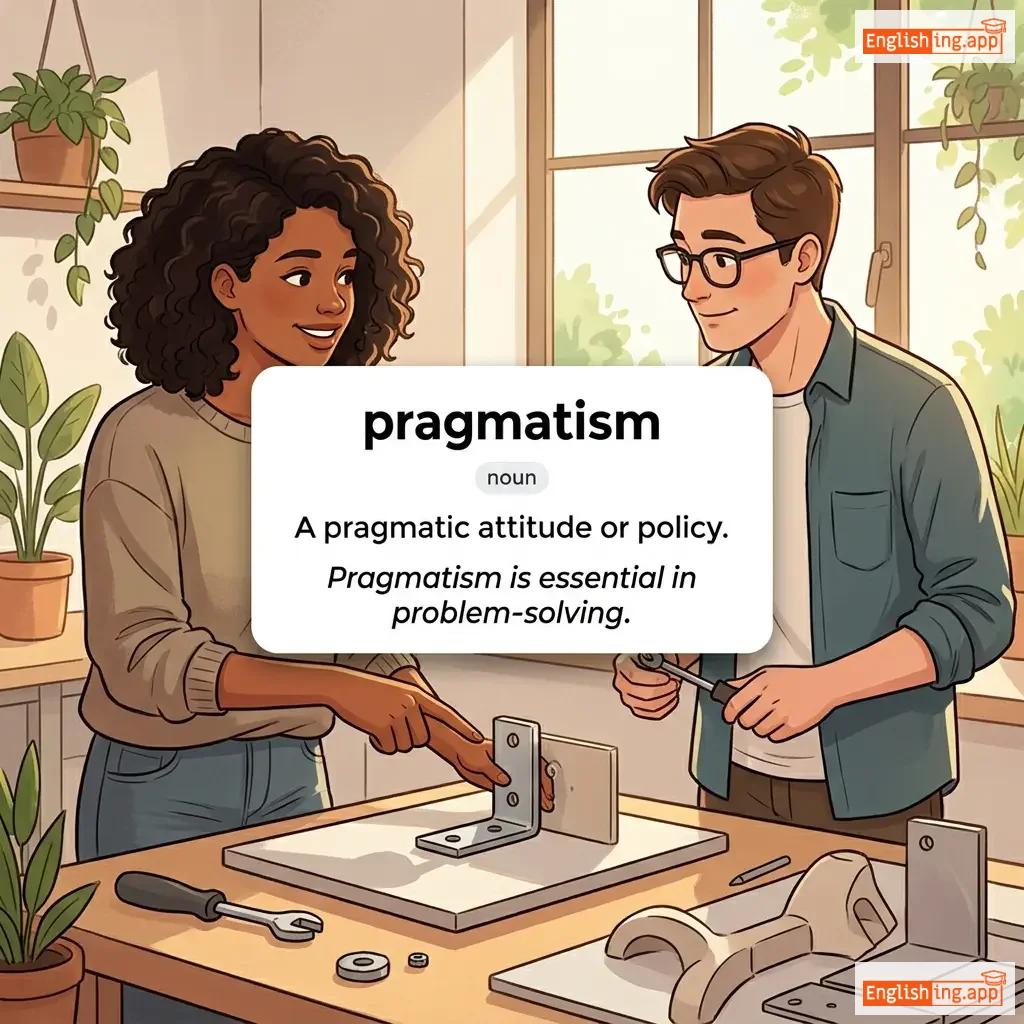
pragmatism definition card — visual illustration of the meaning
noun
/ˈpræɡ.mə.tɪ.zəm/
прагматизм (pragmatizm)

A pragmatic attitude or policy.

"Pragmatism is essential in problem-solving."

"Прагматизм необходим для решения проблем." (Pragmatizm neobkhodim dlya resheniya problem.)
noun
/ˈpræɡmətɪst/
прагматик (pragmatik)

A person who deals with things in a practical and realistic way.

"He is a true pragmatist who values results over ideals."

"Он настоящий прагматик, который ценит результаты больше, чем идеалы." (On nastoyashchij pragmatik, kotoryj tsenit rezul'taty bol'she, chem idealy.)
noun
/ˈprɛəri/
прерия (preriya)

A large open area of grassland, especially in North America.

"The bison roamed freely across the prairie."
"Бизоны свободно бродили по прерии." (Bizony svobodno brodili po prerii.)
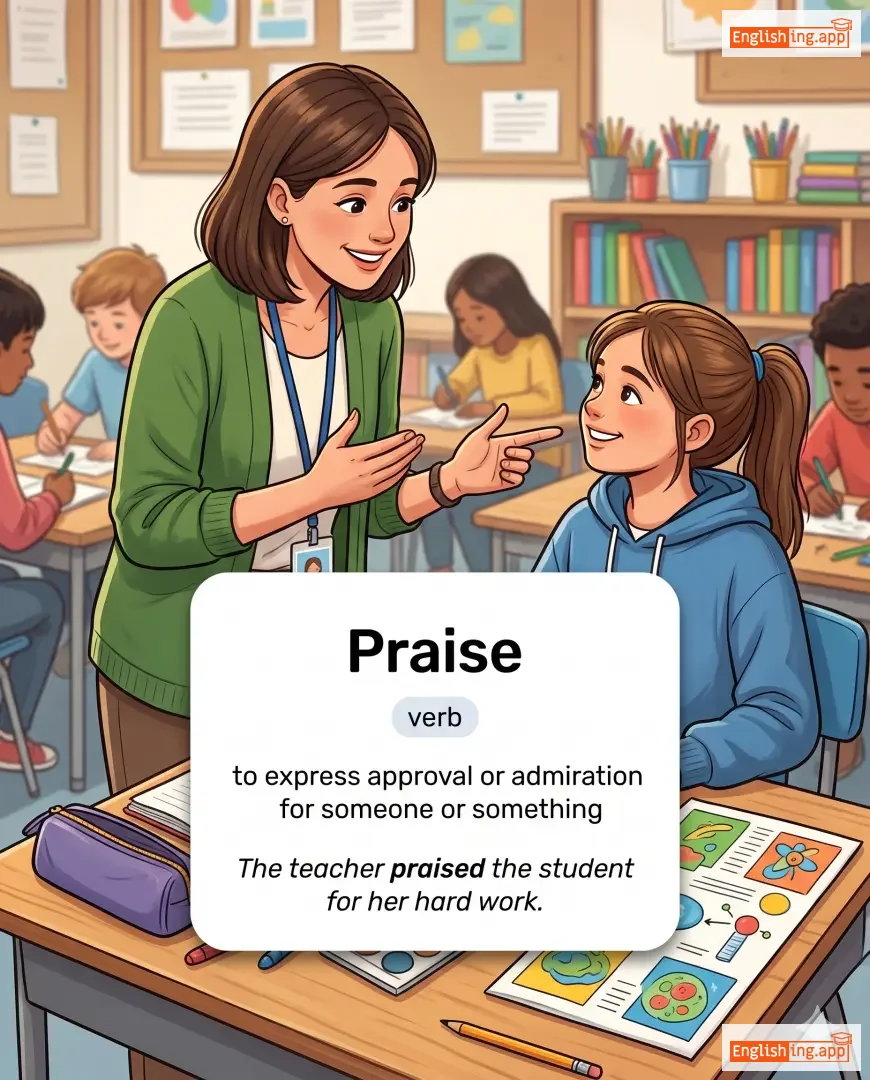
Praise definition card — visual illustration of the meaning
verb
/preɪz/
хвалить (khvalit')

to express approval or admiration for someone or something

"The teacher praised the student for her hard work."

"Учитель похвалил ученицу за её упорный труд." (Uchitel' pokhvalil uchenitsu za yeye upornyy trud.)
adjective
/ˈpreɪz.wɜː.ði/
заслуживающий похвалы (zasluzhivayushchiy pokhvaly)

deserving praise; commendable; admirable

"Her charitable work is truly praiseworthy."

"Ее благотворительная работа по-настоящему заслуживает похвалы." (Eyo blagotvoritel'naya rabota po-nastoyashchemu zasluzhivayet pokhvaly.)