Словари

Словарь английского языка | Значения слов, определения и примеры

adjective
/nɪˈɡoʊ.ʃi.ə.bəl/
договорной (dogovornoy)

Open to discussion or modification; capable of being bargained for.

"The salary offered is negotiable."

"Предложенная зарплата договорная." (Predlozhennaya zarplata dogovornaya.)
verb
/nɪˈɡoʊ.ʃi.eɪt/
вести переговоры (vesti peregovory)

To discuss something formally in order to reach an agreement.

"They negotiated a fair deal with the supplier."

"Они провели переговоры о справедливой сделке с поставщиком." (Oni proveli peregovory o spravedlivoy sdelke s postavshchikom.)
noun
/nɪɡoʊˈʃiːeɪʃən/
переговоры (peregovory)

a discussion aimed at reaching an agreement

"The negotiation between the two companies was successful."

"Переговоры между двумя компаниями были успешными." (Peregovory mezhdu dvumya kompaniyami byli uspeshnymi.)
noun
/ˈneɪbər/
сосед (sosed)

a person living next door or nearby

"My neighbor lent me some sugar when I ran out."

"Мой сосед одолжил мне немного сахара, когда я его не достал." (Moy sosed odolzhil mne nemnogo sakhara, kogda ya yego ne dostal.)
noun
/ˈneɪbərˌhʊd/
район (rajon)

a district or area around or near a particular place

"I grew up in a quiet neighborhood."

"Я вырос в тихом районе." (Ya vyros v tikhom rayone.)
adjective
/ˈneɪbərɪŋ/
соседний (sosedniy)

situated near or next to another place; adjacent or nearby.

"They visited a neighboring village for the festival."

"Они посетили соседнюю деревню для фестиваля." (Oni posetili sosednyuyu derevnyu dlya festivalya.)
noun
/ˈneɪ.bər/
сосед; рядом (sosed; ryadom)

a person who lives near or next to another person

"My neighbour is very friendly and helpful."

"Мой сосед очень дружелюбный и полезный." (Moy sosed ochen' druzhelyubnyy i poleznyy.)
adjective
/ˈneɪ.bər.ɪŋ/
соседний; прилегающий; смежный (sosedniy; prilegayushchiy; smezhniy)

situated next to or very near; adjacent; bordering

"We often visit our neighbouring countries for trade."

"Мы часто посещаем наши соседние страны для торговли." (My chasto poseschaem nashi sosednie strany dlya torgovli.)
conjunction
/ˈniːðər/
ни тот ни другой (ni tot ni drugoy)

used to connect two negative alternatives

"Neither the manager nor the assistant could attend the meeting."

"Ни менеджер, ни помощник не смогли присутствовать на встрече." (ni menedzher ni pomoshnik ne smogli prisutstvovat na vstreche)
noun
/ˈnɛm.ə.sɪs/
враг / соперник (vrag / sopeerik)

A long-standing rival or an inescapable agent of downfall.

"For years, he considered his colleague to be his nemesis."

"Годами он считал своего коллегу своим врагом." (Godami on schital svoego kollegu svoim vragom.)
noun
/ˌniːoʊˈdɑːrwɪnɪzəm/
нео-дарвинизм (neo-darvinizm)

A modern interpretation of Darwin's theory of evolution, integrating genetics and natural selection.

"Neo-Darwinism combines Darwin’s theory of natural selection with modern genetics."

"Нео-дарвинизм сочетает теорию естественного отбора Дарвина с современной генетикой." (Neo-darvinizm sochetaet teoryyu estestvennogo otbora Darvina s sovremennoy genetiekoy.)
noun
/ˌniːoʊˈlætɪn/
нео-латин (neo-latin)

The use of Latin language for scholarly, scientific, and literary purposes after the medieval period.

"Many scientific names are derived from Neo-Latin."

"Многие научные названия происходят от нео-латинского." (Mnogie nauchnye nazvaniya proiskhodyat ot neo-latinskogo.)
noun
/niːˈɒkrəsi/
Правительство, возглавляемое неопытными или новыми чиновниками (Pravitel'stvo, vozglavlyaemoe neopitnymi ili novymi chinovnikami)

A government or leadership run by inexperienced or new officials.

"The sudden revolution led to a neocracy with inexperienced leaders."

"Внезапная революция привела к неократии с неопытными лидерами." (Vnezapnaya revolyutsiya privela k neokraty s neopitnymi liderami.)
adjective
/ˌniːoʊˈlɪθɪk/
неолитический (neolitischeskiy)

Relating to the later part of the Stone Age, when ground or polished stone weapons and tools prevailed.

"Neolithic communities began practicing agriculture and domesticating animals."

"Неолитические общества начали заниматься сельским хозяйством и одомашнивать животных." (Neoliticheskie obshchestva nachali zanimaćsya sel'skim khozyaystvom i odomashnivat' zhivotnykh.)
noun
/niːˈɒlədʒɪzəm/
неологизм (neologizm)

A newly coined word or expression.

"The internet has given rise to many neologisms like 'selfie' and 'hashtag'."

"Интернет дал начало многим неологизмам, таким как 'селфи' и 'хэштег'." (Internet dal nachalo mnogim neologizmam, takim kak 'selfi' i 'kheshtheg'.)
noun
/niˈɒlədʒi/
использование новых слов или изучение их происхождения (ispol'zovaniye novykh slov ili izucheniye ikh proiskhozhdeniya)

The use of new words or the study of their origin.

"The professor specialized in neology, studying the creation of modern slang."

"Профессор специализировался на неологии, изучая создание современного сленга." (Professor spetsializirovalsya na neologii, izuchaya sozdanie sovremennogo slenga.)
noun
/ˌniːoʊˈpeɪɡənɪzəm/
неопаганизм (neopaganizm)

Modern religious movements influenced by or claiming to be derived from the various historical pagan beliefs of pre-modern Europe.

"Neopaganism has gained popularity as people seek spiritual alternatives to mainstream religions."
"Неопаганизм приобрел популярность, так как люди ищут духовные альтернативы основным религиям." (Neopaganizm priobrels populyarnost', tak kak lyudi ishchut dukhovnye al'ternativy osnovnym religiyam.)
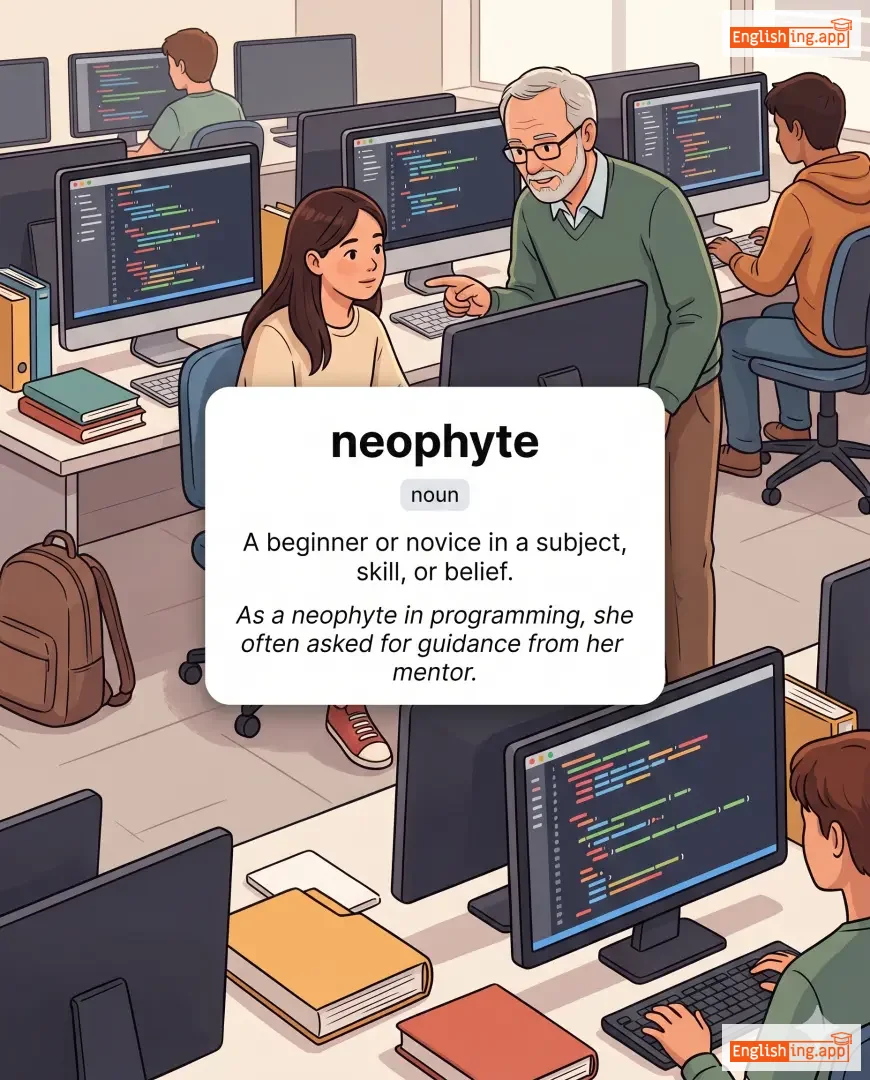
neophyte definition card — visual illustration of the meaning
noun
/ˈniːəˌfaɪt/
новичок (novichok)

A beginner or novice in a subject, skill, or belief.

"As a neophyte in programming, she often asked for guidance from her mentor."

"Будучи новичком в программировании, она часто просила советы у своего наставника." (Buduchi novichkom v programmirovanii, ona chasto prosila sovety u svoego nastavnika.)
noun
/ˈnefjuː/
племянник (plemyannik)

the son of one’s brother or sister

"My nephew is studying at the university."

"Мой племянник учится в университете." (moy plemyannik uchitsya v universitete)
noun
/ˈnɛpətɪzəm/
непотизм (nepotizm)

The practice of giving unfair advantages to relatives, especially in jobs or positions of power.

"The company was accused of nepotism after the manager hired his brother."

"Компания была обвинена в непотизме после того, как менеджер нанял своего брата." (Kompanija byla obvinena v nepotizme posle togo, kak menedzher nanyl svoego brata.)
noun, verb
/nɜːrv/
нерв; мужество (nerv; muzhestvo)

A bundle of fibers in the body that transmits signals between the brain and other parts; also courage or audacity.

"She gathered the nerve to speak in front of the large audience."

"Она собрала смелость поговорить перед большой аудиторией." (Ona sobral smelost' pogovorit' pered bol'shoy auditoriey.)
adjective
/ˈnɜːrvəs/
нервный (nervnyy)

anxious, worried, or fearful about something

"She felt nervous before giving her presentation."

"Она чувствовала себя нервной перед презентацией." (Ona chuvstvovala sebya nervnoy pered prezentatsiyey.)
noun
/nɛst/
гнездо (gnezdo)

a structure built by birds or other animals to hold their eggs or young.

"The bird built a nest in the tall tree."

"Птица построила гнездо на высоком дереве." (Ptitsa postroila gnezdo na visokom dereve.)
verb
/ˈnɛsəl/
прижаться (prizhatsya)

to settle or lie comfortably within or against something

"The child nestled into her mother's arms."

"Ребёнок прижался к её маме в руках." (Rebyonok prizhalsya k yeye mame v rukakh.)
noun
/ˈnɛslɪŋ/
птенец (ptenets)

a young bird that has not yet left the nest

"The nestling waited for its parent to bring food."

"Птенец ждал, когда его родители принесут еду." (Ptenets zhdal, kogda ego roditeli prinesut edu.)
noun
/nɛt/
сеть (set)

a piece of material made of threads or ropes woven together, used to catch or hold things

"The fisherman cast his net into the sea."

"Рыбак бросил свою сеть в море." (Rybak brosil svoju set' v more.)
adjective
/ˈnɛðər/
нижний (nizhniy)

situated down or below; lower

"They explored the nether regions of the cave."

"Они исследовали нижние регионы пещеры." (Oni issledovali nizhnie regiony peshchery.)
noun
/ˈnɛtl̩/
растение с жгучими волосками, которые вызывают раздражение при касании (rastenie s zhguchimi voloskami, kotorye vyzyvayut razdrazhenie pri kasanii)

a plant with stinging hairs that cause irritation when touched

"He accidentally brushed against the nettle and felt a sharp sting."

"Он случайно коснулся крапивы и почувствовал острое жжение." (On sluchayno kosnulsya krapivy i pochuvstvoval ostroye zhizhenie.)
adjective
/ˈnɛtlˌsʌm/
раздражающий (razdrazhayushchiy)

Causing irritation, annoyance, or difficulty.

"The nettlesome rules frustrated the workers."

"Раздражающие правила расстроили работников." (Razdrazhayushchie pravila rasstroili rabotnikov.)
noun
/ˈnɛtˌwɜrk/
сеть (set)

A system of interconnected people, things, or computers.

"She built a strong professional network."

"Она построила сильную профессиональную сеть." (Ona postroila sil'nuyu professional'nuyu set'.)
networking definition card — visual illustration of the meaning
noun
/ˈnɛtˌwɜːkɪŋ/
сетевой маркетинг (setevoy marketing)

The action of establishing connections and relationships, especially for career or business purposes.

"Networking is important for career development."

"Сетевой маркетинг важен для карьерного роста." (Setevoy marketing vazhen dlya kar'yernogo rosta.)
adjective
/ˈnjʊrəl/

Relating to nerves or the nervous system.

"Scientists study neural connections in the brain."

noun
/njʊˈrældʒə/
нервная боль (nervnaya bol')

intense, often intermittent pain along a nerve pathway

"The patient suffers from neuralgia in her face."
"Пациент страдает от невралгии на лице." (Patsiyent stradayet ot nevralgii na litse.)
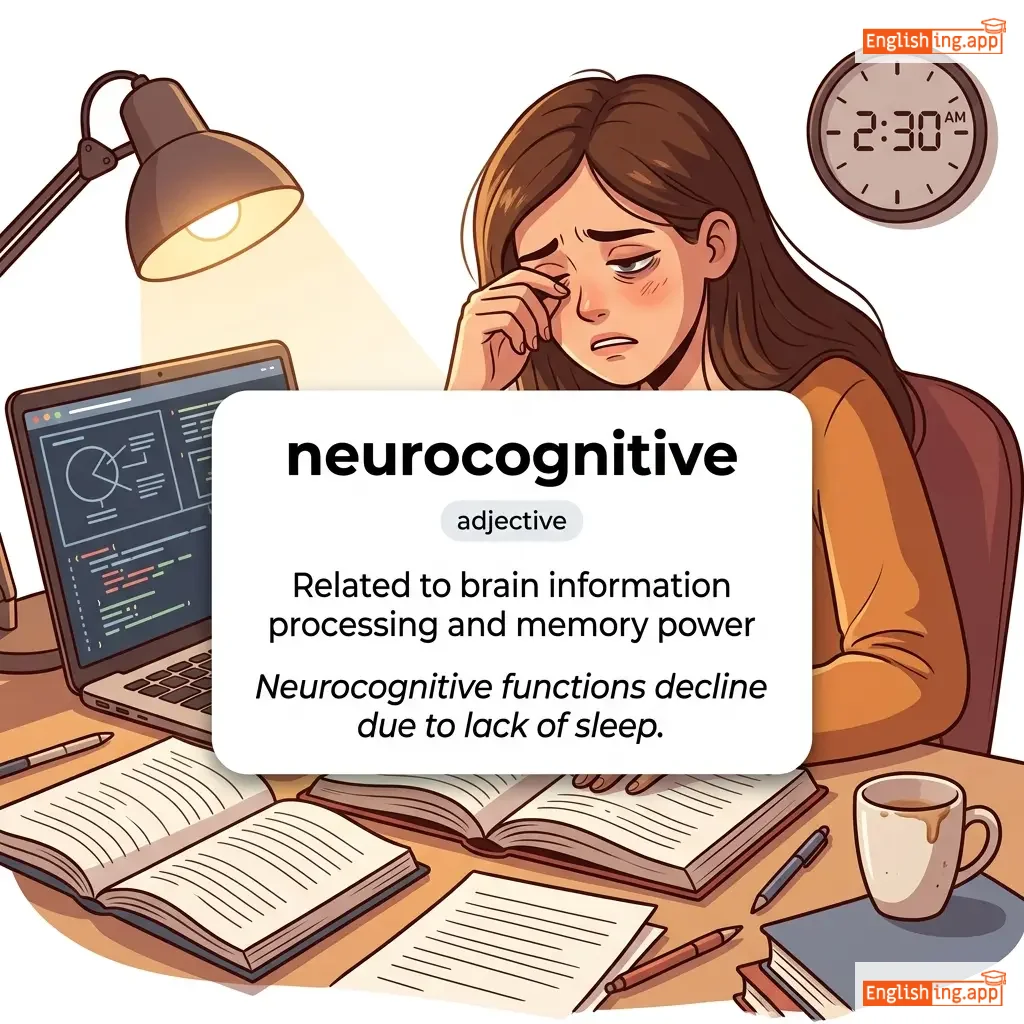
neurocognitive definition card — visual illustration of the meaning
adjective
ˌnjʊəroʊˈkɒɡnɪtɪv
нейрокогнитивный (neyrokognitivnyy)

Related to brain information processing and memory power

"Neurocognitive functions decline due to lack of sleep."
"Нейрокогнитивные функции ухудшаются из-за недостатка сна." (Neyrokognitivnye funktsii ukhudshtayutsya iz-za nedostatka sna.)
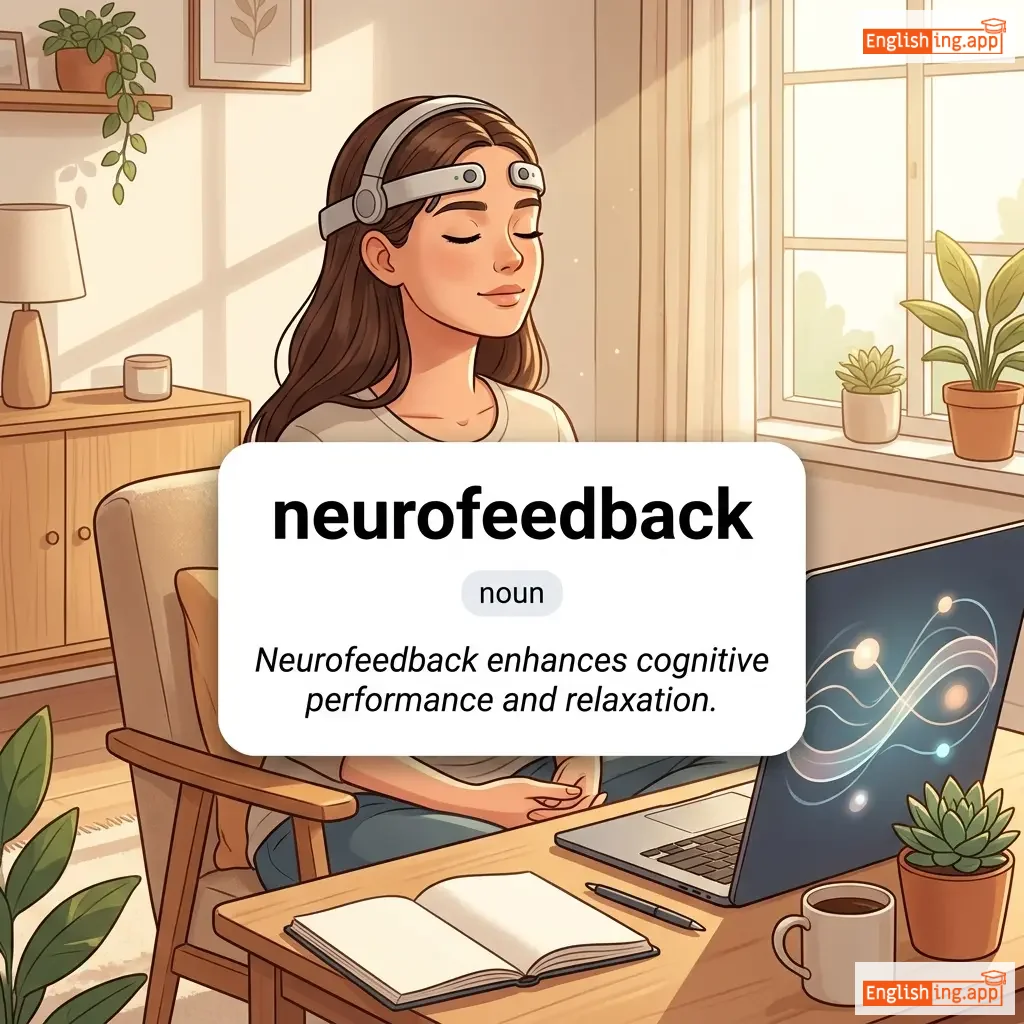
neurofeedback definition card — visual illustration of the meaning
noun
ˈnjʊə.rəʊ ˌfiːd.bæk
техника, использующая отображение активности мозга в реальном времени для обучения саморегуляции функции мозга (neyrofeedback)

A technique that uses real-time displays of brain activity to teach self-regulation of brain function.

"Neurofeedback enhances cognitive performance and relaxation."
"Нейрофидбек улучшает когнитивную активность и расслабление." (Neyrofeedback uluchshayut kognitivnuyu aktivnost' i rasslablenie.)
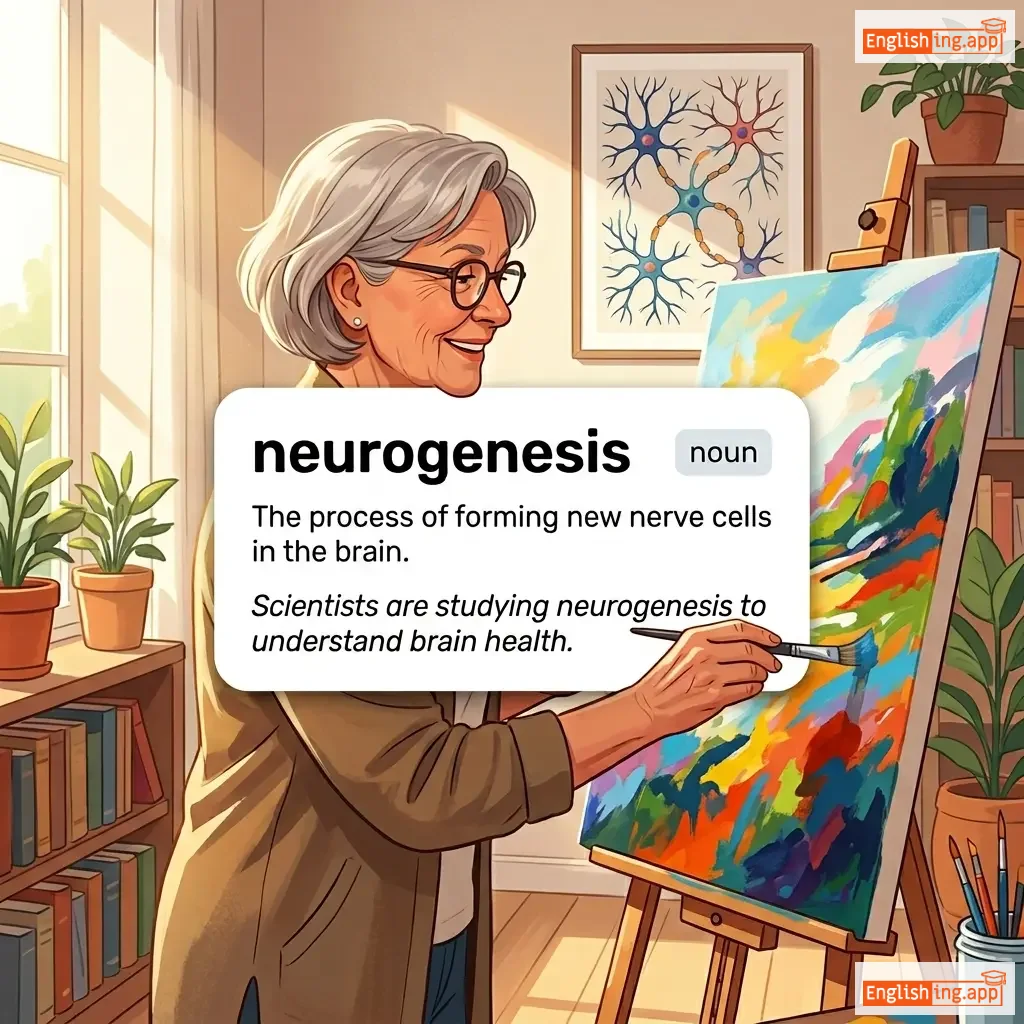
neurogenesis definition card — visual illustration of the meaning
noun
/ˌnjʊə.rəʊˈdʒɛn.ɪ.sɪs/
образование новых нервных клеток (obrazovanie novyh nervnyh kletok)

The process of forming new nerve cells in the brain.

"Scientists are studying neurogenesis to understand brain health."
"Ученые изучают нейрогенез, чтобы понять здоровье мозга." (Uchenye izuchayut neyrogenes, chtoby ponyat zdorovye mozga.)
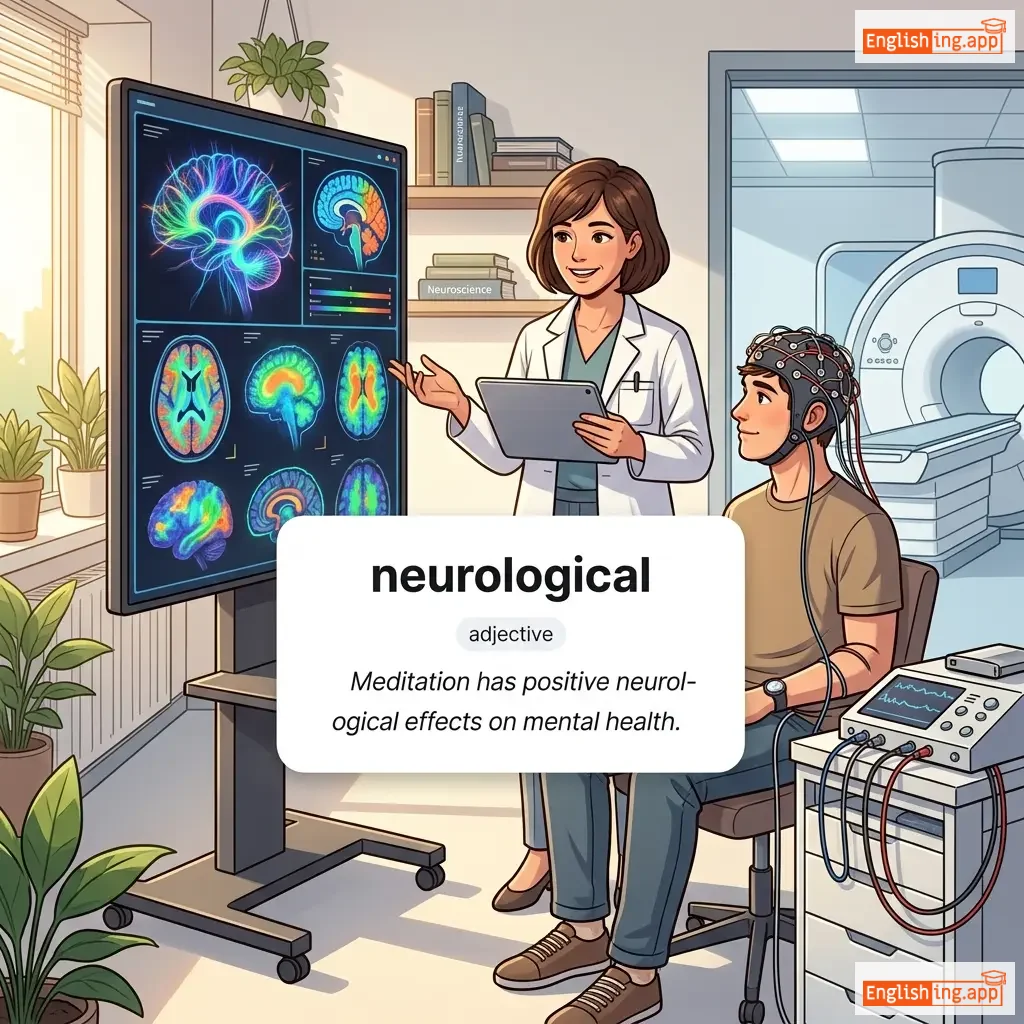
neurological definition card — visual illustration of the meaning
adjective
/ˌnjʊə.rəˈlɒdʒ.ɪ.kəl/
неврологический (nevrologicheskiy)

Relating to the anatomy, functions, and organic disorders of nerves and the nervous system.

"Meditation has positive neurological effects on mental health."

"Медитация имеет положительное нейрологическое воздействие на психическое здоровье." (Meditatsiya imeet polozhitel'noe neyrologicheskoe vozdeystvie na psikhicheskoe zdorov'ye.)
noun
/njʊˈrɑːlədʒi/
неврология (nevrologiya)

The branch of medicine that deals with disorders of the nervous system.

"She specializes in neurology and treats patients with brain diseases."

"Она специализируется на неврологии и лечит пациентов с болезнями мозга." (Ona spetsializiruetsya na nevrologii i lechit patsiyentov s boleznyami mozga.)
neuroplasticity definition card — visual illustration of the meaning
noun
ˌnjʊə.rəʊ.plæsˈtɪ.sɪ.ti
нейропластичность (neyroplastichnost)

The ability of the brain to reorganize itself by forming new neural connections throughout life.

"Meditation enhances neuroplasticity, improving memory and focus."
"Медитация увеличивает нейропластичность, улучшая память и внимание." (Meditatsiya uvelichivayet neyroplastichnost', uluchshaya pamyat' i vnimanie.)
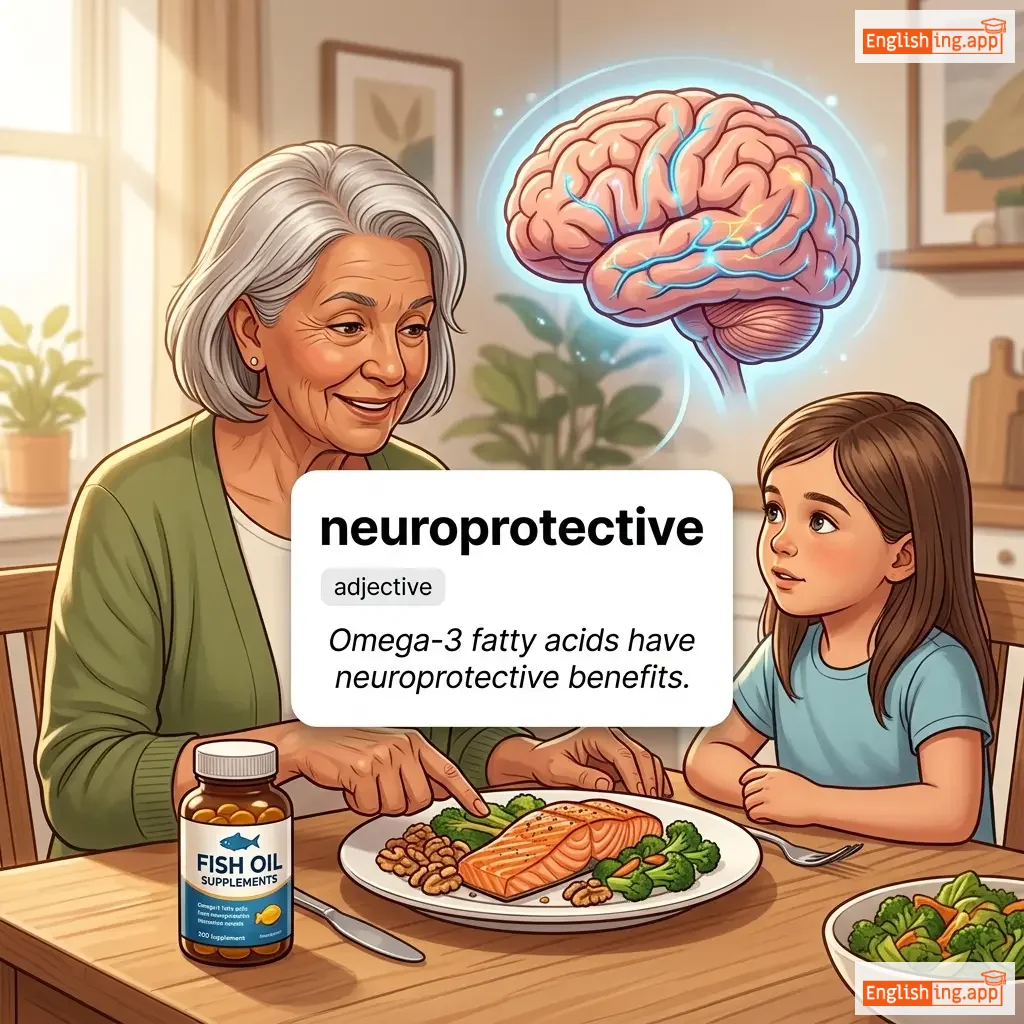
neuroprotective definition card — visual illustration of the meaning
adjective
ˌnjʊə.rəʊ.prəˈtek.tɪv
нейропротекторный (neyroprotektivny)

Having the ability to protect nerve cells from damage, degeneration, or impaired function.

"Omega-3 fatty acids have neuroprotective benefits."
"Омега-3 жирные кислоты обладают нейропротективными свойствами." (Omega-3 zhirnye kisloty obladayut neyroprotektivnymi svoystvami.)
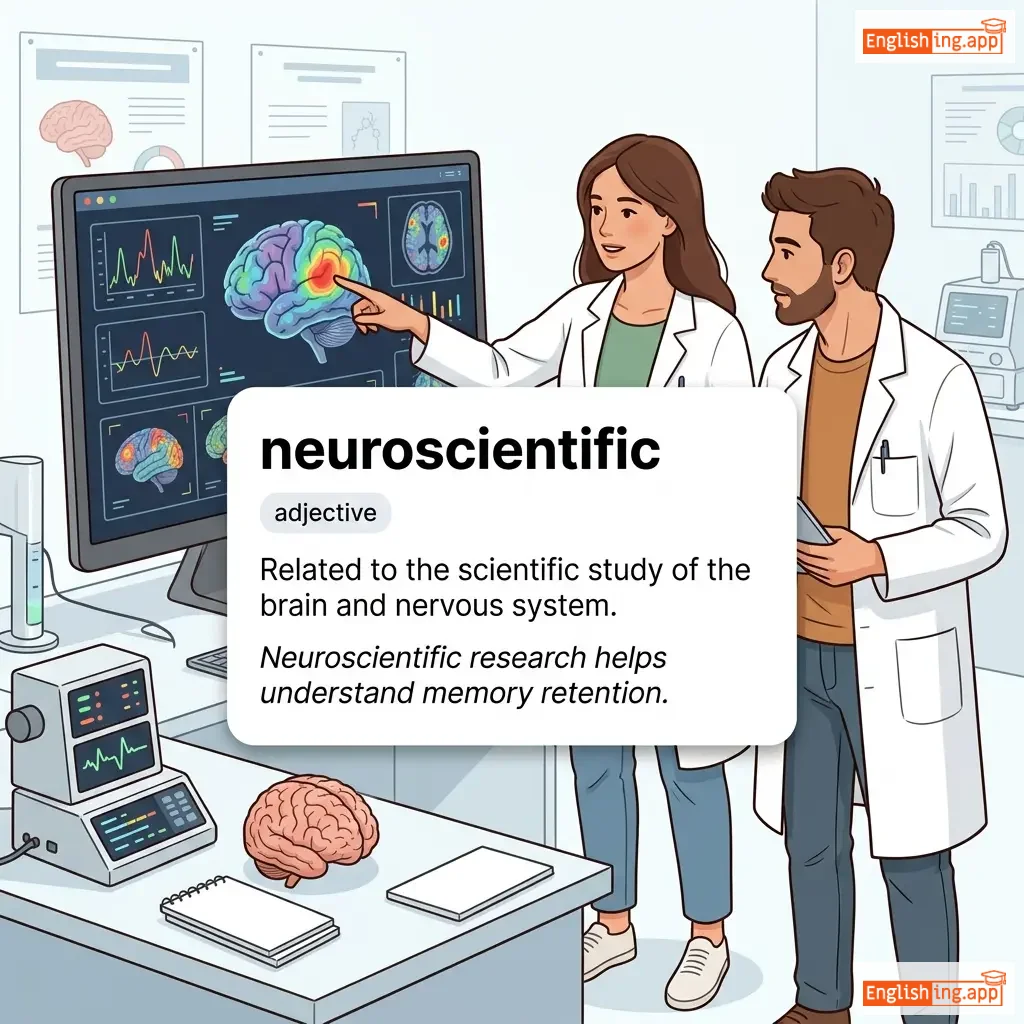
neuroscientific definition card — visual illustration of the meaning
adjective
ˌnjʊə.rəʊ.saɪənˈtɪ.fɪk
нейробиологический (neyrobiologicheskiy)

Related to the scientific study of the brain and nervous system.

"Neuroscientific research helps understand memory retention."
"Нейронаучные исследования помогают понять сохранение памяти." (Neyronauchnye issledovaniya pomogayut ponyat' sokhranenie pamyati.)
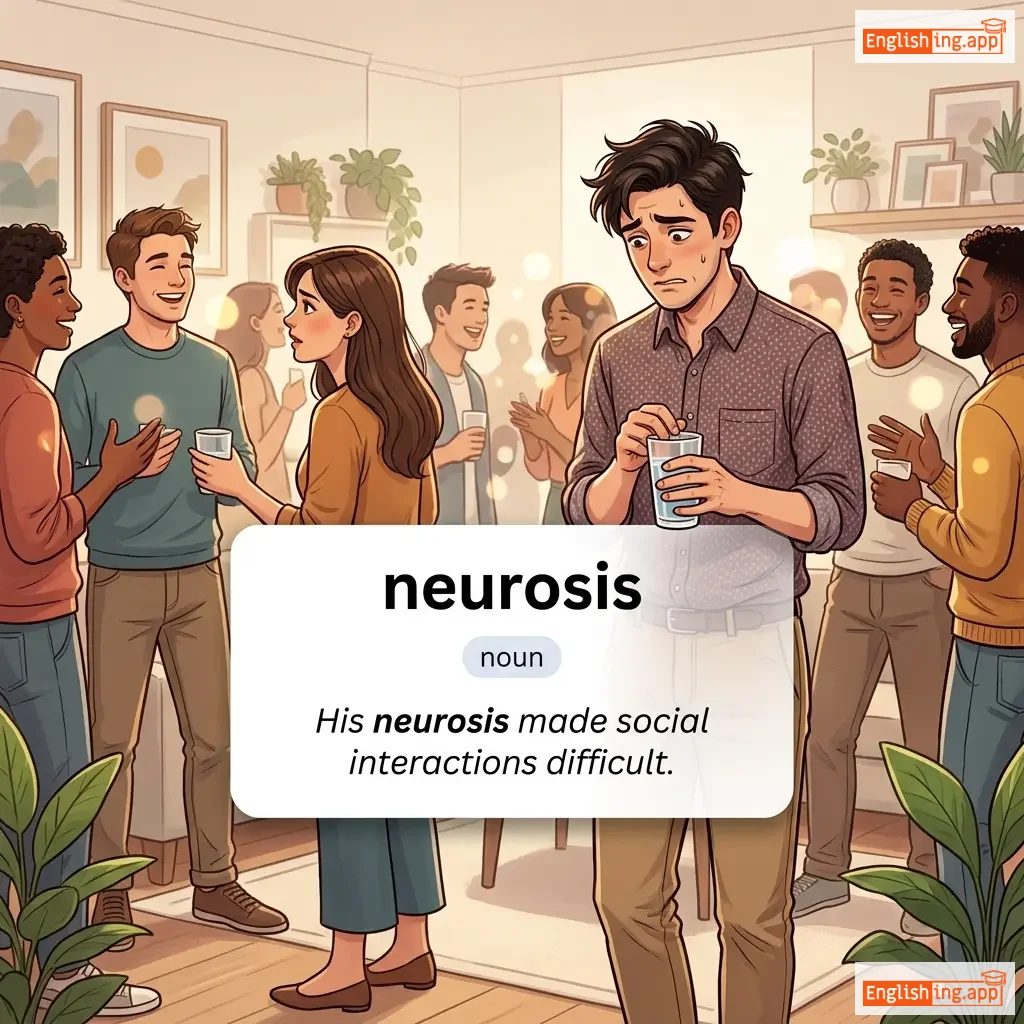
neurosis definition card — visual illustration of the meaning
noun
/njʊəˈrəʊ.sɪs/
невроз (nevroz)

A relatively mild mental illness that is not caused by organic disease, involving symptoms of stress.

"His neurosis made social interactions difficult."
"Его невроз усложнял социальные взаимодействия." (Ego nevroz uslozhnyal sotsial'nye vzaimodeystviya.)
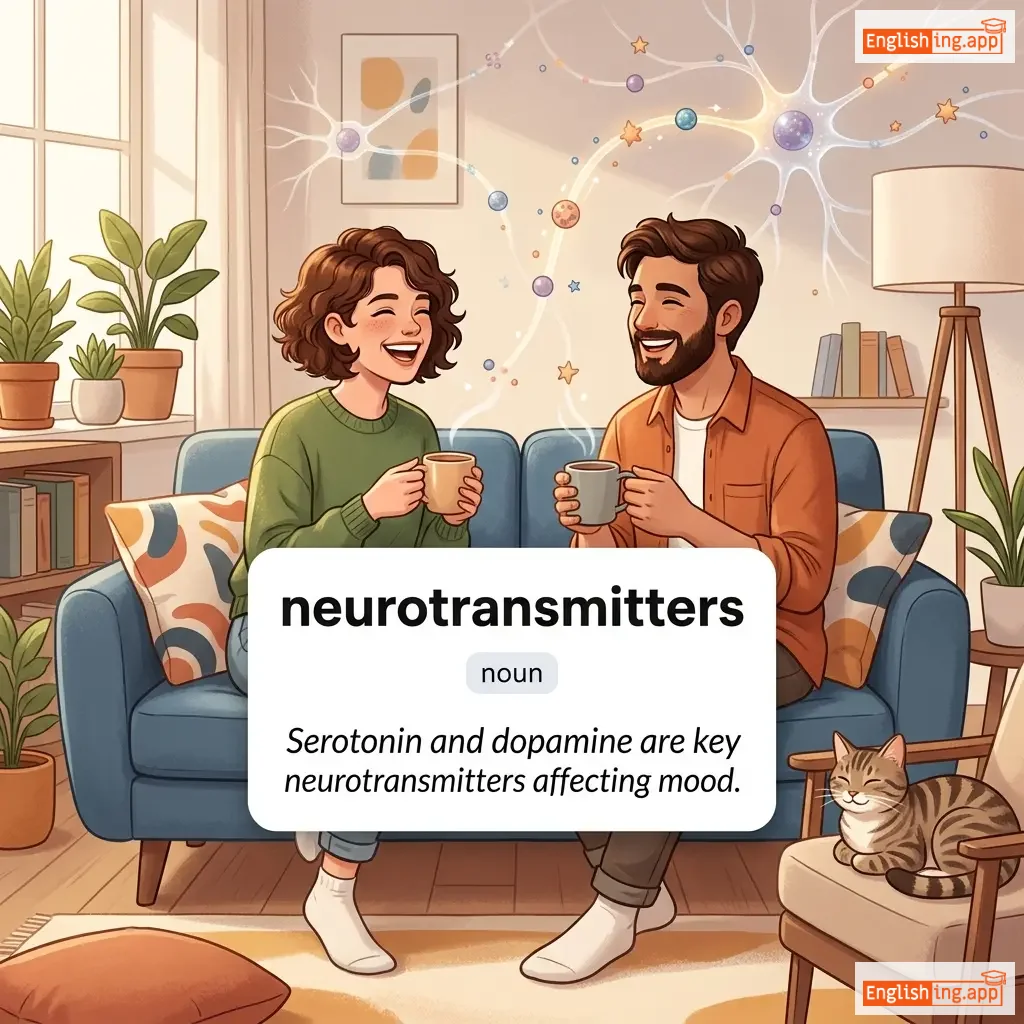
neurotransmitters definition card — visual illustration of the meaning
noun
/ˈnjʊə.rəʊ.trænsˌmɪt.ərs/
нейротрансмиттеры (neyrotransmittery)

Chemical messengers that transmit signals across nerve synapses, affecting mood, behavior, and cognitive functions.

"Serotonin and dopamine are key neurotransmitters affecting mood."

"Серотонин и допамин - ключевые нейротрансмиттеры, влияющие на настроение." (Serotonin i dopamin - klyuchevye neyrotransmittery, vliyayushchie na nastroenie.)
verb
/ˈnuːtər/
кастрировать (kastrirovat)

To remove the reproductive organs of an animal; or having no gender.

"They decided to neuter their cat to prevent more kittens."
"Они решили кастрировать свою кошку, чтобы предотвратить появление новых котят." (Oni reshili kastrirovat' svoyu koshku, chtoby predotvratit' poyavlenie novykh kotyat.)
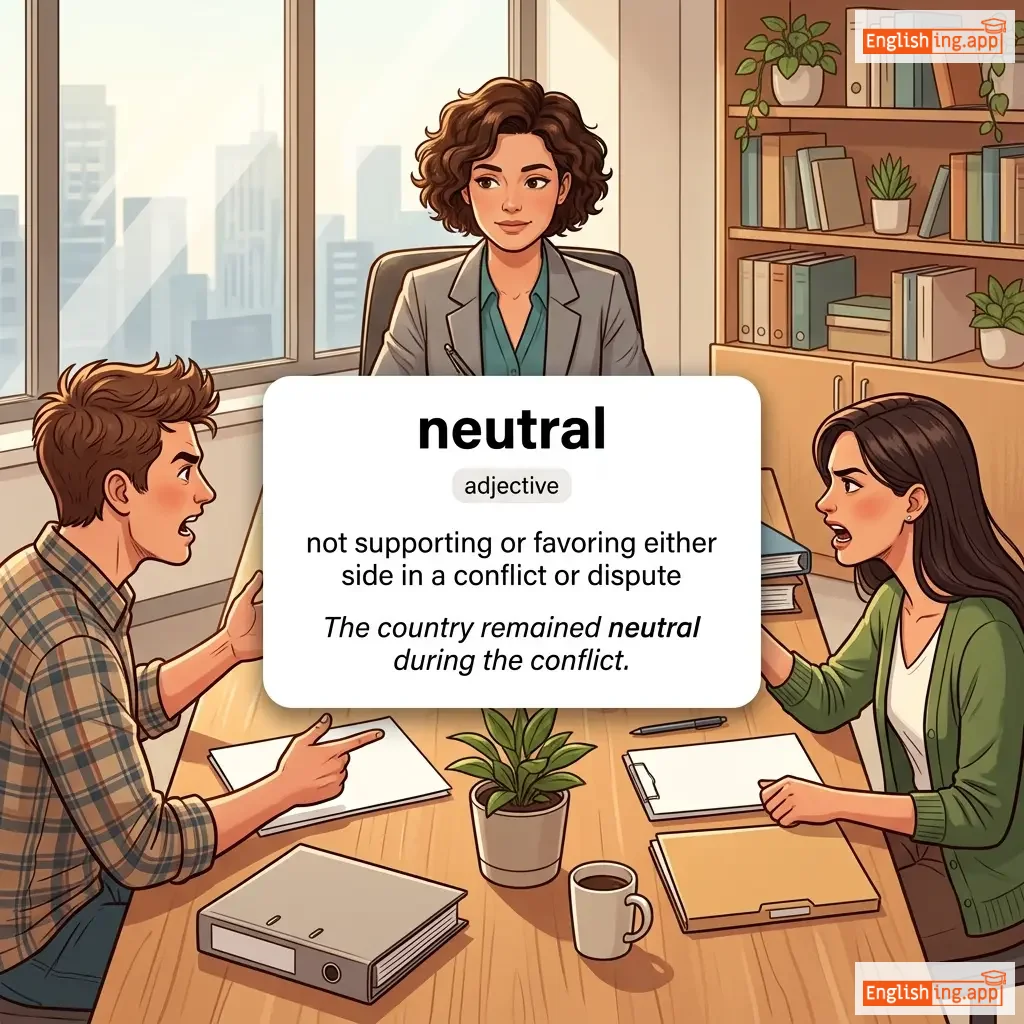
neutral definition card — visual illustration of the meaning
adjective
/ˈnjuːtrəl/
нейтральный (neytralny)

not supporting or favoring either side in a conflict or dispute

"The country remained neutral during the conflict."
"Страна осталась нейтральной во время конфликта." (Strana ostalas' neytral'noy vo vremya konflikta.)
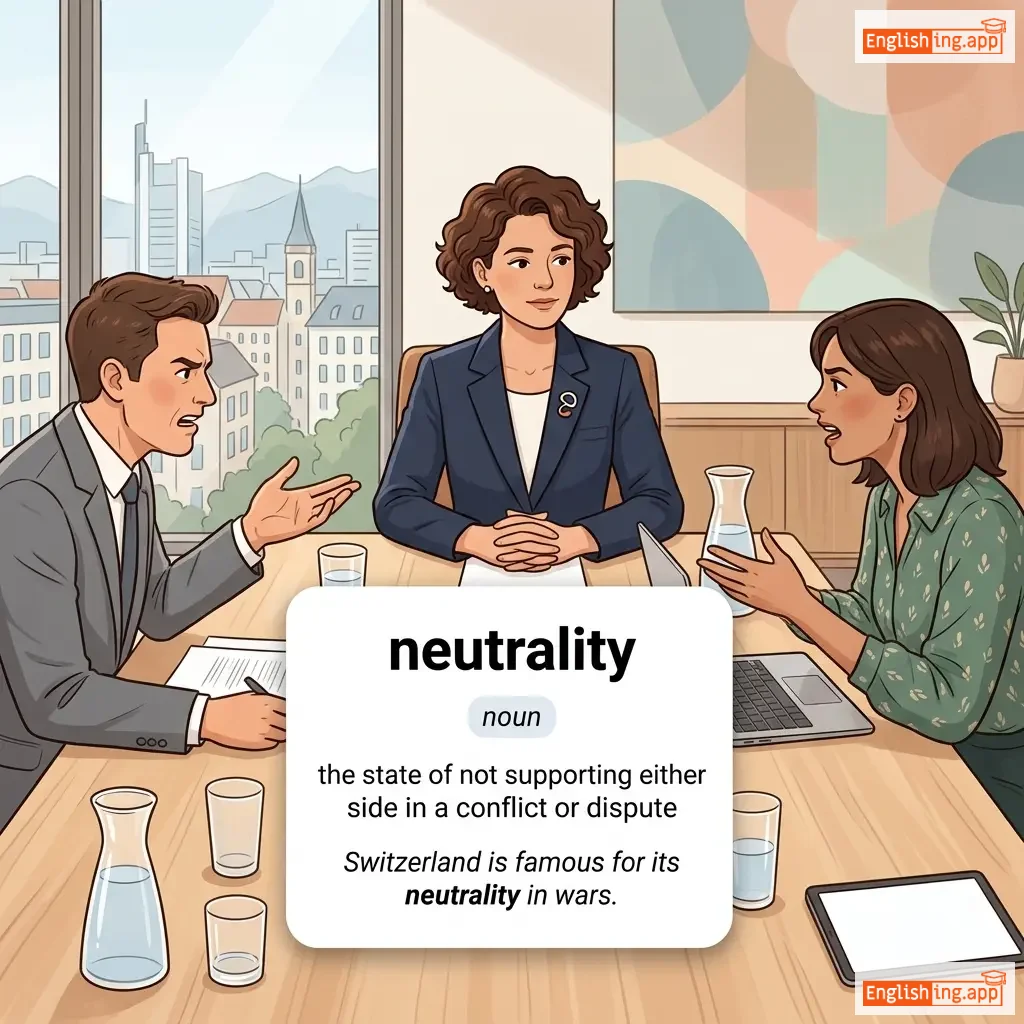
neutrality definition card — visual illustration of the meaning
noun
/nuːˈtræl.ə.ti/
нейтралитет (neytralitet)

the state of not supporting either side in a conflict or dispute

"Switzerland is famous for its neutrality in wars."

"Швейцария известна своим нейтралитетом в войнах." (Shveytsariya izvestna svoim neytralitetom v voynakh.)
verb
/ˈnjuːtrəlaɪz/
нейтрализовать (nejtralizovat)

to make something ineffective or harmless

"The medicine helped neutralize the poison in his system."

"Медикамент помог нейтрализовать яд в его организме." (Medikament pomog nejtralizovat' yad v ego organize.)
adverb
/ˈnɛvər/
никогда (nikogda)

at no time in the past or future; not ever

"I have never seen such a beautiful sunset."

"Я никогда не видел такого красивого заката." (Ya nikogda ne videl takogo krasivogo zakata.)
adverb
/ˌnɛvəðəˈlɛs/
тем не менее (nevertheless)

in spite of that; however

"He was tired; nevertheless, he kept working."

"Он устал; тем не менее он продолжал работать." (On ustal tem ne meneye on prodolzhal rabotat)
adjective
/njuː/
новый (novyy)

recently made, discovered, or introduced; not existing before

"He bought a new car yesterday."

"Он купил новую машину вчера." (On kupil novuyu mashinu vchera.)