Словари

Словарь английского языка | Значения слов, определения и примеры

verb
/ˌmɪsˈmænɪdʒ/

to handle or control something badly or inefficiently

"The company went bankrupt because it was mismanaged for years."

mismanagement definition card — visual illustration of the meaning
noun
ˌmɪsˈmænɪdʒmənt
неэффективное управление (neeffektivnoe upravlenie)

Bad or careless management of something.

"Mismanagement of plastic waste worsens pollution."

"Неэффективное управление пластиковыми отходами усугубляет загрязнение." (Neeffektivnoe upravlenie plastikovymi otdkhodami usugublyayet zagryazneniye.)
noun
/ˌmɪsˈnoʊmər/
неправильное имя (nepravil'noe imya)

A wrong or inaccurate name or designation.

"Calling the tiny dog a 'giant' is a misnomer."

"Называть маленькую собаку 'гигантом' — это неправильное имя." (Nazyvat' malen'kuyu sobaku 'gigantom' — eto nepravil'noe imya.)
noun
/mɪˈsɑːɡəmi/
мизогамия (mizo-gamiya)

Hatred or dislike of marriage.

"His misogamy prevented him from ever settling down with a partner."

"Его мисогамия не позволила ему когда-либо создать семью с партнером." (Ego misogamiya ne pozvolila emu kogda-libo sozdats' sem'yu s partnerom.)
noun
/mɪˈsɑːdʒɪnɪst/
мизогин (mizogin)

A person who dislikes, despises, or is strongly prejudiced against women.

"Many condemned his speech as the words of a misogynist."

"Многие осудили его речь как слова мизогина." (Mnogie osudili ego rech' kak slova mizogina.)
noun
/mɪˈsɑːdʒəni/
мизогиния (mizoginiya)

Hatred of, contempt for, or prejudice against women.

"The novel has been criticized for promoting misogyny."

"Роман был раскритикован за пропаганду мизогинии." (Roman byl raskritikovan za propagandu mizoginii.)
verb
/ˌmɪsˈpleɪs/
положить не на место (polozhit' ne na mesto)

To put something in the wrong location and temporarily lose it.

"I often misplace my keys when I am in a hurry."

"Я часто теряю свои ключи, когда спешу." (Ya chasto teryayu svoi klyuchi, kogda speshyu.)
verb
/ˌmɪsˈriːd/
неправильно читать (nepravil'no chitat')

to read something incorrectly or interpret wrongly

"He misread the instructions and built the shelf incorrectly."

"Он неправильно прочитал инструкции и собрал полку неправильно." (On nepravil'no prochital instruktsii i sobral polku nepravil'no.)
verb
/ˌmɪsˌrɛprɪˈzɛnt/

to give a false or misleading account of something

"The lawyer accused the witness of trying to misrepresent the facts."

noun
/ˌmɪsˈruːl/
неправильное правление (nepravil'noe pravlenie)

bad or poor governance

"The kingdom suffered for decades under misrule."

"Царство страдало десятилетиями под неправильным правлением." (Tsarstvo stradalo desyatiletijami pod nepravil'nym pravleniem.)
verb, noun
/mɪs/
скучать / пропустить (skuchat' / propustit')

to fail to hit, reach, or meet; to feel the absence of someone or something

"I really miss my family when I travel abroad."

"Я действительно скучаю по своей семье, когда путешествую за границу." (Ya deystvitel'no skuchayu po svoey sem'ye, kogda puteshestvuyu za granitsu.)
noun
/ˈmɪsəl/
мисса-книга (missa-kniga)

a book containing the texts used in the Catholic Mass throughout the year

"The priest read from the missal during the ceremony."

"Священник читал из мисса-книги во время церемонии." (Svyashchennik chital iz missa-knigi vo vremya tseremonii.)
noun
/ˈmɪsaɪl/ or /ˈmɪsəl/
ракета (raketa)

a weapon that is self-propelled and directed toward a target

"The army launched a missile towards the enemy base."
"Армия запустила ракету в сторону вражеской базы." (Armiya zapustila raketu v storonu vrazheskoy bazy.)
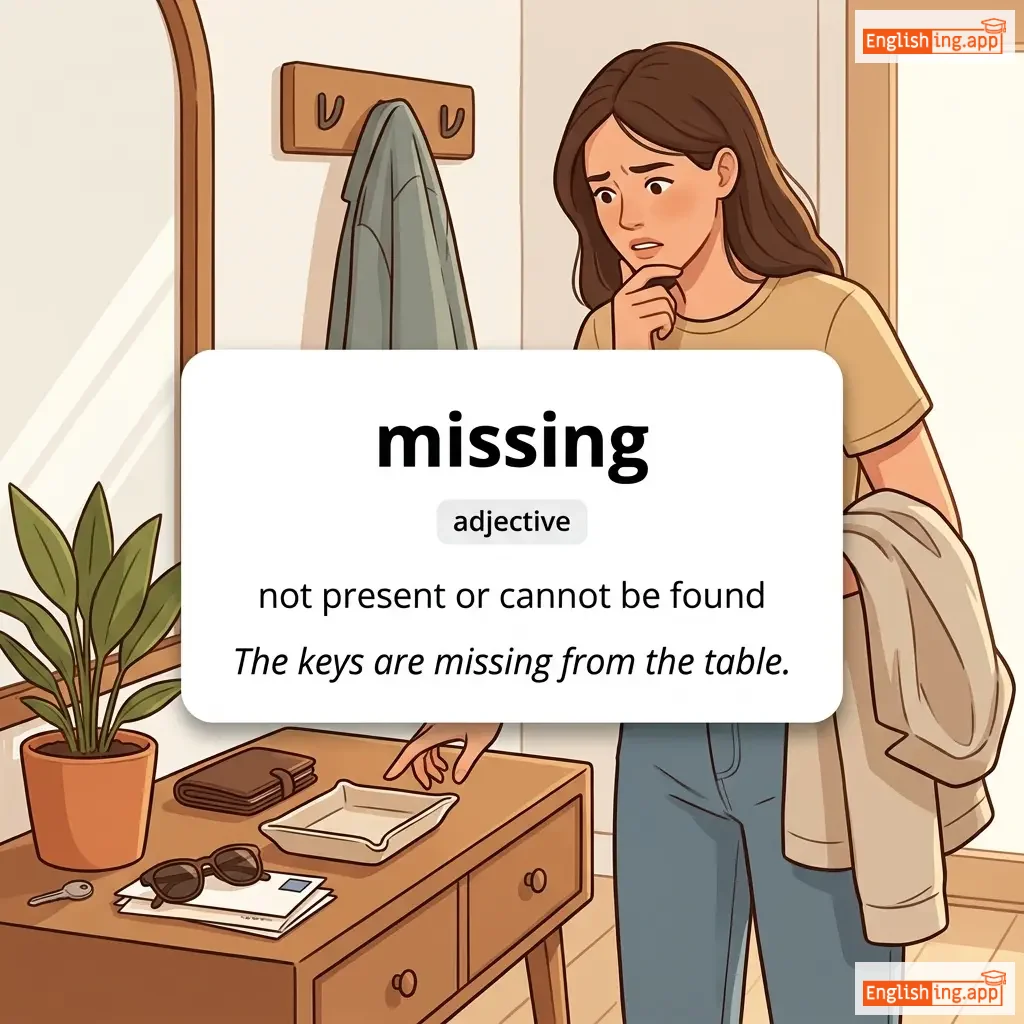
missing definition card — visual illustration of the meaning
adjective
/ˈmɪsɪŋ/
отсутствует (otsutstvuet)

not present or cannot be found

"The keys are missing from the table."

"Ключи отсутствуют на столе." (Klyuchi otsutstvuyut na stole.)
noun
/ˈmɪʃən/
миссия / задание (missiya / zadanie)

an important assignment or task, often with a specific purpose

"The astronauts were on a mission to explore Mars."

"Астронавты были на миссии по исследованию Марса." (Astronavty byli na missii po issledovaniyu Marsa.)
noun
/ˈmɪʃəneri/
миссионер (missiyoner)

a person sent on a religious mission, especially to promote Christianity in a foreign country

"The missionary spent years helping local communities in Africa."

"Миссионер провел годы, помогая местным сообществам в Африке." (Missiyoner provel gody, pomogaya mestnym soobshchestvam v Afrike.)
noun
/ˈmɪsɪv/
послание (poslanie)

a written message, especially a formal or official letter

"He sent a long missive to the governor."

"Он отправил длинное послание губернатору." (On otpravil dlinnoe poslanie gubernatoru.)
noun
/mɪˈsteɪk/
ошибка (oshibka)

An action or decision that is wrong or misguided.

"She realized her mistake after submitting the wrong file."

"Она поняла свою ошибку после того, как отправила неправильный файл." (Ona ponyala svoyu oshibku posle togo, kak otpravyla nepravil'nyy fayl.)
adjective
/mɪˈsteɪkən/
ошибочный (oshibochnyi)

wrong or incorrect because of an error in judgment or understanding

"I was mistaken about the meeting time."

"Я ошибся насчёт времени встречи." (ya oshibsya naschyot vremeni vstrechi)
noun/verb
/ˌmɪsˈtrʌst/
недоверие (nedeverie)

lack of trust; suspicion or doubt about someone or something

"The villagers showed deep mistrust of outsiders."

"Жители деревни проявили глубокое недоверие к чужакам." (Zhiteli derevni proyavili glubokoye nedeveriye k chuzhakam.)
noun
/ˌmɪs.ʌn.dəˈstæn.dɪŋ/
недоразумение (nedorazumenie)

A failure to understand something correctly; a disagreement or confusion between people

"The argument was caused by a simple misunderstanding."
"Спор был вызван простым недоразумением." (Spor byl vyzvan prostym nedorazumeniem.)
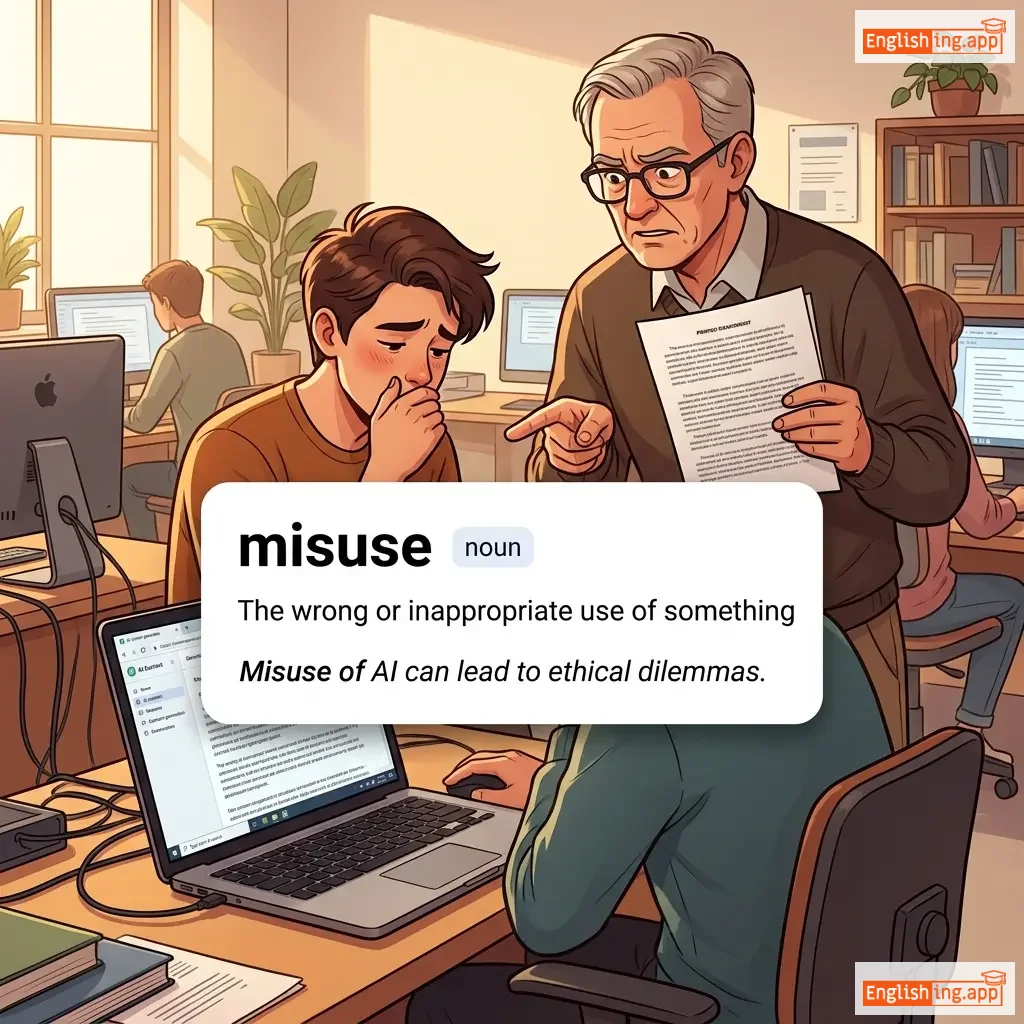
misuse definition card — visual illustration of the meaning
noun
ˌmɪsˈjuːs
злоупотребление (zloupotreblenie)

The wrong or inappropriate use of something

"Misuse of AI can lead to ethical dilemmas."

"Неправильное использование ИИ может привести к этическим дилеммам." (Nepravil'noe ispol'zovanie II mozhet privesti k eticheskim dillemmam.)
noun
/maɪt/
паука-клещ (pauka-klesh)

a very small creature, often a tiny arachnid; also used to mean a very small amount

"The mattress was infested with dust mites."

"Матрас был заражен пылевыми клещами." (Matras byl zarazhen pyl'evymi kleshchami.)
noun
/ˈmaɪtər/
митра (mitra)

a tall, pointed hat worn by bishops; also a type of joint made between two pieces of material

"The bishop placed the miter on his head during the ceremony."
"Епископ надел митру на свою голову во время церемонии." (Episkop nadel mitru na svoju golovu vo vremya tseremonii.)
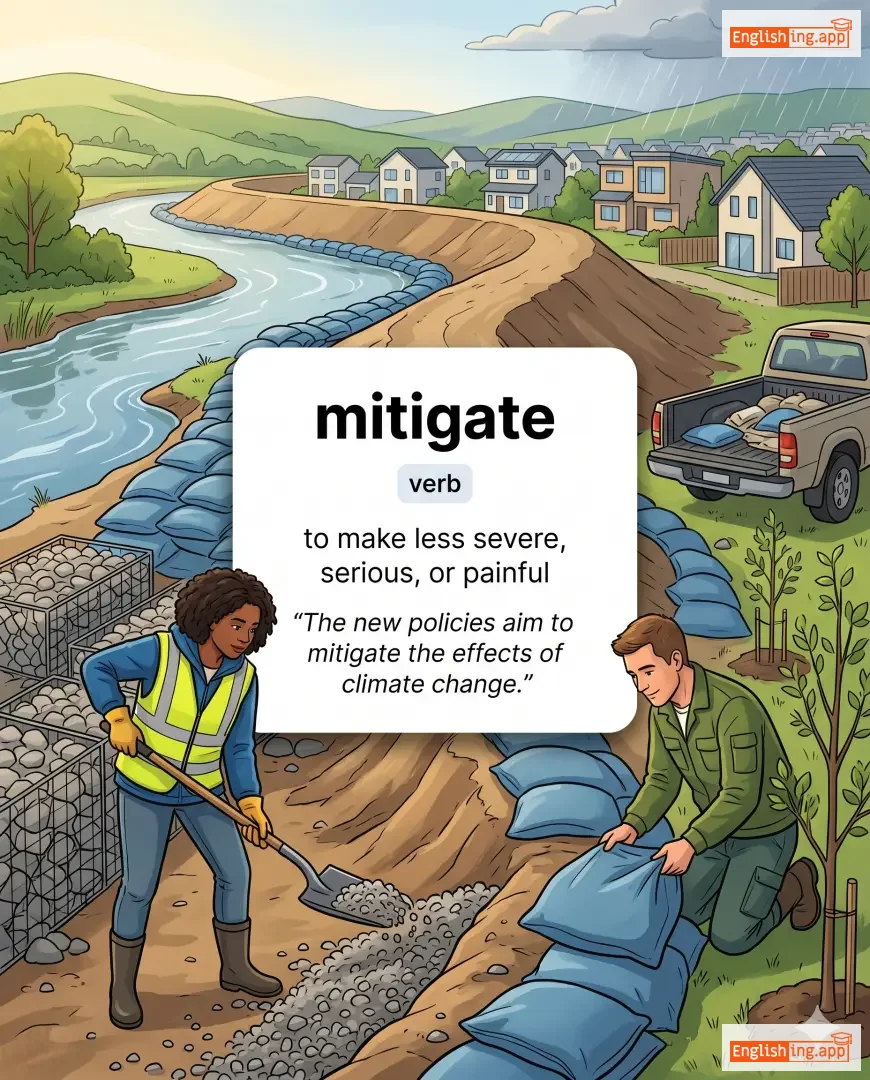
mitigate definition card — visual illustration of the meaning
verb
/ˈmɪtɪˌɡeɪt/
смягчать (smyagchat)

to make less severe, serious, or painful

"The new policies aim to mitigate the effects of climate change."
"Новые политические меры направлены на смягчение последствий изменения климата." (Novye politicheskie mery napravleny na smyagchenie posledstviy izmeneniya klimata.)
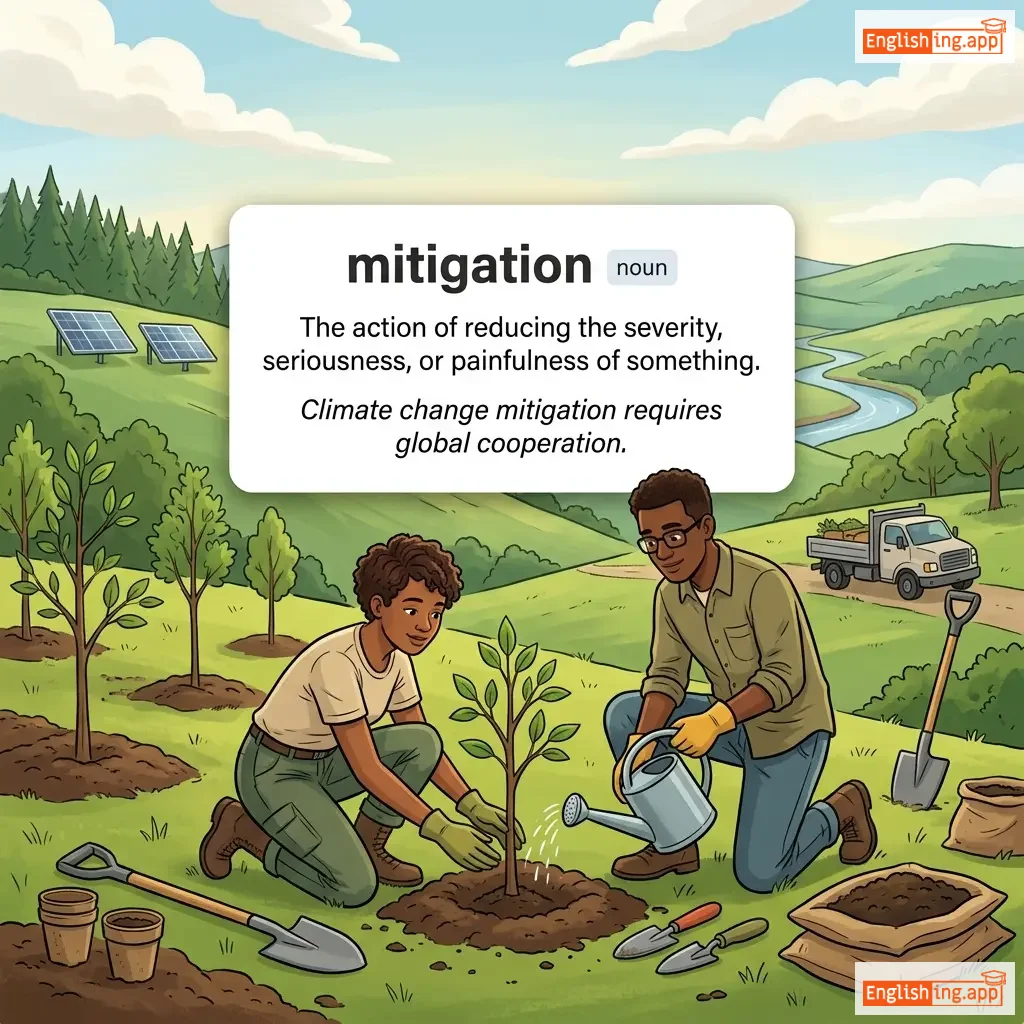
mitigation definition card — visual illustration of the meaning
noun
ˌmɪt.ɪˈɡeɪ.ʃən
смягчение (smyagchenie)

The action of reducing the severity, seriousness, or painfulness of something.

"Climate change mitigation requires global cooperation."
"Снижение воздействия изменения климата требует глобального сотрудничества." (Snizhenie vozdeystviya izmeneniya klimata trebuyet global'nogo sotrudnichestva.)
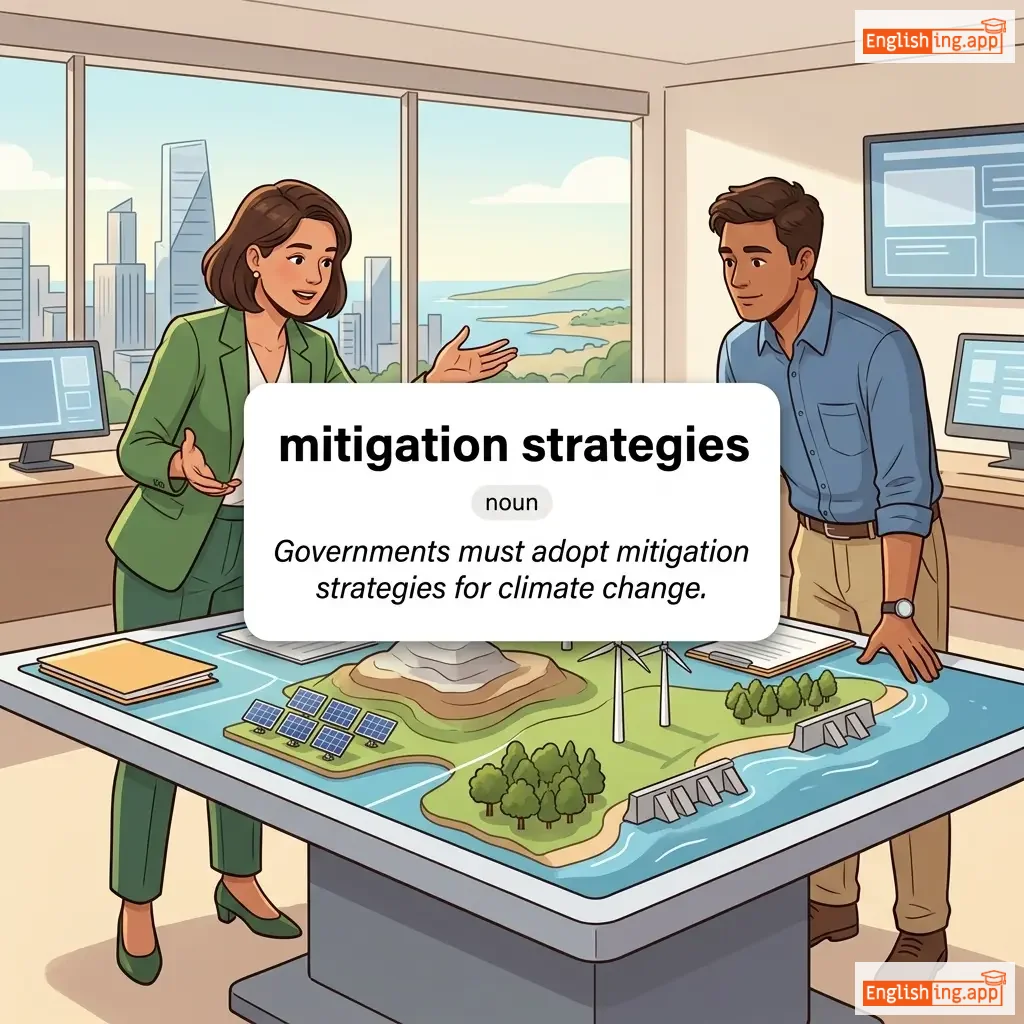
mitigation strategies definition card — visual illustration of the meaning
noun
ˌmɪtɪˈɡeɪʃən ˈstrætədʒiz
стратегии смягчения (strategii smyagcheniya)

Plans and actions designed to reduce the severity or impact of problems or risks.

"Governments must adopt mitigation strategies for climate change."

"Правительства должны принять стратегии смягчения для борьбы с изменением климата." (Pravitel'stva dolzhny prinyat' strategii smyagcheniya dlya bor'by s izmeneniem klimata.)
verb
/mɪks/
смешивать (smeshivat)

To combine different substances or elements together.

"She likes to mix different colors to create new shades."

"Ей нравится смешивать различные цвета для создания новых оттенков." (Yey nravitsya smeshivat' razlichnye tsveta dlya sozdaniya novykh otenkov.)
adjective
/mɪkst/
смешанный (smeshannyy)

consisting of different elements or having varied opinions or feelings

"The audience had mixed reactions to the film."

"Аудитория имела смешанные реакции на фильм." (Auditoriya imela smeshannye reaktsii na film.)
noun
/mɪkst ˈkʌlər/
смешанный цвет (smeshannyy tsvet)

a color created by combining two or more different colors

"The mixed colour created a beautiful gradient on the canvas."
"Смешанный цвет создал красивый градиент на холсте." (Smeshannyy tsvet sozdal krasivyy gradient na kholste.)
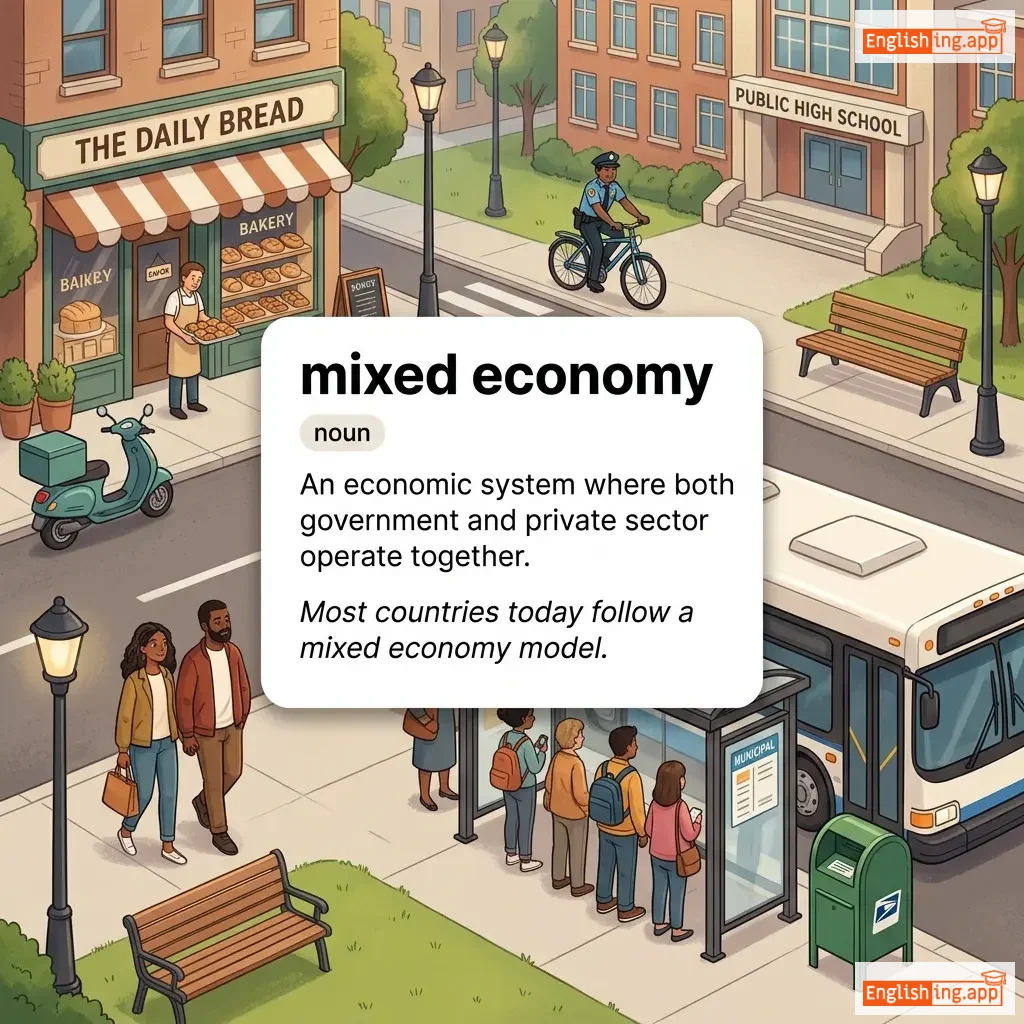
mixed economy definition card — visual illustration of the meaning
noun
/mɪkst ɪˈkɒn.ə.mi/
смешанная экономика (smeshannaya ekonomika)

An economic system where both government and private sector operate together.

"Most countries today follow a mixed economy model."

"Сегодня большинство стран придерживаются модели смешанной экономики." (Segodnya bol'shinstvo stran prideryvayutsya modeli smeshannoy ekonomiki.)
noun
/ˈmɪk.sər/
миксер (mikser)

an electric kitchen appliance used for mixing, beating, and whipping ingredients

"The chef used a mixer to prepare the cake batter."

"Шеф использовал миксер для приготовления теста для торта." (Shef ispol'zoval mikser dlya prigotovleniya testa dlya torta.)
noun
/ˈmɪkstʃər/
смесь (smes)

A combination of different things or substances blended together.

"The cake recipe requires a mixture of flour and sugar."

"Рецепт торта требует смеси муки и сахара." (Retsept torta trebuyet smesi muki i sakhara.)
interjection
/mˈhm/
Да (da)

A sound used to express agreement or acknowledgment in conversation.

"‘Do you understand?’ ‘Mm-hmm.’"
"‘Ты понимаешь?’ ‘Да.’" ('Ty ponimayesh'?' 'Da.')
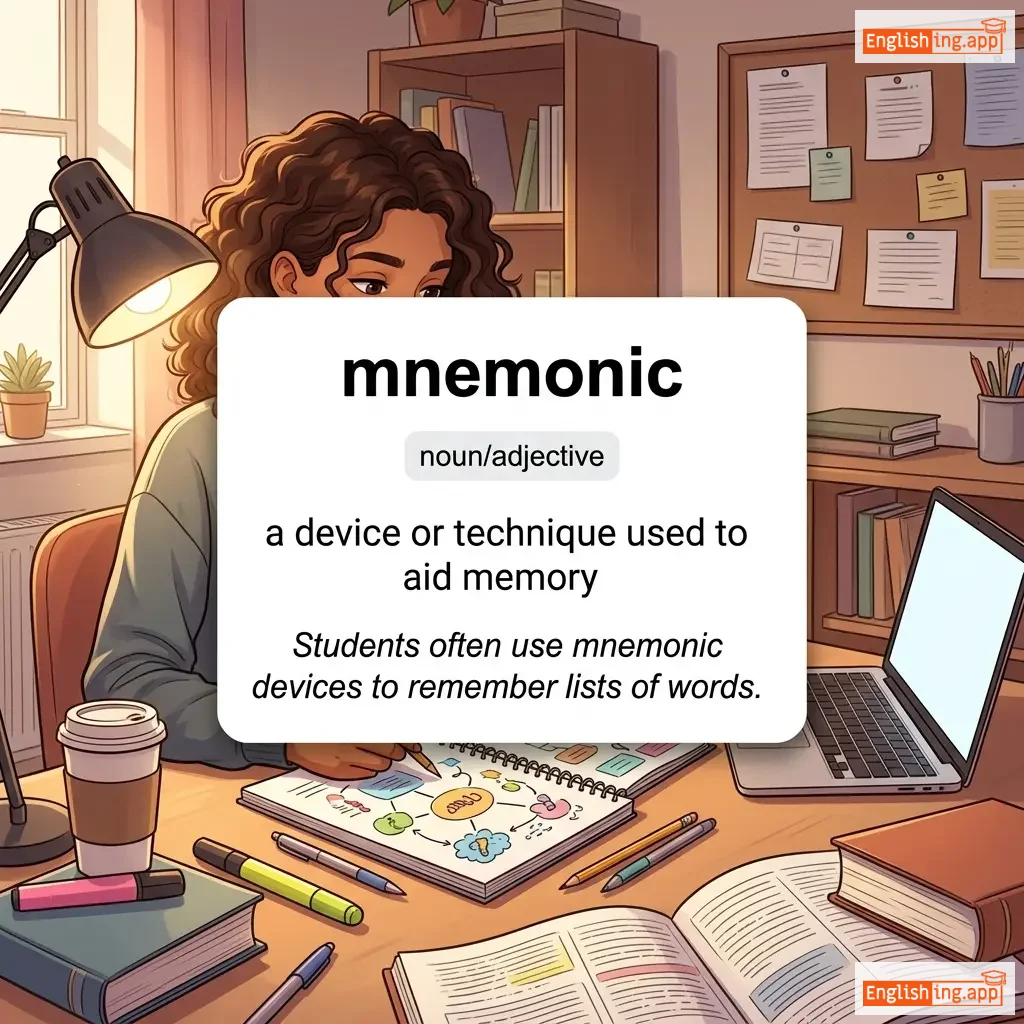
mnemonic definition card — visual illustration of the meaning
noun/adjective
/nɪˈmɒnɪk/

a device or technique used to aid memory

"Students often use mnemonic devices to remember lists of words."
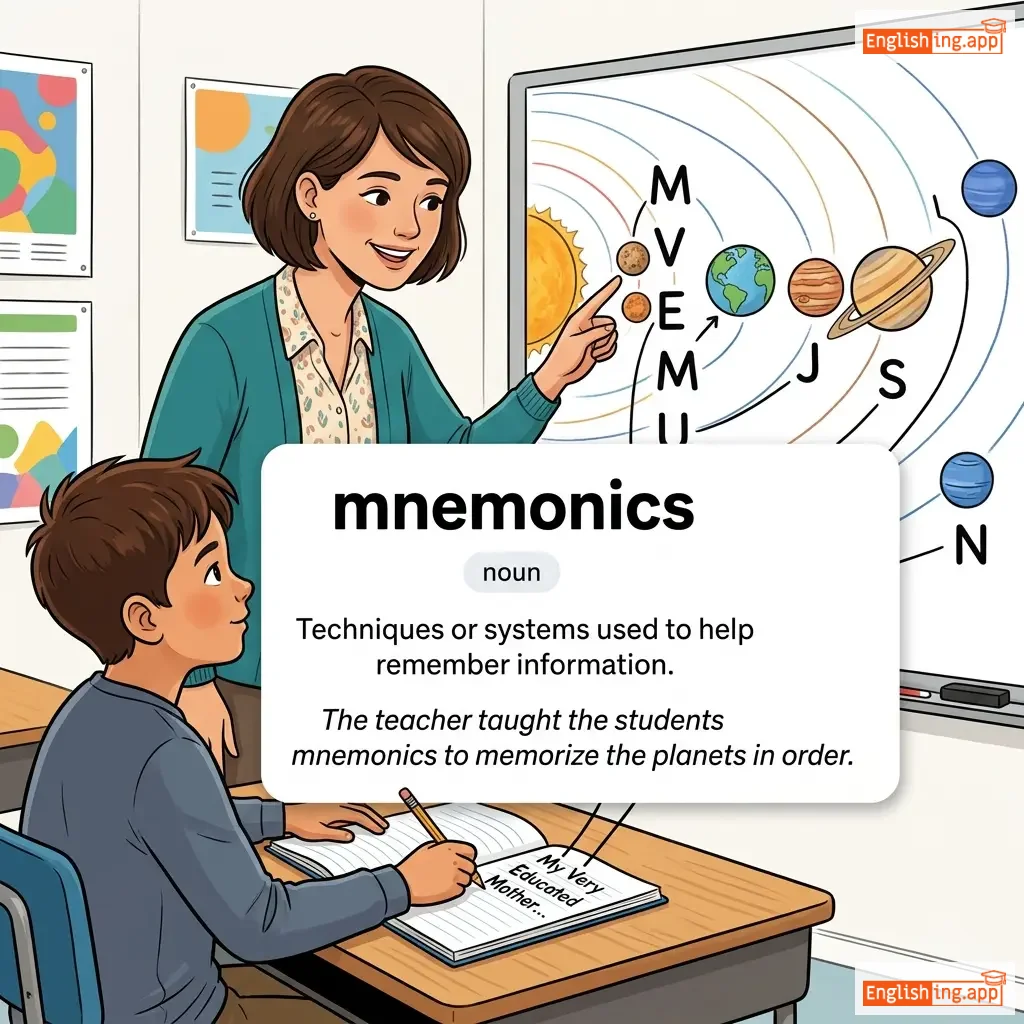
mnemonics definition card — visual illustration of the meaning
noun
/nɪˈmɒnɪks/
мнемотехника (mnemotekhnika)

Techniques or systems used to help remember information.

"The teacher taught the students mnemonics to memorize the planets in order."

"Учитель научил студентов мнемоническим приемам для запоминания планет по порядку." (Uchitel' nauchil studentov mnemoničeskim prijemam dlya zapominaniya planet po poryadku.)
noun
/moʊt/
ров (rov)

A deep, wide ditch surrounding a castle or town, often filled with water, for defense.

"The castle was protected by a wide moat filled with water."

"Замок был защищен широким рвом, заполненным водой." (Zamok byl zashchishchen shirokim rvom, zapolnennym vodoy.)
noun
/mɒb/
толпа (tolpa)

a large, disorderly crowd of people, typically one that is agitated or violent

"The mob gathered outside the building, demanding justice."

"Толпа собралась у здания, требуя справедливости." (Tolpa sobrala's' u zdaniya, trebuyaya spravedlivosti.)
adjective
/ˈmoʊbaɪl/
мобильный (mobil'nyy)

Able to move or be moved easily; also refers to portable communication devices.

"She prefers a mobile lifestyle that allows her to travel frequently."

"Она предпочитает мобильный образ жизни, который позволяет ей часто путешествовать." (Ona predpochitayet mobil'nyy obraz zhizni, kotoryy pozvolyayet yey chasto puteshestvovat'.)
mobile security definition card — visual illustration of the meaning
noun
ˈmoʊ.baɪl sɪˈkjʊr.ə.ti
мобильная безопасность (mobil'naya bezopasnost')

Protection of mobile devices and the data stored on them from security threats.

"Strong mobile security protects personal information."
"Сильная мобильная безопасность защищает личную информацию." (Sil'naya mobil'naya bezopasnost' zashchishchayet lichnuyu informatsiyu.)
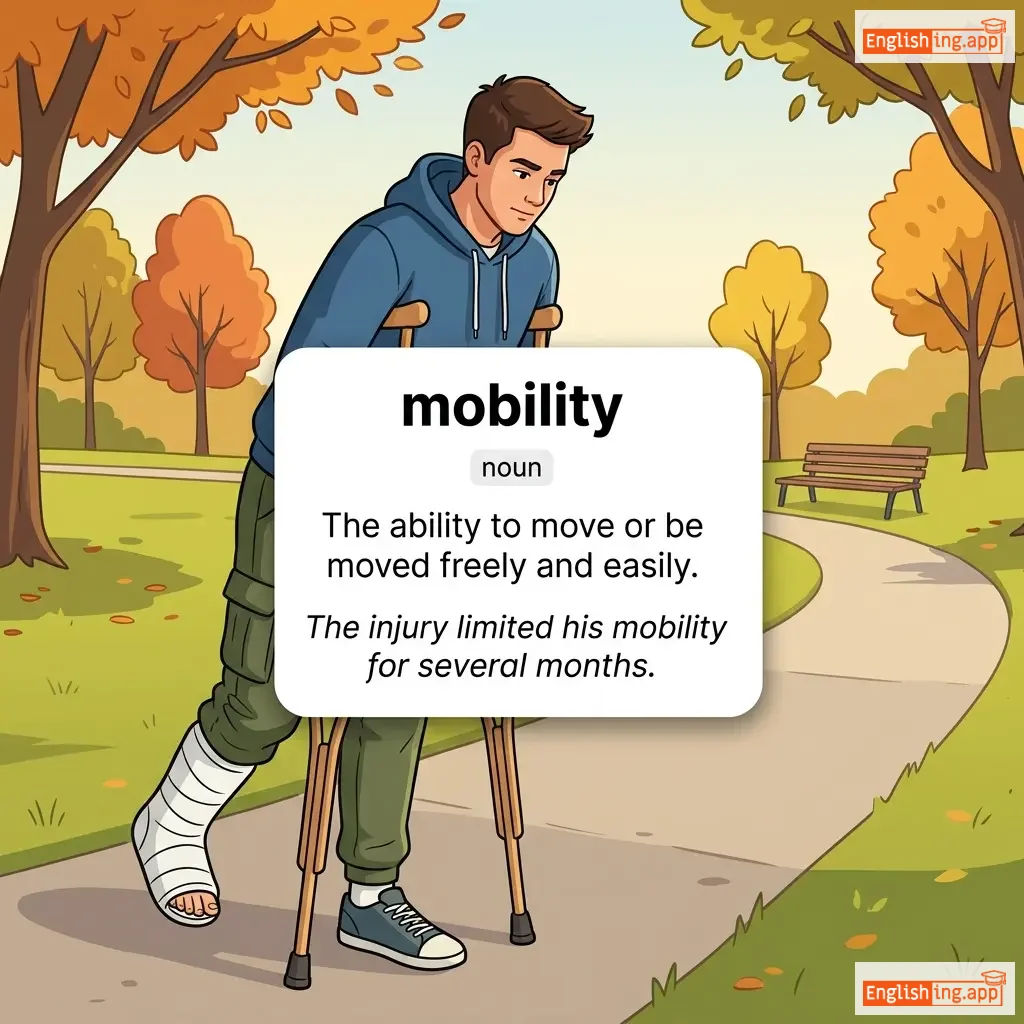
mobility definition card — visual illustration of the meaning
noun
/moʊˈbɪləti/
мобильность (mobil'nost)

The ability to move or be moved freely and easily.

"The injury limited his mobility for several months."

"Травма ограничила его мобильность на несколько месяцев." (Trava ogranichila ego mobil'nost' na neskol'ko mesyatsev.)
verb
/ˈməʊbɪlaɪz/
мобилизовать (mobilizovat)

to organize or prepare people or resources for action

"The leader worked hard to mobilize the community for the protest."

"Лидер усердно работал, чтобы мобилизовать сообщество для протеста." (Lider userdno rabotal, chtoby mobilizovat soobshchestvo dlya protesta.)
noun
/məˈbɒkrəsi/
власть толпы (vlast' tolpy)

Rule or control by a mob or mass of people, often disorderly.

"The protest turned into mobocracy when the crowd started destroying property."

"Протест превратился в мобократию, когда толпа начала разрушать имущество." (Protest prevratilsya v mobokratiyu, kogda tolpa nachala razrushat' imushchestvo.)
noun
/ˈmɒkəsɪn/
мокасин (mokasin)

A soft leather shoe, traditionally worn by Native Americans, often made from deerskin.

"He slipped on a pair of comfortable moccasins before going outside."

"Он надел удобные мокасины перед тем, как выйти на улицу." (On nadel udobnye mokasiny pered tem, kak vyjti na ulitsu.)
verb
/mɒk/
насмехаться (nasmekhat'sya)

To make fun of someone or something in a cruel or unkind way.

"The students mocked his accent during class."

"Студенты насмехались над его акцентом во время урока." (Studenty nasmekhalis' nad yego aktsentom vo vremya uroka.)
noun
/ˈmɒkəri/
насмешка, издевательство (nasmeshka, izdevatel'stvo)

Teasing or contemptuous language or behavior directed at someone or something.

"His attempt at cooking ended in mockery from his friends."

"Его попытка готовить закончилась насмешками со стороны его друзей." (Ego popytka gotovit' zakonchilas' nasmeshkami so storony ego druz'yev.)
noun
/moʊd/
режим (rezhim)

A particular way or style in which something is done, experienced, or expressed.

"The phone has a silent mode for meetings."

"На телефоне есть беззвучный режим для встреч." (Na telefone yest' bezzvuchnyy rezhim dlya vstrech.)
model definition card — visual illustration of the meaning
noun
/ˈmɒdəl/
модель (model)

A representation of something, often smaller or used as an example.

"The architect showed us a model of the new building."
"Архитектор показал нам модель нового здания." (Arkhitektor pokazal nam model' novogo zdaniya.)
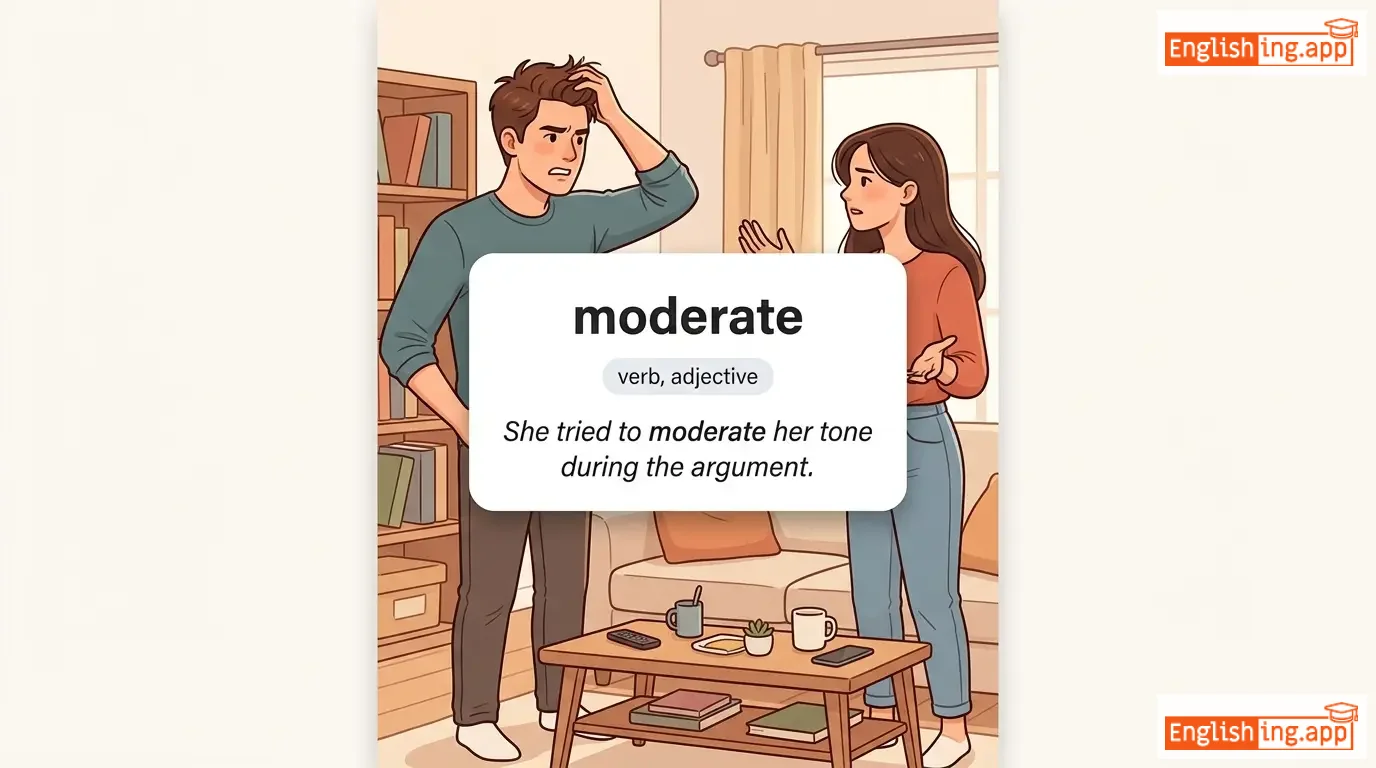
moderate definition card — visual illustration of the meaning
verb, adjective
/ˈmɒdəreɪt/ (verb), /ˈmɒdərət/ (adj)
умеренный, контролировать (umerennyj, kontrolirovat')

To make something less extreme (verb); average in amount, intensity, quality, or degree (adjective).

"She tried to moderate her tone during the argument."

"Она попыталась умерить свой тон во время спора." (Ona popytalas' umerit' svoj ton vo vremya spora.)
adverb
/ˈmɒdərətli/
умеренно (umerenno)

to a reasonable extent, not excessively

"She exercises moderately to stay healthy."

"Она занимается спортом умеренно, чтобы оставаться здоровой." (Ona zanimayetsya sportom umerenno, chtoby ostavatsya zdorovoy.)