Словари

Словарь английского языка | Значения слов, определения и примеры

noun
/ˌluː.mɪˈnɒs.ɪ.ti/
светимость (svetimost)

The intrinsic brightness of a celestial object; the quality of emitting light.

"The luminosity of the star was measured with advanced instruments."
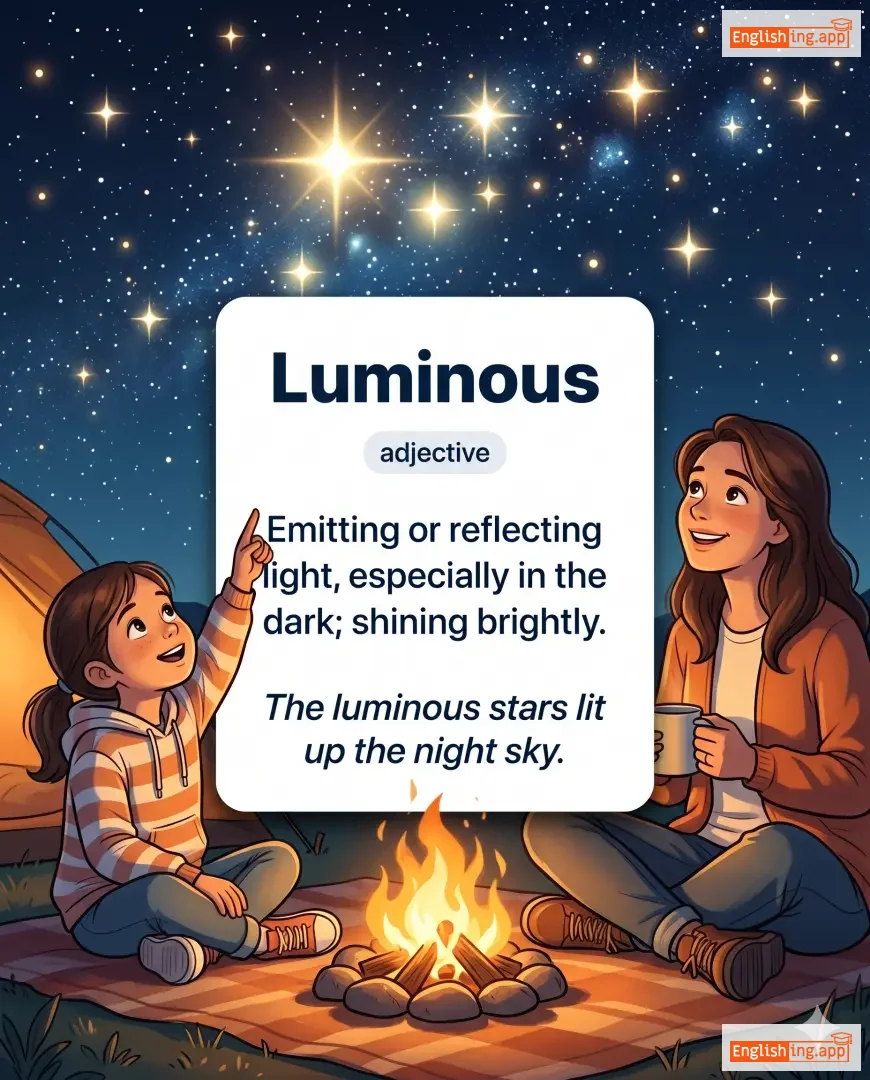
"Светимость звезды была измерена с помощью современных инструментов." (Svetimost' zvezdy byla izmerena s pomoshch'yu sovremennykh instrumentov.)
Luminous definition card — visual illustration of the meaning
adjective
/ˈluː.mɪ.nəs/
светящийся (svetyashchijsya)

Emitting or reflecting light, especially in the dark; shining brightly.

"The luminous stars lit up the night sky."

"Светящиеся звезды озаряли ночное небо." (Svetyashchiesya zvezdy ozaryali nochnoye nebo.)
noun
/lʌmp/
комок; кусок; сгусток (komok; kusok; sgustok)

a compact mass of a substance, especially one without a definite or regular shape

"She found a lump of sugar in the bowl."

"Она нашла кусок сахара в чаше." (Ona nashla kusok sakhara v chashe.)
noun
/ˈluː.nə.si/
безумие (bezumiye)

Extreme foolishness or madness; insanity.

"It was sheer lunacy to go hiking in the storm."

"Это было полное безумие — идти в поход в шторм." (Eto bylo polnoe bezumie — idti v pokhod v shtorm.)
adjective
/ˈluː.nər/
лунный (lunny)

Relating to the moon.

"The astronauts collected lunar samples during their mission."

"Астронавты собрали лунные образцы во время своей миссии." (Astronavty sobrali lunnyye obraztsy vo vremya svoey missii.)
noun
/ˈluːnər ɪˈklɪps/
лунное затмение (lunnoe zatmenie)

an astronomical event when the Earth passes between the Sun and Moon, casting a shadow on the Moon

"We watched the lunar eclipse through telescopes last night."

"Мы наблюдали лунное затмение через телескопы прошлой ночью." (My nablyudali lunnoe zatmenie cherez teleskopy proshloj noch'yu)
noun/adjective
/ˈluː.nə.tɪk/
лунатик (lunatik)

A person who is insane or acting in a foolish or reckless way; also used as an adjective meaning insane.

"The driver was driving like a lunatic on the highway."

"Водитель ехал как лунатик по шоссе." (Voditel' ehal kak lunatik po shosse.)
noun
/lʌntʃ/
обед (obed)

a meal eaten in the middle of the day

"We usually have lunch at 1 p.m."

"Мы обычно обедаем в 13:00." (My obychno obedayem v 13:00.)
noun
/luːn/
полумесяц (polumesyats)

A crescent-shaped figure formed by two intersecting arcs; also means 'moon' in French.

"The mathematician studied the properties of the lune."

"Математик изучал свойства полумесяца." (Matematik izuchal svoystva polumesyatsa.)
noun
/lʌŋ/
легкое (legkoe)

Either of the two organs in the chest that are responsible for breathing and exchanging oxygen and carbon dioxide.

"Smoking can seriously damage your lungs."

"Курение может серьезно повредить ваши легкие." (Kurenie mozhet seryozno povredit' vashi legkie.)
noun
/ˈlʊŋ.gi/
лунги (lungi)

a traditional garment worn around the waist in South Asia

"He wore a comfortable lungi while relaxing at home."

"Он носил удобные лунги, отдыхая дома." (On nosil udobnye lungi, otdykhaya doma.)
verb, noun
/lɜːrtʃ/
крениться, делать резкое движение (krenitsya, delat' rezkoye dviženiye)

to make an abrupt, unsteady, or uncontrolled movement; a sudden movement or stagger

"The bus lurched forward as the driver hit the brakes."

"Автобус покачнулся вперёд, когда водитель нажал на тормоза." (Avtobus pokachnulsya vperyod, kogda voditel' nazhalsya na tormoza.)
verb
/lʊər/
заманивать (zamanivat)

to attract or tempt someone, often by offering something appealing

"The advertisement lured customers with promises of discounts."

"Реклама заманила клиентов обещаниями скидок." (Reklama zamenila kliyentov obeshchaniyami skidok.)
adjective
/ˈljʊərɪd/
шокирующий и сенсационный в яркой форме (shokiruyushchiy i sensatsionnyy v yarkoy forme)

shocking or sensational in a vivid way, often involving crime or violence

"The newspaper published a lurid account of the crime."

"Газета опубликовала шокирующий отчет о преступлении." (Gazeta opublikovala shokiruyushchiy otchet o prestuplenii.)
verb
/lɜːrk/
поджидать (podzhidat)

to remain hidden so as to wait for an opportunity to attack or observe

"A stranger lurked in the shadows."

"Незнакомец скрывался в темноте." (Neznakomec skryvalsya v temnote.)
adjective
/ˈlʌʃəs/
вкусный (vkusny)

deliciously sweet or rich; highly appealing to the senses

"She served a luscious chocolate cake."

"Она подала вкусный шоколадный торт." (Ona podala vkusnyy shokoladnyy tort.)
adjective
/lʌʃ/
богатый, изобилующий и роскошный, особенно относящийся к растительности (bogatyy, izobiluyushchiy i roskoshnnyy, osobenno otnosyashchiesya k rasteniyam)

rich, abundant, and luxurious, especially referring to vegetation

"The valley was filled with lush green fields."

"Долина была заполнена зелеными и зелеными полями." (Dolina byla zapolnena zelyonymi i zelyonymi polyami.)
noun
/lʌst/
страсть (strast)

a very strong sexual desire or an intense craving for something

"His mind was clouded by lust for power."

"Его ум был затуманен страстью к власти." (Ego um byl zatumanen strast'yu k vlasti.)
noun
/ˈlʌstər/
блеск (blesk)

a gentle sheen or soft glow, especially from a polished surface

"The diamond had a brilliant luster."
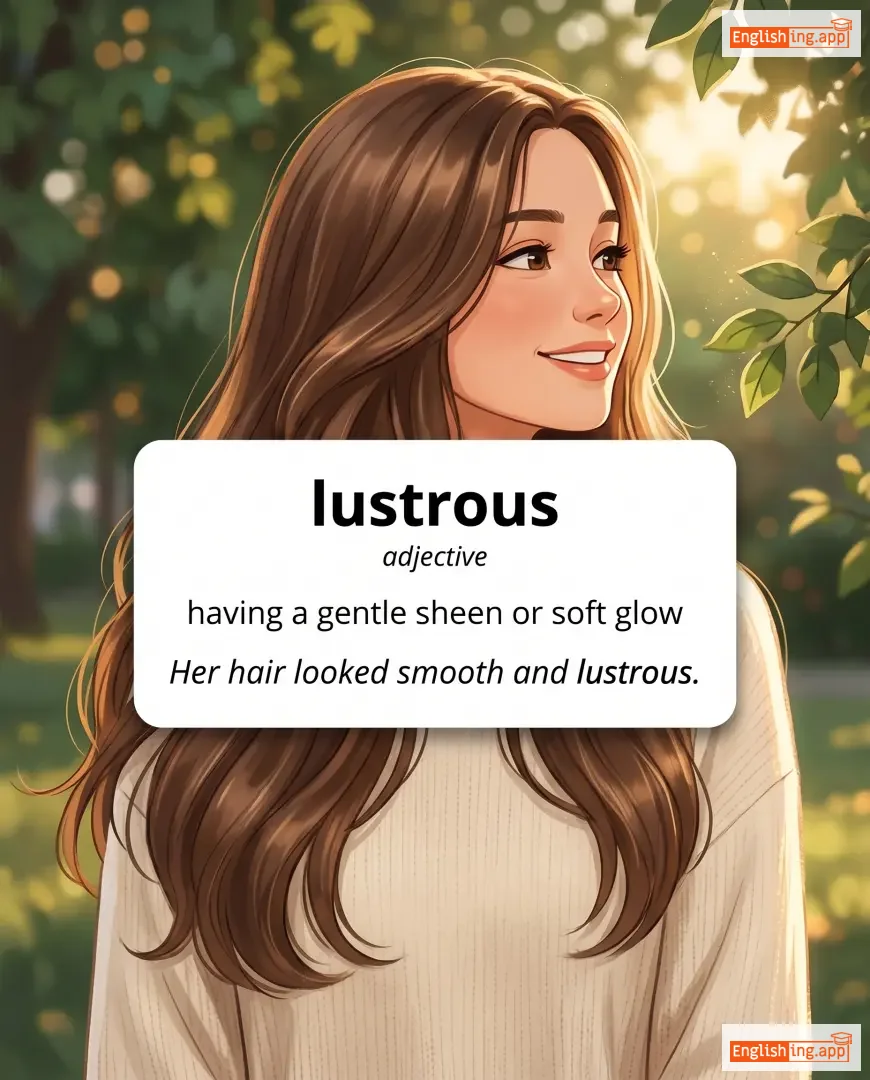
"У алмаза был яркий блеск." (U almazza byl yarkiy blesk.)
lustrous definition card — visual illustration of the meaning
adjective
/ˈlʌstrəs/
блестящий (blestyashchiy)

having a gentle sheen or soft glow

"Her hair looked smooth and lustrous."

"Её волосы выглядели гладкими и блестящими." (Yeyo volosy vyglyadeli glazkimi i blestyashchimi.)
noun
/lʌɡˈʒʊəriəns/
роскошь (roskosh)

abundant growth, richness, or elegance

"The garden was filled with the luxuriance of tropical plants."

"Сад был полон роскоши тропических растений." (Sad byl polon roskoshi tropicheskikh rasteniy.)
adjective
/lʌɡˈʒʊəriənt/
пышный (pyshny)

abundant in growth or richly abundant

"The luxuriant forest was teeming with life."

"Пышный лес был полон жизни." (Pyshnyy les byl polon zhizni.)
verb
/lʌɡˈʒʊrieɪt/
наслаждаться роскошью (naslazhdatsya roskosh'yu)

to enjoy something in a self-indulgent way; to take pleasure in great comfort

"She luxuriated in the warm bubble bath after a long day."

"Она наслаждалась теплым пузырьковым вечером после долгого дня." (Ona naslazhdalasy teplym puzyr'kovym vecherom posle dolgogo dnya.)
adjective
/lʌɡˈʒʊəriəs/
роскошный (roskoshny)

extremely comfortable, elegant, or enjoyable, often involving great expense

"They stayed in a luxurious hotel during their vacation."

"Они остановились в роскошном отеле во время отпуска." (Oni ostanovilis' v roskoshnom otele vo vremya otpyska.)
noun
/ˈlʌkʃəri/
роскошь (roskosh)

a state of great comfort or elegance, often involving great expense

"Staying at a five-star hotel is a luxury for most people."

"Проживание в пятизвездочном отеле — это роскошь для большинства людей." (prozhivanie v pyatizvezdochnom otele eto roskosh dlya bolshinstva lyudey.)
verb
/ˈlaɪɪŋ/
лгать (lgat)

the act of not telling the truth

"He was caught lying about his grades."

"Его поймали на лжи о его оценках." (Ego poymali na lzhi o ego otsenkakh.)
noun
/laɪər/
лира (lira)

a stringed musical instrument of ancient Greece

"The musician played a melody on the lyre."

"Музыкант сыграл мелодию на лире." (Muzykant sygral melodiya na lire.)
noun
/ˈlɪrɪk/
текст песни (tekst pesni)

the words of a song or a short poem that expresses personal feelings

"She memorized every lyric of her favorite song."

"Она выучила каждый текст своей любимой песни." (Ona vyuchila kazhdyi tekst svoei lyubimoi pesni.)