Словари

Словарь английского языка | Значения слов, определения и примеры

adjective
/ˌɪnhɒˈspɪtəbl/
неприютный (nepriyutny)

Harsh and difficult to live in; unfriendly or unwelcoming to guests.

"The desert is an inhospitable environment for most plants."

"Пустыня — это непригодная среда для большинства растений." (Pustynya — eto neprigodnaya sreda dlya bol'shinstva rasteniy.)
adjective
/ɪnˈhjuːmən/
бесчеловечный (beshchelovechnyy)

lacking human qualities of compassion and mercy; cruel or barbaric

"The prisoners were kept in inhuman conditions."

"Заключенные содержались в бесчеловечных условиях." (Zaklyuchennyye soderzhallis' v beschelovechnykh usloviyakh.)
verb
/ɪnˈhjuːm/
похоронить (pokhoronit')

to bury a dead body in the ground

"They inhumed the warrior with full honors."

"Они похоронили воина с полными почестями." (Oni pokhoronili voina s polnymi pochestyami.)
adjective
/ɪˈnɪmɪkəl/
враждебный / неблагоприятный (vrazhdebnyy / neblagopriyatnyy)

tending to obstruct or harm; unfriendly or hostile

"The policy was inimical to the country's economic growth."

"Политика была неблагоприятной для экономического роста страны." (Politika byla neblagopriyatnoy dlya ekonomicheskogo rosta strany.)
inimitable definition card — visual illustration of the meaning
adjective
/ɪˈnɪmɪtəbəl/
неповторимый (nepovtorimy)

so good or unusual as to be impossible to copy; unique

"Her inimitable style made her stand out in the fashion industry."

"Ее неповторимый стиль выделял ее в модной индустрии." (Eyo nepovtorimy stil' vydelyal yejo v modnoy industrii.)
adjective
/ɪˈnɪkwɪtəs/
неправедный (nepravedny)

grossly unfair and morally wrong

"Slavery was one of the most iniquitous practices in history."

"Рабство было одной из самых несправедливых практик в истории." (Rabstvo bylo odnoi iz samykh nespravedlivykh praktik v istorii.)
noun
/ɪˈnɪkwɪti/
неправедность (nepravednost)

Immoral or grossly unfair behavior.

"The dictator's regime was marked by corruption and iniquity."

"Режим диктатора был отмечен коррупцией и неправедностью." (Rezhim diktatora byl otmechen korruptsiej i nepravednost'yu.)
adjective
/ɪˈnɪʃəl/
начальный (nachal'nyy)

Existing or occurring at the beginning.

"Her initial reaction was one of surprise."

"Её начальная реакция была удивлением." (Eyo nachal'naya reakciya byla udivleniem.)
adverb
/ɪˈnɪʃəli/
поначалу (ponachalu)

At the beginning; at first.

"Initially, he refused the offer but later accepted it."

"Поначалу он отклонил предложение, но позже согласился." (Ponachalu on otklonil predlozhenie, no pozhe soglasilisya.)
initiate definition card — visual illustration of the meaning
verb
/ɪˈnɪʃieɪt/
инициировать (initiirovat')

To cause something to begin; to start.

"The company plans to initiate a new training program next month."
"Компания планирует инициировать новую программу обучения в следующем месяце." (Kompaniya planiruet initsiirovat' novuyu programmuy obucheniya v sleduyushchem mesyatse.)
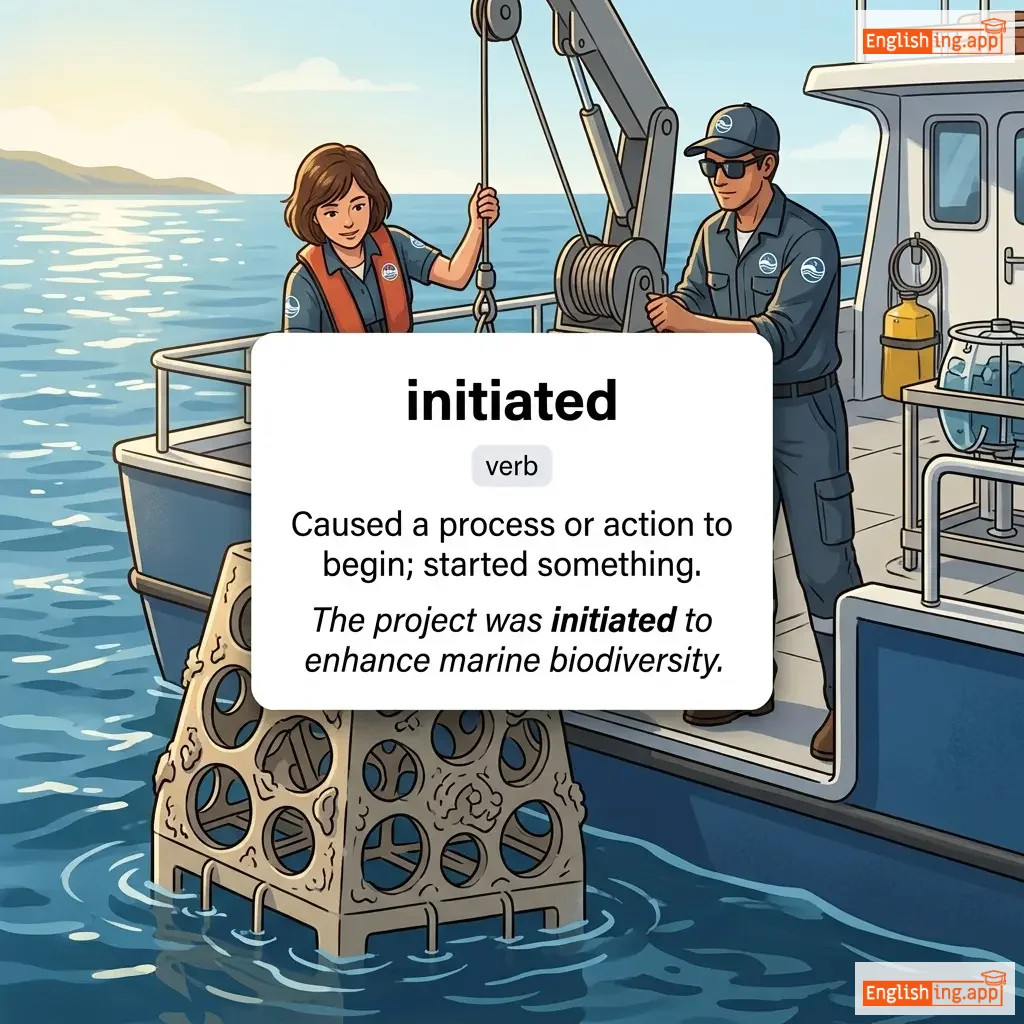
initiated definition card — visual illustration of the meaning
verb
ɪˈnɪʃɪeɪtɪd
инициирован (initsiirovann)

Caused a process or action to begin; started something.

"The project was initiated to enhance marine biodiversity."

"Проект был инициирован для улучшения морского биоразнообразия." (Proyekt byl initsiирован dlya uluchsheniya morskogo bioraznoobraziya.)
initiative definition card — visual illustration of the meaning
noun
/ɪˈnɪʃətɪv/
инициатива (initsiativa)

The ability to assess and start things independently; a new plan or action.

"The government launched a new initiative to support small businesses."
"Правительство запустило новую инициативу для поддержки малого бизнеса." (Pravitel'stvo zapustilo novuyu initsiativu dlya podderzhki malogo biznesa.)
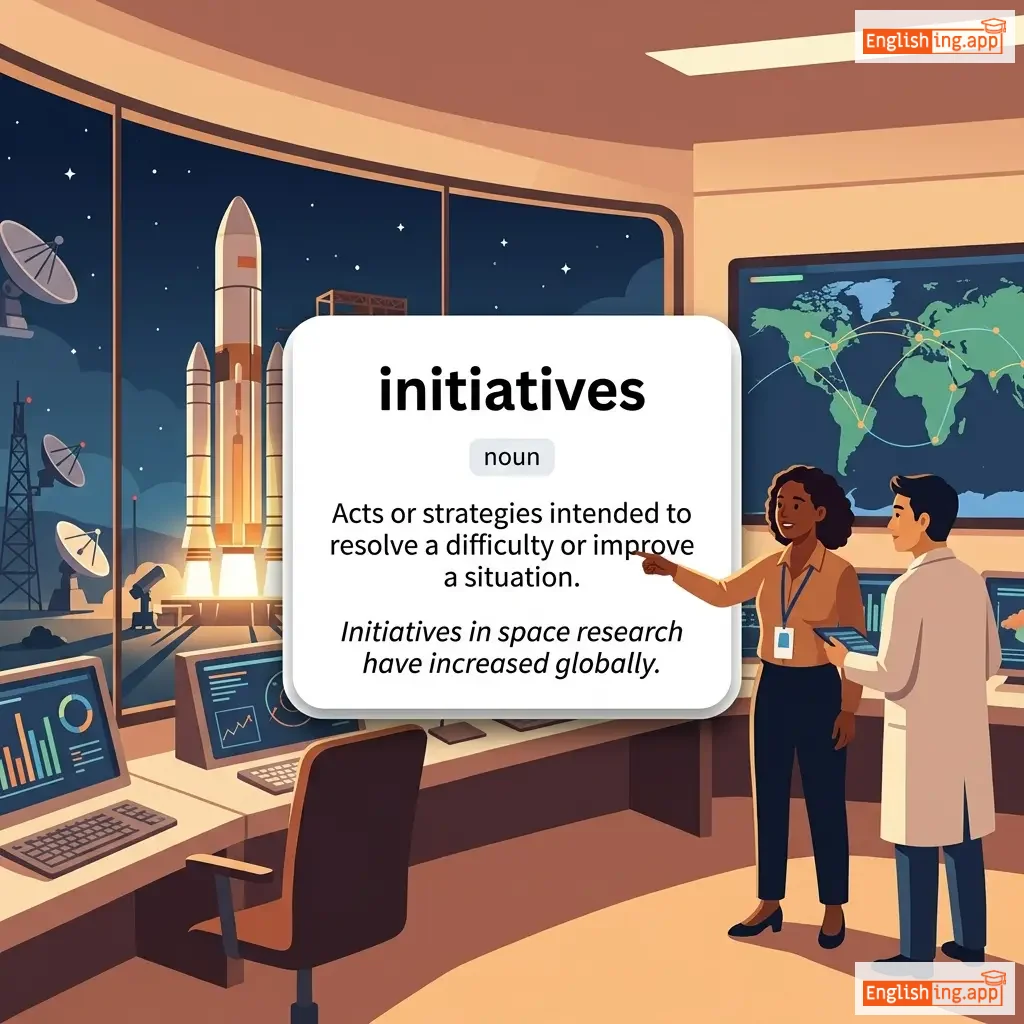
initiatives definition card — visual illustration of the meaning
noun
/ɪˈnɪʃ.ə.tɪvz/
инициативы (iniciativy)

Acts or strategies intended to resolve a difficulty or improve a situation.

"Initiatives in space research have increased globally."

"Инициативы в области космических исследований увеличились на глобальном уровне." (Initsiativy v oblasti kosmicheskikh issledovaniy uvelichilis' na global'nom urovne.)
verb
/ɪnˈdʒɛkt/
вводить инъекцию (vvodit' in'ektsiyu)

To introduce a substance, especially a drug, into the body using a needle.

"The nurse will inject the vaccine into the patient's arm."

"Медсестра введет вакцину в руку пациента." (Medsestra vvedet vaktsinu v ruku patsiyenta.)
noun
/ɪnˈdʒɛkʃən/

the act of introducing a substance into the body through a needle

"The nurse gave me an injection to prevent the infection."

noun
/ɪnˈdʒʌŋkʃən/
инъюнкция (inyunktsiya)

A judicial order restraining a person from an action or compelling a certain act.

"The court issued an injunction to stop the company from polluting the river."

"Суд вынес инъюнкцию, чтобы остановить компанию от загрязнения реки." (Sud vynes in'yunktsiyu, chtoby ostanovit' kompaniyu ot zagrjazneniya reki.)
verb
/ˈɪndʒər/
повредить (povredit)

to cause physical harm or damage to someone or something

"He injured his leg while playing football."

"Он повредил ногу, играя в футбол." (On povredil nogu, igraya v futbol.)
adjective
/ɪnˈdʒʊəriəs/
вредный (vrednyy)

Causing or likely to cause harm or damage.

"Smoking is injurious to health."

"Курение вредно для здоровья." (Kurenie vredno dlya zdorov'ya.)
noun
/ˈɪndʒəri/
травма (travma)

Harm or damage to a person’s body caused by an accident or attack.

"He suffered a serious injury during the football match."
"Он получил серьезную травму во время футбольного матча." (On poluchil seryoznuyu travmu vo vremya futbol'nogo matcha.)
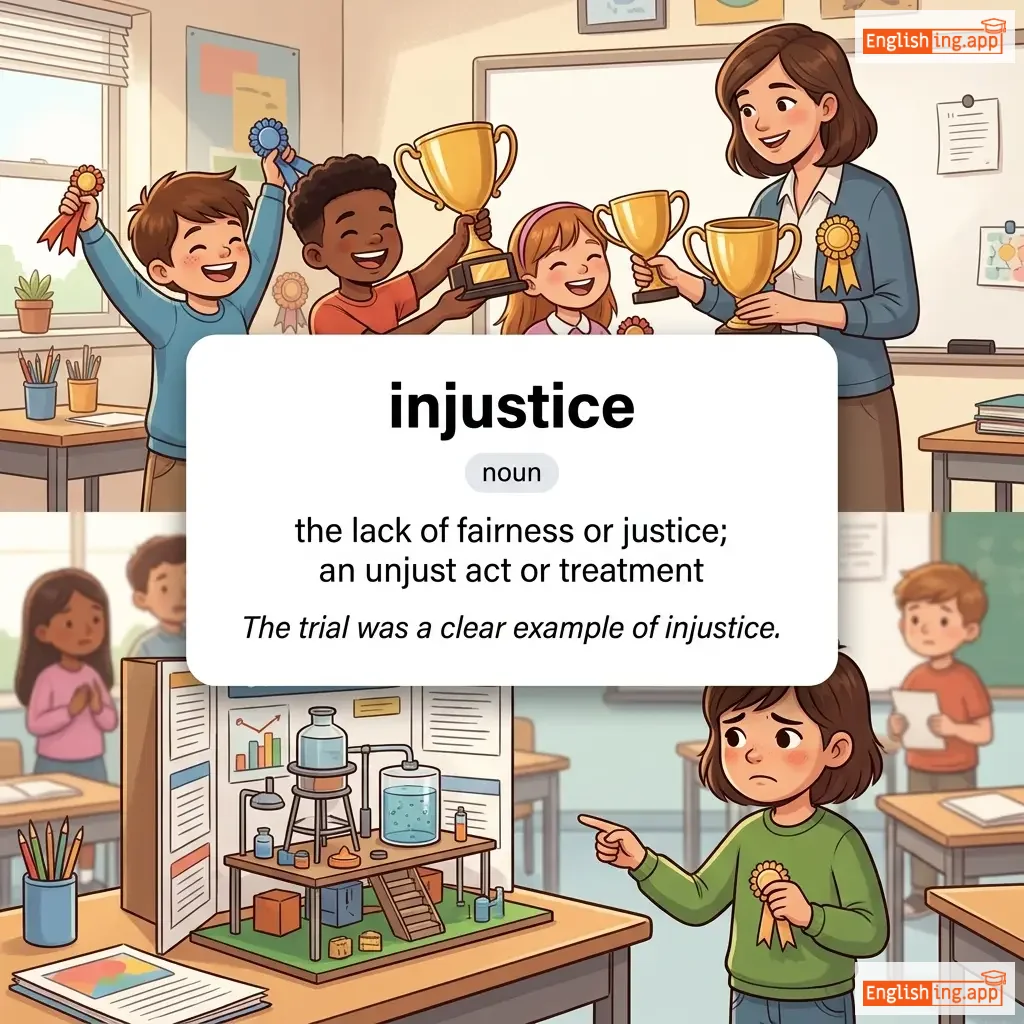
injustice definition card — visual illustration of the meaning
noun
/ɪnˈdʒʌstɪs/
несправедливость (nespravedlivost)

the lack of fairness or justice; an unjust act or treatment

"The trial was a clear example of injustice."

"Процесс был ярким примером несправедливости." (Protsess byl yarkim primerom nespravedlivosti.)
noun
/ɪŋk/
чернила (chernila)

a colored liquid used for writing, printing, or drawing

"The ink in my pen ran out during the exam."

"Чернила в моей ручке закончились во время экзамена." (Chernila v moey ruchke zakonchilis' vo vremya ekzamen.)
noun
/ˈɪŋklɪŋ/
предчувствие (predchuvstvie)

A slight idea, hint, or suspicion about something.

"She had an inkling that he was planning a surprise."
"У неё было предчувствие, что он готовит сюрприз." (U neyo bylo predchuvstvie, chto on gotovit syurpriz.)
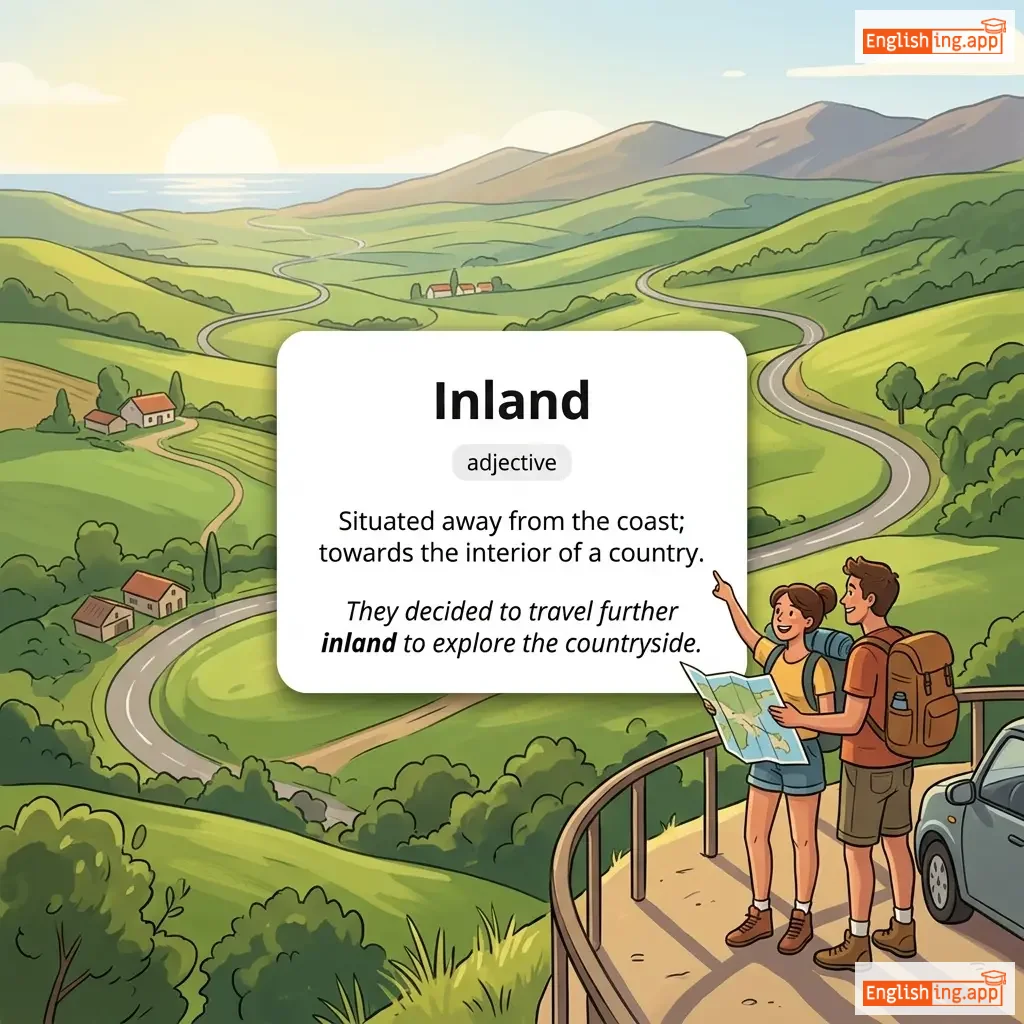
Inland definition card — visual illustration of the meaning
adjective
/ˈɪnlənd/
внутренний (vnutrenniy)

Situated away from the coast; towards the interior of a country.

"They decided to travel further inland to explore the countryside."

"Они решили поехать дальше вглубь страны, чтобы исследовать сельскую местность." (Oni reshili poekhat' dalshe vglub' strany, chtoby issledovat' selskiye mestnosti.)
noun
/ˈɪnlɛt/
вход (vkhod)

A small arm of the sea, a lake, or a river; an opening or passage for entry.

"The boat entered a narrow inlet along the coast."

"Лодка вошла в узкий вход вдоль побережья." (Lodka voshla v uzkiy vkhod vdol' poberezh'ya.)
noun
/ˈɪnˌmeɪt/
заключённый (zaklyuchyonny)

a person confined to an institution such as a prison or hospital

"The prison has over a thousand inmates."

"Тюрьма содержит более тысячи заключённых." (Tyurma soderzhit bolee tysyachi zaklyuchyonnykh.)
adjective
/ˈɪnmoʊst/
самый сокровенный (samyy sokrovennyy)

Situated at the very heart or deepest part; most private or secret.

"She revealed her inmost thoughts to her closest friend."
"Она раскрыла свои самые сокровенные мысли своему ближайшему другу." (Ona raskryla svoi samye sokrovennye mysli svoemu blizhayshemu drugu.)
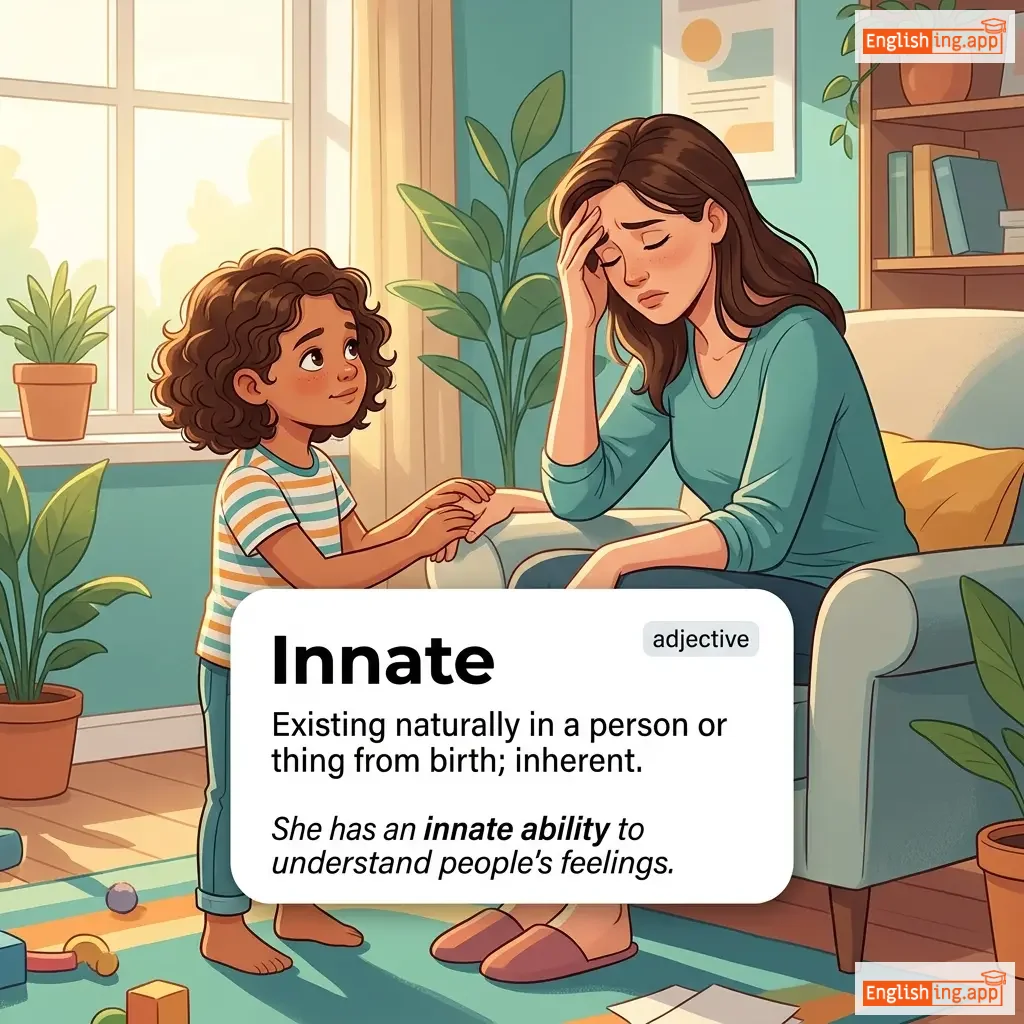
Innate definition card — visual illustration of the meaning
adjective
/ɪˈneɪt/
врожденный (vrozhdenny)

Existing naturally in a person or thing from birth; inherent.

"She has an innate ability to understand people's feelings."

"У нее есть врожденная способность понимать чувства людей." (U neyo yest' vrozhdennaya sposobnost' ponimat' chuvstva lyudey.)
adjective
/ˈɪnər/
внутренний (vnutrenniy)

Located inside or closer to the center; relating to one’s thoughts or feelings.

"She shared her inner thoughts with her best friend."
"Она поделилась своими внутренними мыслями с лучшей подругой." (Ona podelilas svoimi vnutrennimi myslyami s luchshey podrugoy.)
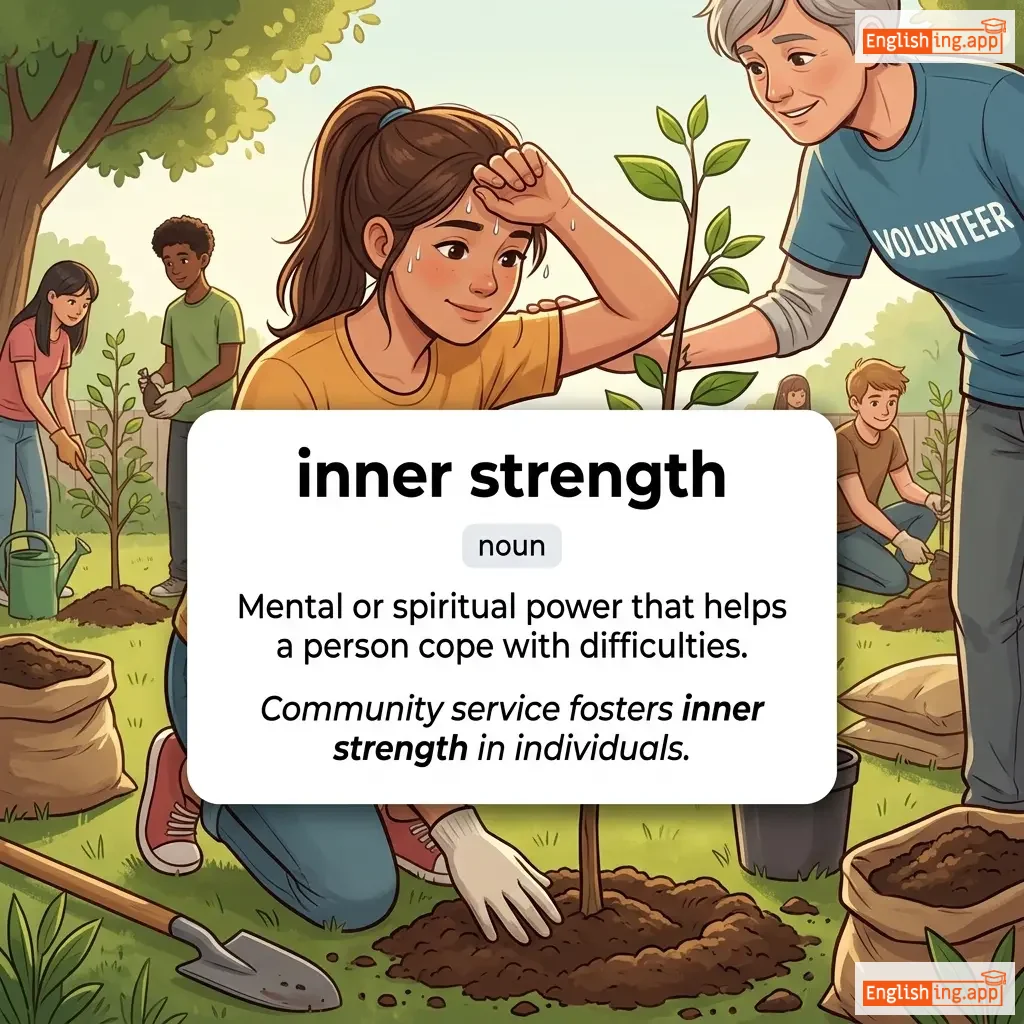
inner strength definition card — visual illustration of the meaning
noun
ˈɪnər strɛŋkθ
внутренняя сила (vnutrennyaya sila)

Mental or spiritual power that helps a person cope with difficulties.

"Community service fosters inner strength in individuals."

"Общественная работа способствует внутренней силе у людей." (Obshchestvennaya rabota sposobyvayet vnutrenney sile u lyudey.)
adjective
/ˈɪnərmoʊst/
самый глубокий; самый личный (samyy glubokiy; samyy lichnyy)

most private and secret; deepest; most personal

"She shared her innermost feelings with her closest friend."

"Она поделилась своими самыми глубокими чувствами с самым близким другом." (Ona podelilas' svoimi samymi glubokimi chuvstvami s samym blizkim drugom.)
adjective
/ˈɪnəsənt/
невиновный (nevinovny)

not guilty of a crime or wrongdoing; harmless

"The court found him innocent of all charges."
"Суд признал его невиновным по всем обвинениям." (Sud priznal ego nevinovnym po vsei obvinivaniiam.)
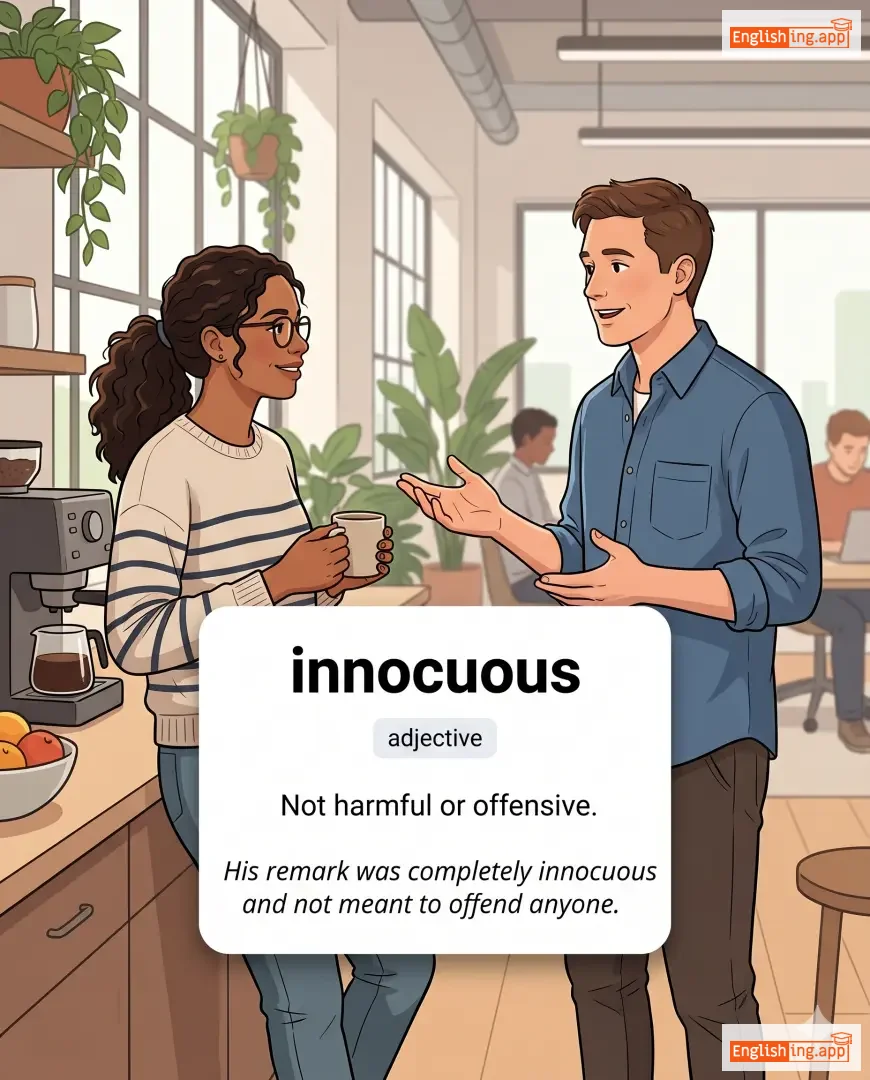
innocuous definition card — visual illustration of the meaning
adjective
/ɪˈnɒkjuəs/
безвредный (bezvrednyy)

Not harmful or offensive.

"His remark was completely innocuous and not meant to offend anyone."

"Его замечание было совершенно безвредным и не имело цели обидеть кого-либо." (Ego zamechaniye bylo sovershenno bezvrednym i ne imelo tsely obidit' kogo-libo.)
verb
/ˈɪnəveɪt/
инновировать (innovirovat)

To introduce new methods, ideas, or products.

"The company must innovate to stay ahead of its competitors."

"Компания должна инновацировать, чтобы опережать своих конкурентов." (Kompaniya dolzhna innovirovat', chtoby operezhat' svoikh konkurentov.)
innovation definition card — visual illustration of the meaning
noun
/ˌɪnəˈveɪʃən/
инновация (innovatsiya)

The introduction of something new, such as an idea, method, or device.

"Innovation is key to the success of technology companies."

"Инновация - ключ к успеху технологических компаний." (Innovatsiya - klyuch k uspekhu tekhnologicheskikh kompaniy.)
innovative definition card — visual illustration of the meaning
adjective
/ˈɪnəˌveɪtɪv/
инновационный (innovatsionny)

introducing new ideas, methods, or products; creative and original

"The company is known for its innovative solutions."
"Компания известна своими инновационными решениями." (Kompanija izvestna svoimi innovatsionnymi resheniyami.)
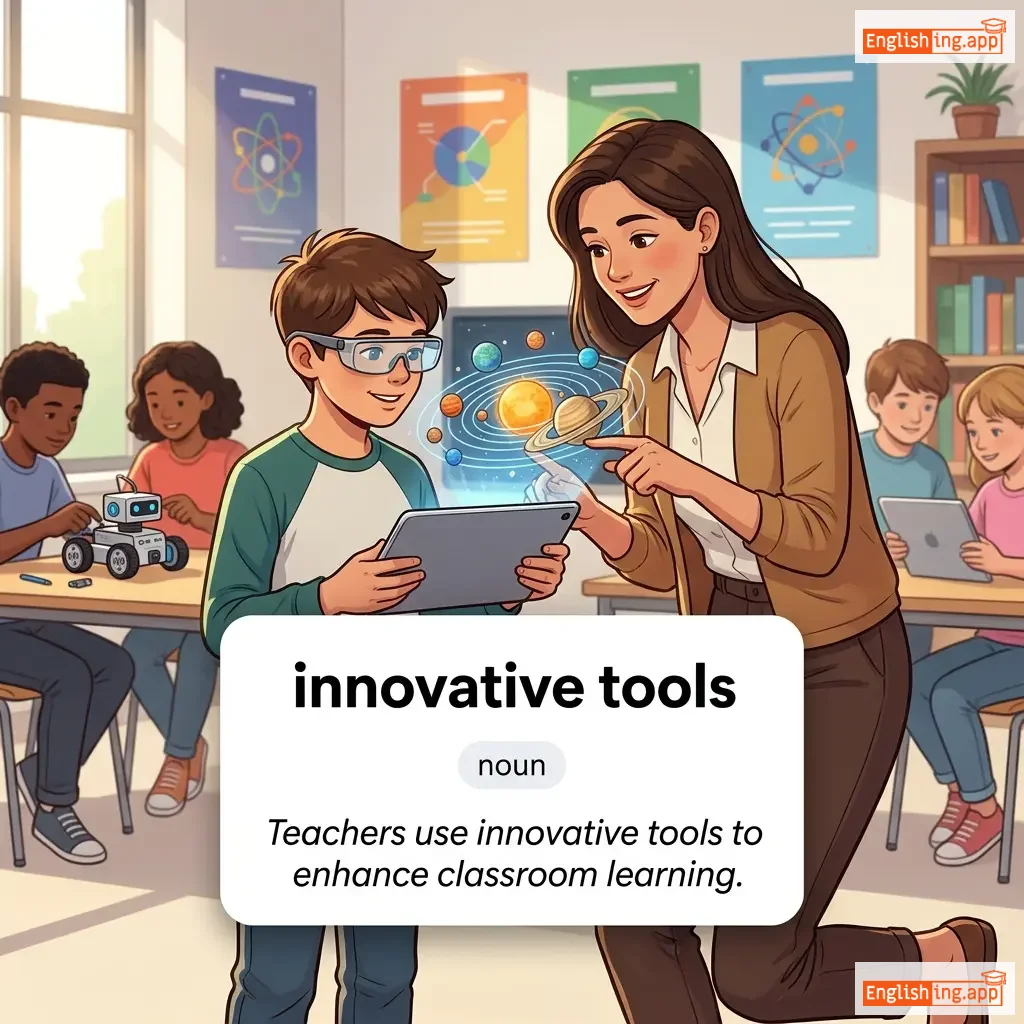
innovative tools definition card — visual illustration of the meaning
noun
ˈɪnəveɪtɪv tuːlz
инновационные инструменты (innovatsionnye instrumenty)

Creative devices or advanced technologies that introduce new methods or approaches to accomplish tasks.

"Teachers use innovative tools to enhance classroom learning."
"Учителя используют инновационные инструменты для улучшения обучения в классе." (Uchitelya ispol'zuyut innovatsionnye instrumenty dlya uluchsheniya obucheniya v klasse.)
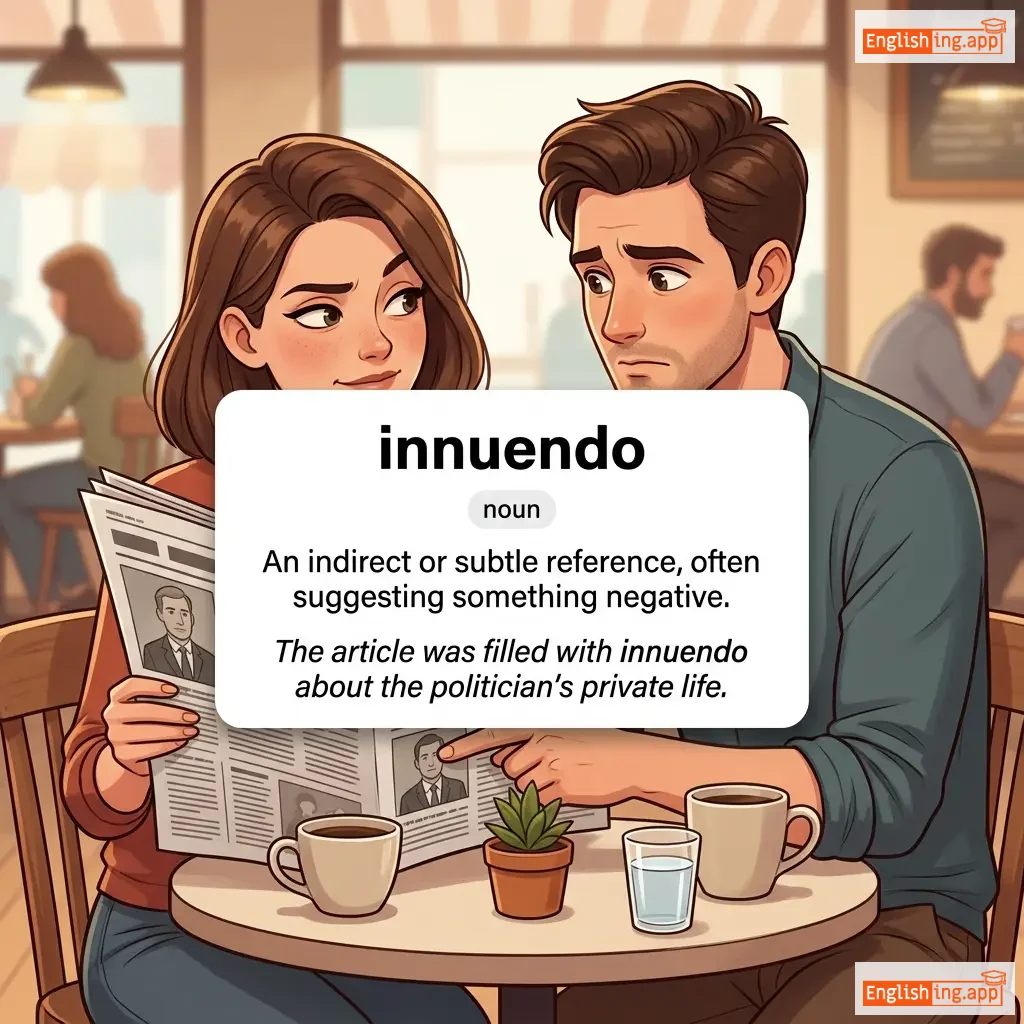
innuendo definition card — visual illustration of the meaning
noun
/ˌɪnjuˈɛndoʊ/
намек (namek)

An indirect or subtle reference, often suggesting something negative.

"The article was filled with innuendo about the politician's private life."

"Статья была наполнена намеками на личную жизнь политика." (Stat'ya byla napolnena namekami na lichnuyu zhizn' politika.)
adjective
/ɪˈnuːm(ə)rəbəl/
неисчислимый (neischislimyj)

Too many to be counted.

"She has innumerable memories of her childhood."

"У неё есть неисчислимые воспоминания о детстве." (U nee yest' neischislimyje vospominaniya o detstve.)
adjective
/ˌɪnəˈfɛnsɪv/
неоскорбительный (neoskornitel'nyy)

Not likely to offend or provoke; harmless.

"His inoffensive remarks kept the conversation friendly."

"Его неоскорбительные замечания поддерживали дружескую атмосферу беседы." (Yego neoskornitel'nye zamechaniya podderzhivali druzheskuyu atmosferu besedy.)
adjective
/ˌɪnˌɑːpərˈtuːn/
неудачный момент (neudachny moment)

Happening at a bad or inconvenient time.

"His call came at the most inopportune moment."

"Его звонок пришел в самый неудачный момент." (Yego zvonok prishel v samyj neudachnyj moment.)
adjective
/ɪˈnɔːrdənət/
чрезмерный (chrezmernyy)

Excessive or unusually large in degree.

"She spent an inordinate amount of time on her phone."

"Она потратила чрезмерное количество времени на своем телефоне." (Ona potratila chrezmernoye kolichestvo vremeni na svoem telefone.)
adjective
/ˌɪnɔːrˈɡænɪk/
неорганический (neorganicheskiy)

relating to substances that are not derived from living organisms; lacking organic structure or growth

"Inorganic compounds are commonly studied in chemistry labs."

"Неорганические вещества широко используются в науке." (neorganicheskie veshchestva shiroko ispolzuyutsya v nauke)
noun
/ˈɪnpʊt/
ввод, предоставленная информация (vvod, predostavlennaya informatsiya)

information, advice, or data that is put into a system, device, or process

"The manager asked for everyone's input on the new project."

"Менеджер попросил всех высказать свое мнение по новому проекту." (Menedzher poprosil vsekh vyskazat' svoe mnenie po novomu proyektu.)
noun
/ˈɪnkwest/
расследование (rassledovanie)

A legal or official inquiry, especially into the cause of a death.

"The inquest revealed the cause of the accident."

"Расследование выявило причину аварии." (Rassledovanie vyiavilo prichinu avarii.)
inquire definition card — visual illustration of the meaning
verb
/ɪnˈkwaɪər/
спрашивать (sprashivat)

To ask for information; to investigate.

"She inquired about the details of the job."

"Она спросила о деталях работы." (Ona sprosila o detalyakh raboty.)
noun
/ɪnˈkwaɪəri/ or /ˈɪnkwəri/
расследование / запрос (rassledovanie / zapros)

An act of asking for information; an investigation into something.

"The committee launched an inquiry into the financial irregularities."

"Комитет начал расследование финансовых нарушений." (Komitet nachal rassledovanie finansovykh narusheniy.)
noun
/ˌɪnkwɪˈzɪʃən/
инквизиция (inkviziciya)

A prolonged and intense questioning or investigation, often harsh in nature.

"The journalist faced an inquisition from the panel about his sources."

"Журналист столкнулся с инквизицией от панели по поводу своих источников." (Zhurnalist stolknulsya s inkviziciyey ot paneli po povodu svoikh istochnikov.)
adjective
/ɪnˈkwɪzɪtɪv/
любопытный (lyubopytnyy)

Curious or eager to learn and ask questions.

"The inquisitive child asked endless questions about the stars."

"Любопытный ребенок задавал бесконечные вопросы о звездах." (Lyubopytnyy rebenok zadaval beskonechnye voprosy o zvezdakh.)
noun
/ɪnˈkwɪzɪtər/
инквизитор (inkvizitor)

A person who asks many questions, often in an official or harsh manner.

"The inquisitor demanded detailed answers from the witness."

"Инквизитор потребовал подробных ответов от свидетеля." (Inkvizitor potreboval podrobných otvetov ot svidetelya.)
noun
/ˈɪnroʊd/
прогресс (progres)

An advance or significant progress, often at the expense of something else.

"The company made significant inroads into the mobile market."

"Компания сделала значительный прогресс на мобильном рынке." (Kompaniya sdelala znachitel'nyy progress na mobil'nom rynke.)