Словари

Словарь английского языка | Значения слов, определения и примеры

noun
/ˈhjuːməs/
хумус (khumus)

The dark, organic material in soil formed from decayed plants and animals.

"The gardener enriched the soil with humus to improve plant growth."

"Садовник обогатил почву хумусом, чтобы улучшить рост растений." (Sadovnik obogatil pochvu khumusom, chtoby uluchshit' rost rasteniy.)
noun, numeral
/ˈhʌndrəd/
сто (sto)

the number 100

"There are a hundred students in the hall."

"В зале сто студентов." (V zale sto studentov.)
noun
/ˈhʌŋɡər/
голод (golit)

the feeling of discomfort caused by lack of food

"The child cried out of hunger."

"Ребёнок плакал от голода." (Rebyonok plakal ot goloda.)
adverb
/ˈhʌŋ.ɡrə.li/
голодный; жадно; с нетерпением (golodnyy; zhadno; s neterpeniyem)

in a way that shows hunger; greedily; eagerly

"The dog ate hungrily after not eating for hours."

"Собака ела голодным образом после того, как не ела несколько часов." (Sobaka yela golodnym obrazom posle togo, kak ne yela neskol'ko chasov.)
adjective
/ˈhʌŋɡri/
голодный (golodny)

feeling or showing the need for food

"The children were hungry after playing outside all day."
"Дети были голодны после того, как играли на улице весь день." (Deti byli golodny posle togo, kak igrali na ulitse ves' den'.)
hunt definition card — visual illustration of the meaning
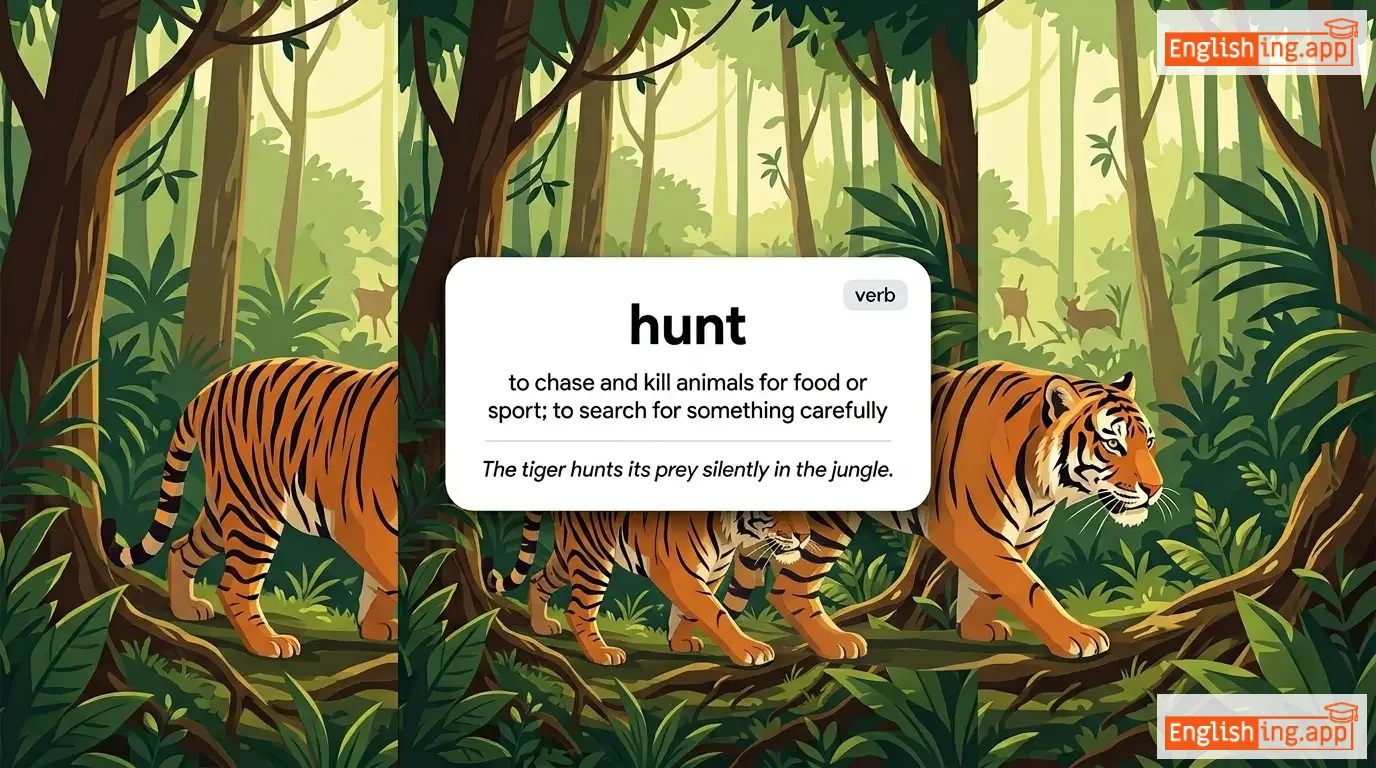
verb
/hʌnt/
охотиться (okhotitsya)

to chase and kill animals for food or sport; to search for something carefully

"The tiger hunts its prey silently in the jungle."

"Тигр охотится на свою добычу тихо в джунглях." (Tigr okhotitsya na svoyu dobychu tikho v dzhunglyakh.)
noun
/ˈhʌntər/
охотник (okhotnik)

a person or animal that hunts animals for food or sport

"The hunter tracked the deer through the forest."

"Охотник проследил за оленем через лес." (Okhotnik prosledil za olenem cherez les.)
noun/verb
/ˈhʌntɪŋ/
охота (okhota)

the activity of chasing and killing wild animals

"Hunting is strictly regulated in many countries."

"Охота строго регулируется во многих странах." (Okhota strogo reguliruetsya vo mnogikh stranakh.)
🪨

hurl

verb
/hɜːrl/

To throw something with great force.

"The boy hurled a stone into the river."

noun
/ˈhʌrɪkən/
ураган (uragan)

A violent tropical storm with very strong winds and heavy rain.

"The hurricane destroyed hundreds of homes along the coast."

"Ураган разрушил сотни домов вдоль побережья." (Uragan razrushil sotni domov vdol' poberezh'ya.)
hurry definition card — visual illustration of the meaning
verb
/ˈhʌri/
спешить (speshit)

to move or act quickly

"She had to hurry to catch the bus."

"Ей пришлось поспешить, чтобы успеть на автобус." (Ey prishlos' pospeshit', chtoby uspe't' na avtobus.)
verb/adjective
/hɜːrt/
повредить (povredit)

to cause pain or injury; to feel pain

"He hurt his knee while playing football."

"Он повредил колено, играя в футбол." (On povredil koleno, igraya v futbol.)
verb
/ˈhɜːrtl/
мчаться (mchatsya)

To move or cause to move at great speed, often in a dangerous way.

"The car hurtled down the mountain road."

"Машина мчалась по горной дороге." (Mashina mchalas' po gornoy doroge.)
👨‍👩‍👧

husband (хазбэнд)

noun
/ˈhʌzbənd/
муж (muzh)

A married man regarded in relation to his spouse.

"Her husband is very supportive of her career."

"Ее муж очень поддерживает ее карьеру." (Yeyo muzh ochen' podderzhivayet yeyu kar'yeru.)
husbandry definition card — visual illustration of the meaning
noun
/ˈhʌzbəndri/
сельское хозяйство и животноводство (selskoe khozyaystvo i zhivotnovodstvo)

the care, cultivation, and breeding of crops and animals; management and conservation of resources

"Modern husbandry practices focus on sustainability and animal welfare."

"Современные практики сельского хозяйства и животноводства сосредоточены на устойчивости и благополучии животных." (Sovremennye praktiki selskogho khozyaystva i zhivotnovodstva sosredotocheny na ustoychivosti i blagogoslovii zhivotnykh.)
noun
/hʌsk/
оболочка (obolochka)

the dry outer covering of some fruits or seeds

"The corn husk was peeled away before cooking."

"Оболочка кукурузы была снята перед готовкой." (Obolochka kukuruzyi byla snyata pered gotovkoy.)
adjective
/ˈhʌski/
хриплый (khaski)

deep, rough, and slightly hoarse voice; also refers to a strong and sturdy build

"He spoke in a husky voice after shouting all day."

"Он говорил хриплым голосом после того, как целый день кричал." (On govoril hriplym golosom posle togo kak tseliy den krichal)
noun
/hʊˈzɑːr/
гусар (gusar)

a member of a light cavalry regiment in European armies, especially the Hungarian cavalry

"The hussar rode swiftly across the battlefield."

"Гусар быстро ехал по полю битвы." (Gusar bystro yekhal po polyu bitvy.)
noun
/ˈhʌstɪŋz/
предвыборная кампания (predvybornaya kampaniya)

the political campaigning and speeches before an election

"The candidate gained popularity during the hustings."

"Кандидат набрал популярность во время предвыборной кампании." (Kandidat nabral popularnost' vo vremya predvybornoy kampanii.)
verb
/ˈhʌsəl/
трудиться / быстро двигаться (trudit'sya / bystro dvigat'sya)

to move quickly and energetically; to push or work hard to achieve something

"She had to hustle to finish the project on time."

"Ей нужно было потрудиться, чтобы закончить проект вовремя." (Ey nuzhno bylo potrudit'sya, chtoby zakonchit' proyekt vovremya.)
noun
/hʌt/
хижина (khizhina)

a small simple shelter or house

"They lived in a small wooden hut near the river."

"Они жили в маленькой деревянной хижине рядом с рекой." (Oni zhili v malen'koy derevyannoy khizhine ryadom s rekoy.)
noun
/ˈhaɪbrɪd/
гибрид (gibrid)

a mixture of two different things, often combining the best qualities of both

"The car is a hybrid that runs on both electricity and fuel."

"Этот автомобиль является гибридом, который работает как на электричестве, так и на топливе." (Etot avtomobil' yavlyaetsya gibridom, kotoryy rabotaet kak na elektrichestve, tak i na toplive.)
noun
/ˈhaɪdrə/
гидра (gidra)

a many-headed serpent in Greek mythology; a problem that seems to grow worse when attempts are made to solve it

"Corruption is like a hydra, hard to defeat completely."
"Коррупция как гидра, её трудно победить полностью." (Korruptsiya kak gidra, yeye trudno pobedit' polnost'yu.)
hydration definition card — visual illustration of the meaning
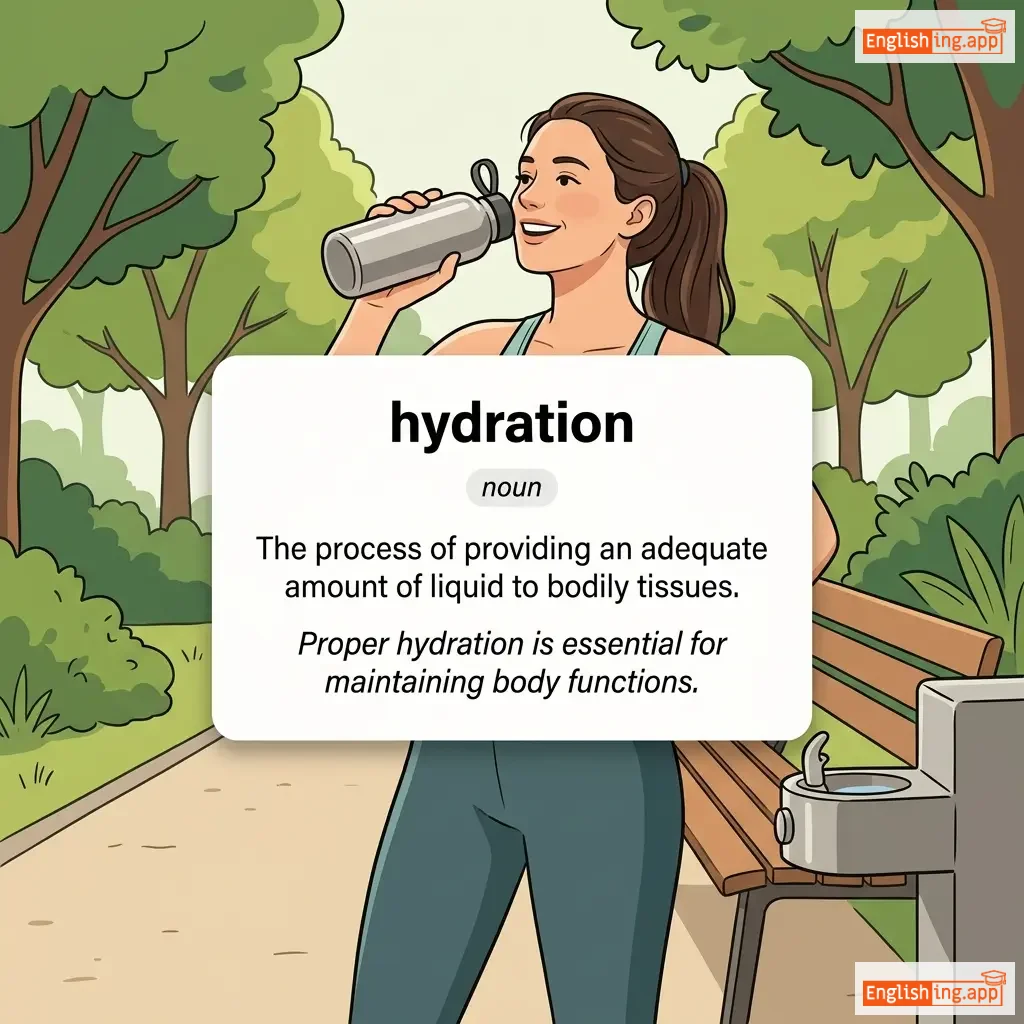
noun
/haɪˈdreɪʃən/
Процесс обеспечения организма достаточным количеством жидкости. (Protsess obespecheniya organizma dostatochnym kolichestvom zhidkosti)

The process of providing an adequate amount of liquid to bodily tissues.

"Proper hydration is essential for maintaining body functions."

"Правильная гидратация важна для поддержания функций организма." (Pravil'naya gidratatsiya vazhna dlya podderzhaniya funktsiy organizma)
adjective
/haɪˈdrɔːlɪk/
гидравлический (gidravlicheskiy)

operated by the pressure of liquid, especially water or oil

"The mechanic repaired the hydraulic system of the machine."

"Механик отремонтировал гидравлическую систему машины." (Mexanik otremontiroval gidravlicheskuyu sistemu mashiny.)
noun
/ˌhaɪdroʊdaɪˈnæmɪks/
гидродинамика (gidrodinamika)

The branch of science concerned with the motion of fluids, especially liquids, and the forces acting on solid bodies immersed in fluids.

"Hydrodynamics is essential in designing efficient ship hulls."

"Гидродинамика необходима при проектировании эффективных обводов корпуса судна." (Gidrodinamika neobhodima pri proektirovanii effektivnyh obvodov korpusa sudna)
adjective
/ˌhaɪdroʊɪˈlɛktrɪk/
гидроэлектрический (gidroelektricheskiy)

Relating to or denoting the generation of electricity using flowing water.

"The country invested heavily in hydroelectric power plants."

"Страна активно инвестировала в гидроэлектрические станции." (Strana aktivno investirovala v gidroelektricheskie stantsii.)
noun
/ˈhaɪdrədʒən/
водород (vodorod)

a colorless, odorless, highly flammable gas that is the lightest and most abundant chemical element in the universe

"Hydrogen is used as a clean fuel in many energy systems."
"Водород используется как чистое топливо во многих энергетических системах." (Vodorod ispol'zuetsja kak chistoe toplivo vo mnogikh energeticheskikh sistemakh.)
hydrogen-powered buses definition card — visual illustration of the meaning
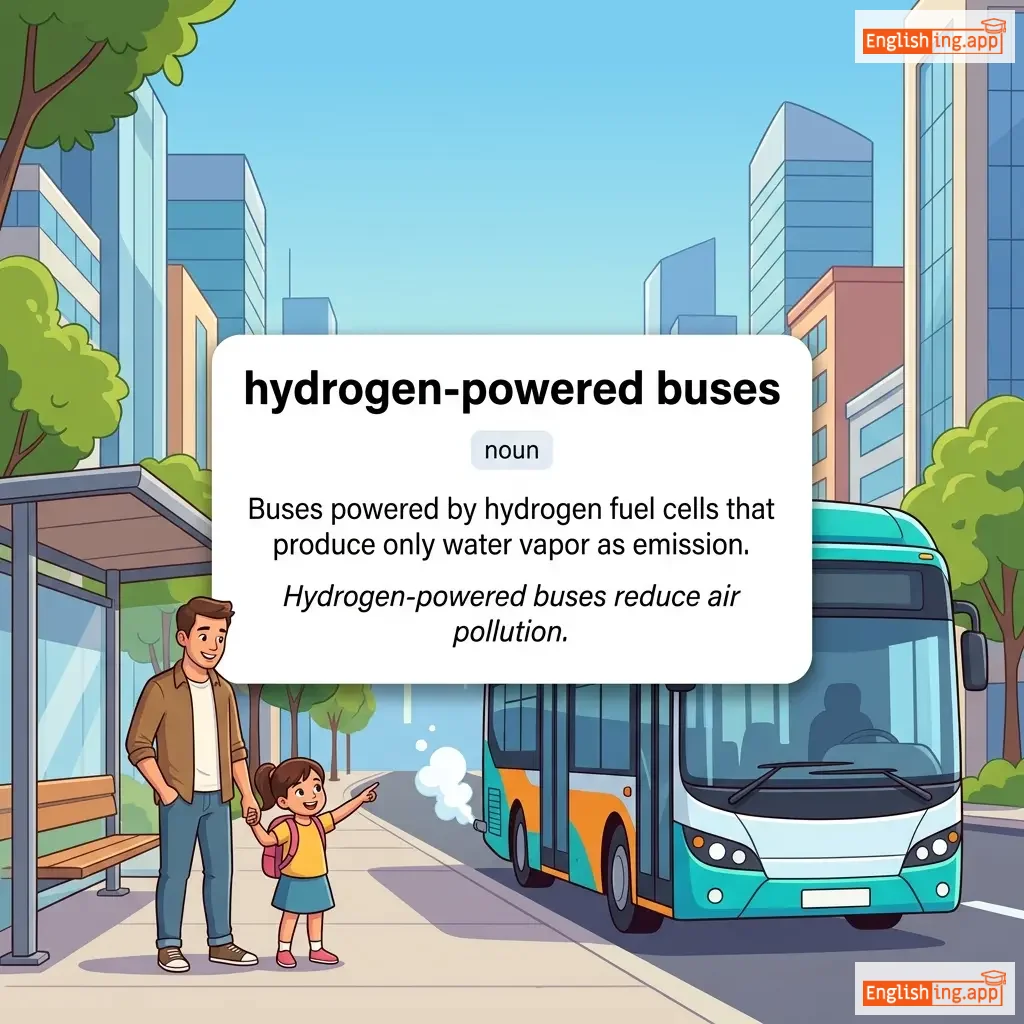
noun
ˈhaɪ.drə.dʒən ˈpaʊ.əd bʌsɪz
автобусы на водородном топливе (avtobusy na vodorodnom toplive)

Buses powered by hydrogen fuel cells that produce only water vapor as emission.

"Hydrogen-powered buses reduce air pollution."
"Автобусы на водородном топливе снижают загрязнение воздуха." (Avtobusy na vodorodnom toplive snizhajut zagryaznenie vozdukha.)
hydrological cycle definition card — visual illustration of the meaning
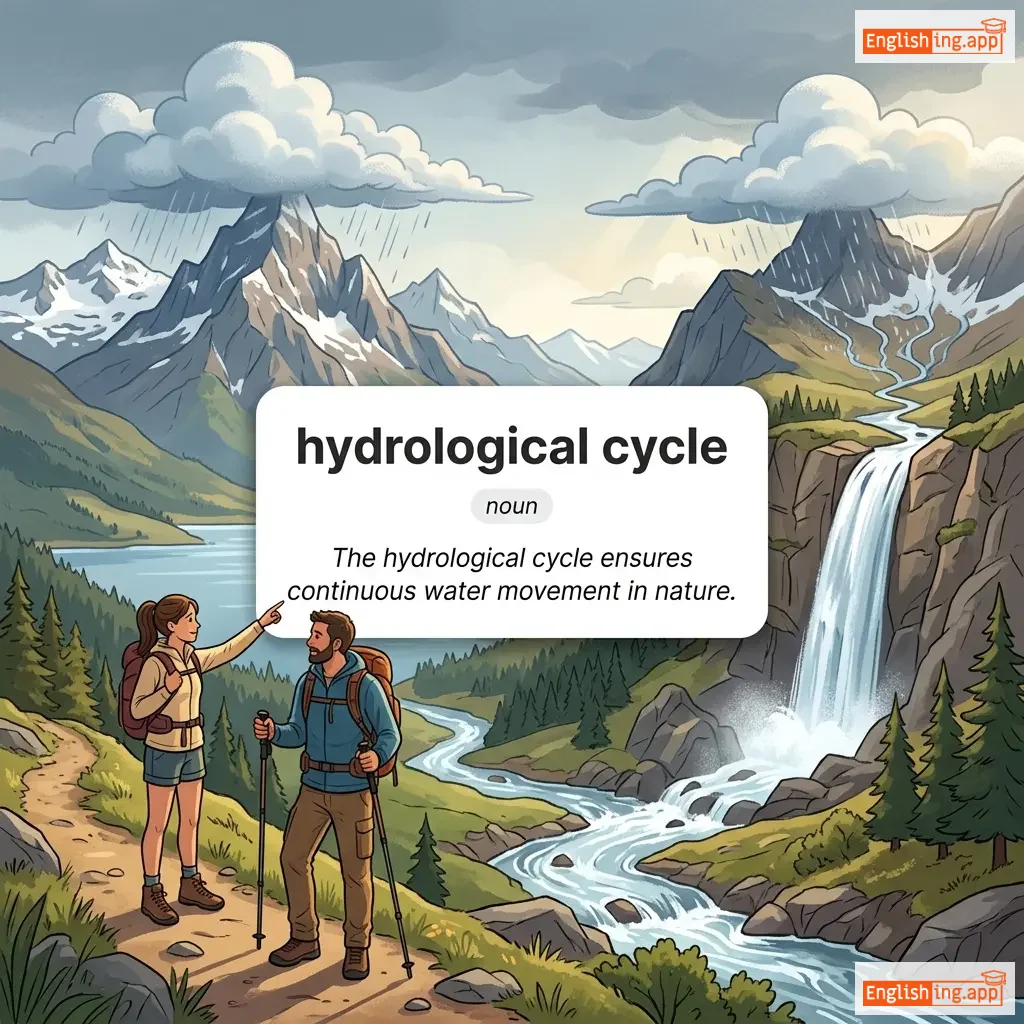
noun
ˌhaɪ.drəˈlɒdʒ.ɪ.kəl ˈsaɪ.kəl
гидрологический цикл (gidrologicheskiy tsikl)

The cycle of processes by which water circulates between the earth's oceans, atmosphere, and land.

"The hydrological cycle ensures continuous water movement in nature."

"Гидрологический цикл обеспечивает непрерывное движение воды в природе." (Gidrologicheskiy tsikl obespechivaet nepreryvnoe dvizhение vody v prirode.)
hydrolysis definition card — visual illustration of the meaning
noun
/haɪˈdrɒl.ɪ.sɪs/
гидролиз (gidroliz)

A chemical process that breaks down compounds by adding water, splitting complex molecules into simpler forms.

"Hydrolysis breaks down complex molecules into simpler forms."

"Гидролиз разрушает сложные молекулы на более простые формы." (Gidroliz razrushayet slozhnye molekuly na boleye prostye formy.)
noun
/ˌhaɪdroʊməˈkænɪks/
гидромеханика (gidromekhanika)

The study of the mechanical properties and behavior of fluids in motion and at rest.

"Hydromechanics provides the foundation for naval architecture."

"Гидромеханика является основой для судостроения." (Gidromekhanika yavlyayetsya osnovoy dlya sudostroyeniya.)
noun
/haɪˈdrɒmɪtər/
гидрометр (gidrometr)

An instrument used to measure the density or specific gravity of liquids.

"The brewer used a hydrometer to test the sugar content of the solution."

"Пивовар использовал гидрометр, чтобы измерить плотность сахарного раствора." (Pivovar ispolzoval gidrometr chtoby izmerit plotnost sakharnoho rastvora)
noun
/ˌhaɪdroʊˈfoʊbiə/
гидрофобия (gidrofobiya)

Extreme or irrational fear of water; historically, another name for rabies.

"After being bitten by a stray dog, the man was treated for hydrophobia."
"После укуса бродячей собаки мужчину лечили от гидрофобии." (Posle ukusa brodyachey sobaki muzhchinu lechili ot gidrofobii.)
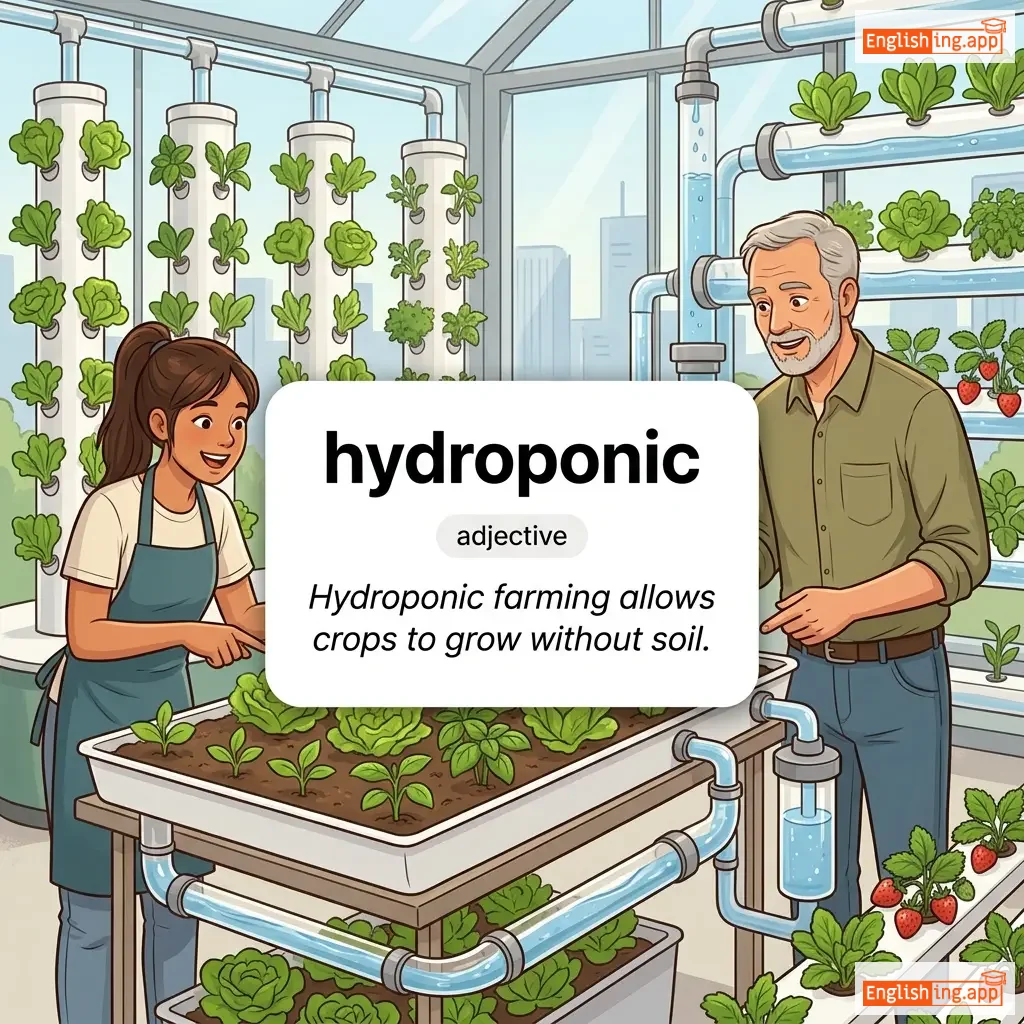
hydroponic definition card — visual illustration of the meaning
adjective
/ˌhaɪ.drəˈpɒn.ɪk/
гидропонный (gidroponny)

Relating to the process of growing plants in sand, gravel, or liquid, with added nutrients but without soil.

"Hydroponic farming allows crops to grow without soil."
"Гидропонное земледелие позволяет выращивать растения без почвы." (Gidroponnoe zemledelie pozvolyaet vyrashchivat' rastenija bez pochvy.)
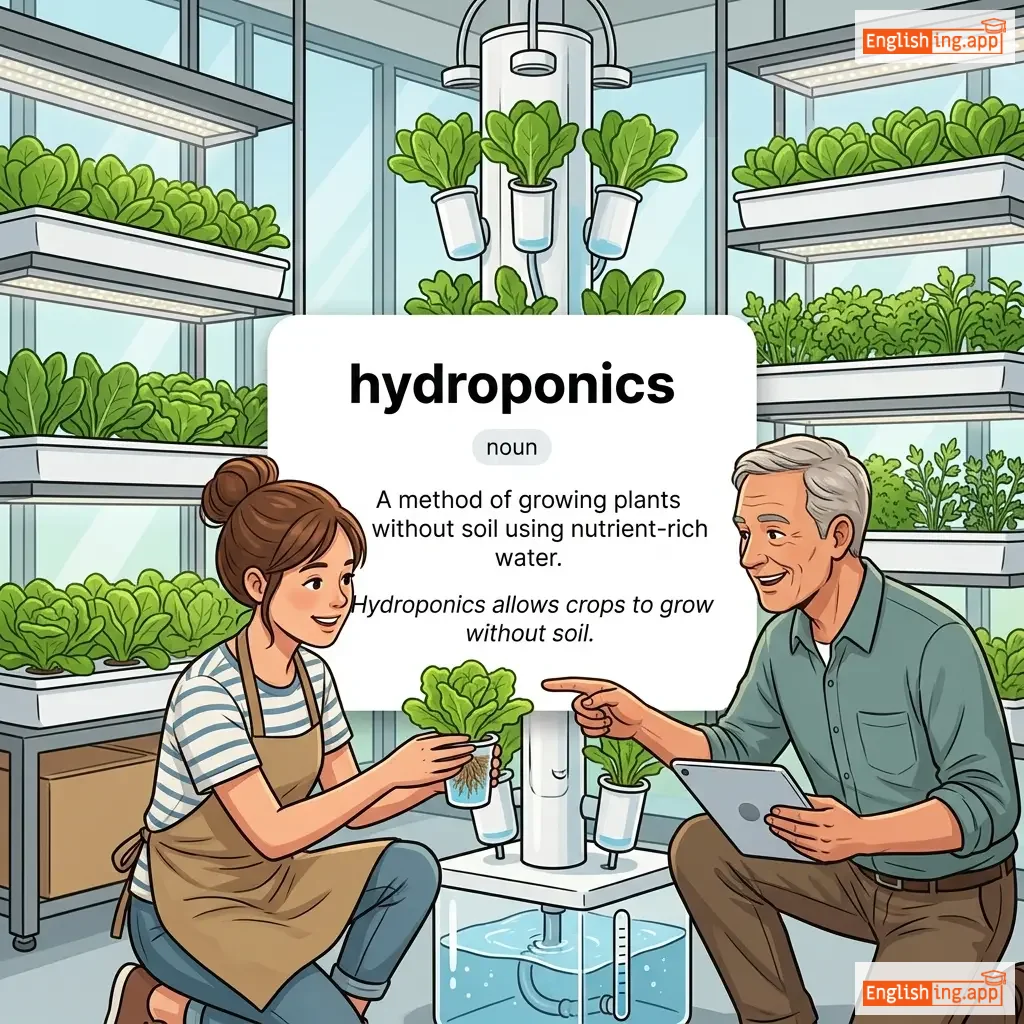
hydroponics definition card — visual illustration of the meaning
noun
/ˌhaɪ.droʊˈpɒn.ɪks/
гидропоника (gidroponika)

A method of growing plants without soil using nutrient-rich water.

"Hydroponics allows crops to grow without soil."
"Гидропоника позволяет выращивать культуры без почвы." (Gidroponika pozvolyaet vyrashivat kultury bez pochvy.)
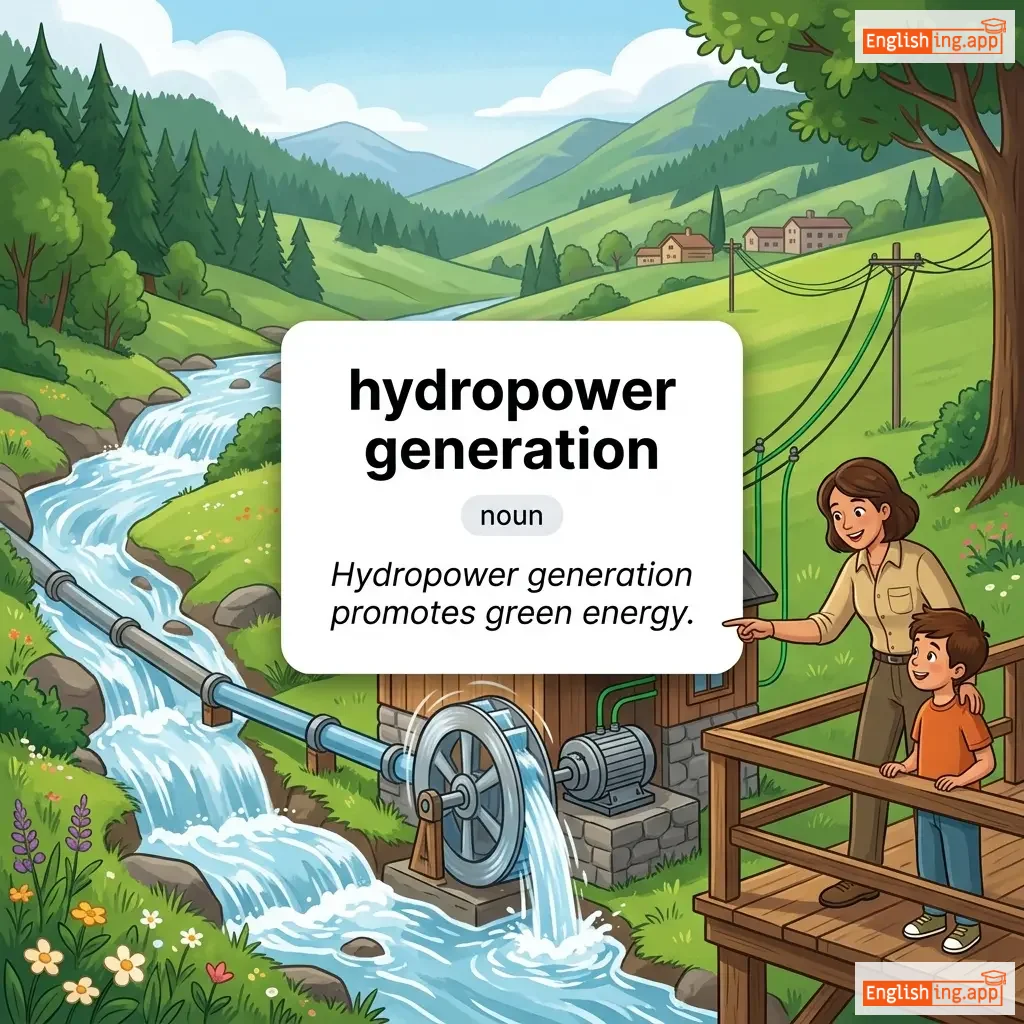
hydropower generation definition card — visual illustration of the meaning
noun
/ˈhaɪ.drəʊˌpaʊər ˌdʒen.əˈreɪ.ʃən/
гидроэлектрическое производство (gidroelektricheskoe proizvodstvo)

The production of electrical power through the use of the gravitational force of falling or flowing water.

"Hydropower generation promotes green energy."

"Гидроэлектрическое производство способствует зеленой энергии." (Gidroelektricheskoe proizvodstvo sposobstvuet zelyonoi energii.)
noun
/ˌhaɪdrəˈstætɪks/
гидростатика (gidrostatika)

The branch of science concerned with the mechanical properties of fluids at rest.

"Hydrostatics is essential in understanding how dams and reservoirs function."

"Гидростатика важна для понимания того, как работают дамбы и водохранилища." (Gidrostatika vazhna dlya ponimaniya togo, kak rabotayut damby i vodokhranilishcha.)
adjective
/ˈhaɪdrəs/
водяной (vodyanoy)

Containing water, especially water of crystallization.

"The mineral is hydrous because it contains water molecules in its structure."

"Этот минерал гидратирован, потому что в его структуре содержатся молекулы воды." (Ehtot mineral gidratiravan, potomu chto v ego strukture soderzhatsya molekuly vody.)
noun
/haɪˈiː.nə/
гиена (giena)

a wild animal of Africa and Asia that looks like a dog and makes a sound like laughter

"The hyena laughed in the darkness of the night."

"Гиена смеялась в темноте ночи." (Giena smejalas' v temnote nochi.)
noun
/ˈhaɪdʒiːn/
гигиена (gigiena)

Conditions or practices conducive to maintaining health and preventing disease.

"Good hygiene is essential for preventing the spread of infections."
"Хорошая гигиена необходима для предотвращения распространения инфекций." (Khoroshaya gigiena neobkhodima dlya predotvrashcheniya rasprostraneniya infektsiy.)
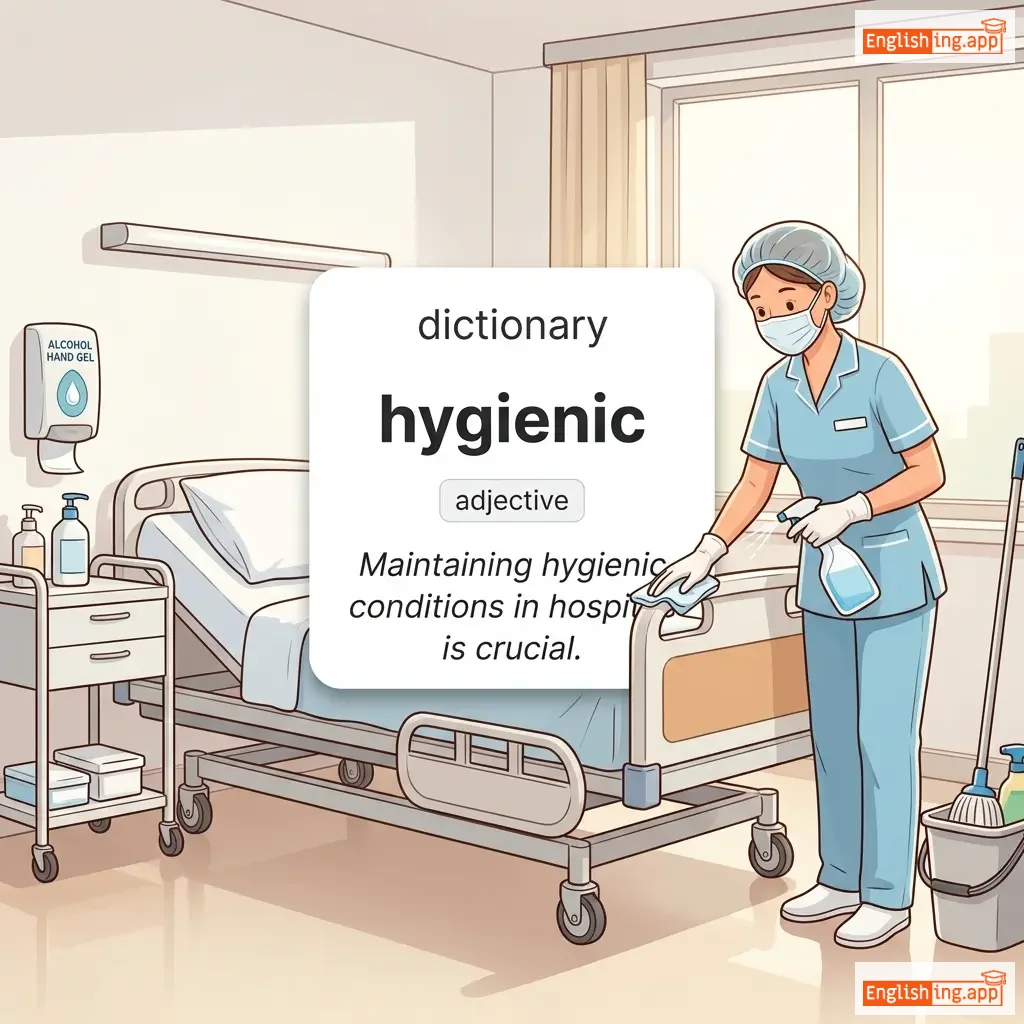
hygienic definition card — visual illustration of the meaning
adjective
haɪˈdʒiː.nɪk
гигиеничный (haijenik)

Conducive to maintaining health and preventing disease, especially by being clean.

"Maintaining hygienic conditions in hospitals is crucial."

"Соблюдение гигиенических условий в больницах имеет решающее значение." (Sobludenie gigienicheskikh usloviy v bolnitsakh imeet reshayeushcheye znachenie)
noun
/hɪm/
гимн (hymn)

A religious song or poem of praise to God or a deity.

"The congregation sang a hymn during the morning service."
"Община пела гимн во время утреннего богослужения." (Obshchina pela gimn vo vremya utrennogo bogosluzheniya.)
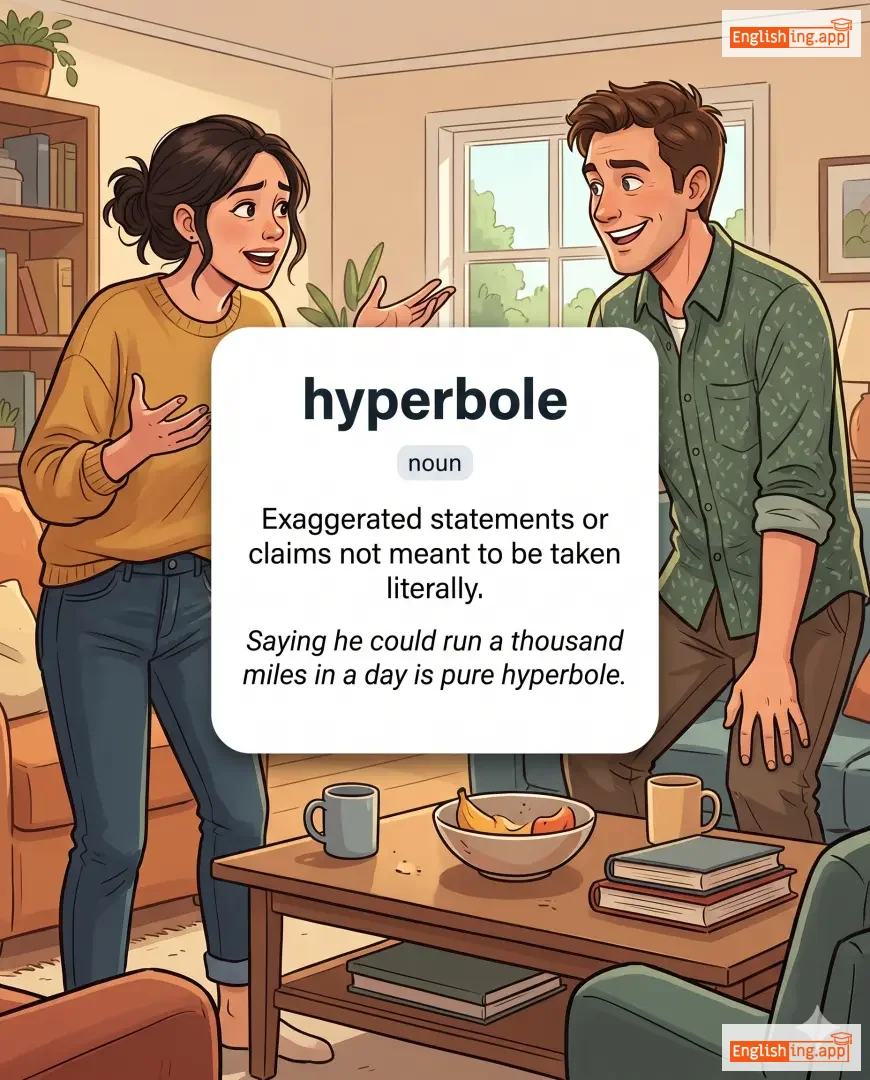
hyperbole definition card — visual illustration of the meaning
noun
/haɪˈpɜːrbəli/
гипербола (giperbola)

Exaggerated statements or claims not meant to be taken literally.

"Saying 'I’m so hungry I could eat a horse' is a classic example of hyperbole."

"'Я так голоден, что могу съесть лошадь' - это классический пример гиперболы." ('Ya tak goloden, chto mogu s'yest' loshad' - eto klassicheskiy primer giperboly.)
adjective
/ˌhaɪpərˈbɔːriən/
гиперборейский (giperboreyskiy)

Relating to the extreme north; very cold or frigid.

"The explorers prepared for the hyperborean climate of the Arctic."

"Исследователи готовились к гиперборейскому климату Арктики." (Issledovateli gotovilis' k giperboreyskomu klimatu Arktiki.)
hyperconnectivity definition card — visual illustration of the meaning
noun
ˌhaɪ.pər.kəˈnɛk.tɪ.vɪ.ti
гиперконнективность (giperkonnectivnost)

The use of multiple systems and devices to remain constantly connected.

"The era of hyperconnectivity has led to a digital revolution."

"Эра гиперконнективности привела к цифровой революции." (Era giperkonnectivnosti privedla k tsifrovoy revolyutsii.)
adjective
/ˌhaɪpərˈkrɪtɪkl/
гиперкритичный (giperkritichny)

Excessively or unreasonably critical.

"The teacher was often hypercritical of small mistakes."
"Учитель часто был гиперкритичен к небольшим ошибкам." (Uchitel' chasto byl giperkritichen k nebol'shim oshibkam.)
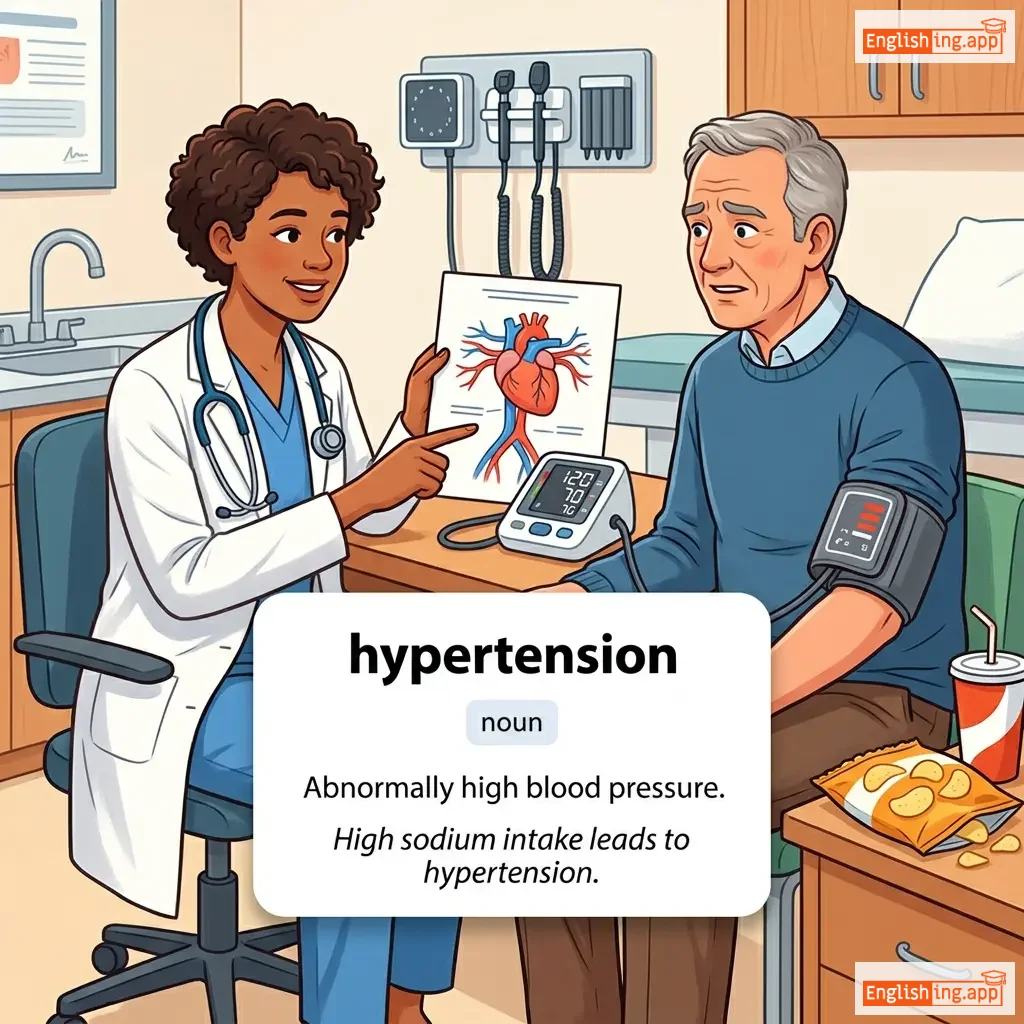
hypertension definition card — visual illustration of the meaning
noun
ˌhaɪ.pɚˈten.ʃən
гипертония (gipertoniya)

Abnormally high blood pressure.

"High sodium intake leads to hypertension."

"Высокое потребление натрия приводит к гипертонии." (Vysokoye potrebleniye natriya privodyt k gipertonii.)
noun
/hɪpˈnoʊsɪs/
гипноз (gipnoz)

A trance-like state of consciousness usually induced by suggestion.

"She underwent hypnosis to overcome her fear of flying."

"Она прошла гипноз, чтобы преодолеть свой страх перед полетами." (Ona proshla gipnoz, chtoby preodolet' svoi strakh pered poletami.)
adjective
/hɪpˈnɒtɪk/
гипнотический (gipnoticheskiy)

Producing sleep or a trance-like state; mesmerizing.

"The music had a hypnotic effect on the audience."

"Музыка оказала гипнотическое влияние на аудиторию." (Muzyka okazala gipnoticheskoe vliyaniye na auditoriyu.)