Словари

Словарь английского языка | Значения слов, определения и примеры

noun
/ɪˈmɜːrdʒəns/
возникновение (vozniknoveniye)

the process of coming into view, existence, or prominence

"The emergence of new technologies has transformed communication."
"Возникновение новых технологий изменило общение." (Vozniknoveniye novykh tekhnologiy izmenilo obshcheniye.)
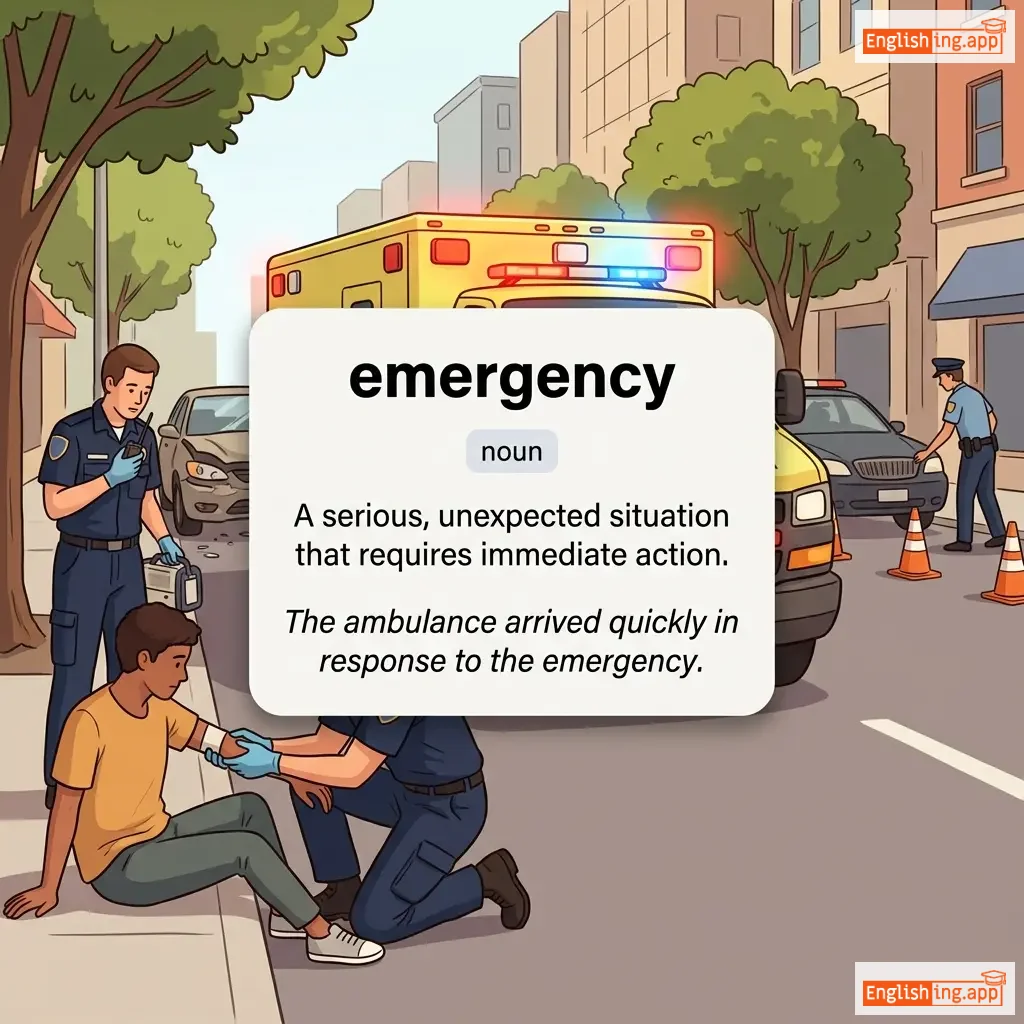
emergency definition card — visual illustration of the meaning
noun
/ɪˈmɜrdʒənsi/
чрезвычайная ситуация (chrezvychaynaya situatsiya)

A serious, unexpected situation that requires immediate action.

"The ambulance arrived quickly in response to the emergency."

"Скорая помощь приехала быстро в ответ на чрезвычайную ситуацию." (Skoraya pomoshch' priekhala bystro v otvet na chrezvychaynuyu situatsiyu.)
adjective
/ɪˈmɜːrdʒənt/
возникающий (voznikaushchiy)

just coming into existence or becoming prominent

"The emergent startup quickly attracted investors."
"Возникающий стартап быстро привлек инвесторов." (Voznikayushchiy startup bystro prively investory.)
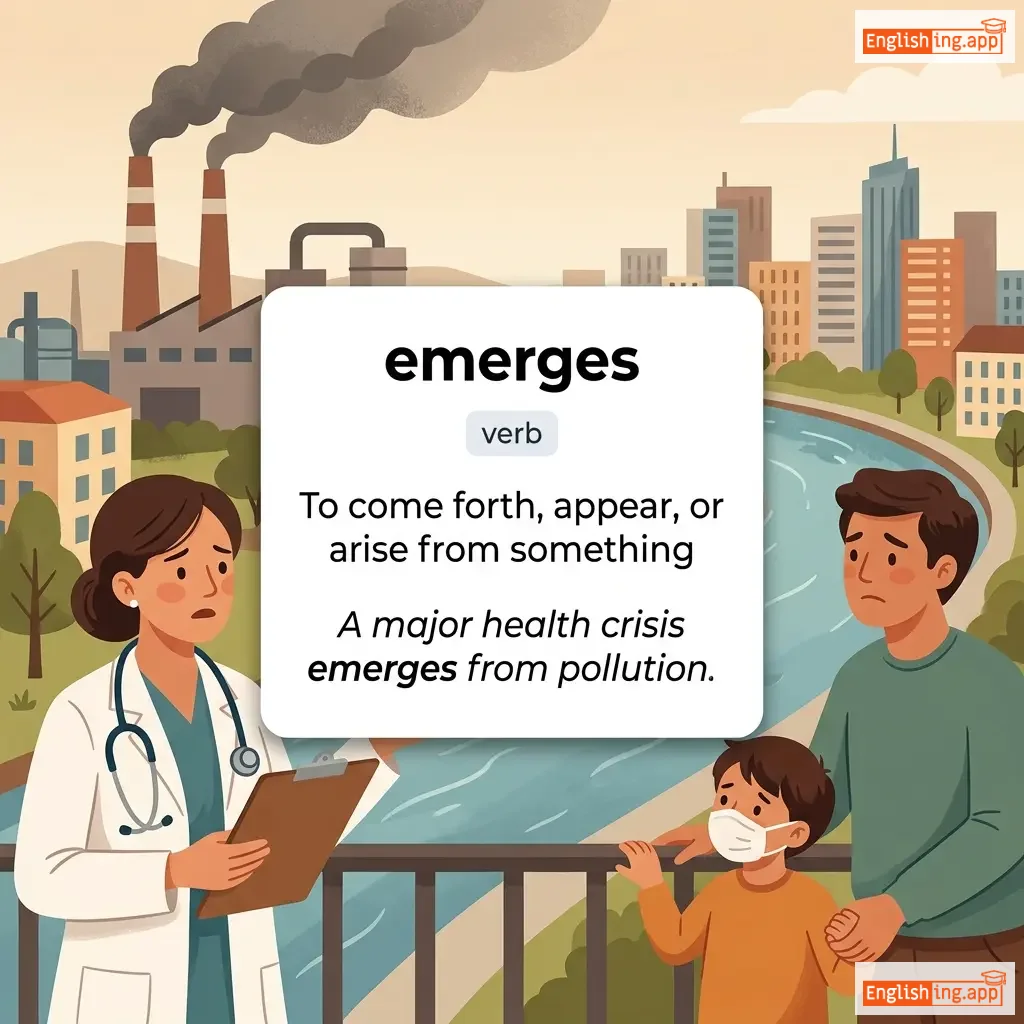
emerges definition card — visual illustration of the meaning
verb
ɪˈmɜːdʒɪz
появляться (poyavlyatsya)

To come forth, appear, or arise from something

"A major health crisis emerges from pollution."

"Большой кризис в области здравоохранения возникает из-за загрязнения." (Bol'shoy krizis v oblasti zdravookhraneniya voznikayet iz-za zagrizneniya.)
adjective
/ɪˈmɜːrdʒɪŋ/
развивающийся (razvivayushchiesya)

becoming known, developing, or starting to exist

"Bangladesh is one of the fastest emerging economies in the world."

"Бангладеш является одной из самых быстро развивающихся экономик мира." (Bangladesh yavlyaetsya odnoy iz samykh bystro razvivayushchikhsya ekonomiki mira.)
adjective
/ɪˈmɛrɪtəs/
профессор эмеритус (professor emeritus)

having retired but allowed to retain their title as an honor

"He is a professor emeritus at the university."

"Он профессор-эмеритус в университете." (On professor-emeritus v universitete.)
noun
/ɪˈmɛtɪk/
рвотное средство (rvotnoe sredstvo)

a substance that causes vomiting

"The doctor administered an emetic to remove the poison."

"Врач дал рвотное средство для удаления яда." (Vrach dal rvotnoe sredstvo dlya udaleniya yada.)
noun
/ˈɛmɪɡrənt/
эмигрант (emigrant)

A person who leaves their own country to settle permanently in another.

"The emigrant started a new life in Canada."

"Эмигрант начал новую жизнь в Канаде." (Emigrant nachal novuju zhizn' v Kanade.)
verb
/ˈɛmɪˌɡreɪt/
эмигрировать (emigrirovat)

To leave one's own country in order to settle permanently in another.

"Many people emigrated from Europe to America in the 19th century."

"Многие люди эмигрировали из Европы в Америку в 19-м веке." (Mnogie lyudi emigrirali iz Yevropy v Ameriku v 19-m veke.)
noun
/ˈɛmɪnəns/
величие (velichie)

Fame or recognized superiority, especially within a particular sphere.

"She rose to eminence as a leading scientist."
"Она достигла величия как ведущий ученый." (Ona dostigla velichiya kak vedushchiy uchenyy.)
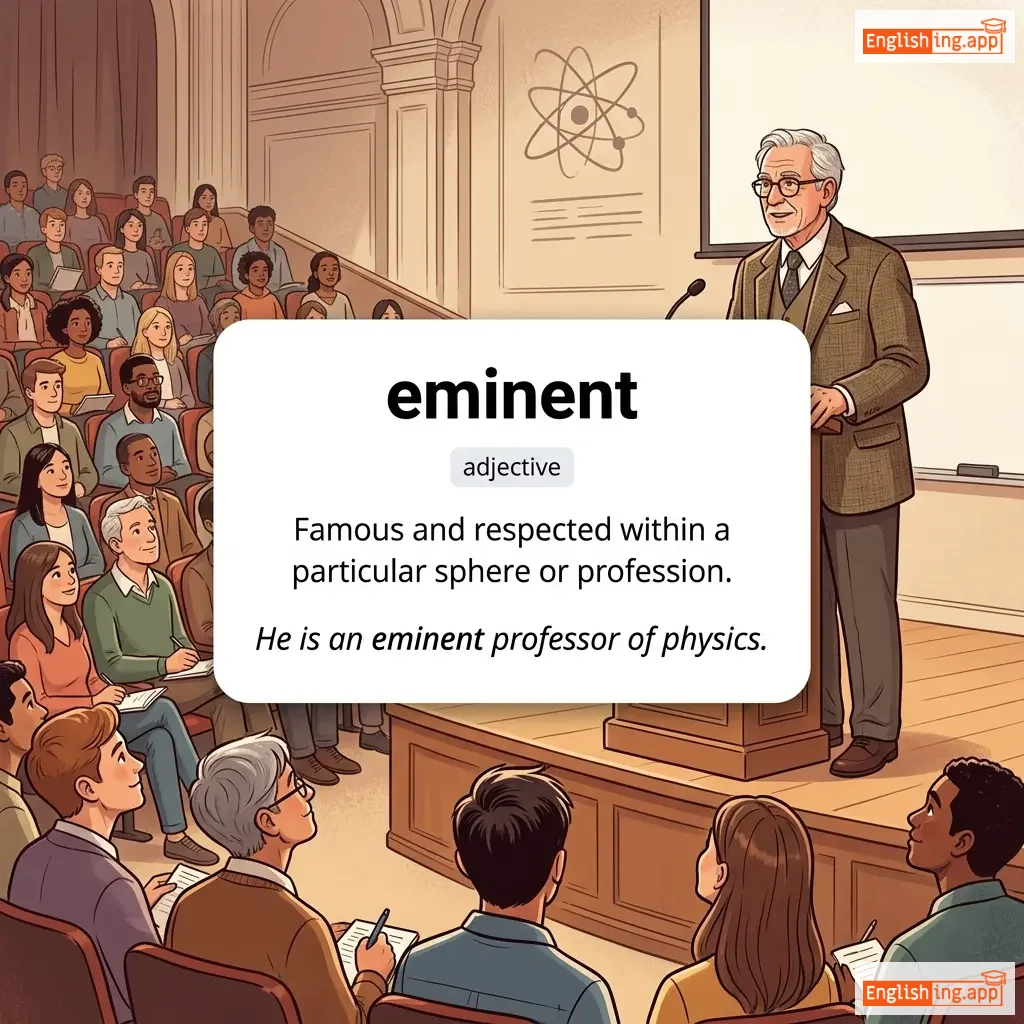
eminent definition card — visual illustration of the meaning
adjective
/ˈɛmɪnənt/
выдающийся (vydayushchiesya)

Famous and respected within a particular sphere or profession.

"He is an eminent professor of physics."

"Он является выдающимся профессором физики." (On yavyayetsya vydaiushchimsya professorom fiziki.)
noun
/ˈɛmɪsɛri/
посланник (poslannik)

A person sent on a special mission, usually as a diplomatic representative.

"The king sent an emissary to negotiate peace."
"Царь отправил посланника для переговоров о мире." (Car' otpravil poslannika dlya peregovorov o mire.)
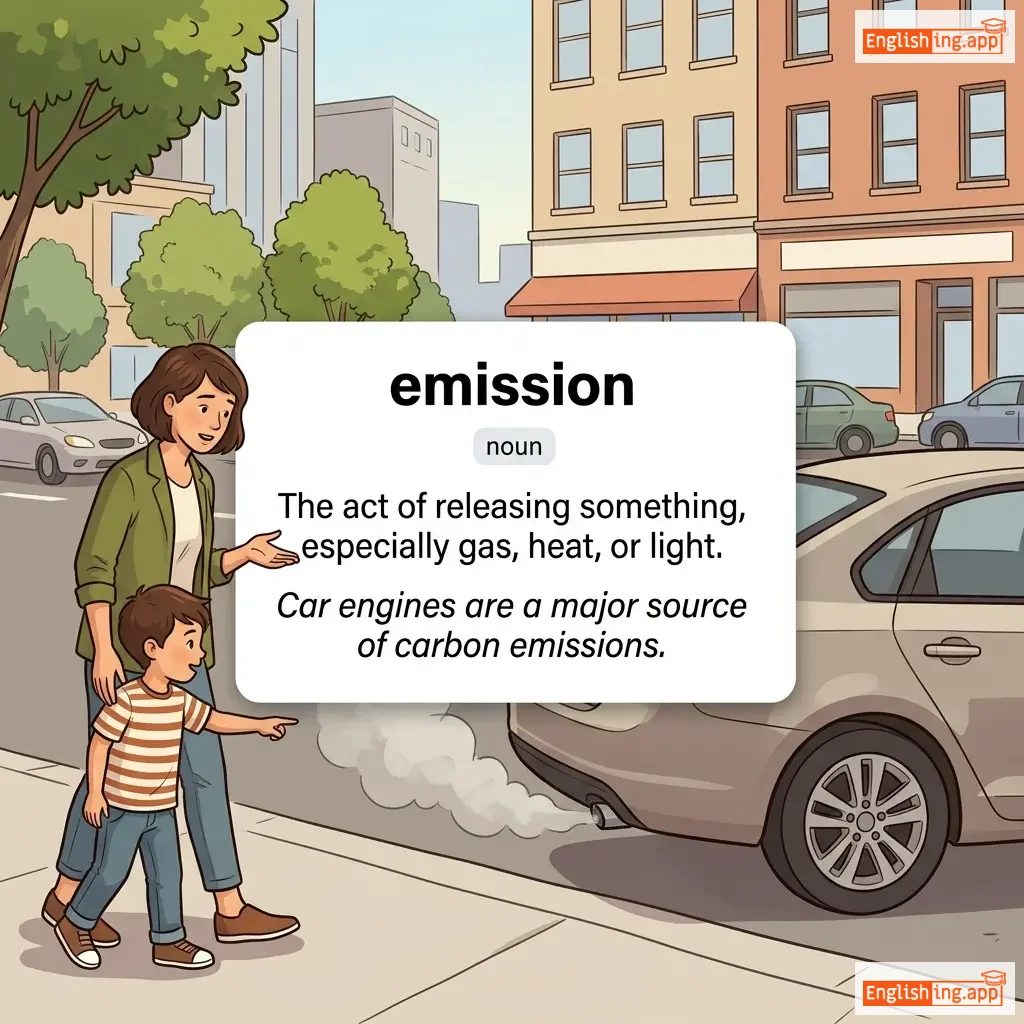
emission definition card — visual illustration of the meaning
noun
/ɪˈmɪʃən/
эмиссия (emissiya)

The act of releasing something, especially gas, heat, or light.

"Car engines are a major source of carbon emissions."
"Автомобильные двигатели являются важным источником углеродных эмиссий." (Avtomobil'nye dvigateli yavlyayutsya vazhnym istochnikom uglerodnykh emissiy.)
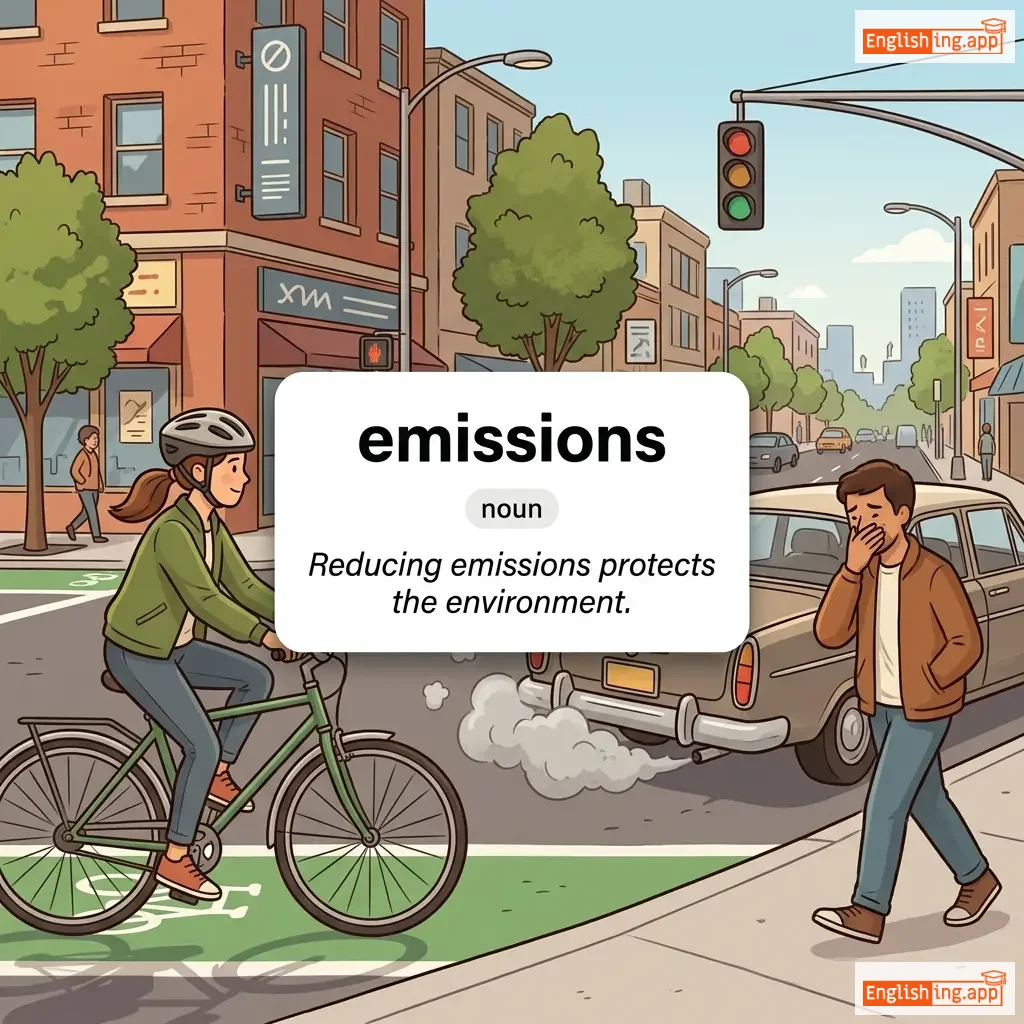
emissions definition card — visual illustration of the meaning
noun
/ɪˈmɪʃ.ənz/
эмиссии (emissii)

The production and discharge of something, especially gas, heat, light, or radiation.

"Reducing emissions protects the environment."

"Снижение выбросов защищает окружающую среду." (Snizhenie vybrosov zashchishchaet okruzhayushchuyu sredu.)
verb
/ɪˈmɪt/
Излучать (Izluchat')

to send out something such as light, heat, sound, or gas

"The factory emits smoke into the atmosphere."
"Фабрика эмитирует дым в атмосферу." (Fabrika emitiruet dym v atmosferu.)
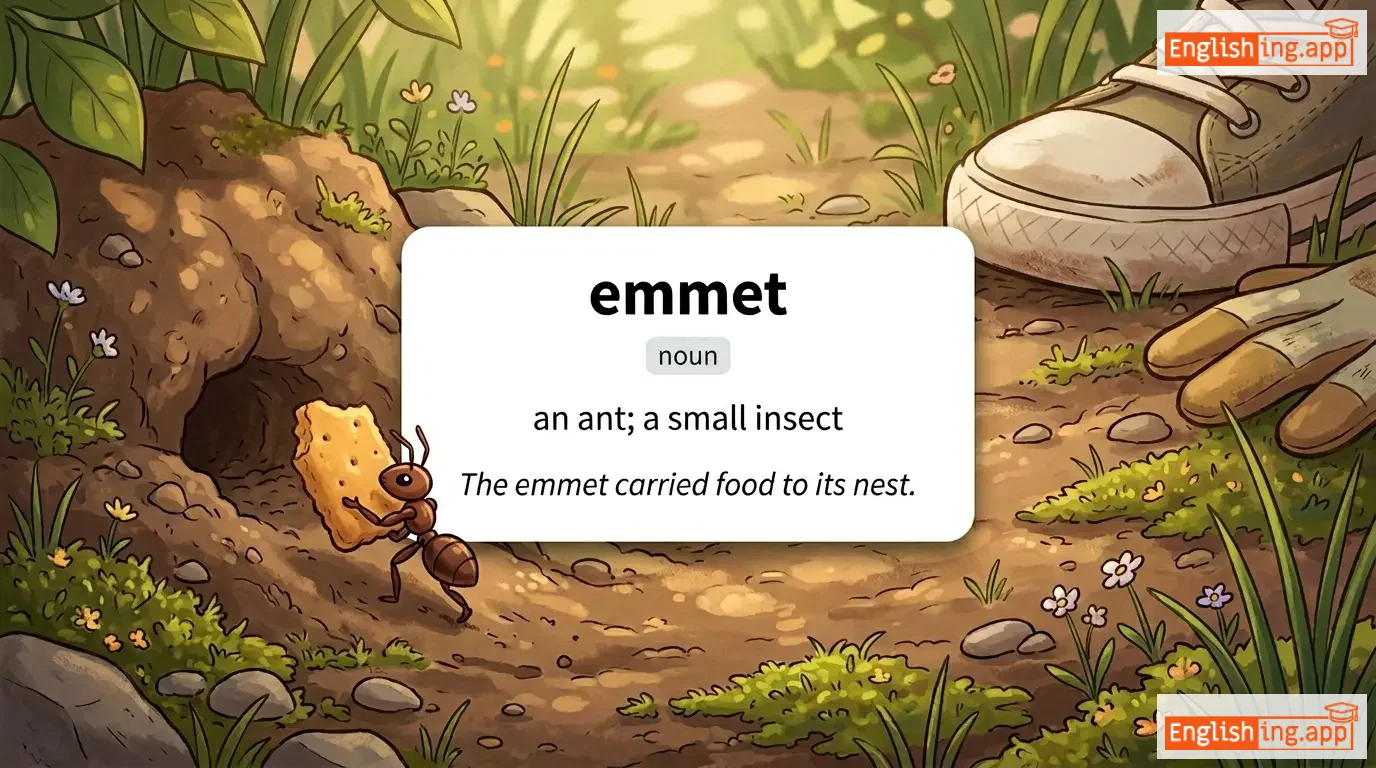
emmet definition card — visual illustration of the meaning
verb
/ˈɛmɪt/
муравей (muravey)

an ant; a small insect

"The emmet carried food to its nest."

"Муравей принёс еду в своё гнездо." (Muravey prines yedu v svoyo gnezdo.)
emollient definition card — visual illustration of the meaning
noun/adjective
/ɪˈmɒliənt/
вещества, смягчающие кожу (veshchestva, smyagchayushchie kozhu)

a substance that softens or soothes the skin

"She used an emollient cream to treat her dry skin."

"Она использовала эмоллиентный крем, чтобы вылечить свою сухую кожу." (Ona ispol'zovala emollientnyy krem, chtoby vylechit' svoyu sukhuyu kozhu.)
noun
/ɪˈmɒljʊmənt/
зарплата (zarplata)

payment for work or services; salary or fees

"The professor received his annual emolument from the university."

"Профессор получил свою ежегодную зарплату от университета." (Professor poluchil svoyu ezhegodnuyu zarplatu ot universiteta.)
noun
/ɪˈmoʊʃən/
эмоция (emociya)

A strong feeling such as happiness, sadness, anger, or fear.

"She was overwhelmed with emotion when she heard the news."
"Она была переполнена эмоциями, когда услышала новость." (Ona byla perepolnena emociyami, kogda uslyshala novost'.)
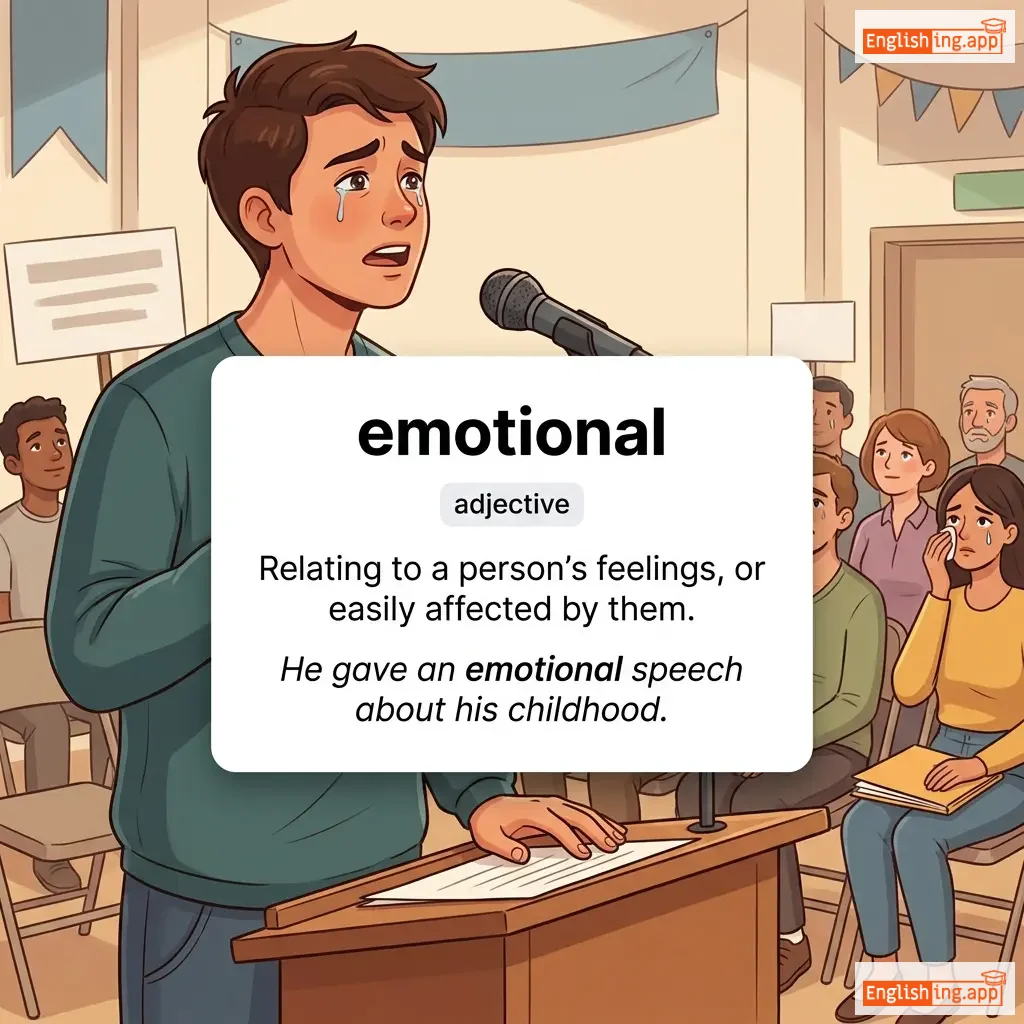
emotional definition card — visual illustration of the meaning
adjective
/ɪˈmoʊʃənəl/
эмоциональный (emotsional'nyy)

Relating to a person’s feelings, or easily affected by them.

"He gave an emotional speech about his childhood."

"Он произнес эмоциональную речь о своем детстве." (On proznes emotsional'nuyu rech' o svoem detstve.)
emotionality definition card — visual illustration of the meaning
noun
ɪˌməʊ.ʃəˈnæl.ɪ.ti
эмоциональность (emotsionalnost)

The quality of being driven by emotions rather than reason; emotional responsiveness.

"His emotionality often influenced his decisions."

"Его эмоциональность часто влияла на его решения." (Ego emotsional'nost' chasto vliyala na ego resheniya.)
adverb
/ɪˈməʊʃənəli/
эмоционально (emotsional'no)

in a way that relates to a person's feelings or emotions

"She became emotionally attached to her pet."
"Она стала эмоционально привязана к своему питомцу." (Ona stala emotsional'no privyazana k svoemu pitomtsu.)
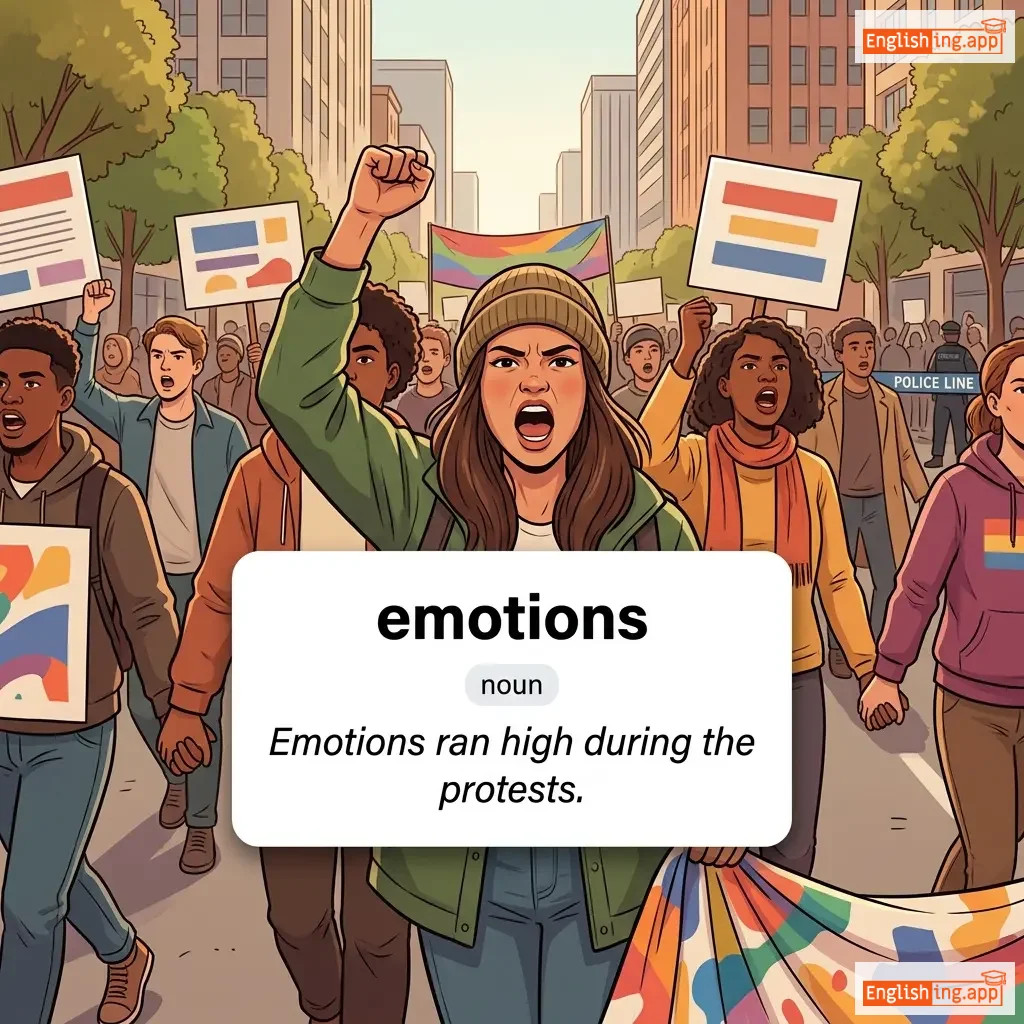
emotions definition card — visual illustration of the meaning
noun
ɪˈməʊʃənz
эмоции (emotsii)

Strong feelings deriving from one's circumstances, mood, or relationships with others.

"Emotions ran high during the protests."
"Эмоции были высокими во время протестов." (Emotsii byli vysokimi vo vremya protestov.)
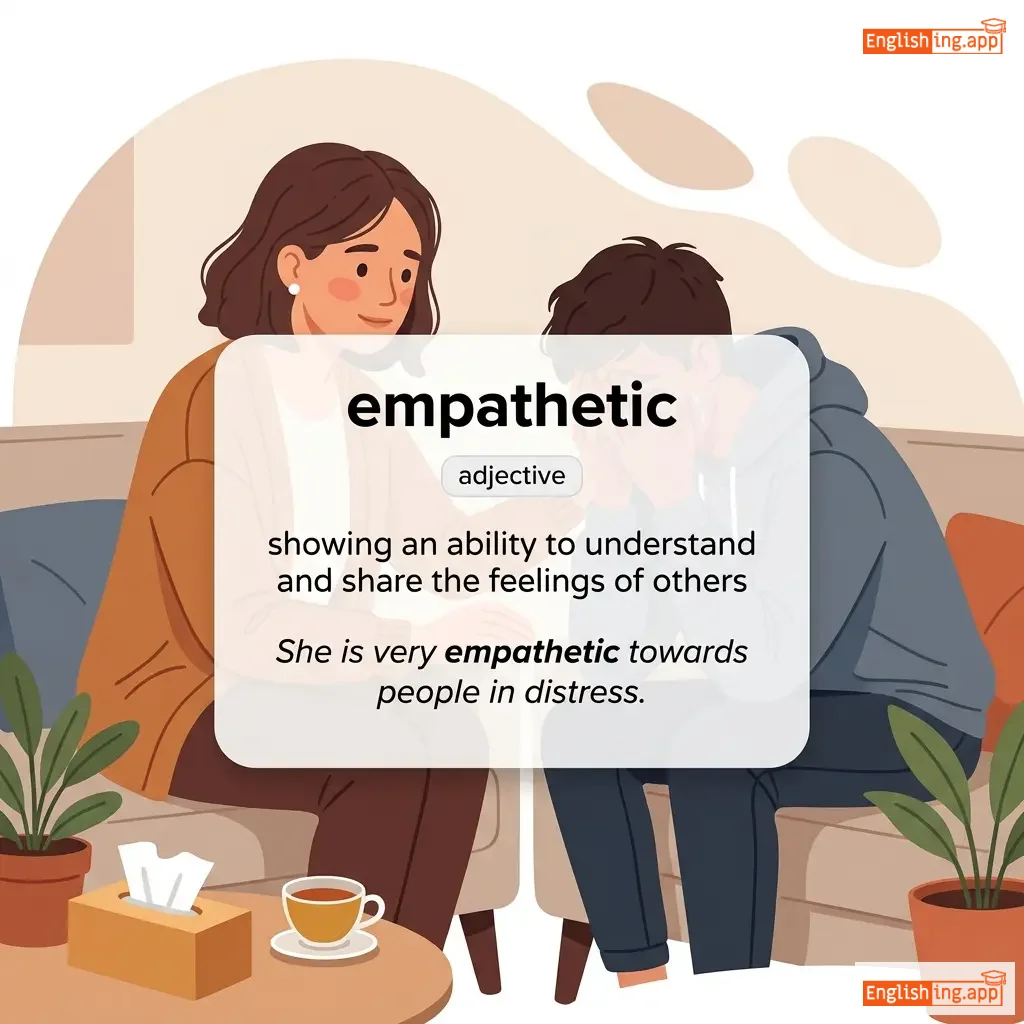
empathetic definition card — visual illustration of the meaning
adjective
/ˌɛmpəˈθɛtɪk/
эмпатичный (empaticzny)

showing an ability to understand and share the feelings of others

"She is very empathetic towards people in distress."
"Она очень эмпатична к людям в беде." (Ona ochen' empatična k lyudyam v bide.)
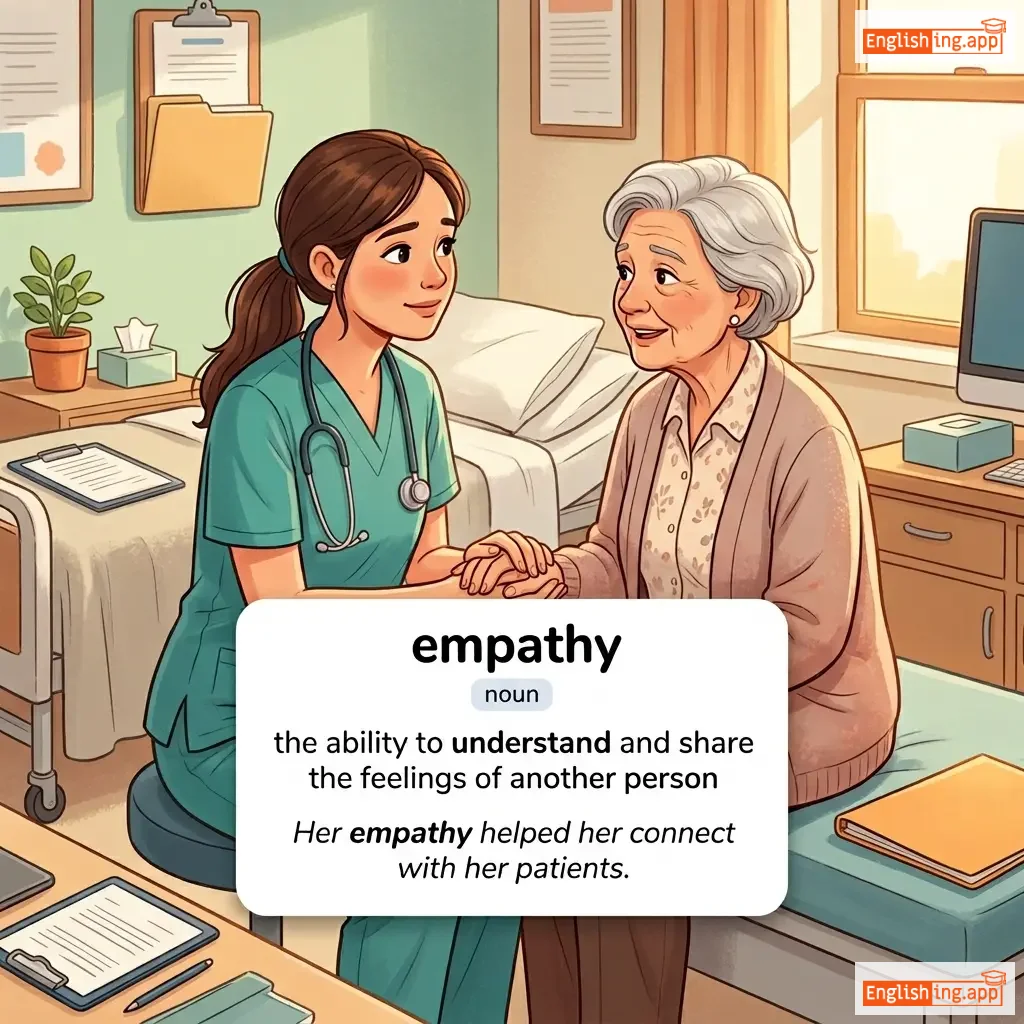
empathy definition card — visual illustration of the meaning
noun
/ˈɛmpəθi/
эмпатия (empatiya)

the ability to understand and share the feelings of another person

"Her empathy helped her connect with her patients."
"Её эмпатия помогла ей наладить связь с пациентами." (Eё empatiya pomogla yey naladit' svyaz' s patsiyentami.)
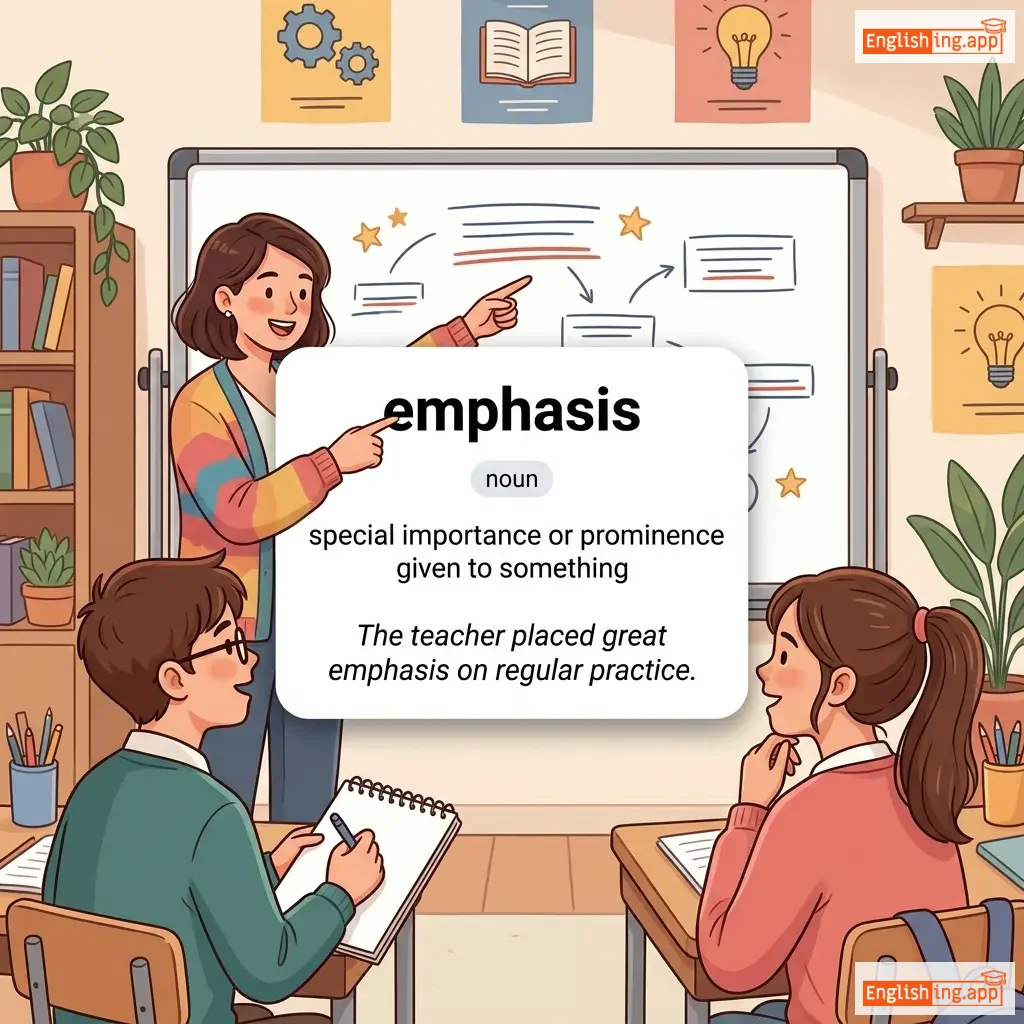
emphasis definition card — visual illustration of the meaning
noun
/ˈɛmfəsɪs/
акцент (aktsent)

special importance or prominence given to something

"The teacher placed great emphasis on regular practice."
"Учитель уделял большое внимание регулярным занятиям." (Uchitel' udeljal bol'shoe vnimanie reguljarnym zanyatiyam.)
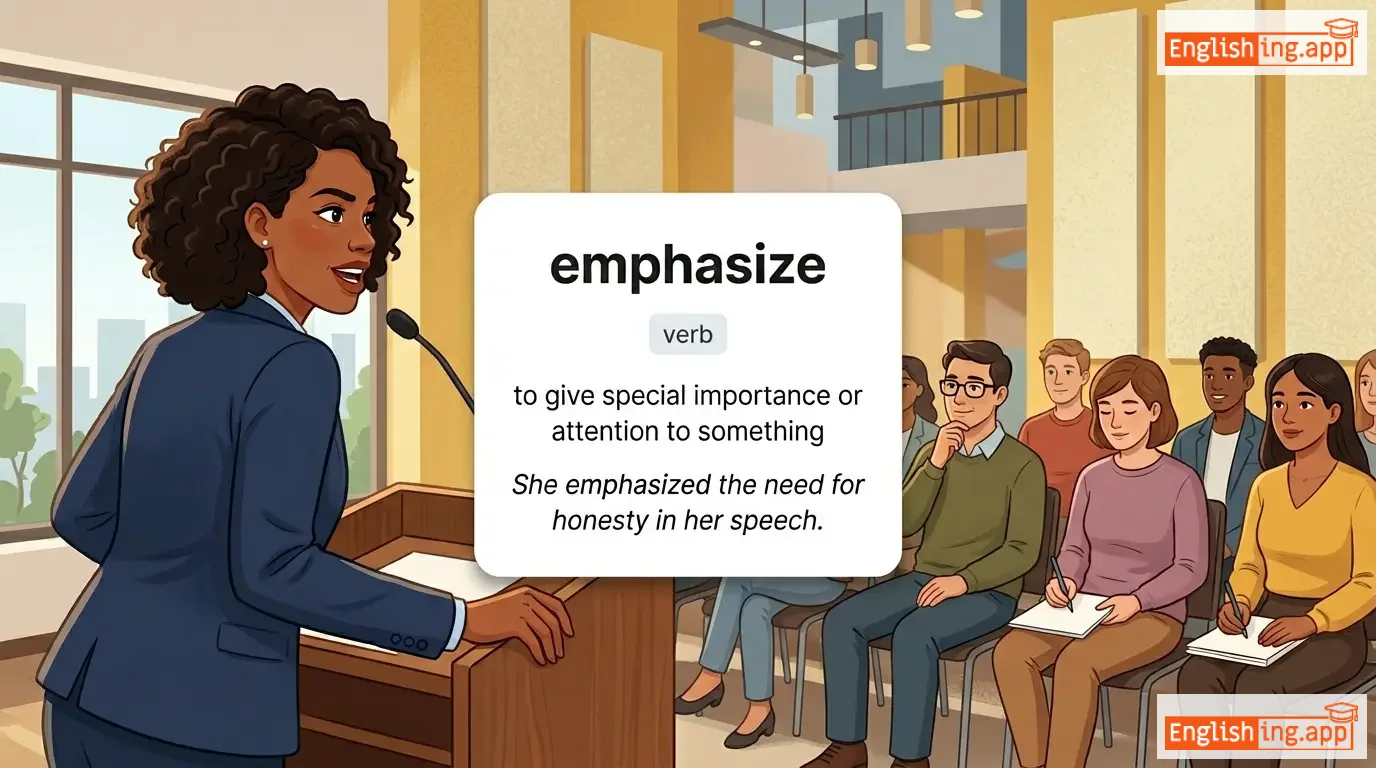
emphasize definition card — visual illustration of the meaning
verb
/ˈɛmfəsaɪz/
подчеркнуть (podcherknut)

to give special importance or attention to something

"She emphasized the need for honesty in her speech."

"Она подчеркнула необходимость честности в своей речи." (Ona podcherknula neobkhodimost' chestnosti v svoey rechi.)
adjective
/ɛmˈfætɪk/
эмфатичный (emfatichnyy)

expressed with emphasis; strongly expressive

"He gave an emphatic denial of the rumors."

"Он дал эмфатическое опровержение слухам." (On dal emfaticheskoe opovezhdenie slukhaz.)
noun
/ˈempaɪər/
империя (imperiya)

a group of countries or regions controlled by one ruler or government

"The Roman Empire lasted for centuries."
"Римская империя существовала веками." (Rimskaya imperiya sushchestvovala vekami.)
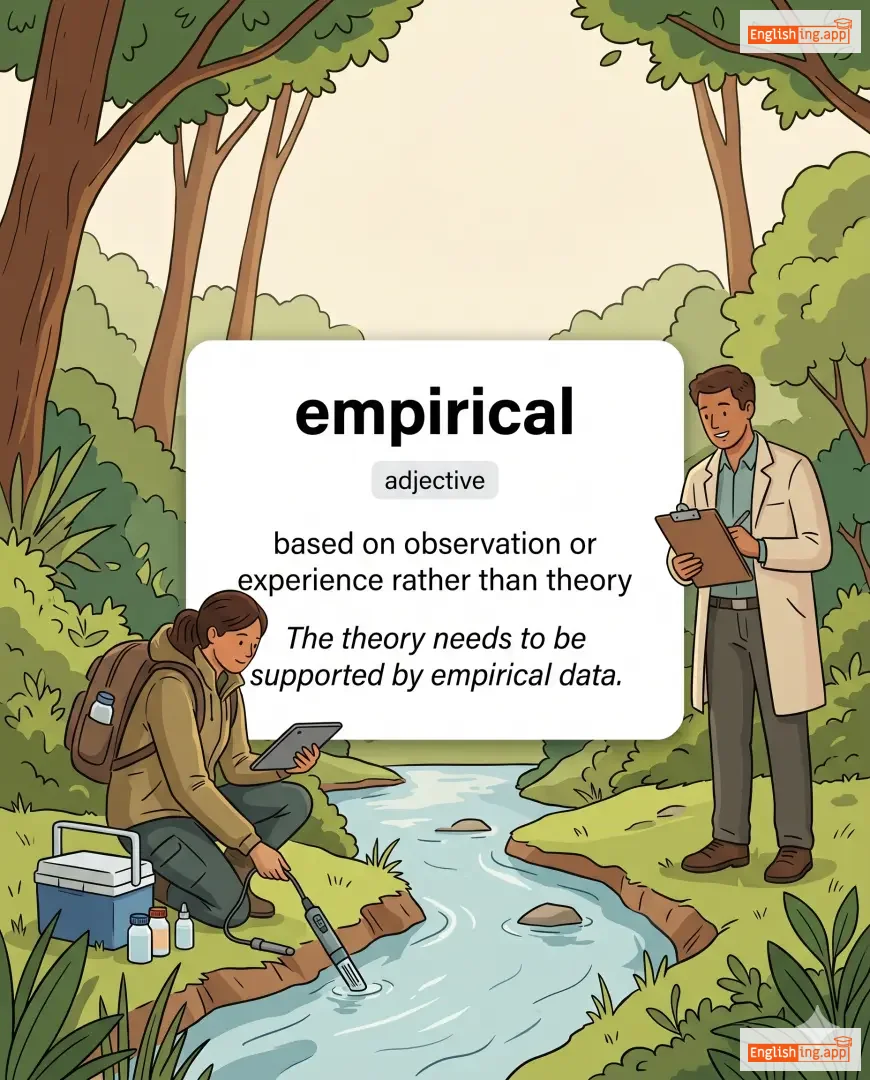
empirical definition card — visual illustration of the meaning
adjective
/ɛmˈpɪrɪkəl/
эмпирический (empiricheskiy)

based on observation or experience rather than theory

"The theory needs to be supported by empirical data."

"Теория должна быть подтверждена эмпирическими данными." (Teoriya dolzhna byt' podtverzhdena empiricheskimi dannymi.)
noun
/ɛmˈpɪrɪˌsɪzəm/
эмпиризм (empirizm)

the theory that all knowledge is derived from sense-experience

"Empiricism argues that knowledge comes from experience and observation."

"Эмпиризм утверждает, что знания приходят из опыта и наблюдений." (Empirizm utverzhdaet, chto znaniya prikhodyat iz opyta i nablyudeniy.)
verb
/ɪmˈplɔɪ/
нанимать (nanimat)

to hire someone to do a job; to use something effectively

"The company plans to employ more engineers next year."

"Компания планирует нанять больше инженеров в следующем году." (Kompaniya planiruet nanyat' bol'she inzhinierov v sleduyushchem godu.)
noun
/ɛmˈplɔɪ.iː/
работник (rabotnik)

A person who works for an organization or company in return for payment.

"The company values each employee's contribution to its success."

"Компания ценит вклад каждого работника в свой успех." (Kompaniya tsenit vklad kazhdogo rabotnika v svoj uspek.)
noun
/ɪmˈplɔɪər/
работодатель (rabotodatel)

A person or organization that hires and pays people to work.

"The employer promised better benefits to attract skilled workers."

"Работодатель пообещал лучшие преимущества, чтобы привлечь квалифицированных работников." (Rabotodatel poobeshchal luchshie preimushchestva, chtoby privlech' kvalifitsirovannykh rabotnikov.)
employment definition card — visual illustration of the meaning
noun
/ɪmˈplɔɪmənt/
трудоустройство (trudoustroystvo)

the state of having a paid job or work

"The government is working to increase youth employment."

"Правительство работает над увеличением трудоустройства молодежи." (Pravitel'stvo rabotaet nad uvelicheniem trudoustroystva molodezhi.)
noun
/ɛmˈpɔːriəm/
большой магазин (bol'shoy magazin)

A large retail store selling a wide variety of goods.

"They visited the new emporium to buy furniture and home decor."

"Они посетили новый эмпориум, чтобы купить мебель и предметы интерьера." (Oni posetili novyy emporium, chtoby kupit' mebel' i predmety inter'yera.)
verb
/ɪmˈpaʊər/
уполномочить (upolnomochit')

To give someone the power or authority to do something; to make someone stronger or more confident.

"Education can empower people to improve their lives."
"Образование может дать людям возможность улучшать свою жизнь." (Obrazovanie mozhet dat' lyudyam vozmozhnost' uluchshat' svoyu zhizn'.)
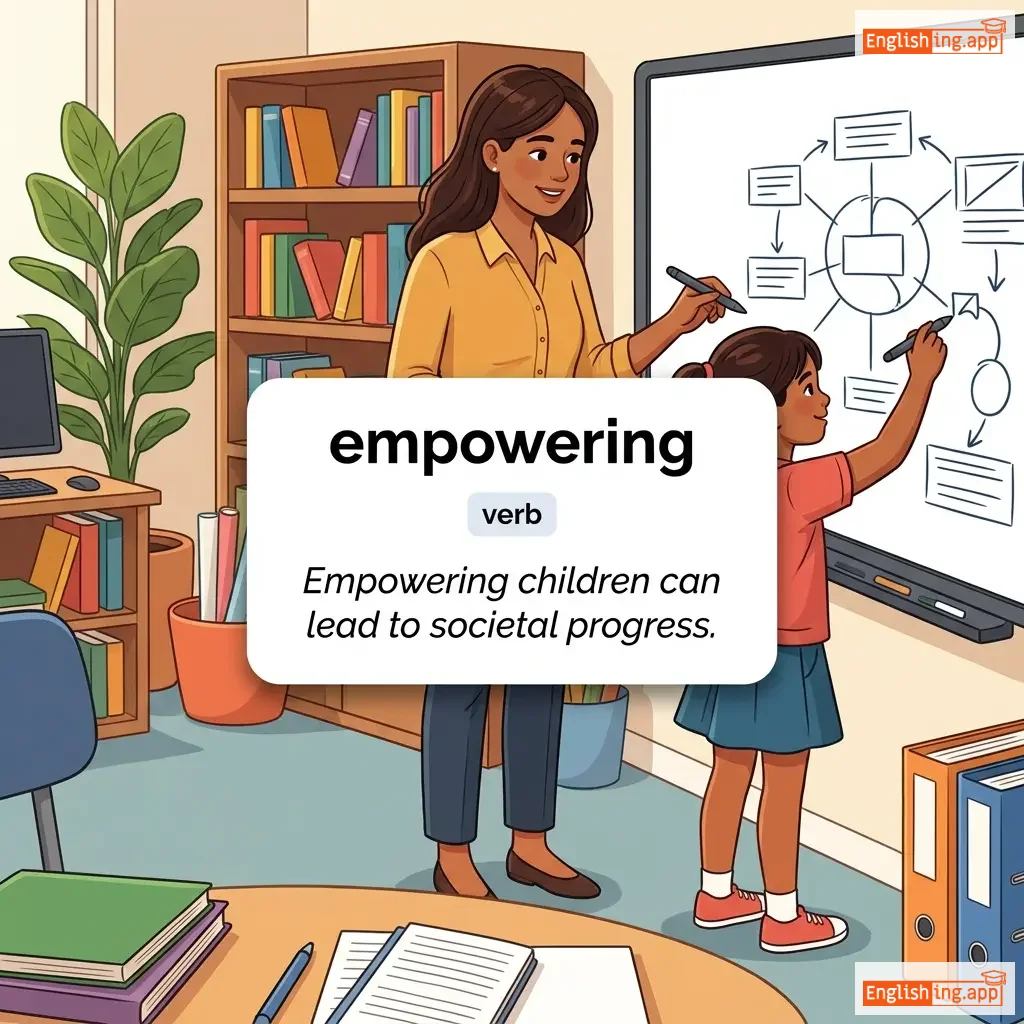
empowering definition card — visual illustration of the meaning
verb
ɪmˈpaʊərɪŋ
наделять полномочиями (nadeljat' polnomochijami)

Giving someone the authority or power to do something; making someone stronger and more confident.

"Empowering children can lead to societal progress."

"Наделение детей полномочиями может привести к социальному прогрессу." (Nadelenie detej polnomochijami mozhet privesti k sotsial'nomu progressu.)
empowerment definition card — visual illustration of the meaning
noun
/ɪmˈpaʊə.mənt/
уполномочивание (upolnomochivanie)

Authority or power given to someone to do something.

"Empowerment initiatives enhance confidence."

"Инициативы по расширению полномочий повышают уверенность." (Initsiativy po rasshireniyu polnomochiy povyshayut uverennost'.)
adjective
/ˈɛmpti/
пустой (pustoy)

containing nothing; not filled

"The box was completely empty."

"Коробка была полностью пустой." (Korobka byla polnost'yu pustoy.)
adjective
/ɛmˈpaɪriəl/
небесный (nebesny)

Heavenly, divine, or relating to the highest heavens.

"The poet described the empyreal beauty of the stars."
"Поэт описал небесную красоту звезд." (Poet opisal nebesnuyu krasotu zvezd.)
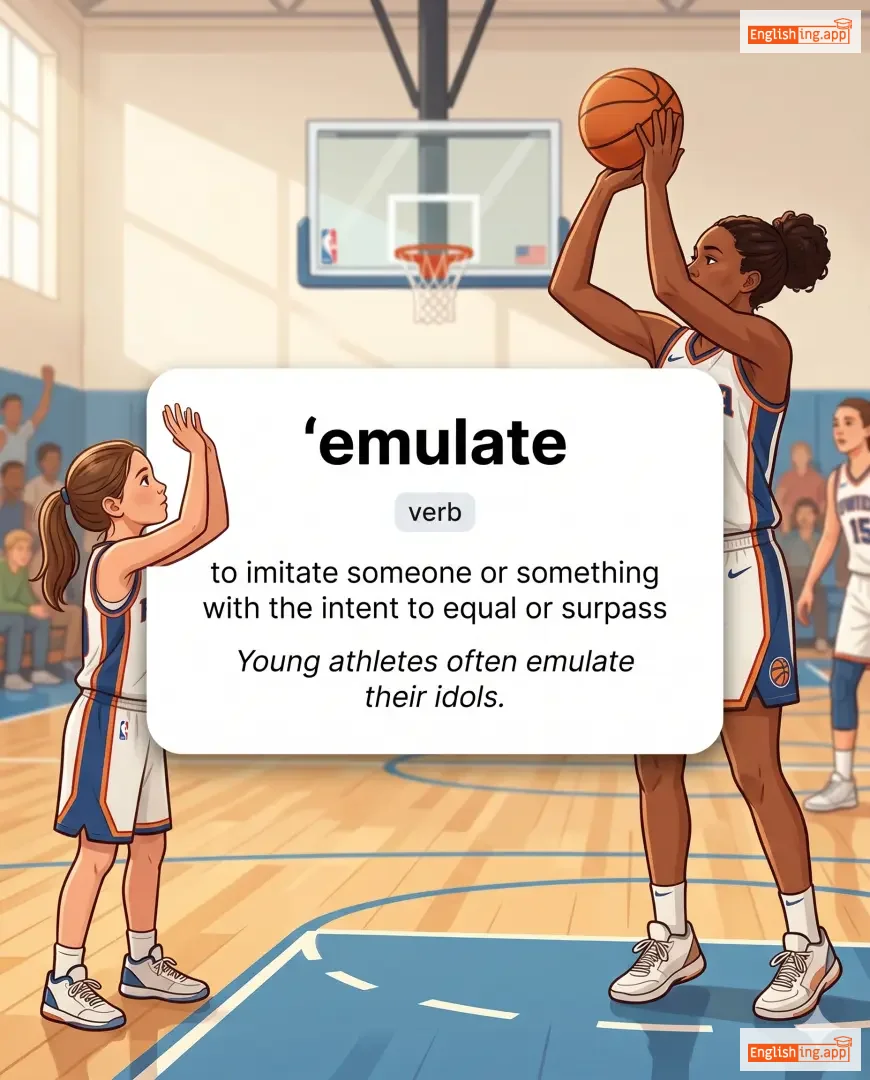
emulate definition card — visual illustration of the meaning
verb
/ˈɛm.jʊˌleɪt/
подражать (podrazhat)

to imitate someone or something with the intent to equal or surpass

"Young athletes often emulate their idols."
"Молодые атлеты часто подражают своим идолам." (Molodye atlety chasto podrazhayut svoim idolam.)
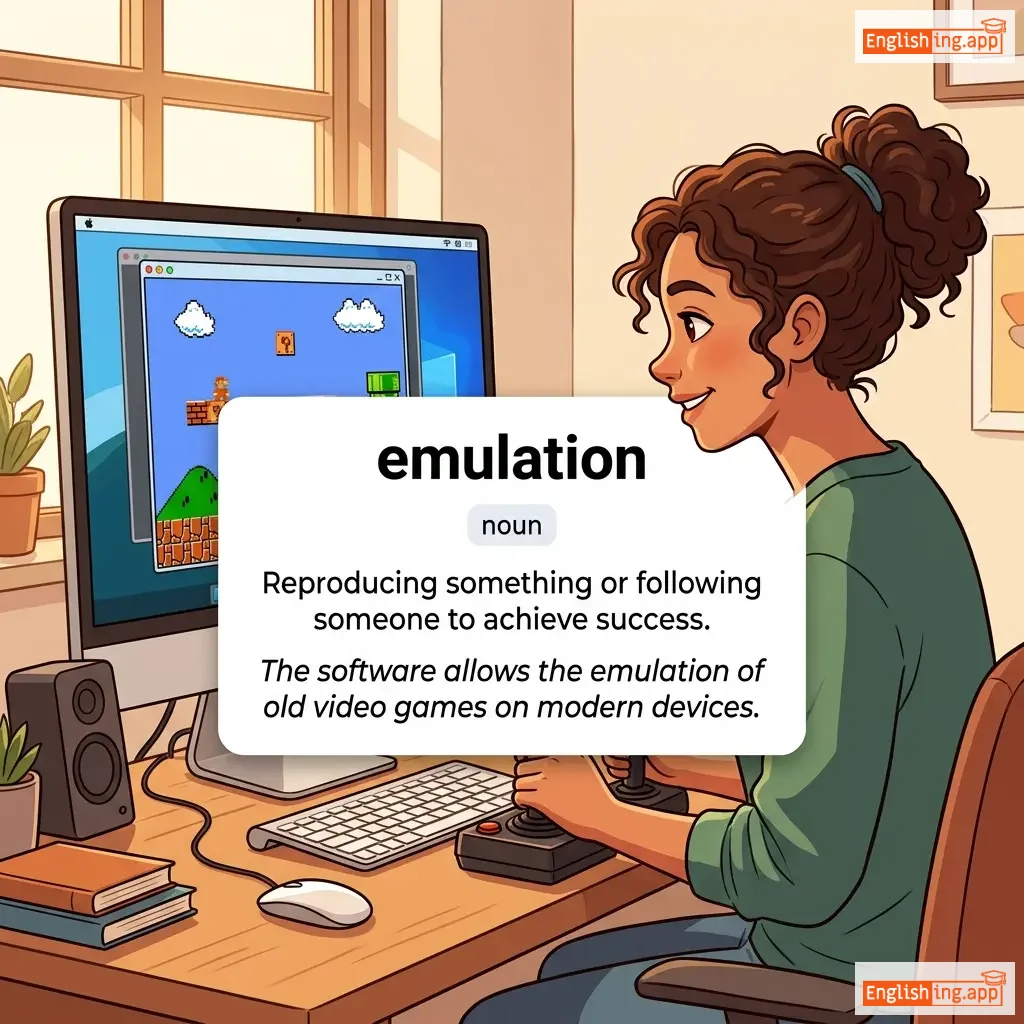
emulation definition card — visual illustration of the meaning
noun
/ˌɛmjʊˈleɪ.ʃən/
эмуляция (emuljatsiya)

Reproducing something or following someone to achieve success.

"The software allows the emulation of old video games on modern devices."
"Программное обеспечение позволяет эмуляцию старых видеоигр на современных устройствах." (Programmnoye obespecheniye pozvolyayet emulyatsiyu starykh videoigr na sovremennykh ustroystvakh.)
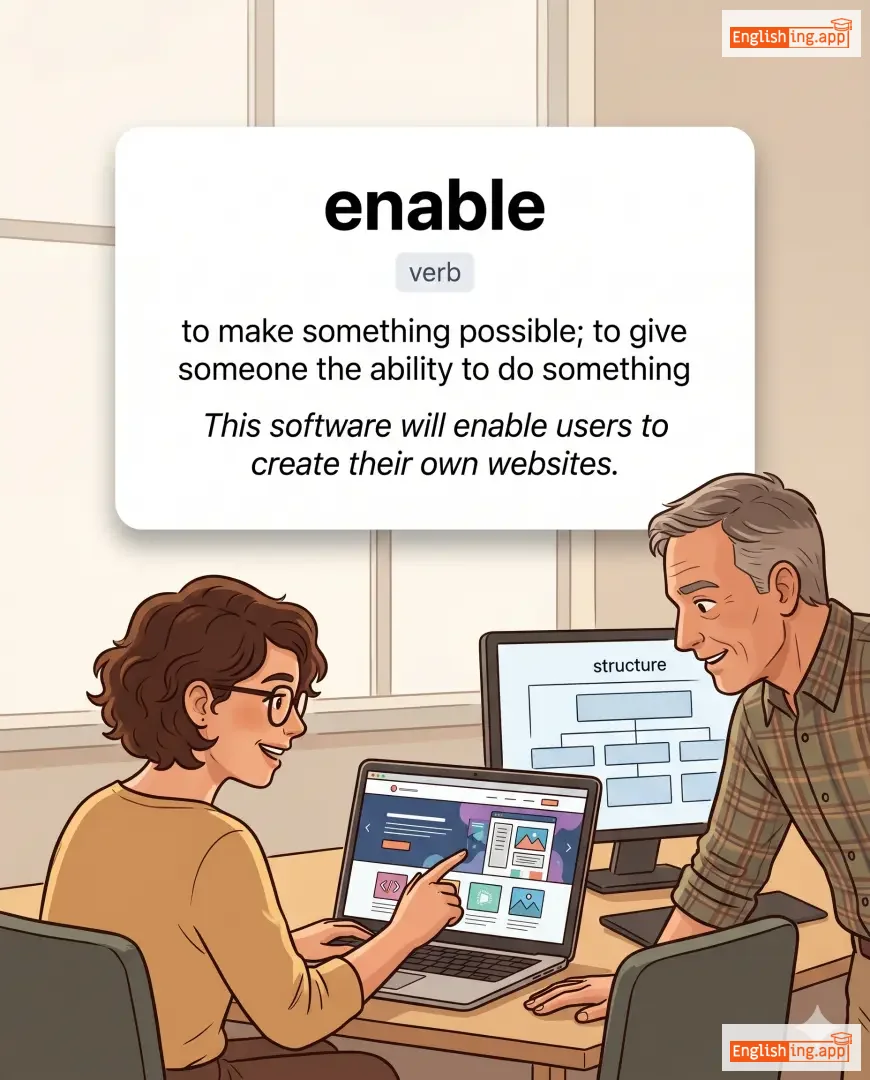
enable definition card — visual illustration of the meaning
verb
/ɪˈneɪbəl/
включить (vklyuchit)

to make something possible; to give someone the ability to do something

"This software will enable users to create their own websites."

"Это программное обеспечение позволит пользователям создавать собственные сайты." (Eto programmnoe obespechenie pozvolit pol'zovatelyam sozdavat' sobstvennye sayty.)
verb
/ɪˈnækt/
принять (prinyat)

to make into law; to perform or act out

"The government decided to enact a new policy on education."

"Правительство решило принять новую политику в области образования." (Pravitel'stvo reshilo prinyat' novuyu politiku v oblasti obrazovaniya.)
noun
/ɪˈnæməl/
эмаль (emal)

a hard, glossy substance used as a protective or decorative coating; the hard outer layer of teeth

"The dentist explained that enamel protects the teeth from decay."

"Стоматолог объяснил, что эмаль защищает зубы от кариеса." (Stomatolog ob'yasnil, chto emal' zashchishchayet zuby ot kariesa.)
verb
/ɪˈnæmər/
быть влюблённым (byt' vlyublennym)

to be filled with love or admiration for

"She was enamored with the beautiful scenery."

"Она была влюблена в прекрасный пейзаж." (Ona byla vlyublena v prekrasnyy peyzazh.)
adjective
/ɪˈnæmərd/
влюбленный (vlyublenny)

filled with love or admiration

"He became enamored with classical music after attending the concert."

"Он стал влюблен в классическую музыку после посещения концерта." (On stal vlyublennyy v klassicheskuyu muzyku posle posescheniya kontserta.)
verb
/ɪnˈkæmp/
разбивать лагерь (razbivat' lager')

to set up or establish a camp

"The soldiers encamped near the river for the night."
"Солдаты разбили лагерь рядом с рекой на ночь." (Soldaty razbili lager' ryadom s rekoj na noch'.)
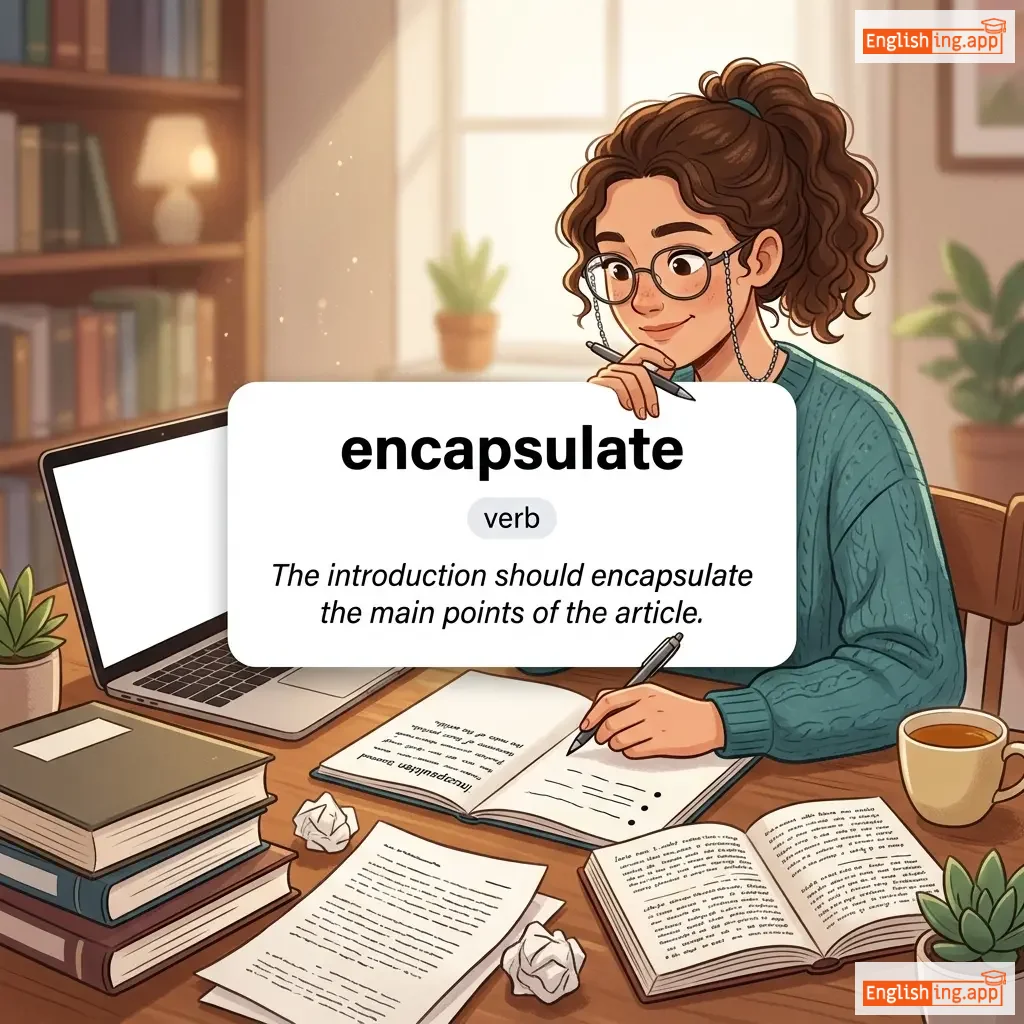
encapsulate definition card — visual illustration of the meaning
verb
/ɪnˈkæp.sjʊ.leɪt/
заключать (zaklyuchat)

To express the essential features of something succinctly; to summarize or contain within.

"The introduction should encapsulate the main points of the article."

"Введение должно заключать основные моменты статьи." (Vvedenie dolzhno zaklyuchat' osnovnye momenty stat'i.)