Словари

Словарь английского языка | Значения слов, определения и примеры

noun
/ɪkˌspɒstjʊˈleɪʃən/
протест (protest)

the act of expressing protest or disagreement

"His expostulation against the unfair rules was ignored."

"Его протест против несправедливых правил был проигнорирован." (Yego protest protiv nespravedlivykh pravil byl proignorirovann.)
noun
/ɪkˈspəʊʒər/
экспозиция (ekspozitsiya)

the state of being exposed to contact with something, especially harmful

"Prolonged exposure to the sun can damage your skin."

"Длительное воздействие солнечного света может повредить вашу кожу." (Dlitel'noe vozdeystvie solnechnogo sveta mozhet povredit' vashu kozhu.)
verb
/ɪkˈspaʊnd/
разъяснять (razyasnyat')

to present and explain in detail

"The professor expounded the theory in simple terms."

"Профессор подробно изложил теорию простыми словами." (Professor podrobno izlozhil teoriyu prostymi slovami.)
verb
/ɪkˈsprɛs/
выражать (vyrazhat)

to convey a thought, feeling, or idea in words, actions, or other forms

"She expressed her gratitude with a warm smile."

"Она выразила свою благодарность тёплой улыбкой." (Ona vyrazilas' svoi blagodarnost' tyoploi ulybkoi.)
noun
/ɪkˈspres treɪn/
экспресс поезд (ekspress poezd)

a fast train that travels between major stations with few or no intermediate stops

"The express train reached the destination in half the usual time."

"Экспресс достиг конечной станции в половину обычного времени." (Ekspress dostig konechnoy stantsii v polovinu obychnogo vremeni.)
noun
/ɪkˈsprɛʃən/
выражение (vyrazhenie)

the act of putting thoughts or feelings into words, actions, or facial gestures

"His facial expression showed surprise."

"Его выражение лица показало удивление." (Ego vyrazhenie litsa pokazalo udivlenie.)
adjective
/ɪkˈsprɛsɪv/
выразительный (vyrazitel'nyy)

Effectively conveying thought or feeling.

"Her eyes were so expressive that no words were needed."

"Её глаза были настолько выразительными, что слова были не нужны." (Eyo glaza byli nastol'ko vyrazitel'nymi, chto slova byli ne nuzhny.)
verb
/ɛksˈproʊprieɪt/
экспроприировать (ekspropriiravat)

To take property from its owner, especially by authority or for public use.

"The government decided to expropriate the land for a new highway."
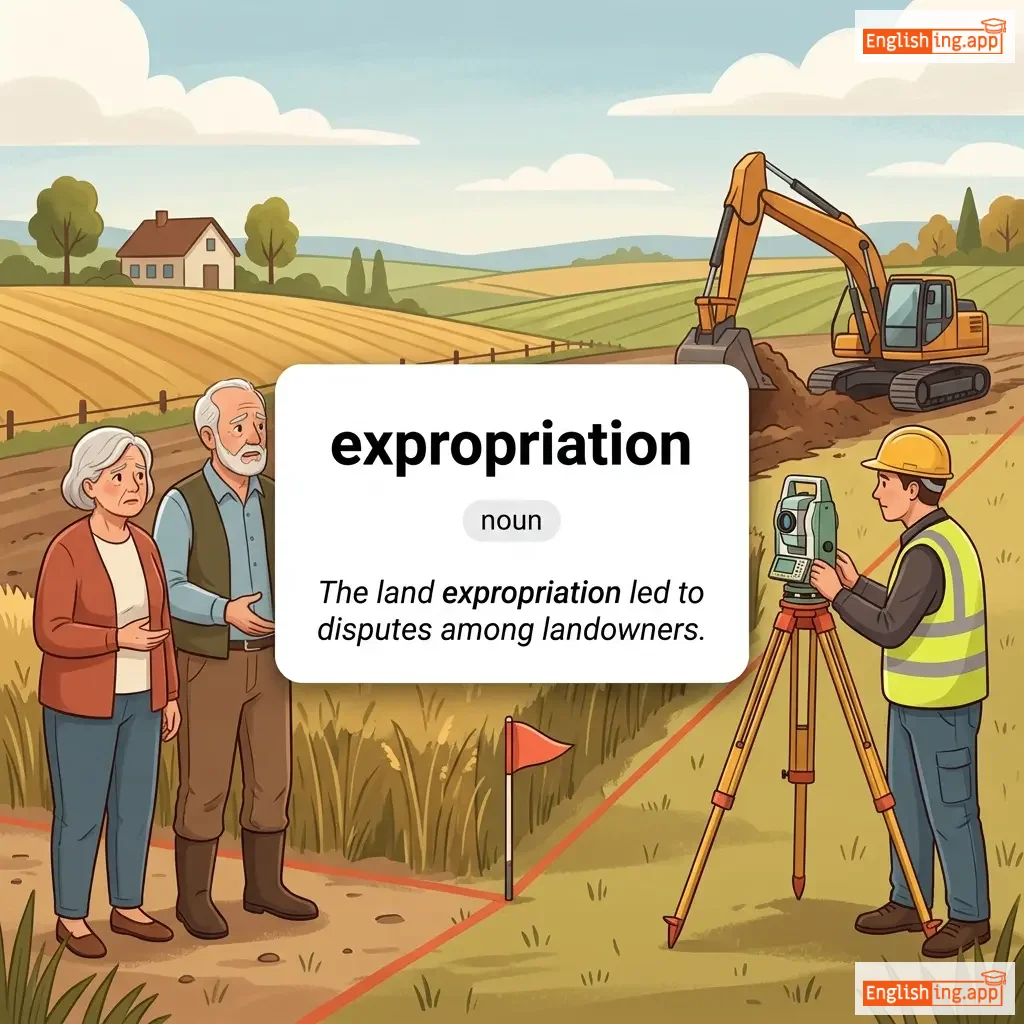
"Правительство решило экспроприировать землю для нового шоссе." (Pravitel'stvo reshilo ekspropriirivat' zemlyu dlya novogo shosse.)
expropriation definition card — visual illustration of the meaning
noun
/ɪkˌsprəʊ.priˈeɪ.ʃən/
экспроприация (ekspropriatsiya)

The act of government taking private property, also known as confiscation, nationalization, or seizure.

"The land expropriation led to disputes among landowners."

"Экспроприация земли привела к спорам среди землевладельцев." (Ekspropriatsiya zemli privela k sporam sredi zemlevladel'tsev.)
noun
/ɪkˈspʌlʃən/
исключение (isklyucheniye)

The act of forcing someone to leave a place, especially a school or country.

"His constant misbehavior led to his expulsion from school."

"Его постоянное плохое поведение привело к исключению из школы." (Yego postoyannoye plokhoye povedeniye privedlo k iskluchenyu iz shkoly.)
verb
/ɪkˈspʌndʒ/
стереть (stereet)

To erase or remove completely, often something unwanted.

"He managed to expunge the embarrassing memory from his mind."

"Ему удалось стереть позорное воспоминание из его разума." (Emu udalos' steret' pozornoe vospominanie iz ego razuma.)
verb
/ˈekspərˌɡeɪt/
цензурировать (tsenzurirovat)

To remove offensive or objectionable parts from a text or speech.

"The publisher decided to expurgate the novel before reprinting it."

"Издатель решил цензурировать роман перед повторным изданием." (izdatel reshil tsenzurirovat roman pered povtornym izdaniem)
exquisite definition card — visual illustration of the meaning
adjective
/ɪkˈskwɪzɪt/
изысканный (izyskanny)

Extremely beautiful, delicate, or finely made.

"The bride wore an exquisite gown made of silk."
"Невеста носила изысканное шелковое платье." (Nevesta nosila izyskannoe shelkovoe plat'e.)
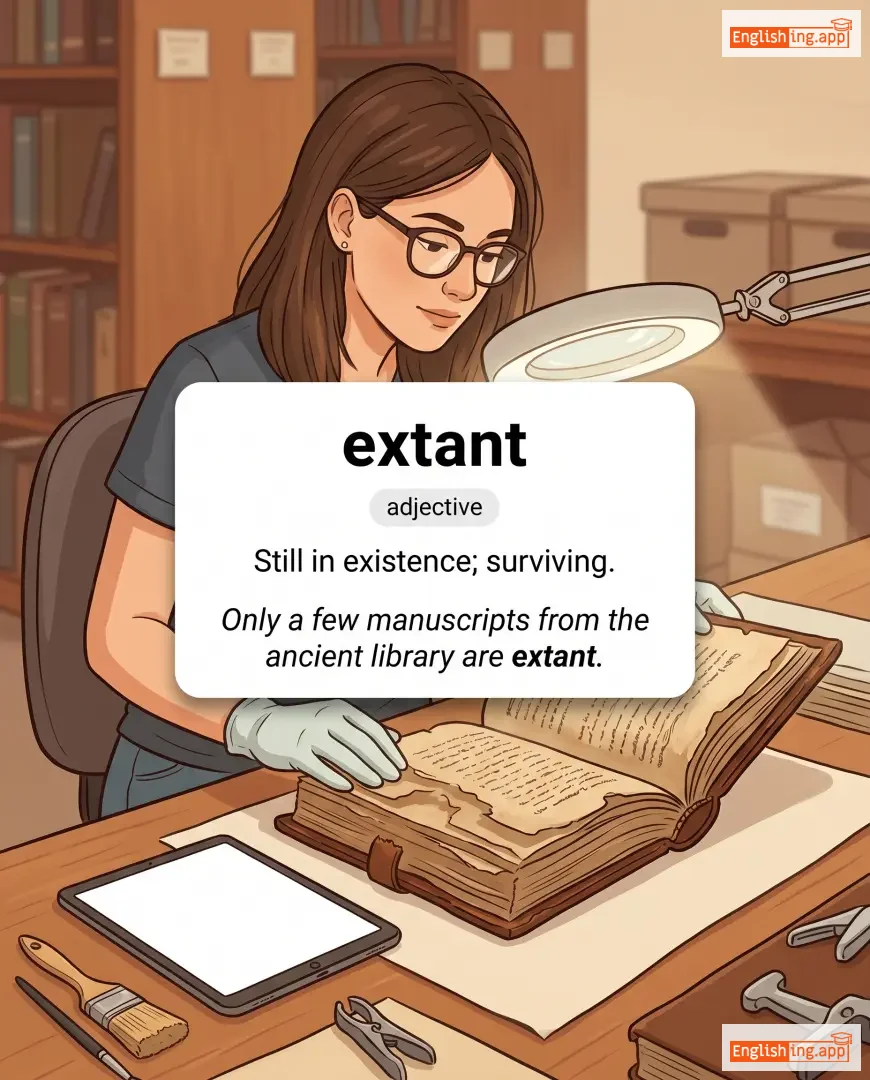
extant definition card — visual illustration of the meaning
adjective
/ˈɛkstənt/
существующий (sushchestvuyushchiy)

Still in existence; surviving.

"Only a few manuscripts from the ancient library are extant."
"Только несколько манускриптов из древней библиотеки существуют до сих пор." (Tol'ko neskol'ko manuskriptov iz drevney biblioteki sushchestvuyut do sikh por.)
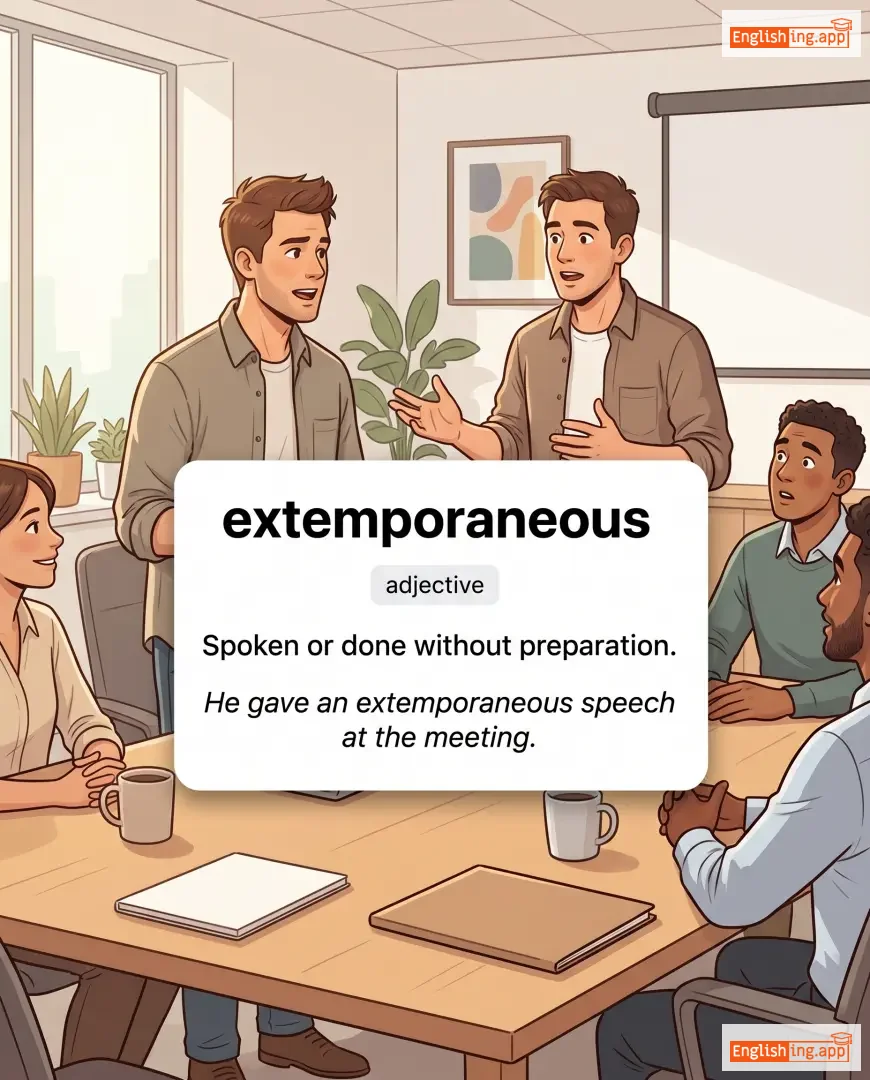
extemporaneous definition card — visual illustration of the meaning
adjective
/ɪkˌstɛmpəˈreɪniəs/
произнесено без подготовки (proizneseno bez podgotovki)

Spoken or done without preparation.

"He gave an extemporaneous speech at the meeting."

"Он произнес спонтанную речь на встрече." (On proiznes spontannuyu rech' na vstreche.)
adverb
/ɪkˈstɛmpəri/
импровизированно (improvizirovanno)

Spoken or done without preparation; impromptu.

"She recited the poem extempore in class."

"Она прочитала стихотворение импровизированно на уроке." (Ona prochitala stikhotvorenie improvizirovanno na uroke.)
verb
/ɪkˈstɛmpəraɪz/
импровизировать (improvizirovat')

To speak or perform without preparation; improvise.

"The actor had to extemporize when he forgot his lines."
"Актеру пришлось импровизировать, когда он забыл свои реплики." (Aktoru prishlos' improvizirovat', kogda on zabyl svoi repliki.)
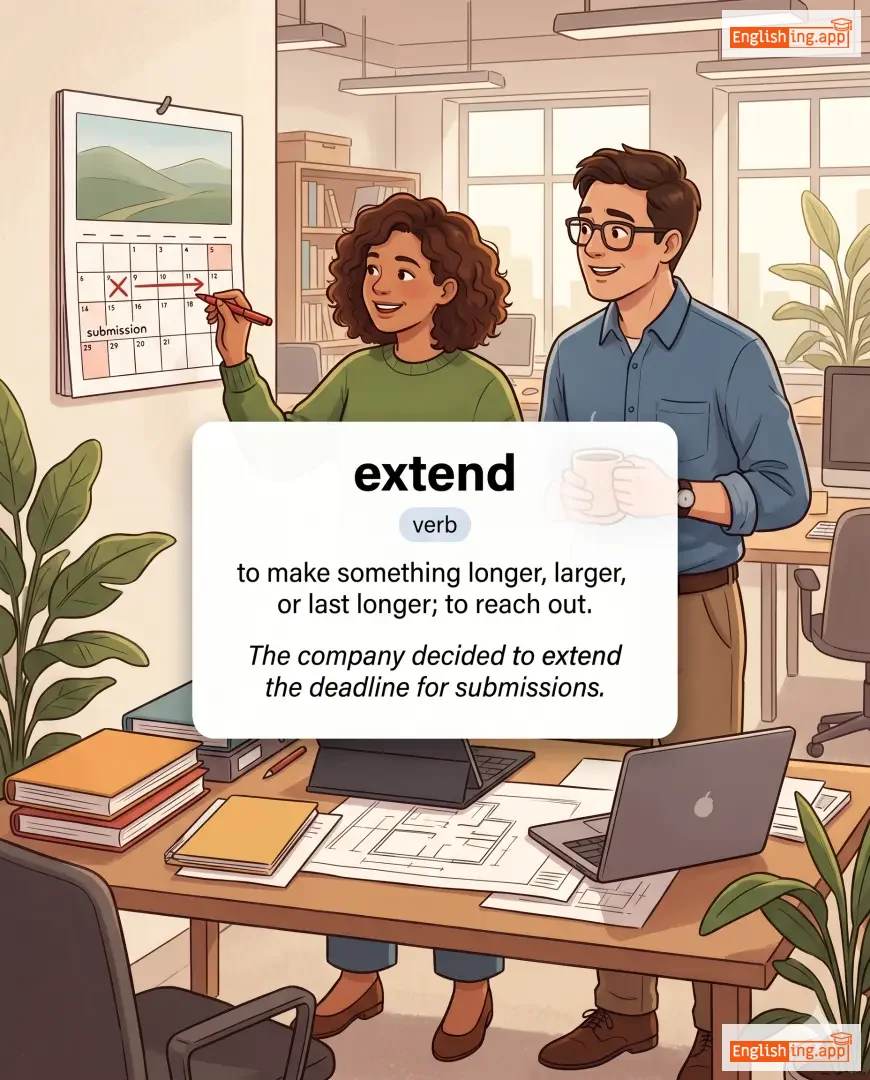
extend definition card — visual illustration of the meaning
verb
/ɪkˈstɛnd/
продлить (prodlyit)

to make something longer, larger, or last longer; to reach out.

"The company decided to extend the deadline for submissions."

"Компания решила продлить срок подачи заявок." (Kompaniya reshilas' prodylt' srok podachi zayavok.)
adjective
/ɪkˈstendɪd/
расширенный (rasshirennyy)

longer or larger than usual; continuing for a longer time

"They took an extended vacation in Europe this summer."

"Они провели расширенный отпуск в Европе этим летом." (Oni proveli rasshirennyy otpusk v Yevrope etim letom.)
adjective
/ɪkˈstɛnsəbl/
расширяемый (rasshiryayemy)

able to be extended; capable of expansion.

"The software is designed to be extensible with new features."

"Программное обеспечение спроектировано так, чтобы его можно было расширять новыми функциями." (Programmnoye obespecheniye sproyektirovano tak, chtoby ego mozhno bylo rasshiryat' novymi funktsiyami.)
noun
/ɪkˈstɛnʃən/
удлинение (udlinenie)

a part that is added to something to make it longer or bigger; an increase in time.

"She asked for an extension on her assignment deadline."

"Она попросила продление срока для своей работы." (Ona poprosila prodlenie sroka dlya svoey raboty.)
adjective
/ɪkˈstɛnsɪv/
обширный (obshirnyy)

covering a large area or involving a lot; wide in range.

"The museum has an extensive collection of ancient artifacts."

"В музее есть обширная коллекция древних артефактов." (V muzee yest' obshirnaya kollektsiya drevnikh artefaktov.)
adverb
/ɪkˈstɛnsɪvli/
широко (shiroko)

in a thorough or wide-ranging manner

"She traveled extensively across Europe for her research."

"Она путешествовала широко по Европе для своего исследования." (Ona puteshestvovala shiroko po Yevrope dlya svoego issledovaniya.)
noun
/ɪkˈstɛnsər/
разгибатель мышцы (razgibatel myshcy)

a muscle that serves to extend or straighten a limb or part of the body.

"The extensor muscles in the arm help straighten the elbow."

"Разгибательные мышцы в руке помогают выпрямить локоть." (Razgibatel'nye myshcy v ruke pomogayut vypryamit' lokot'.)
noun
/ɪkˈstɛnt/
степень (stepen)

the area, degree, or scope of something

"The extent of the damage was greater than expected."

"Степень ущерба была больше, чем ожидалось." (Stepen' uscherba byla bol'she, chem ozhidalos'.)
verb
/ɪkˈstɛnjueɪt/
смягчить (smyagchit)

to make an offense, fault, or situation seem less serious by providing an excuse or explanation

"The lawyer tried to extenuate his client's actions by highlighting his difficult childhood."

"Адвокат пытался смягчить действия своего клиента, подчеркивая его трудное детство." (Advokat pytalsya smyagchit' deystviya svoego kliyenta, podcherkivaya ego trudnoe detstvo.)
adjective
/ɪkˈstɛnjueɪtɪŋ/
смягчающий (smyagchayushchiy)

serving to make a fault or an offense seem less serious

"She asked for leniency due to extenuating circumstances."

"Она попросила снисхождения из-за смягчающих обстоятельств." (Ona poprosila sniskhozhdeniya iz-za smyagchayushchikh obstoyatel'stv.)
noun/adjective
/ɪkˈstɪəriər/
внешняя часть (vneshnyaya chast')

the outer surface or part of something; relating to the outside

"The exterior of the house was painted white."

"Внешняя часть дома была покрашена в белый цвет." (Vneshnyaya chast' doma byla pokrashena v belyy tsvet.)
adjective
/ɪkˈstɜrnəl/
внешний (vneshniy)

situated on or relating to the outside of something; coming from outside

"The external factors affected the company's growth."
"Внешние факторы повлияли на рост компании." (Vneshniye faktory povliyali na rost kompanii.)
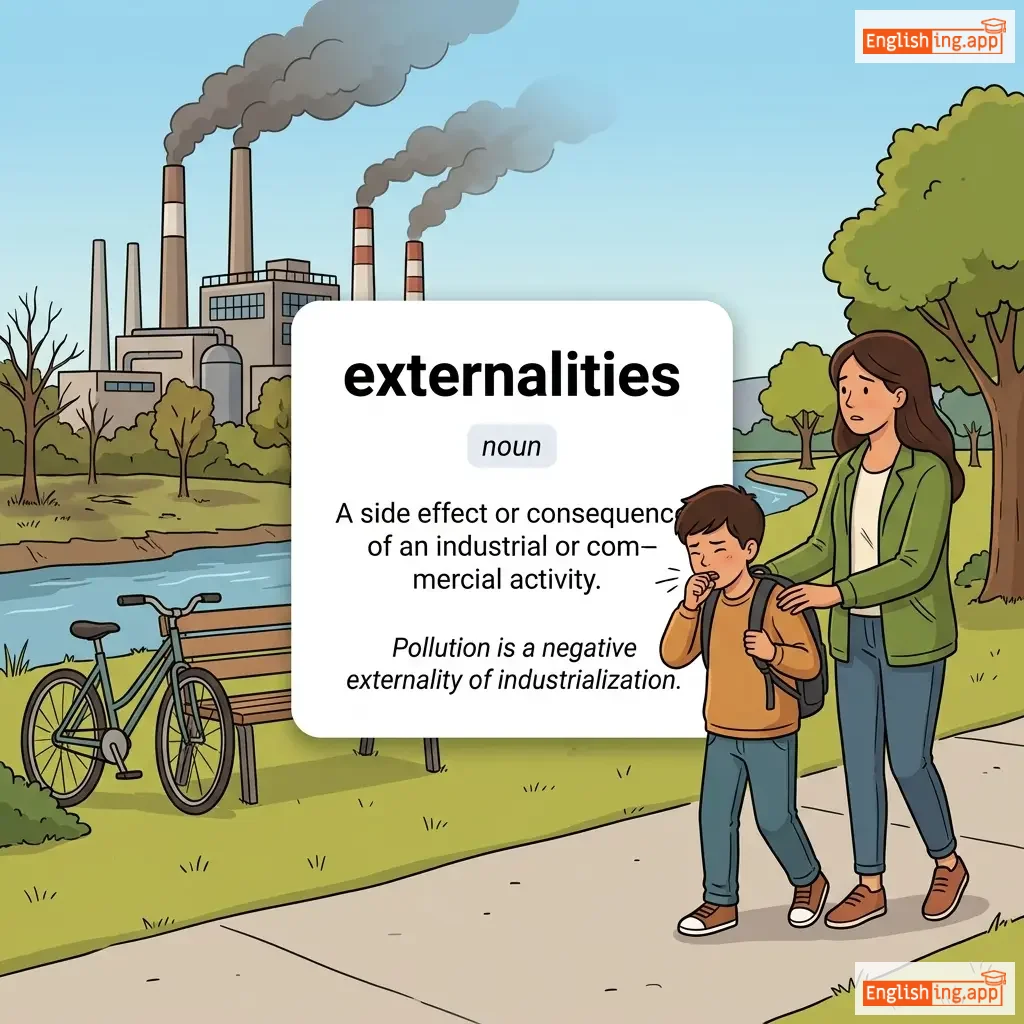
externalities definition card — visual illustration of the meaning
noun
ˌɛkstərˈnælɪtiz
экстернальность (eksternal'nost')

A side effect or consequence of an industrial or commercial activity.

"Pollution is a negative externality of industrialization."

"Загрязнение — это негативная экстернальность индустриализации." (Zagryaznenie — eto negativnaya eksternal'nost' industrializatsii.)
adverb
/ɪkˈstɜrnəli/
внешне (vneshne)

in a way that relates to the outer surface or outside appearance

"The building appeared externally modern, but inside it was quite old-fashioned."
"Здание выглядело внешне современным, но внутри оно было довольно старомодным." (Zdanie vyglyadelo vneshne sovremennym, no vnutri ono bylo dovolno staromodnym.)
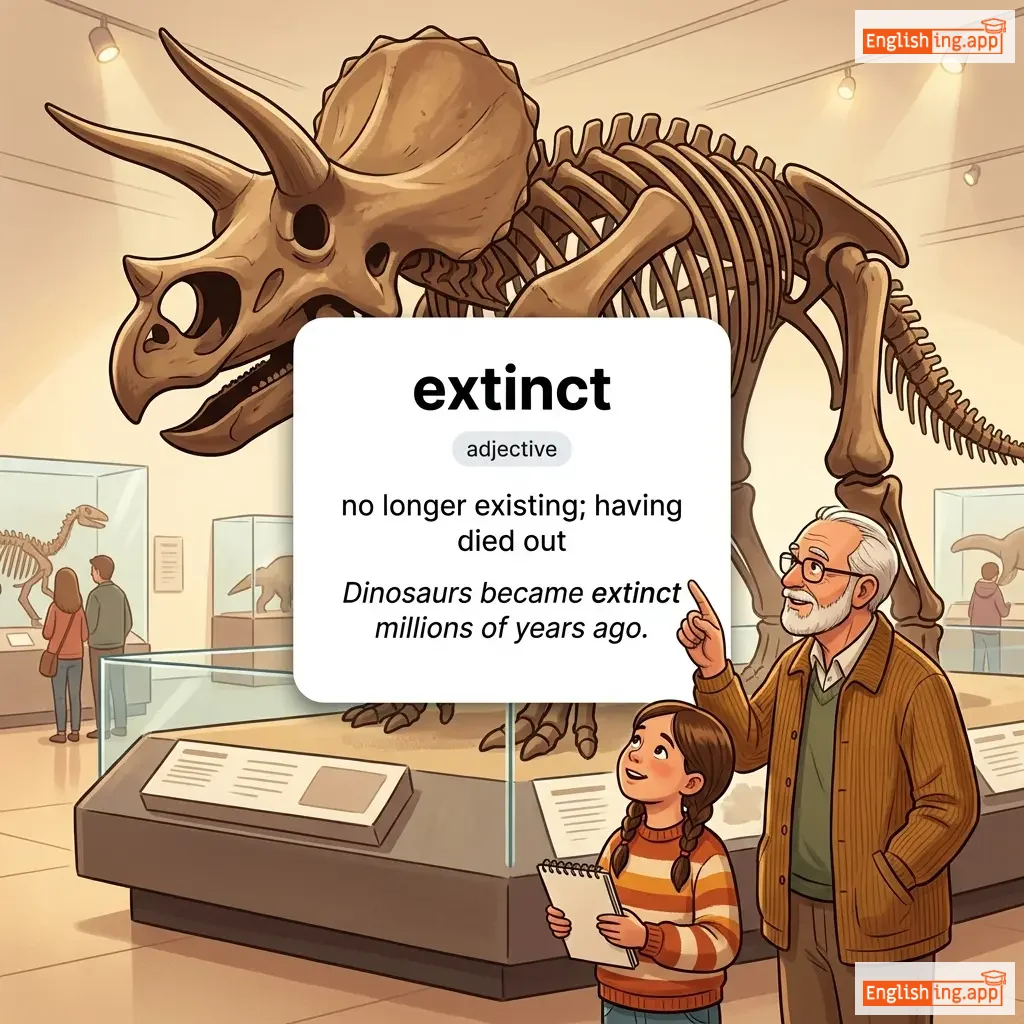
extinct definition card — visual illustration of the meaning
adjective
/ɪkˈstɪŋkt/
вымерший (vymershiy)

no longer existing; having died out

"Dinosaurs became extinct millions of years ago."

"Динозавры стали вымершими миллионы лет назад." (Dinozavry stali vymershimi milliony let nazad.)
verb
/ɪkˈstɪŋ.ɡwɪʃ/
погасить (pogasit)

to put out a fire, light, or to end something

"The firefighters managed to extinguish the blaze within an hour."
"Пожарные смогли потушить пожар за час." (Pozharnye smogli potushit' pozhary za chas.)
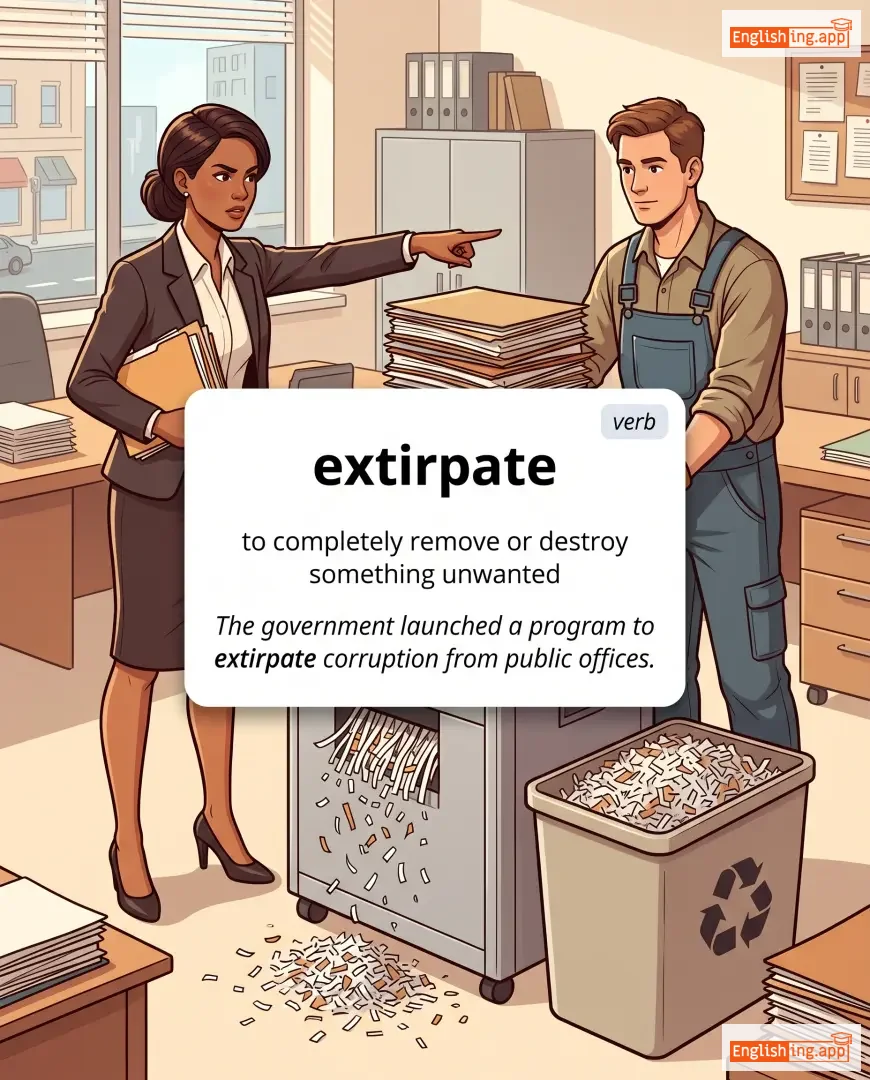
extirpate definition card — visual illustration of the meaning
verb
/ˈek.stər.peɪt/
истребить (istrebit)

to completely remove or destroy something unwanted

"The government launched a program to extirpate corruption from public offices."

"Правительство запустило программу для искоренения коррупции в государственных учреждениях." (Pravitel'stvo zapustilo programmu dlya iskoreneniya korrupcii v gosudarstvennykh uchrezhdeniyakh.)
verb
/ɪkˈstoʊl/
восхвалять (voshvalyat)

to praise enthusiastically and highly

"The teacher extolled the student's dedication and hard work."

"Учитель восхвалил преданность и трудолюбие ученика." (Uchitel' voshvalil predannost' i trudolyubie uchenika.)
verb
/ɪkˈstɔːrt/
вымогать (vymogat)

to obtain something, especially money, by force, threats, or unfair means

"The gang attempted to extort money from local shopkeepers."

"Банда попыталась вымогать деньги у местных торговцев." (Banda popytalis' vymogat' dengi u mestnykh torgovtsev.)
noun
/ɪkˈstɔːr.ʃən/
вымогательство (vymogatel'stvo)

the practice of obtaining something, especially money, through force or threats

"The businessman was arrested for extortion after threatening his partner."

"Бизнесмен был арестован за вымогательство после того, как пригрозил своему партнеру." (Biznesmen byl arestovan za vymogatel'stvo posle togo, kak prigrozil svoemu partneru.)
adjective
/ˈɛkstrə/
дополнительный (dopolnitel'nyy)

More than what is usual, expected, or necessary

"She brought some extra food for the picnic."

"Она принесла дополнительную еду для пикника." (Ona prinesla dopolnitel'nuyu yedu dlya piknika.)
verb
/ɪkˈstrækt/
извлекать (izvlekat')

to remove or take out something, often with effort

"The dentist had to extract the damaged tooth."

"Стоматологу пришлось извлечь поврежденный зуб." (Stomatologu prishlos' izvlech' povrezhdennyy zub.)
noun
/ɪkˈstrækʃən/
извлечение (izvlechenie)

the act of removing something, especially by pulling it out

"The extraction of oil from the ground requires special equipment."

"Извлечение нефти из земли требует специального оборудования." (Izvlechenie nefti iz zemli trebuyet spetsial'nogo oborudovaniya.)
verb
/ˈɛkstrəˌdaɪt/
экстрадировать (ekstradirovat')

to hand over a person accused or convicted of a crime to another country or state

"The government agreed to extradite the fugitive to his home country."

"Правительство согласилось экстрадировать беглеца в его родную страну." (Pravitel'stvo soglasilos' ekstradirovat' beglitsa v ego rodnuyu stranu.)
noun
/ˌɛkstrəˈdɪʃən/
экстрадиция (ekstraditsiya)

the official process of sending someone accused of a crime to another country or state

"The extradition of the suspect was delayed due to legal issues."

"Экстрадиция подозреваемого была задержана из-за юридических проблем." (Ekstraditsiya podozrevaemogo byla zaderzhana iz-za yuridicheskikh problem.)
adjective
/ˌɛkstrəˌdʒuːˈdɪʃəl/
вне юрисдикции суда (vne yuridiktsii suda)

done outside the authority of the legal system or judicial process

"The activists condemned the extrajudicial killings."
"Активисты осудили экстраюдициальные убийства." (Aktivisty osudili ekstrayuditsial'nye ubiystva.)
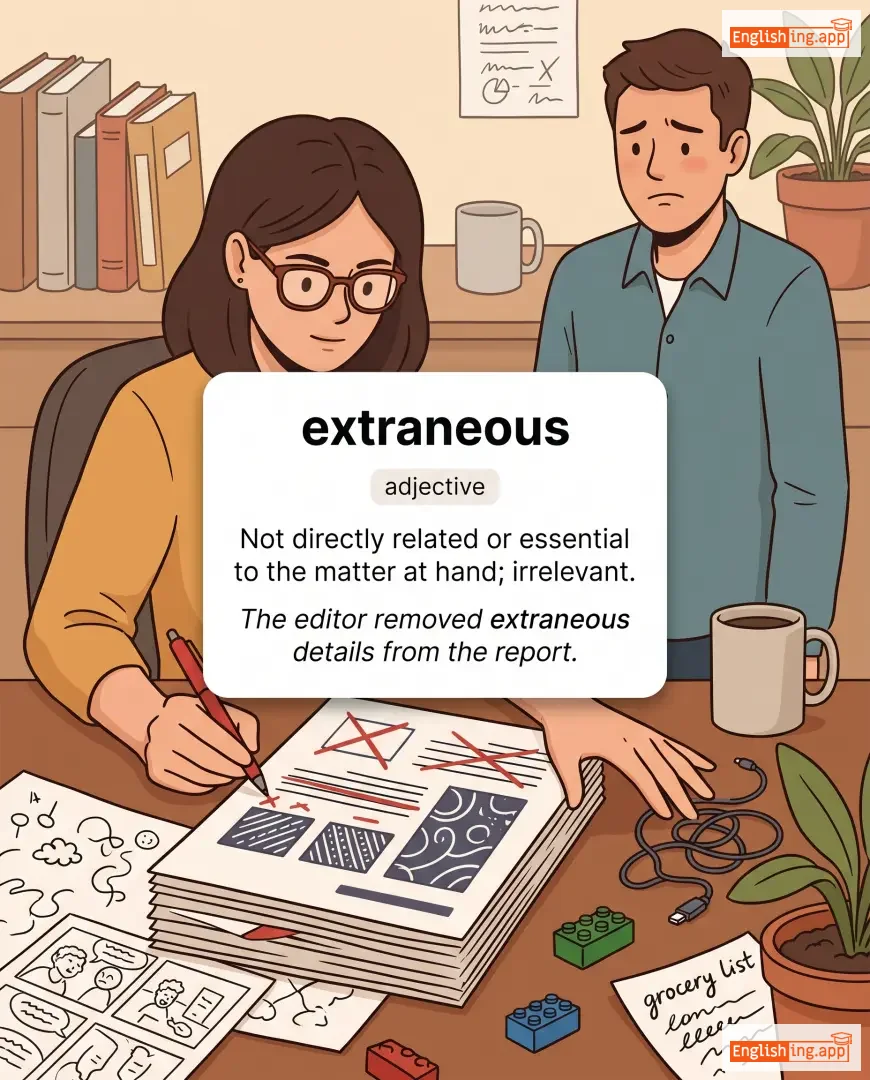
extraneous definition card — visual illustration of the meaning
adjective
/ɪkˈstreɪ.ni.əs/
нерелевантный (nerelievantny)

Not directly related or essential to the matter at hand; irrelevant.

"The editor removed extraneous details from the report."

"Редактор удалил нерелевантные детали из отчета." (Redaktor udalil nerelievantnye detali iz otcheta.)
adjective
/ɪkˈstrɔːr.dəˌnɛr.i/
необыкновенный (neobyknovennyy)

Very unusual, remarkable, or exceptional.

"She showed extraordinary courage during the crisis."
"Она проявила исключительное мужество в период кризиса." (Ona proyavila isklyuchitel'noye muzhestvo v period krizisa.)
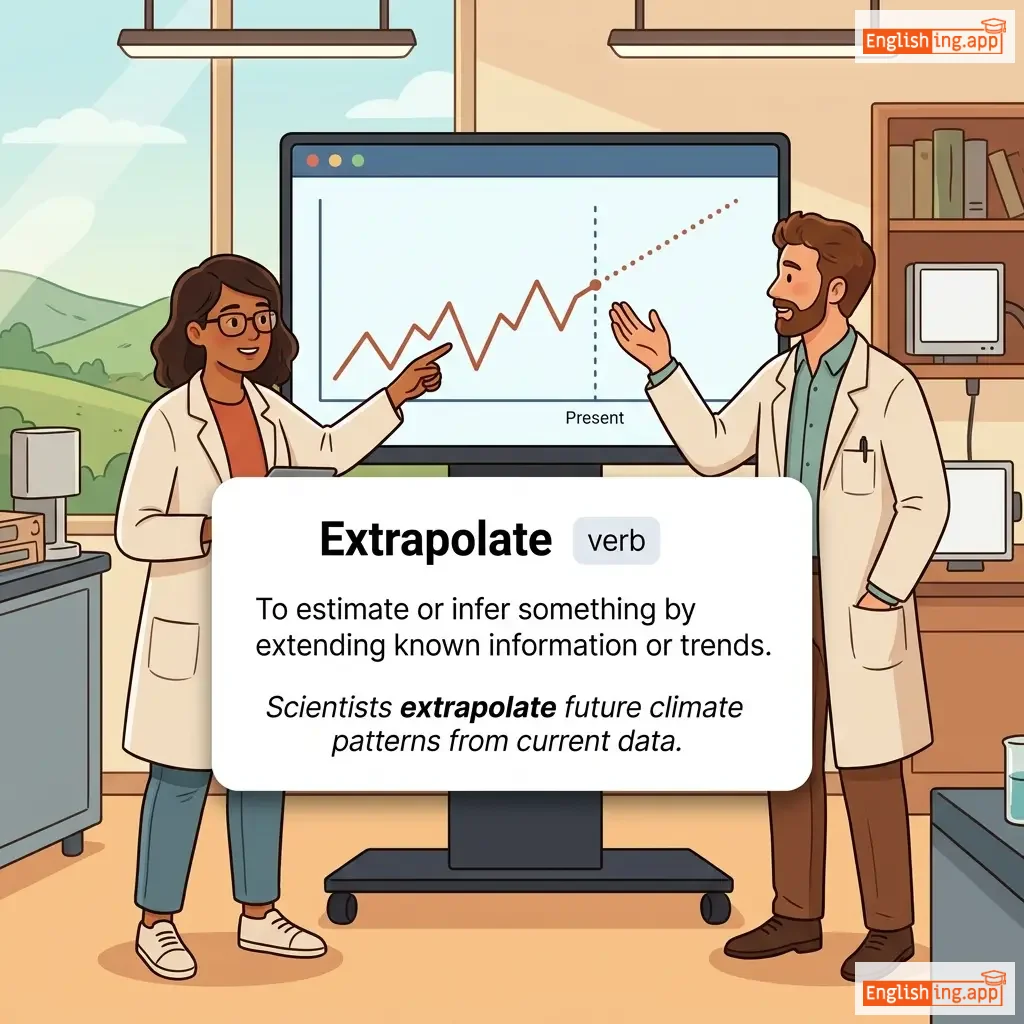
Extrapolate definition card — visual illustration of the meaning
verb
/ɪkˈstræp.əˌleɪt/
экстраполировать (ekstrapolirovat)

To estimate or infer something by extending known information or trends.

"Scientists extrapolate future climate patterns from current data."
"Ученые экстраполируют будущие климатические паттерны из текущих данных." (Uchenye ekstrapoliruyut budushchie klimatischeskie patterny iz tekushchikh dannykh.)
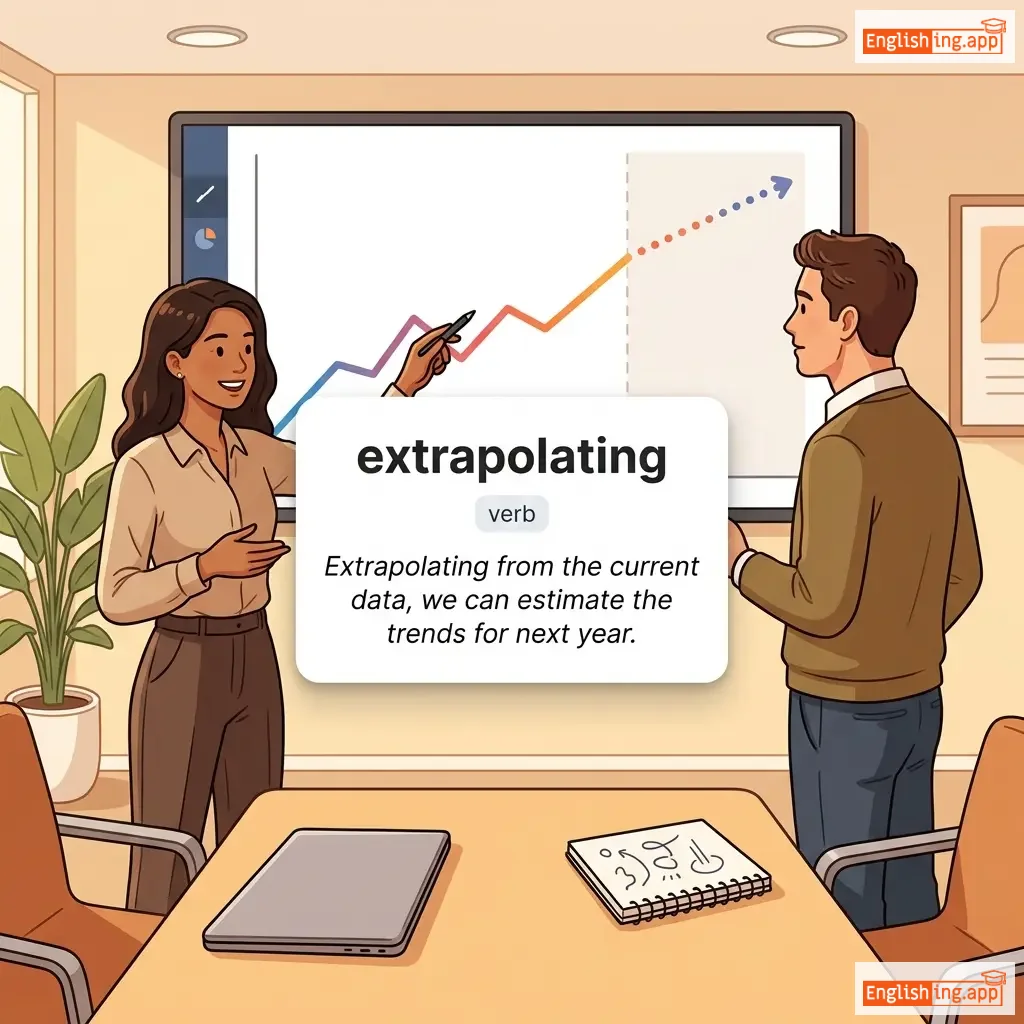
extrapolating definition card — visual illustration of the meaning
verb
/ɪkˈstræpəleɪtɪŋ/
экстраполировать (ekstrapolirovat)

Extend the application of (a method or conclusion) to an unknown situation by assuming that existing trends will continue.

"Extrapolating from the current data, we can estimate the trends for next year."
"Экстраполируя текущие данные, мы можем оценить тенденции на следующий год." (Ekstrapoliruyya tekushchie dannye, my mozhem otsenit' tendentsii na sleduyushchiy god.)
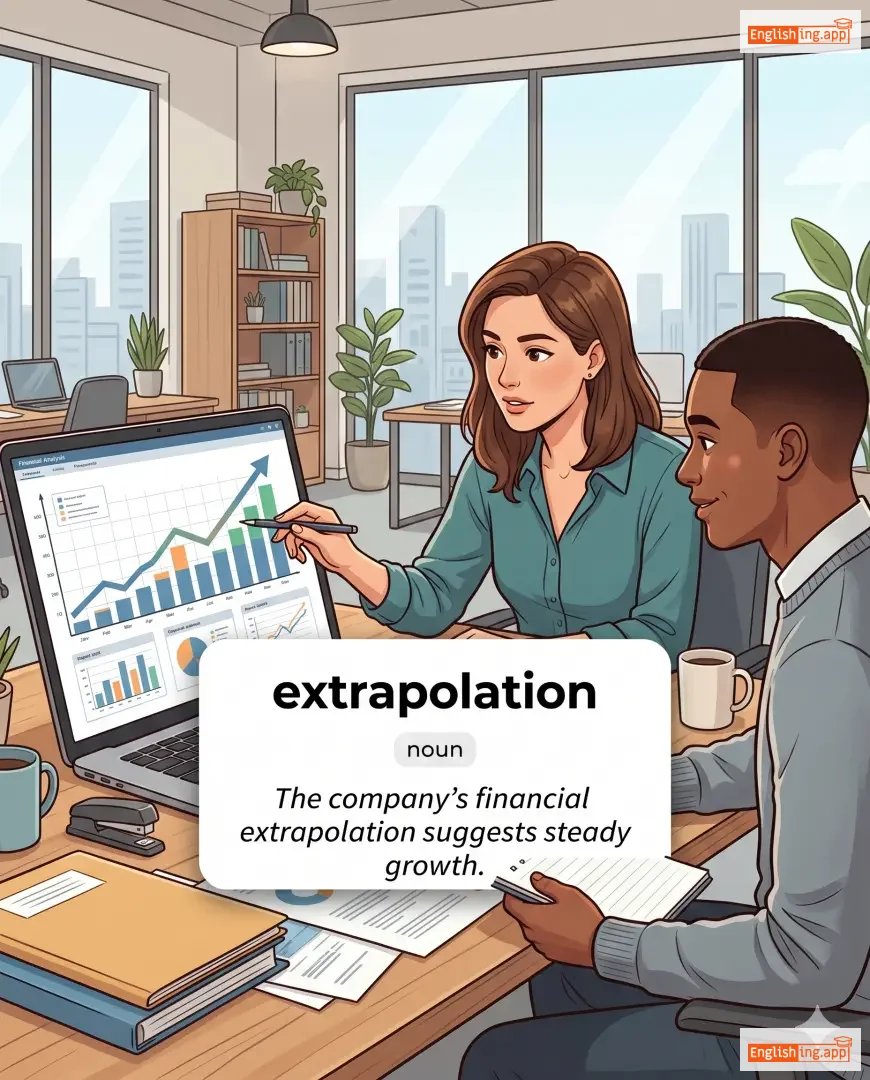
extrapolation definition card — visual illustration of the meaning
noun
/ɪkˌstræp.əˈleɪ.ʃən/
экстраполяция (ekstrapolyatsiya)

The process of estimating or predicting something based on extending known information.

"The company's financial extrapolation suggests steady growth."

"Финансовая экстраполяция компании предполагает стабильный рост." (Finansovaya ekstrapolyatsiya kompanii predpolagayet stabil'nyy rost.)
noun
/ɪkˈstræv.ə.ɡəns/
расточительство (rastochitel'stvo)

Excessive spending or lack of restraint in using resources.

"His extravagance on luxury cars worried his family."

"Его расточительность на роскошные автомобили волновала его семью." (Ego rastochitel'nost' na roskoshnye avtomobili volnovala ego sem'yu.)
adjective
/ɪkˈstrævəɡənt/
экстравагантный (ekstravagantny)

Spending or using more than is necessary; excessively elaborate or luxurious.

"She wore an extravagant dress to the party."

"Она носила экстравагантное платье на вечеринке." (Ona nosila ekstravagantnoe plat'ye na vecherinke.)