Словари

Словарь английского языка | Значения слов, определения и примеры

adjective
/dɪˈfaɪ.ənt/
непокорный (nepokornyy)

showing open resistance or bold disobedience

"The child was defiant when told to clean his room."

"Ребёнок был непокорным, когда ему сказали убраться в своей комнате." (Rebyonok byl nepokornym, kogda yemu skazali ubrat'sya v svoey komnate.)
noun
/dɪˈfɪʃ.ən.si/
дефицит (defitsit)

a lack or shortage of something that is necessary

"The doctor diagnosed him with a vitamin D deficiency."

"Врач поставил ему диагноз дефицита витамина D." (Vrach postavil yemu diangnoz defitsita vitamina D.)
adjective
/dɪˈfɪʃ.ənt/
дефицитный (defitsitnyy)

not having enough of something that is essential

"The soil is deficient in nutrients."

"Почва бедна питательными веществами." (Pochva bedna pitatel'nymi veshchestvami.)
noun
/ˈdɛfɪsɪt/
дефицит (defitsit)

The amount by which something, especially money, is too small or lacking.

"The government is trying to reduce the budget deficit."

"Правительство пытается уменьшить дефицит бюджета." (Pravitel'stvo pytayetsya umenshit' defitsit byudzheta.)
verb
/dɪˈfaɪl/
осквернять (oskvernyat)

to pollute, corrupt, or make dirty

"The river was defiled by industrial waste."

"Река была осквернена промышленными отходами." (Reka byla oskvernena promyshlennymi otkhodami.)
verb
/dɪˈfaɪn/
определять (opredelyat')

to explain the meaning of a word, phrase, or concept clearly

"The teacher asked the student to define the word 'democracy'."

"Учитель попросил студента определить слово 'демократия'." (Uchitel' poprosil studenta opredelit' slovo 'demokratiya'.)
adjective
/ˈdef.ən.ɪt/
определенный (opredelennyy)

clearly stated or decided; not vague or doubtful

"We need a definite plan before starting the project."

"Нам нужен определенный план перед началом проекта." (Nam nuzhen opredelennyy plan pered nachalom proyektu.)
adverb
/ˈdɛfɪnɪtli/
определенно (opredelenno)

without any doubt; certainly

"I will definitely call you tomorrow."

"Я обязательно позвоню тебе завтра." (Ya obyazatel'no pozvonyu tebe zavtra.)
noun
/ˌdɛfɪˈnɪʃən/
определение (opredelenie)

a statement that explains the meaning of a word or concept

"The dictionary gives a clear definition of the word."

"Словарь дает четкое определение этого слова." (Slovar' dayet chotkoye opredeleniye etogo slova.)
adjective
/dɪˈfɪnɪtɪv/
окончательный (okonchatel'nyy)

serving as a final or most authoritative form; conclusive and decisive

"The committee reached a definitive agreement on the policy."
"Комитет достиг окончательного соглашения по политике." (Komitet dostig okonchatelnogo soglasheniya po politike.)
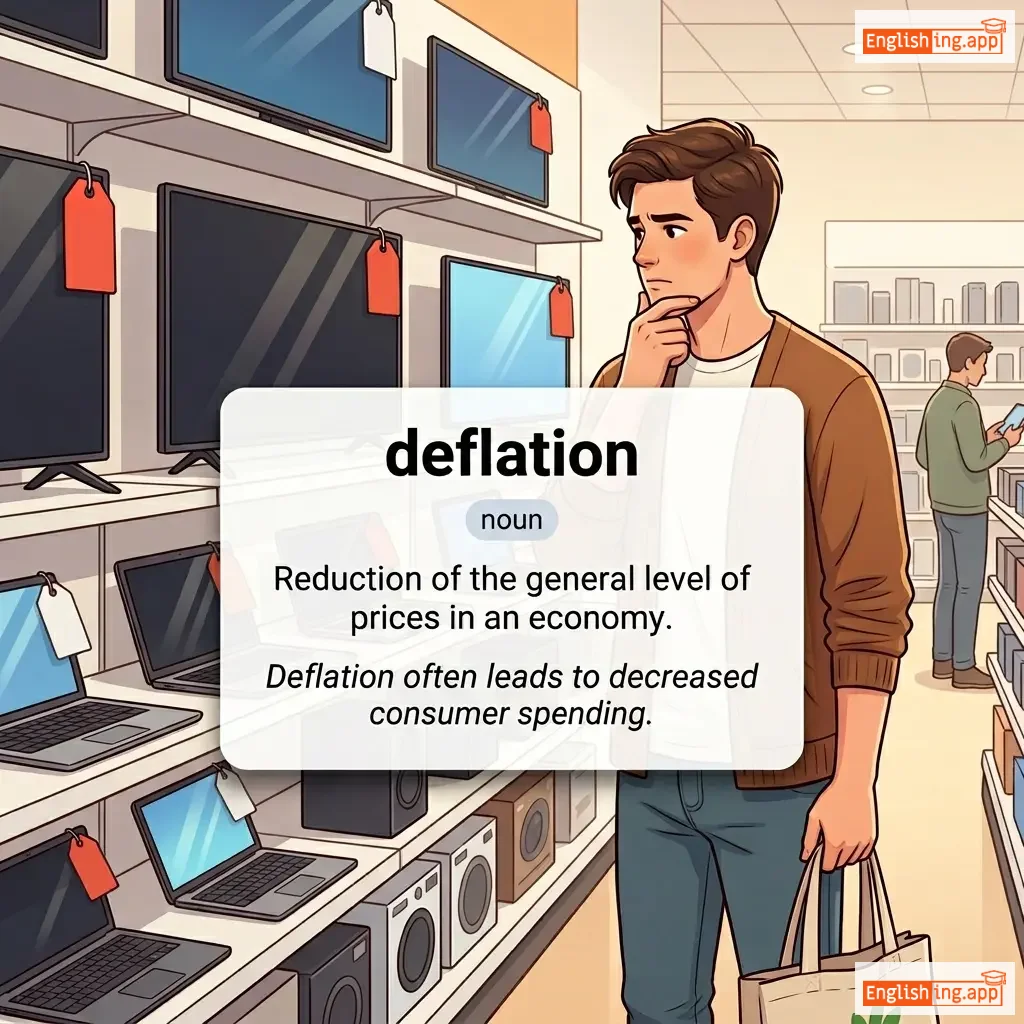
deflation definition card — visual illustration of the meaning
noun
dɪˈfleɪʃən
дефляция (deflyatsiya)

Reduction of the general level of prices in an economy.

"Deflation often leads to decreased consumer spending."

"Дефляция часто приводит к снижению потребительских расходов." (Deflyatsiya chasto privodit k snizheniyu potrebitelskih rashodov)
verb
/dɪˈflɛkt/
отклонять / избегать (otklonyat / izbegat)

to cause something to change direction; to avoid answering directly

"The shield deflected the incoming arrow."

"Щит отклонил вражескую стрелу." (Schit otklonil vrazhestvuyu strelu.)
noun
/dɪˈfoʊliənt/

a chemical that causes leaves to drop from plants, often used in warfare or agriculture

"The army sprayed defoliant to clear the forest cover."

verb
/dɪˈfoʊlieɪt/
опадать листву (opadat listvu)

to strip leaves from a tree, plant, or area, often using chemicals

"The farmers defoliated the fields before harvest."

"Фермеры опадали листву с полей перед сбором урожая." (Fermery opadali listvu s poley pered sbornom urozaya.)
verb
/diːˈfɒrɪst/
обезлесить (deforest)

to clear an area of trees, usually on a large scale

"The region has been heavily deforested for agriculture."
"Регион сильно обезлесен ради сельского хозяйства." (Region silno obezlesen radi selskogo khozyaystva)
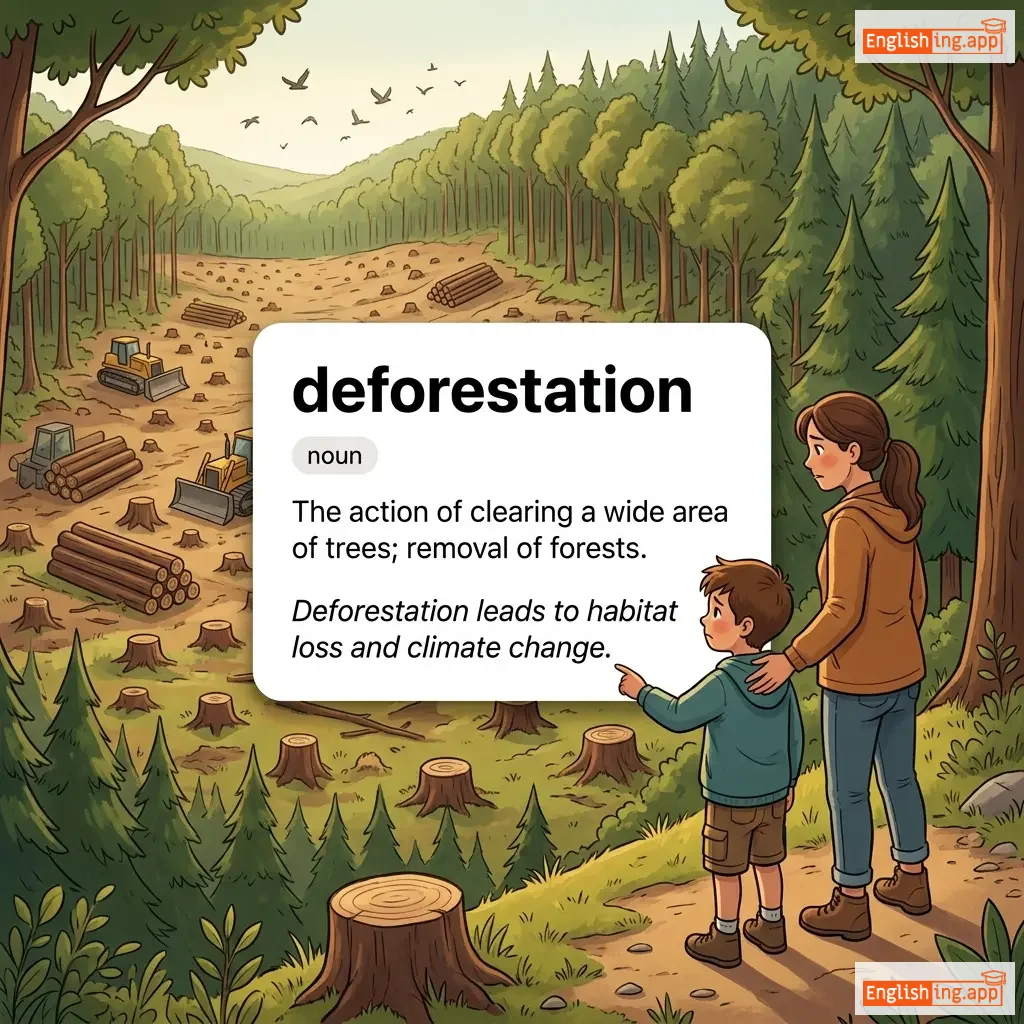
deforestation definition card — visual illustration of the meaning
noun
/ˌdiː.fɒr.ɪˈsteɪ.ʃən/
вырубка леса (vyrubka lesa)

The action of clearing a wide area of trees; removal of forests.

"Deforestation leads to habitat loss and climate change."

"Вырубка леса приводит к потере среды обитания и изменениям климата." (Vyrubka lesa privodit k potere sredu obitaniya i izmeneniyam klimata.)
verb
/dɪˈfɔːrm/
деформировать (deformirovat)

to change the normal shape or structure of something by twisting or distorting it

"Excessive heat can deform plastic containers."

"Избыточное тепло может деформировать пластиковые контейнеры." (Izbytochnoe teplo mozhet deformirovat' plastikovye konteynery.)
noun
/dɪˈfɔːrməti/
деформация (deformiti)

an abnormality or distortion in the shape or structure of a body part

"The child was born with a minor hand deformity."

"У ребенка родилась небольшой деформация руки." (U rebenka rodilas nebolshaya deformatsiya ruki)
verb
/dɪˈfrɔːd/
обмануть (obmanut)

to illegally take money or valuables from someone by deception

"The company was accused of trying to defraud investors."

"Компания была обвинена в попытке обмануть инвесторов." (Kompaniya byla obvinena v popytke obmanut' investorov.)
verb
/dɪˈfreɪ/
оплачивать расходы (oplachivat' rakhody)

to provide money to pay the costs of something

"The grant will help defray the cost of education."

"Грант поможет покрыть расходы на образование." (Grant pomozhet pokryt' raskhody na obrazovanie.)
verb
/diːˈfrɑːk/
лишить священника сана (lishit' svyashchennika sana)

to officially remove a priest or minister from their position and authority

"The church decided to defrock the priest after the scandal."
"Церковь решила лишить священника сана после скандала." (Tserkov' reshila lishit' svyashchennika sana posle skandala.)
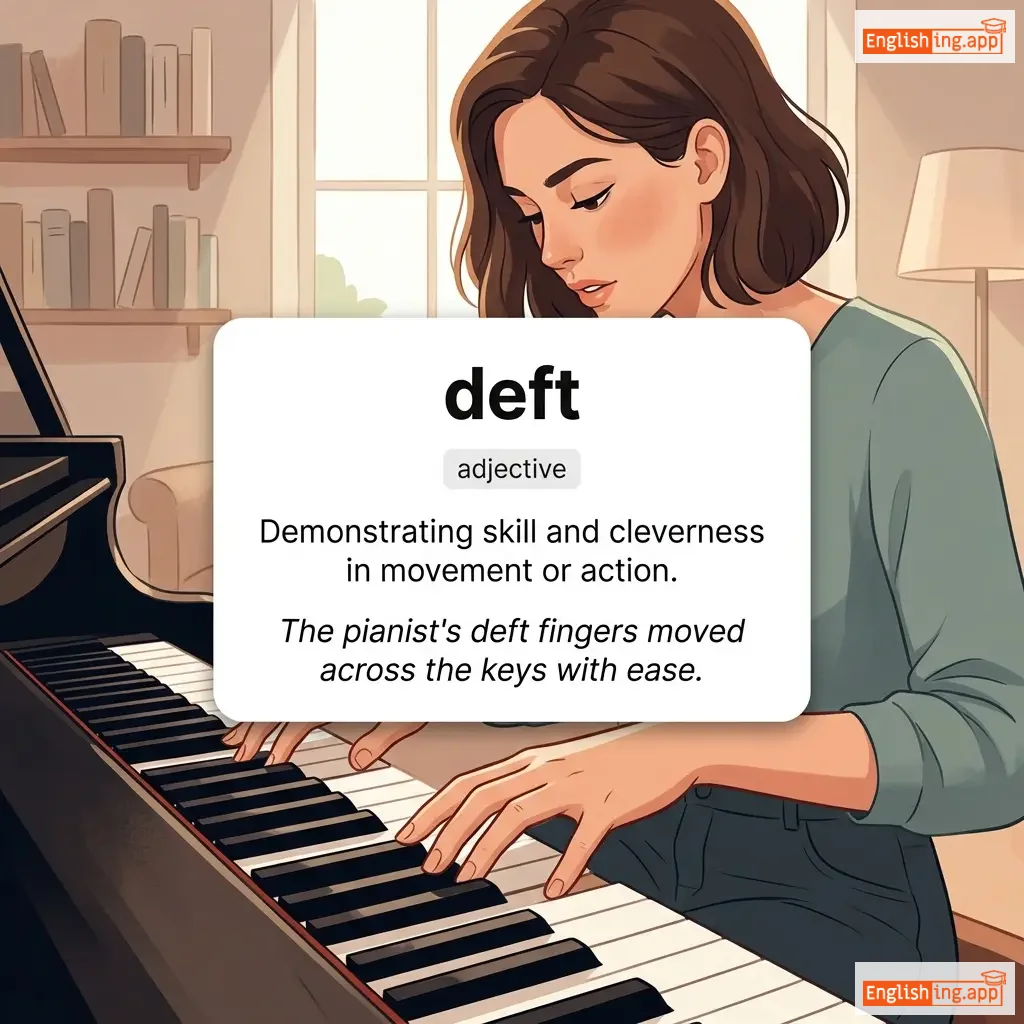
deft definition card — visual illustration of the meaning
adjective
/dɛft/
ловкий (lovkiy)

Demonstrating skill and cleverness in movement or action.

"The pianist's deft fingers moved across the keys with ease."

"Ловкие пальцы пианиста легко двигались по клавишам." (Lovkie pal'tsy pianista legko dvizhilis' po klavisham.)
noun
/ˈdɛftnəs/
ловкость (lovkost)

Skillfulness and quickness in action or thought.

"Her deftness with words impressed the audience."
"Её ловкость в словах впечатлила аудиторию." (Eyo lovkost v slovakh vpechatlila auditoriyu.)
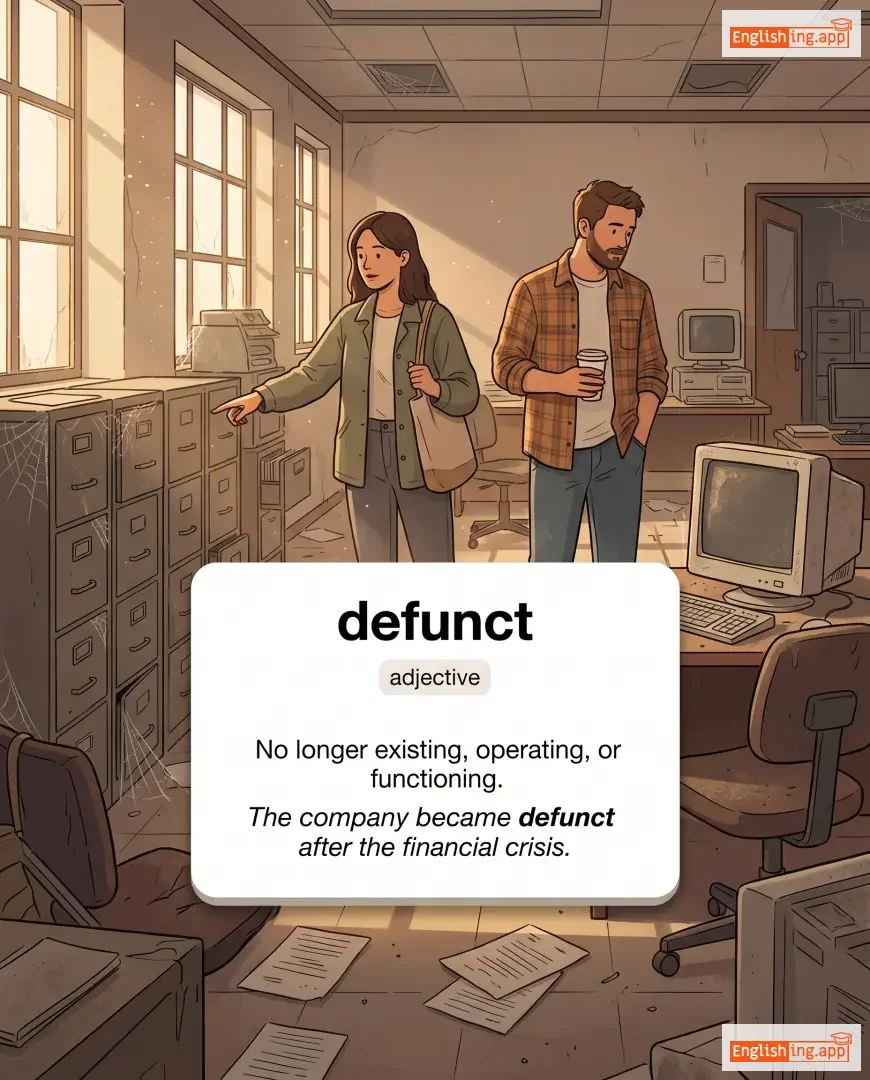
defunct definition card — visual illustration of the meaning
adjective
/dɪˈfʌŋkt/
неработающий, исчезнувший (nerabotayushchiy, ischeznavshiy)

No longer existing, operating, or functioning.

"The company became defunct after the financial crisis."

"Компания стала дефектной после финансового кризиса." (Kompaniya stala defektnoy posle finansovogo krizisa.)
verb
/diːˈfjuːz/
обезвредить (defyuz)

To make a situation less dangerous, tense, or explosive; to remove a fuse from a bomb.

"The negotiator helped defuse the tense situation."
"Переговорщик помог разрядить напряжённую обстановку." (Peregorovshchik pomog razryadit napryazhyonnuyu obstanovku.)
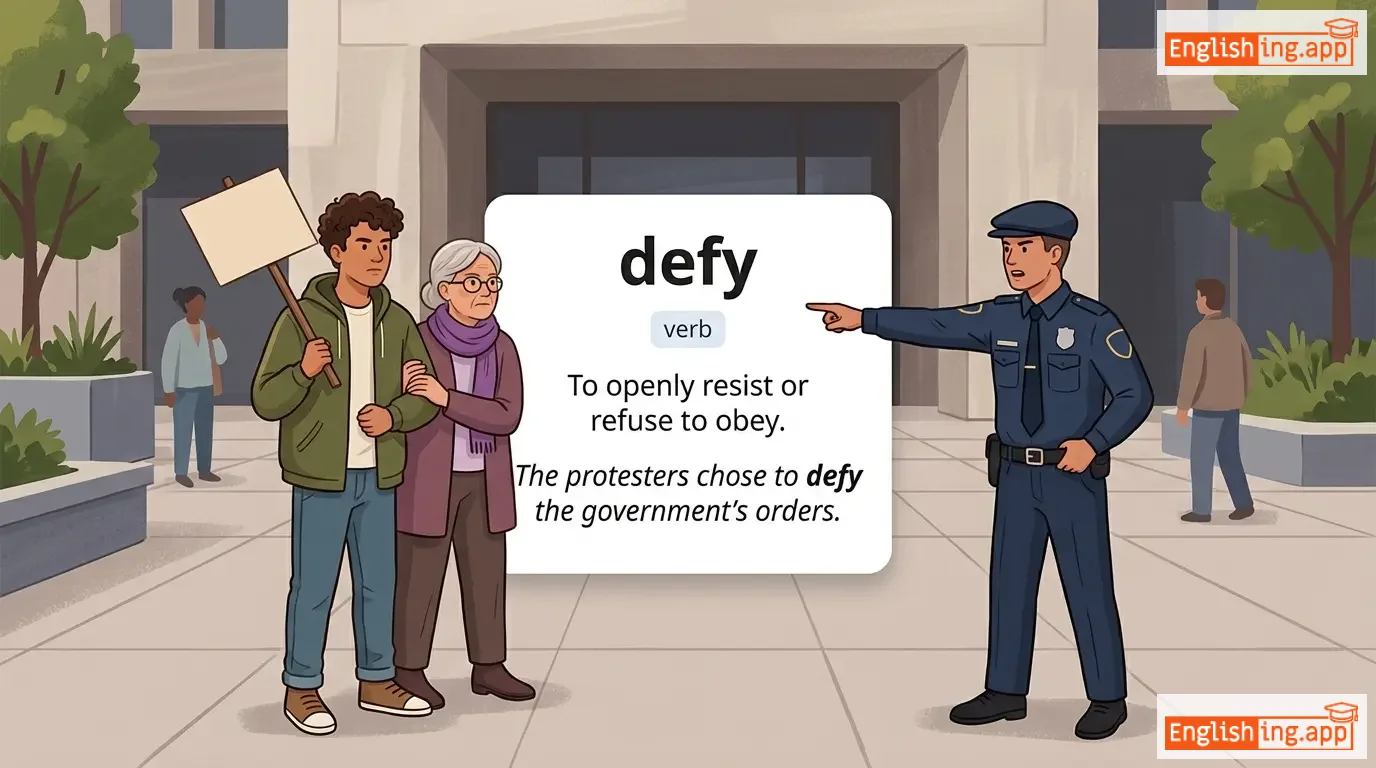
defy definition card — visual illustration of the meaning

defy

verb
/dɪˈfaɪ/

To openly resist or refuse to obey.

"The protesters chose to defy the government's orders."

noun
/dɪˈdʒɛnərəsi/
деградация (degradatsiya)

The state of decline or deterioration, often in moral, cultural, or physical qualities.

"The novel portrays the moral degeneracy of a corrupt society."

"Роман изображает моральную деградацию коррумпированного общества." (Roman izobrazhaet moral'nuyu degradatsiyu korrumpirovannogo obshchestva.)
verb/adjective
/dɪˈdʒɛnəreɪt/
деградировать (degradirovat)

To decline or deteriorate in quality, character, or condition; or someone with low moral standards.

"The once thriving empire began to degenerate into chaos."
"Некогда процветающая империя начала деградировать в хаос." (Nekogda protsvetayushchaya imperiya nachala degradirovat' v khaos.)
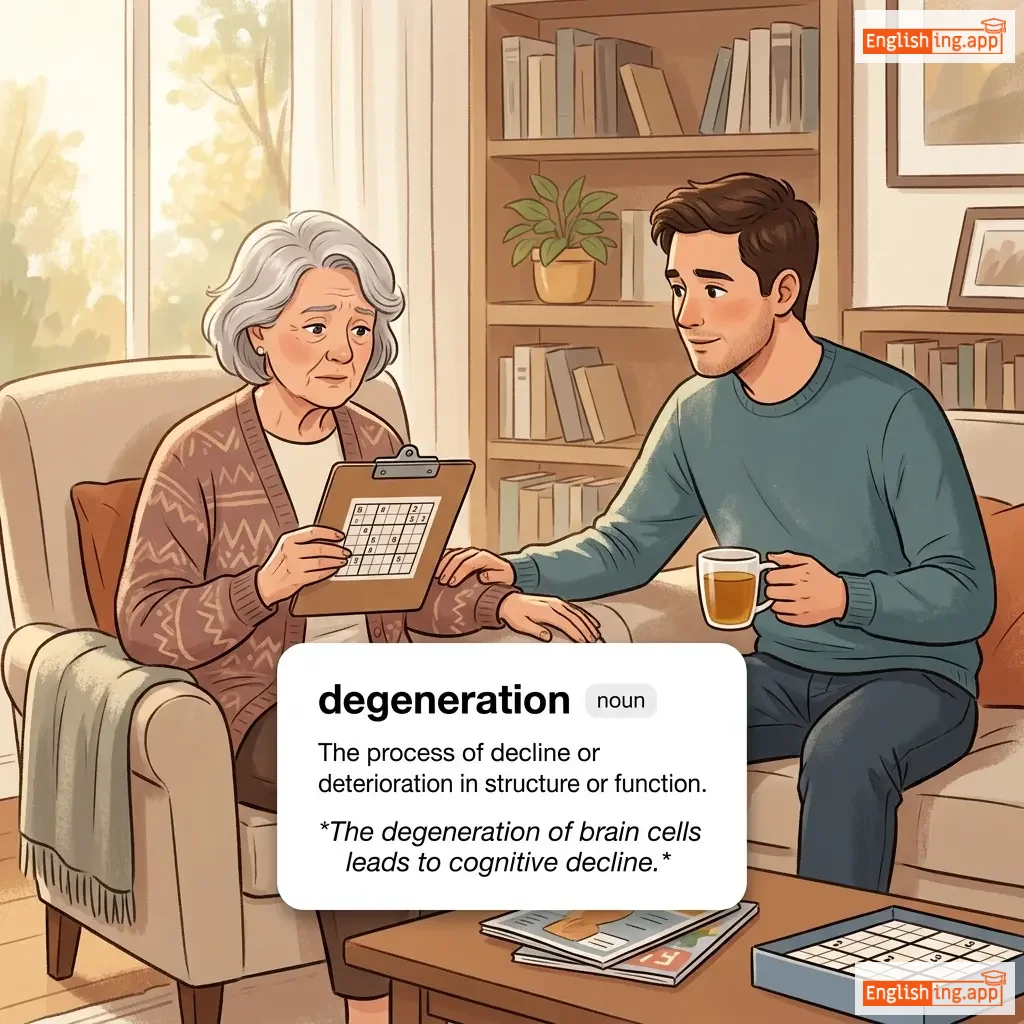
degeneration definition card — visual illustration of the meaning
noun
ˌdɪdʒɪˈnɛəreɪʃən
деградация (degradatsiya)

The process of decline or deterioration in structure or function.

"The degeneration of brain cells leads to cognitive decline."
"Деградация клеток мозга ведет к когнитивному упадку." (Degradatsiya kletok mozga vedet k kognitivnomu upadku.)
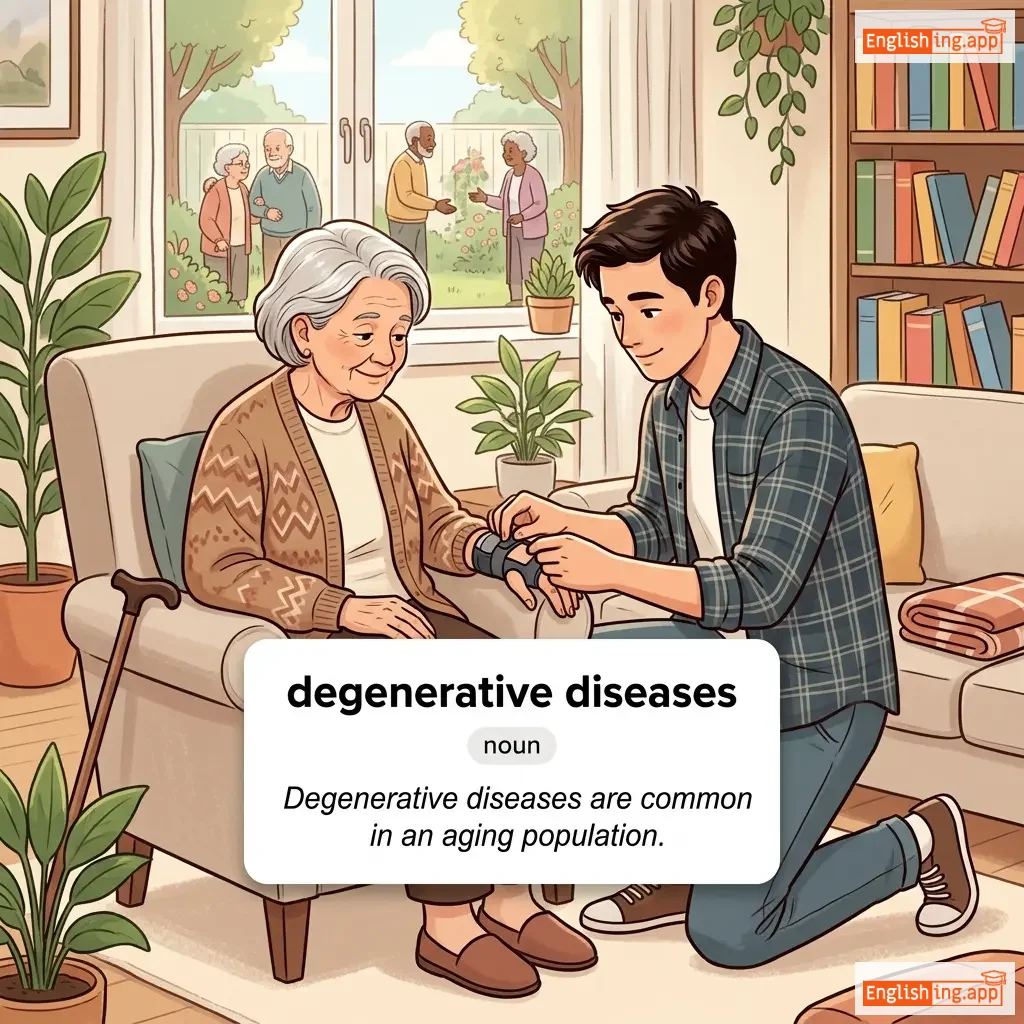
degenerative diseases definition card — visual illustration of the meaning
noun
dɪˈdʒɛnəˌreɪtɪv dɪˈzizɪz
дегенеративные заболевания (degenerativnye zabolevaniya)

Medical conditions that involve the deterioration or progressive decline of tissues, organs, or functions

"Degenerative diseases are common in an aging population."
"Дегенеративные заболевания распространены среди стареющего населения." (Degenerativnye zabolevaniya rasprostranyeny sredi stareyushchego naseleniya.)
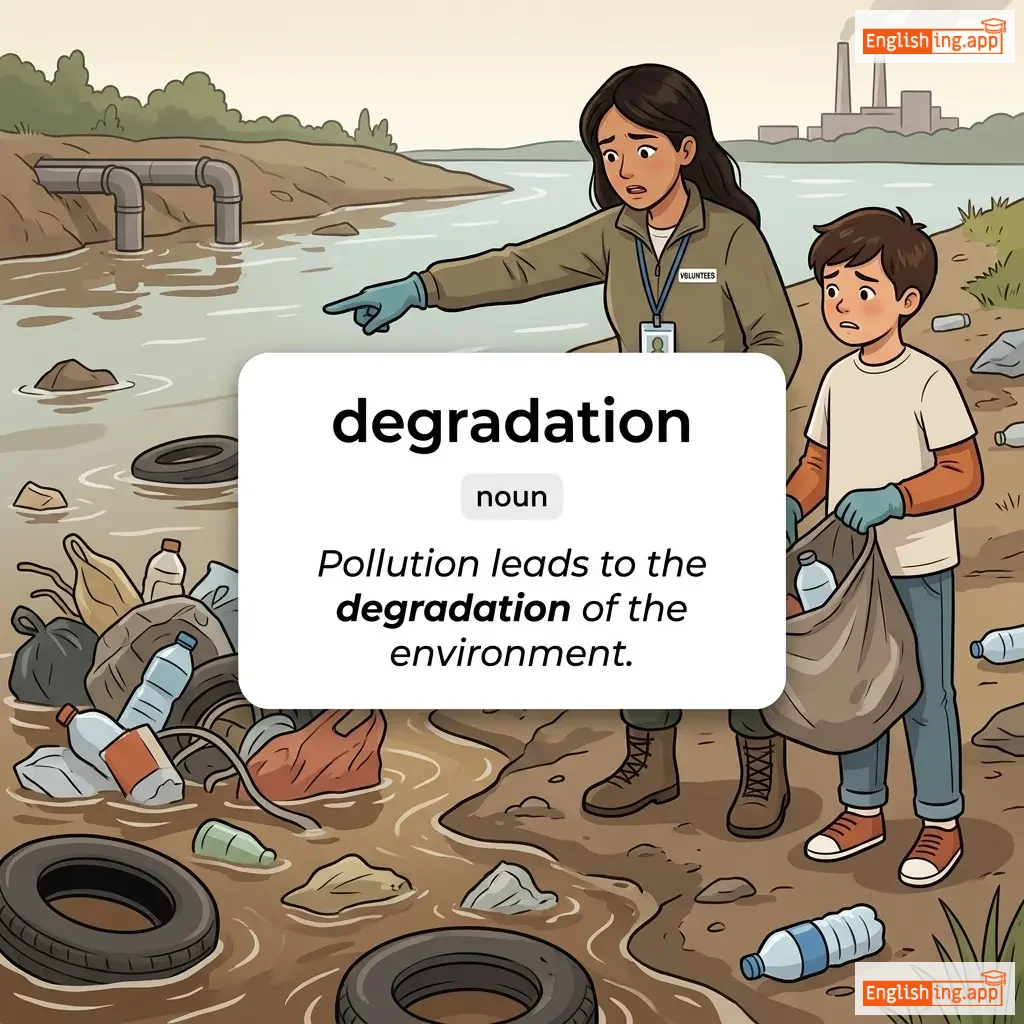
degradation definition card — visual illustration of the meaning
noun
/ˌdɛɡrəˈdeɪʃən/
деградация (degradatsiya)

The process of being degraded, declined, or reduced in quality, dignity, or value.

"Pollution leads to the degradation of the environment."

"Загрязнение приводит к деградации окружающей среды." (Zagryaznenie privodit k degradatsii okruzhayushchey sredy.)
⬇️😔

degrade

verb
/dɪˈɡreɪd/

To lower in dignity, quality, or value; to treat with disrespect or to deteriorate.

"Harsh words can degrade a person's confidence."

adjective
/dɪˈɡreɪdɪd/
деградированный (degradirovannyy)

Reduced in quality, dignity, or condition.

"The villagers were forced to live in degraded conditions."

"Жители деревни были вынуждены жить в деградированных условиях." (Zhiteli derevni byli vynuzhdeny zhit' v degradirovannykh usloviyakh.)
noun
/dɪˈɡriː/
степень / уровень (stepen' / urovne)

an amount or level of something; an academic qualification

"She earned a degree in engineering."

"Она получила степень в инженерии." (Ona poluchila stepen' v inzhenerii.)
verb
/diːˈhaɪdreɪt/

to remove water from something; to lose water or body fluids

"Running in the heat can quickly dehydrate you."
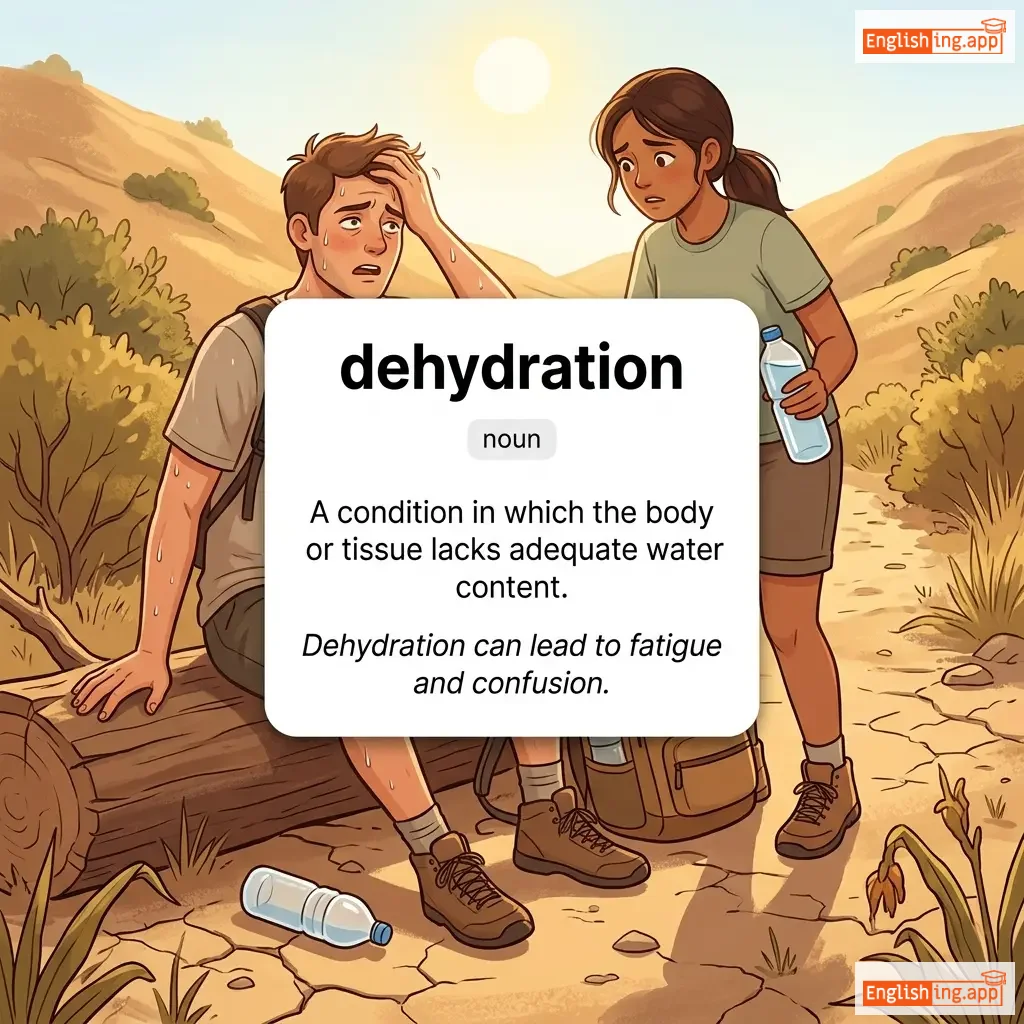
dehydration definition card — visual illustration of the meaning
noun
/ˌdiː.haɪˈdreɪʃən/
обезвоживание (obezvozhivanie)

A condition in which the body or tissue lacks adequate water content.

"Dehydration can lead to fatigue and confusion."

"Обезвоживание может привести к усталости и путанице." (obezvozhivanie mozhet privesti k ustalosti i putanitse.)
verb
/ˈdiːɪfaɪ/
обожествлять (obozhestvlyat)

to treat or worship someone or something as a god

"Some fans deify their favorite celebrities."

"Некоторые фанаты обожествляют своих любимых знаменитостей." (Nekotorye fanaty obozhestvlyayut svoikh lyubimykh zvezd.)
verb
/deɪn/
поступать ниже своей достоинства (postupat' nizhe svoey dostoinstva)

to do something considered beneath one's dignity

"The king did not deign to reply to the commoner."

"Король не удостоил себя ответить простолюдину." (Korol' ne udostoil sebya otvetit' prostolyudinu.)
noun
/ˈdiːɪst/
деист (deist)

a person who believes in the existence of a supreme being but rejects organized religion

"The philosopher identified himself as a deist."

"Философ идентифицировал себя как деиста." (Filosof identifitsiroval sebya kak deista.)
noun
/ˈdeɪ.ə.ti/
божество (bozhestvo)

a god or goddess

"The temple is dedicated to a Hindu deity."

"Храм посвящен индуистскому божеству." (Khram posvyashchen induistskomu bozhestvu.)
verb
/dɪˈdʒɛkt/
огорчать (ogorchat)

to make someone feel sad, depressed, or dispirited

"The news of his failure seemed to deject him deeply."

"Новости о его неудаче, казалось, глубоко огорчили его." (Novosti o ego neudache, kazalos', gluboko ogorchili ego.)
noun
/dɪˈdʒɛkʃən/
депрессия (depressiya)

a state of sadness, depression, or low spirits

"She sat in a state of dejection after hearing the bad news."

"Она сидела в состоянии депрессии, услышав плохие новости." (Ona sidel v sostoyanii depressii, uslyshav plokhie novosti.)
verb
/dɪˈleɪ/
задерживать (zaderzhivat')

to make something happen later than planned

"The flight was delayed due to bad weather."
"Рейс был задержан из-за плохой погоды." (Reys byl zaderzhan iz-za plokhoy pogody.)
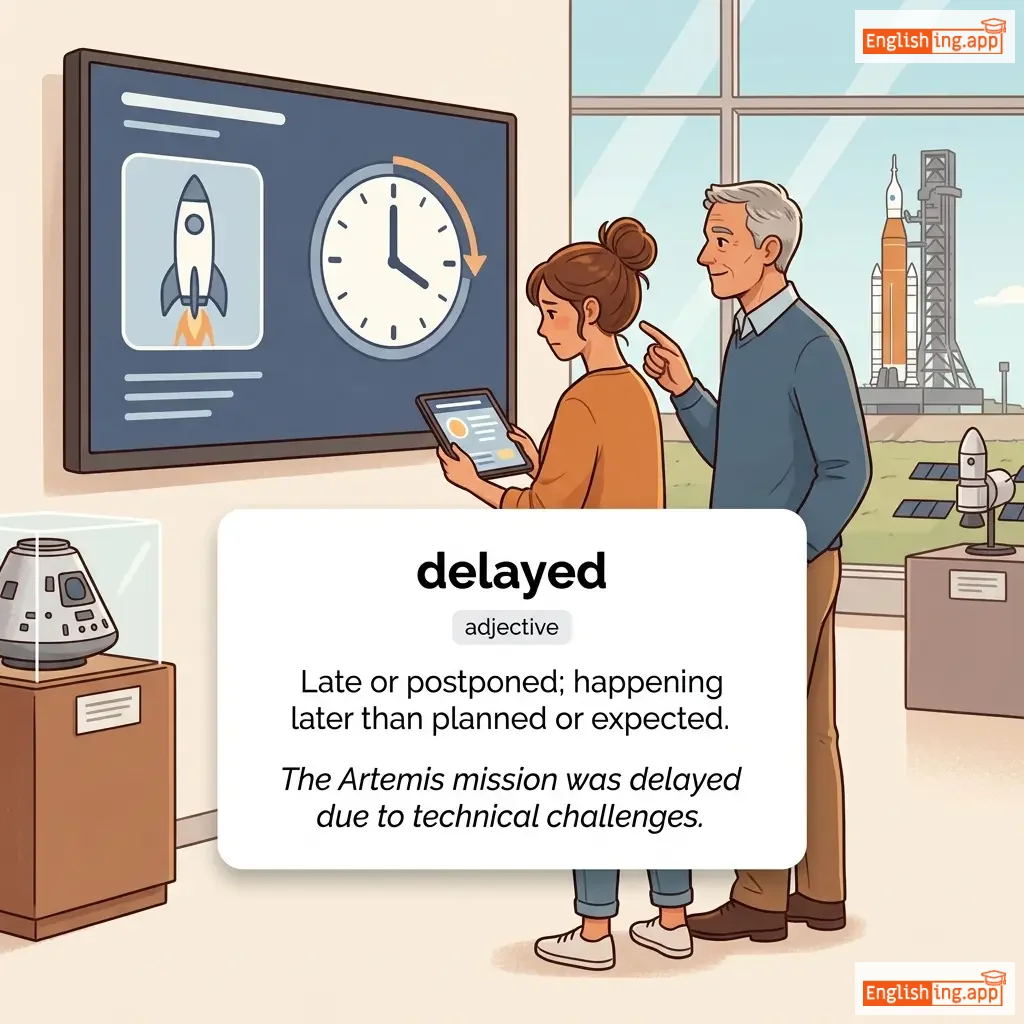
delayed definition card — visual illustration of the meaning
adjective
dɪˈleɪd
задержанный (zaderzhannyy)

Late or postponed; happening later than planned or expected.

"The Artemis mission was delayed due to technical challenges."

"Миссия Артемиды была задержана из-за технических проблем." (Missiya Artemidy byla zaderzhana iz-za tekhnicheskikh problem.)
adjective
/dɪˈlɛktəbl̩/
вкусный (vkusnyy)

delicious or highly enjoyable

"The restaurant served a delectable meal."

"Ресторан подал вкусную еду." (Restoran podal vkusnuyu edu.)
noun
/ˌdiːlɛkˈteɪʃən/
удовольствие (udovolstvie)

great pleasure or delight

"She read the story aloud for the delectation of her friends."

"Она читала рассказ вслух для удовольствия своих друзей." (Ona chitala rasskaz vslukh dlya udovolstviya svoikh druzey.)
noun, verb
/ˈdɛlɪɡət/ (noun), /ˈdɛlɪɡeɪt/ (verb)
делегат / делегировать (delegat / delegirovat)

as a noun: a person appointed to represent others; as a verb: to entrust a task or responsibility to another

"The manager decided to delegate tasks to his team members."

"Менеджер решил делегировать задачи своим членам команды." (Menedzher reshil delegirovat' zadachi svoim chlenam komandy.)
delegation definition card — visual illustration of the meaning
noun
/ˌdɛlɪˈɡeɪʃən/
делегация (delegatsiya)

the act of giving someone else responsibility for something

"The manager made a delegation of tasks to the team."

"Менеджер делегировал задачи команде." (Menedzher delegiroval zadachi komande.)
verb
/dɪˈliːt/
удалять/удалить (deleet)

to remove or erase something, especially written or recorded information

"He accidentally deleted all the files from his computer."
"Он случайно удалил все файлы на своем компьютере." (On sluchajno udalil vse fayly na svoem kompyutere.)
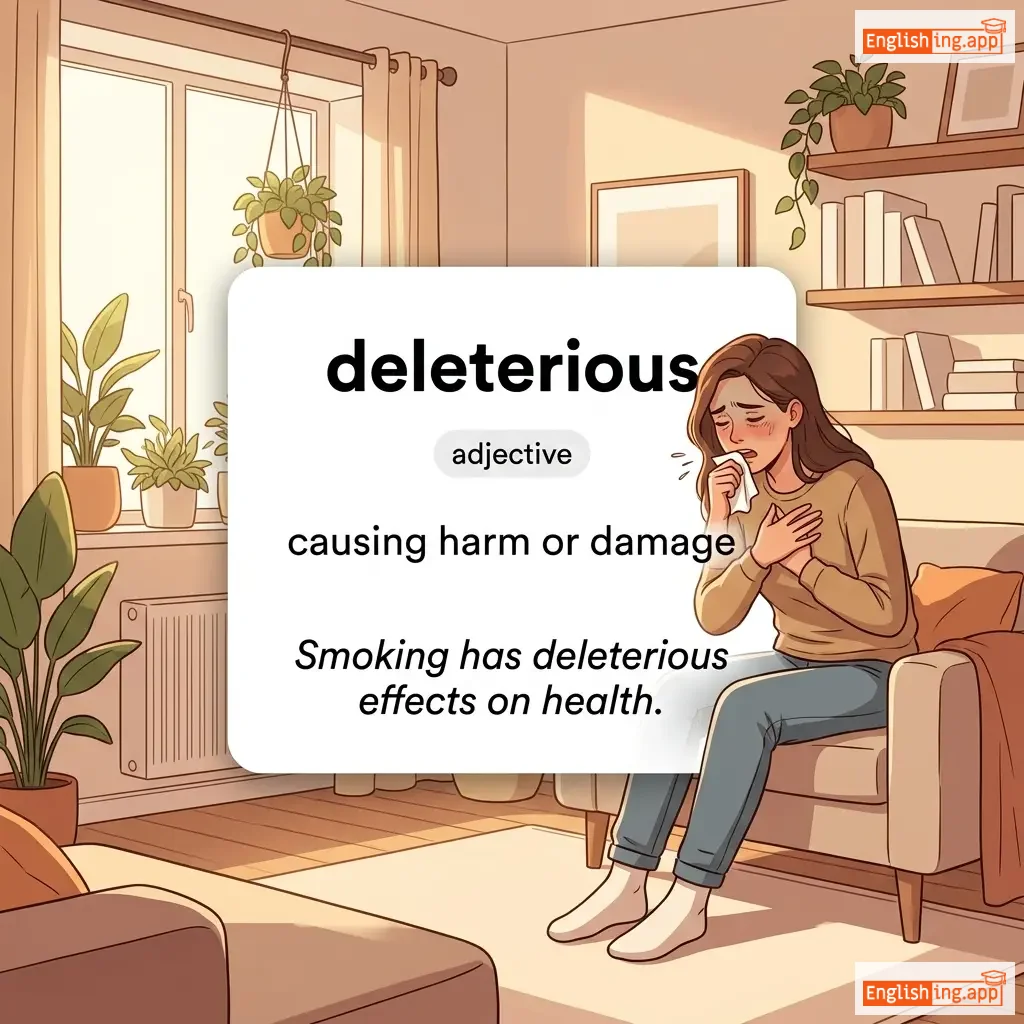
deleterious definition card — visual illustration of the meaning
adjective
/ˌdɛlɪˈtɪəriəs/
вредоносный (vredonosnyy)

causing harm or damage

"Smoking has deleterious effects on health."

"Курение оказывает вредоносное воздействие на здоровье." (Kurenie okazyvayet vredonosnoe vozdeystvie na zdorovye.)