Словари

Словарь английского языка | Значения слов, определения и примеры

verb
/diːˈkoʊd/
расшифровать (rasshifrovat)

to convert a coded message into a readable form; to interpret meaning

"The software can decode the hidden message within seconds."

"Программное обеспечение может расшифровать скрытое сообщение за несколько секунд." (Programmnoye obespecheniye mozhet rasshifrovat skrytoye soobshcheniye za neskol'ko sekund.)
adjective
/ˌdeɪ.kɒlˈteɪ/
платье с глубоким вырезом (plat'ye s glubokim vyrezom)

of a woman's dress or top, cut low so as to reveal the neck and upper chest

"She wore a decollete gown to the party."

"Она носила платье с глубоким вырезом на вечеринке." (Ona nosila plat'ye s glubokim vyrezom na vecherinke.)
noun
/ˌdiː.kɒmpəˈzɪʃən/
разложение (razlozhenie)

the process of decaying or breaking down into simpler parts

"The decomposition of leaves enriches the soil."
"Разложение листьев обогащает почву." (Razlozhenie listev obogashchaet pochvu.)
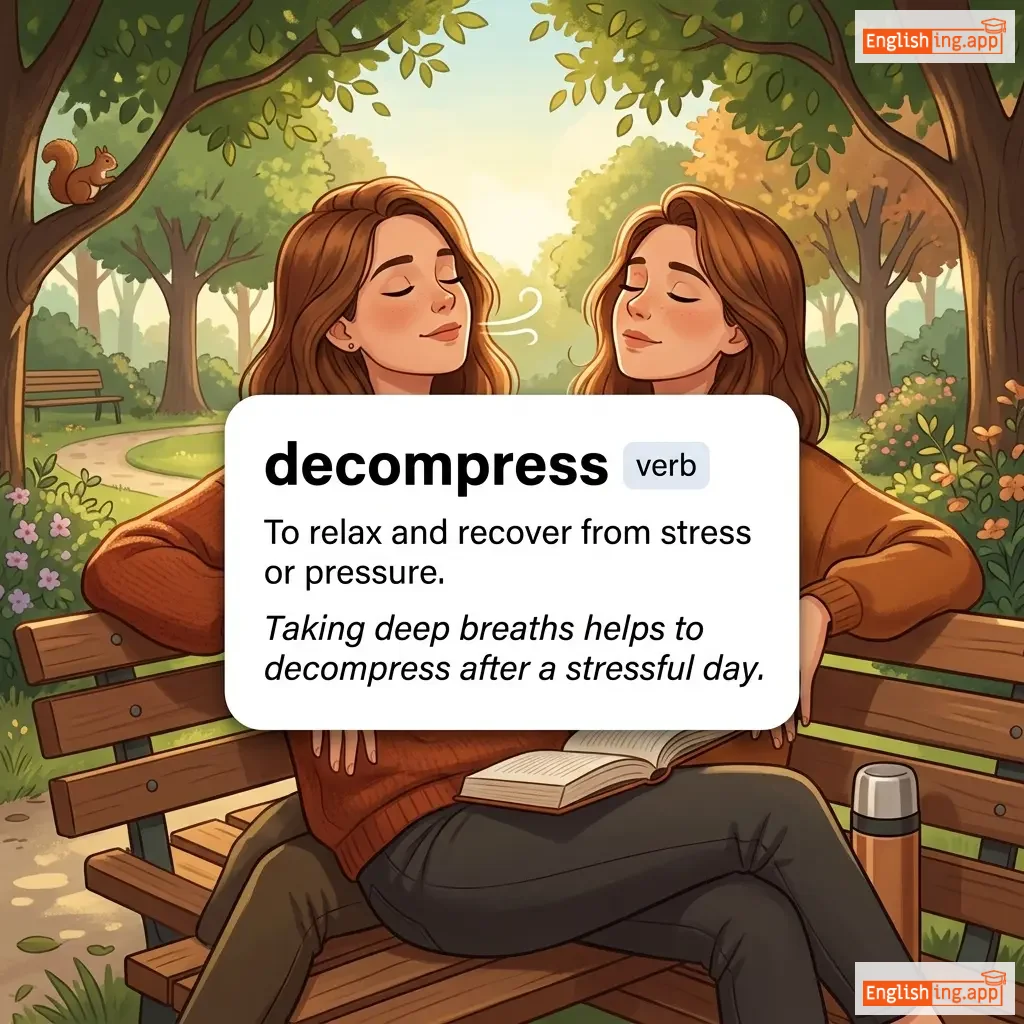
decompress definition card — visual illustration of the meaning
verb
/ˌdiː.kəmˈprɛs/
расслабляться (rasslablyatsya)

To relax and recover from stress or pressure.

"Taking deep breaths helps to decompress after a stressful day."
"Глубокое дыхание помогает расслабиться после напряжённого дня." (Glubokoe dykhaniye pomogaet rasslablyat'sya posle napryazhonnogo dnya.)
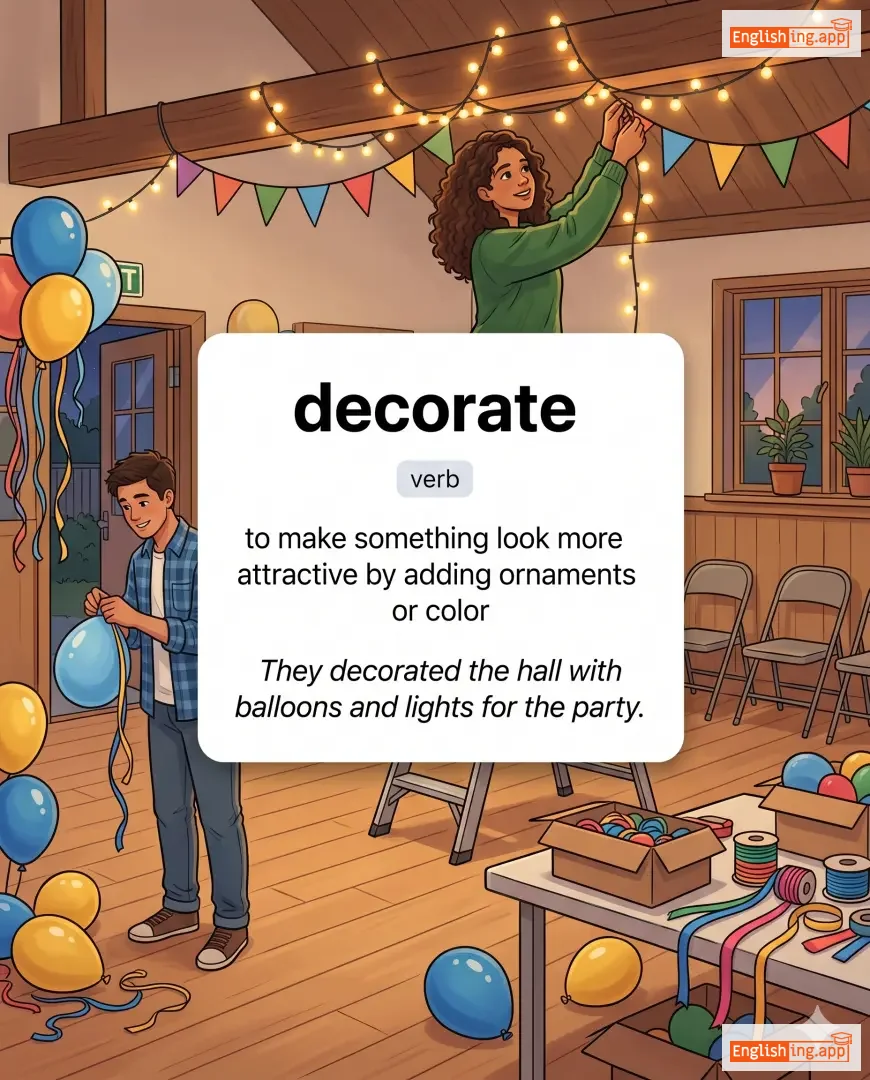
decorate definition card — visual illustration of the meaning
verb
/ˈdɛkəreɪt/

to make something look more attractive by adding ornaments or color

"They decorated the hall with balloons and lights for the party."

noun
/ˌdek.əˈreɪ.ʃən/
декорирование; украшение; приз; (dekorirovaniye, ukrasheniye, priz)

the process or art of decorating something; ornamental items used to beautify

"The Christmas decoration transformed the ordinary room into a festive wonderland."

"Рождественское украшение превратило обычную комнату в праздничную страну чудес." (Rozhdestvenskoye ukrasheniye prevratilo obychnuyu komnatu v prazdnichnuyu stranu chudes.)
adjective
/ˈdekərəs/
учтивый (uchtivyy)

showing proper and polite behavior; marked by good taste

"The audience gave a decorous applause after the performance."

"Зрители выразили учтивое одобрение после выступления." (Zriteli vyrazili uchtivoye odobreniye posle vystupleniya.)
Decorum definition card — visual illustration of the meaning
noun
/dɪˈkɔːrəm/
декорум (dekorum)

behavior in keeping with good taste and propriety

"The students maintained decorum during the ceremony."

"Студенты сохраняли декорум во время церемонии." (Studenty sokhranyali dekorum vo vremya tseremonii.)
adjective
/dɪˈkɔːrəs/
приличный (prilichny)

characterized by propriety, good taste, and proper manners

"She maintained a decourous silence during the ceremony."

"Она сохранила приличное молчание во время церемонии." (Ona sokhranyla prlichnoe molchaniye vo vremya tseremonii.)
noun/verb
/ˈdiːkɔɪ/
приманка (primanka)

something or someone used to lure or mislead

"The hunters used a wooden duck as a decoy."

"Охотники использовали деревянную утку как приманку." (Okhotniki ispol'zovali derevyannuyu utku kak primanku.)
⬇️

decrease

verb/noun
/ˈdiːkriːs/ (noun), /dɪˈkriːs/ (verb)

To become or make something smaller or fewer in number, amount, or degree.

"The population of the town has decreased over the years."

noun/verb
/dɪˈkriː/
указ (ukaz)

an official order or command, often by authority

"The king issued a decree banning hunting in the forest."

"Король издал указ, запрещающий охоту в лесу." (Korol' izdal ukaz, zapreshchayushchiy okhotu v lesu.)
adjective
/dɪˈkrɛpɪt/
обветшавший (obvetshavshiy)

worn out or weakened by age or neglect

"The decrepit old house was on the verge of collapse."

"Древний обветшавший дом был на грани обрушения." (Drevniy obvetshavshiy dom byl na grani obrusheniya.)
noun
/dɪˈkrɛpɪˌtjuːd/
упадок (upadok)

the state of being old, weak, and worn out

"The once-great empire fell into decrepitude."

"Когда-то великая империя погрузилась в упадок." (Kogda-to velikaya imperiya pogruzilas' v upadok.)
verb
/dɪˈkraɪ/
осуждать (osuzhdat)

to publicly criticize or express strong disapproval of something

"Many activists decry the destruction of the rainforest."

"Многие активисты осуждают уничтожение тропических лесов." (Mnogie aktivisty osuzhdayut unichtozhenie tropicheskikh lesov.)
decryption definition card — visual illustration of the meaning
noun
/dɪˈkrɪp.ʃən/
дешифровка (deshifrovka)

The process of converting encrypted information back to its original form

"Decryption of sensitive files requires a secure key."

"Расшифровка конфиденциальных файлов требует безопасного ключа." (Rasshifrovka konfidentsial'nykh faylov trebuyet bezopasnogo klyucha.)
verb
/ˈdɛdɪkeɪt/
посвящать (posvyashchat)

to devote time, effort, or oneself to a particular purpose or person

"She dedicated her life to helping the poor."

"Она посвятила свою жизнь помощи бедным." (Ona posvyatila svoyu zhizn pomoshchi bednym.)
adjective
/ˈdɛdɪˌkeɪtɪd/
посвящённый (posvyashchyonny)

devoted to a cause, task, or purpose

"She is a dedicated teacher who goes above and beyond for her students."

"Она преданный учитель, который идёт выше и дальше ради своих студентов." (Ona predannyy uchitel', kotoryy idyot vyshe i dal'she radi svoikh studentov.)
dedication definition card — visual illustration of the meaning
noun
/ˌdɛdɪˈkeɪʃən/
преданность (predannost)

the quality of being committed to a task or purpose

"Her dedication to her studies earned her top grades."

"Её преданность учебе принесла ей высшие оценки." (Eyo predannost uchebe prinesla yey vysshie otsenki.)
verb
/dɪˈdjuːs/
делать вывод (delat' vyvod)

to reach a conclusion by reasoning or inference

"From the evidence, the detective deduced that the suspect was lying."

"Из доказательств детектив сделал вывод, что подозреваемый лгал." (Iz dokazatel'stv detektiv sdelal vyvod, chto podozrevaemyy lgal.)
adjective
/dɪˈdjuːsəbl/
выводимый (vyvodimy)

able to be deduced; possible to be inferred

"The solution is deducible from the data provided."
"Решение можно вывести из предоставленных данных." (Reshenie mozhno vyvesti iz predostavlennykh dannykh.)
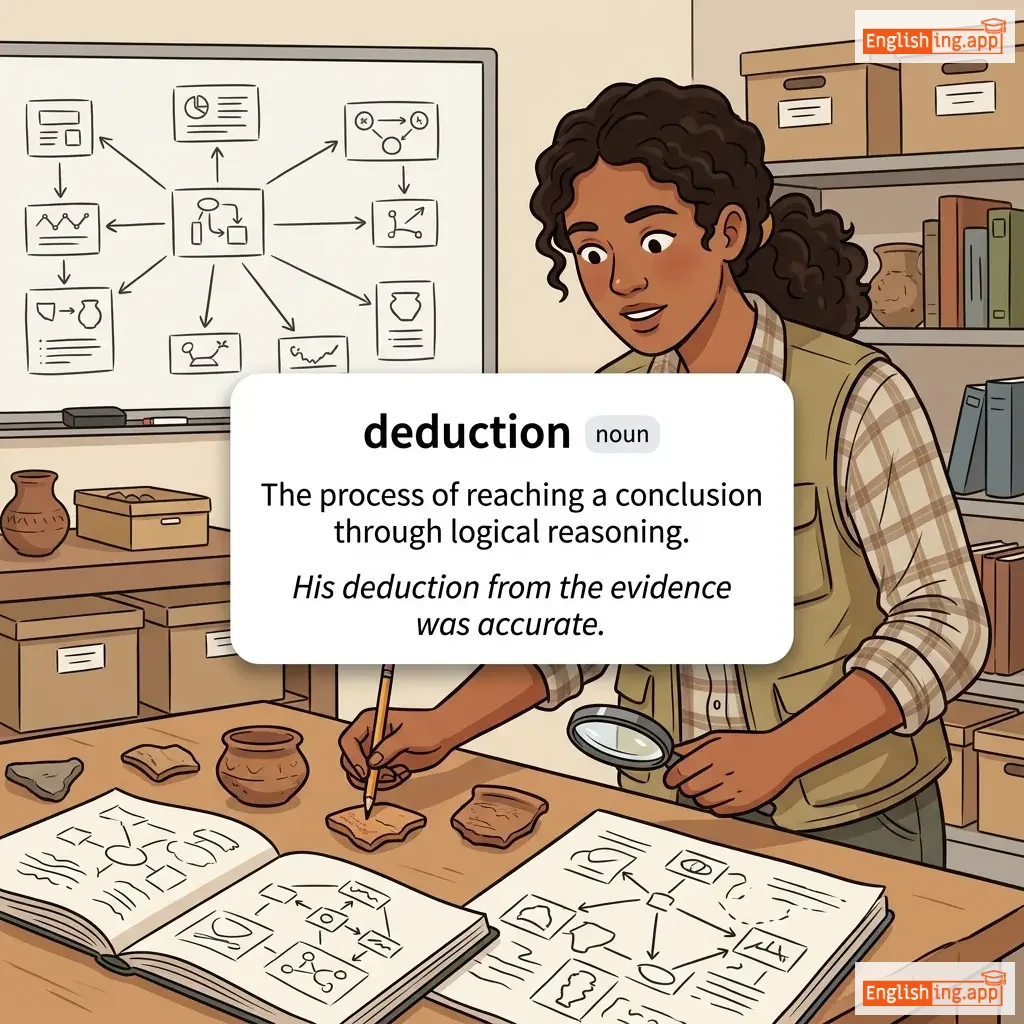
deduction definition card — visual illustration of the meaning
noun
/dɪˈdʌk.ʃən/
вывод (vyvod)

The process of reaching a conclusion through logical reasoning.

"His deduction from the evidence was accurate."

"Его вывод на основе доказательств был точным." (Ego vyvod na osnove dokazatel'stv byl tochnym.)
noun
/diːd/
поступок (postupok)

an action, especially a good or evil one

"His deed of kindness will never be forgotten."

"Его поступок доброты никогда не будет забыт." (Yego postupok dobroty nikogda ne budet zabyt.)
verb
/diːm/
считать, оценивать (schitat', otsenivat')

to regard or consider in a specified way

"The project was deemed a success by the board."

"Проект был признан успешным советом." (Proyekt byl prizan uspeshnym sovetom.)
adjective
/diːp/
счастье (schastye)

extending far down from the top or surface; profound or intense

"The lake is very deep in the middle."

"Она не могла скрыть свое счастье, когда получила награду." (Ona ne mogla skryt' svoyo schast'ye, kogda poluchila nagradu.)
noun
/diːp ˈkʌlər/
глубокий цвет (glubokiy tsvet)

a rich, intense, or dark shade of any color

"The artist used deep colours to create a dramatic effect."

"Художник использовал глубокие цвета для создания драматического эффекта." (Khudozhnik ispol'zoval glubokie tsveta dlya sozdaniya dramaticheskogo effekta.)
deep sea definition card — visual illustration of the meaning
noun
/diːp siː/
глубокое море (glubokoye more)

The deep parts of the sea or ocean, typically beyond the continental shelf.

"Many deep-sea creatures produce bioluminescence for survival."

"Многие глубоководные существа производят биолюминесценцию для выживания." (Mnogiye glubokovodnyye sushchestva proizvodit biyoluminestsiyu dlya vyzhivaniya.)
adverb
/ˈdiːpli/
глубоко (gluboko)

to a great depth, extent, or intensity

"She was deeply moved by the speech."

"Она была глубоко тронута речью." (Ona byla gluboko tronutá rech'yu.)
noun
/dɪr/
олень (olen)

a graceful wild animal with long legs and antlers, often living in forests

"A deer ran across the road suddenly."

"Олень внезапно пересек дорогу." (Olen vnezapno peresek dorogu.)
verb
/dɪˈfeɪs/
искажать (iskazhat)

to spoil the surface or appearance of something, especially by writing or drawing on it

"The vandals defaced the wall with graffiti."

"Вандалы изуродовали стену граффити." (Vandaly izurodovali stenu grafiti.)
verb
/ˈdiːfælˌkeɪt/
растратить деньги (rastatit' dengi)

to misuse or embezzle money that one is responsible for

"The accountant was accused of defalcating company funds."

"Бухгалтера обвинили в растрате средств компании." (Bukhgaltera obvinili v rastrate sredstv kompanii.)
noun
/ˌdɛfəˈmeɪʃən/
клевета (kleveta)

the act of damaging someone's reputation by making false statements

"The newspaper was sued for defamation of character."
"Газета была подана в суд за клевету." (Gazeta byla podana v sud za klevetu.)
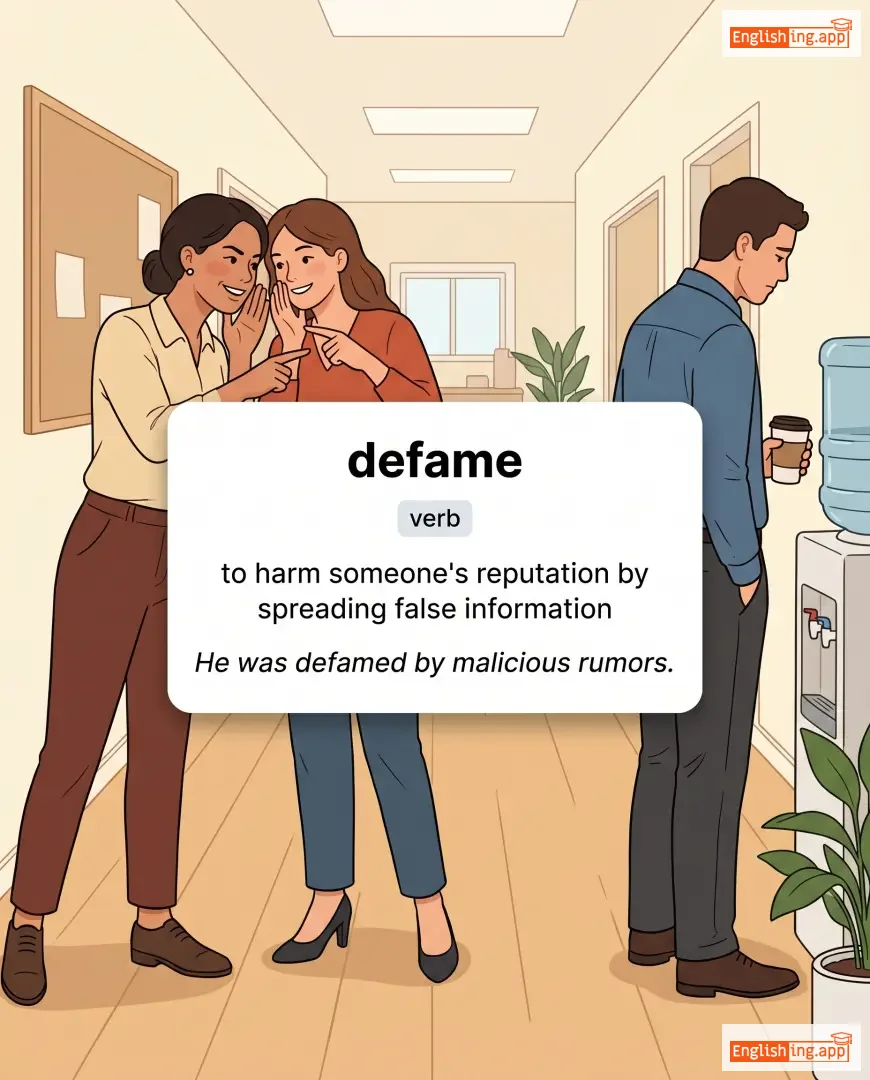
defame definition card — visual illustration of the meaning
verb
/dɪˈfeɪm/
оклеветать (oklevetat)

to harm someone's reputation by spreading false information

"He was defamed by malicious rumors."

"Он был очернен злонамеренными слухами." (On byl ochernyon zlonamerenymi slukhami.)
default definition card — visual illustration of the meaning
noun, verb
/dɪˈfɔːlt/
невыполнение обязательства (nevyplnenie obyazatel'stva)

failure to fulfill an obligation, especially to repay a loan

"The company defaulted on its loan payments."

"Компания не выполнила свои обязательства по платежам по кредиту." (Kompaniya ne vypolnila svoi obyazatel'stva po platezham po kreditu.)
verb
/dɪˈfiːt/
побеждать (pobezhdat)

to win a victory over someone or something in a competition or battle

"Our team defeated their rivals in the final match."

"Наша команда победила их соперников в финальном матче." (Nasha komanda pobedila ikh sopernikov v final'nom matche.)
noun, adjective
/dɪˈfiːtɪst/
поражени́ческий (porazhenicheskiy)

A person who expects or is excessively ready to accept failure; showing a tendency to expect defeat.

"His defeatist attitude discouraged the rest of the team."

"Его пораженческое отношение обескуражило остальных членов команды." (Ego porazhencheskoe otnoshenie obeskurazhilo ostal'nykh chlenov komandy.)
noun, verb
/ˈdiːfɛkt/ (noun), /dɪˈfɛkt/ (verb)
дефект / дезертировать (defekt / dezeritirovat)

A shortcoming, imperfection, or flaw; or to abandon a cause or group for another.

"The engineer found a defect in the software code."

"Инженер обнаружил дефект в коде программного обеспечения." (Inzhener obnaruzhil defekt v kode programmnogo obespecheniya.)
noun
/dɪˈfɛkʃən/
дефекция (defekciya)

The act of abandoning one’s country, cause, or group in favor of another.

"The politician’s defection shocked his supporters."

"Дефекция политика шокировала его сторонников." (Defekciya politika shokirovala ego storonnikov.)
adjective
/dɪˈfektɪv/
дефектный; неполный (defektnyy; nepolnyy)

having faults or defects; imperfect

"The defective product was returned to the store."

"Дефектный продукт был возвращён в магазин." (Defektnyy produkt byl vozvrashchyon v magazin.)
noun
/dɪˈfɛns/
защита (zashchita)

The act of protecting or guarding against attack, harm, or criticism.

"The castle walls were built for defence against invaders."

"Стены замка были построены для защиты от захватчиков." (Steny zamka byli postroyeny dlya zashchity ot zakhvatchikov.)
verb
/dɪˈfɛnd/
защищать (zashchishchat)

To protect someone or something from harm or attack.

"The lawyer worked hard to defend her client."

"Адвокат усердно работал, чтобы защитить своего клиента." (Advokat usyerdno rabotal, chtoby zashchitit' svoego kliyenta.)
noun
/dɪˈfɛndənt/
обвиняемый (obvinyaemyy)

An individual, company, or institution sued or accused in a court of law.

"The defendant pleaded not guilty to the charges."

"Обвиняемый не признал себя виновным по обвинениям." (Obvinyayemyy ne priznalsya sebya vinovnym po obvineniyam.)
noun
/dɪˈfɛndər/
защитник (zaschitnik)

a person who protects someone or something from harm or attack

"The defender blocked the shot and saved the goal."
"Защитник заблокировал удар и спас гол." (Zaschitnik zablokiroval udar i spas gol.)
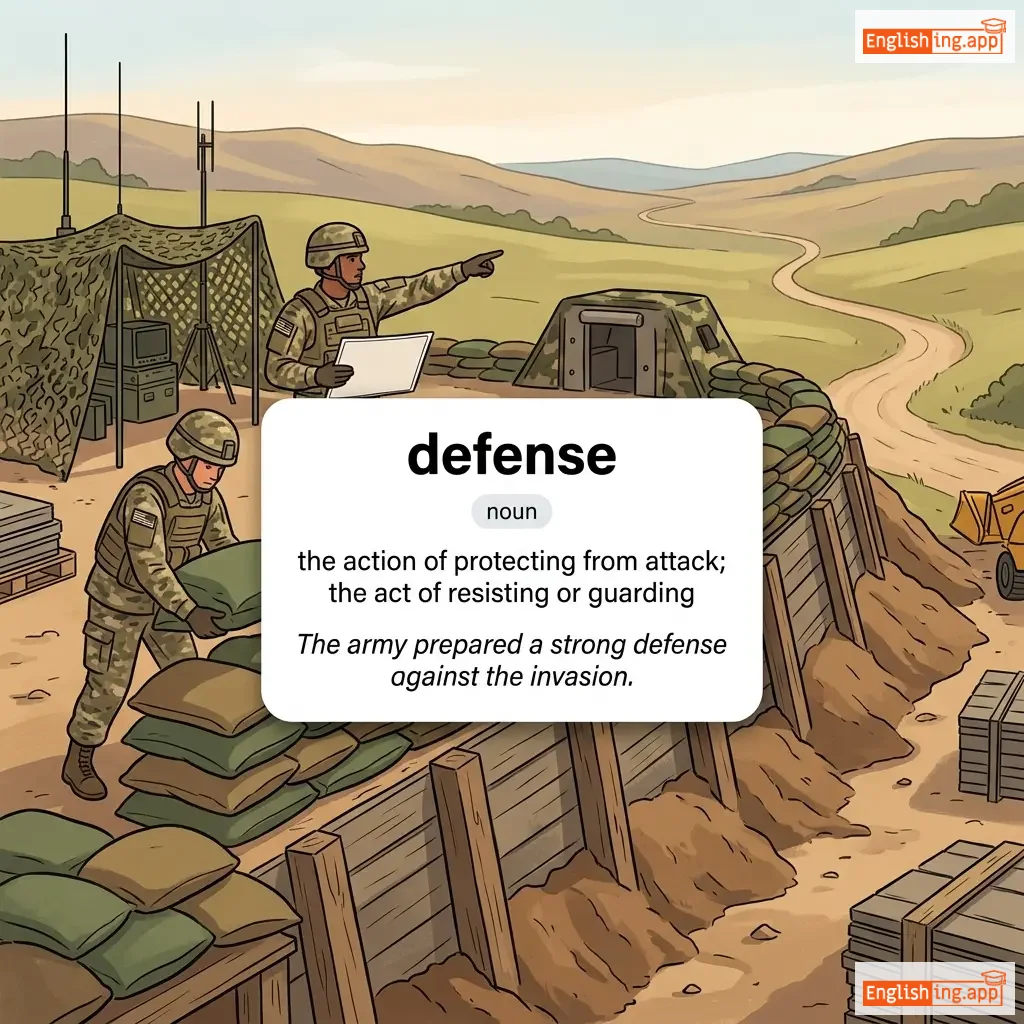
defense definition card — visual illustration of the meaning
noun
/dɪˈfɛns/
счастье (schastye)

the action of protecting from attack; the act of resisting or guarding

"The army prepared a strong defense against the invasion."

"Она не могла скрыть свое счастье, когда получила награду." (Ona ne mogla skryt' svoye schast'ye, kogda poluchila nagradu.)
adjective
/dɪˈfɛnsəbəl/
защищаемый / оправданный (zashchishchaemyy / opravdannyy)

Capable of being protected against attack or criticism; justifiable.

"Her decision was legally defensible."

"Ее решение было юридически защищаемым." (Eyo reshenie bylo yuridicheski zashchishchayemym.)
adjective
/dɪˈfɛnsɪv/
защитный (zashchitny)

Intended to protect or defend; behaving in a way to guard against criticism or attack.

"He became defensive when asked about his mistake."

"Он стал защитным, когда его спросили о его ошибке." (On stal zashchitnym, kogda ego sprosili o yego oshibke.)
verb
/dɪˈfɜːr/
отсрочить (otsrochit)

To postpone or delay; to yield to someone else's judgment or opinion.

"The meeting was deferred until next week."
"Заседание было отложено до следующей недели." (Zasedanie bylo otlozheno do sleduyushchey nedeli.)
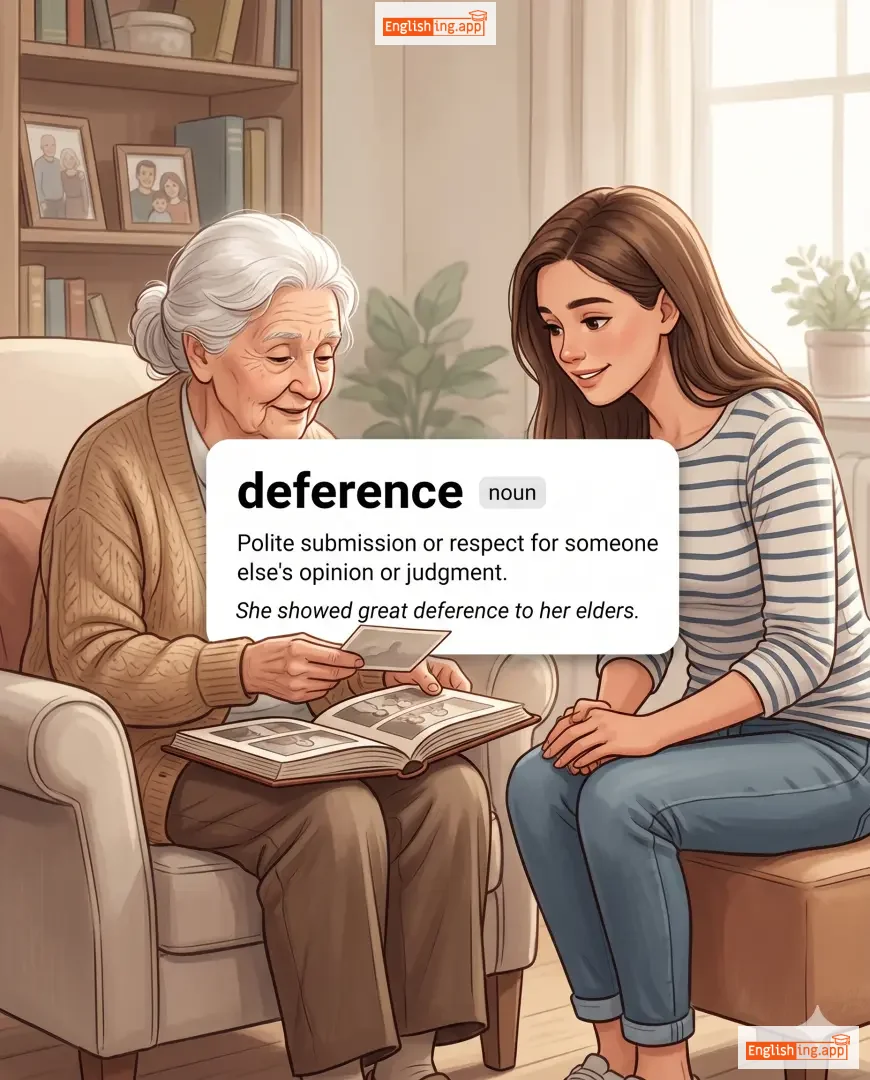
deference definition card — visual illustration of the meaning
noun
/ˈdɛfərəns/
почтение (pochtenie)

Polite submission or respect for someone else's opinion or judgment.

"She showed great deference to her elders."

"Она проявила большое почтение к своим старшим." (Ona proyavila bol'shoe pochtenie k svoim starshim.)
adjective
/ˌdɛfəˈrɛnʃəl/
почтительный (pochtitelny)

Showing or expressing respect and high regard.

"He was always deferential toward his teachers."

"Он всегда был почтительным по отношению к своим учителям." (on vsegda byl pochtitel'nym po otnosheniyu k svoim uchitelyam.)
noun
/dɪˈfaɪəns/
неповиновение (nepovinoveniye)

Open resistance or bold disobedience.

"The protest was an act of defiance against injustice."

"Протест был актом неповиновения против несправедливости." (Protest byl aktom nepovinoveniya protiv nespravedlivosti.)